Koumkan in Kefalari
Interior Design:
Photography:
ek Issue:

Semiramis, owned by collector Dakis Joannou, belongs to a portfolio of unique hotels designed by internationally acclaimed designers. When it first opened in the early 2000s, Karim Rashid’s bold interior design caused a stir in Kifissia, challenging the prevailing suburban aesthetics. Over time, a series of renovations gradually disconnected the bar-restaurant from the hotel’s original identity. The new space, Koumkan, is once again woven into the DNA of Semiramis, reflecting contemporary cultural, gastronomic, and social trends of Athens.
Design Philosophy
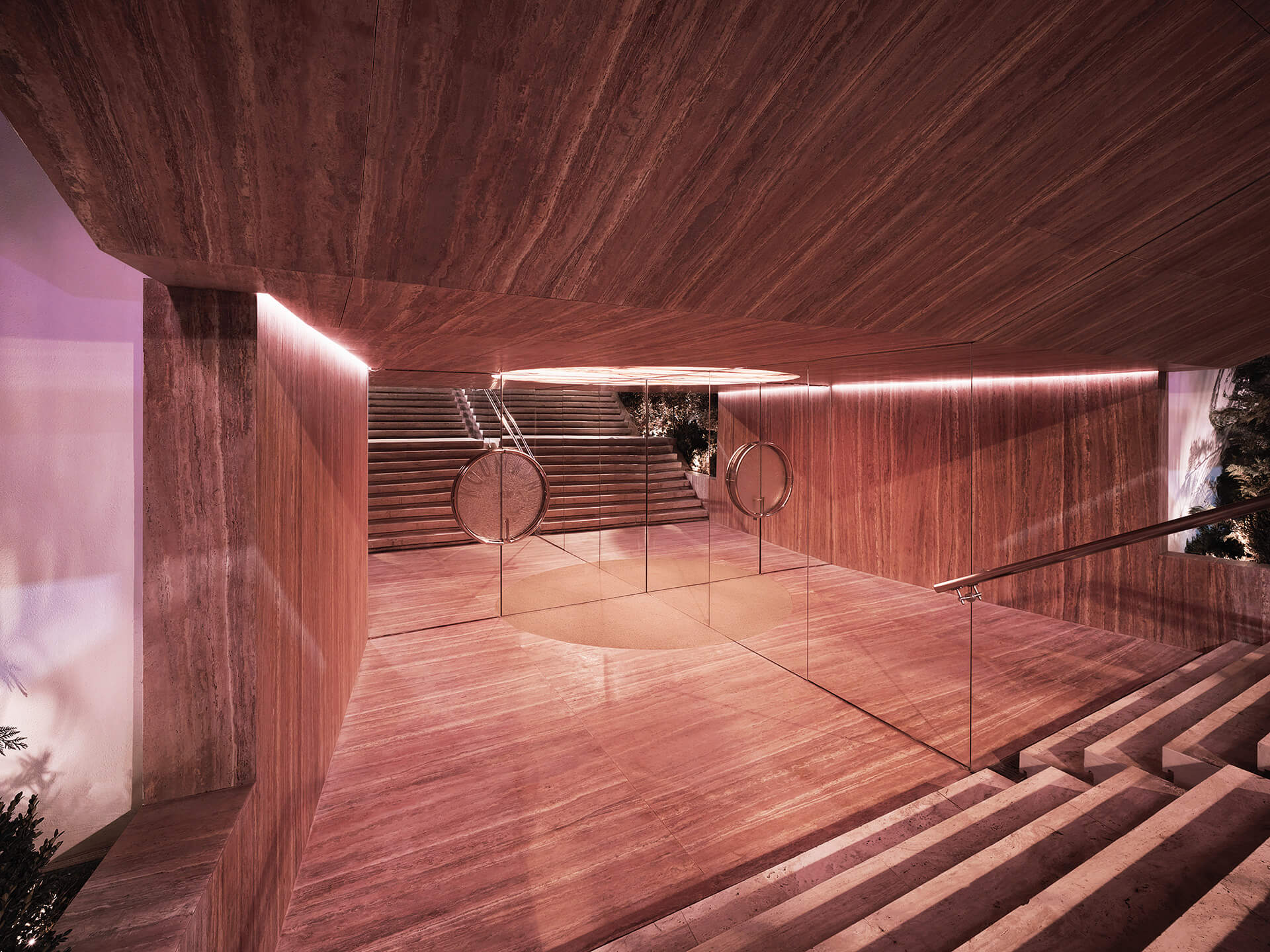
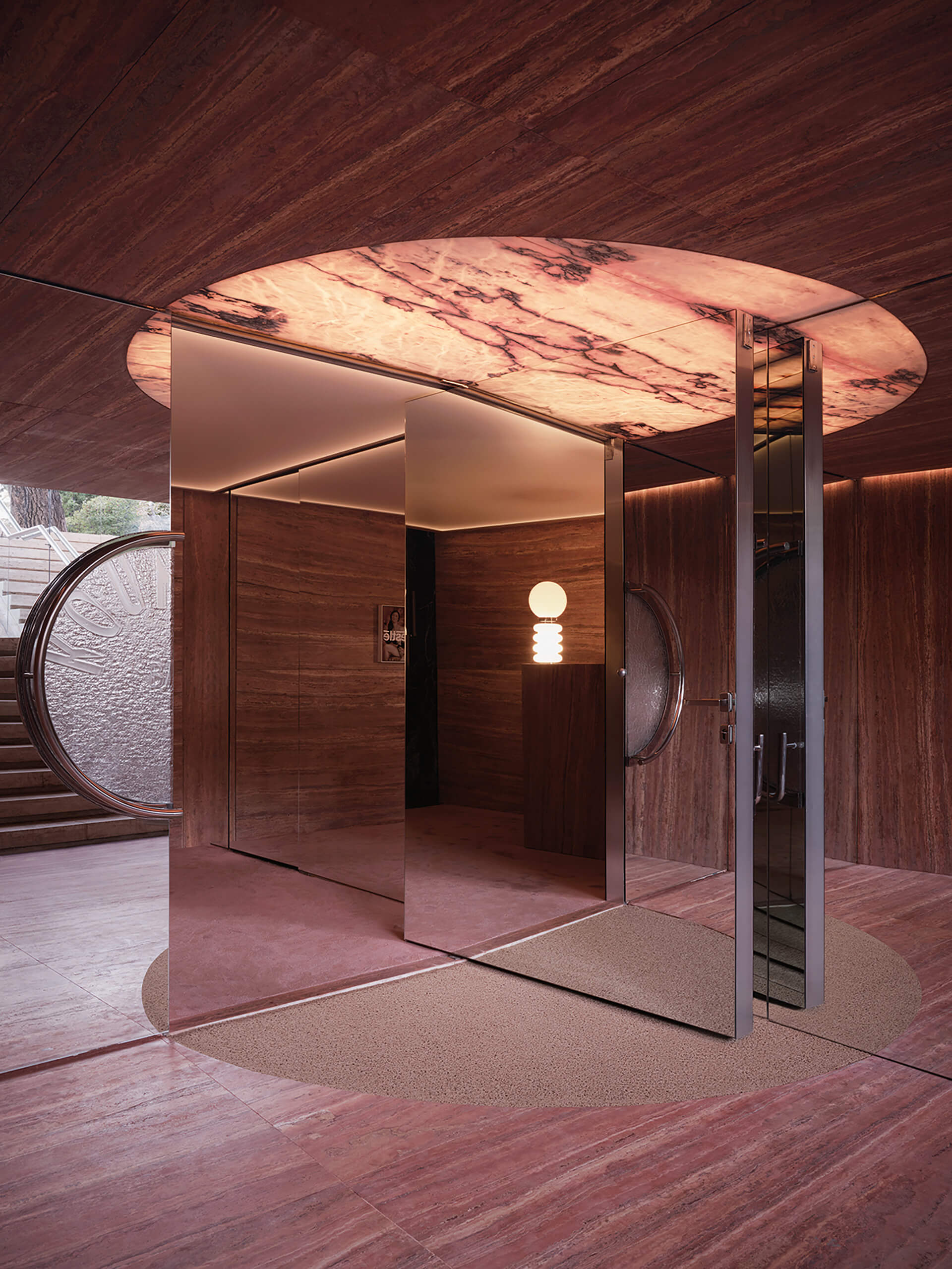
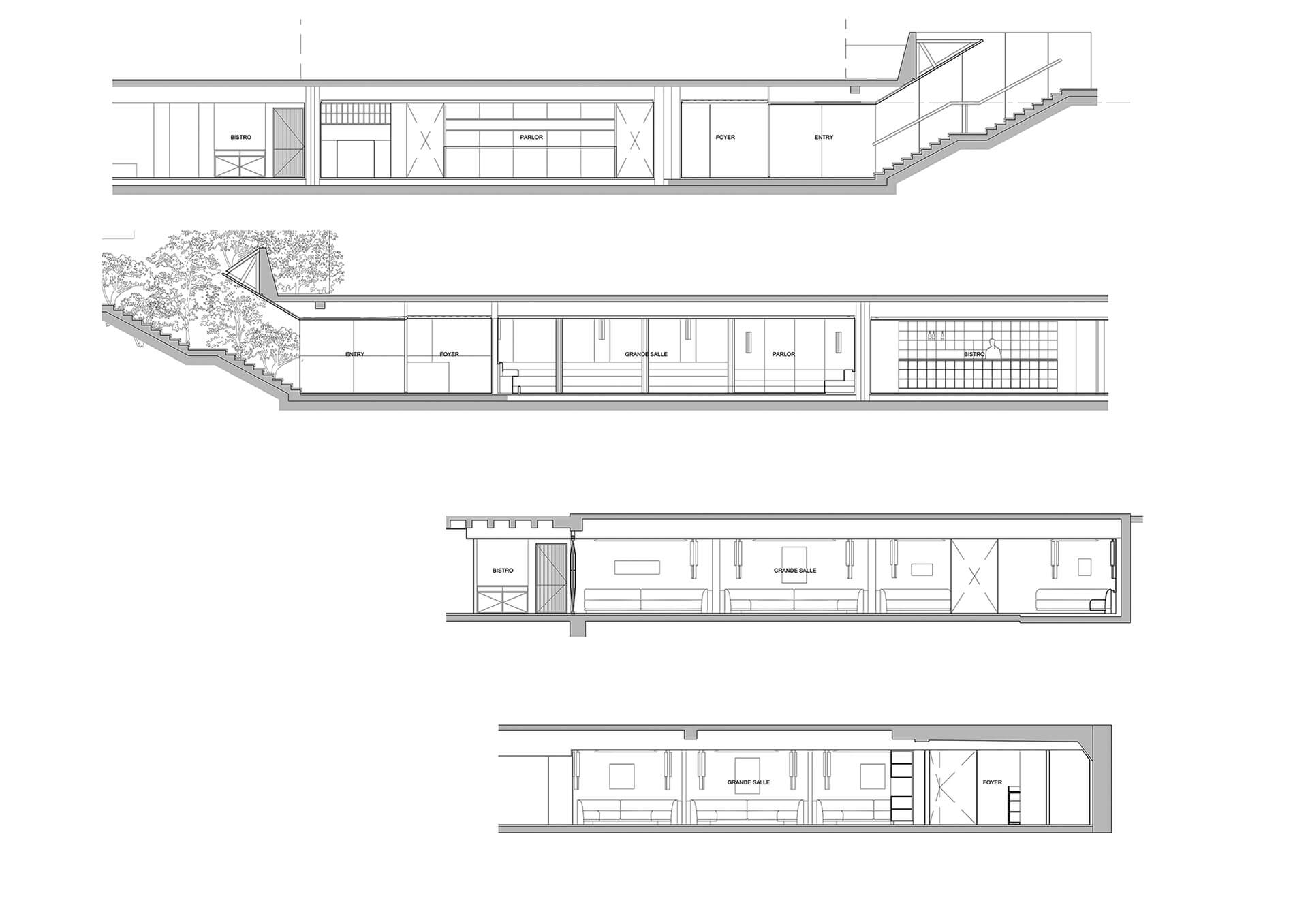
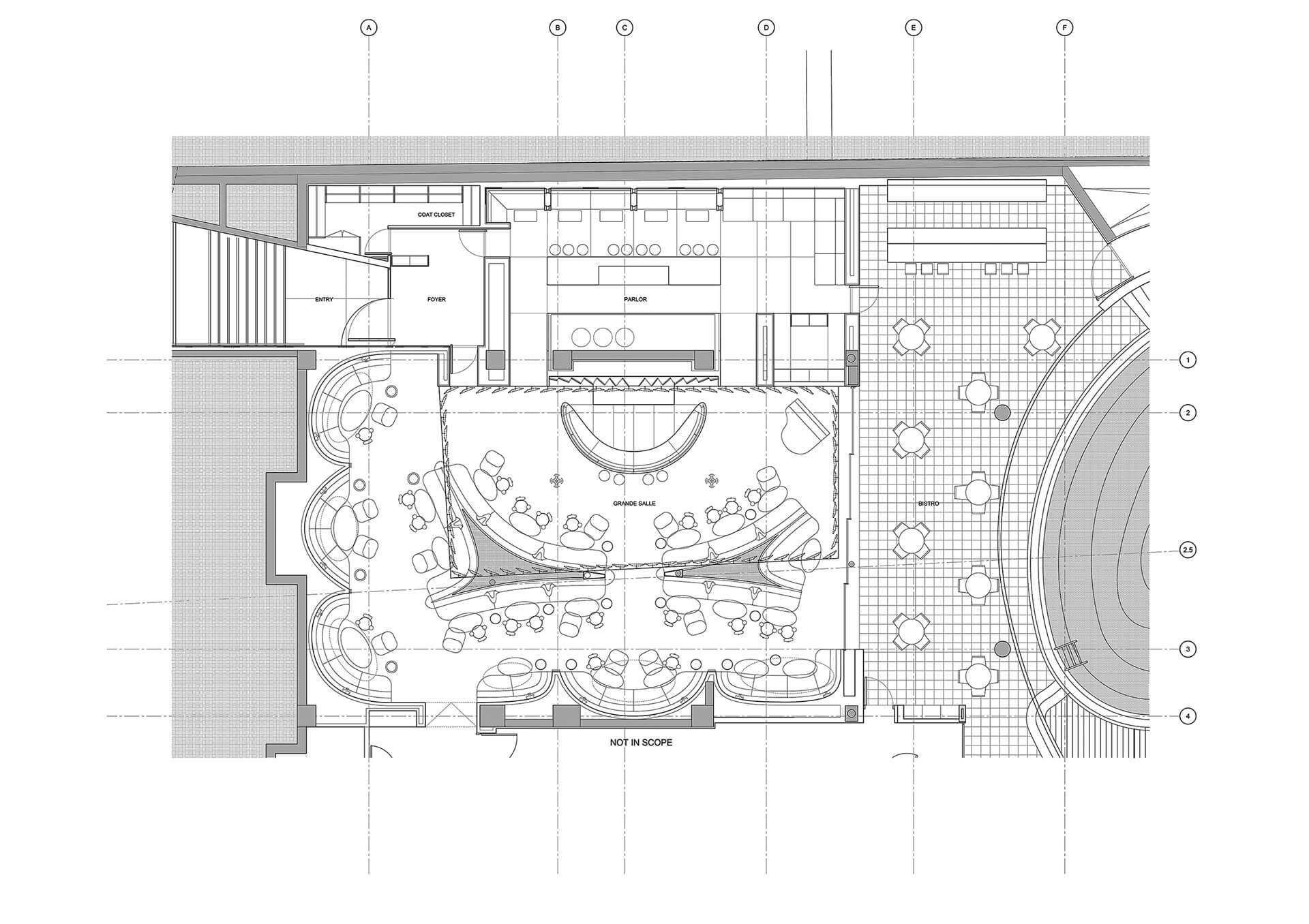
Koumkan combines the singular identity of Semiramis with the timeless atmosphere of grand hotel lounges, reframed through a minimalist lens. By staging a sequence of distinct atmospheres, it creates a microcosm that encapsulates the character of iconic hotel reception spaces around the world. Visitors descend a travertine staircase toward a garden that is reflected in the mirrors cladding the wall.
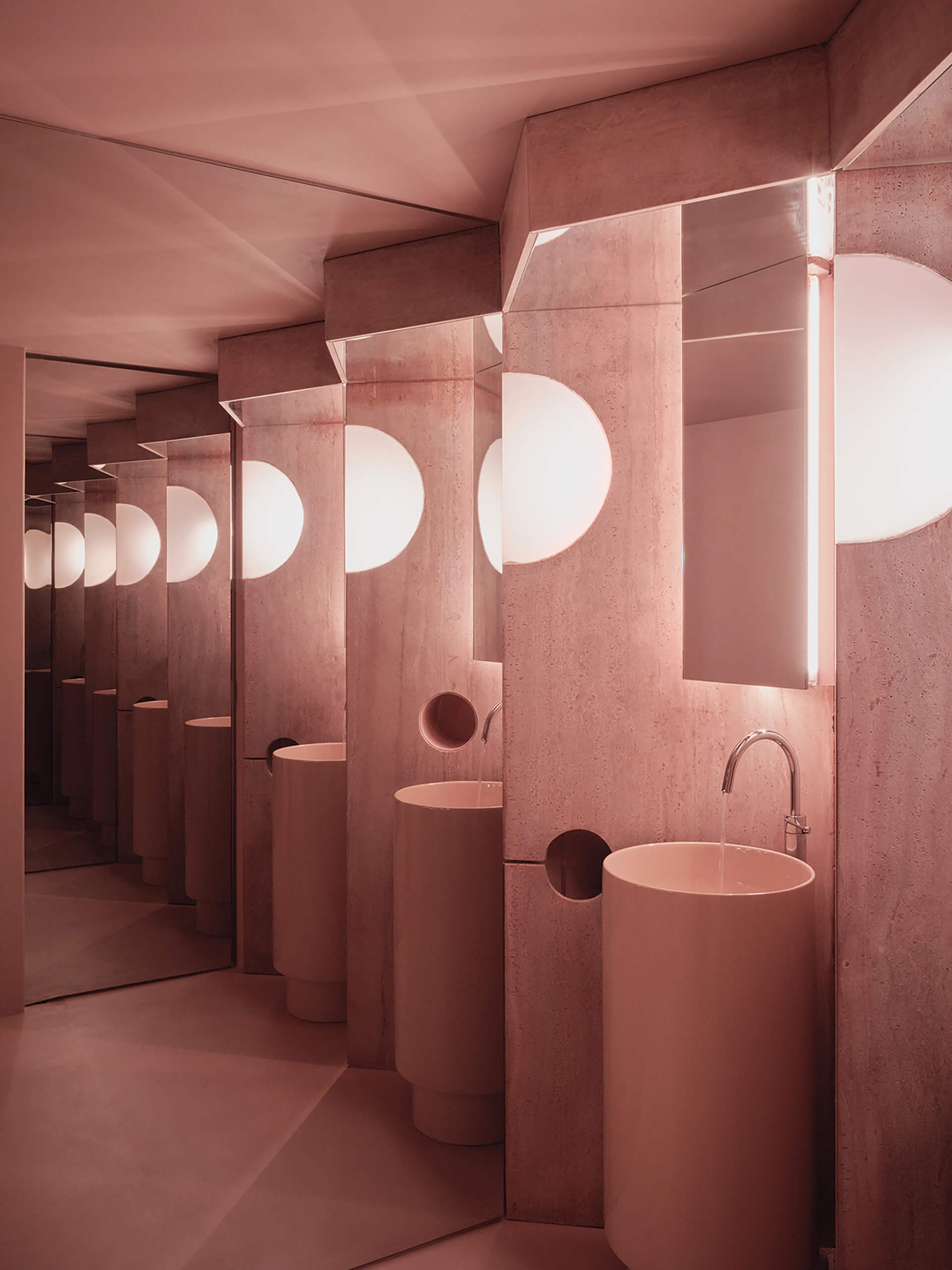
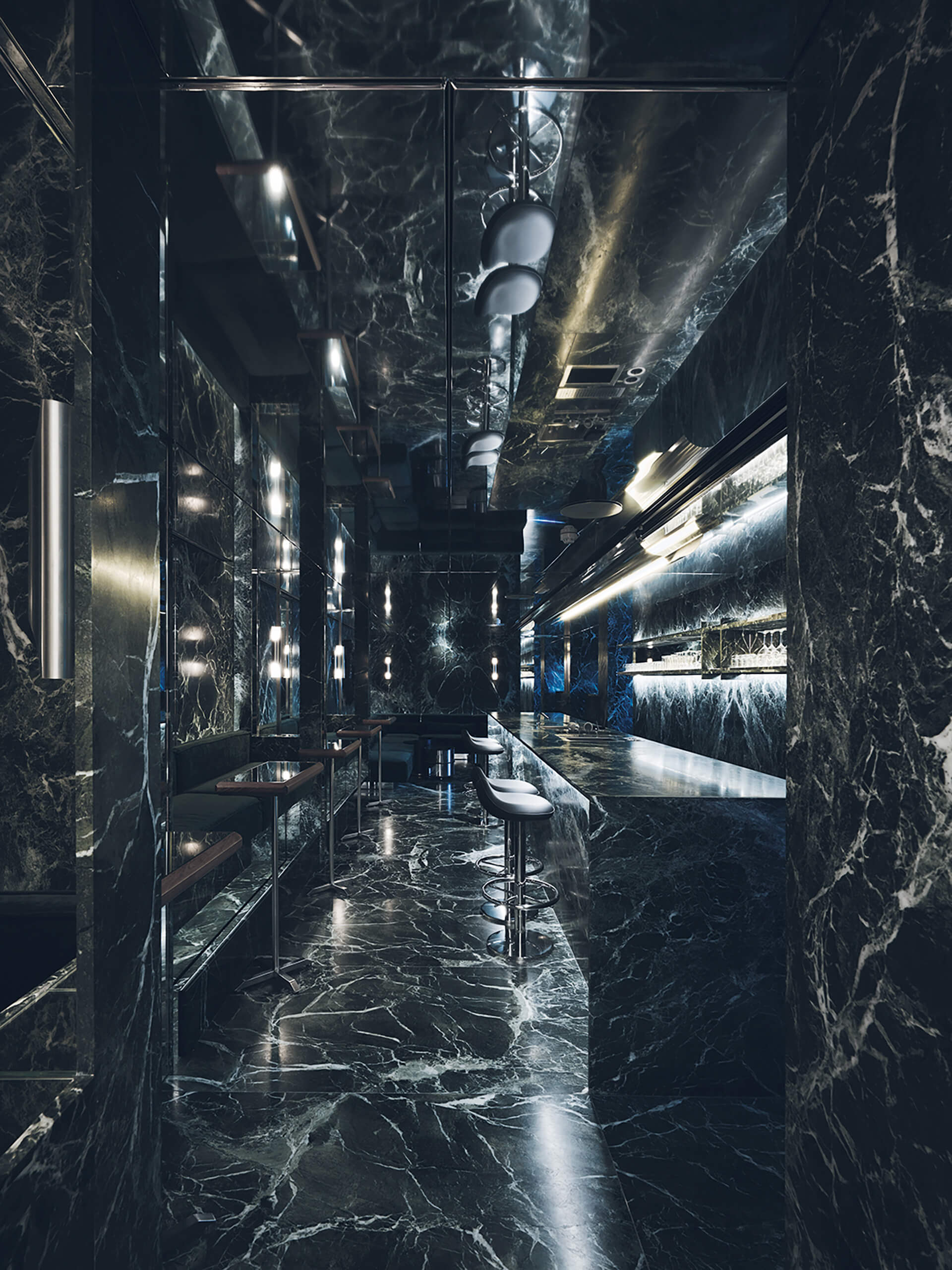
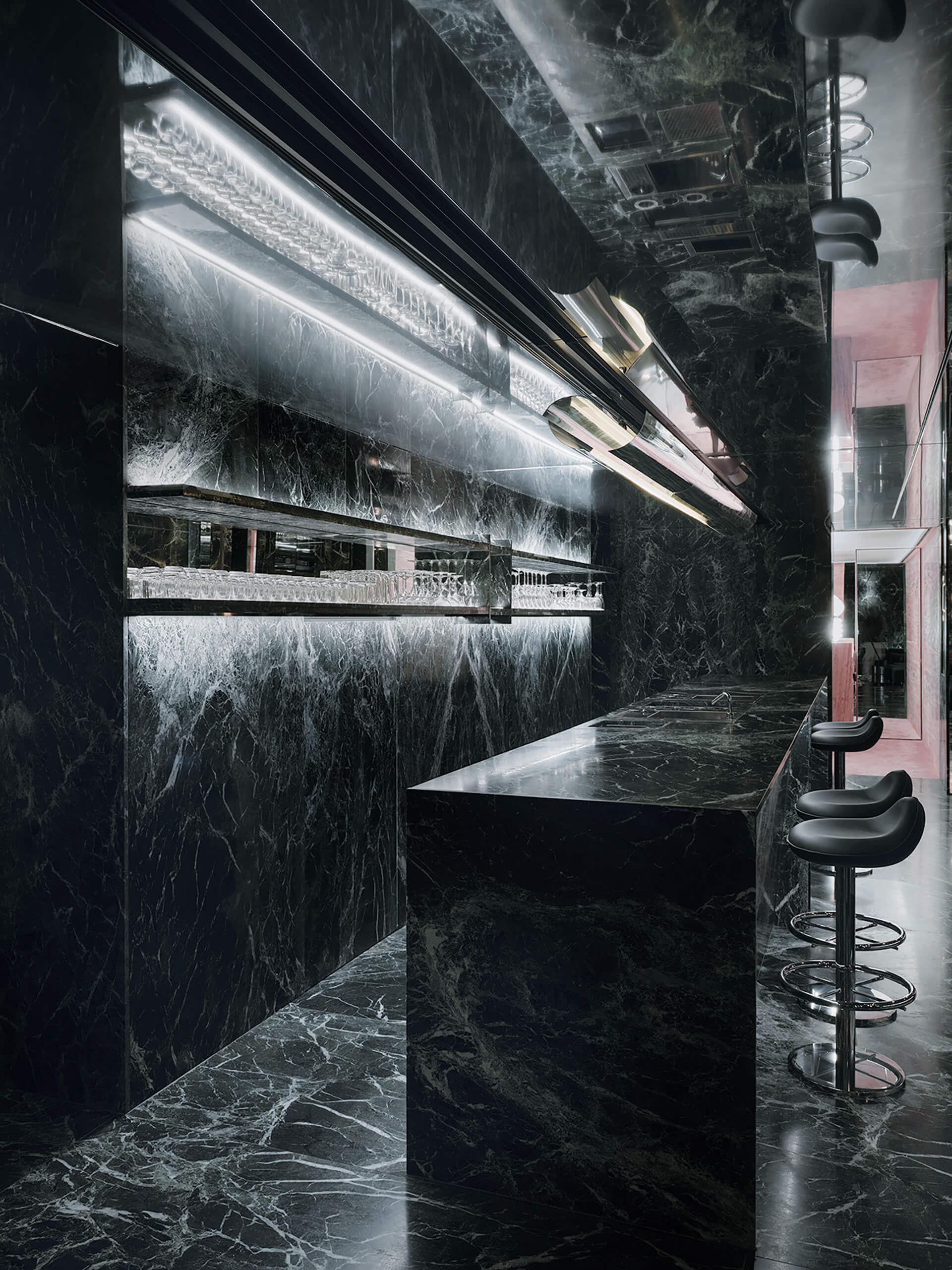
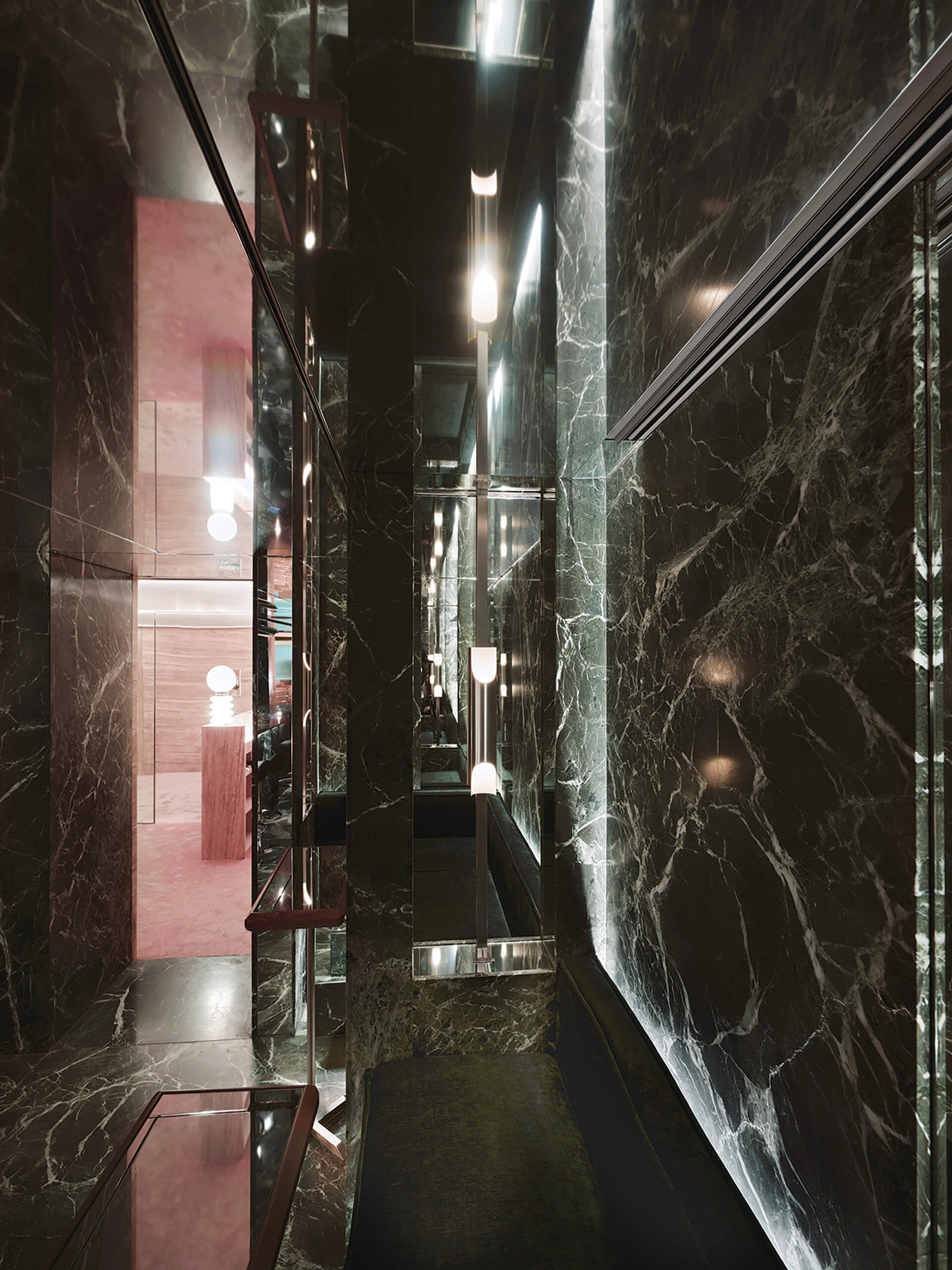
A large revolving door leads into the Foyer, a soft pink reception space illuminated by gentle, diffuse lighting. Two symmetrically composed travertine slabs, framed by mirrors, articulate the notion of luxury through an emphatic gesture, highlighting the inherent value of an almost empty space. A concealed door opens to the Parlor, the first bar area, entirely clad in dark green Tinos marble. This stone -long considered inexpensive due to its irregular discolorations- is transformed into banquettes, a DJ booth, shelving, and a bar, as if all had been carved from a single monolith. The mirrored ceiling expands the space, while vintage stainless-steel sconces and a custom chandelier offer warm, indirect light.
Spatial Organization
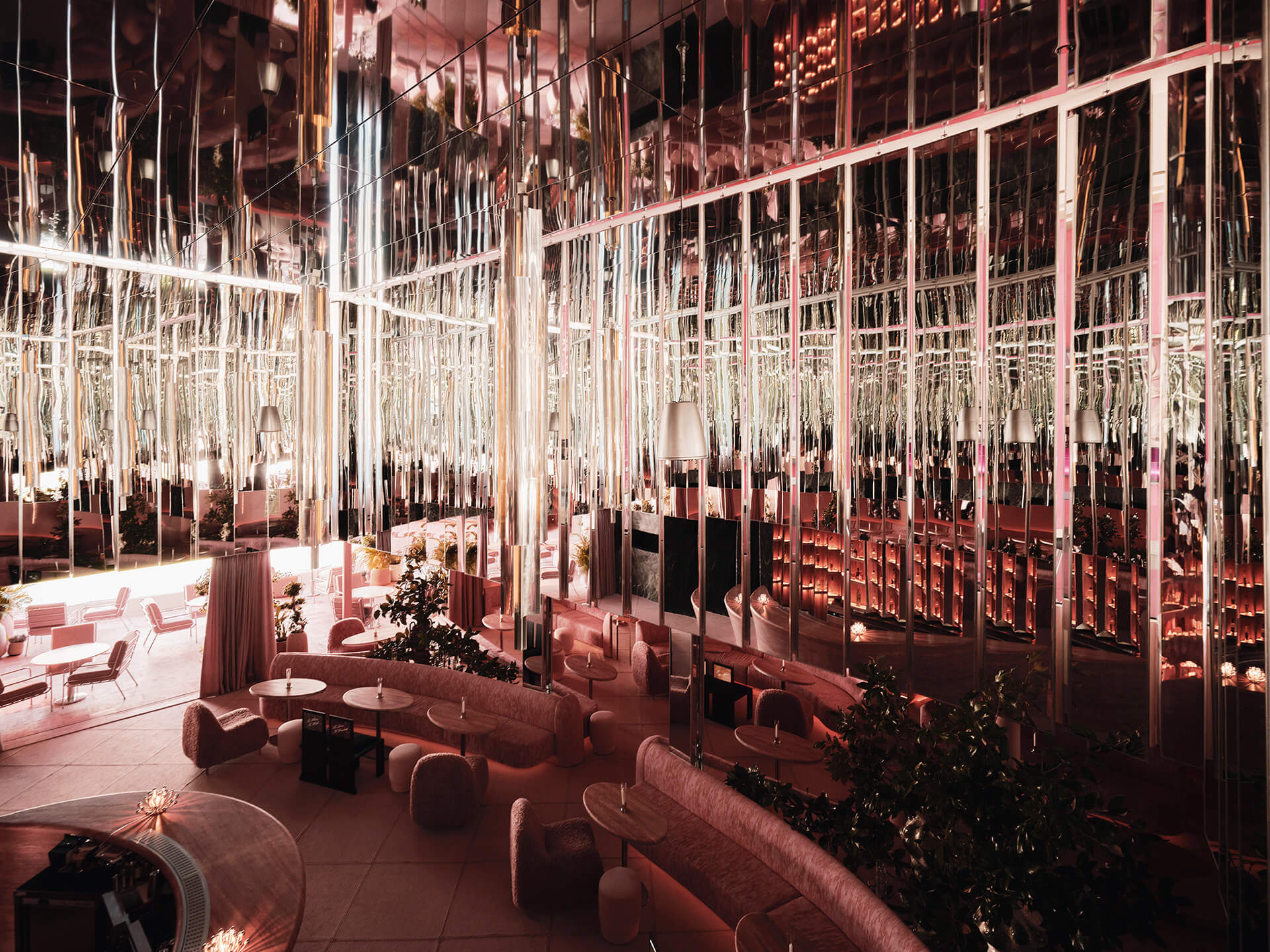
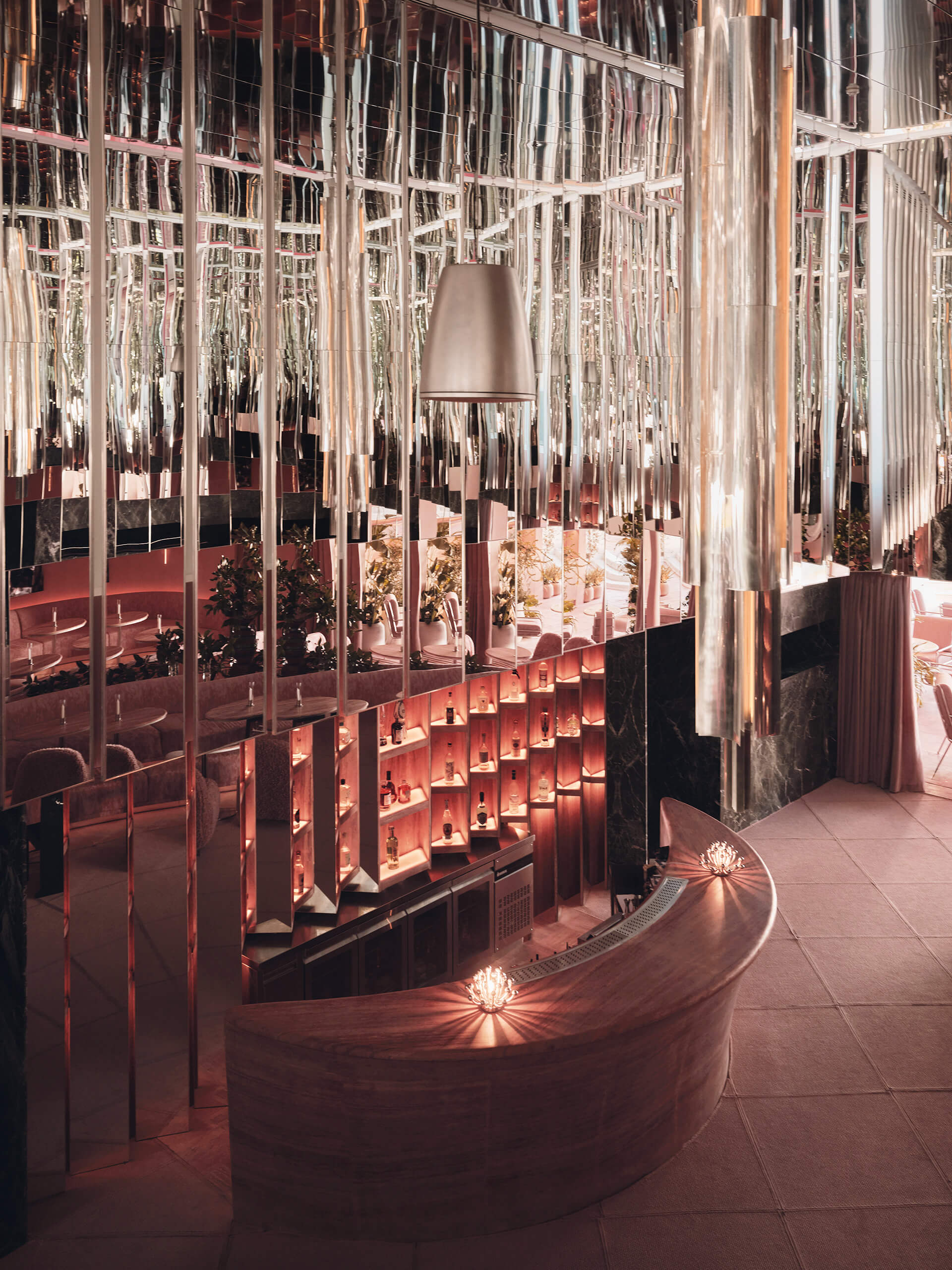
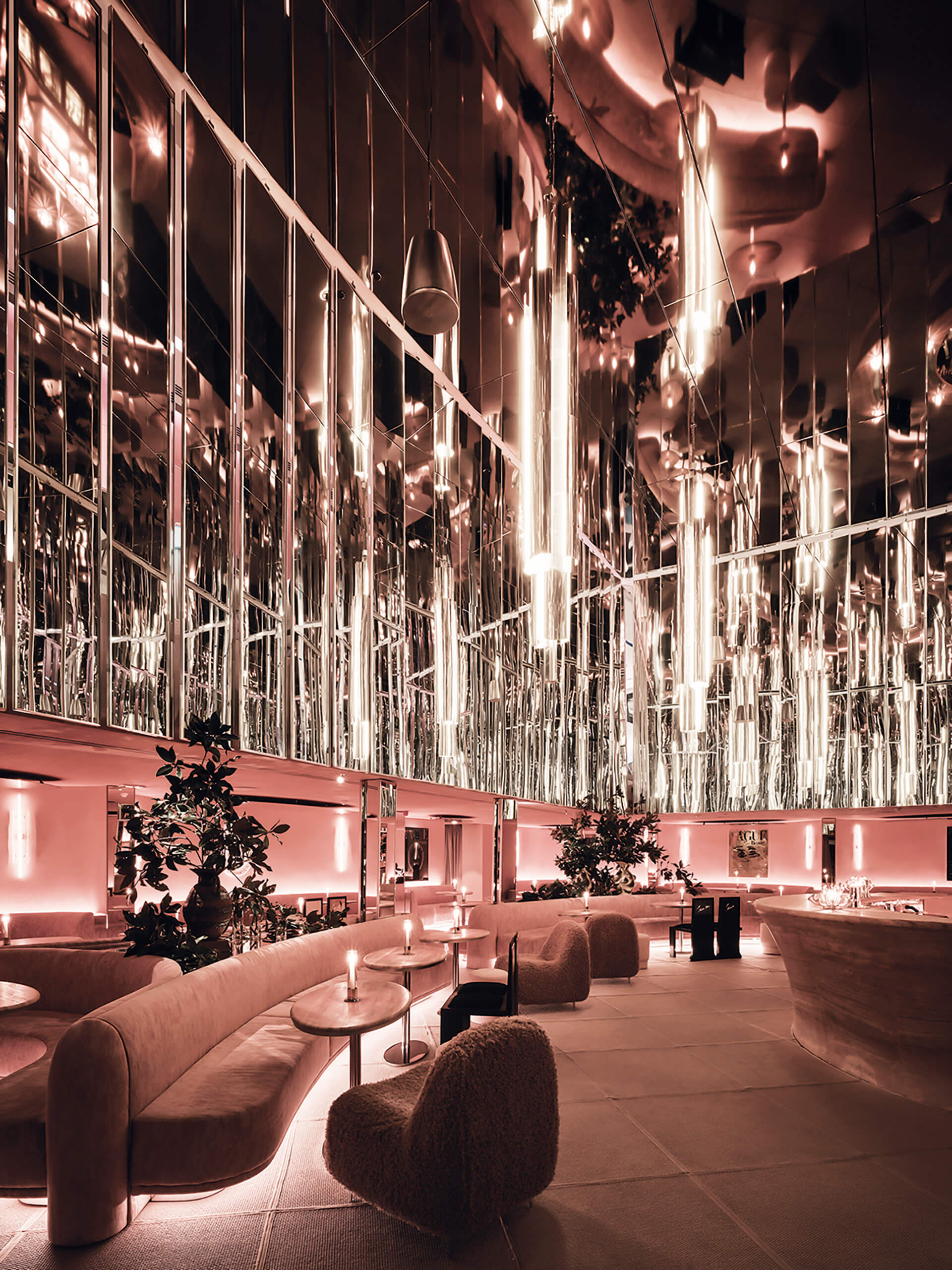
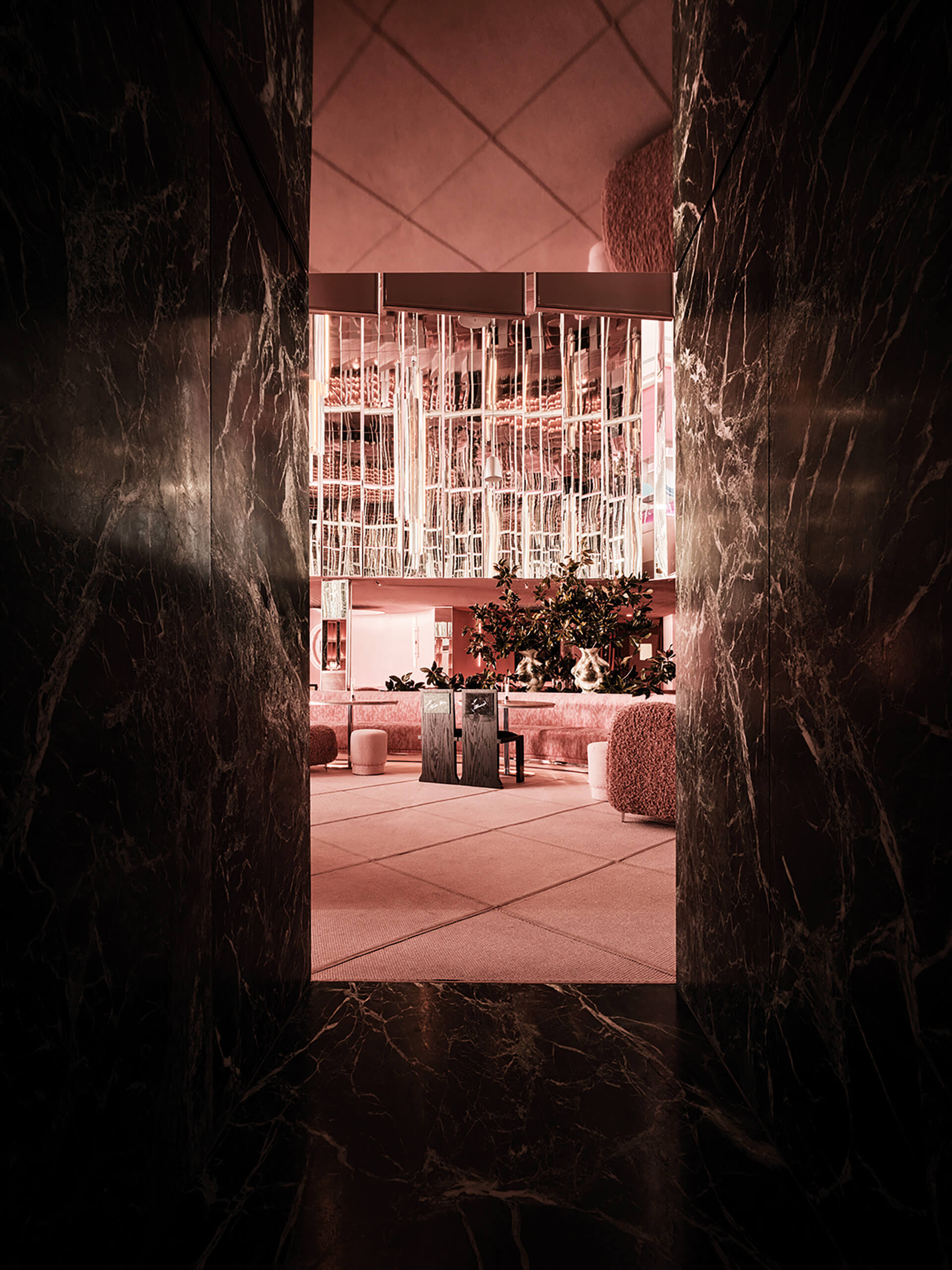
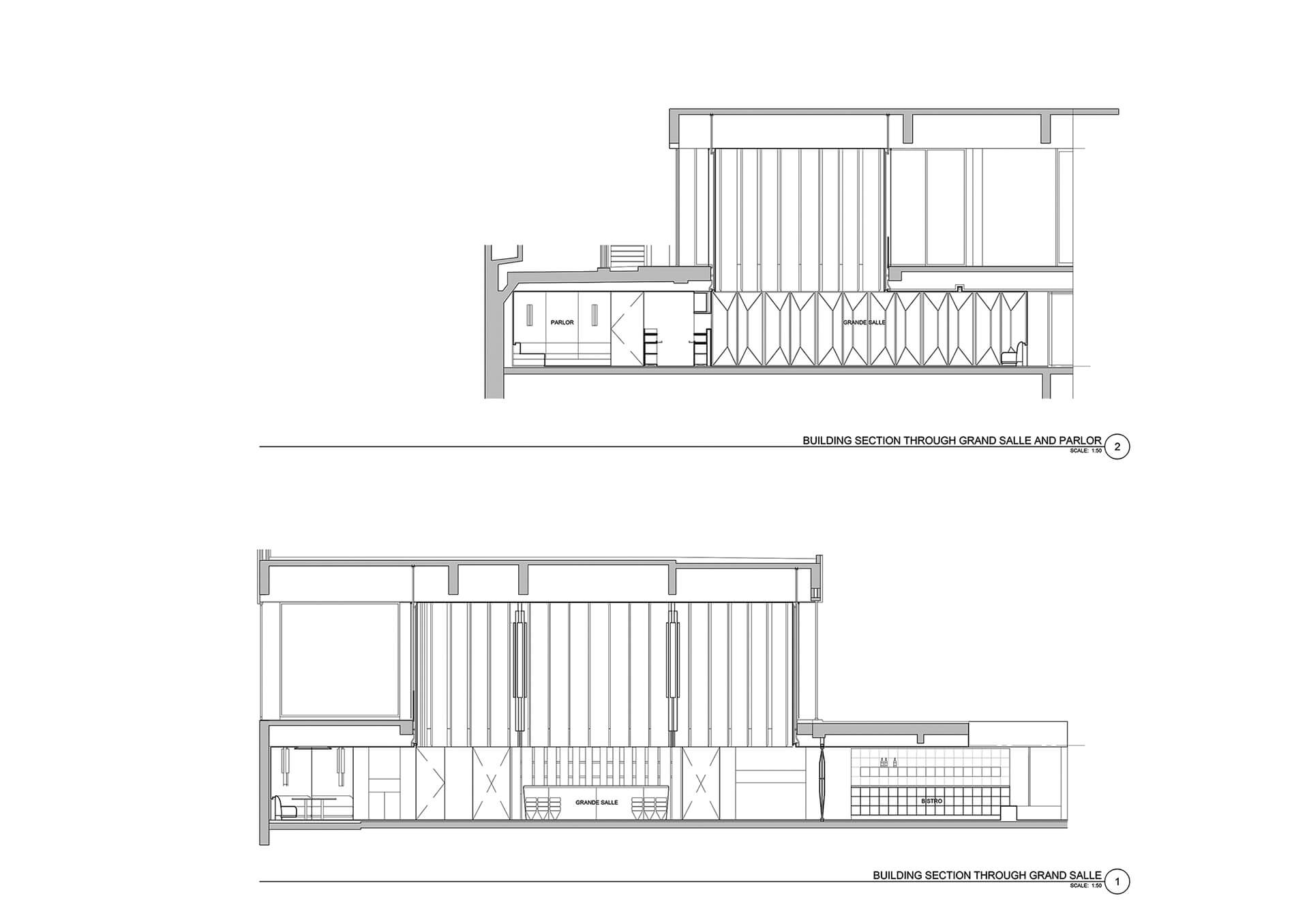
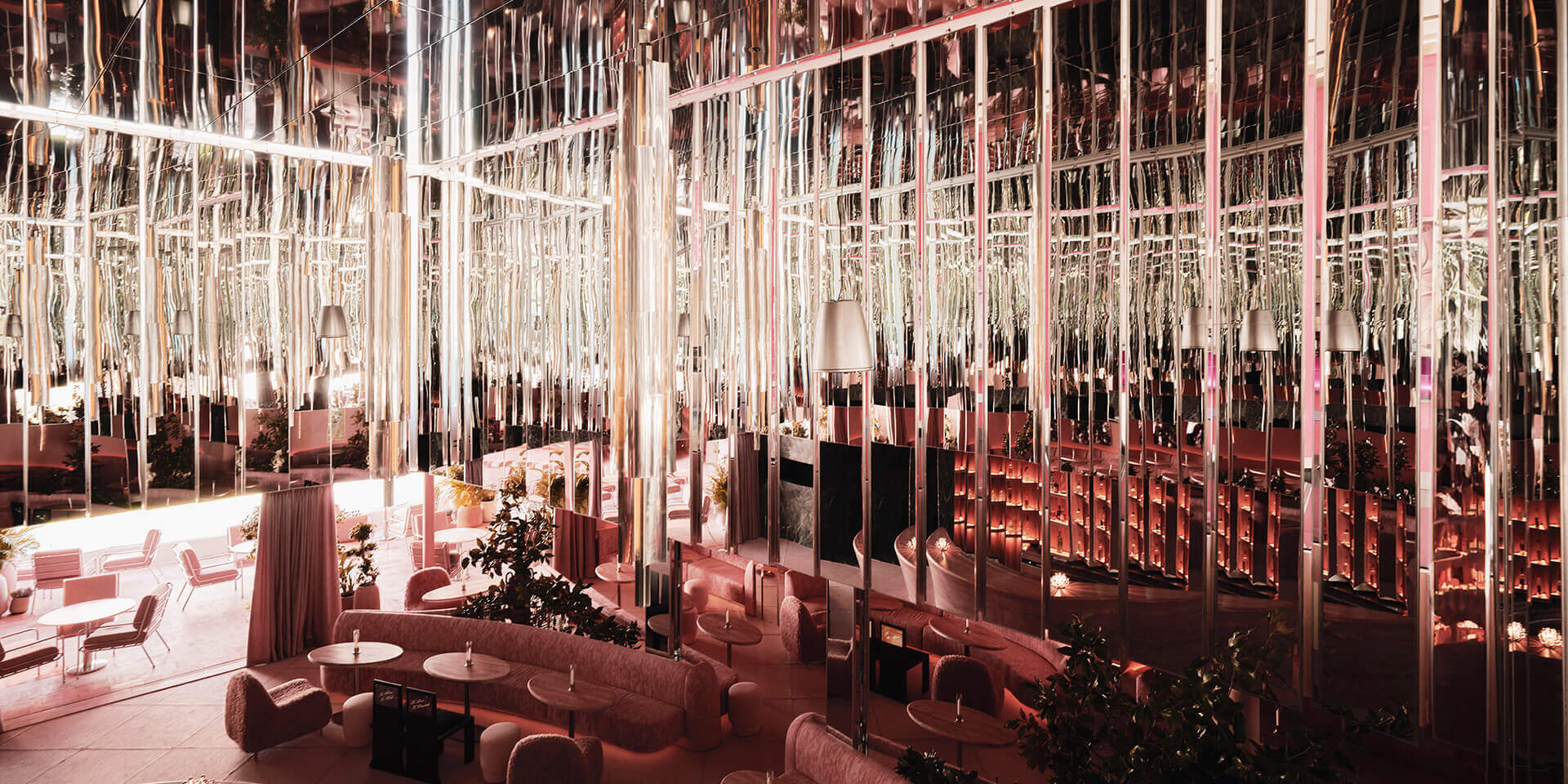
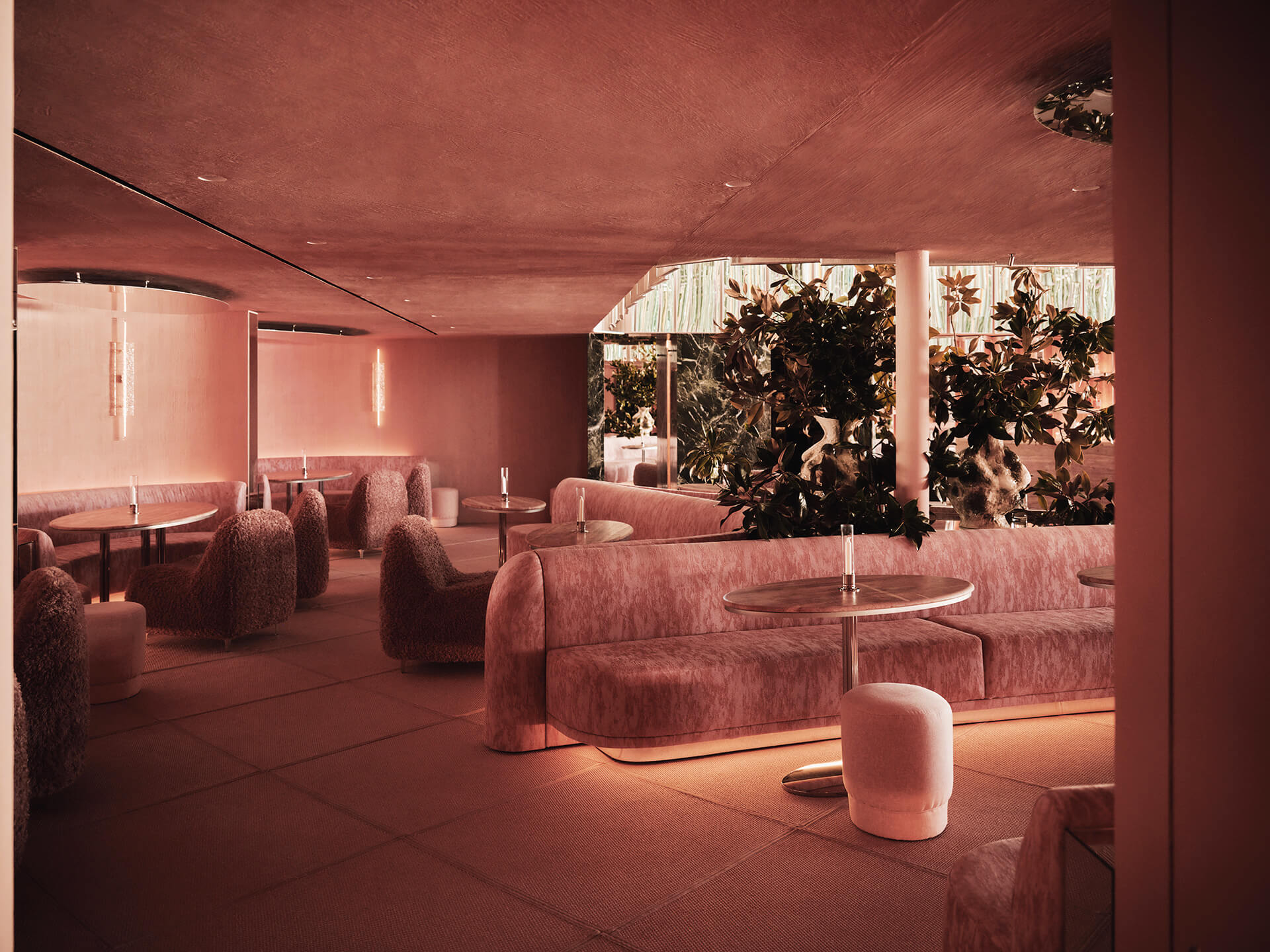
The room, reminiscent of an underground chamber, has an enclosed atmosphere that juxtaposes raw materials with refined details. Beyond the Parlor, two corridors frame the Grande Salle, a lounge, cocktail bar, and restaurant defined by its kaleidoscopic atrium, lined with 7-meter-high mirrors. Custom pendant lights with reflectors create the effect of a disco ball turned inside out. Curved banquettes form boomerang-shaped arrangements that appear to float above a light pink coconut-fiber carpet.
Freestanding banquettes in the center become focal points, while the tables along the walls offer enhanced privacy. A “banana bar” in pink travertine emerges within the space, accentuating its dynamic curves. The aesthetic of the Grande Salle draws inspiration from the abstract paintings of British artist William Streng, characterized by dark and light fleshy tones in patterns resembling skin markings.
Materials & Furnishings
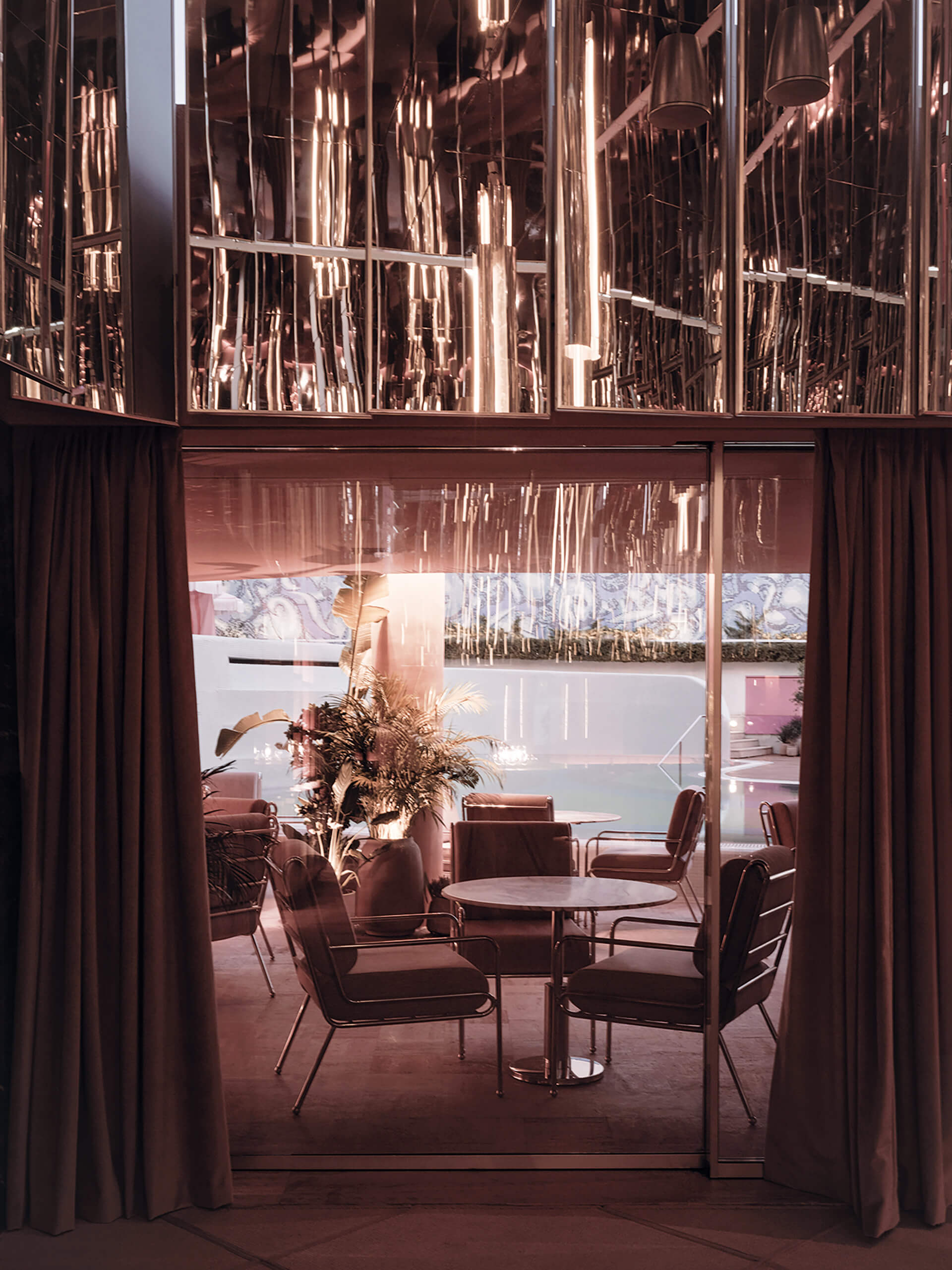
Custom fabrics dyed using traditional techniques and textured plaster finishes intensify the space’s raw character. The Grande Salle extends into the Grotto, a sheltered outdoor lounge that connects the interior to the pool area. This cave-like environment is formed through the use of local materials and handcrafted treatments.
The Grotto wraps around the curve of the pool, evoking tropical modernism and the architectural heritage of the West Coast. Walls of peach-toned terracotta and pastel pink travertine amplify the warm hue of the lighting, while the pool bar, shaped like an inverted ziggurat, complements the laid-back, elegant design. Its level sits slightly below the pool waterline, positioning the eye at swimmer height and staging an intriguing visual interplay alongside the social ambiance. Throughout the project, a blend of antiques, commissioned artworks, and custom furniture revives the retro-futuristic character of the original Semiramis.
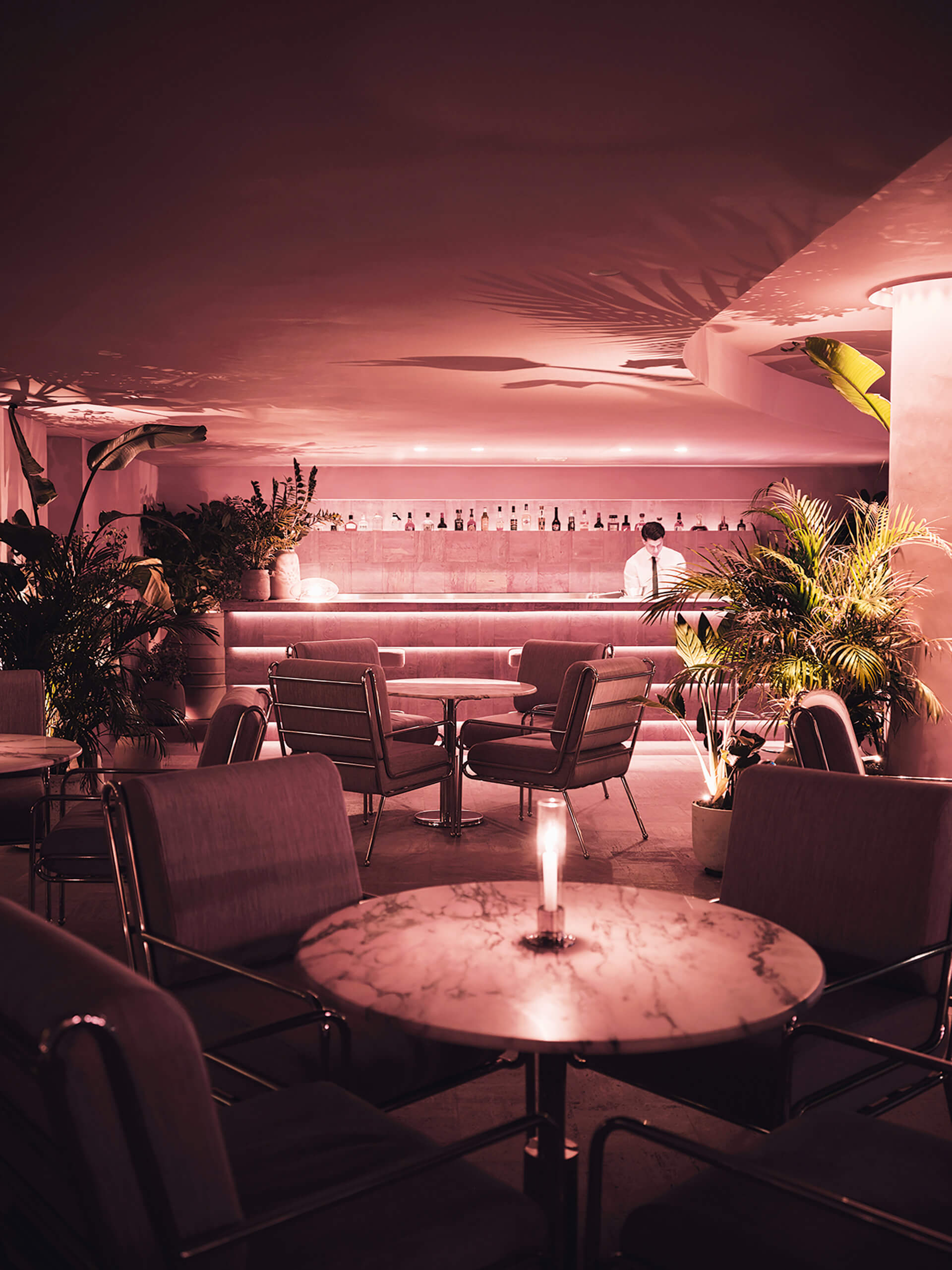
Standout elements include chrome-plated stainless-steel chairs inspired by the 1950s Mediterranean Riviera style, oversized ceramics by Elina Vassilaki, and mirrors by Olga Miliaressi-Foka. The space also features works by emerging artists from the Joannou collection, such as Elli Ioannou’s black chairs and Alexandra Ndore’s provocative Mama Issues at the entrance. Koumkan preserves the spirit of an interwar bar in Milan or Vienna, replacing traditional décor with an idiosyncratic architectural approach. Its spatial layout -with multiple sequential rooms, reflective ceilings, and a contemporary baroque sensibility- creates a new destination in Athens for both visitors and locals.