Ergon Bakehouse Hotel & Bakery in Athens
Interior Design:
Photography:
ek Issue:
Ergon Bakehouse operates simultaneously as a hotel, artisanal bakery, retail space, and restaurant – a multifaceted destination for gastronomy and hospitality in the historic center of Athens. It occupies a listed early-20th-century building designed by Vasilis Tsagris, where heritage architecture and contemporary use coexist in balance.
Design Philosophy
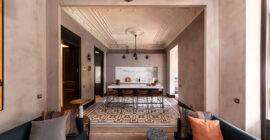
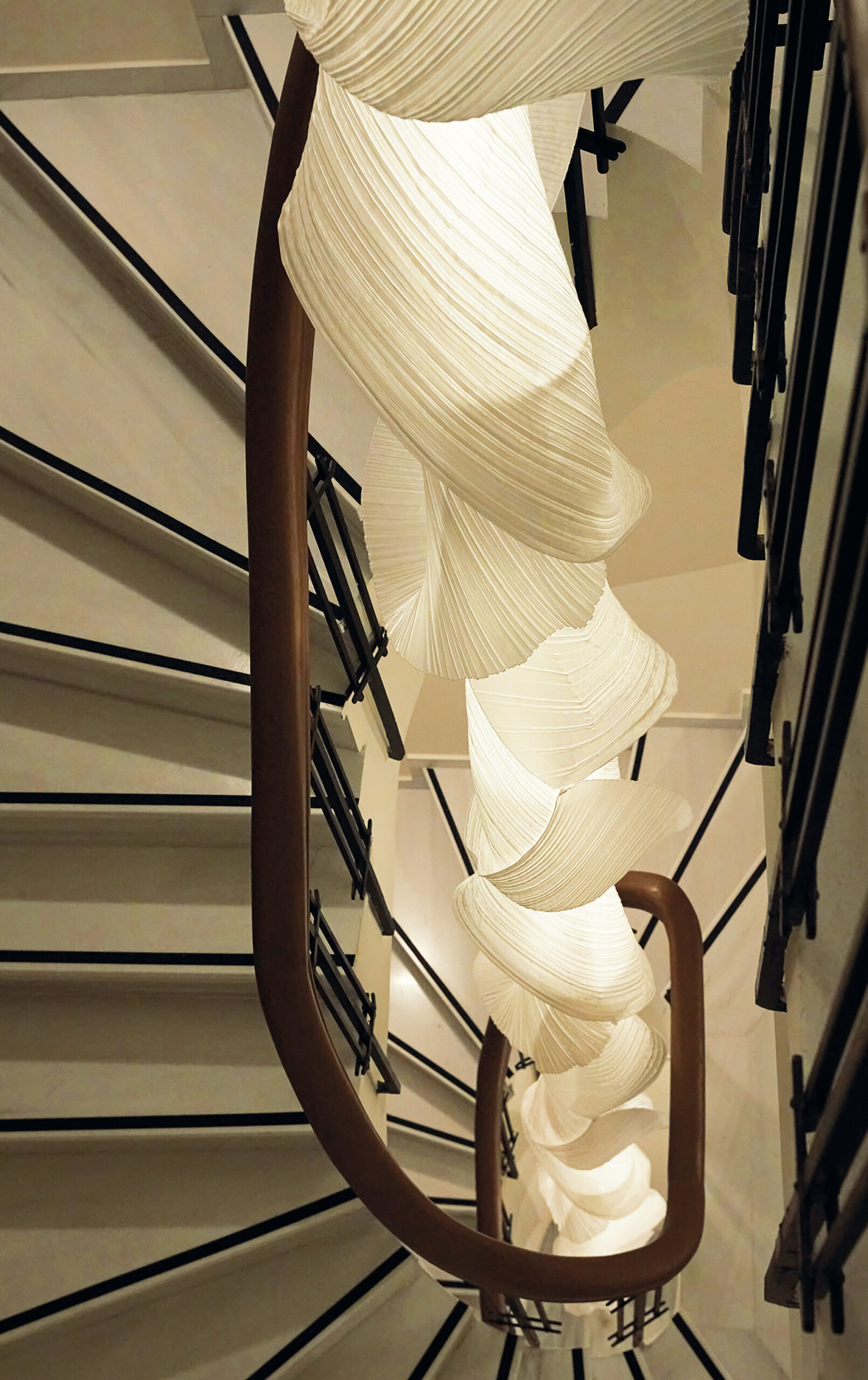
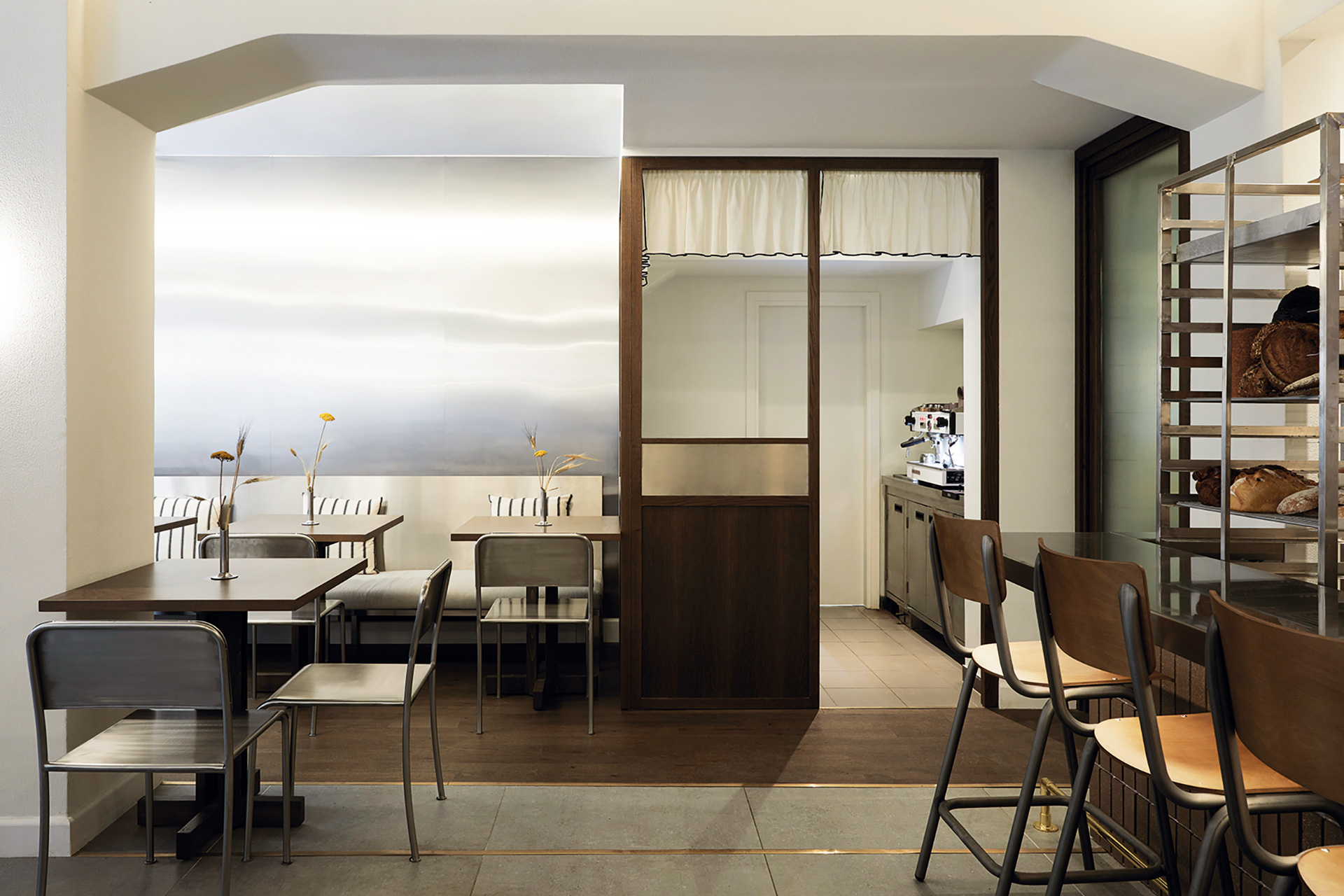
Originally housing residences and offices, with a commercial shop at ground level, the building stands as a representative example of classical Athenian architecture. Its architectural character has been carefully preserved, allowing the new design to integrate seamlessly with the existing fabric. Today, traces of both the building’s aesthetic and functional past remain visible, including plaster ornamentation, one of the original staircases, and the historic elevator. From the main entrance through to the guest rooms, the design narrative is guided by the life cycle of dough and the atmosphere of a traditional bakery.
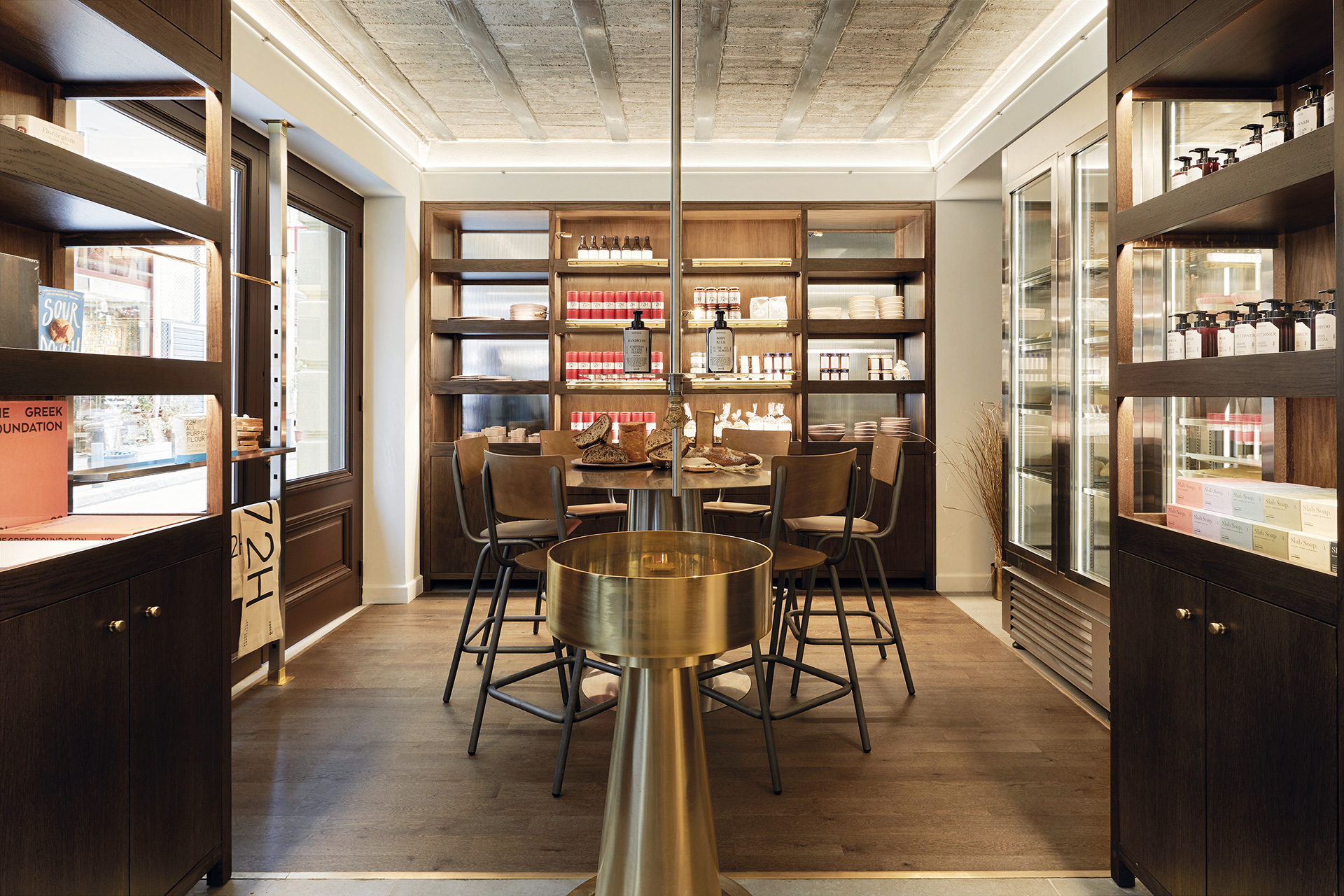
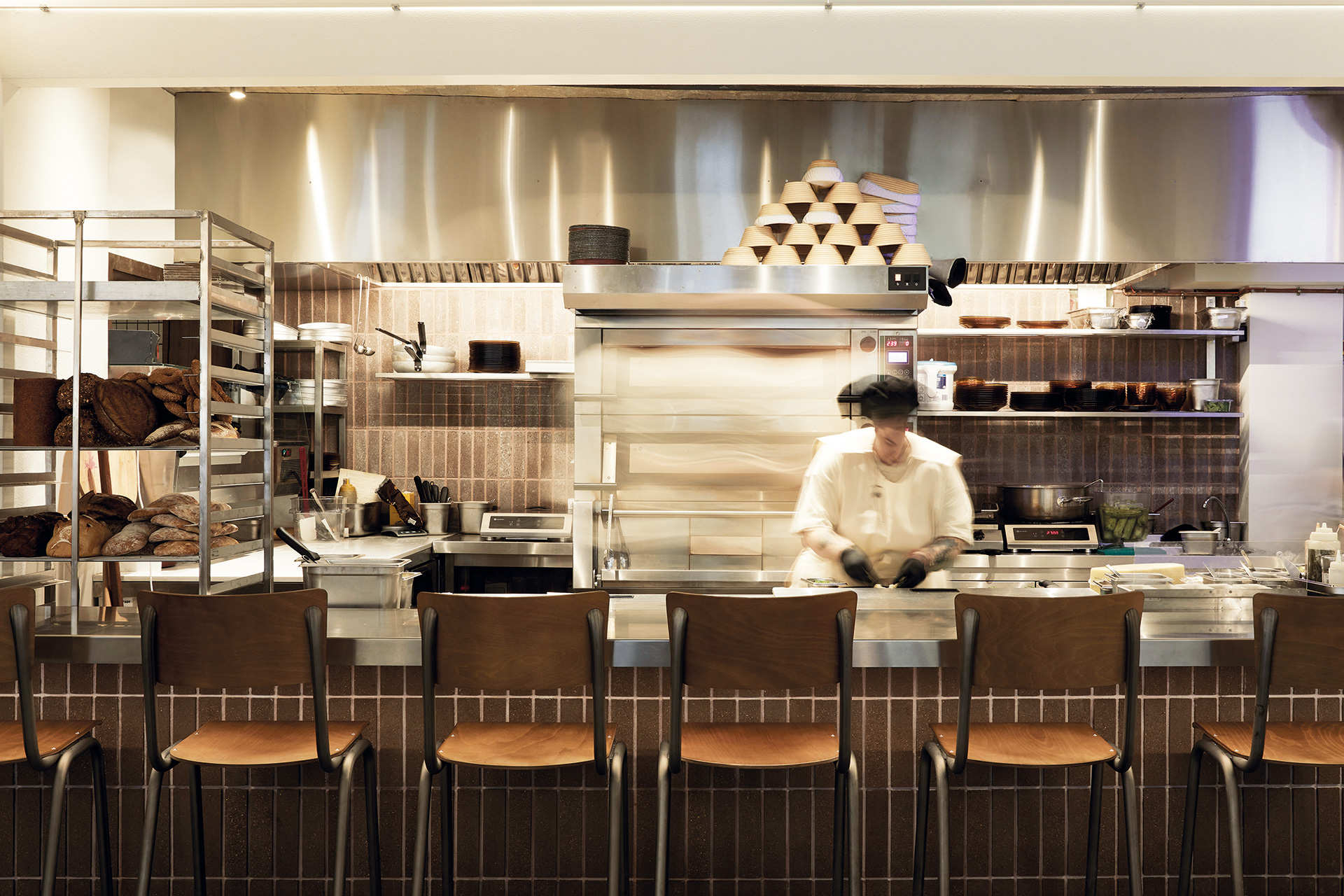
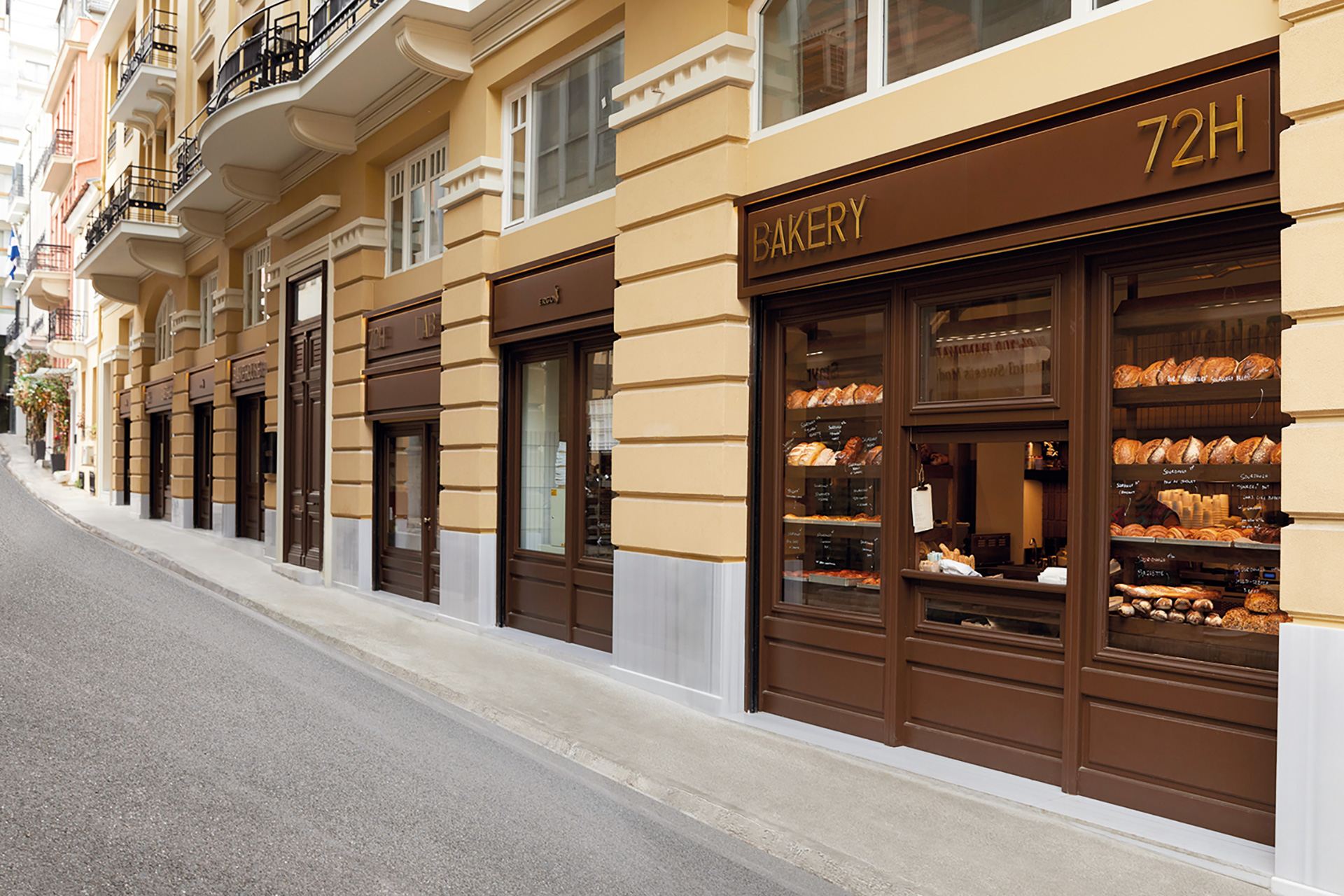
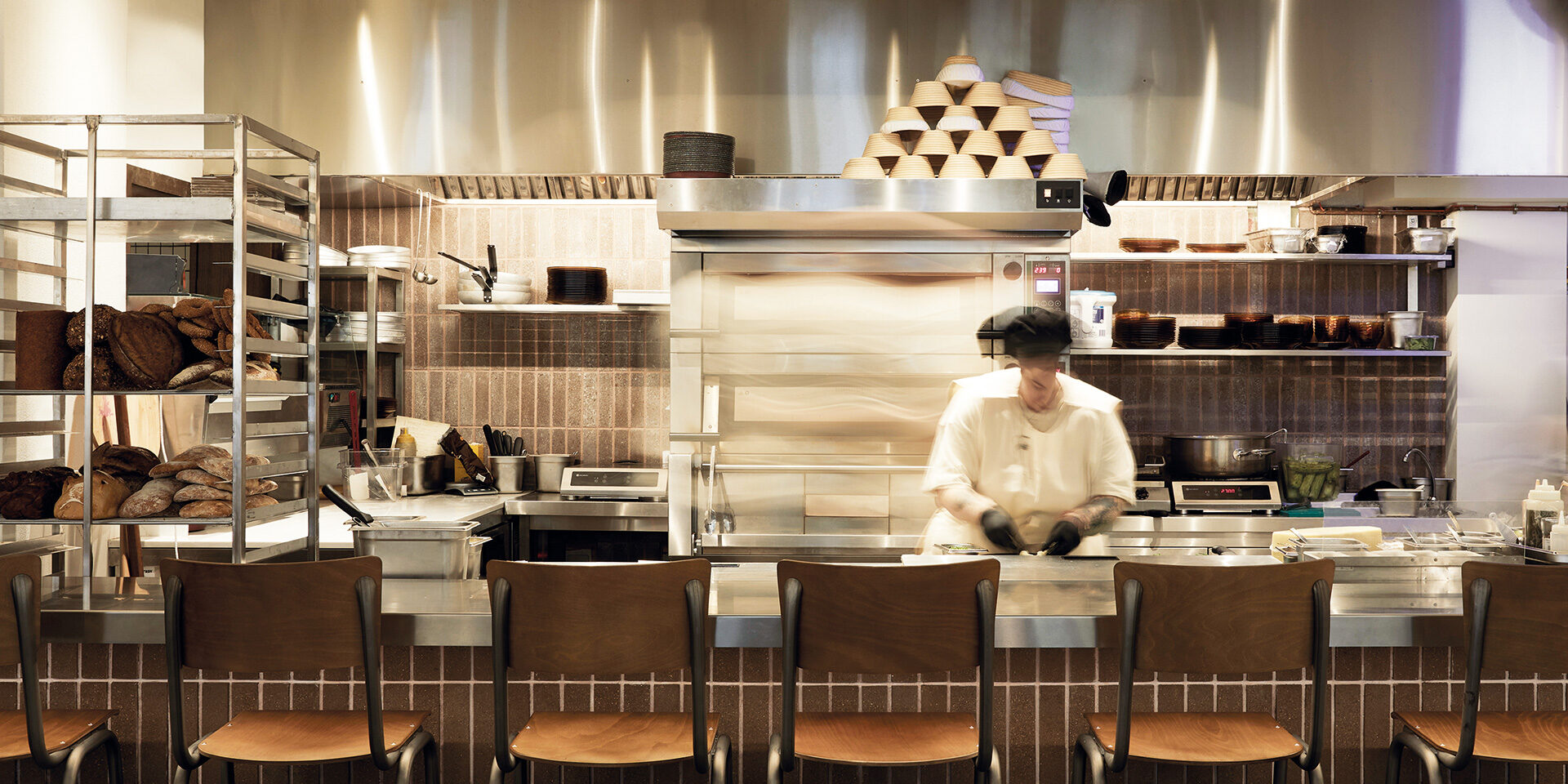
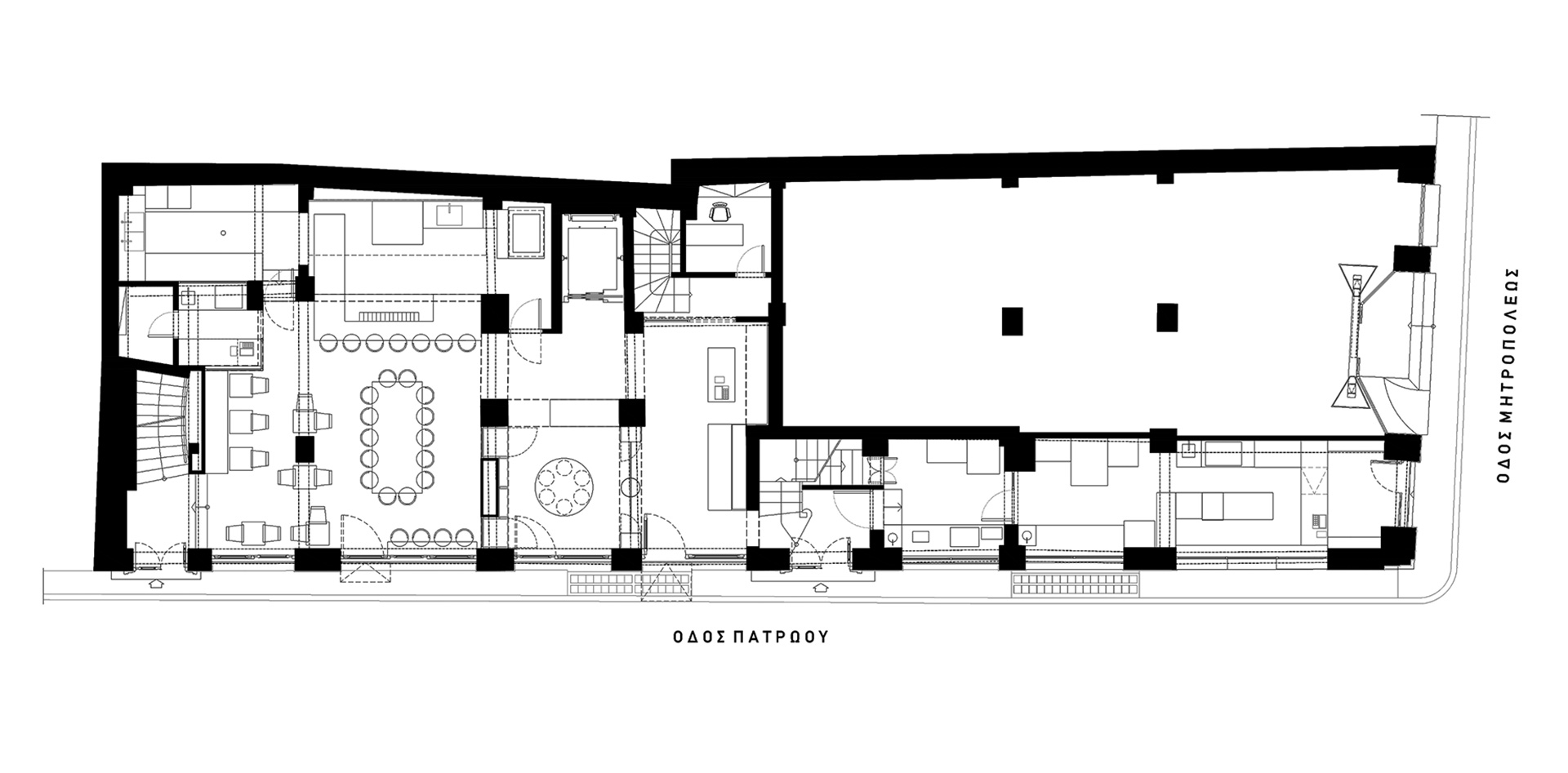
The ground floor hosts the 72H Artisanal Bakery, where bread and baked goods are prepared and baked following a 72-hour resting process. A generous storefront draws visitors into three distinct zones: the retail area offering products for home baking, the cooking area, and the 72H Lab – the preparation space. Through existing openings, the open-plan workshop is fully visible, revealing processes that are typically concealed in conventional bakeries.
At the heart of the building lies the original entrance hall, which connects three key destinations: the retail shop and 72H Eatery, the hotel reception, and the waiting area. Vertical circulation is organized through two staircases and two elevators – one preserved from the original structure, and one newly introduced to meet contemporary circulation demands.
Functional Organization
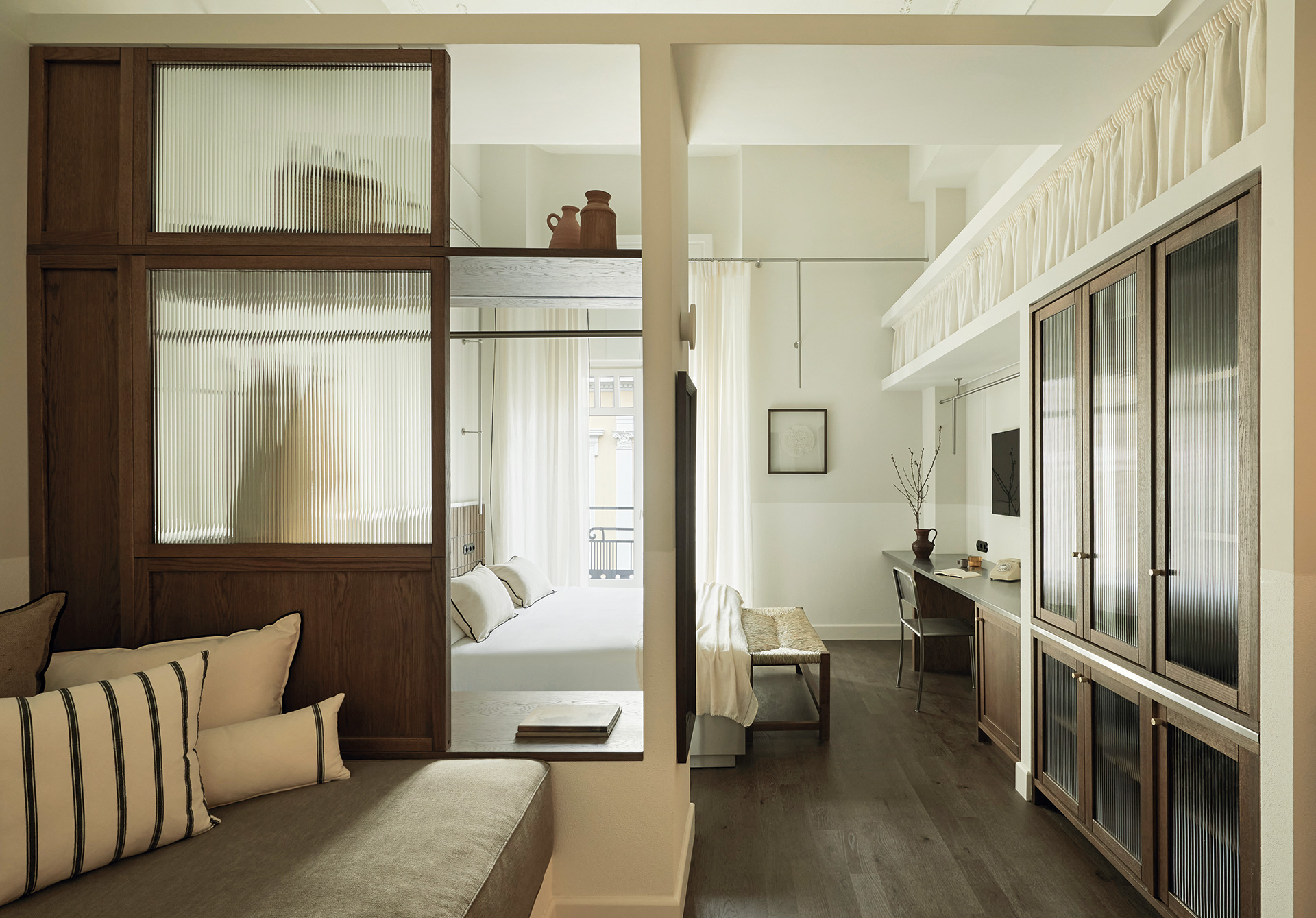
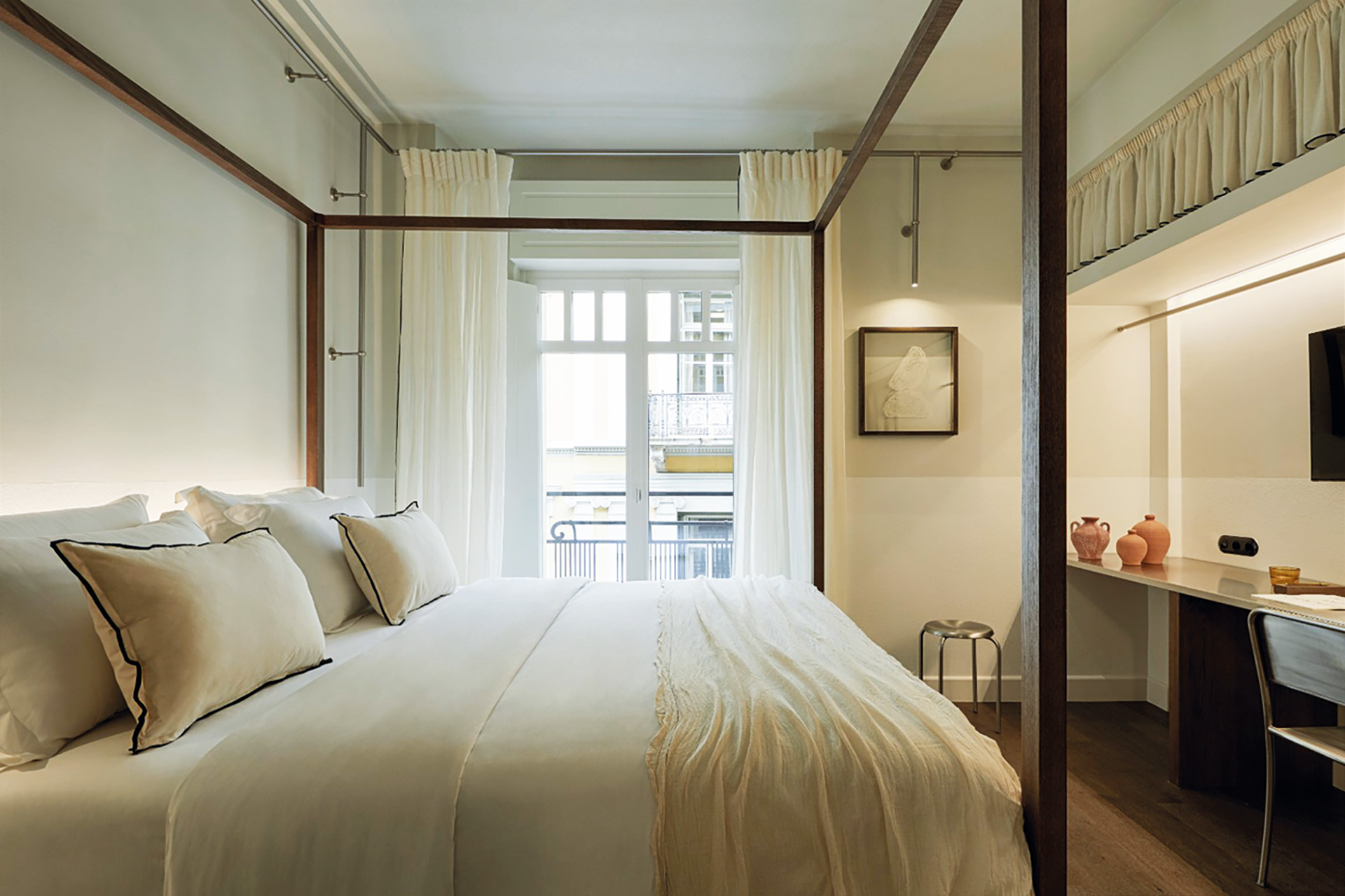
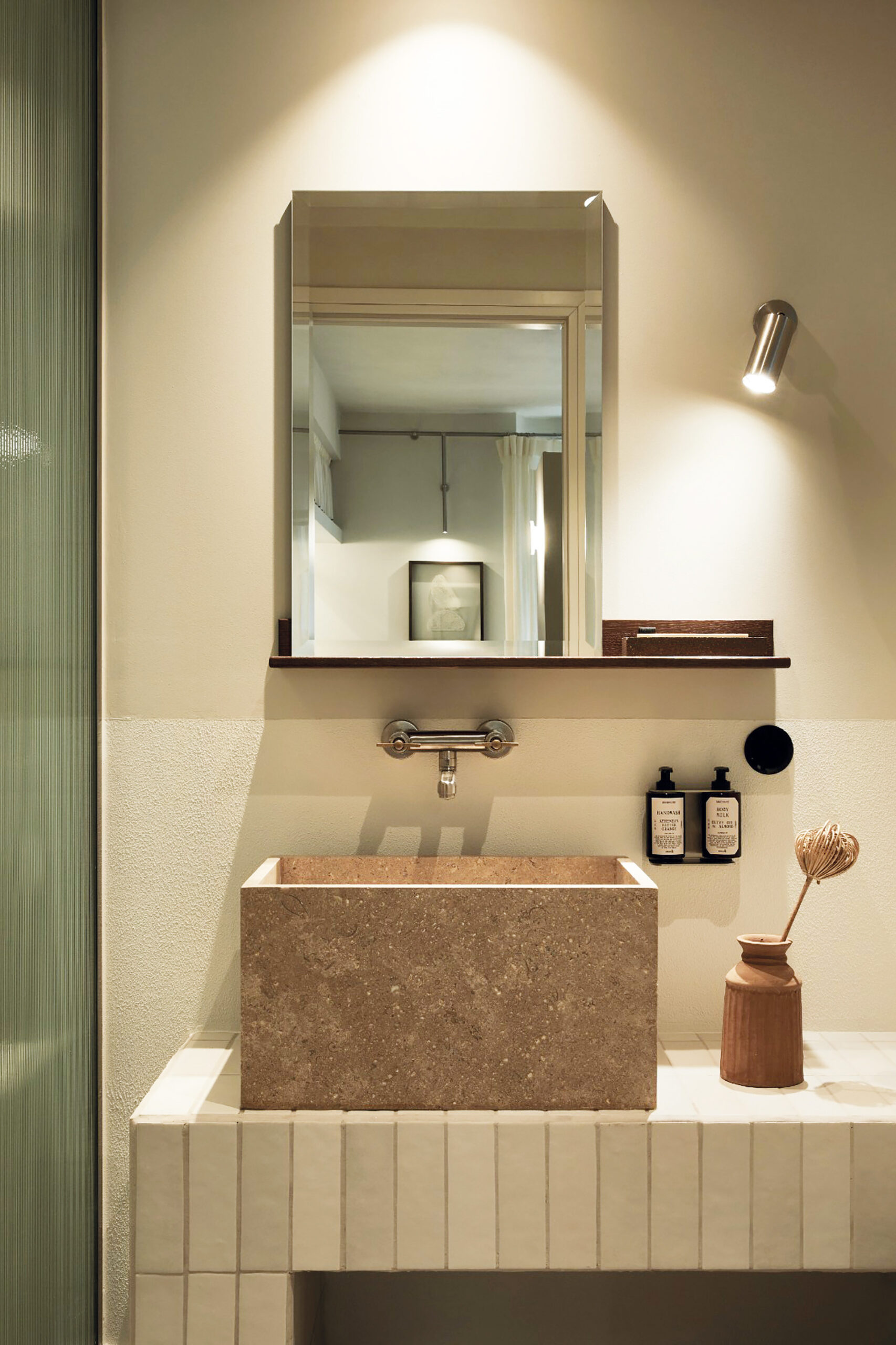
Guest rooms are arranged across three floors, respecting the building’s original architectural layout and aligning with the existing façade openings that define their generous proportions. Each room reinterprets elements drawn from the world of the bakery and the professional kitchen. Dark firebrick surfaces, wall claddings, stainless steel worktops, and linen textiles come together to form a restrained yet tactile interior language.
Custom Elements & Lighting
Interior shutters were designed as an integrated blackout solution, fitted within the existing openings to modulate daylight and create a calm, intimate atmosphere. A defining feature of the rooms is the “ontas”, a multifunctional element that serves both as an additional sleeping surface and a place of rest – an architectural reference rooted in traditional Greek domestic spaces.
Lighting is intentionally minimal, precise, and atmospheric. A network of slender stainless-steel pipes runs throughout each room, supporting a variety of lighting applications. Due to structural reinforcements along the building’s perimeter walls, conventional cable routing was not possible. Instead, the piping system accommodates electrical wiring while simultaneously acting as a framework for lighting and textile suspension.