Office in Gio Ponti’s Casa Sissa | Milan, Italy
Interior Design:
Photography:

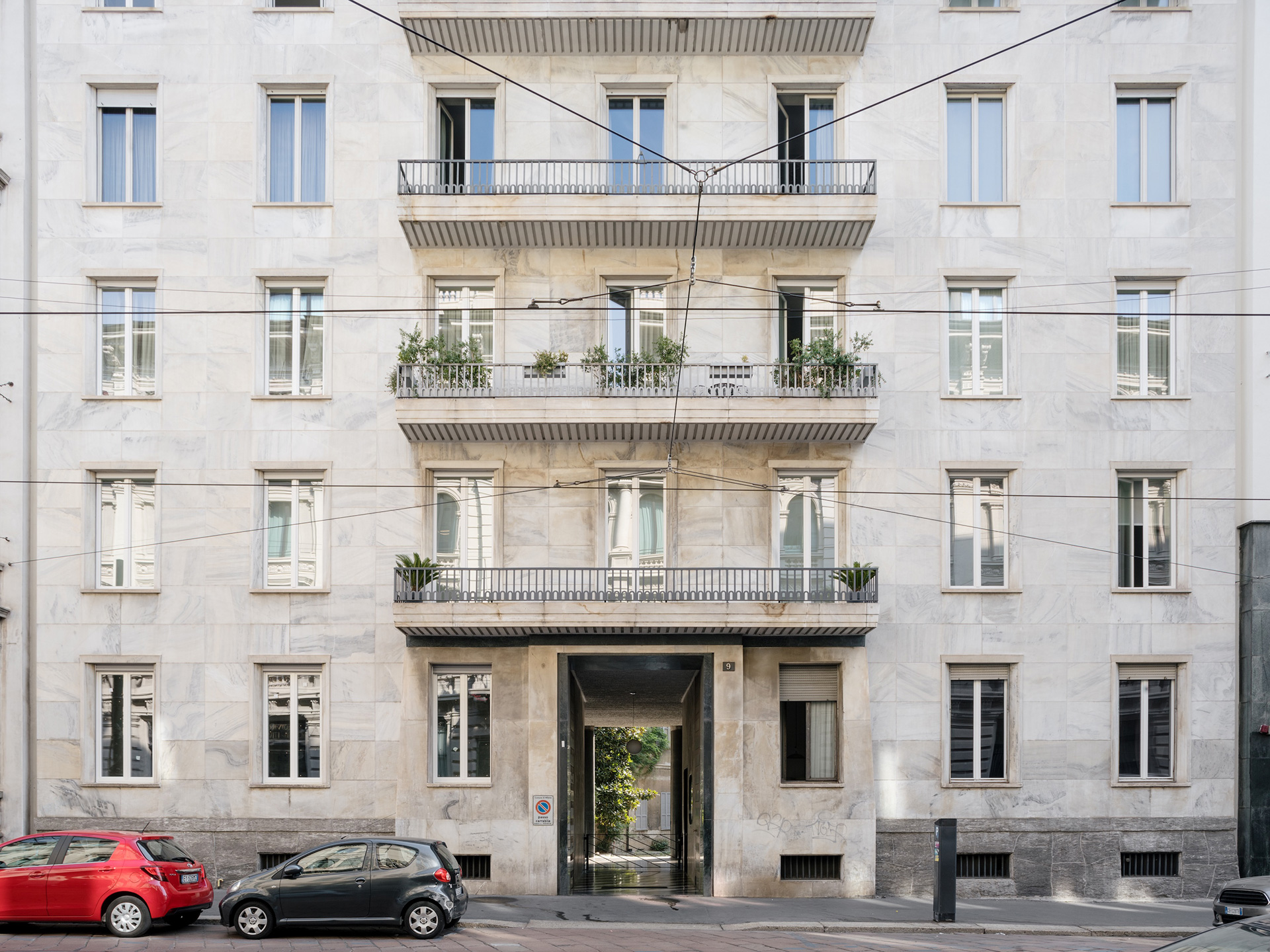
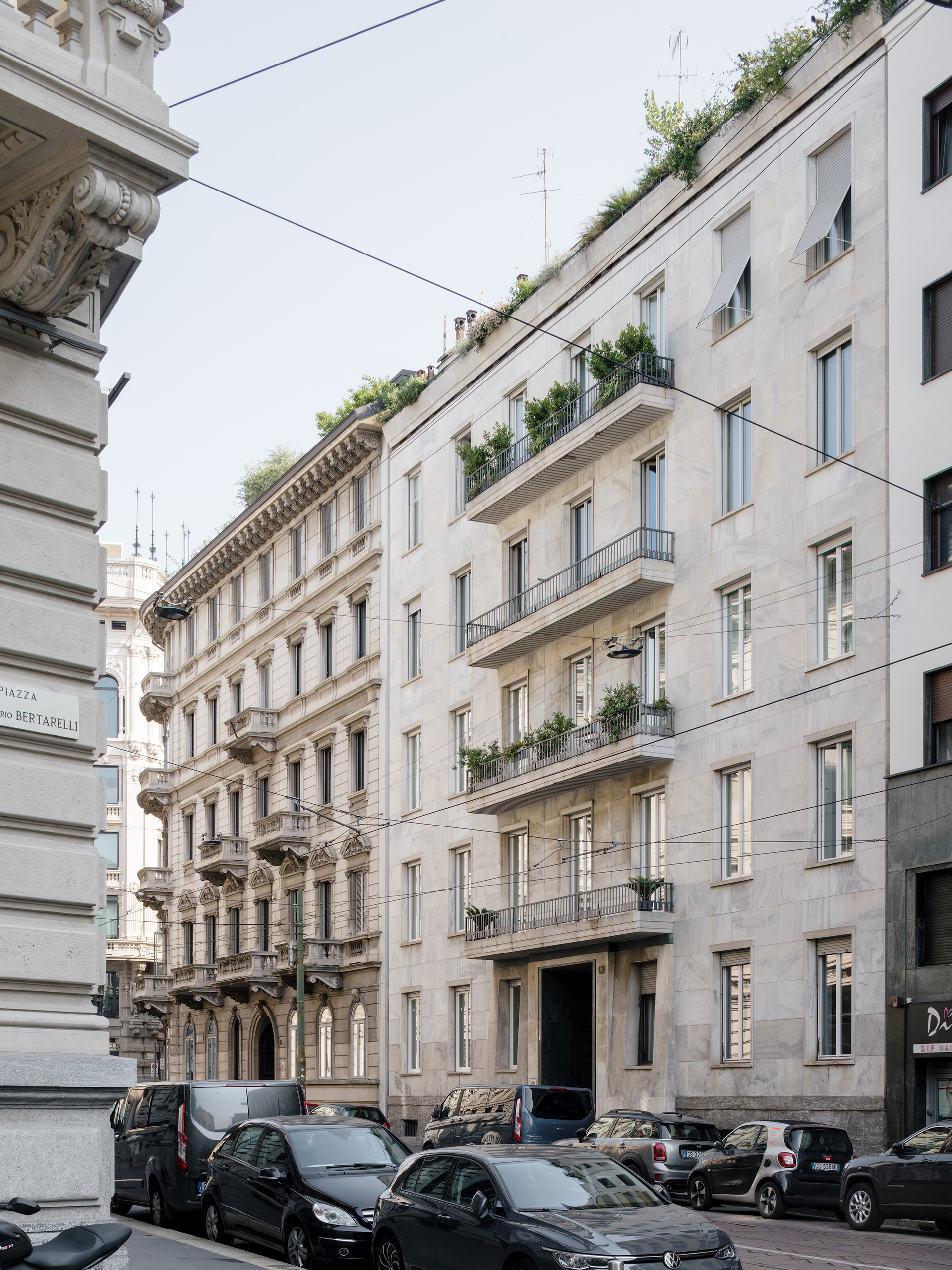
In the heart of Corso Italia in Milan, a small yet highly significant interior within Casa Sissa – a residential building by Gio Ponti and Emilio Lancia – has been given renewed life and purpose. The architecture of the residence balances Rationalist, eclectic, and Novecento elements, emblematic of Italian design of the period. The intervention addresses the theme of conservative restoration with philological rigor, while carefully accommodating new functions related to contemporary professional use.
Spatial Organization
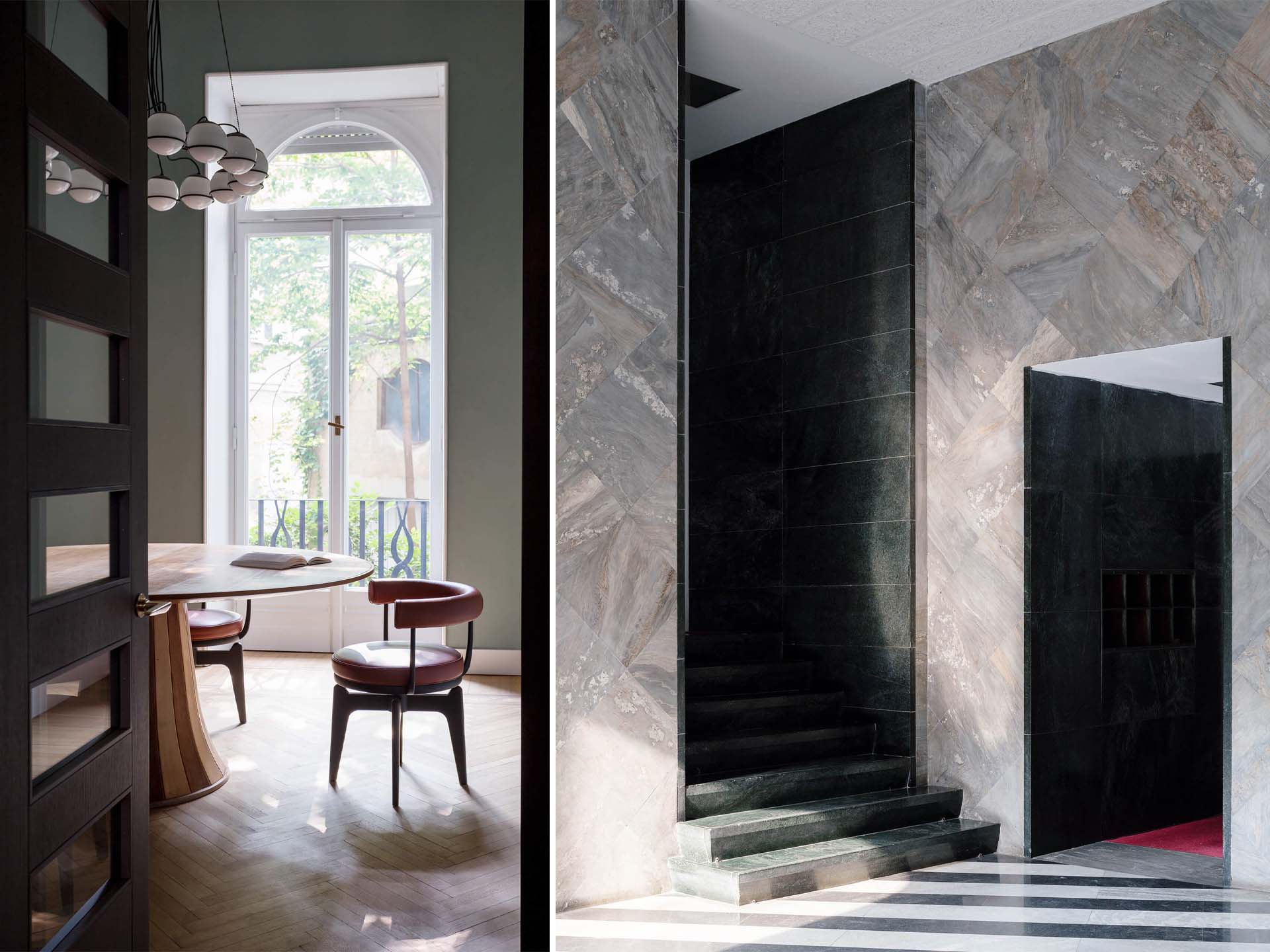
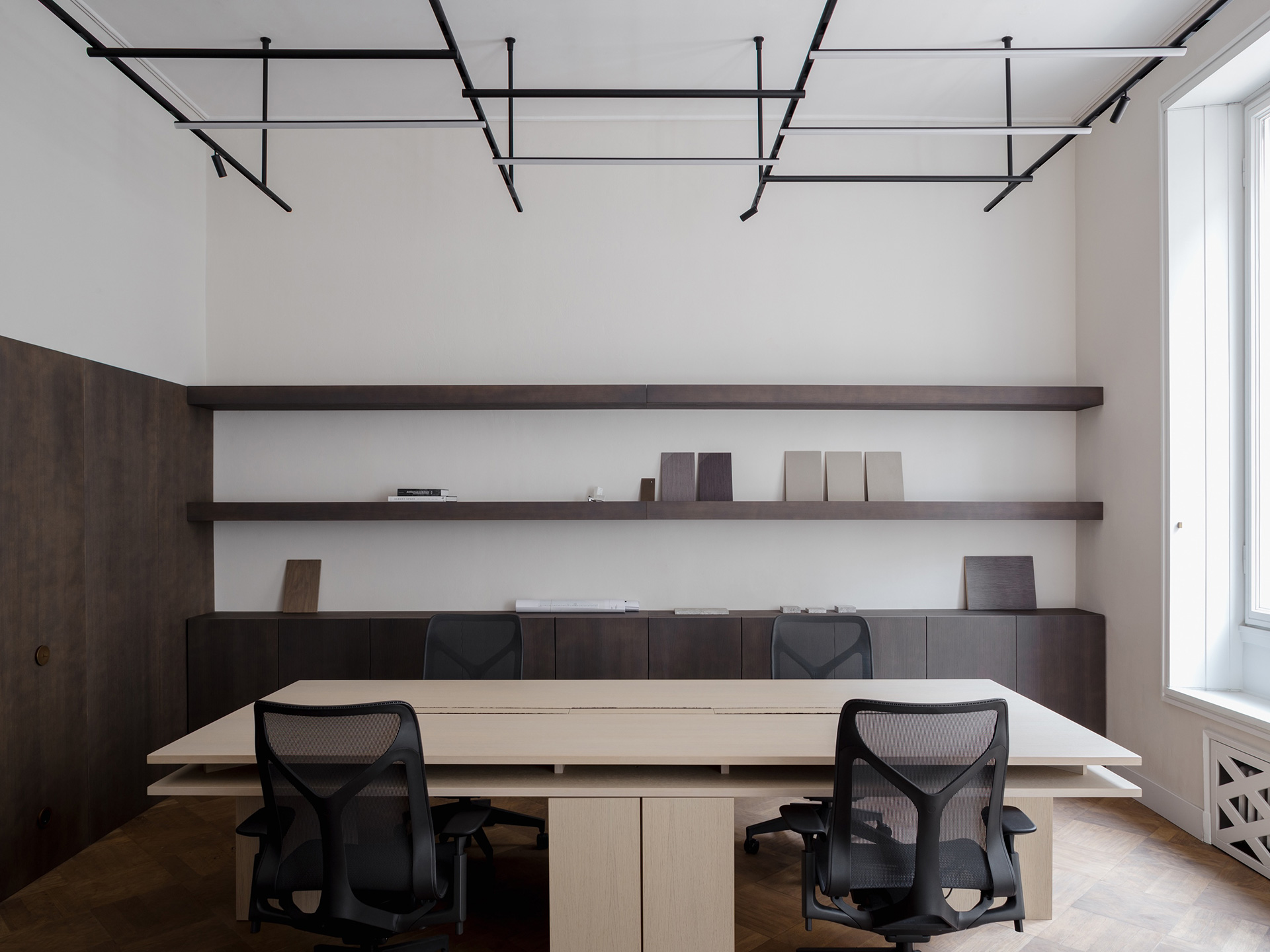
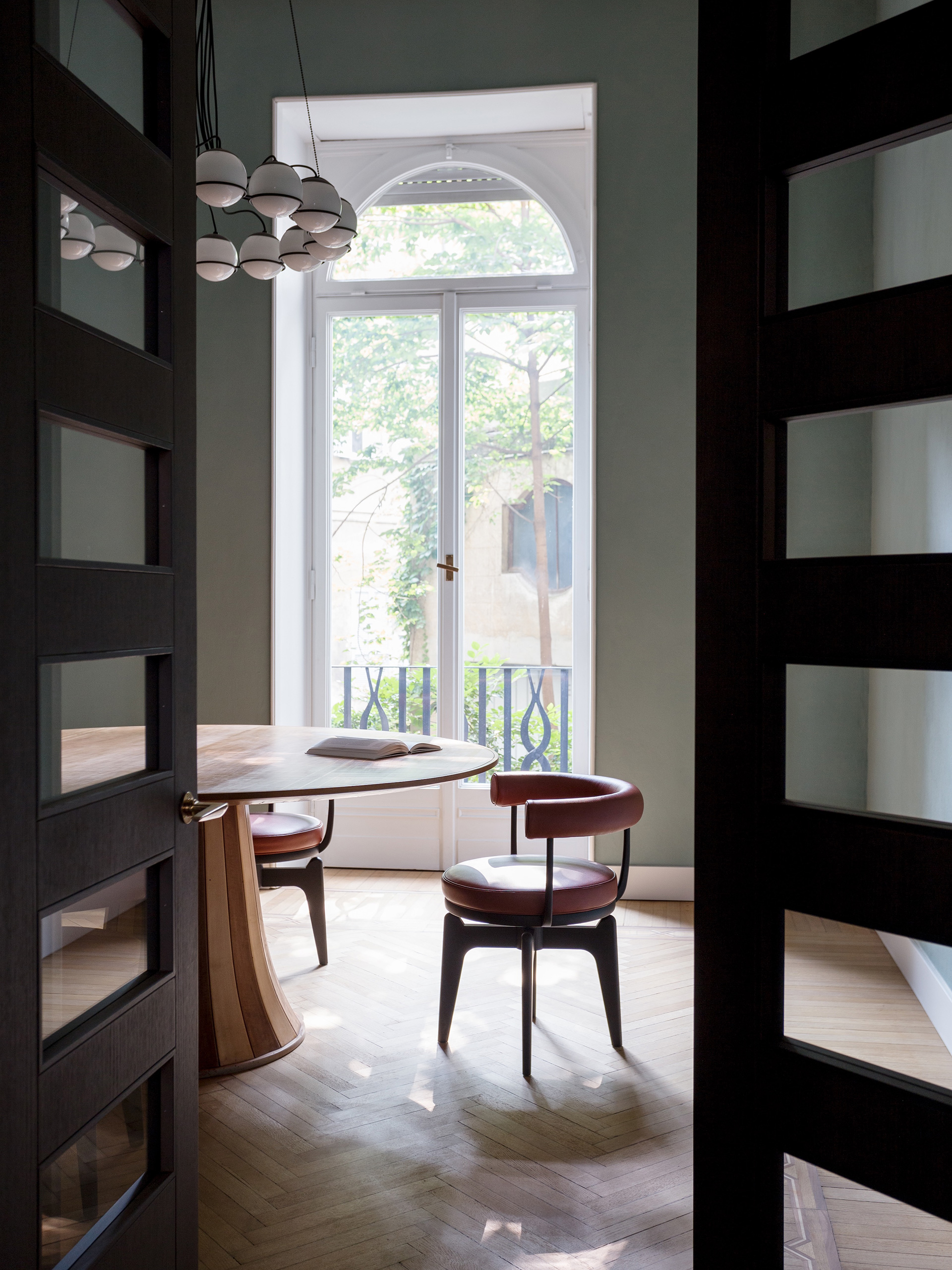
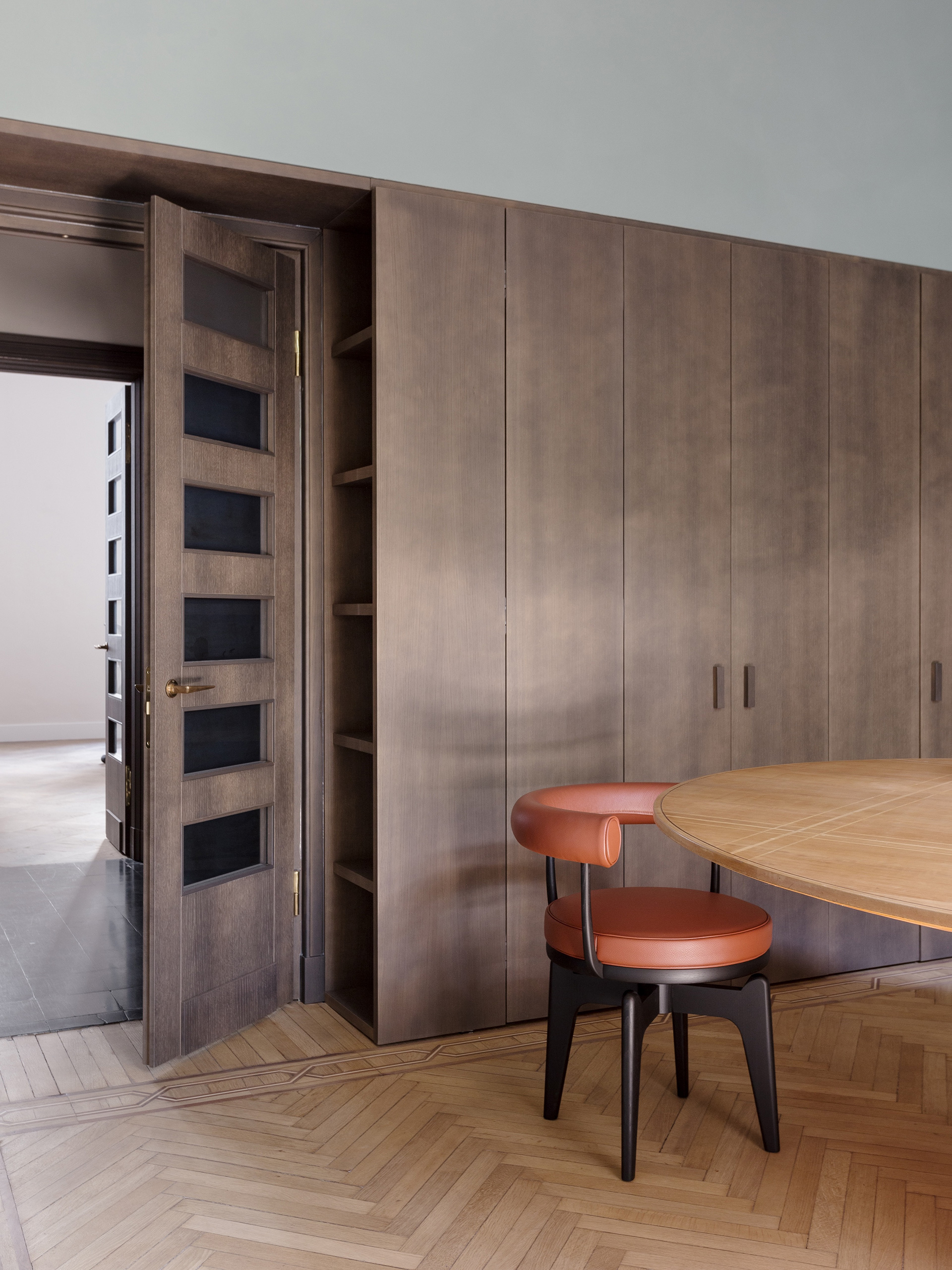
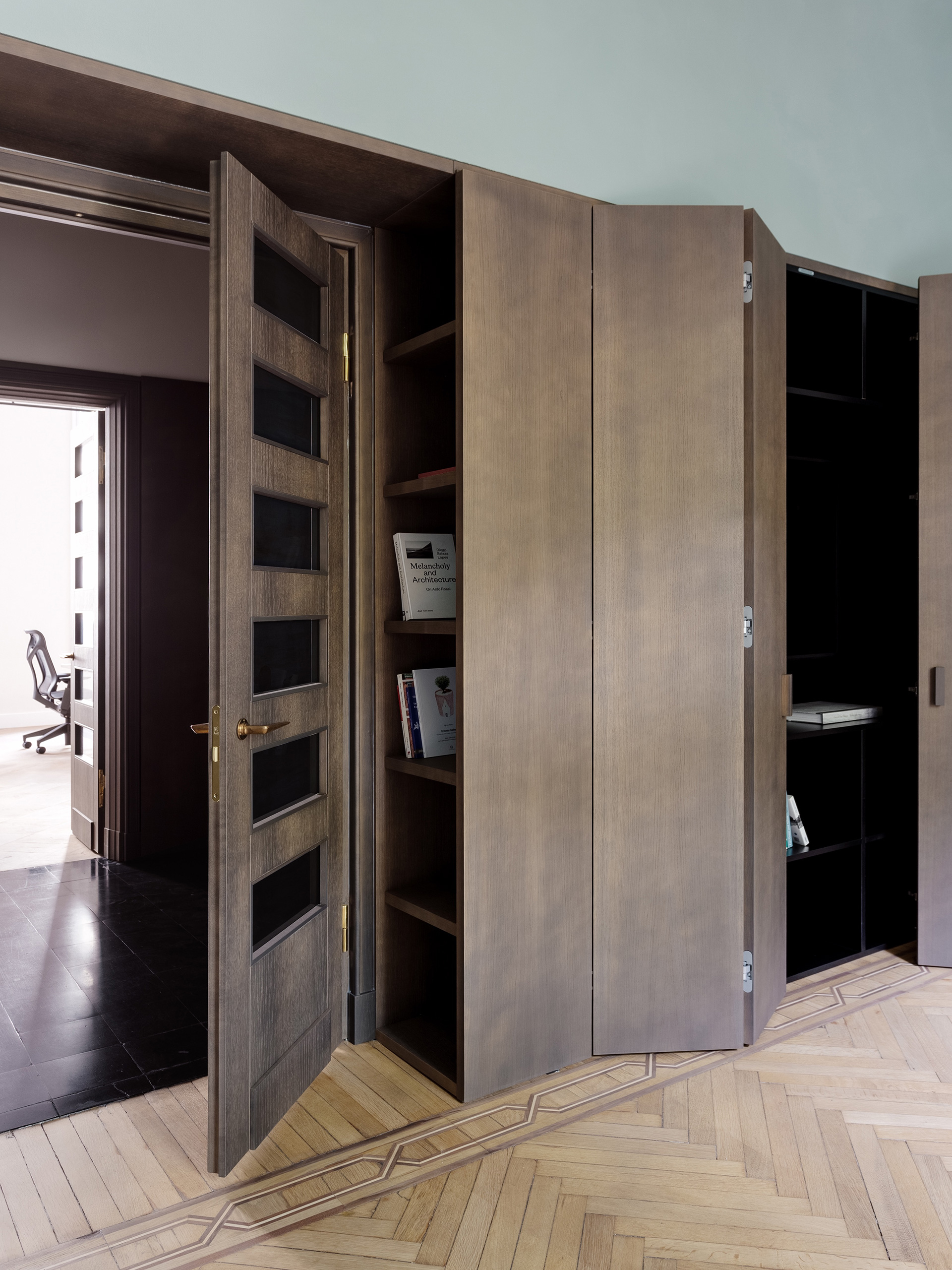
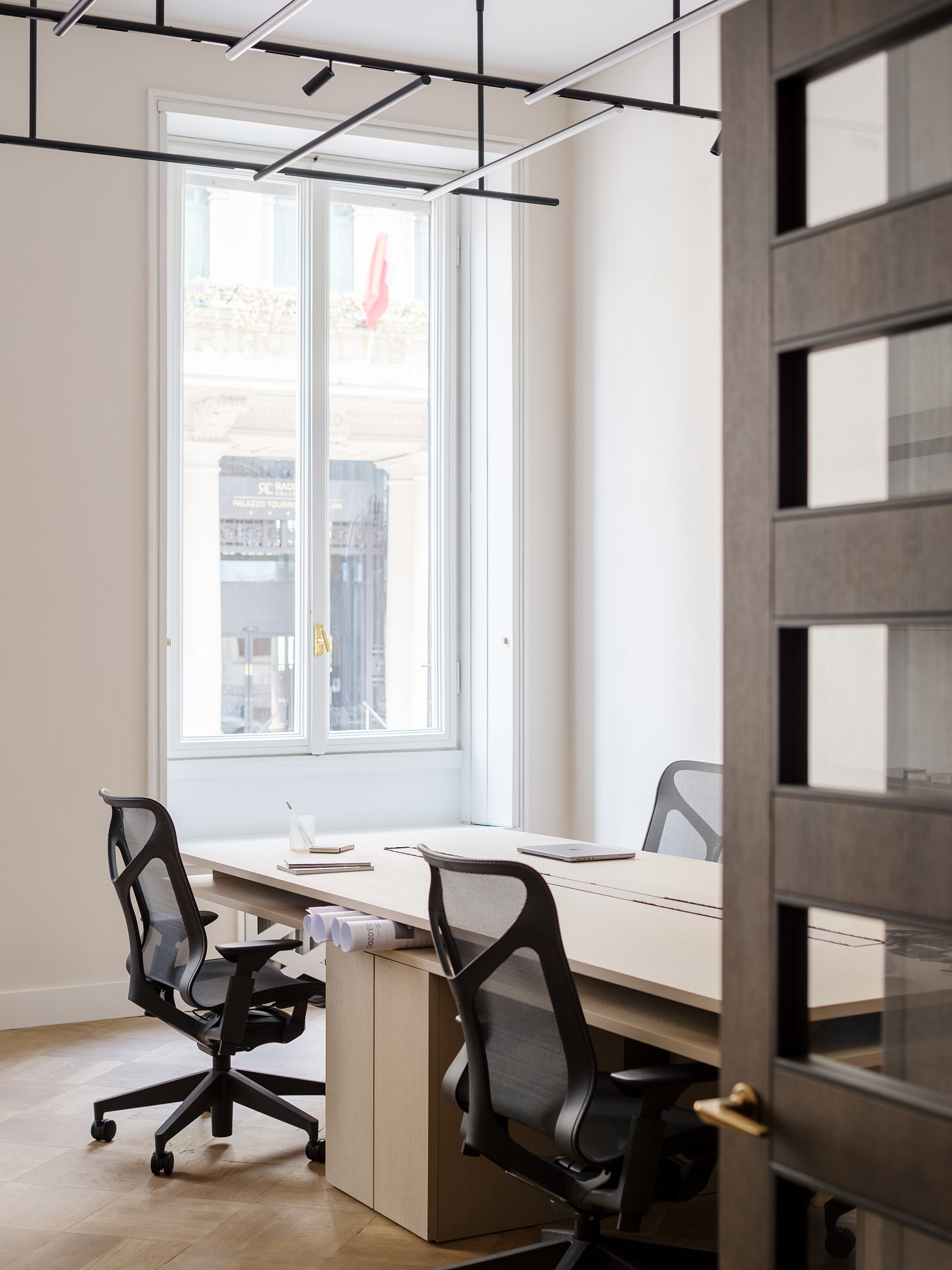
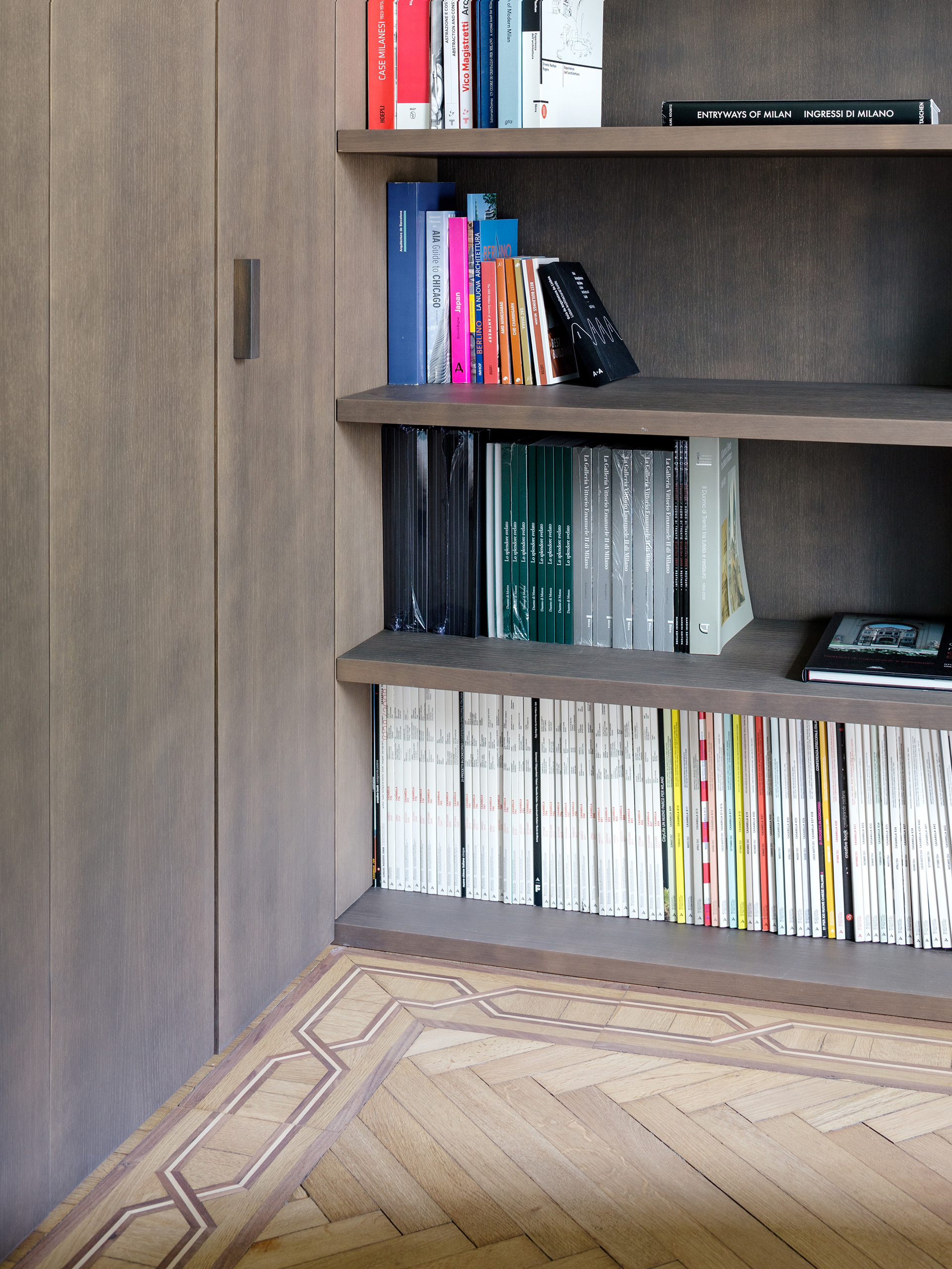
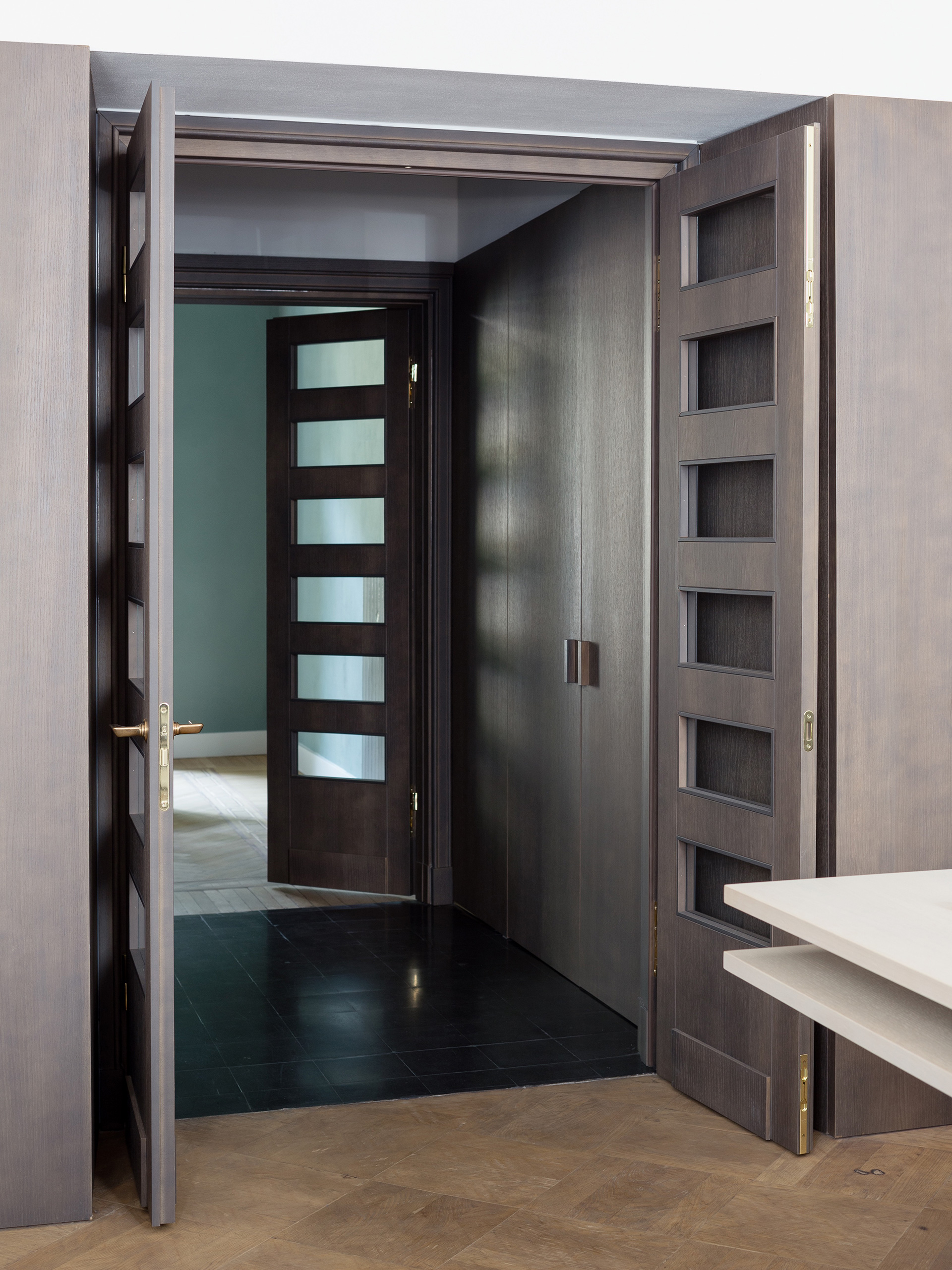
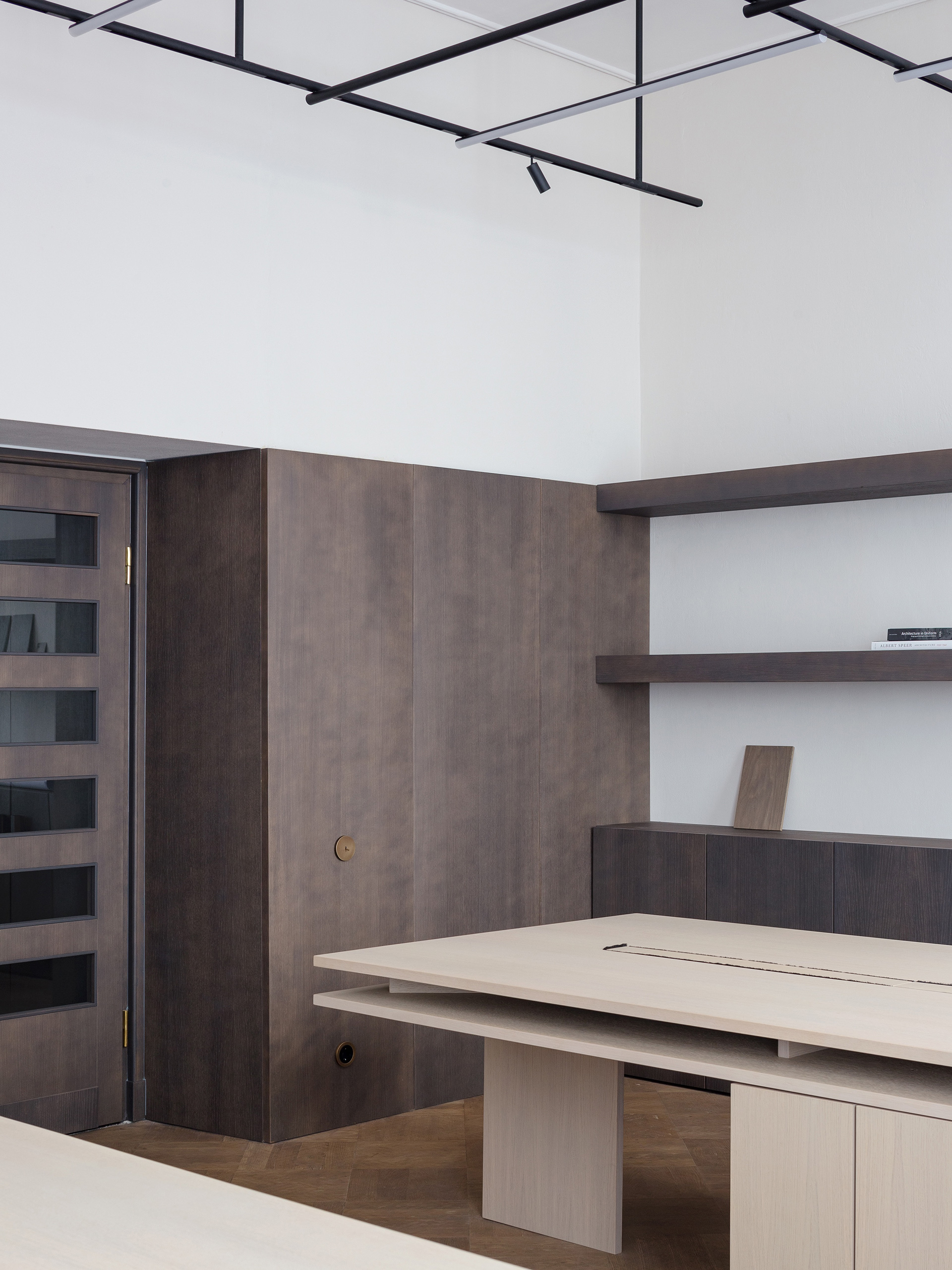
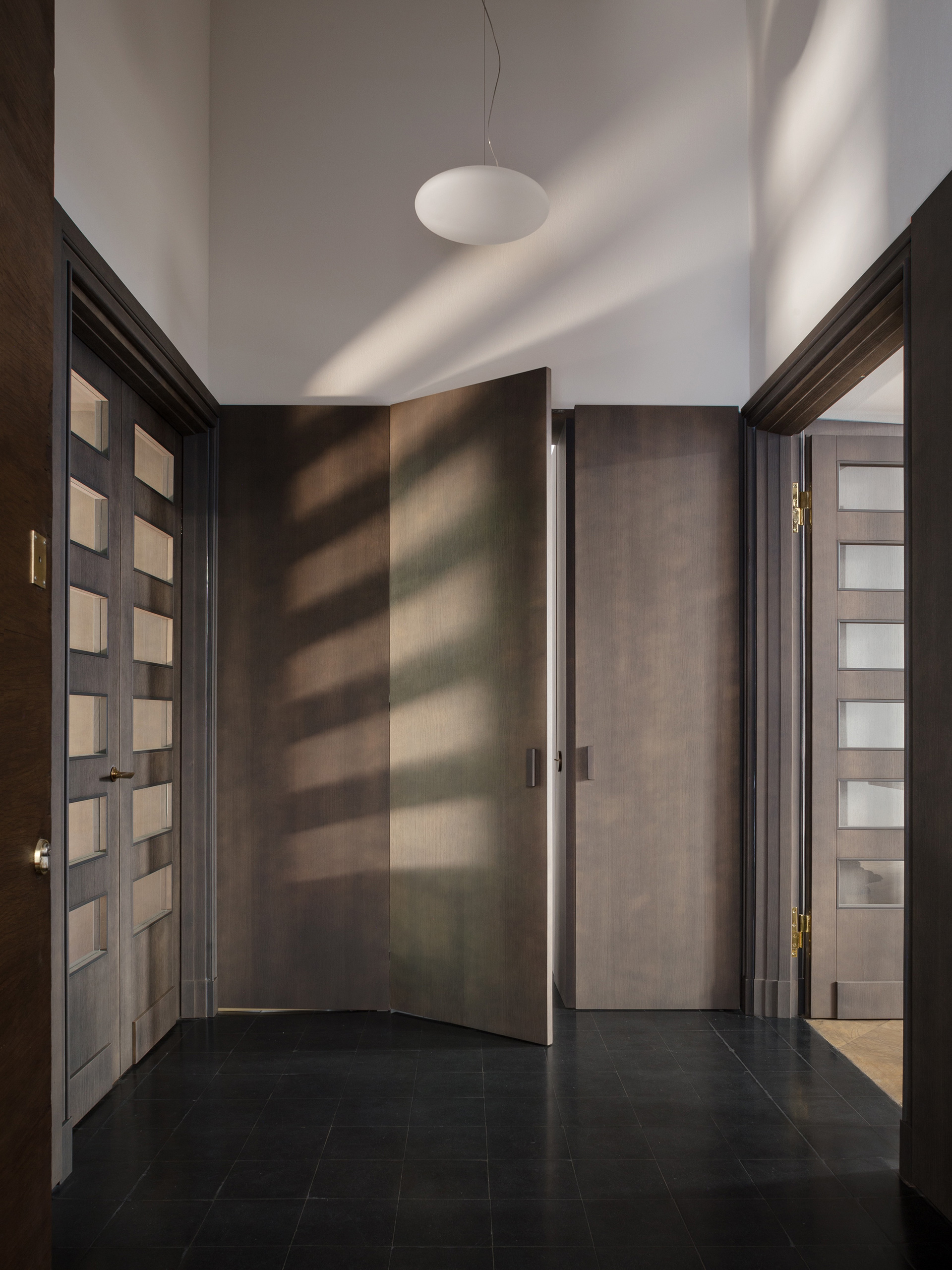
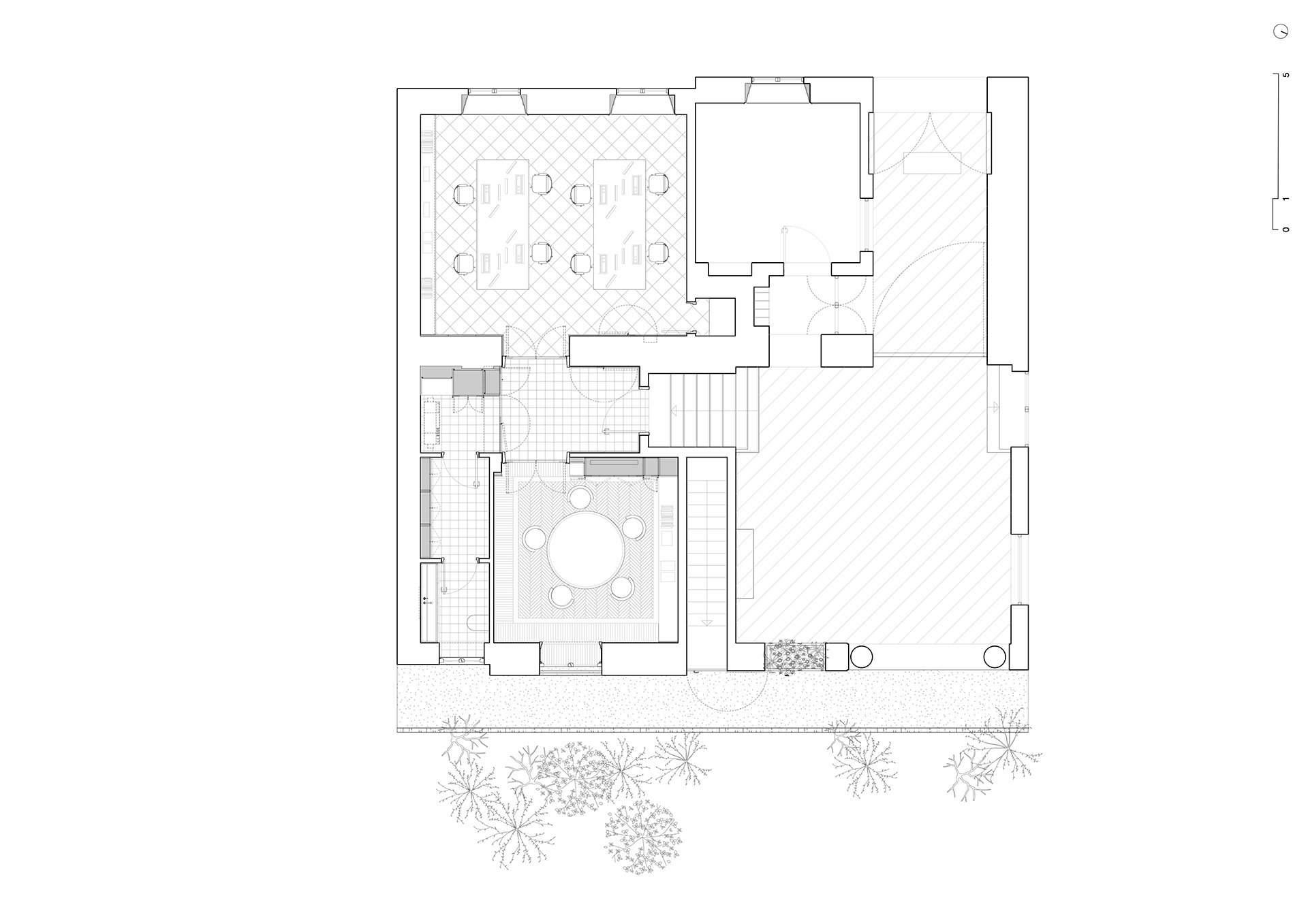
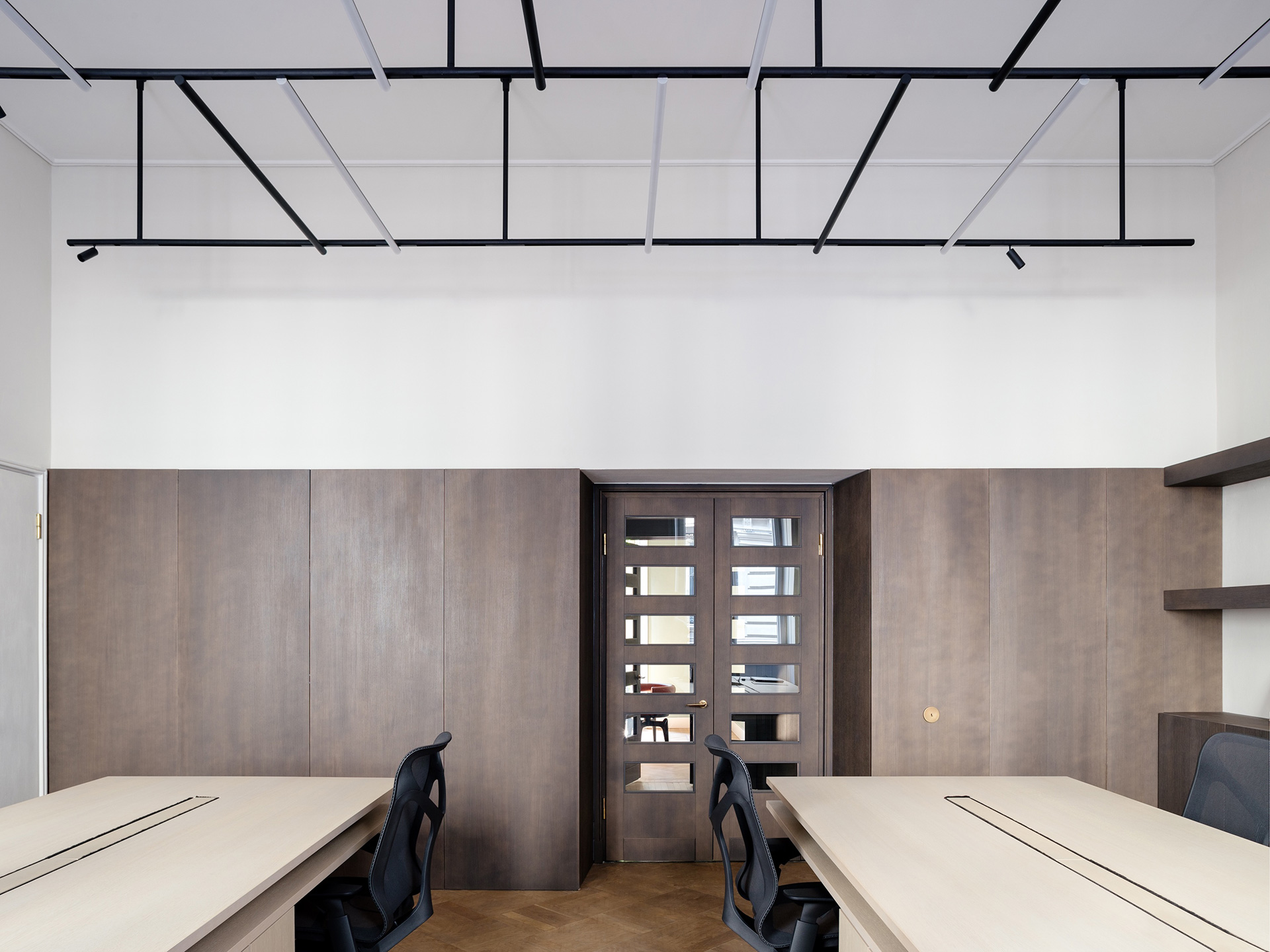
The studio occupies a wing of the building facing Corso Italia. The plan is organized around an entrance hall equipped with full-height cabinetry, leading to a large, luminous open workspace. This is complemented by a more intimate meeting room overlooking the internal garden, a coffee area, a bathroom with an antechamber, and discreetly concealed technical zones. The original layout is respected throughout: double-leaf glazed doors, reconstructed after the loss of the originals, open onto the principal spaces, while smoked oak boiseries line the entrance, adding warmth and depth.
Material Palette
All design decisions stem from close engagement with the existing fabric. The original oak floors, laid in a herringbone pattern in the meeting room and in 40×40cm diamond-patterned parquet tiles in the work area, were carefully recovered, reassembled, and integrated where necessary to accommodate new technical systems. This rare flooring, discovered beneath later coverings, was restored with meticulous attention. In other areas, black cementine tiles imitating Belgian Black marble were retained; where suitable replacements could not be sourced, continuity was ensured through slabs of actual marble matched in tone and finish.
Wall surfaces were treated with an almost archaeological approach. Original 1930s plasters and decorative finishes, concealed beneath subsequent layers, were revealed, consolidated, and reintegrated where lacunae existed. In the meeting room, the green wall tone recalls the chromatic palette of the era. Windows, handles, and hinges were also restored: each metal element was dismantled, cleaned, and, in some cases, recast from molds, revealing the variety of original brass and iron finishes. Positioned between Modernism and Novecento taste, these details testify to a project in which elegance and technical precision intersect with material culture.
Furnishings & Restoration Practices
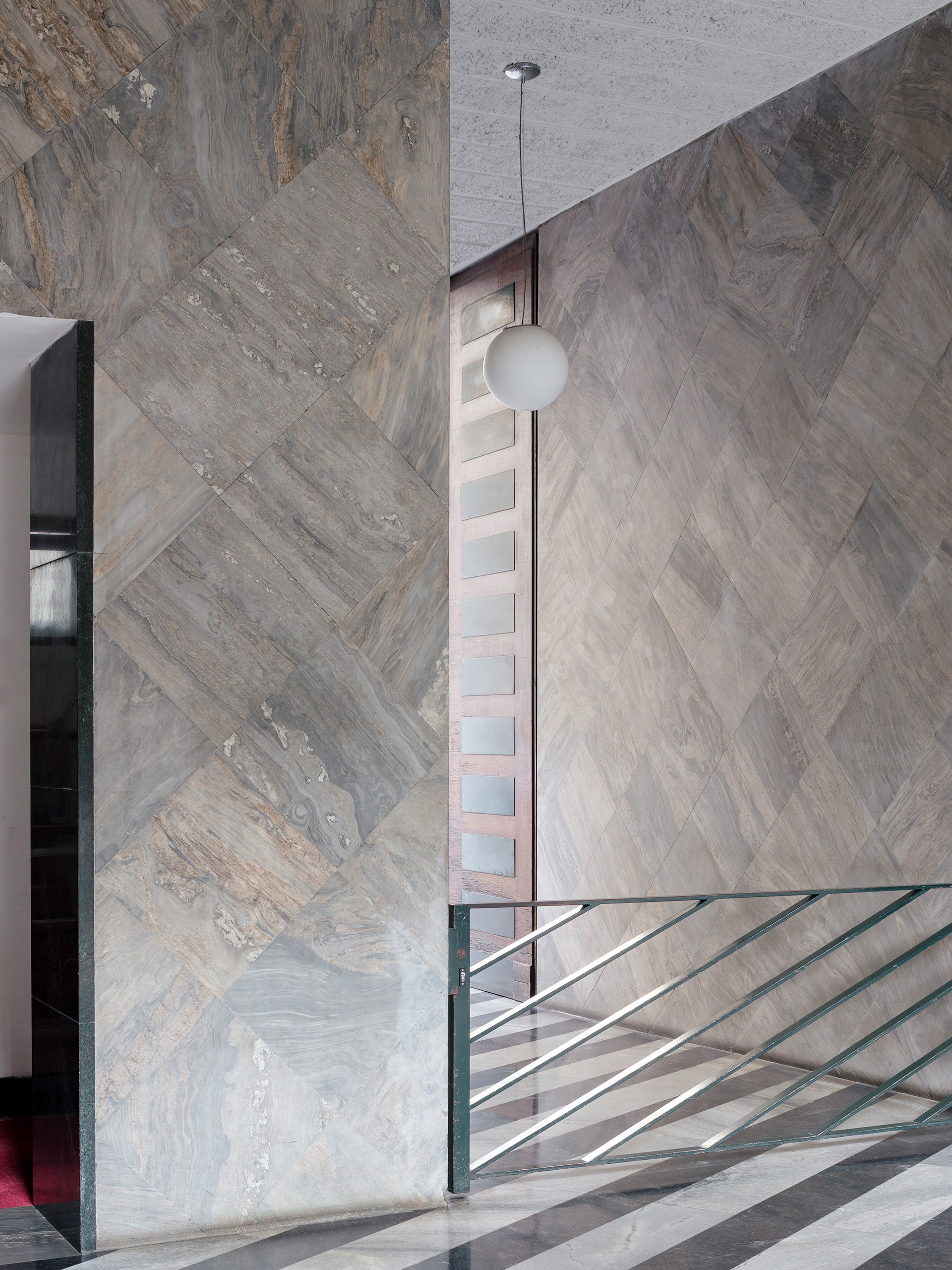
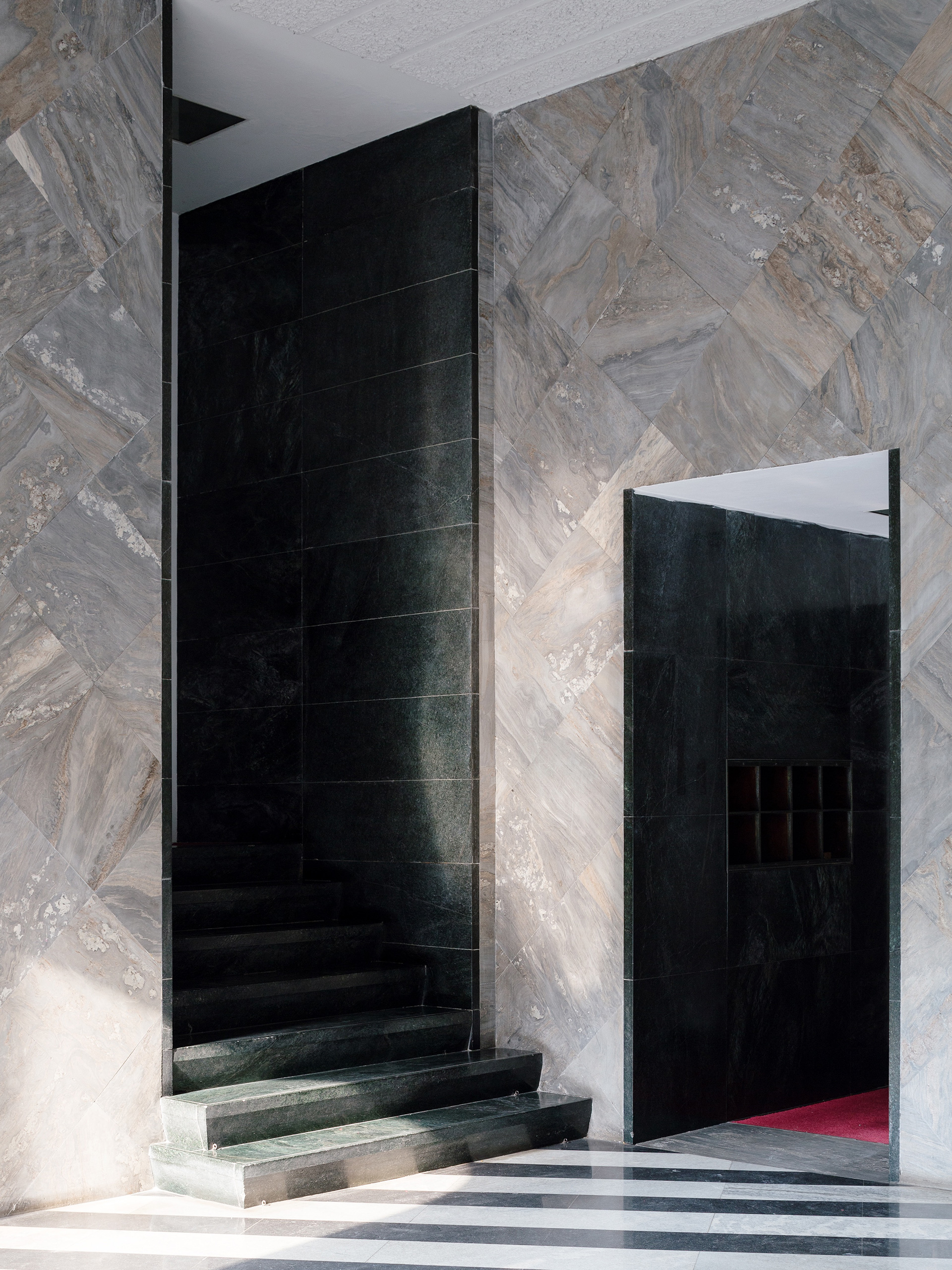
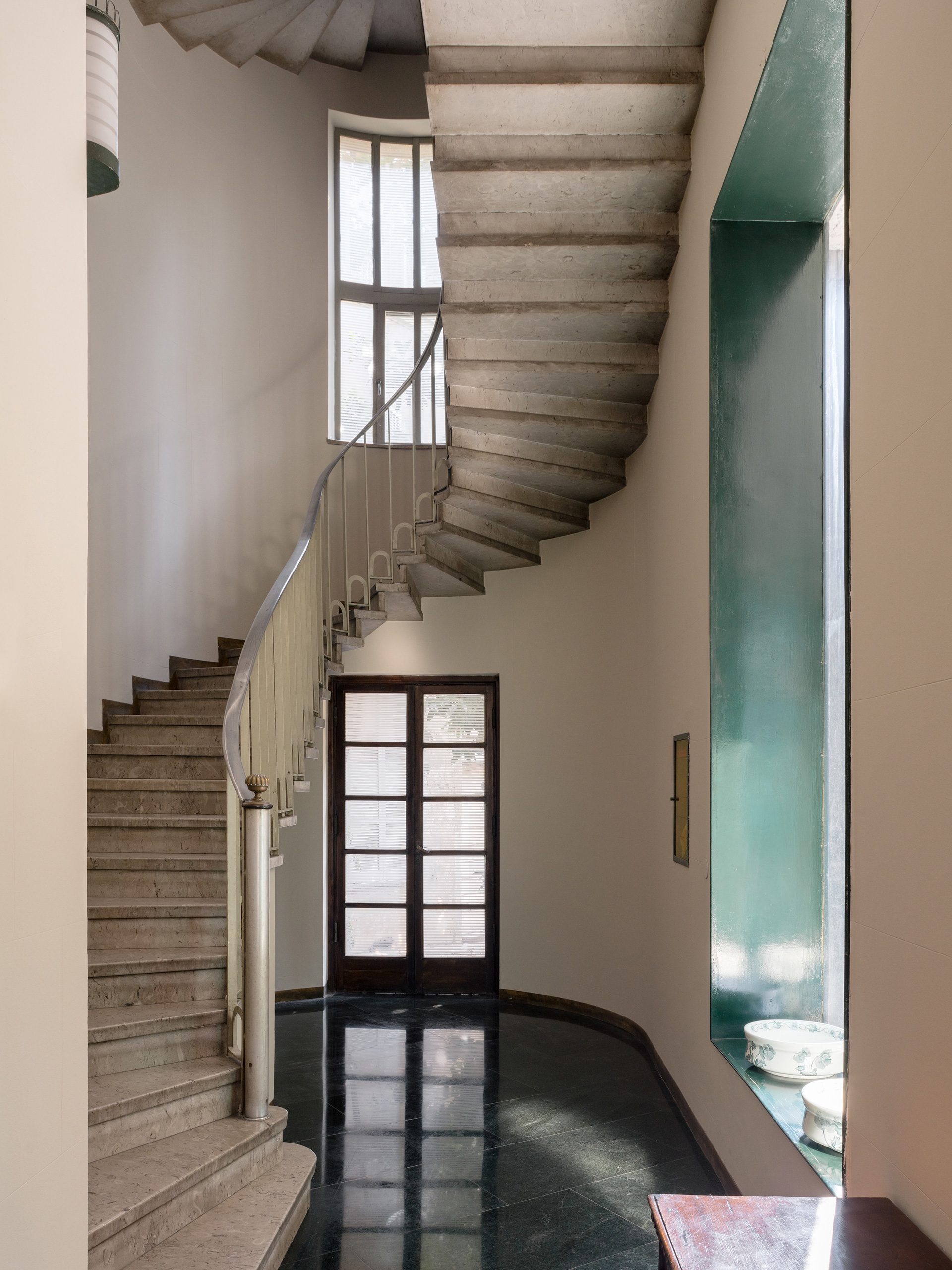
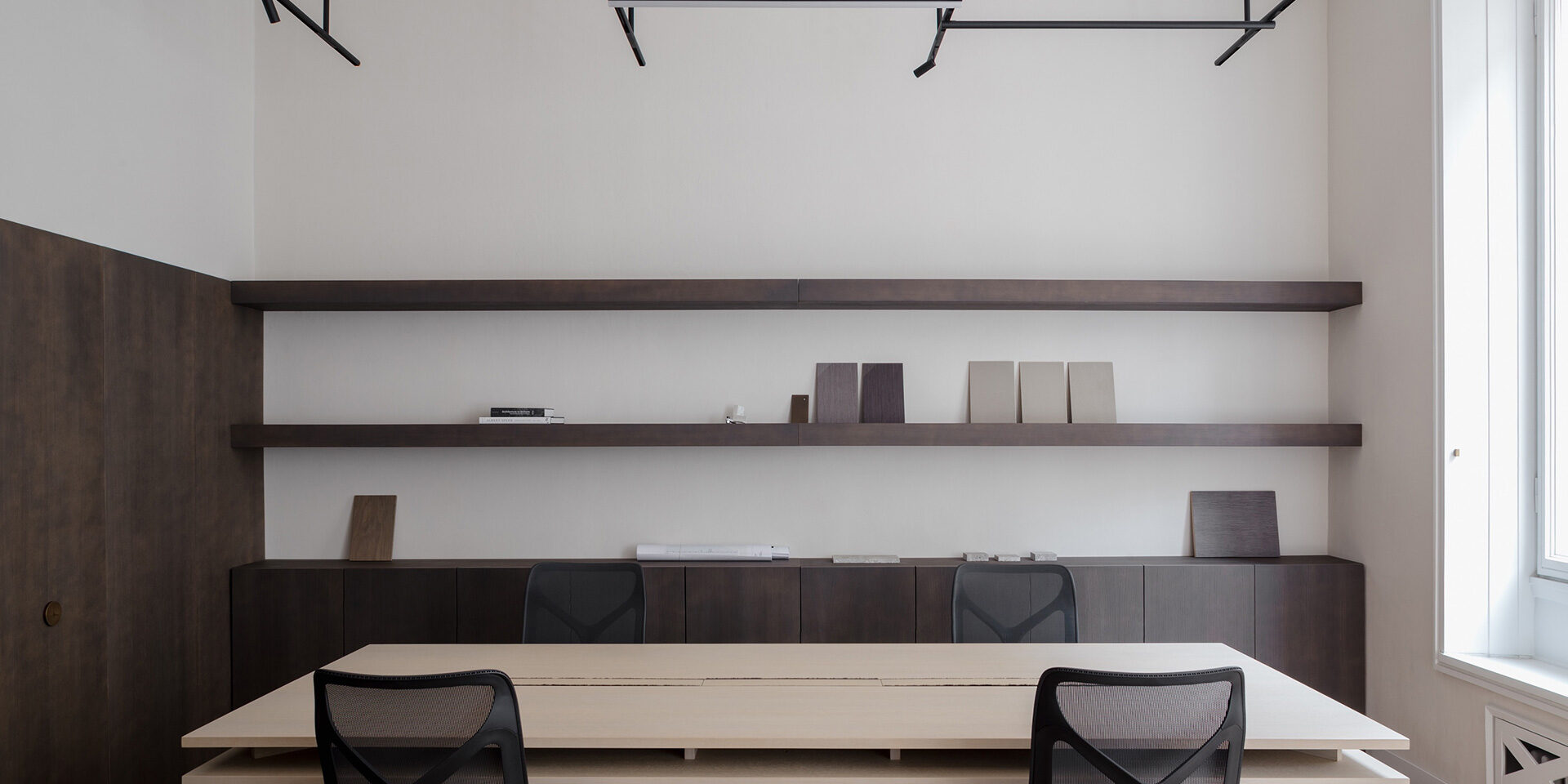
The built-in furnishings, entirely custom-designed, define functions with discretion. Storage units, consoles, and worktables in bleached ash articulate the space without interrupting the historical legibility of the interiors. The condominium entrance hall is conceived as an integral part of the project. Though still awaiting restoration, it preserves original wall cladding in Palissandro Blu marble – a rare Italian stone from Piedmont – laid in a diamond pattern, a motif echoed in the office flooring.
Other notable elements include the striped plaster ceiling, a recessed lamp beneath a marble bench, and a large, glazed window that floods the staircase with light, all poised between Novecento and Modernist sensibilities. The intervention stands as both an act of care toward the historic fabric and a clear declaration of method.