Inhabited shadow
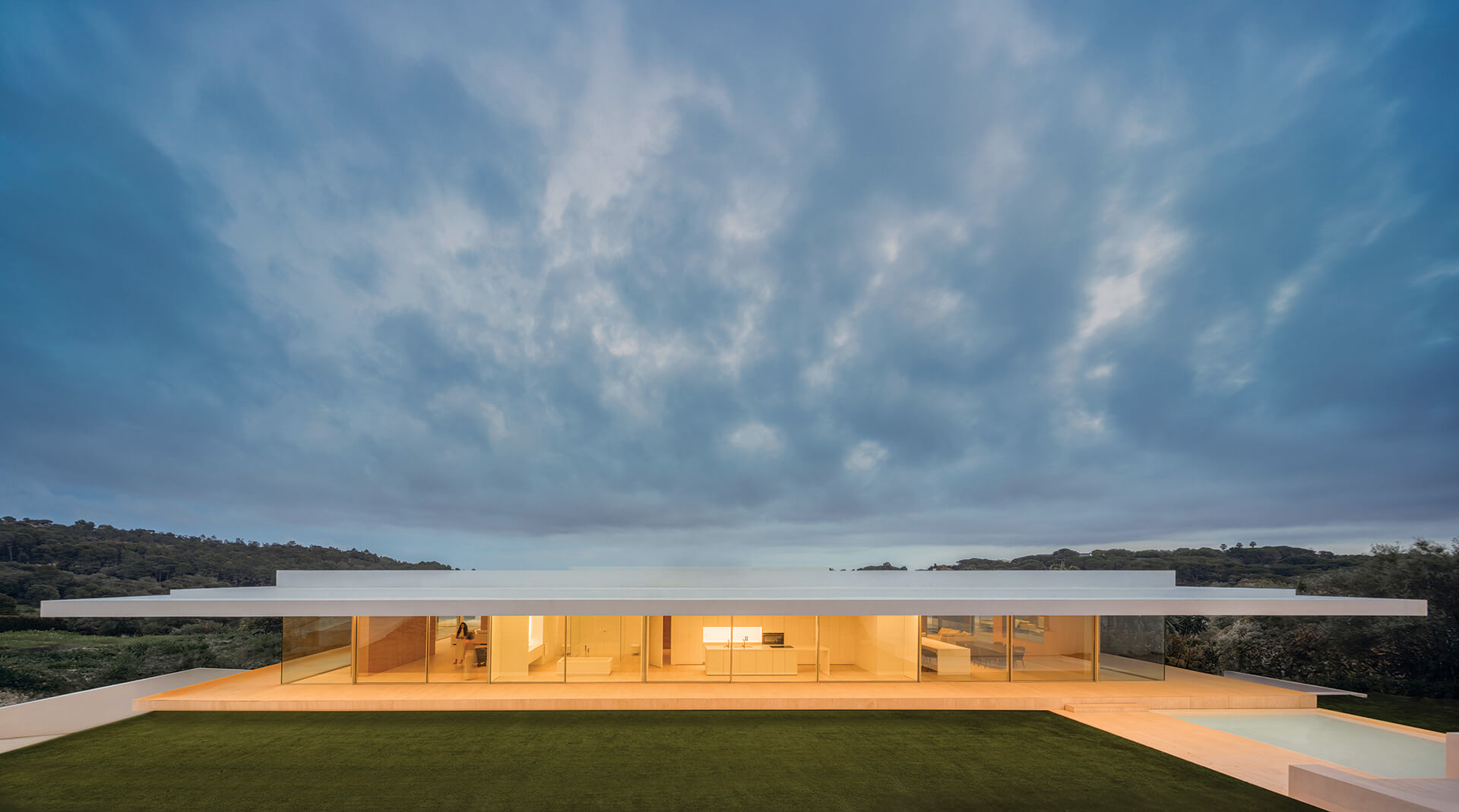
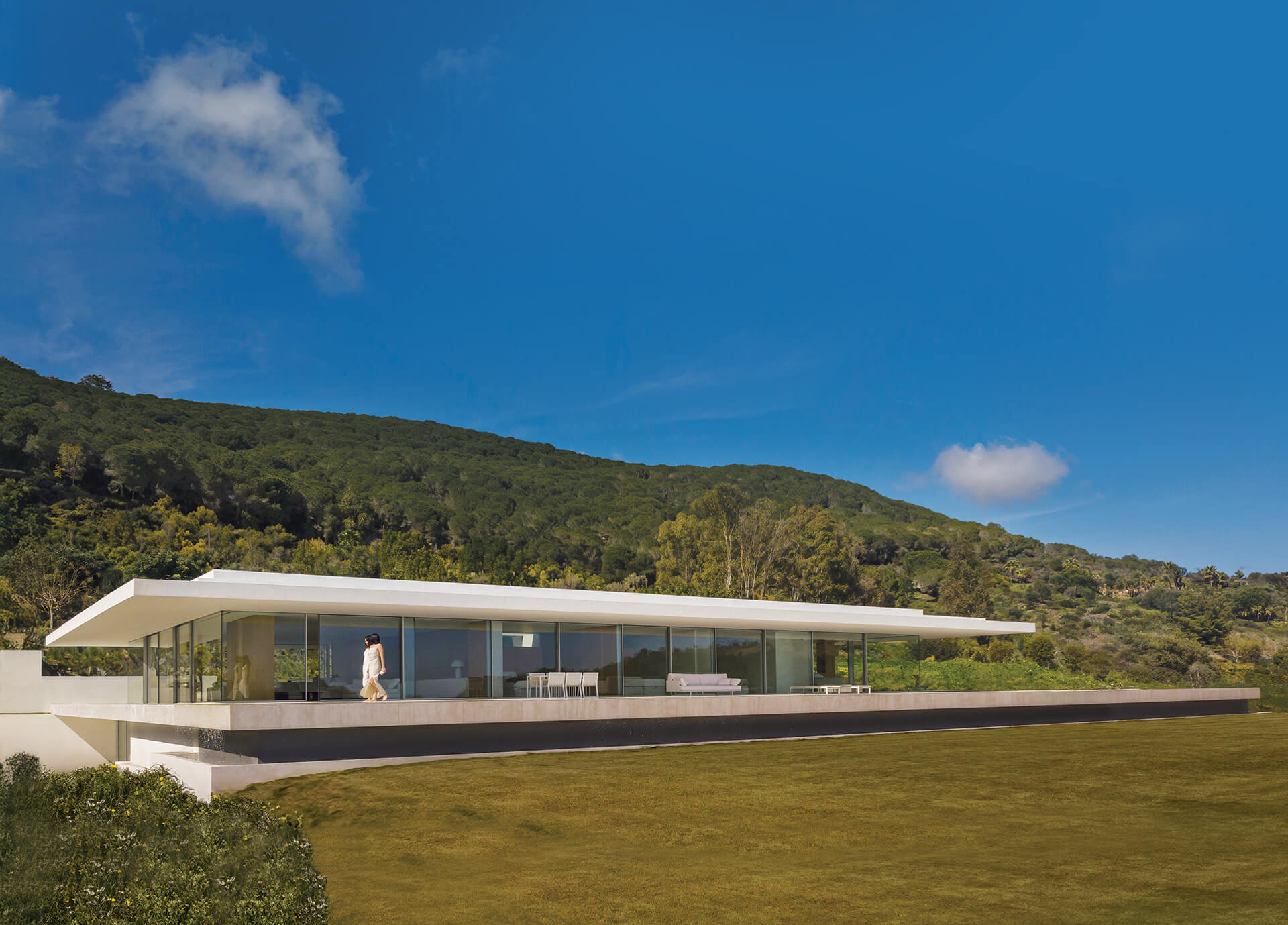
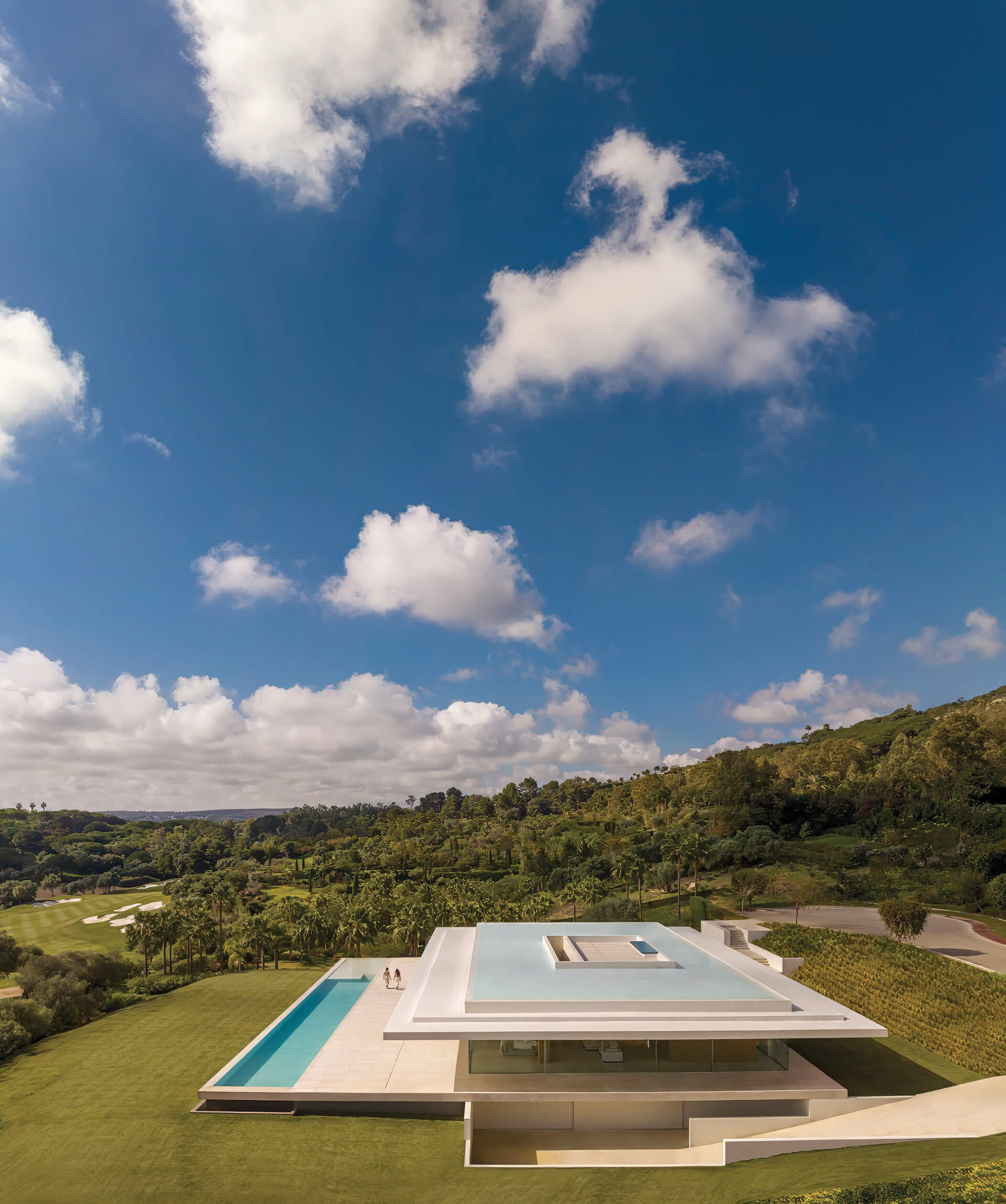
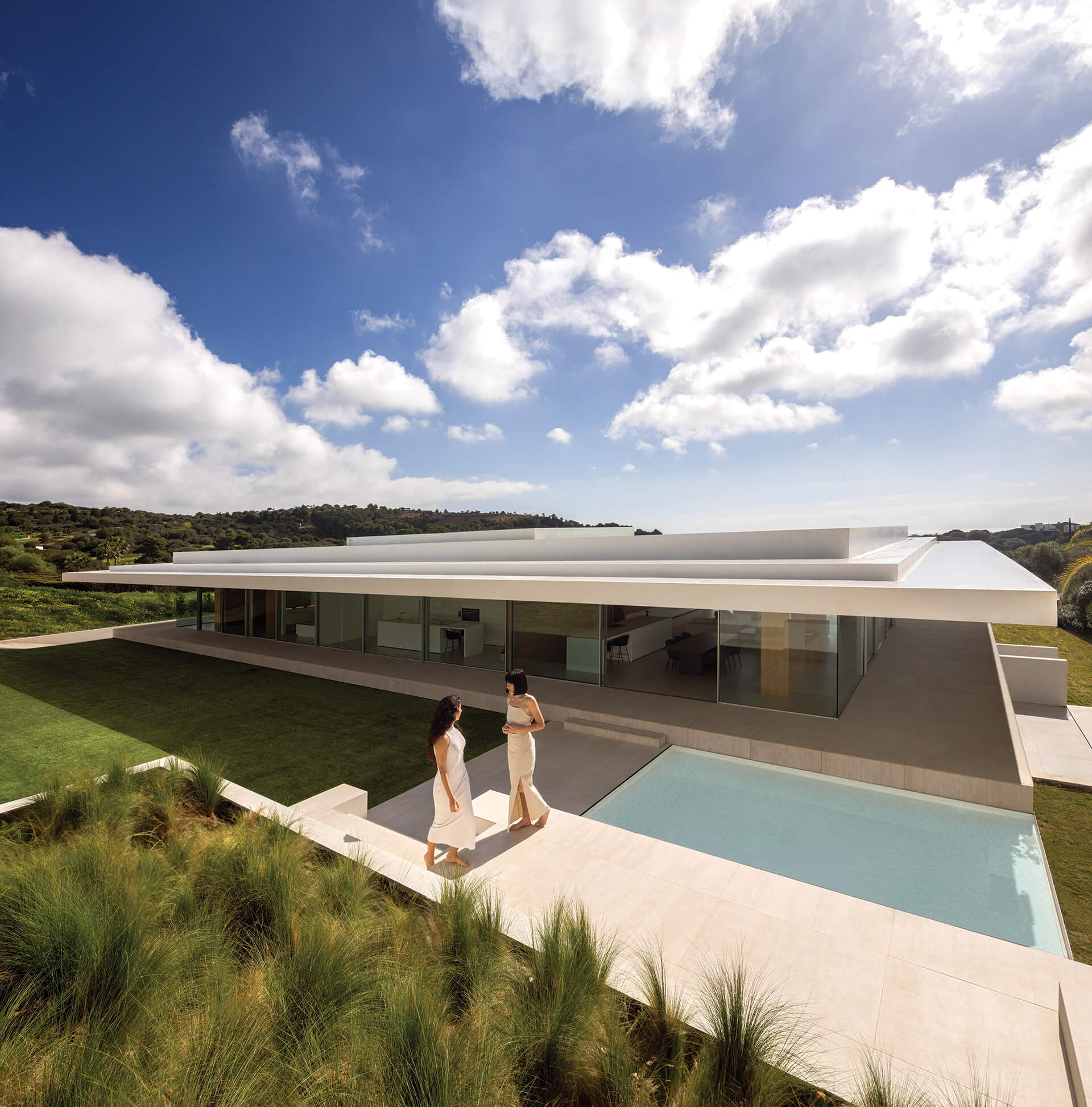
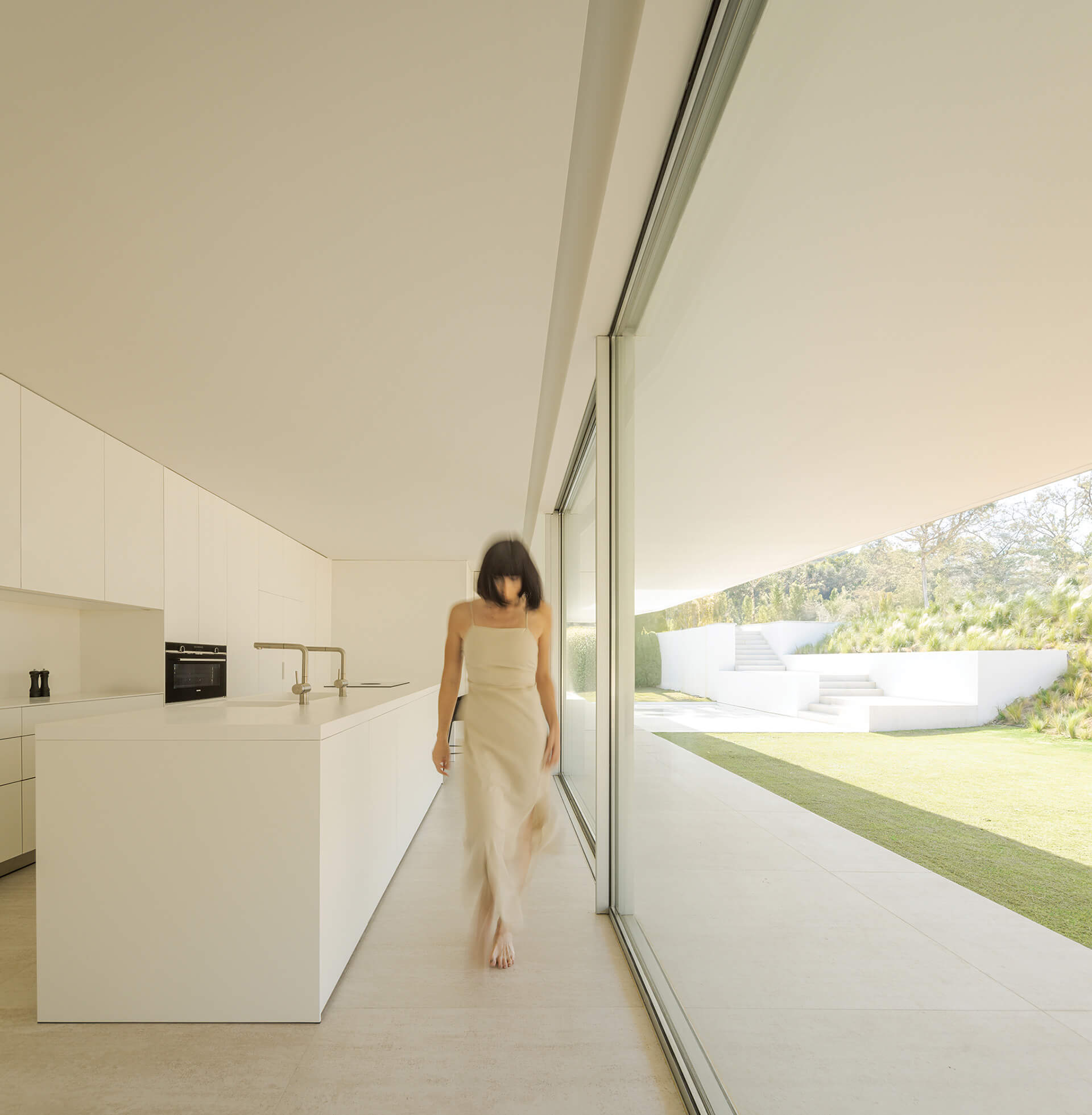
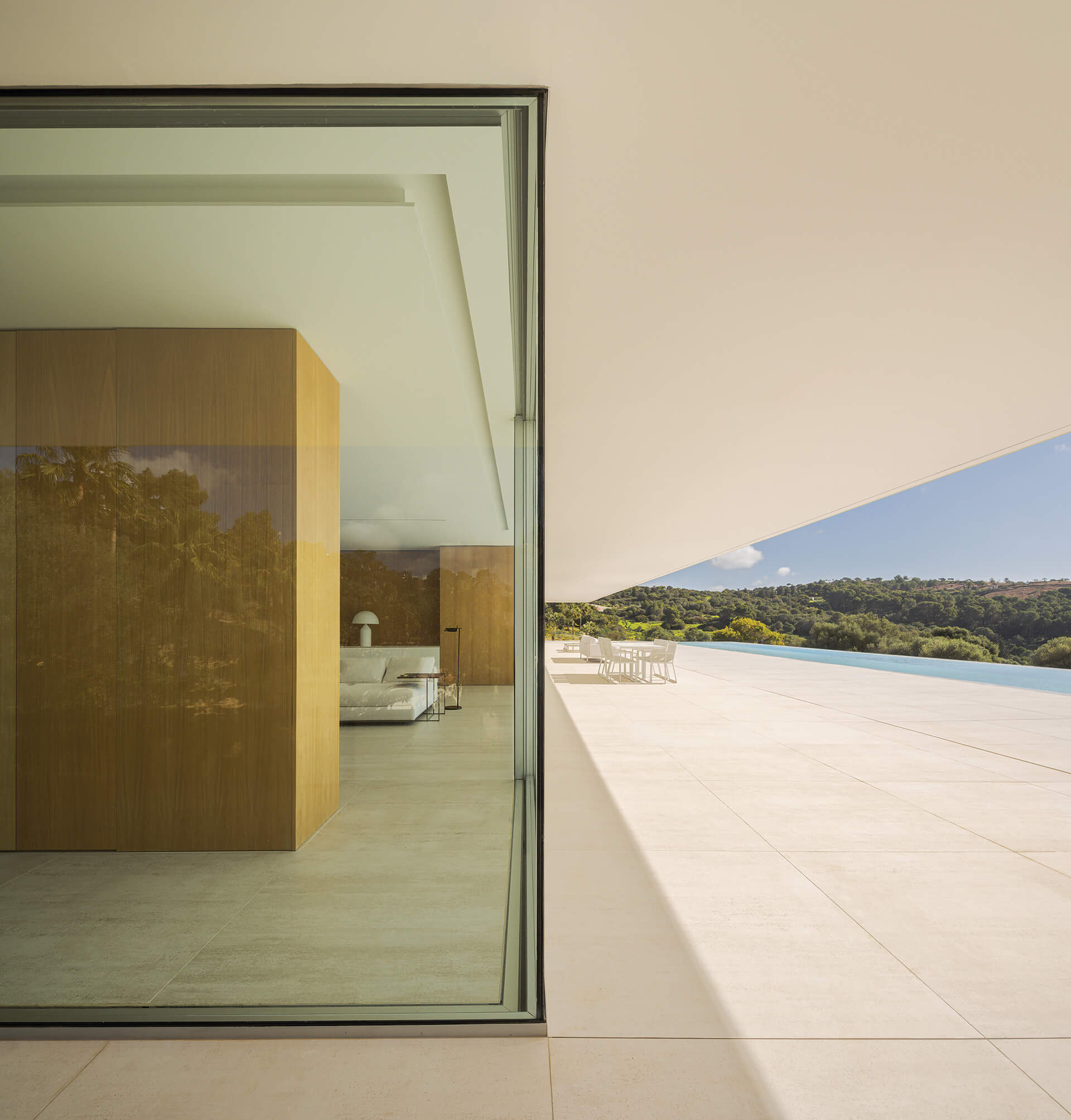
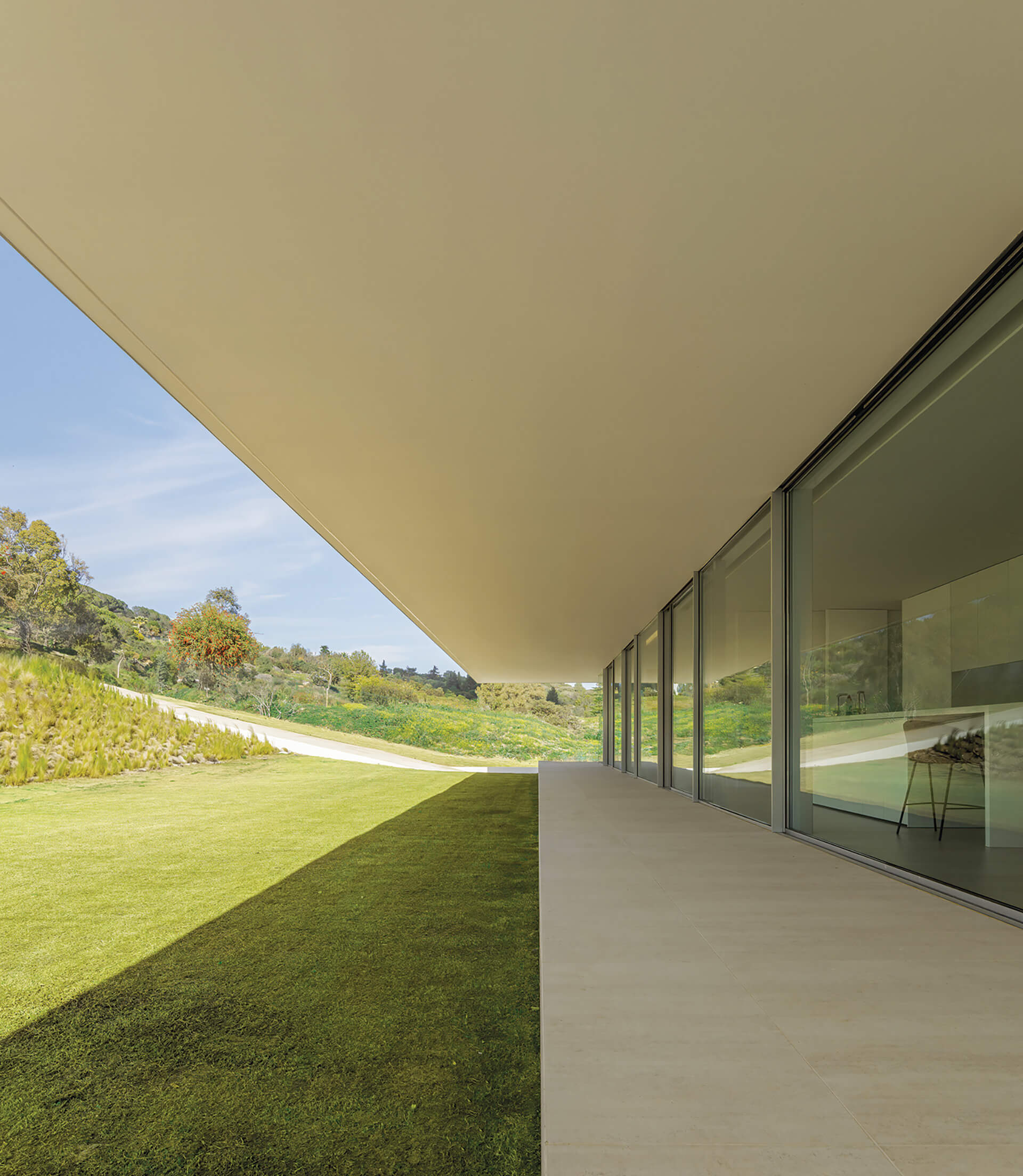
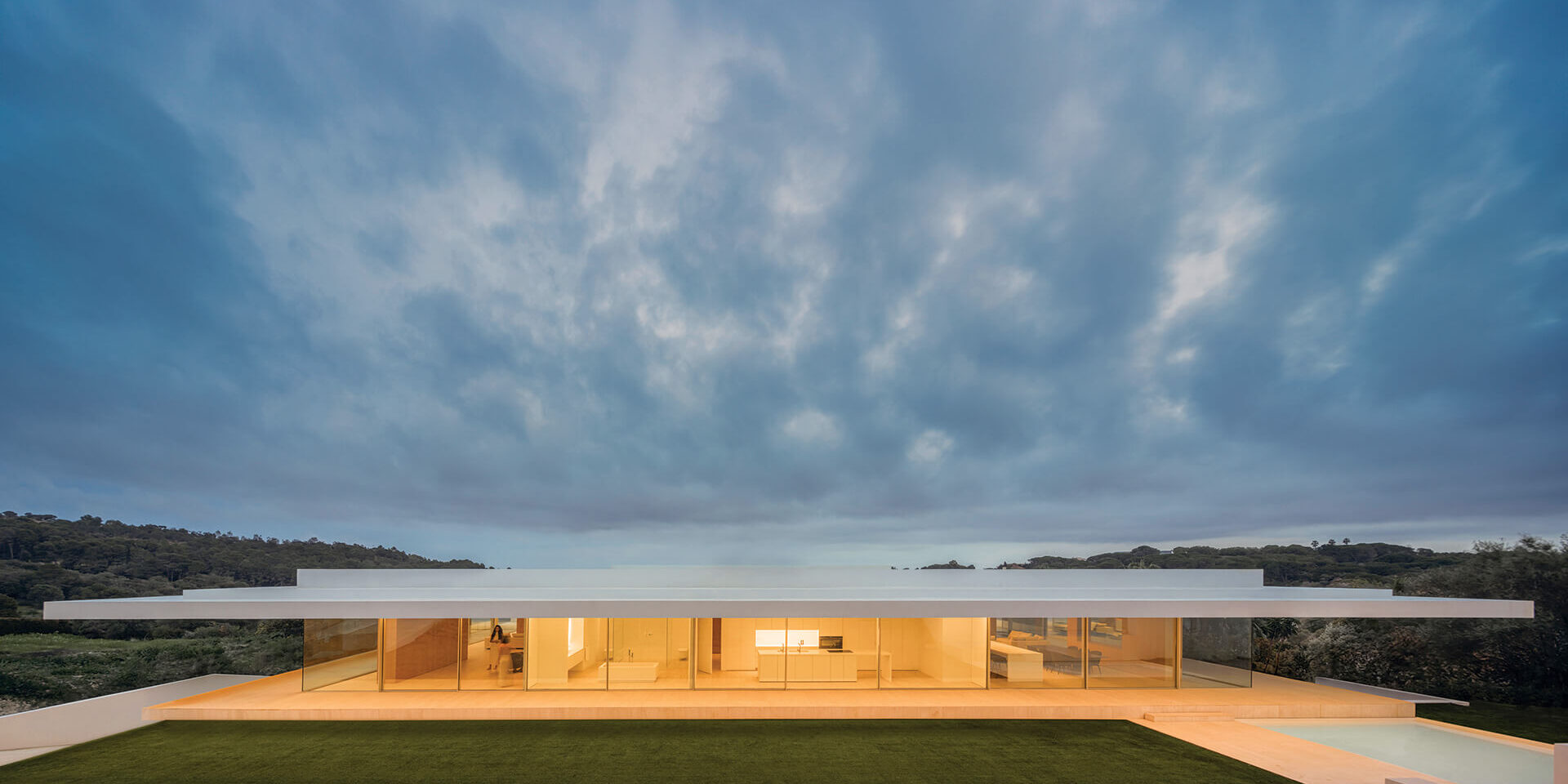
Located next to the Sotogrande golf course, this house was designed to dwell inside the shadow, in-between the ground plane and the flat roof that hovers above. This generous cantilever not only provides shelter from the intense sun of Cadiz but also offers protection against the heavy rainfall arriving from the nearby Grazalema mountain range, the region with the highest precipitation in the Iberian Peninsula.
Design Philosophy
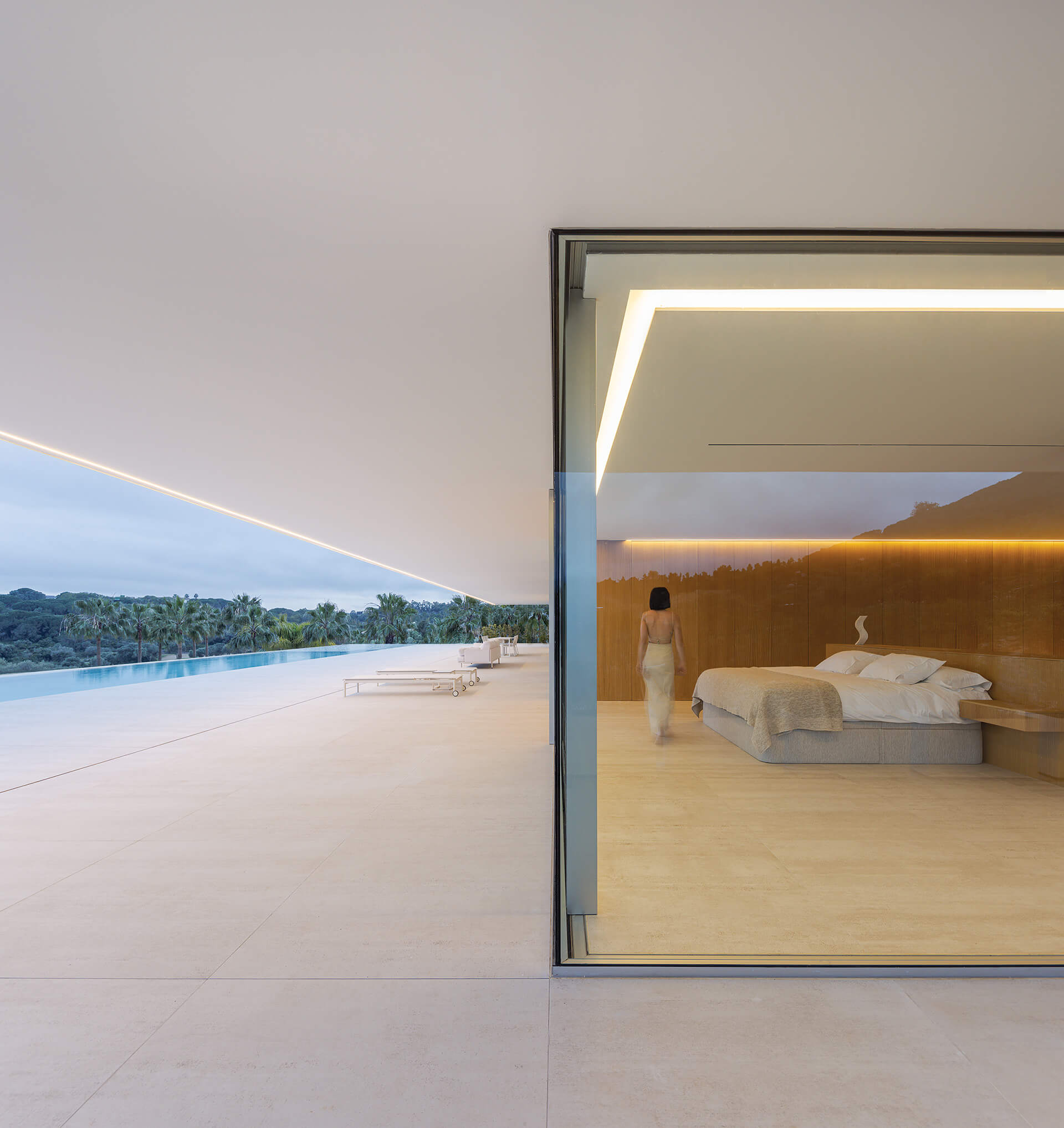
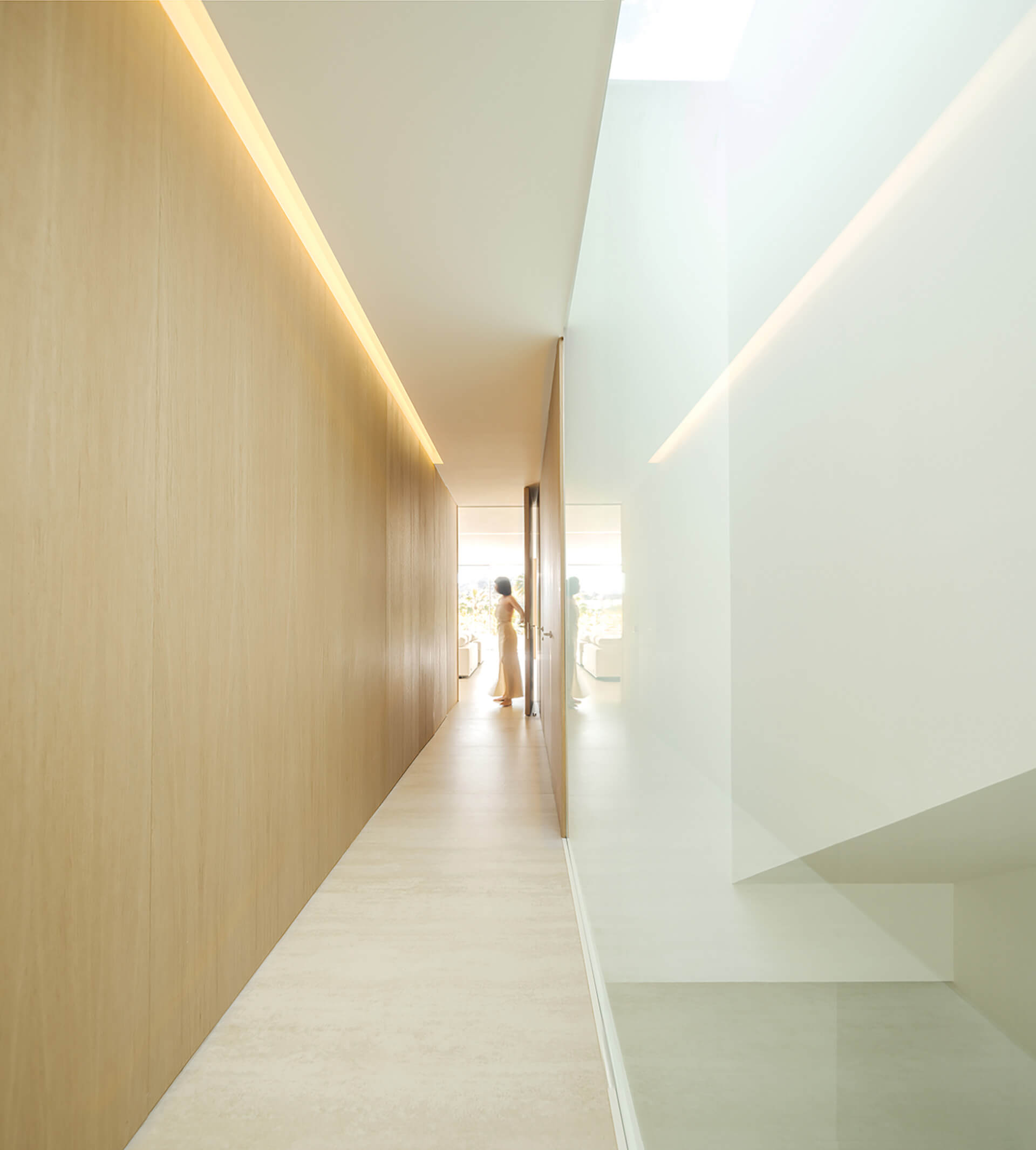
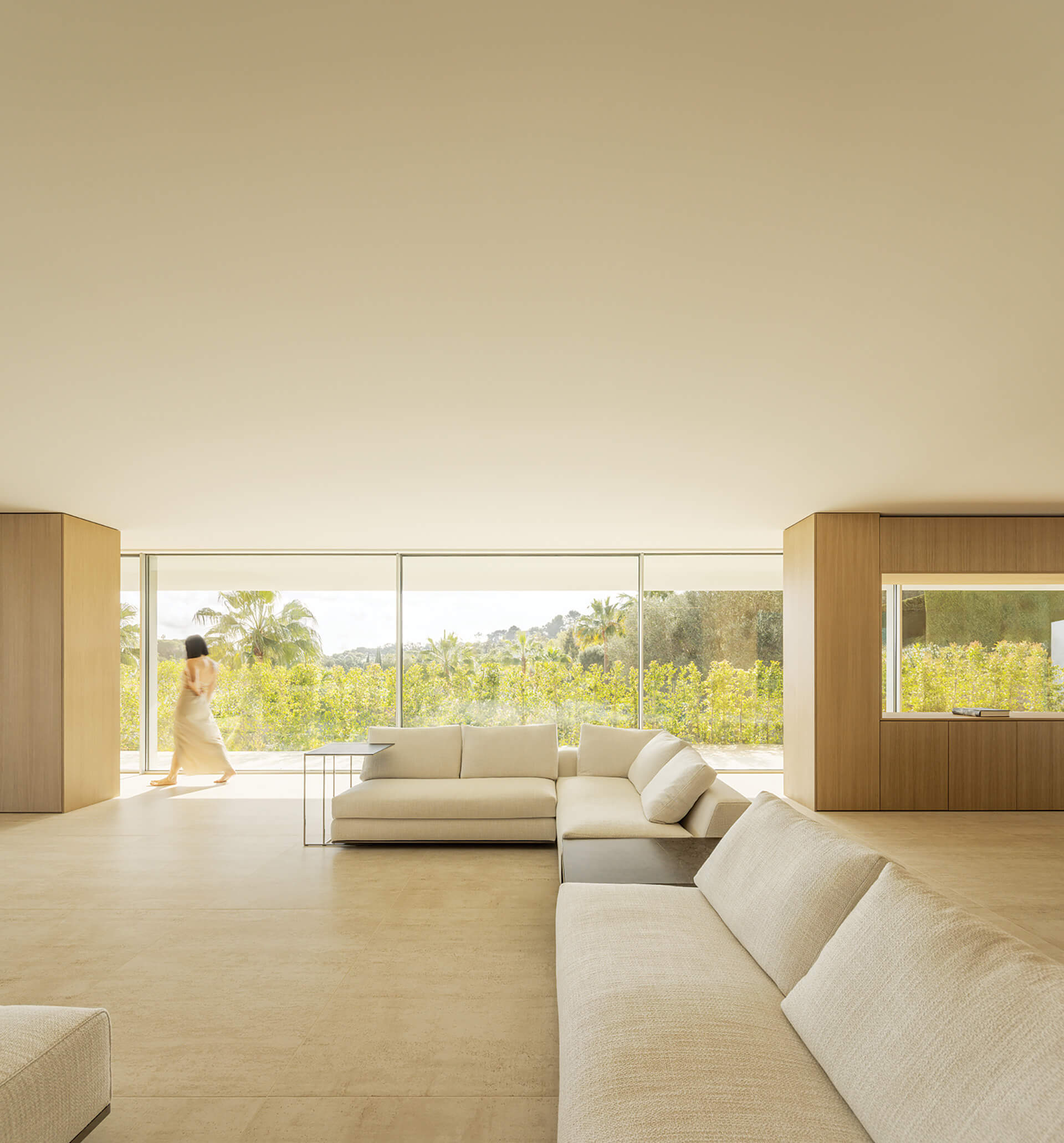
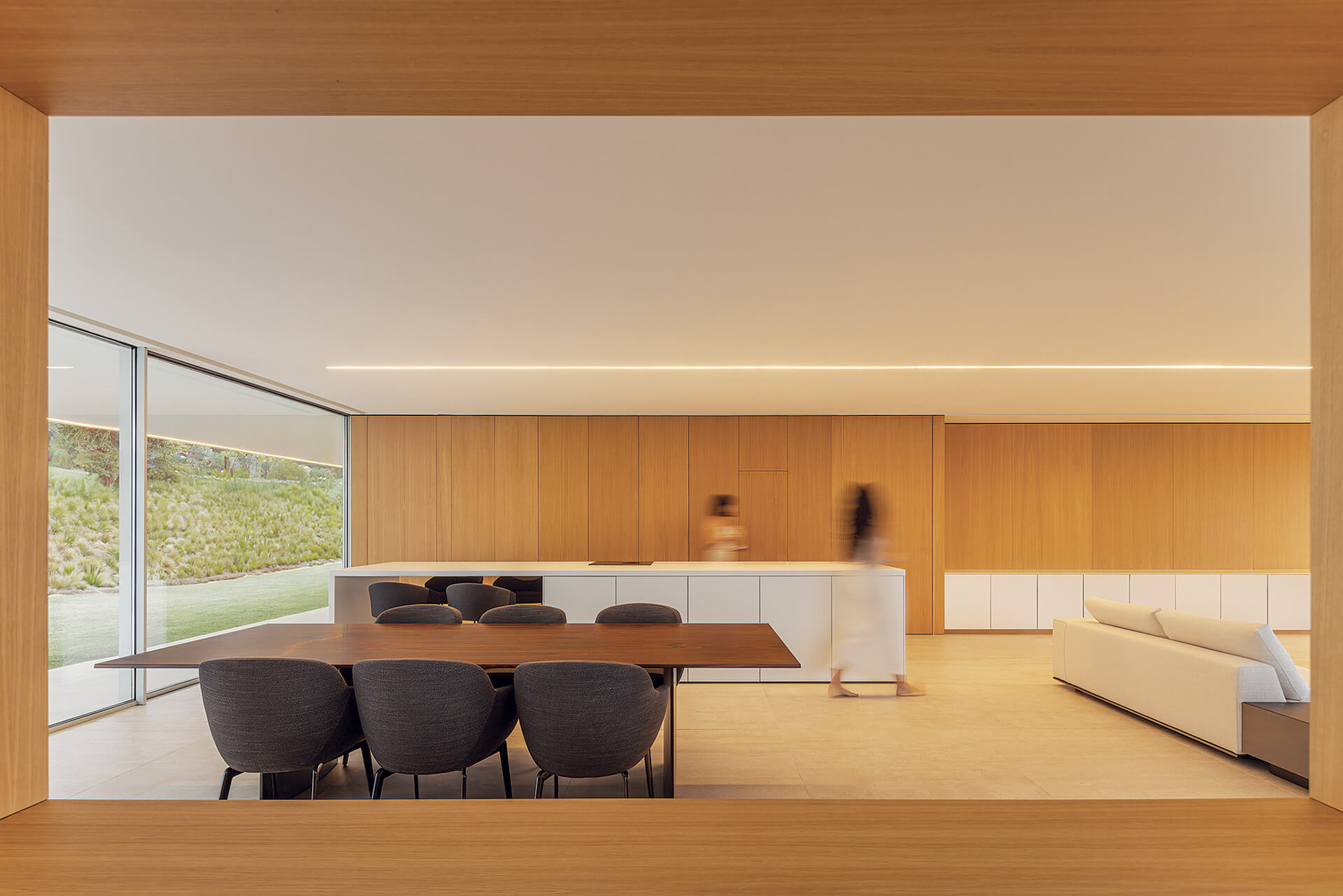
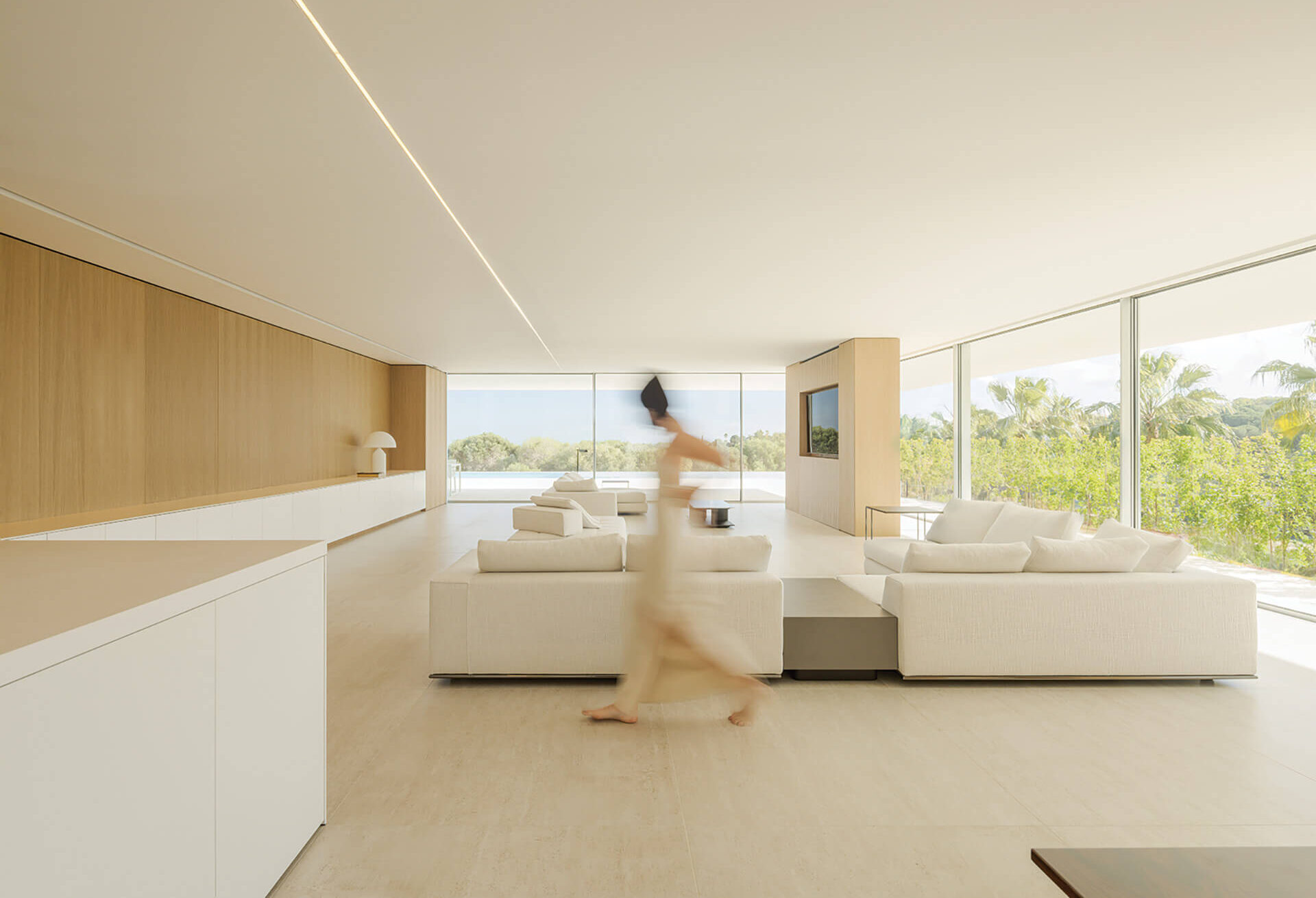
The design establishes four distinct architectural boundaries that define the spatial experience of the house. Below, the ground plane receives the imprint of the shadow. Above, the roof slab is designed with a water surface, functioning both as an aesthetic and a bioclimatic element. Peripherally, a continuous floor-to-ceiling glass façade allows for efficient climate control within the interior while maintaining unobstructed views and seamless movement towards the landscape. Finally, the inner core features a wooden volume that ensures the necessary privacy for the rooms while introducing warmth throughout the space.
Functional Layout
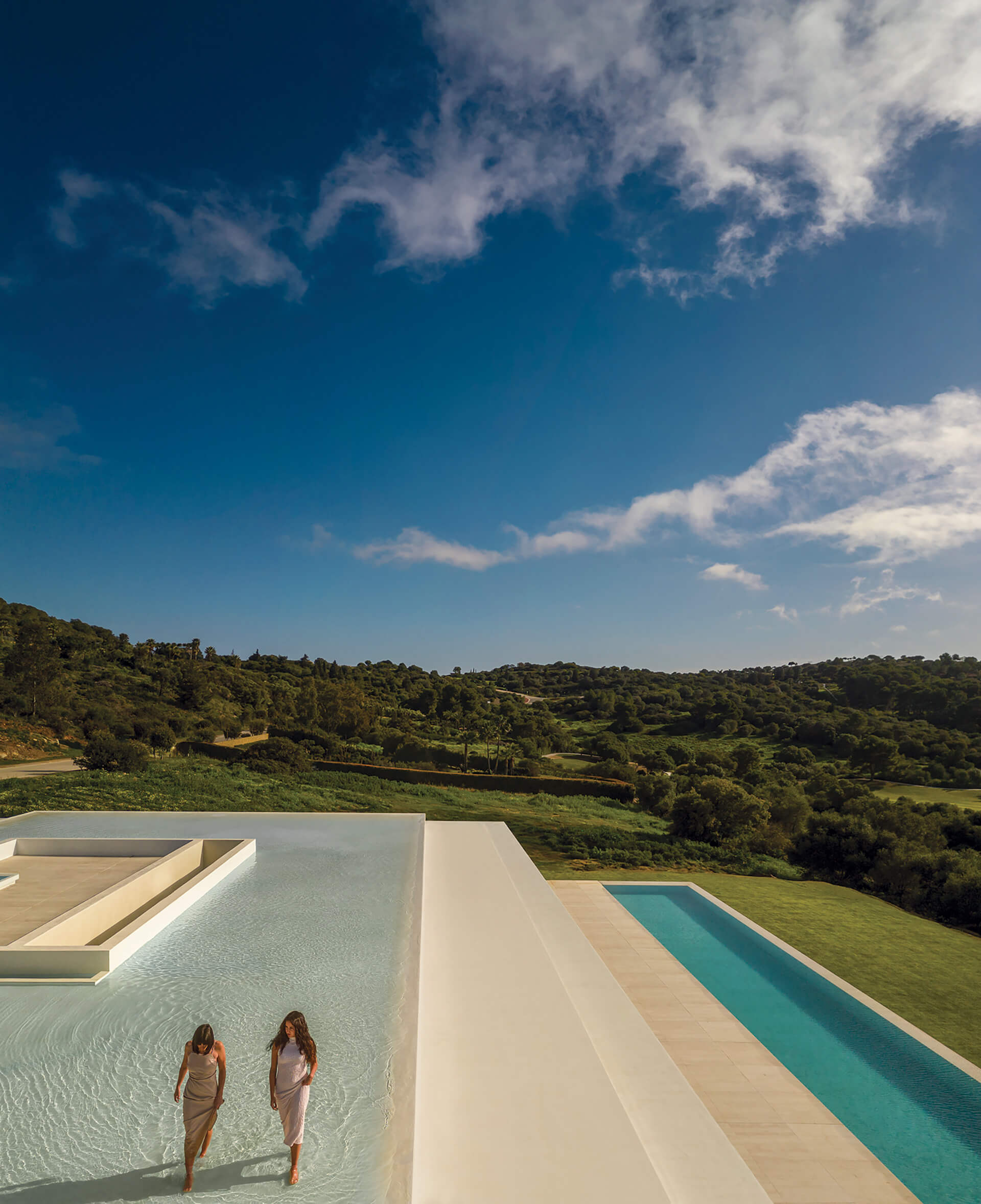
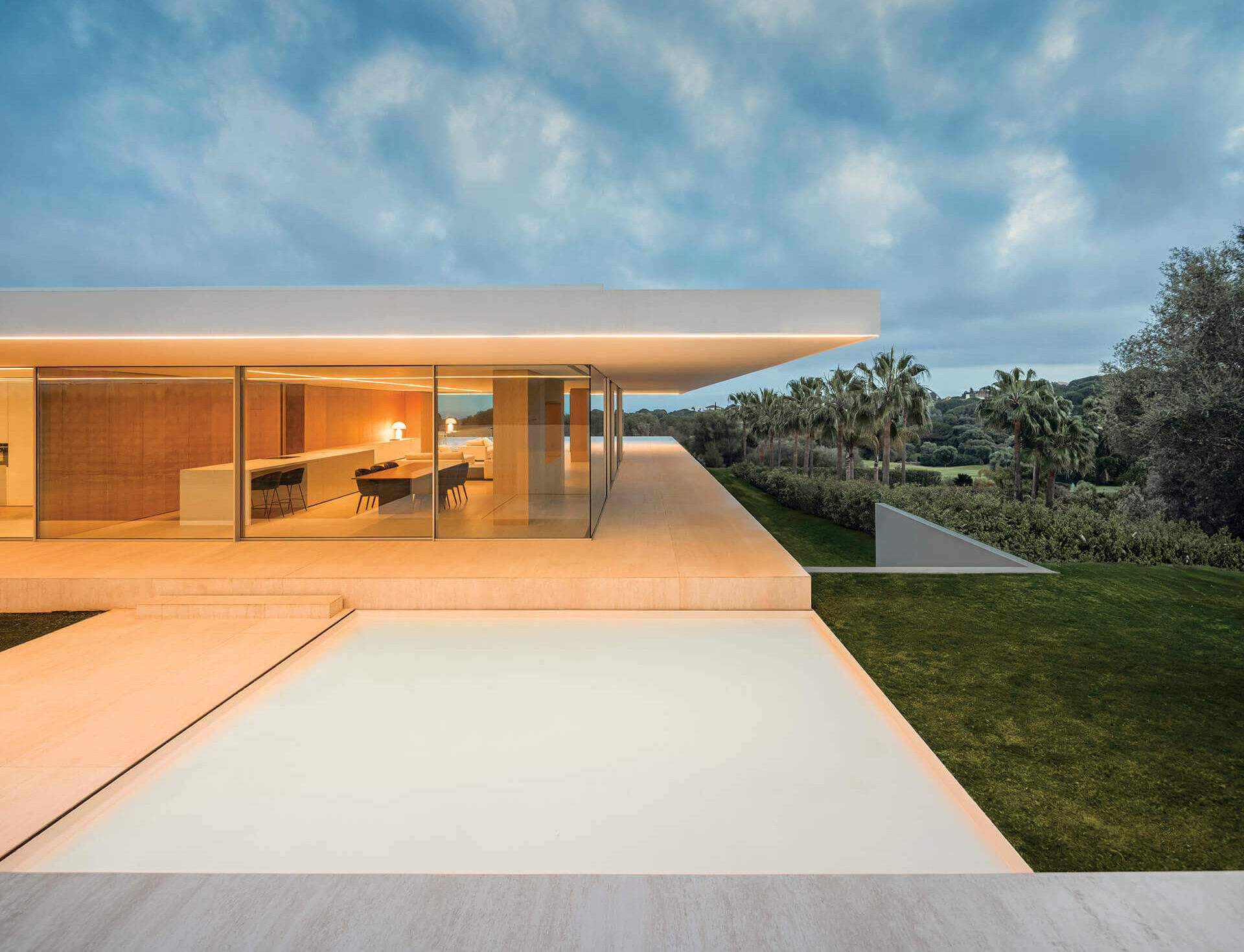
Access to the house is from the upper street, a strategic point that offers a privileged view of the landscape and the water surface on the roof -an unexpected feature that provides thermal and acoustic insulation. The water layer absorbs heat during the day and gradually releases it at night, reducing the need for artificial heating and cooling.
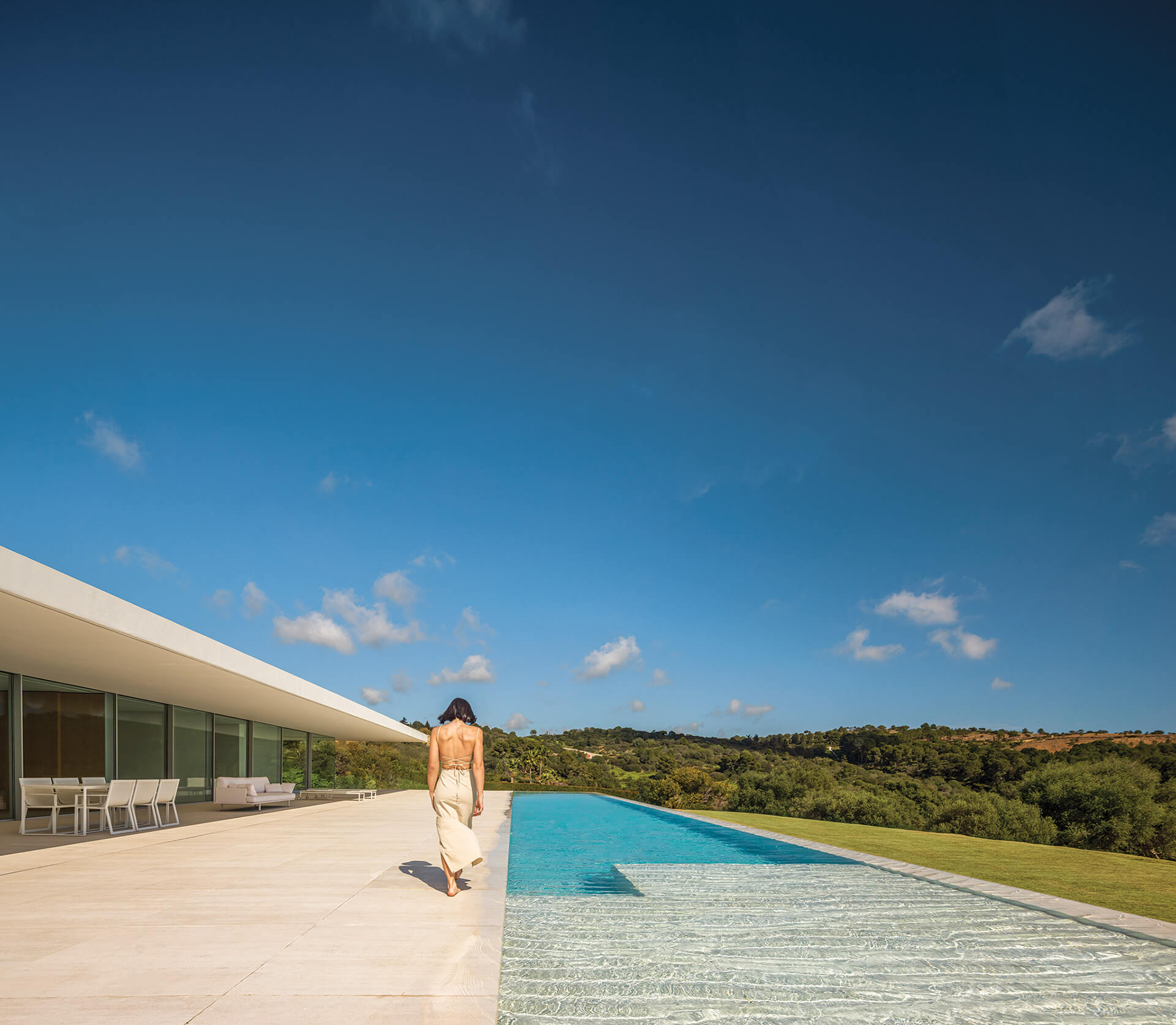
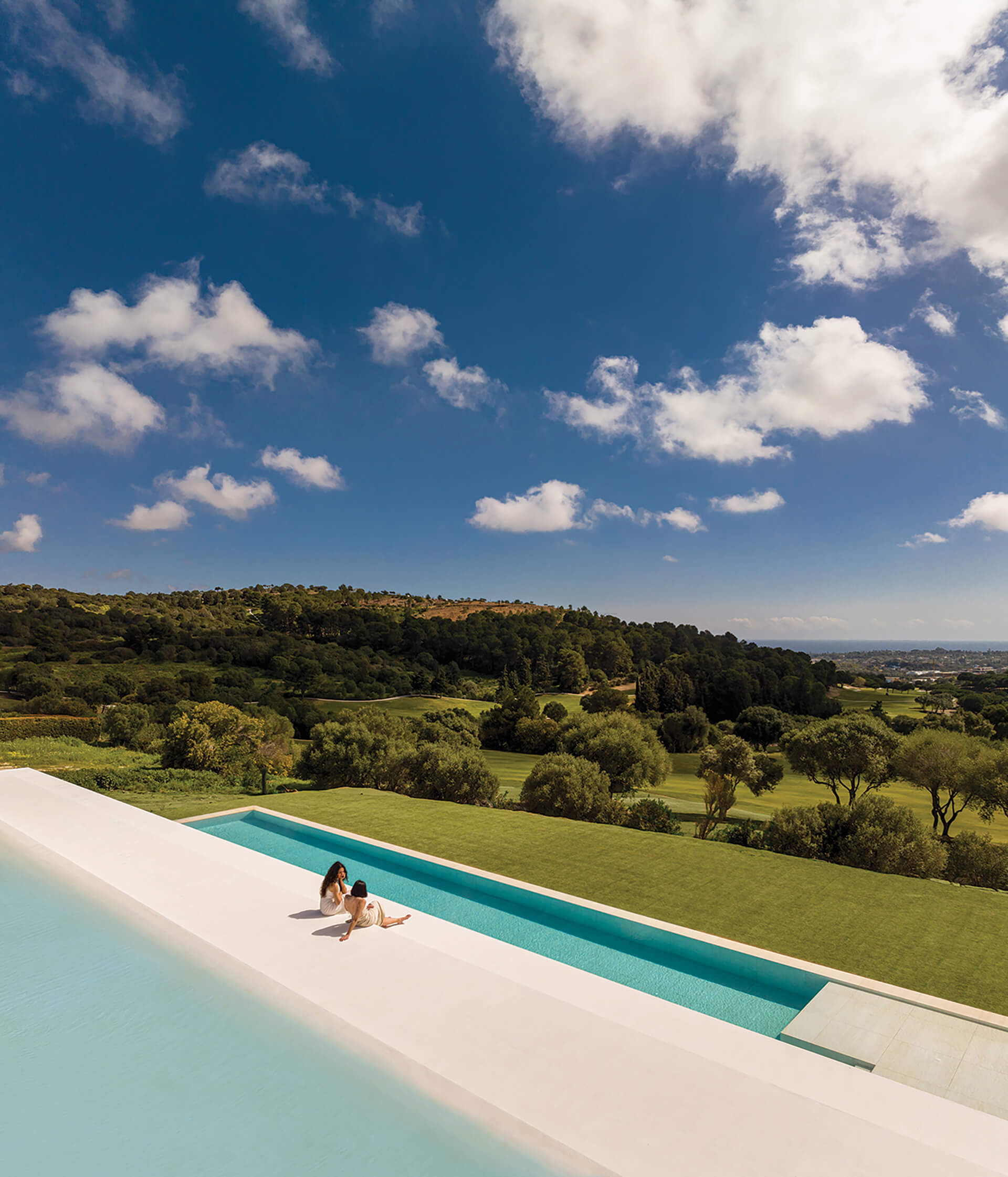
The roof and ground planes are subtly displaced to create a covered entrance leading to the main access, parallel to an infinity pool that extends towards the golf course. Internally, the program is organized around a central circulation core, which also incorporates skylights that bring natural light into the central spaces and guide movement towards the rooftop water surface.
Materials & Furniture
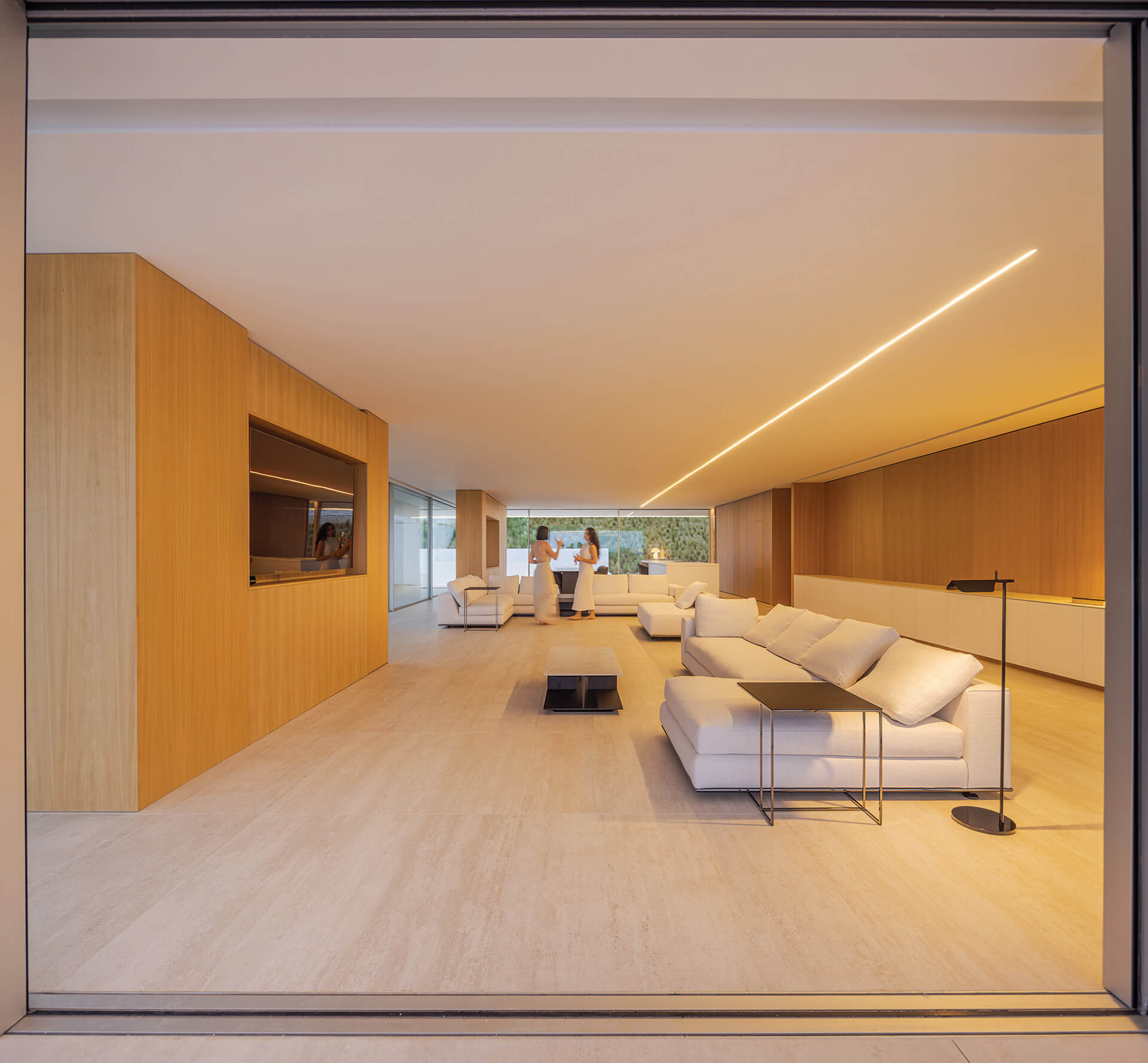
One of the primary design requirements was the use of materials that compose a warm color palette. As a result, the entire ground surface -both indoors and outdoors is clad in large-format off-white ceramic slabs, harmonizing with the wooden finishes of the core and the free-standing walls that define different interior areas. The furniture is dominated by natural wood and textured white fabrics, while linear warm white lighting highlights the overall composition.
Throughout the day, sunlight washes across textured surfaces and natural materials, accentuating depth and shadow while reinforcing the continuity between interior and exterior spaces. During the evening, a carefully composed artificial lighting scheme takes over through discreet, indirect fixtures integrated into ceilings, walls and architectural details. Warm, low-intensity lighting highlights key spatial elements and circulation paths while maintaining a soft ambient glow that preserves the serene character of the residence, allowing the architecture and material palette to remain the focal point of the spatial experience.
The design aims to minimize the building’s footprint on the environment, creating a living experience within the shaded zone defined between the two primary planes. Through a simple architectural gesture, the house orchestrates an experience with a strong identity and a timeless character.
https://ek-mag.com/wp-content/uploads/2026/02/00-cover-16.jpg
https://ek-mag.com/wp-content/uploads/2026/02/01-18.jpg
https://ek-mag.com/wp-content/uploads/2026/02/02-18.jpg
https://ek-mag.com/wp-content/uploads/2026/02/03-18-e1772035082459.jpg
https://ek-mag.com/wp-content/uploads/2026/02/04-18.jpg
https://ek-mag.com/wp-content/uploads/2026/02/05-18.jpg
https://ek-mag.com/wp-content/uploads/2026/02/06-18.jpg
https://ek-mag.com/wp-content/uploads/2026/02/07-17.jpg
https://ek-mag.com/wp-content/uploads/2026/02/08-17.jpg
https://ek-mag.com/wp-content/uploads/2026/02/09-16.jpg
https://ek-mag.com/wp-content/uploads/2026/02/10-15-e1772035135515.jpg
https://ek-mag.com/wp-content/uploads/2026/02/11-14.jpg
https://ek-mag.com/wp-content/uploads/2026/02/12-12.jpg
https://ek-mag.com/wp-content/uploads/2026/02/13-11.jpg
https://ek-mag.com/wp-content/uploads/2026/02/14-6.jpg
https://ek-mag.com/wp-content/uploads/2026/02/15-3.jpg
https://ek-mag.com/wp-content/uploads/2026/02/16-1.jpg
Related Posts