
Contrasting shapes
On the main street of the Havana district -an area of particular interest for food and beverage venues- a new contemporary Italian trattoria takes shape, emphasizing a balanced dialogue between materiality and form.
Exterior Design & Layout
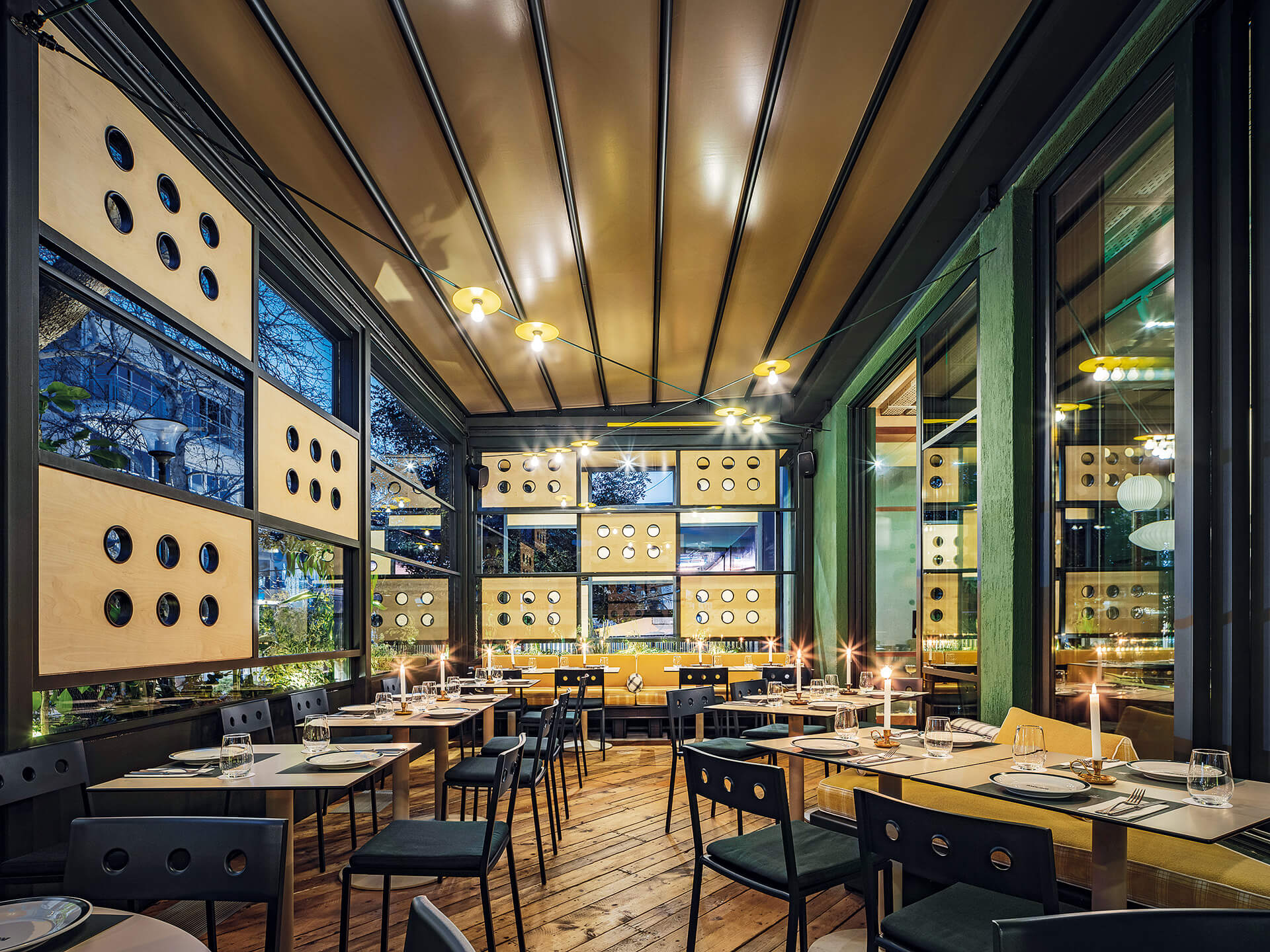
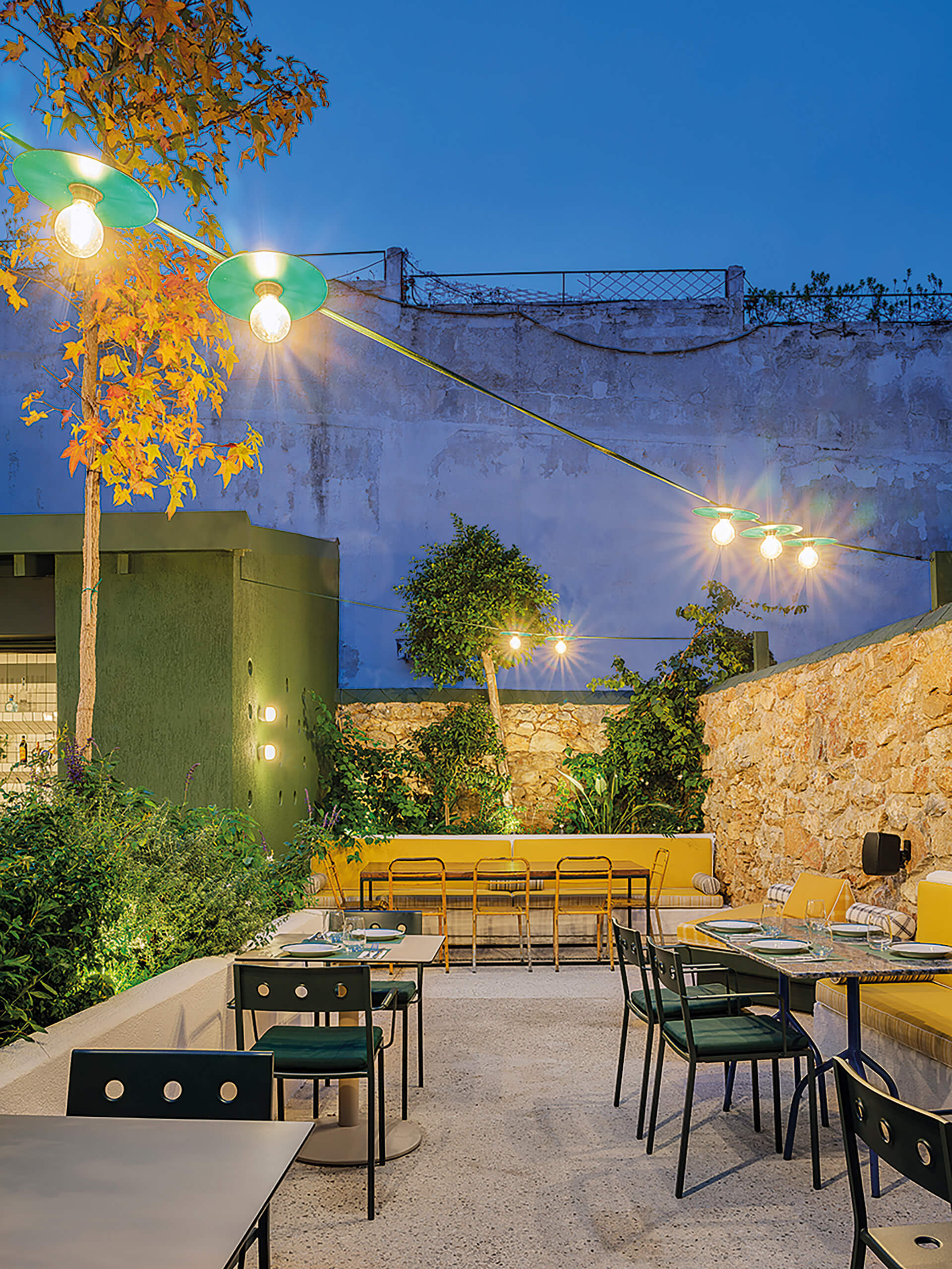
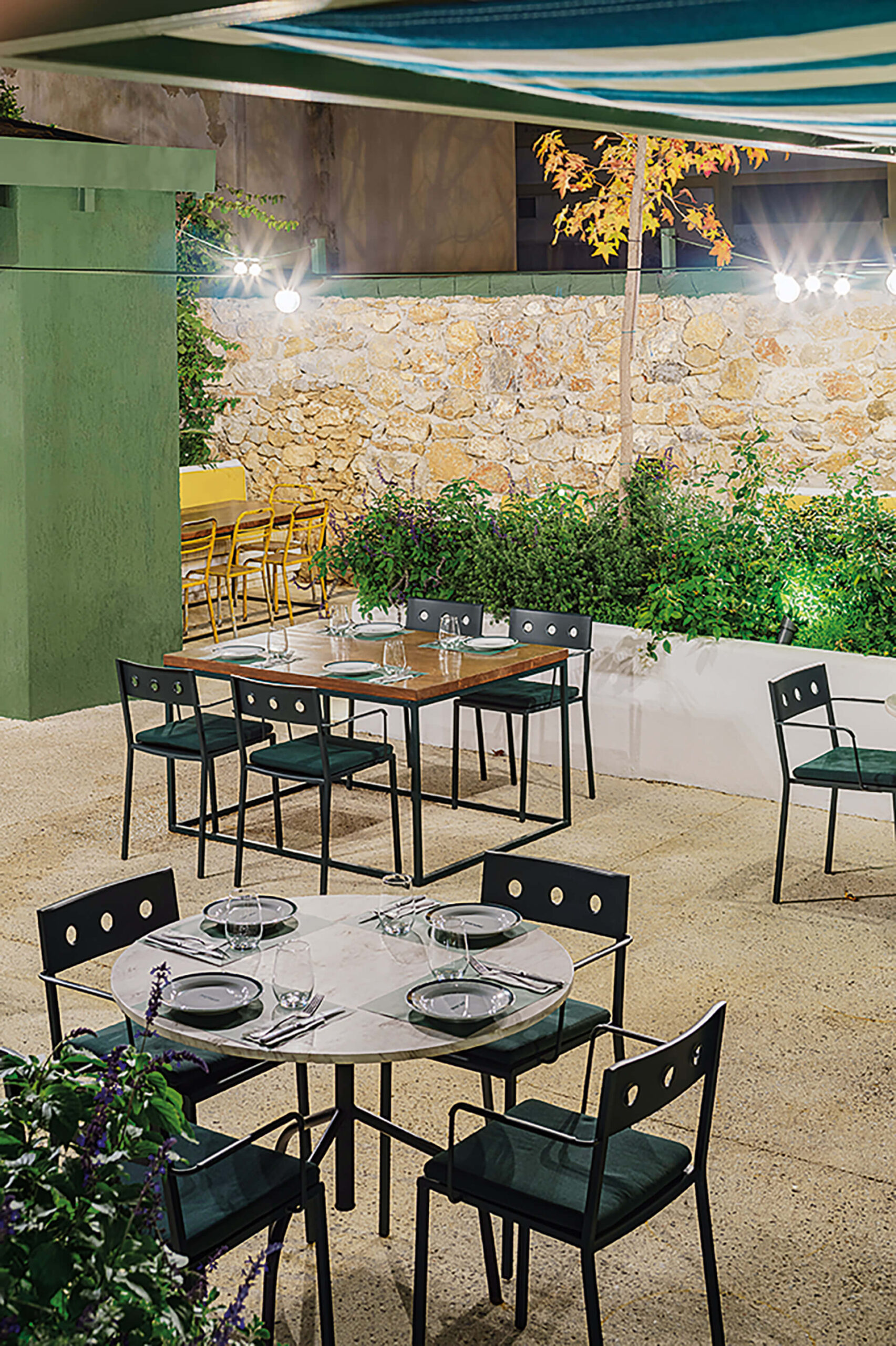
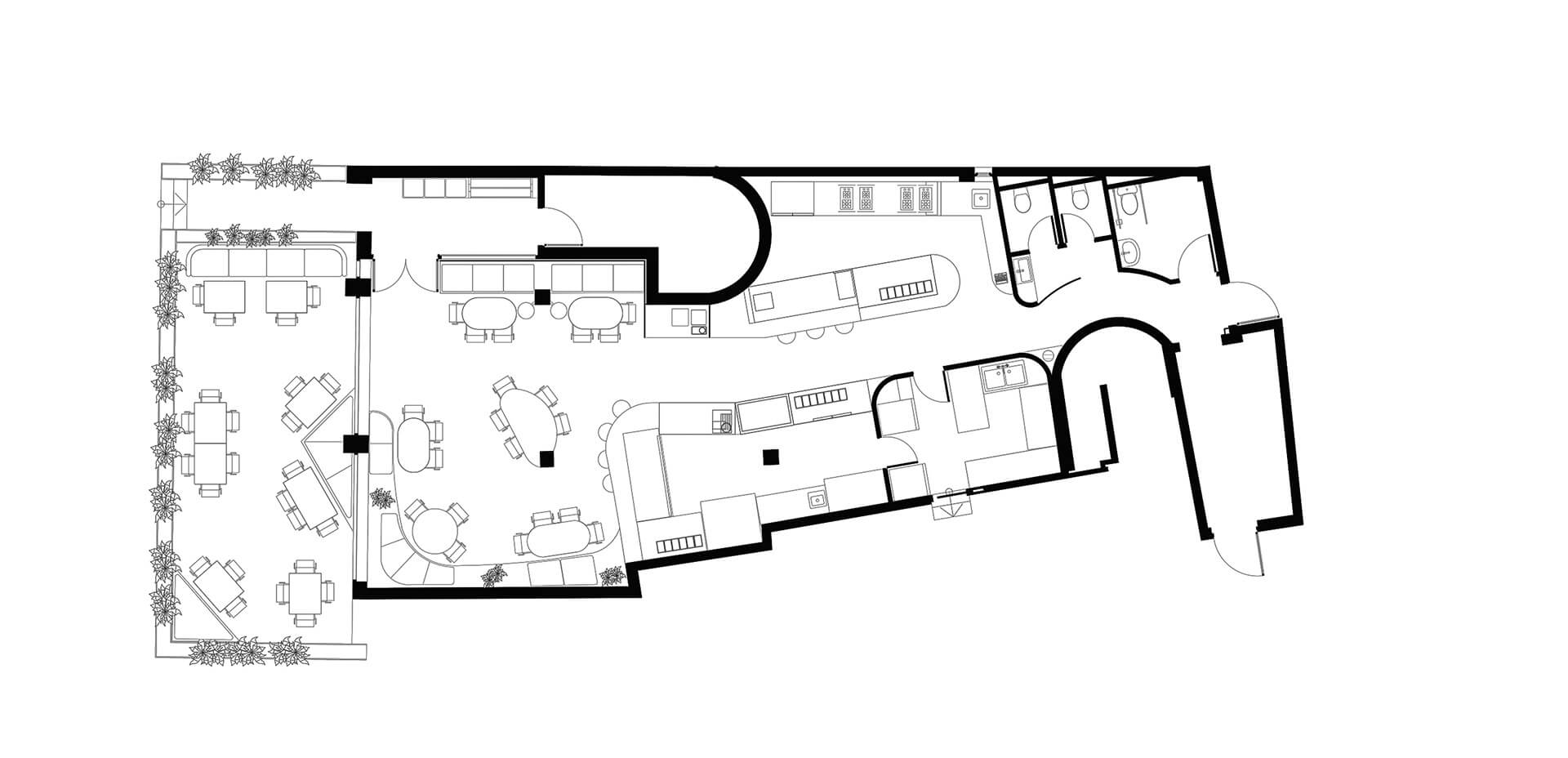
Along the sidewalk, the restaurant unfolds with its first outdoor dining area. During the summer months, the metal pergola opens, allowing the large plane trees lining the street to provide natural shade throughout the day, while leaving the sky visible at night. Perimeter planting functions as a natural filter from passersby and street traffic, complemented by marine plywood panels which, through their carefully considered design and placement, allow natural light to penetrate the space, casting dramatic shadows and creating a layered atmosphere.
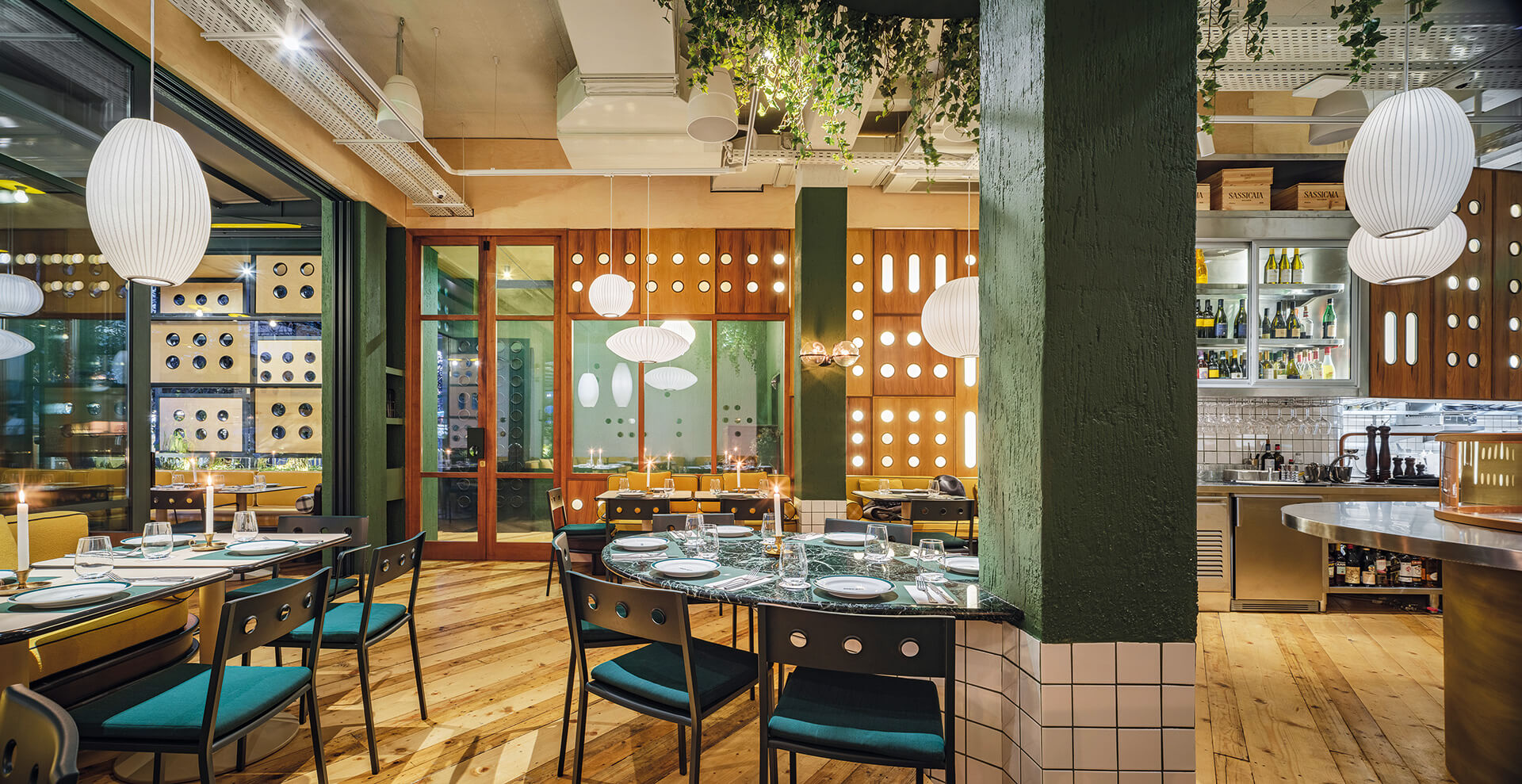
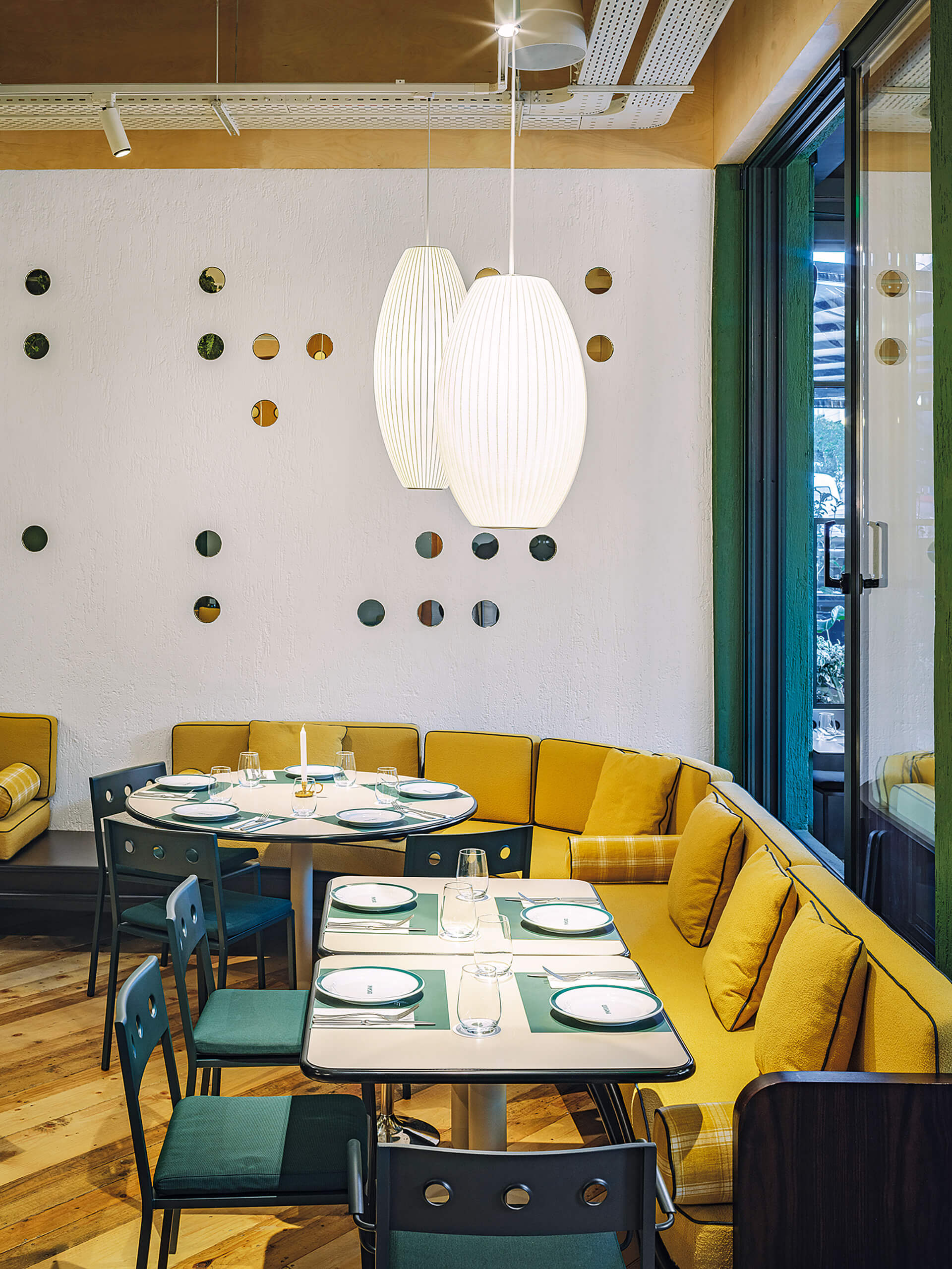
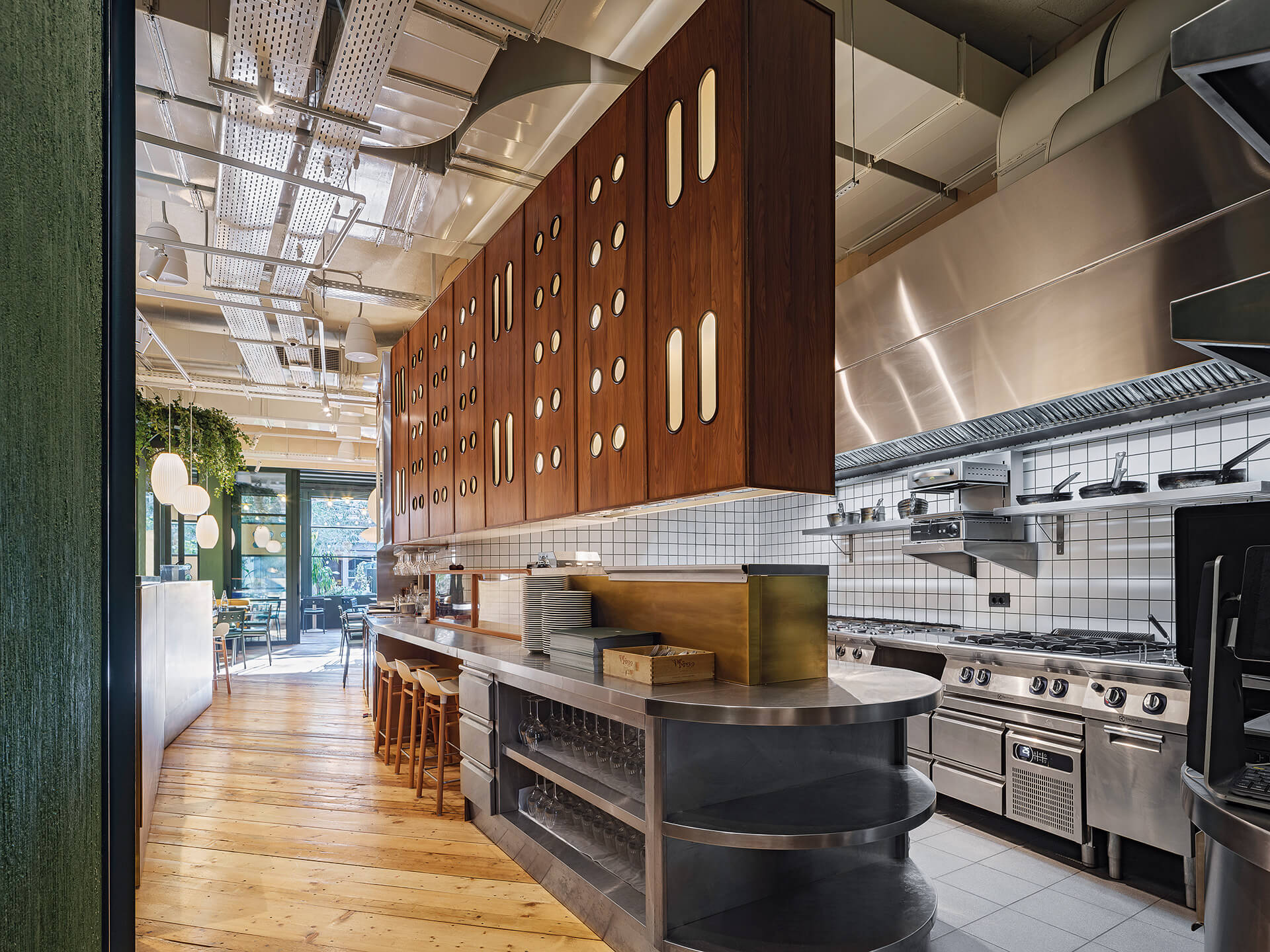
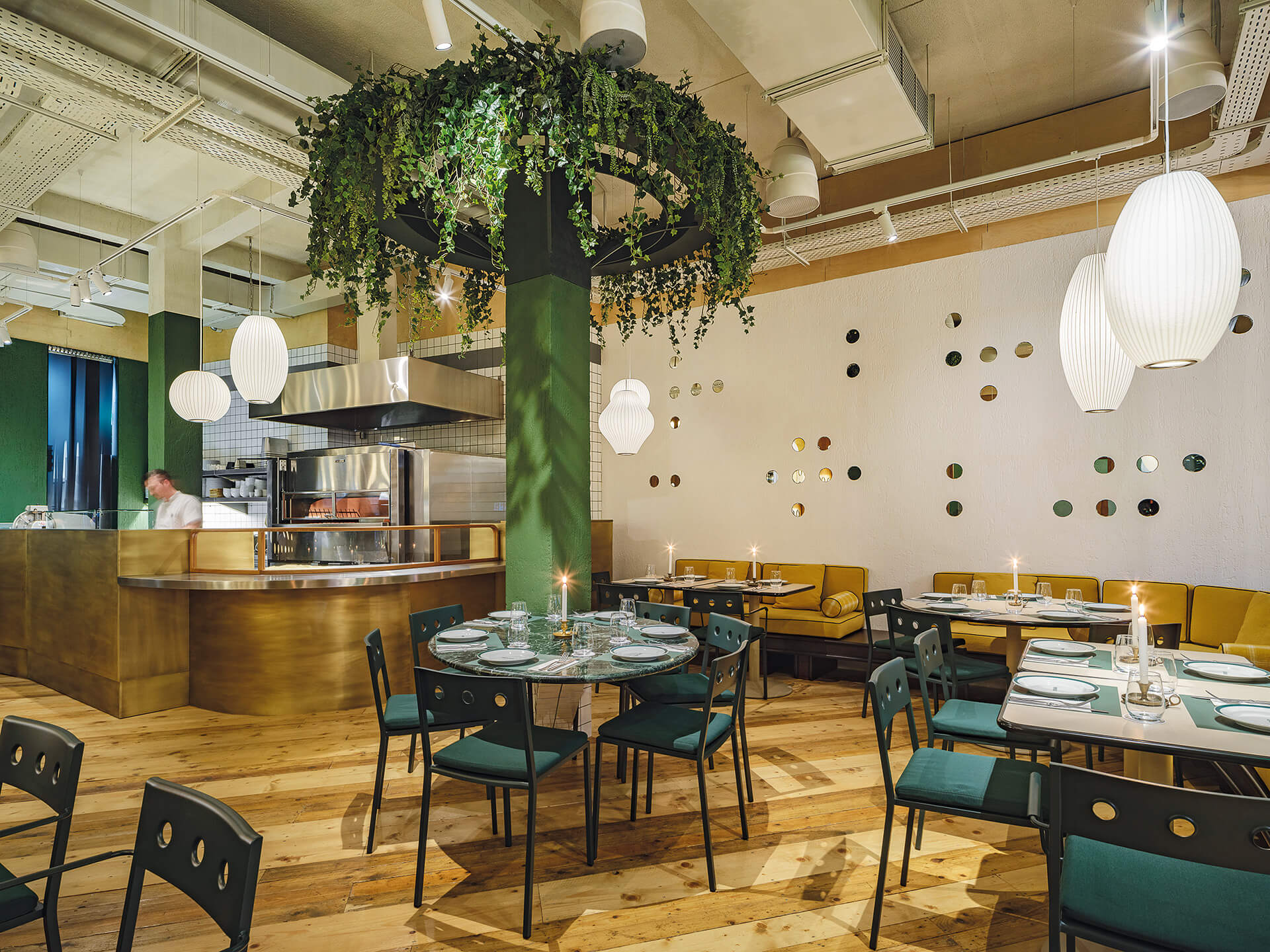
The main dining hall coexists with the open kitchen, where a low counter in front of the chefs’ workspace enhances a sense of immediacy and informality -core principles of the design concept. Comfortable rosewood sofas are arranged along the perimeter, oriented toward the heart of the restaurant, the kitchen, evoking the feeling of a large communal living room. Tables for both small and larger groups are interspersed throughout the space. The existing central column, a dominant feature of the hall, is embraced by a custom-made marble table and serves as the structural base for a suspended metal planter.
Material Palette
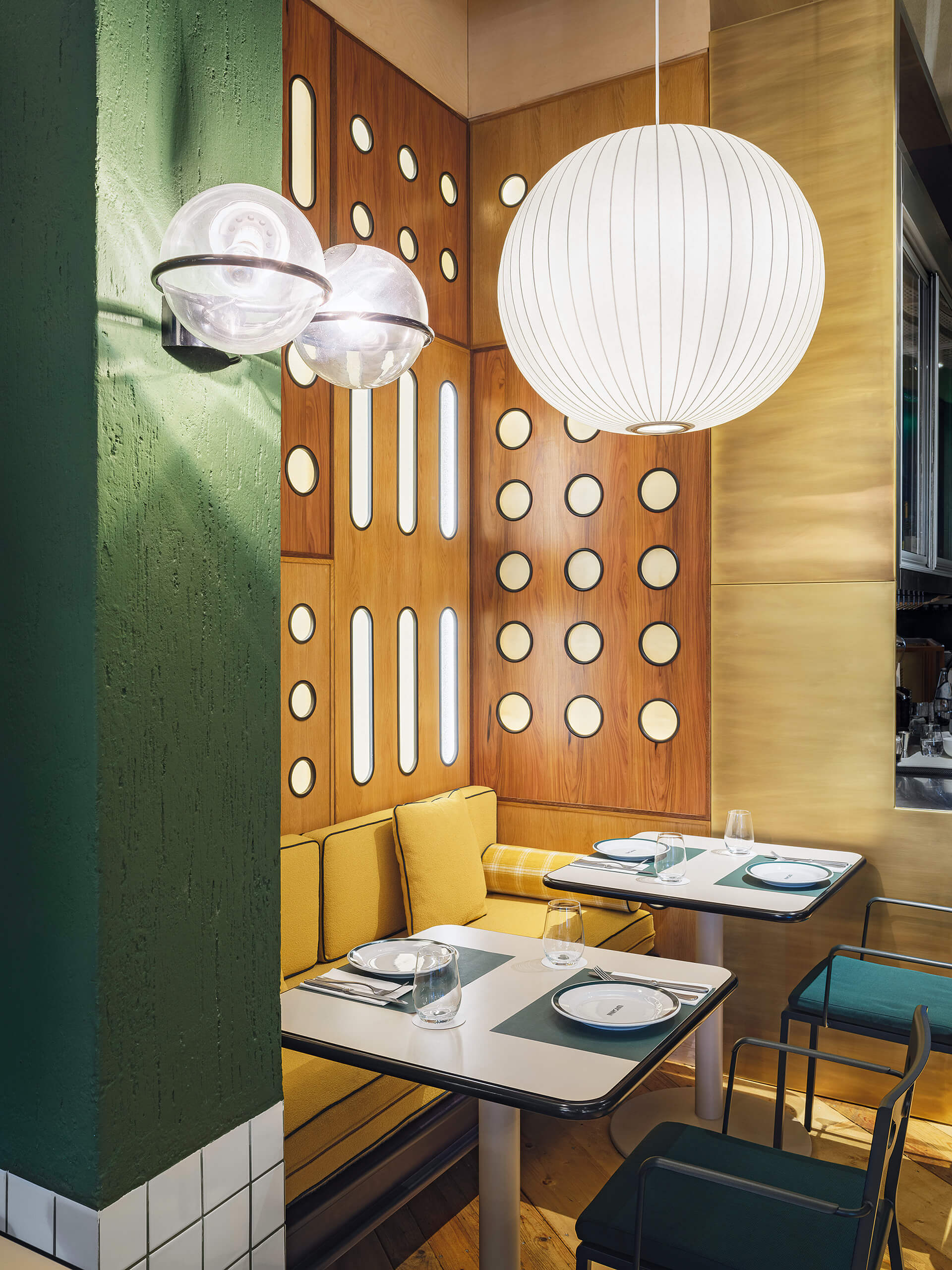
The interior is clad with symmetrical perforated panels crafted from oak and rosewood, integrated with concealed lighting that bathes the space in warm wooden reflections. Upholstery fabrics draw inspiration from Italian elegance, both in their combinations and in the detailing of their stitching. Walls finished with hand-applied plaster gain luminosity from embedded, scattered mirrors, while material contrast is further reinforced by the use of construction planks on the floor and the brass cladding applied to all industrial stainless-steel kitchen equipment. Overall, the dialogue between raw materials -such as construction planks and plaster- and more refined ones -such as marble and brass- achieves a balance that reflects the spirit of the restaurant.
Morphology & Color Scheme
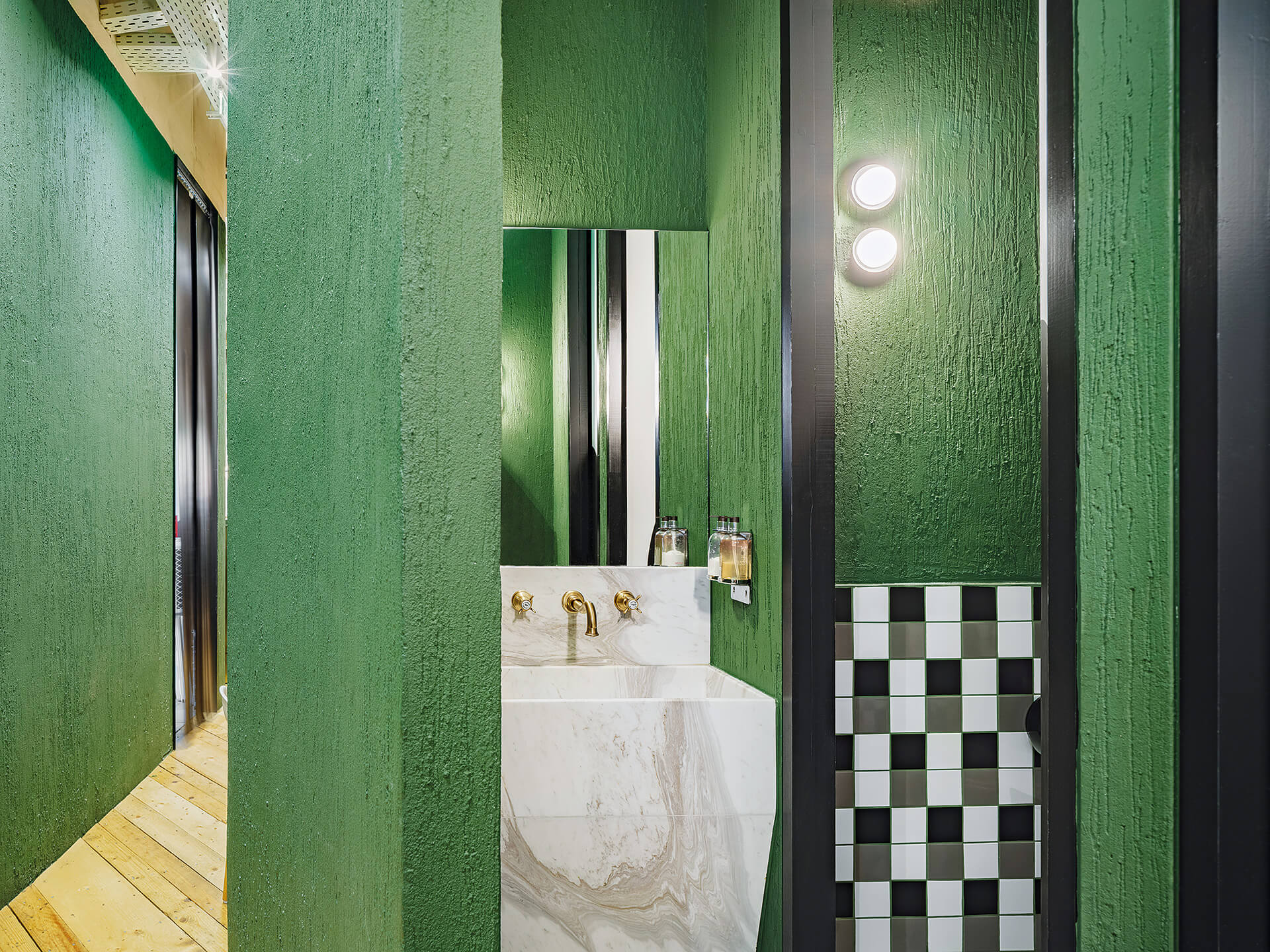
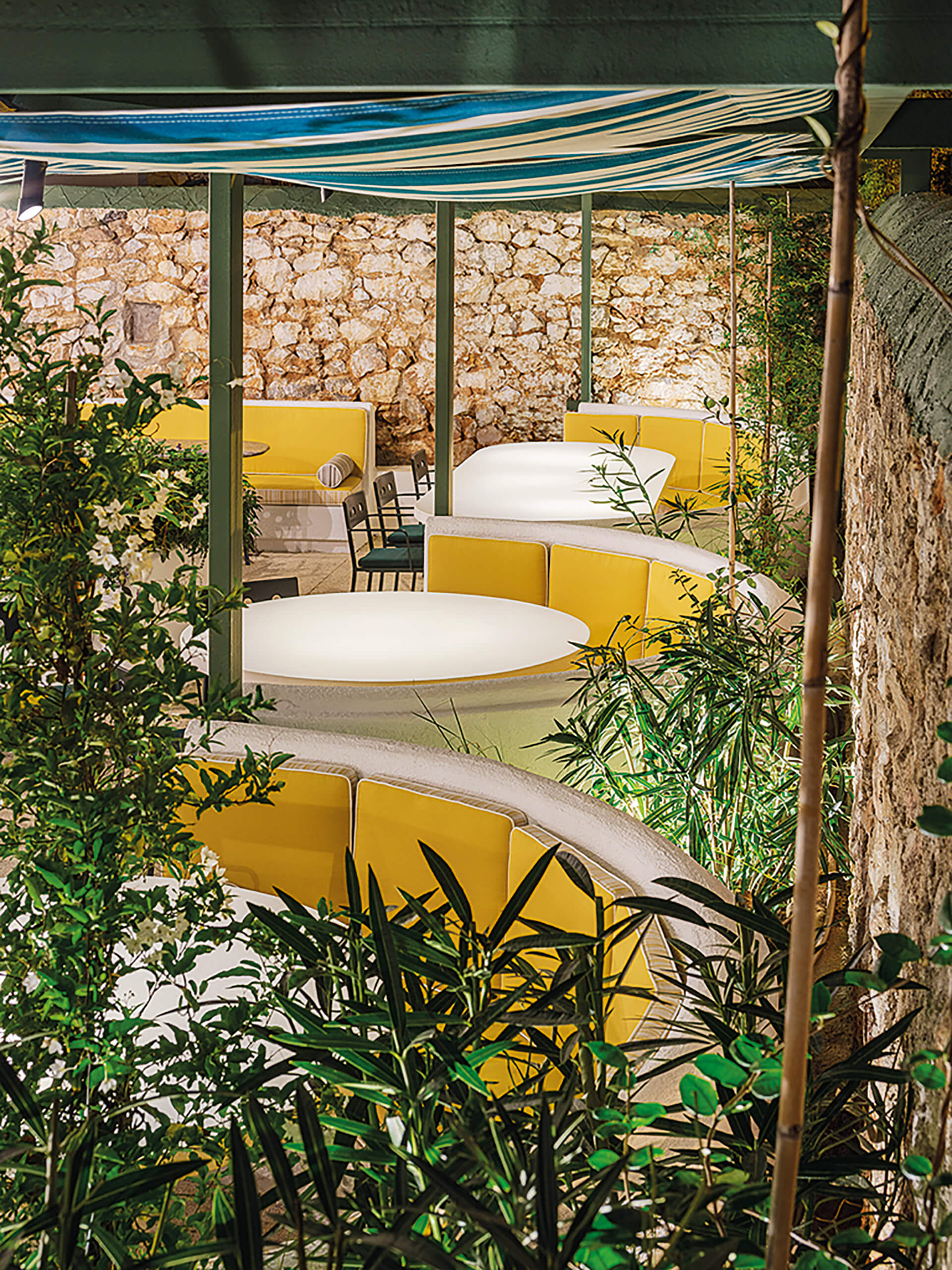
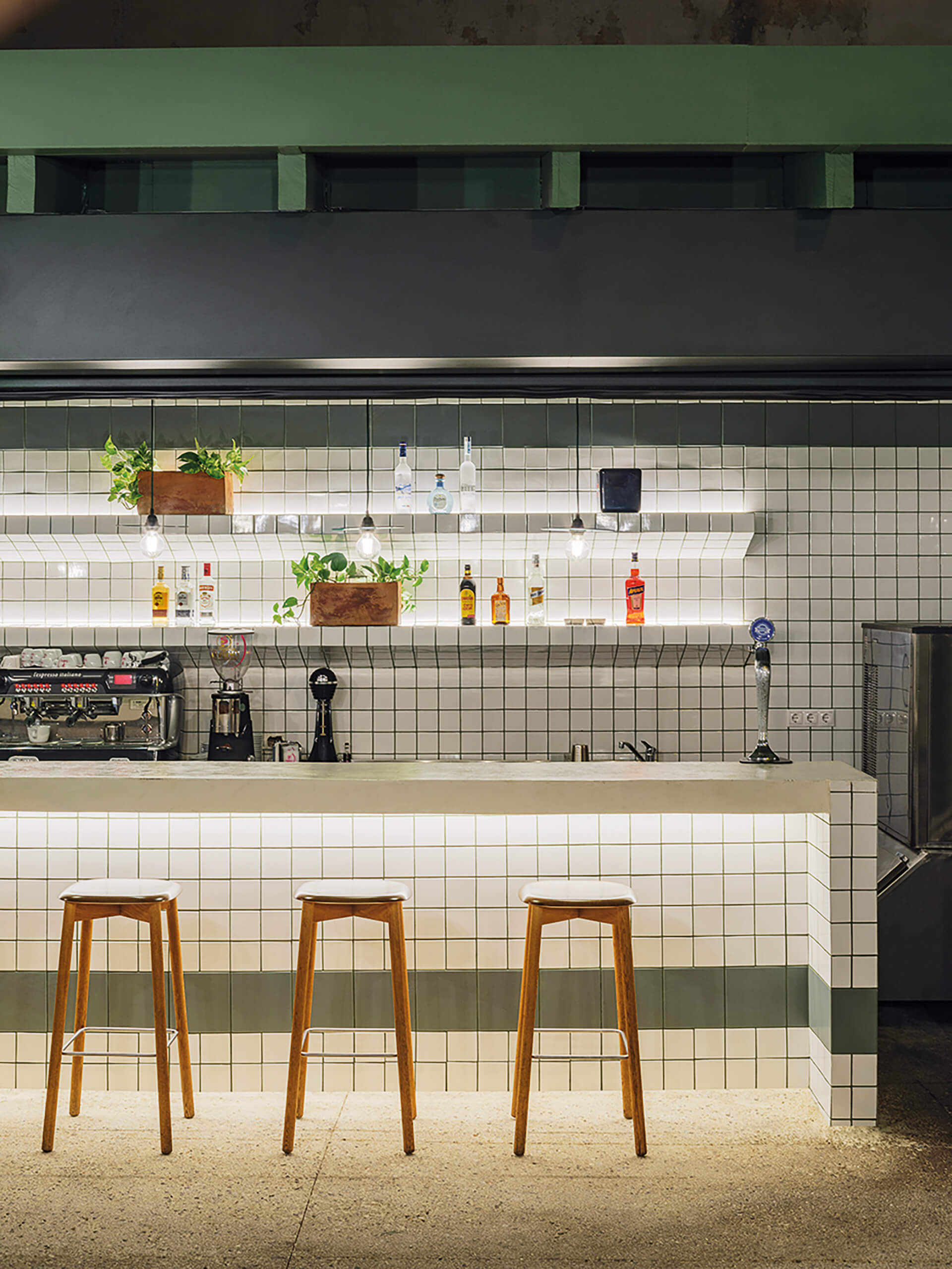
Circular elements and curves dominate the composition, both in plan and in the finer design details, from the shapes of tables and lighting fixtures to the perforations in the wooden wall panels. The circle is employed repetitively to establish a strong visual motif, while the square tile used in the preparation areas, combined with exposed green grout, was selected to introduce geometric contrast.
The color palette is led by green -featured on the entrance door, tables, selected walls, seating, and tile joints- and yellow, present in the sofas and the tones of the wood. These are complemented by brass accents, visible in elements such as the bar cladding and selected lighting fixtures.
https://ek-mag.com/wp-content/uploads/2026/01/00-cover-3.jpg
https://ek-mag.com/wp-content/uploads/2026/01/01-5.jpg
https://ek-mag.com/wp-content/uploads/2026/01/02-5.jpg
https://ek-mag.com/wp-content/uploads/2026/01/03-5.jpg
https://ek-mag.com/wp-content/uploads/2026/01/04-5.jpg
https://ek-mag.com/wp-content/uploads/2026/01/05-5.jpg
https://ek-mag.com/wp-content/uploads/2026/01/06-6.jpg
https://ek-mag.com/wp-content/uploads/2026/01/07-5.jpg
https://ek-mag.com/wp-content/uploads/2026/01/08-5-scaled.jpg
https://ek-mag.com/wp-content/uploads/2026/01/09-4.jpg
https://ek-mag.com/wp-content/uploads/2026/01/10-4.jpg
https://ek-mag.com/wp-content/uploads/2026/01/11-3.jpg
Related Posts