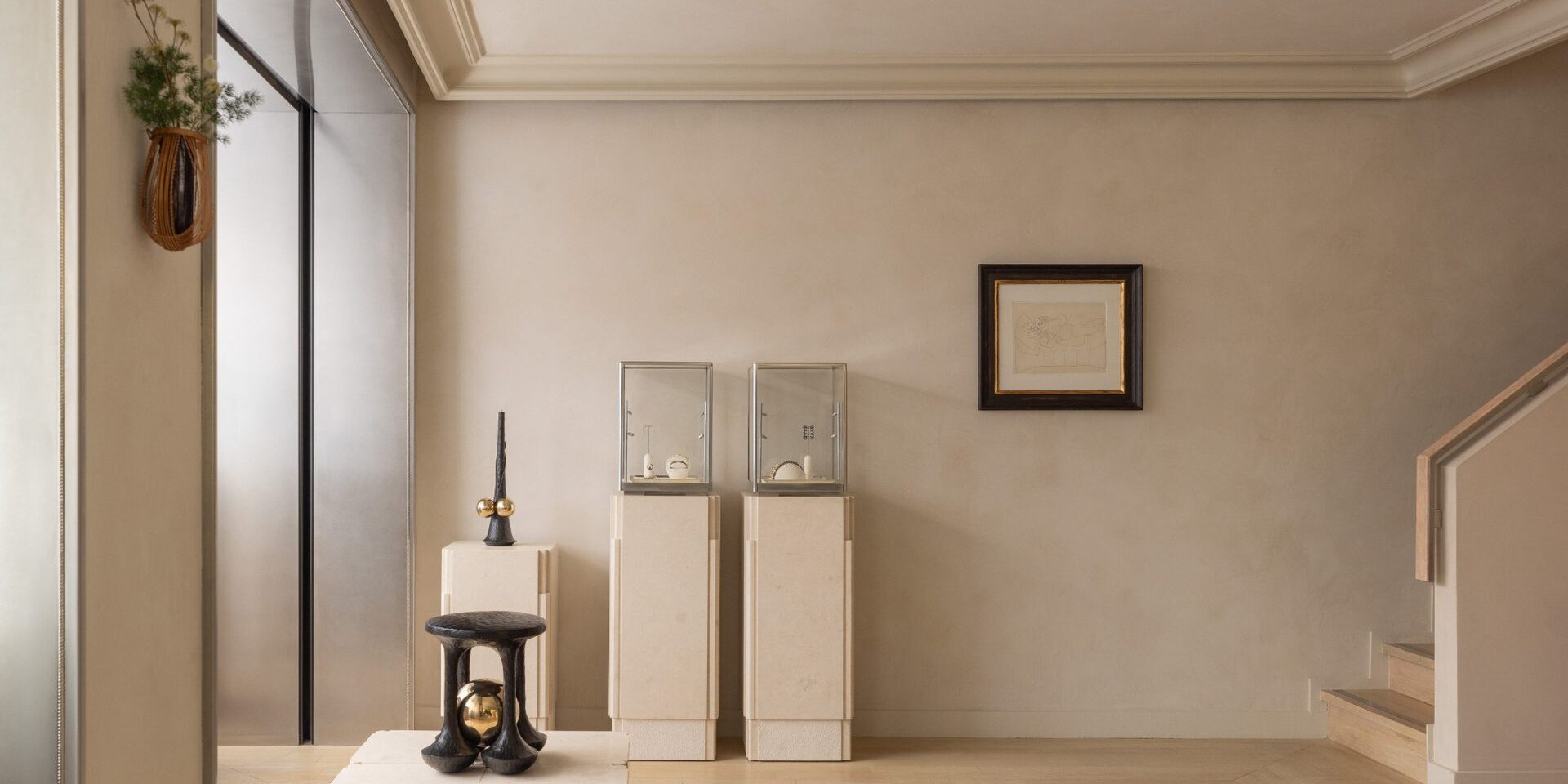
On rue Boissy d’Anglas, Bureau de Change Architects turn an 18th-century building into a jewelry boutique for Nikos Koulis, conceived as an artist’s atelier.
Occupying an 18th-century building on rue Boissy d’Anglas in Paris, the new boutique of Greek fine jewelry designer Nikos Koulis marks his second collaboration with Bureau de Change Architects. The project develops the architectural language established in the Athens flagship store, drawing this time on the history of the existing building and the Parisian tradition of craftsmanship.
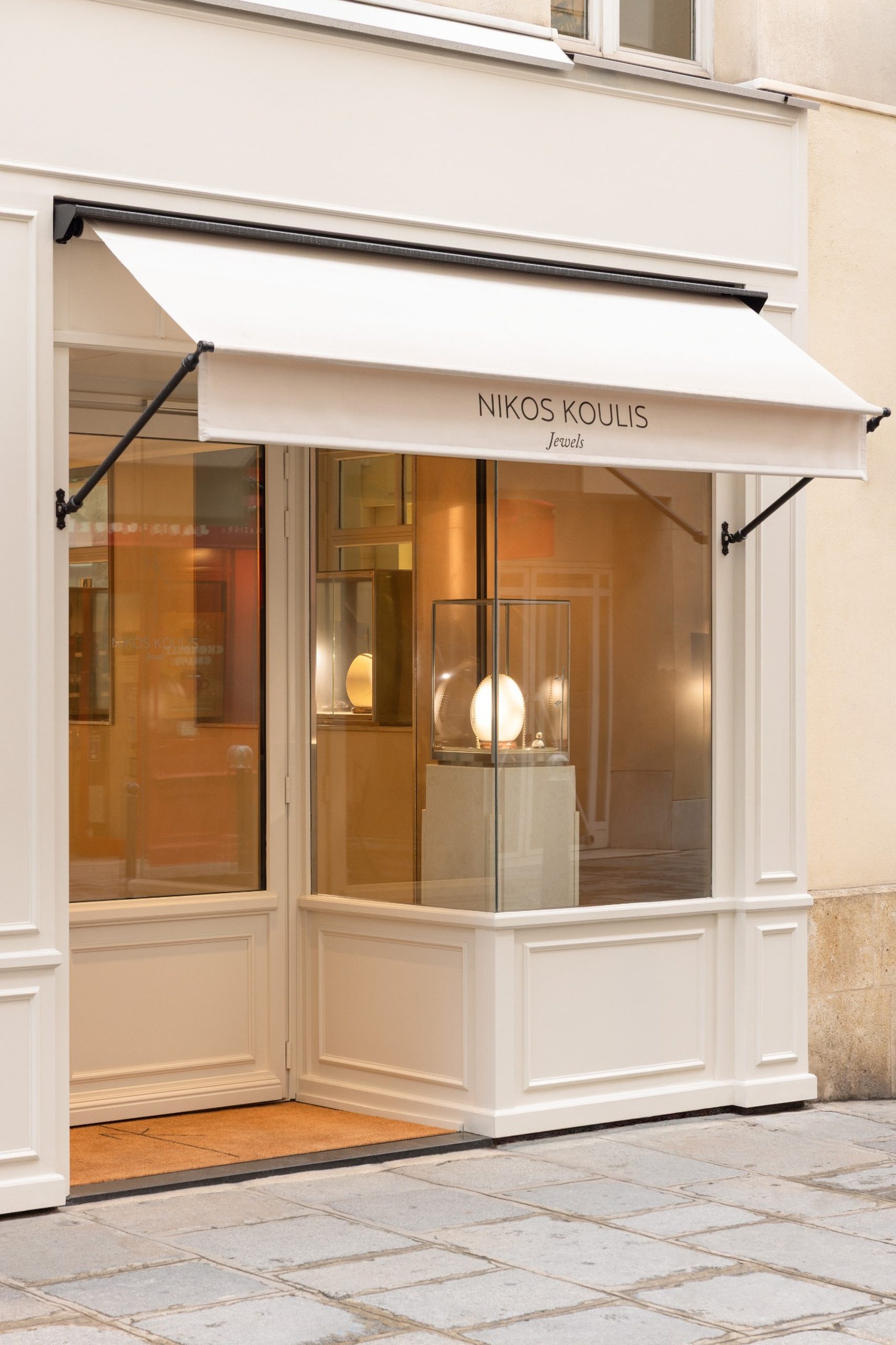
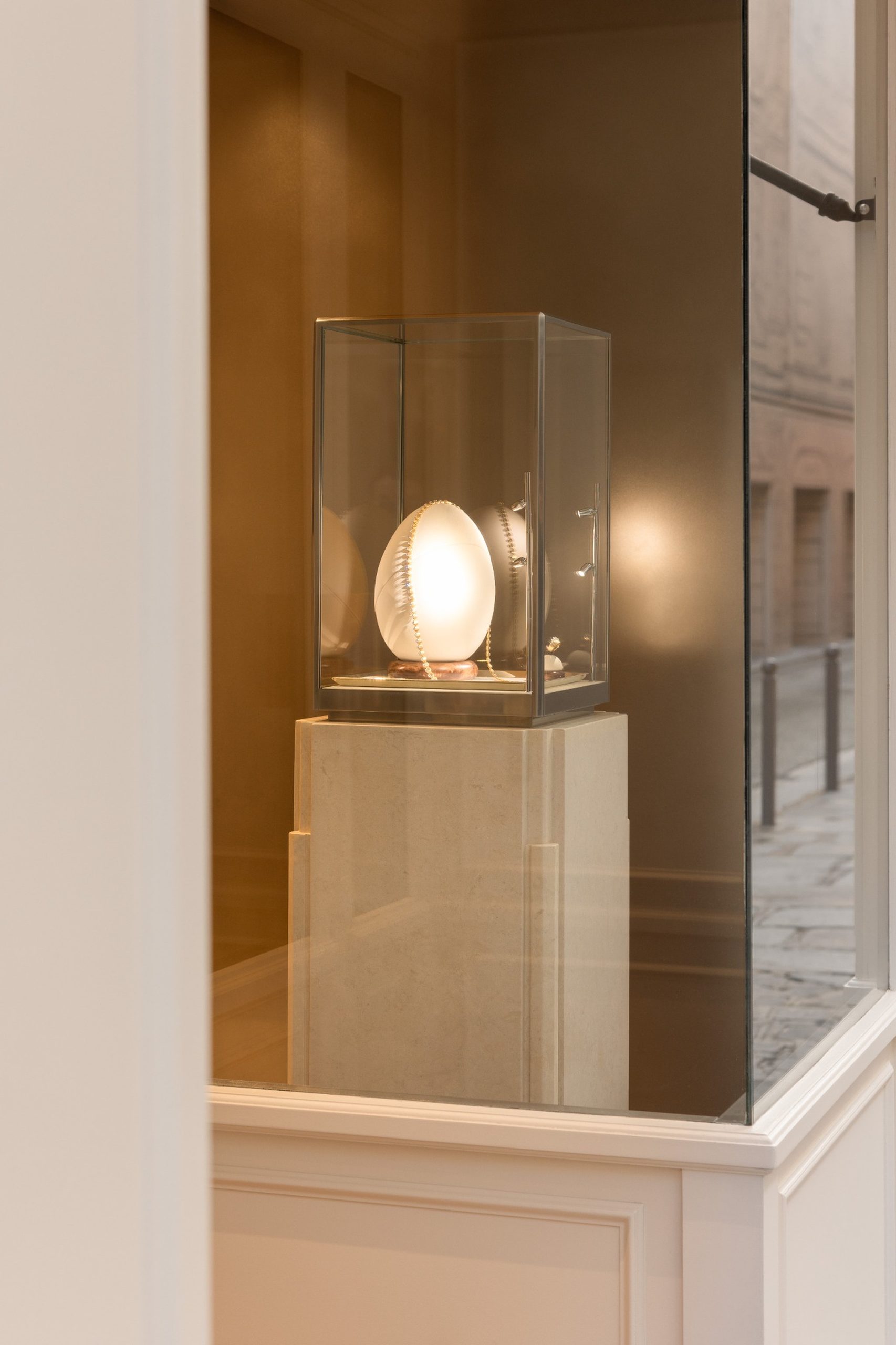
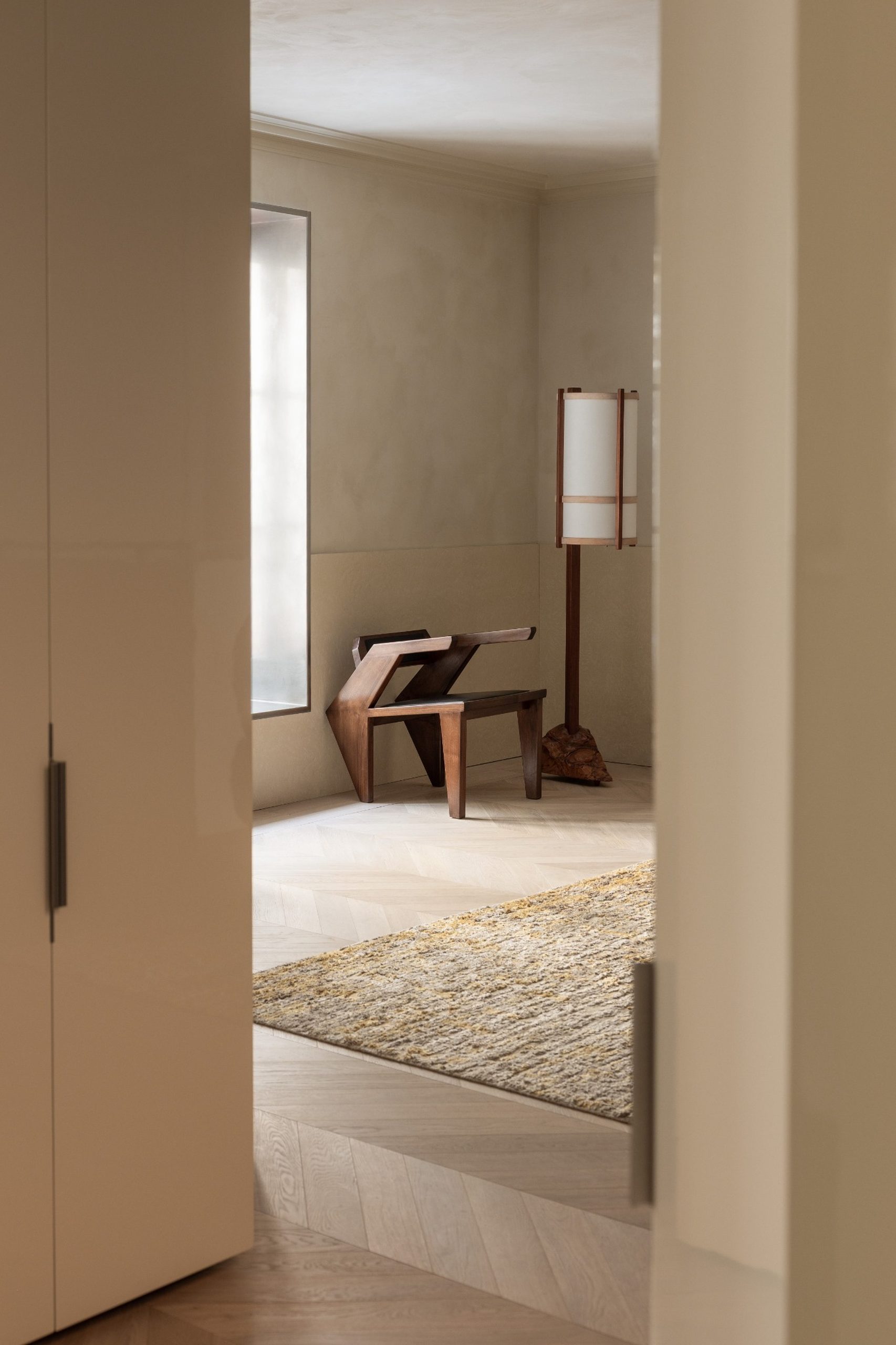
Departing from conventional luxury retail interiors, the design takes inspiration from the atmosphere of an artist’s atelier. Sculptural display elements, intricate metalwork and objects from the designer’s personal art collection establish a setting in which jewelry, furniture and architecture coexist.
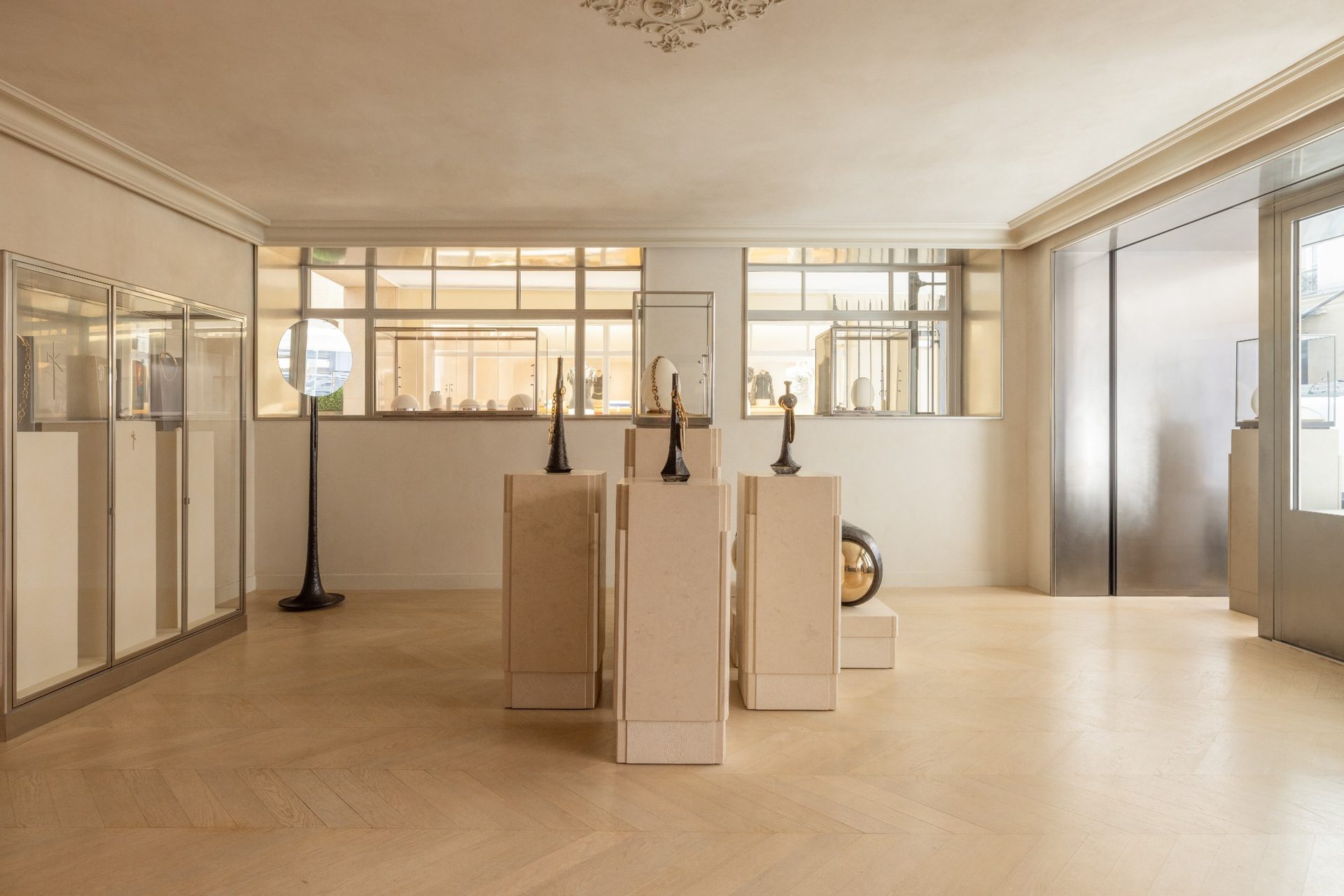
Light, materials and craftsmanship
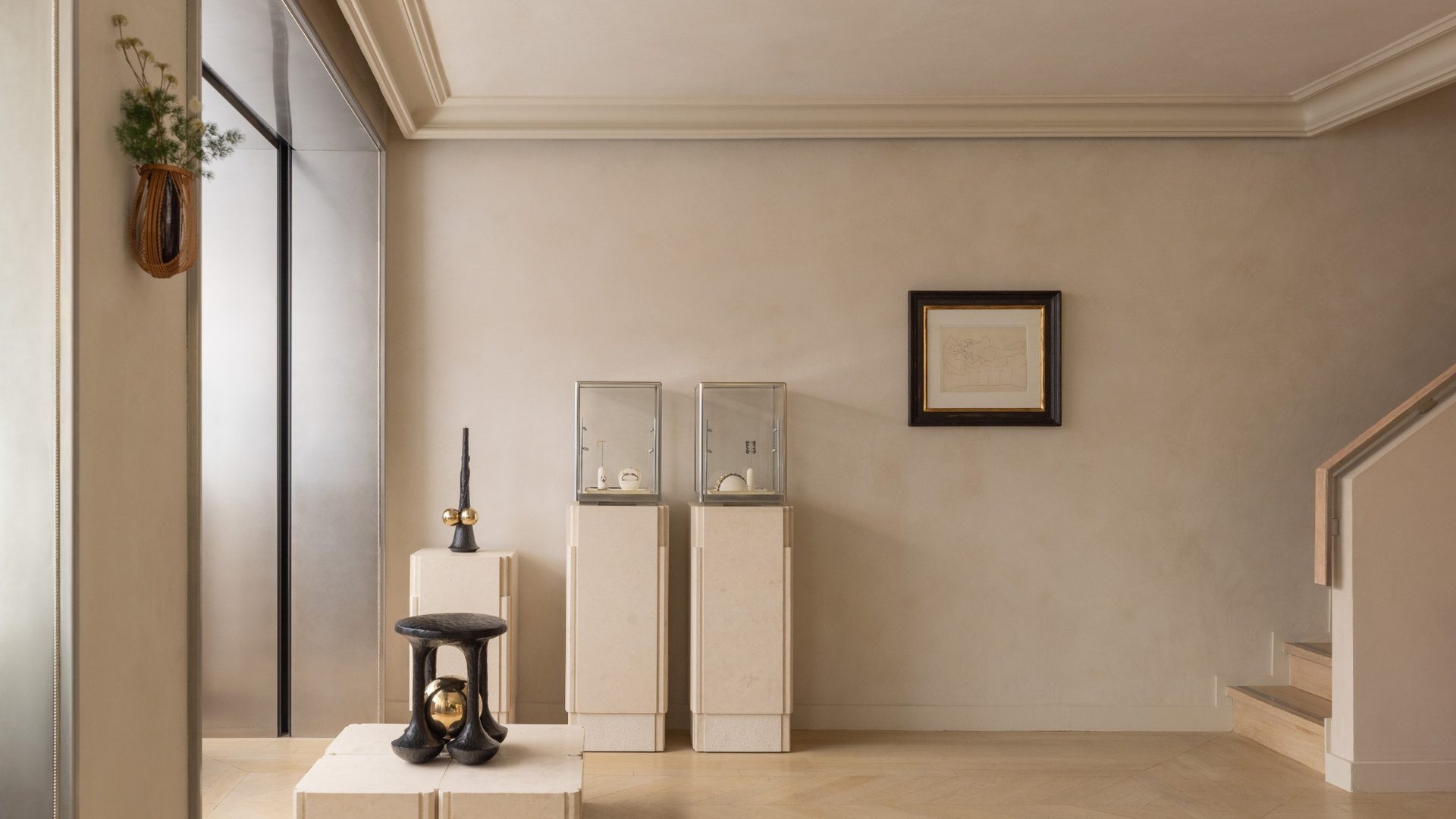
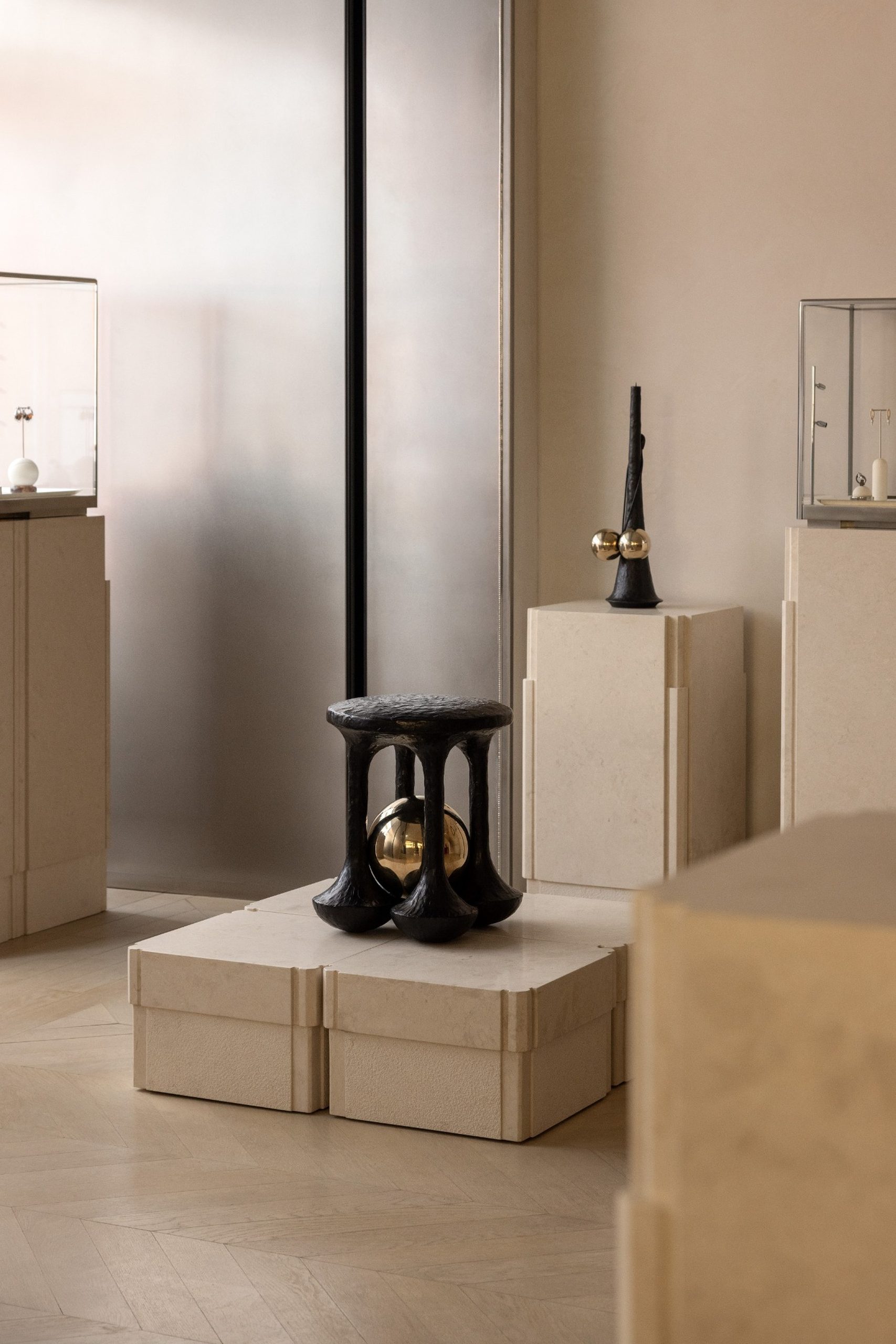
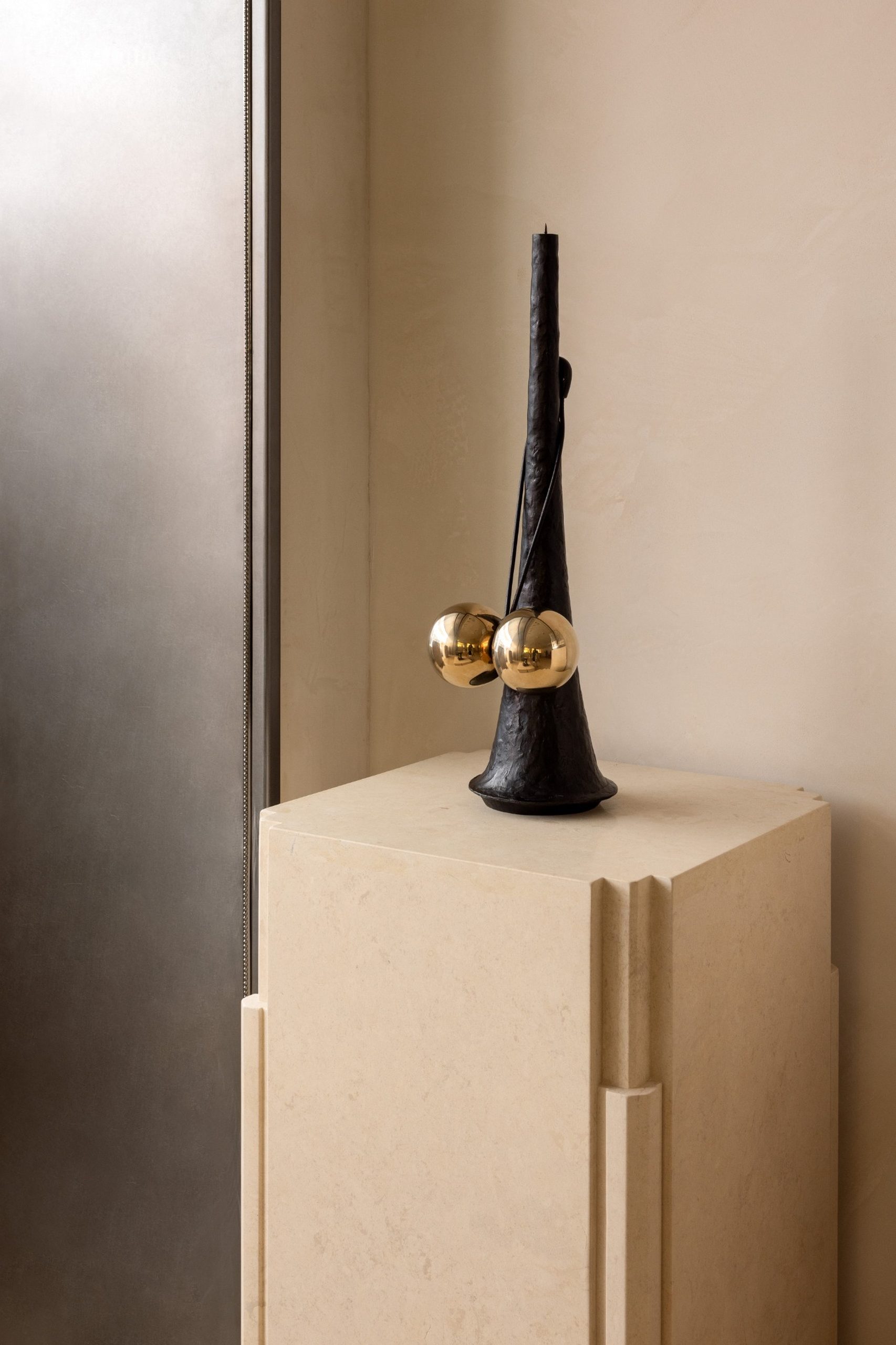
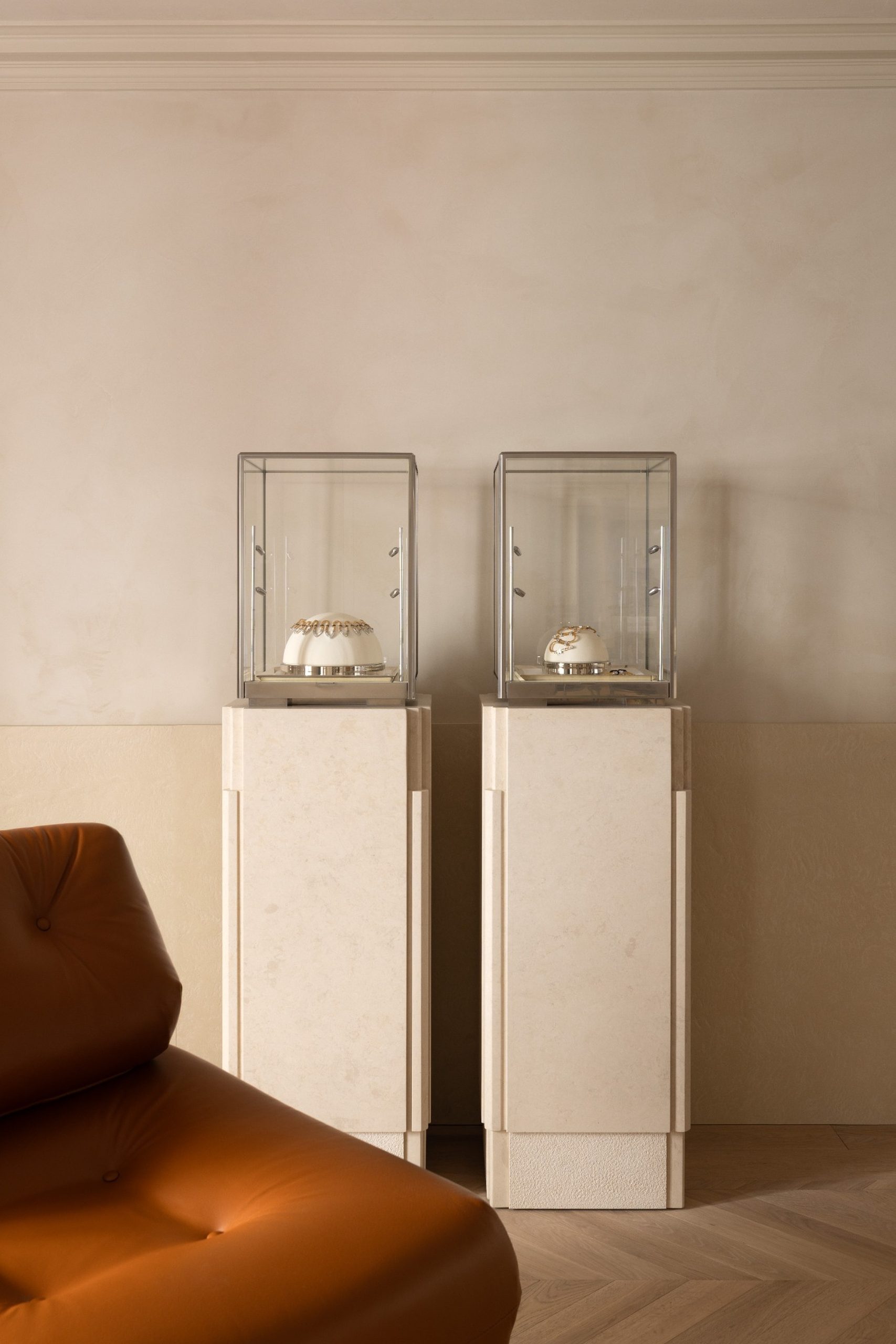
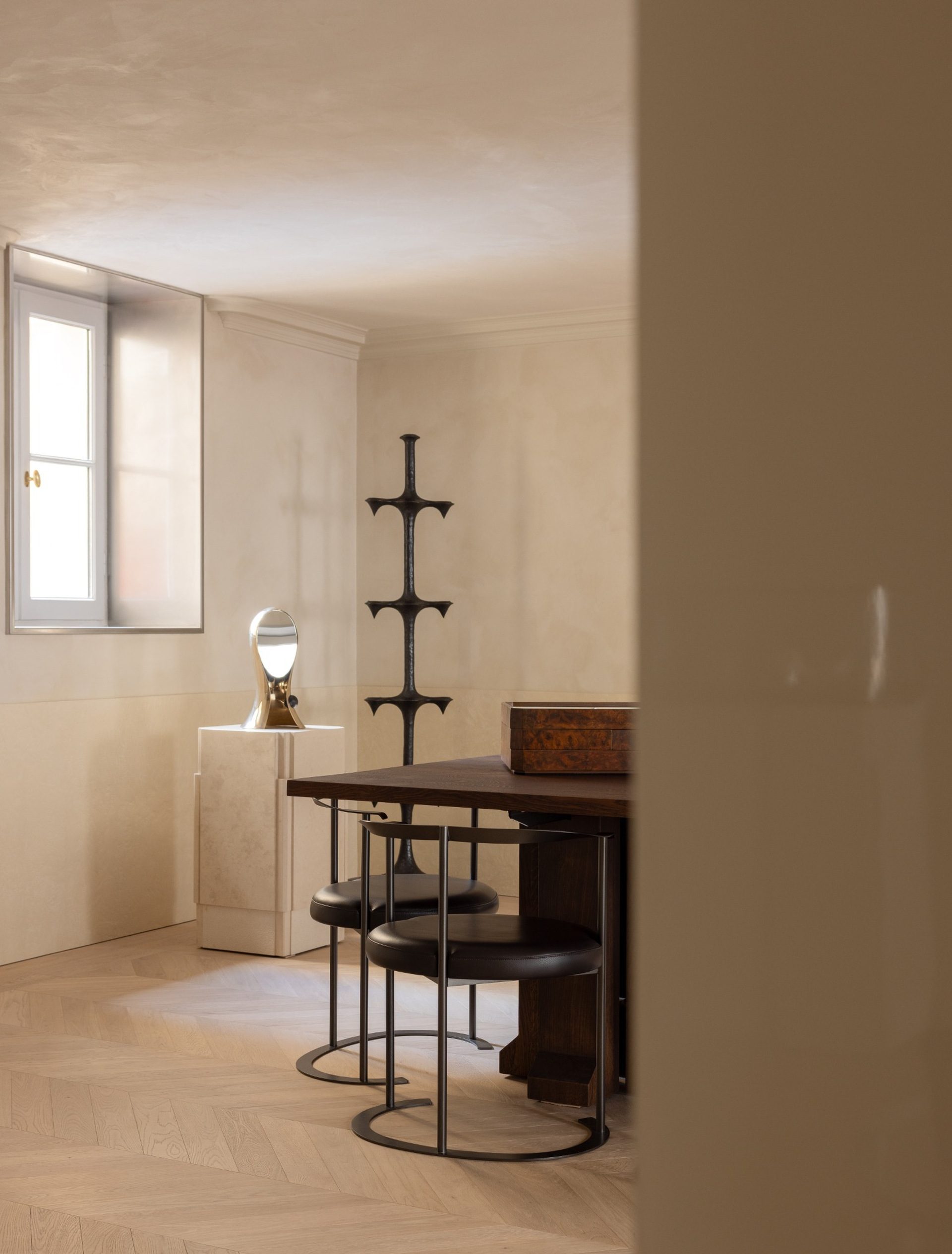
Natural light spreads across herringbone timber flooring and softly textured walls. A series of freestanding stone plinths organizes the ground floor, supporting glass display cases with finely articulated, multifaceted metal connections.
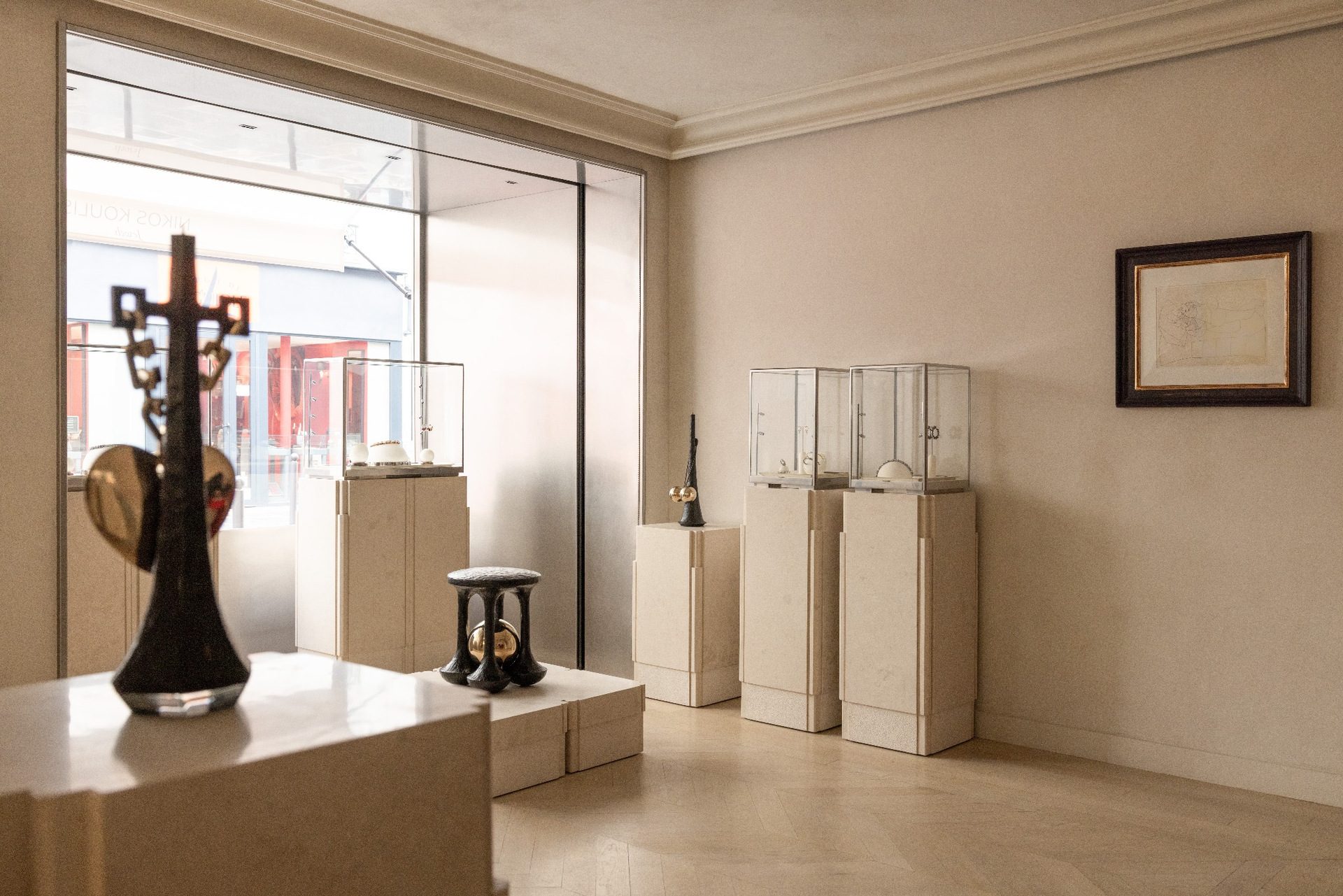
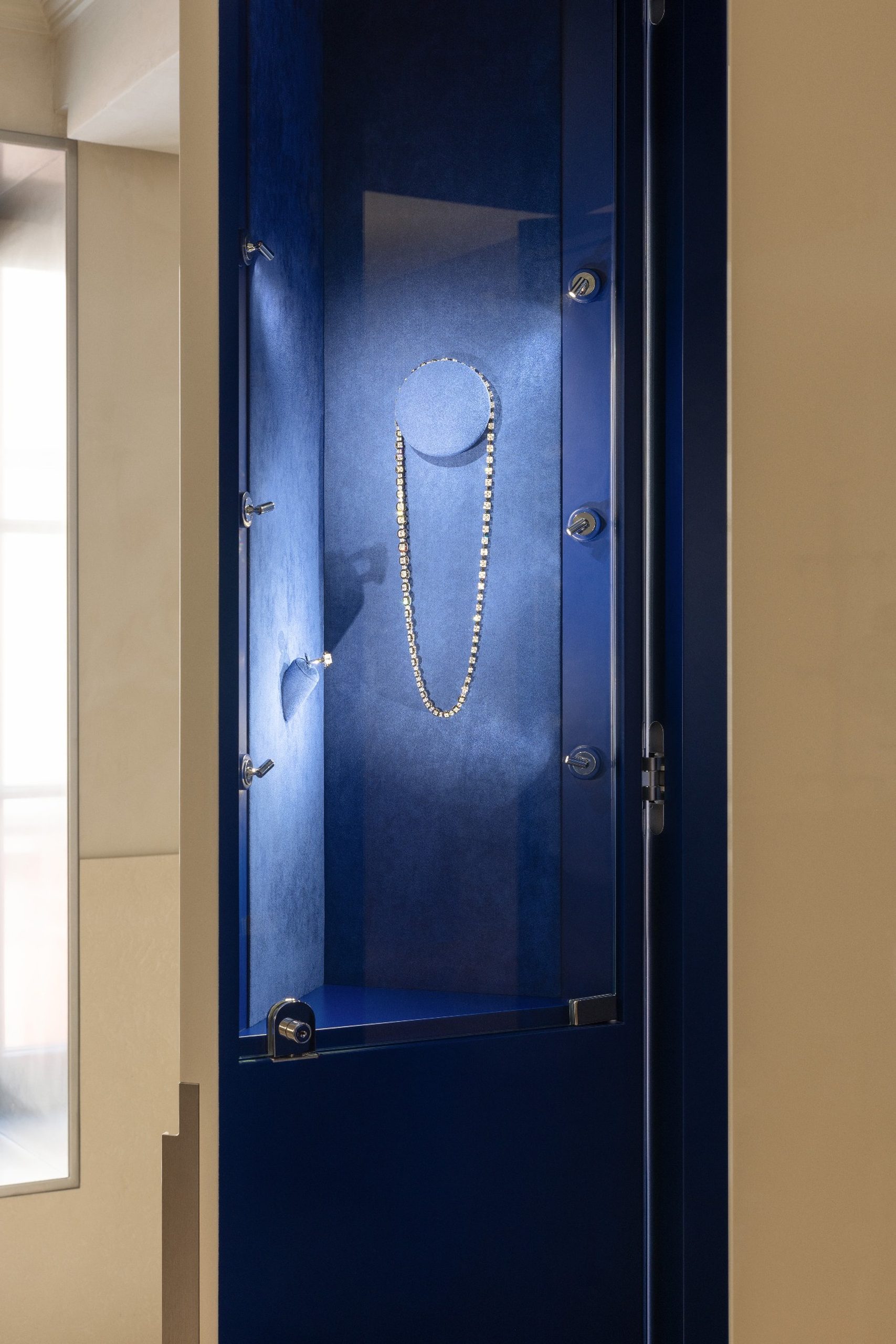
The metalwork introduces a contrasting degree of precision. Window frames, handles and display cases incorporate decorative profiles inspired by traditional Parisian zinc bar counters. Their sharp geometry contrasts with the powdery textures of the surrounding surfaces.
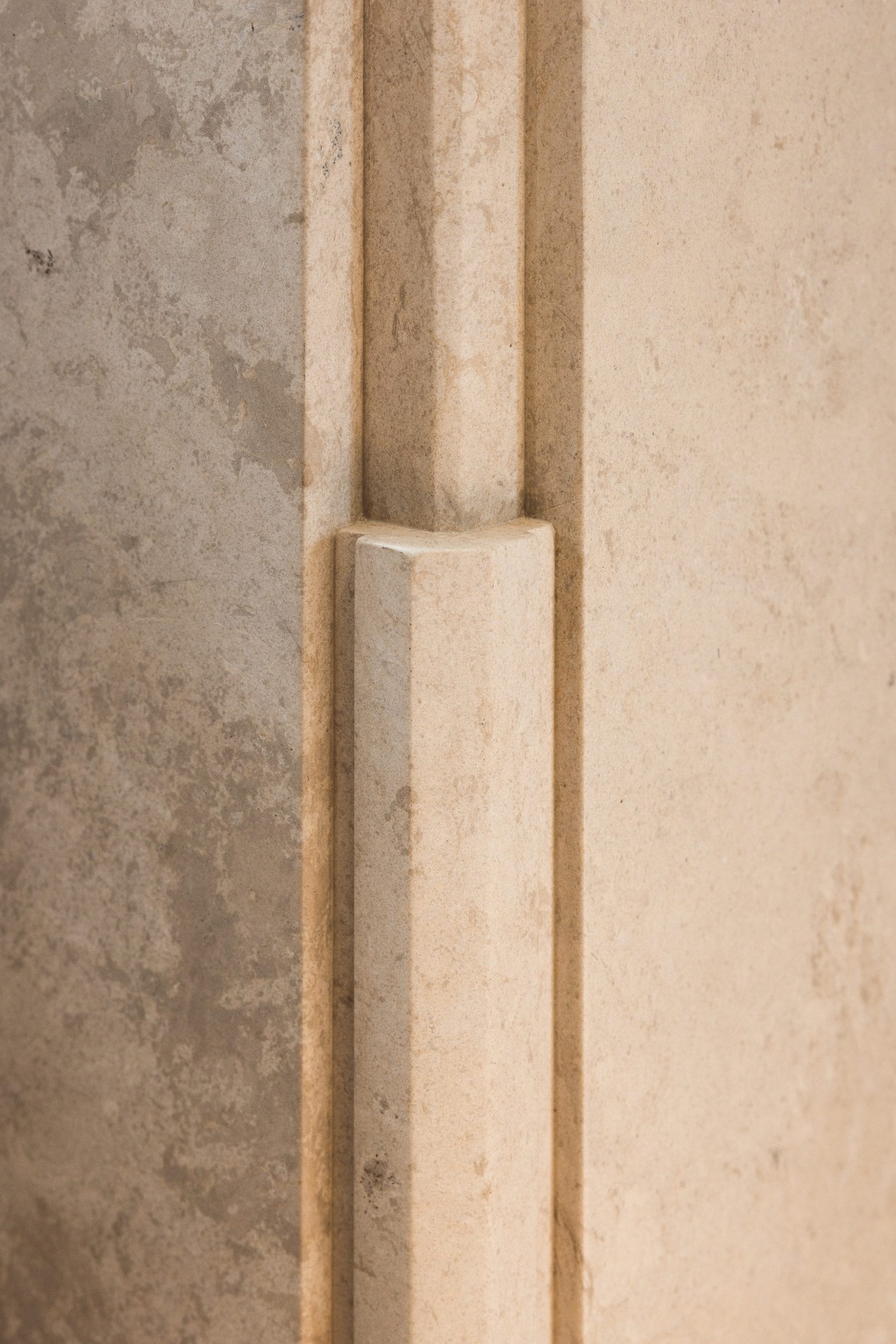
Conceived as modular elements, the stone plinths can be repositioned and combined in different configurations. This flexibility accommodates both jewelry collections and the designer’s growing production of limited-edition objects and furniture.
From Athens to Paris
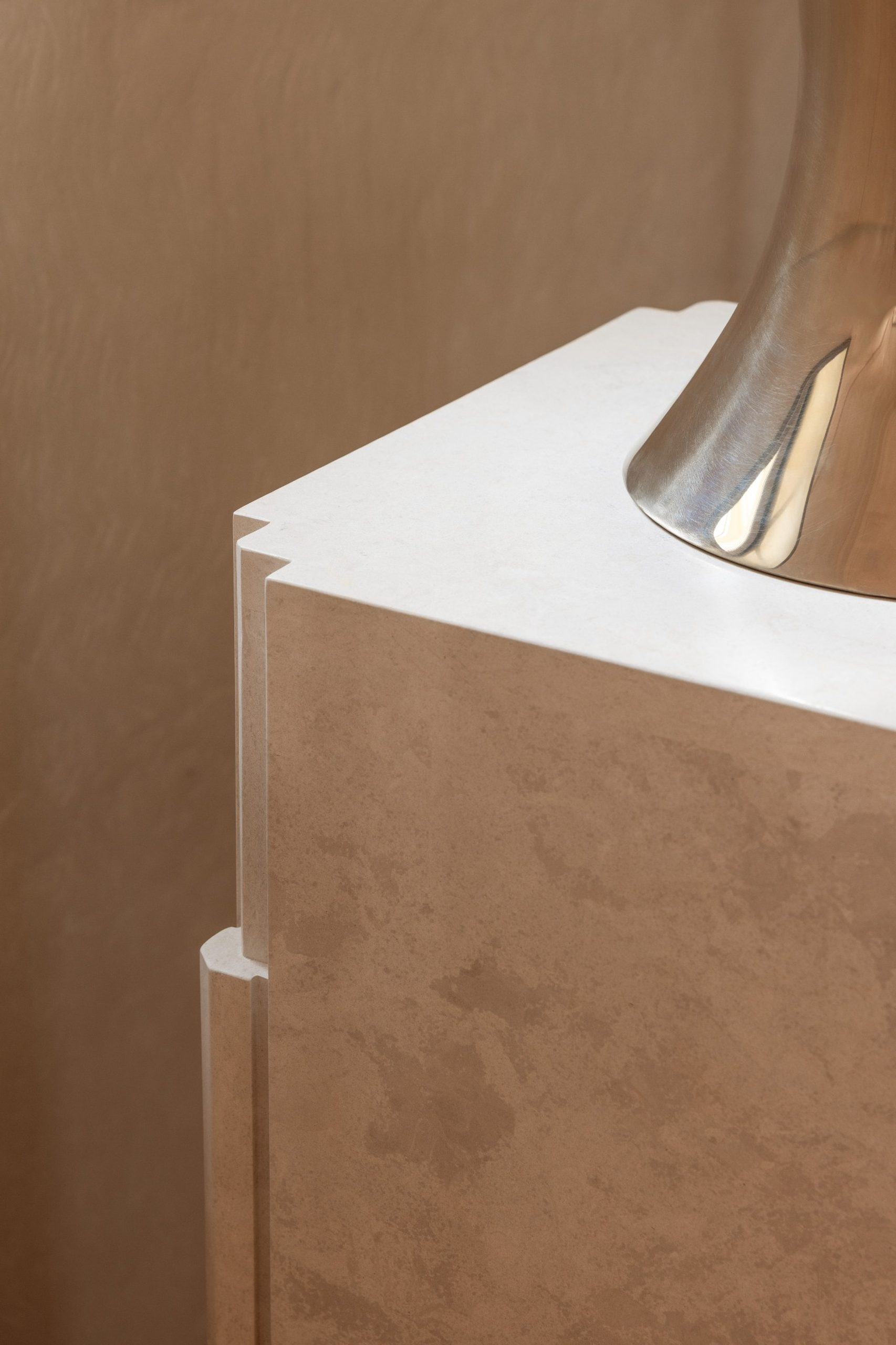
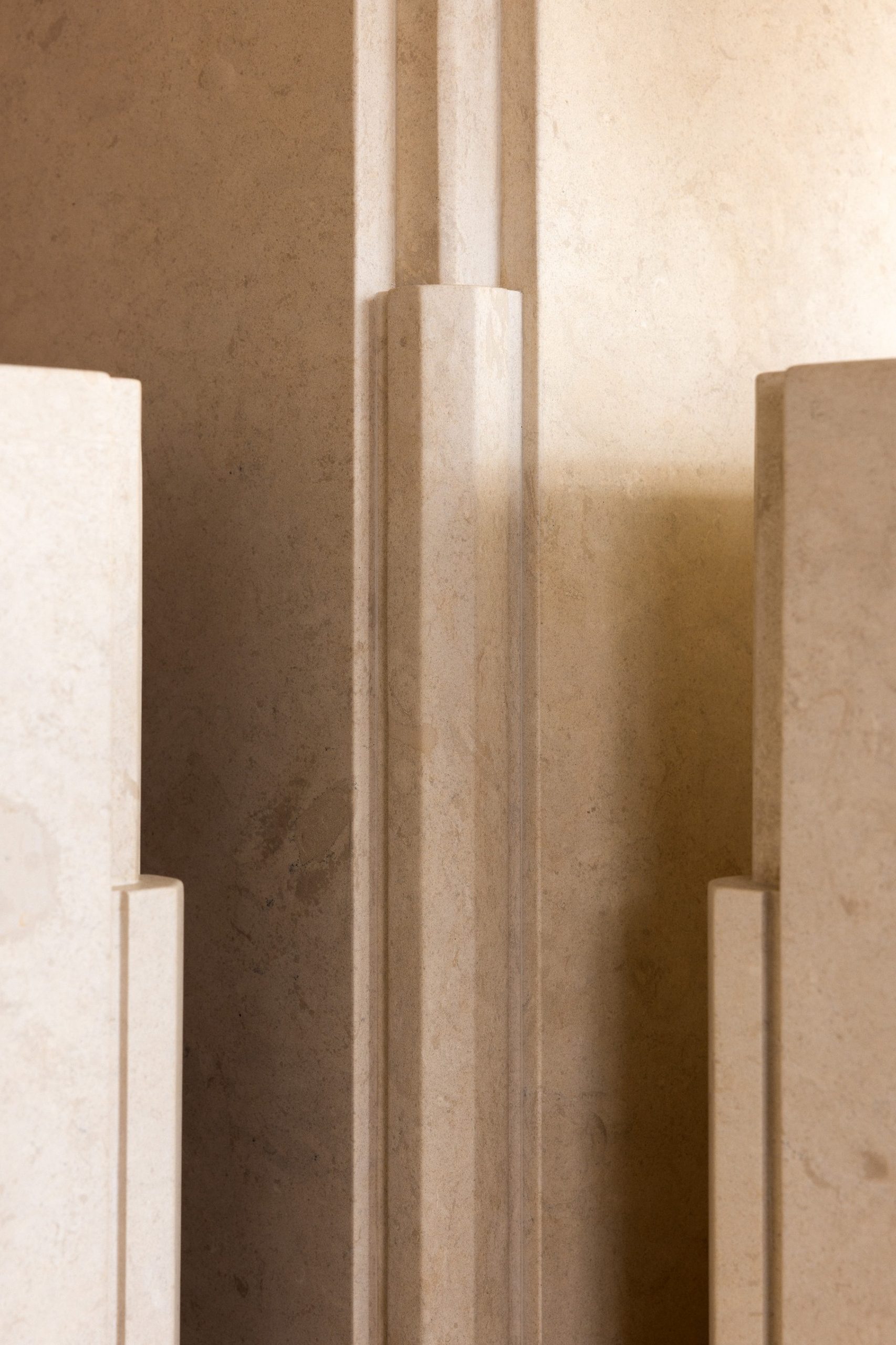
The stone plinths reinterpret a construction detail from the Athens boutique. The geometry of the earlier metal display bases is reproduced as a negative imprint in solid limestone, a material also used in the window surrounds of the original store.
Different surface treatments emphasize this transformation. The lower sections retain a rough texture, while the upper surfaces are polished, making the relationship between the original form and its imprint legible.
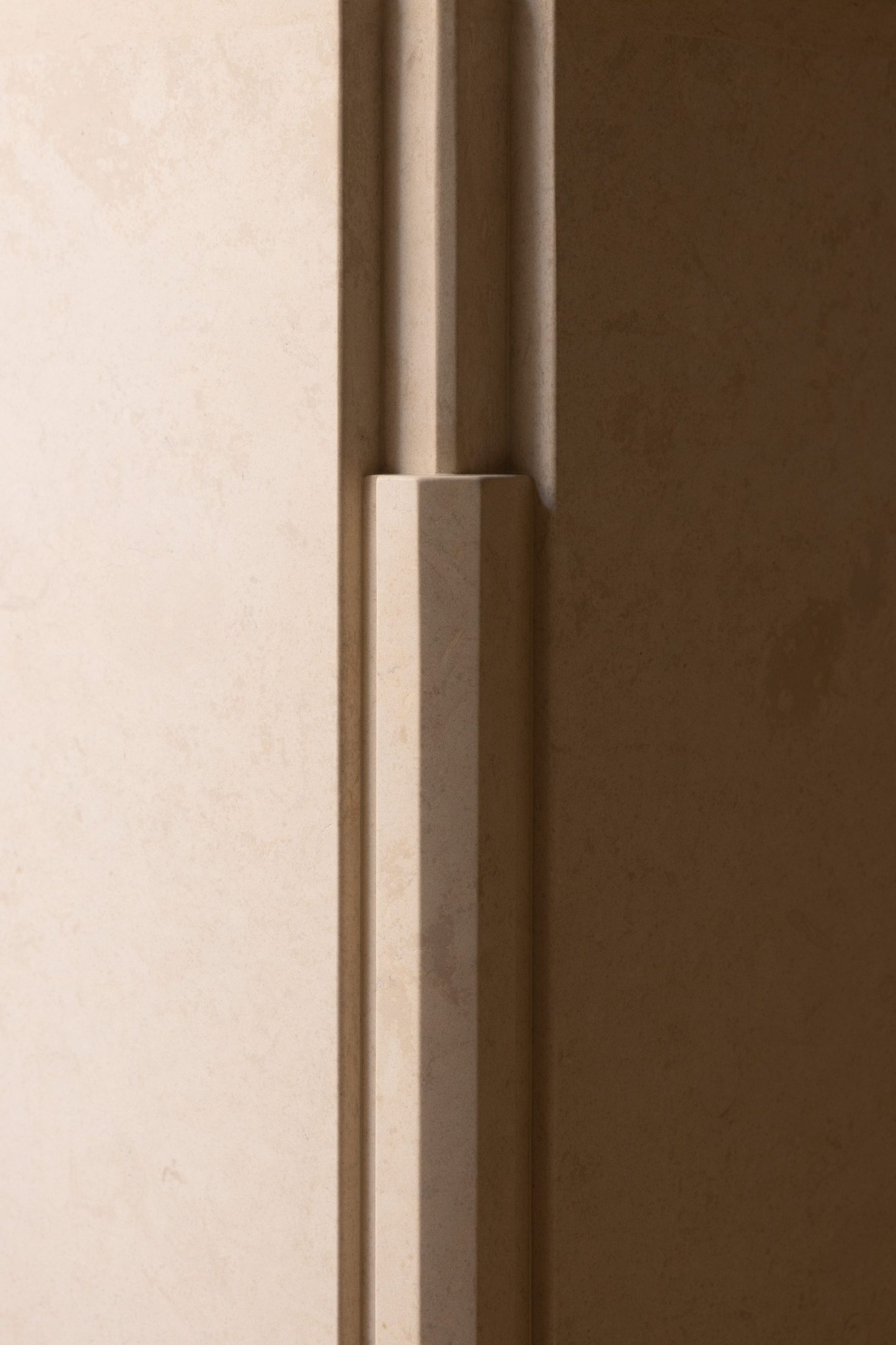
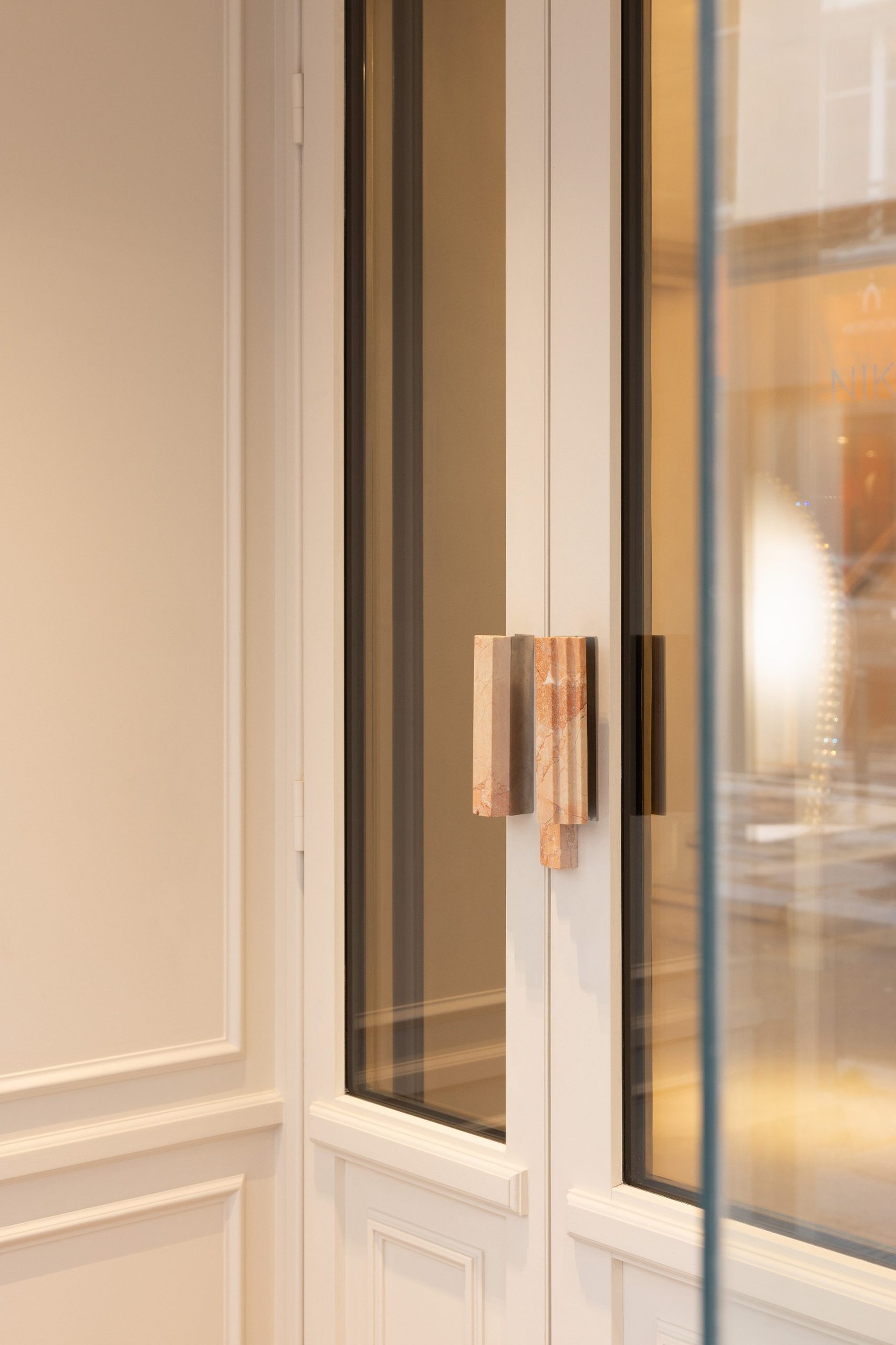
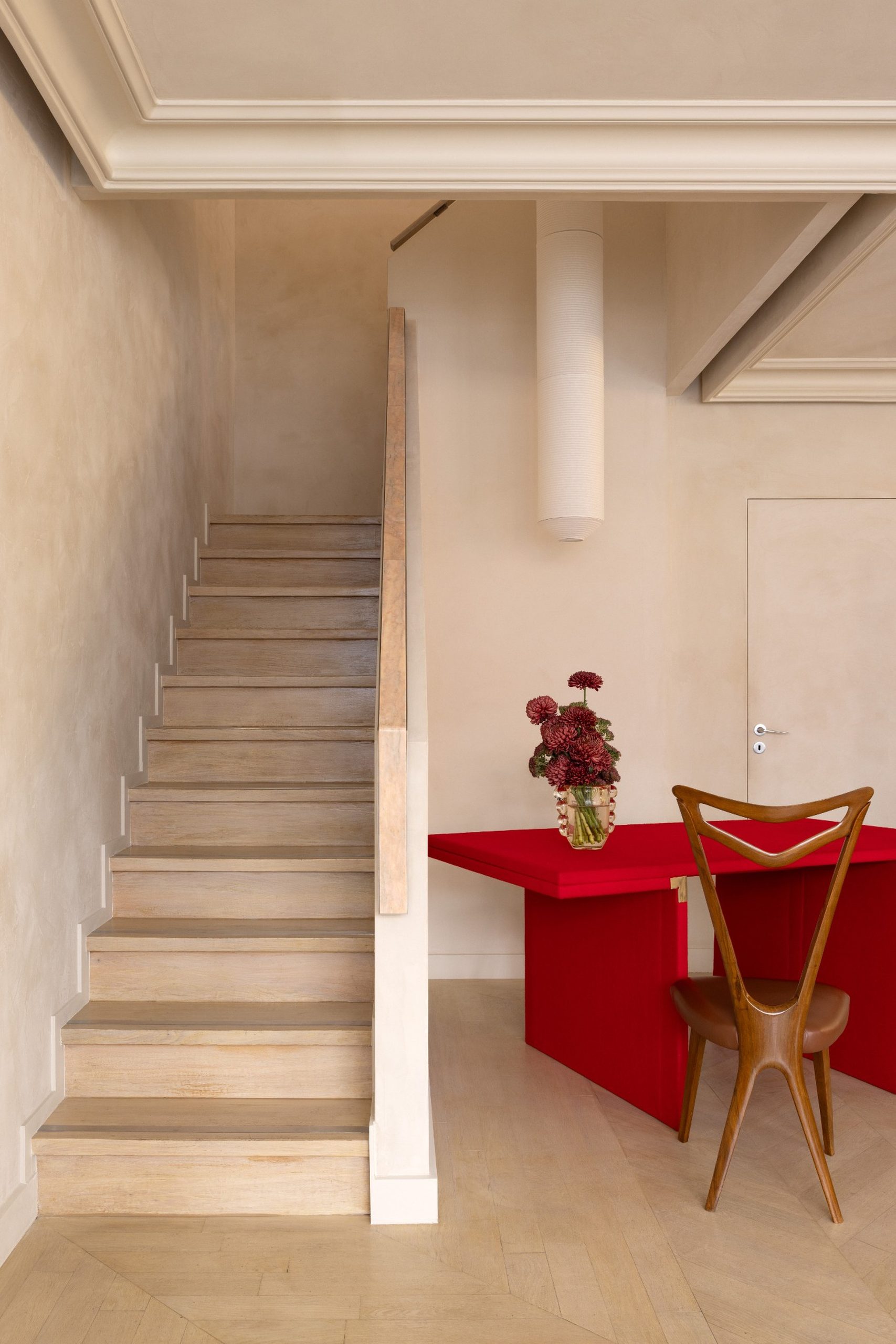
Pink marble introduces another material contrast. Sculpted handles at the entrance are set against the stainless steel door frames, while the same stone reappears in the suspended handrail of the staircase leading to the upper floor.
Art and hospitality
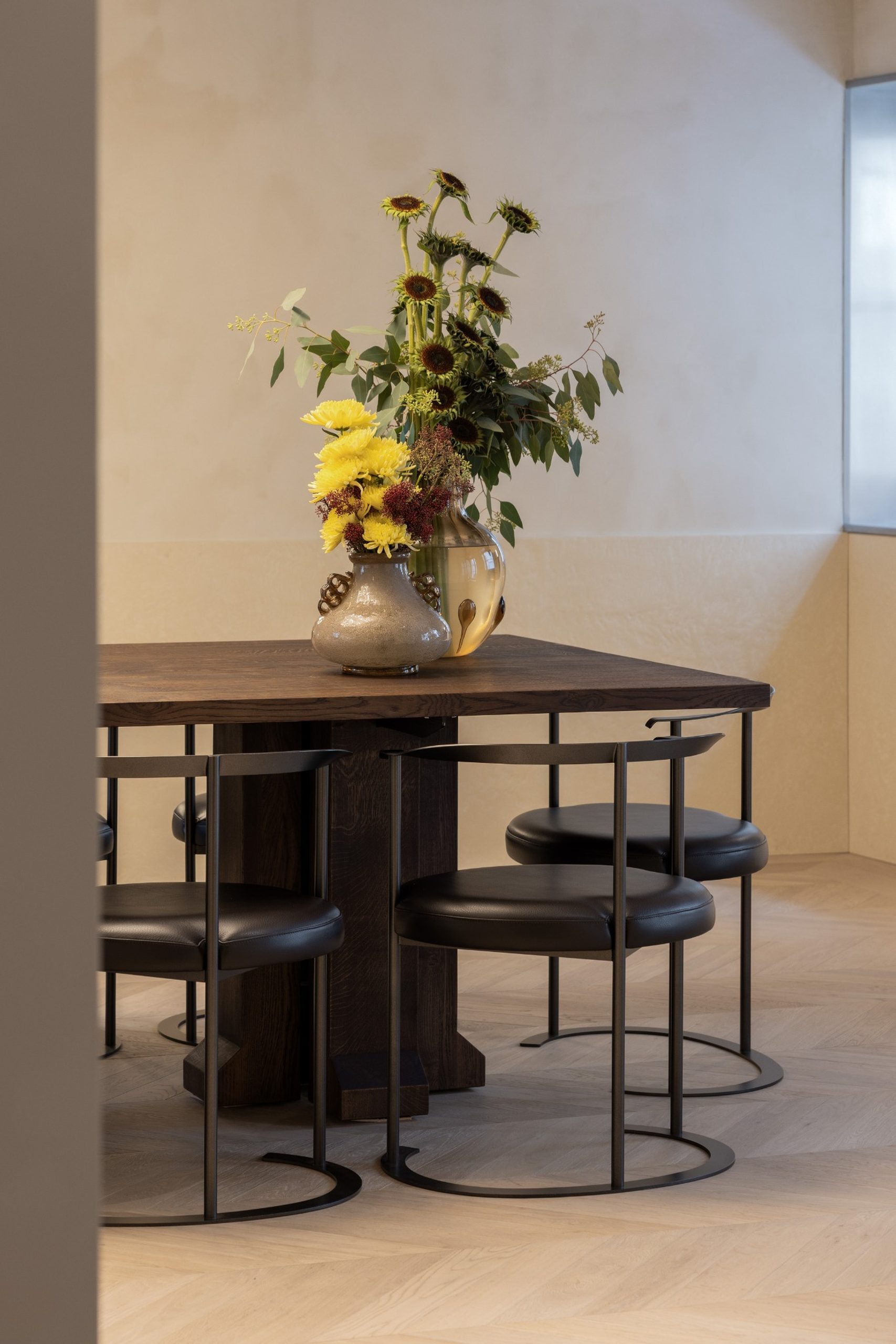
The upper floor adopts the character of a private residence, accommodating individual jewelry presentations, dinners and events. Selected furniture and works from Koulis’s personal art collection complement the living and dining areas.
Two freestanding, full-height cruciform cabinets separate these spaces. When opened, their geometry reveals octagonal interiors, introducing an unexpected spatial dimension to the furniture.
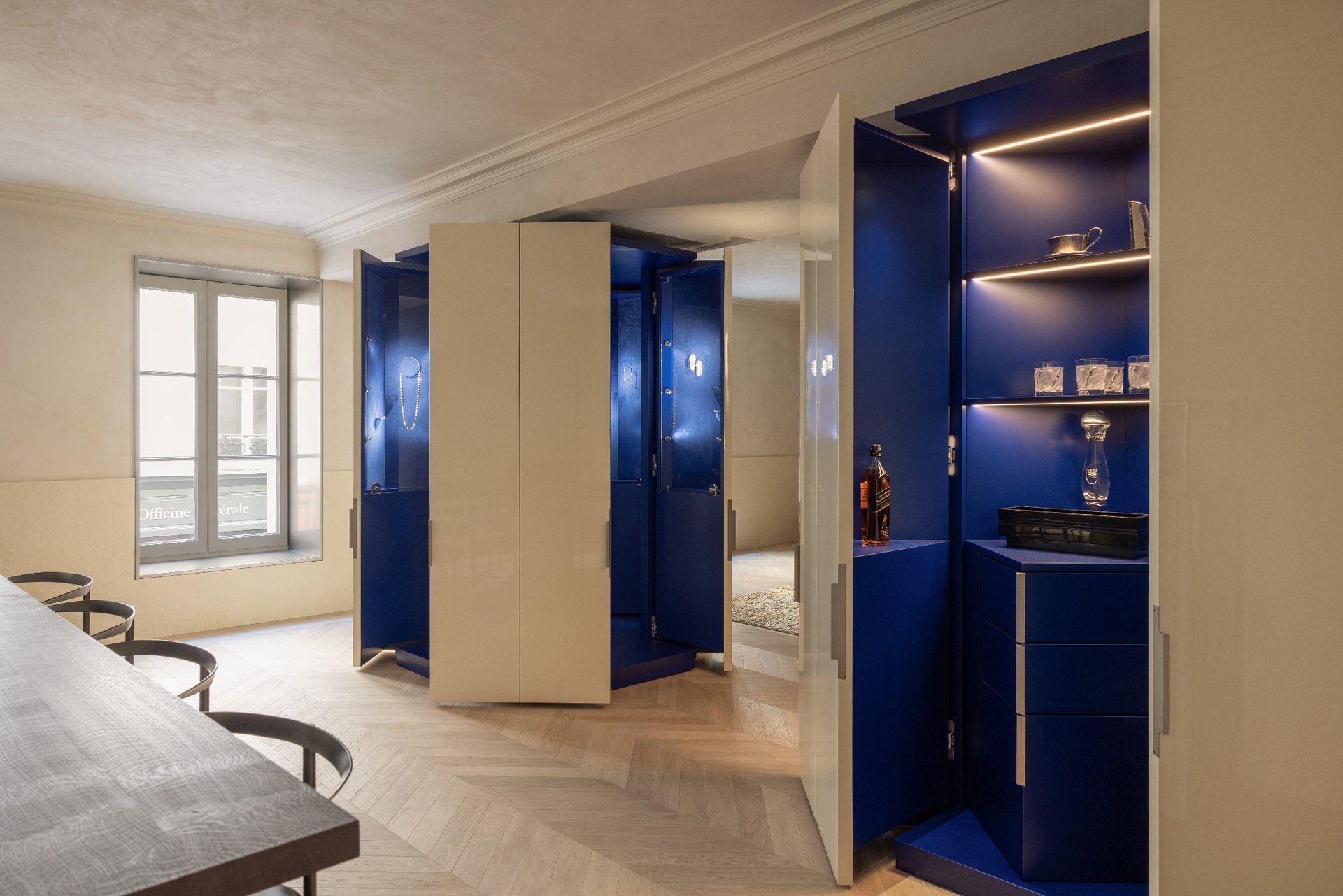
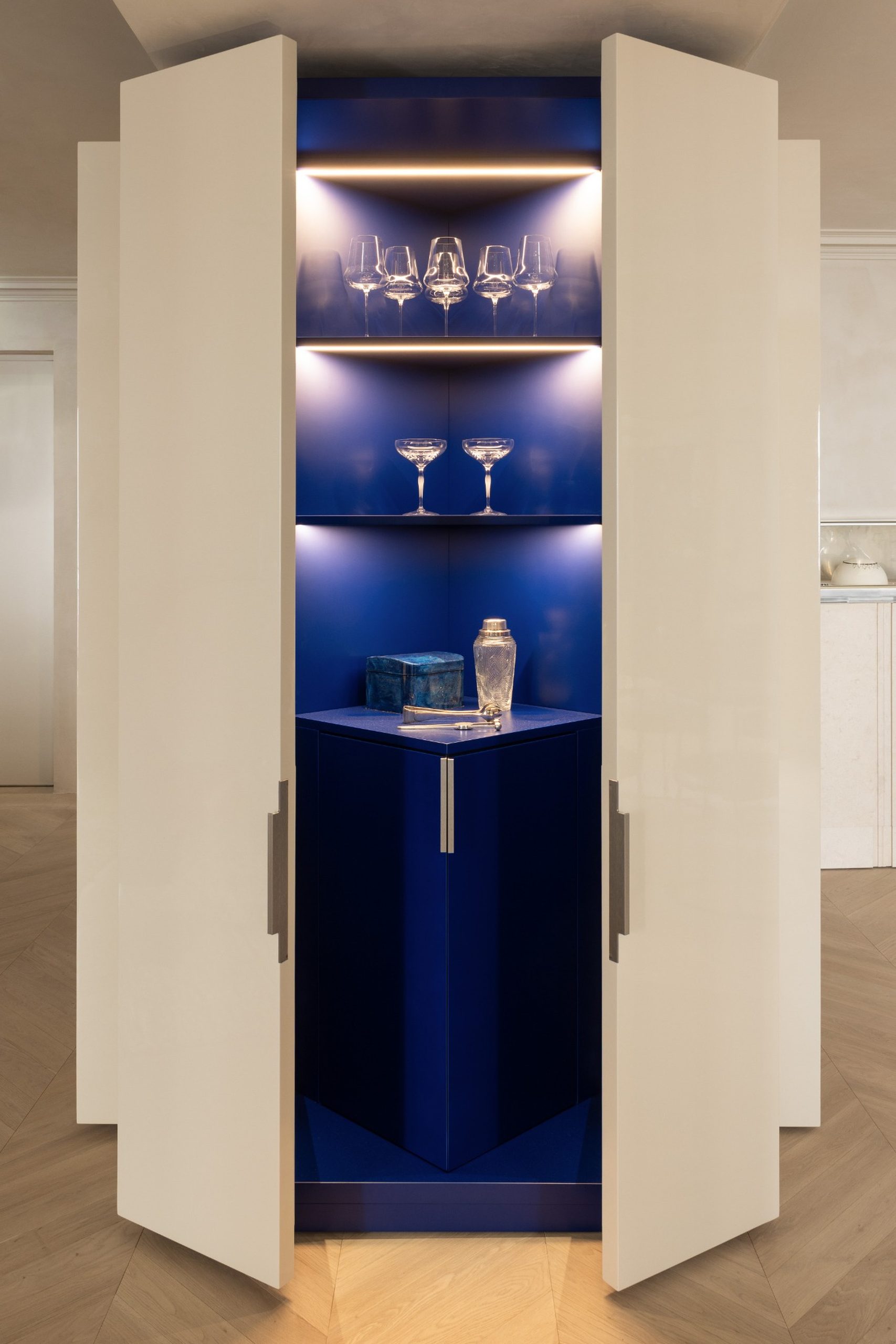
The first contains eight triangular display cases arranged around a deep-blue interior, conceived as a contemporary cabinet of curiosities that visitors can enter. The second incorporates a bar, triangular shelves and drawers accessible from both sides.
Against the predominantly neutral background, selected pieces of bright red furniture recall the use of color in the Athens store. Together, these references establish continuity between the two boutiques without reproducing their respective interiors.
The Paris project thus extends the collaboration between the designer and the architects through a distinct interpretation of local craftsmanship, material detailing and the relationship between retail and domestic space.
https://ek-mag.com/wp-content/uploads/2026/11/BdC-Paris-Cover-web.jpg
https://ek-mag.com/wp-content/uploads/2026/11/2026_10_bdec_nk_1-web.jpg
https://ek-mag.com/wp-content/uploads/2026/11/2026_10_bdec_nk_2-web.jpg
https://ek-mag.com/wp-content/uploads/2026/11/2026_10_bdec_nk_4-web.jpg
https://ek-mag.com/wp-content/uploads/2026/11/2026_10_bdec_nk_10-web.jpg
https://ek-mag.com/wp-content/uploads/2026/11/2026_10_bdec_nk_11-web.jpg
https://ek-mag.com/wp-content/uploads/2026/11/2026_10_bdec_nk_8-web.jpg
https://ek-mag.com/wp-content/uploads/2026/11/2026_10_bdec_nk_12-web.jpg
https://ek-mag.com/wp-content/uploads/2026/11/2026_10_bdec_nk_14-web.jpg
https://ek-mag.com/wp-content/uploads/2026/11/2026_10_bdec_nk_16-web.jpg
https://ek-mag.com/wp-content/uploads/2026/11/2026_10_bdec_nk_18-web.jpg
https://ek-mag.com/wp-content/uploads/2026/11/2026_10_bdec_nk_6-web.jpg
https://ek-mag.com/wp-content/uploads/2026/11/2026_10_bdec_nk_9-web.jpg
https://ek-mag.com/wp-content/uploads/2026/11/2026_10_bdec_nk_3-web.jpg
https://ek-mag.com/wp-content/uploads/2026/11/2026_10_bdec_nk_7-web.jpg
https://ek-mag.com/wp-content/uploads/2026/11/2026_10_bdec_nk_15-web.jpg
https://ek-mag.com/wp-content/uploads/2026/11/2026_10_bdec_nk_20-web.jpg
https://ek-mag.com/wp-content/uploads/2026/11/2026_10_bdec_nk_21-web.jpg
https://ek-mag.com/wp-content/uploads/2026/11/2026_10_bdec_nk_22-web-1.jpg
https://ek-mag.com/wp-content/uploads/2026/11/2026_10_bdec_nk_24-web.jpg
Related Posts