
Sculpted Skin
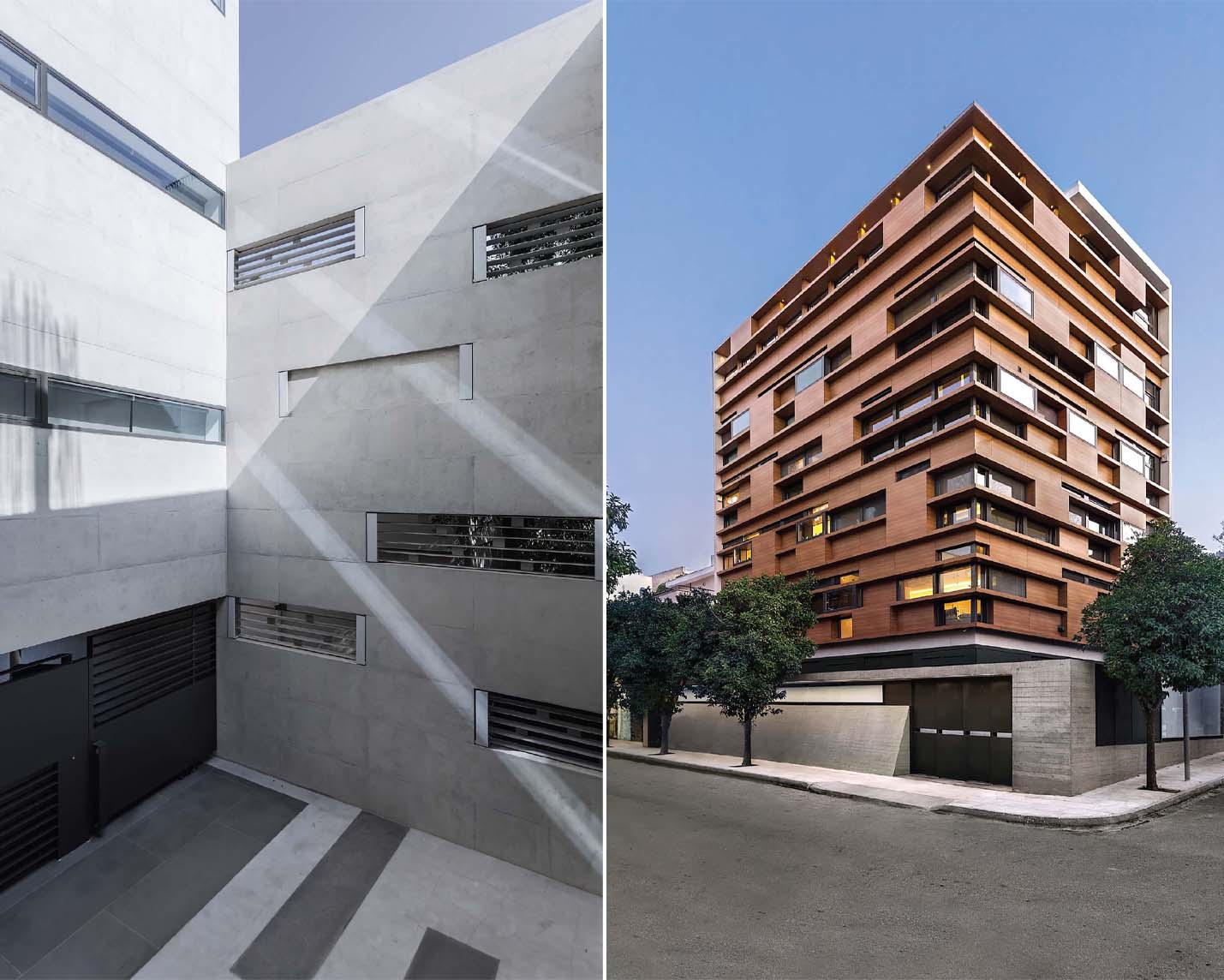
The building, through its structural logic, addresses the reinvention of the apartment-building typology, positioning the uncovered courtyard (akalyptos) as the central entrance space and as a transitional zone between the city and the private living areas.
Design Philosophy
The akalyptos becomes a spatial pause, a moment of shift from horizontal to vertical movement, from public domain to private realm. This reinterpretation restores to the akalyptos the spatial significance of a contemporary atrium: a central void through which visitors access the surrounding living areas, and which, in turn, projects outward to complete the urban façade.

Structural System & Façade
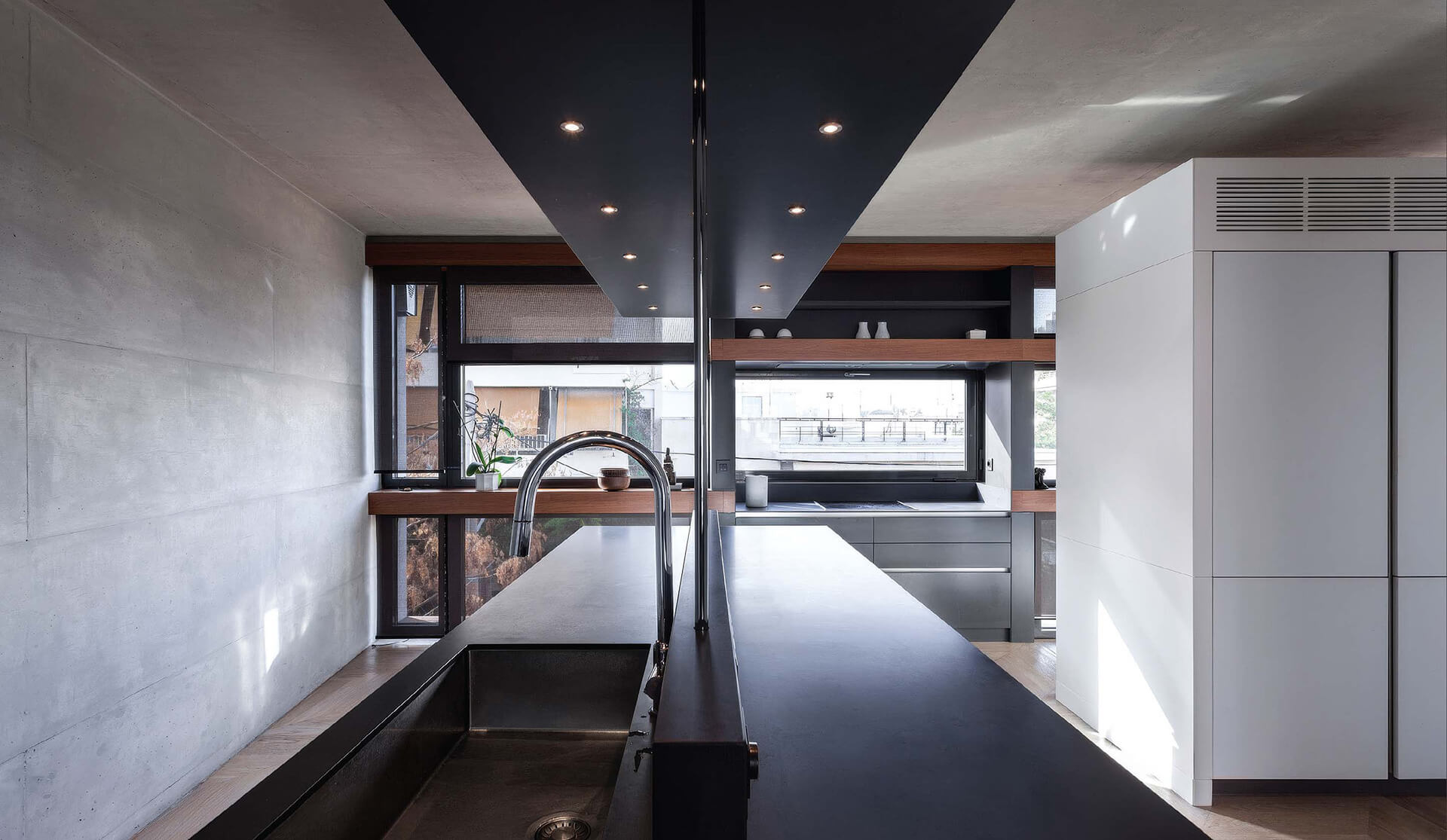
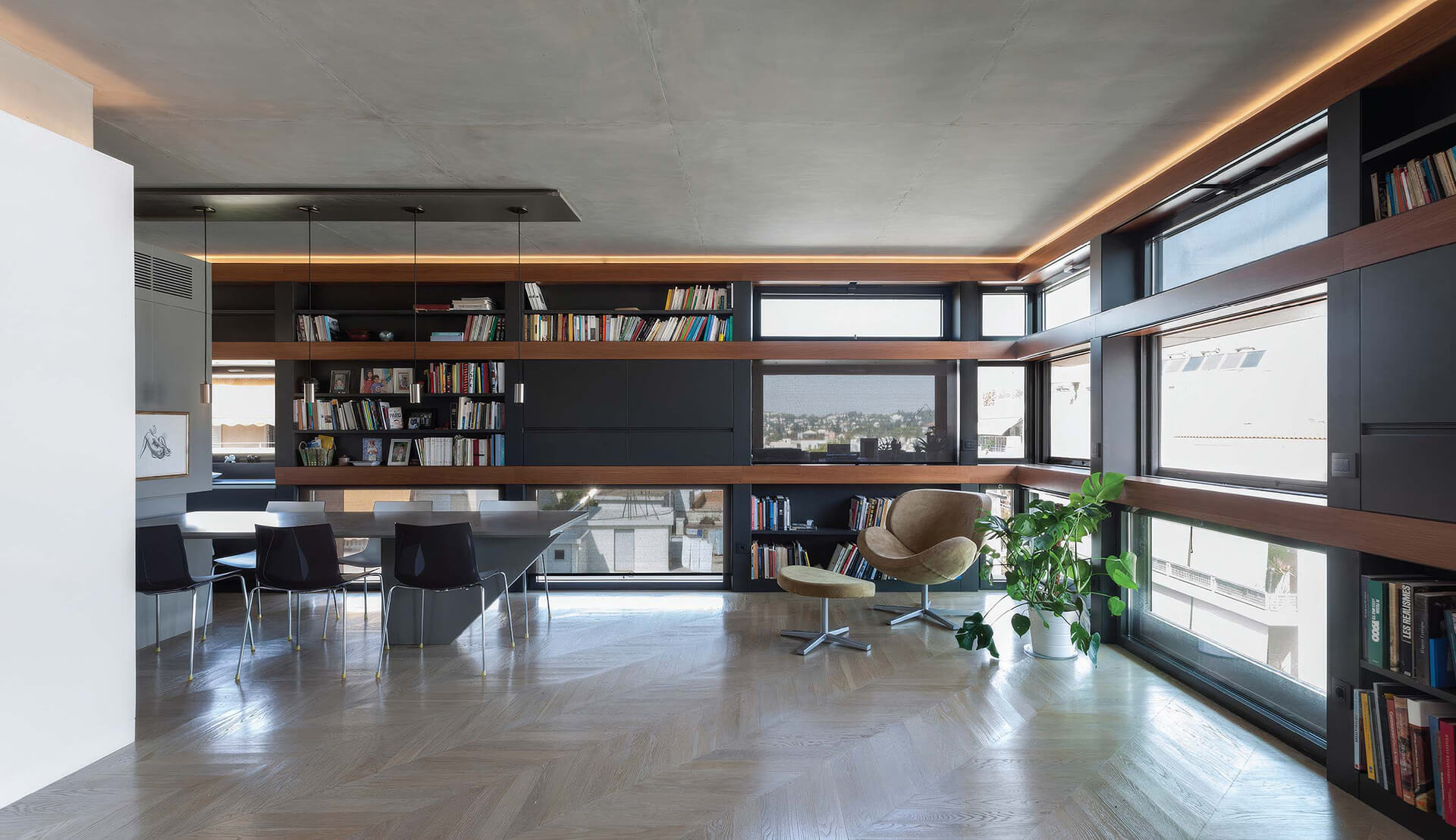
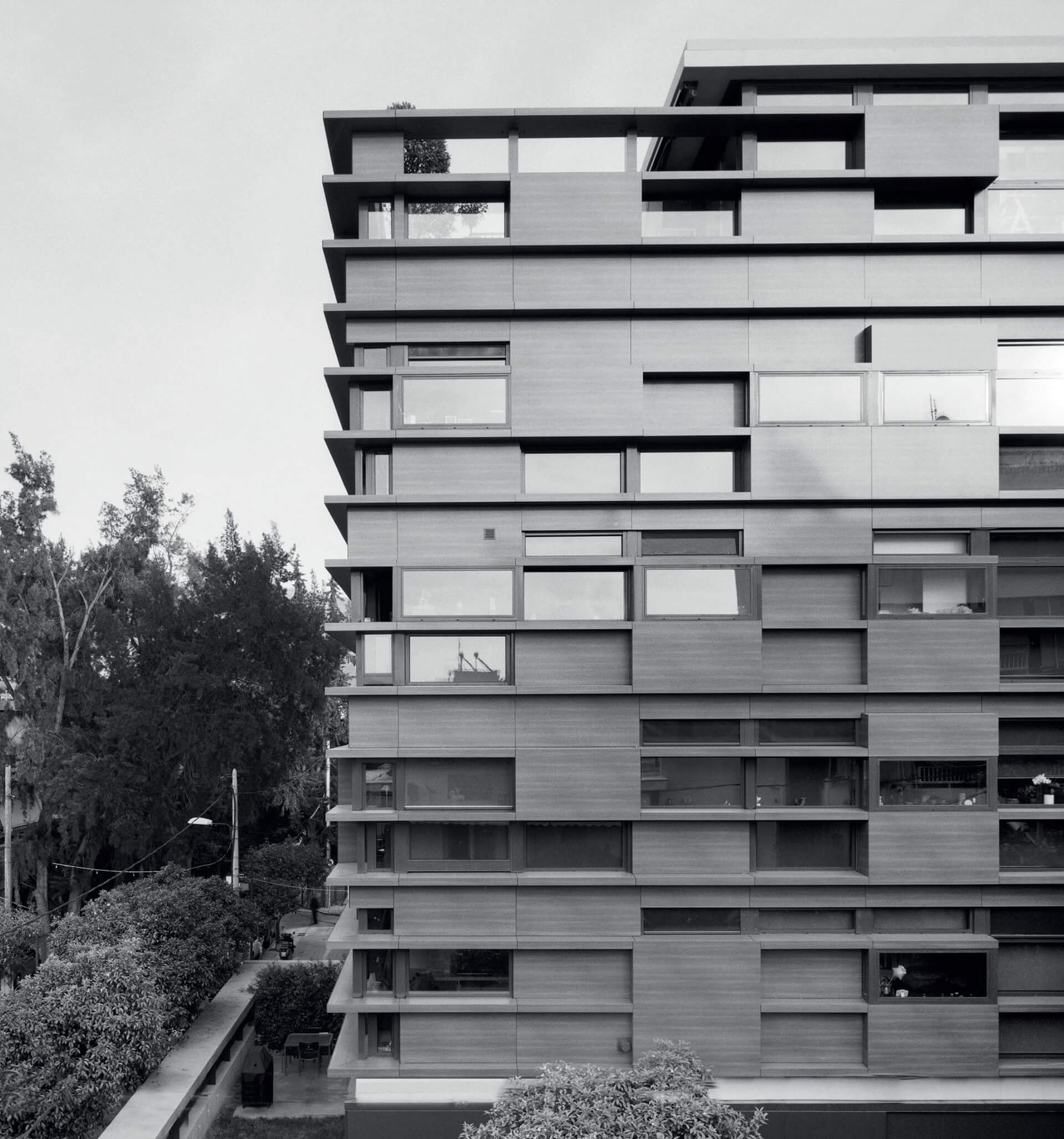
The load-bearing structure, composed of exposed reinforced concrete, frames only the central atrium, supporting the floor slabs as cantilevers. This arrangement provides maximum freedom in configuring both the apartment layouts and the exterior façades.
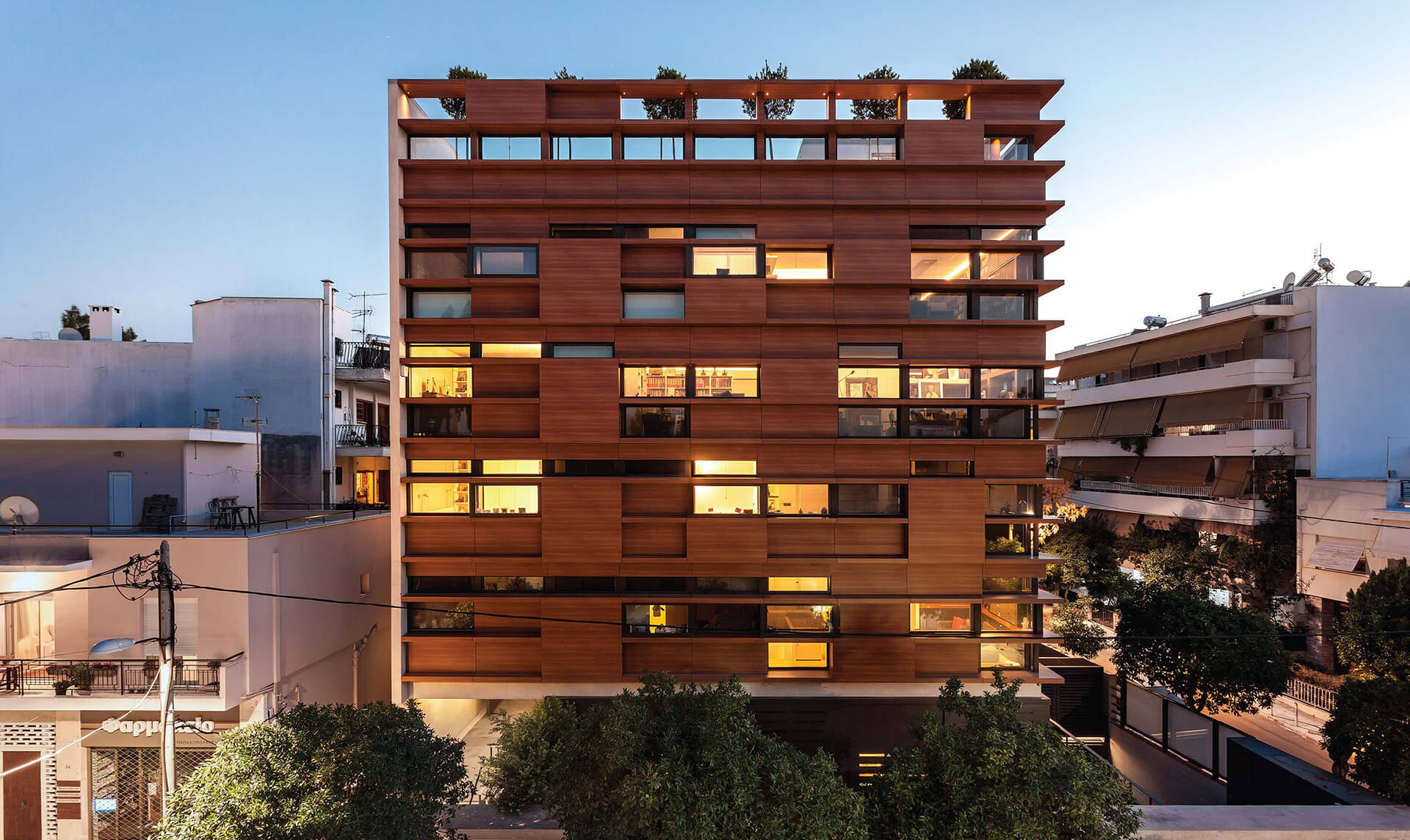
These façades are conceived as a self-supporting “sculpted skin,” incorporating essential functions of the residences through voids, projections, bay windows, and fully operable glazing. The result is a volume that appears monolithic yet permeable – transparent in selected fragments that frame views of the immediate urban context.
Urban Integration
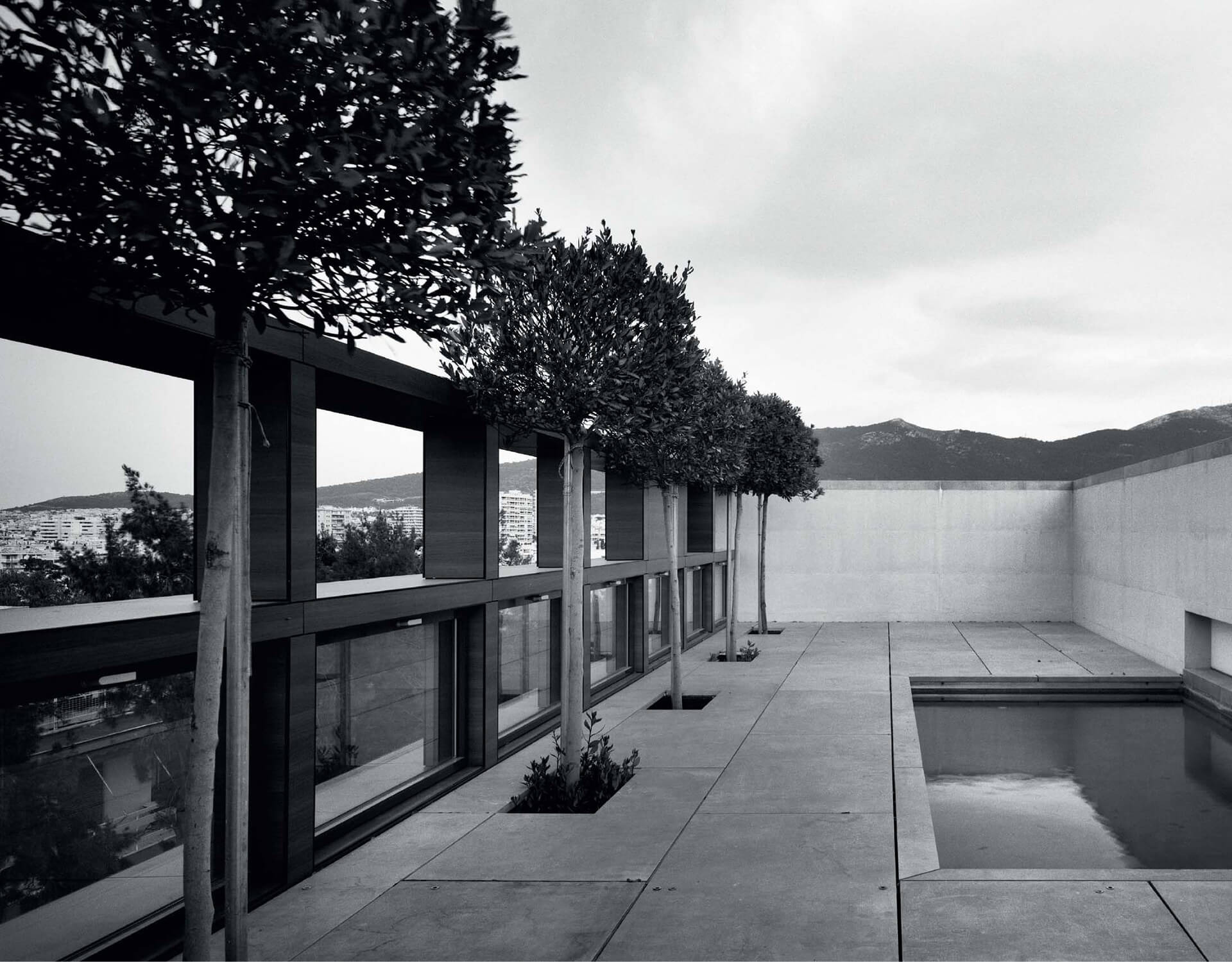
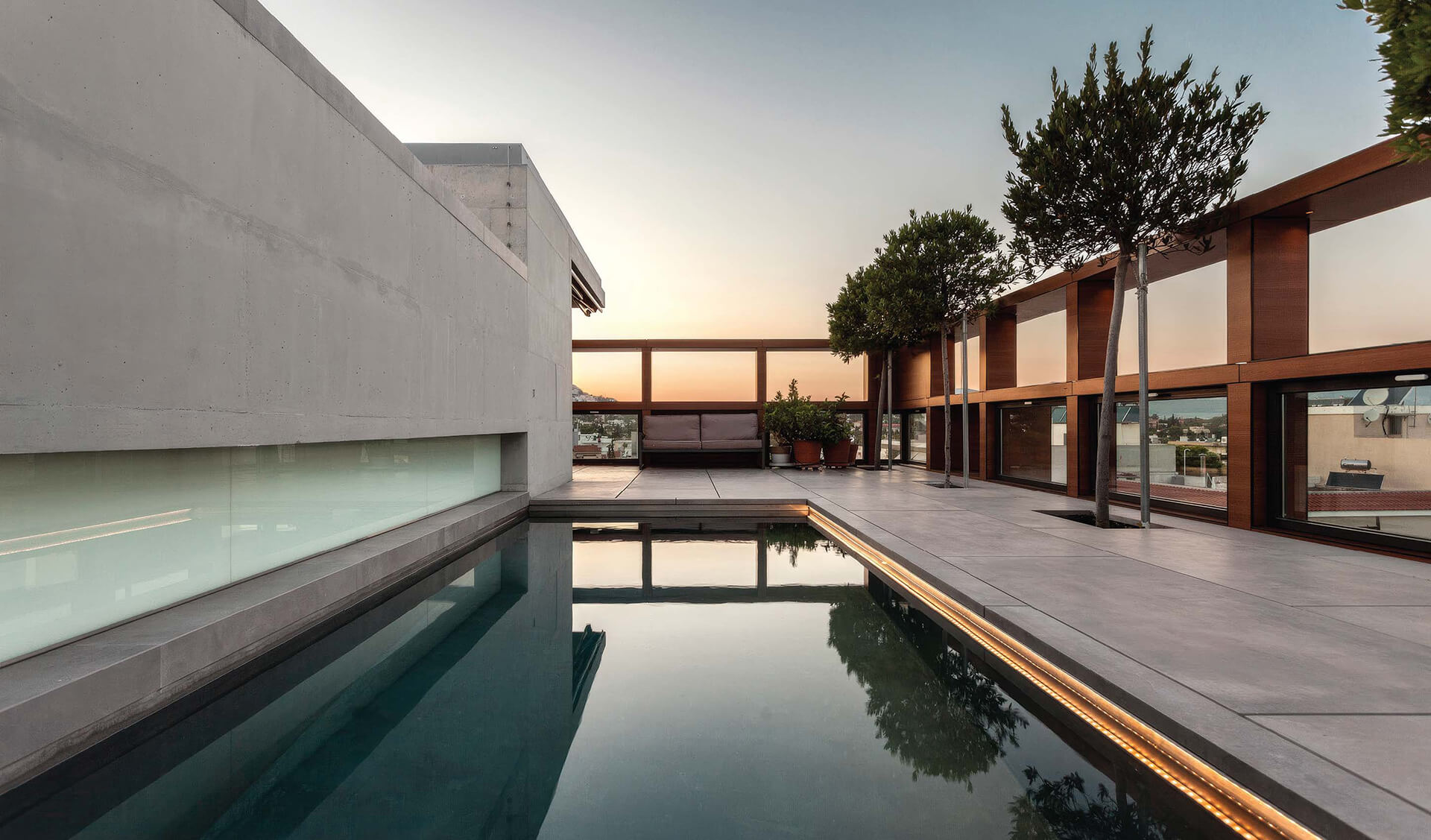
The top floor is designed as a “hanging garden.” Toward the interior of the block, it is enclosed by a solid continuous wall of exposed concrete; toward the city, it is defined by the upper edge of the self-supporting façade. At this elevated level, the interplay between these two structural elements enables visitors to reorient themselves and reconsider the building’s relationship to the broader urban fabric.
Nikos Ktenas became widely known through his project “Inside-Out” -one of the most iconic apartment buildings in Athens. The building not only transformed the urban landscape of Neo Psychiko, standing out as a radically contemporary proposal, but was also honored with the 2013-2017 Architecture Award of the Hellenic Institute of Architecture. As an architectural gesture, “Inside-Out” established itself as a landmark, offering a creative and timely reinterpretation of the apartment-building typology, with a distinct impact on both the building’s internal organization and its external form.
https://ek-mag.com/wp-content/uploads/2025/11/00-cover-24.jpg
https://ek-mag.com/wp-content/uploads/2025/11/01-25-scaled.jpg
https://ek-mag.com/wp-content/uploads/2025/11/02-24-scaled.jpg
https://ek-mag.com/wp-content/uploads/2025/11/03-25.jpg
https://ek-mag.com/wp-content/uploads/2025/11/04-25-scaled.jpg
https://ek-mag.com/wp-content/uploads/2025/11/05-25.jpg
https://ek-mag.com/wp-content/uploads/2025/11/06-25.jpg
https://ek-mag.com/wp-content/uploads/2025/11/07-25.jpg
https://ek-mag.com/wp-content/uploads/2025/11/08-25.jpg
https://ek-mag.com/wp-content/uploads/2025/11/09-24.jpg
Related Posts