Tanpopo in Athens
Architecture:
Photography:
ek Issue:

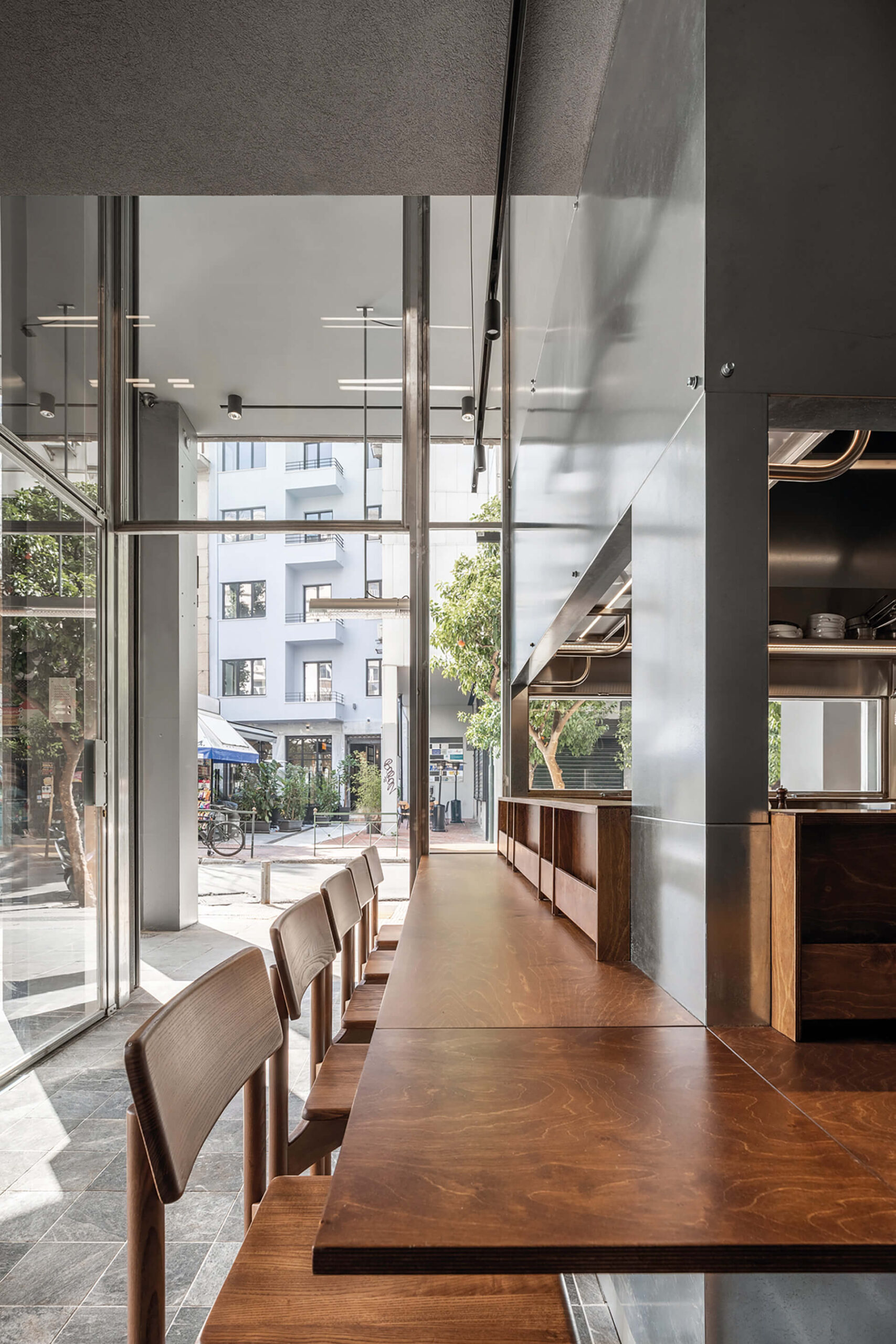
Tanpopo is the Japanese word for the dandelion plant and the title of a cult Japanese film from 1985 that follows the story of a young mother who is taught by a truck driver how to make the perfect bowl of ramen. It is also a distinctive space tucked away behind Klafthmonos Square, where Japanese food is served in a casual, canteen-like atmosphere that feels as if it is set directly on the sidewalk.
Design Philosophy
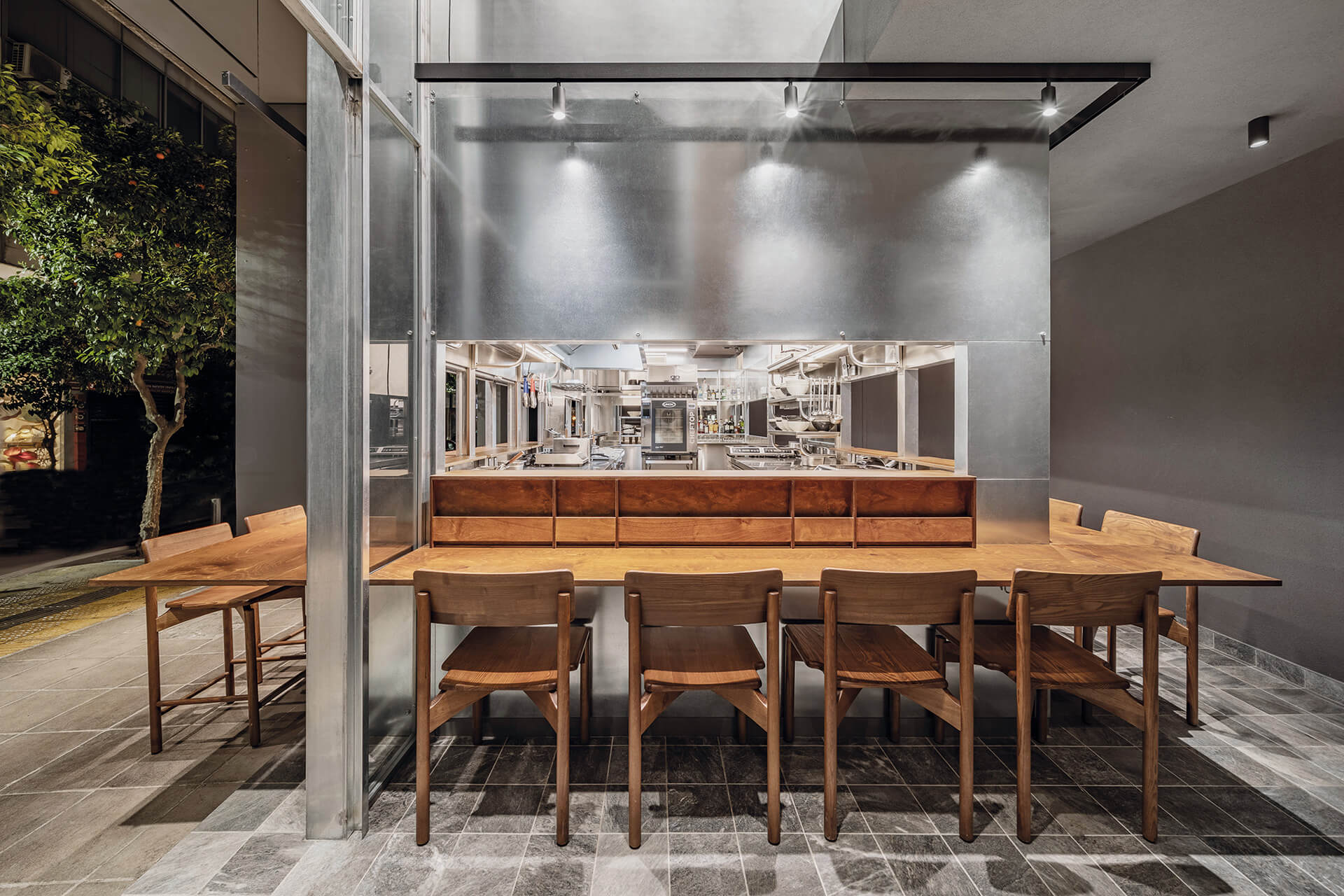
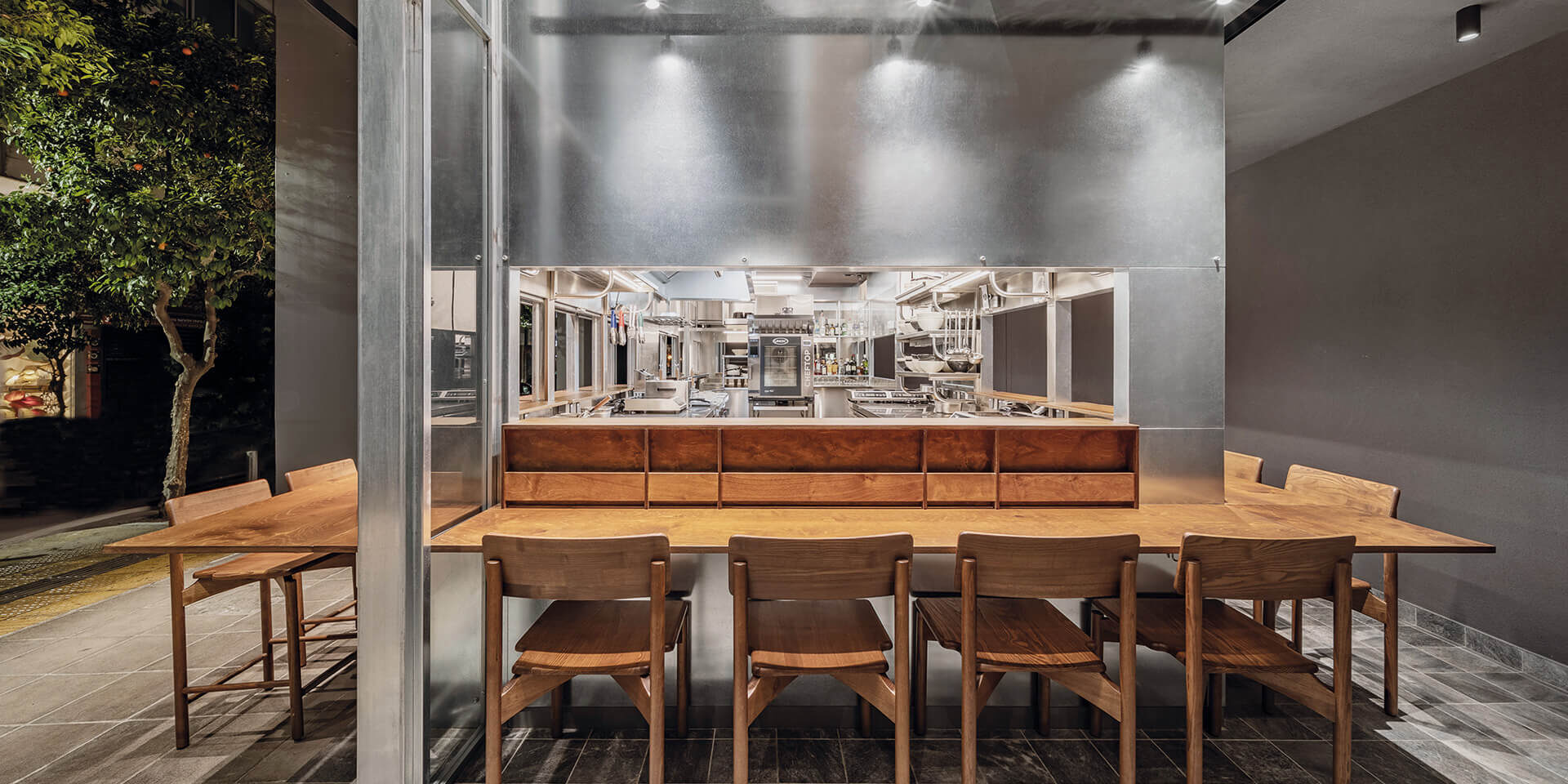
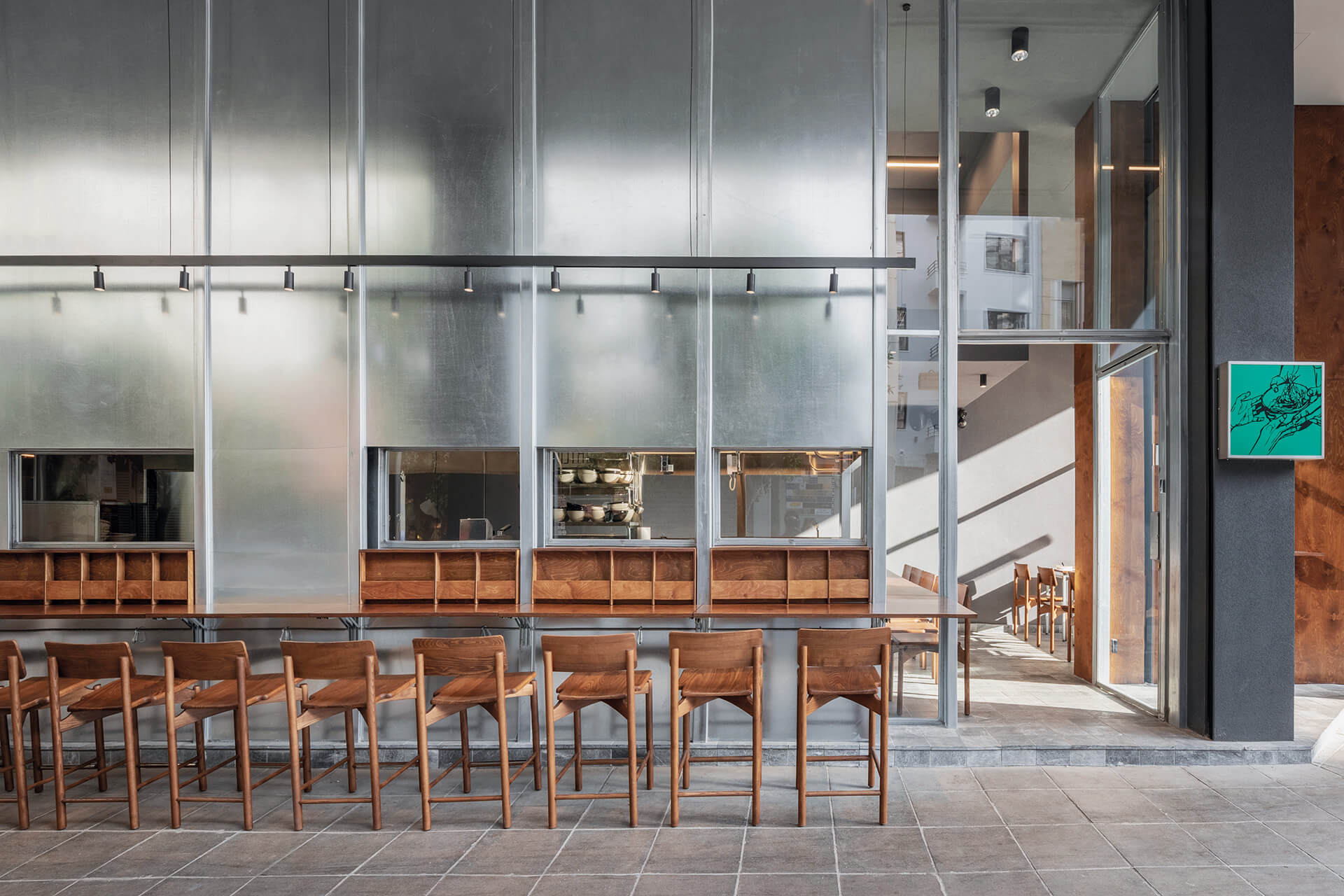
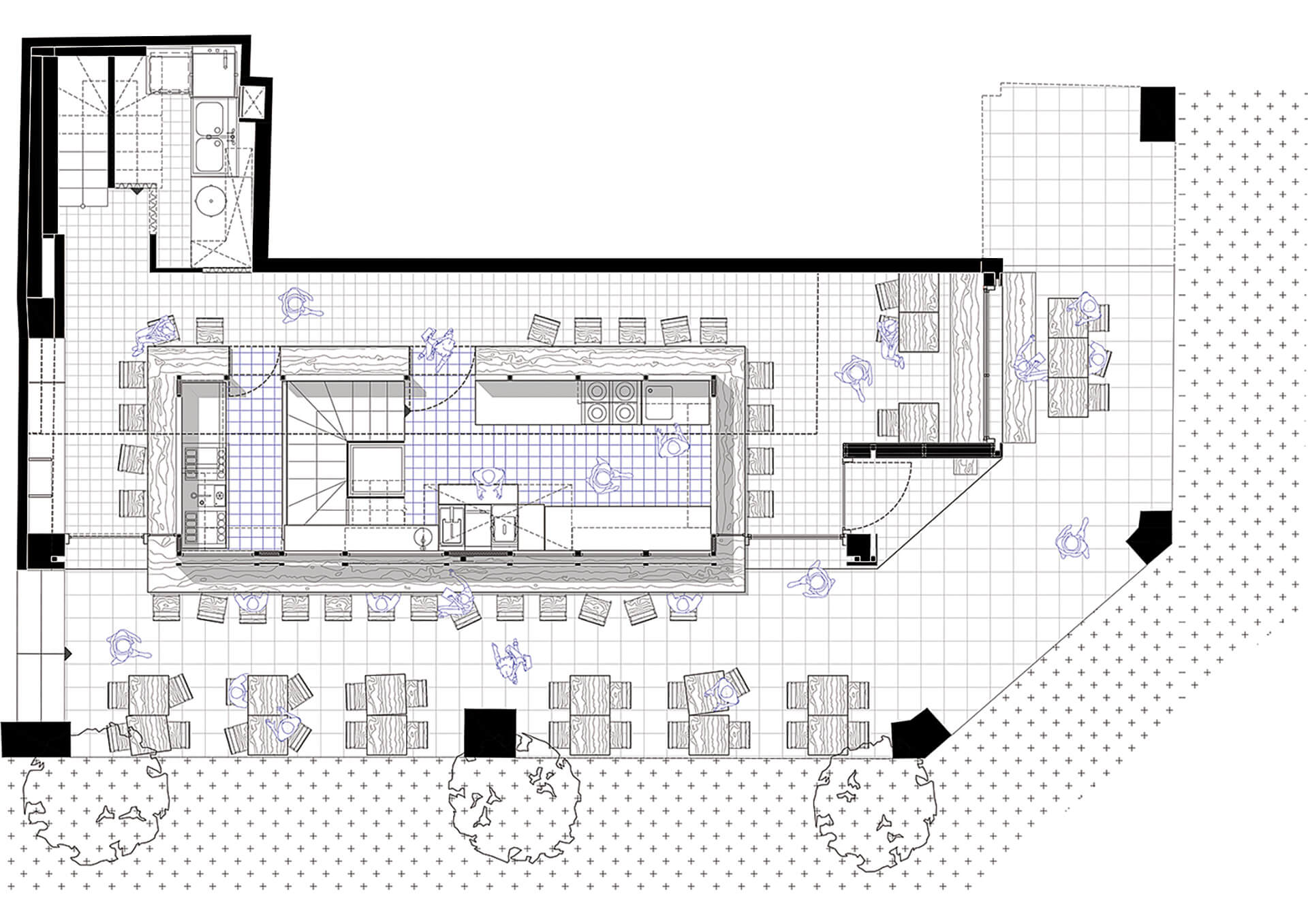
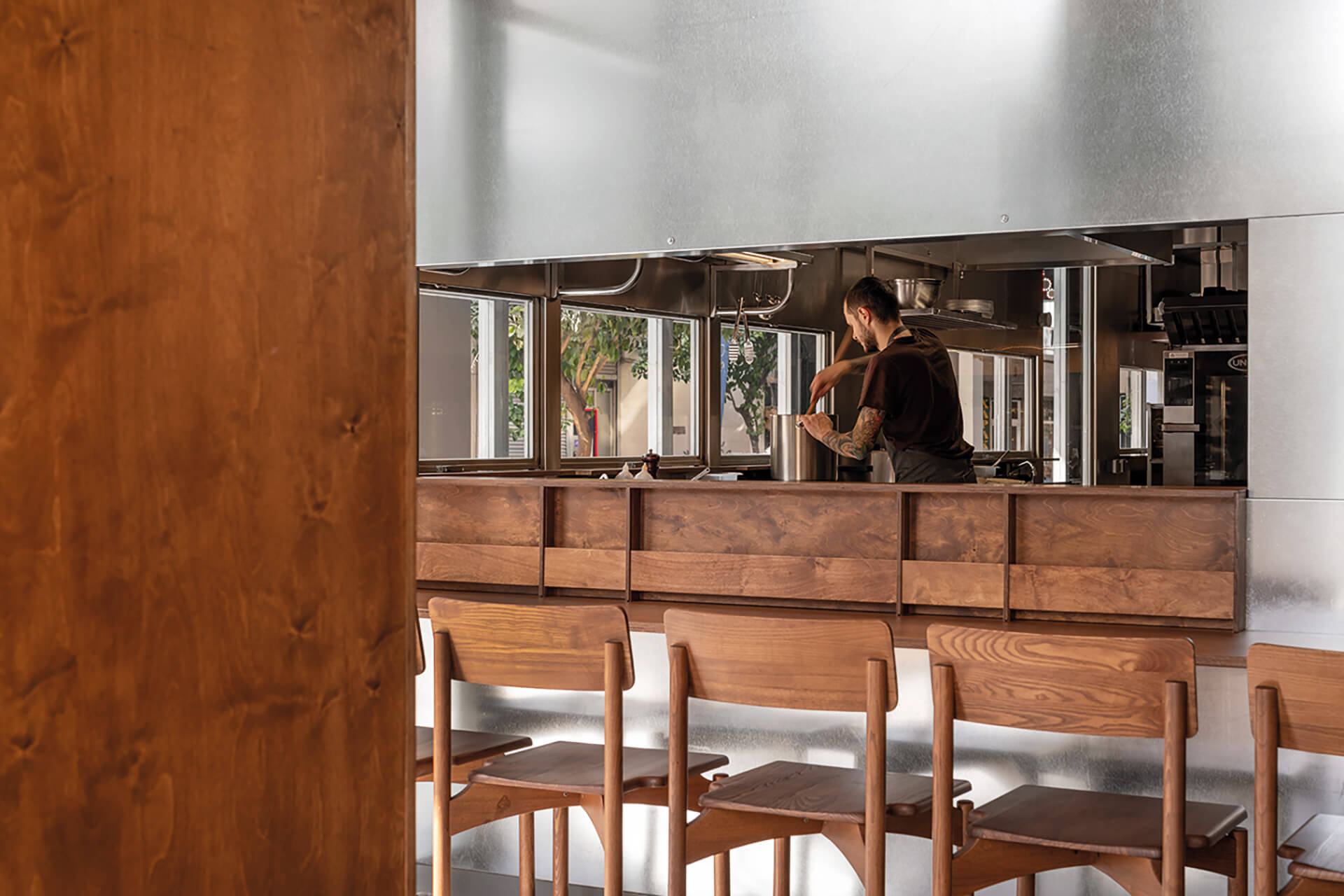
The design intent was to blur the boundaries between public and private space, bringing the act of cooking into constant interaction with passersby. Spatially, this idea is expressed through the placement of the food preparation area on the façade, at the core of the flow between the street and the interior. The peripherally open kitchen is housed within a metal solid that rises to a double height and is integrated into the space without relying on the existing structural elements, even allowing for the possibility of being relocated.
Architecture: Τrail Practice Photography: Margarita Yoko Nikitaki
Spatial Organization
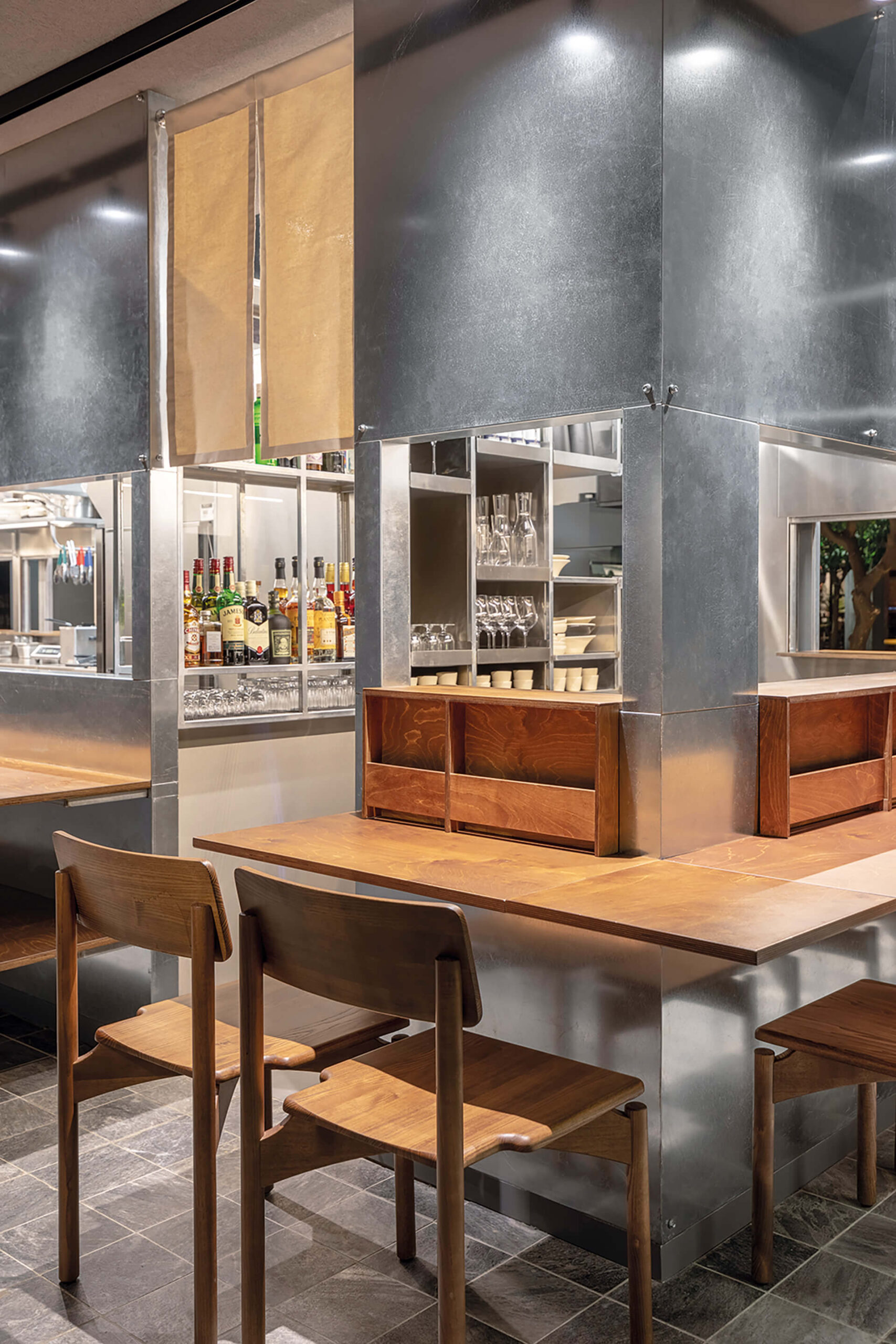
In this way, the kitchen functions as an independent universe with its own rhythm and rules. The unobstructed visibility of all food preparation processes enhances the sense of immediacy, while simultaneously transmitting the pulse of the kitchen to the visitors. Points of interaction and meeting between the two worlds – preparation and consumption – are formed by the food counters, where the chef serves the ramen directly to the guests.
Architecture: Τrail Practice
Material Palette
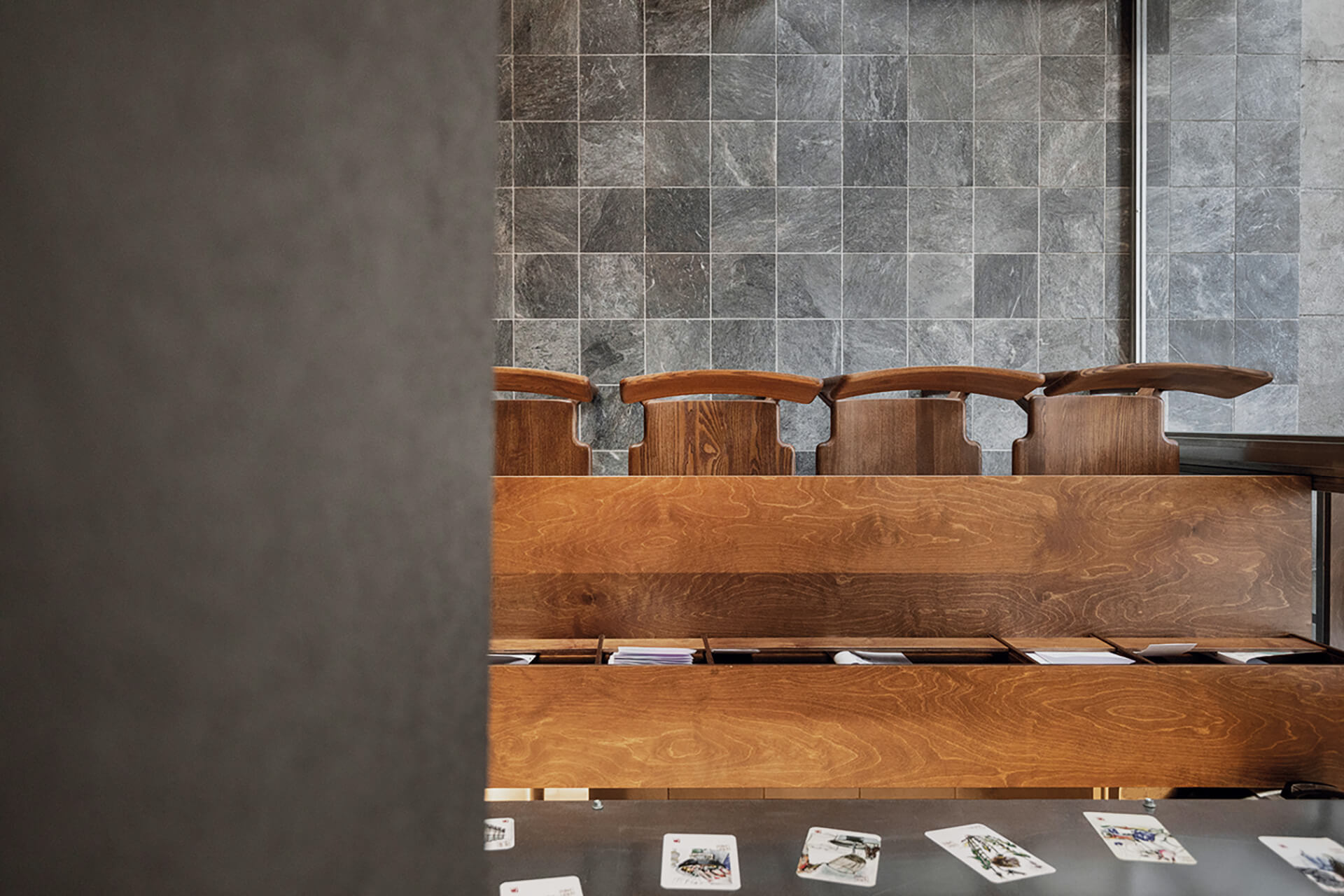
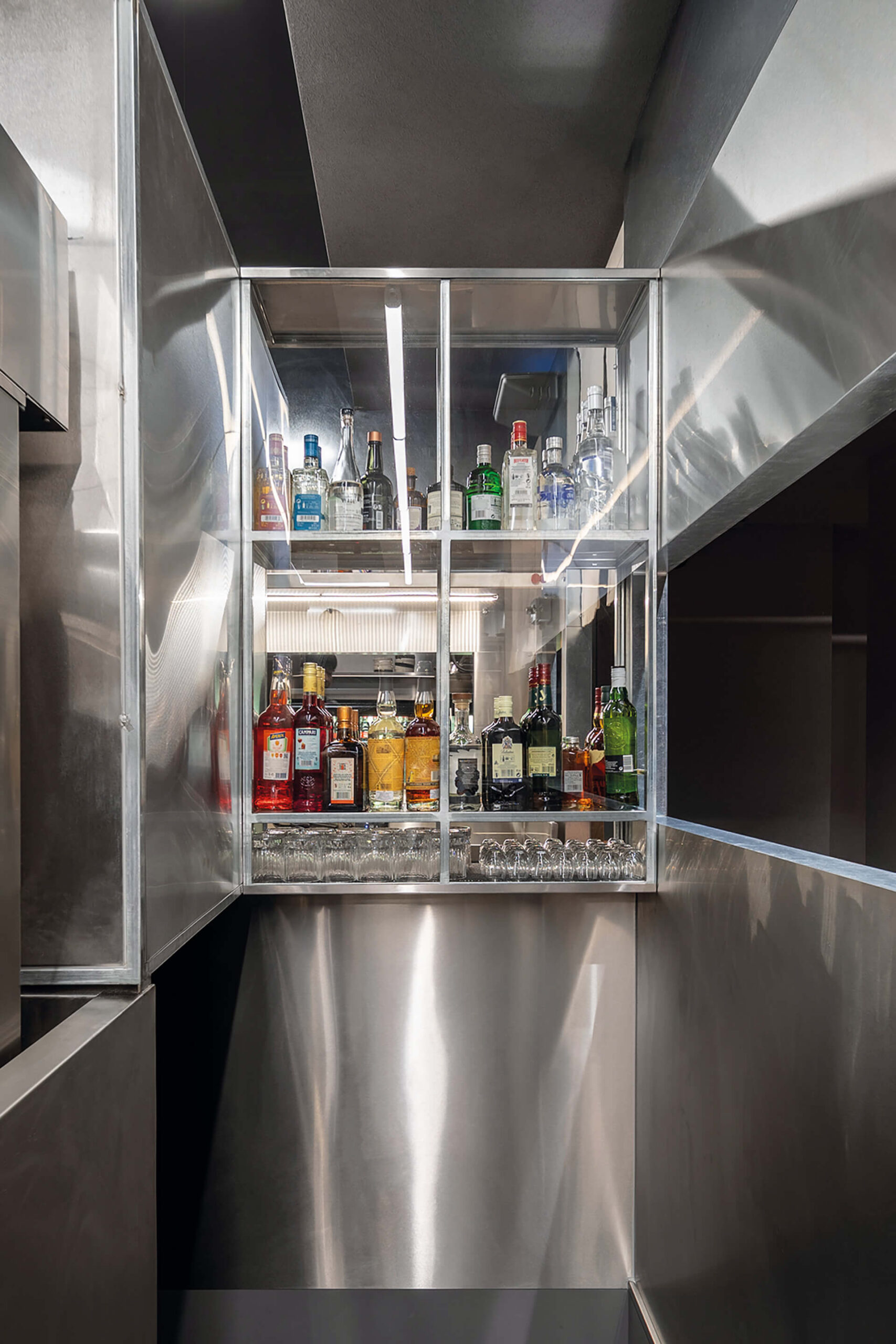
The materials selected to dress the fast and ephemeral eat-and-go concept are raw in character, with metal taking a dominant role. Stainless steel surfaces in the kitchen interior combine with the prevailing grey tones and Aliveri marble details in the seating area, creating a sense of continuity. The variety of textures and the transition from the smoothness of stainless steel to the roughness of plastered walls and processed bush-hammered marble create tactile differentiation, while the color palette visually unifies the space, placing preparation and consumption in a constant negotiation of boundaries and differences.
The design is completed with wooden counters that evoke memories of traditional street canteens, making the atmosphere more familiar while enhancing functionality and circulation flow. The particular emphasis on the harmonious interplay of materials and structures aims to enrich the overall concept, highlighting the authenticity of the brand.
Architecture: Τrail Practice Photography: Margarita Yoko Nikitaki