The Wave | Reconstruction of an Office Building in Athens
Architecture:
Photography:
ek Issue:
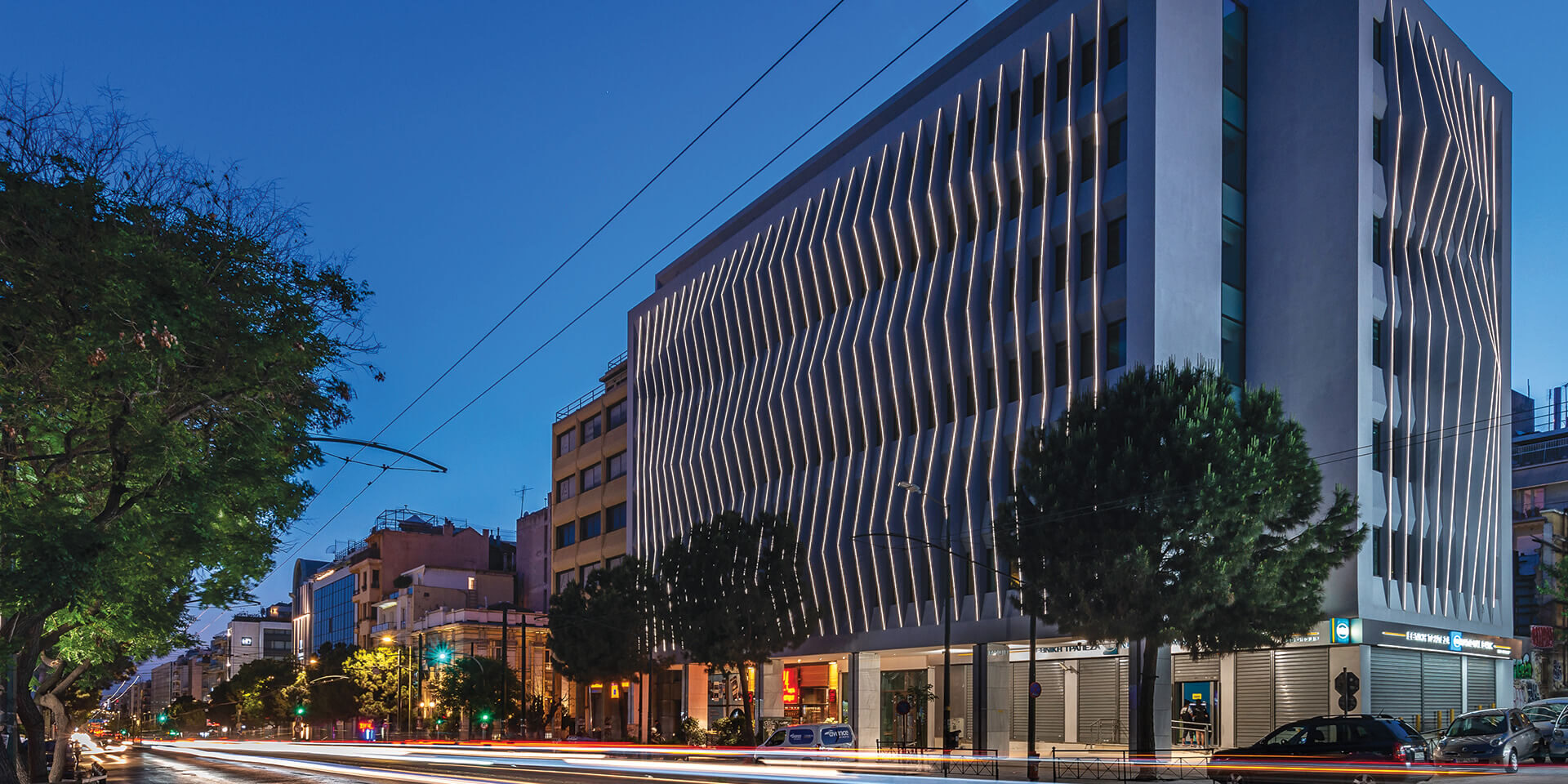
The proposal concerns the reconstruction of a seven-storey office building on Syngrou Avenue and seeks to assign a central role to the building’s architectural identity, shaping the surrounding urban and cultural landscape while serving as the primary means of presenting the building as a contemporary landmark within the city.
Design Philosophy
Through an analysis of the building’s relationship with its wider urban context, the design proposes the relocation of the main axis of movement onto the façade facing Syngrou Avenue. This gesture became the geometric foundation for the development of the new architectural expression of the building envelope.
Drawing on the experience of movement along the urban axis, a system reminiscent of chronophotography was conceived – an image that condenses the perception of sequential motion into a single, legible form. In this way, movement is translated into architectural language, granting the building a dynamic and recognizable presence within the urban fabric.
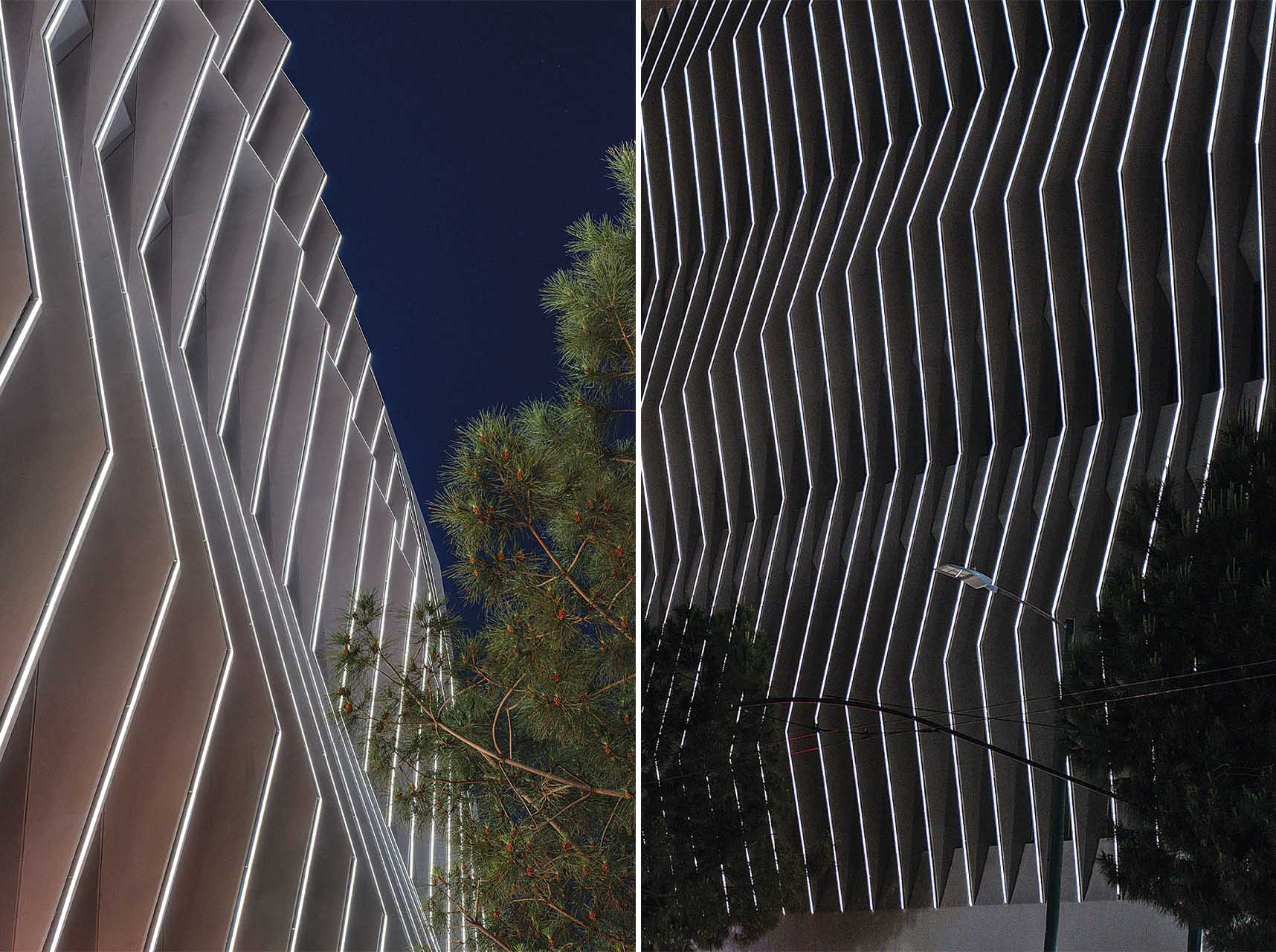
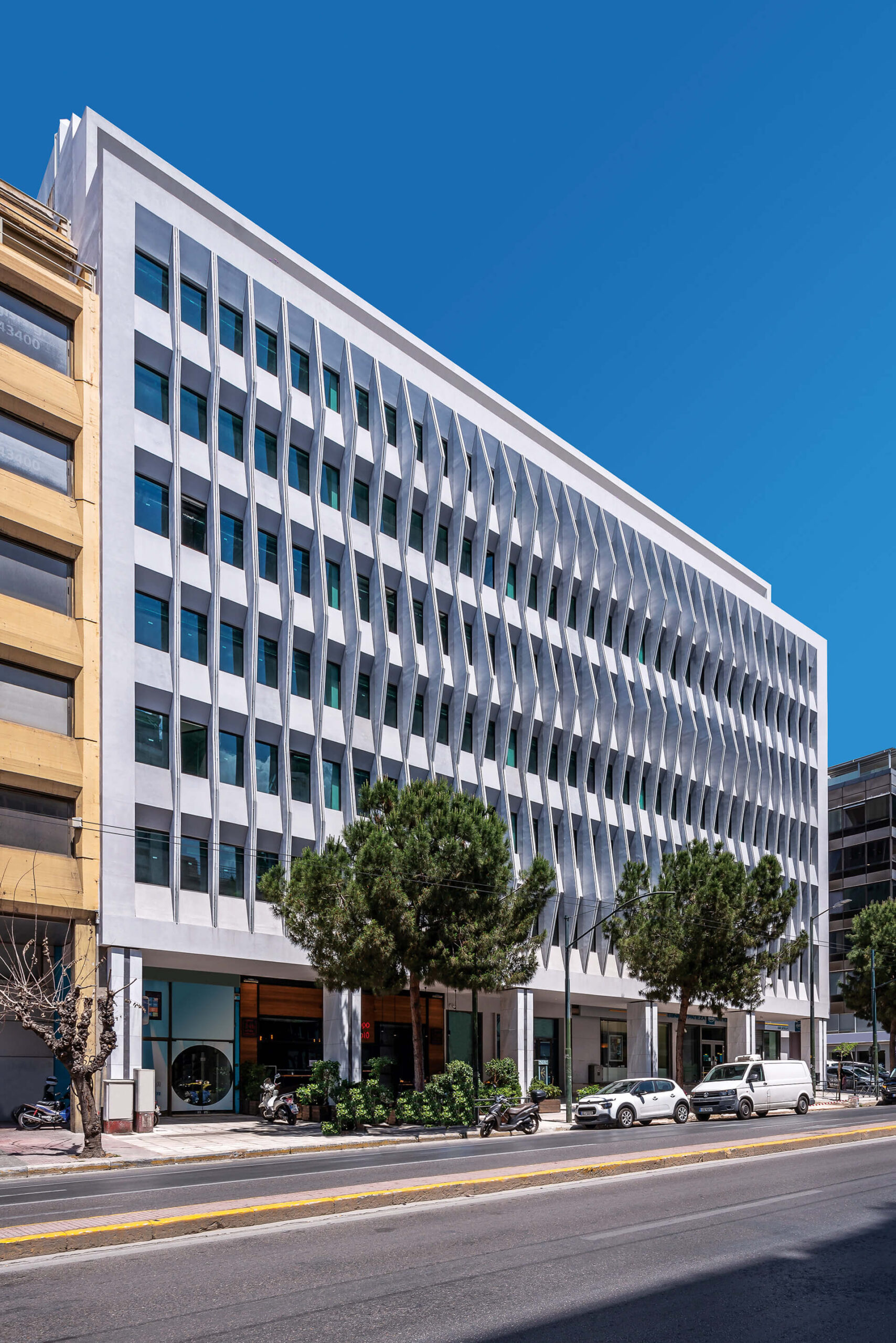
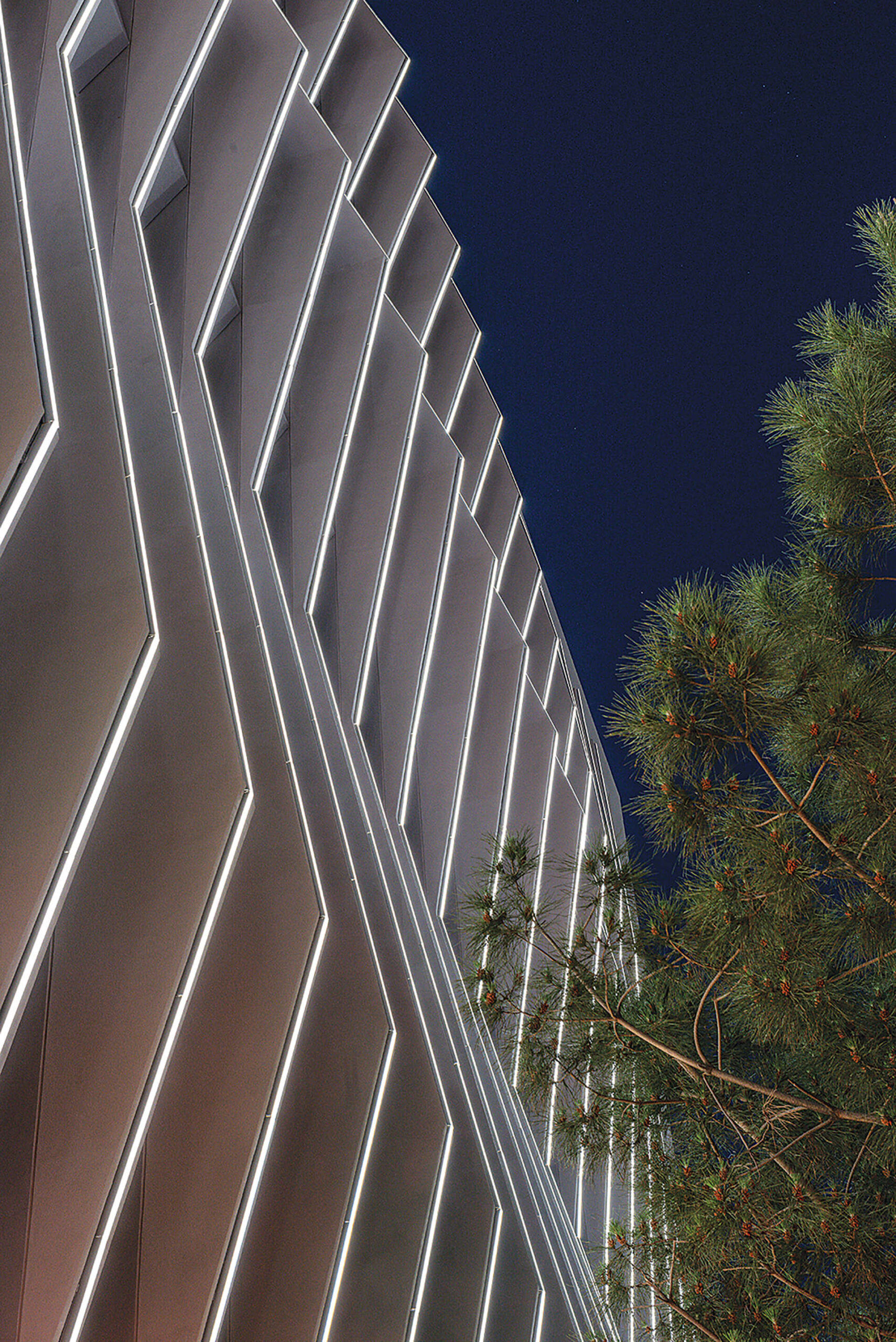
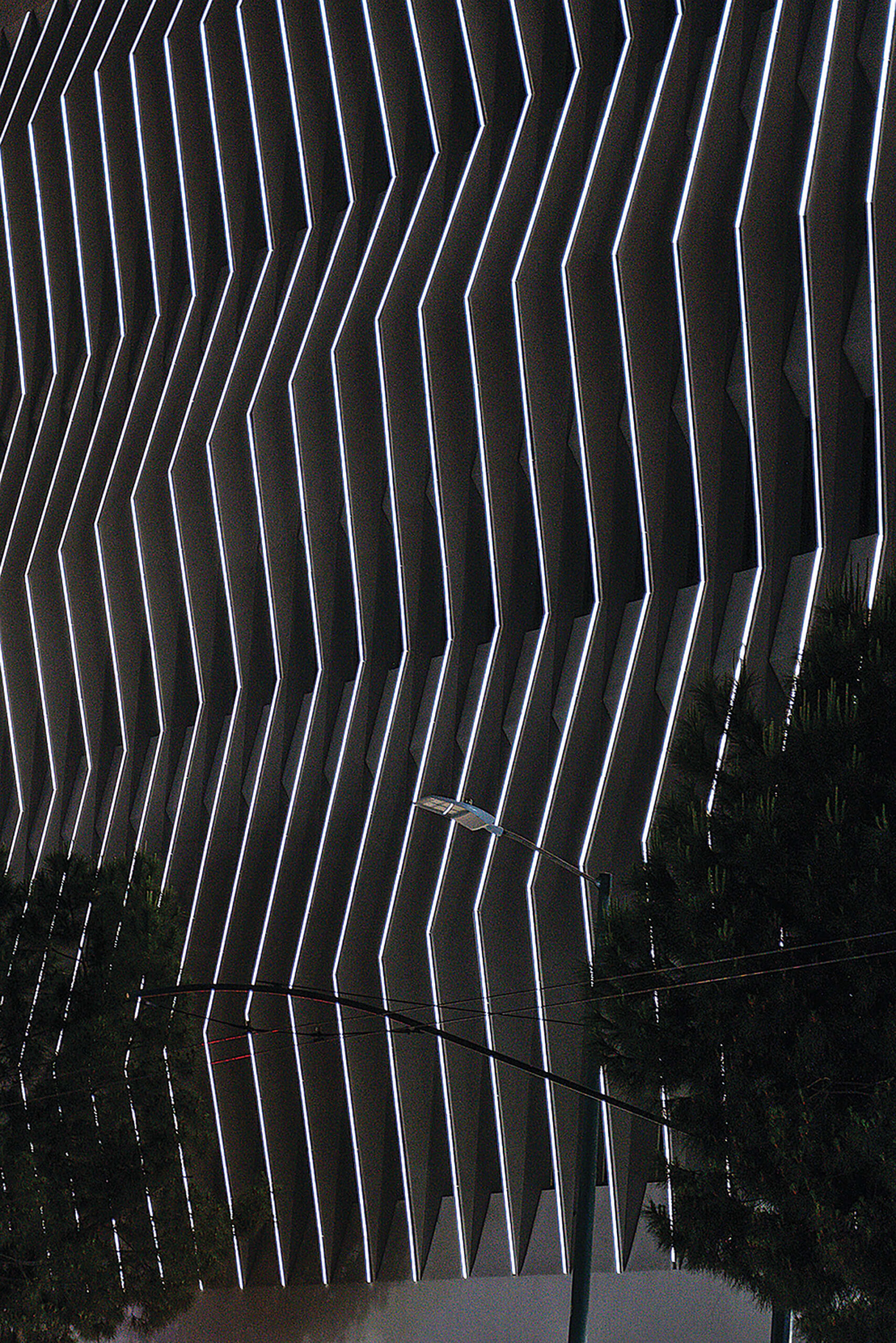
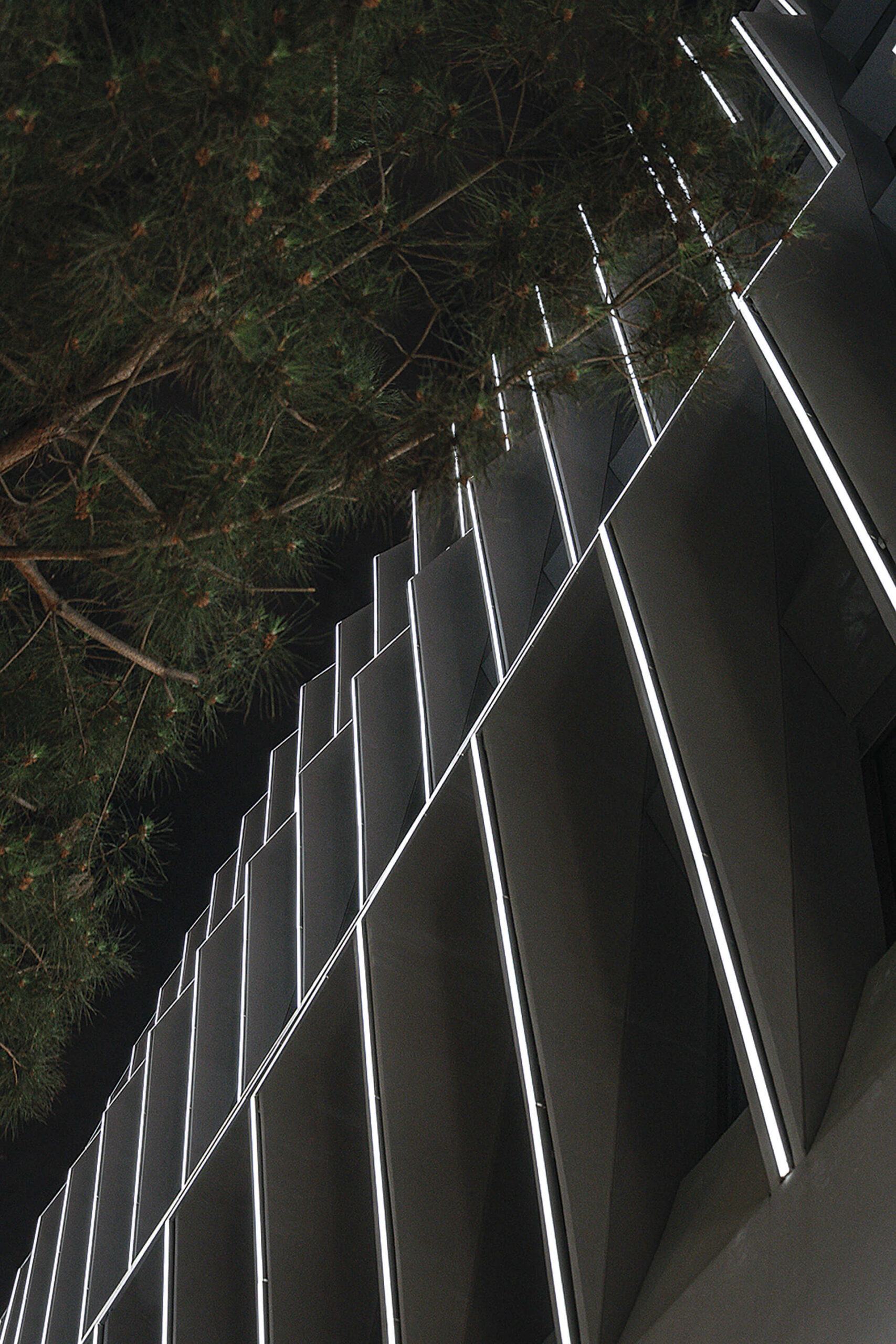
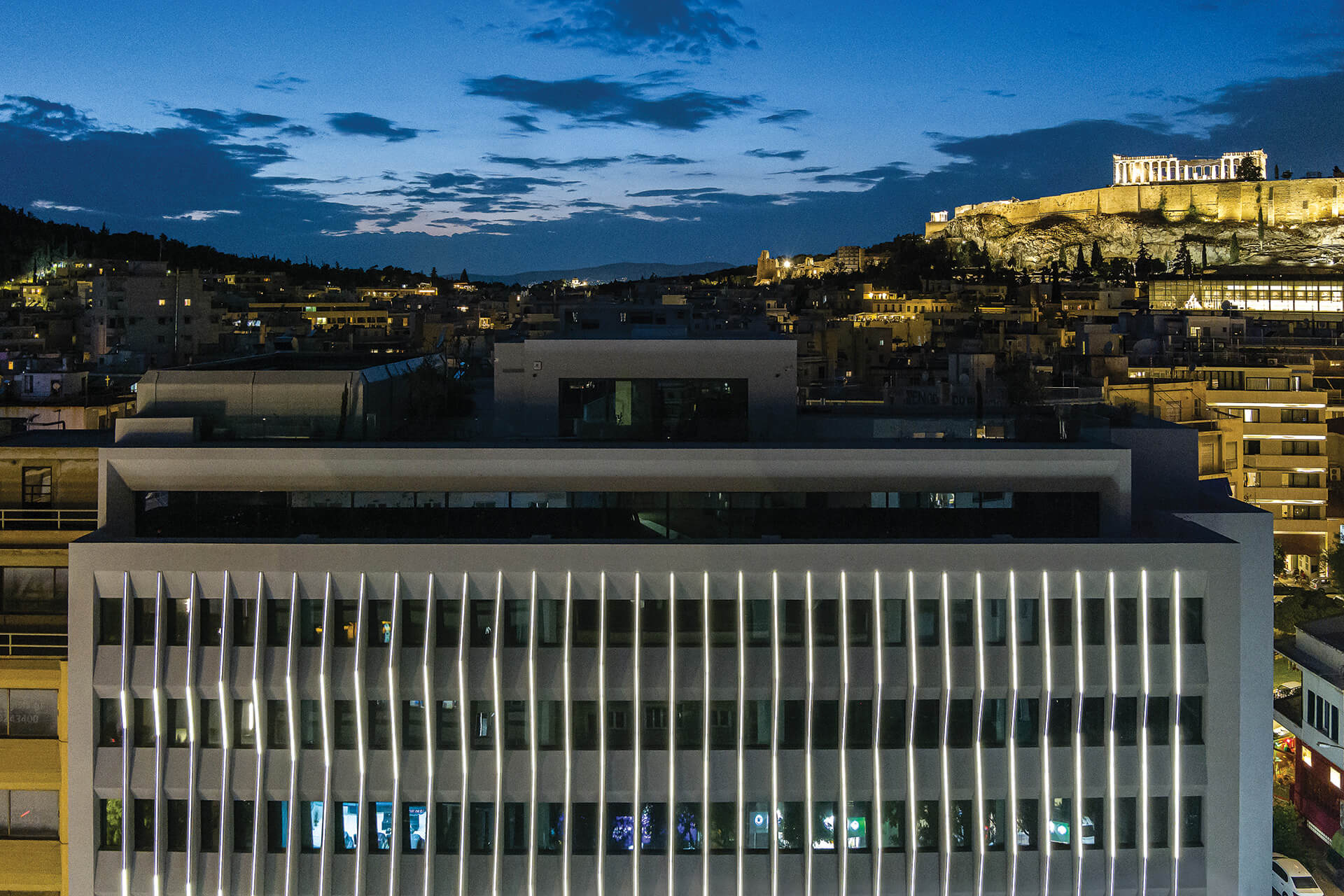
The composition is articulated through a system of vertical elements consisting of sixty-four custom-made, wave-shaped louvers, each with a unique geometric development. Their repetition and variation generate a rhythmic surface that changes according to the observer’s viewpoint and the trajectory of natural light.
Sustainable Design
A central objective of the project was the integration of sustainable design principles. The building was designed and constructed with the aim of achieving LEED Gold certification, incorporating strategies that enhance both energy efficiency and environmental performance.
Within this framework, a specialized parametric study was carried out for the façade louver system to ensure optimal penetration of natural light into the interior spaces while simultaneously providing thermal and visual comfort. The dynamic form of the façade therefore operates not only as an aesthetic feature but also as an active filtering system for daylight and shading, contributing to the regulation of the microclimate and the overall environmental performance of the building.
Façade Lighting Design
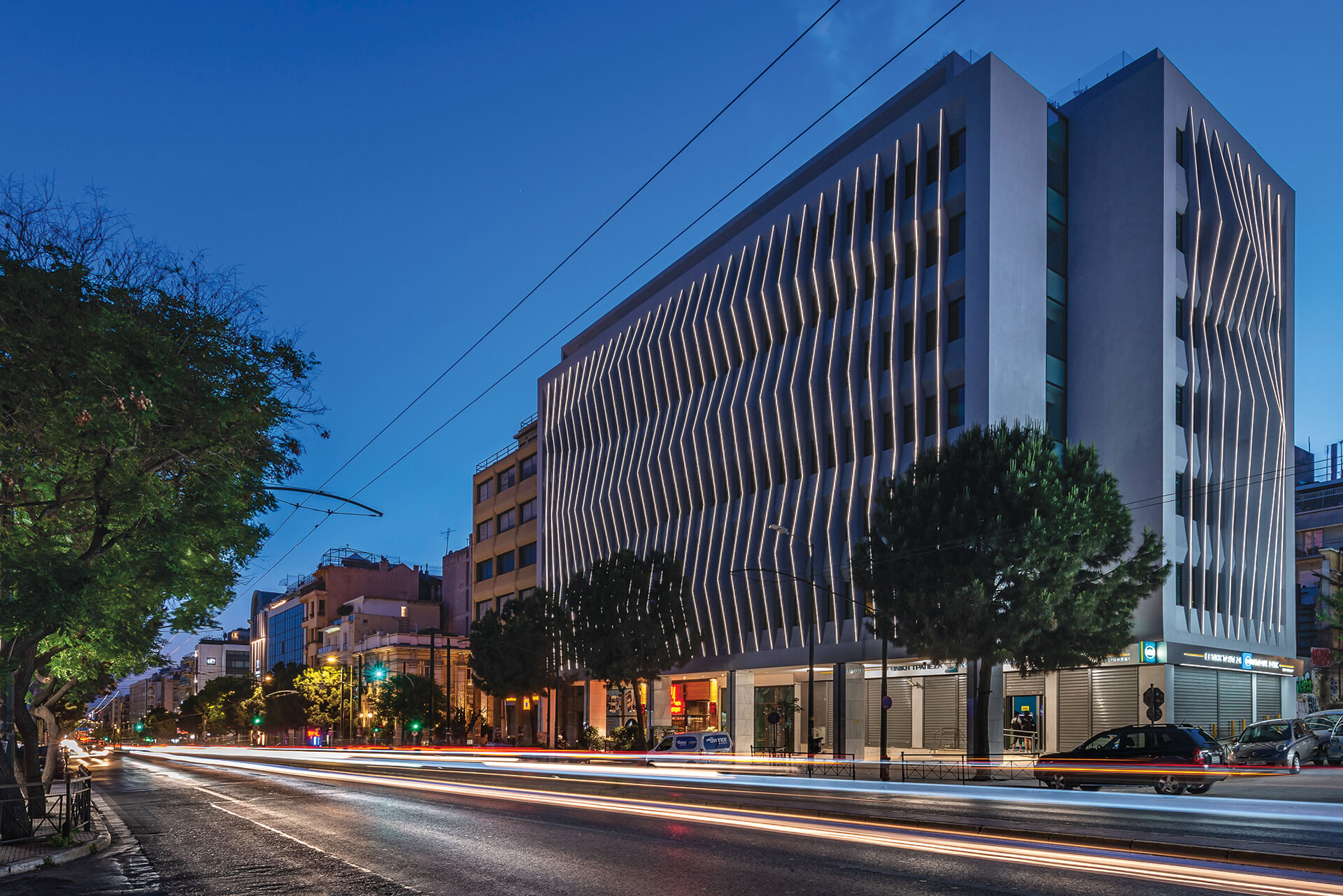
The sense of movement created by the wave-like louvers is intensified by the interplay of light and shadow throughout the day. Continuous variations in illumination transform the appearance of the façade, giving it a shifting character that responds to the movement of the sun.
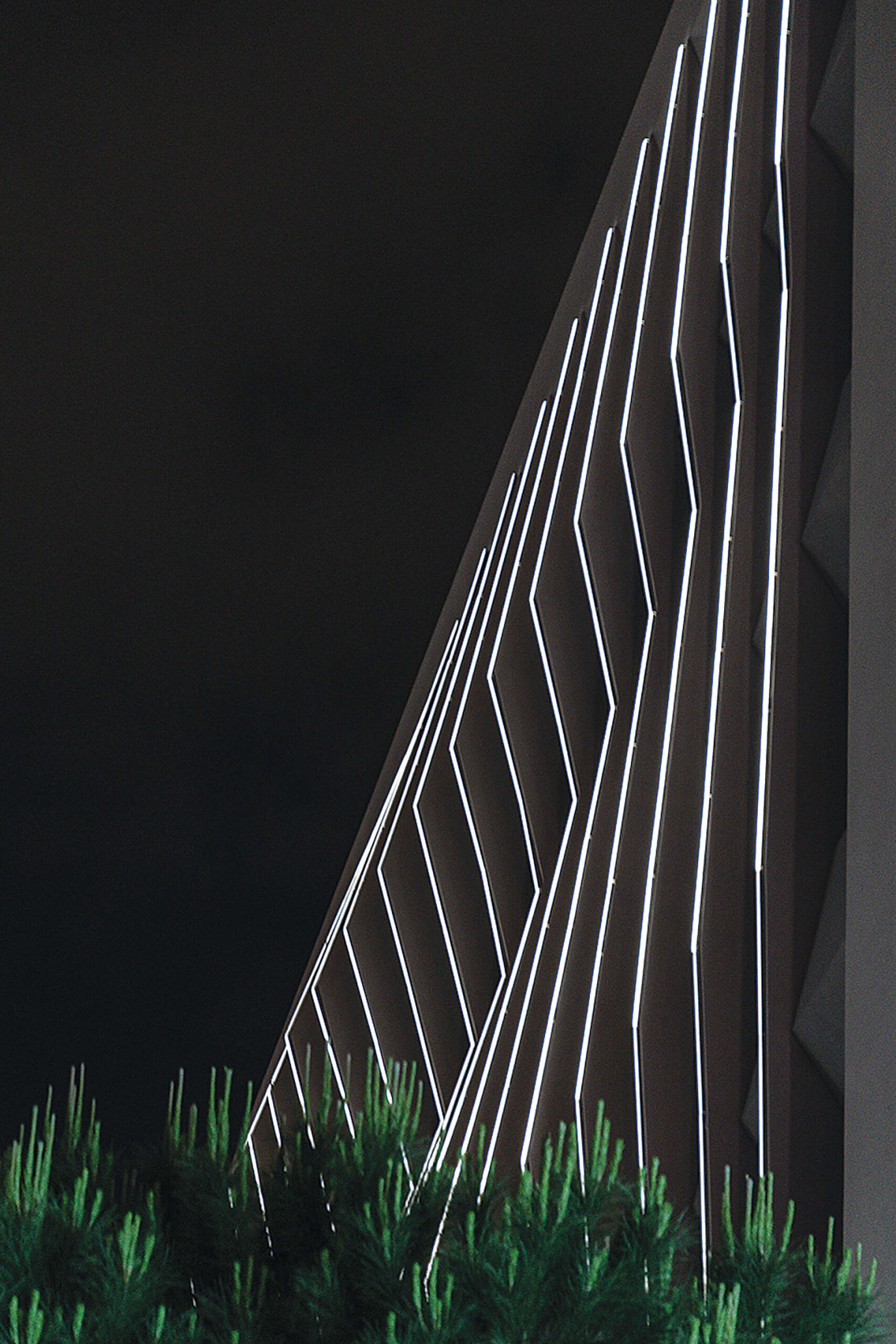
During the evening hours, the building’s architectural identity is further emphasized through a permanent lighting installation designed specifically for each point, angle and element of the façade. A carefully calibrated sequence of subtle variations in white light runs along the building envelope, establishing a quiet dialogue with the city’s nocturnal landscape.
Particular emphasis was placed on minimizing light pollution. The lighting fixtures are controlled through specialized systems that allow them to operate at very low luminance levels, thereby protecting the surrounding urban environment.
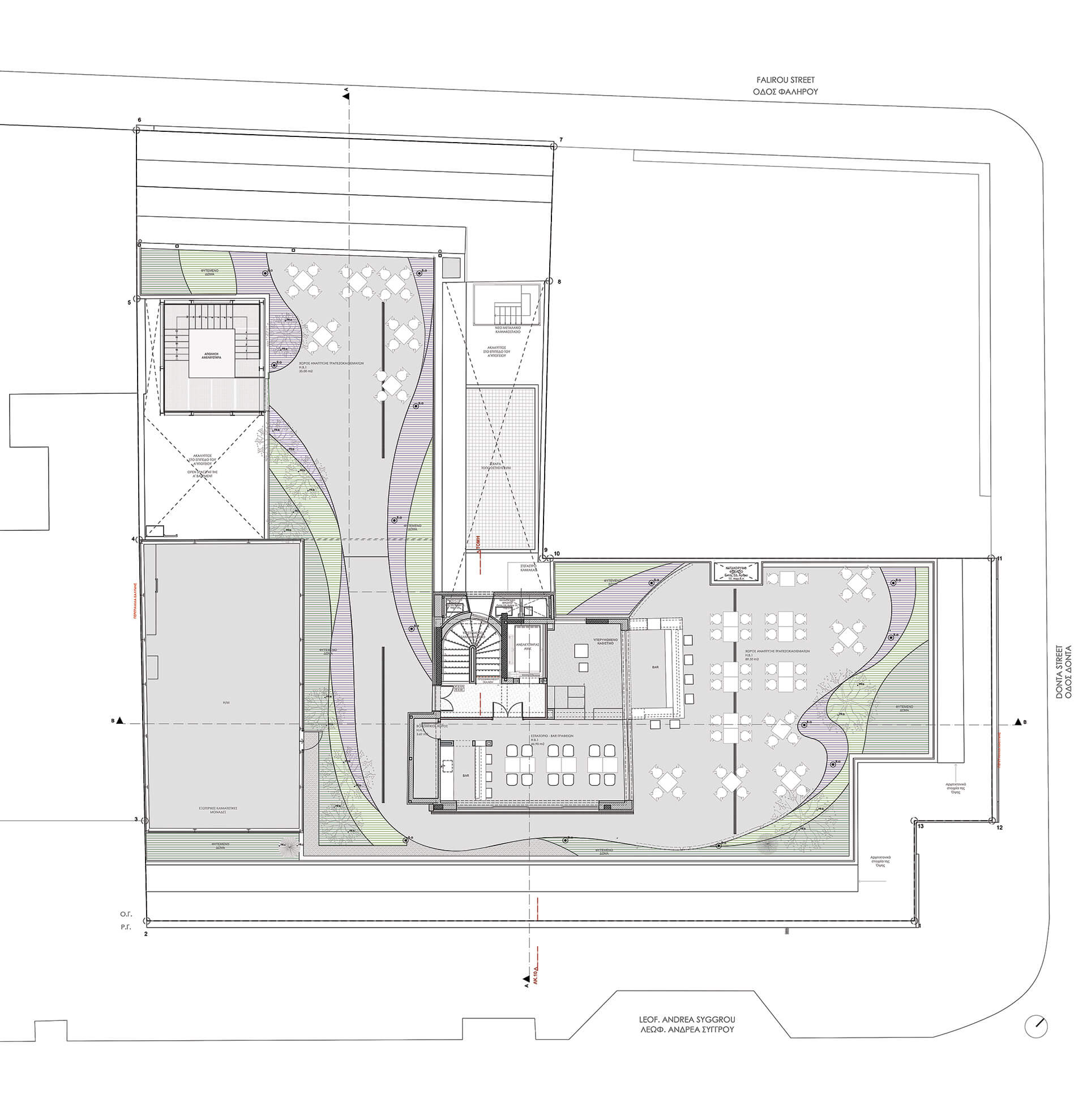
At roof level, a recreational terrace with views towards the Acropolis is created, framed by planting. This space offers a moment of release for the building’s users, introducing an element of greenery and relaxation within the dense urban fabric of central Athens.