Casa Daia Bungalows by UNA barbara e valentim in Ceará
Architecture:
Photography:

Modular Timber Architecture for Regenerative Tourism
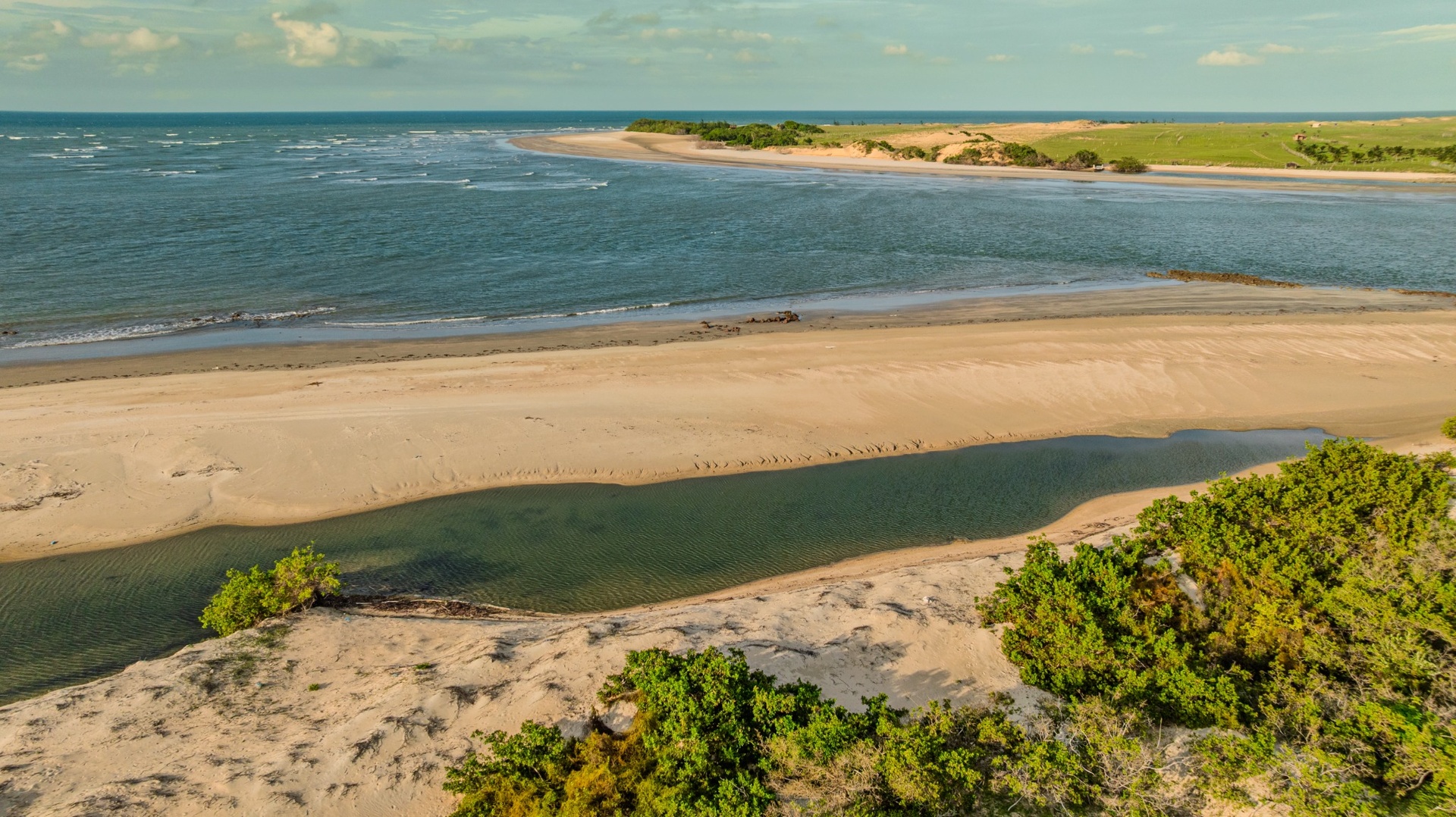
Located in Barra dos Remédios, on the western coast of Ceará, Casa Daia Bungalows by UNA barbara e valentim forms part of a boutique hotel conceived around regenerative tourism, cultural immersion and a close relationship with the territory and its local community. Opened in 2025, Casa Daia is set within a remote and environmentally sensitive area, where architecture is asked to respond not only to program and comfort, but also to landscape, logistics and environmental care.
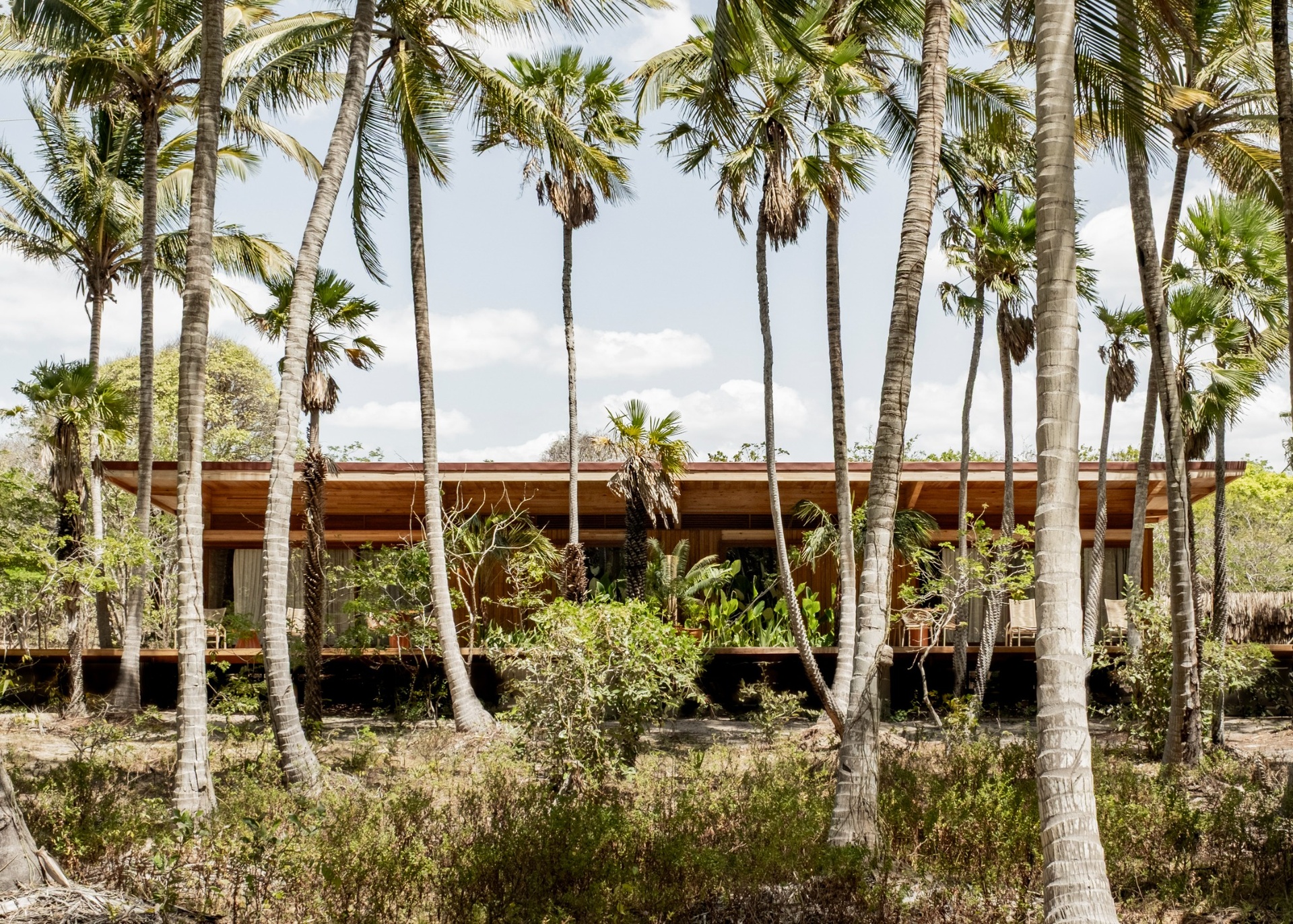
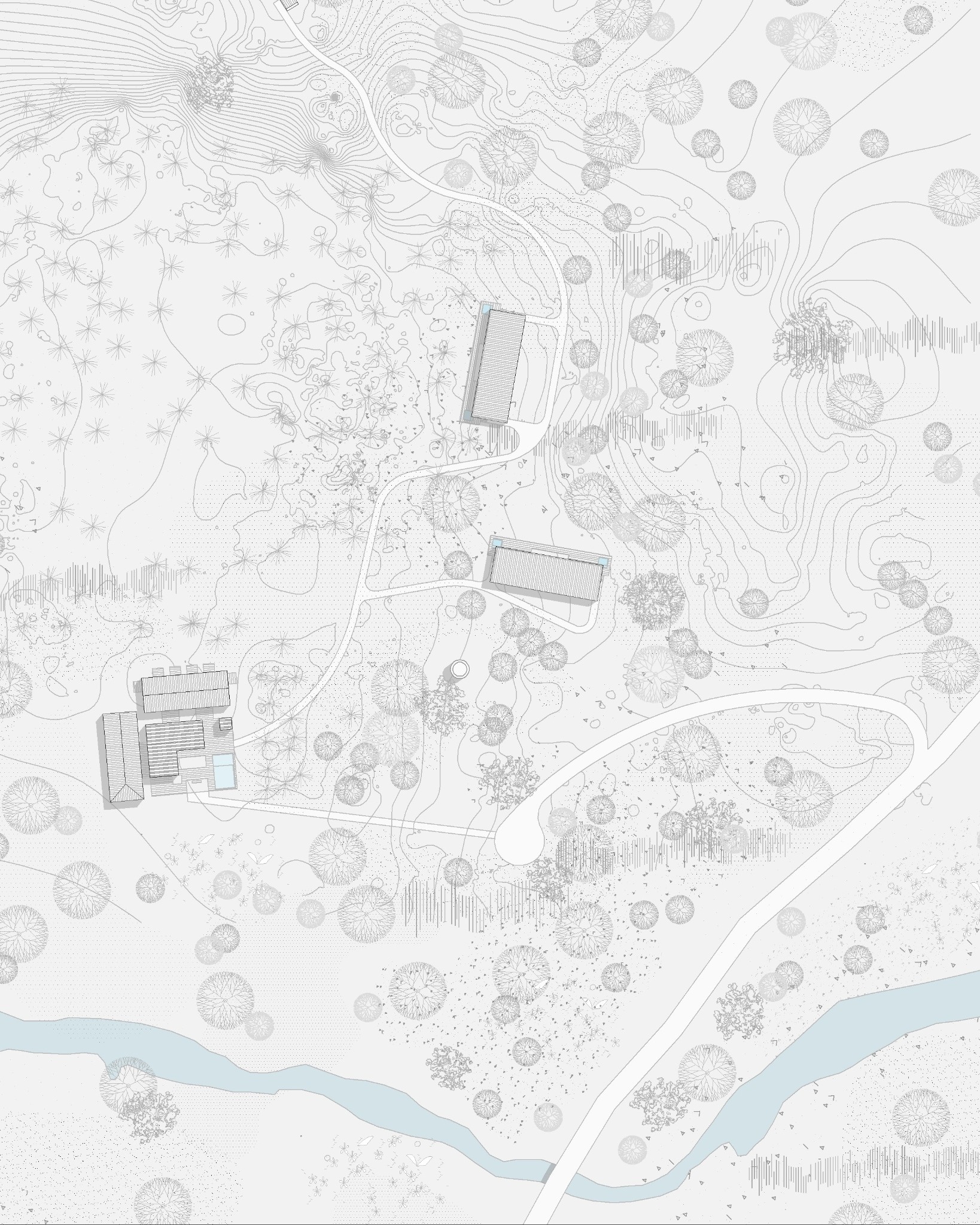
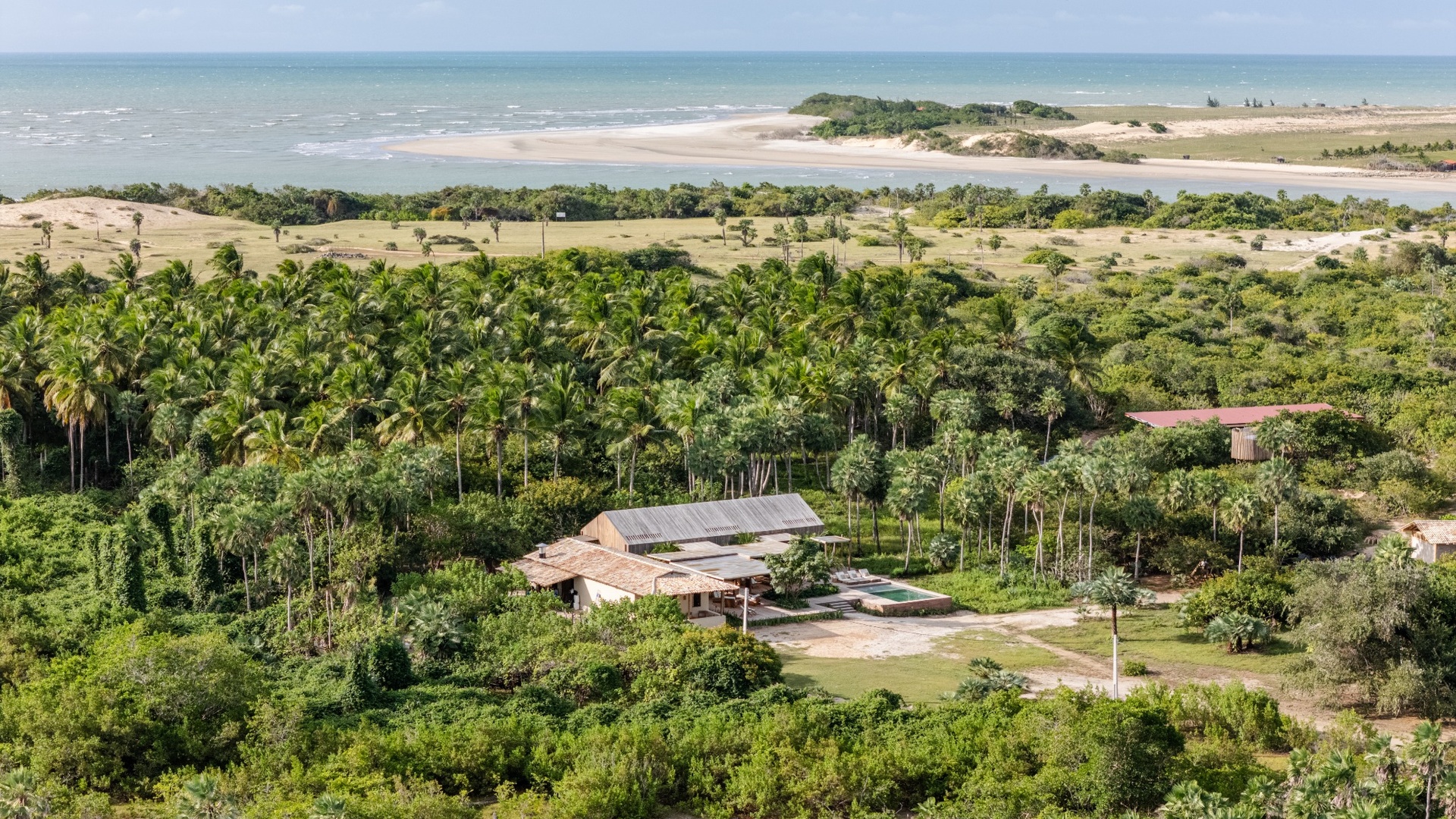
The project occupies a former farm of approximately 220 hectares, where mangroves, dunes, riverbanks, caatinga vegetation and coastal forest coexist in a complex overlap of ecosystems. Within this context, the bungalows operate as a precise and low-impact architectural insertion, using industrialized timber construction as a tool for hospitality in fragile territories.
Four Bungalows in Existing Clearings
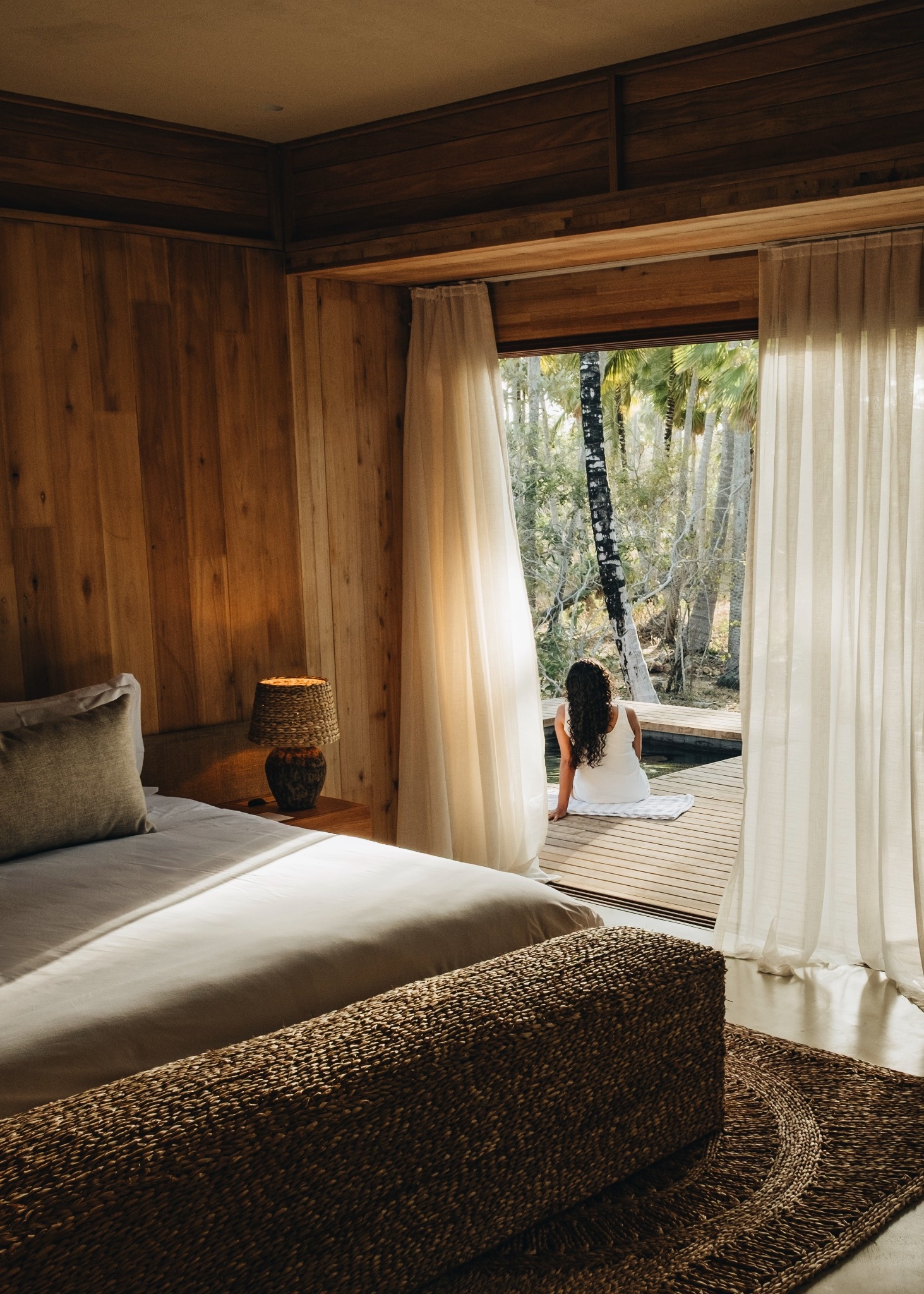
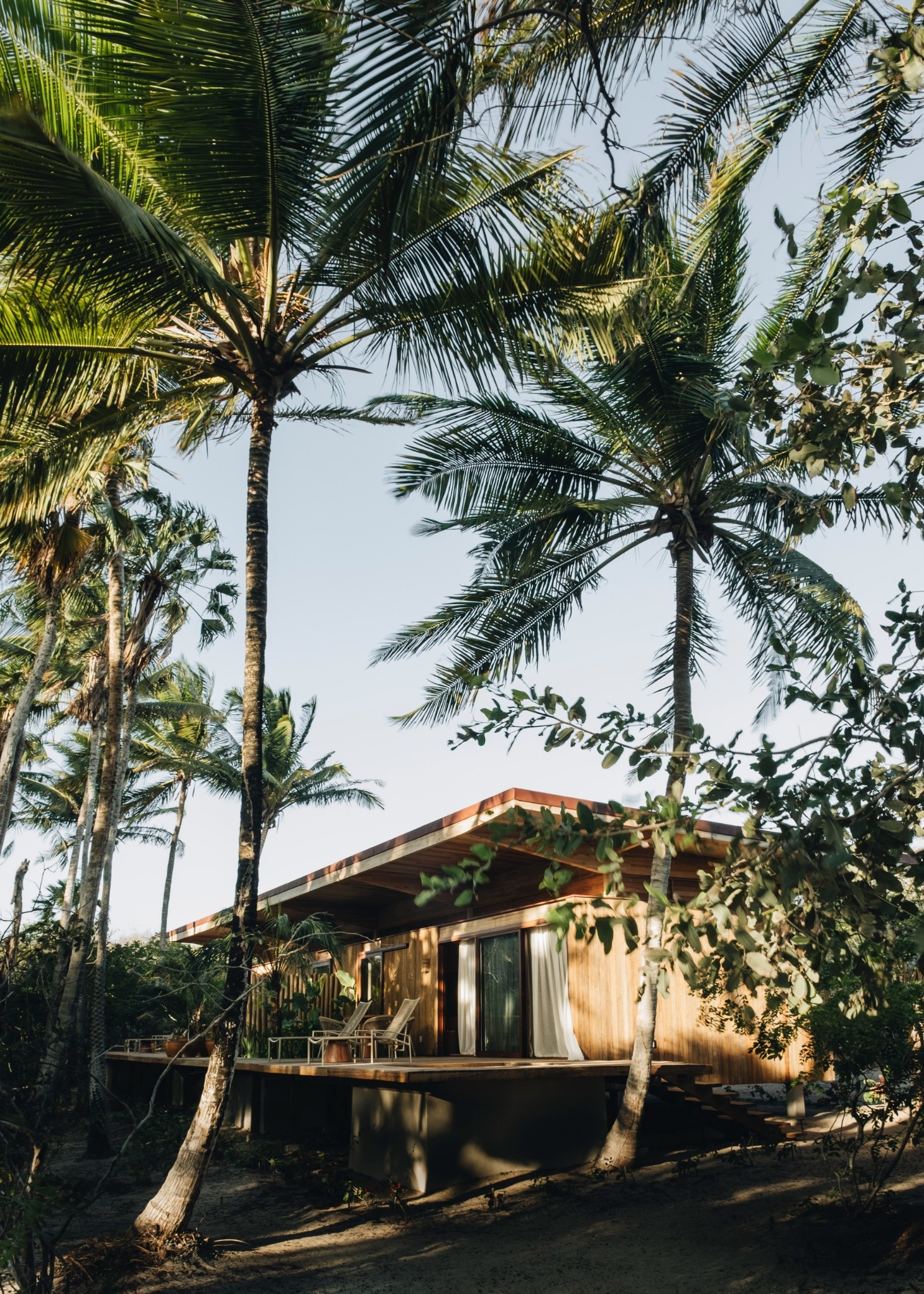
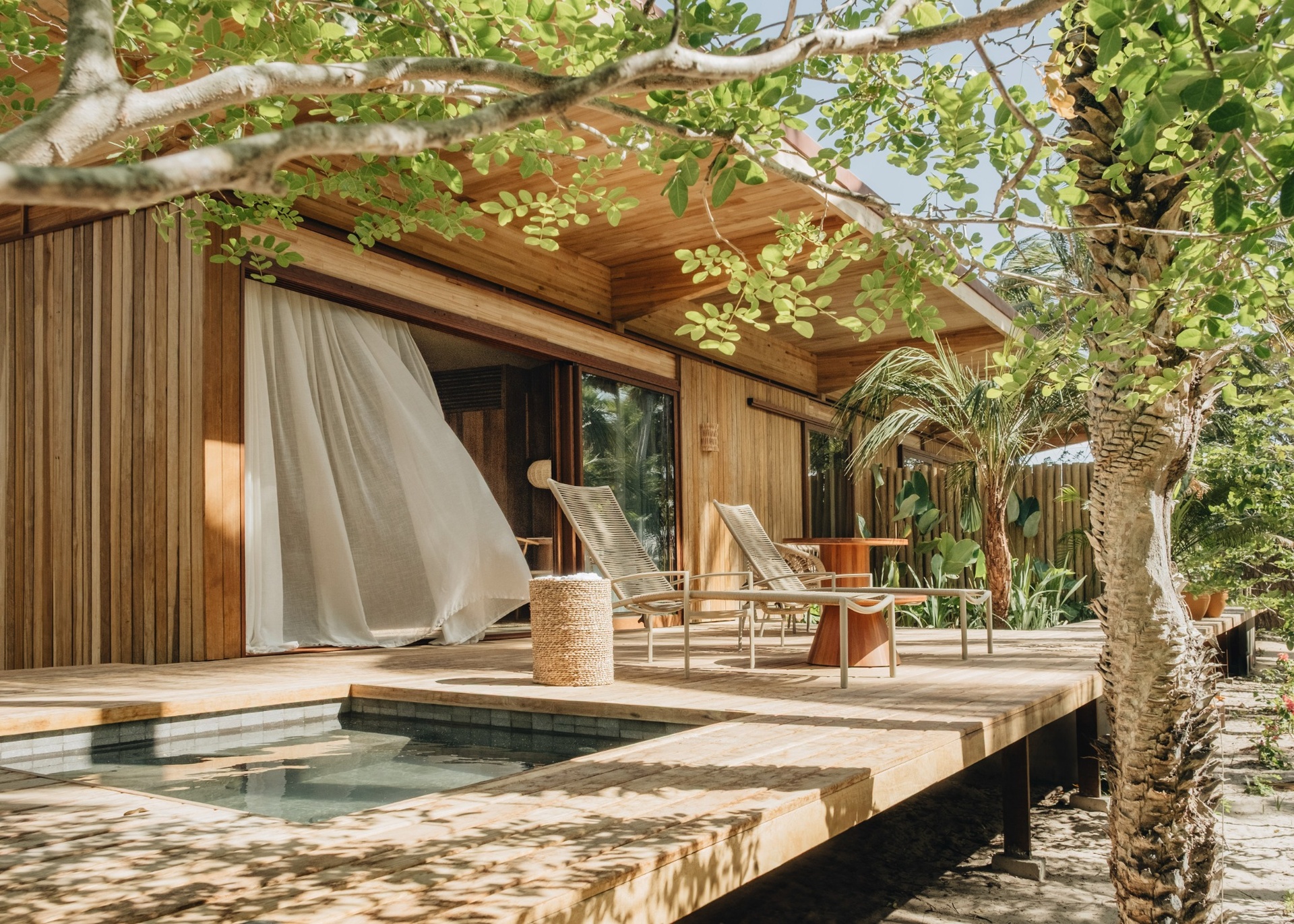
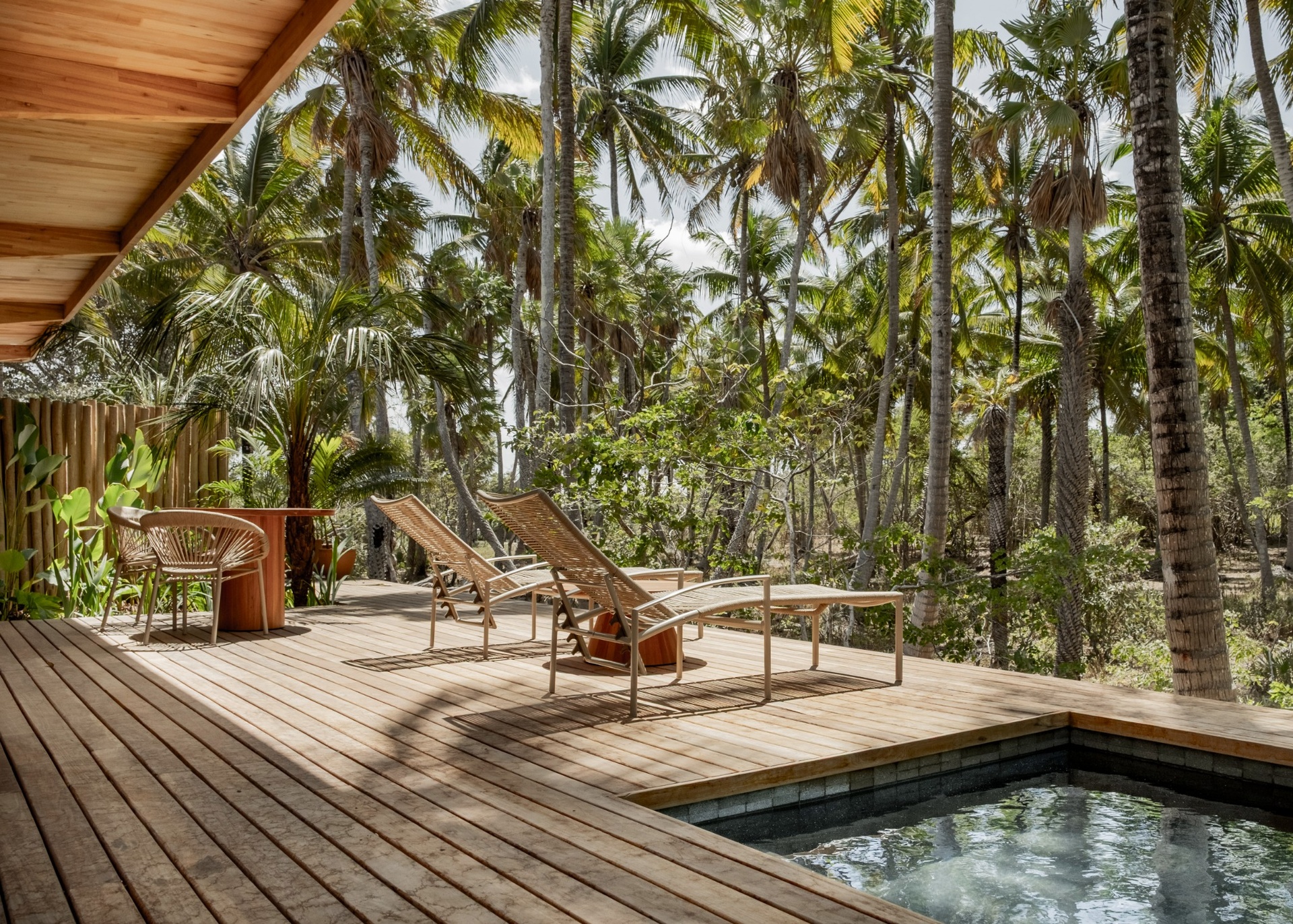
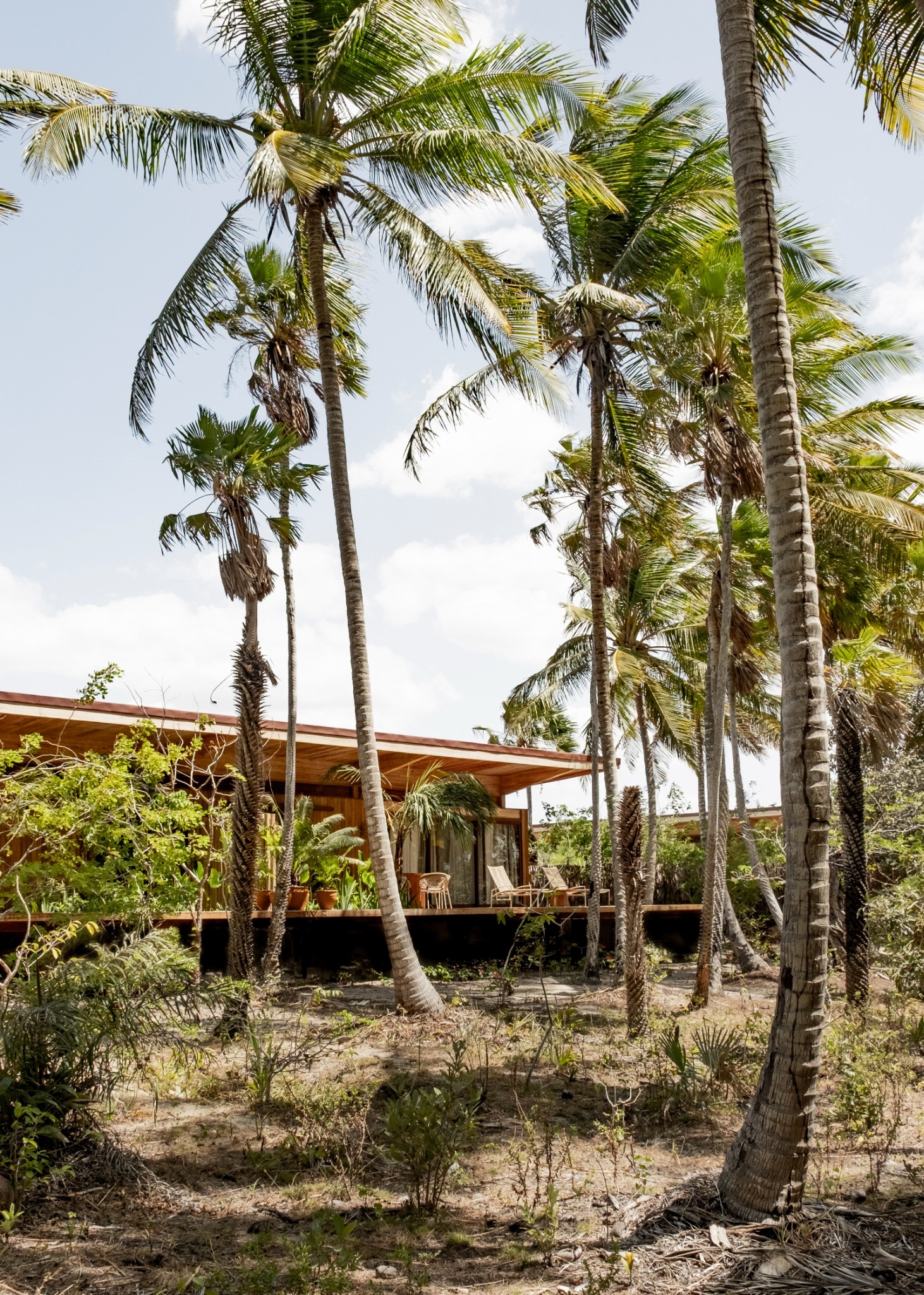
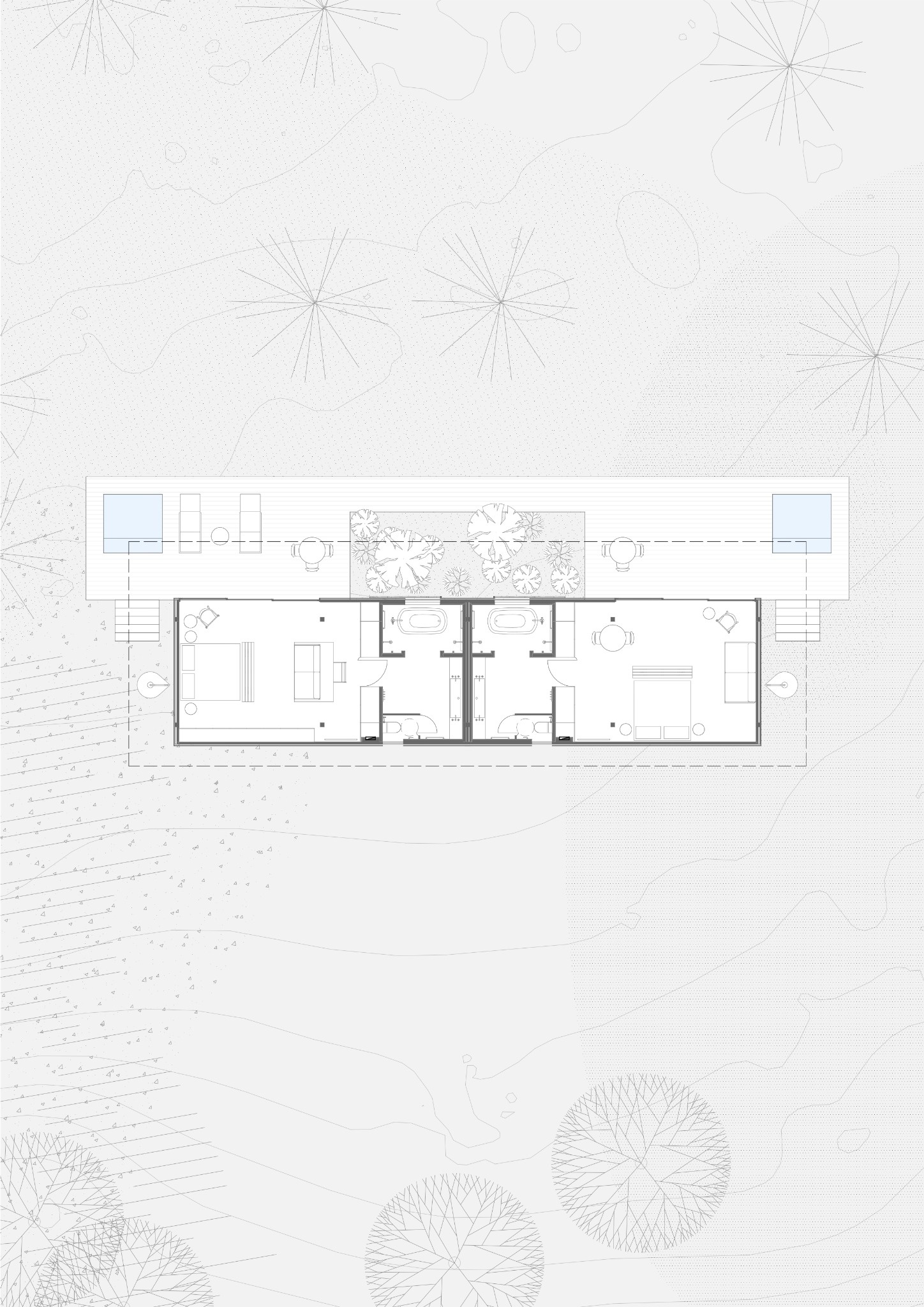
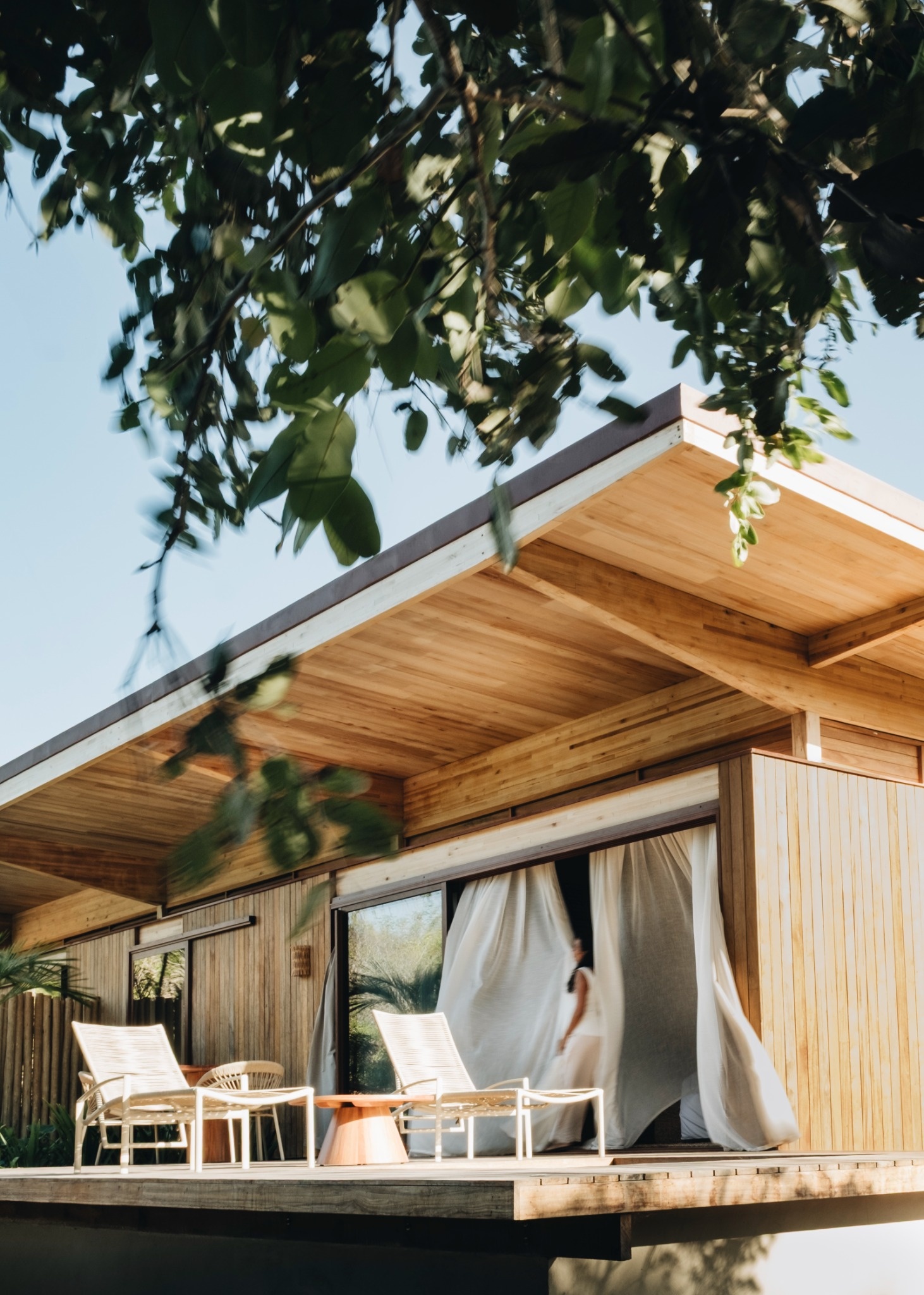
The intervention consists of four bungalows, each approximately 90 sq.m., carefully positioned in existing clearings in order to avoid the removal of native vegetation. Shallow foundations and elevated decks minimize direct interference with the soil and preserve the natural permeability of the land.
The position of each volume was guided by studies of solar orientation and prevailing winds. Cross ventilation, shading and thermal comfort are achieved without relying on mechanical systems, allowing the buildings to work with the climate rather than against it.
Verandas, Overhangs and the Continuity of Landscape
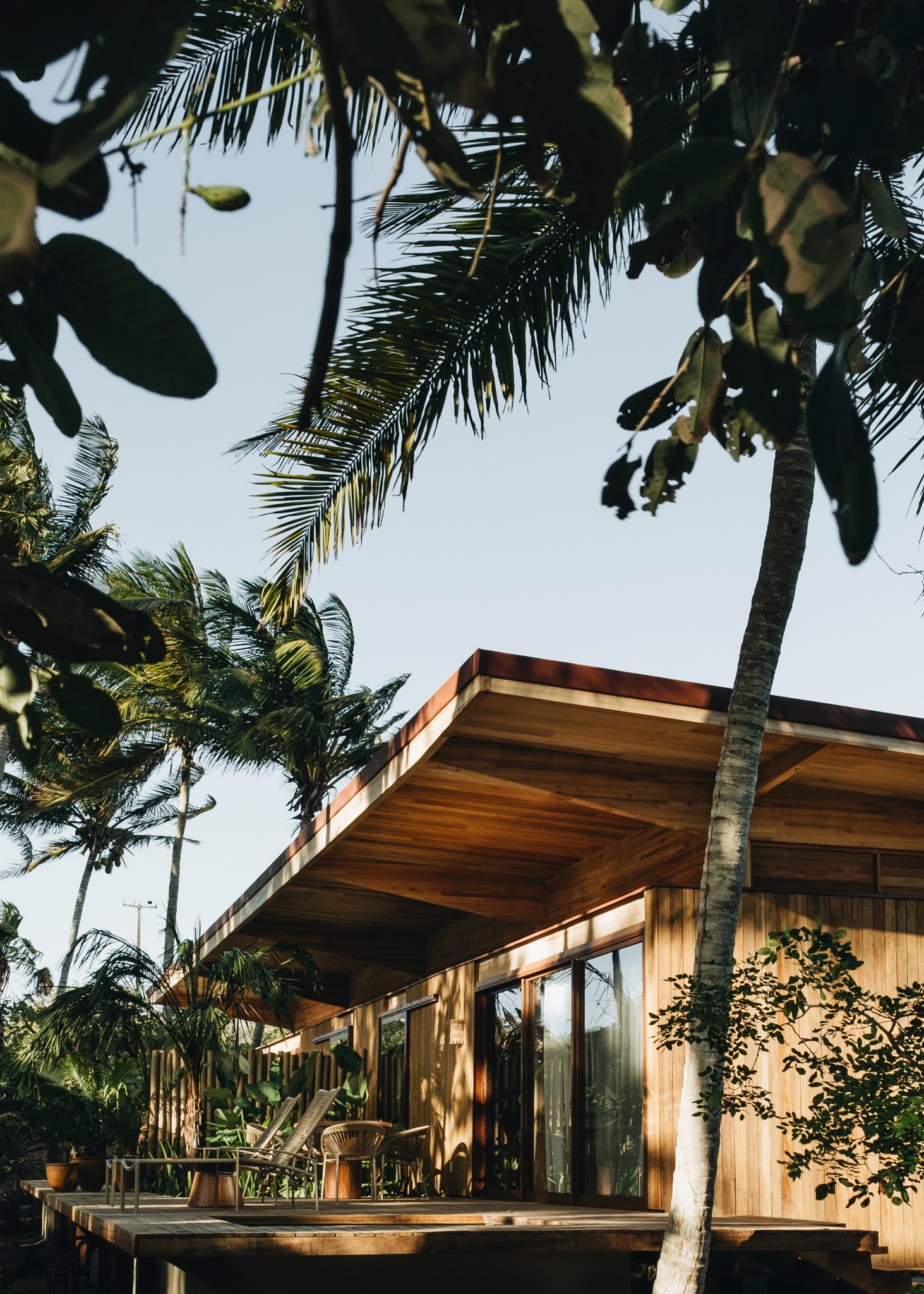
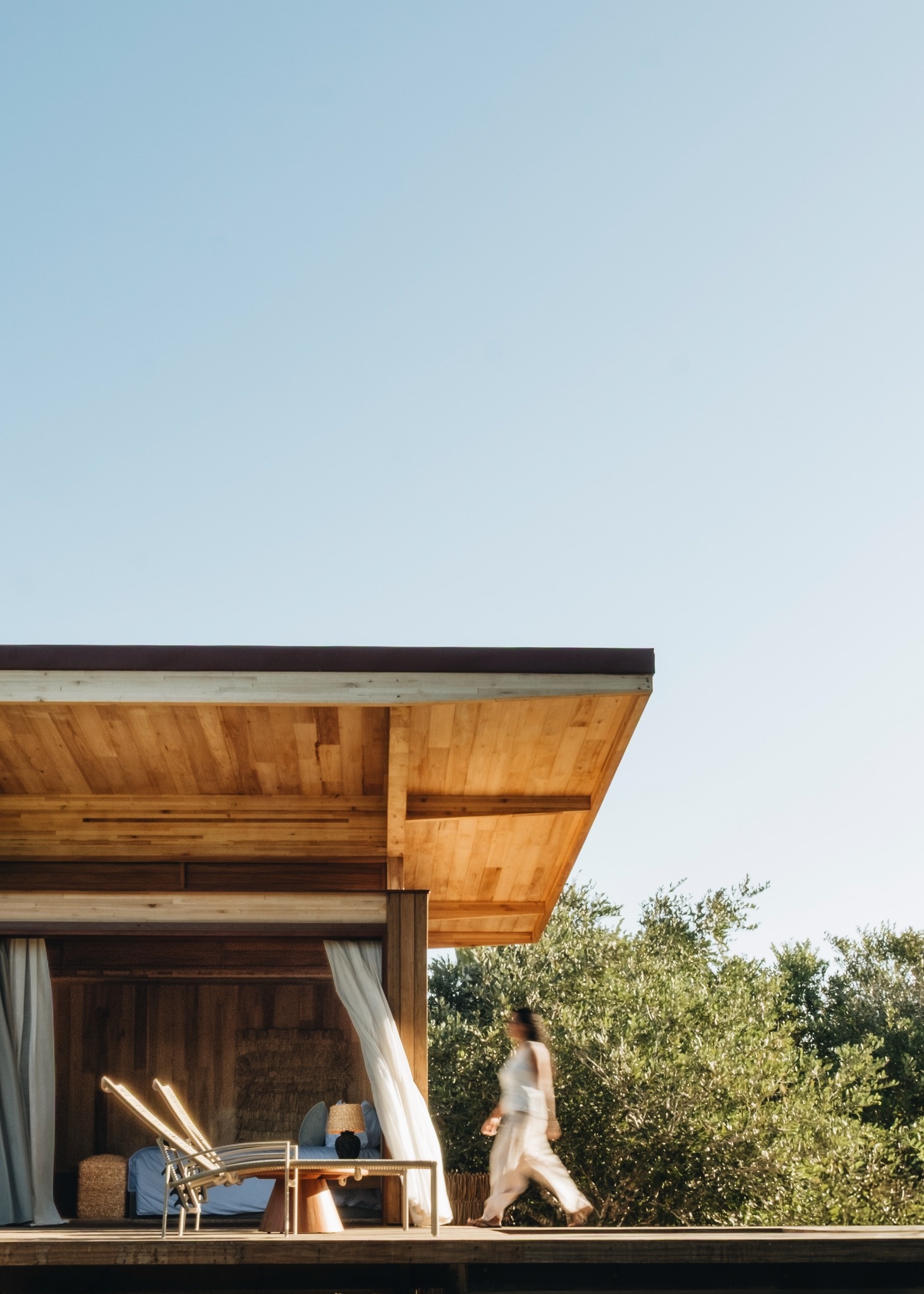
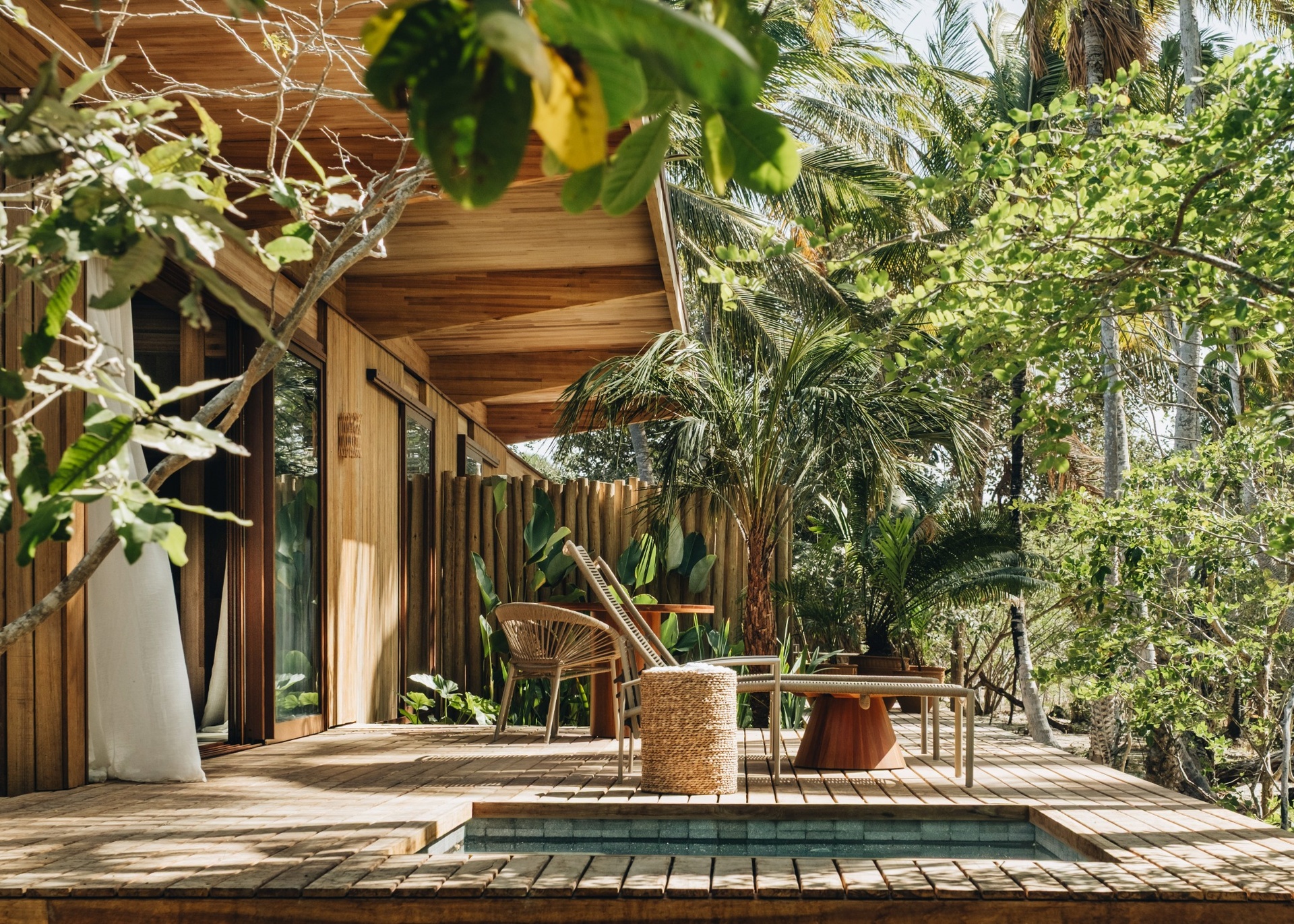
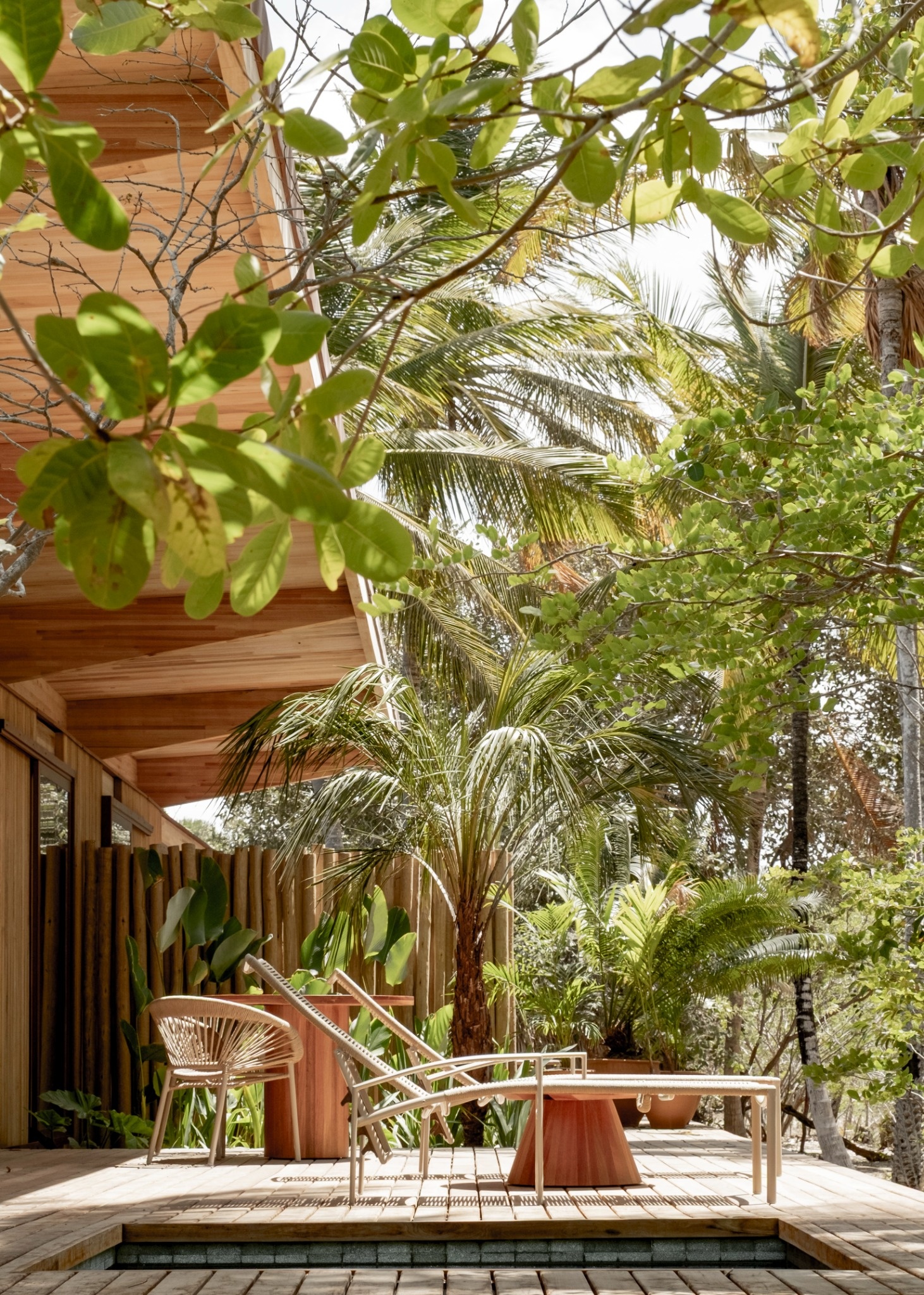
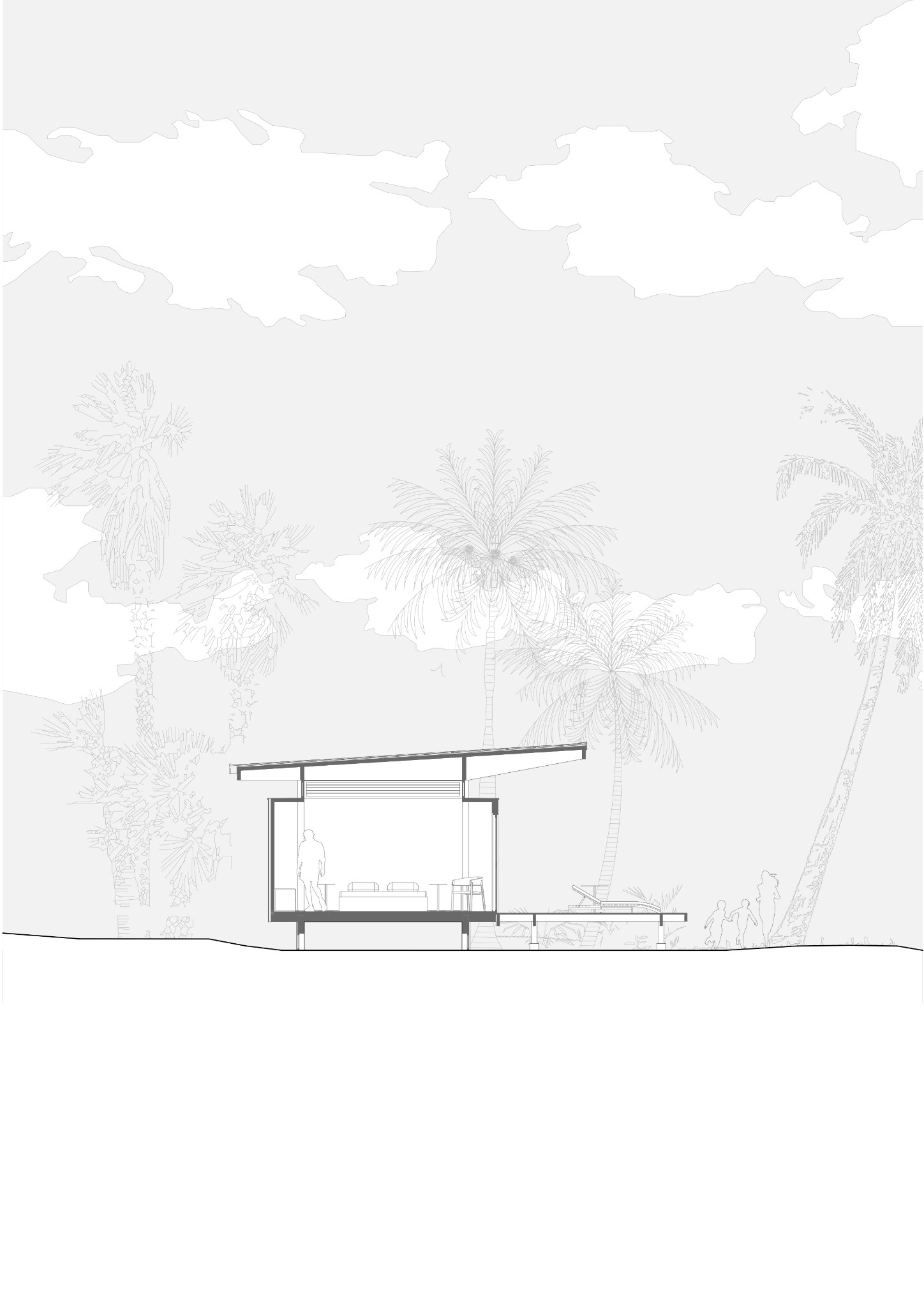
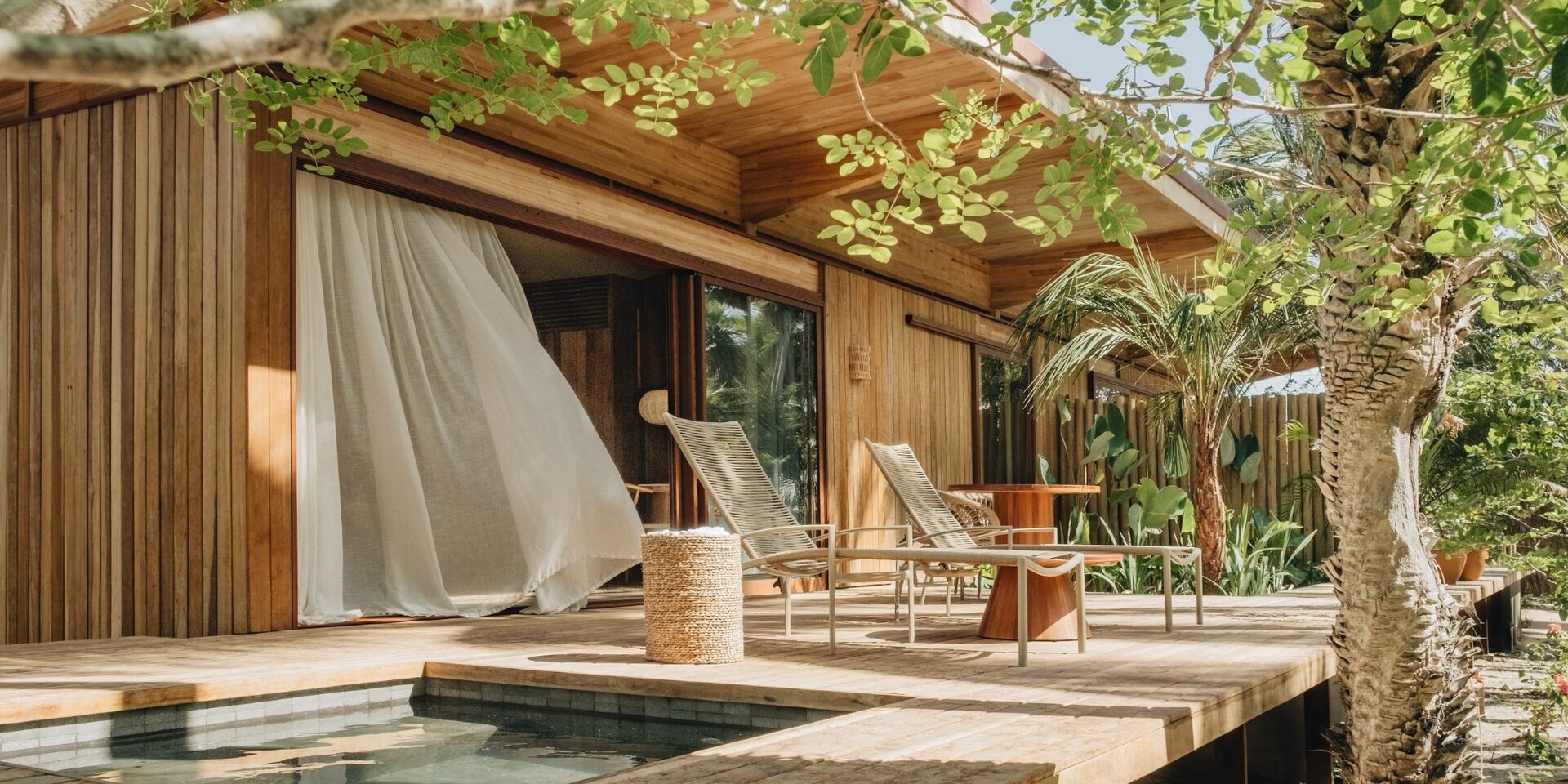
The bungalows are defined by verandas, generous overhangs and large protected openings. These elements establish a continuous relationship between interior and landscape, allowing natural light, shade and air to become structuring parts of the spatial experience.
The architecture avoids a hard boundary between building and site. Instead, it creates shaded thresholds and open edges, where the experience of hospitality is shaped by the surrounding vegetation, the coastal climate and the slower rhythm of the land.
Modular BV: An Industrialized Timber System
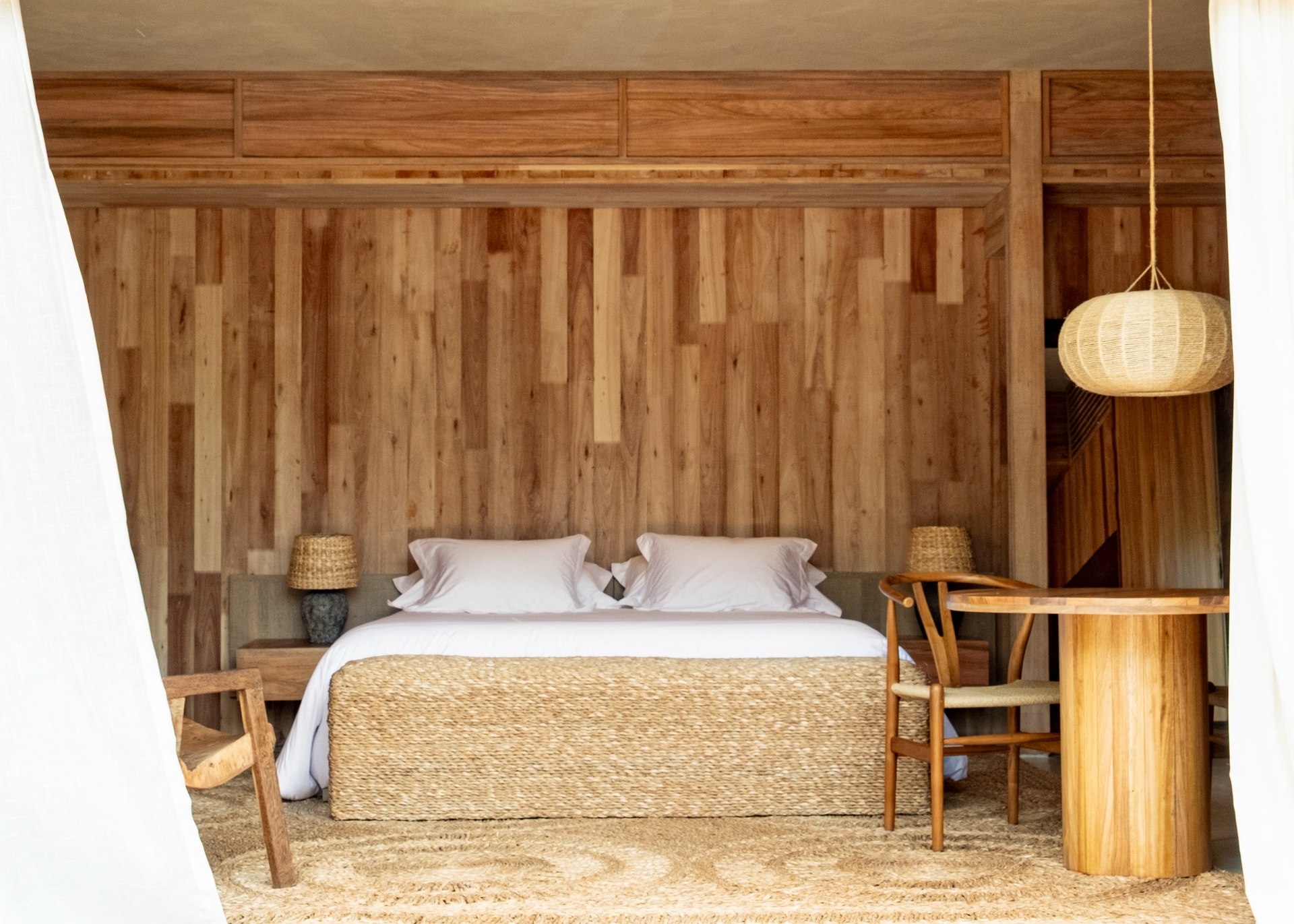
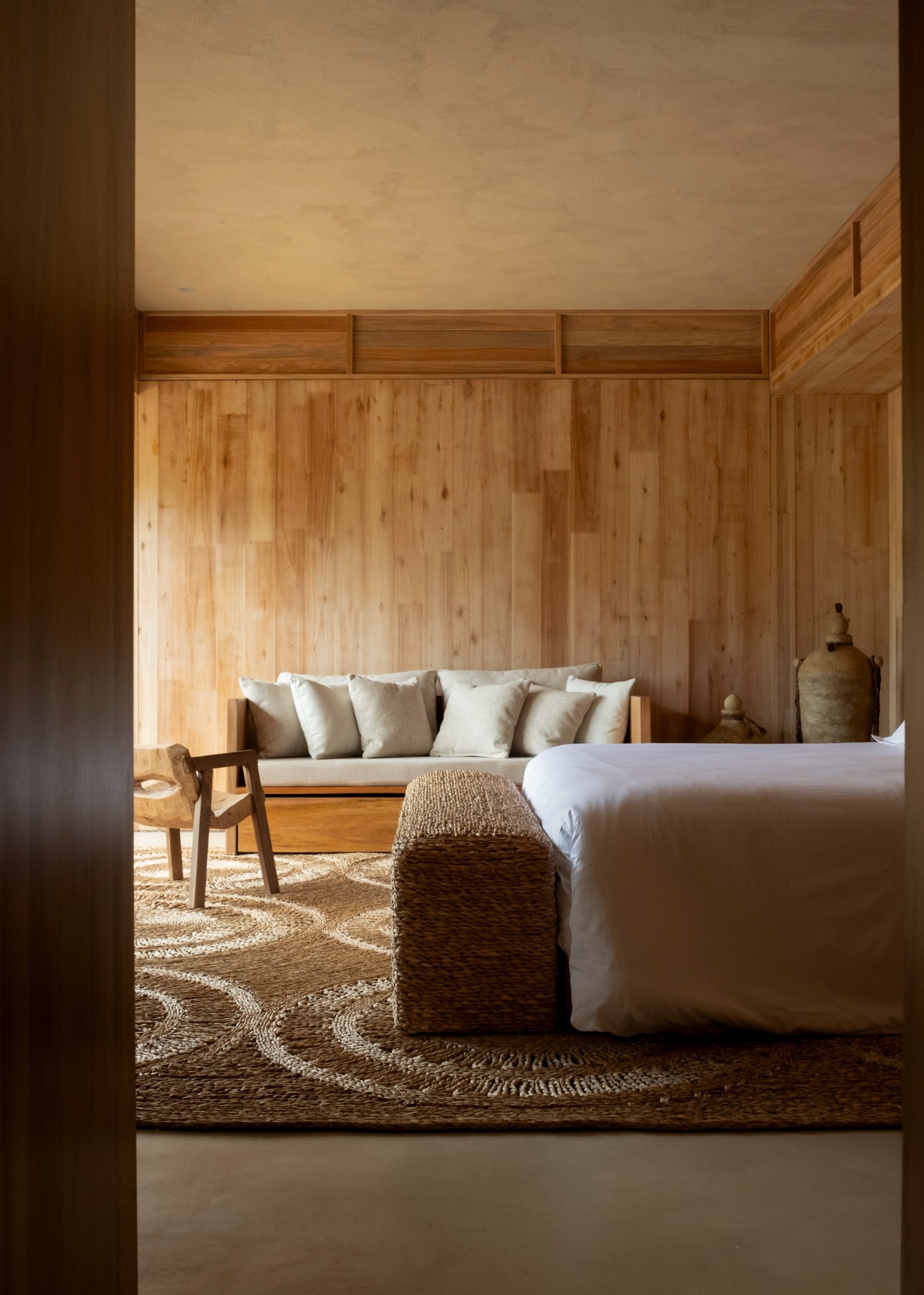
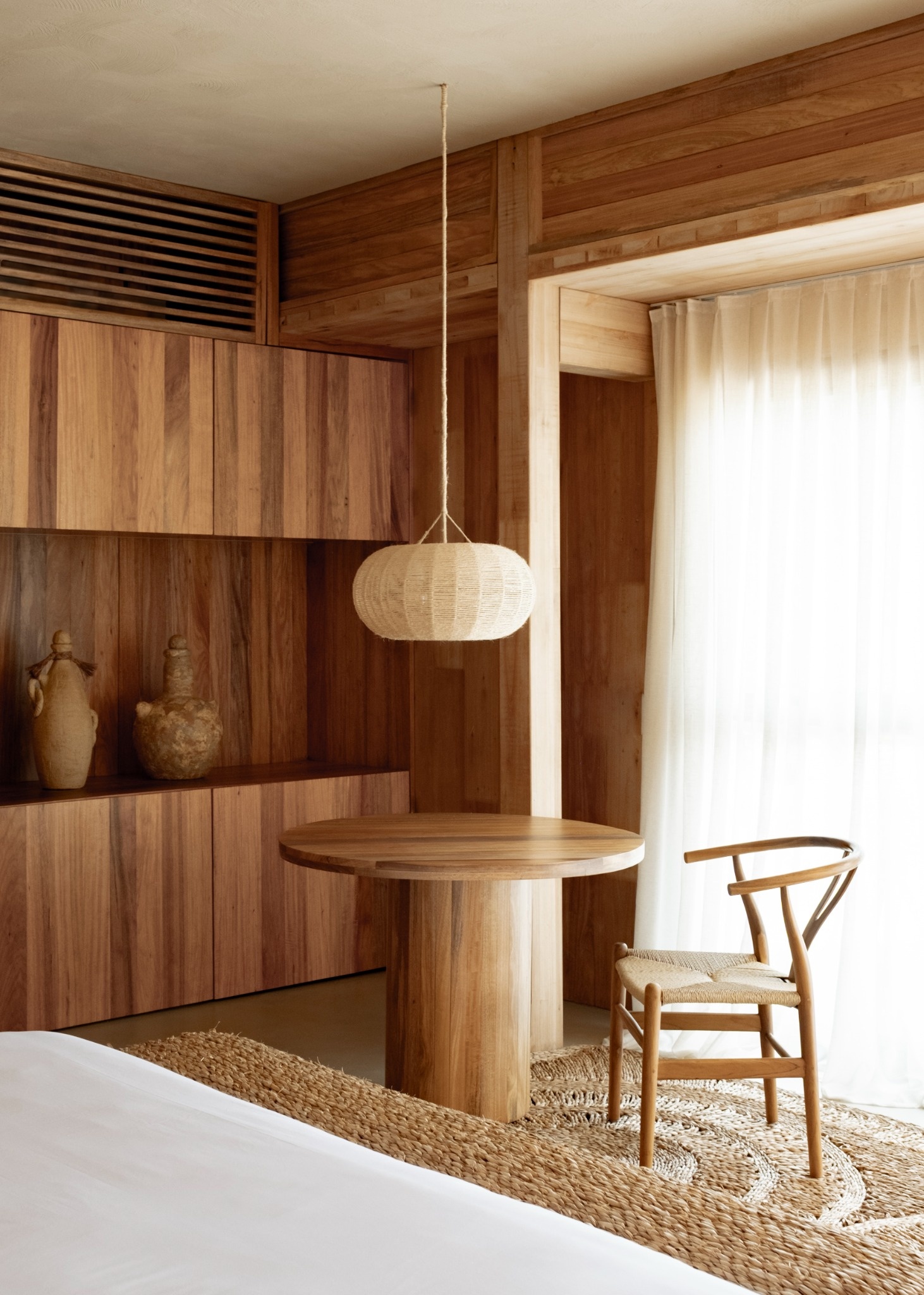
The bungalows were built using Modular BV, a construction system developed by UNA barbara e valentim in partnership with the Brazilian engineered timber manufacturer Crosslam, and assembled on site by Abaeté Construtora e Incorporadora. The system is based on prefabricated modules made of reforested eucalyptus CLT, produced in a controlled factory environment and dry-assembled on site.
For a project located in a remote and environmentally sensitive area, this system offers clear advantages. It increases control over cost, time and environmental impact, while reducing waste and shortening the construction process compared to traditional high-end building methods.
Industrial Precision and Architectural Authorship
At Casa Daia, prefabrication is not treated as a limitation. By combining architectural authorship with industrial precision, the project proposes a model in which technology supports the architectural intention rather than replacing it.
The result is a modular timber system capable of responding to the environmental, logistical and cultural conditions of the site. Casa Daia is the second built example using the Modular BV system, following Modular Bahia, a single-family residence on the southern coast of Bahia that applied the same principles of independent timber structure, CLT enclosures, cross ventilation, shading and integration with the landscape.
Landscape, Community and Low-Impact Practices
The siting of the bungalows begins with the recognition of the environmental singularity of Barra dos Remédios, where multiple ecosystems and traditional ways of life coexist within a landscape that has resisted the passage of time. Before construction began, an extensive environmental zoning study was carried out, in alignment with the principles of regenerative tourism: minimal impact, integration with the landscape, appreciation of local culture and respect for the time of the land.
Casa Daia also maintains an ongoing dialogue with neighboring communities such as Pescada Nova and Praia Nova. The project prioritizes local labor, supports social initiatives and adopts low-impact practices, including rainwater harvesting, photovoltaic energy, waste management, agroforestry and the reduction of disposable plastics.
Architecture, Landscape and Community in Continuity
In a context marked by environmental and social transformation, Casa Daia positions itself as a sensitive and tangible alternative for contemporary tourism. The bungalows show how hospitality architecture can engage with remote territories without imposing itself on them.
Through modular timber construction, careful siting and a commitment to the surrounding community, Casa Daia articulates architecture, landscape and local culture in a relationship of continuity.