Wenatchee River Cabin by Wittman Estes in Washington
Architecture:
Photography:

A Compact Cabin Between Forest and River
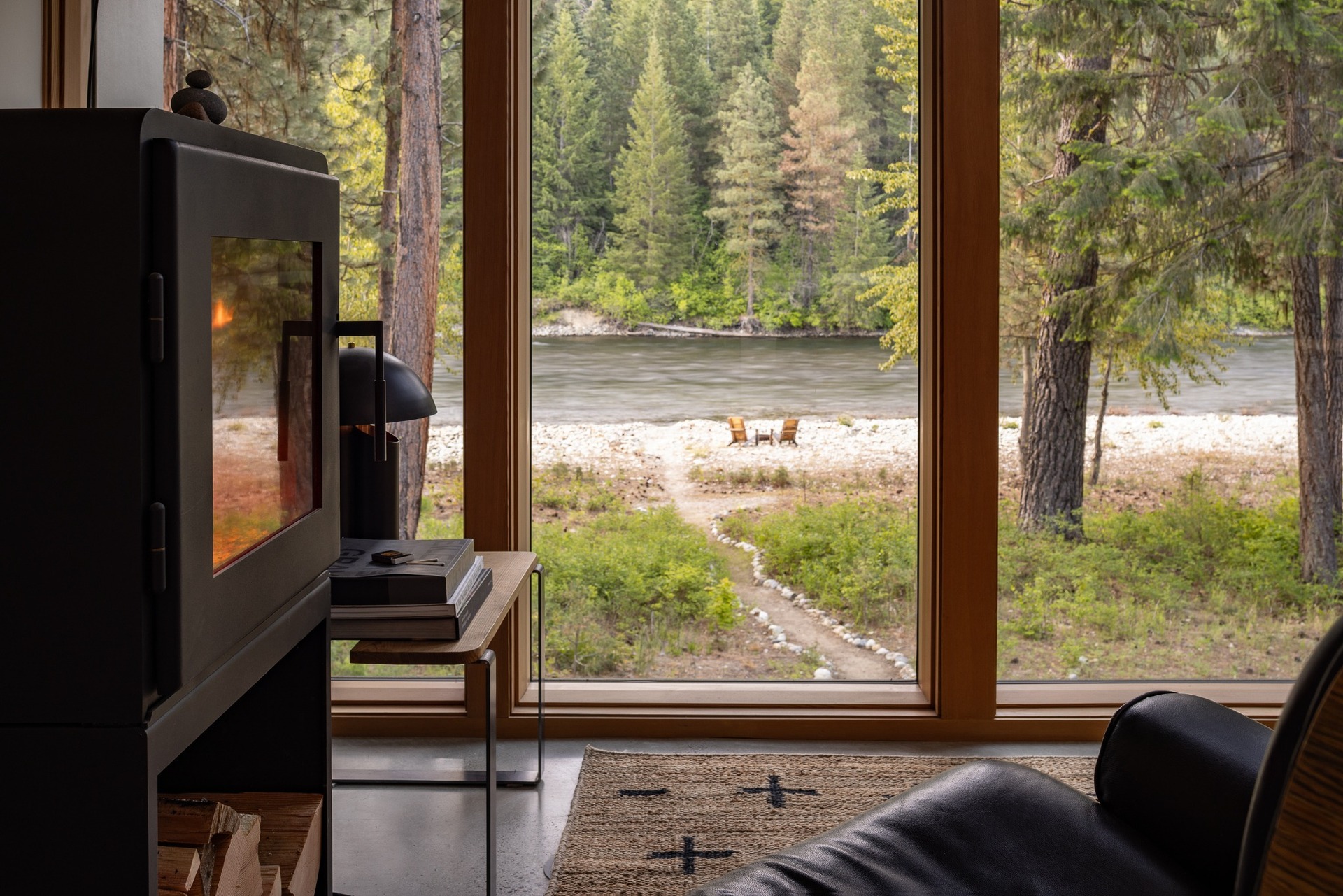
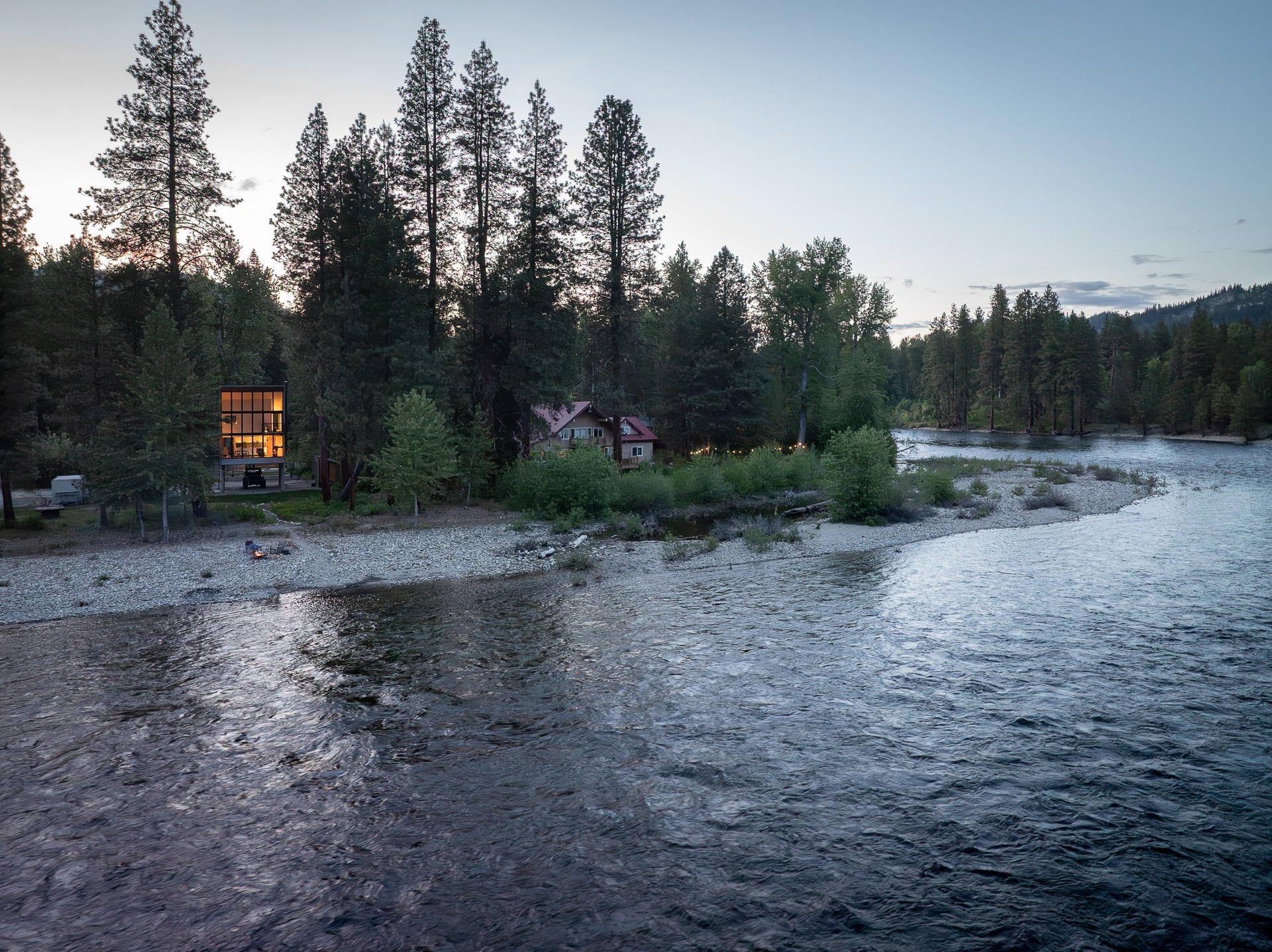
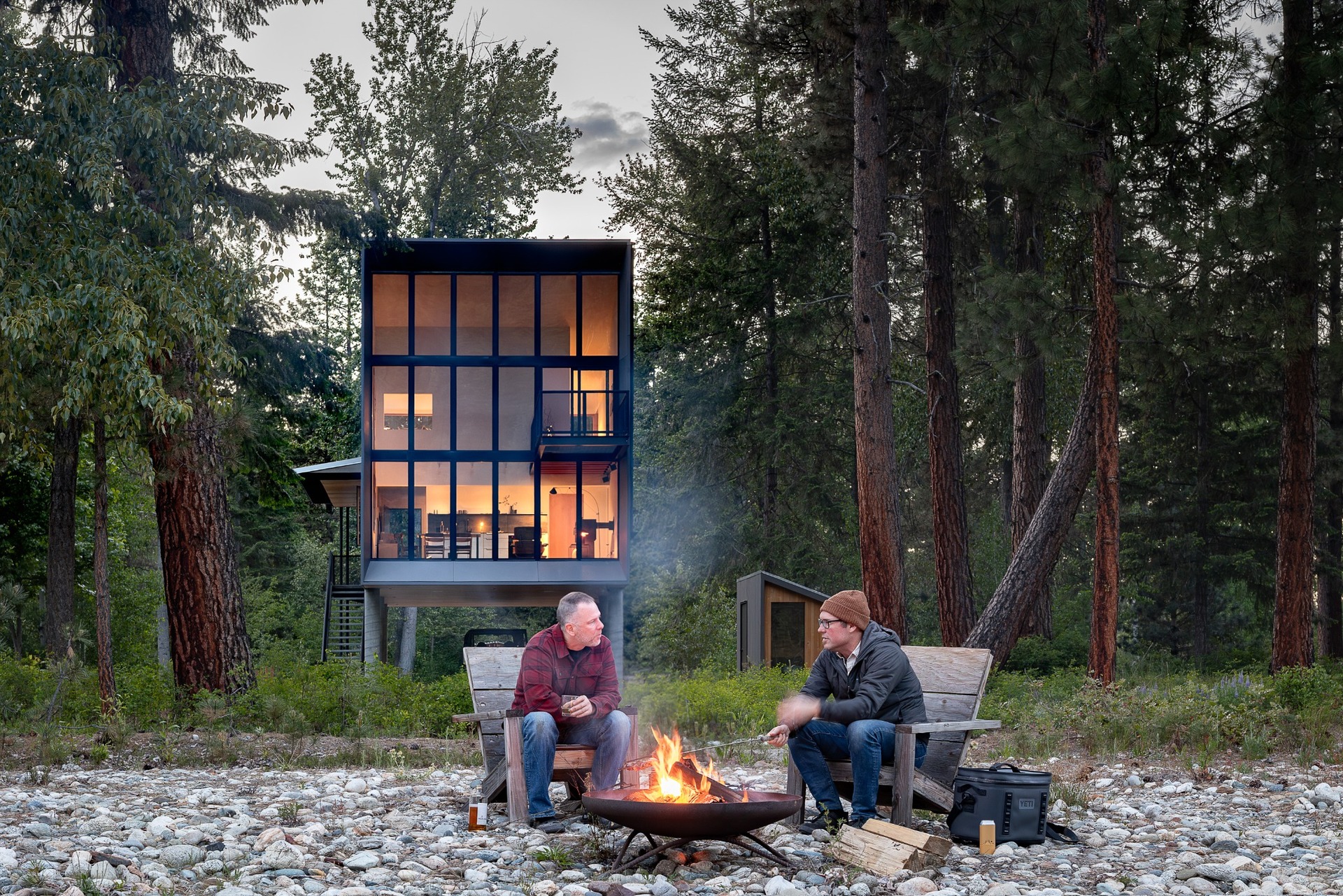
Located in Plain, Washington, on the edge of the Okanogan-Wenatchee National Forest, Wenatchee River Cabin by Wittman Estes was conceived as a small retreat for outdoor life. The client had owned the nearly half-acre property for years, using it as a base camp for adventures in the surrounding landscape. After a decade of camping on site, often with friends, he decided to build a cabin that would keep the focus on the forest and the river.
The project began as a weekend retreat, but its use changed during the design and construction process. As remote work became part of everyday life, the owner started spending more time on the property and eventually chose to live there full-time once the cabin was complete.
Living Small, Living Well
With a footprint of 746 sq ft, the one-bedroom cabin is deliberately modest. Its compactness reflects both site constraints and a desire for a simpler way of living, where everyday life is shaped less by possessions and more by experience.
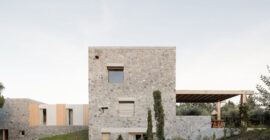
The owner’s direct involvement in construction was central to the project. This reinforced the need for a clear and minimal design, built with durable materials and simple architectural moves. Concrete, steel, cedar and restrained interior finishes give the cabin a sense of permanence while allowing nature, light and artwork to remain the dominant presence.
Elevated Above the Floodplain
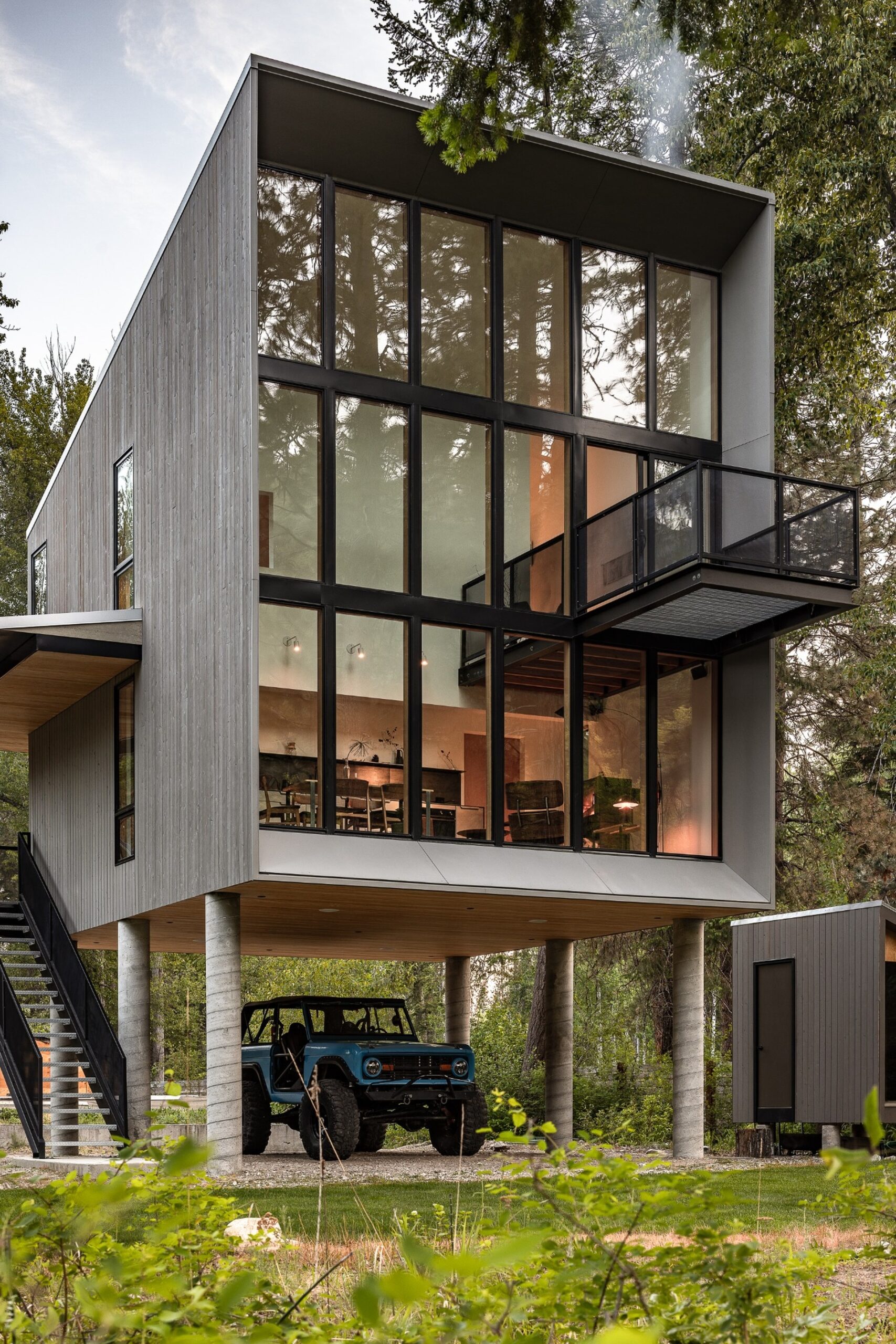
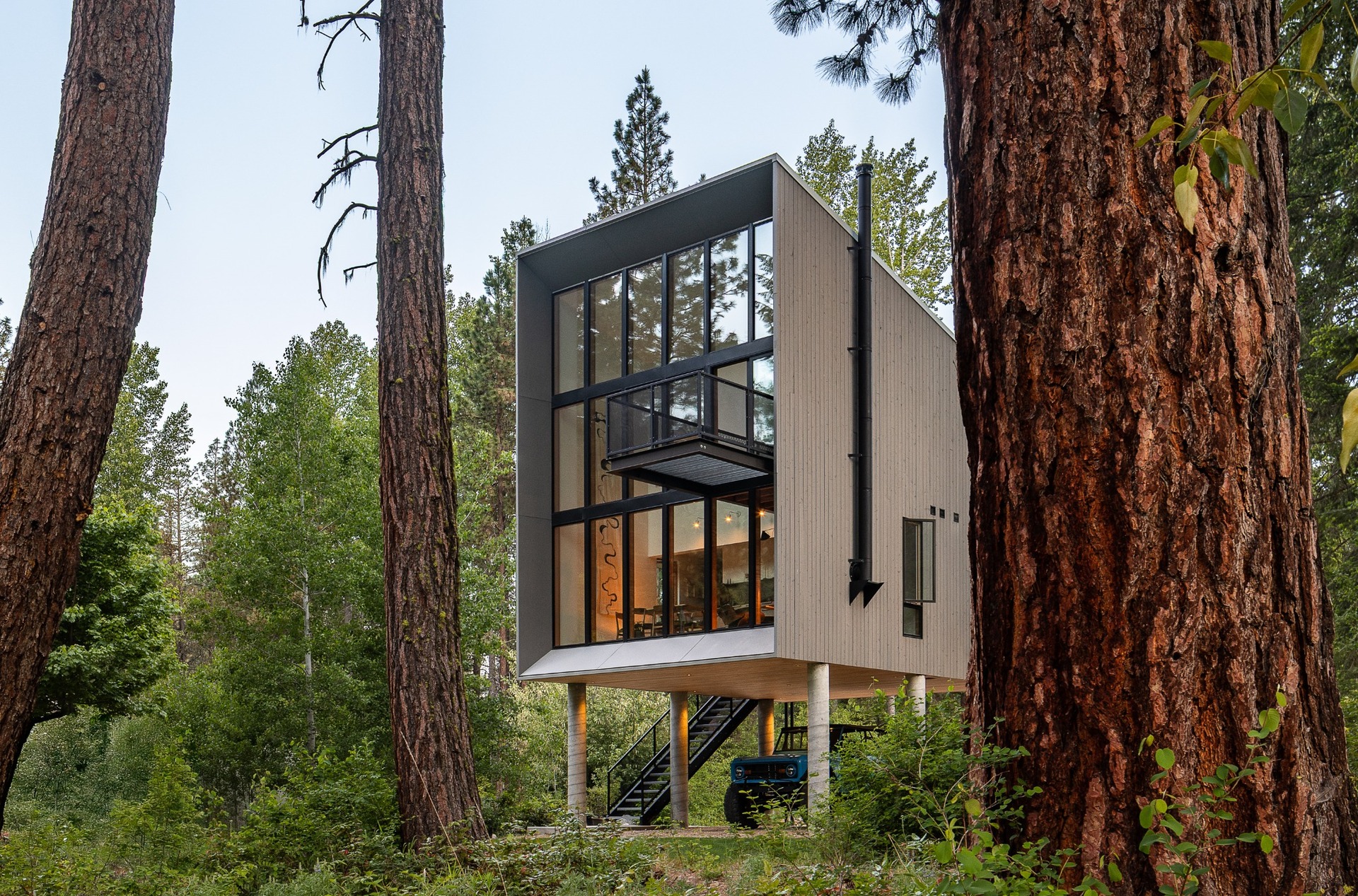
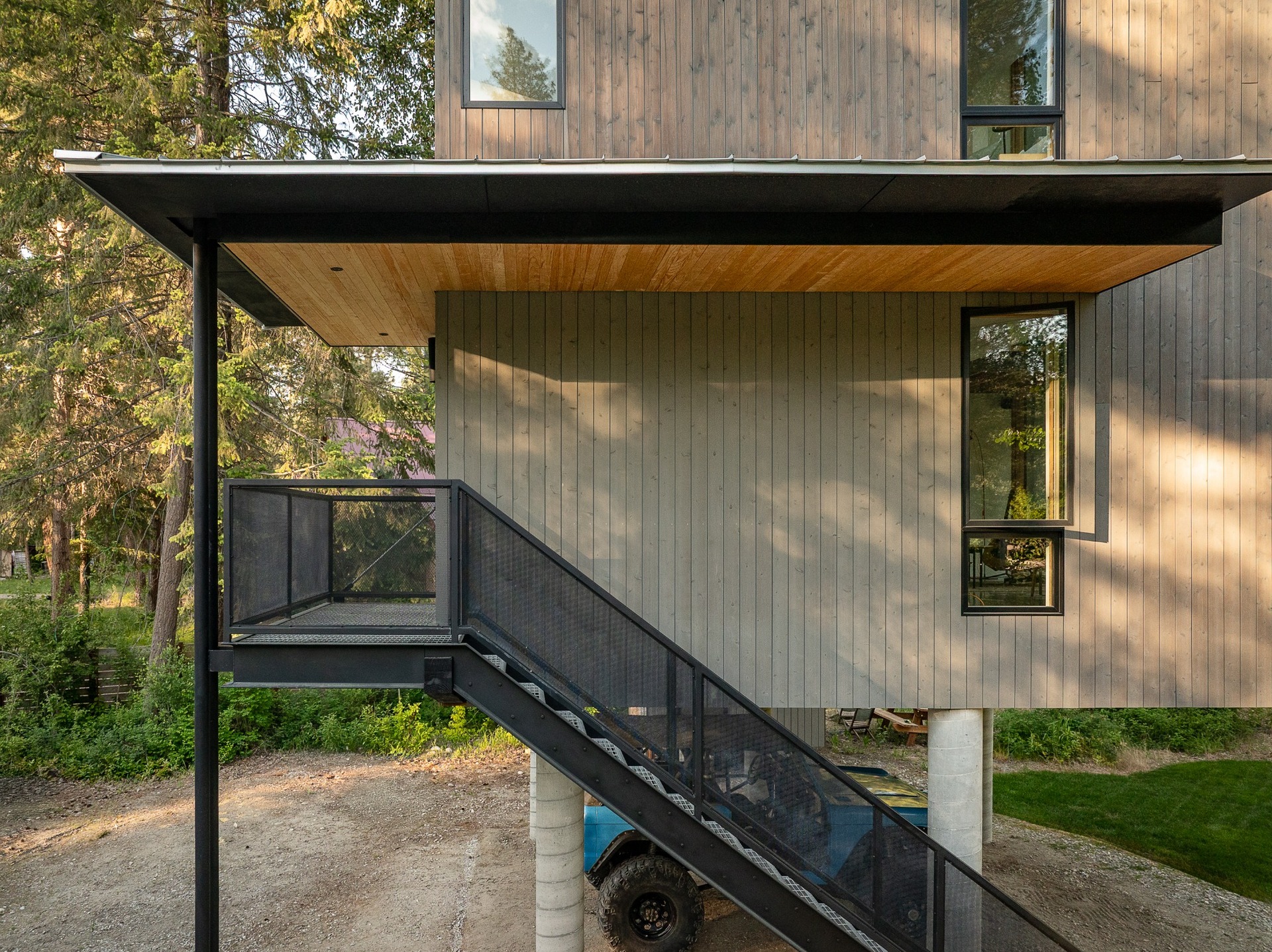
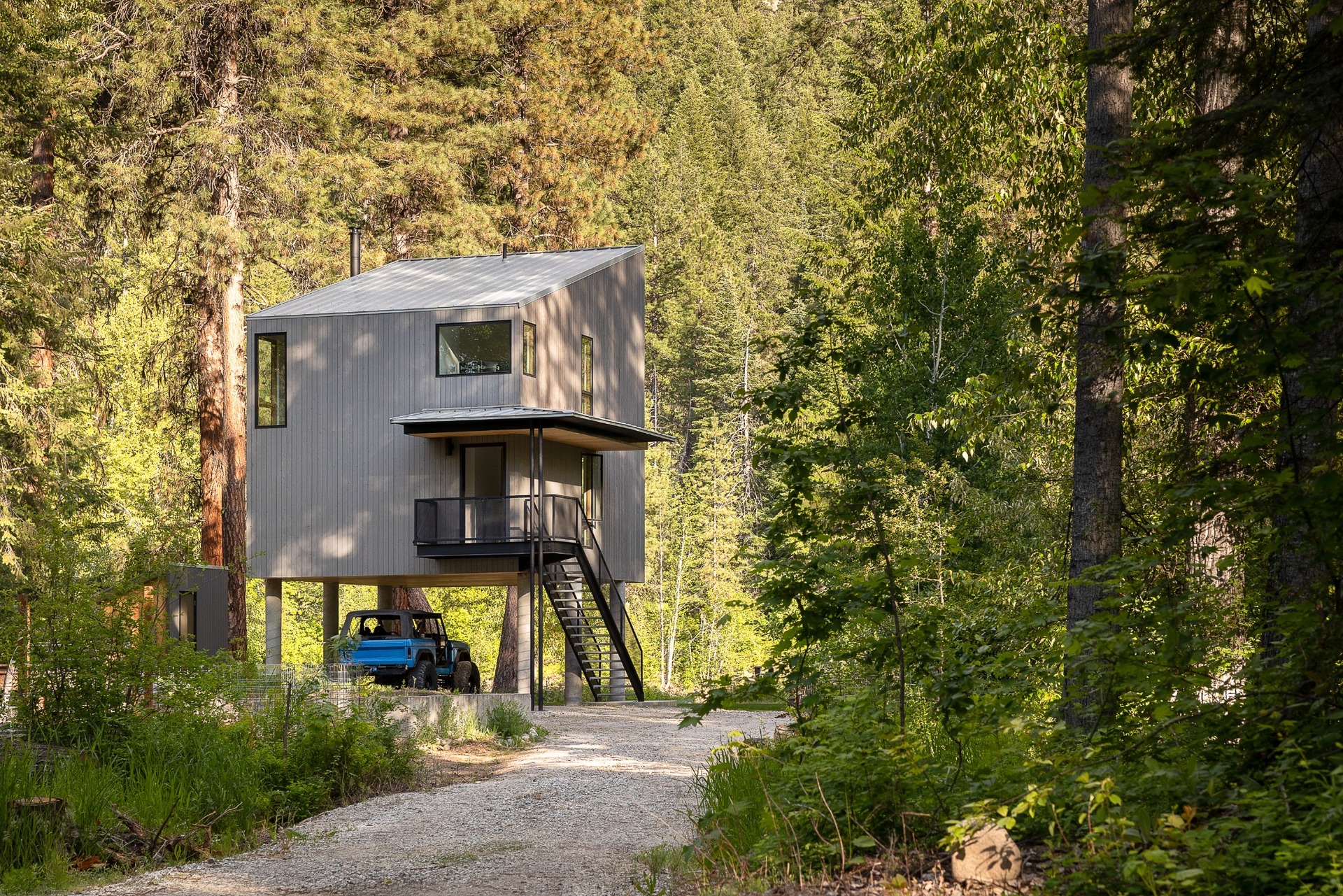
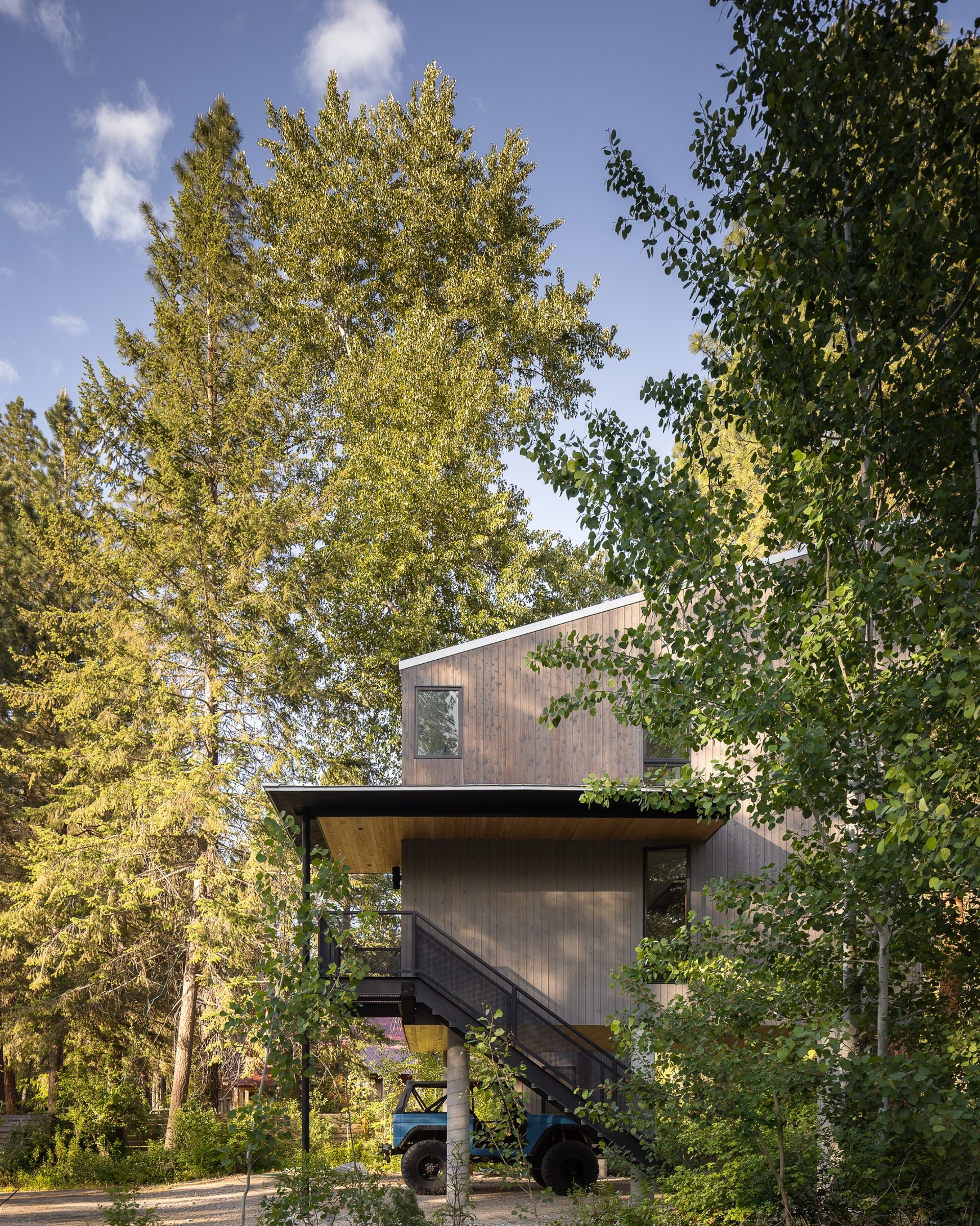
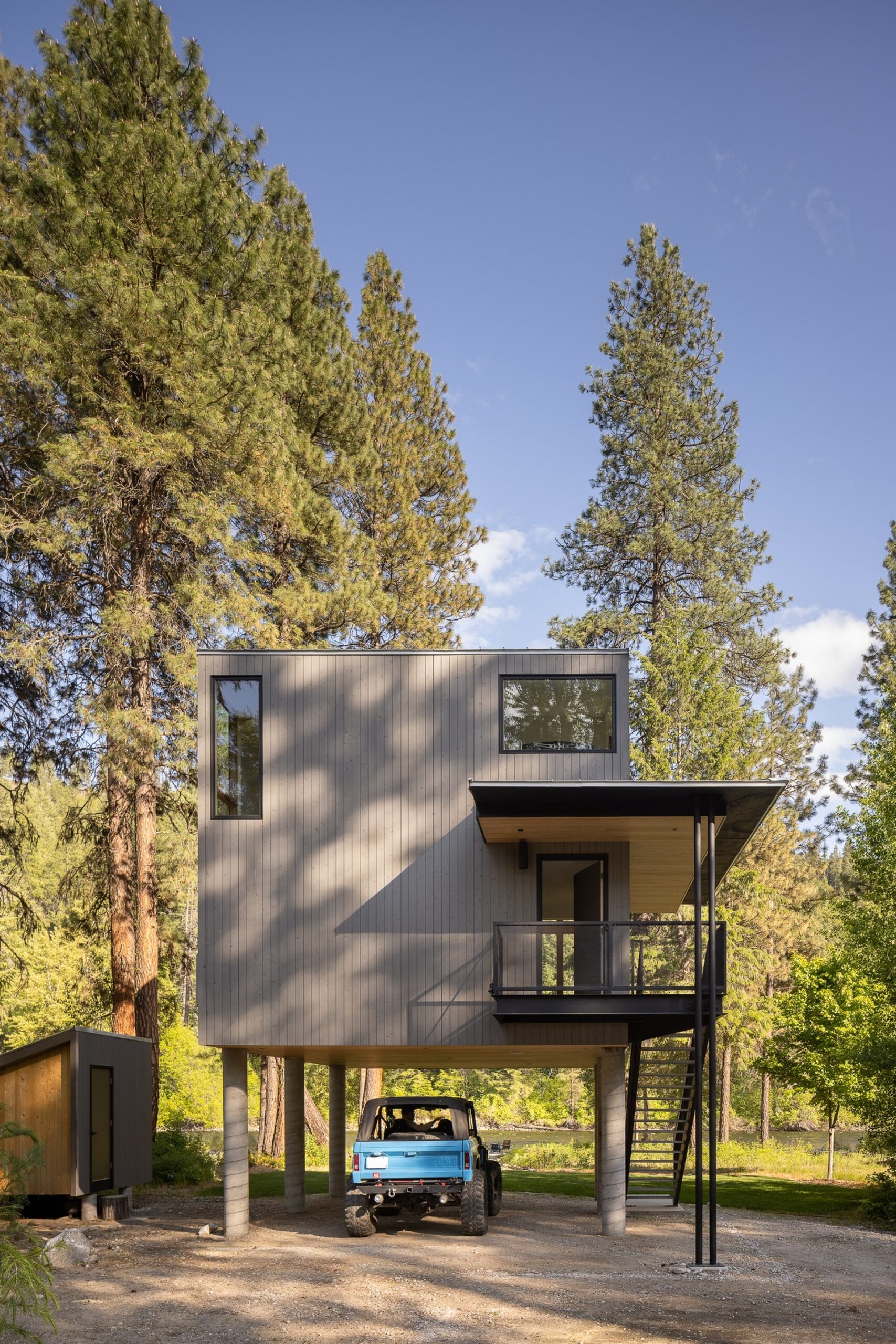
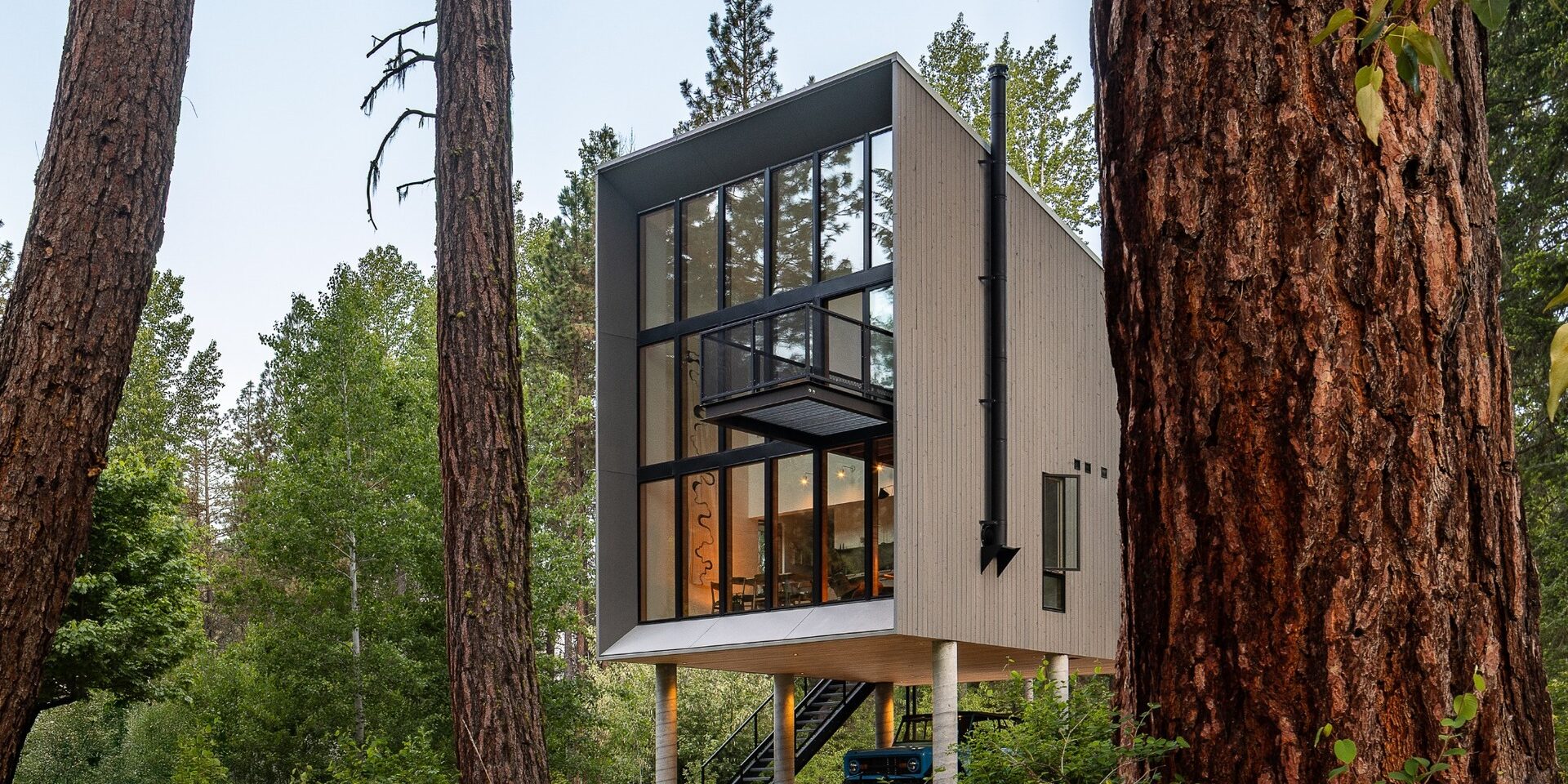
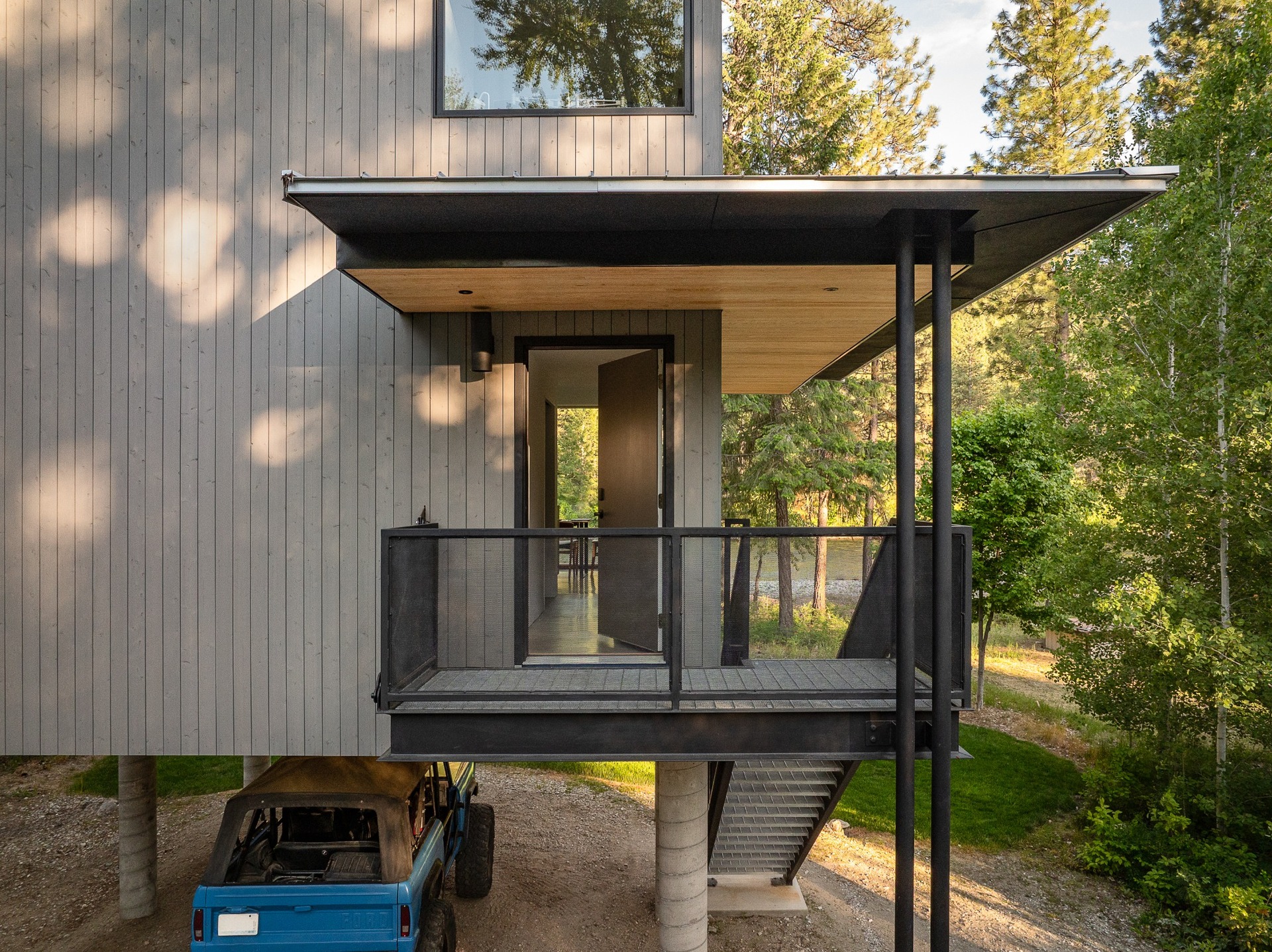
Because the cabin sits within the river’s floodplain, the main living level is raised 10 ft above the ground on six concrete columns. This resilient strategy protects the home from seasonal flooding while minimizing its footprint on the site.
The elevated volume also creates a covered ground-level space beneath the cabin. This area functions as sheltered parking and a working space where the owner can maintain his vintage Bronco, protected from rain and snow. In this way, the floodplain constraint becomes part of the daily use and character of the building.
Three Levels and One Large Window Wall
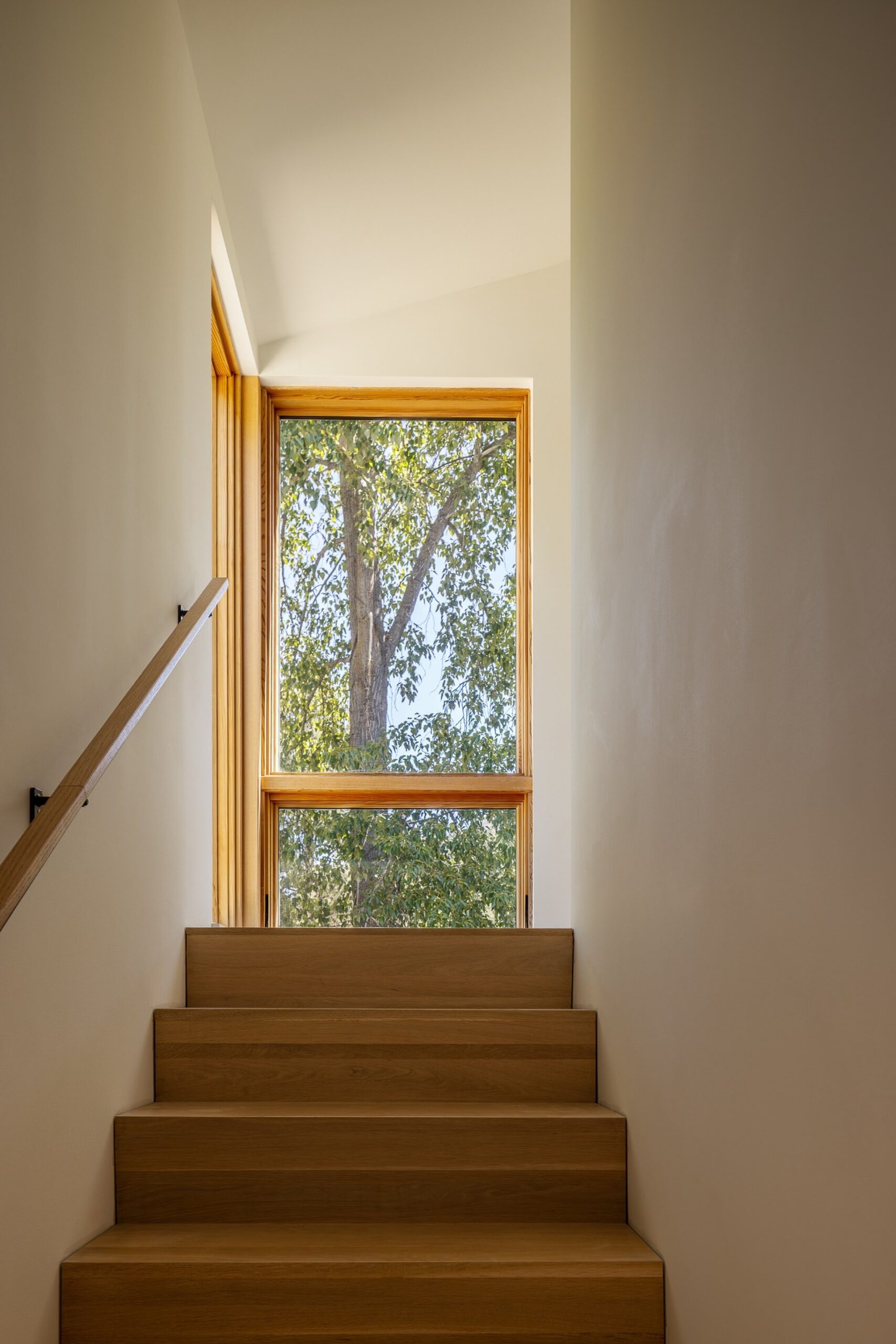
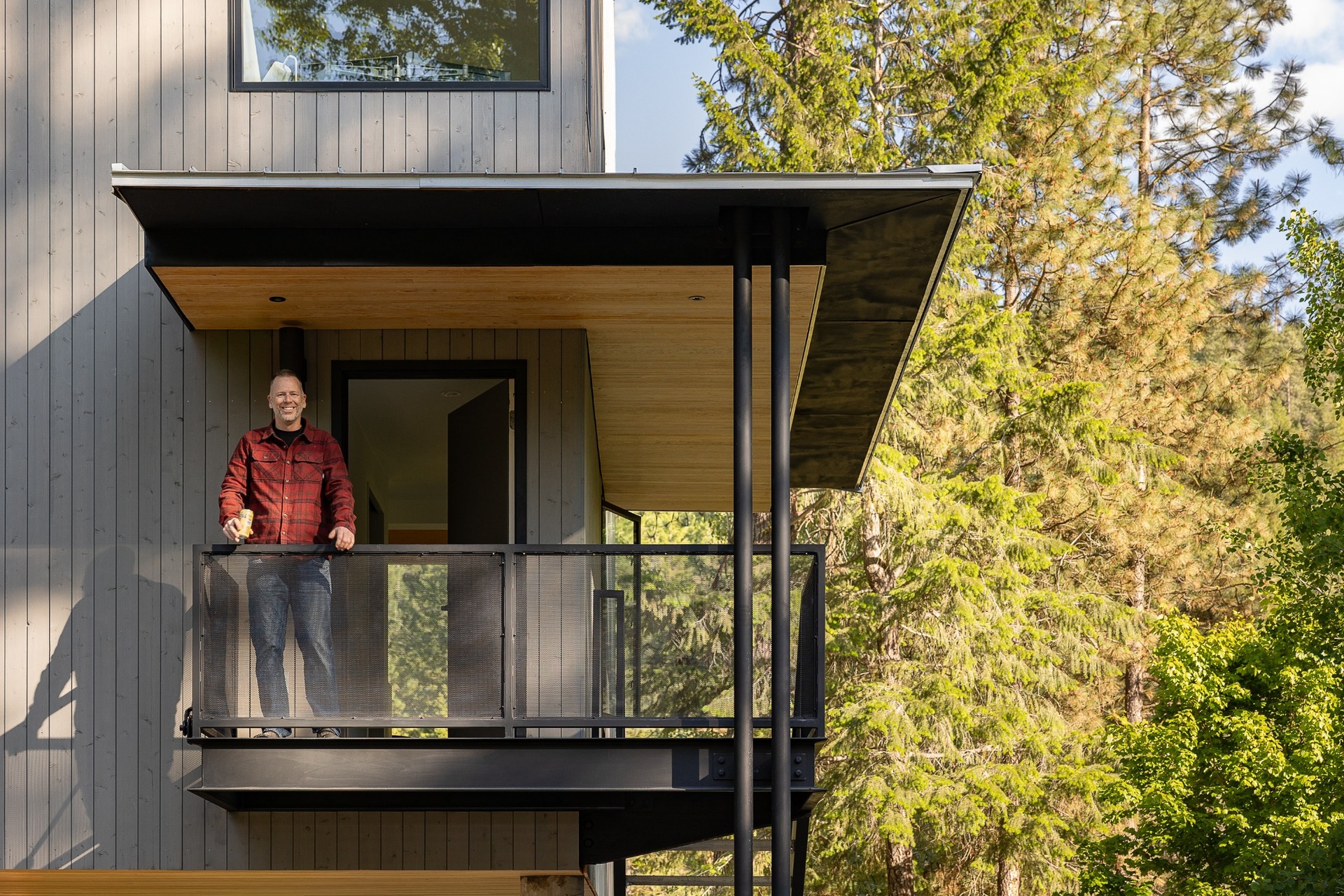
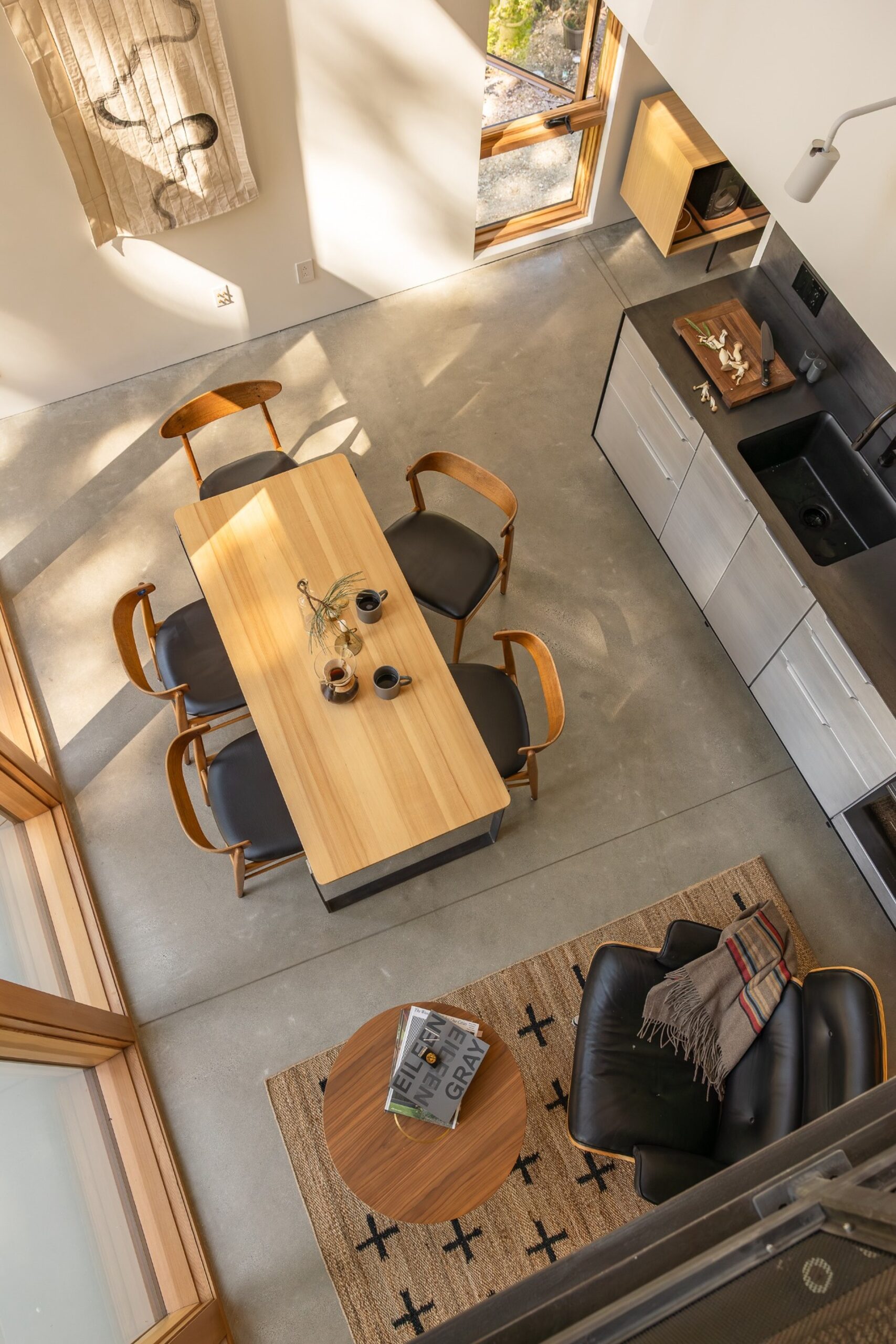
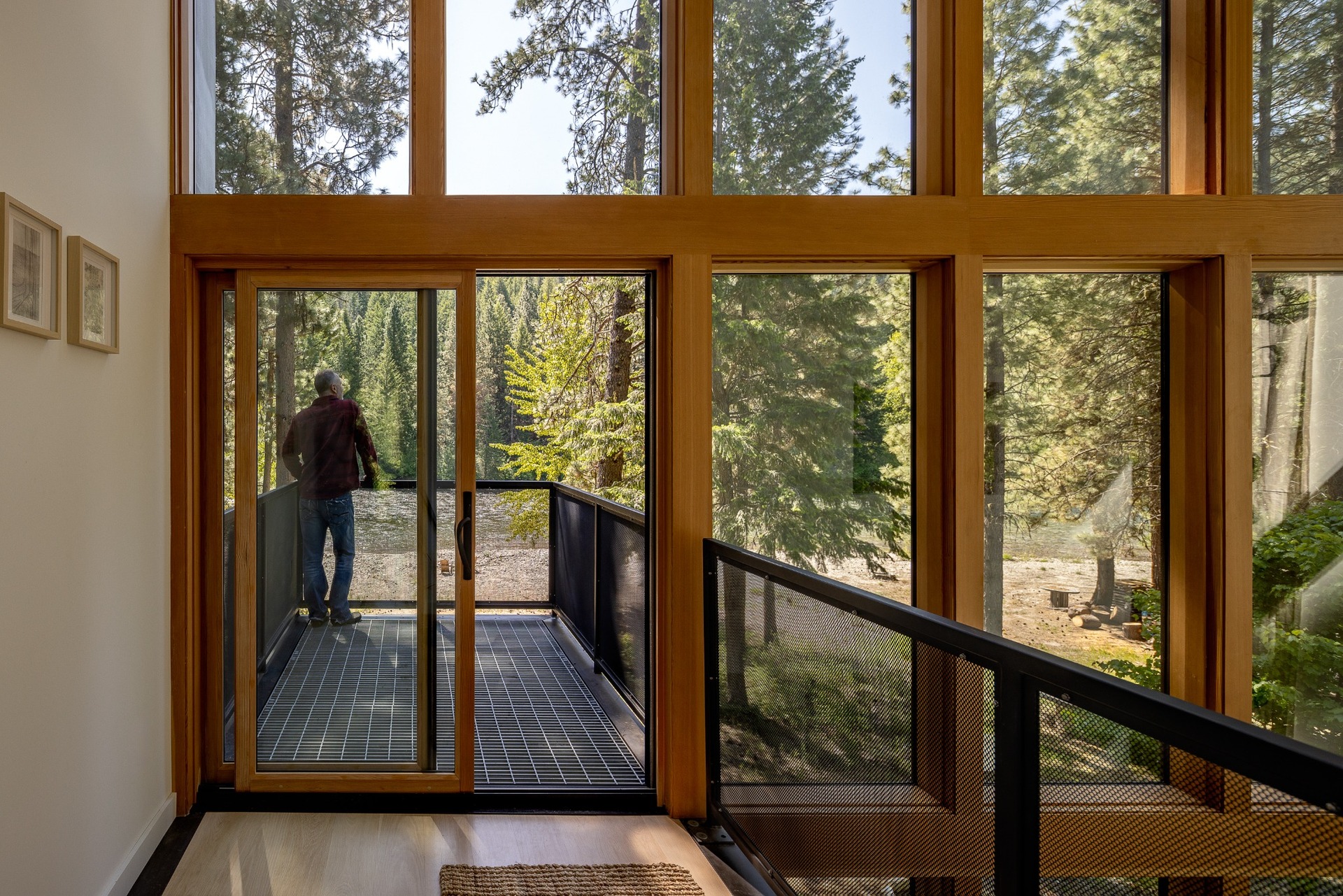
The cabin is organized across three levels. The ground level provides the covered parking and work area; the middle level contains the main living, dining and kitchen space, along with a full bathroom; and the top level includes the bedroom, office, half-bathroom and a loft opening onto a cantilevered steel deck.
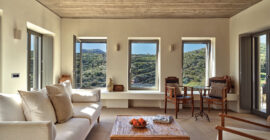
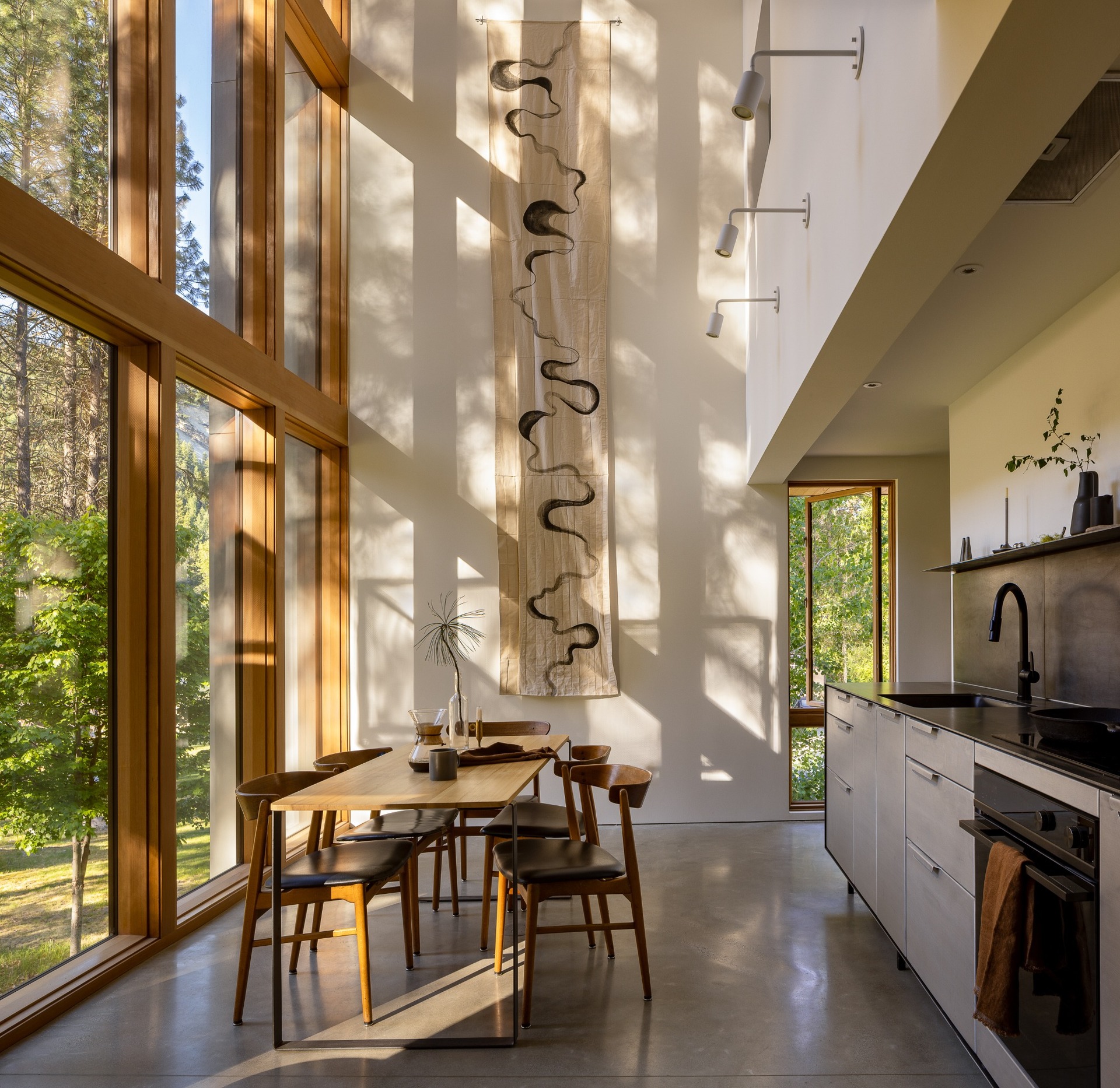
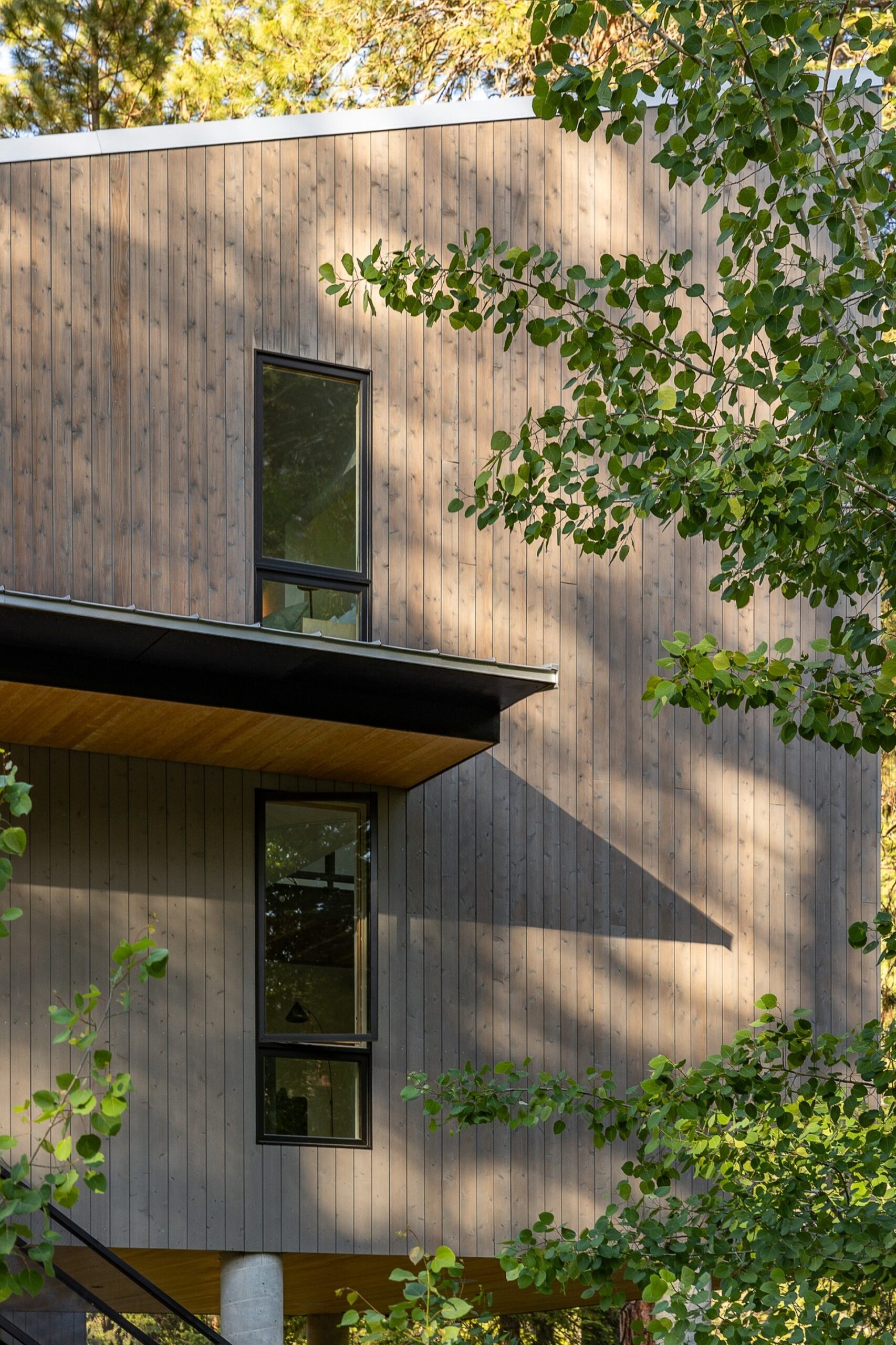
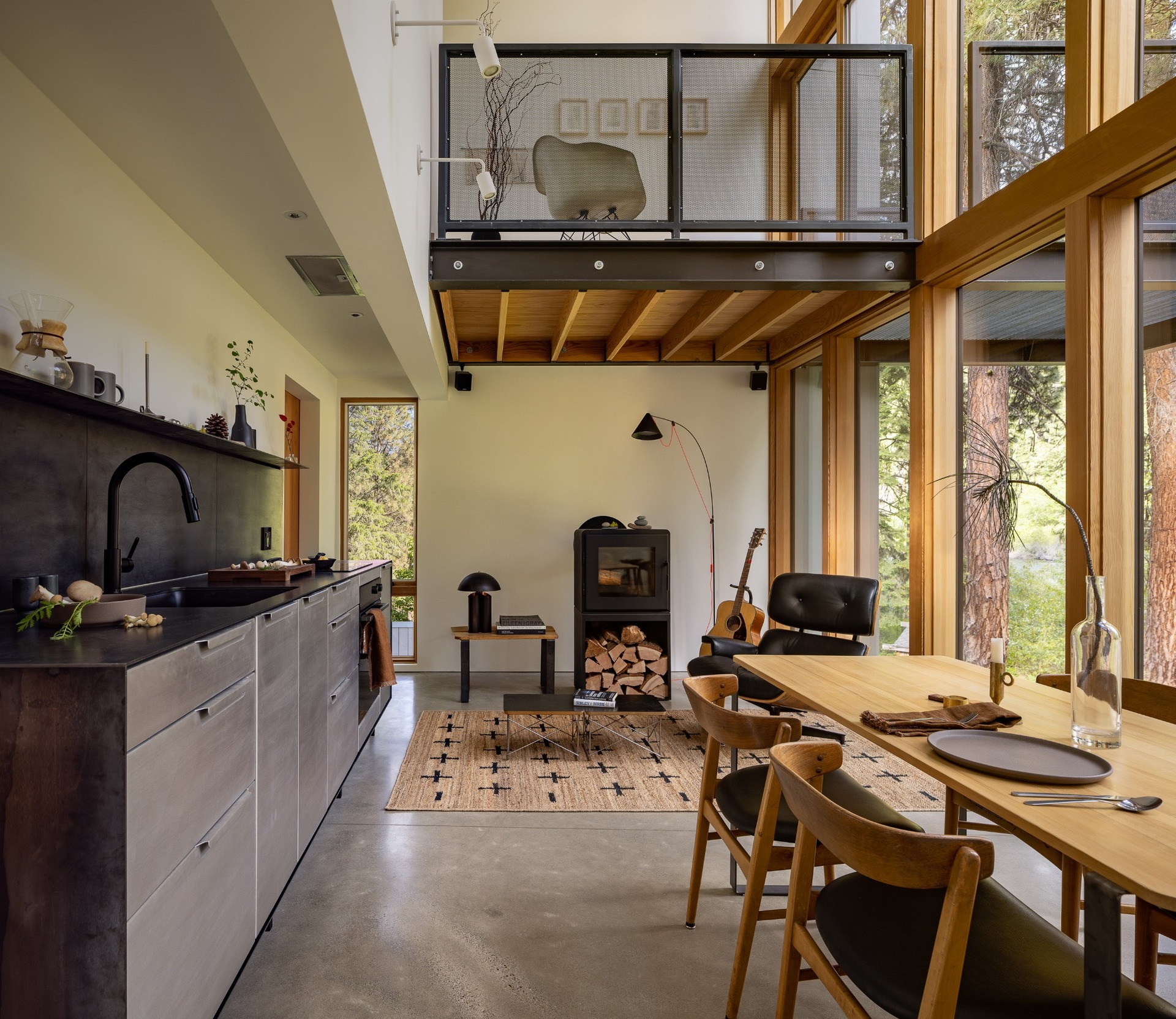
A single window wall, 20 ft wide and 24 ft high, directs the main views toward the Wenatchee River while screening neighboring properties. In the bedroom, a view portal looks across the living room and toward the river beyond, creating a vertical connection through the compact interior.
Owner-Built Steel Elements
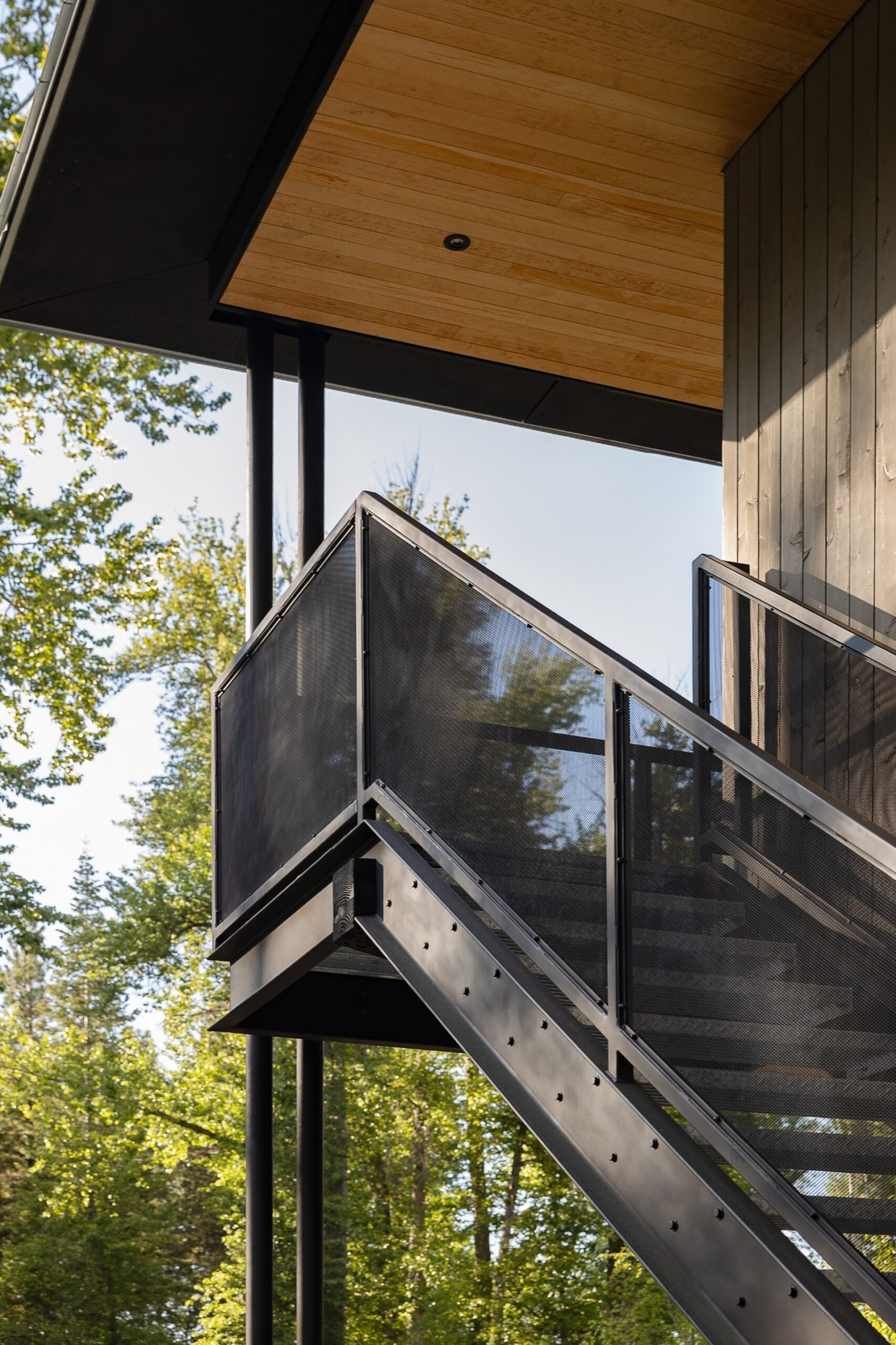
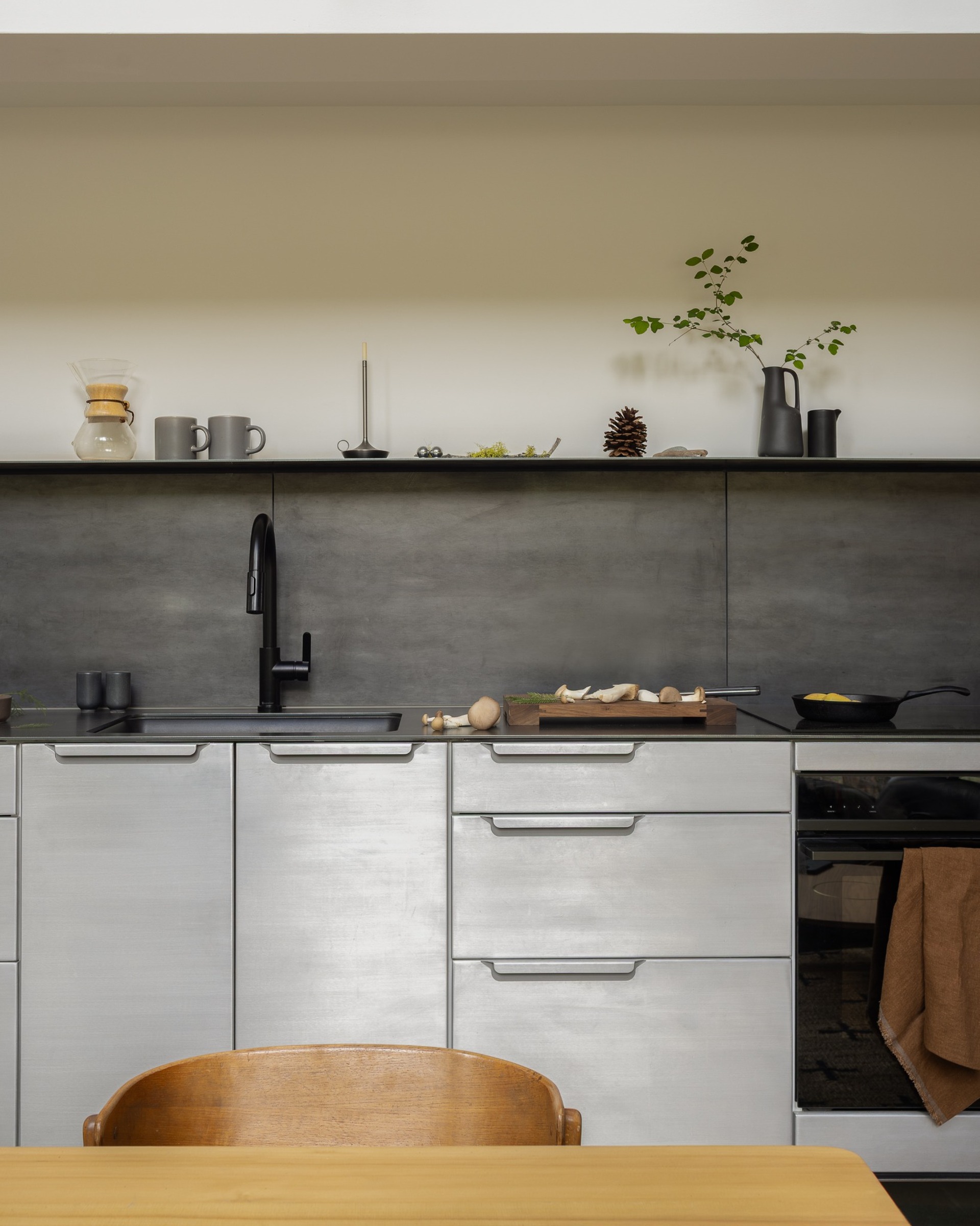
The cabin’s material character is closely connected to the owner’s skills. A lifelong metalworker, he fabricated several elements himself, including the raw steel kitchen countertops and backsplash, the hemlock and steel dining table, and the tube-steel guardrails with expanded metal mesh infill.
These elements give the interior a direct, handmade quality. They also reinforce the logic of the cabin as a durable structure shaped by personal labor, weather and long-term use.
A Minimal Interior for Nature, Light and Artwork
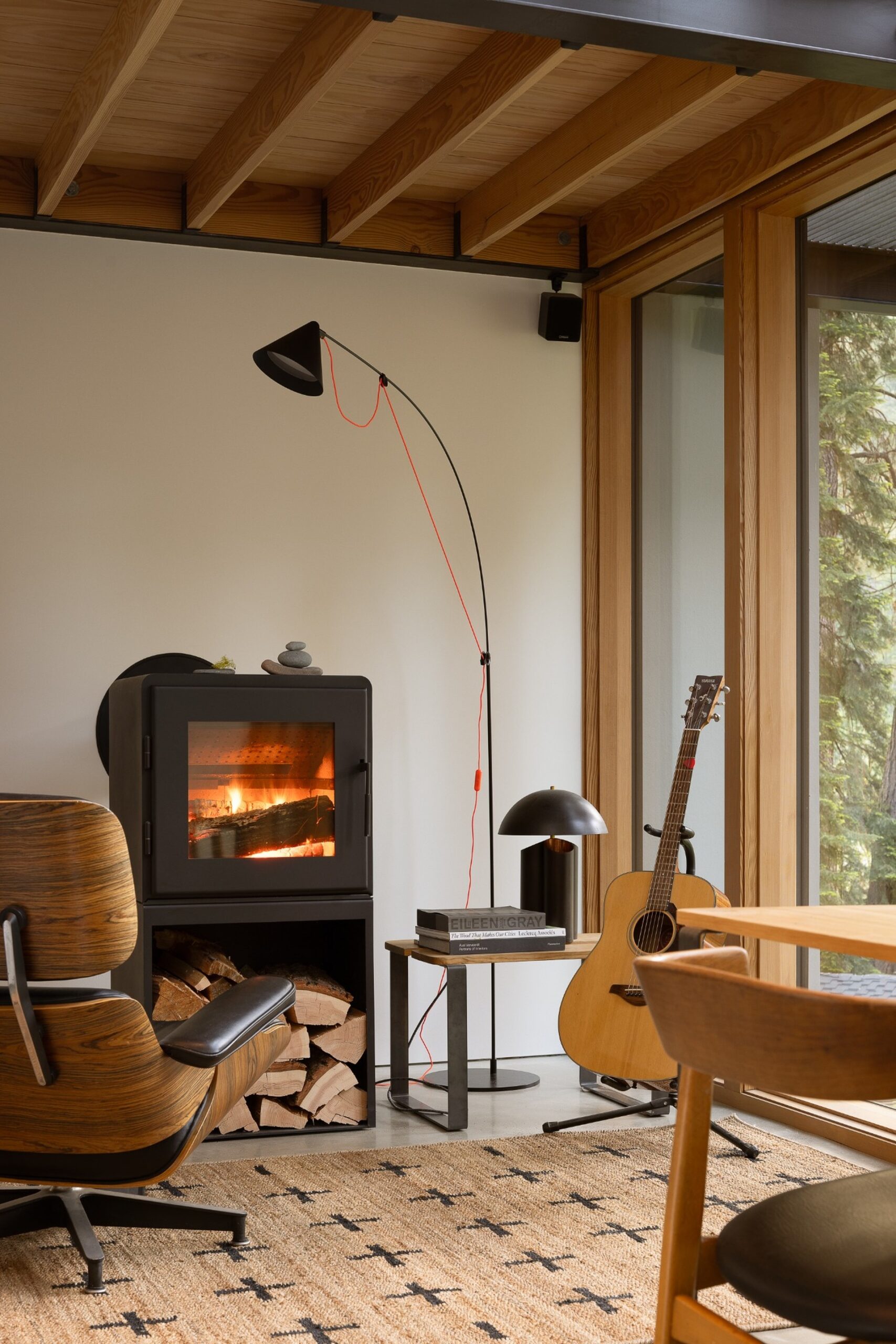
The main living space is organized beneath a fir-framed loft, with a wood-burning fireplace creating a compact center of warmth. The interior finishes remain deliberately simple, forming a quiet background for the surrounding landscape, the changing light and the owner’s artwork.
Sustainability is approached through compactness, durability and efficient systems. The cabin uses an air-source heat pump for heating and cooling, with the wood-burning stove serving as the primary heat source. Locally sourced cedar siding and soffits further connect the building to the material culture of the region.
A Weekend Cabin Turned Full-Time Home
What began as a one-bedroom weekend cabin has become an everyday residence. Its modest scale, elevated structure and durable material palette support a form of living that remains close to the river, the forest and the changing conditions of the Pacific Northwest.
Wenatchee River Cabin shows how small architecture can produce a larger relationship with the world outside. It is a home shaped by restraint, resilience and the quiet ambition to live with less, but more directly.