Benessere Rock House in Corfu
Architecture:
Photography:

“A balcony to the sea, an observatory over the passage.”
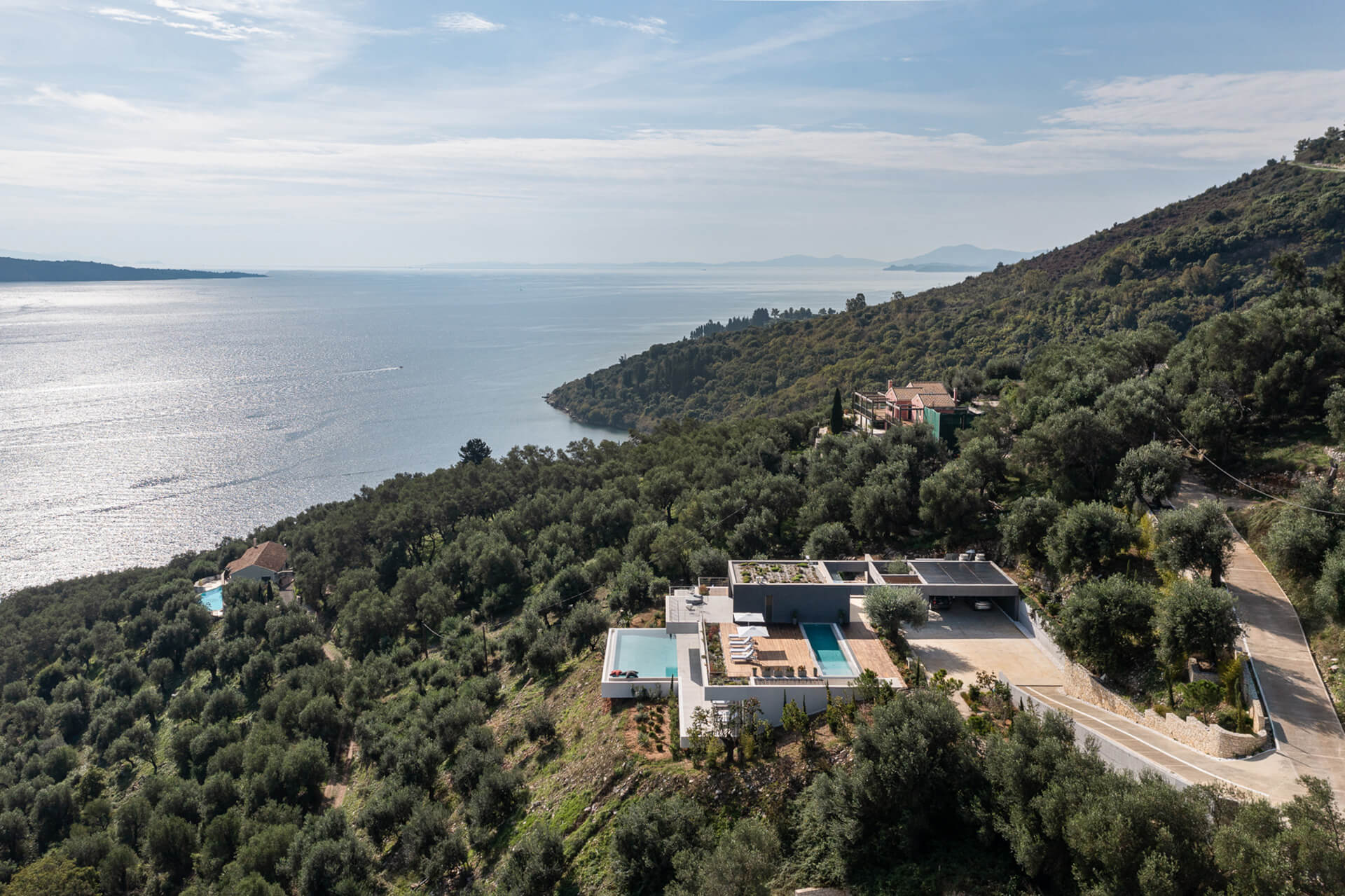
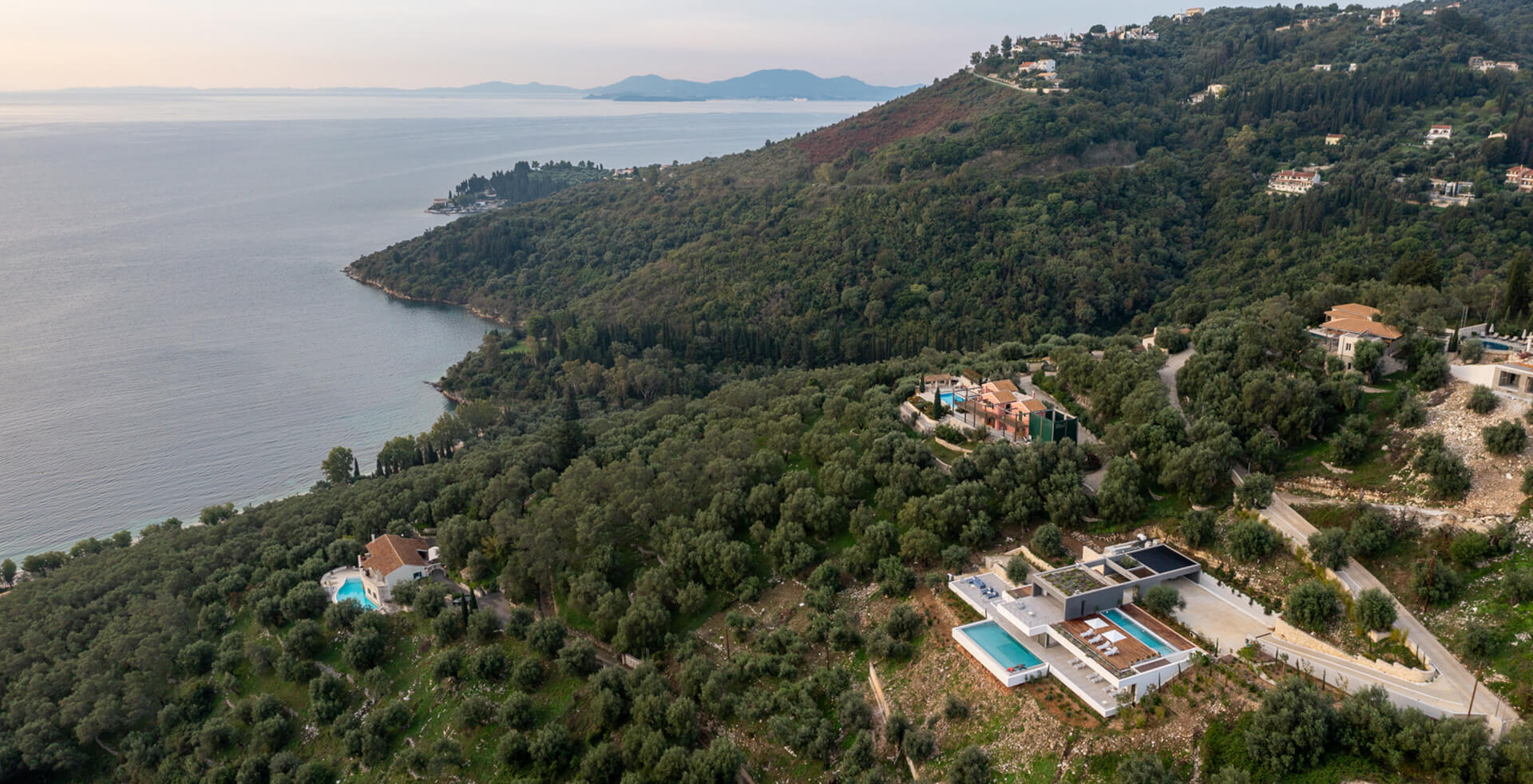
Set within a six-acre olive grove on a steep slope overlooking the narrow strait of northern Corfu, the residence is designed with deep respect for the island’s landscape and natural environment. Each morning, it frames the horizon as a living backdrop, with ships gliding slowly past as the sun rises. The primary challenge was to integrate the house discreetly into its surroundings – to honour the olive grove, to listen to the land and the sea, and to coexist with them rather than compete.
Design Philosophy
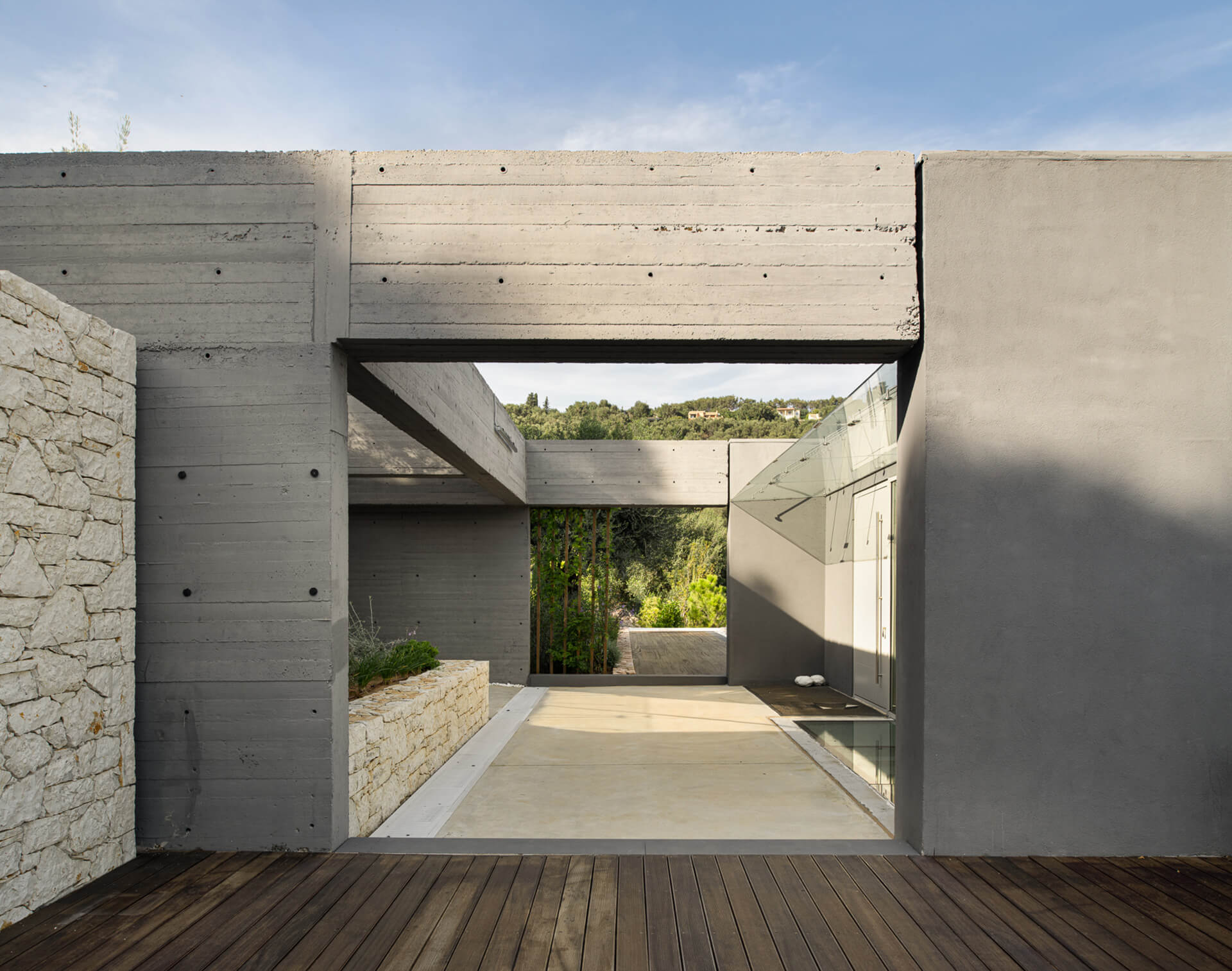
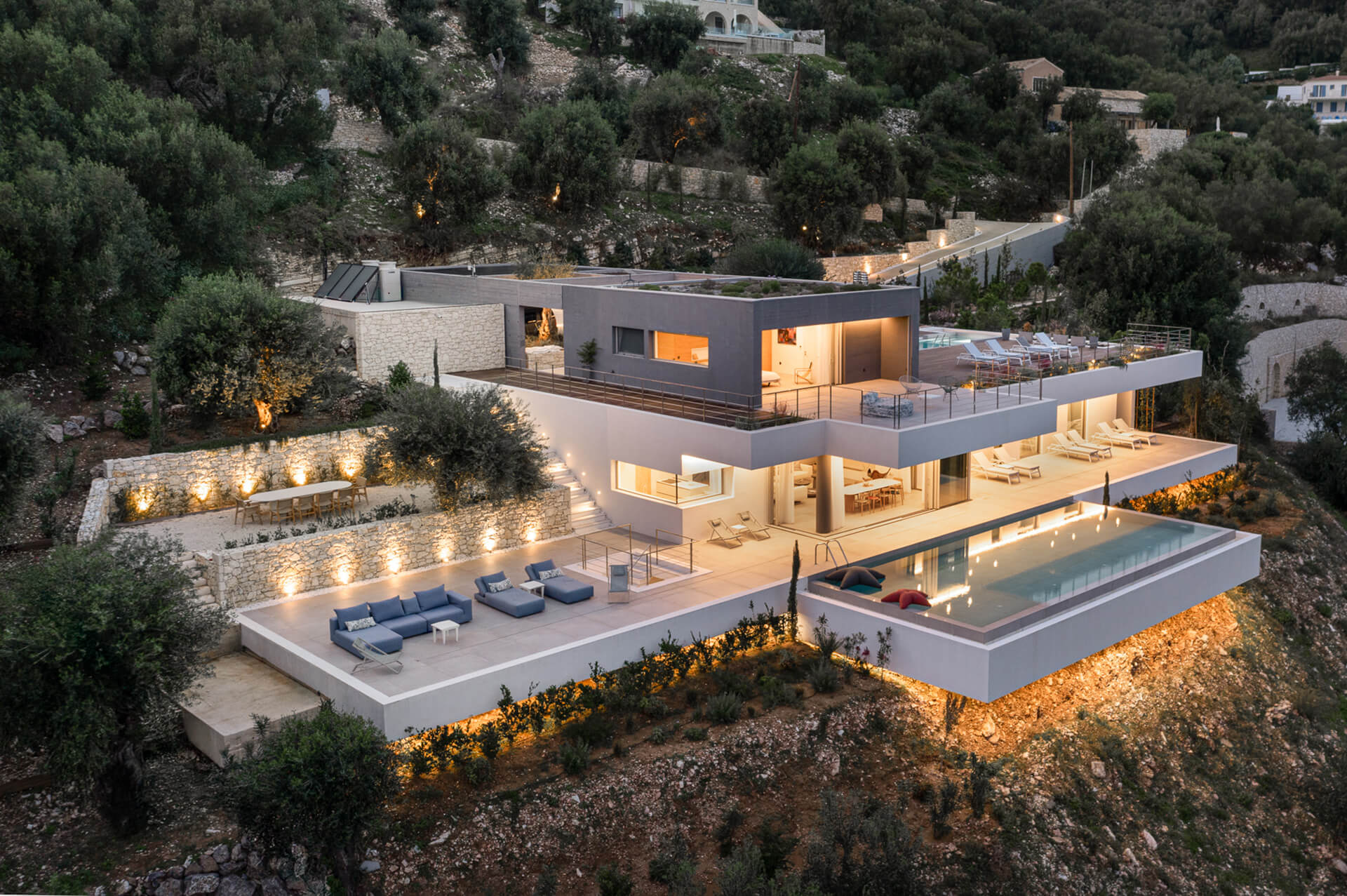
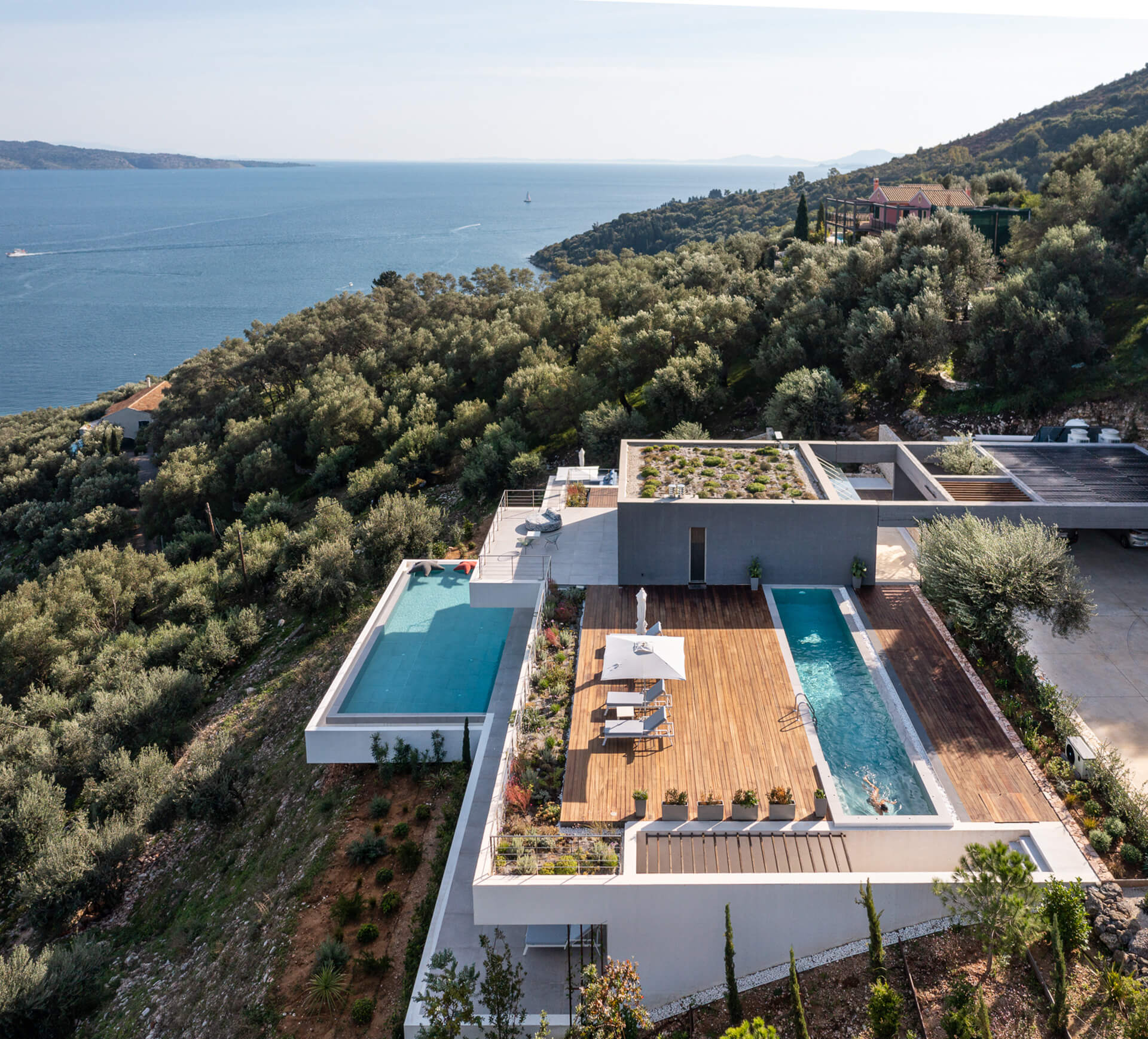
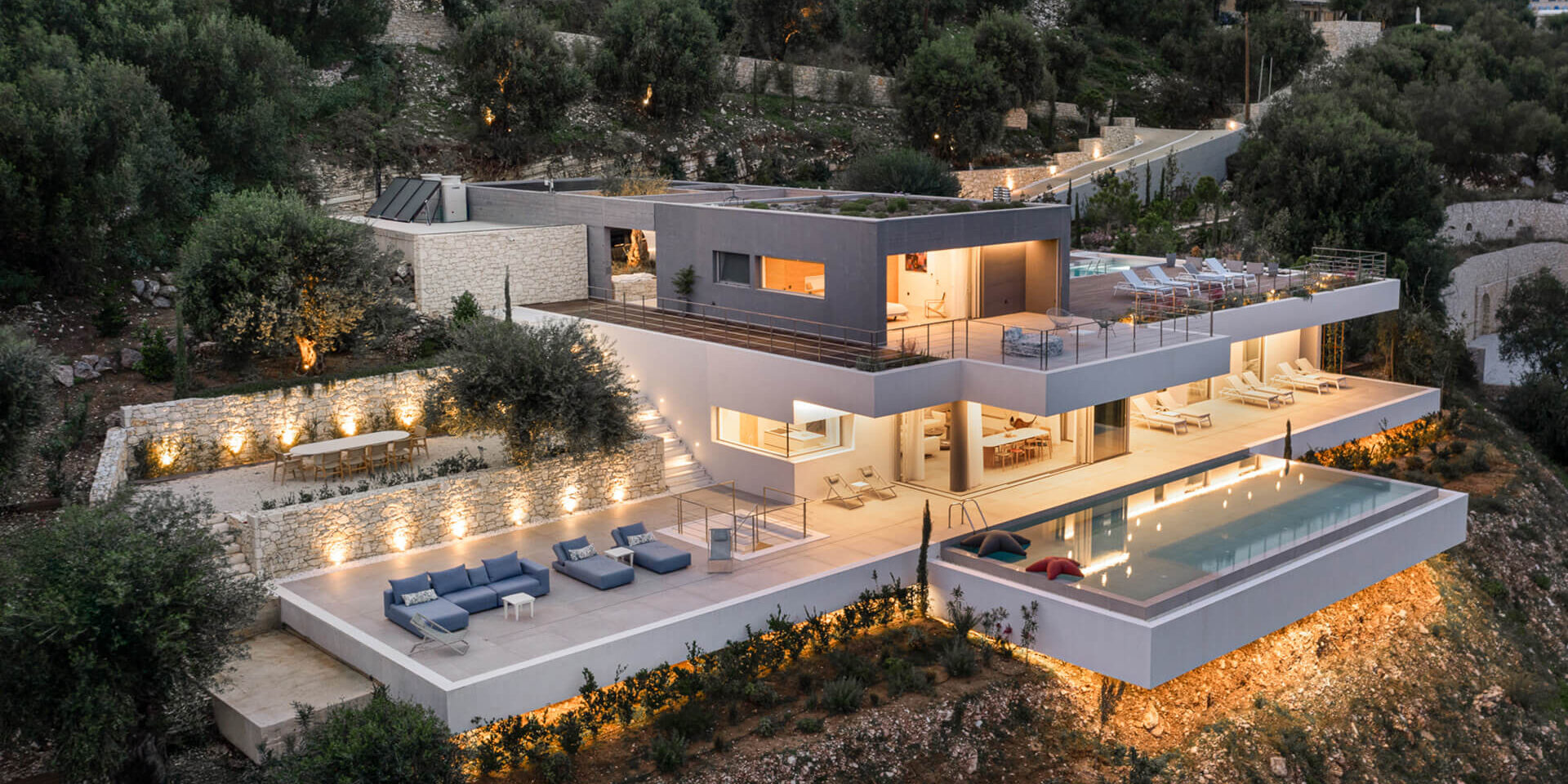
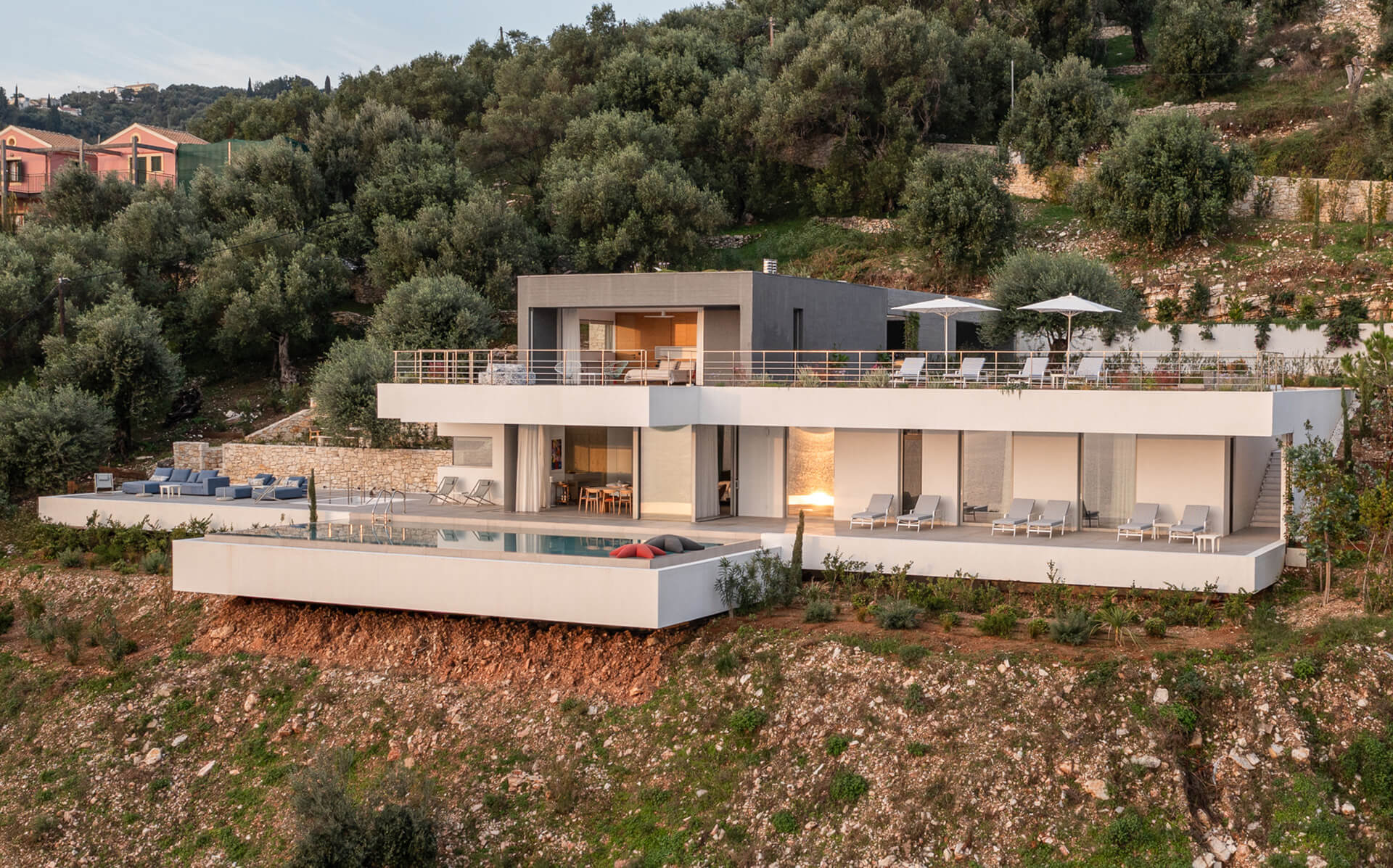
The architectural composition follows the contours of the terrain, with dry-stone walls shaping circulation and levels. The landscape set the logic: the walls traced the terraces, the olive grove defined the boundaries, and the sea established the rhythm. Two white linear volumes emerge from the rock like orientation markers, quietly aligning with the passing vessels. Water surfaces, timber elements, and planted roofs form a gentle imprint on the site, allowing nature to remain the leading presence.
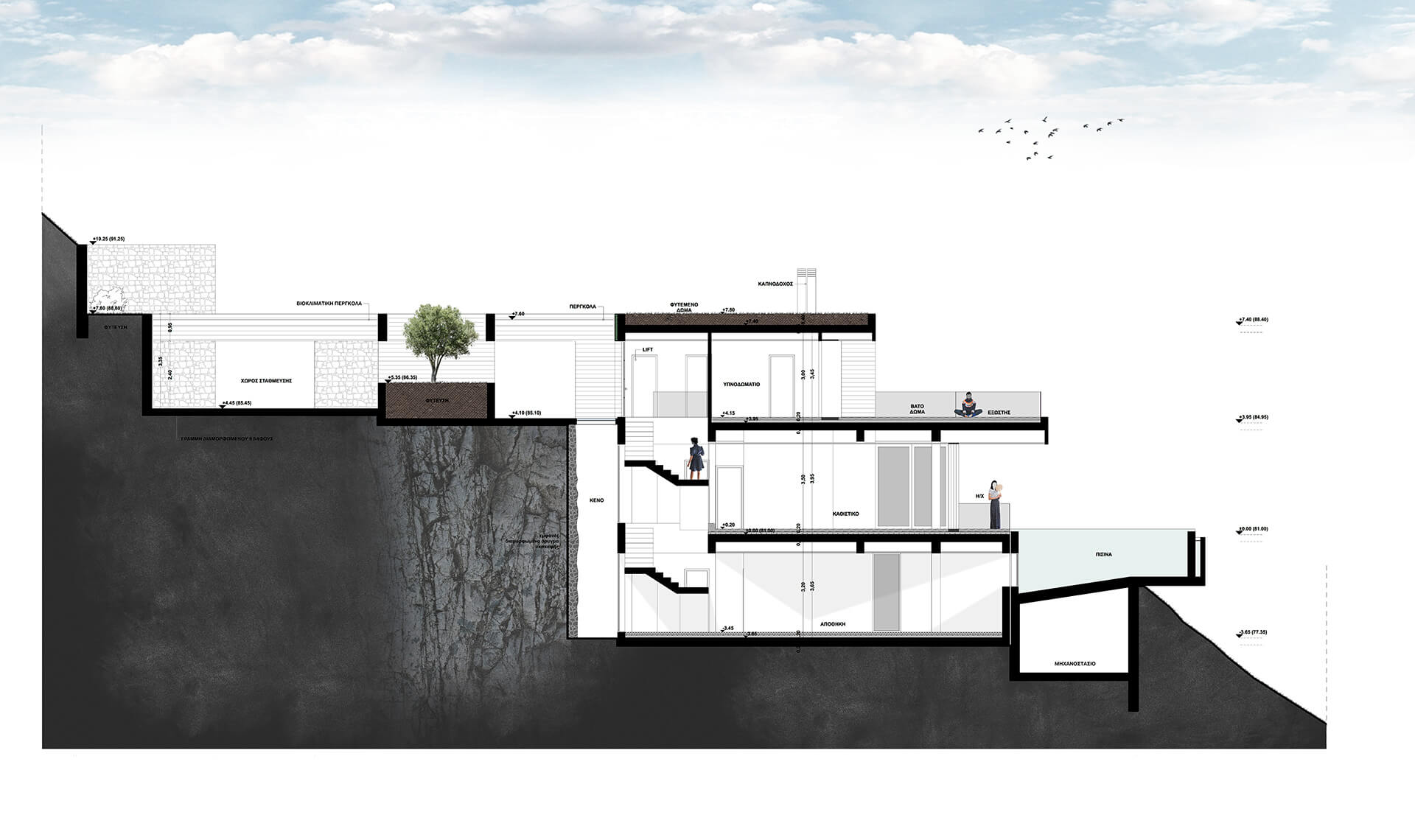
The residence appears both present and discreet, with its main volume embedded within the slope, minimizing visual impact, especially from the road above. The built masses unfold gradually from the rear of the site toward the sea, the pool, and the exterior areas, following the natural gradient and incorporating strategic openings and cantilevers. The result is a dwelling that seems to rise from the rock, giving the impression of hovering above the hillside without disturbing the continuity of the olive grove. Approaching from the upper road, one encounters the entire planted roof merging seamlessly with the landscape and the sea beyond.
Spatial Organization
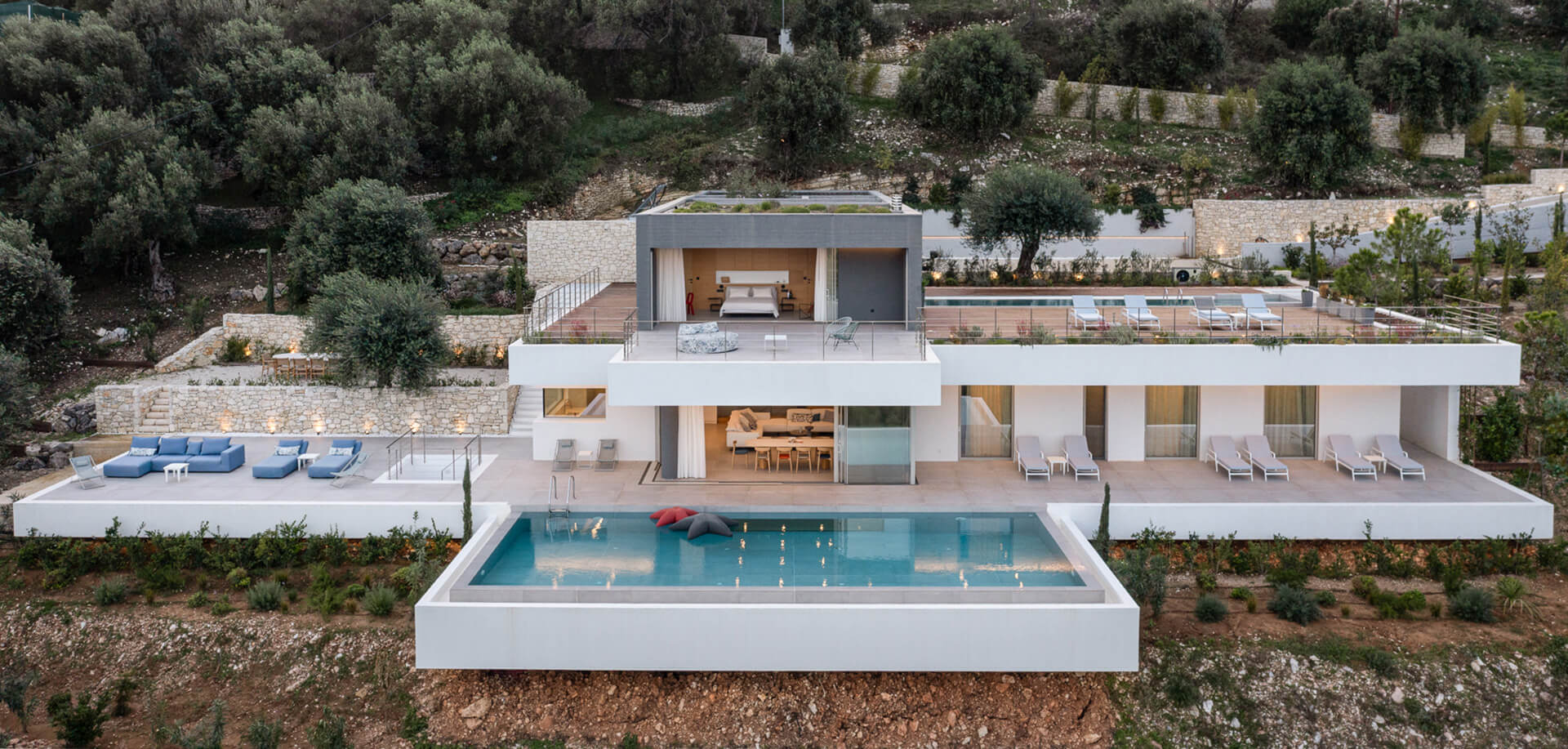
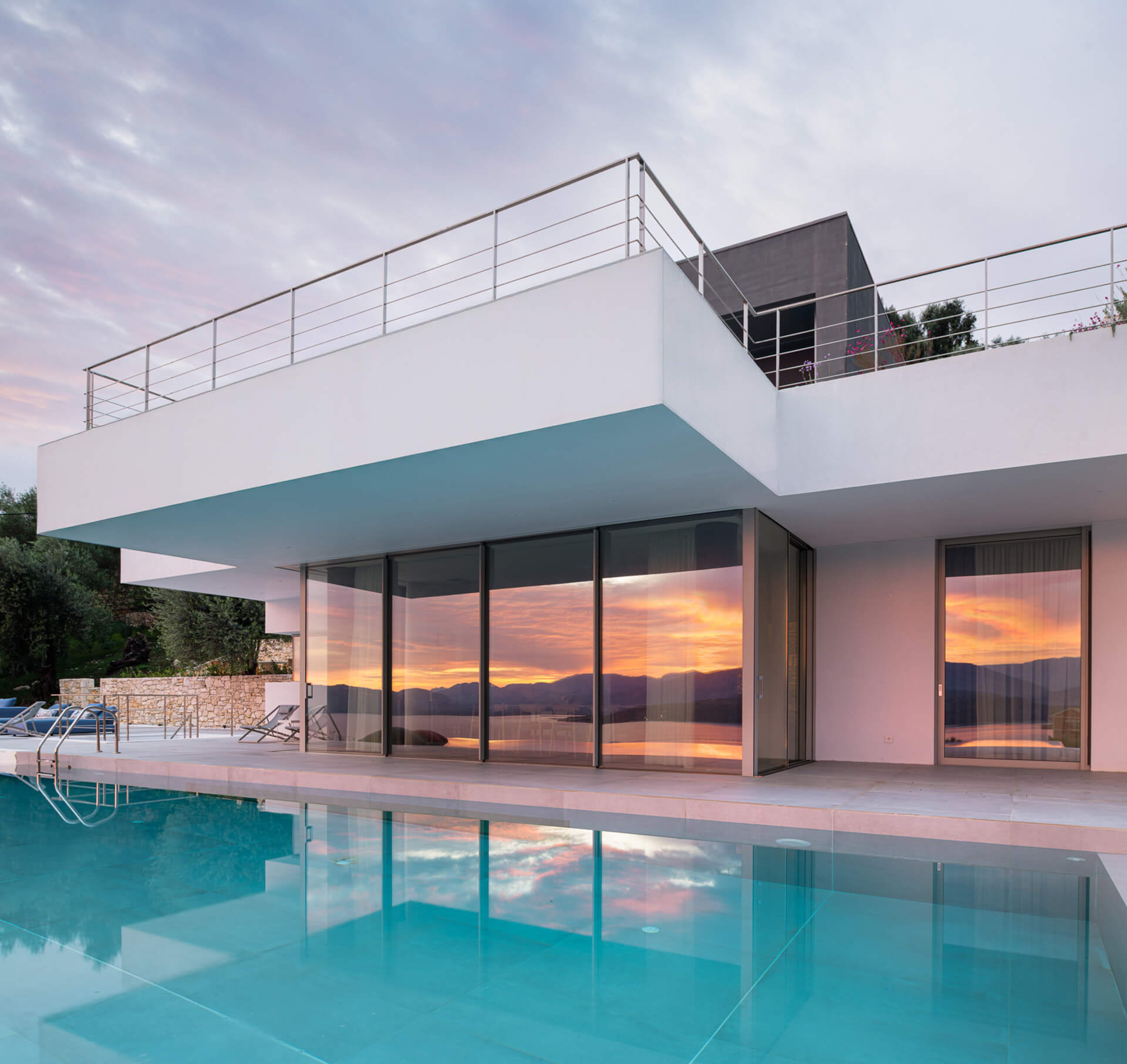
The residence is arranged across three levels, achieving both functional coherence and spatial privacy. The upper level contains the parking area, main entrance, master bedroom, a private pool, and a terrace. The terrace extends the bedroom outward, enabling a seamless flow between interior and exterior through expansive sliding openings that fully retract into the double walls, ensuring uninterrupted views of the olive grove and the sea.
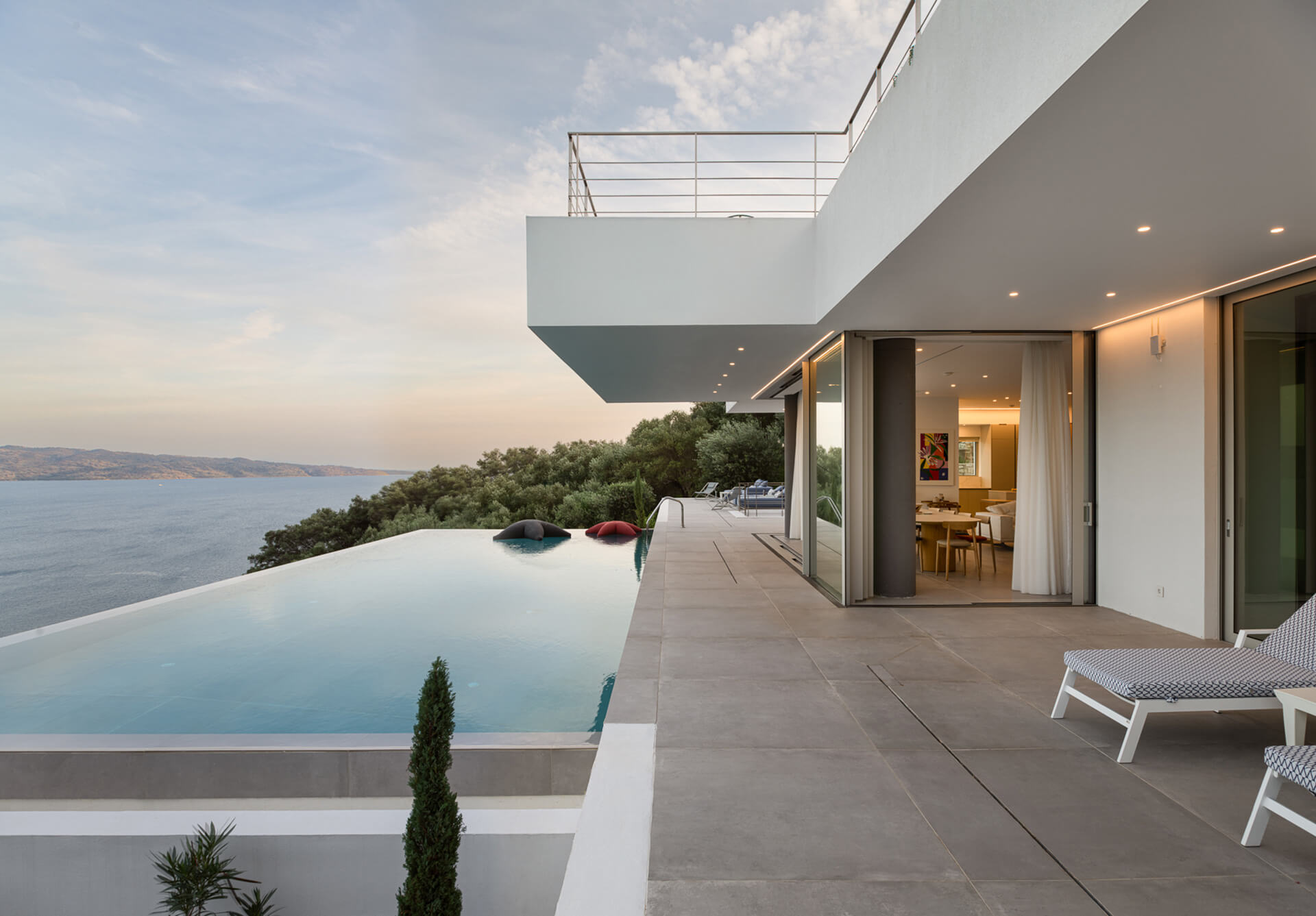
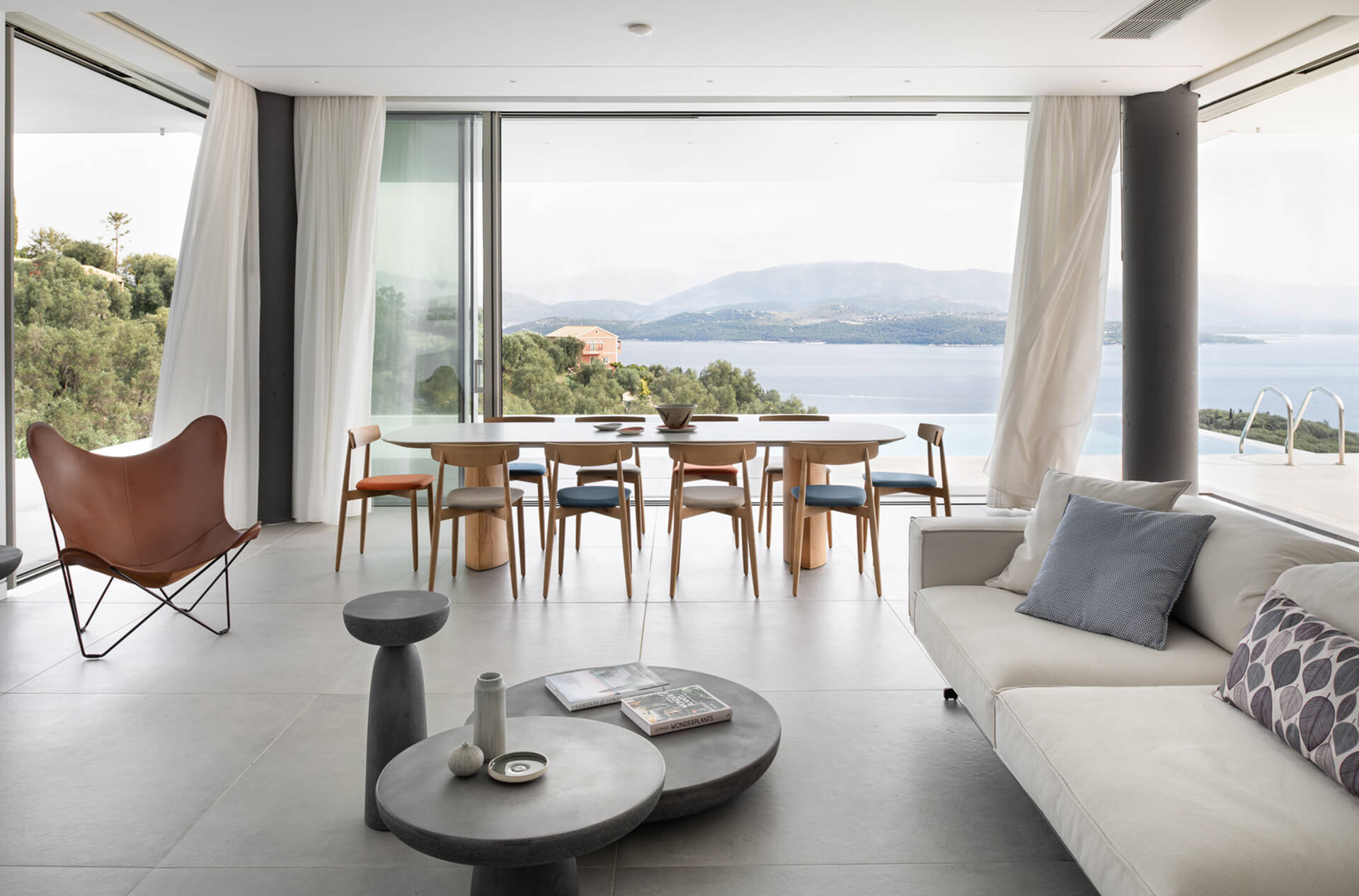
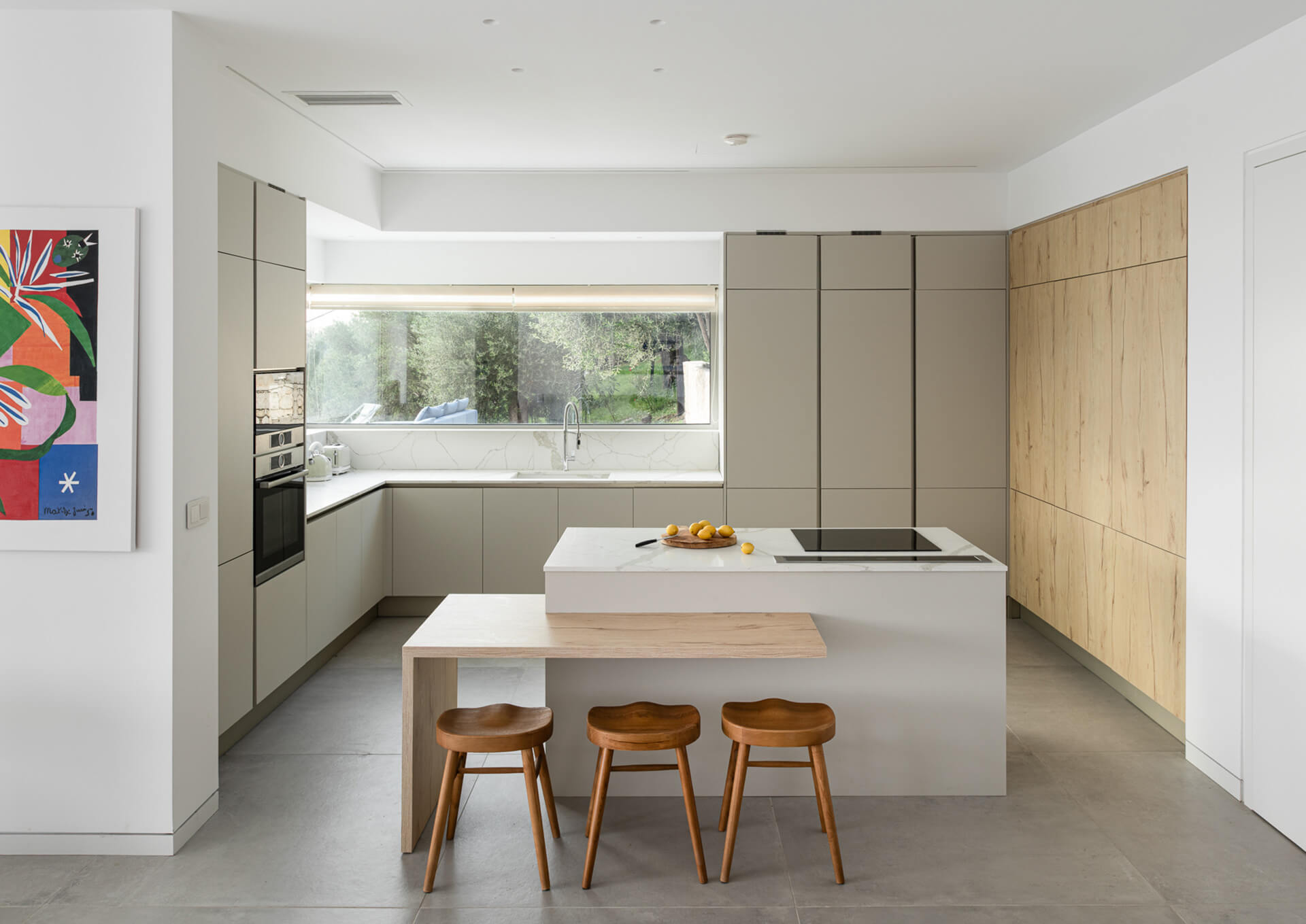
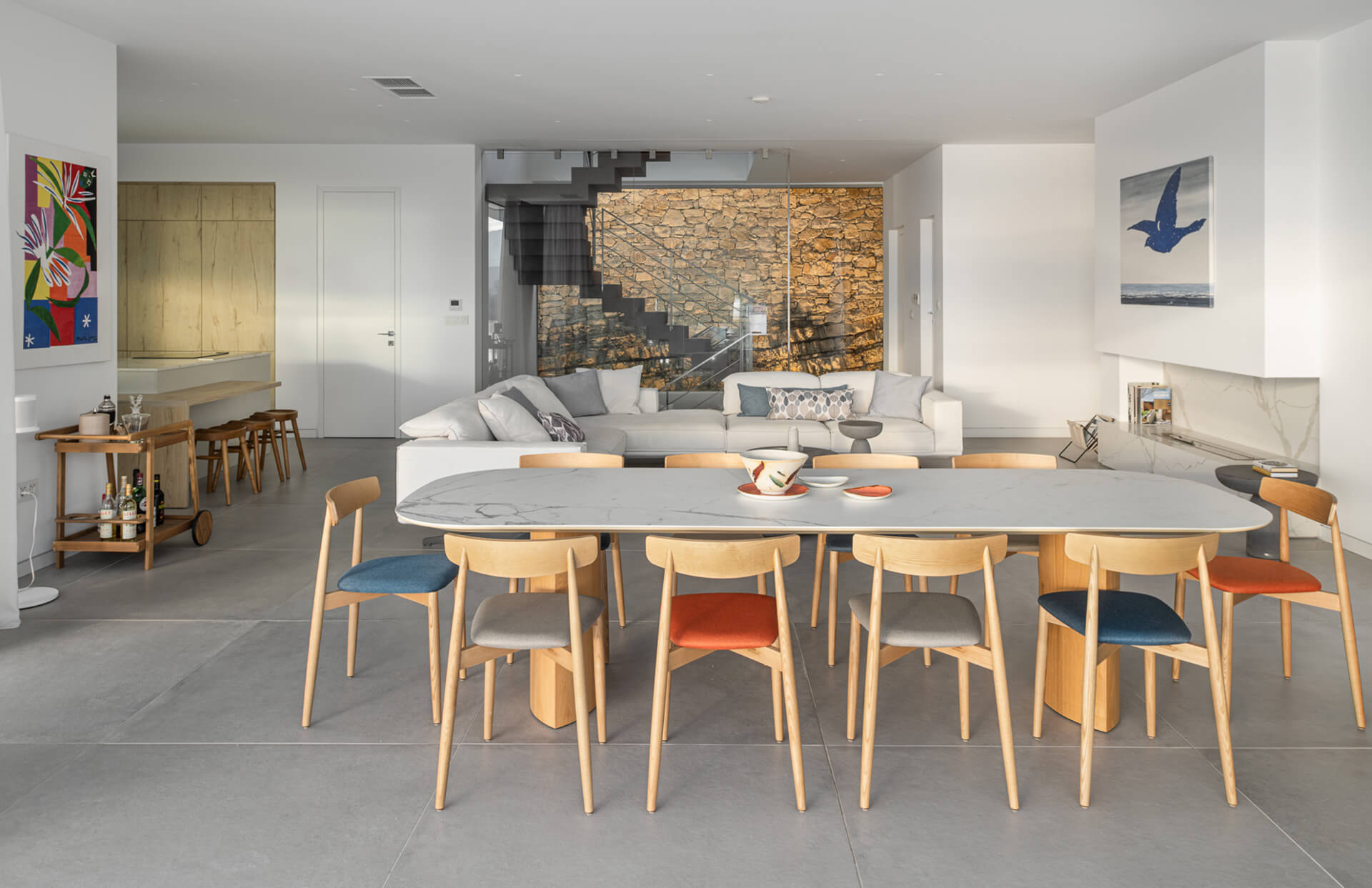
The middle level accommodates the main living spaces: the sitting area, kitchen, two bedrooms, a guest room, and a large, cantilevered pool that visually merges with the horizon. The open-plan configuration, paired with full-height sliding glass panels, dissolves the boundary between inside and outside, maximizing interaction with the surrounding landscape.
The lower level is dedicated to recreation, including a gym with changing facilities, a screening room, and a billiard area. Despite being partially below grade, it receives abundant natural light. Illumination enters through the glazed side of the pool above, as well as through openings that reveal the exposed rock at the back of the house, further brightened by a skylight. An internal atrium between the staircase and the illuminated rock surface enhances daylight penetration and visually connects all three levels.
One of the residence’s most striking features is the main pool, suspended in a cantilever that creates the sensation of floating above the slope. Extending beyond the building envelope, it appears as a hovering sheet of water. The white cantilevered forms that define the pool become a signature element of the architectural identity.
Materials & Sustainability
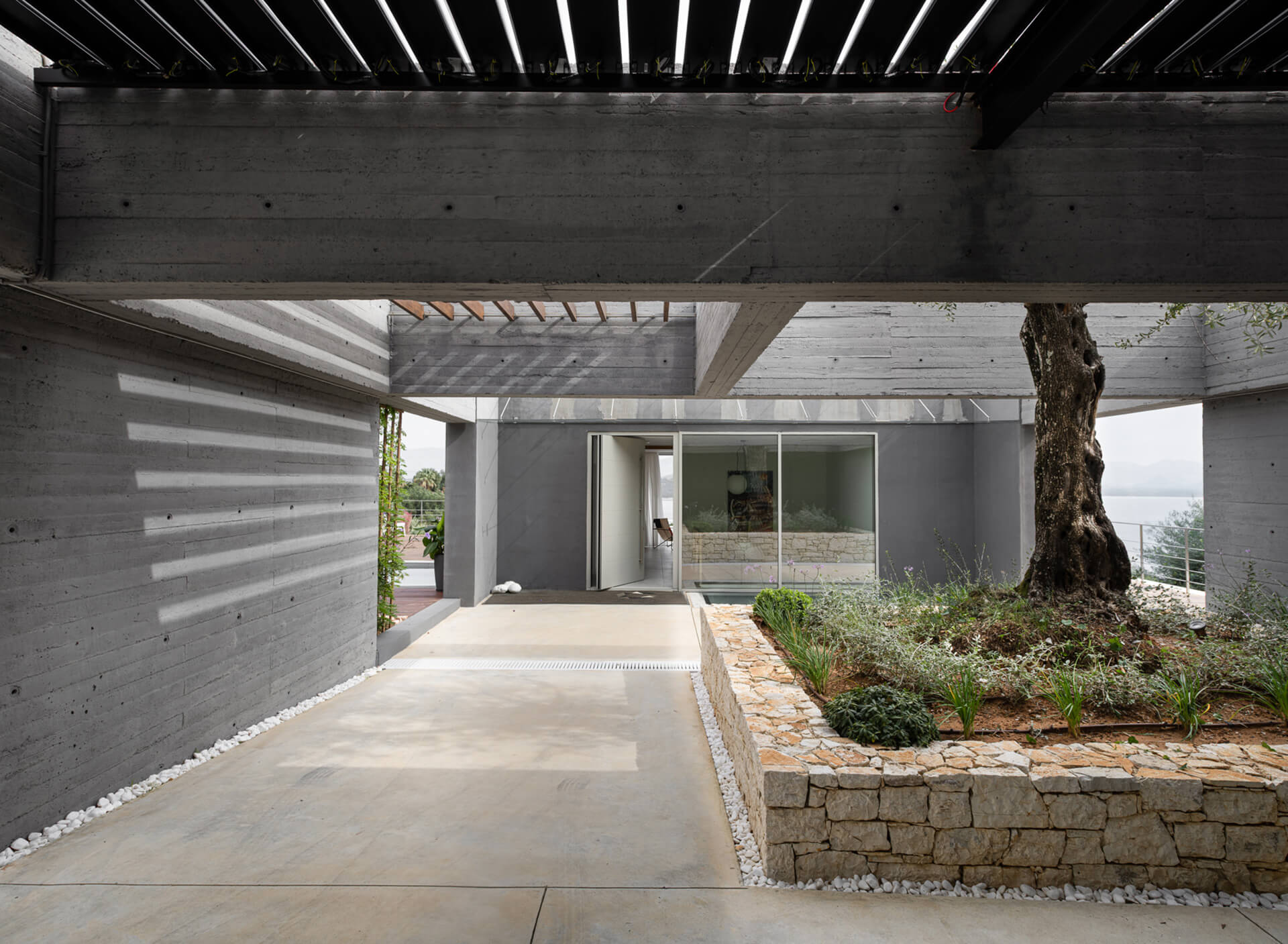
The material palette maintains continuity with the natural landscape while ensuring durability and minimal maintenance. Local stone, exposed concrete, and muted grey tones anchor the house to the rocky terrain, while extensive timber decking brings warmth to the exterior. Stone retaining walls and pathways blend seamlessly with the land, enhancing the sense of continuity between built and natural ground. Planted roofs further contribute to the residence’s environmental integration within the olive grove.
A significant portion of the dwelling is built below ground level, and combined with proper orientation and planted roofs, this provides natural insulation that supports its bioclimatic performance. Solar-thermal systems and a bioclimatic shading canopy on the upper level offer full energy autonomy, reflected in the building’s A+ energy rating. The photovoltaic canopy, arranged along a north–south axis, achieves exceptionally low energy consumption, placing the residence within the category of a Zero Energy Building. Infrastructure for electric-vehicle charging and future energy-storage systems is already in place.