New Architectural Lighting for the Hellenic Parliament Building and the Tomb of the Unknown Soldier
Lighting Design:
Photography:
ek Issue:

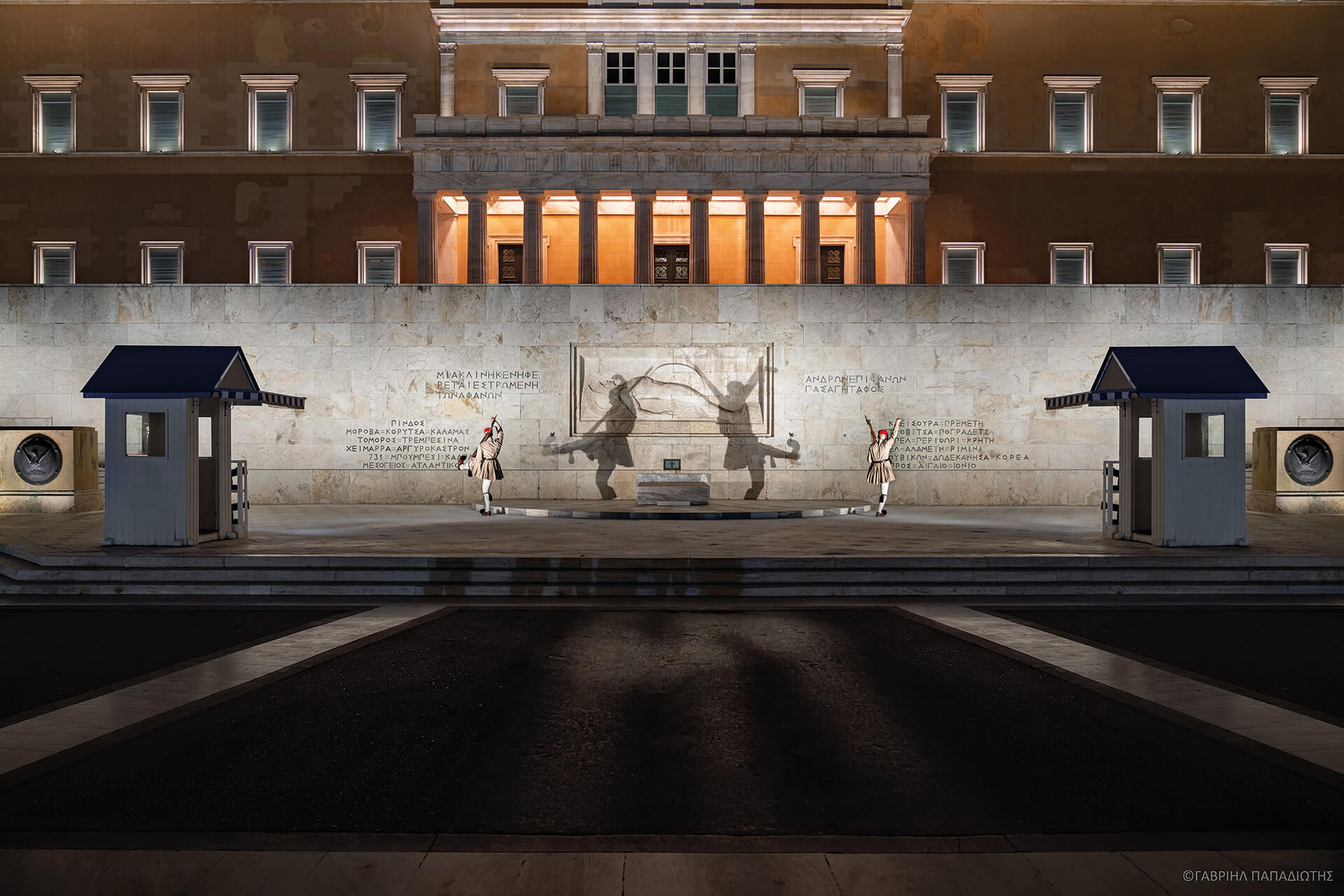
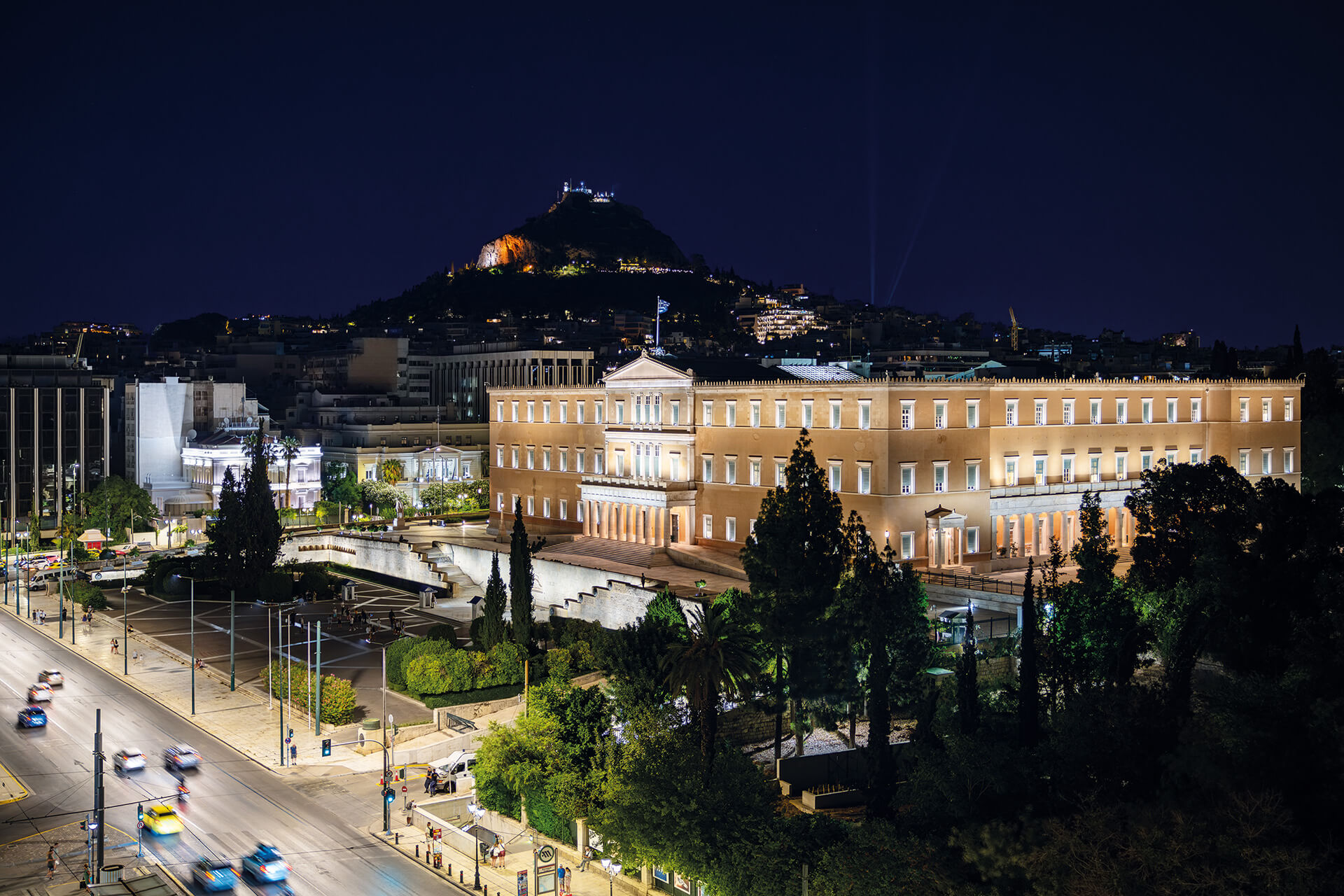
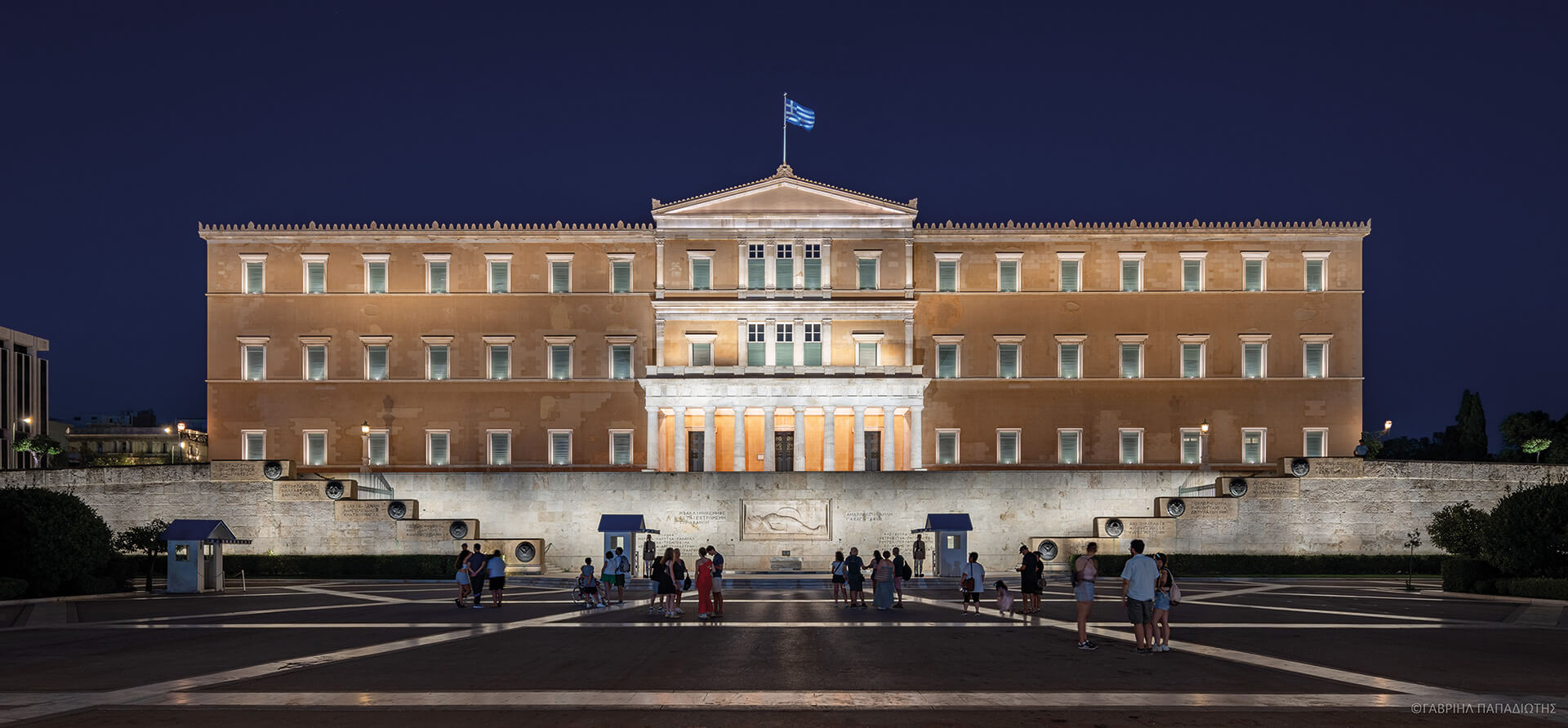
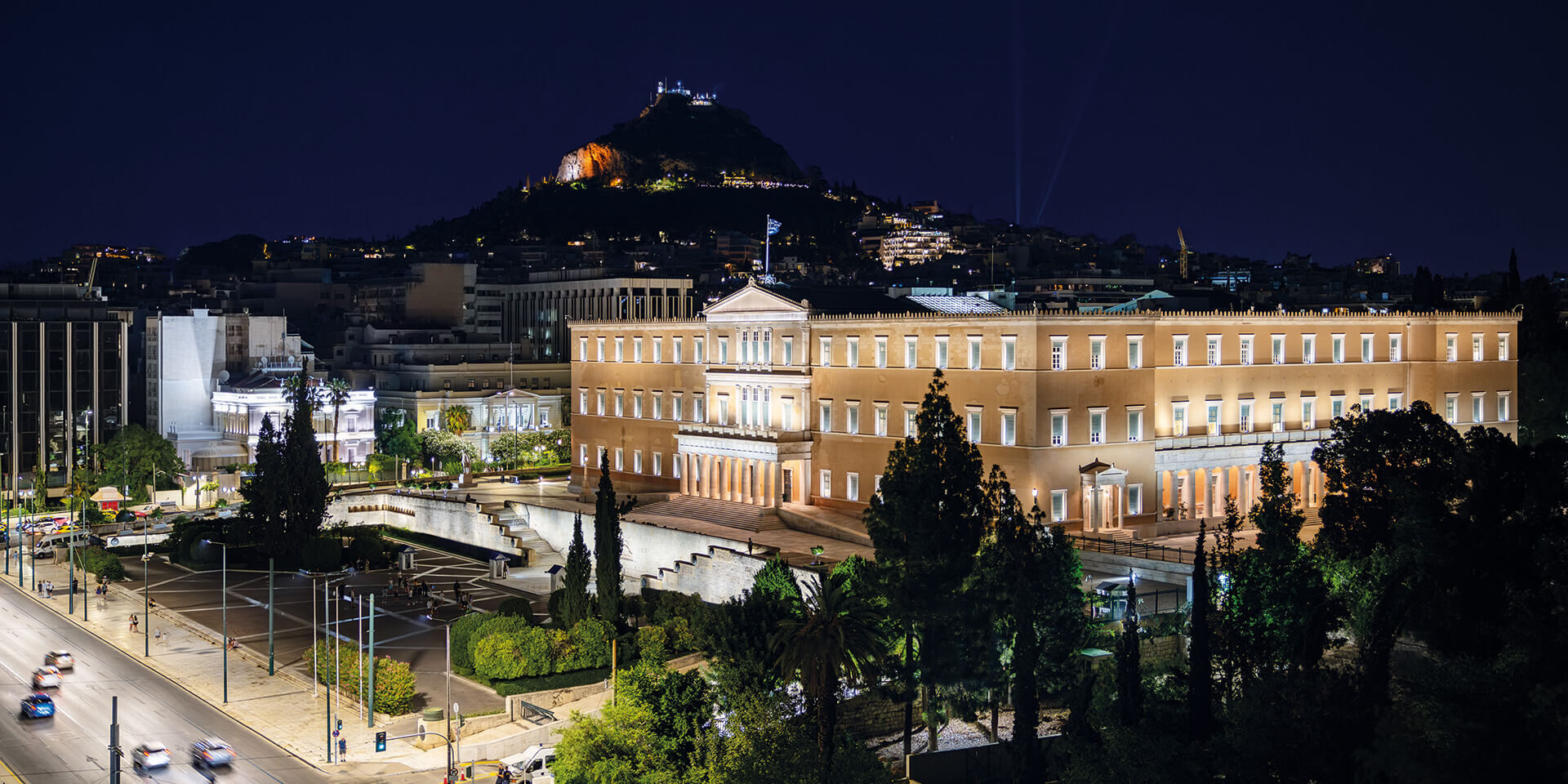
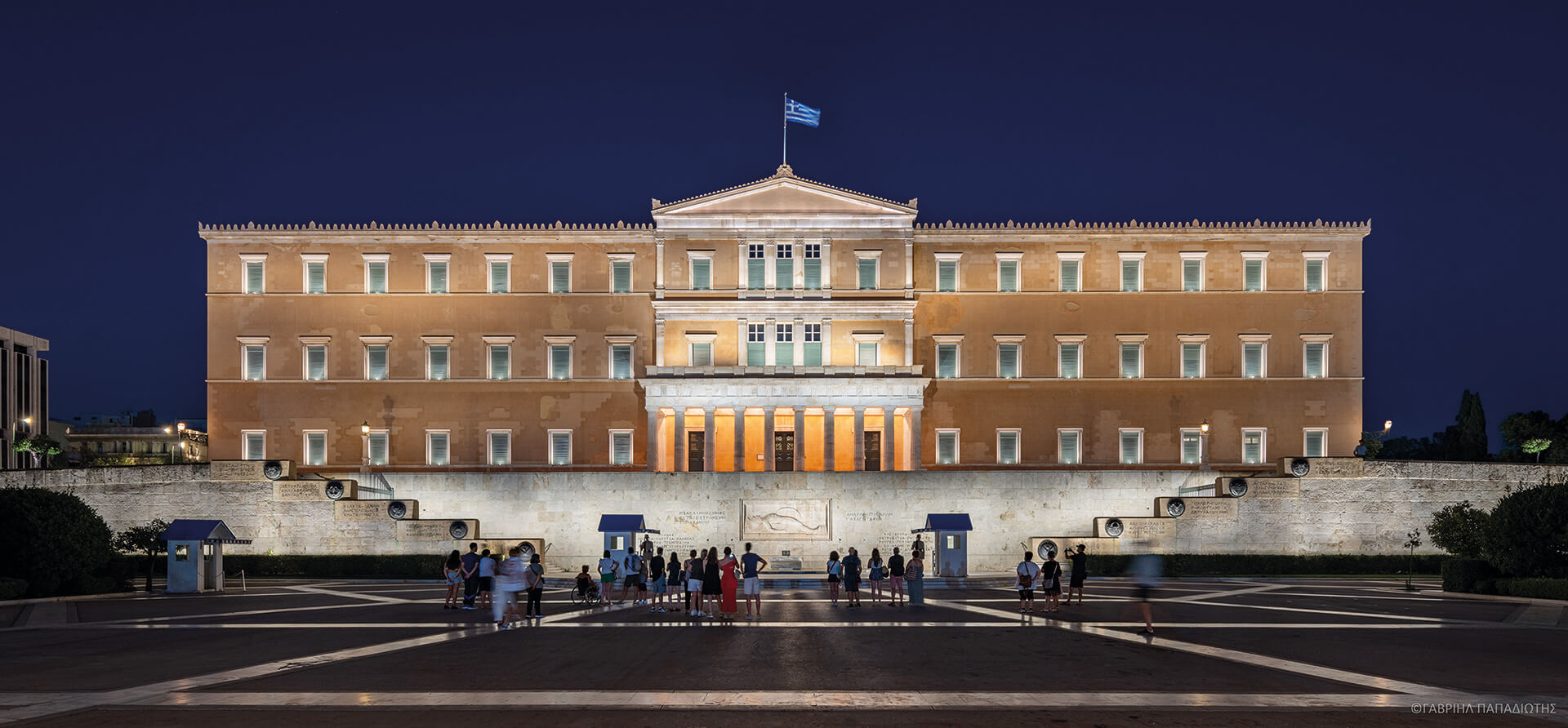
In mid-July, the new architectural lighting installation for the Hellenic Parliament Building and the Tomb of the Unknown Soldier was completed, accompanied by the energy upgrade of the underground parking areas and the complex’s nursery facility. The new lighting design seeks to redefine the nocturnal presence of the building and its surrounding space, situating the intervention within a contemporary framework of environmental responsibility and sustainability.
Lighting Philosophy & LED Technology
The new lighting scheme was implemented exclusively using advanced LED technology, with particular emphasis on chromatic consistency and precise control of the light sources. Each luminaire is digitally controlled in terms of both intensity and operating duration, allowing the creation of dynamic lighting scenarios with a high degree of accuracy.
The combined use of energy-efficient light sources and an automated high-precision control system ensures optimal energy performance. From sunset onwards, the luminous composition of the façades evolves subtly, with smooth transitions in intensity that respond to the time of day, the day of the week, and the season, forming a dynamic yet refined nocturnal image.
Technical Characteristics
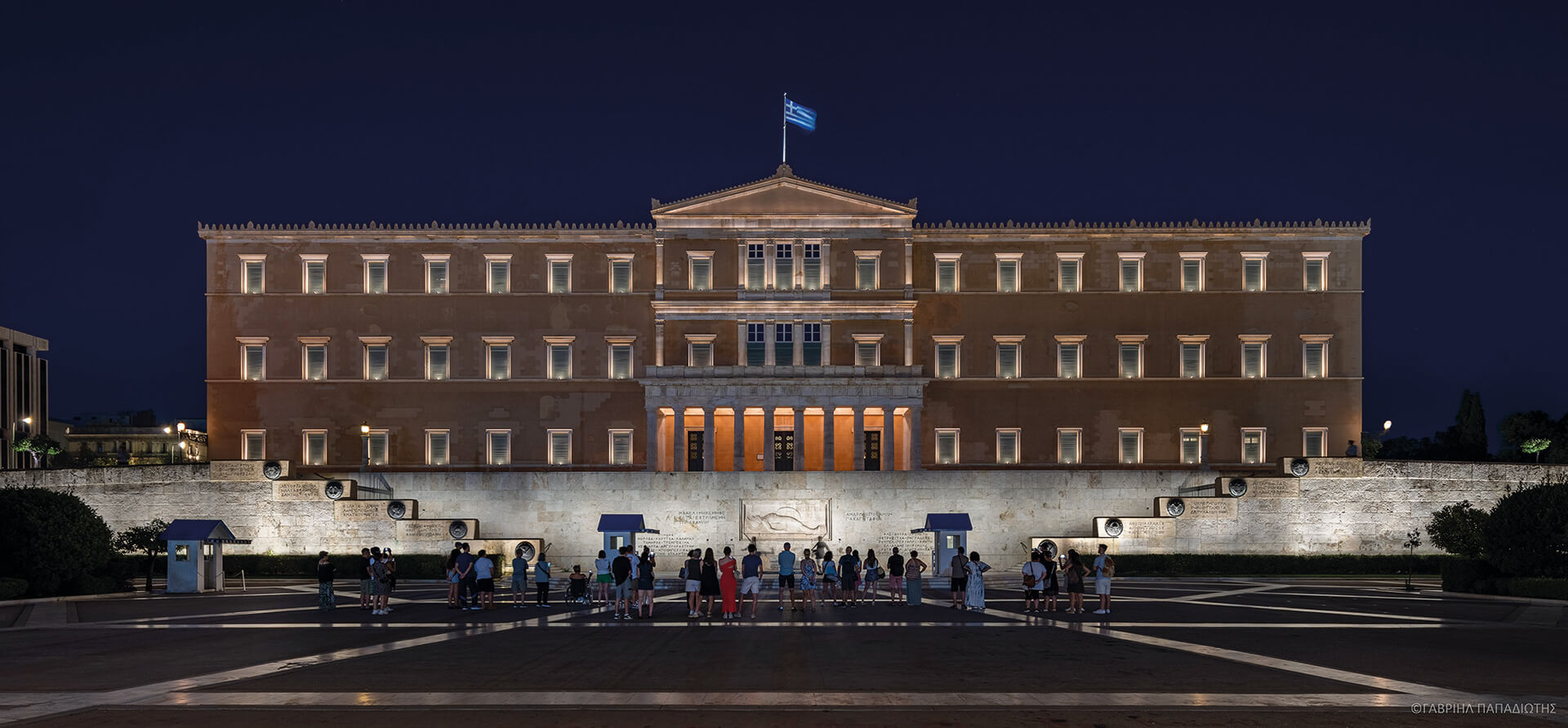
A central focus of the study was the mitigation of light pollution. For this reason, the lighting system allows for the automatic adjustment of colour temperature, shifting from cooler white tones to warmer light. The warmer spectrum, characterised by reduced blue light content, significantly limits the impact on the night sky.
This transition takes place daily from midnight until dawn, ensuring that the lighting remains compatible with the city’s natural nocturnal environment. At the same time, the luminaires are equipped with precision optical systems, lockable aiming mechanisms and anti-glare accessories, minimizing light spill toward the sky.
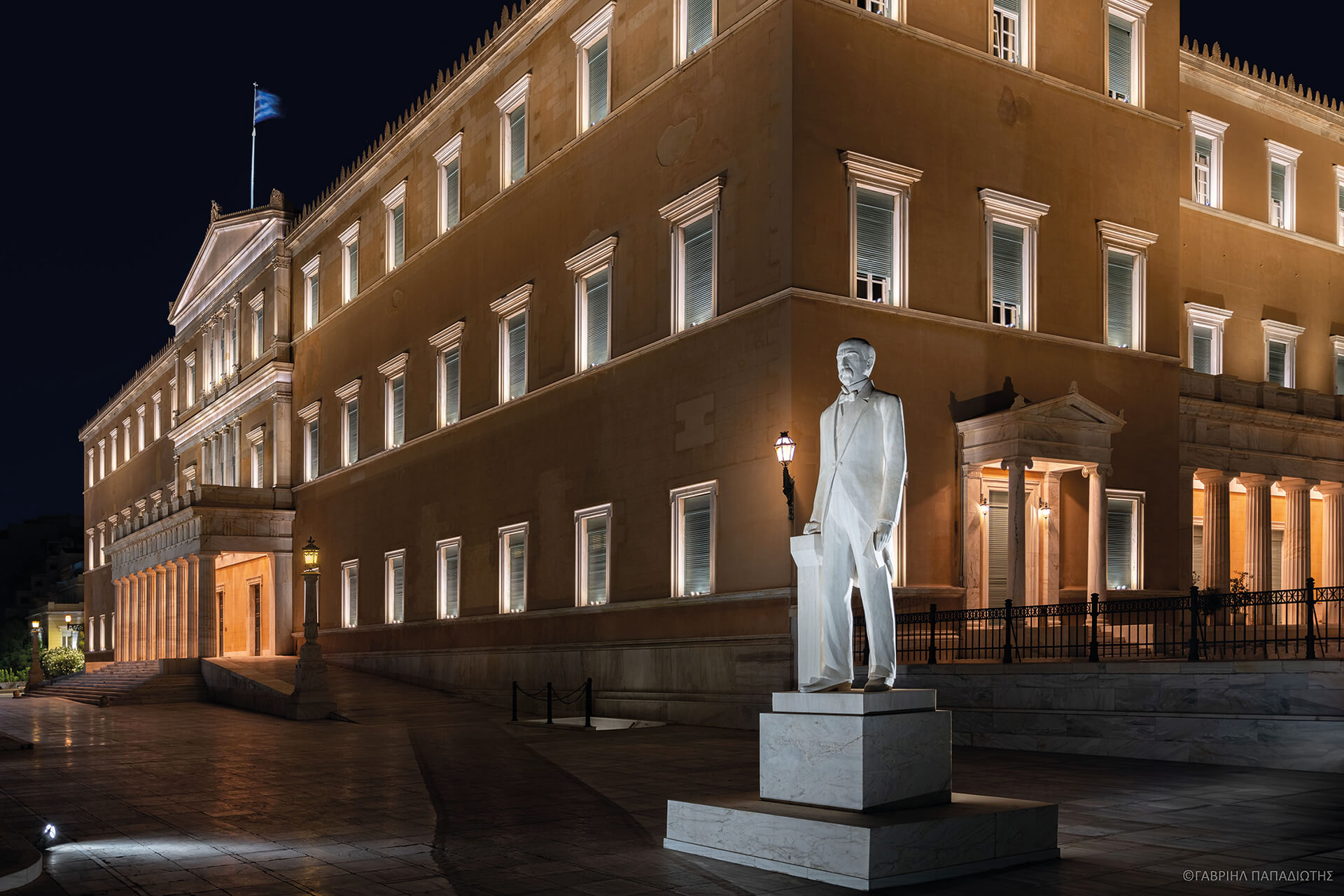
At the compositional level, the lighting highlights the façades of both the Parliament Building and the Monument, emphasizing the rhythm and plasticity of architectural elements such as pediments, cornices, pilasters and porticoes, as well as individual features including the monument’s central relief, shields and inscriptions. In parallel, light sources with a high colour rendering index revive the texture and colour of the materials, as well as the sculptures of Eleftherios Venizelos, Charilaos Trikoupis and the figure of the Mother.
Energy Upgrade
The integration of the new lighting equipment was carried out with particular care, ensuring that the morphological characteristics of the listed historic building were preserved. The luminaires installed on the façades underwent special colour treatment to match the surface of installation, allowing them to remain almost invisible during the daytime. In addition, the historic lamp posts and decorative lanterns of the Parliament complex were restored and upgraded.
Over the 15-month construction period, the project presented significant technical challenges, as all works were carried out while the building remained in full operation. The age of the building, combined with the numerous interventions that have taken place over the past 180 years, made the management of electrical routes particularly demanding, while the hybrid nature of the lighting management system required the extensive installation of fibre-optic networks.
Specially designed luminaires were also developed for specific architectural elements, such as the coffers of the porticoes, ensuring that the final result responded fully to the particular spatial requirements. The interventions were carried out with the contribution of a specialized conservation team, ensuring the protection of the building’s aesthetic and historical integrity.
The project’s energy upgrade is particularly significant. In the five-level underground parking facility and the nursery building, nominal energy consumption was reduced from 137KW in the previous installation to 41KW. Furthermore, thanks to the intelligent lighting management system, the final energy consumption is limited to just 29KW. This substantial reduction enhances the overall energy efficiency of the complex while contributing to the sustainable operation of one of the country’s most emblematic public buildings.