Shop & Trade | Office Building in Tavros
Architecture:
Photography:
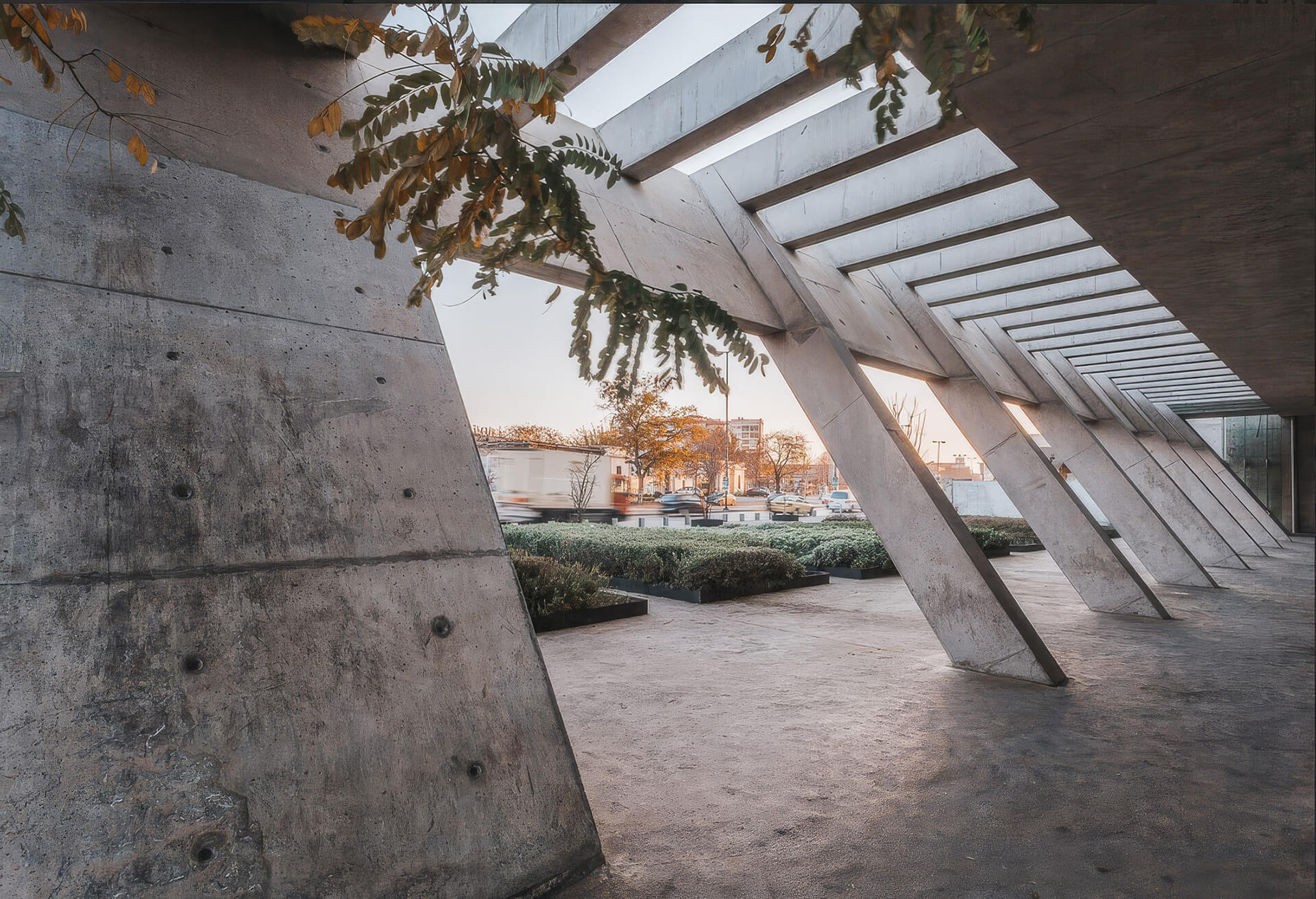
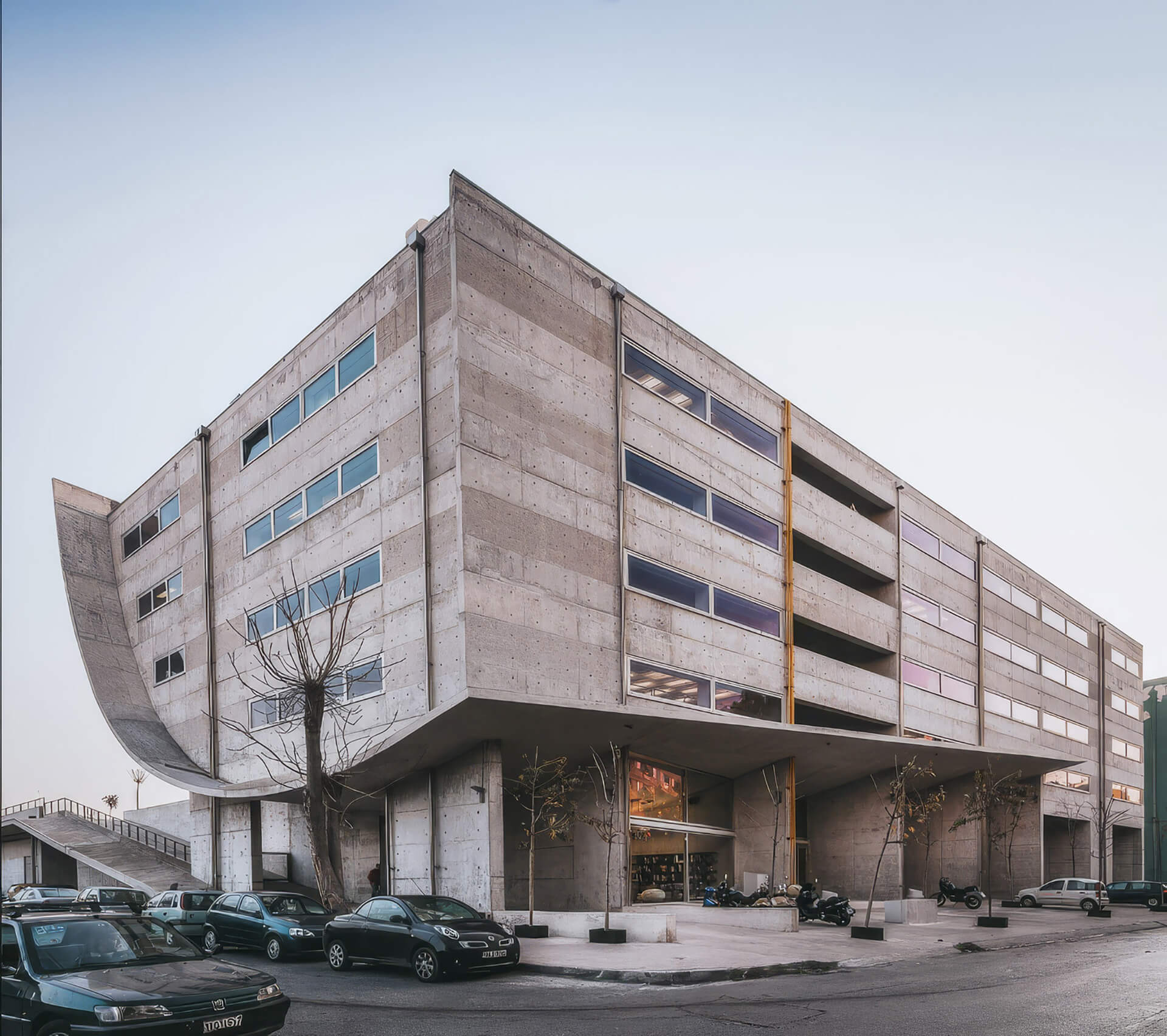
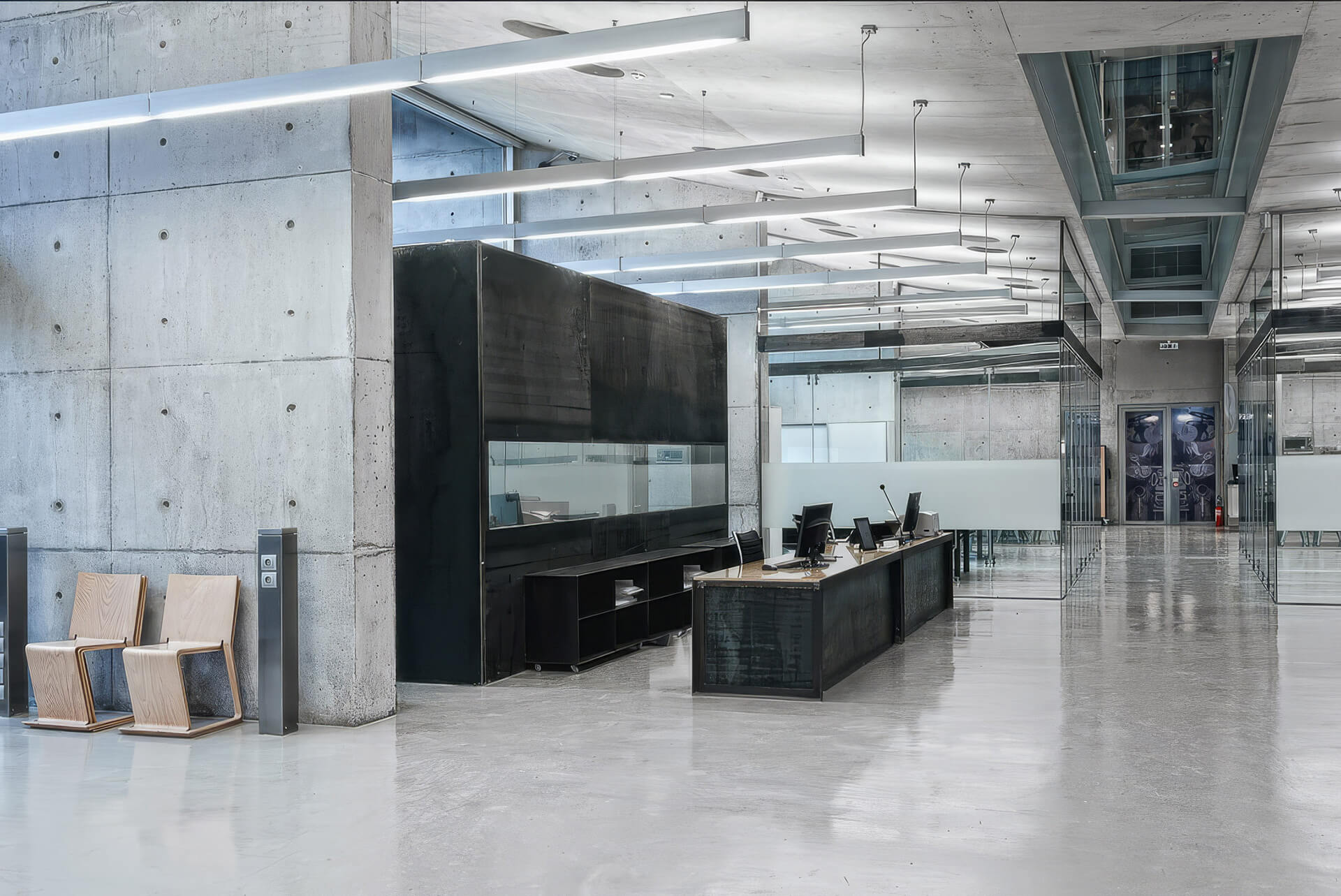
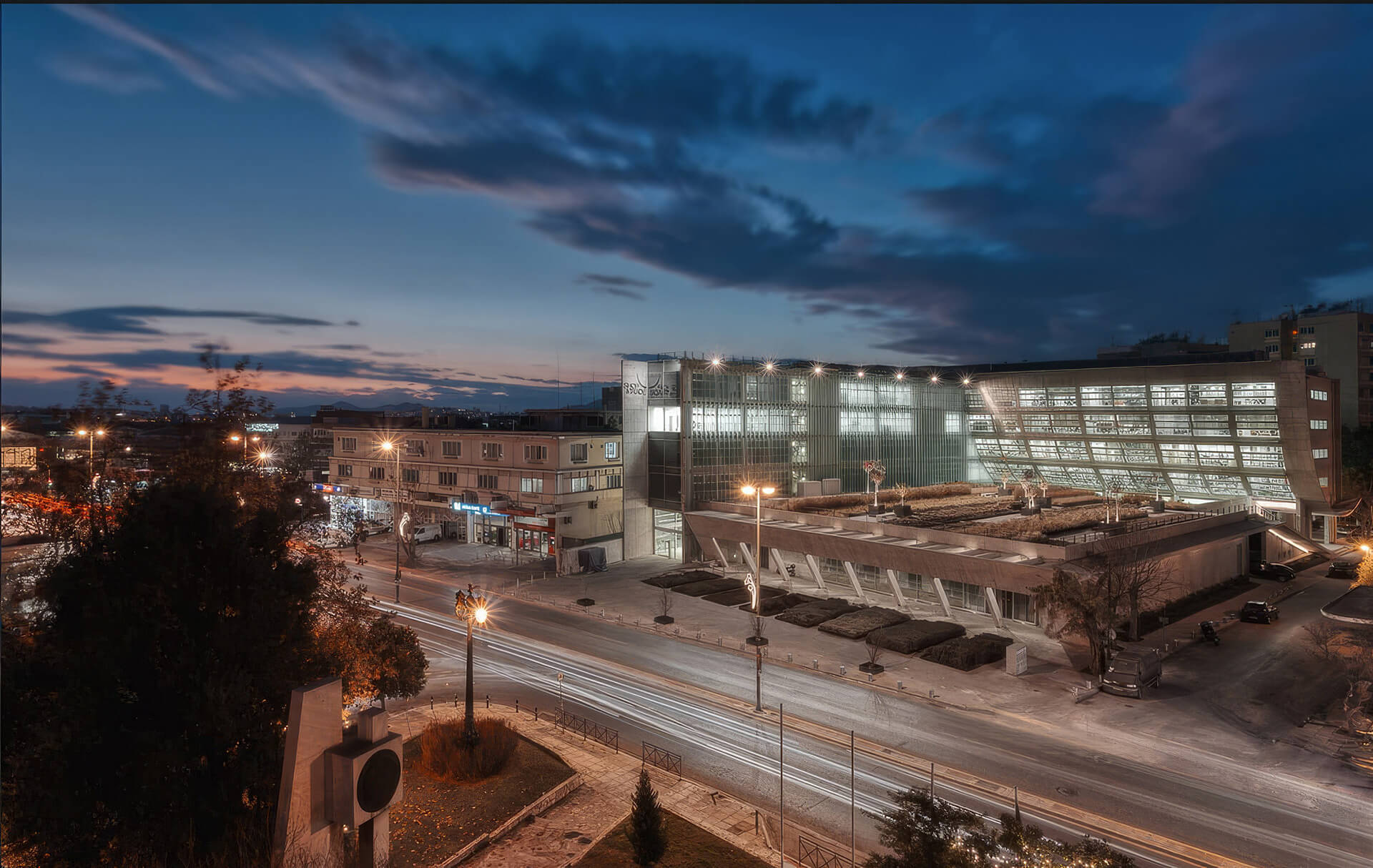
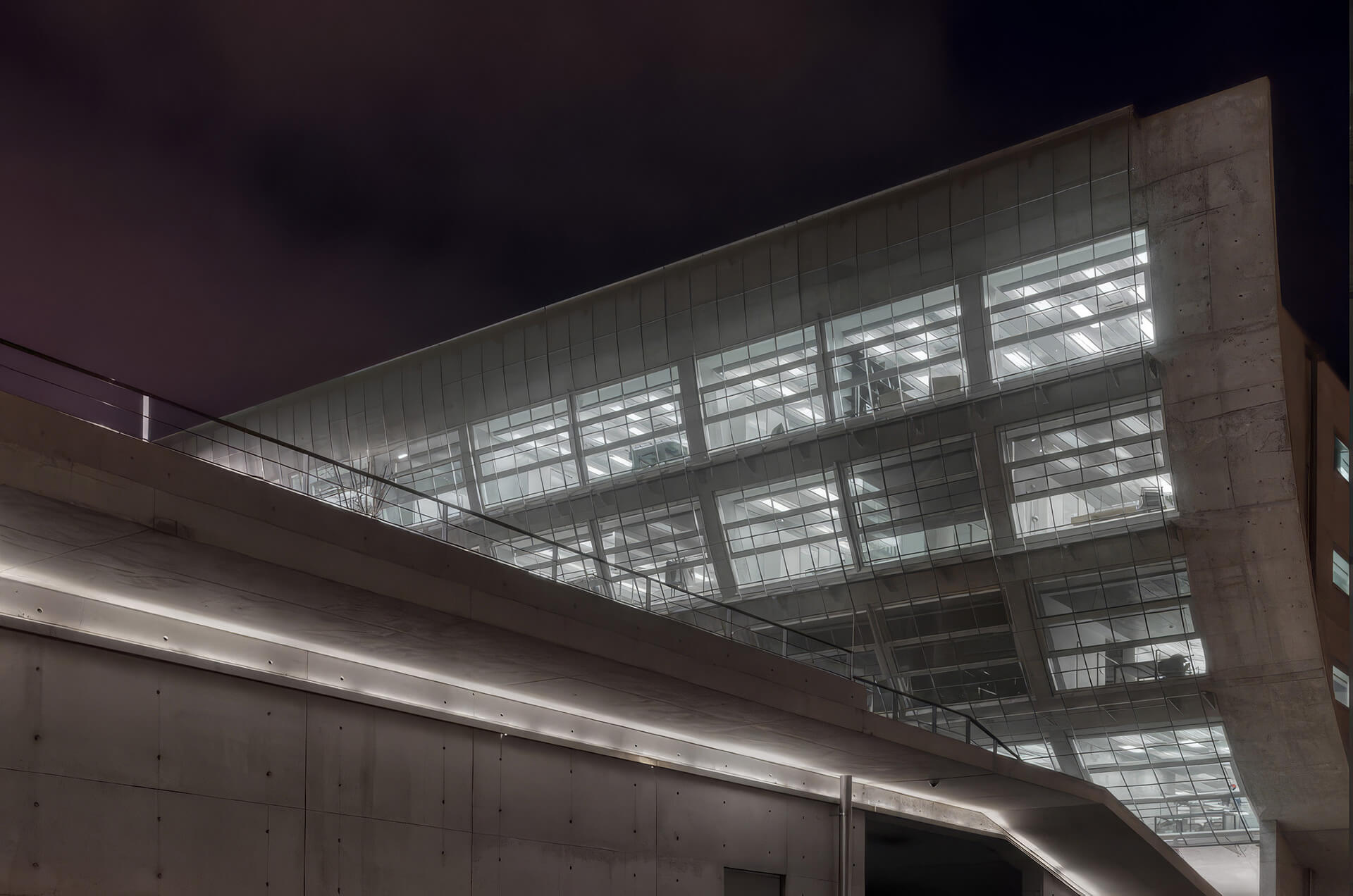
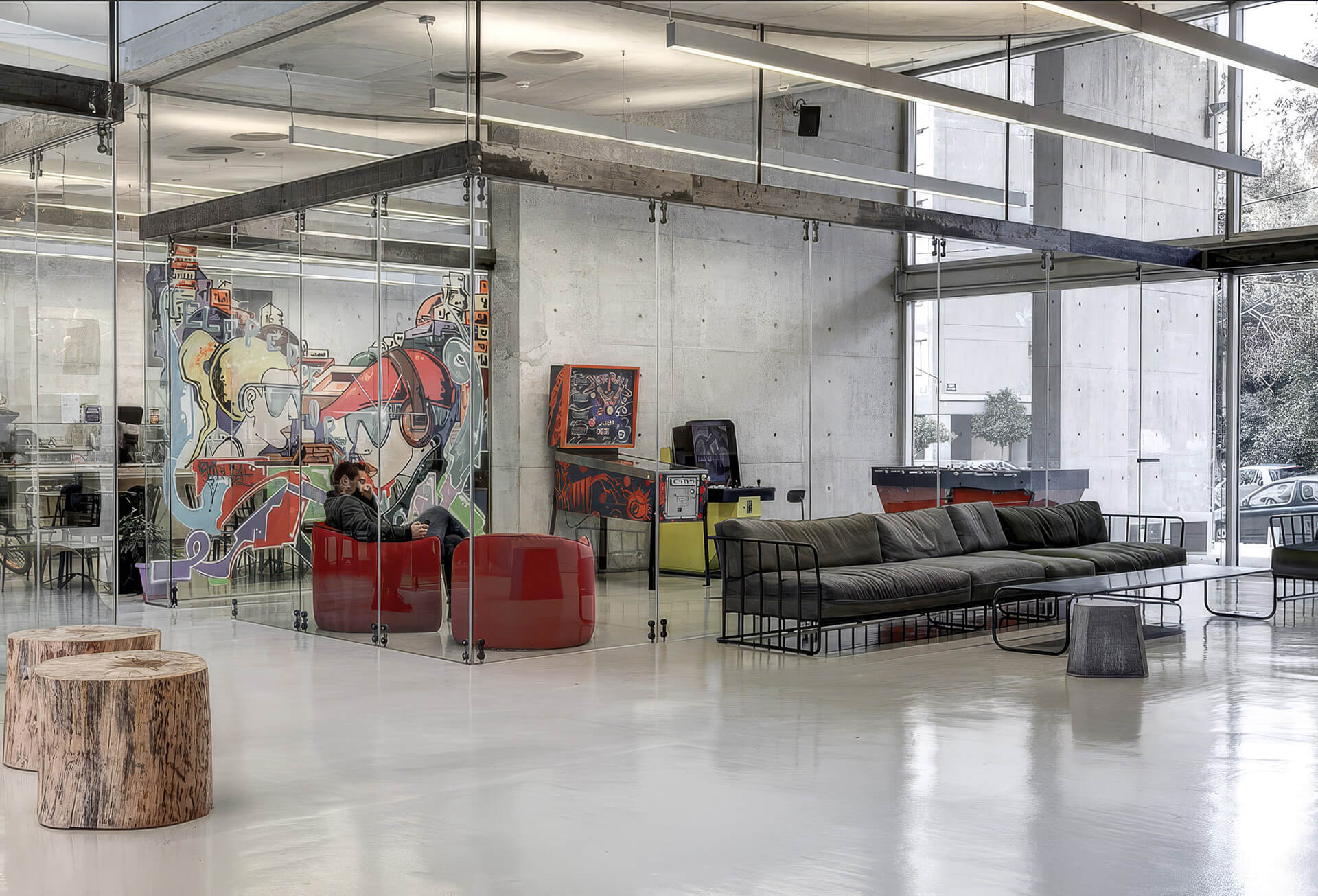
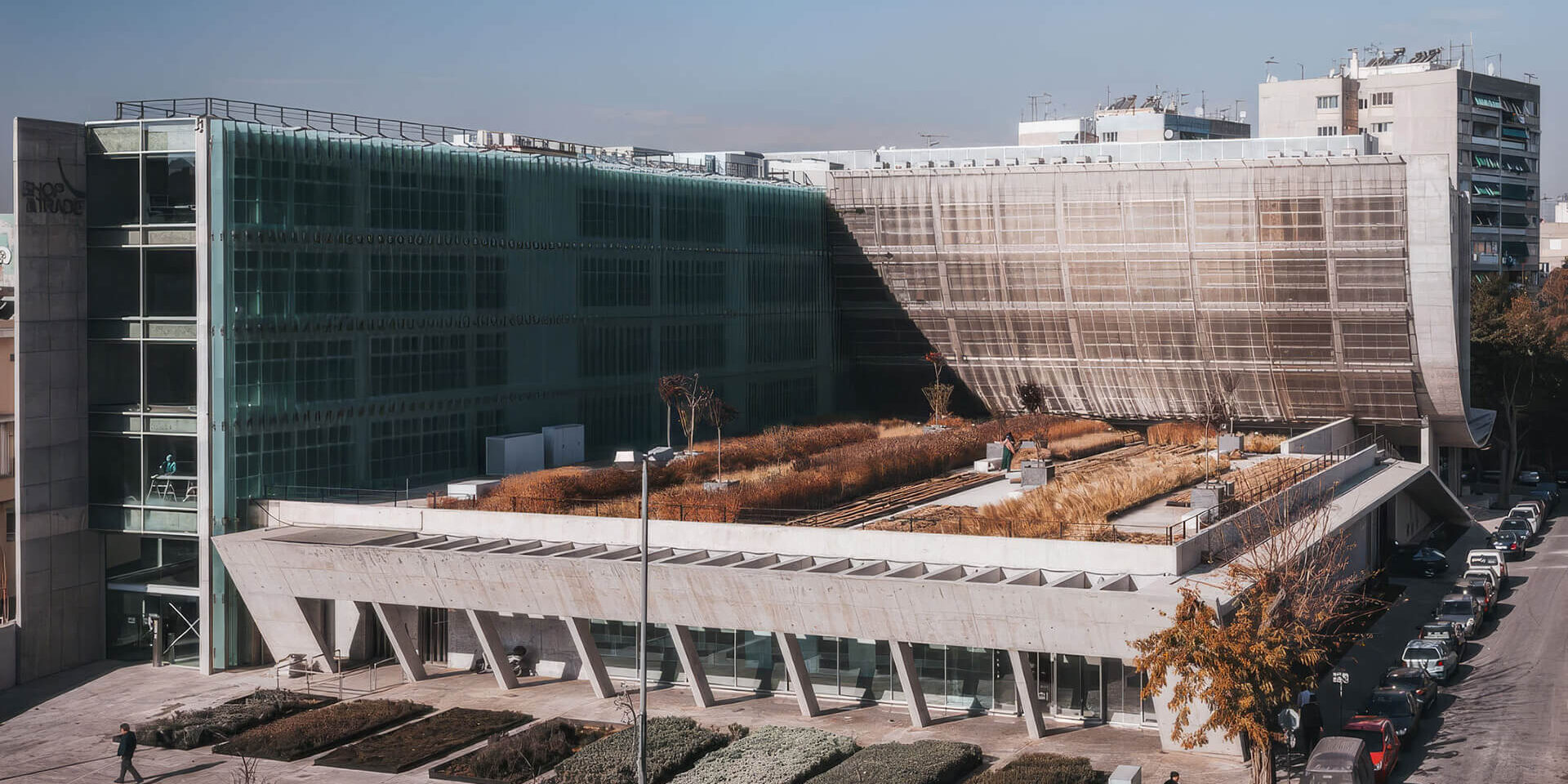
Along the axis that, from antiquity to the present day, connects the port of Piraeus with the center of Athens, Pireos Street, a concrete building of approximately 10,000 m² has been constructed, accommodating a fashion company alongside office functions.
Design Philosophy
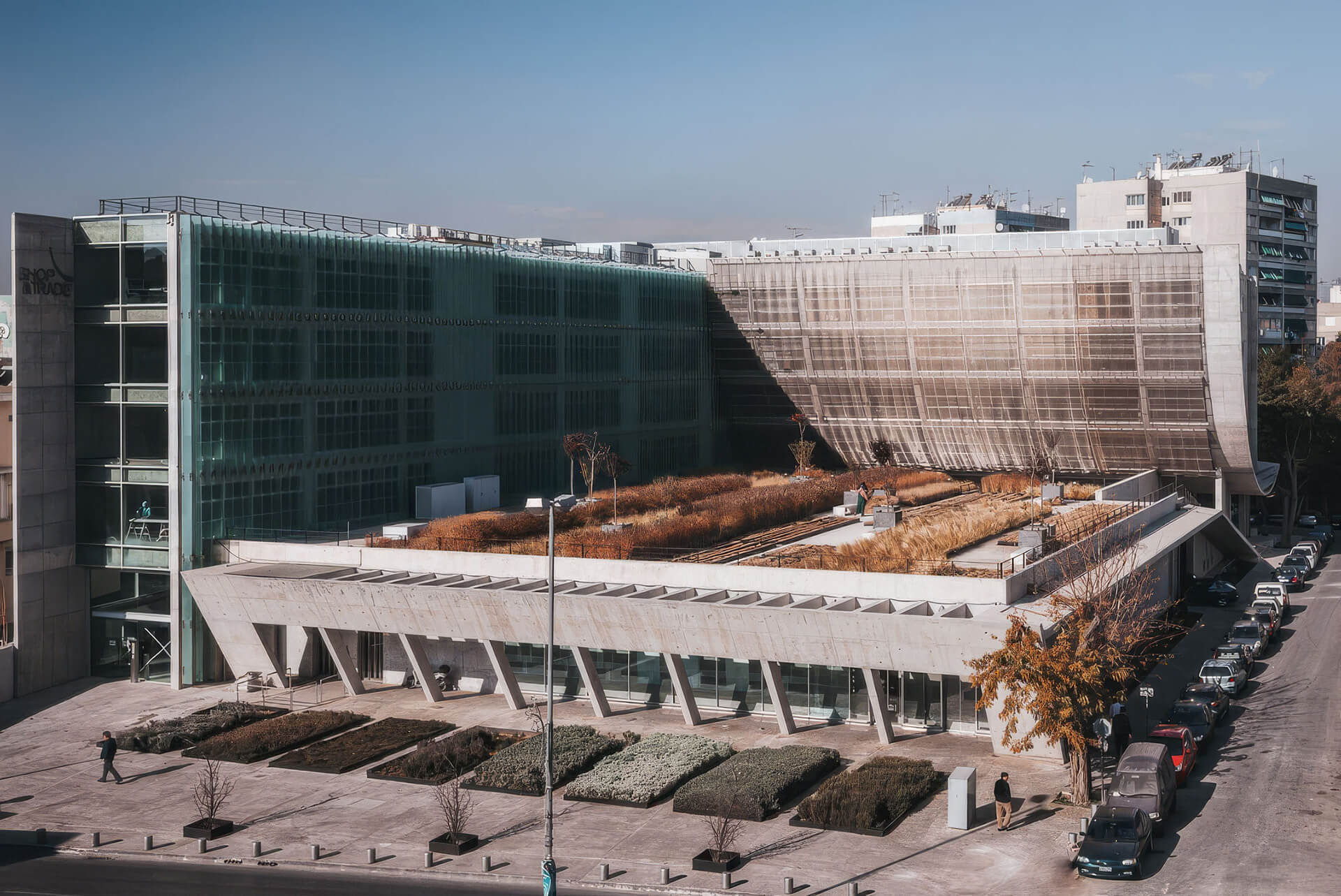
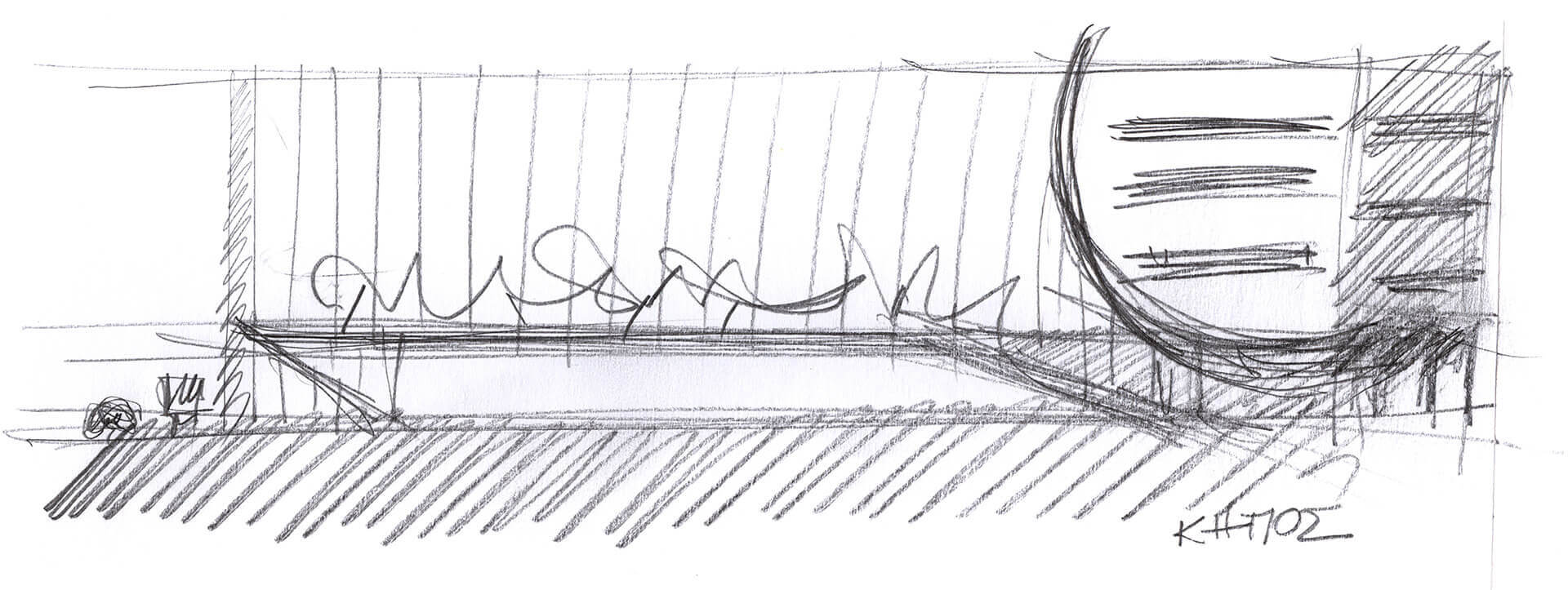
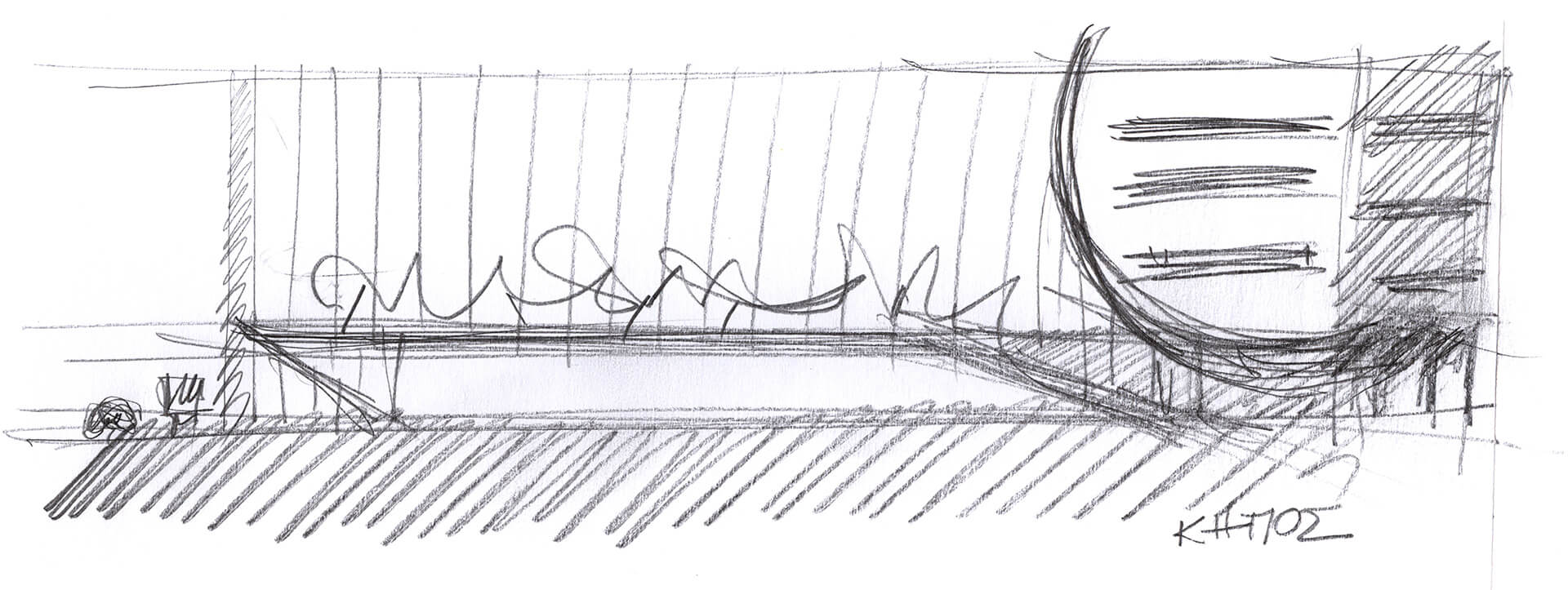
The design of the building seeks to address two critical issues of the contemporary city: the maximization of greenery in relation to the built environment and the optimization of its environmental performance. The architectural composition is articulated through the coexistence of two distinct volumes: a single-storey retail space of 1,300 m² and a five-storey office building in an L-shaped configuration that encloses it, forming a clear boundary towards the adjacent structures and Pireos Street.
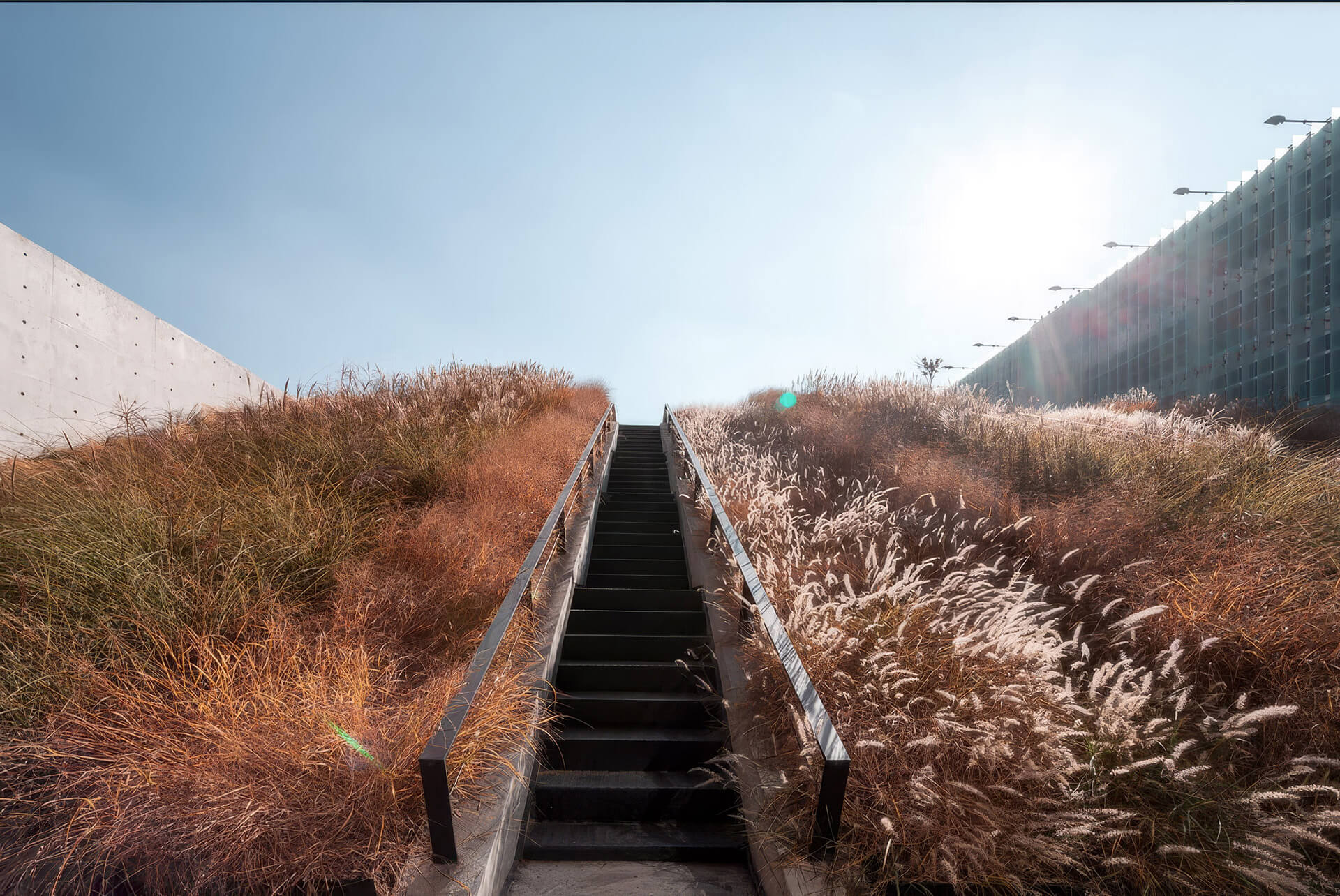
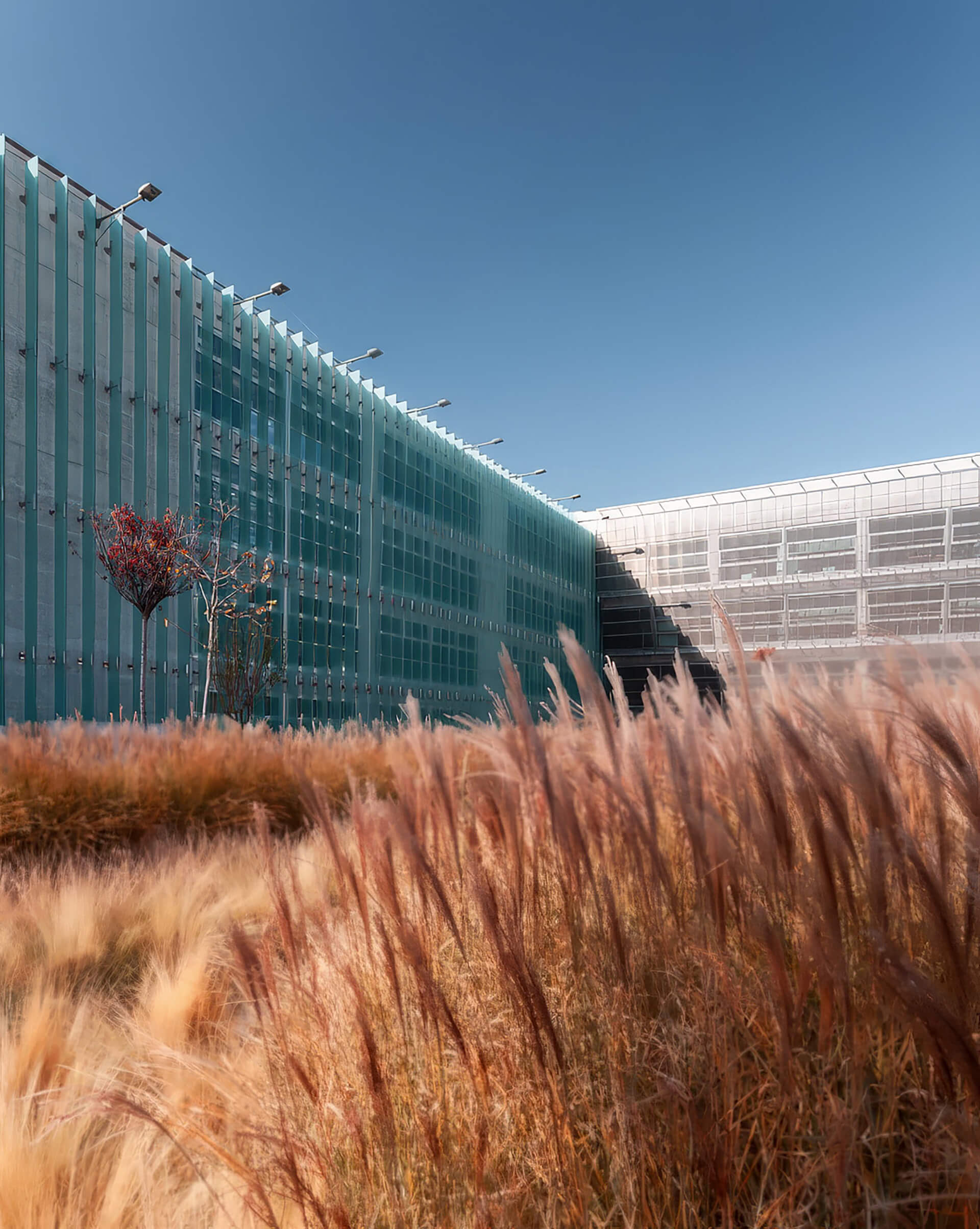
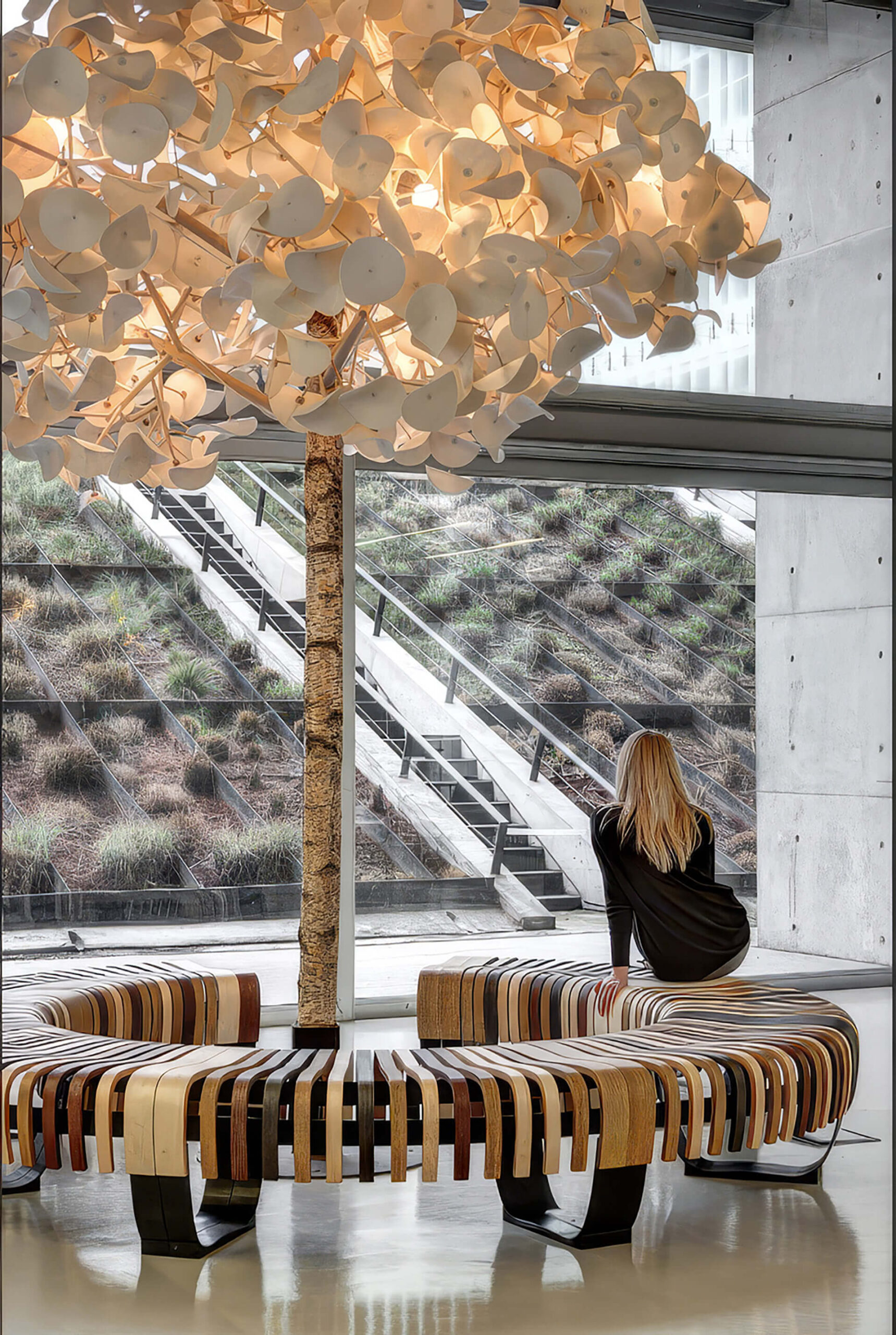
The roof of the ground-level volume is transformed into an intensively planted green roof, functioning as an elevated urban garden for both employees and the city. In this way, the project introduces a new topography, where greenery extends vertically, redefining the user’s relationship with the environment.
Spatial Organization
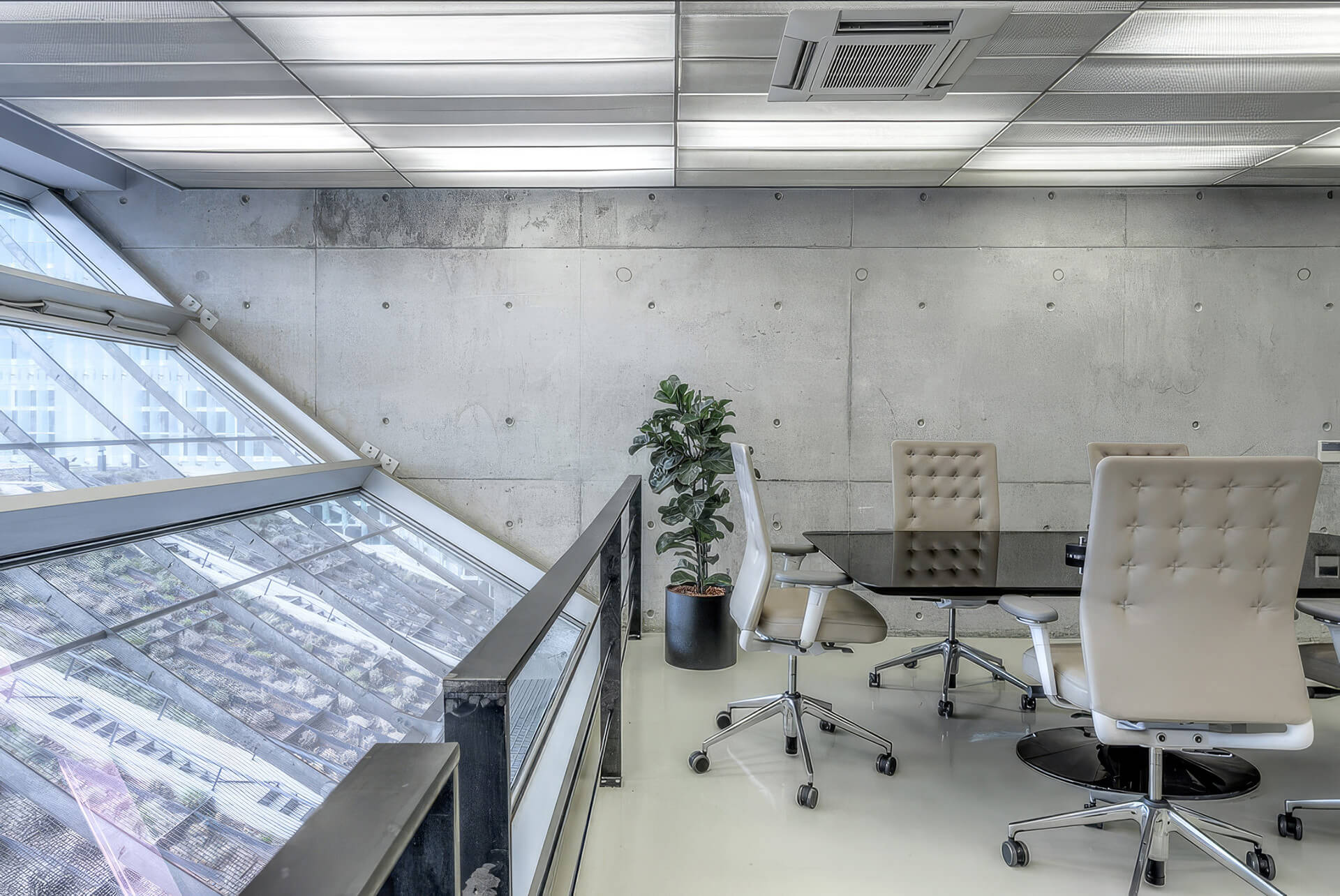
Employees benefit from a direct visual and functional connection to the garden, ensuring privacy and distancing from the noise of the busy urban artery. At the same time, ramps leading to the planted roof, in combination with the geometry of the curved volume, establish a spatial continuity that connects the ground level with a higher, publicly accessible plane.
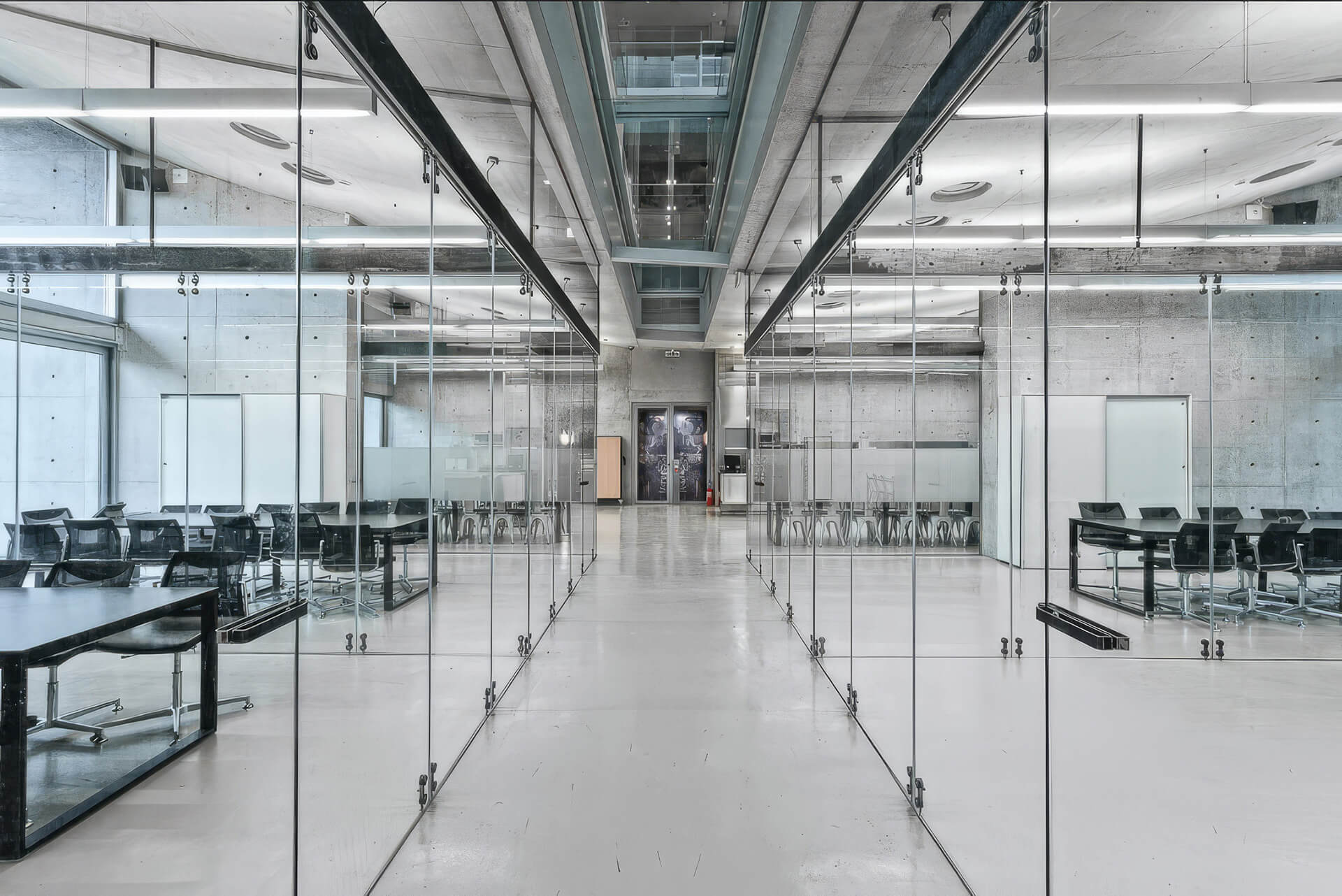
The façades is differentiated according to orientation through shading systems such as louvers and stainless-steel mesh, regulating solar exposure and reducing thermal loads without compromising outward views. Each surface is conceived as an active filter mediating between interior and exterior conditions.
Sustainability & Technology
The green roof is maintained year-round through an automated irrigation system that utilizes rainwater collection and reuse tanks. The storage of significant water volumes supports the survival of the vegetation even during the summer months.
In parallel, the use of air-to-ground heat exchangers – large underground ducts – allows the introduction of naturally tempered air, contributing to the building’s microclimatic performance. A Building Management System (BMS) controls lighting, ventilation, and air conditioning, as well as window operation and internal shading, ensuring optimal indoor comfort while achieving substantial energy savings.
The project embodies a holistic approach to sustainable design, where architecture, technology, and landscape converge into a cohesive system that redefines the contemporary workplace.