The Village | Boutique Suites in Milos
Architecture:
Photography:

In the heart of the settlement of Pollonia in Milos, a polygonal plot is transformed into a complex spatial organism, where the notion of the courtyard is reinterpreted as the core of everyday life. The proposal reconstructs the atmosphere of the Cycladic village through a contemporary architectural language, creating an environment that balances between privacy and collectivity.
Design Philosophy
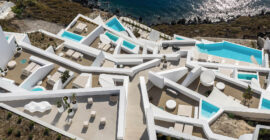
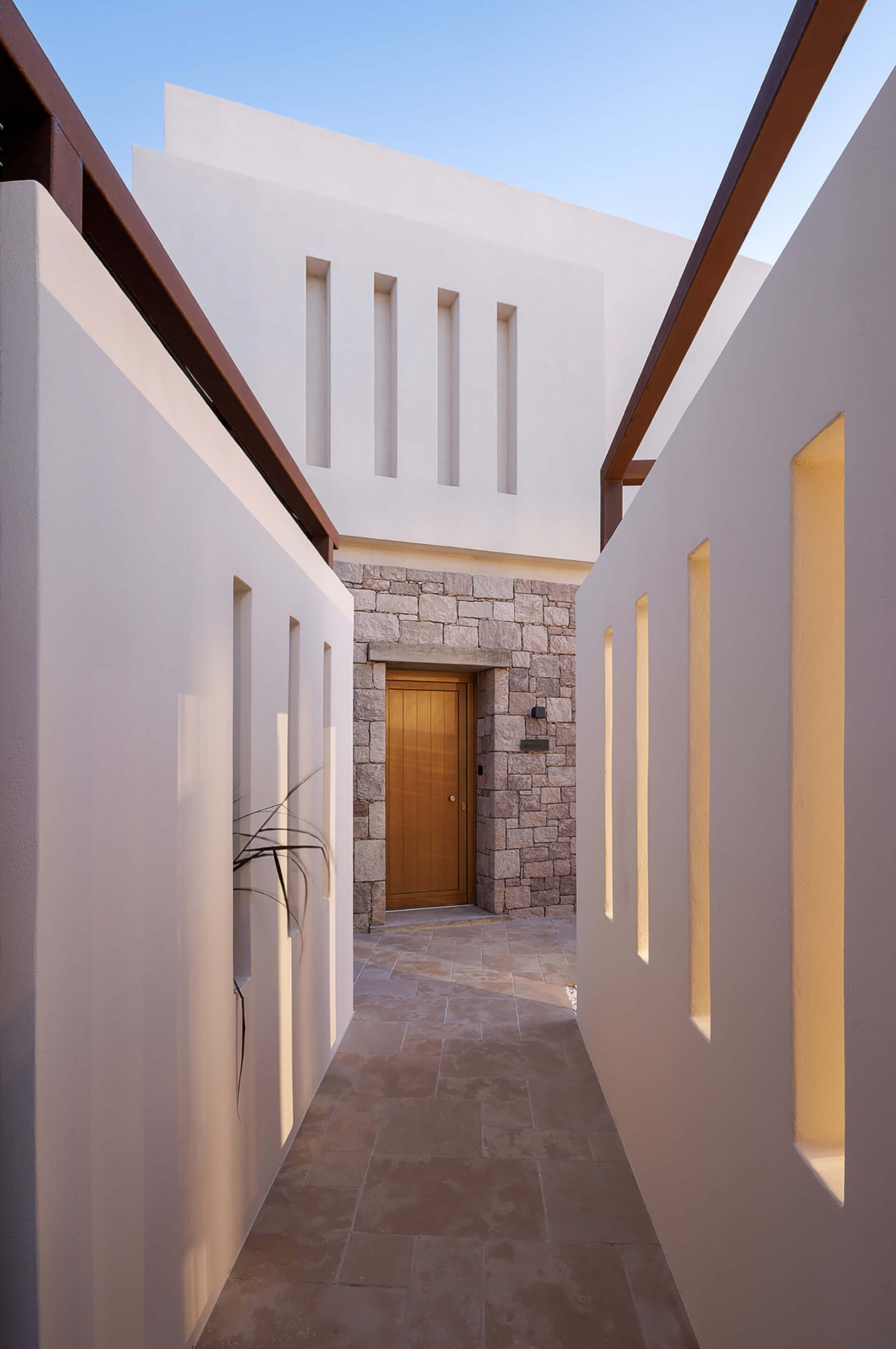
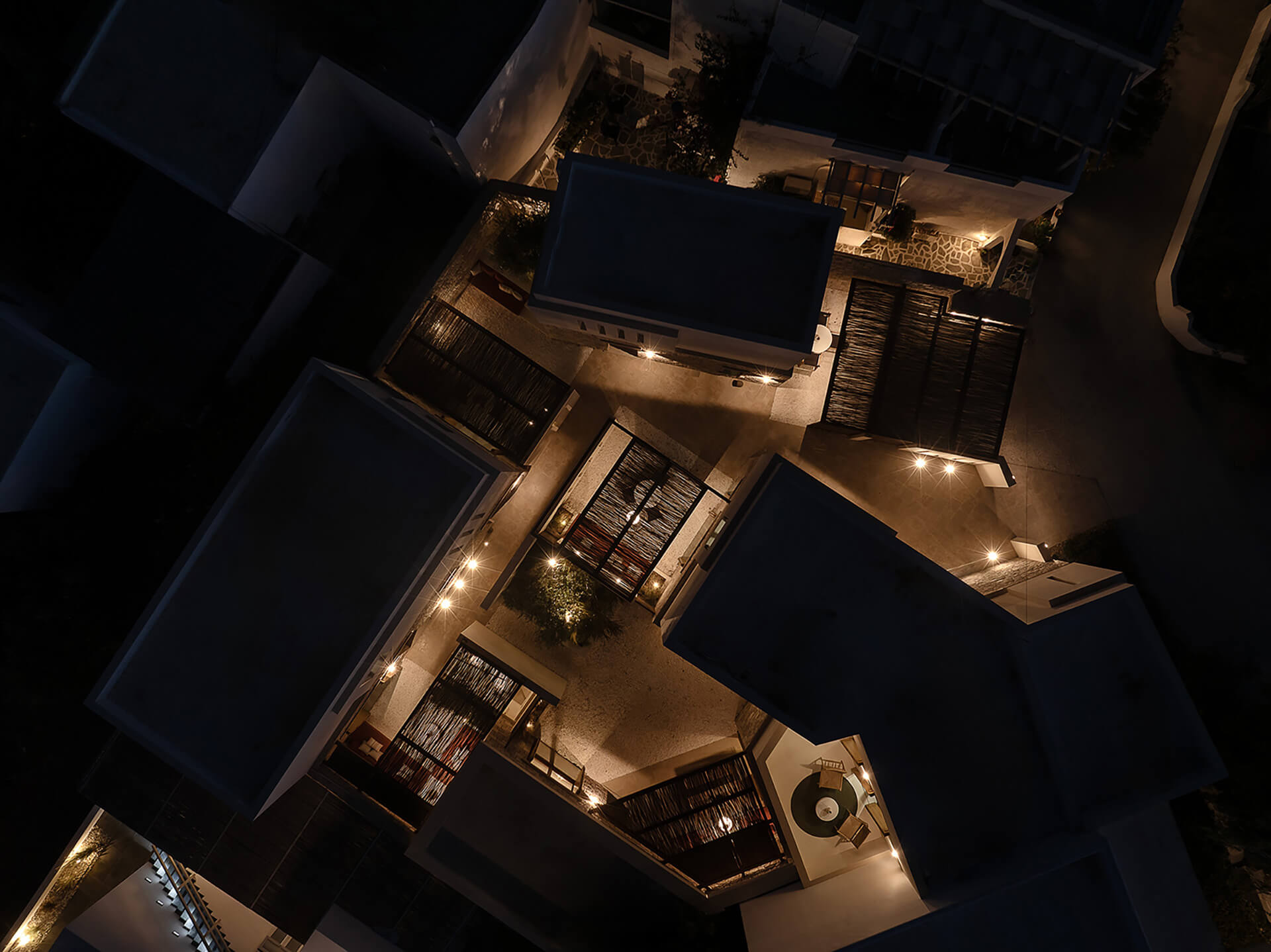
The plan unfolds along the perimeter of the plot, with independent rooms arranged as volumes tracing its boundary. Within, a network of courtyards and pathways is formed, composing a sequence of open and semi-open spaces. The visitor is invited to navigate this system, discovering hidden corners and inner gardens, and choosing between moments of seclusion or social interaction.
The architectural experience is structured as a succession of spatial transitions, where movement becomes a key tool for understanding the project. The routes are non-linear, gradually revealing the whole and reinforcing the sense of a village at a micro scale.
Materiality & Architectural Language
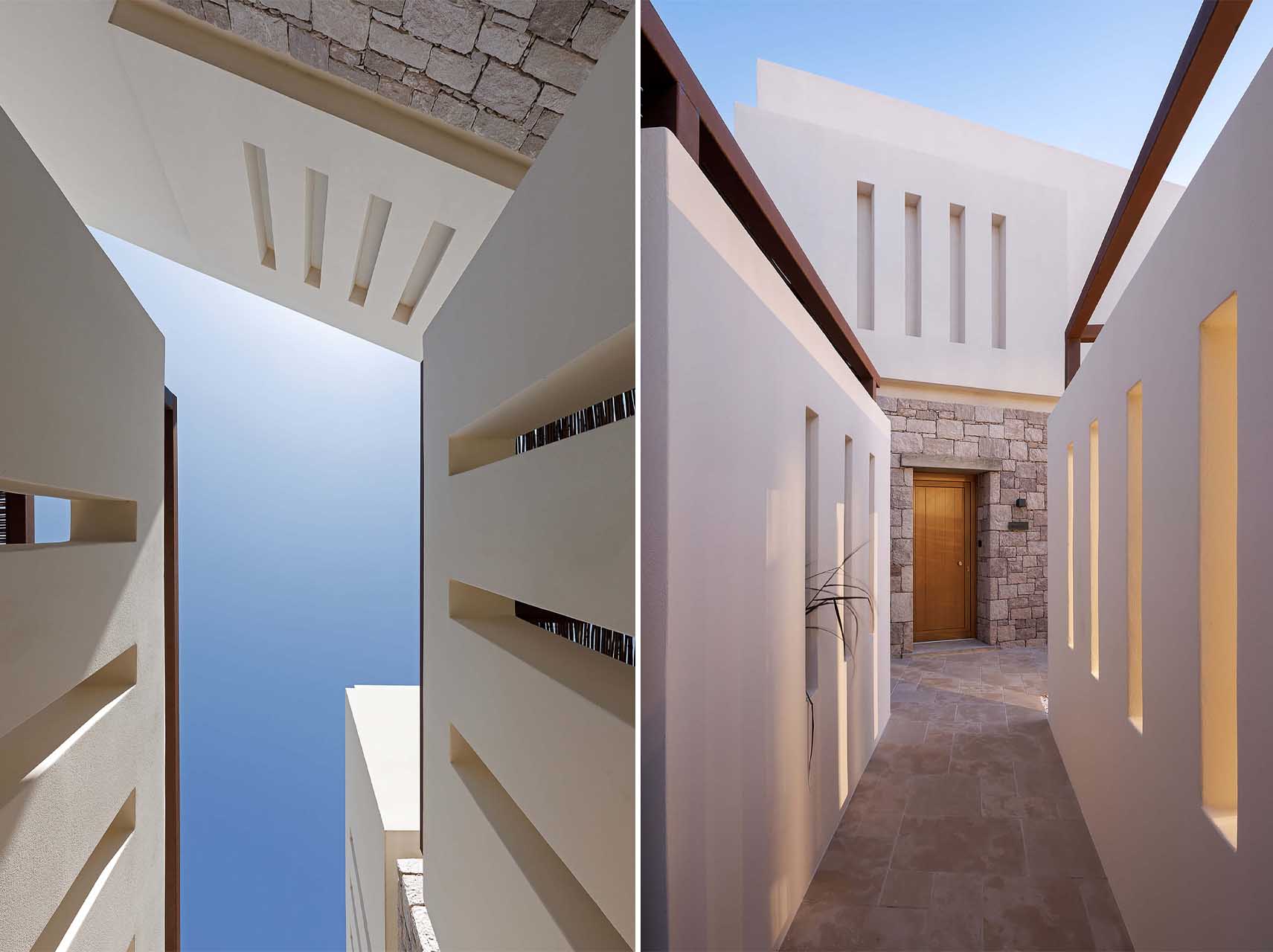
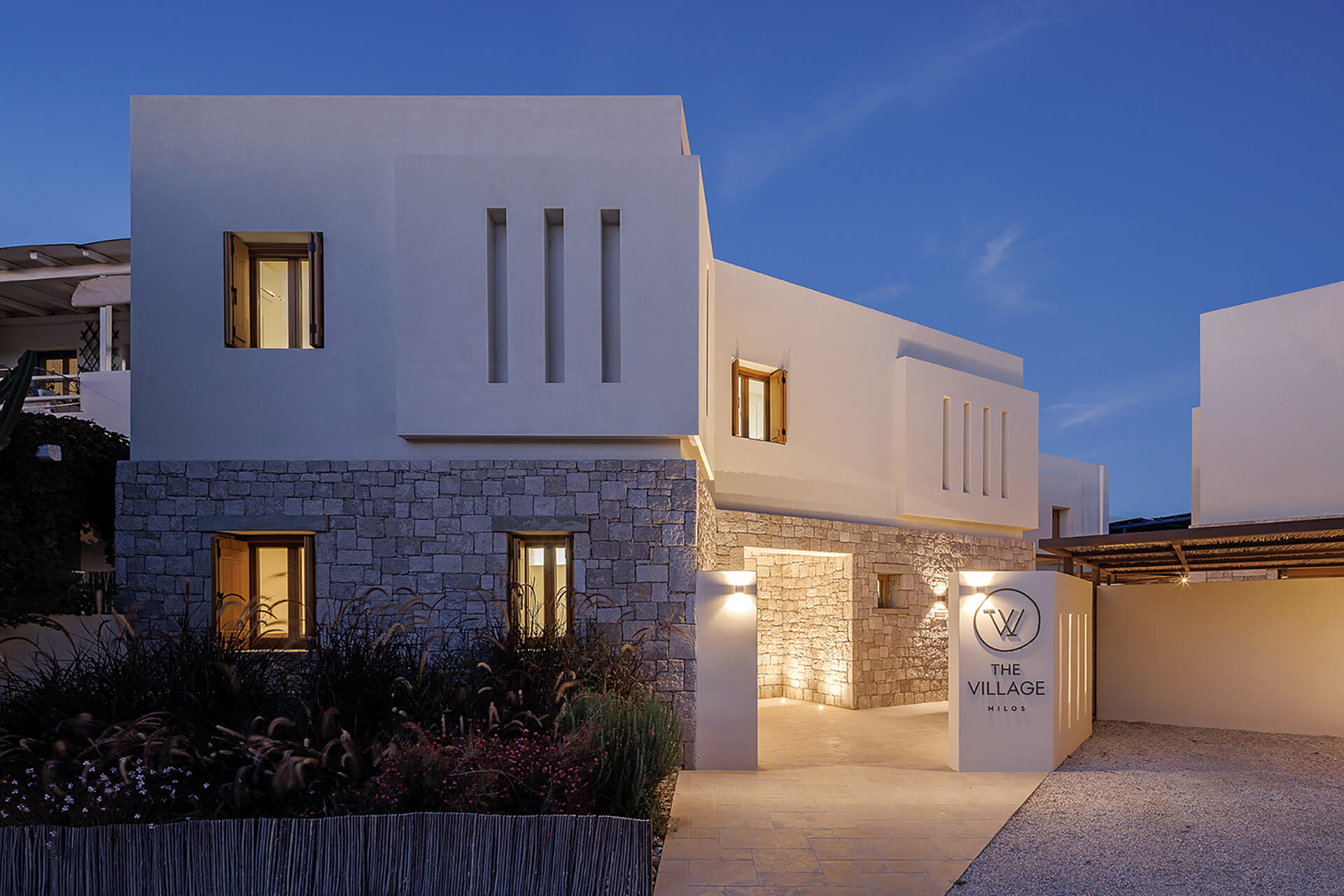
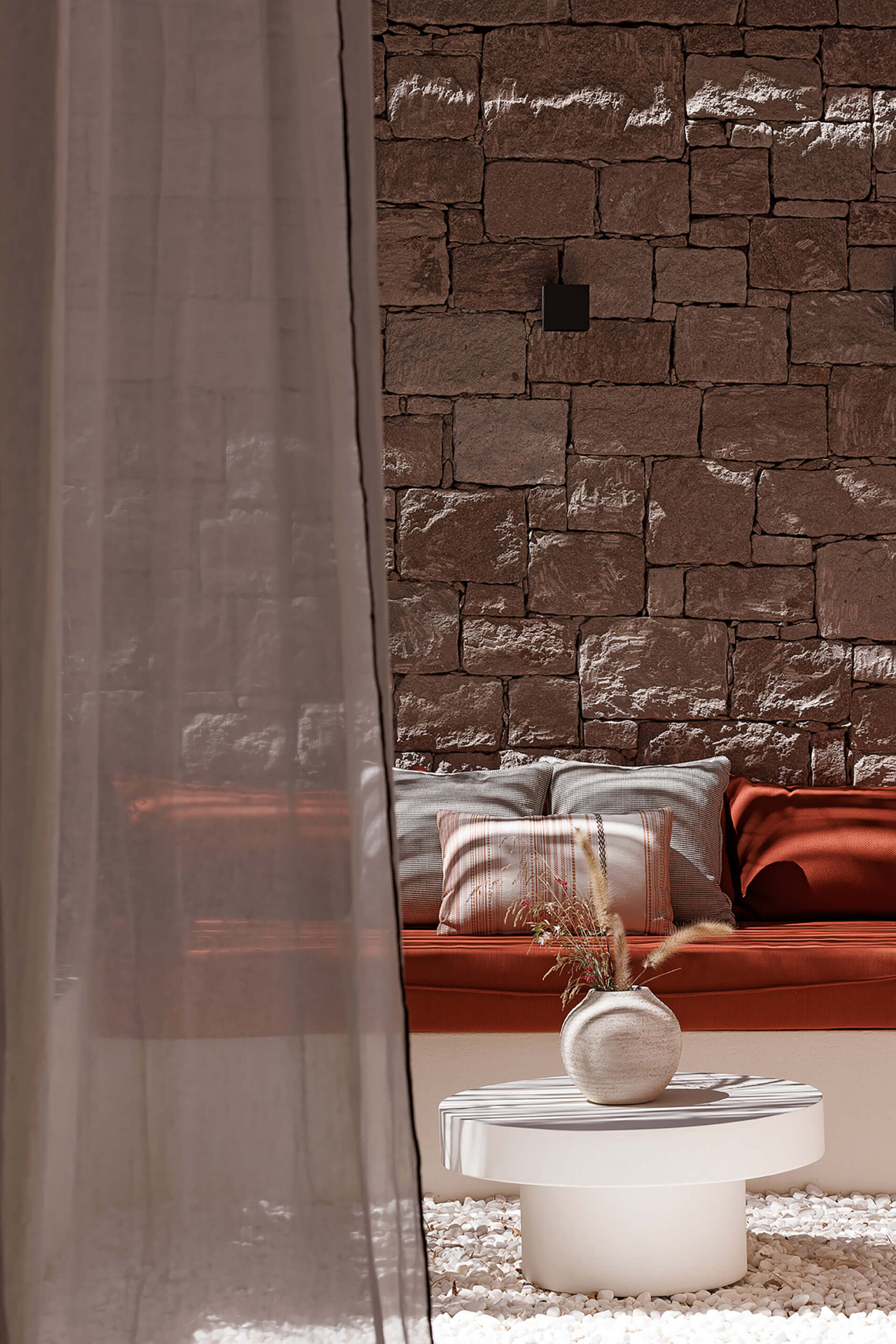
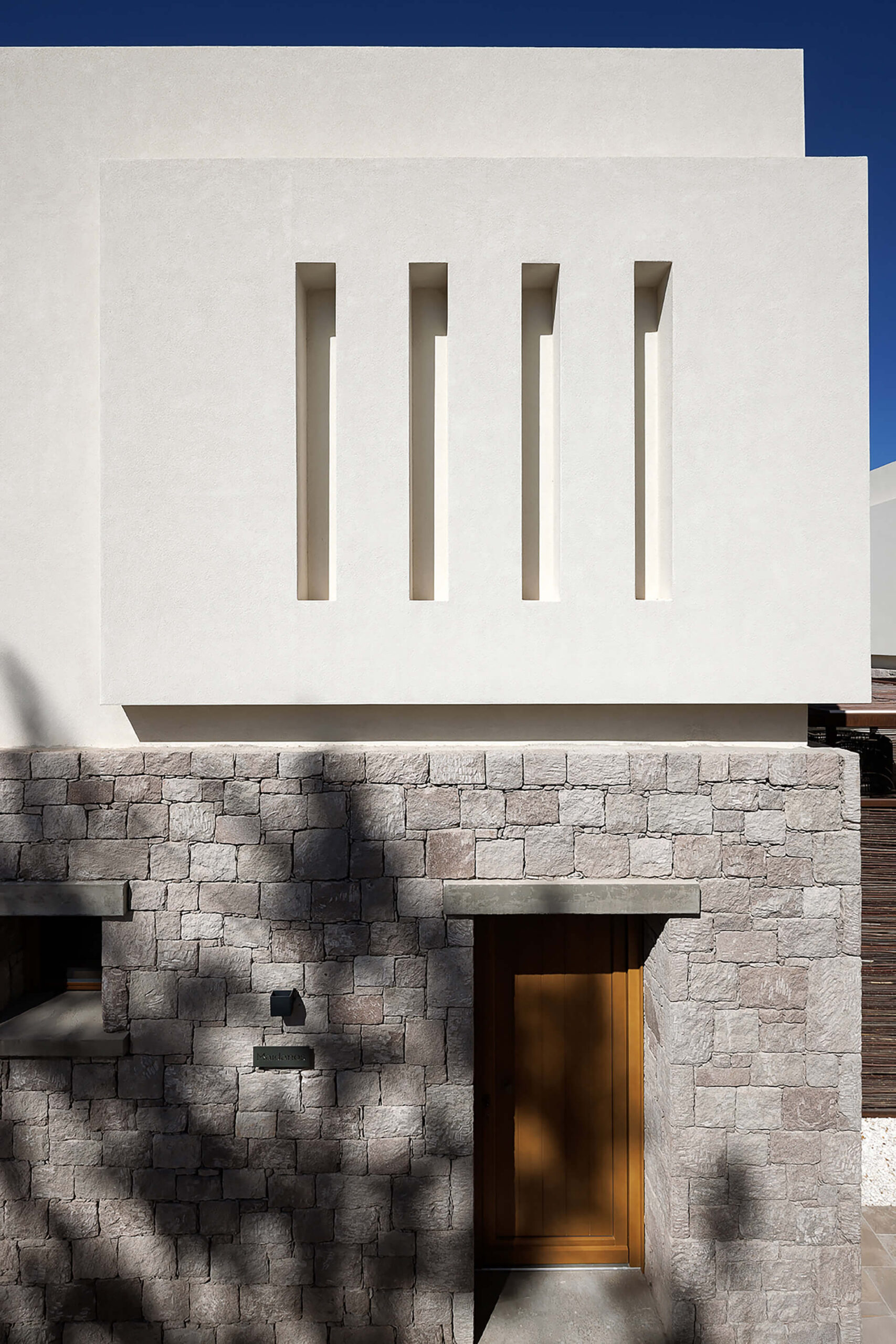
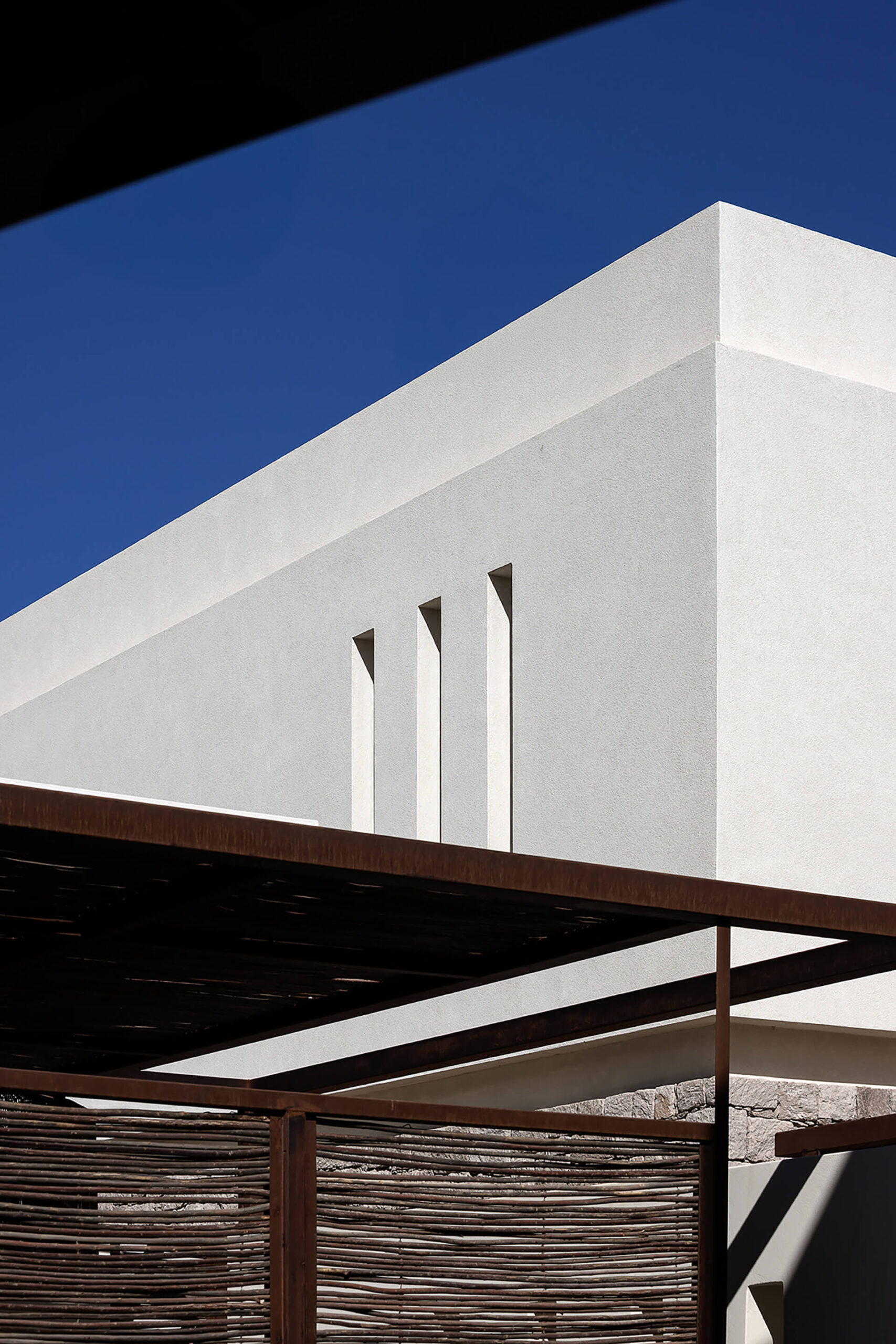
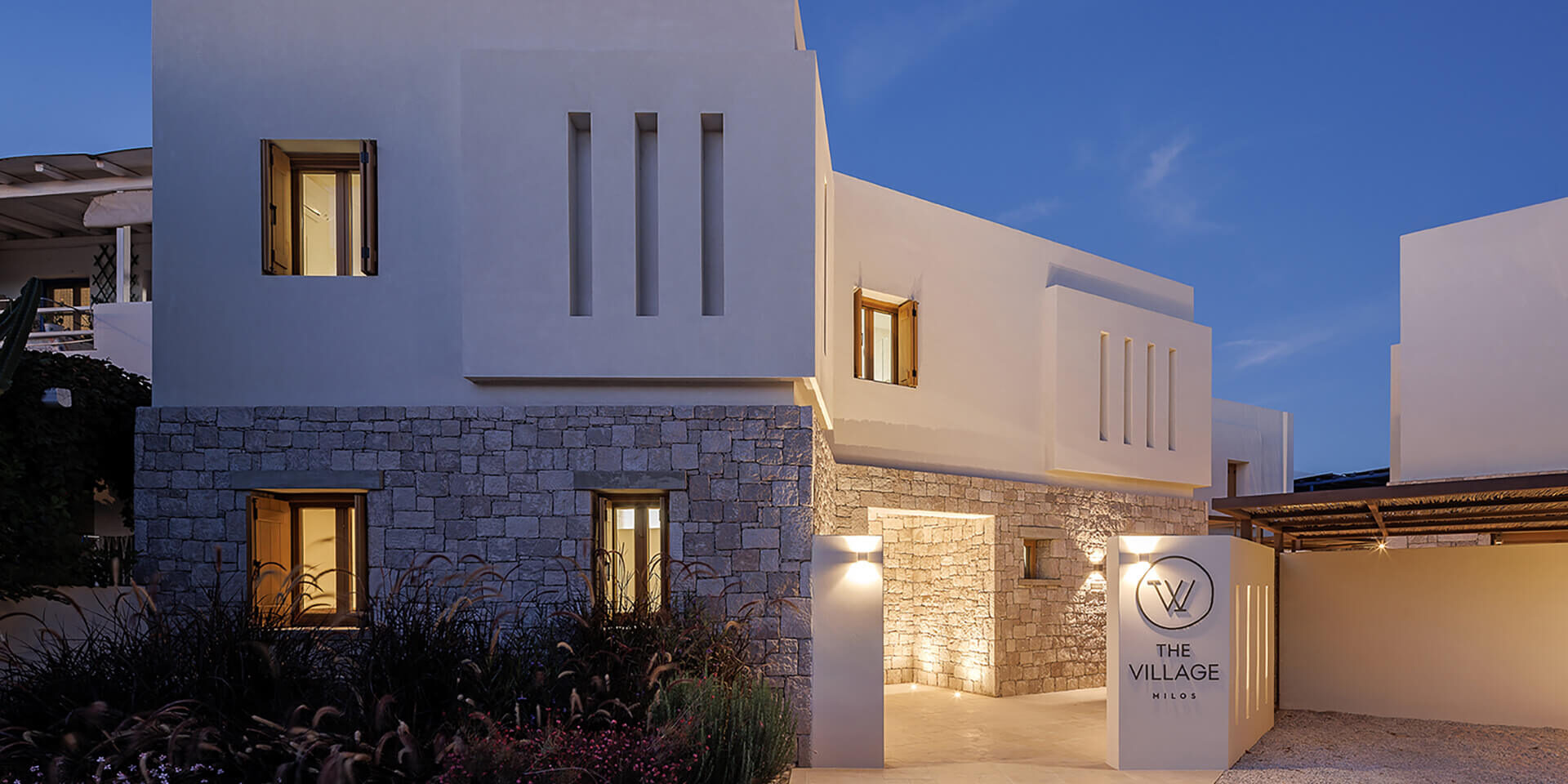
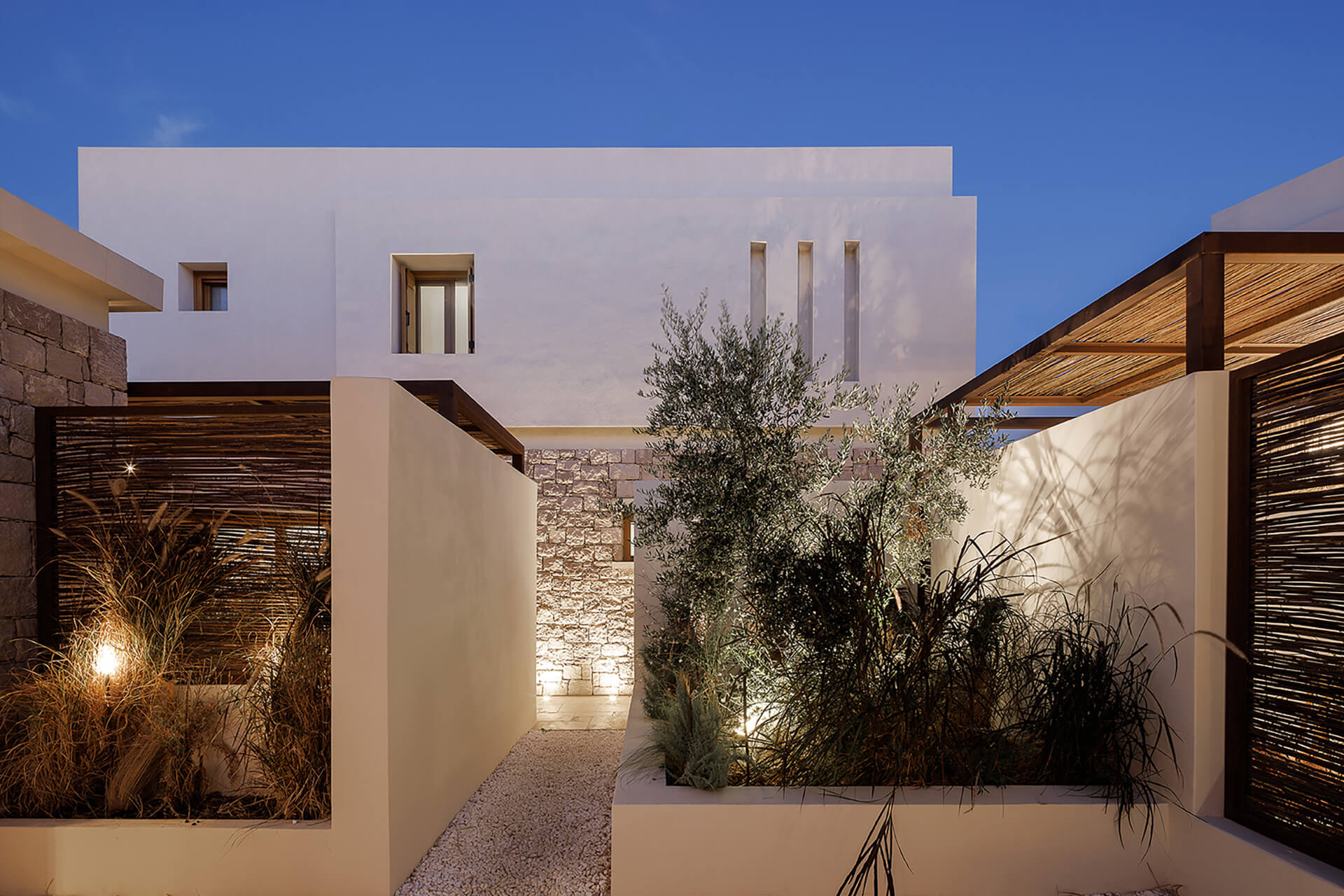
The volumes develop across two levels, forming a clear dual material expression. A grounded base of exposed stone anchors the composition, while the white upper level appears to hover lightly above it, separated by a subtle shadow gap. This contrast enhances the plasticity of the composition and articulates the relationship between heaviness and lightness.
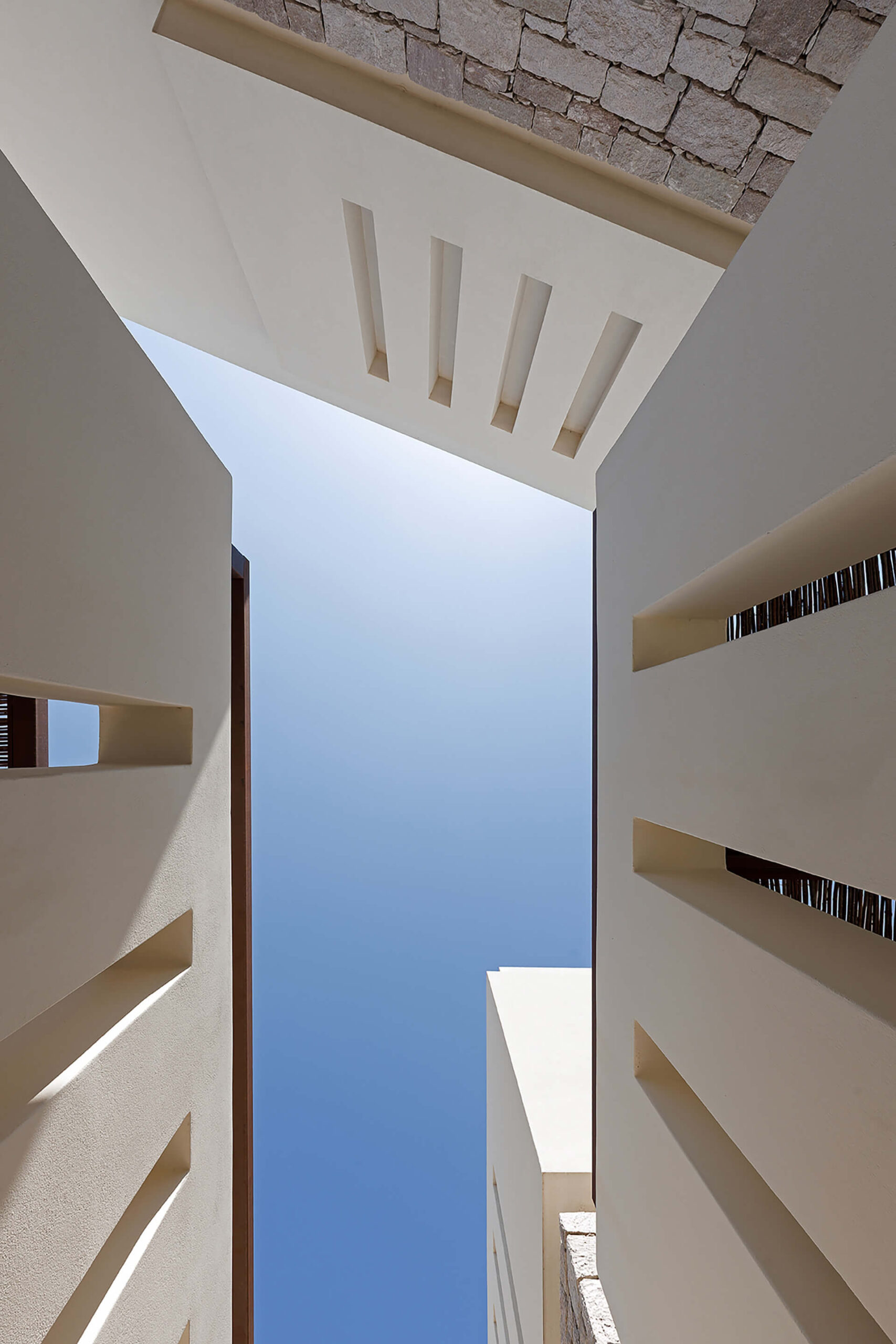
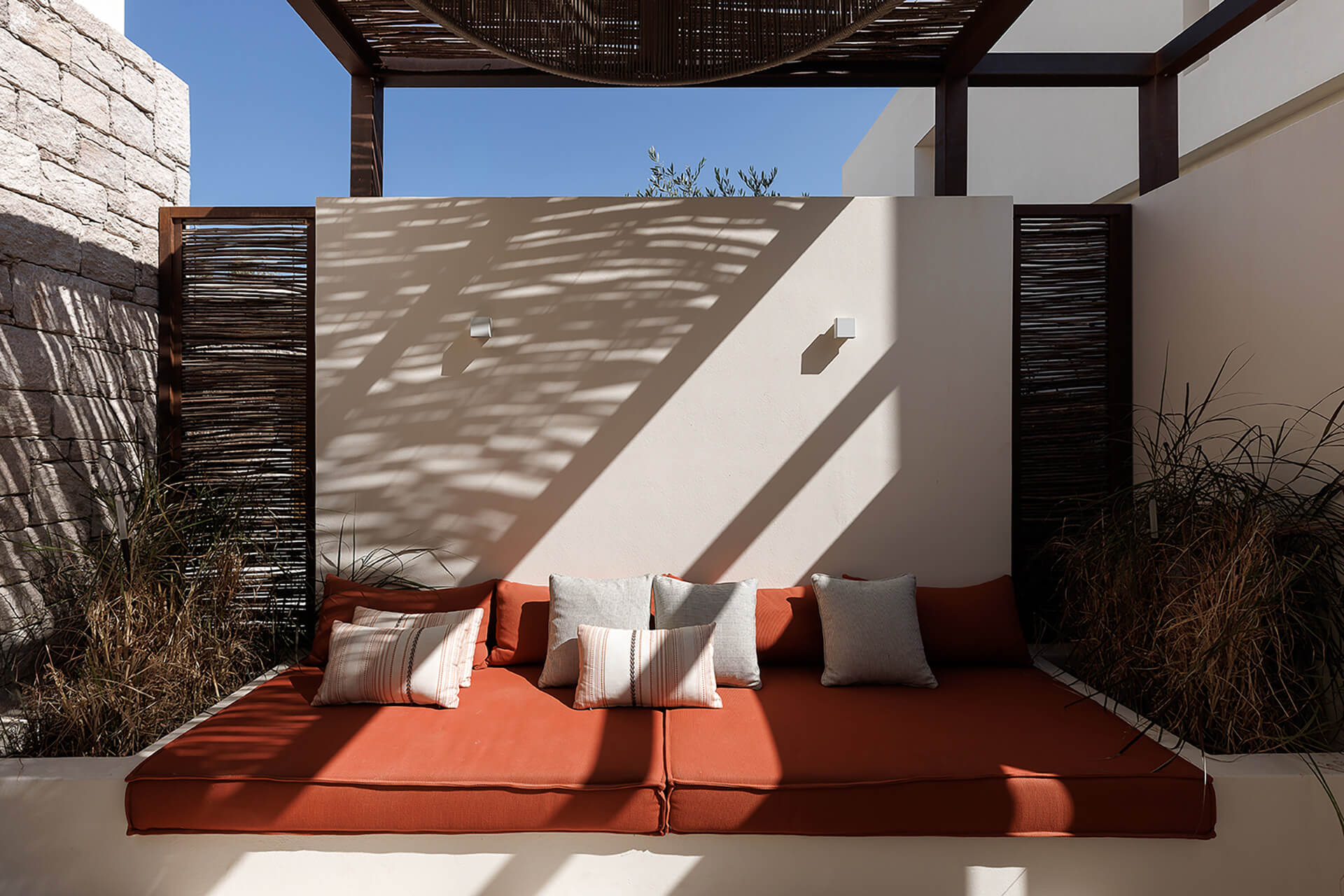
The architectural language of projections, corners, and openings generates a dynamic interplay of light and shadow, constantly shifting throughout the day. Light operates as an active design element, revealing material textures and intensifying spatial perception.
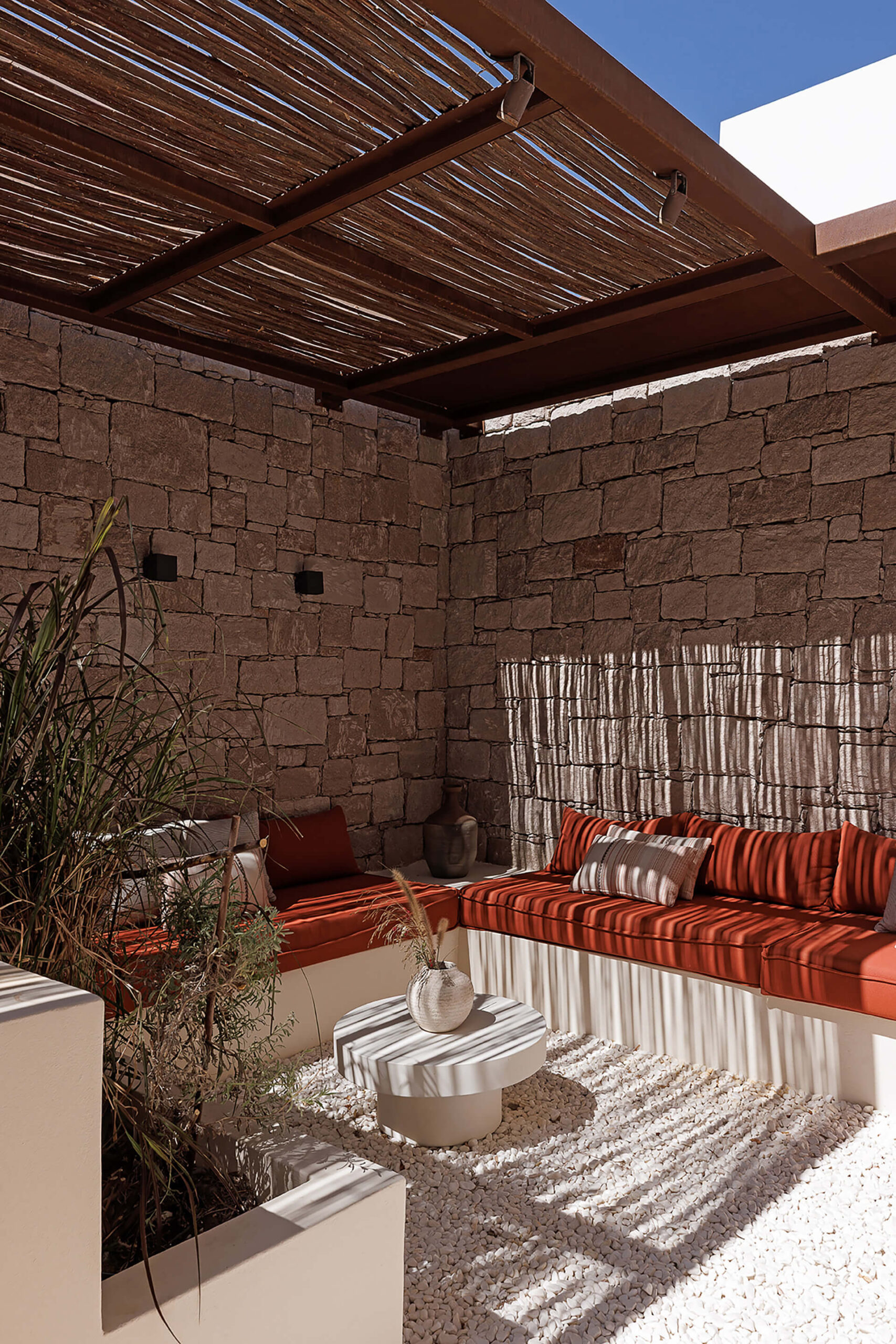
Finally, a third layer of materiality is introduced through metal elements. Pergolas and vertical corten features define the boundaries of the gardens, filter light, and create intermediate zones of privacy.
Spatial Organization
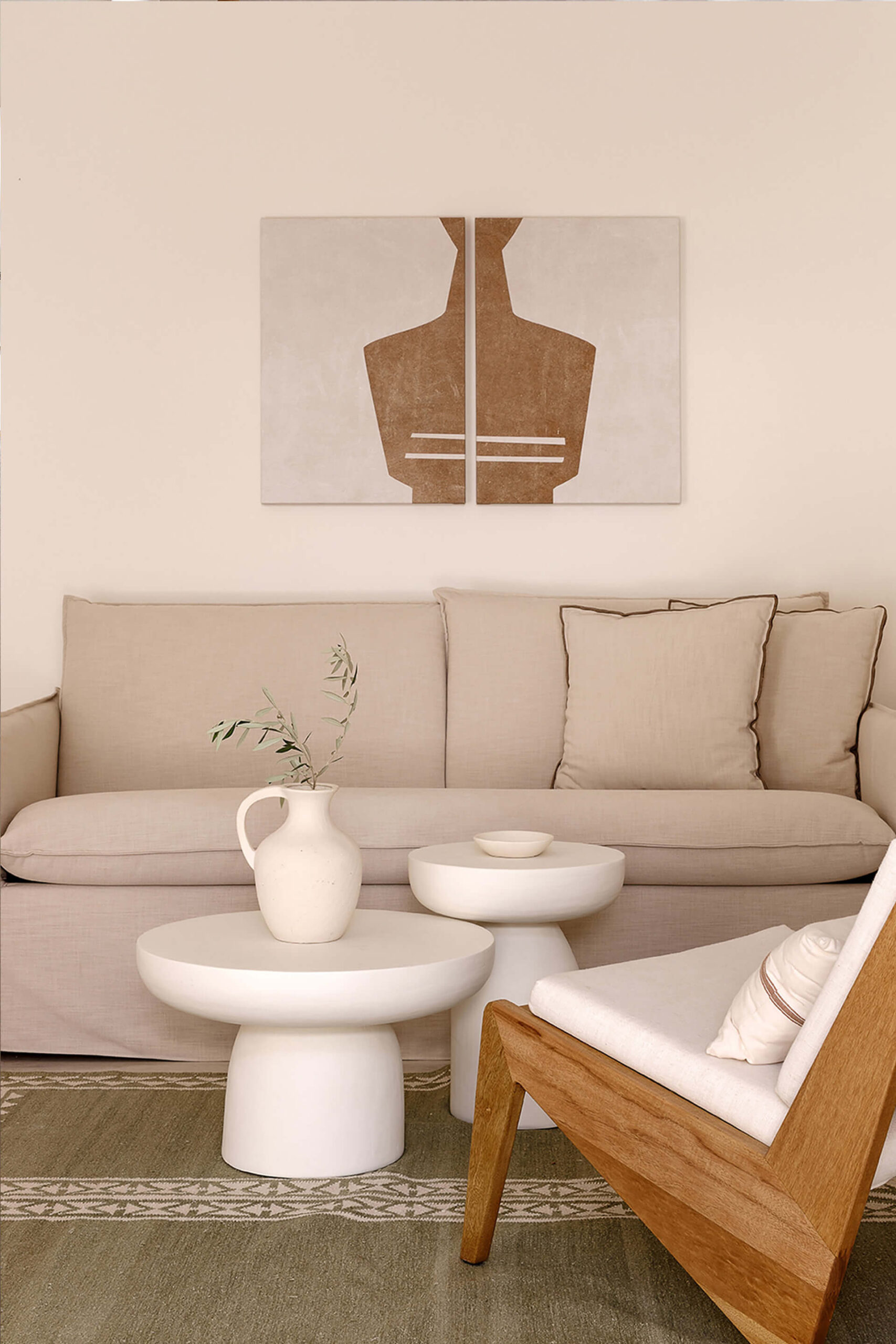
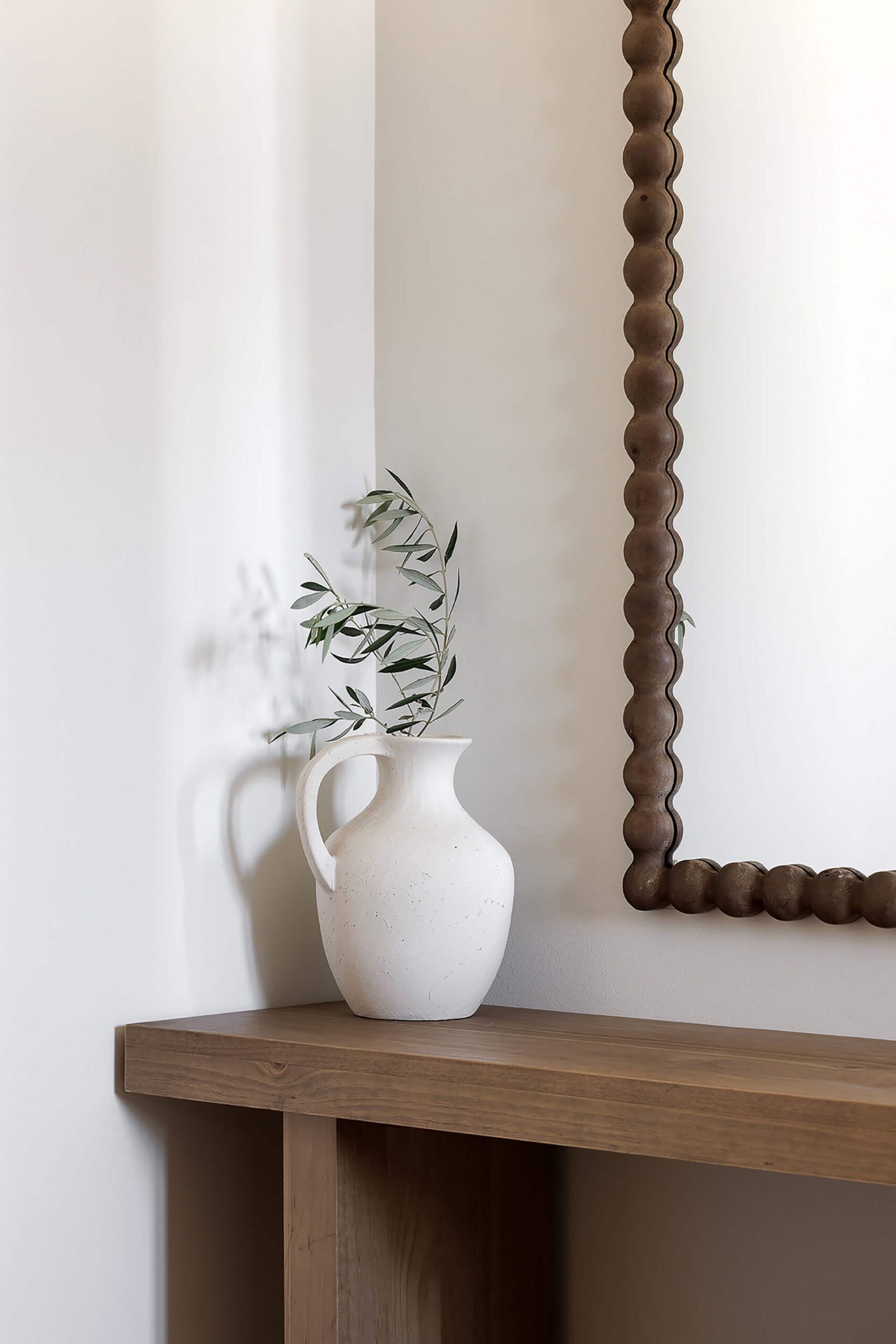
The six suites, featuring double-height interiors, are conceived as minimal and luminous spaces of accommodation. The architecture avoids unnecessary decoration, allowing the contrasts between materials and light to shape the atmosphere.
The courtyard, as a fundamental element of Cycladic typology, re-emerges as a place of gathering and social interaction. Sheltered from the wind, it functions as an inner garden where guests form a temporary community. Through this gesture, the architecture establishes the conditions for shared experiences, conversation, and exchange.
The project constitutes a contemporary interpretation of the traditional settlement, where respect for place is combined with the creation of new modes of inhabitation. It is an environment that balances individuality and collectivity, offering a refuge of simplicity and authenticity within the landscape of Milos.