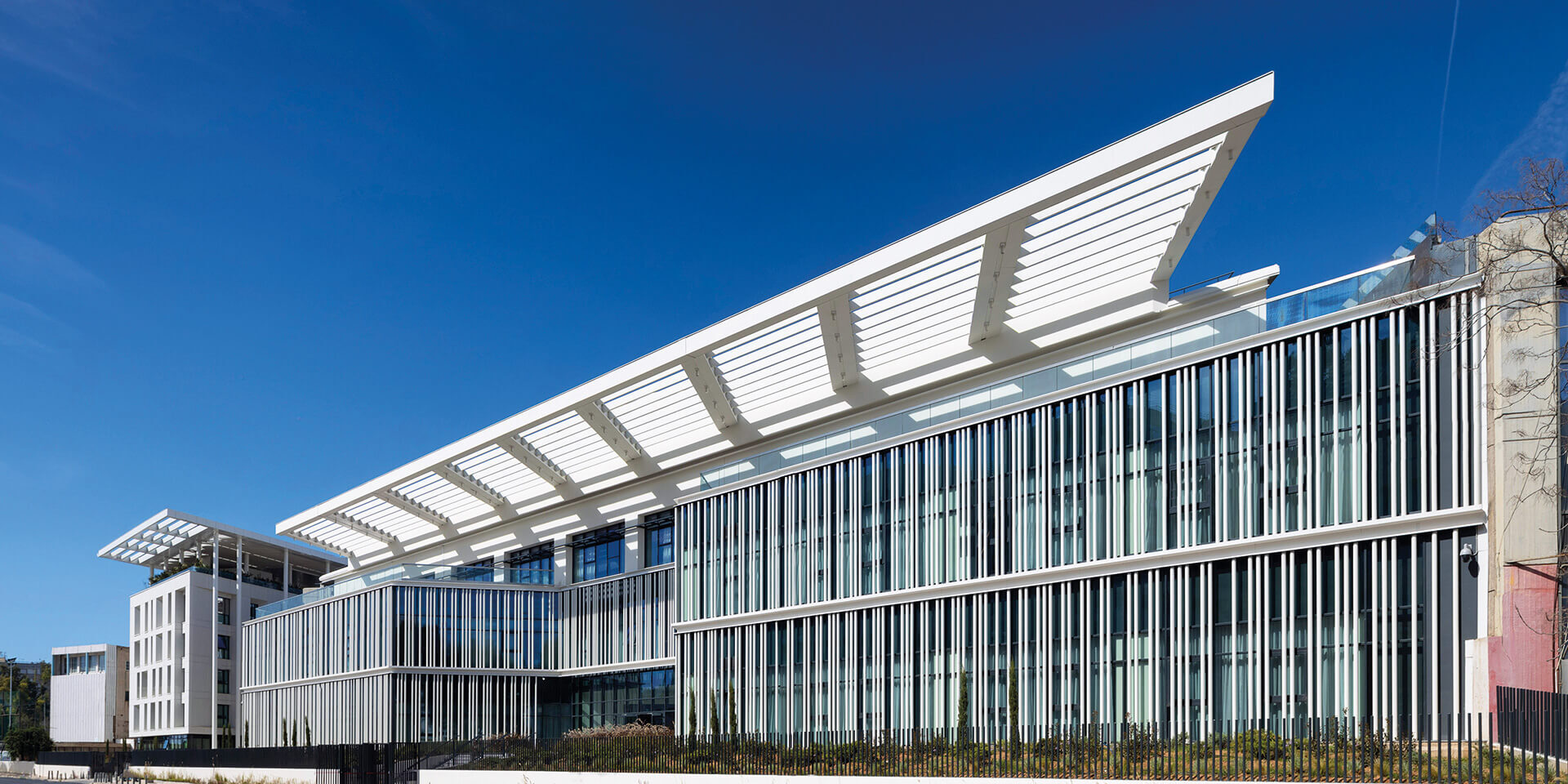
Dynamic facade
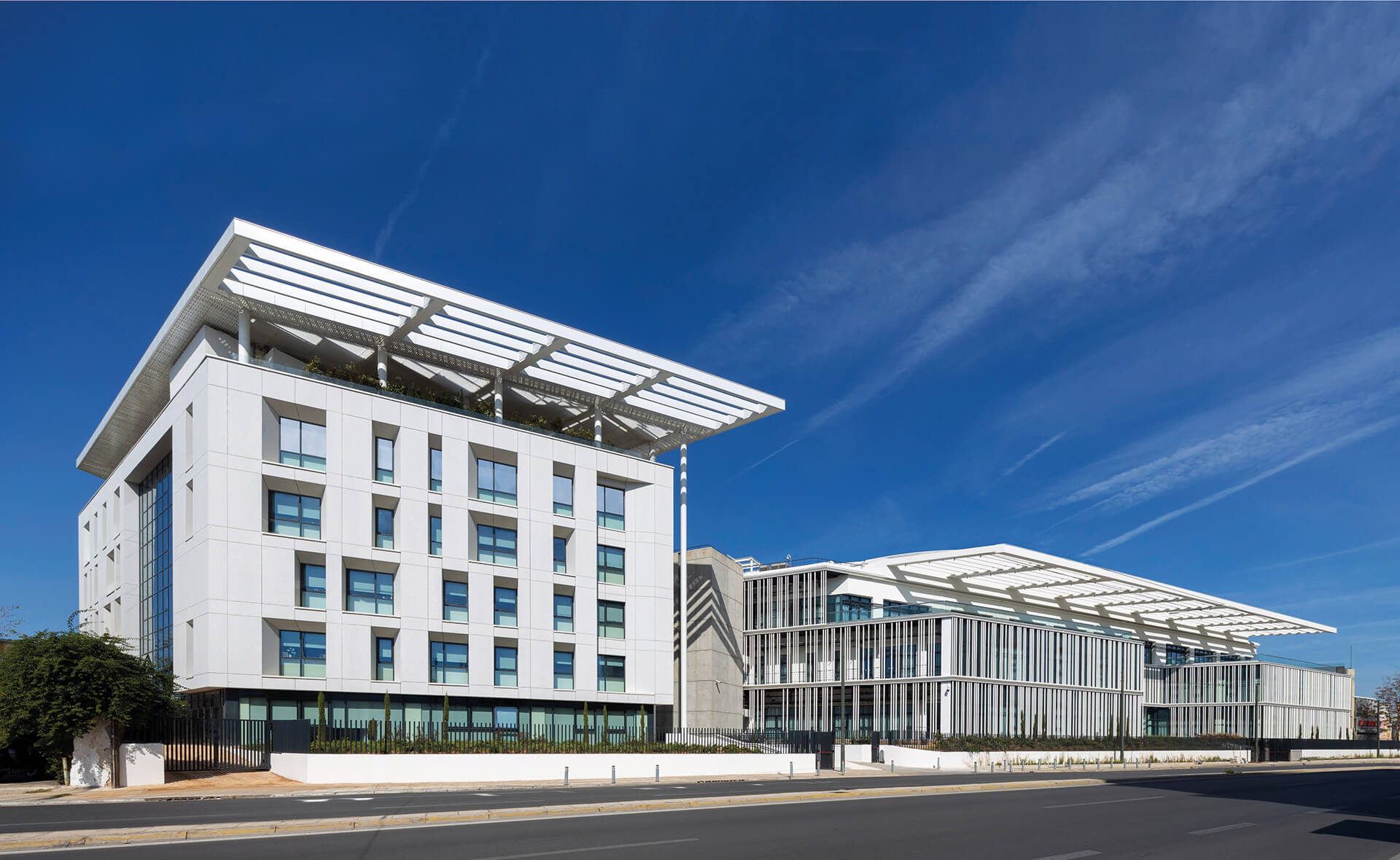
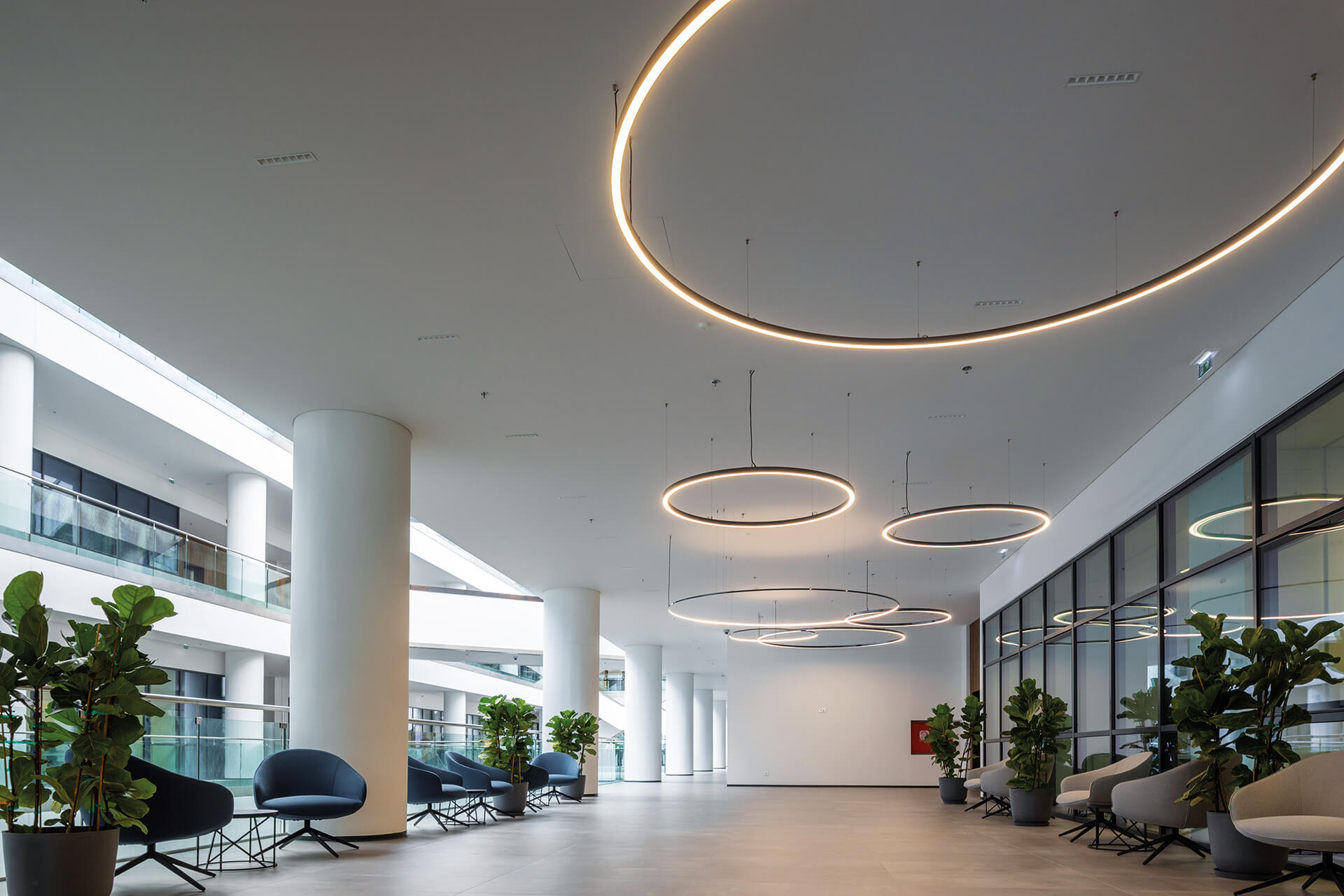
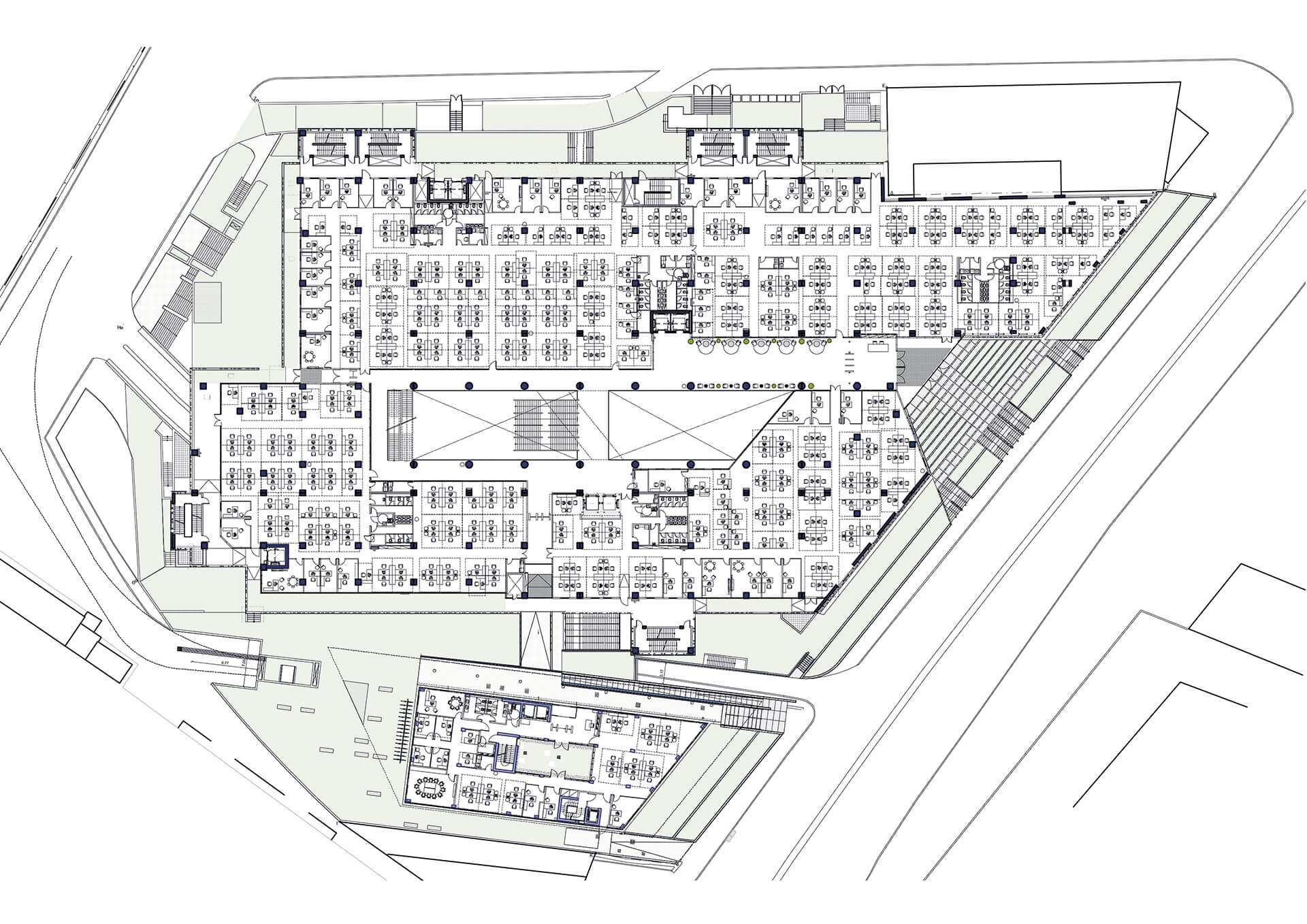
The project concerns the transformation of an existing shopping center on Pireos Street into a sustainable and pioneering office complex, complemented by the addition of a new, independent five-storey building. This new structure functions both as a landmark and as a catalyst for the revitalization and development of the wider area.
Renovation Strategy
The design is based on managing and upgrading the existing building stock, converting it into an energy-efficient structure with contemporary uses. The approach follows the principles of sustainability and the circular economy, incorporating the reuse of materials.
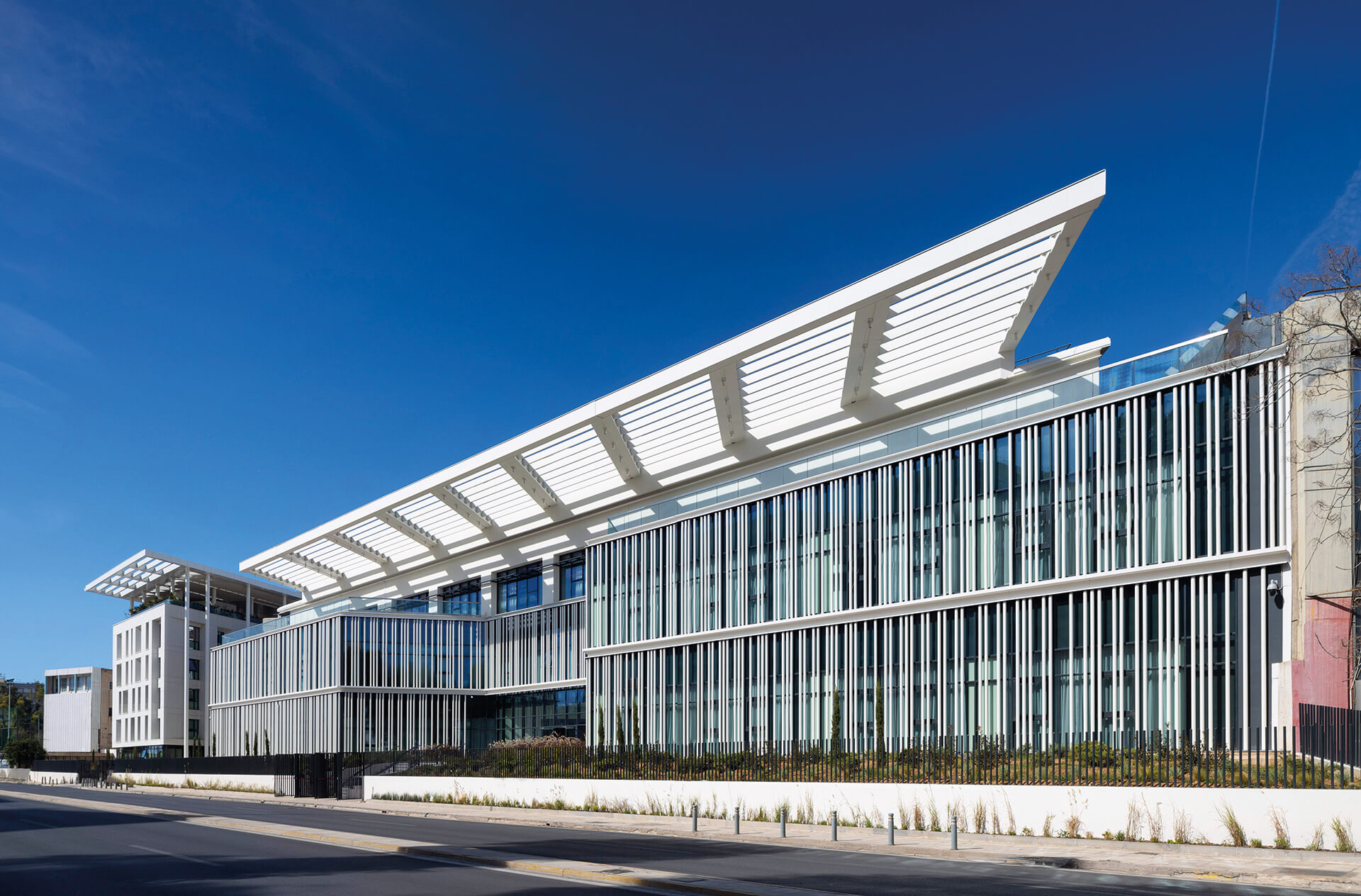
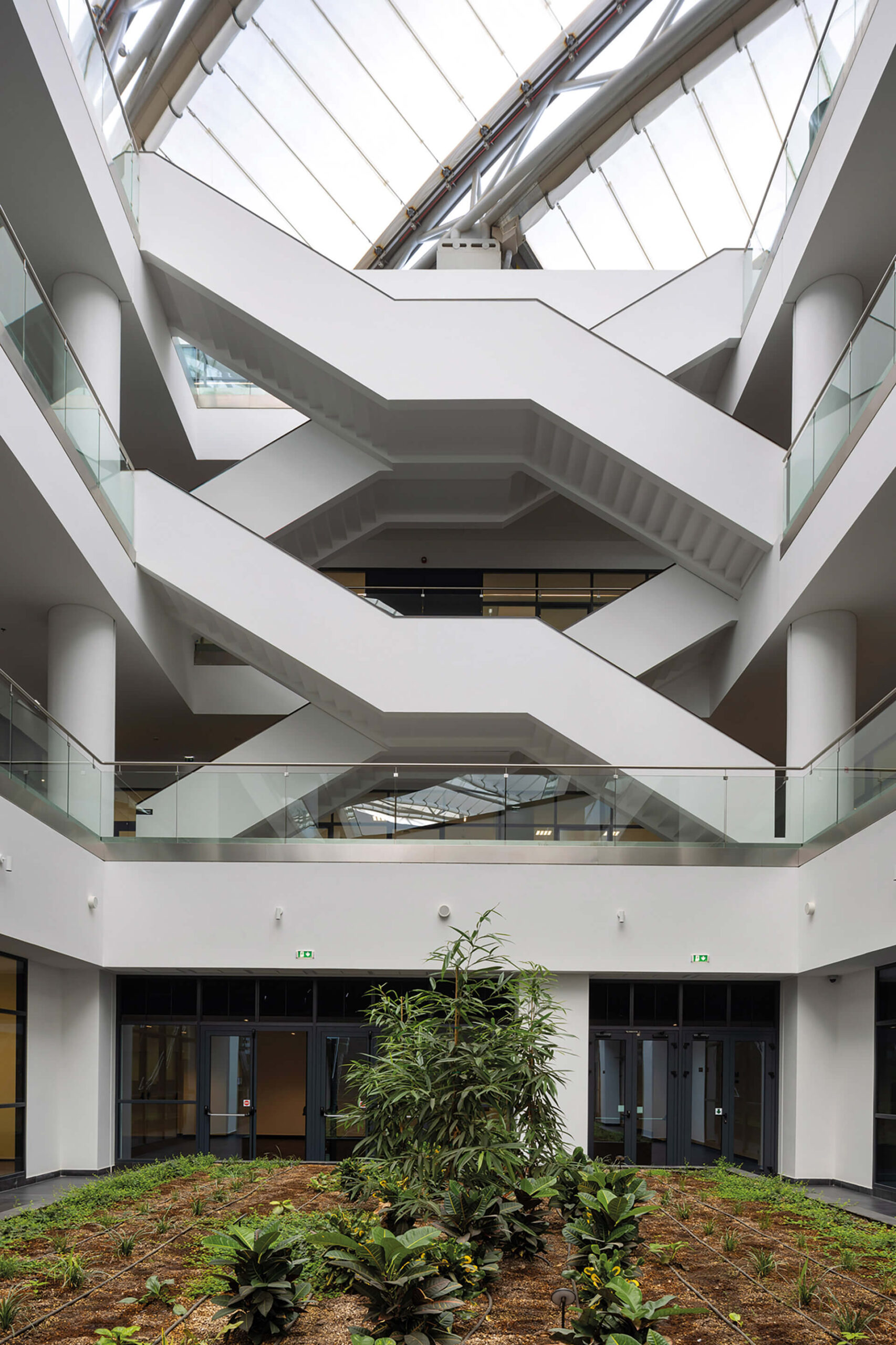
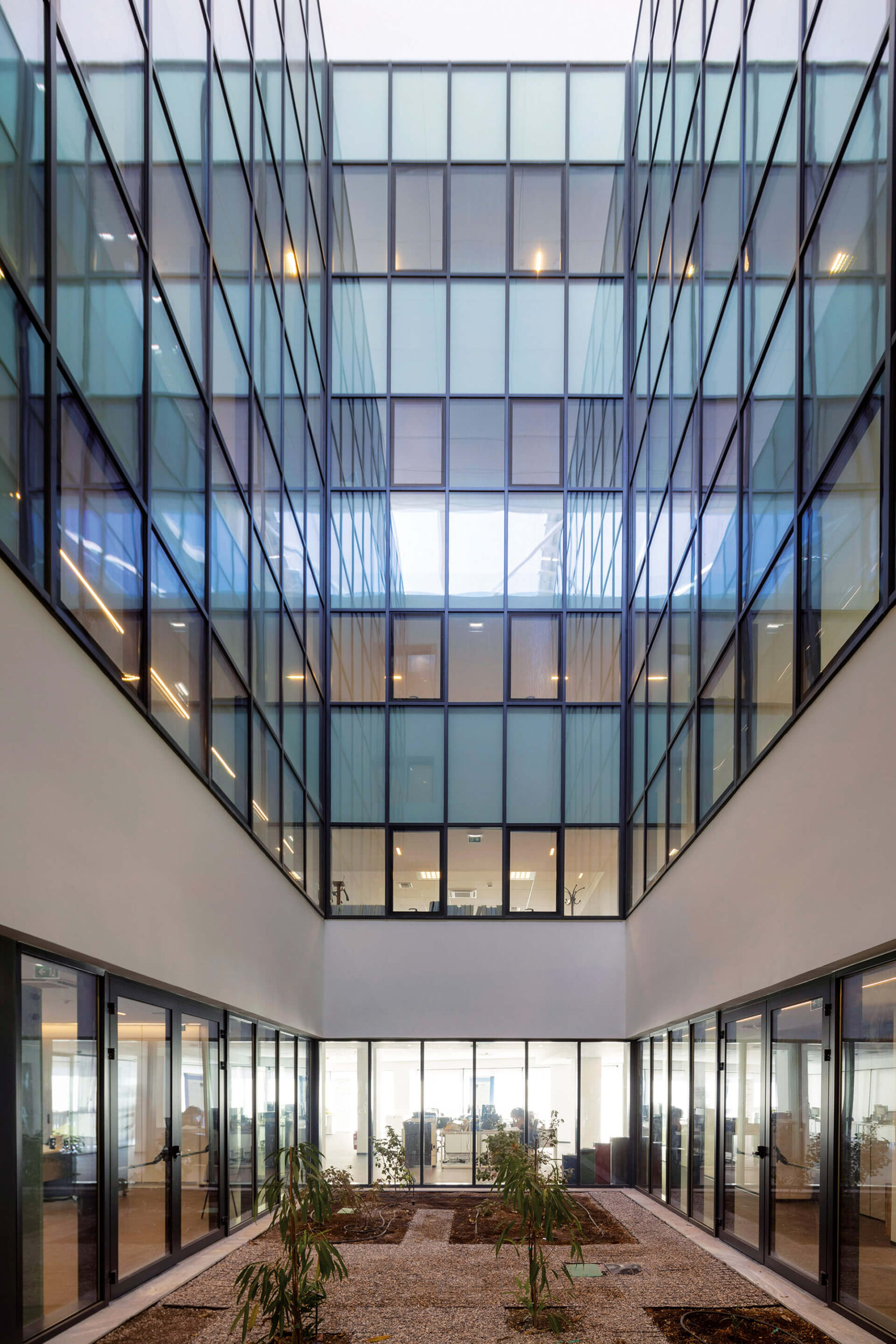
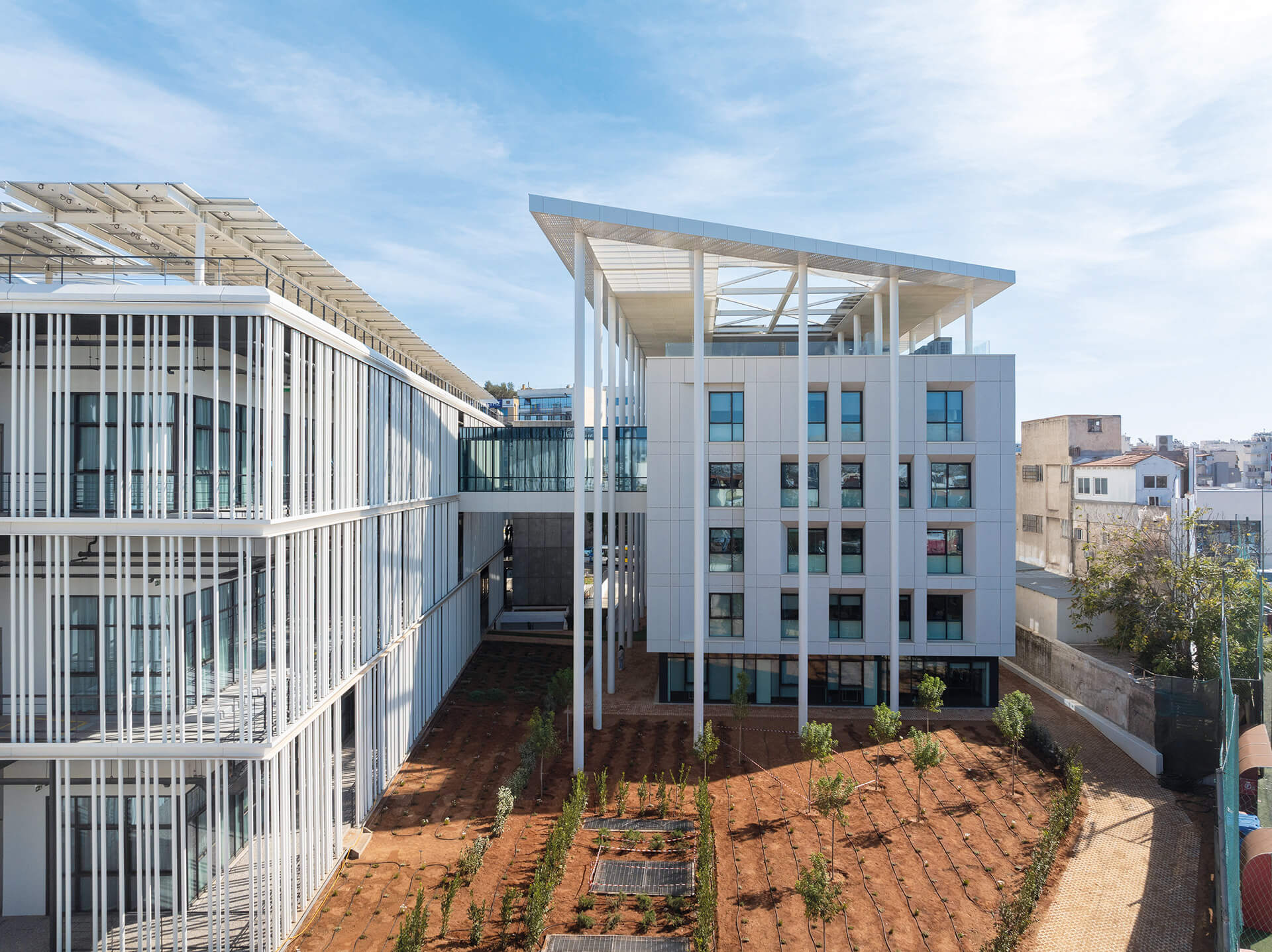
The existing building is characterized by pronounced contrasts -most notably the introverted external facades versus the extroverted interior. The redesign utilizes these contrasts as compositional elements, redefining the façade and generating a new architectural envelope. Through a process of subtraction and addition -two opposing yet complementary actions- the façade is reshaped, adopting the logic of the (bar)code as the central design reference. The final result resembles a linear code: a dynamic composition of voids and solids with varying dimensions.
New Construction Systems
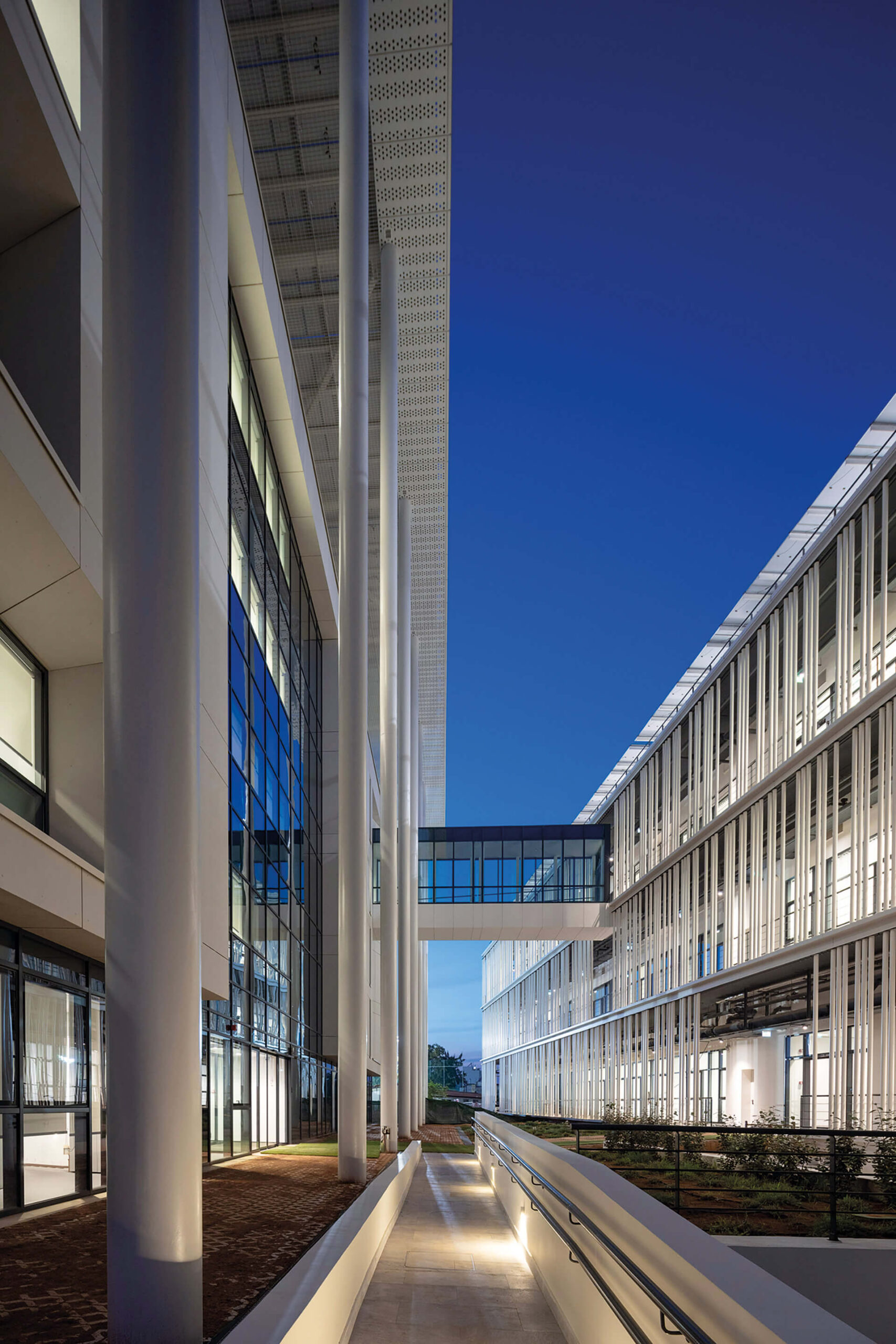
This composition is formed by metal cylinders which, after a special color treatment, are repositioned in new configurations, enhancing the façade’s interaction with its environment. The system allows future adjustments to the façade based on evolving needs, making it adaptable and flexible. The arrangement of the cylindrical columns supporting the energy canopy defines the first layer of the new façade, following the rhythm and dynamism of the existing shell.
On a second level, a three-dimensional envelope made of fiber-reinforced cement board incorporates glazed surfaces within recesses, maintaining the autonomy of materials while contributing to the cohesion of the composition. The new building, located southwest of the existing one, is developed across a ground floor, four upper floors, and a green roof.
Vegetation & Sustainability
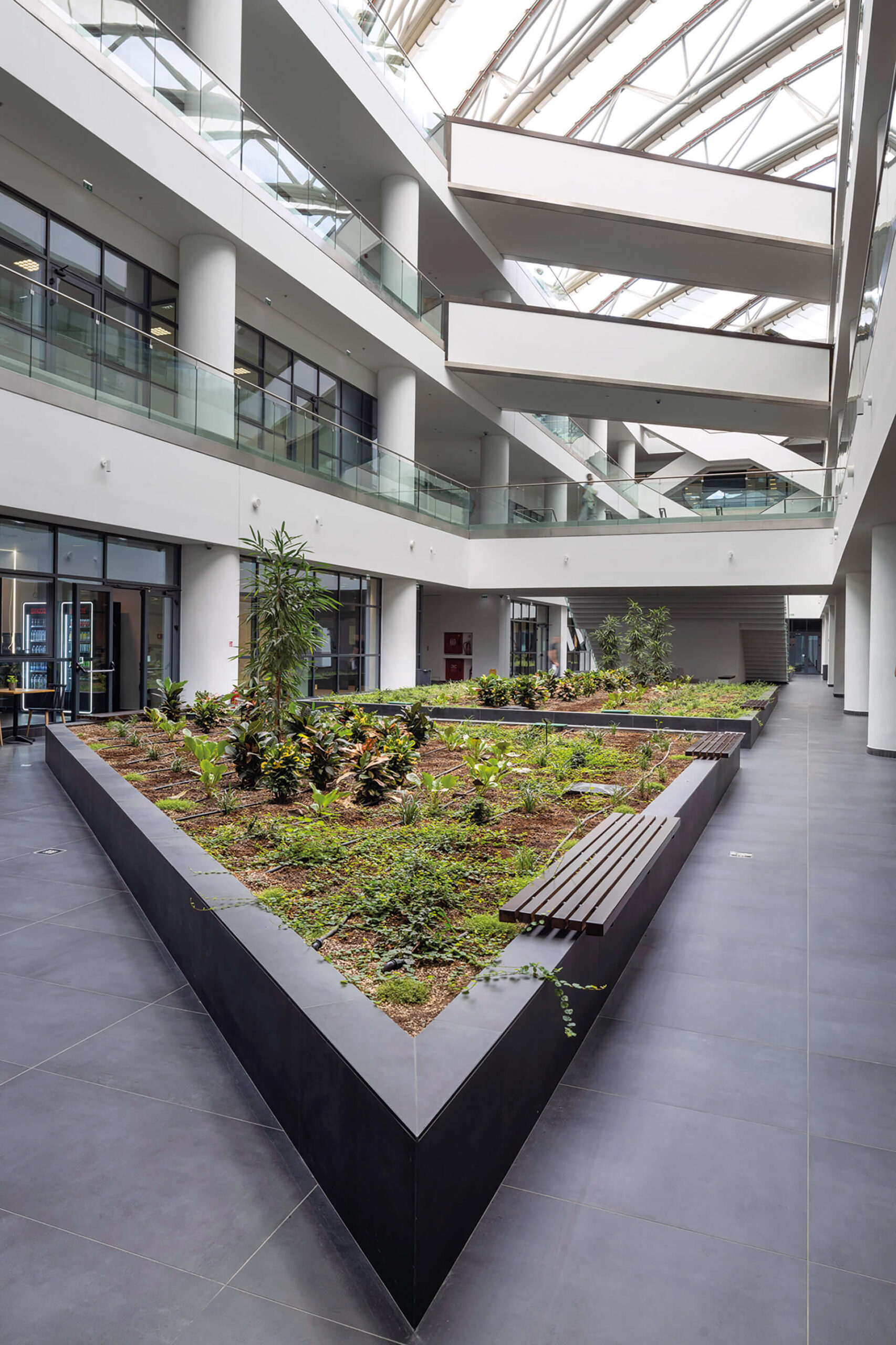
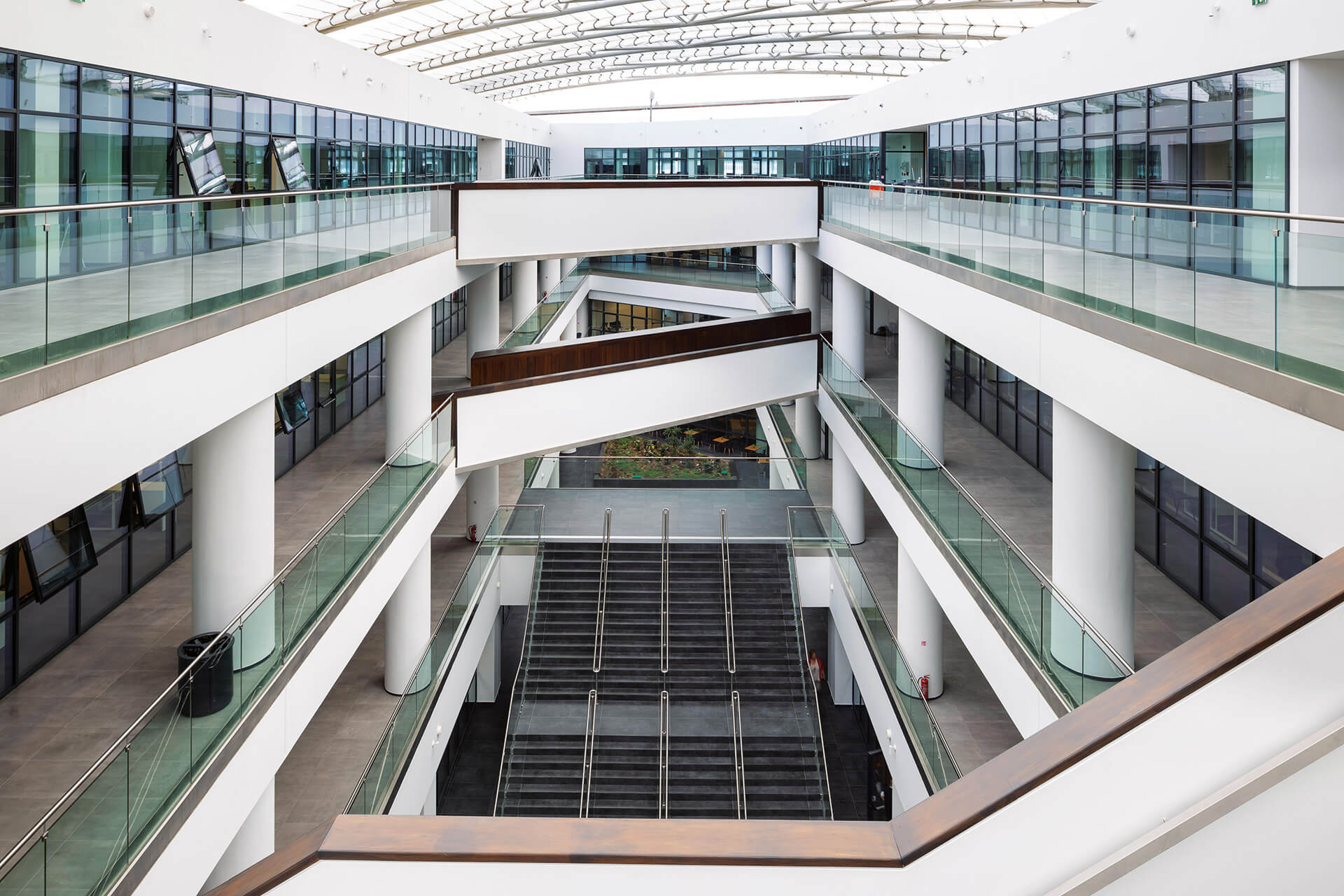
The surrounding landscape acts as a connective tissue between the two structures, while the energy canopy and supporting columns reinforce the overall unity of the complex. The intermediate outdoor space creates a transitional landscape that encourages user interaction and relaxation. Planting and carefully selected surface materials complete the architectural composition.
The green roof offers significant environmental and functional benefits: it contributes to air purification, stormwater management, reduction of ambient temperatures, and improved sound insulation. Additionally, it enhances biodiversity, boosts the efficiency of solar systems, protects surfaces from erosion, and promotes social interaction.
The project has achieved LEED Gold certification for both the existing and the new building -a distinction of particular importance in today’s context, where climate change underscores the need for sustainable, resilient, and healthy work environments.
https://ek-mag.com/wp-content/uploads/2025/12/00-cover-10.jpg
https://ek-mag.com/wp-content/uploads/2025/12/01-10.jpg
https://ek-mag.com/wp-content/uploads/2025/12/02-10.jpg
https://ek-mag.com/wp-content/uploads/2025/12/03-10-scaled.jpg
https://ek-mag.com/wp-content/uploads/2025/12/04-10-scaled.jpg
https://ek-mag.com/wp-content/uploads/2025/12/05-9-scaled.jpg
https://ek-mag.com/wp-content/uploads/2025/12/06-8.jpg
https://ek-mag.com/wp-content/uploads/2025/12/07-6.jpg
https://ek-mag.com/wp-content/uploads/2025/12/08-7-scaled.jpg
https://ek-mag.com/wp-content/uploads/2025/12/09-7.jpg
Related Posts