The Zillers Pastry Bar in Athens
Architecture:
Photography:
Giorgos Theocharis
ek Issue:

The central objective for the ground floor of a 1960s building in the Metropolis area was the creation of a “Sweet Arcade”: a multi-layered venue that would need to accommodate a production laboratory, a retail area, and a dessert restaurant.
Cultural Context
The concept that emerged during the design process drew inspiration from the Athenian arcade. This archetypal form of a covered yet freely accessible space seamlessly connects commerce, social gathering, and leisure. The first arcade built on Athenian soil, at Kapnikarea Square, was constructed in 1883 to designs by Ernst Ziller, within the four-storey neoclassical Melas Mansion, featuring a “glass-roofed passage” modeled after the Parisian galeries made of metal and glass.
Among the most vital nodes of commercial life, arcades were primarily thematic, functioning as hubs for specific activities or types of retail. Initially conceived as spaces for the concentration of goods, they ultimately evolved to “serve the pursuit of pleasure in the city, through strolling and other forms of entertainment.”
Design Philosophy
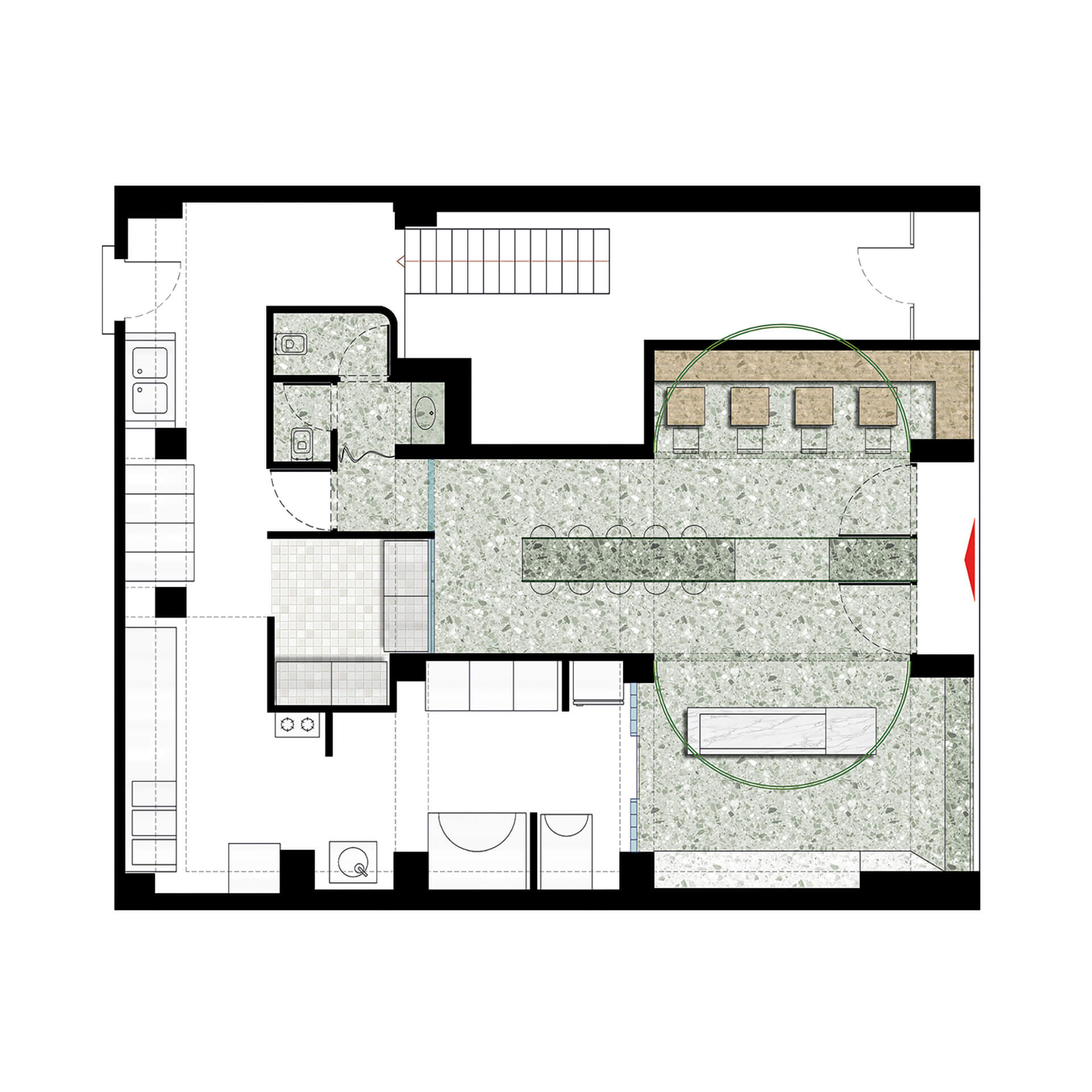
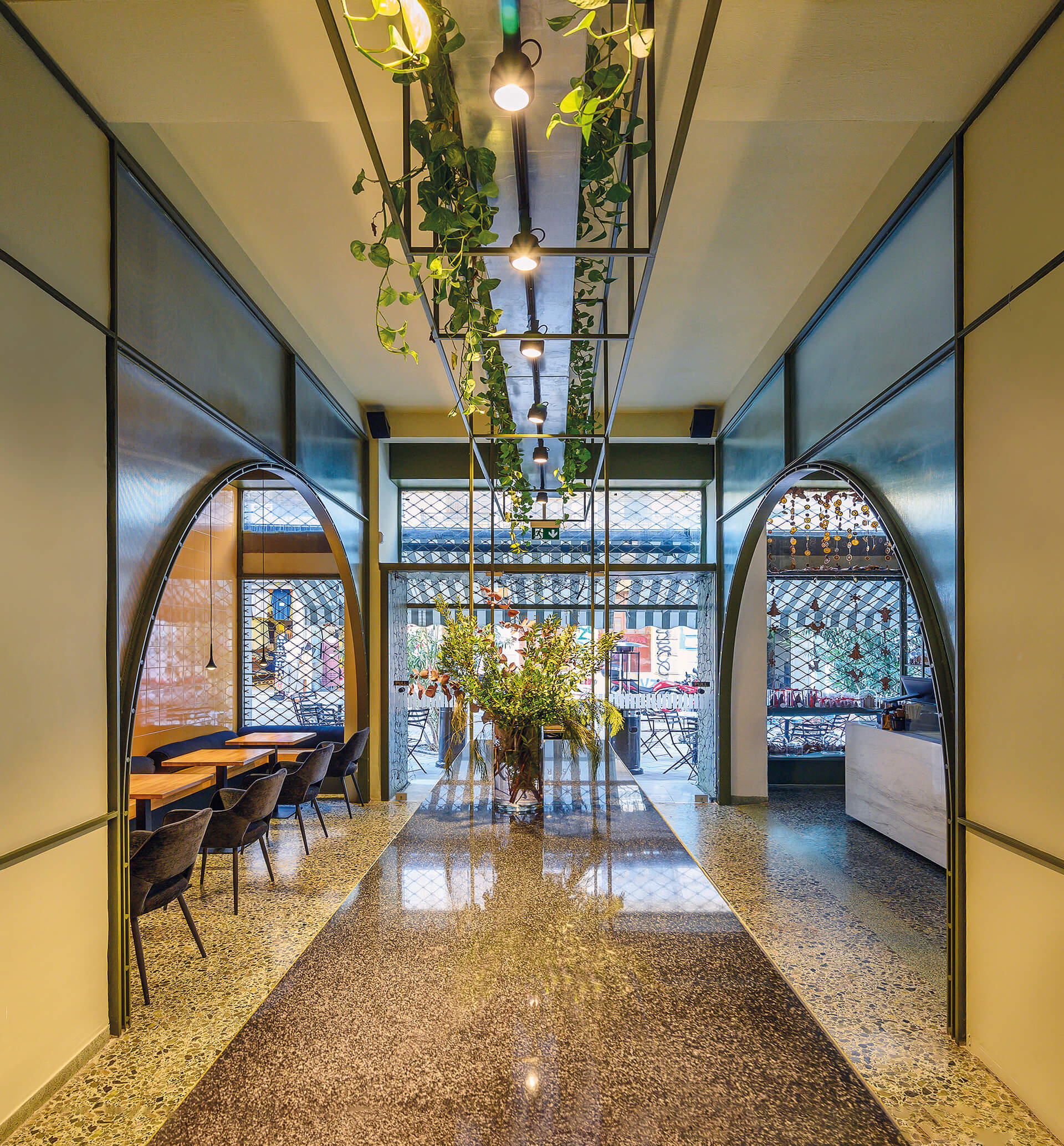
Inspired by the commercial arcade and motivated by its inclusive vibrancy, the pastry shop is designed primarily using metal and glass. It is articulated as a sequence of three distinct spatial units (shops), each with its own façade (shopfront) facing an elongated, central shared space -the arcade.
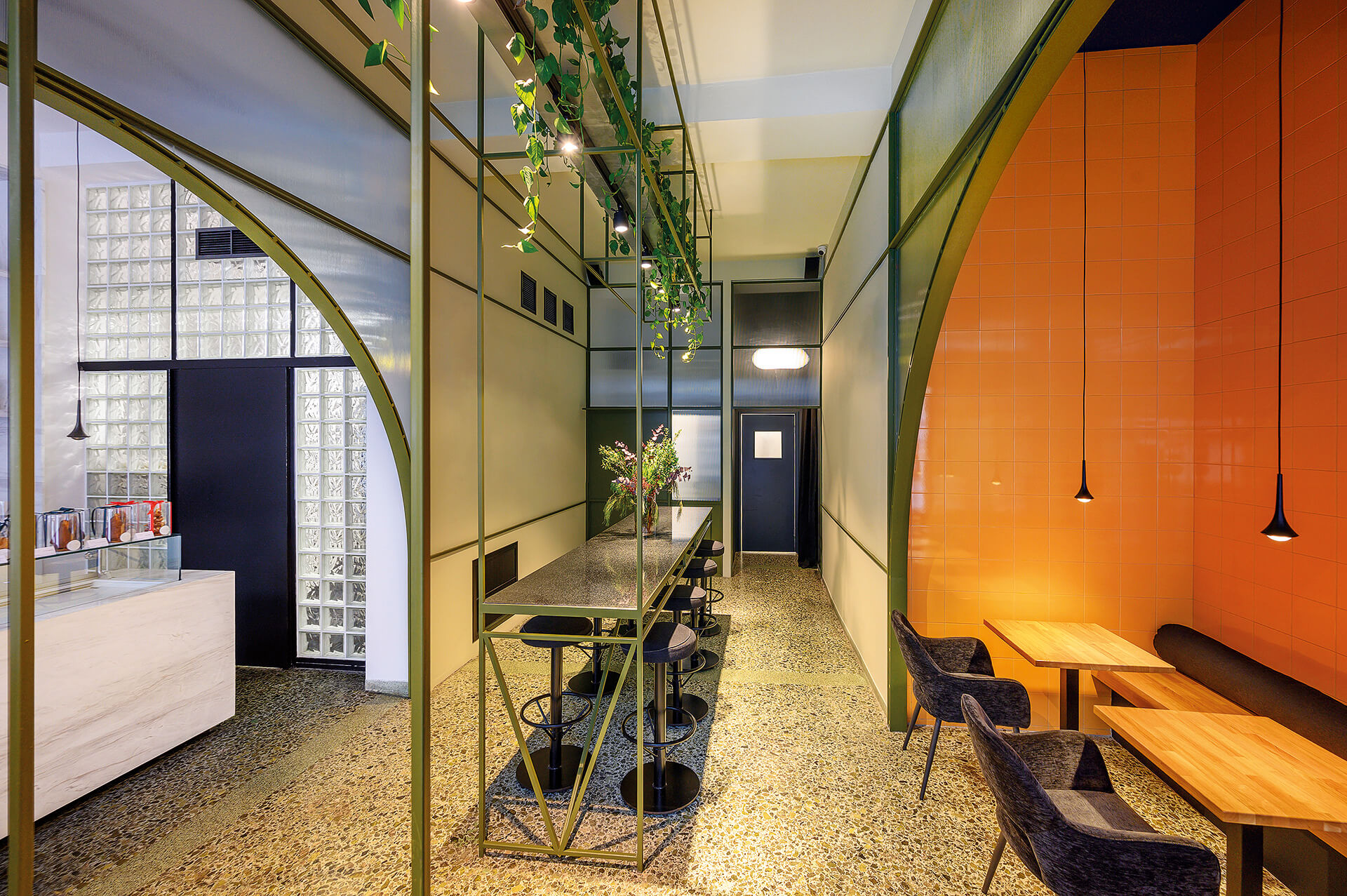
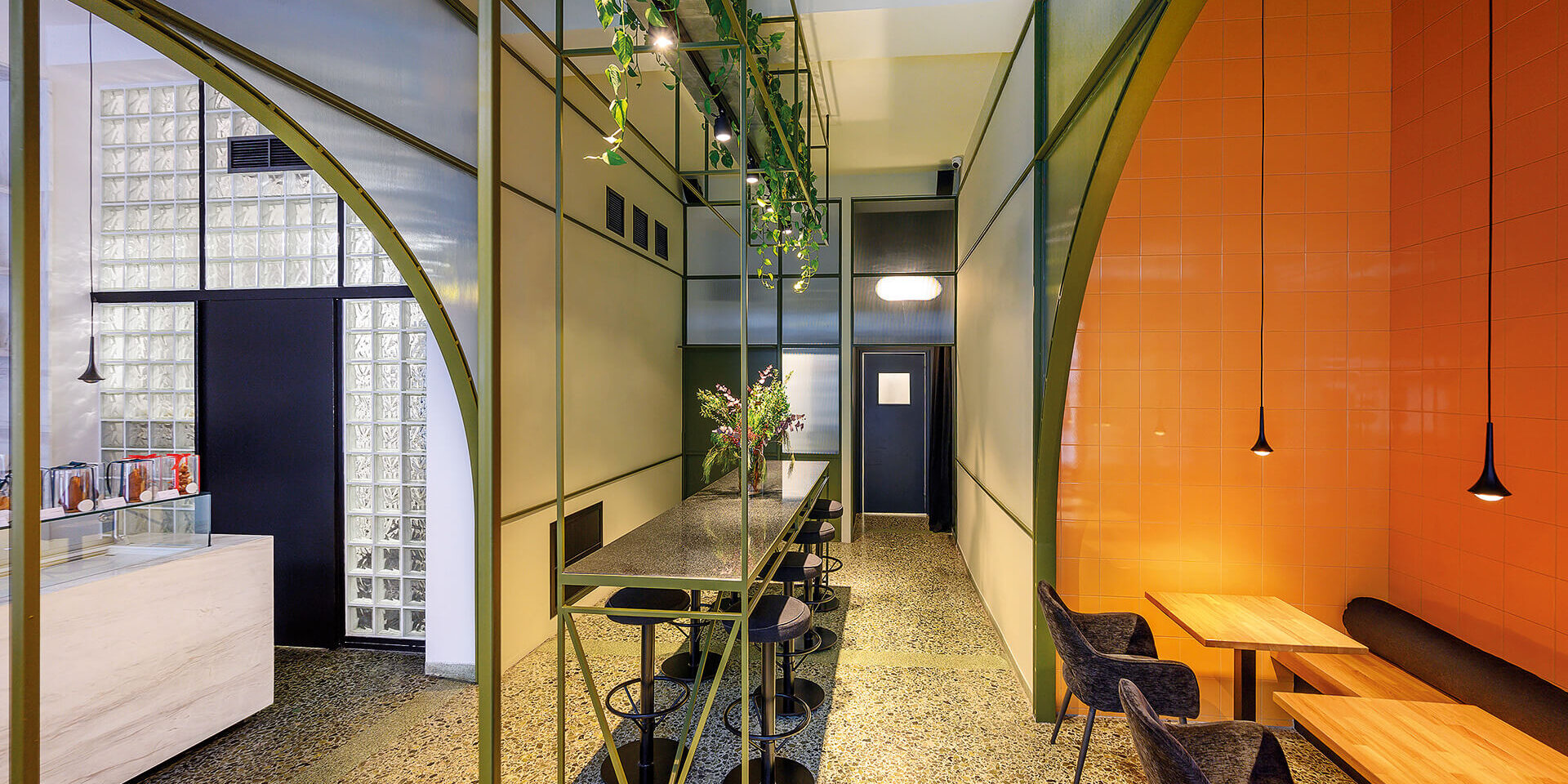
The olive-green arcade, measuring 9×3m and featuring the original mosaic flooring, forms along its entire outer edge the main, twin entrance. A slender, elongated structure placed along the central axis organizes movement, provides a functional counter surface, and supports suspended, illuminated planting that enhances the sense of a public, open space. Flanking the entrance and extending to the back, metal and textured glass define the shopfronts of the three units as well as the passage leading to the restrooms.
Spatial Organization & Materials
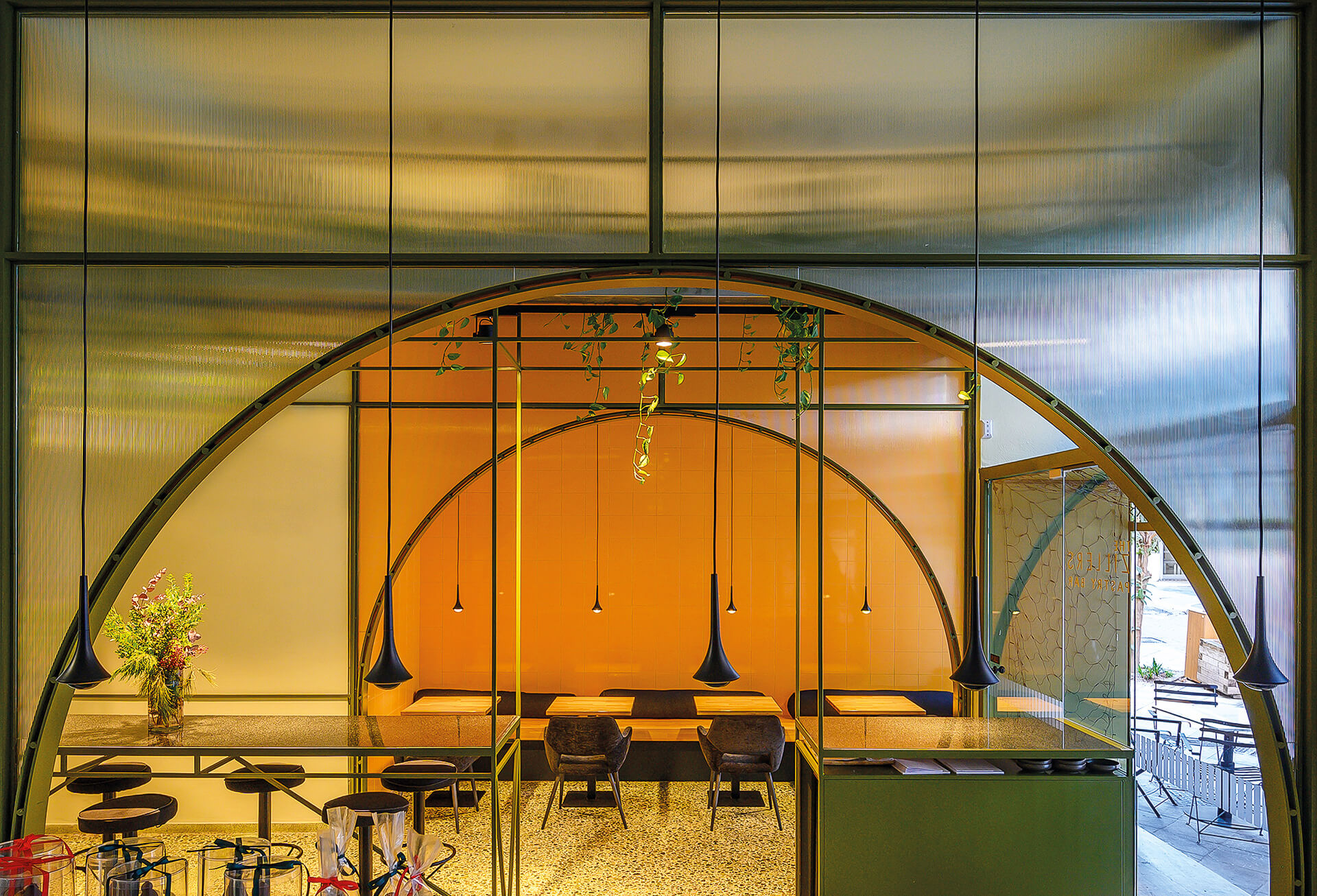
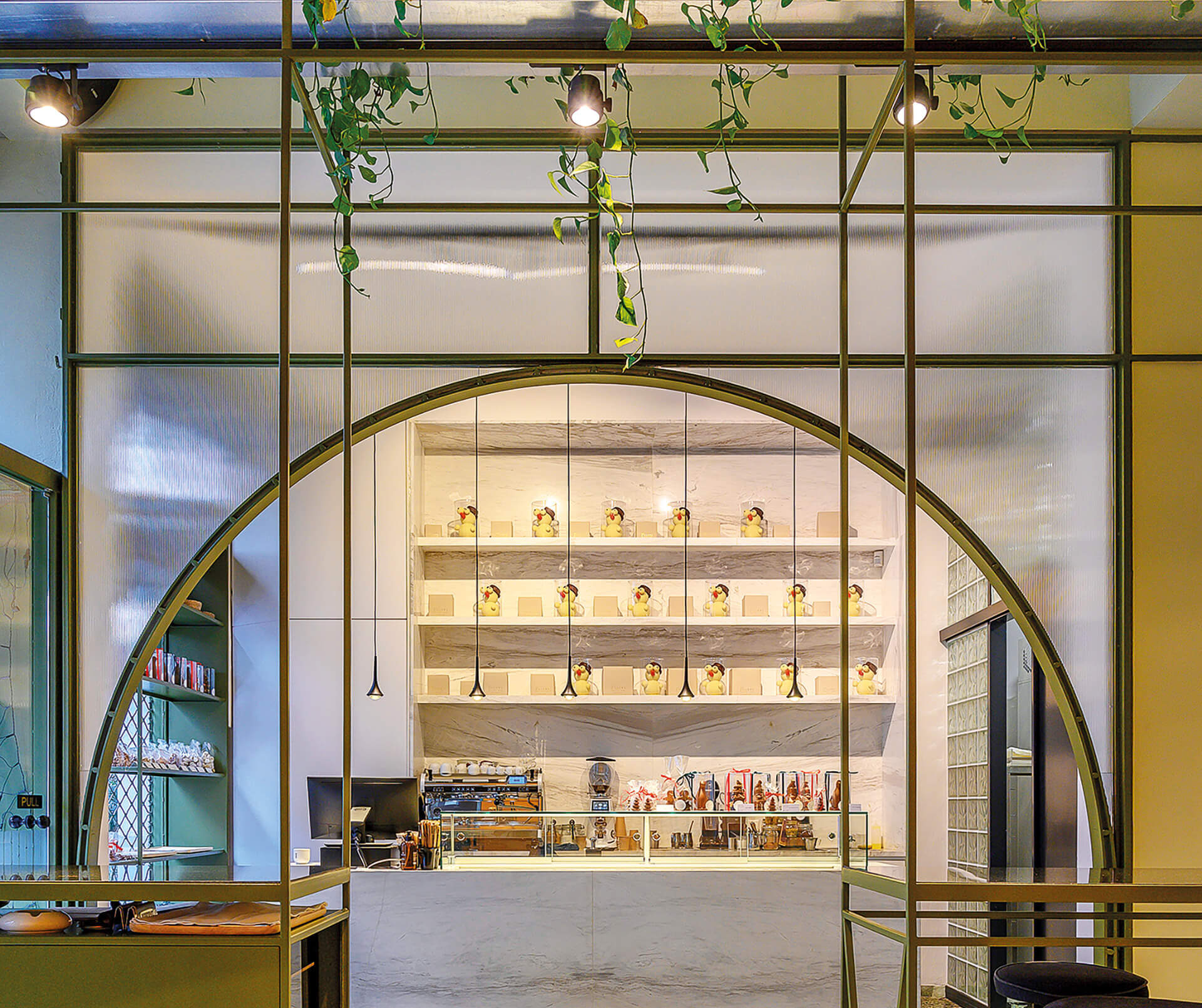
The retail shop on the left and the restaurant on the right are located behind two facing metal arches that act as thresholds to the respective spaces. In the first, a brightly lit central table of white marble displays the products, adjacent to a luminous wall of glass blocks that filters the constant activity of the laboratory beyond. In the second, warm orange tiles, wooden tables, and subdued lighting create an inviting dining room for à la carte desserts.
At the rear, behind a retractable partition, lies the production laboratory. It comes alive in the afternoon, when its lights are turned on and its window opens, revealing the chef -now visible to the public- preparing the sculptural plates, the true protagonists of the Sweet Arcade.