Apartment in Kolonaki
Interior Design:
Photography:

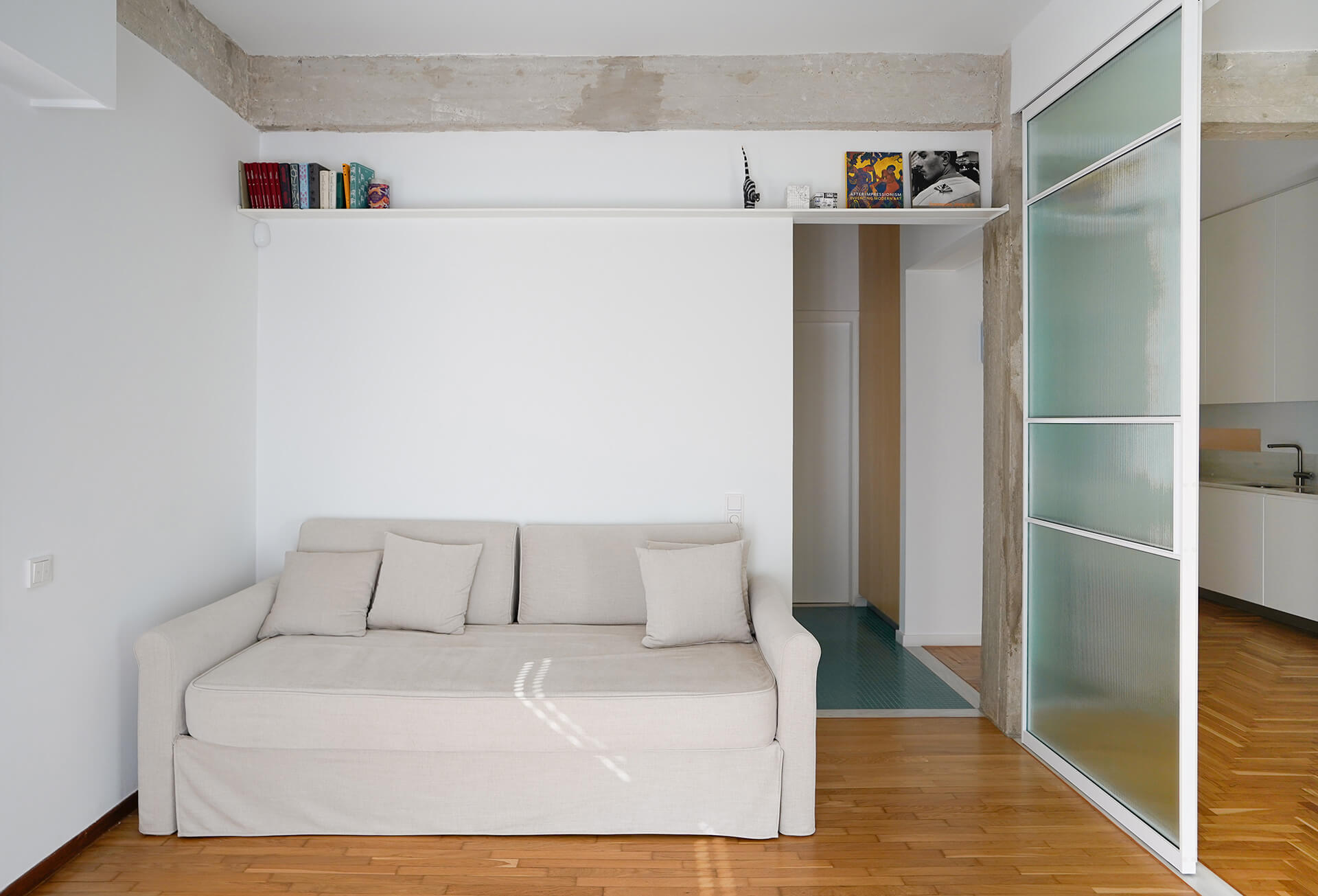
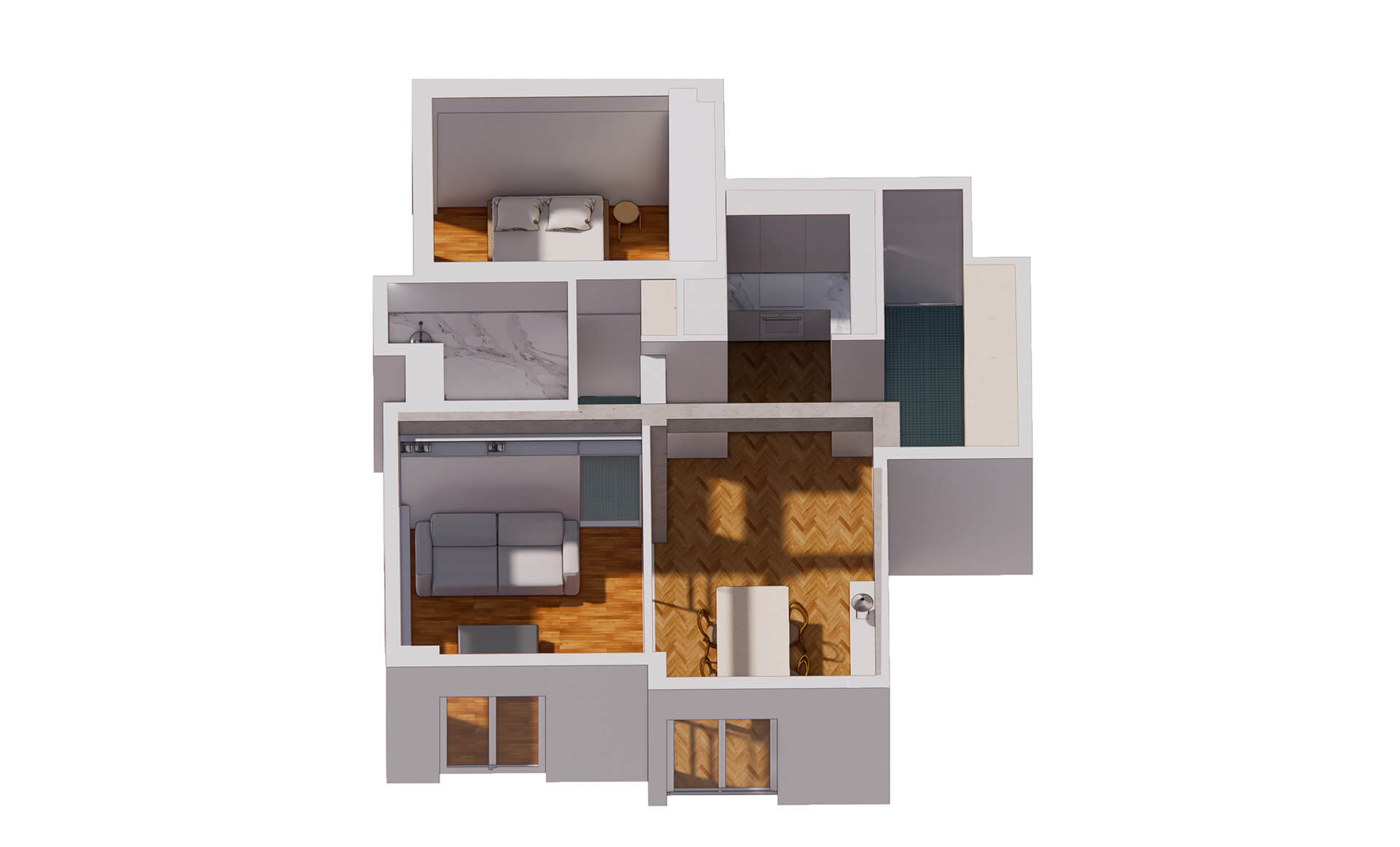
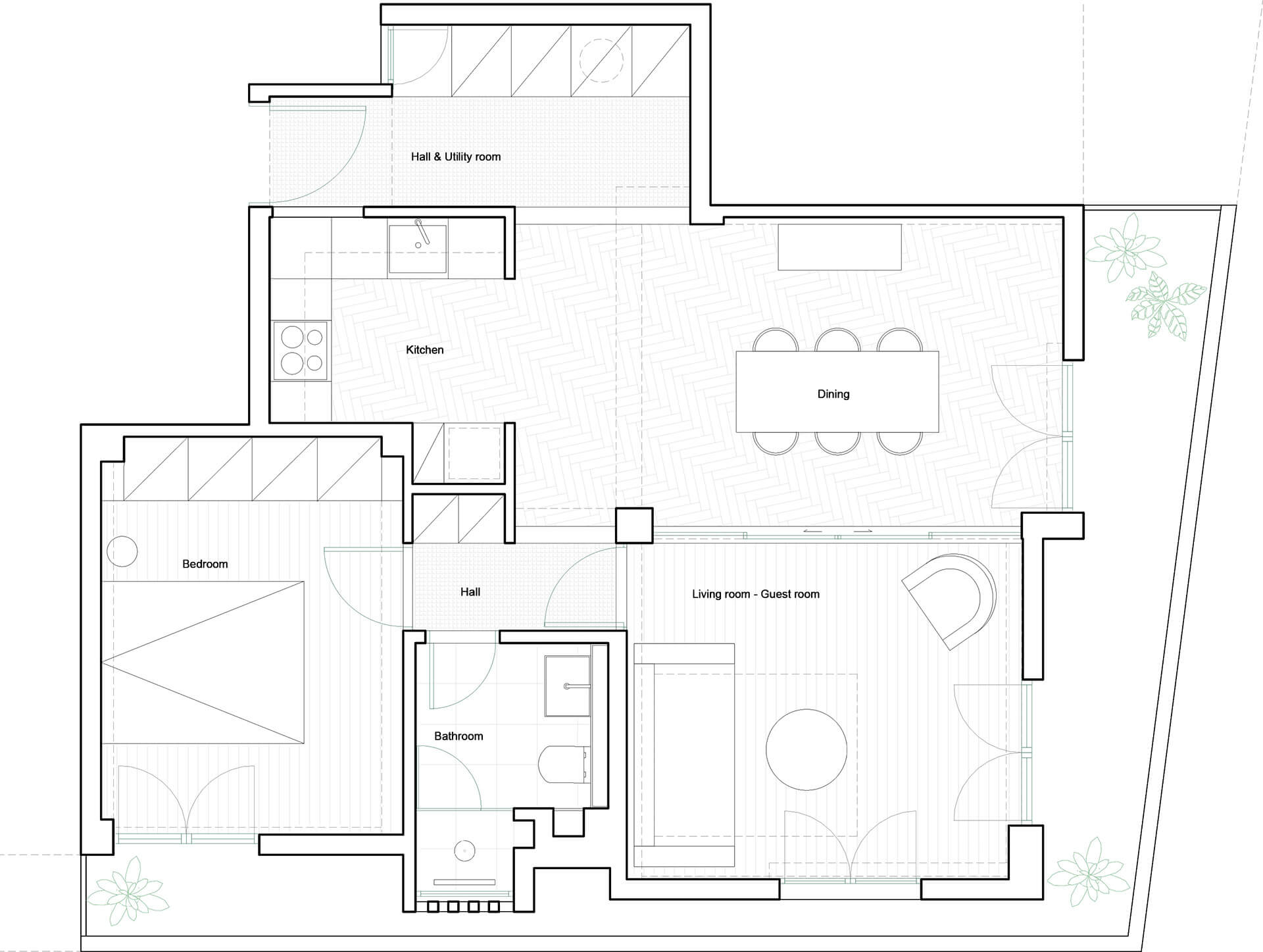
The project concerned the renovation of a 70m² second-floor apartment near Lycabettus Hill. The design follows an open-plan layout, allowing natural light to penetrate deeply into the interior. To organize the unified space, emphasis was placed on transitional areas through the use of vibrant colors and textures. The kitchen was treated as an integrated piece of built-in furniture, while metal partitions and doors were designed to accommodate different living scenarios. Distinctive features of the 1970s apartment were preserved and complemented by more vibrant and industrial elements, resulting in a layered collage of materials.
Renovation Strategy
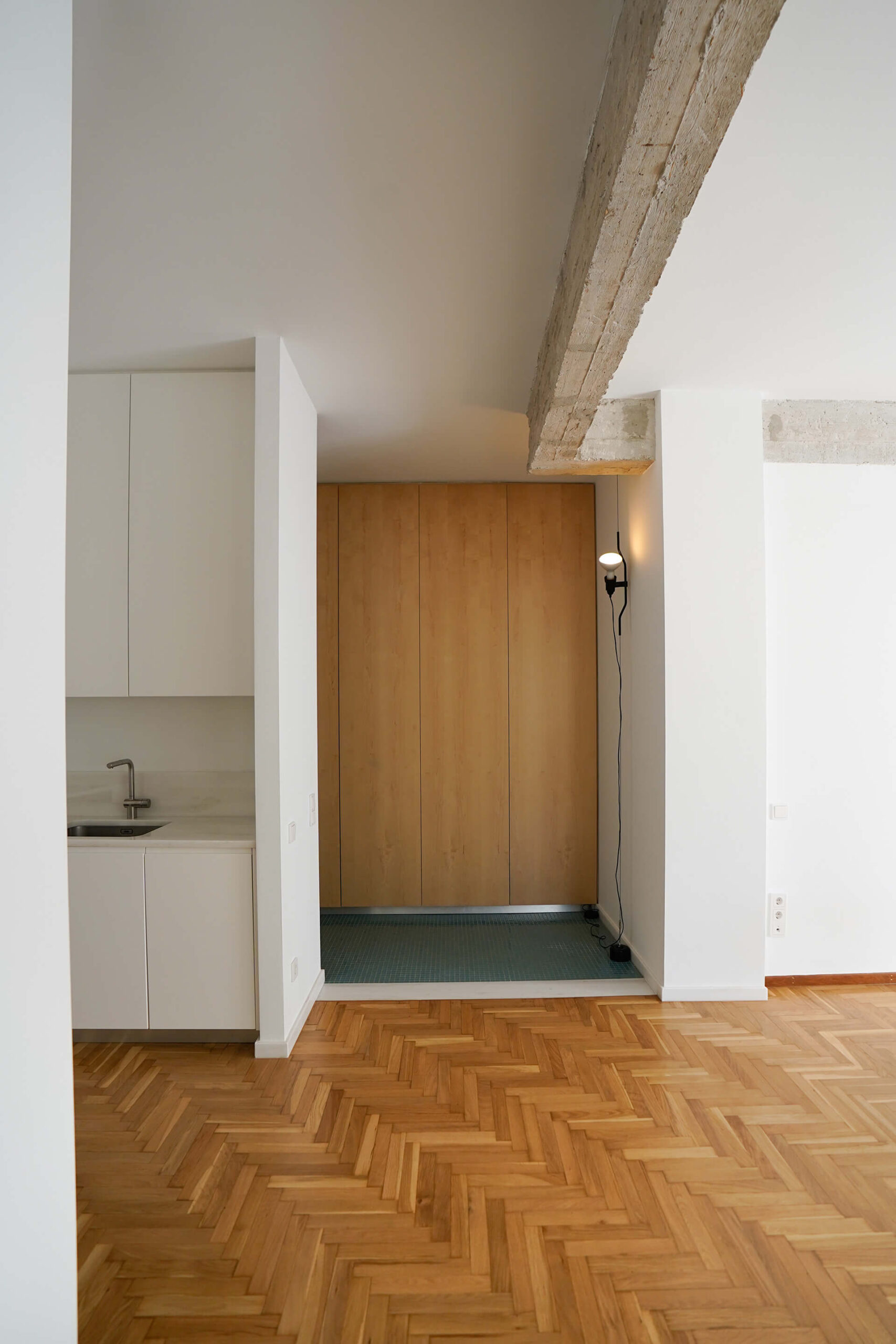
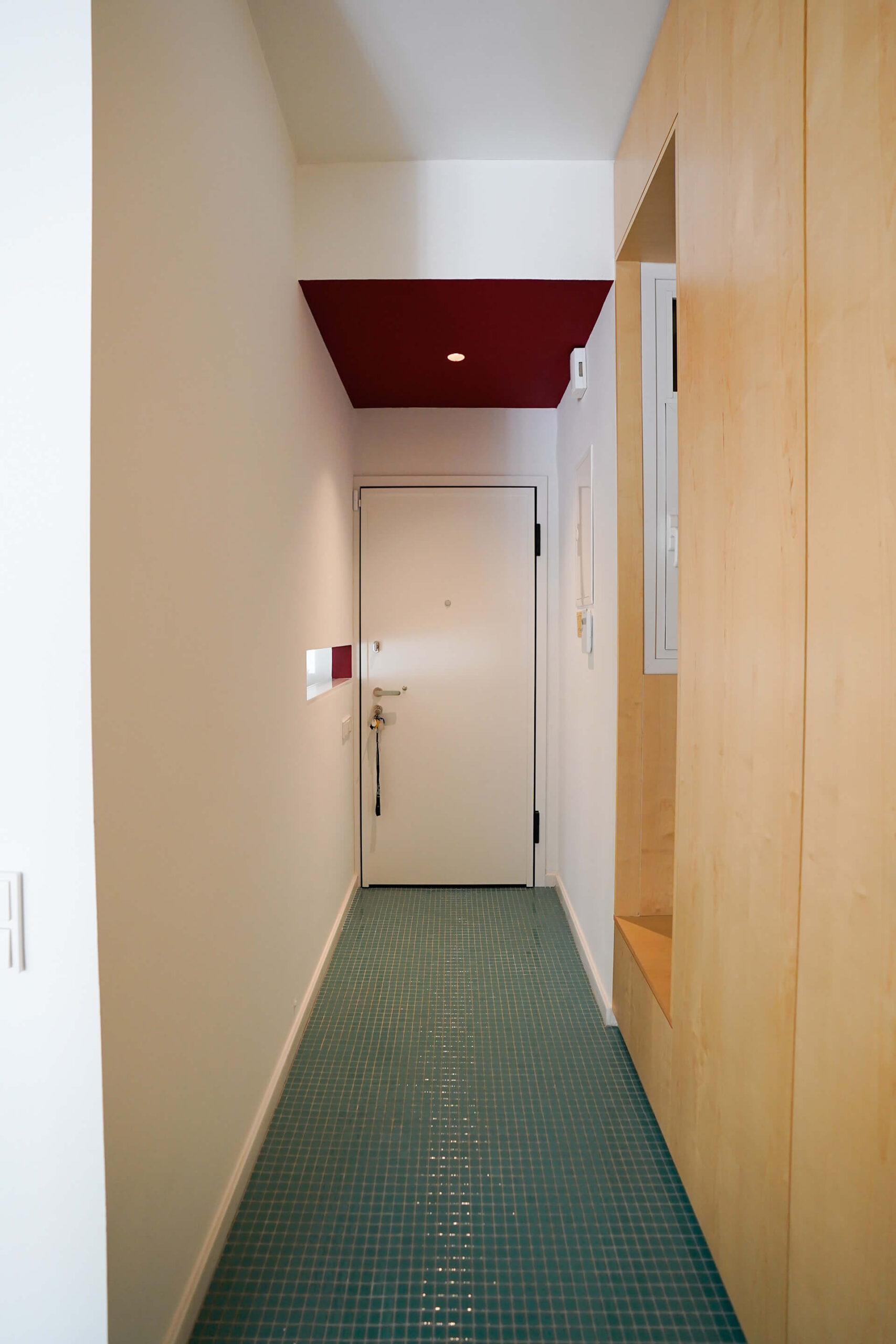
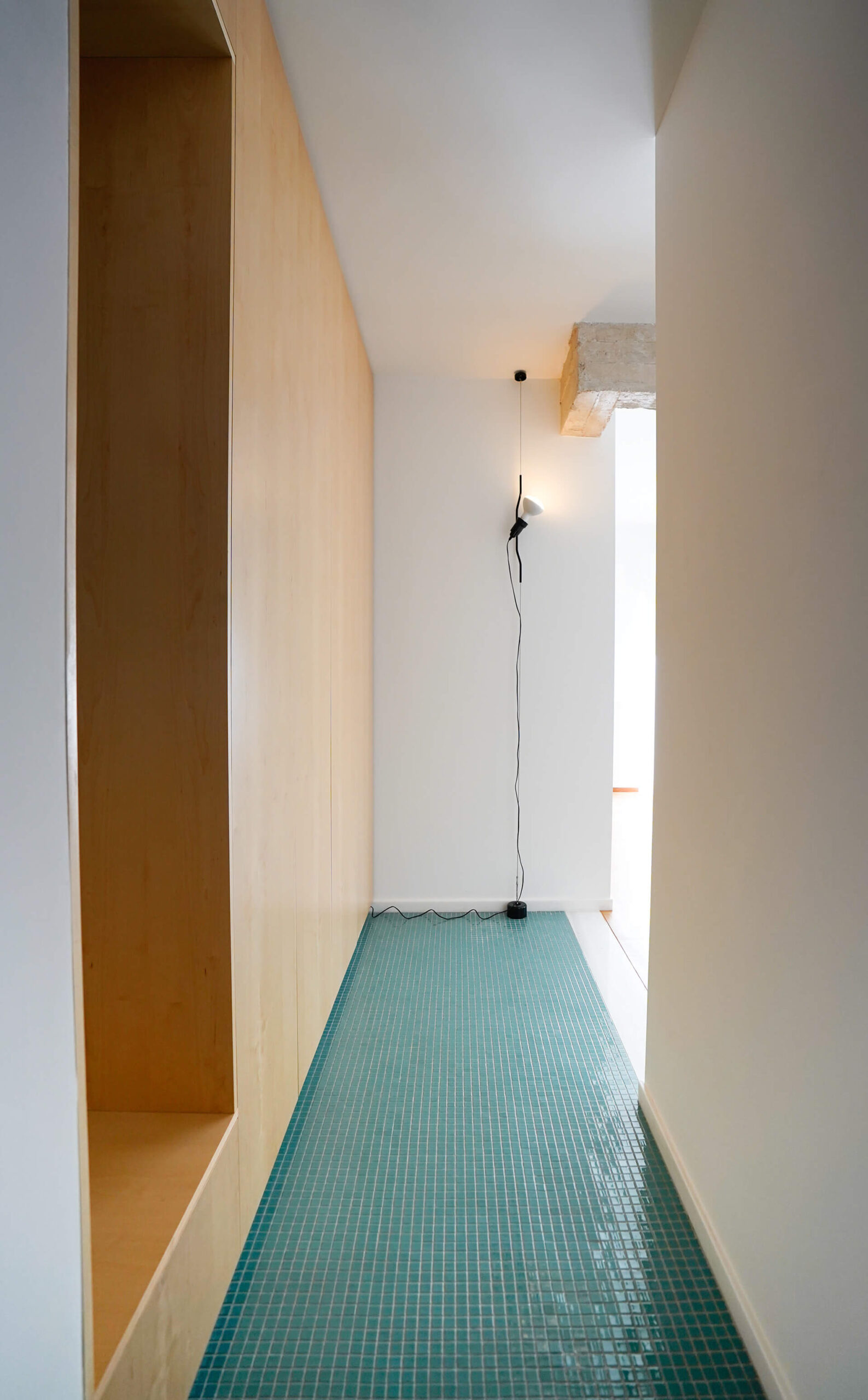
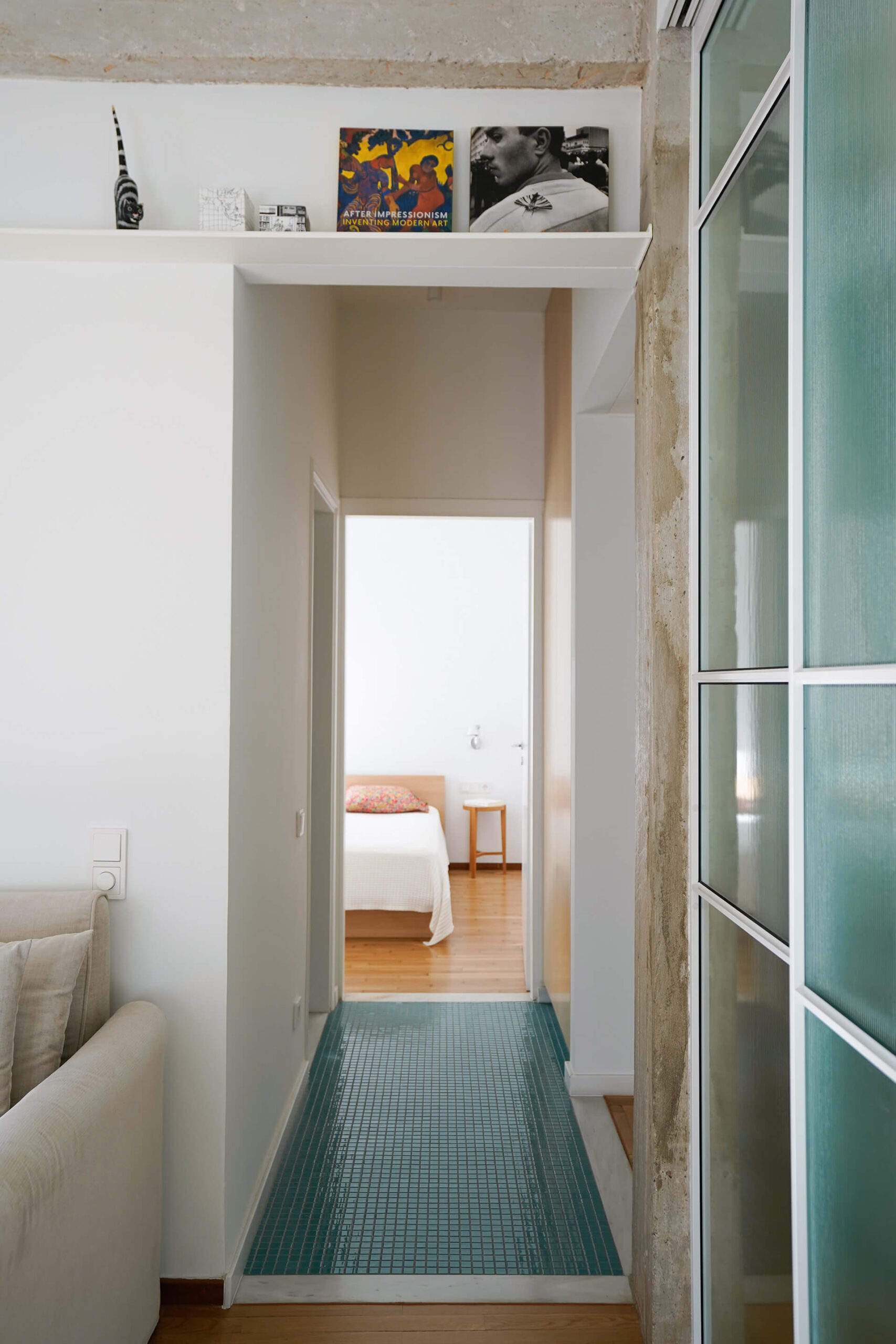
The primary intervention was the relocation of the kitchen in order to optimize the apartment’s spatial organization. In its original position, the kitchen obstructed the entrance, lacked visual and functional connection with the rest of the apartment, and suffered from insufficient light and limited size. Its relocation enabled the creation of an elongated entrance hallway and a generous, multifunctional storage element incorporating an entrance bench, wardrobe, washing machine, and general storage. The kitchen was conceived as a functional object rather than a separate room – integrated into the open plan and discreetly supporting everyday activities. It is directly connected to the dining area and positioned opposite the balcony door to benefit from improved natural light.
Functional Layout
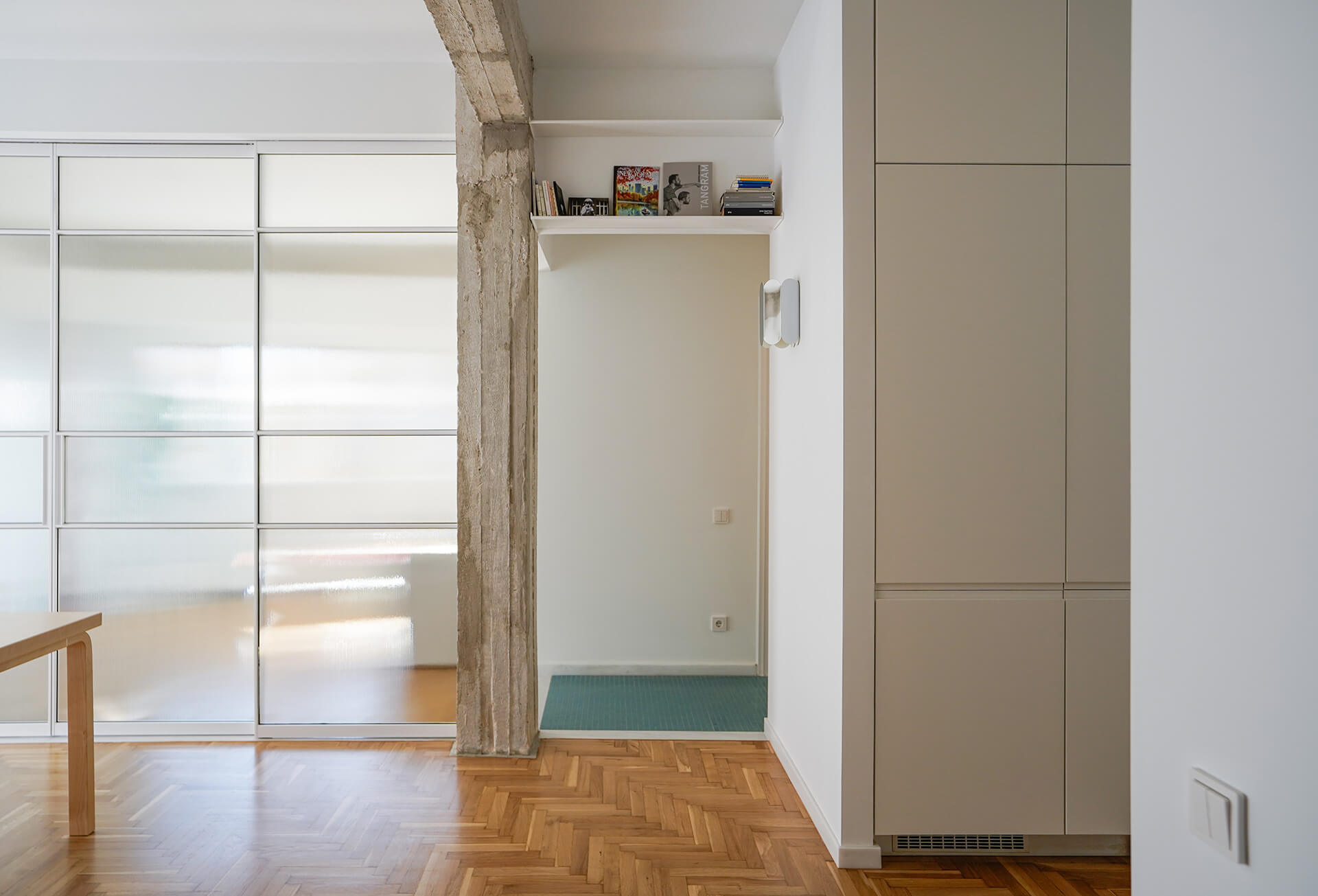
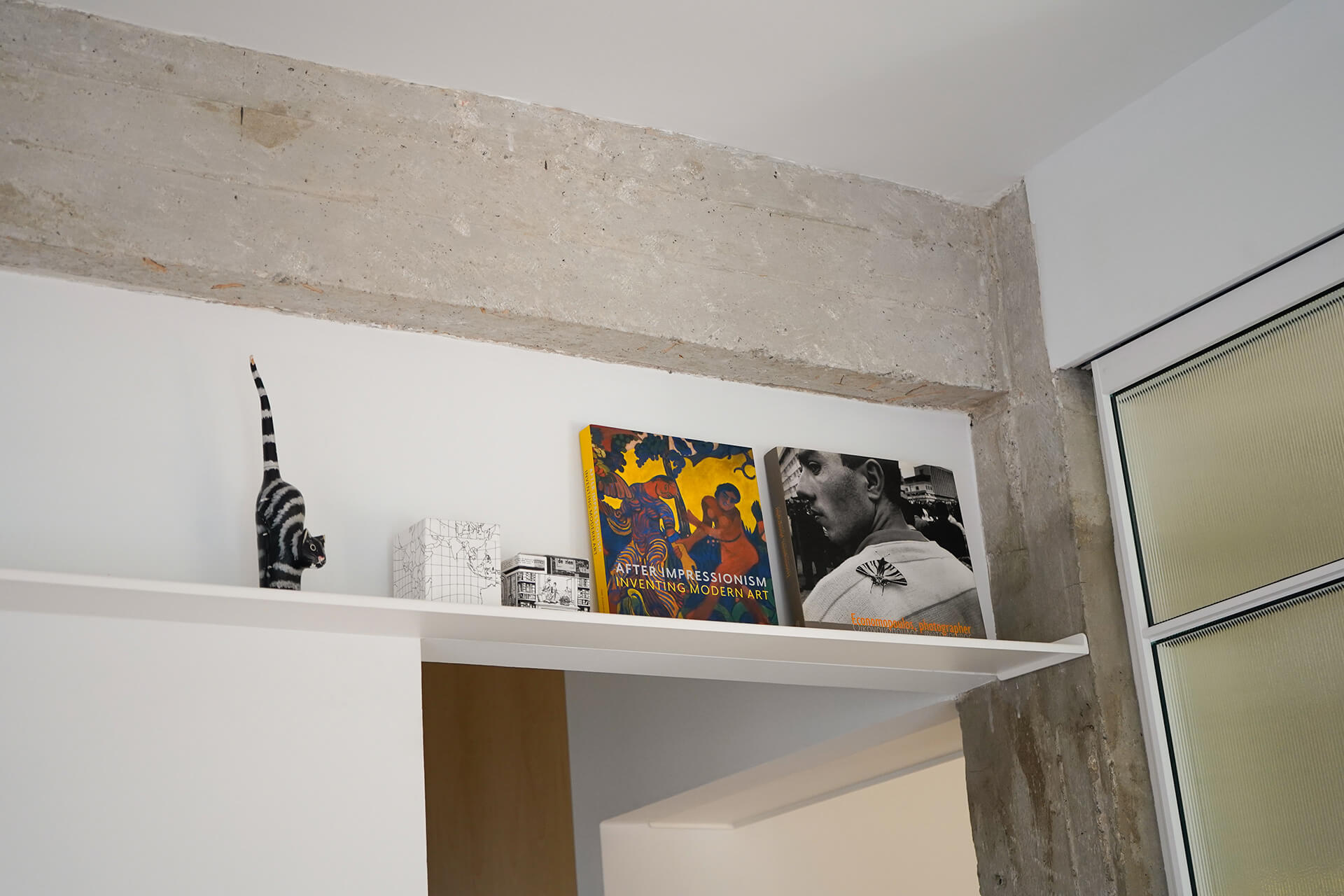
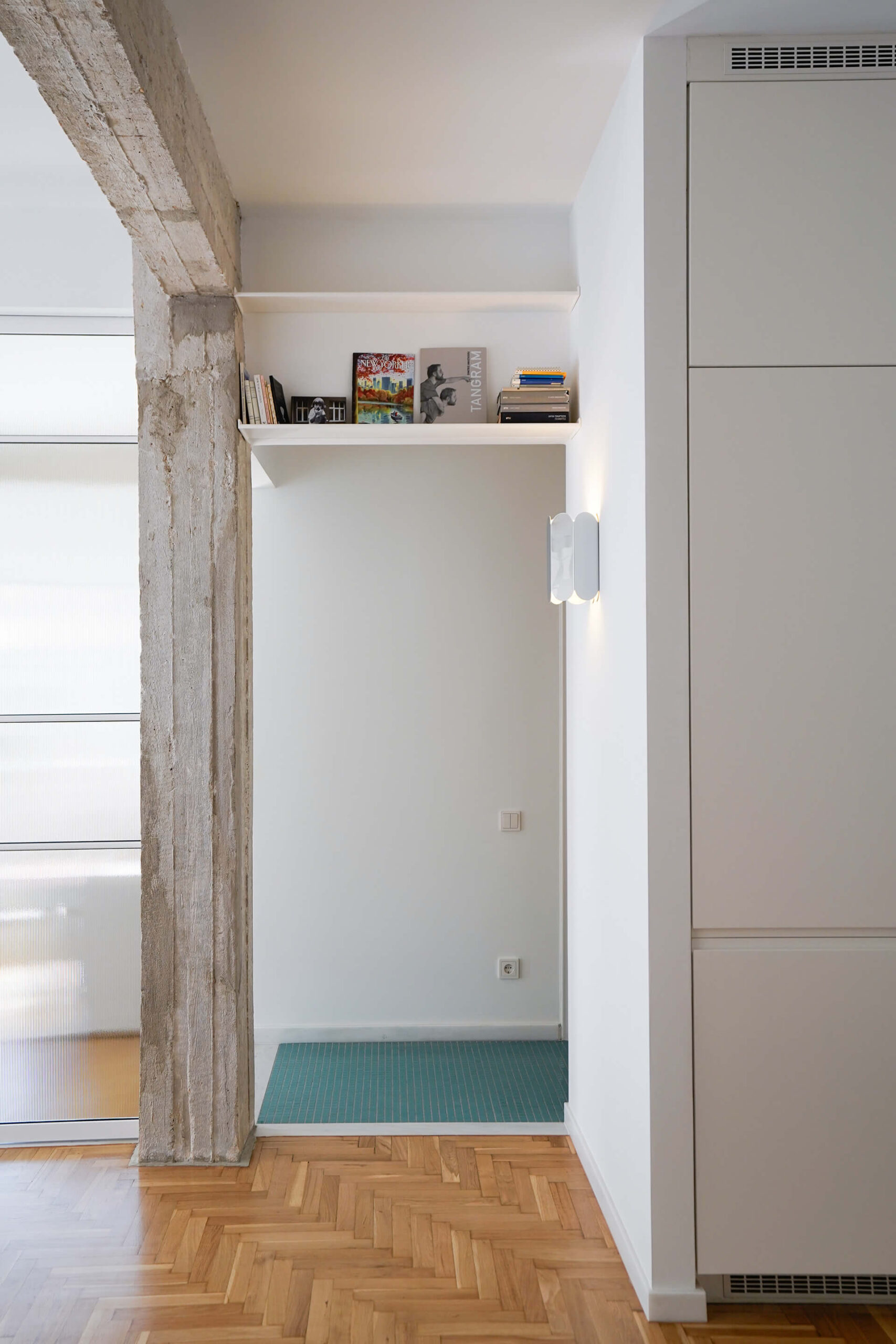
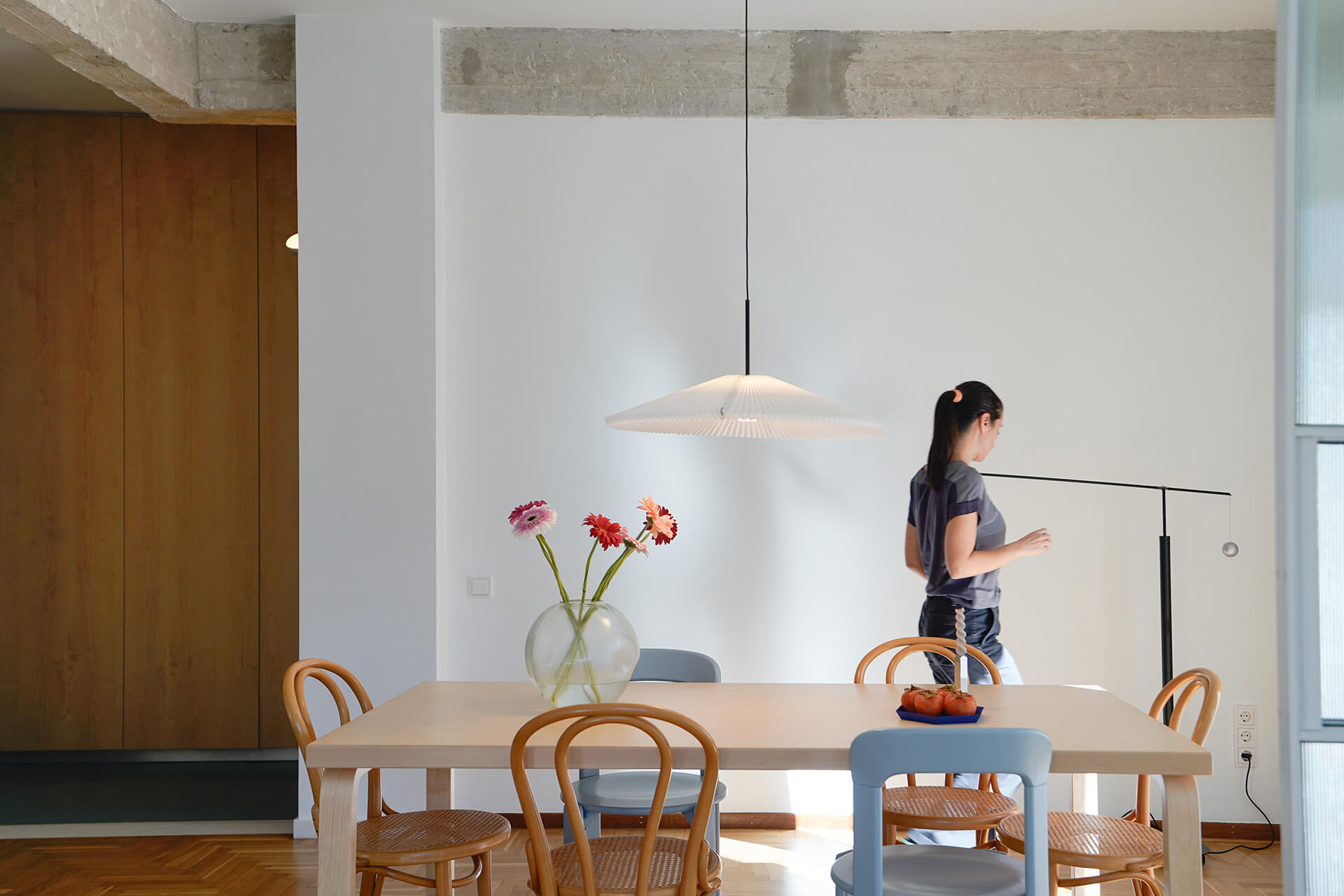
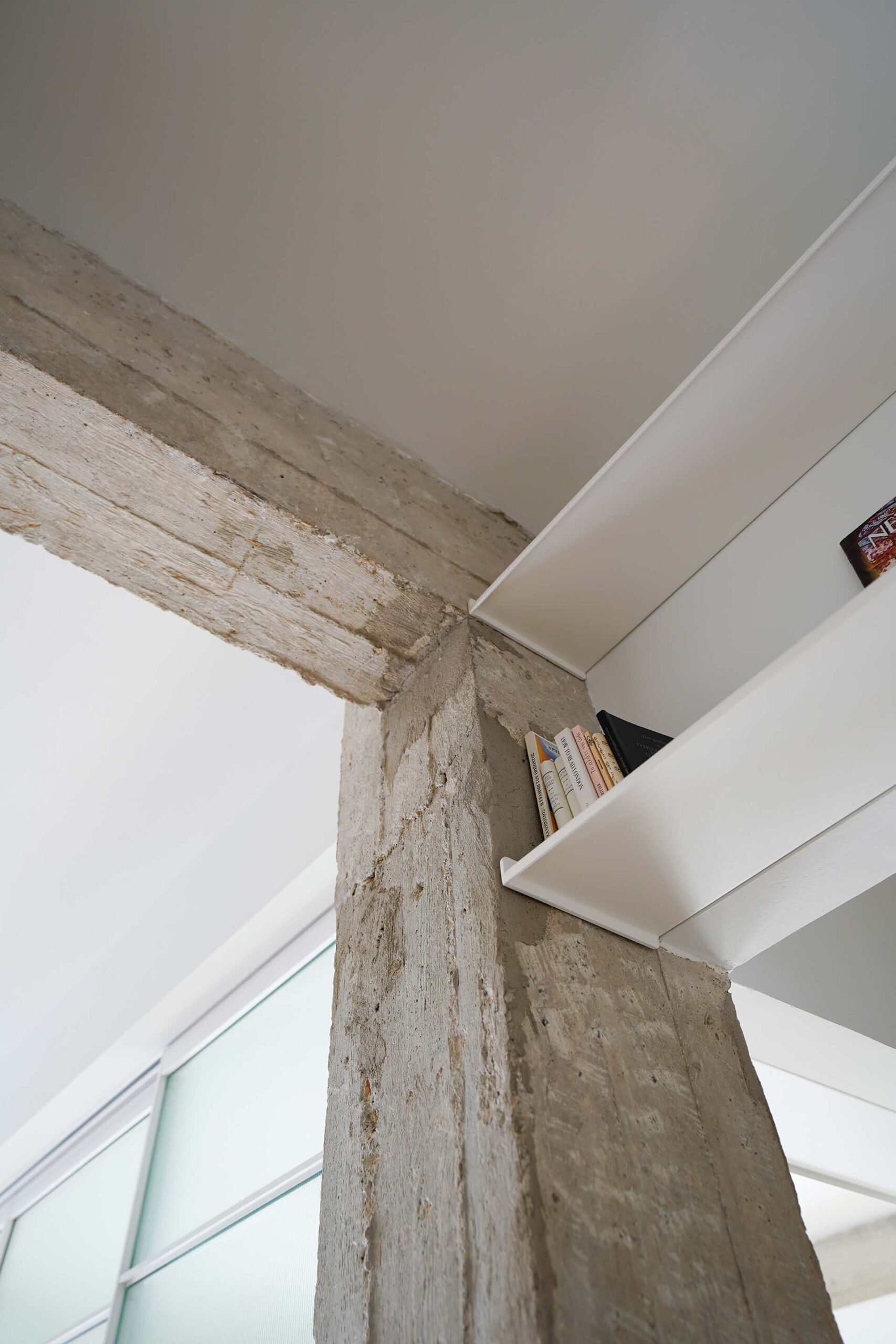
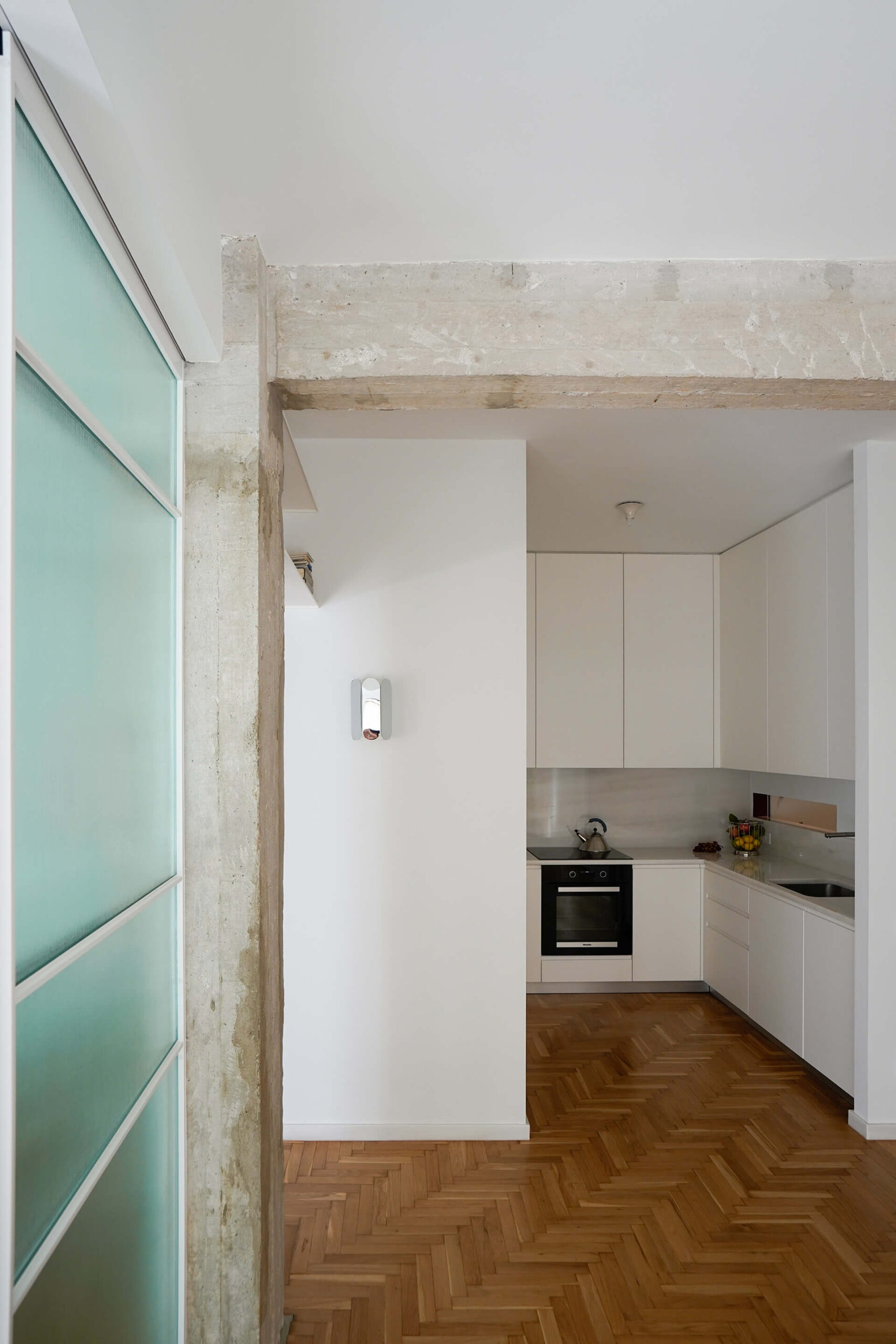
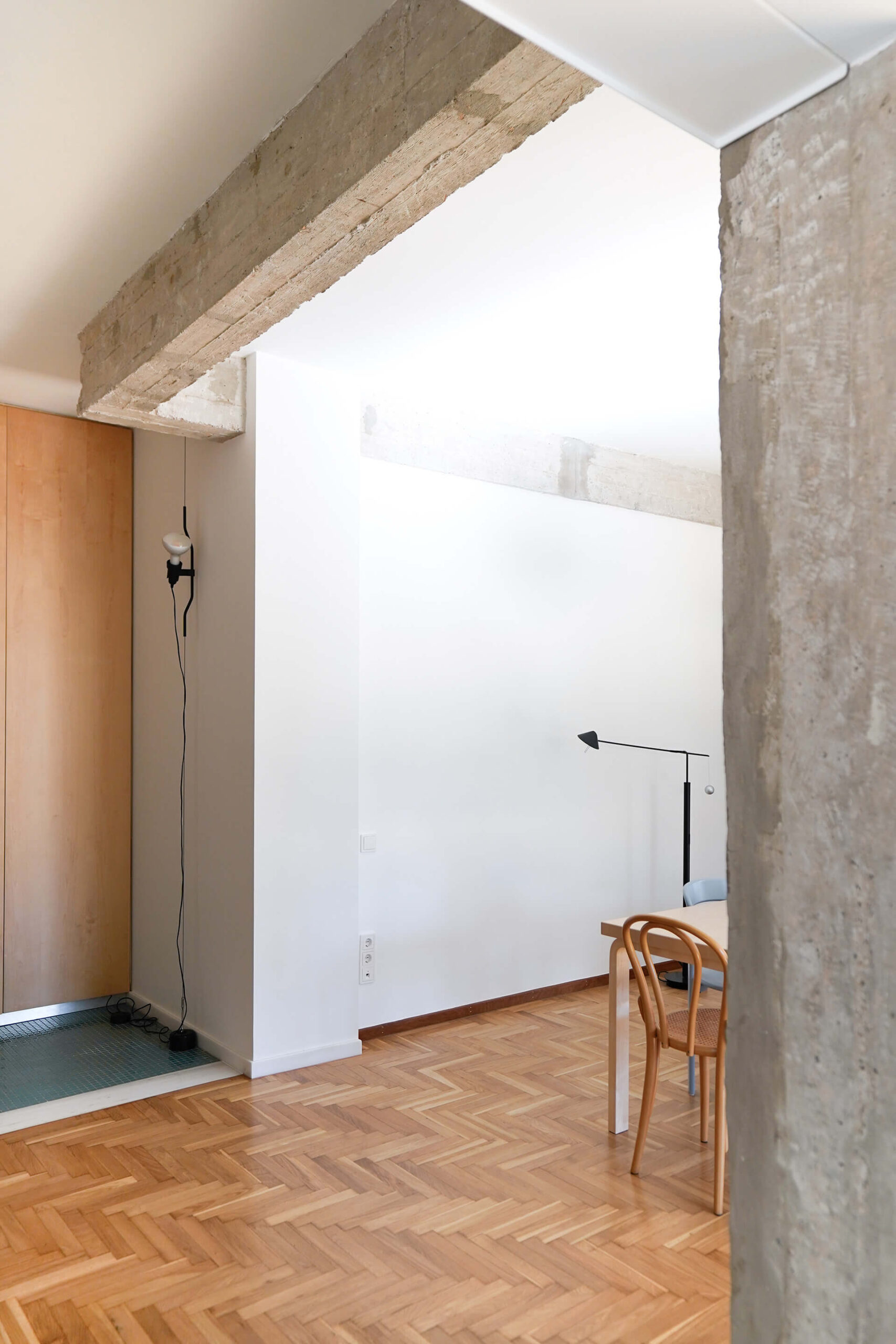
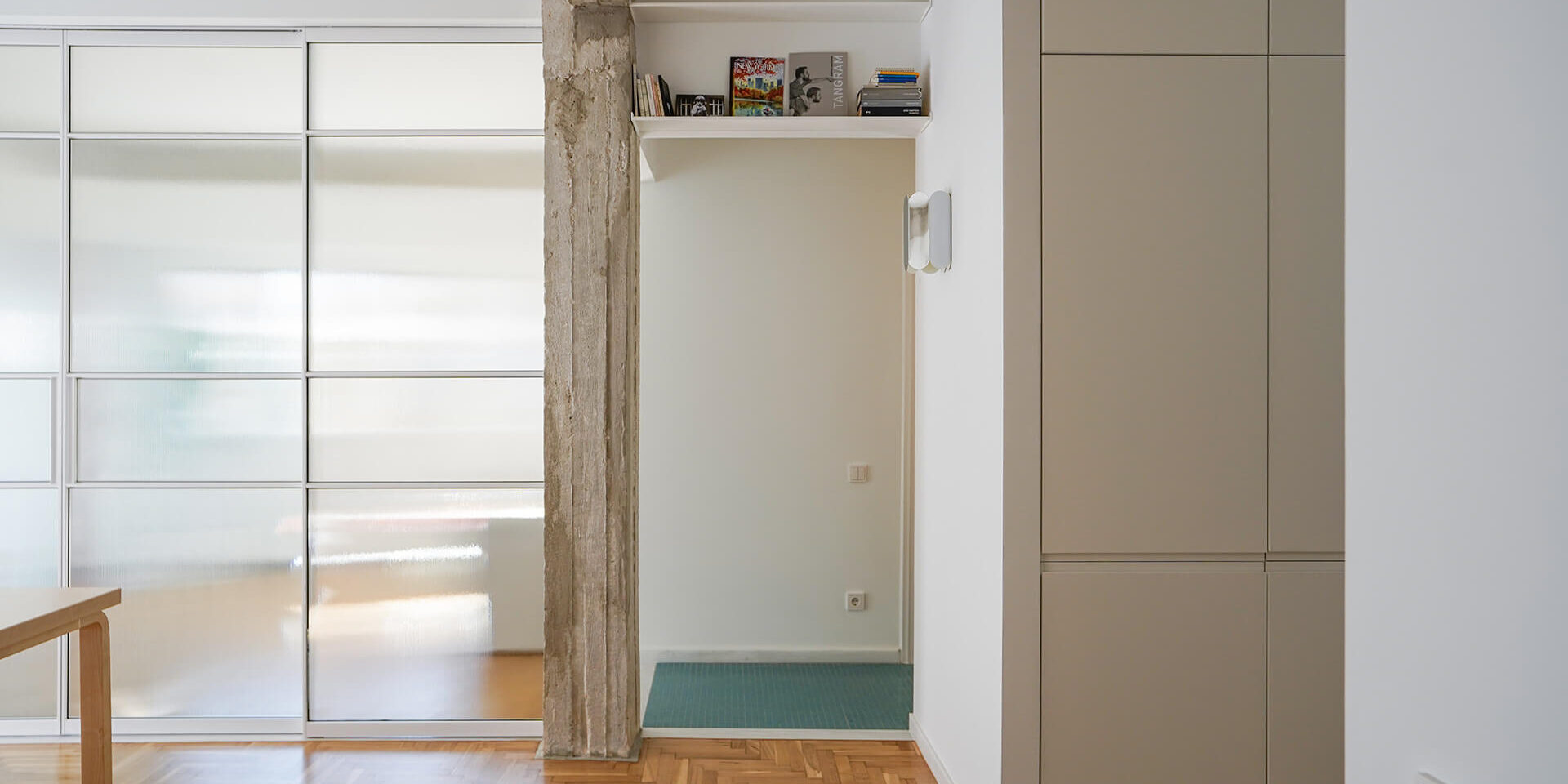
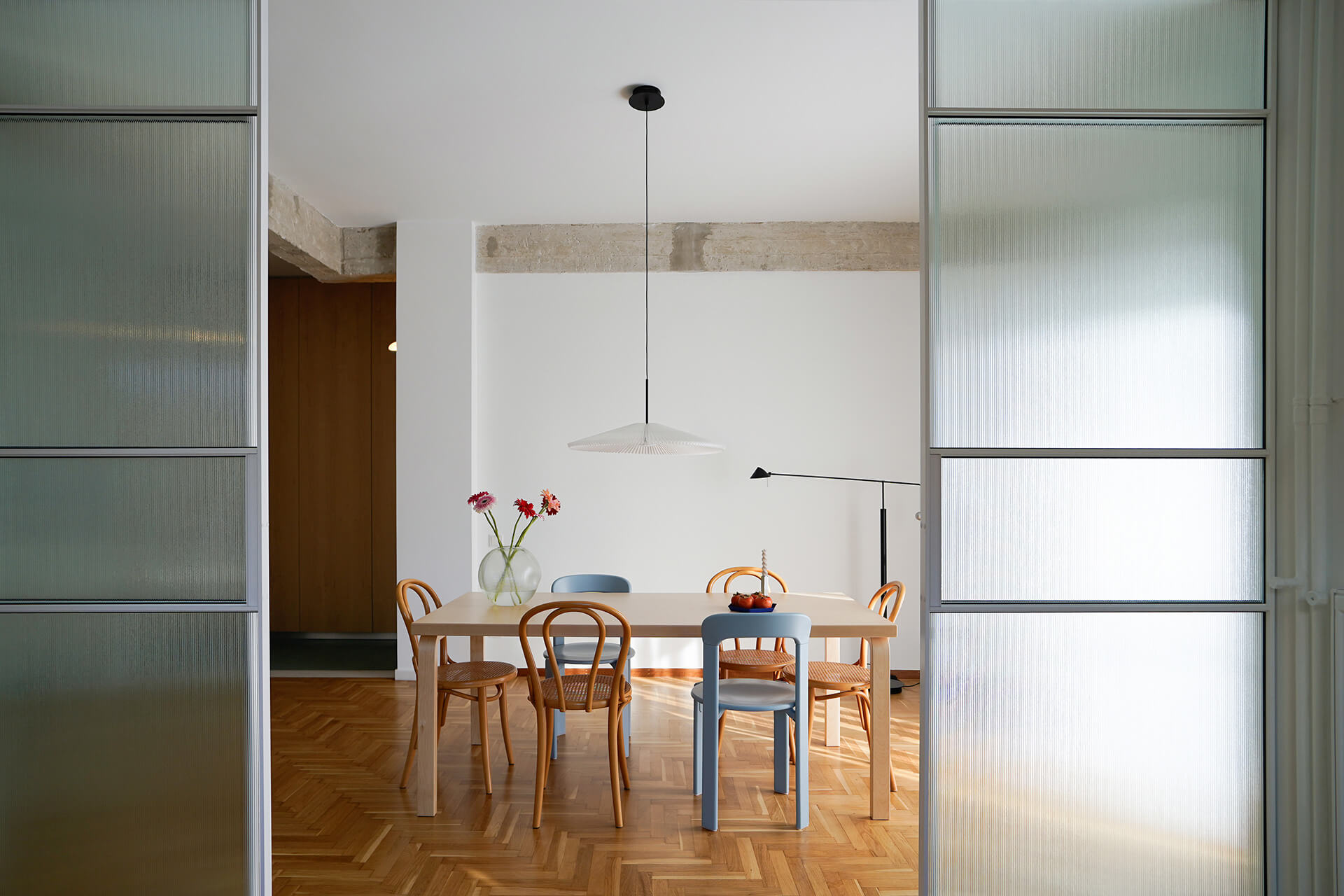
The apartment is organized into three distinct zones. The first zone, comprising transitional spaces such as the hallway and storage areas, functions as a chromatic frame for the more restrained main spaces. A key intervention involved the removal of the wall separating the bedroom from the living area, revealing the building’s structural elements, including the central column and beams. In place of the original partition, a four-leaf metal door with fluted glass was introduced, referencing traditional wooden sliding partitions commonly found in Athenian apartments. The ribbed glass enhances the 1970s aesthetic while allowing light to diffuse throughout the space and providing privacy when needed.
Material Palette
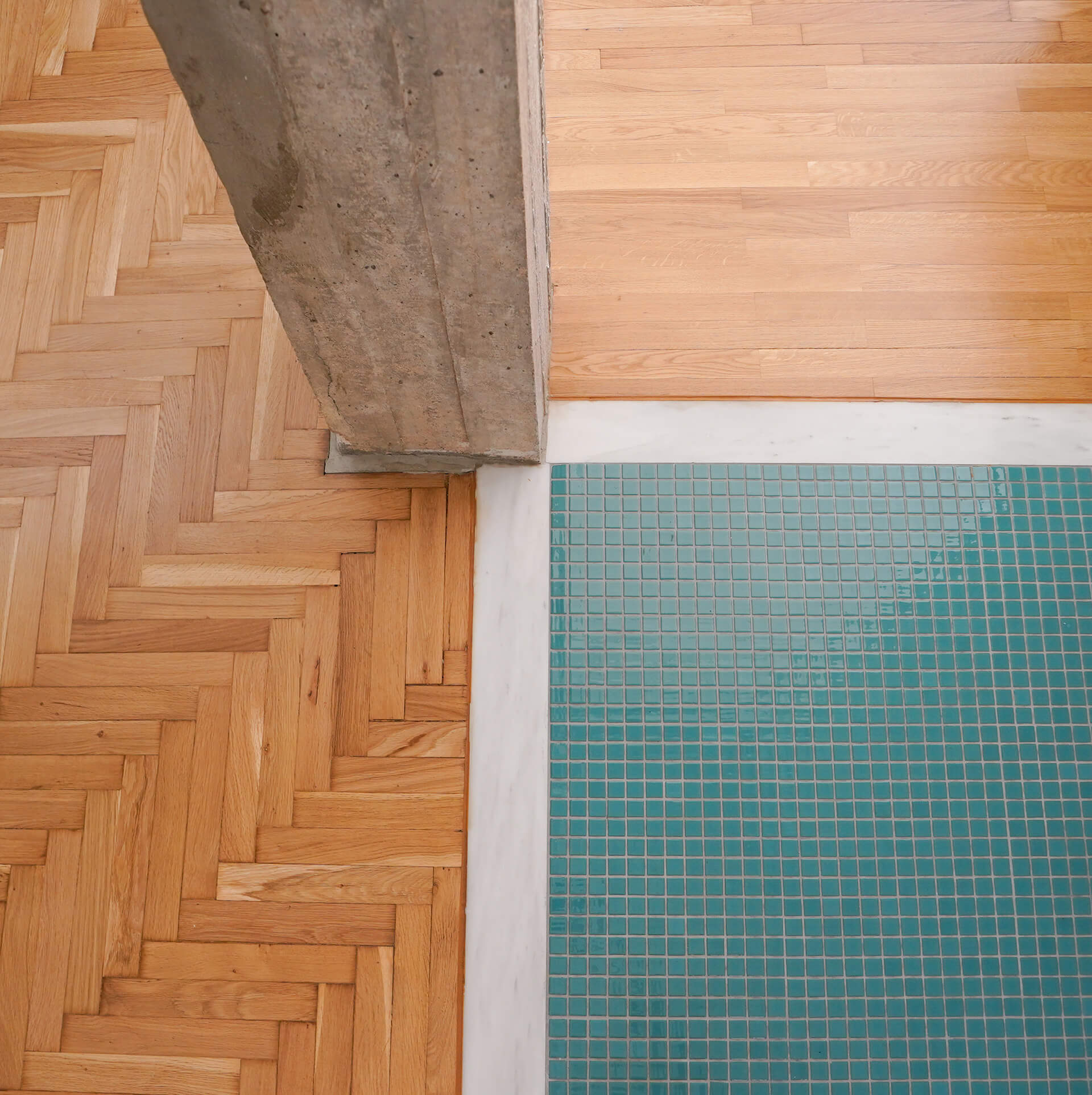
The original mosaic floor, uncovered but heavily damaged by previous interventions, was replaced with turquoise tesserae tiles that enhance light reflection in these intermediate and darker areas. Birch veneer, selected for its expressive grain and warm yellow tones, was used for the woodwork, while the entrance threshold is defined by a burgundy accent.
The second zone includes the primary living spaces – living room, dining area, and bedroom – where the existing oak parquet flooring was repaired and retained. Other elements were designed to contrast with and emphasize the warmth of the wood, incorporating industrial finishes such as exposed concrete, metal elements (including sliding doors and shelving), glass, and chrome glossy details in lighting fixtures and hardware.
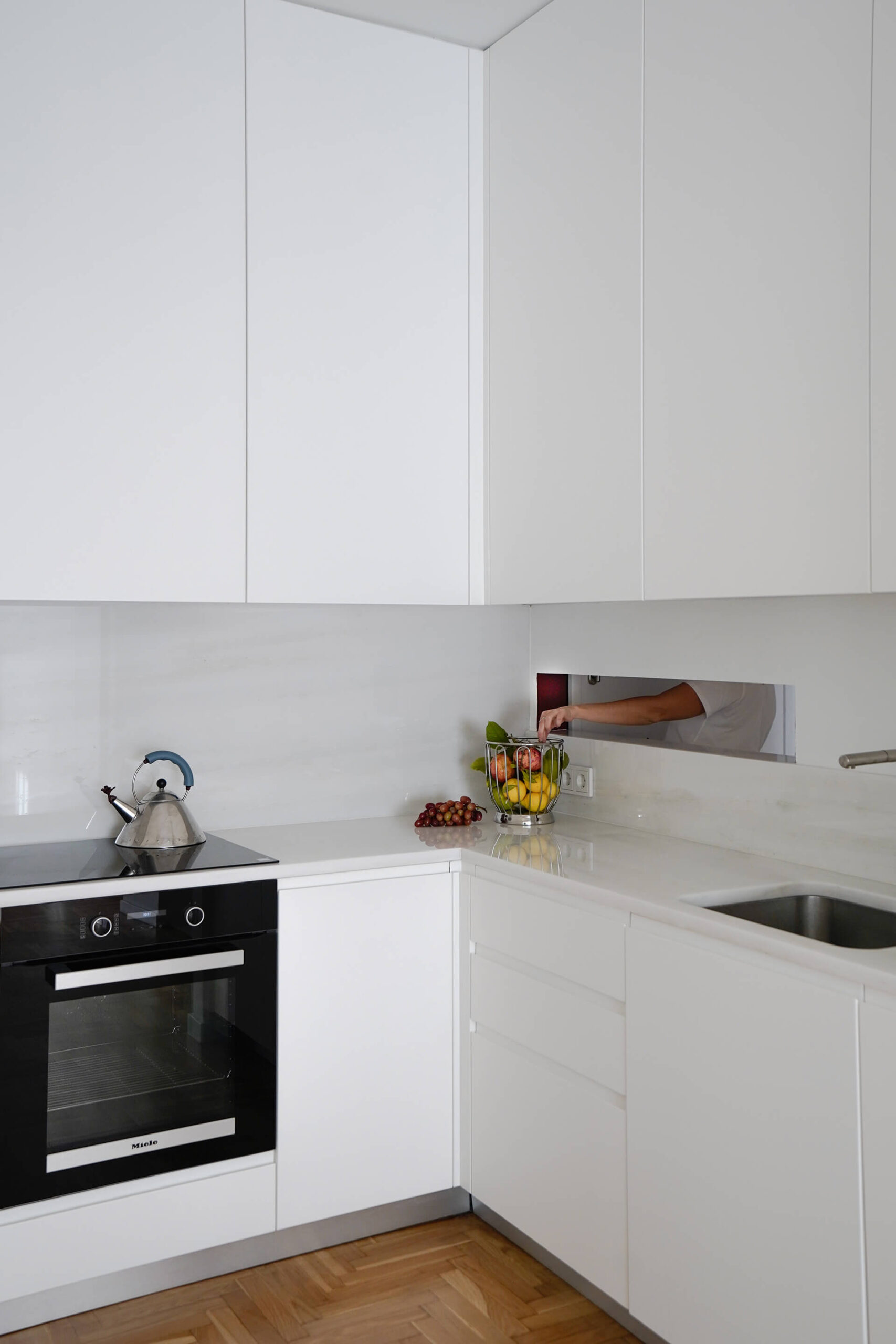
The third zone, encompassing the kitchen and bathroom, features Dionysos marble as the dominant material, a reference to materials already present in the apartment. In the kitchen, the marble was applied to both countertop and backsplash, creating vivid reflections that contrast with the matte off-white lacquered cabinetry. In the bathroom, 40×40 cm marble tiles were used to introduce a more playful interpretation of this timeless material.