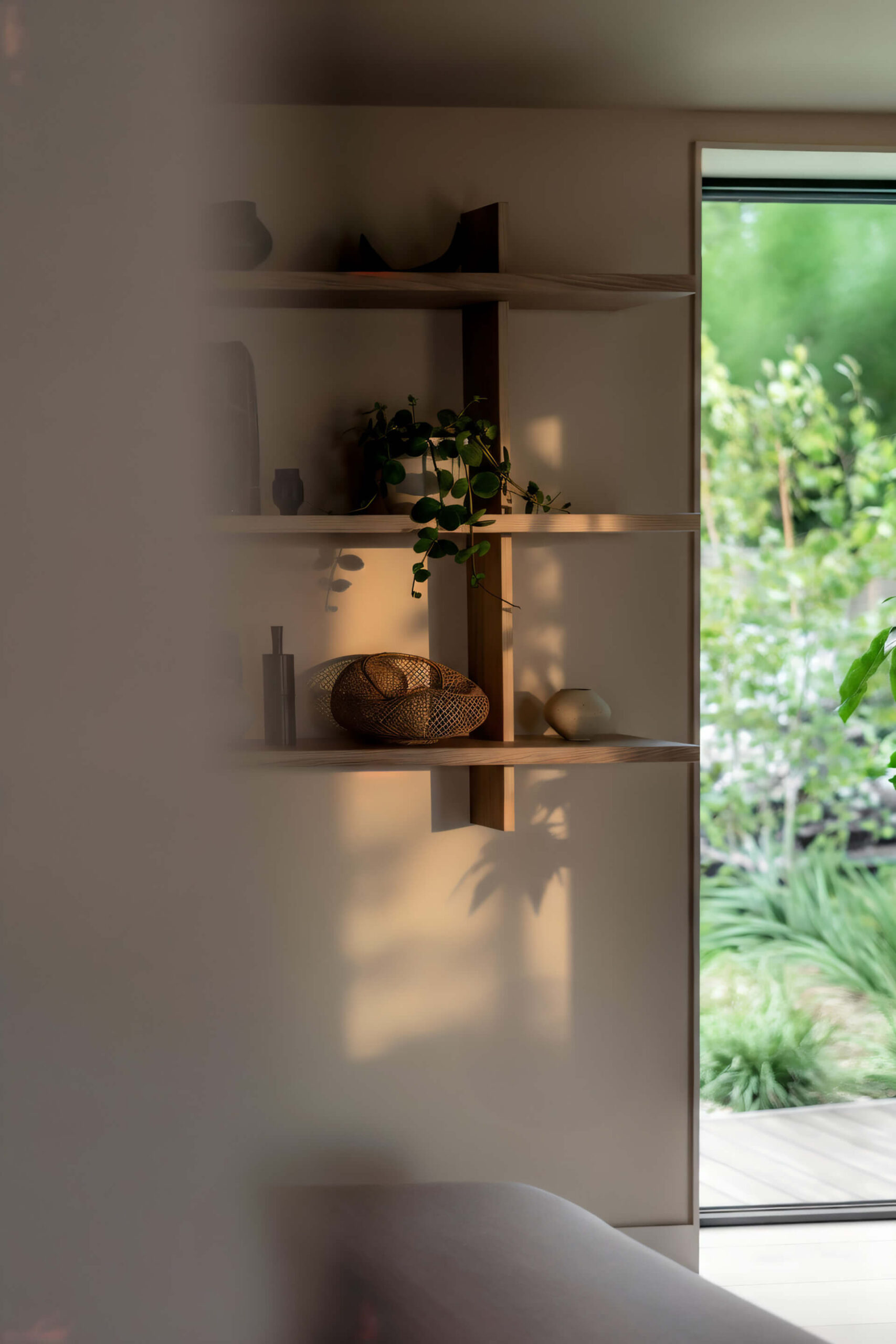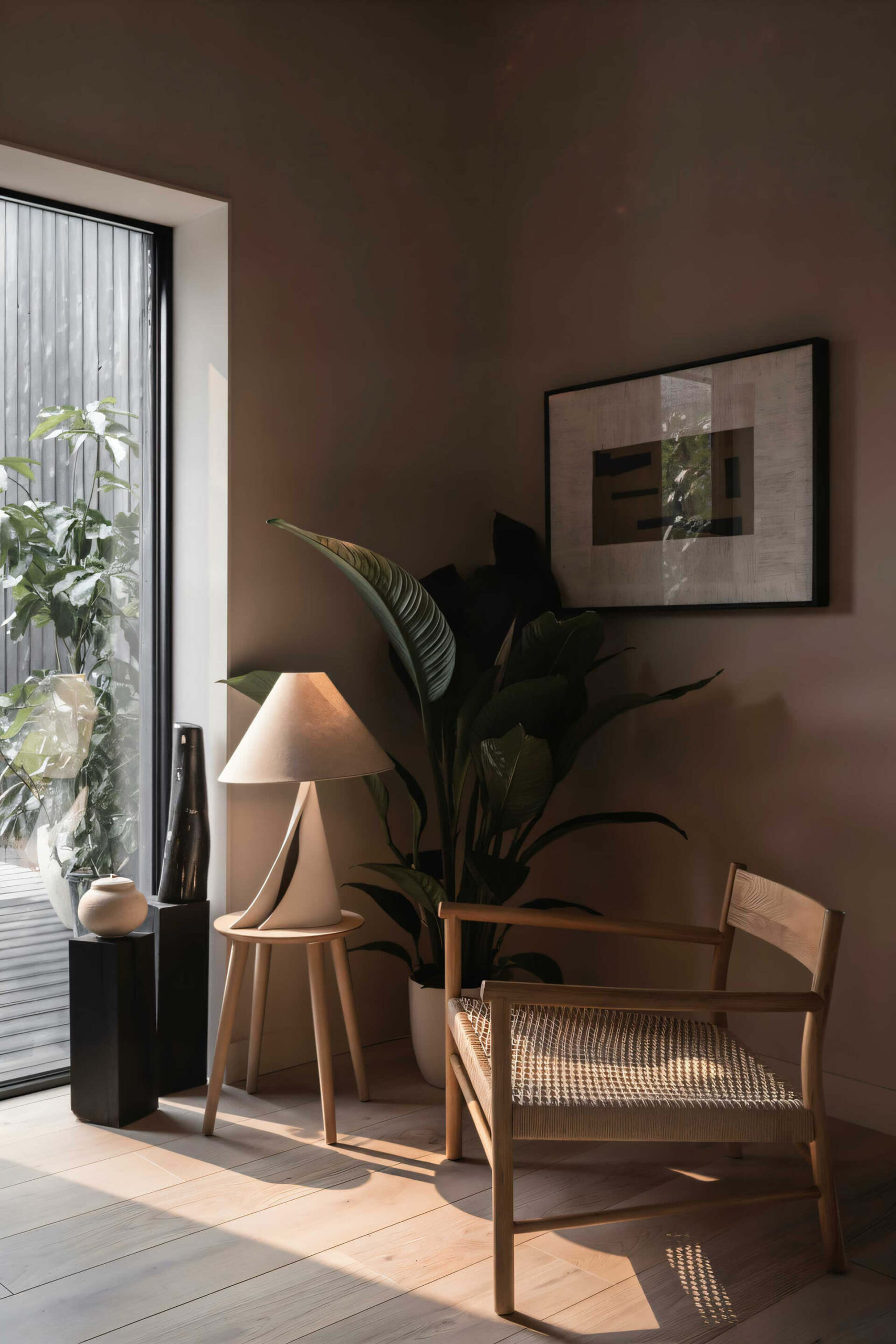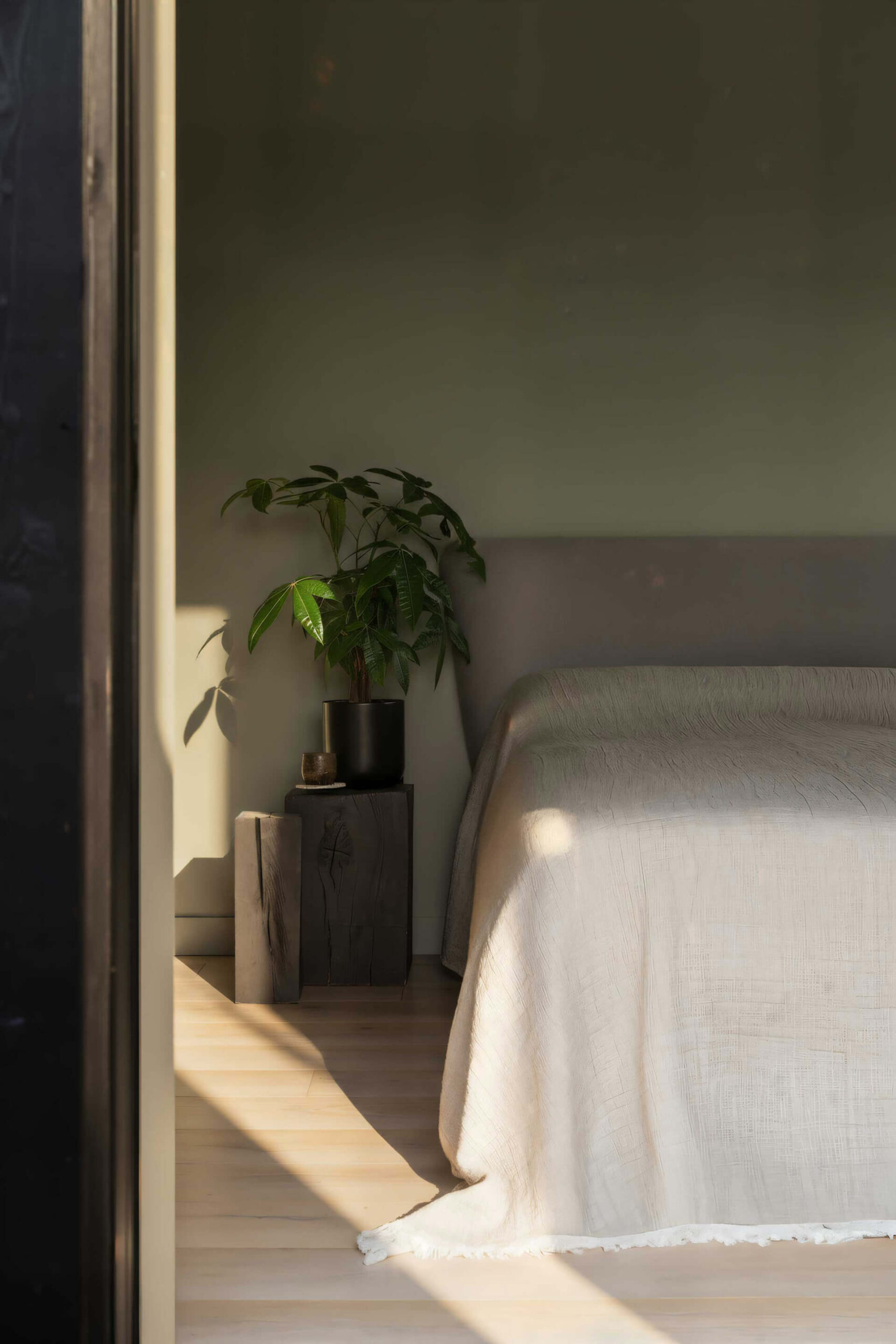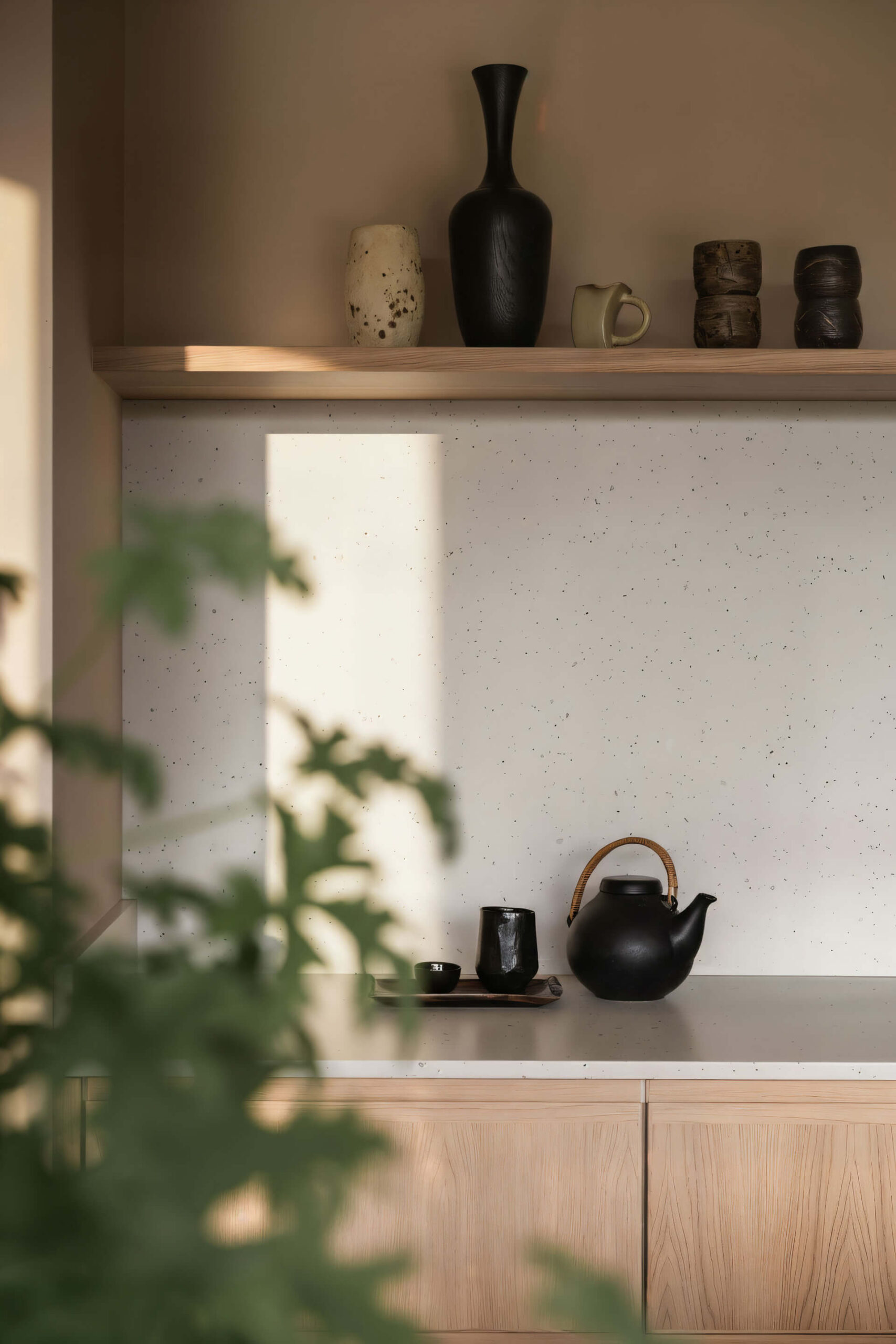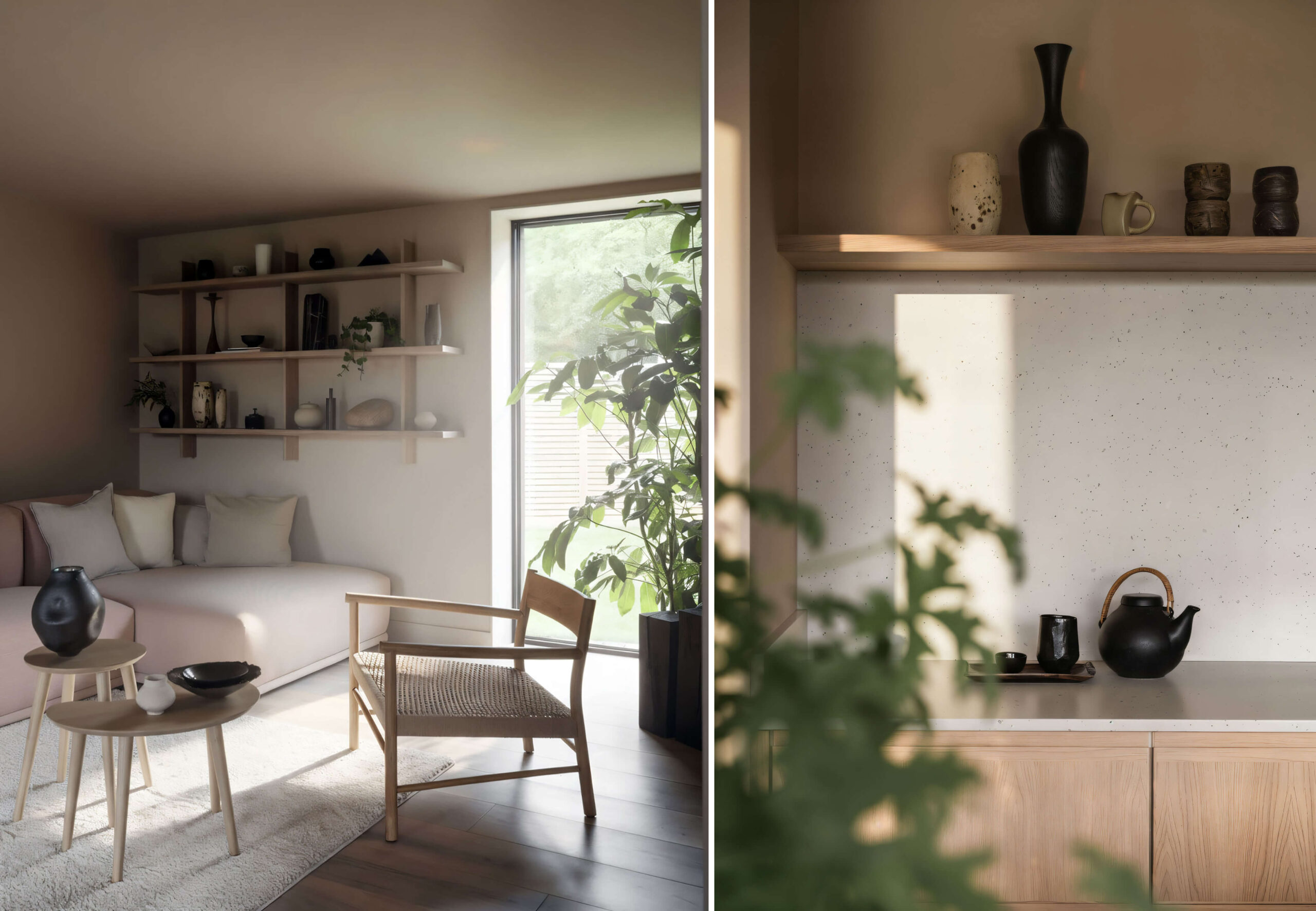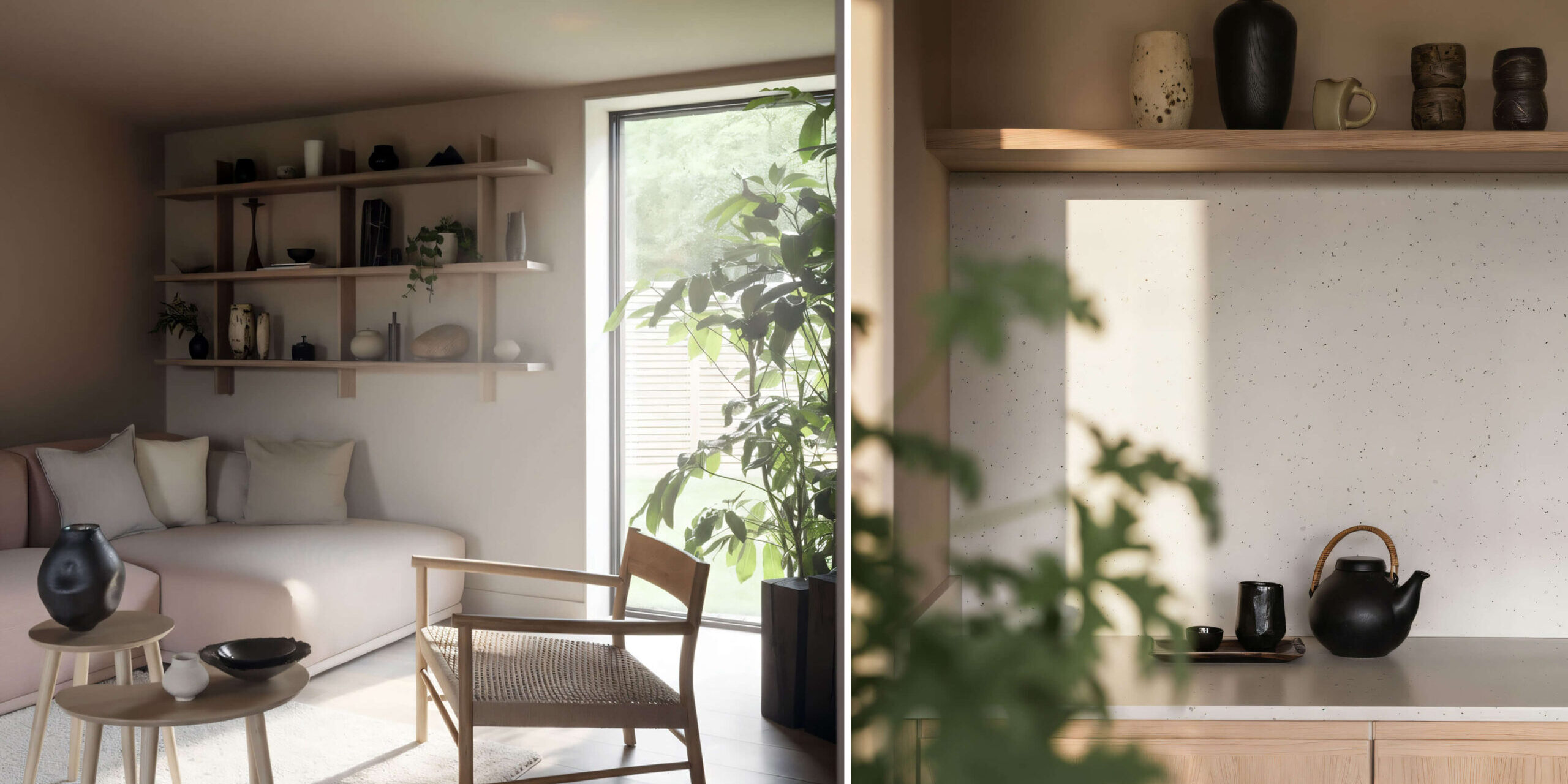
Residence in Sussex, United Kingdom
Interior Design:
Photography:

The project exemplifies an approach to residential architecture in which buildings are conceived as integral parts of their landscapes, while simultaneously advancing sustainable construction methods and future-oriented living models.
Design Philosophy
The residence was developed in close collaboration with the clients and explored on screen as part of a nationally recognized architecture and design program, marking a milestone in the adoption of prefabricated residential construction within a mainstream context. Particular emphasis was placed on the clarity and predictability of the construction process, with off-site fabrication allowing for strict cost control, precision, and consistency between design intent and delivery. The approach demonstrated a forward-looking model for self-built housing, in which efficiency, quality, and economic certainty are aligned.
Spatial Layout
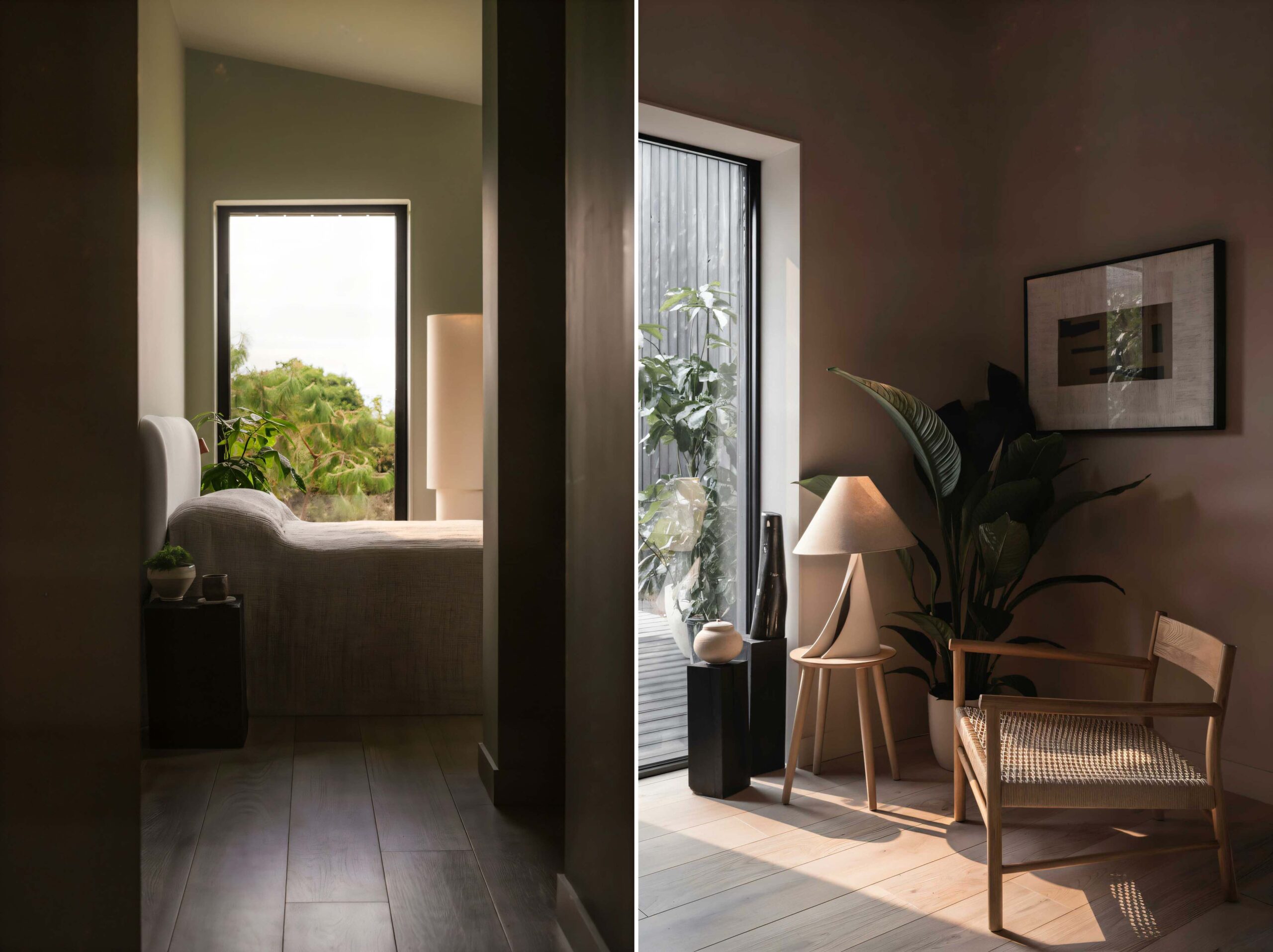
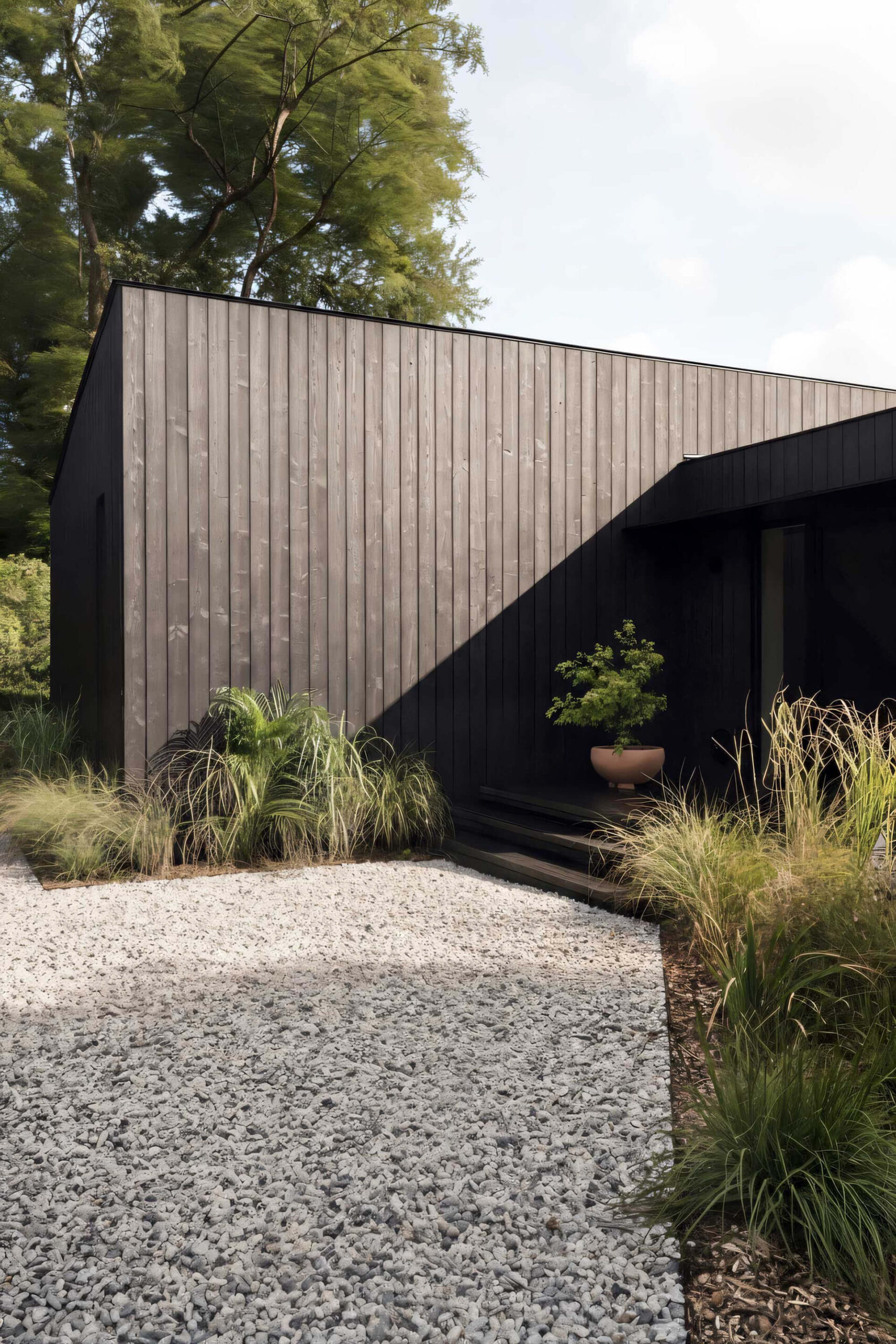
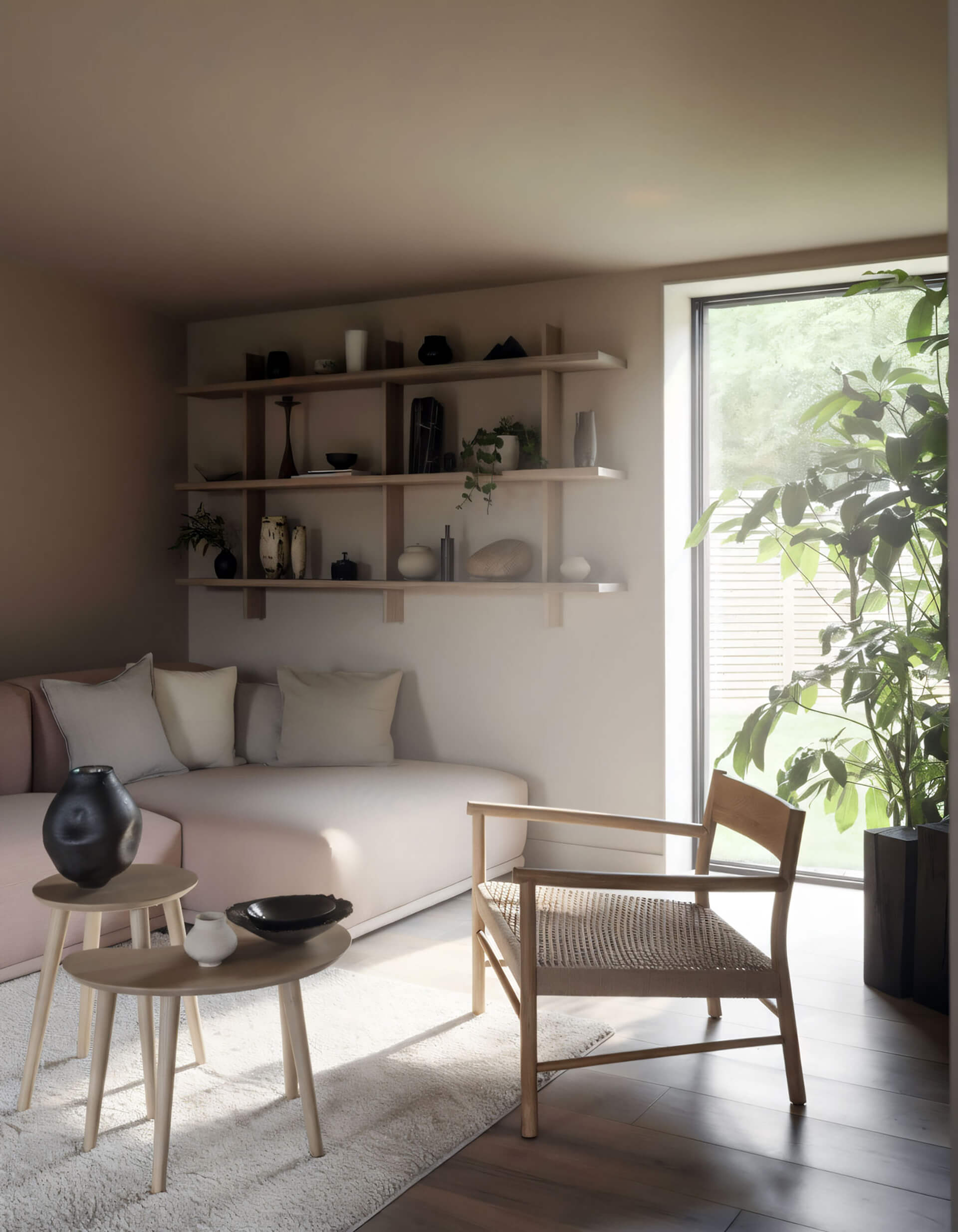
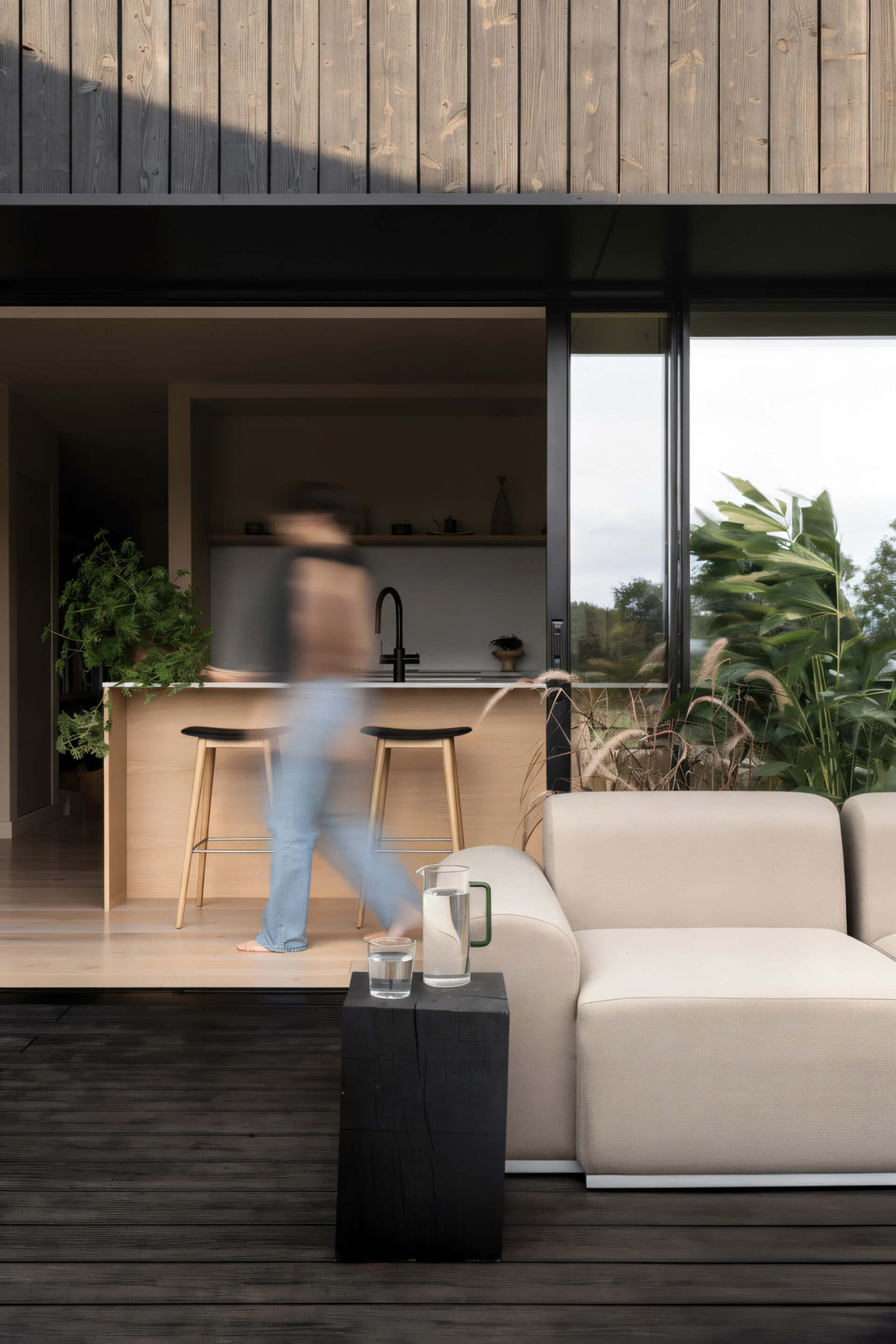
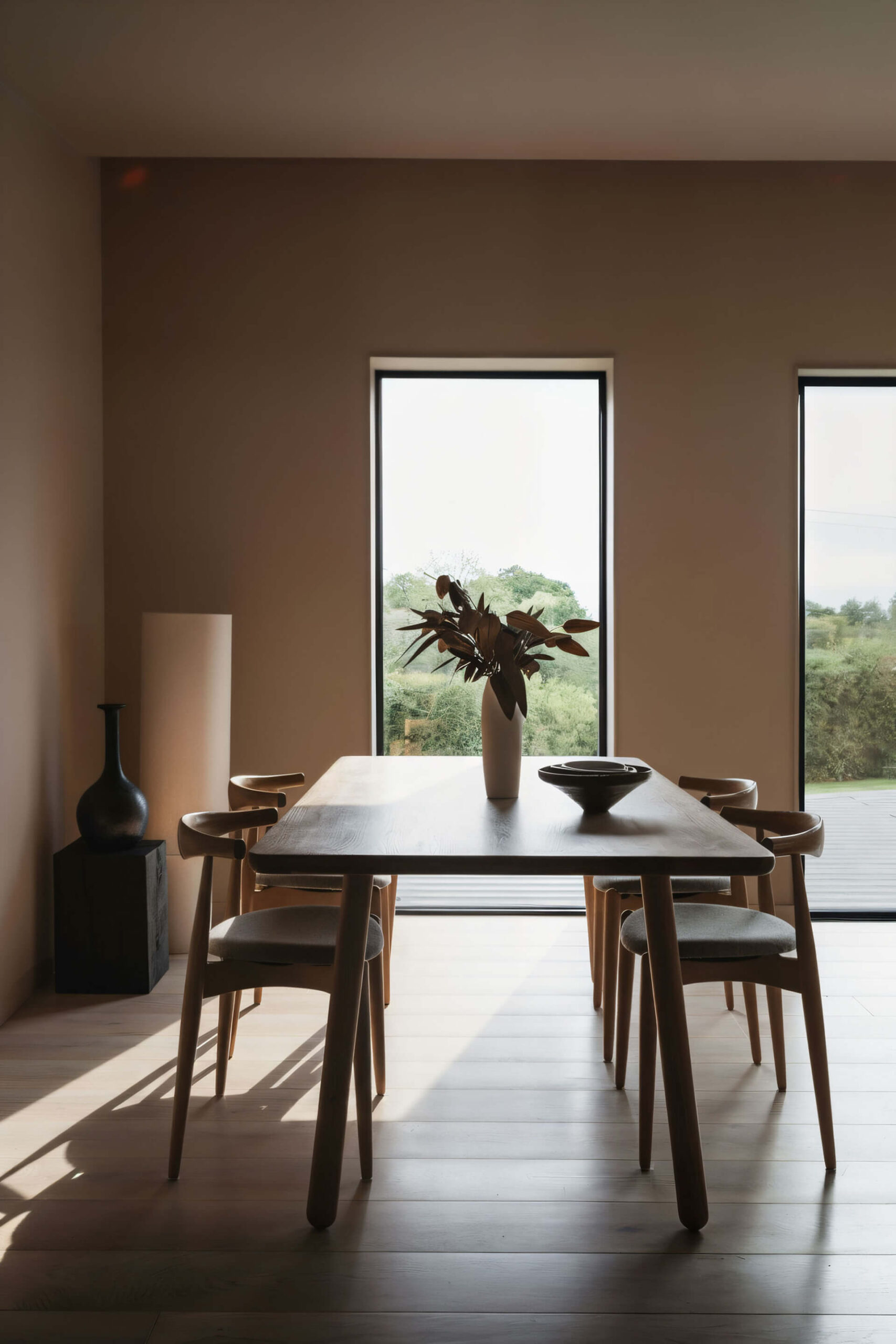
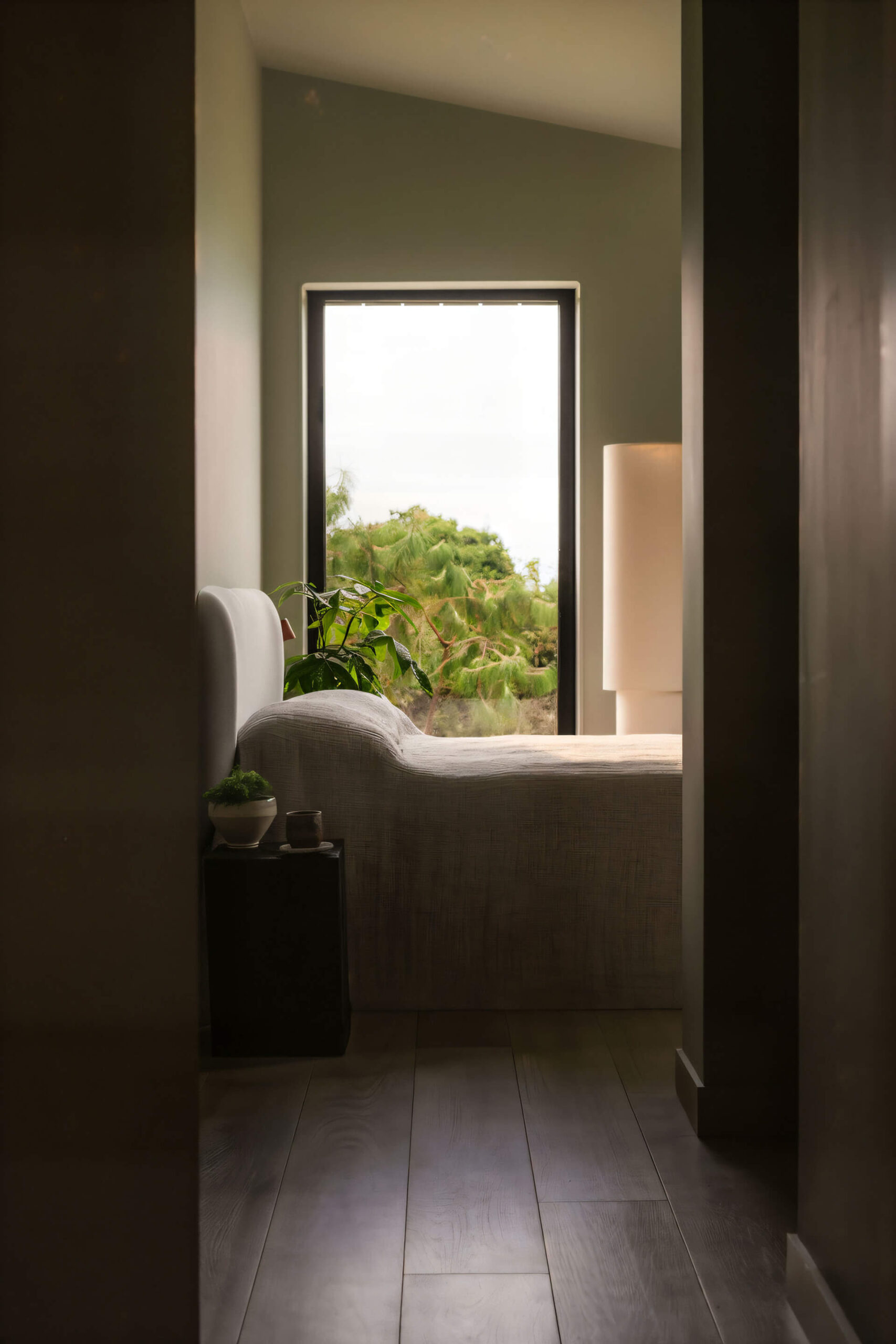
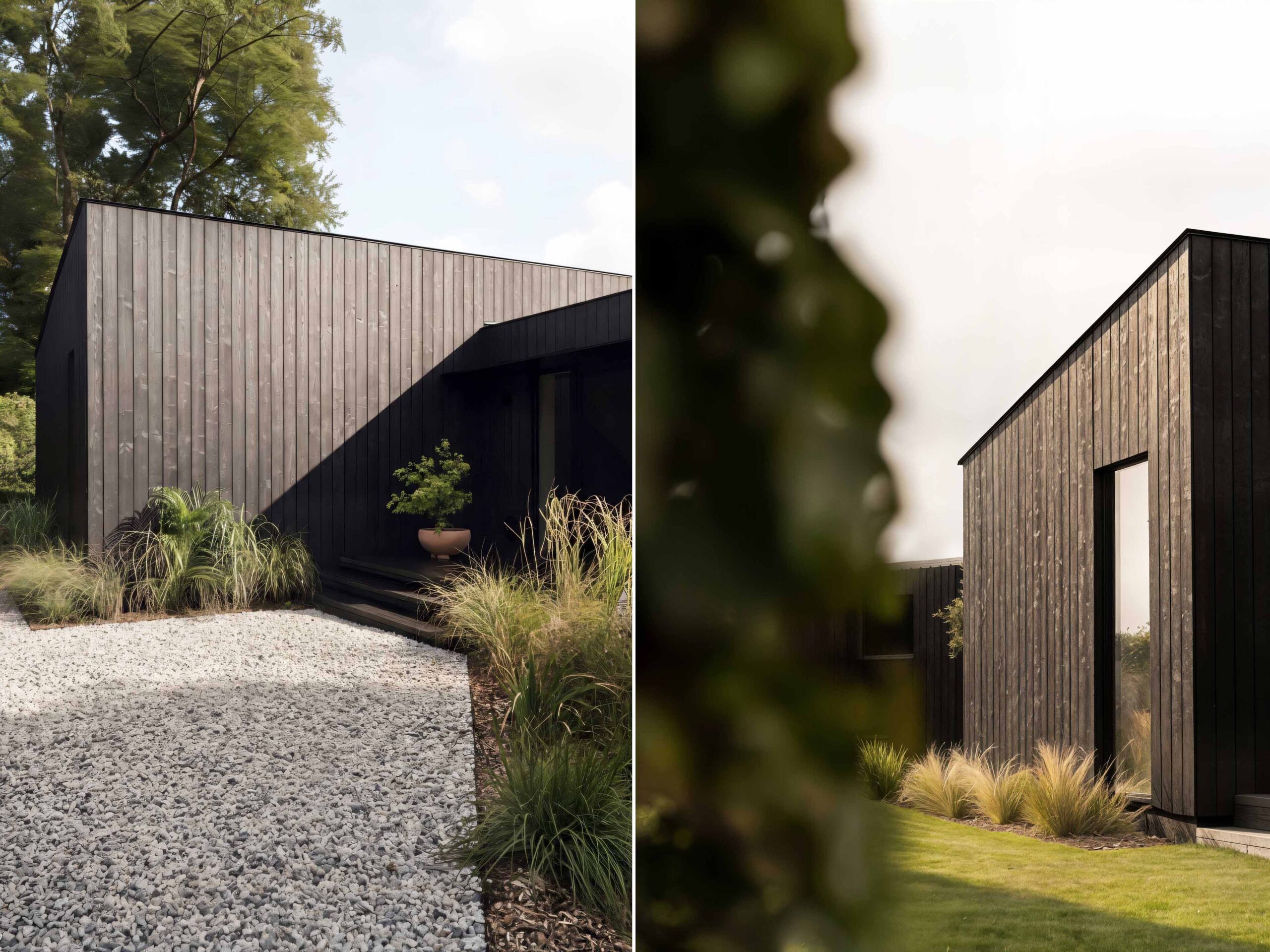
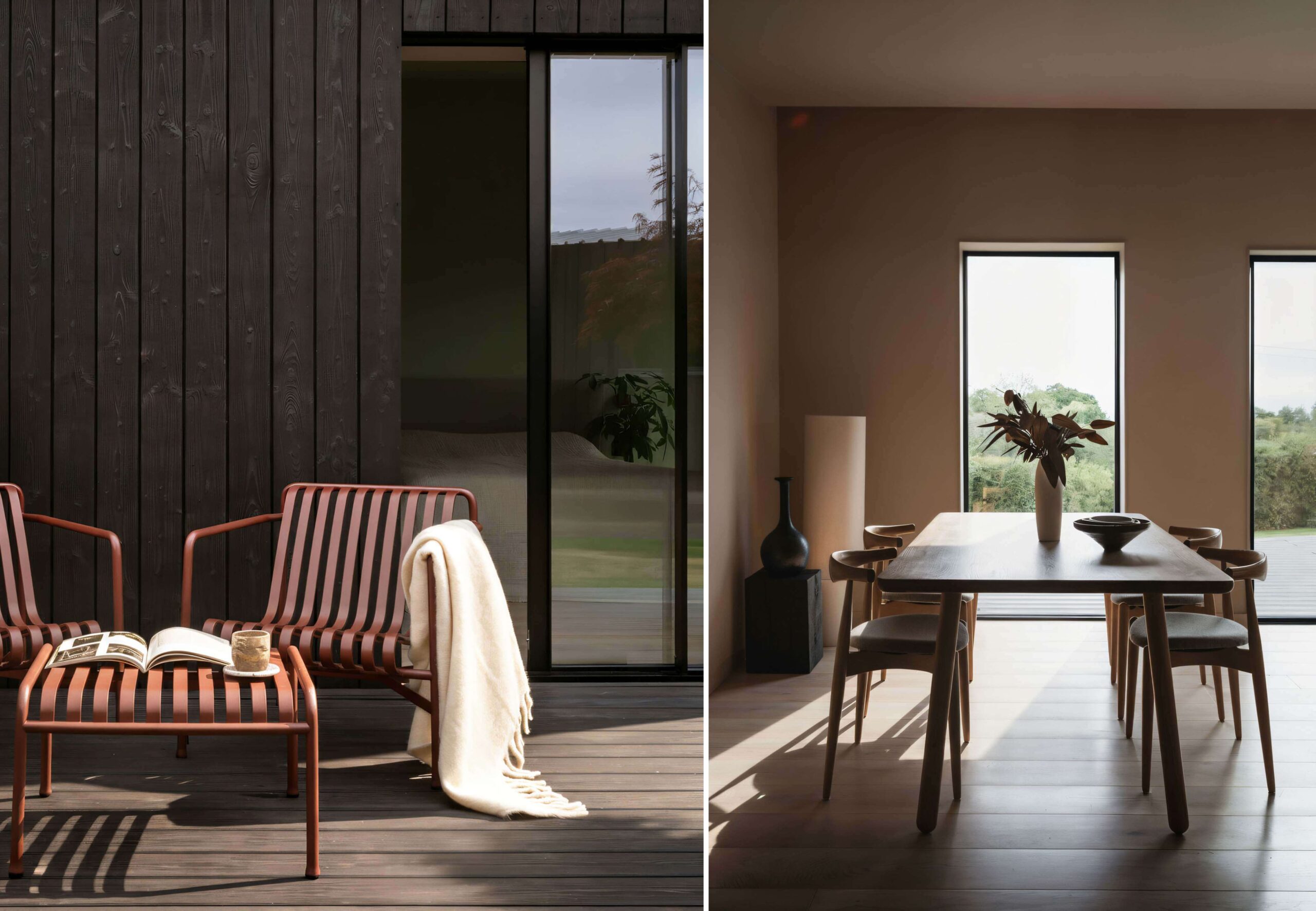
Set within a private rural plot, the single-storey dwelling is organized to support long-term adaptability and contemporary family living. The program unfolds across four bedrooms, generous living, dining, and kitchen areas, complemented by a snug, office, and utility spaces. Additional functions are accommodated within a series of outbuildings, including a garage, gym, and workshop, which are arranged around landscaped garden zones. These outdoor spaces are shaped by the subtle rotation of the floor plan, creating varied orientations, framed views, and sheltered external areas.
Material & Construction
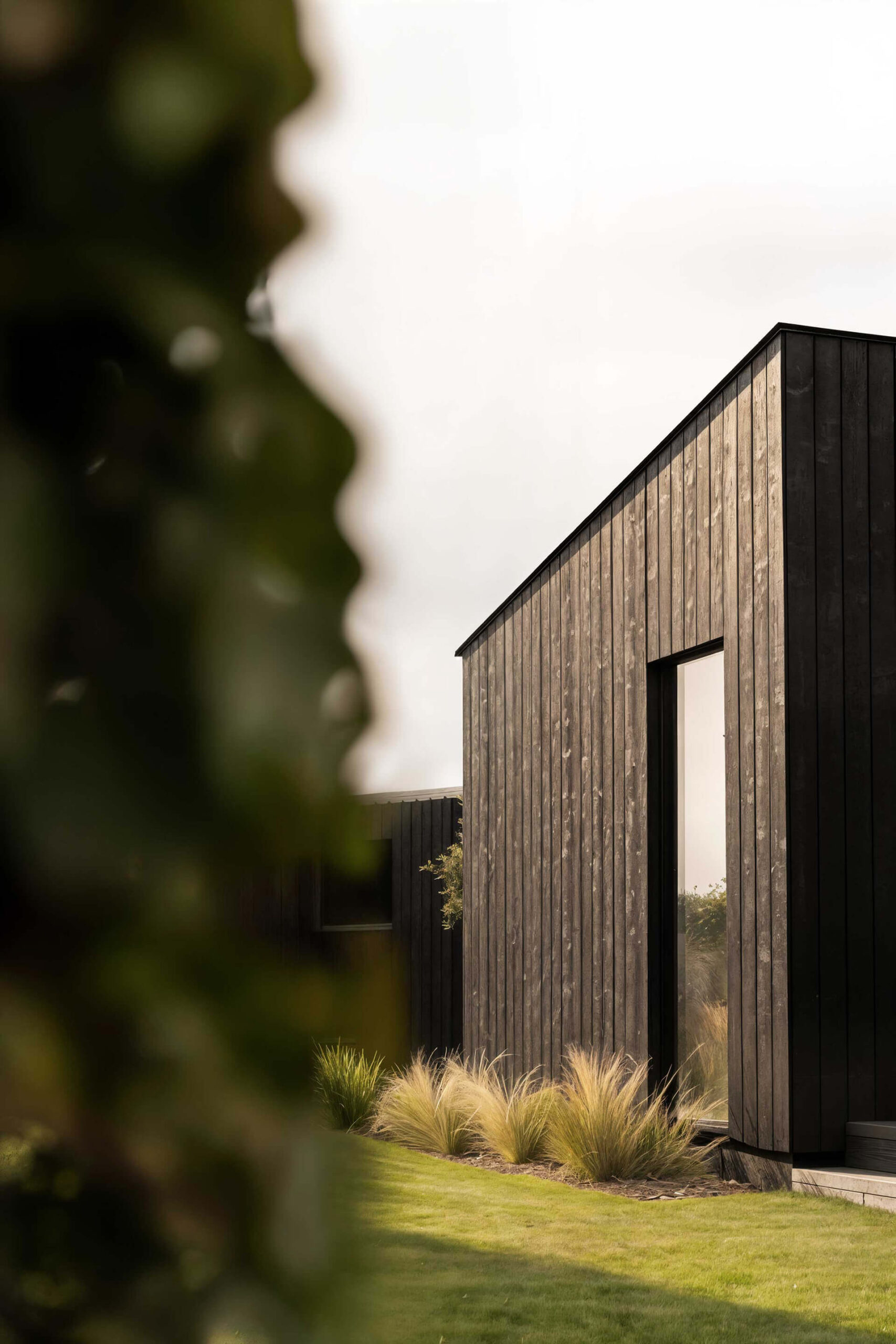
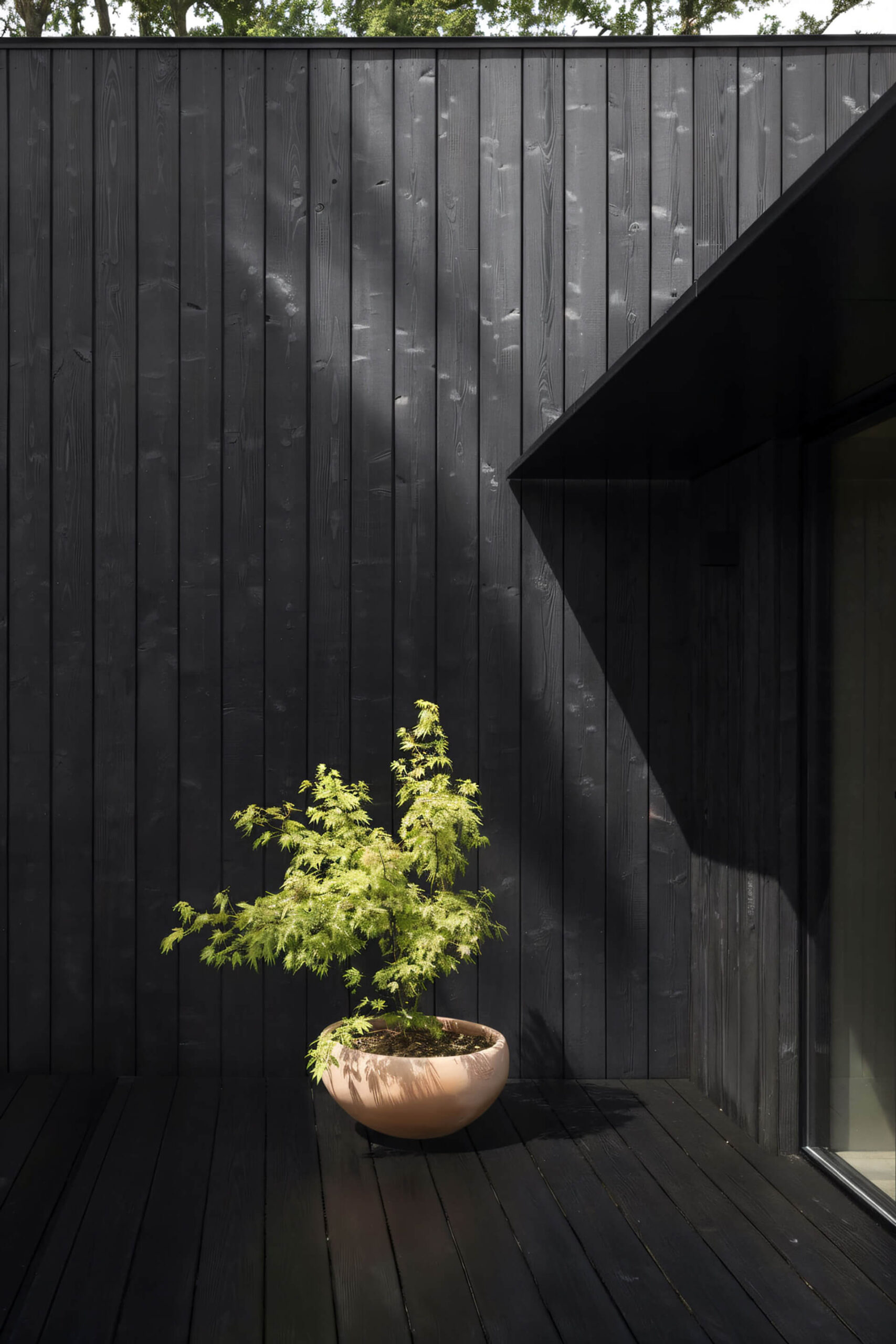
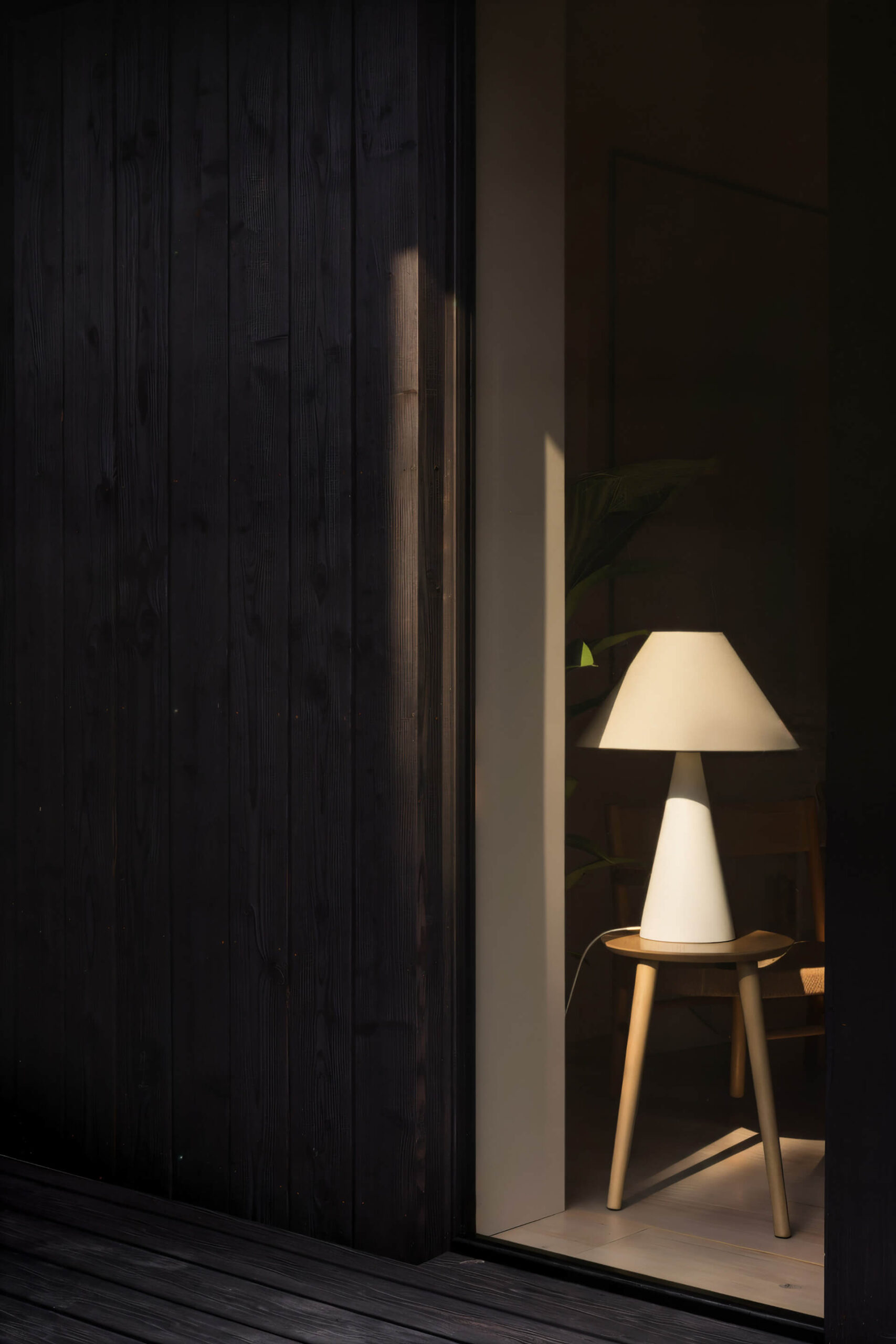
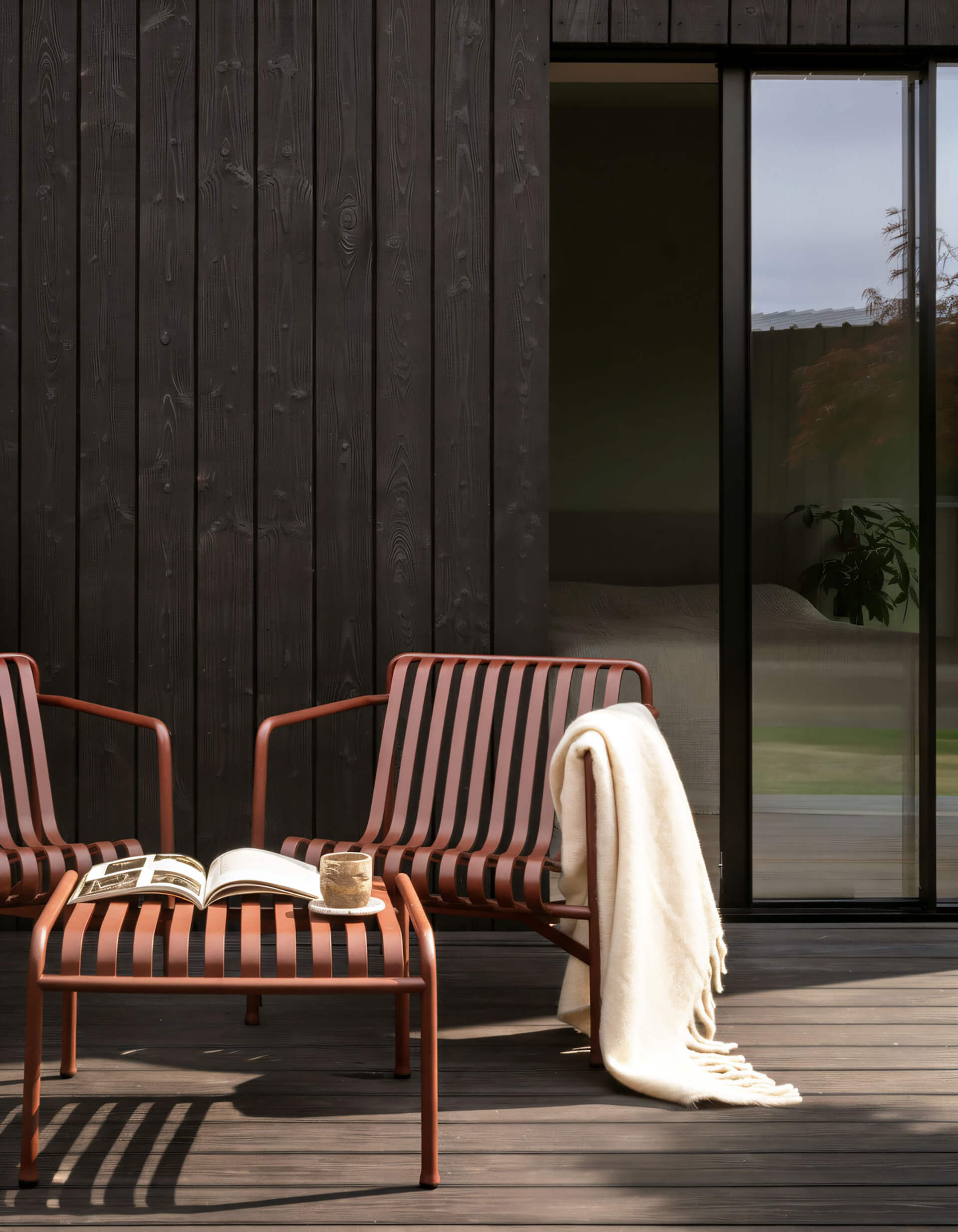
The building envelope is clad in black charred timber sourced in the UK, allowing the dwelling to visually recede into its natural surroundings. This material strategy balances contextual sensitivity with a strong contemporary presence, reinforcing the relationship between architecture and landscape.
The house was delivered as five prefabricated volumetric modules, installed on site within a single day. This off-site construction strategy enabled high levels of build accuracy, reduced on-site disruption, and minimized embodied carbon. Sustainably sourced timber, integrated solar systems, and a lightweight structural assembly further reinforce the project’s environmental performance.