Pocket Nursery
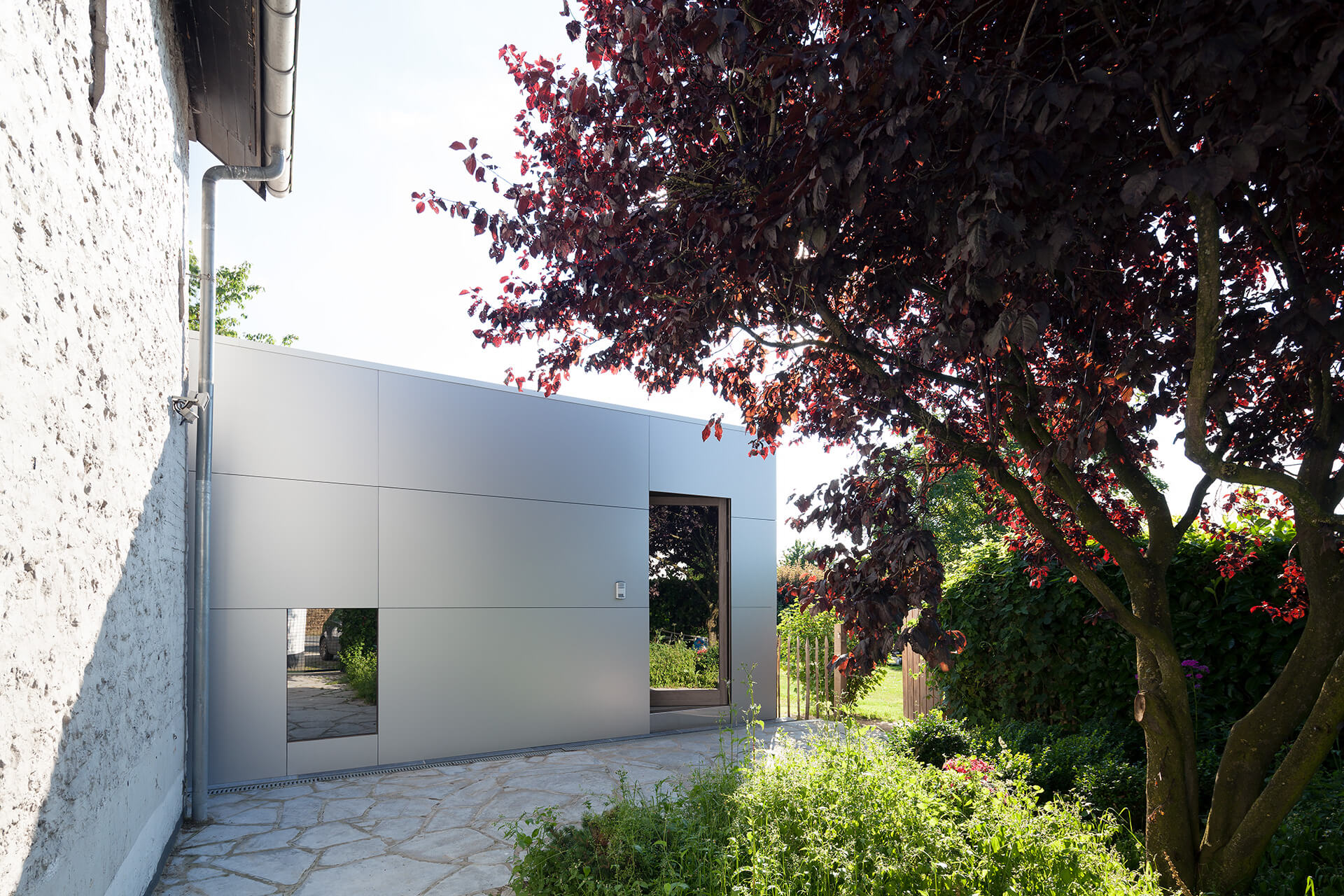
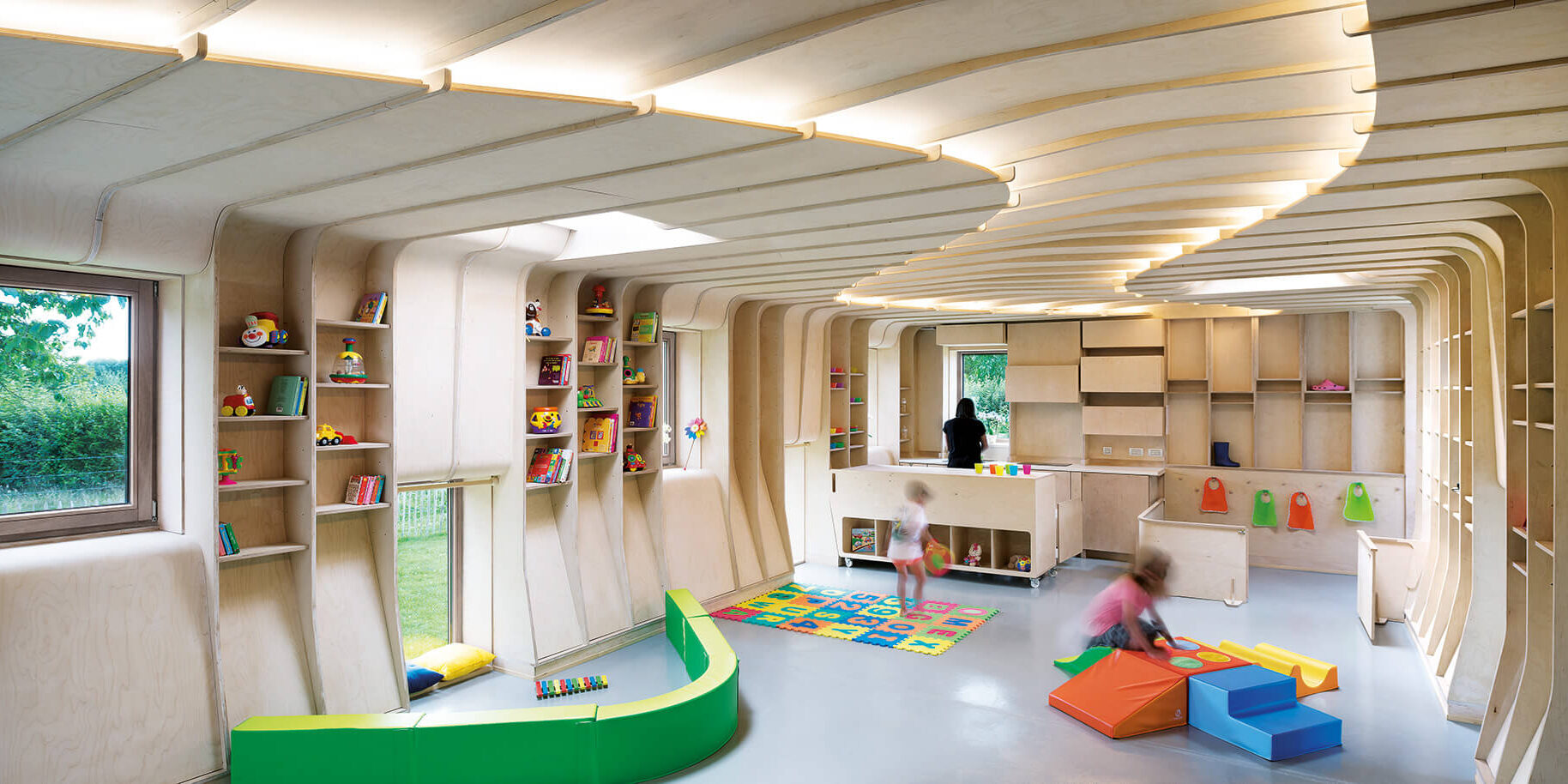
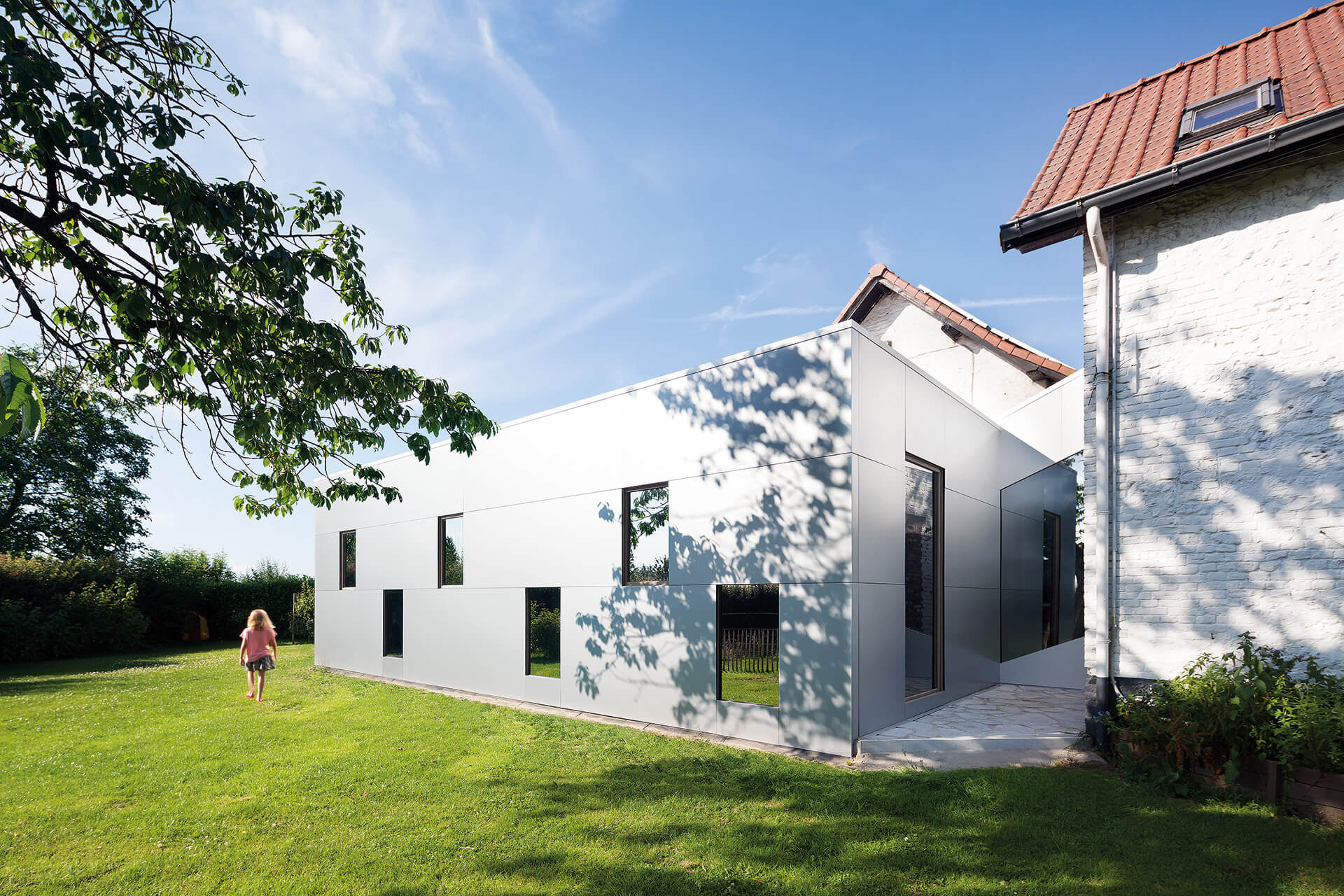
Set within a garden in the Belgian countryside stands the newly constructed wooden volume of Pocket Nursery, a 120m² “pocket” kindergarten whose architecture seeks to support learning through action and physical engagement.
Design Philosophy
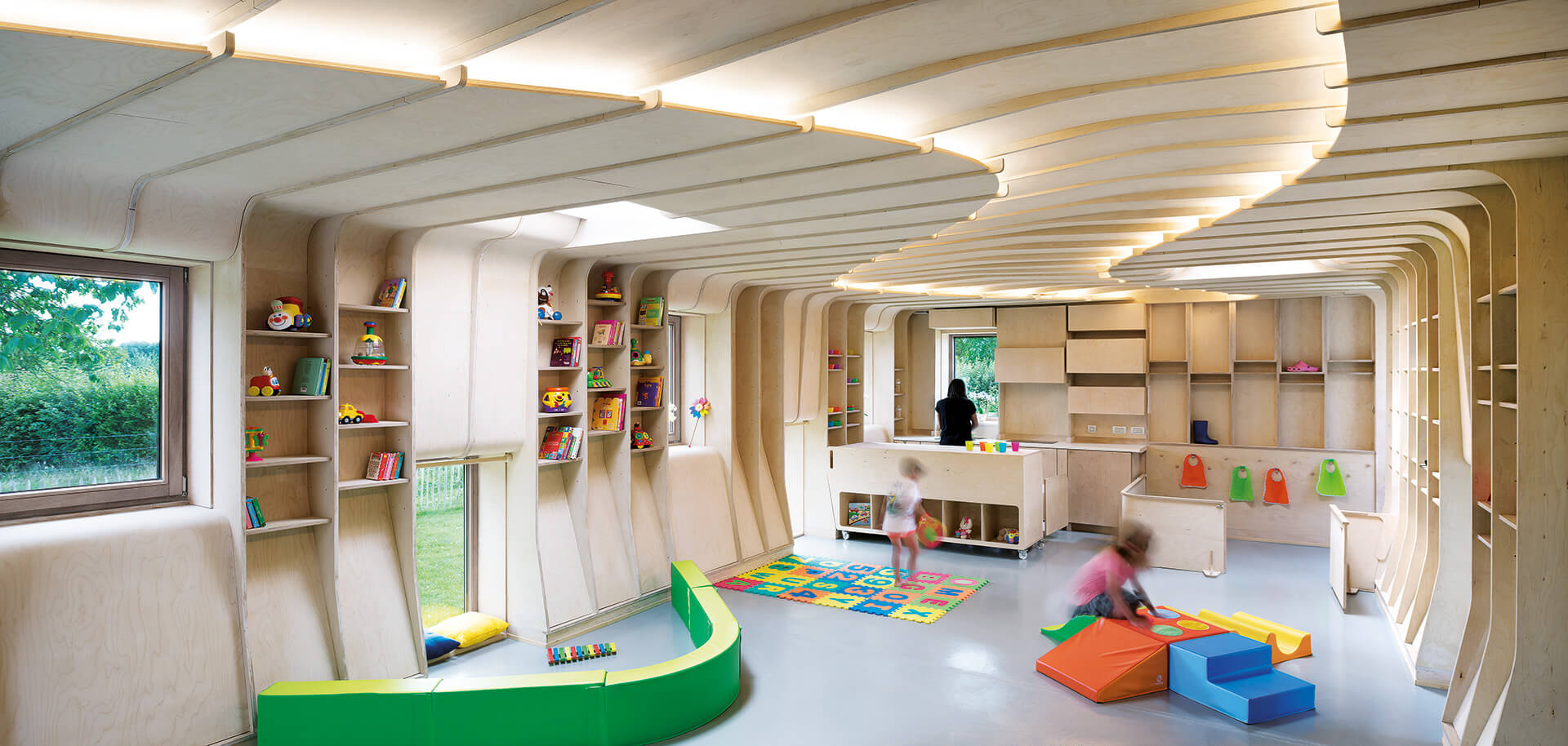
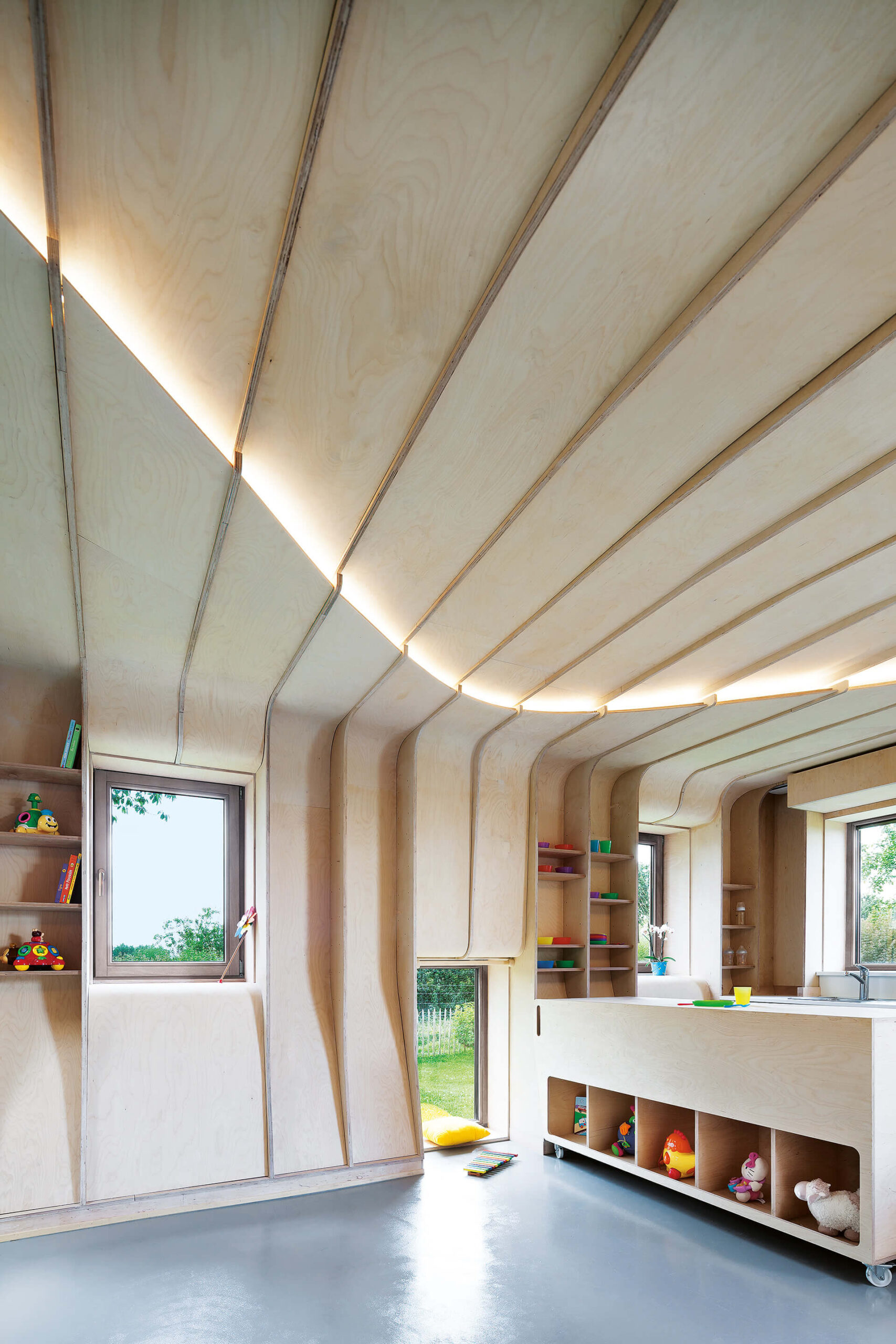
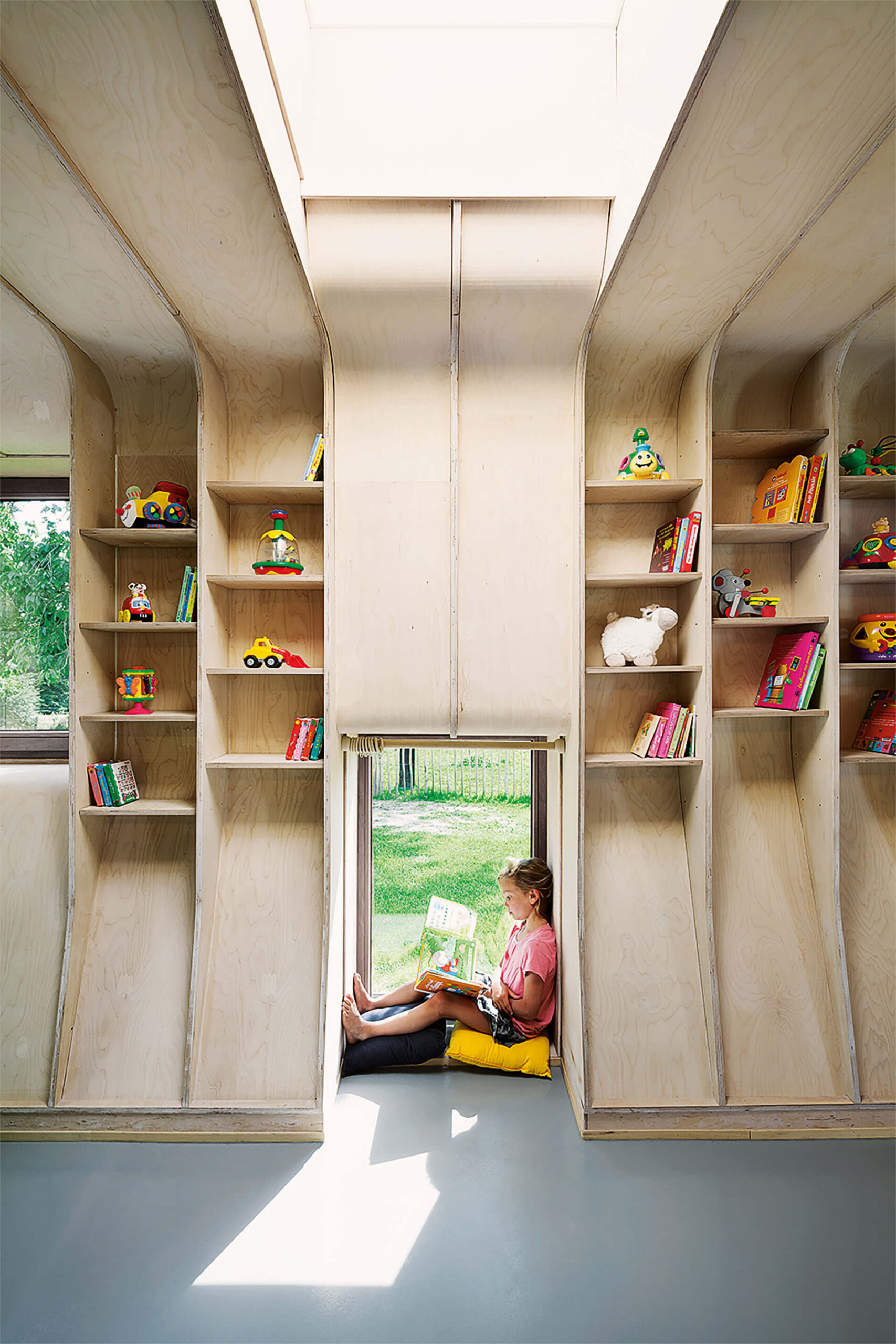
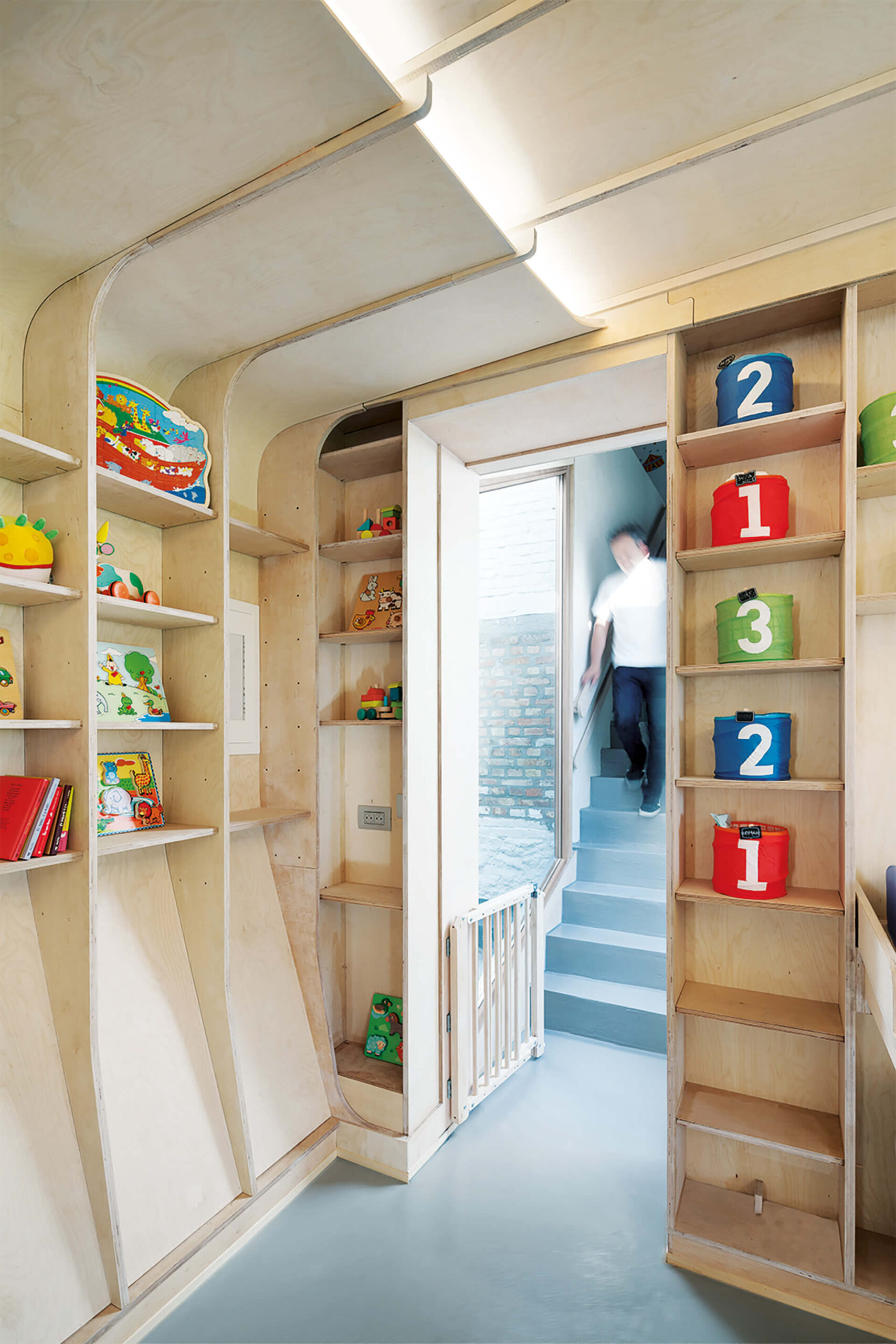
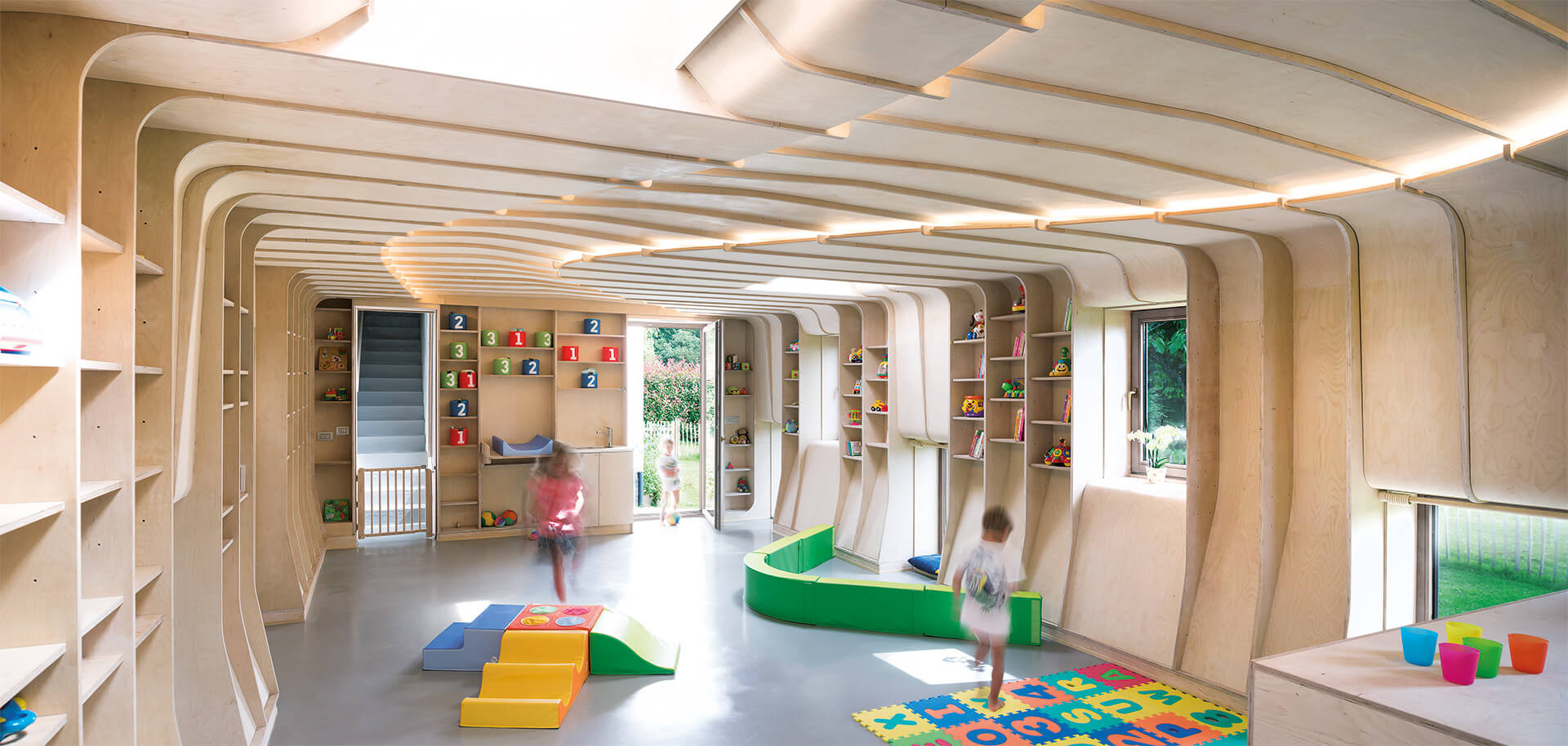
In response to the programmatic requirements and the specific pedagogical approach, the creation of a space capable of cultivating design sensitivity in children was not simply desirable, but fundamental. The scope of spatial experimentation was largely determined by the thickness of the walls: their lower sections incorporate small steps for toddlers learning to stand, while their inclined surfaces double as drawing boards. Openings are positioned at the children’s eye level, establishing a direct visual connection with the garden, which functions as both a spatial extension and an integral component of the educational experience. An inclined table is also embedded within the walls, serving alternately as a pottery workstation or as a communal surface for shared meals.
Custom Construction
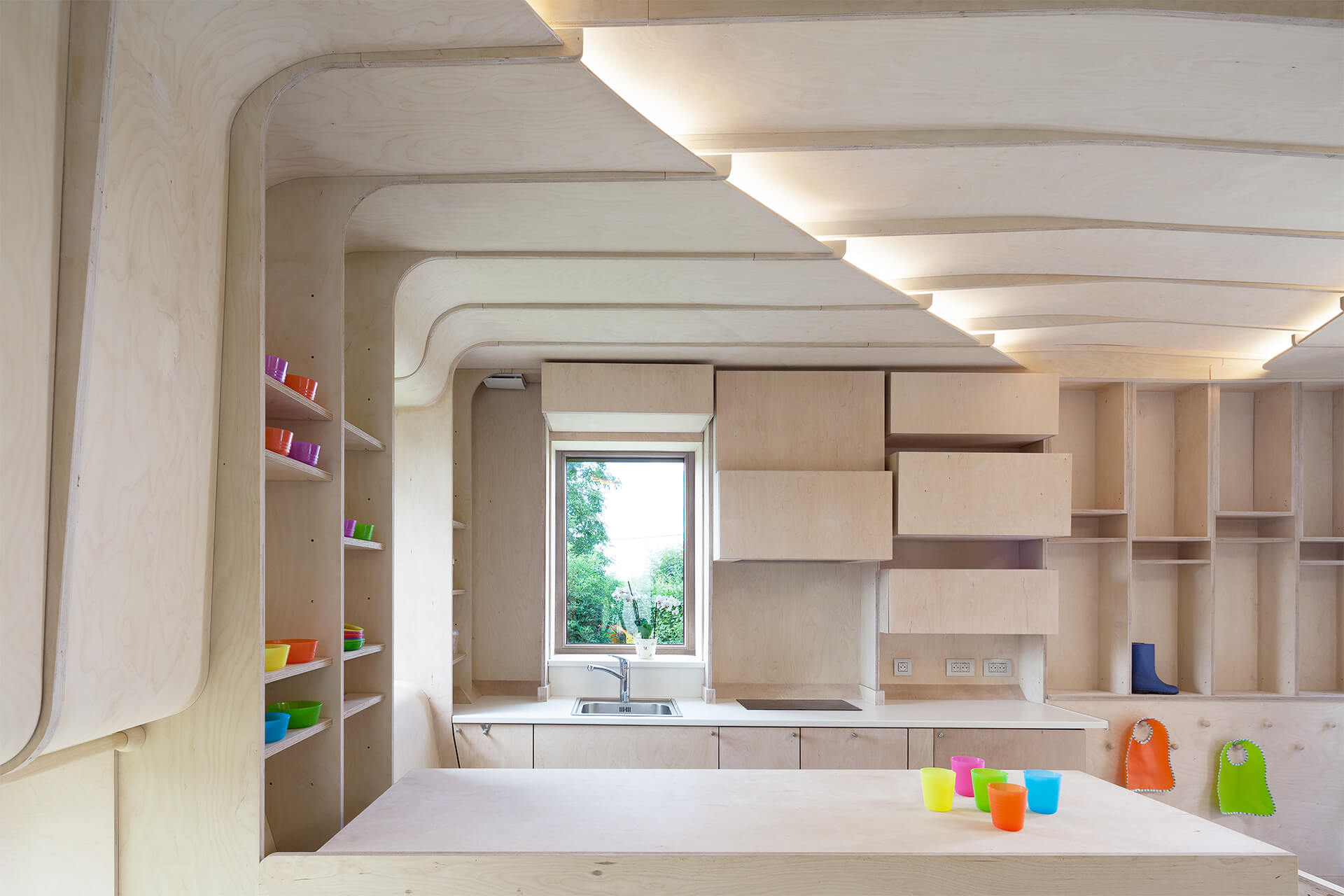
The ceiling – so often an overlooked architectural element, typically relegated to housing smoke detectors and mechanical devices – assumes a central role in this project. Considering that infants spend the first nine months of their lives lying on their backs or crawling, the ceiling design integrates not only structural logic but also acoustic performance and lighting strategy. Necessary equipment is discreetly concealed between layers of wooden panels, which articulate circulation toward the garden and the dormitories.
Material Palette
Construction time efficiency played a decisive role in shaping the project’s design strategy. Avoiding prefabricated wall systems and costly psychomotor furniture, the spatial framework was conceived to integrate both structure and furnishing into a continuous series of timber frames. Executed in laminated plywood sheets, the turned wooden frames were preassembled into units of three to four segments within just a few days, then transported to the site where they were joined together. The result is a cohesive environment that bridges interactive design and pedagogy through construction itself.
https://ek-mag.com/wp-content/uploads/2026/02/00-cover-9.jpg
https://ek-mag.com/wp-content/uploads/2026/02/01-11.jpg
https://ek-mag.com/wp-content/uploads/2026/02/02-11.jpg
https://ek-mag.com/wp-content/uploads/2026/02/03-11.jpg
https://ek-mag.com/wp-content/uploads/2026/02/04-11-scaled.jpg
https://ek-mag.com/wp-content/uploads/2026/02/05-11-scaled.jpg
https://ek-mag.com/wp-content/uploads/2026/02/06-11.jpg
https://ek-mag.com/wp-content/uploads/2026/02/07-11-scaled.jpg
https://ek-mag.com/wp-content/uploads/2026/02/08-11.jpg
Related Posts