PDS House in Lendinara, Italy
Interior Design:
Photography:

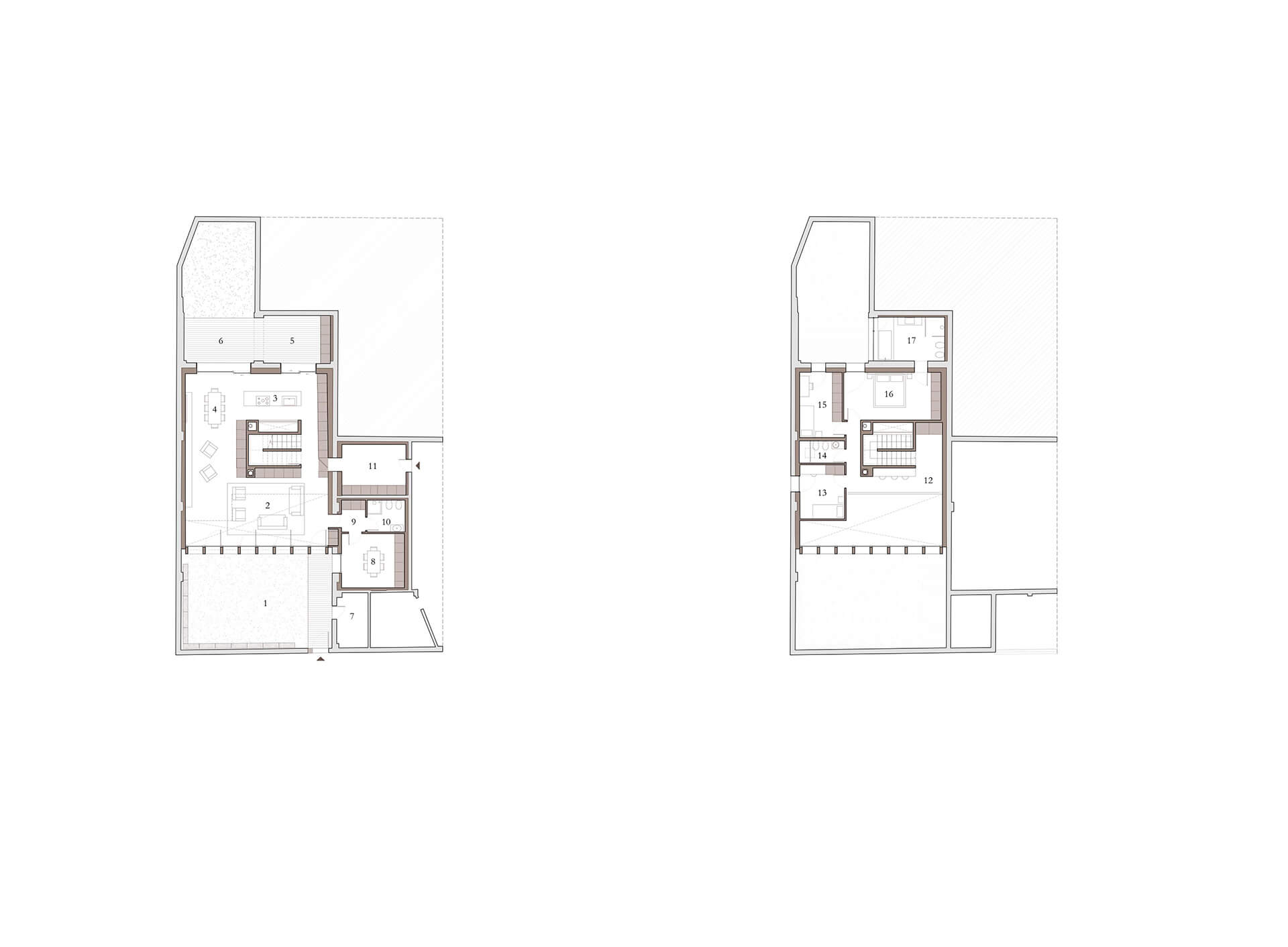
Set within the tall perimeter walls of a disused factory, the project unfolds as a carefully orchestrated intervention that redefines the relationship between domestic life, industrial memory, and landscape. Rather than demolishing the existing structure, the proposal preserves its masonry enclosure, transforming constraints into spatial opportunities. Hidden behind a modest entrance, the residence reveals itself gradually, structured around a central open-air garden that becomes the core of the architectural composition.
Renovation Strategy
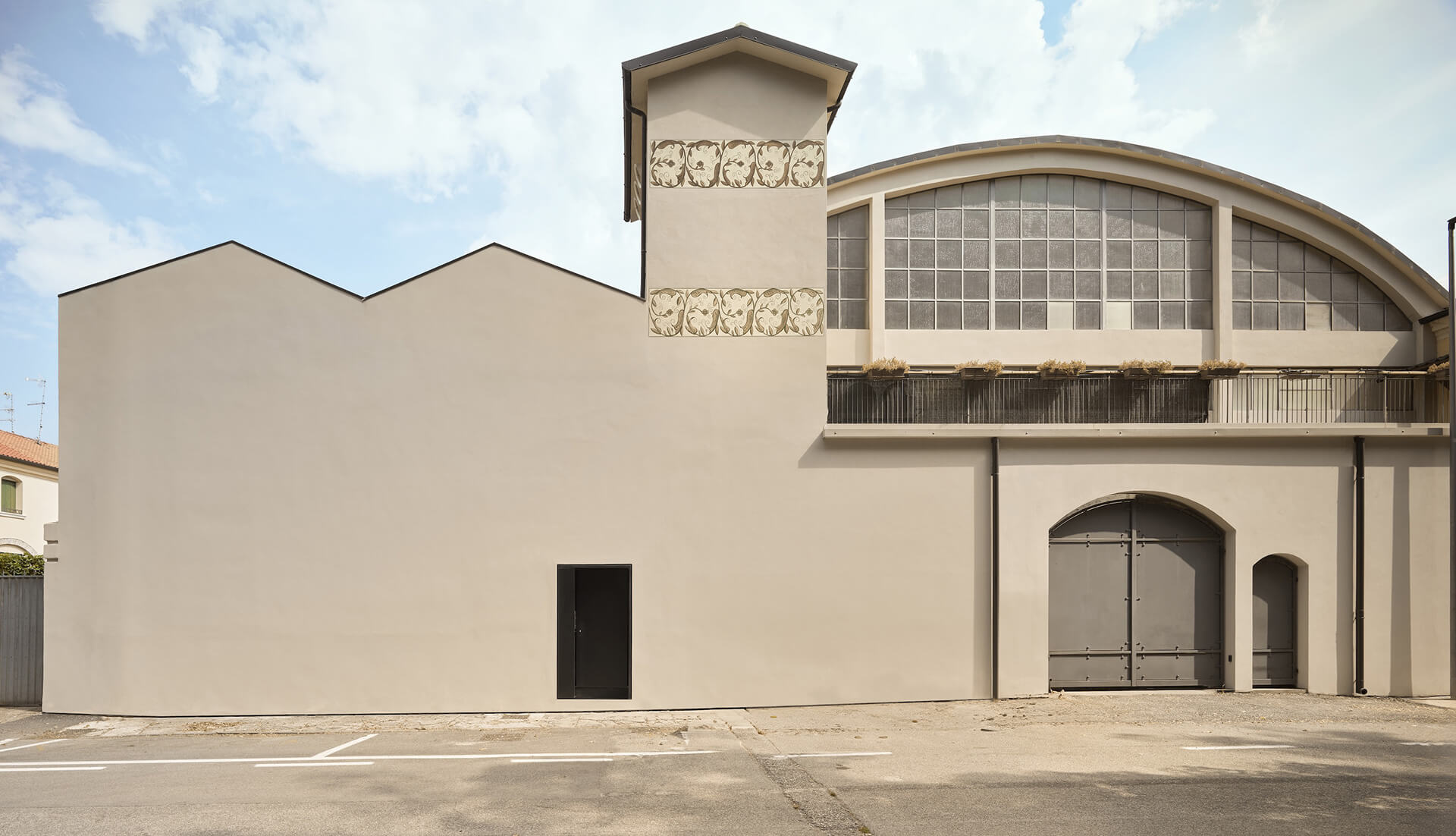
Facing a public square in Lendinara, the project presents a restrained and almost opaque exterior. A tall wall, marked by an irregular profile, recalls the layered history of industrial constructions in the area. The only visible opening – a small iron door – conceals the spatial richness beyond. Once inside, the perception shifts dramatically, revealing a lush, enclosed garden defined by high walls and climbing vegetation.
Located in a context where traces of past industrial activity coexist with residential fabric and green spaces, the project engages directly with its surroundings. The proximity to the public park and the historic garden of Ca’ Dolfin-Marchiori informs the architectural strategy, introducing landscape as an essential component of the dwelling experience.
Landscape Design
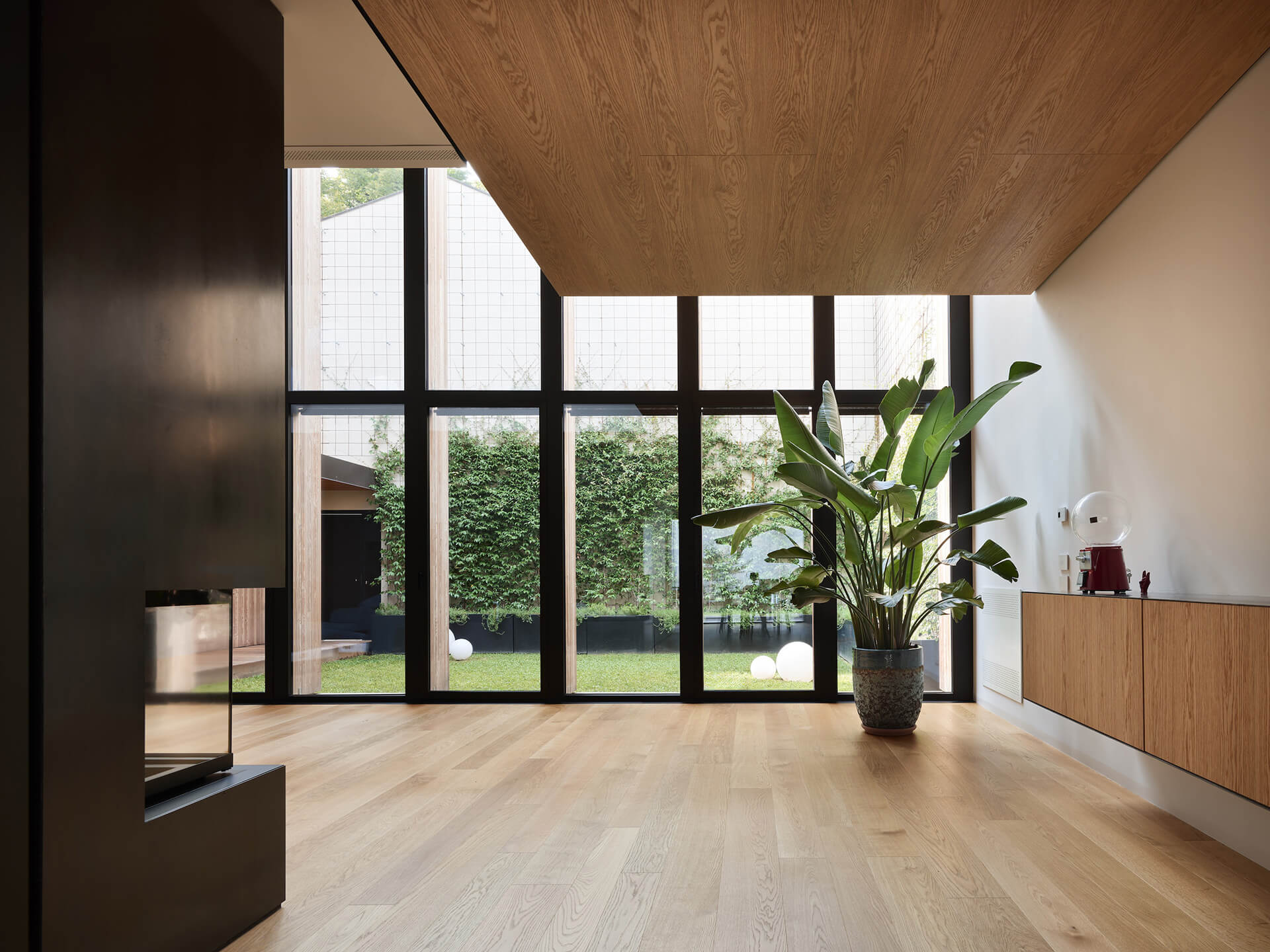
At the heart of the project lies the garden, conceived as an open-air room that organizes the entire domestic program. Created through the partial demolition of the factory roof and the repositioning of the new volume, this green courtyard introduces light, air, and visual continuity into an otherwise introverted structure.
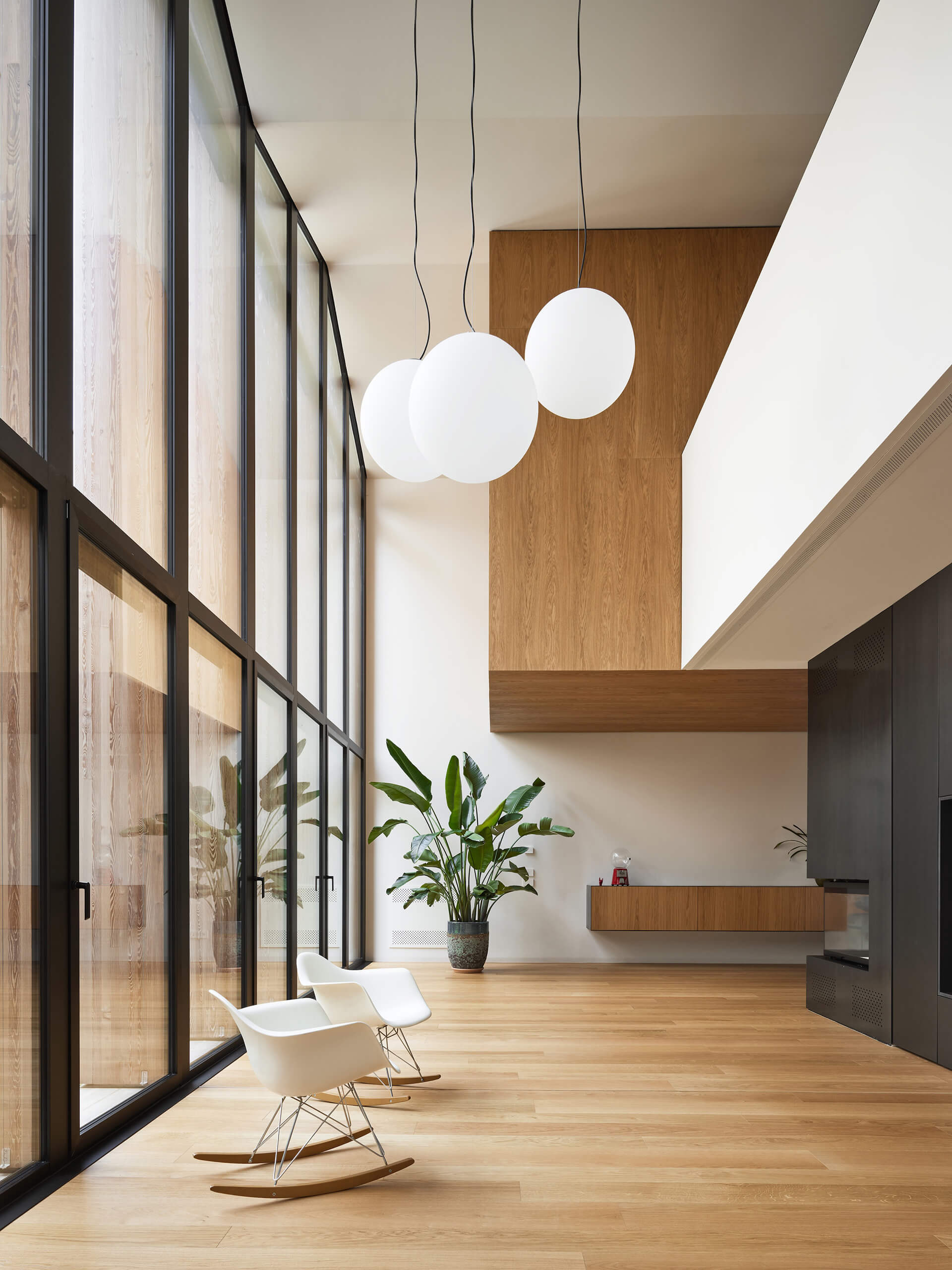
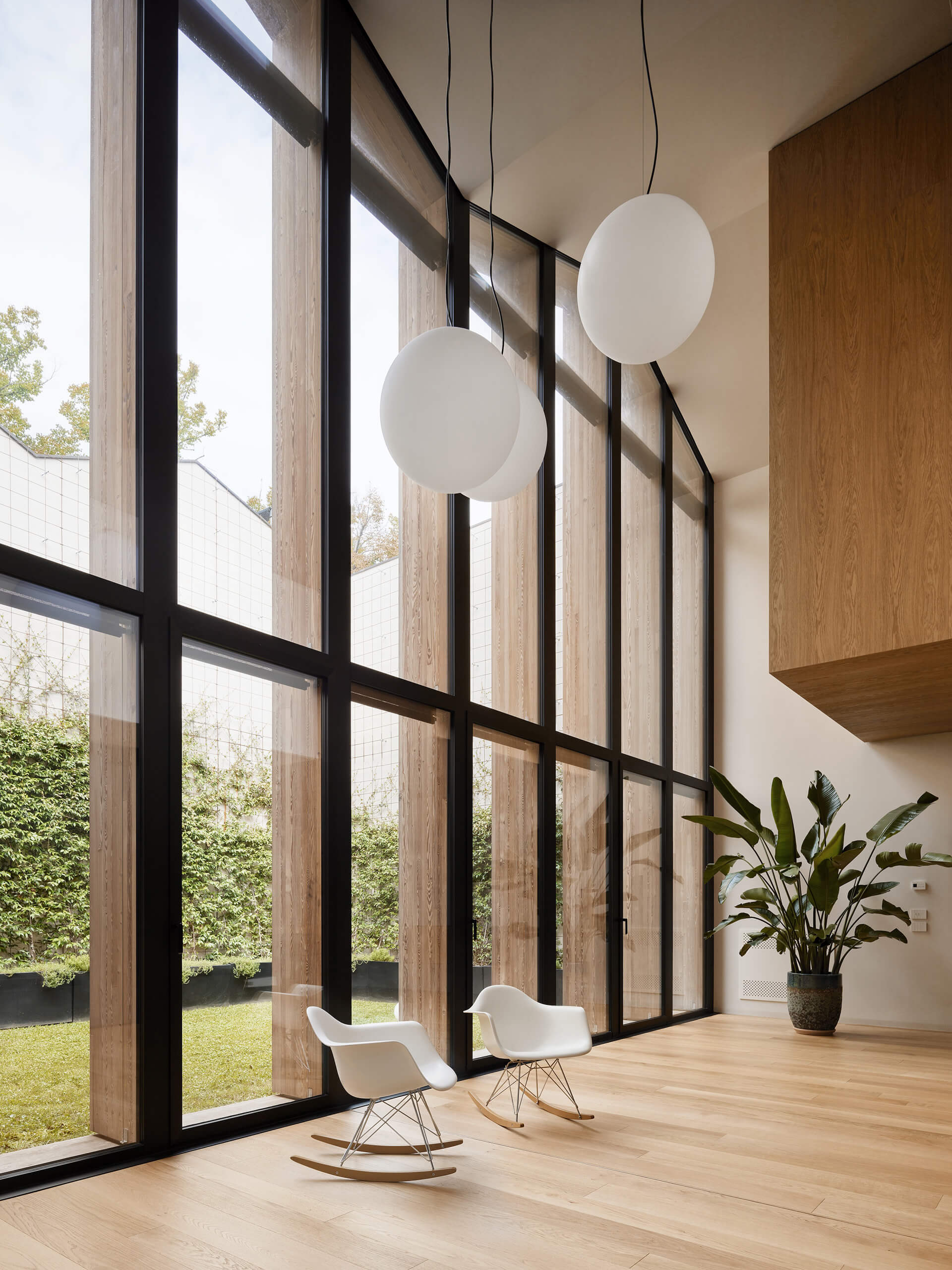
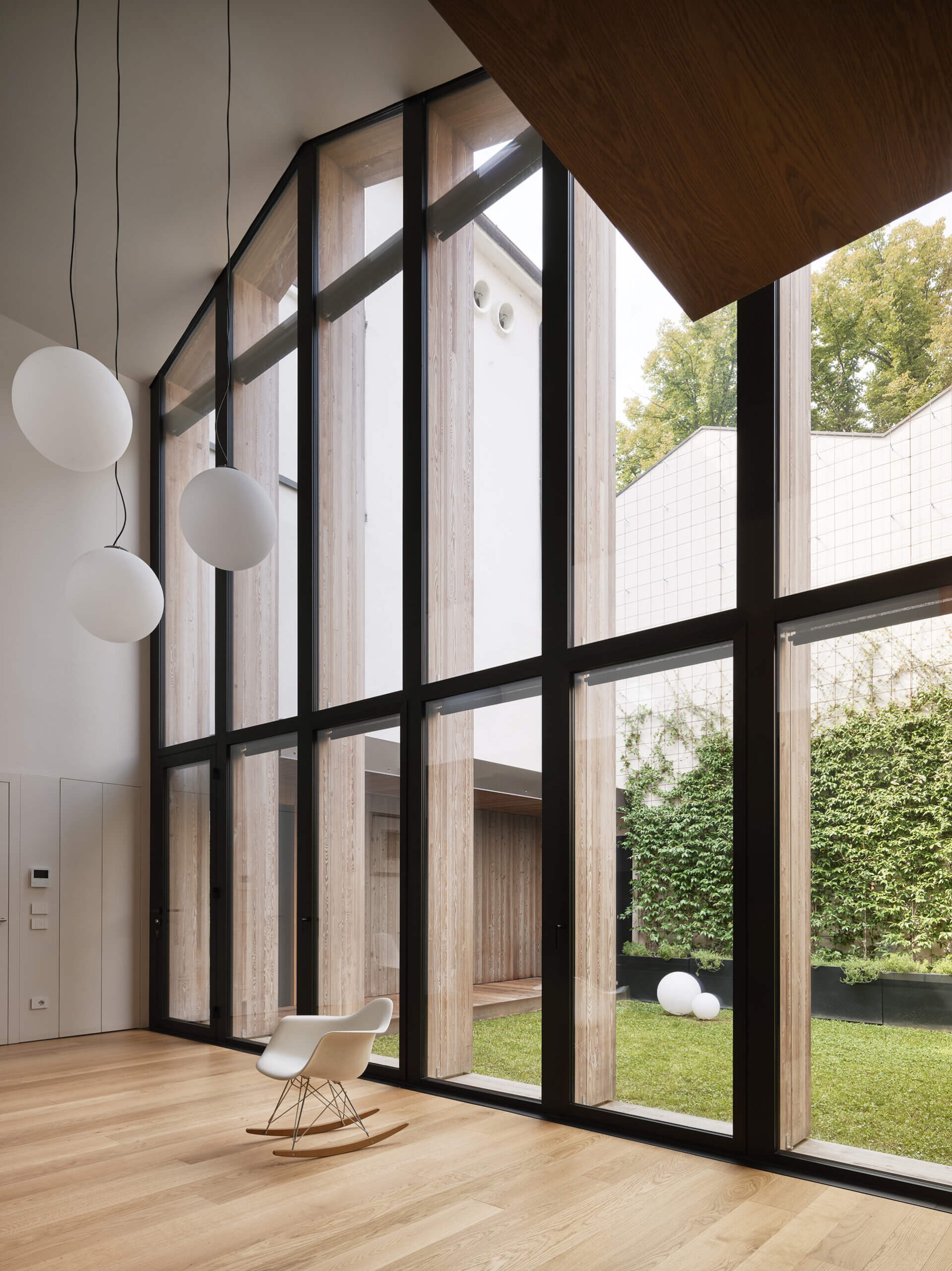
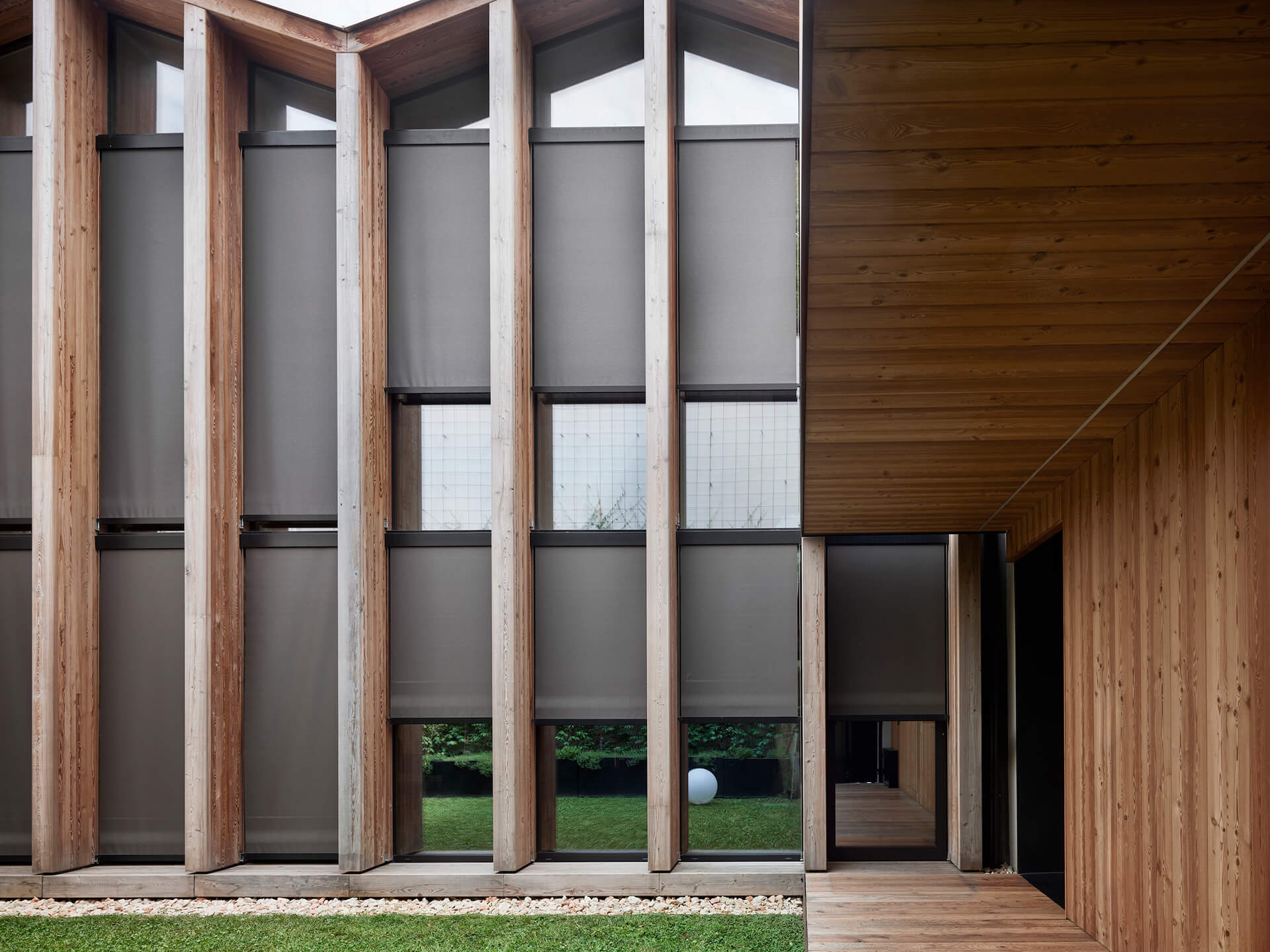
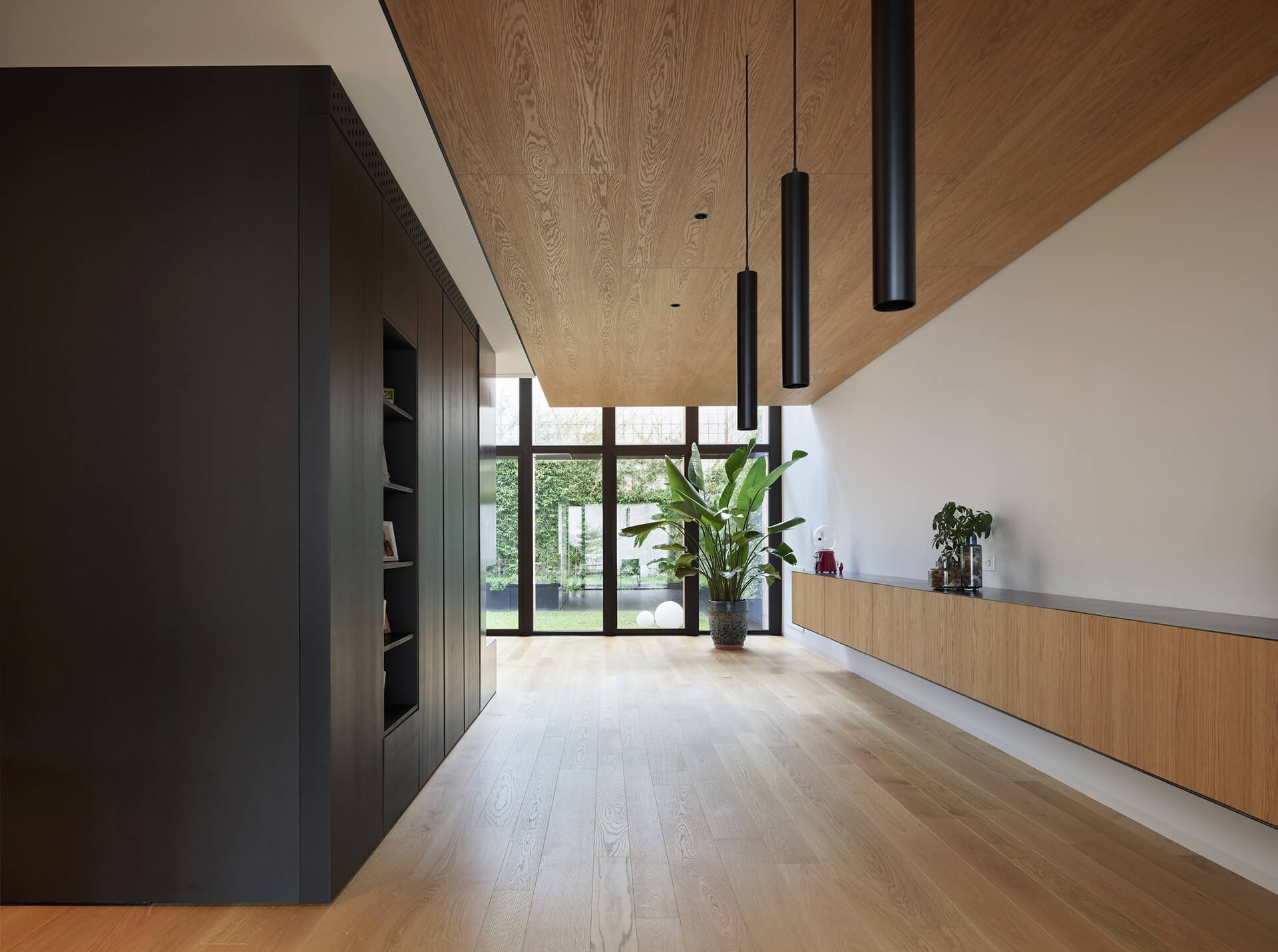
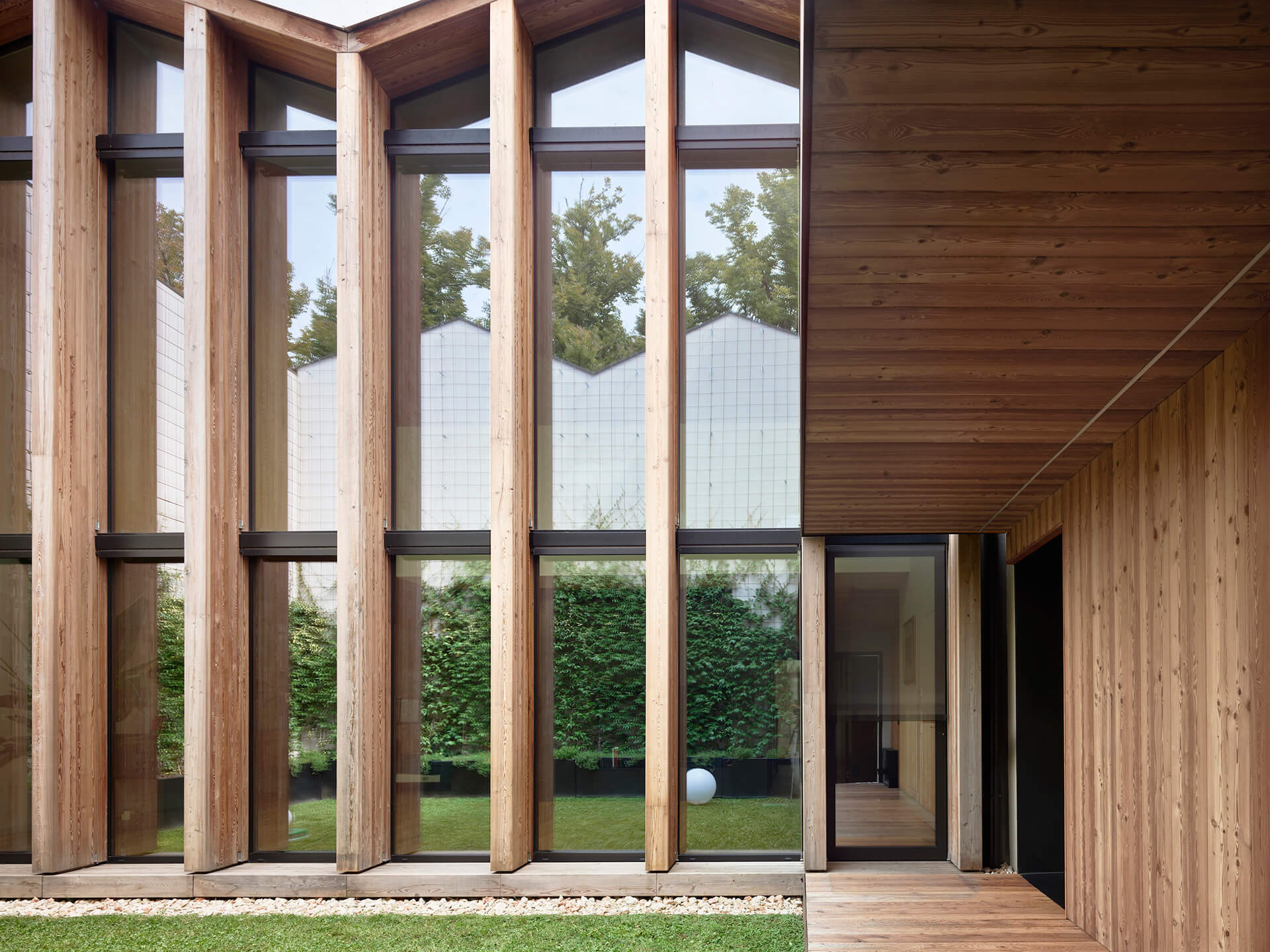
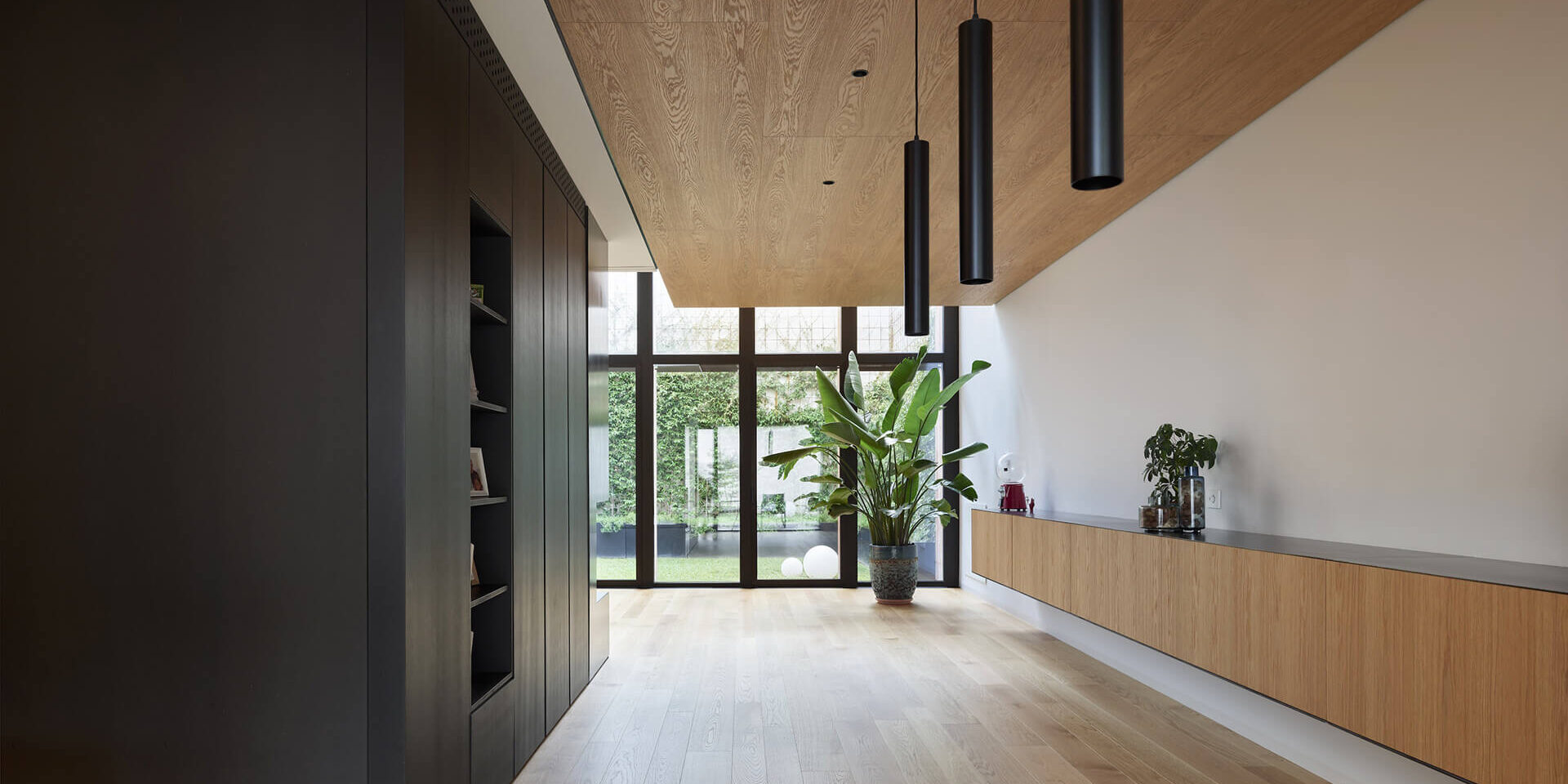
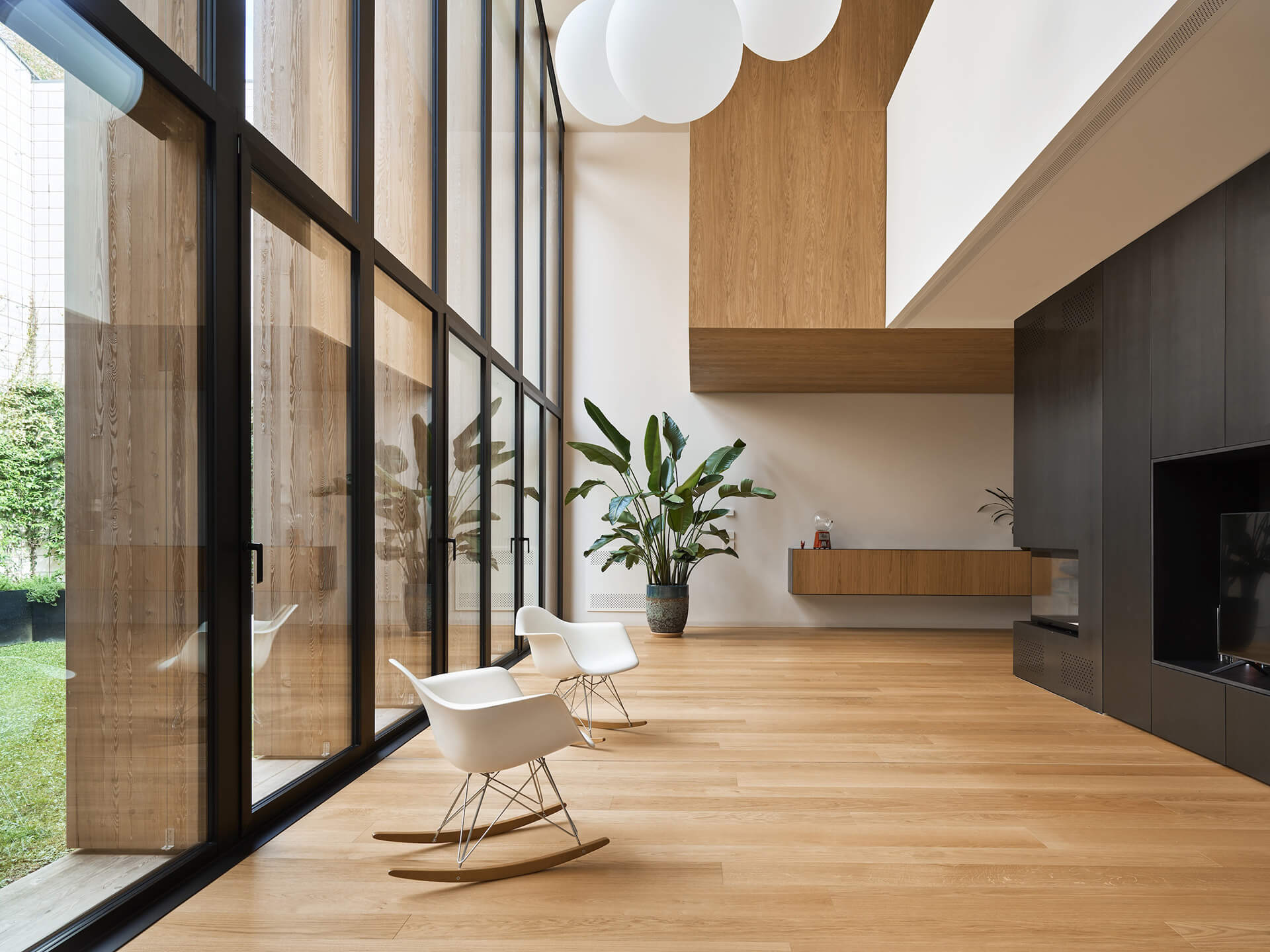
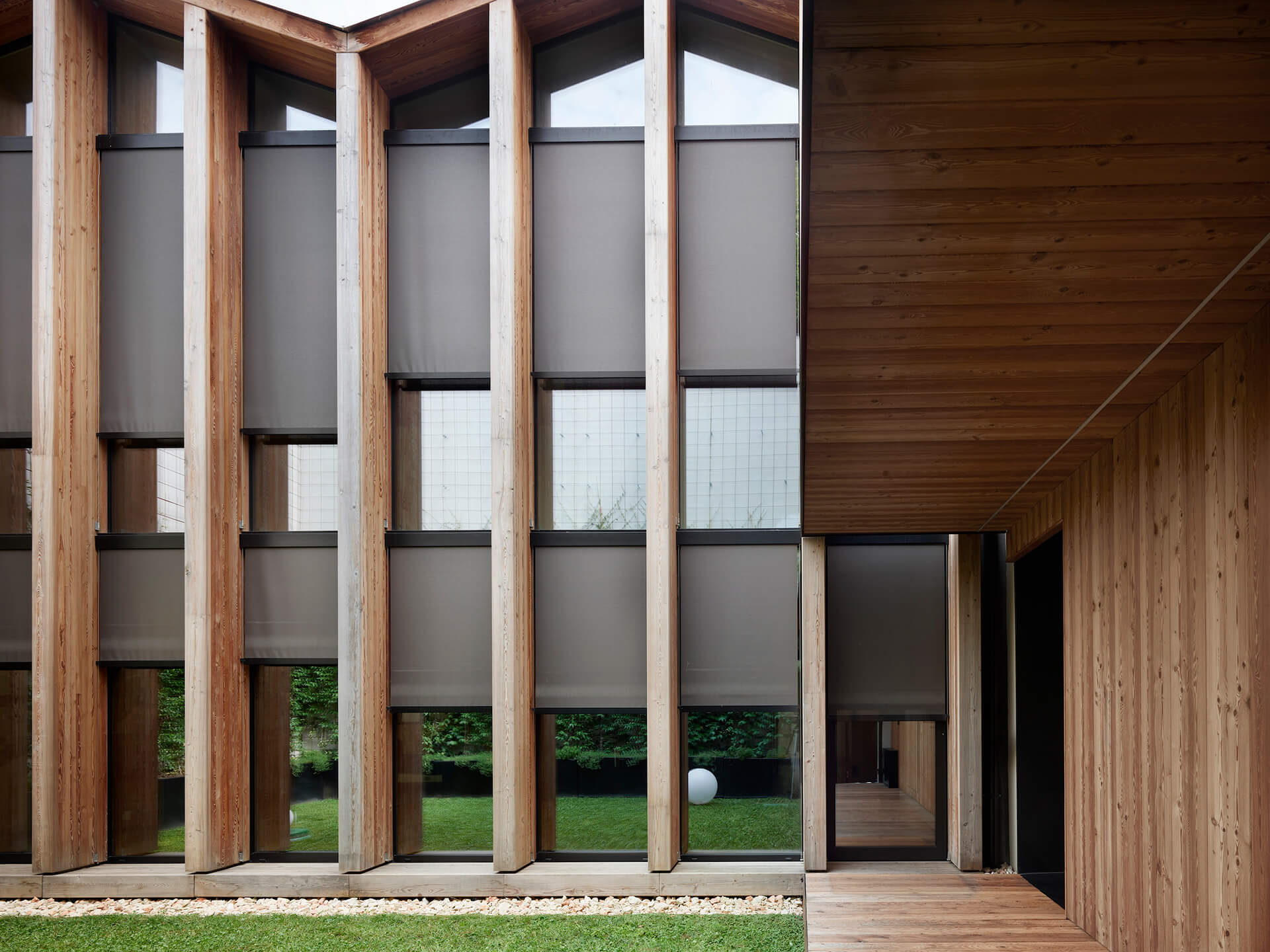
The house develops as a compact, two-level volume inserted within the preserved perimeter walls. Its spatial configuration establishes a continuous dialogue with the garden, most notably through a double-height living space that opens fully onto it via a large, glazed façade. Framed by a timber lattice structure, this transparent surface mediates between interior and exterior, reinforcing the vertical rhythm of the composition and extending into the roof geometry.
Design Philosophy
The project is defined by a deliberate interplay between openness and enclosure, visibility and concealment. From the street, the house remains entirely hidden, while internally it unfolds through carefully framed views toward greenery. This sequence of spatial transitions constructs a controlled yet dynamic experience of movement and perception.
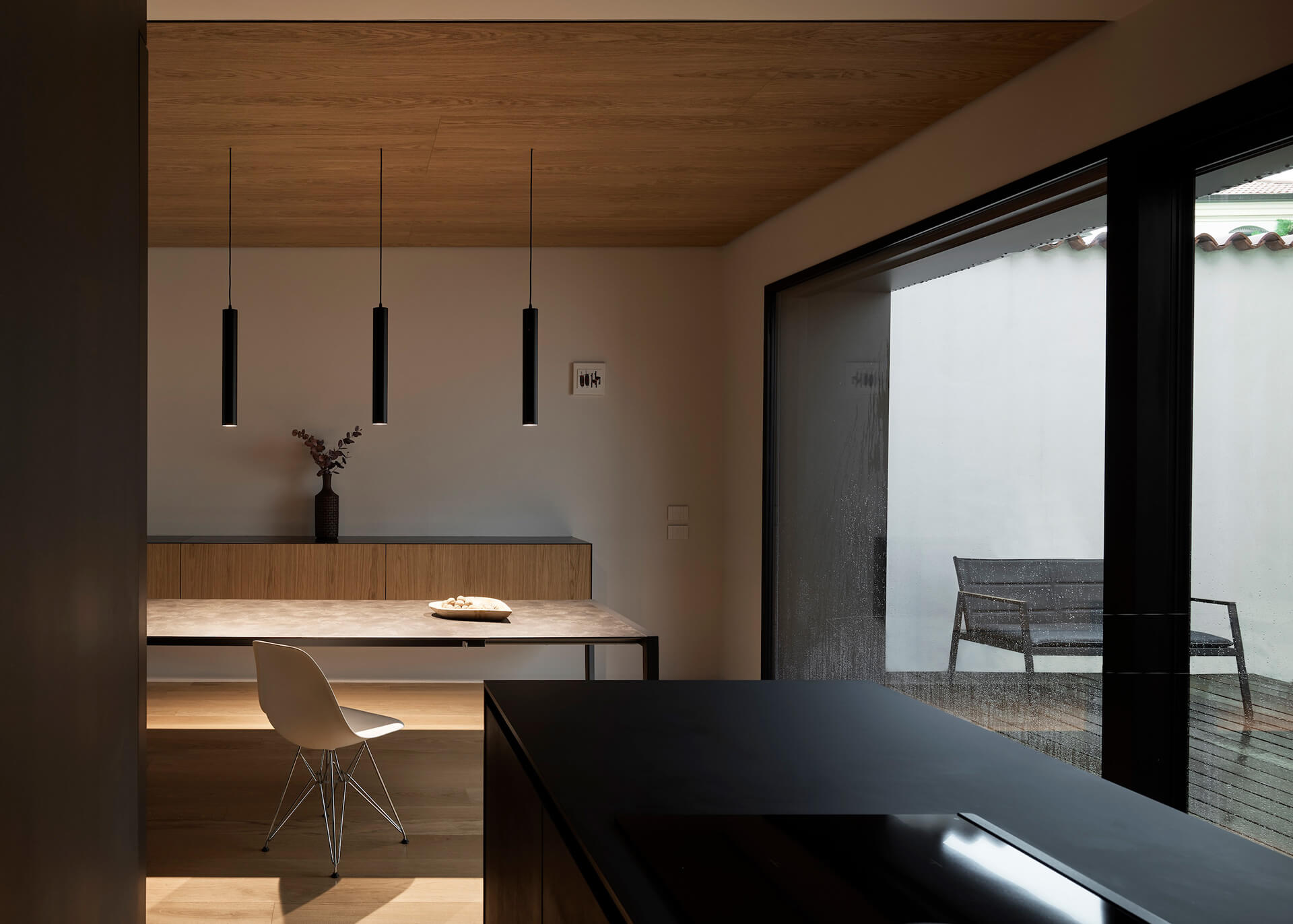
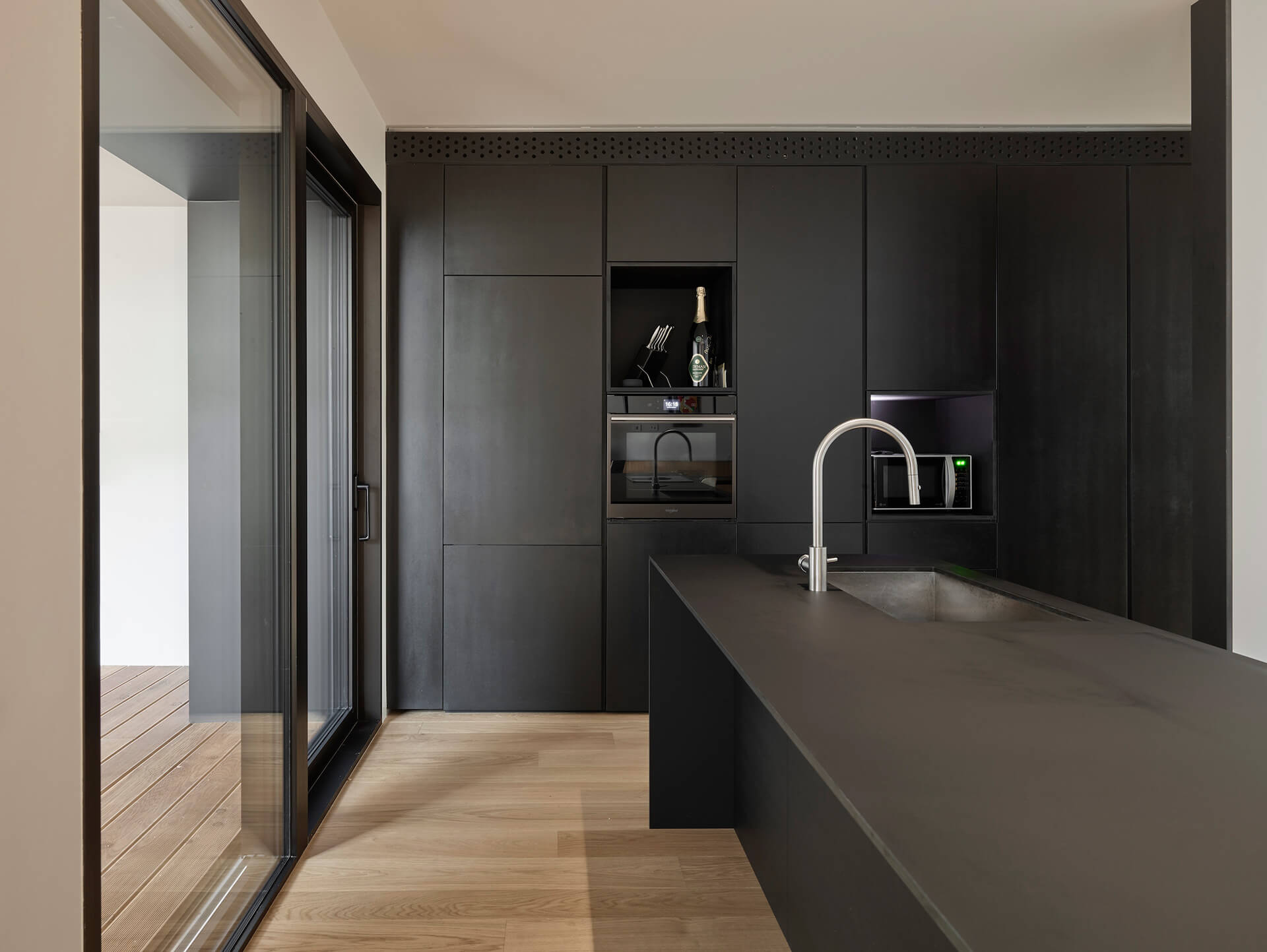
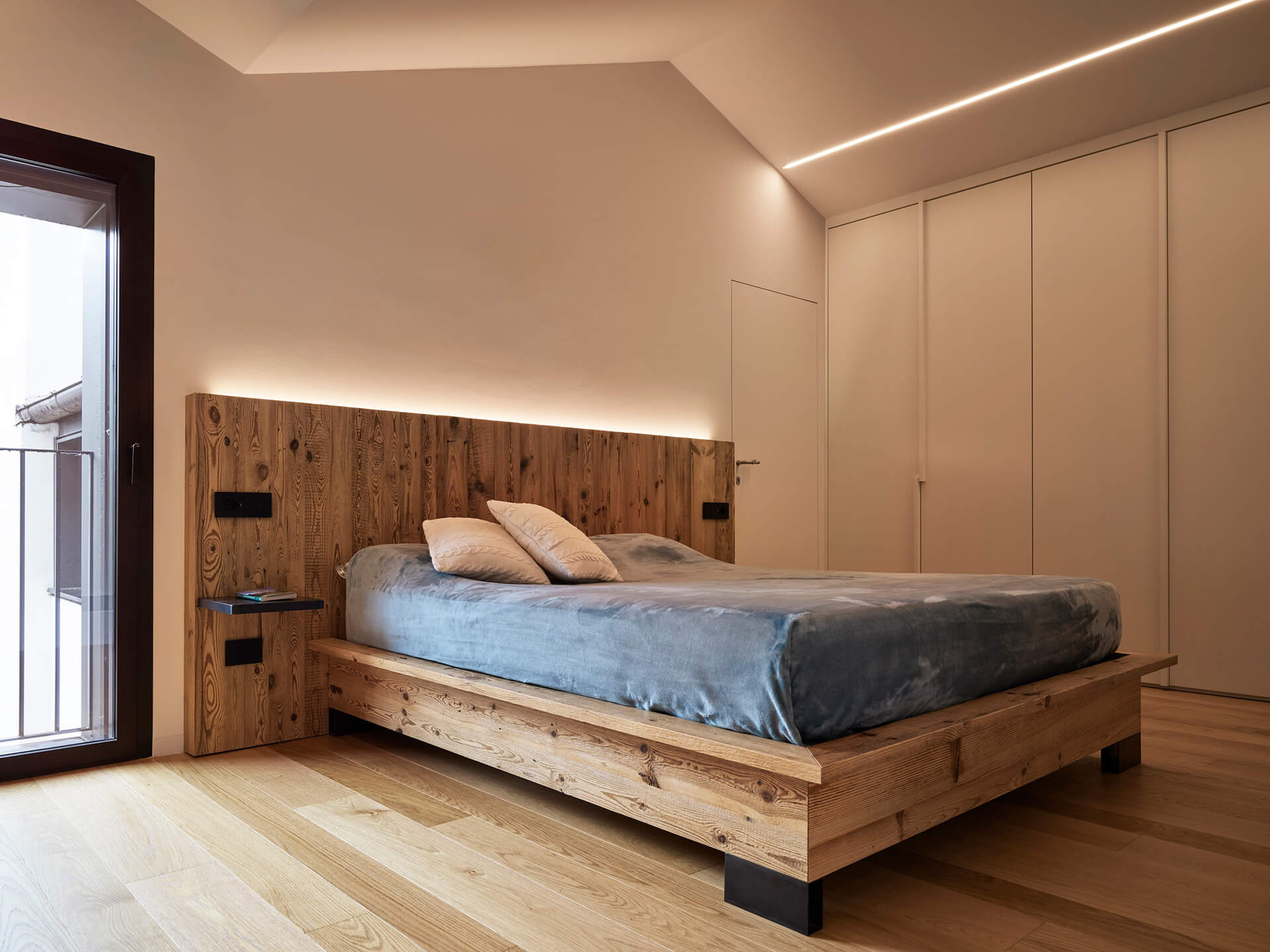
Materially and structurally, the intervention balances timber, steel, and glass within the existing masonry framework. The new construction echoes the industrial profile of the former building, while introducing a refined architectural language that emphasizes lightness and spatial continuity.
Guided by the notion of landscape as an architectural device, the design moves beyond nostalgic references to industrial heritage. Instead, it repositions the garden as a fundamental condition of contemporary dwelling – not as a decorative element, but as a necessary spatial and environmental mediator that defines the identity of the house.