Antenna Group HQ & Media Center in Kifissia
Architecture:
Visuals:
ek issue:

The project, with a total area of 24,000 m², involves the creation of an office complex and Media Campus in Kifisia, incorporating state-of-the-art television and radio studios.
Design Philosophy
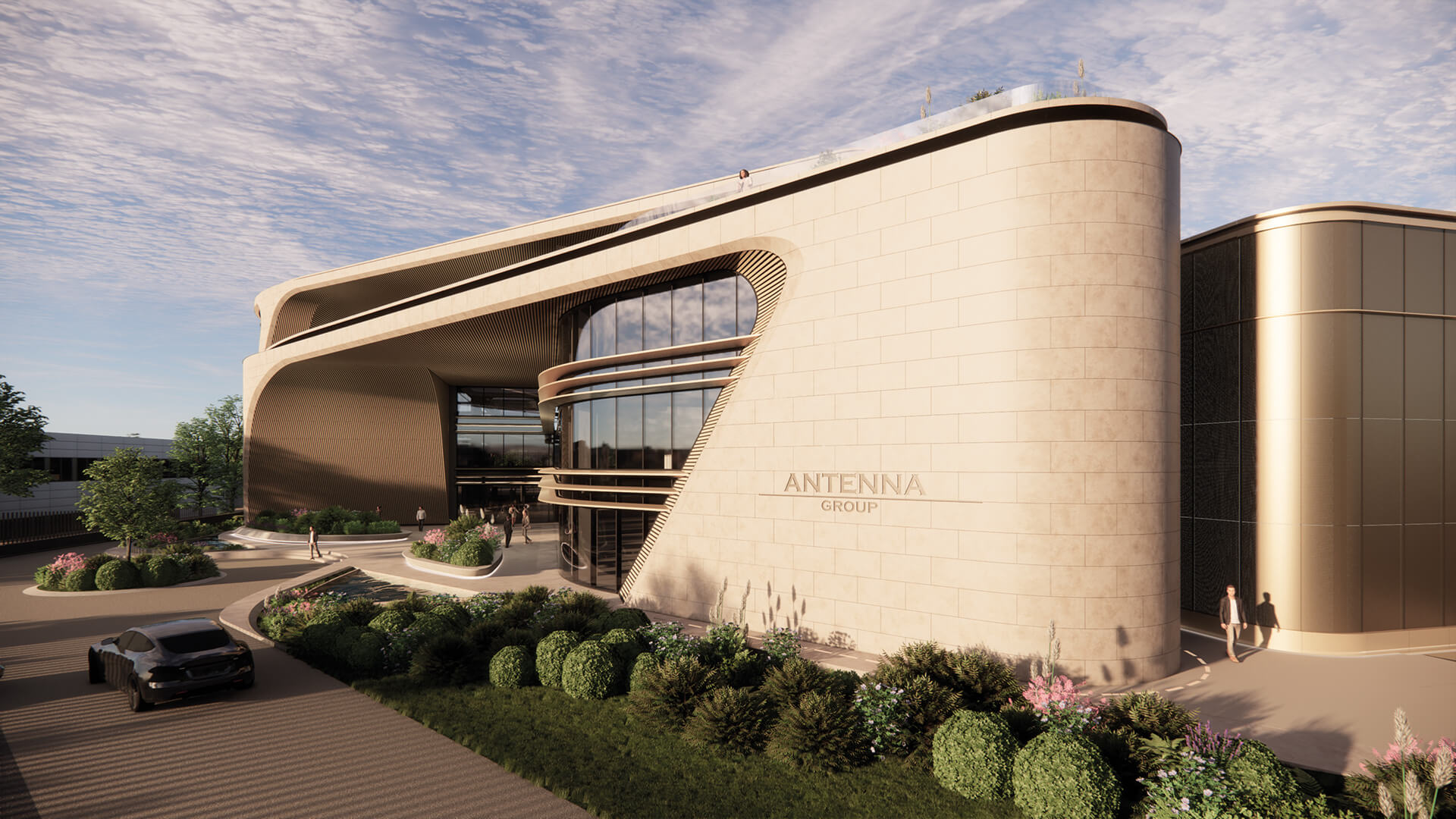
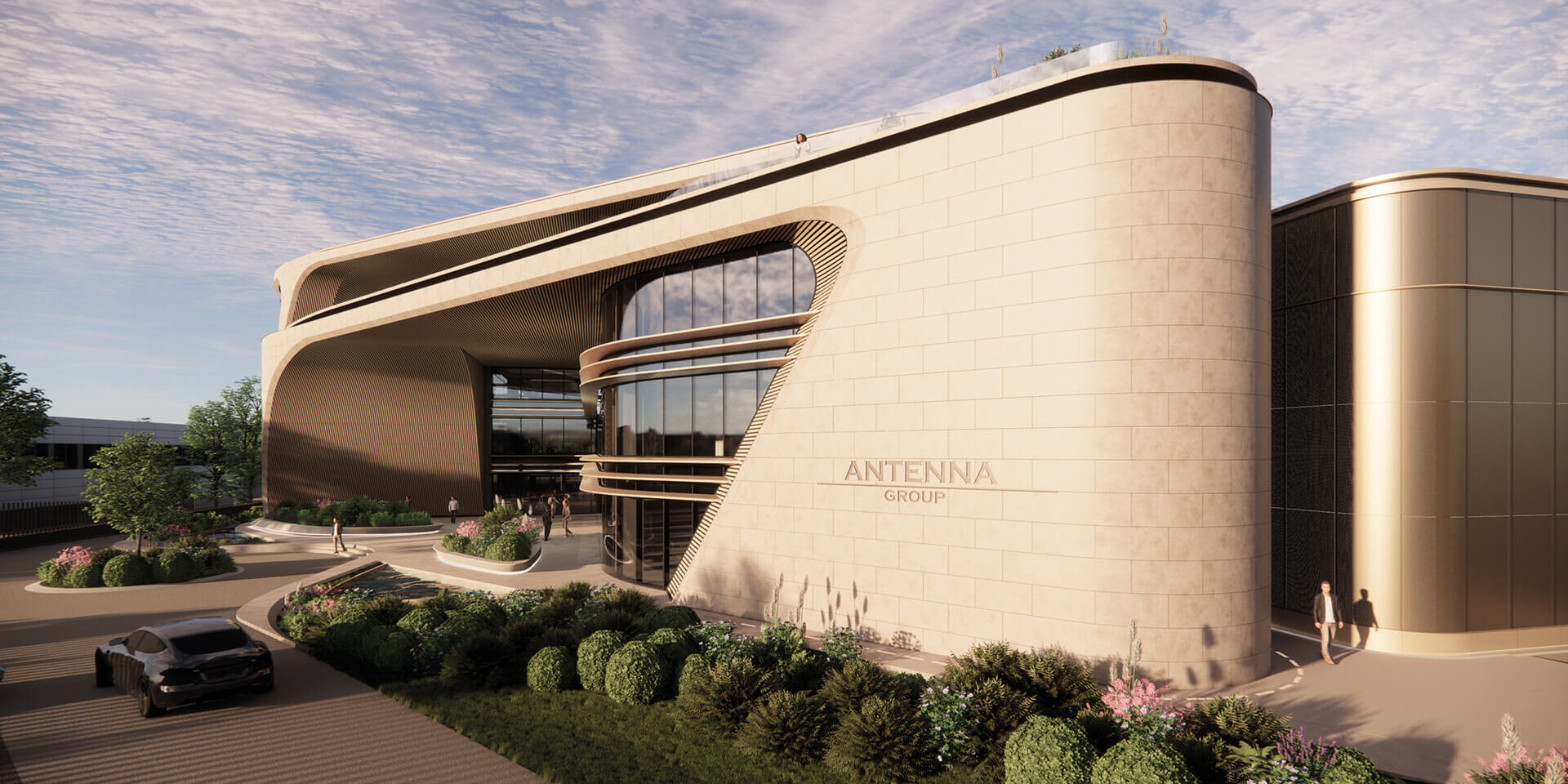
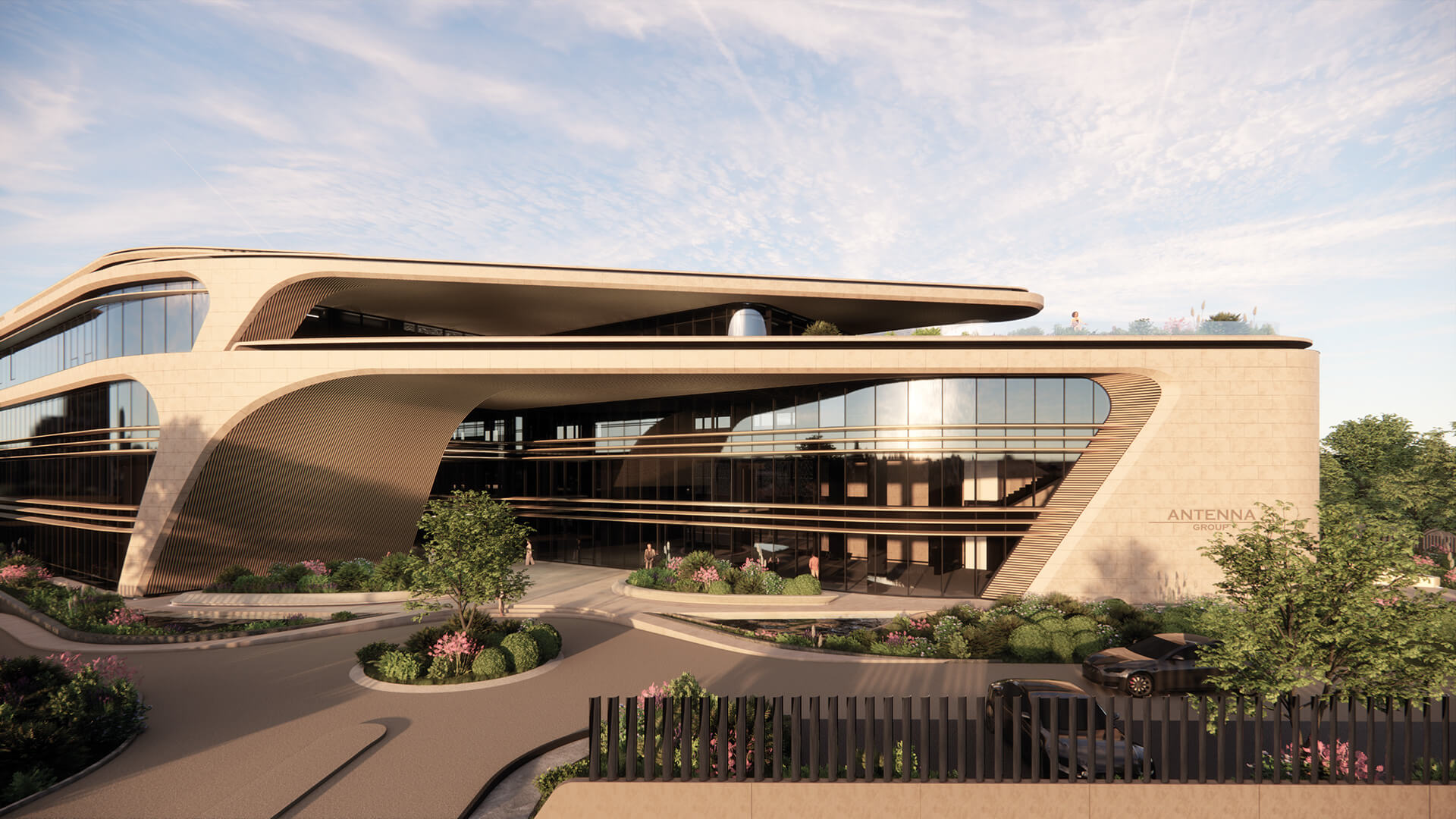
The design is driven by the concept of sculpting a monolithic volume, carving out cavities and introducing porosity within a solid structure. Within this interplay of mass and void, the program unfolds, reflecting the client’s core philosophy: the shaping of a continuous flow of information. Much like water gradually erodes stone, the architectural form emerges as a constructed “nature.” The result is a dynamic, sculptural building defined by its strong presence, articulated through the use of limestone, complemented by aluminum, bronze, and wood detailing.
Spatial Organization
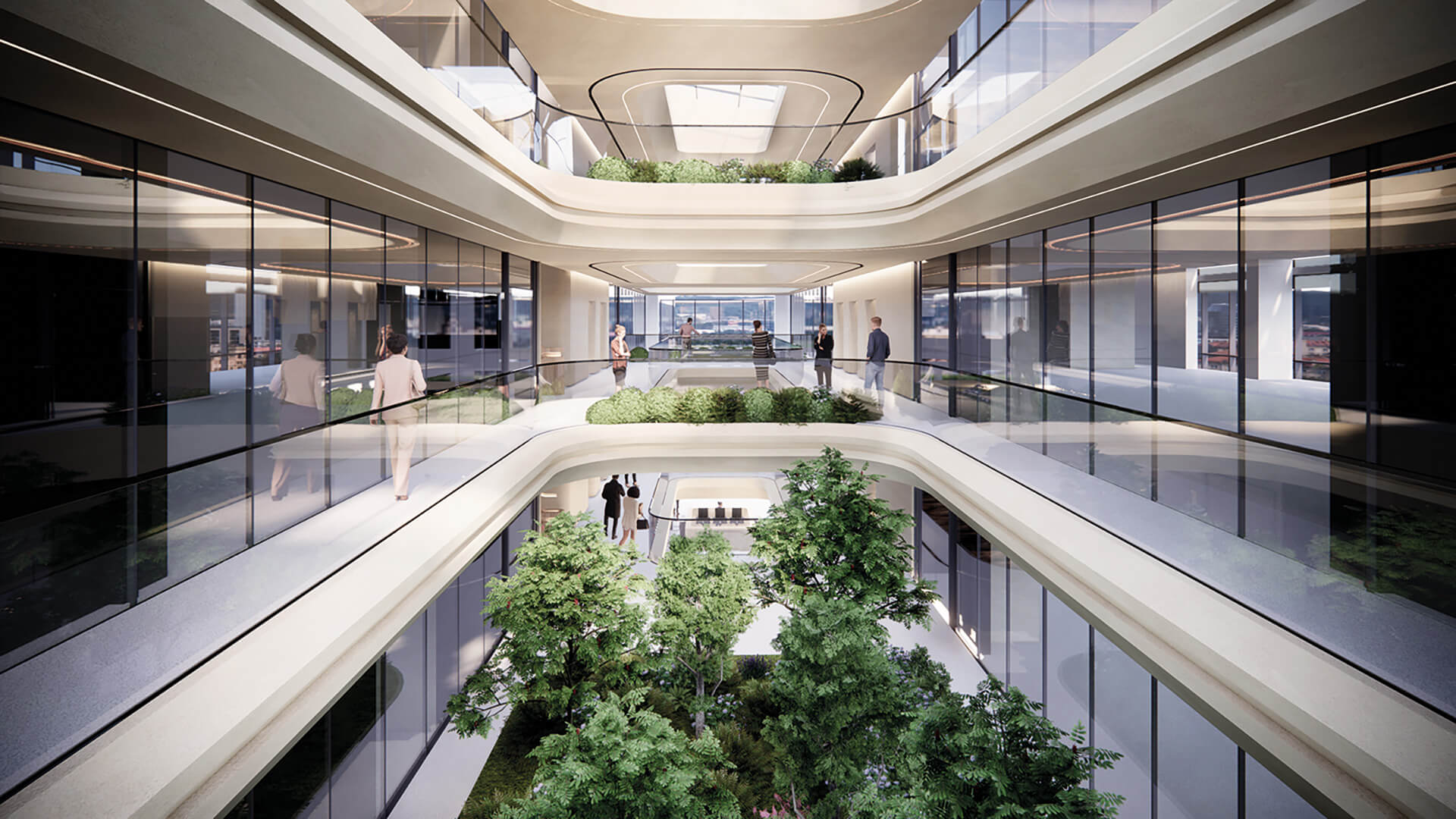
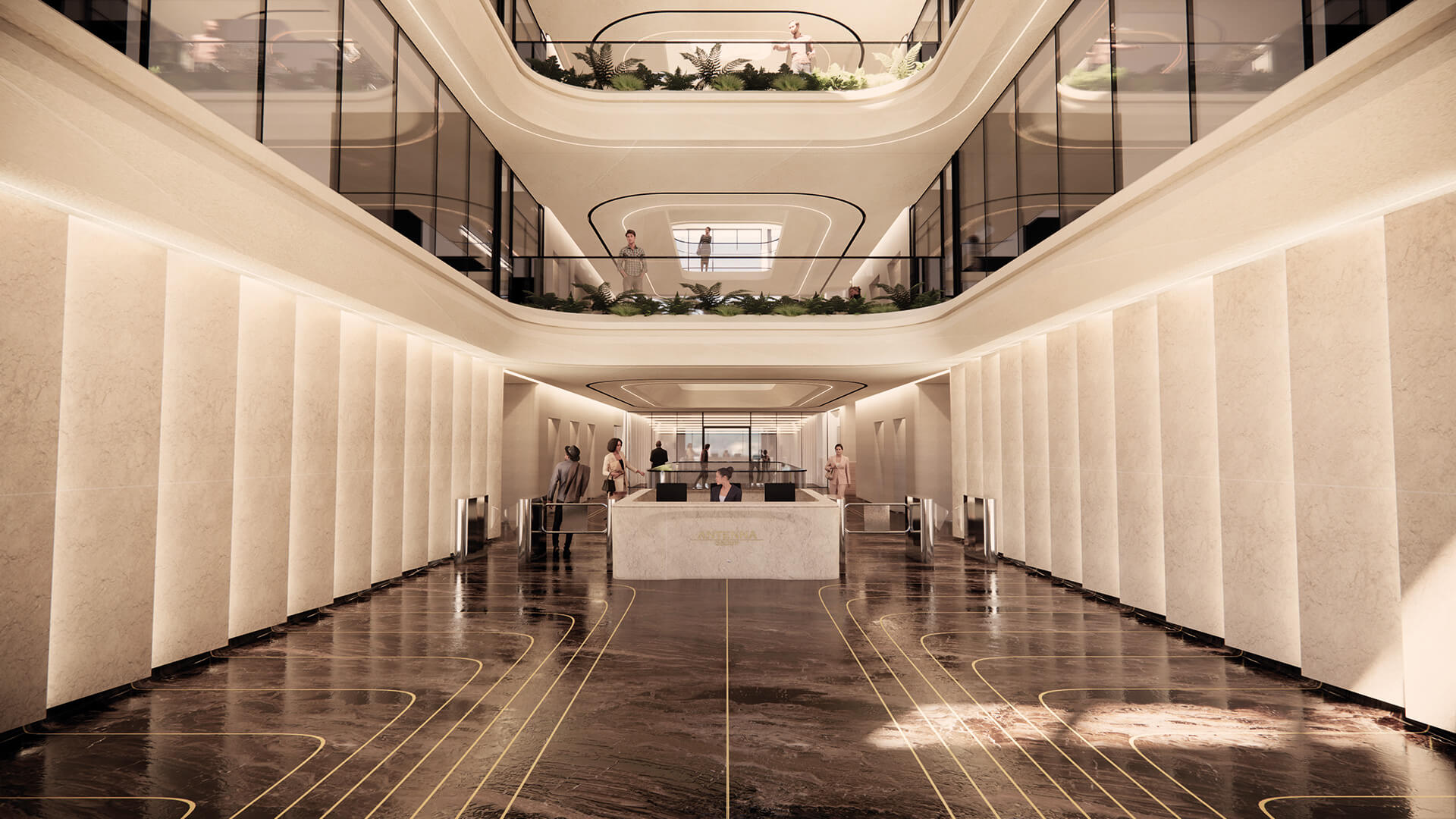
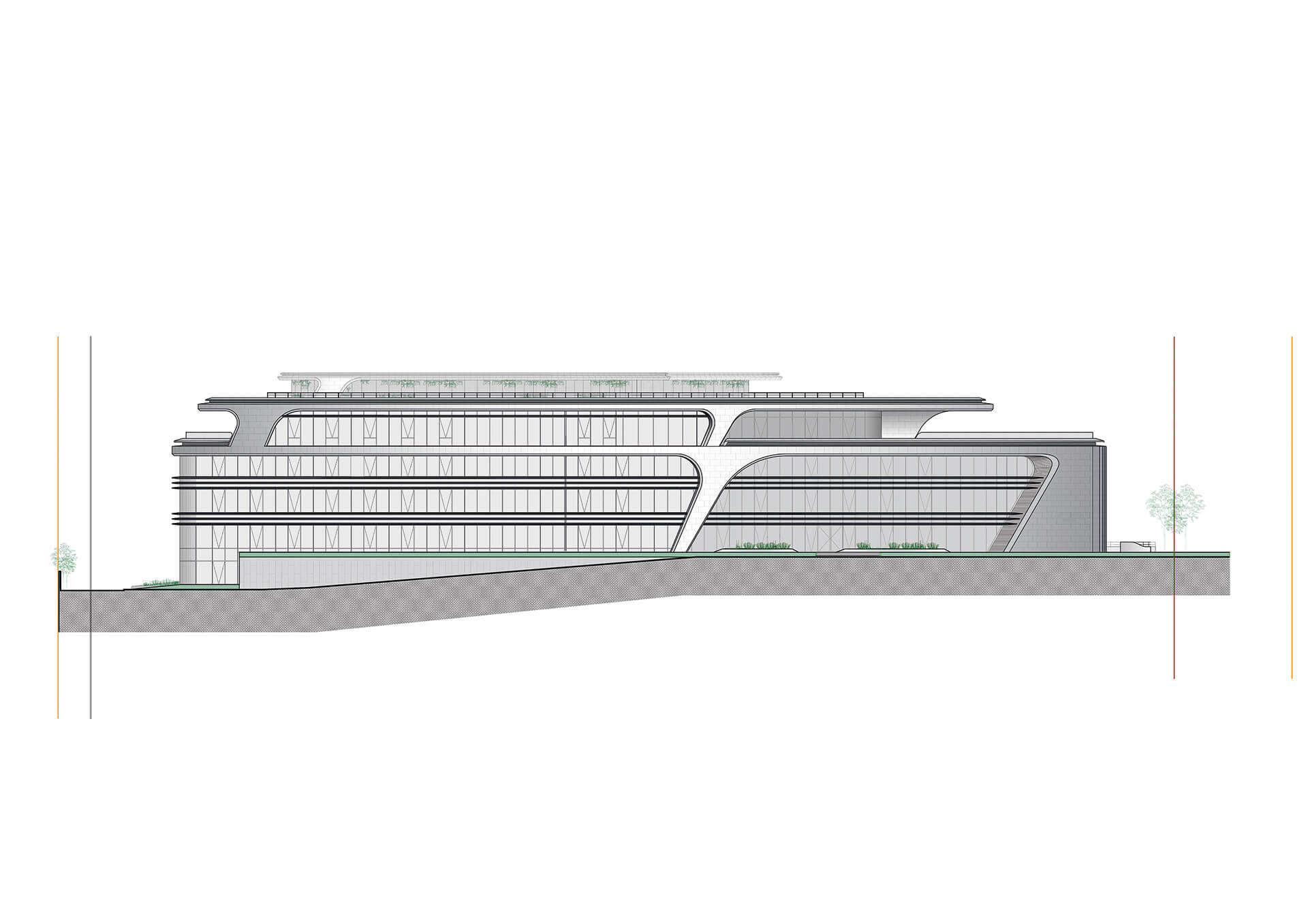
At the main entrance, a three-story-high “cavity” clad in linear wooden elements creates a striking threshold that welcomes visitors. The concept of carving extends into the interior, where a central, light-filled “canyon” is formed. Through the subtraction of volume, bridges connect the opposing office wings, while vertical voids allow natural light to penetrate deep into the building via a glazed roof, reaching even the lower levels. In plan, the building is organized in a horseshoe configuration, with office zones facing the central atrium. This permeable space extends across five floors and incorporates smaller atria and sculptural bridges, establishing visual connections between levels and enhancing transparency throughout.
Due to the site’s elevation differences, a secondary entrance is located at the rear, combined with access to the underground parking. This entrance leads directly to the studio level, where all media-related functions such as the newsroom, control rooms, and support spaces, are arranged on a single plane, forming a unified and operationally efficient media hub with direct access to the surrounding environment.
Landscape Design & Sustainability
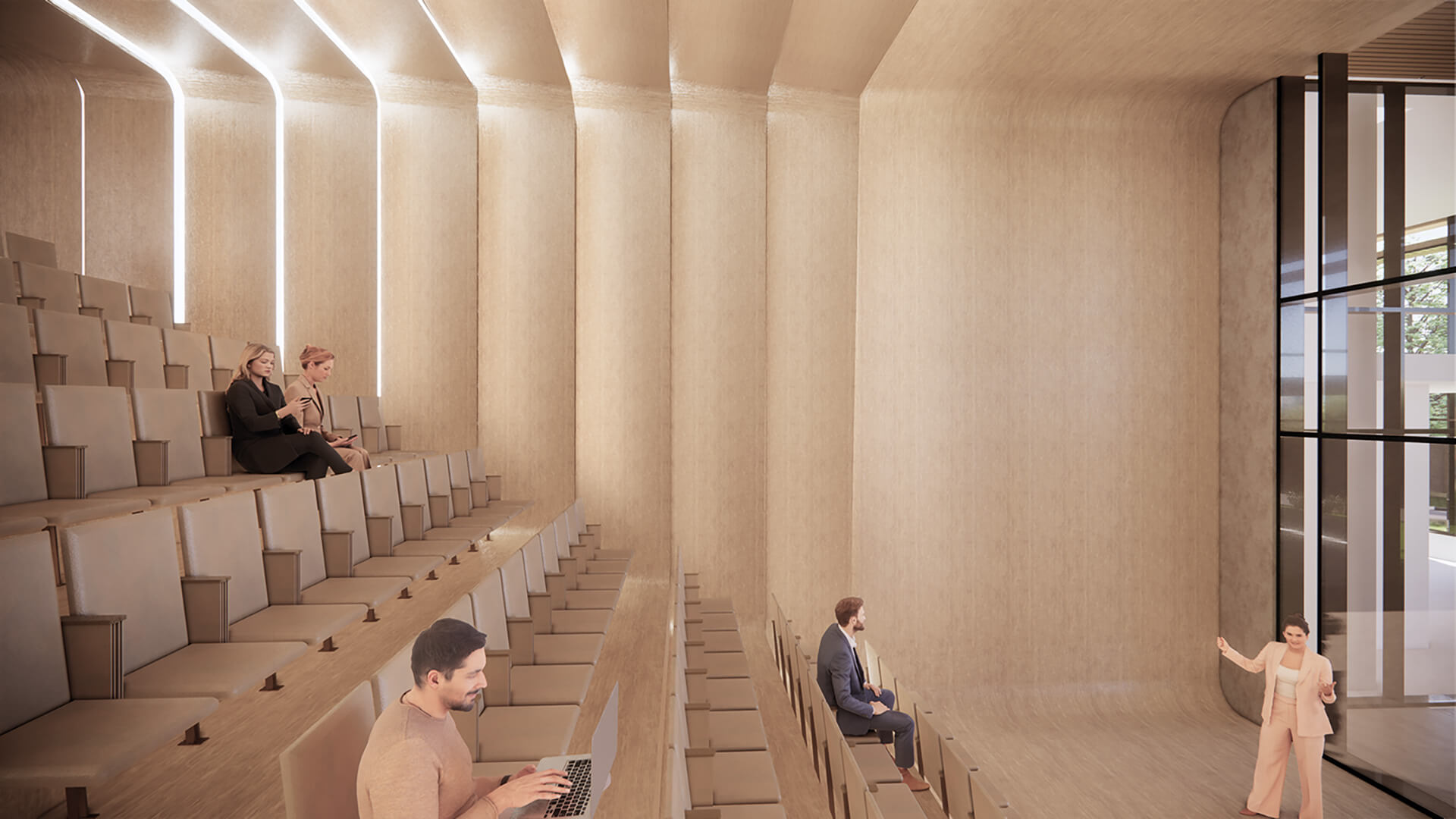
The television studios, designed according to the same principle of porosity, are clad externally with perforated aluminum panels that are internally illuminated. During the day, they appear as solid metallic volumes in dialogue with the central atrium, while at night, light filters through their perforated surfaces, revealing a lighter, more ethereal presence and expressing the activity within.
The surrounding landscape is organized to accommodate both vehicular and pedestrian flows, as well as the operational requirements of the studios. At the same time, a series of outdoor green areas is introduced, offering spaces for relaxation and extending the workplace environment. These gardens incorporate seating areas within diverse planting zones, forming an urban green enclave that enhances the local microclimate – both within the building and its surroundings, including the integration of sky gardens.
The project adheres to the highest environmental and acoustic standards. The careful integration of the complex technical requirements – particularly those associated with studio functions – into the architectural design ensures a seamless dialogue between technical performance and spatial quality. As a result, the building maintains a coherent architectural language and a distinct, unified identity.