Trace | Residential Retrofit in London
Architecture:
Photography:

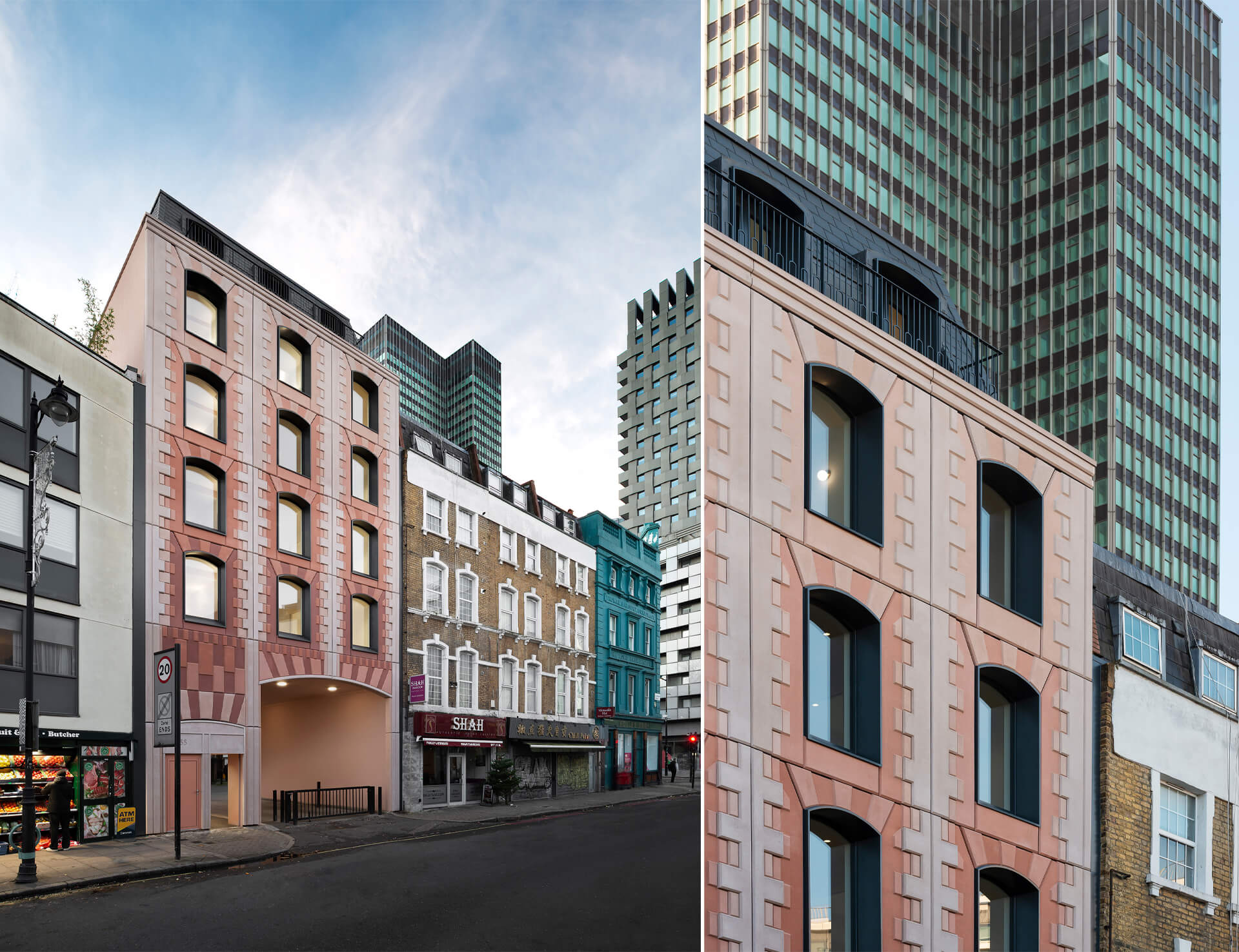
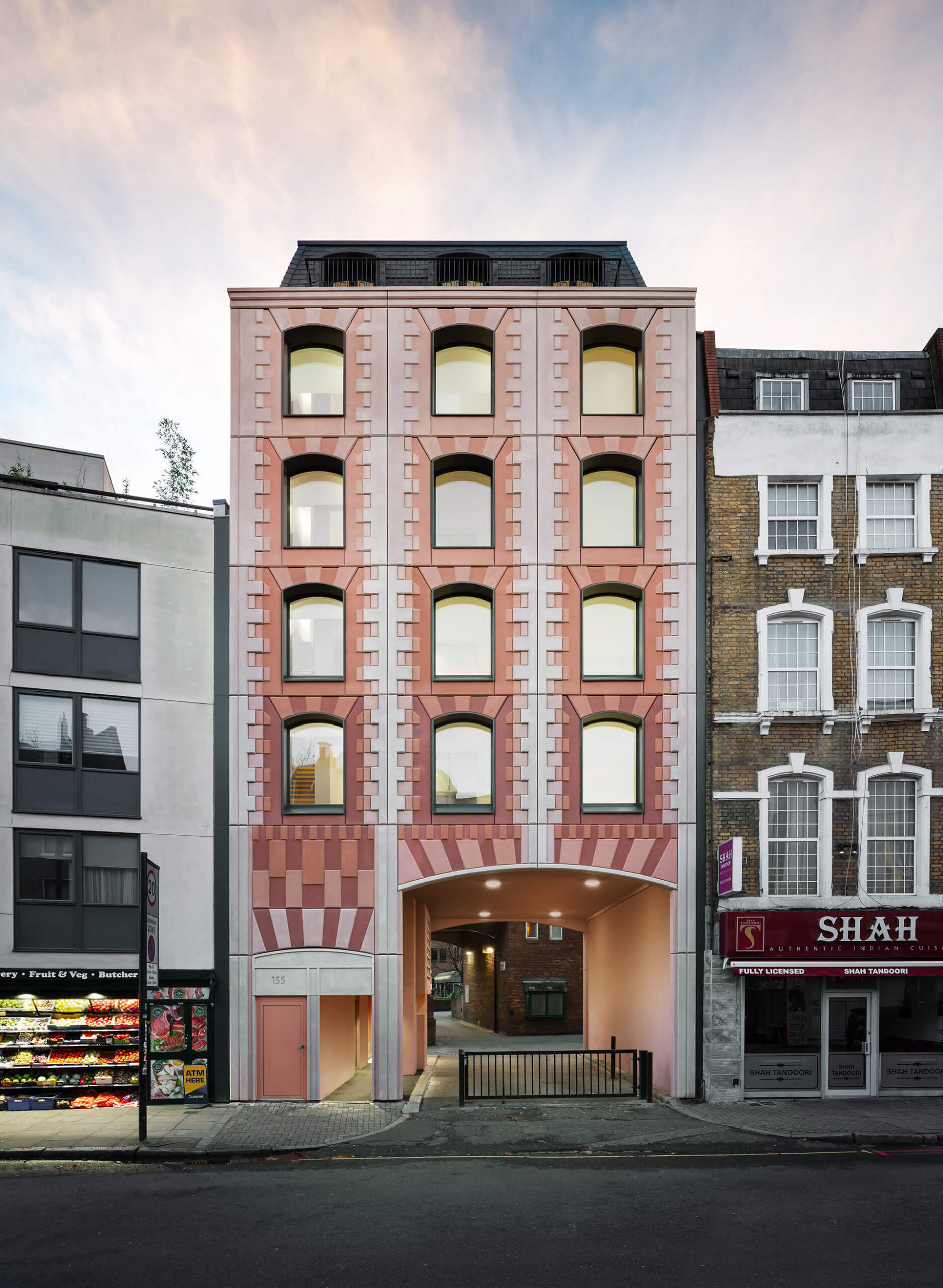
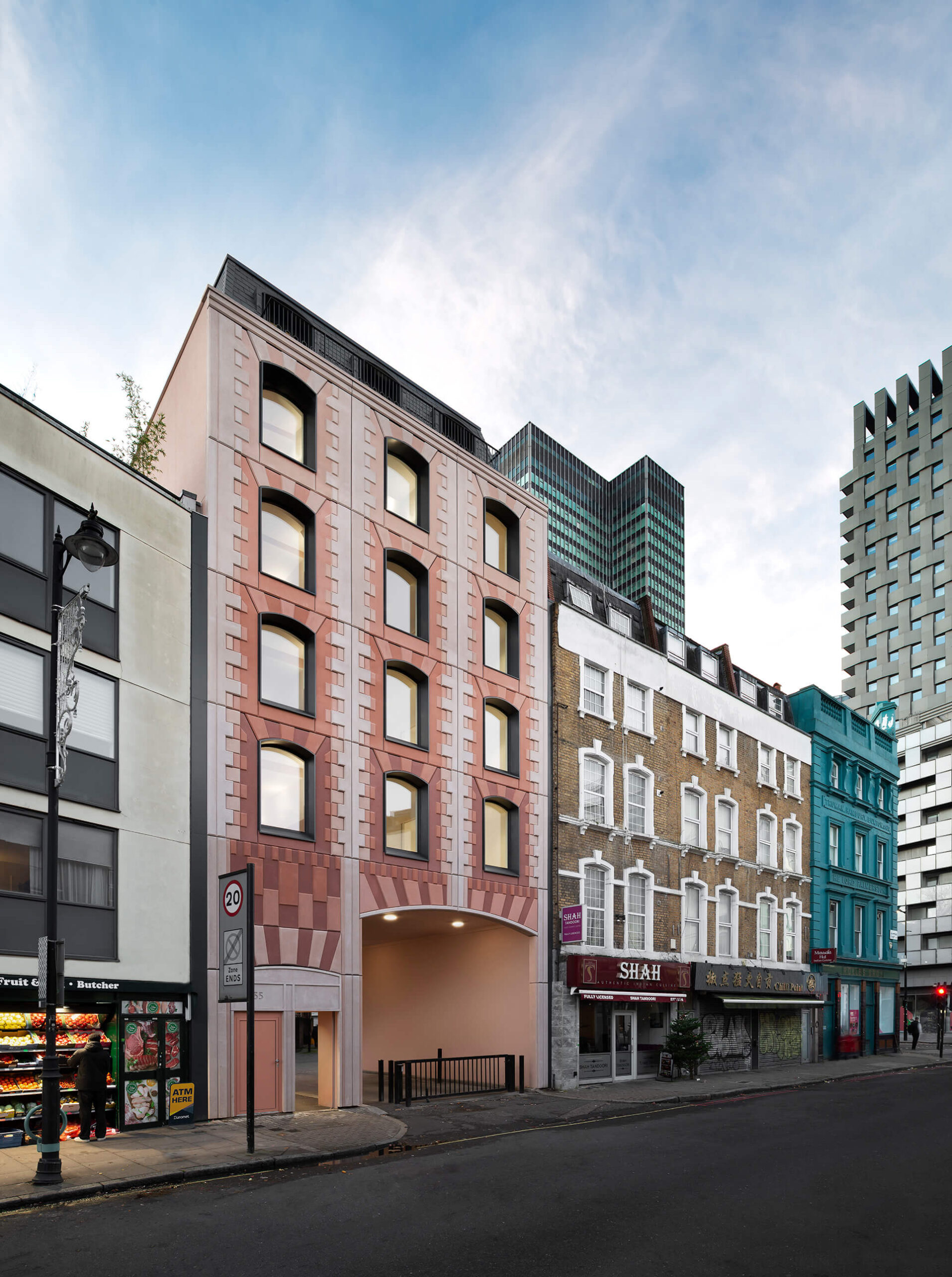
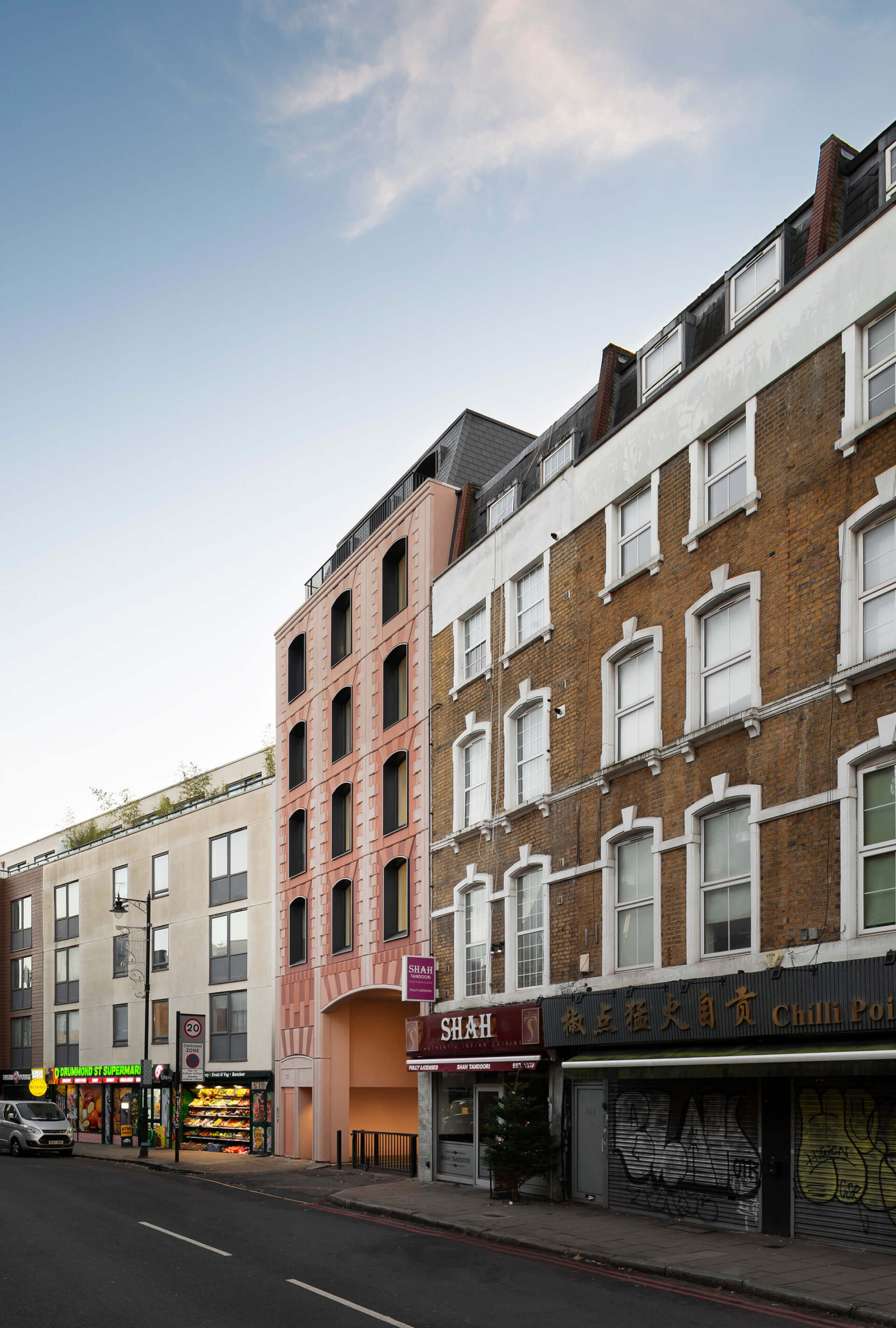
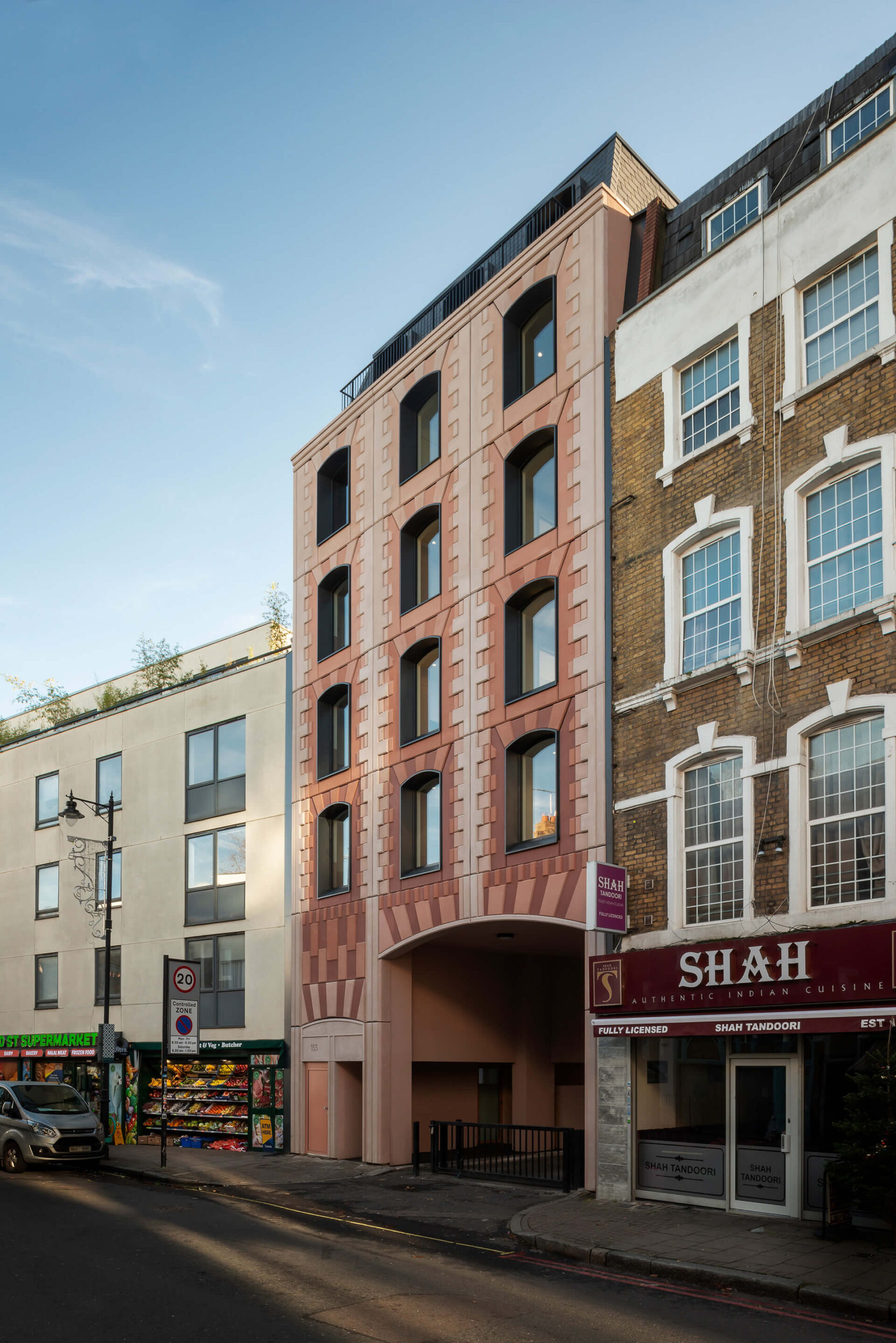
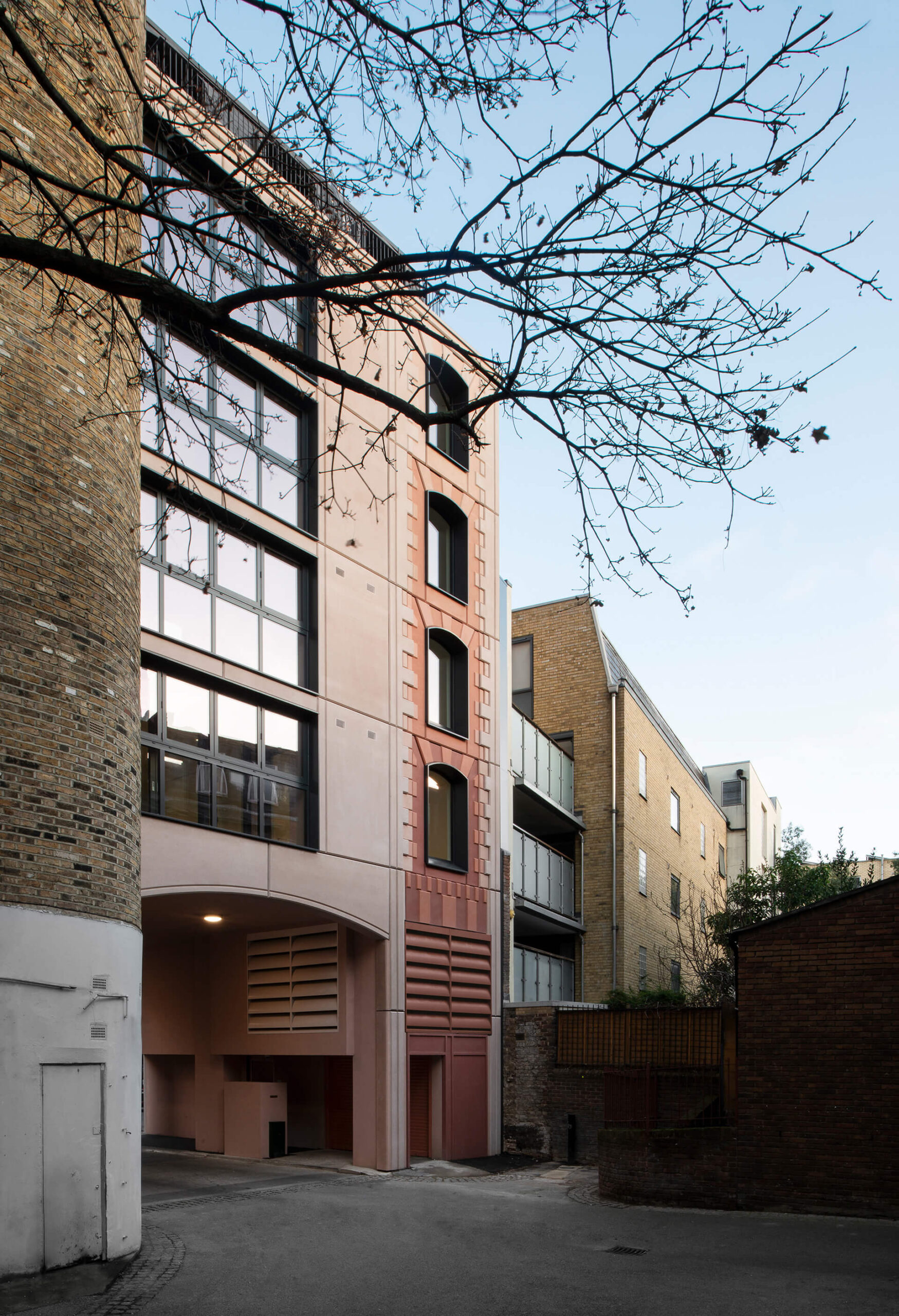
Trace is a transformative deep retrofit residential project located on Drummond Street in Euston, London, designed by Bureau de Change for HGG London. The scheme reinterprets a four-storey brick building from the 1980s, extending it with two additional levels and accommodating five contemporary, light-filled apartments, while preserving and repurposing the majority of the existing structure.
Circular Economy Principles
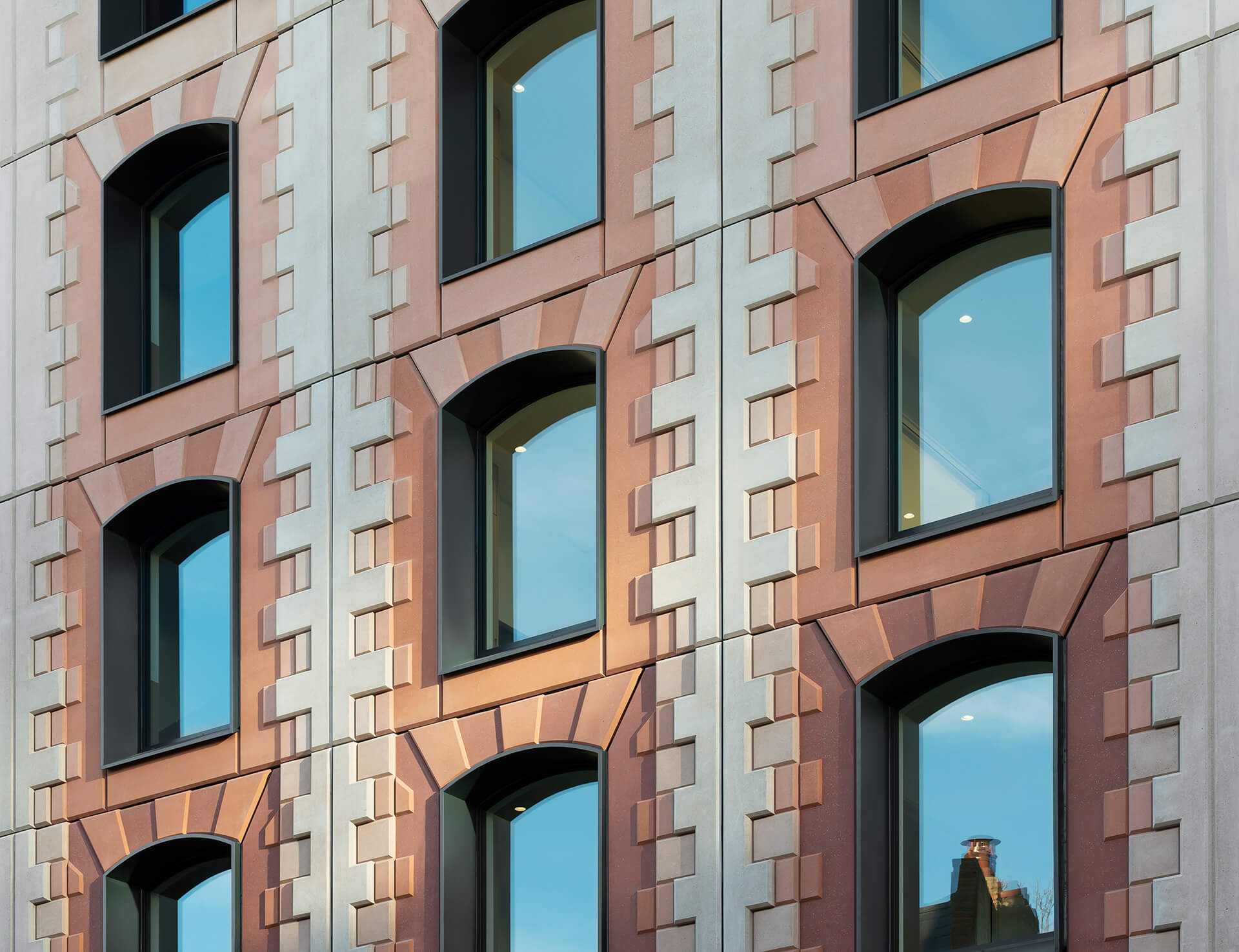
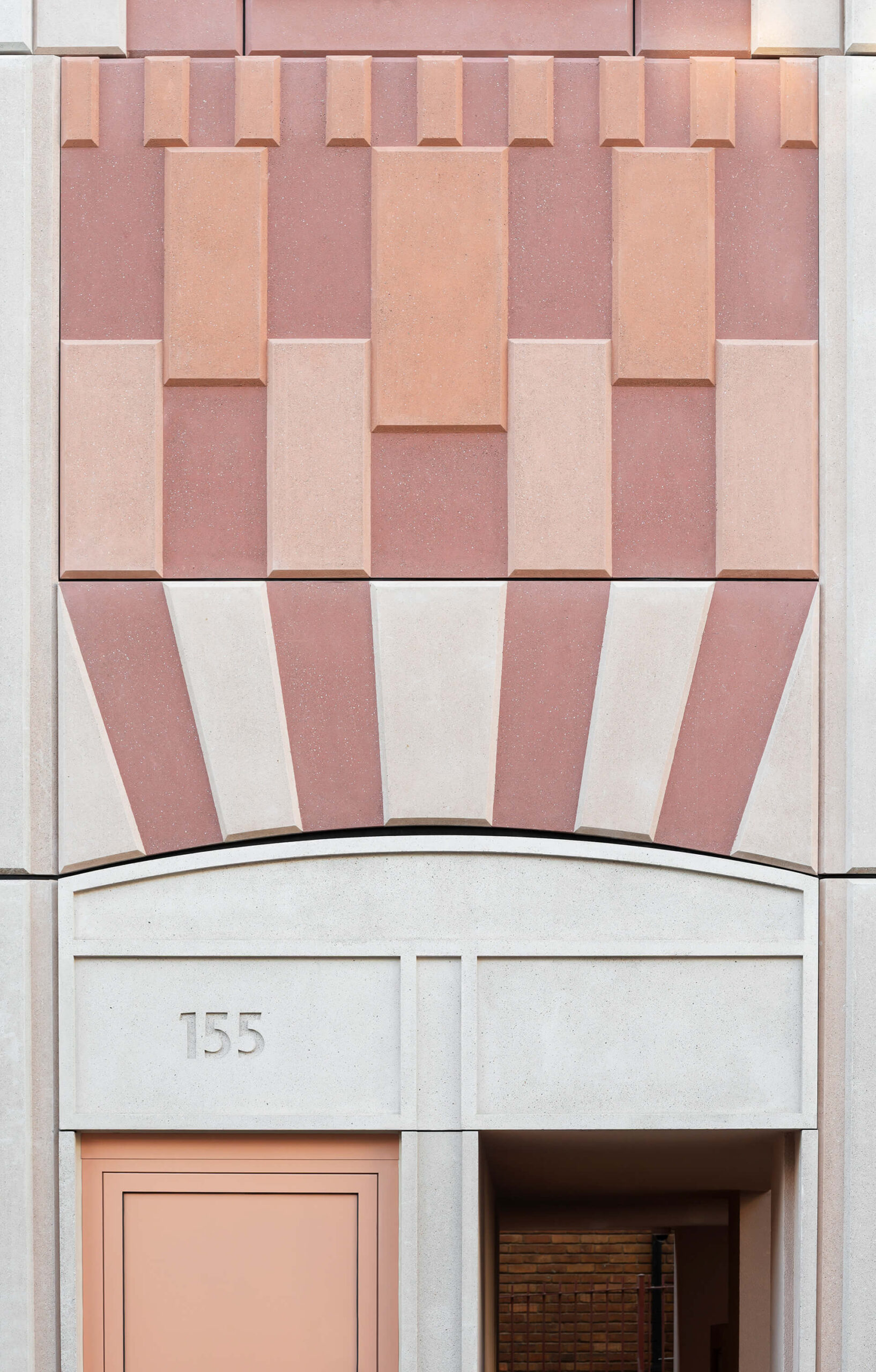
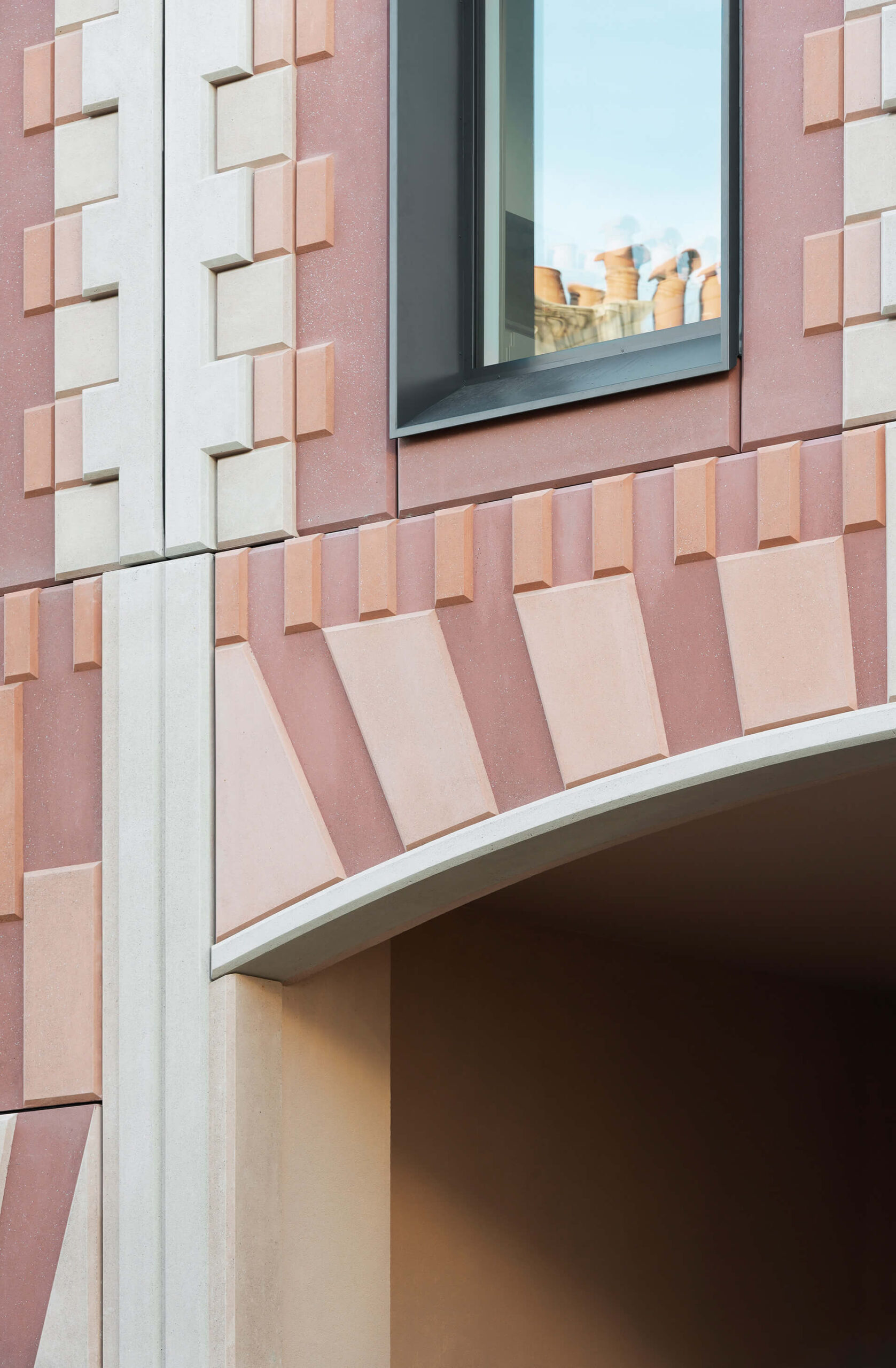
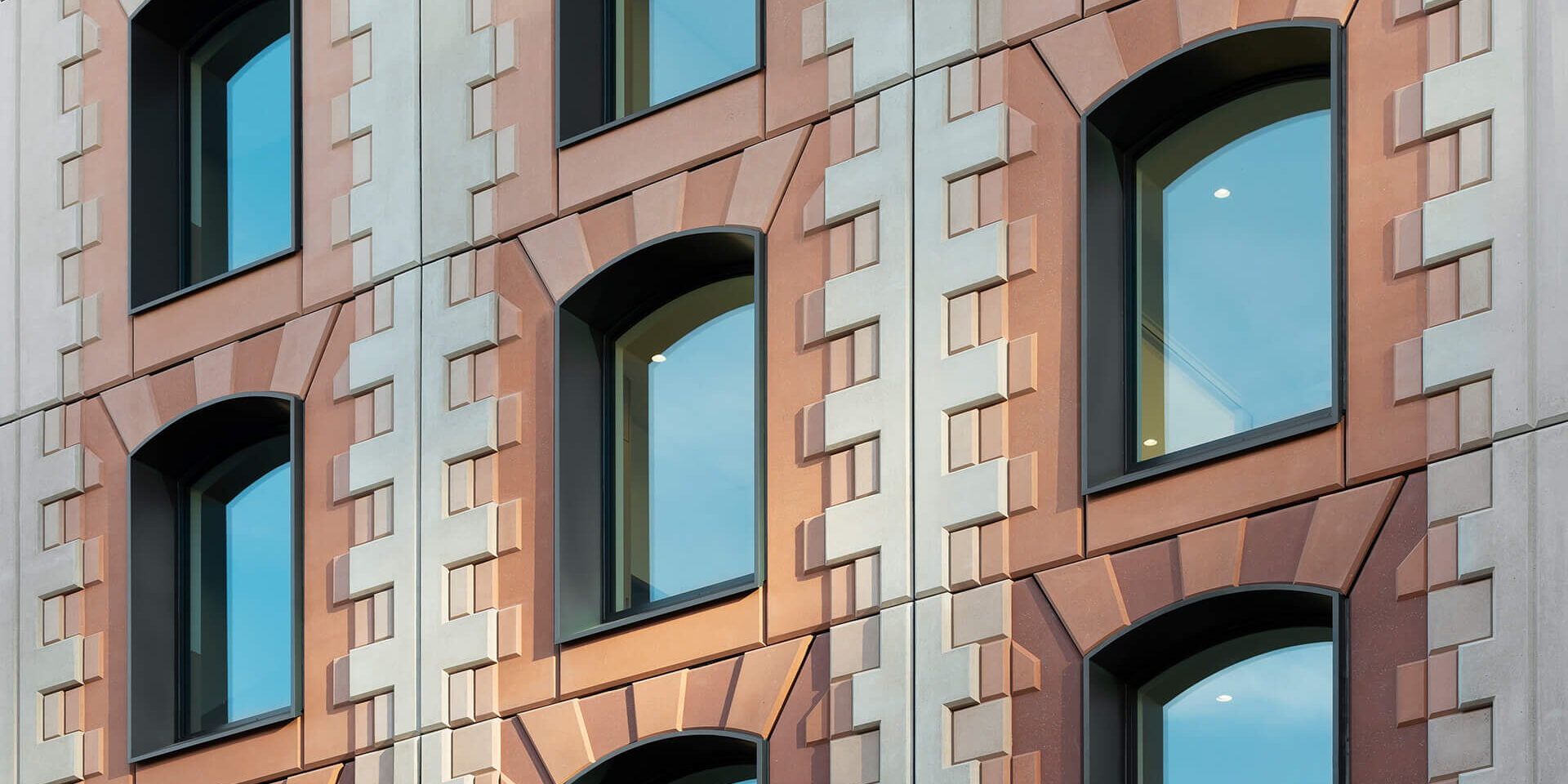
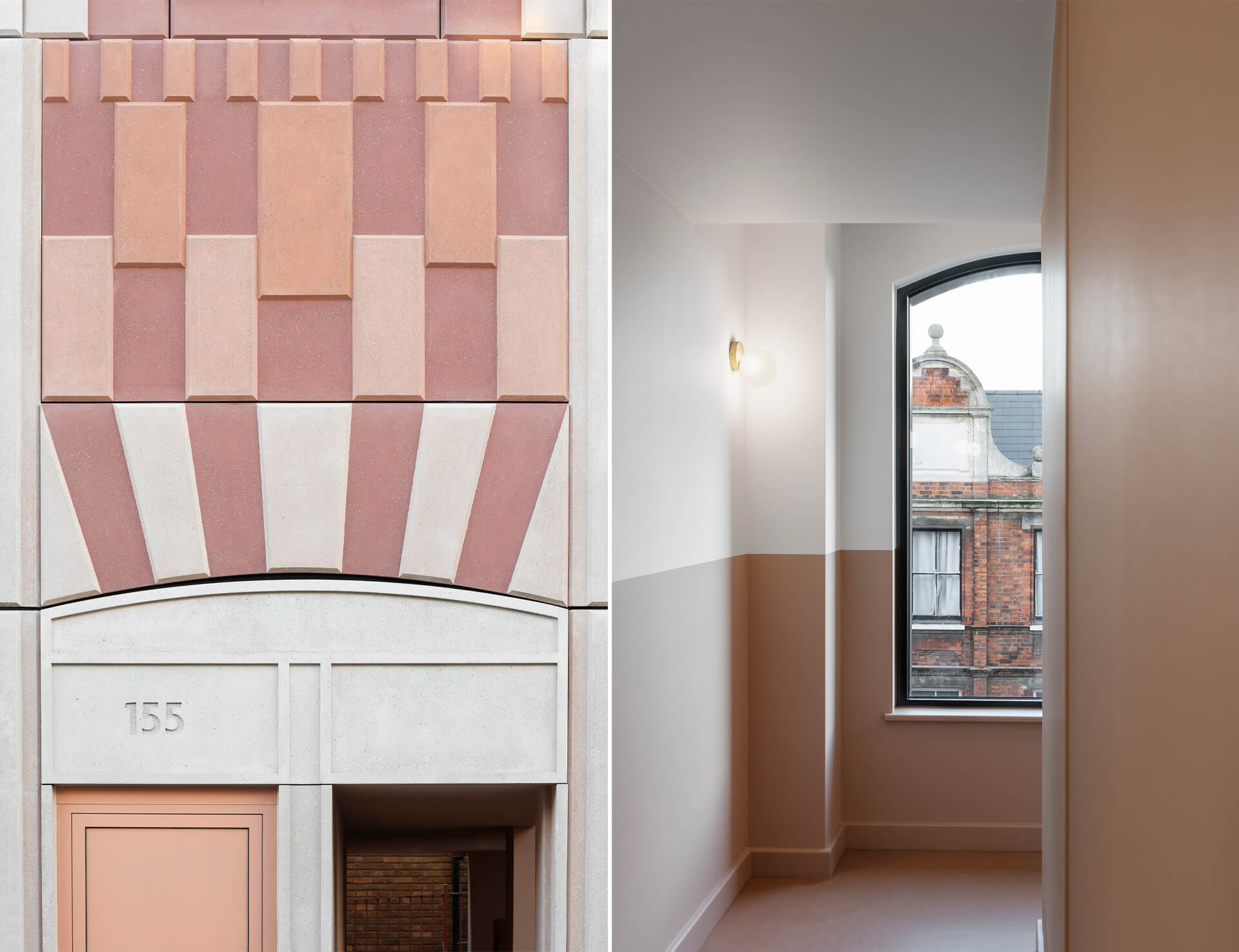
At the core of the project lies a rigorous commitment to circular economy principles. Rather than opting for demolition and reconstruction, the design retains the original foundations, primary structure and defining architectural elements, including the characteristic archway, thus conserving the embodied carbon of the site. A key innovation is the development of a site-specific glass reinforced concrete (GRC) composite for the façade, incorporating materials harvested directly from the existing building.
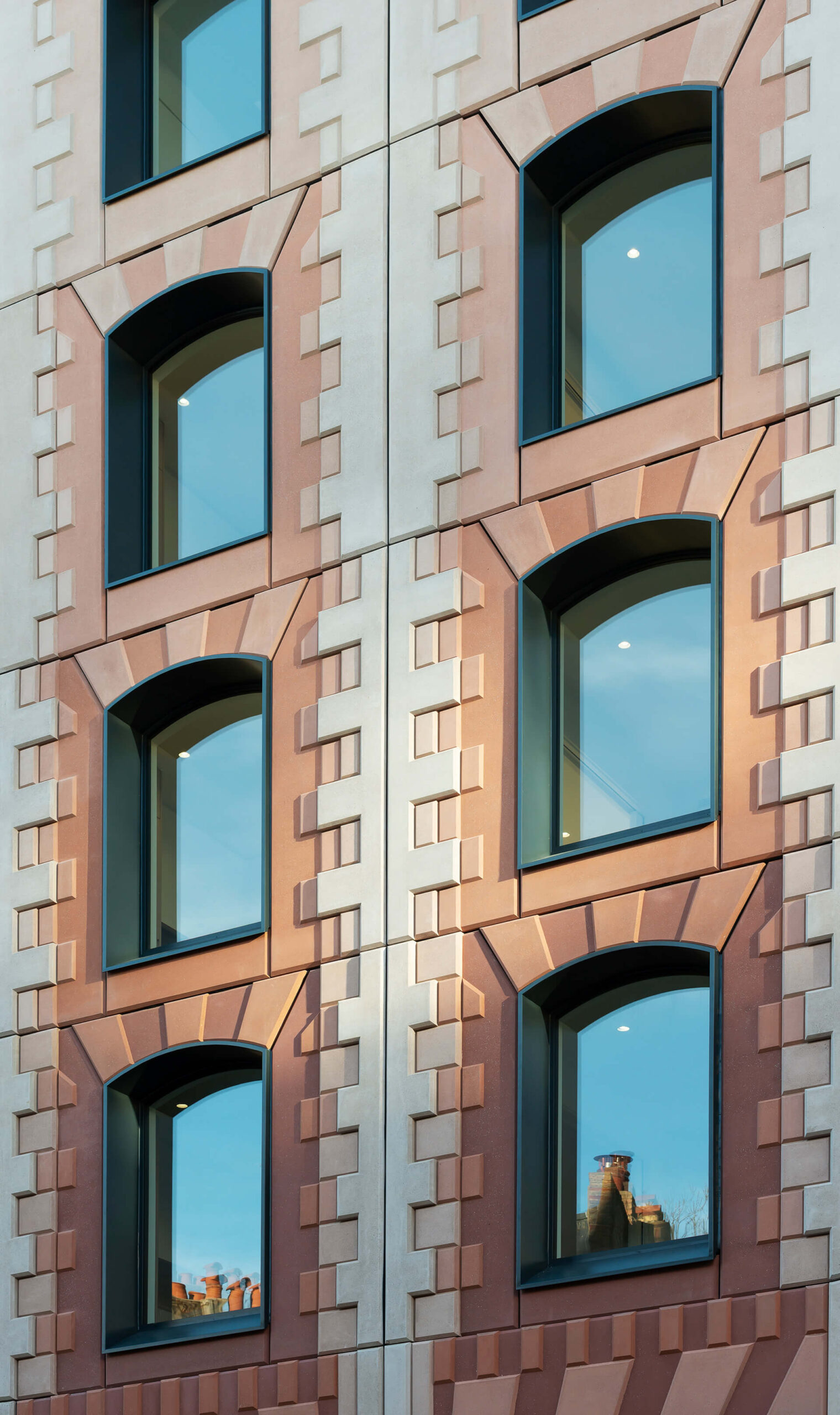
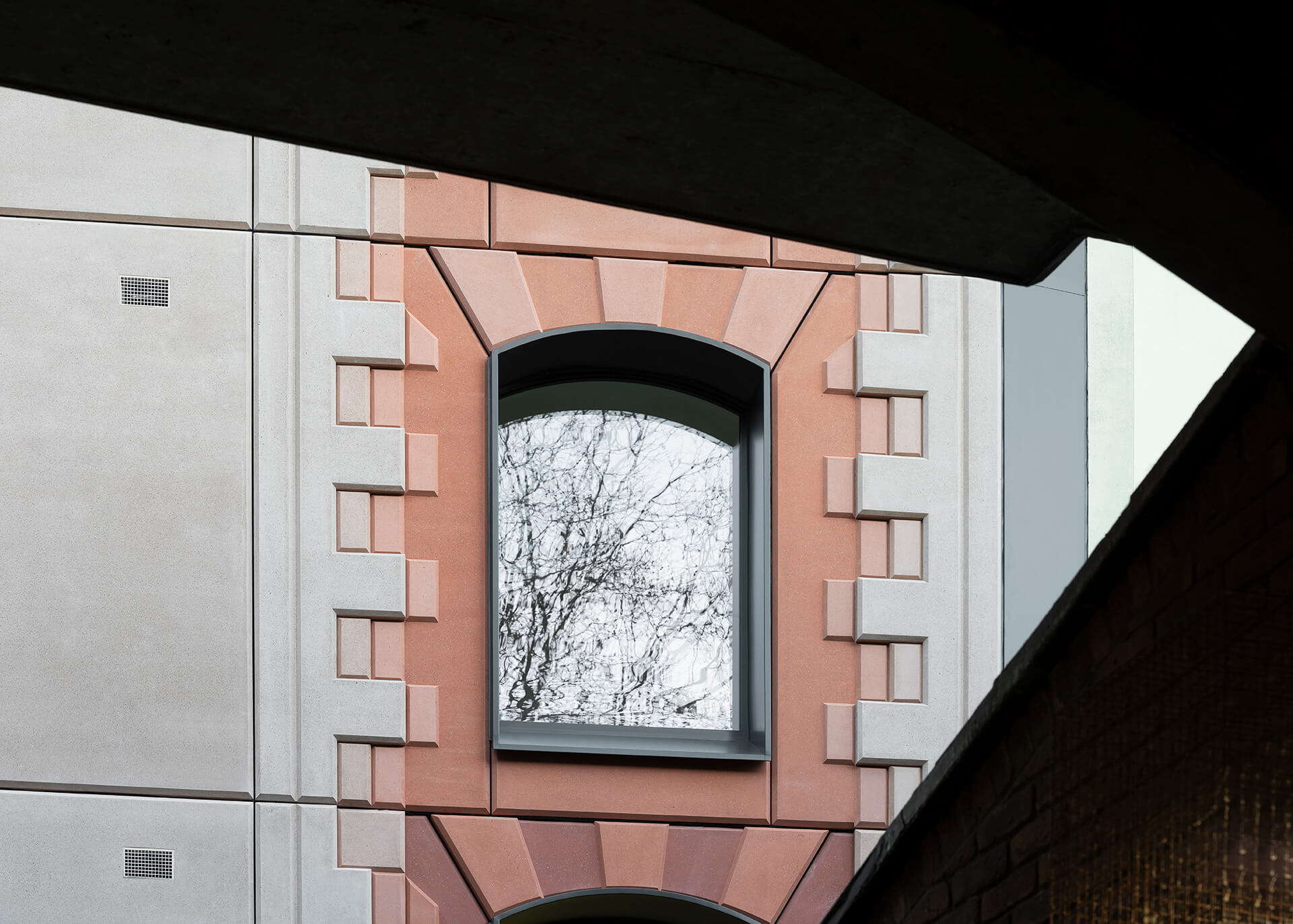
The original mid-brown bricks are crushed and reused as visible aggregate, forming a new textured cladding that reconstitutes the building envelope. This process generates a materially expressive façade that both preserves and reinterprets the building’s history, allowing traces of the past to remain legible within a contemporary architectural language.
Design Philosophy
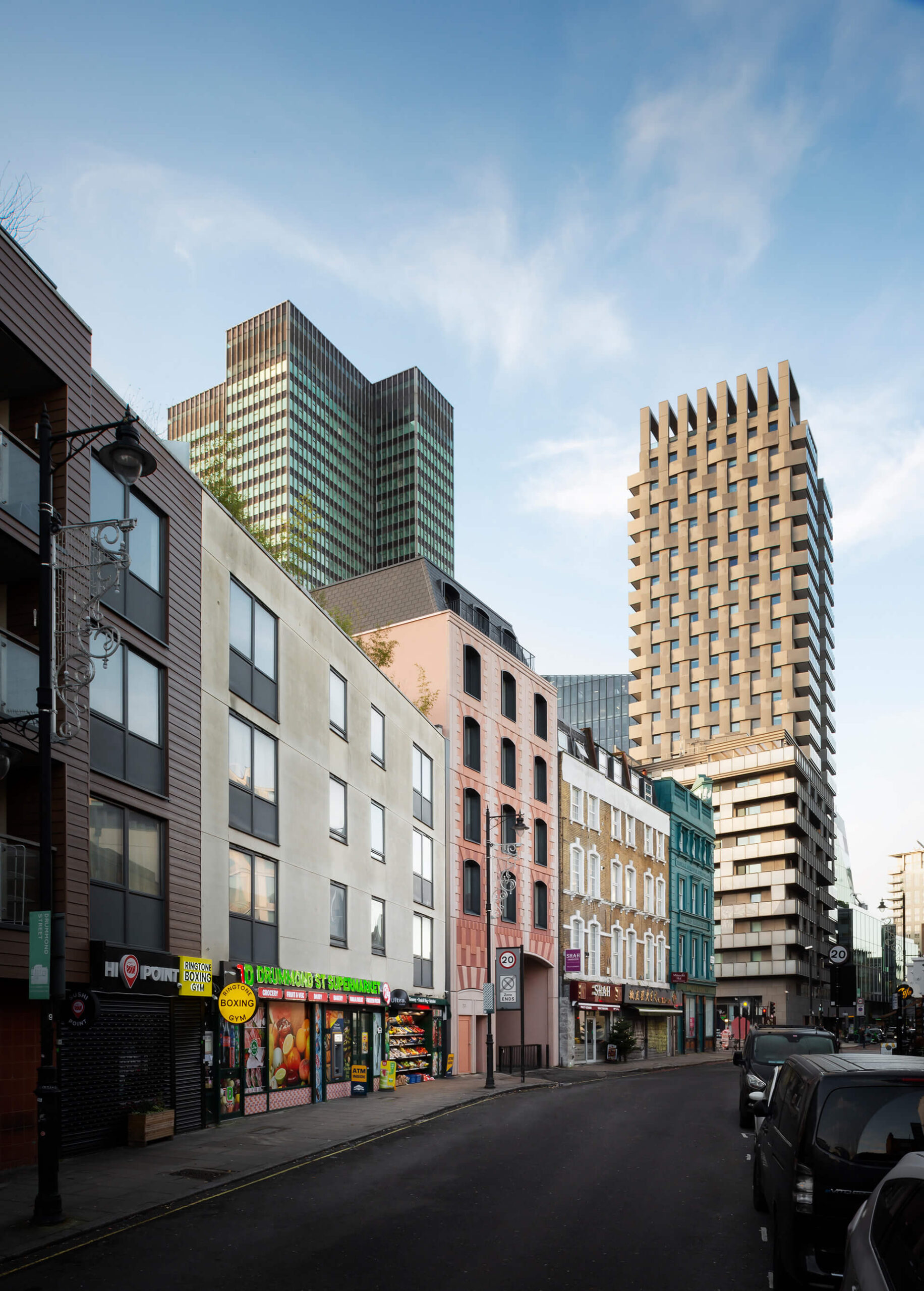
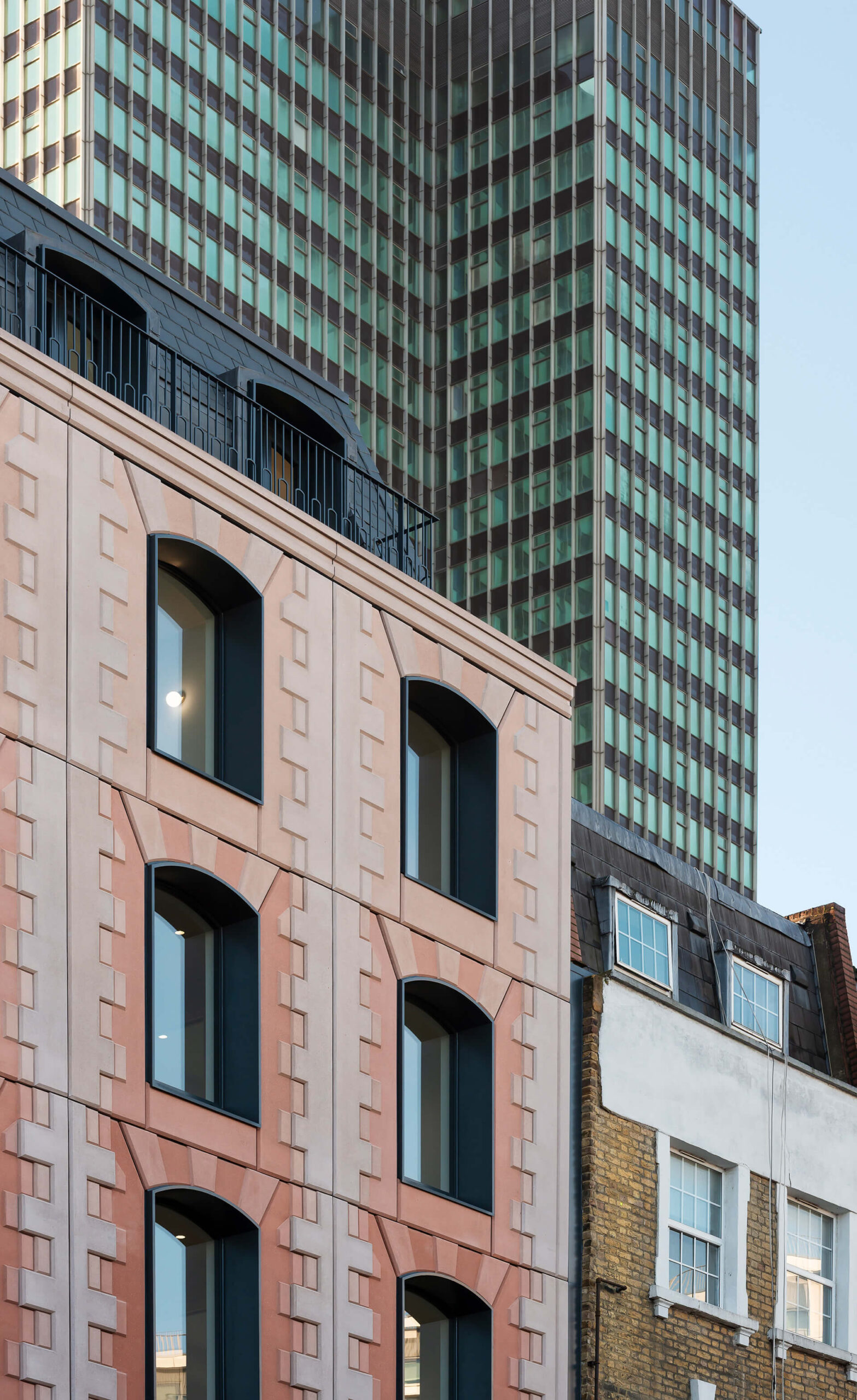
The architectural language draws from the layered historical context of Drummond Street and Tolmer’s Square, referencing Georgian urban typologies, the legacy of Euston Station, and successive phases of 20th-century redevelopment. The façade composition is informed by Georgian proportions, rustication, and articulated arches, reinterpreted through a contemporary construction system.
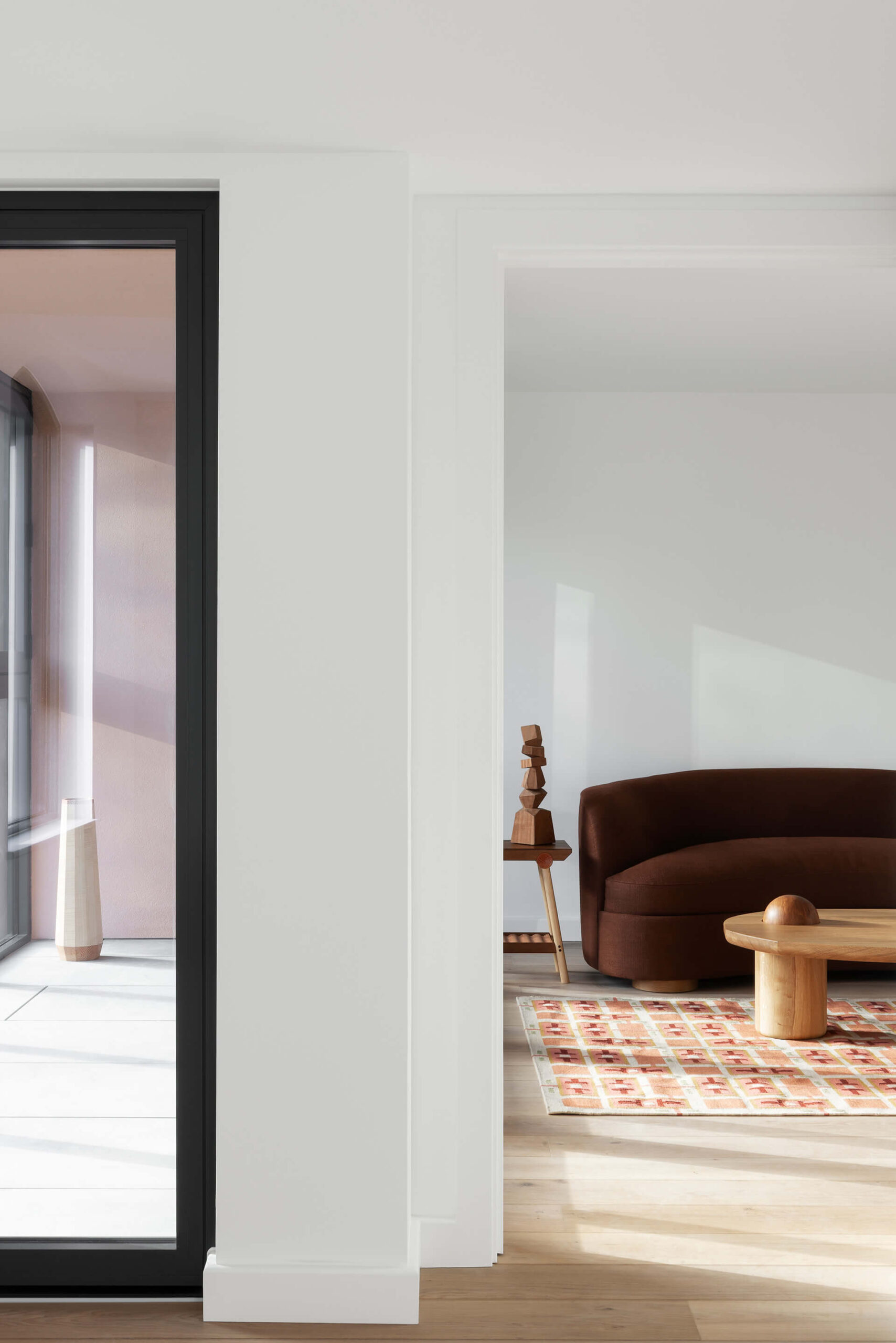
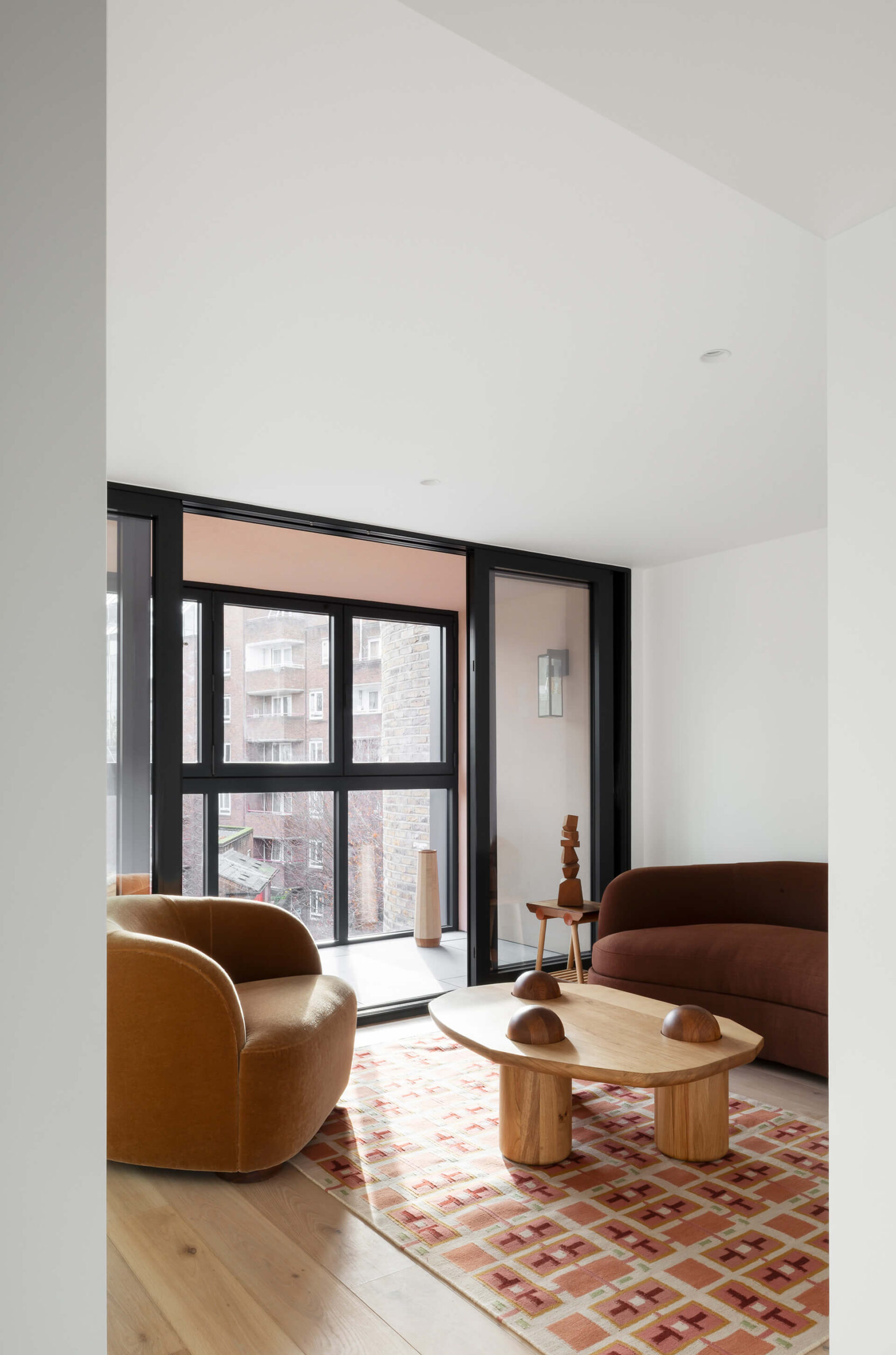
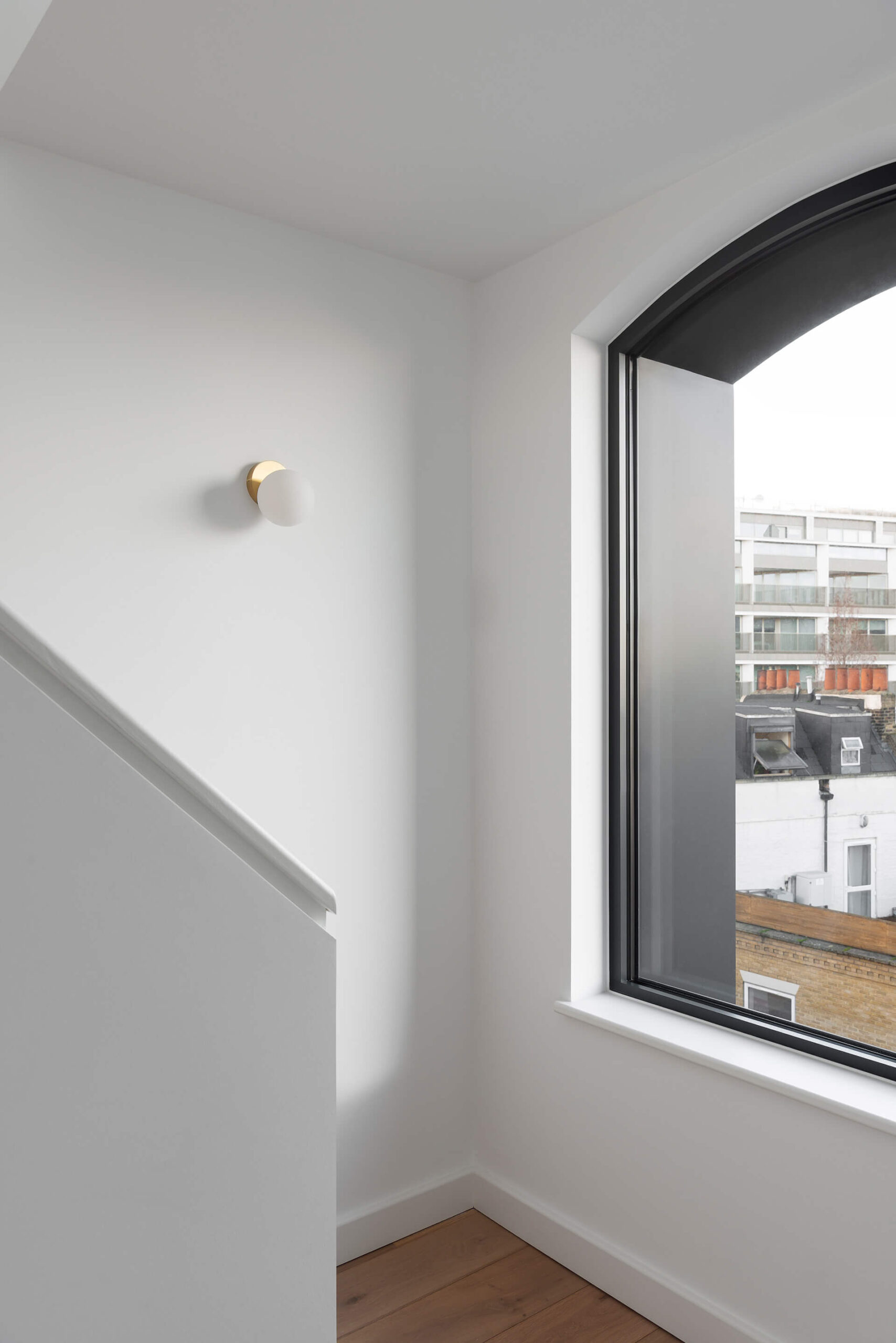
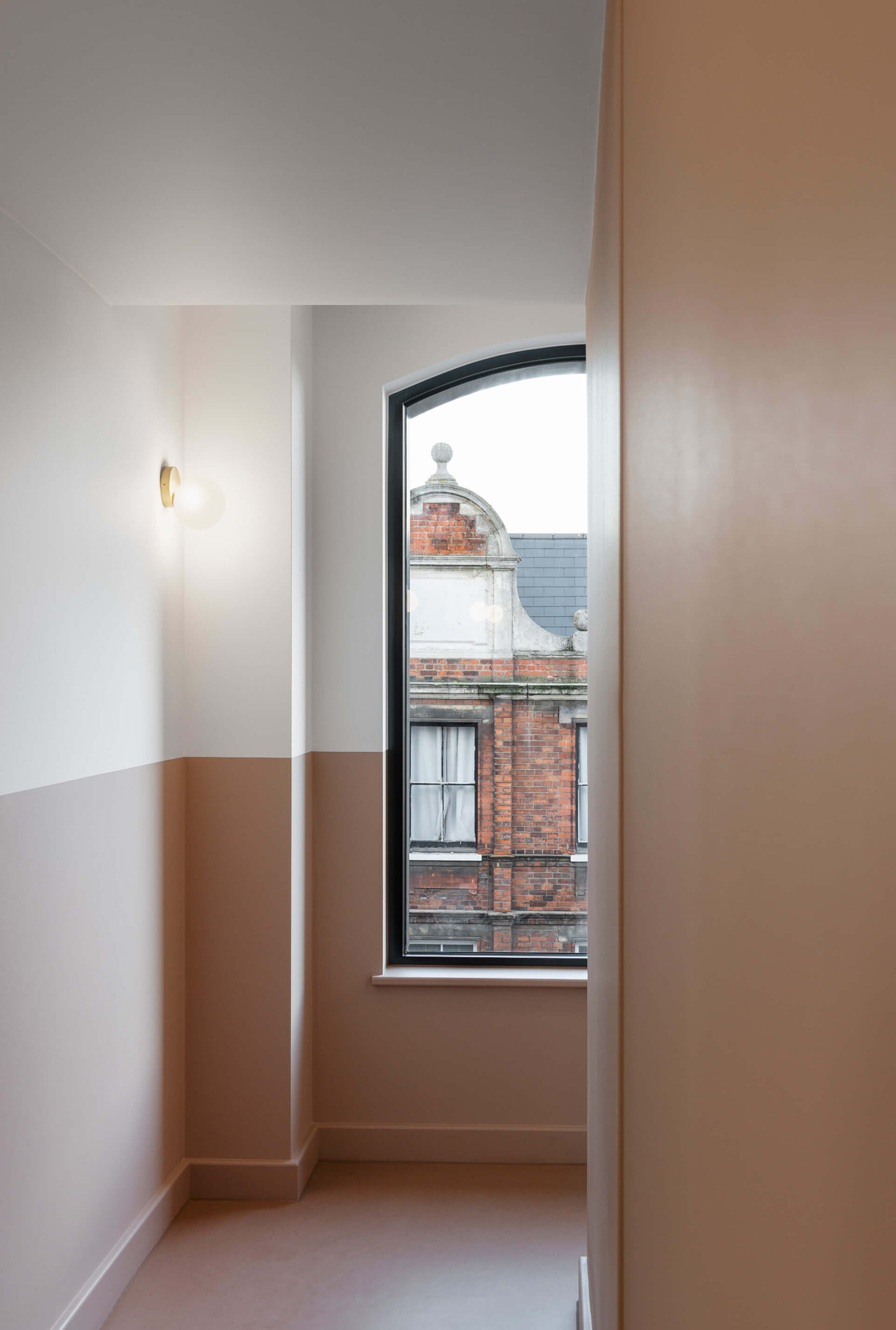
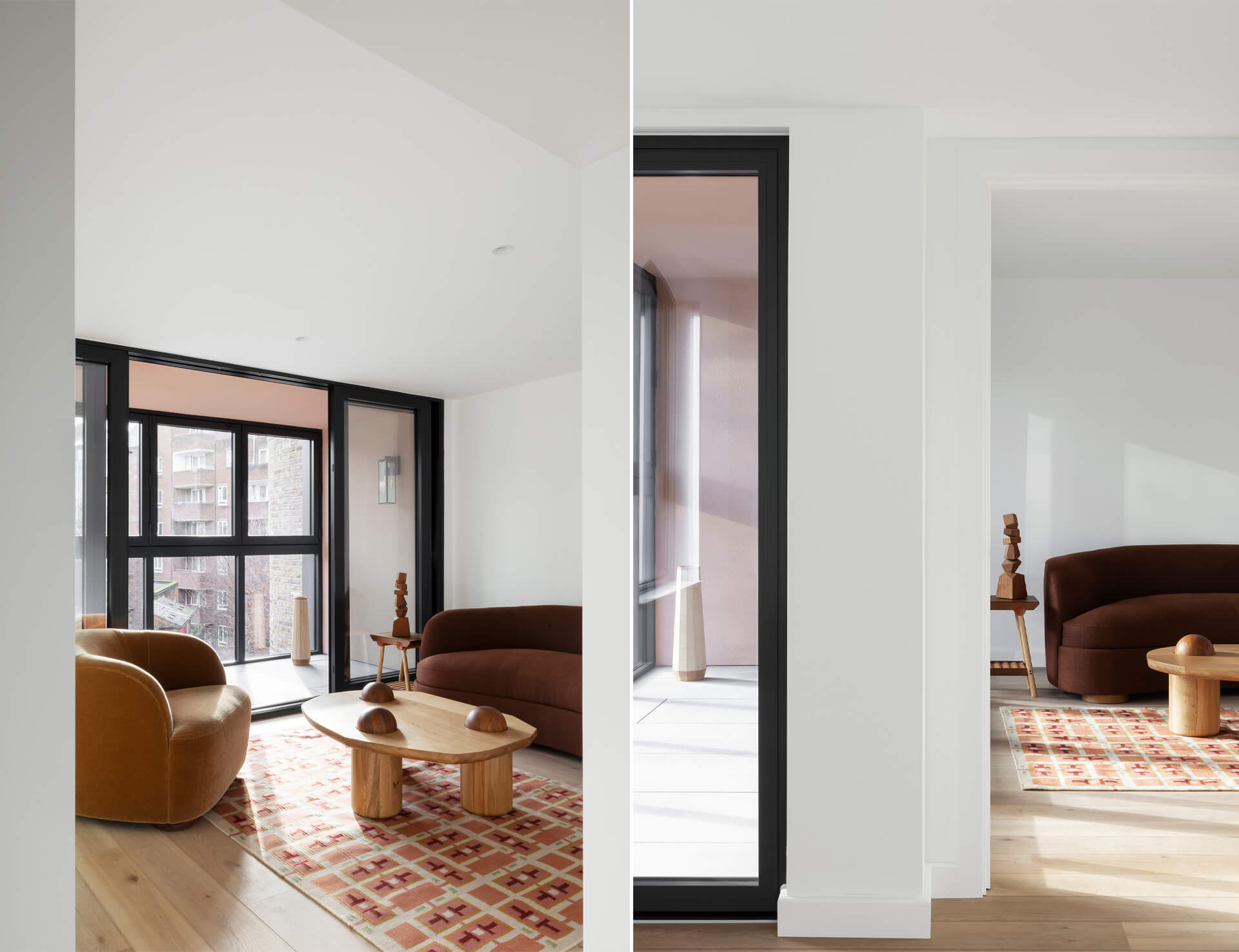
Organized within a rational grid, the openings reinterpret traditional segmental arches, enabling larger window apertures that enhance daylight penetration, cross-ventilation, and spatial quality. The inclusion of winter gardens at the rear further extends the living spaces, establishing a dynamic relationship between interior and exterior environments.
Layout & Urban Integration
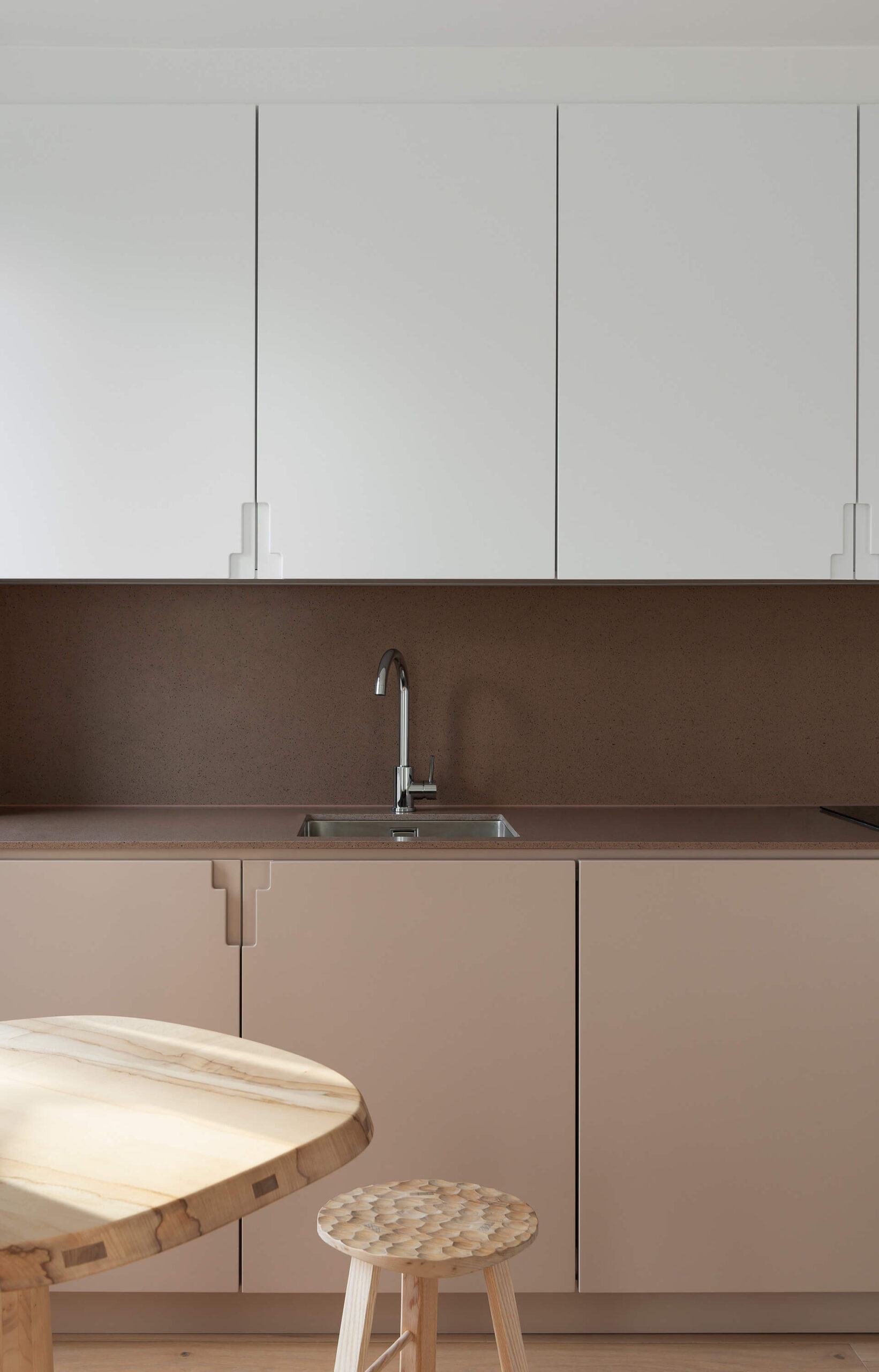
The completed development comprises three two-bedroom apartments across the lower levels and two one-bedroom units on the newly added upper floors, each offering skyline views and access to outdoor terraces. The internal layouts are structured around double-aspect living spaces arranged in a stepped configuration, subtly organizing kitchen, dining, and living areas without rigid partitioning.
Aligned with the ambitions of the Euston Area Plan, the project promotes sustainable urban intensification while enhancing the character of the surrounding area. By demonstrating how existing structures can be elevated through adaptive reuse and material innovation, Trace positions itself as a model for low-carbon residential development within the contemporary city.