Capsule Office in Thessaloniki
Interior Design:
Photography:
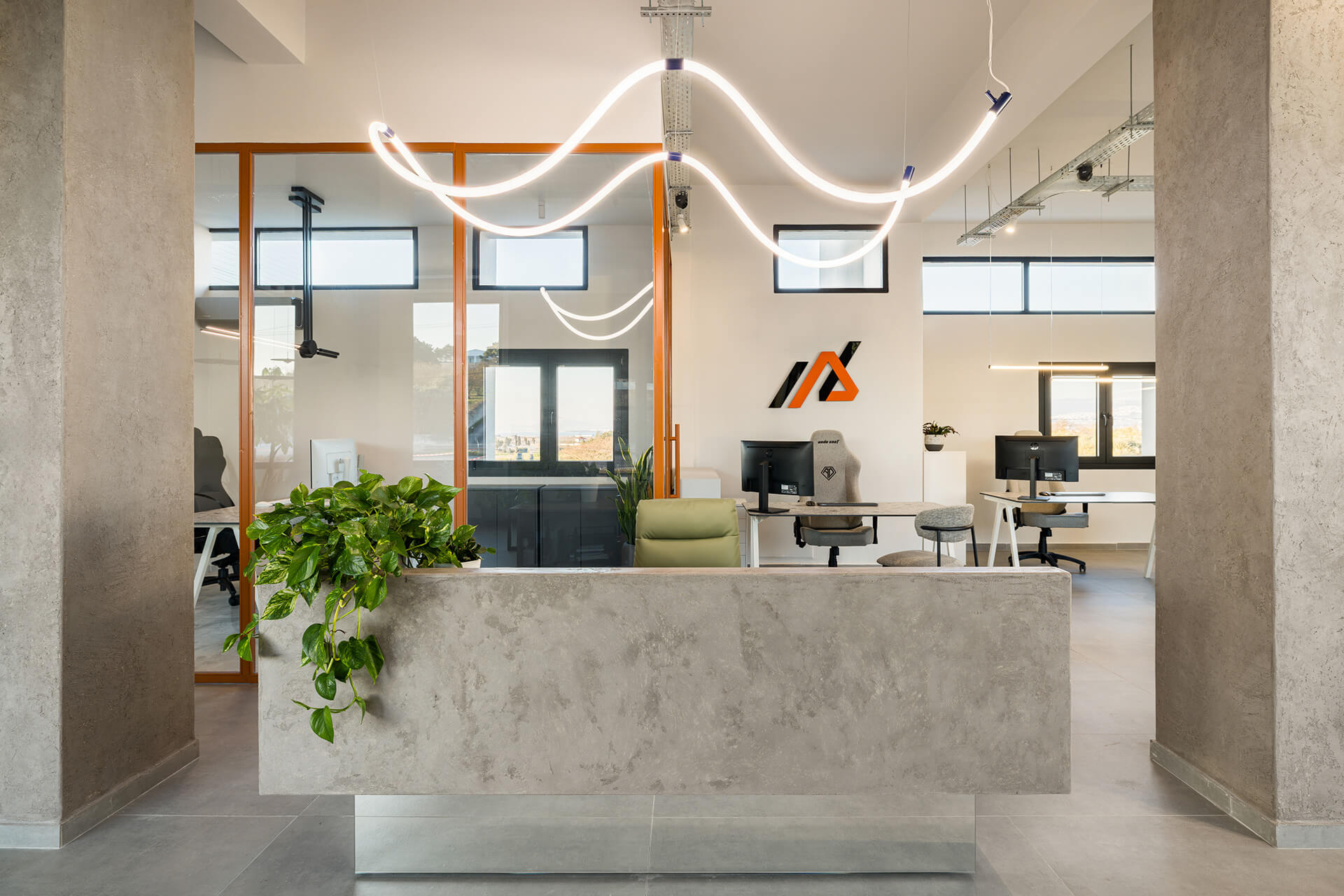
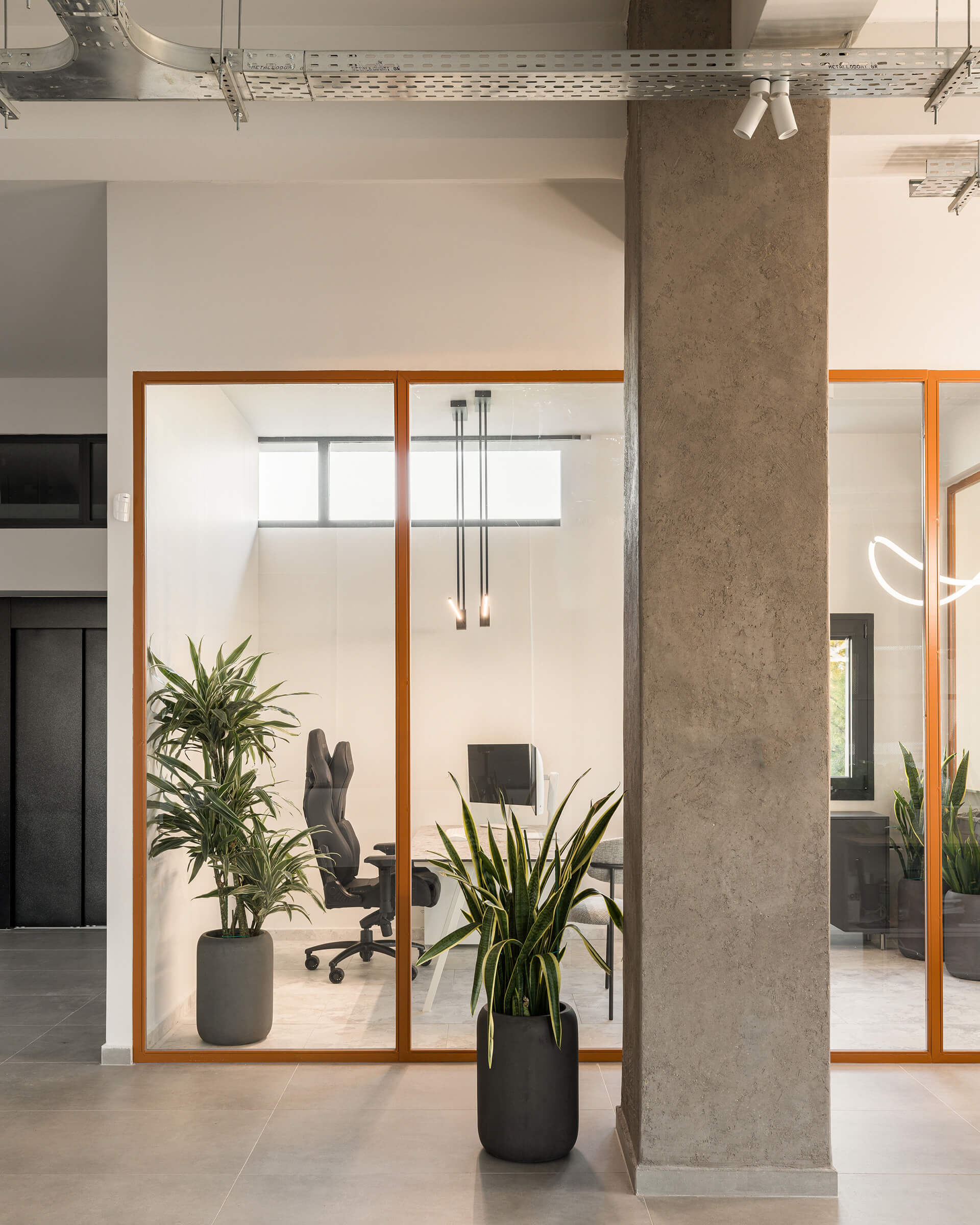
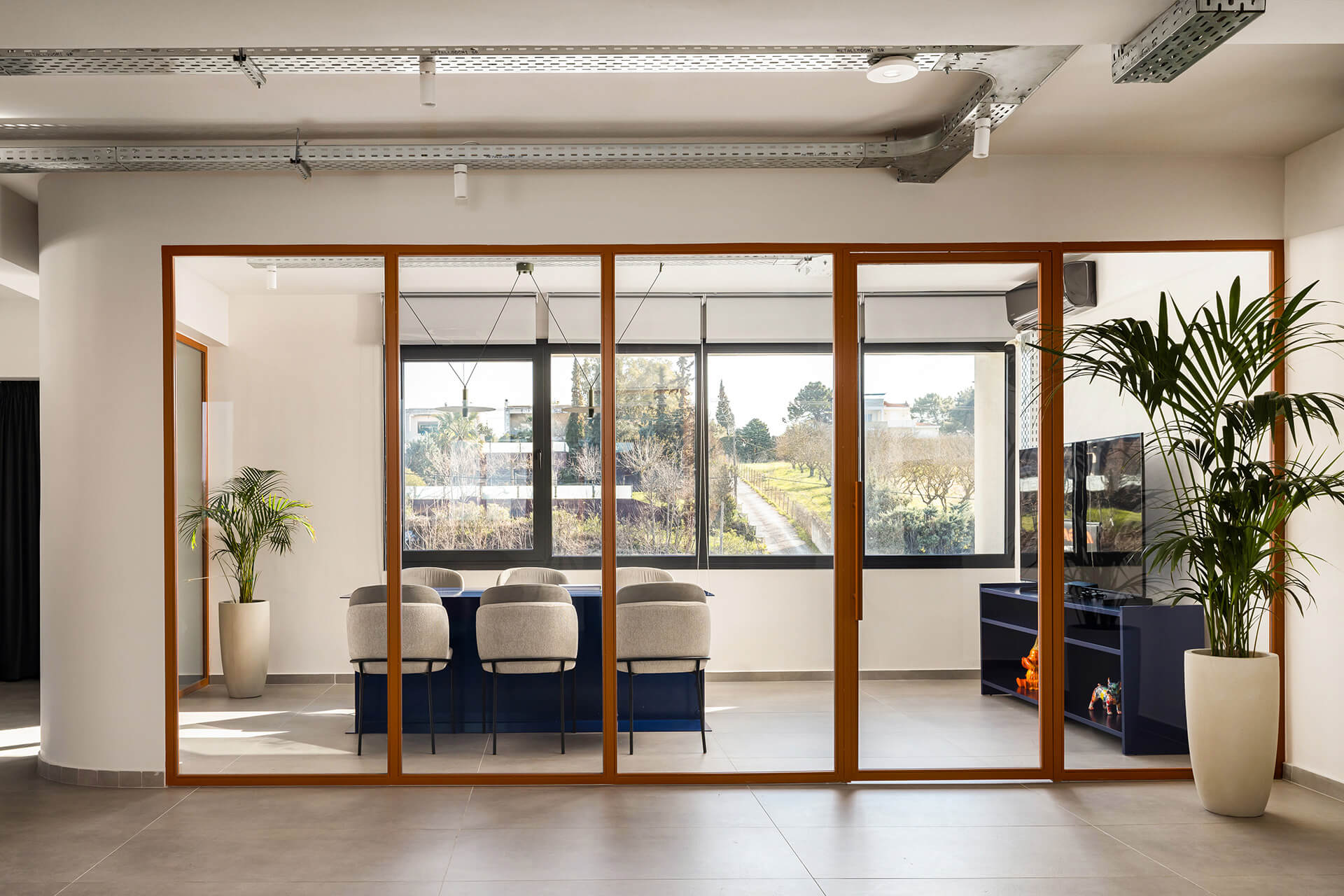
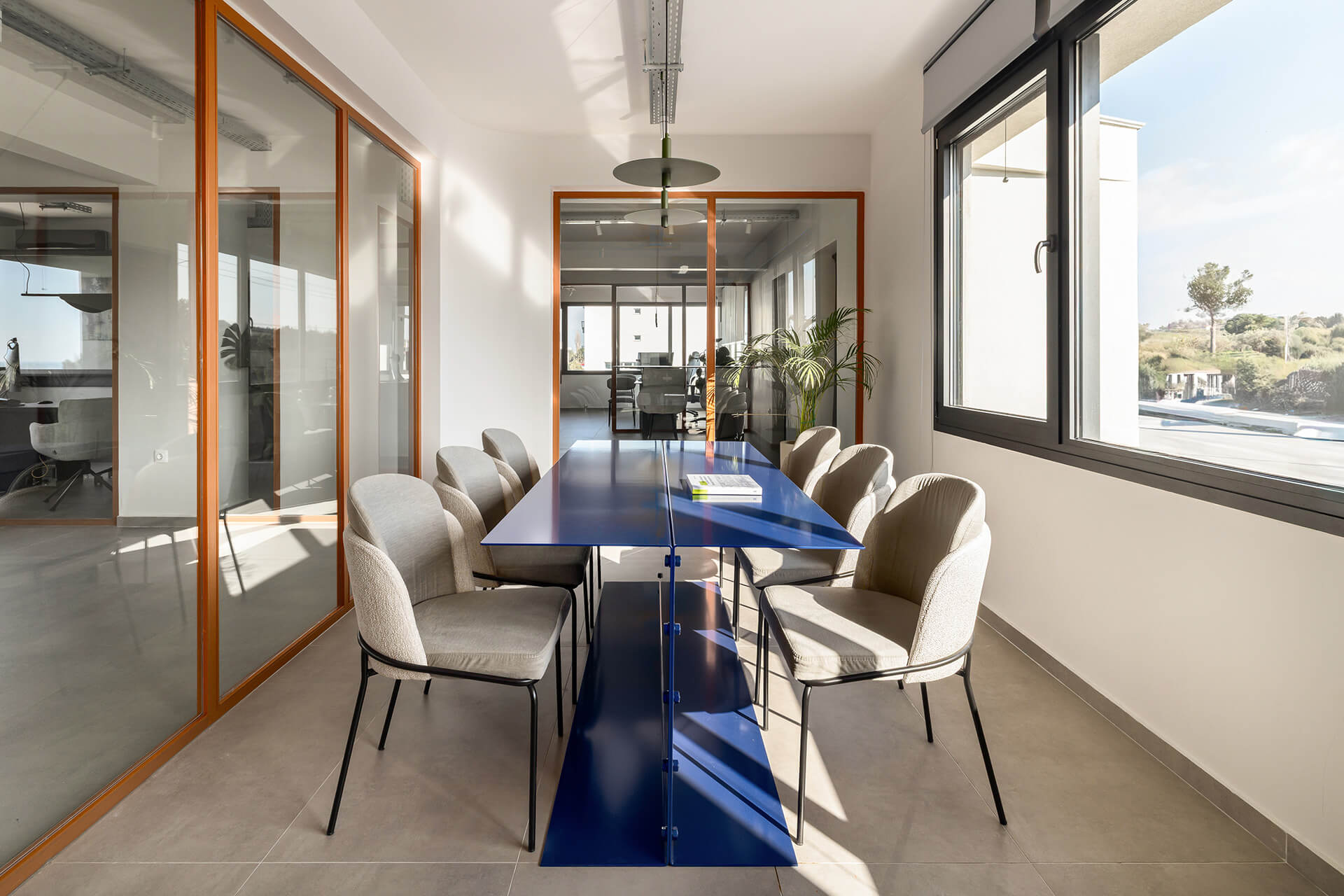
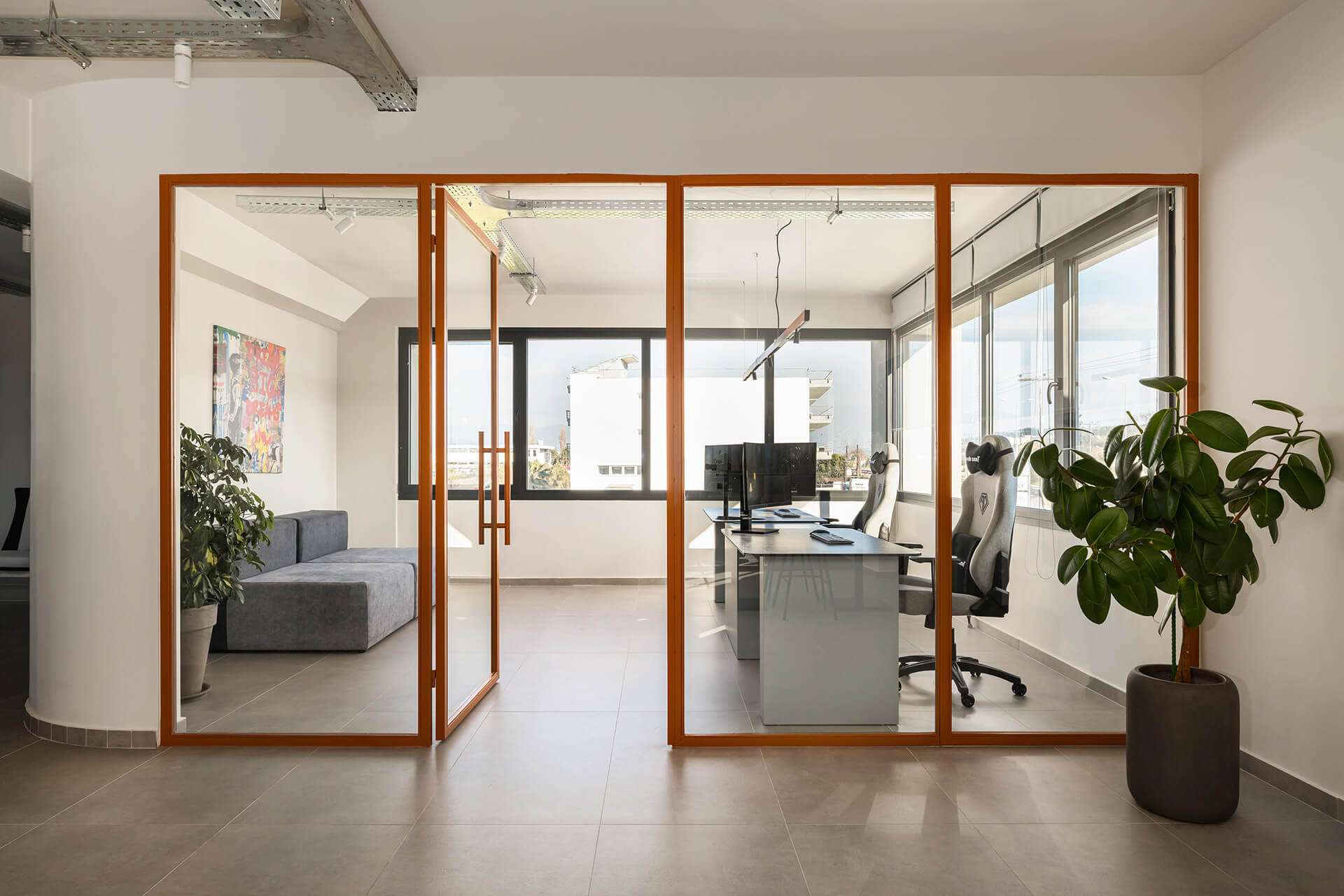
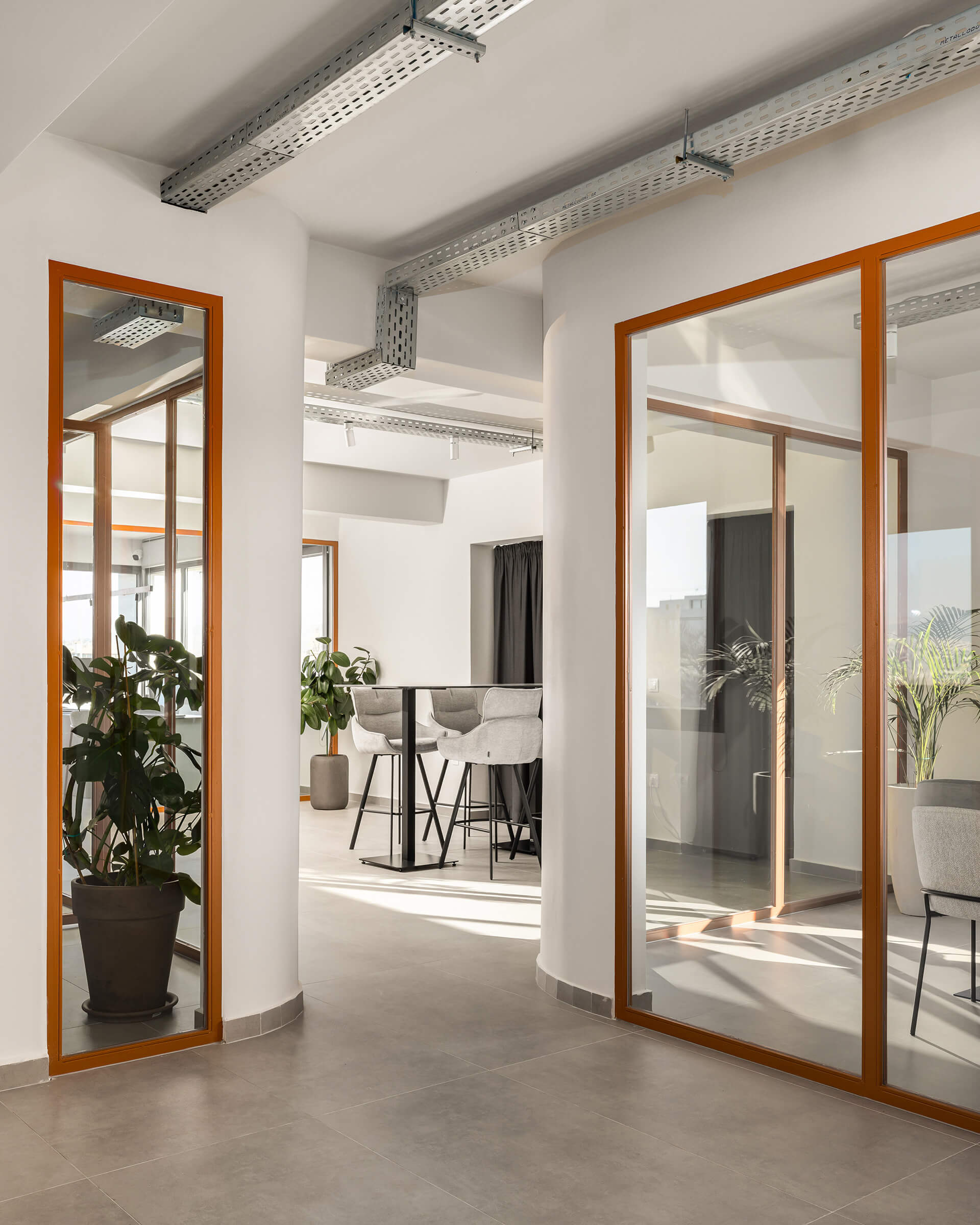
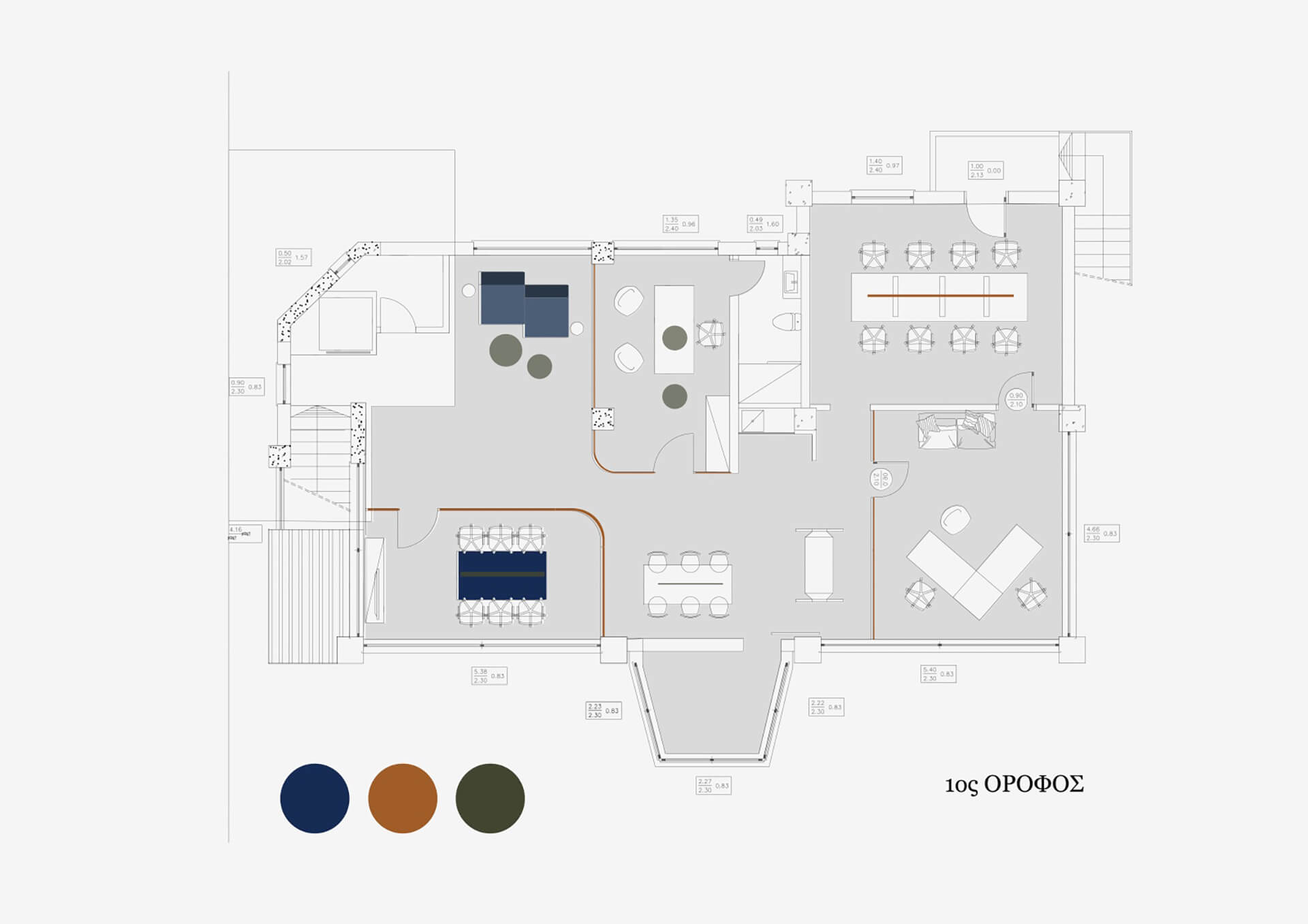
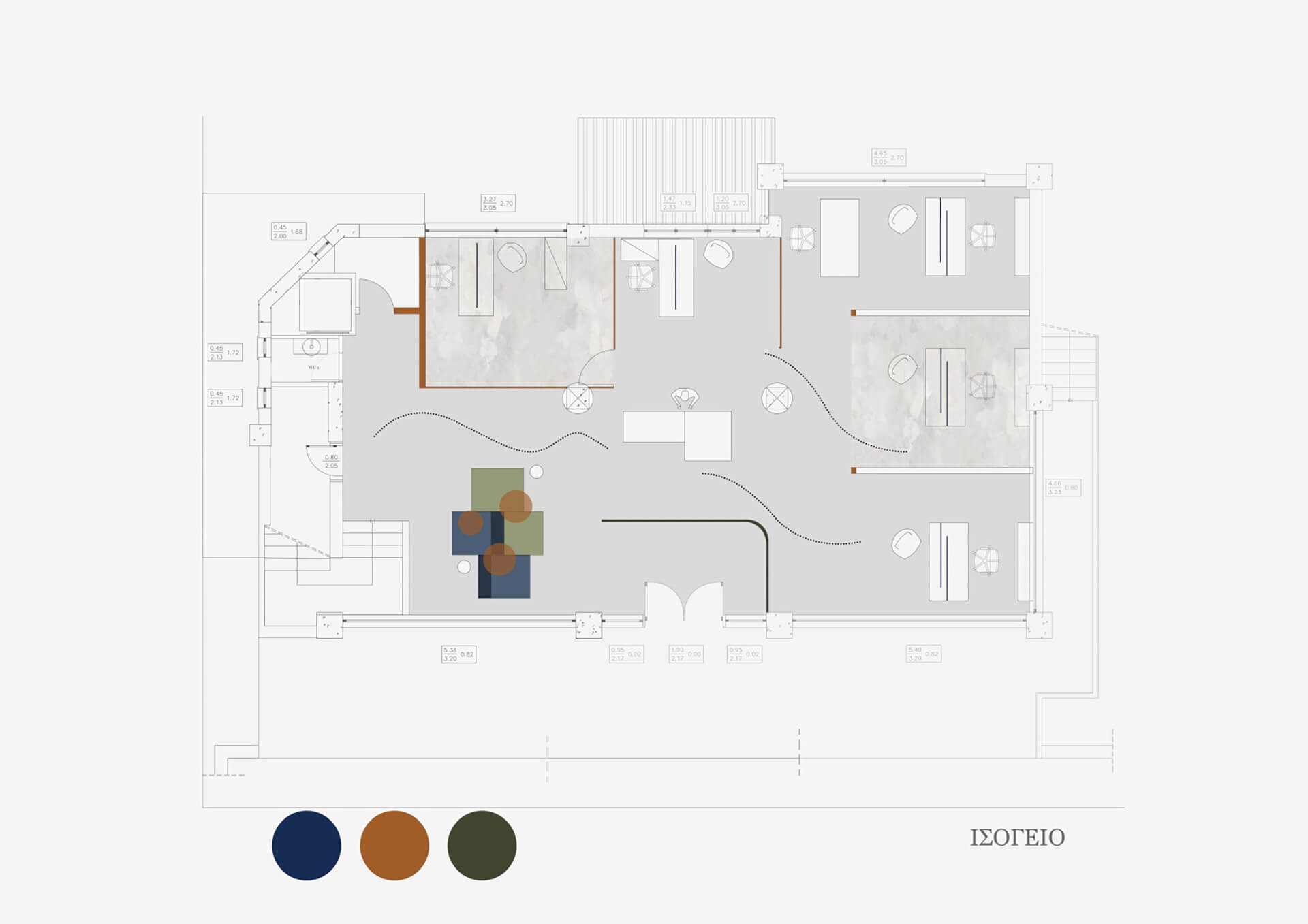
The interior design of a 300 m² office space for an insurance company is conceived as a study in transparency, spatial continuity and organizational clarity. The proposal introduces the notion of the “capsule” as a primary morphological and functional device, structuring the workplace through a series of transparent volumes that articulate the program while preserving a continuous visual field throughout the interior.
Spatial Organization
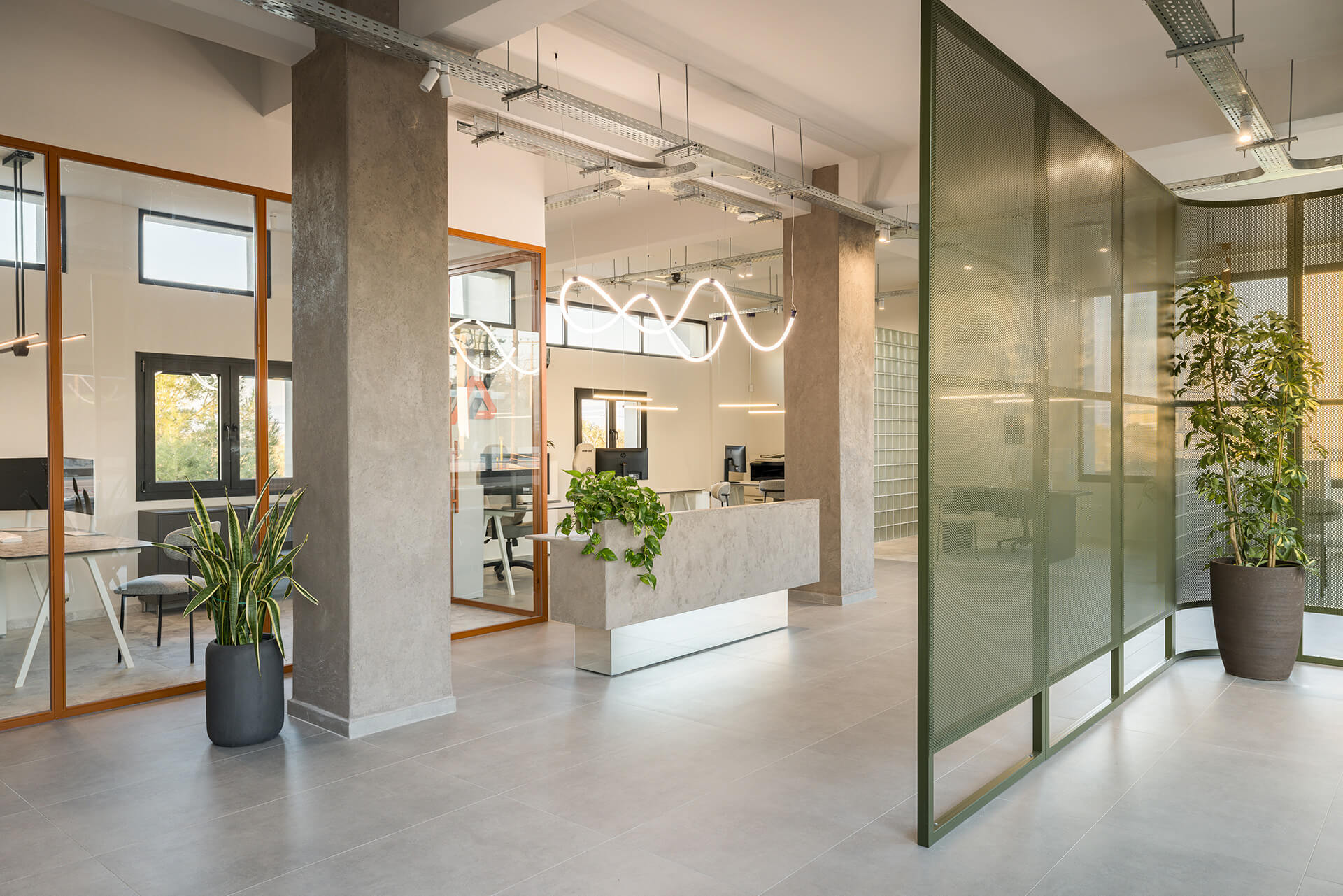
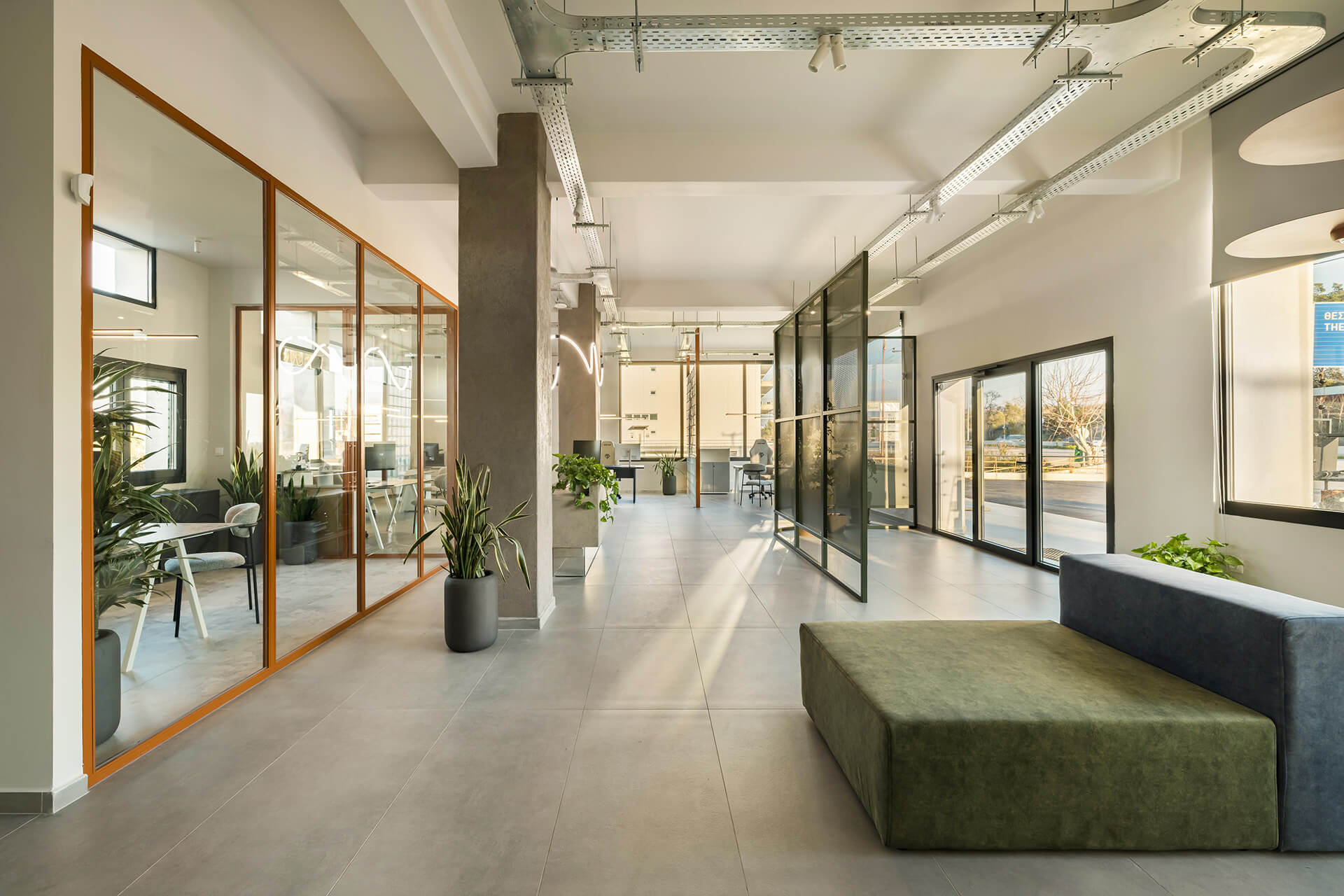
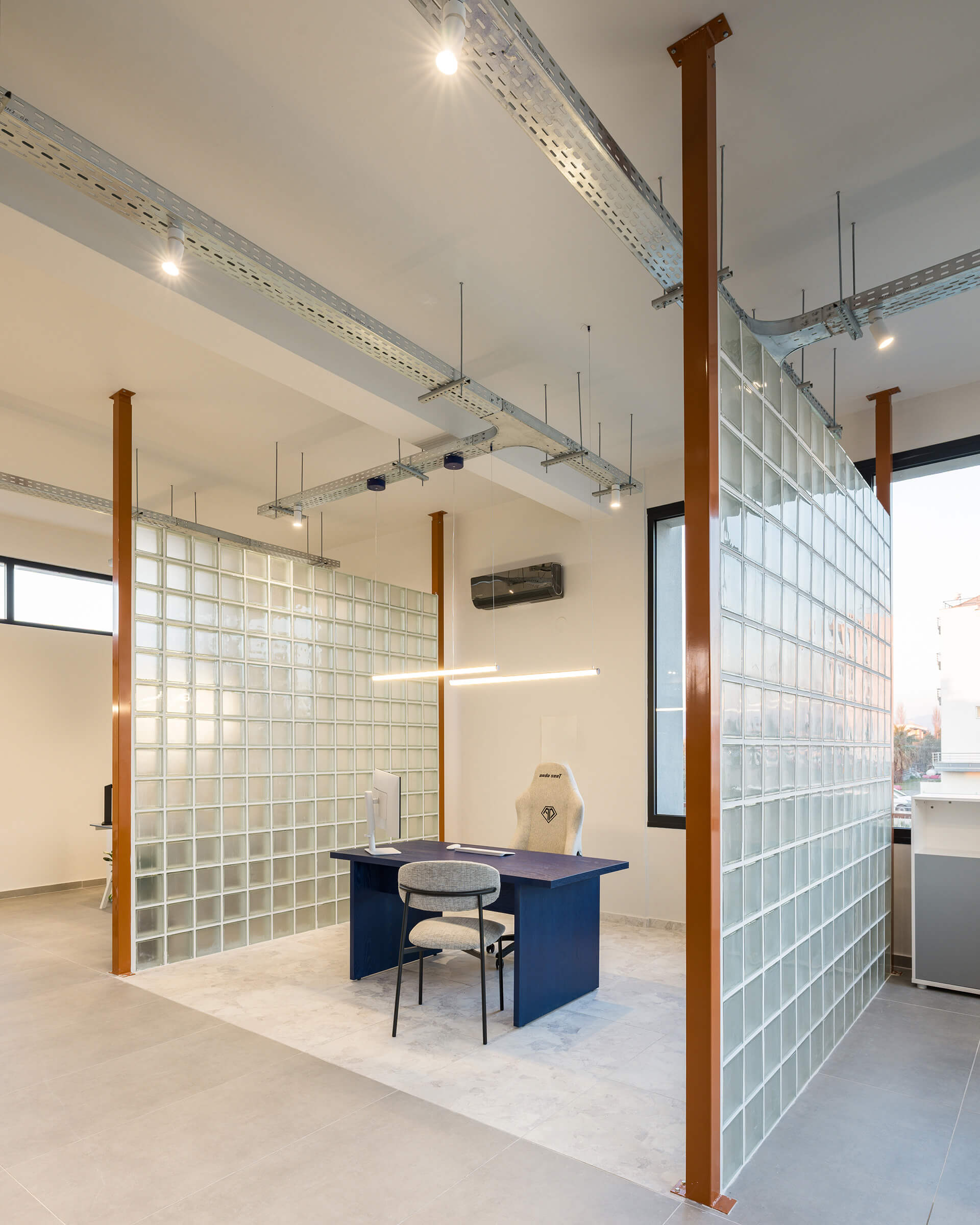
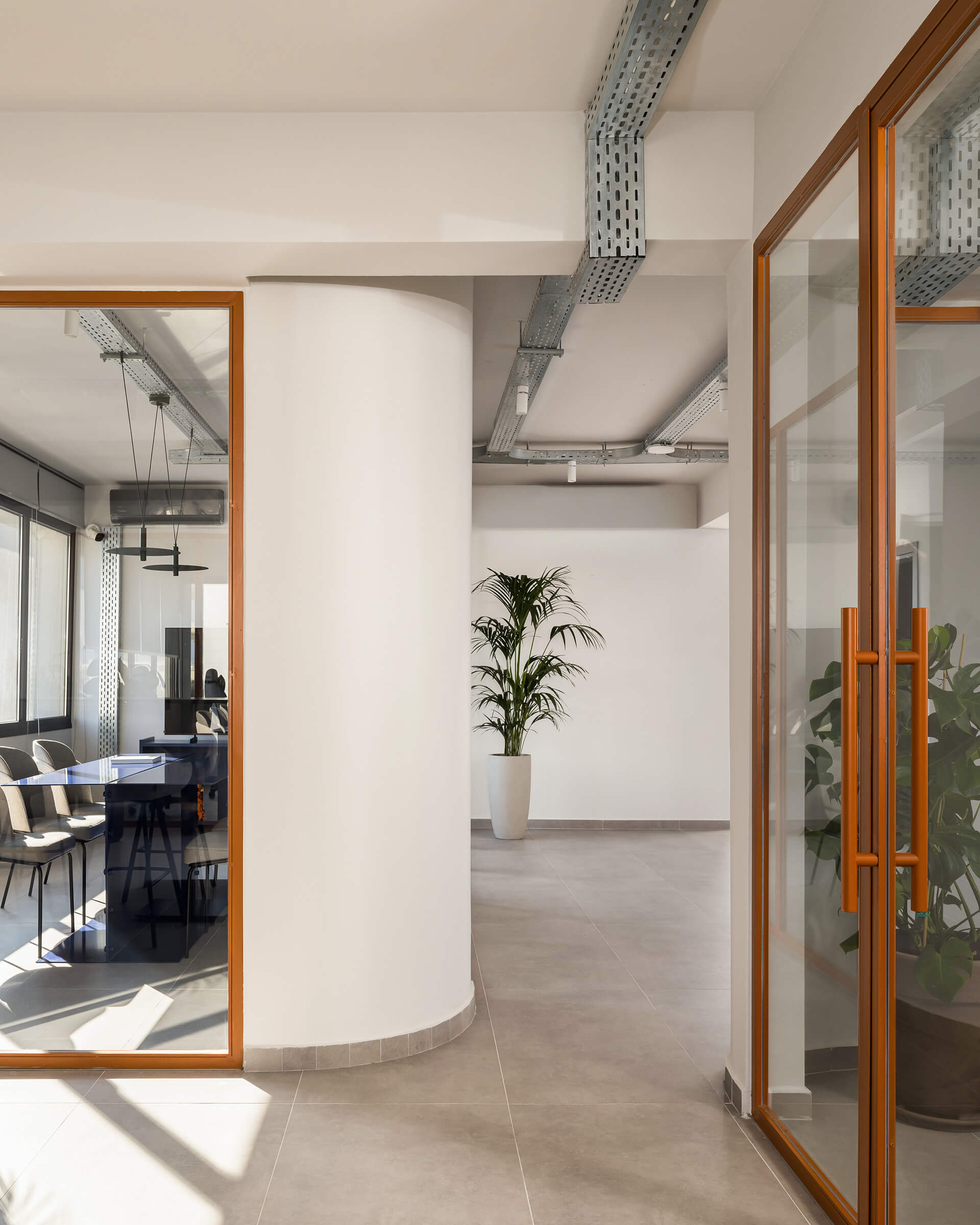
Departing from conventional enclosed office typologies, the design employs glass volumes to accommodate private functions such as meeting rooms and executive offices. These “capsules” operate as lightweight architectural insertions within the open-plan layout, allowing natural light to permeate the entirety of the space while maintaining visual connections across departments. The workspace is thus conceived as a unified environment, where boundaries remain legible yet non-restrictive, supporting both collaboration and autonomy.
Material Palette
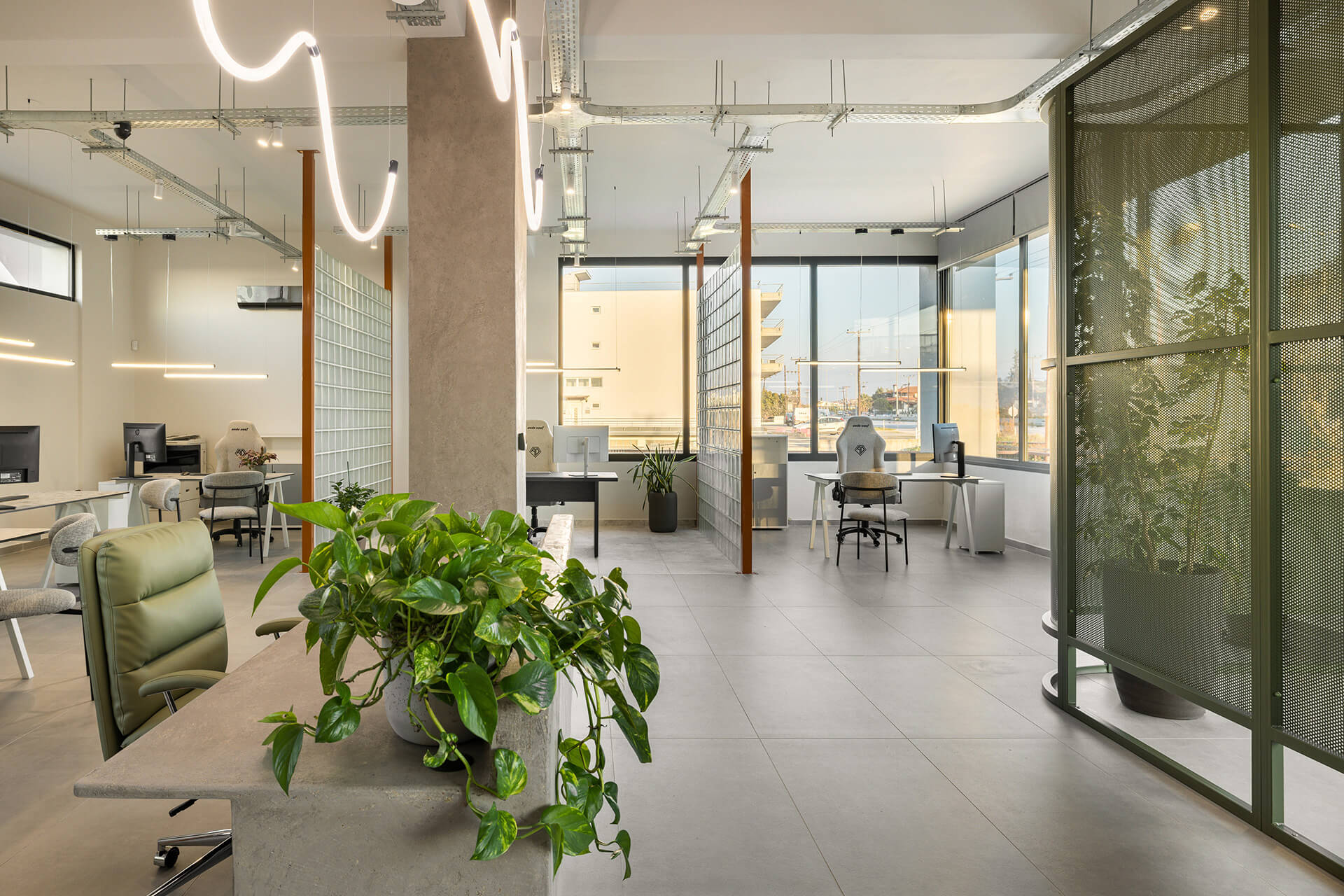
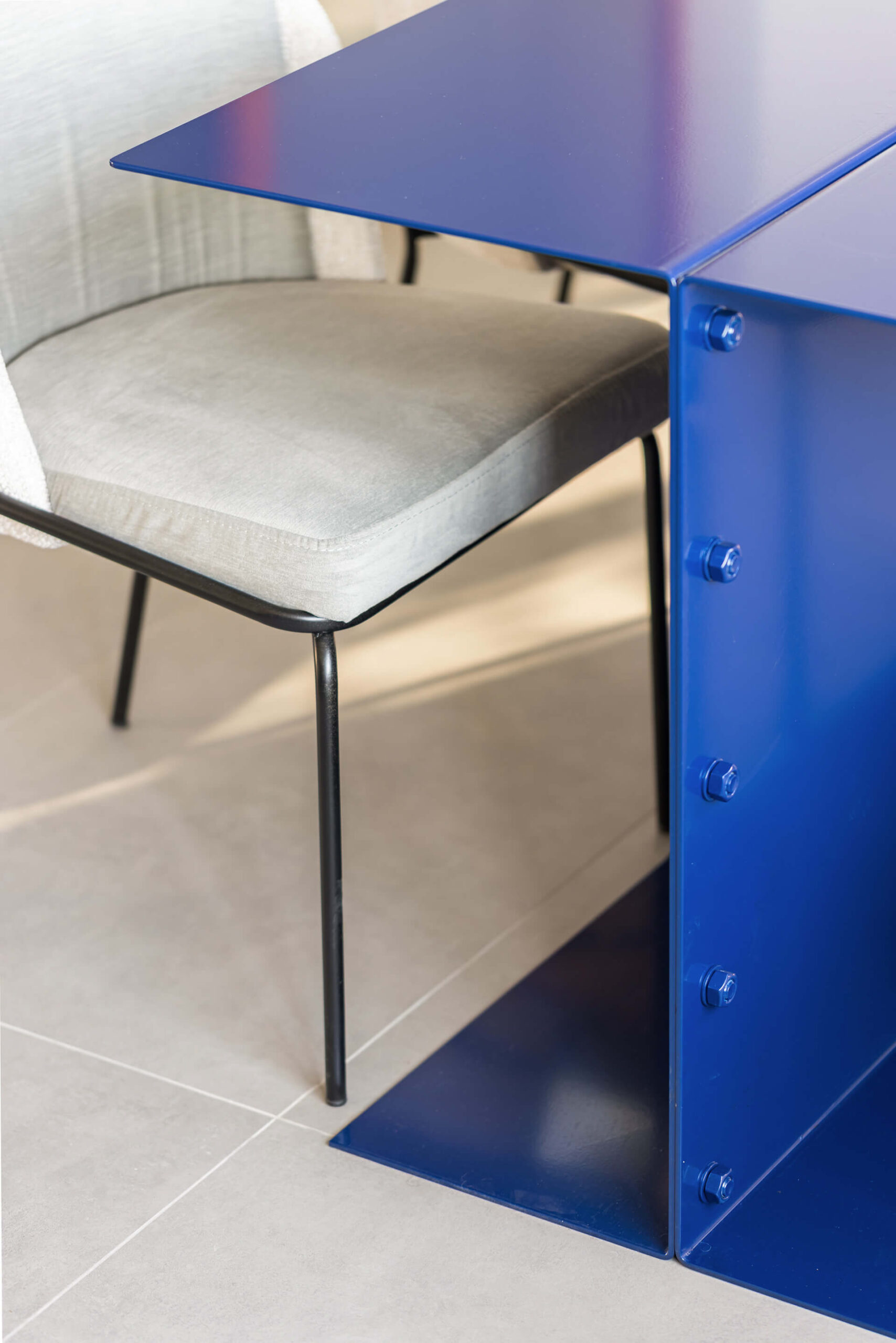
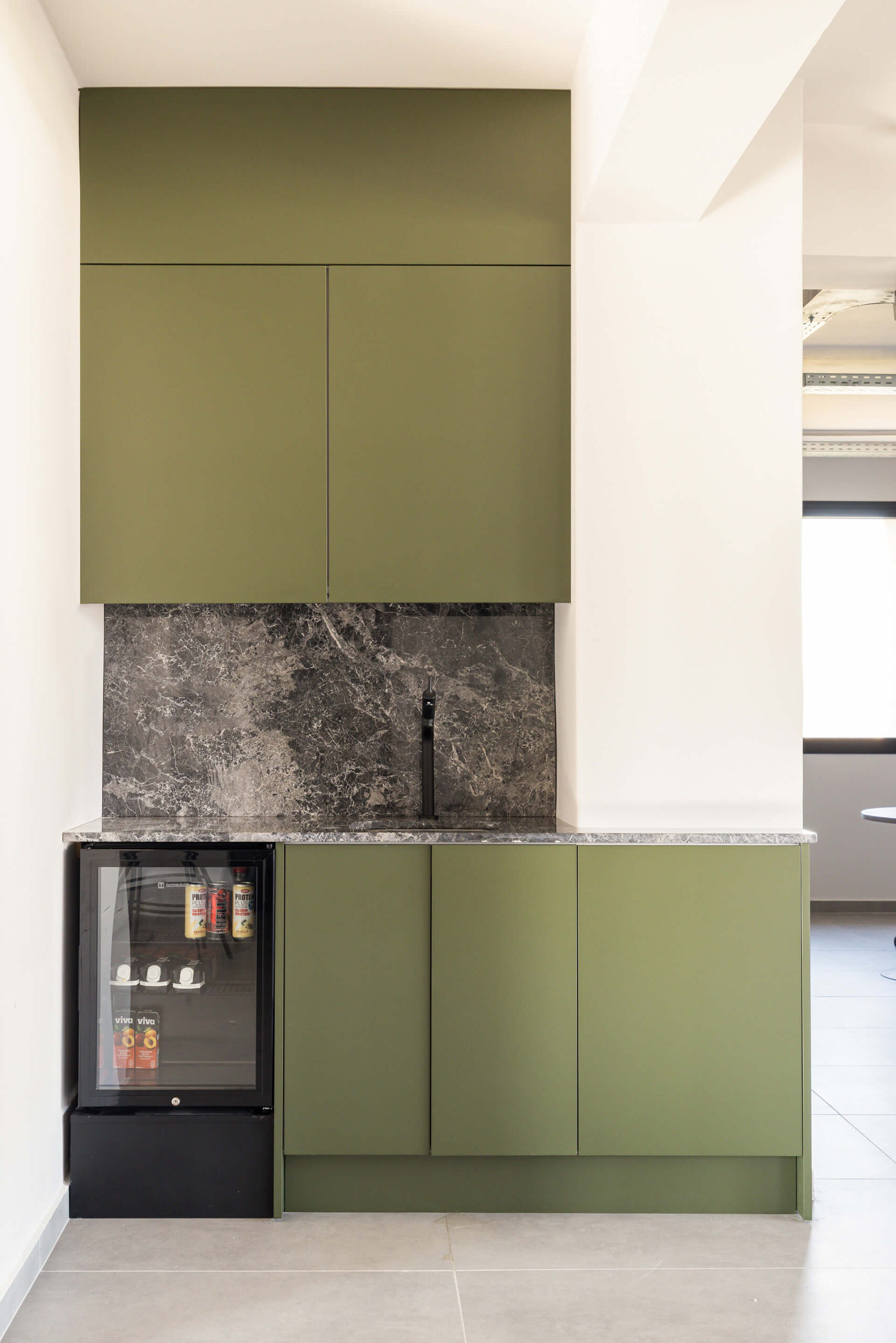
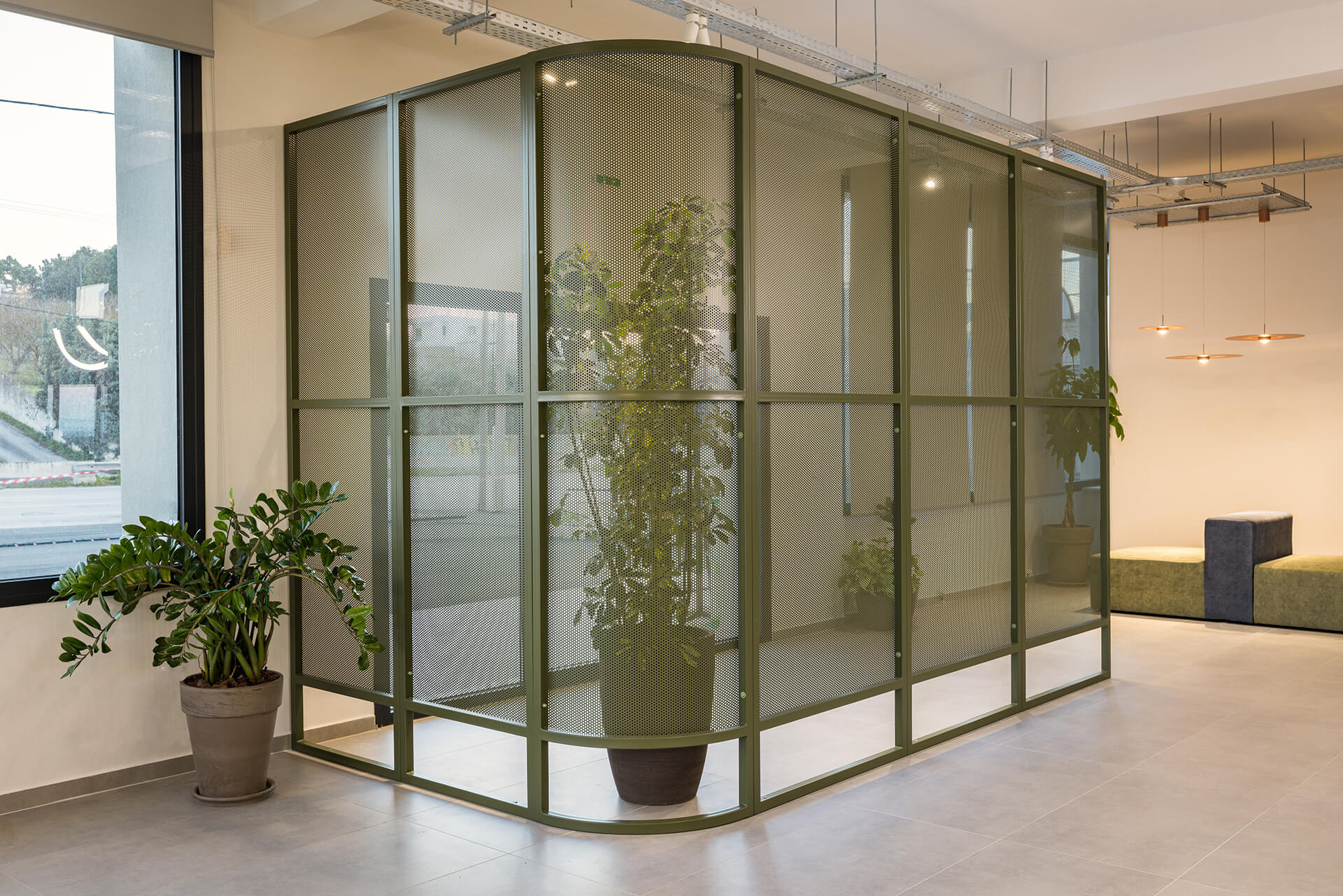
Materiality plays a decisive role in shaping the atmosphere of the interior. Exposed cable trays mounted on metal rails, perforated metal panels and glass block partitions foreground the infrastructural and technical dimension of the workspace. In contrast, neutral surfaces introduce a layer of warmth and balance, establishing a dialogue between industrial expression and a more domestic sensibility. This juxtaposition produces a spatial identity that is both precise and inviting.
Lighting Design
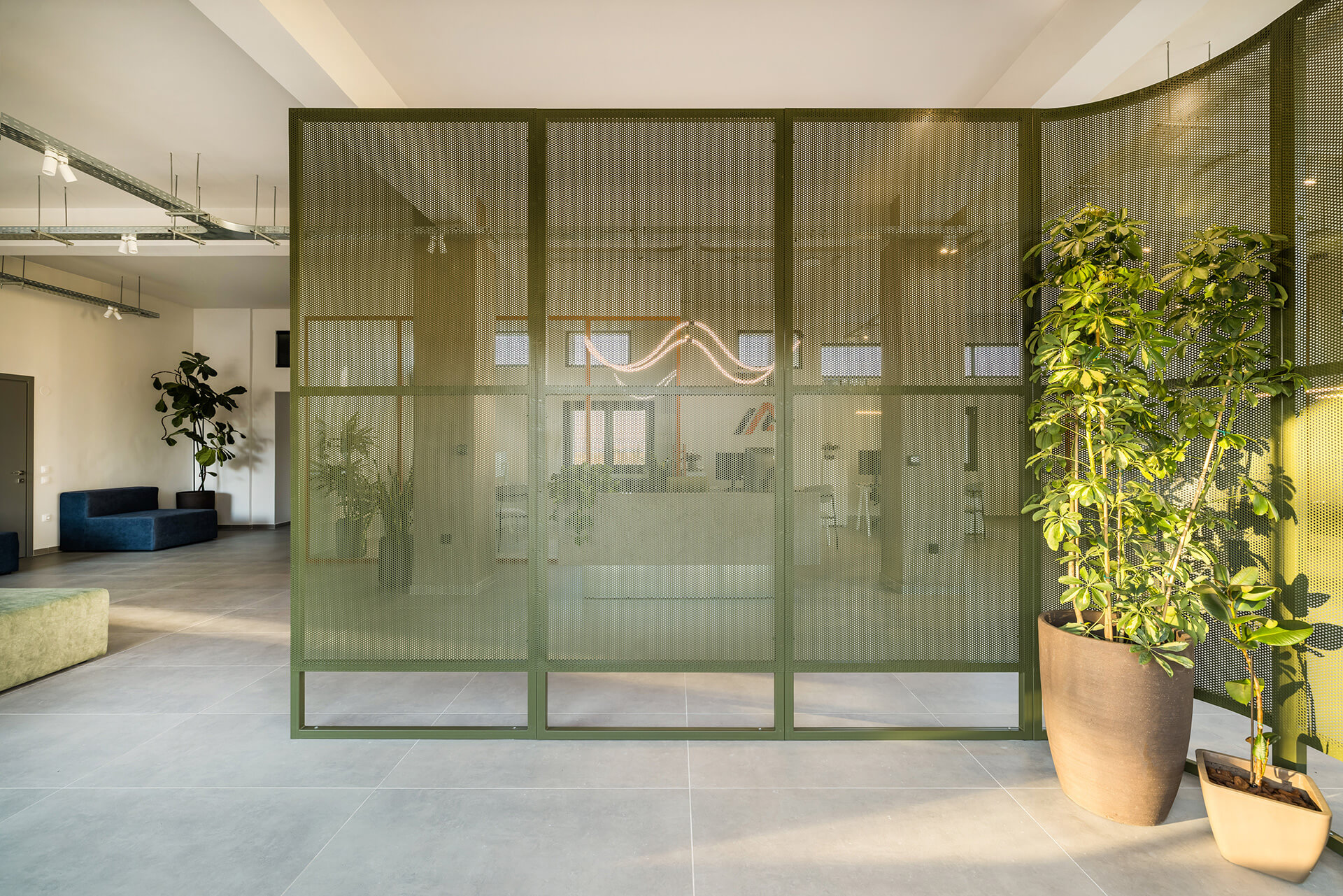
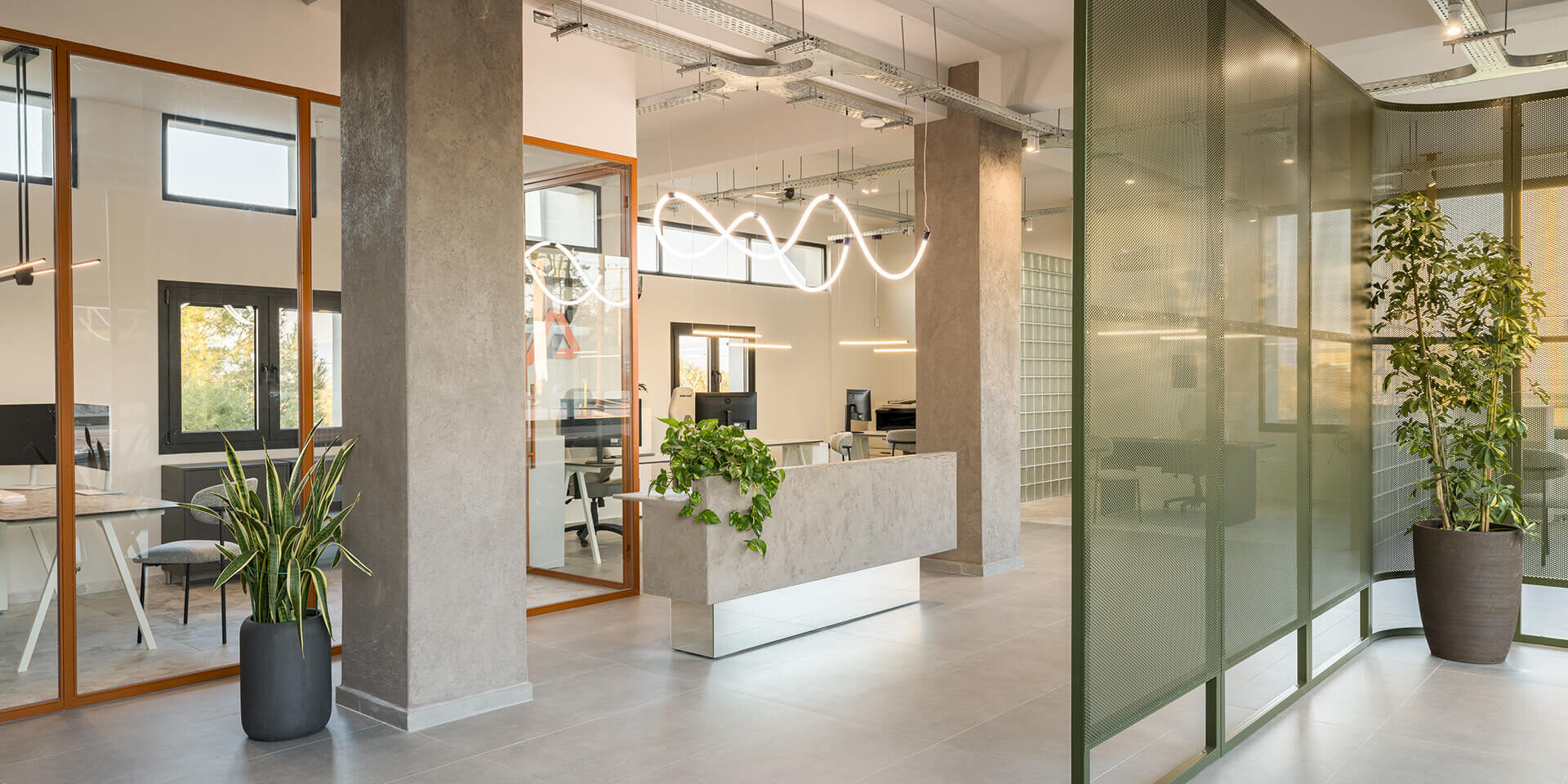
In the entrance, a large-scale perforated metal screen defines the first spatial threshold. Acting as a semi-transparent filter, it subtly delineates the reception area while maintaining visual permeability toward the open workspace beyond. Light and movement diffuse through its perforated surface, enabling a gradual transition from the entrance zone into the interior.
Lighting design further reinforces the spatial reading of the project. Linear fixtures trace the primary axes of circulation, while sculptural and directional lighting elements accentuate specific zones of work and interaction. Combined with the abundant daylight entering through large openings, the lighting strategy enhances the rhythm, depth and clarity of the interior environment.
The resulting workspace is defined by openness, adaptability and a coherent spatial language. Through the interplay of transparency, material contrasts and light, the project fosters a dynamic environment that encourages collaboration while accommodating moments of concentration and privacy within a unified architectural framework.