Pouilly | Suspended House in the Vexin, France
Architecture:
Photography:
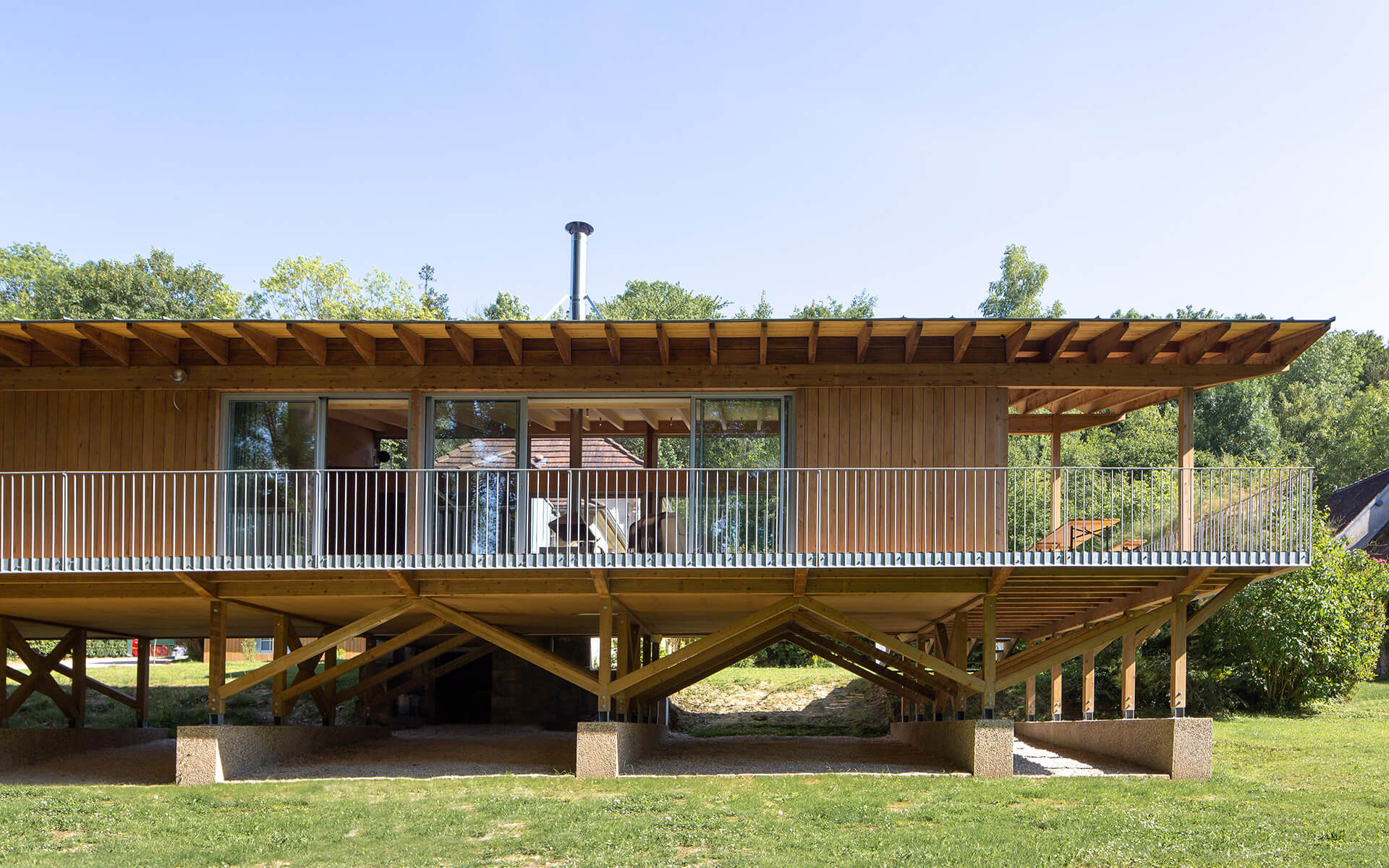
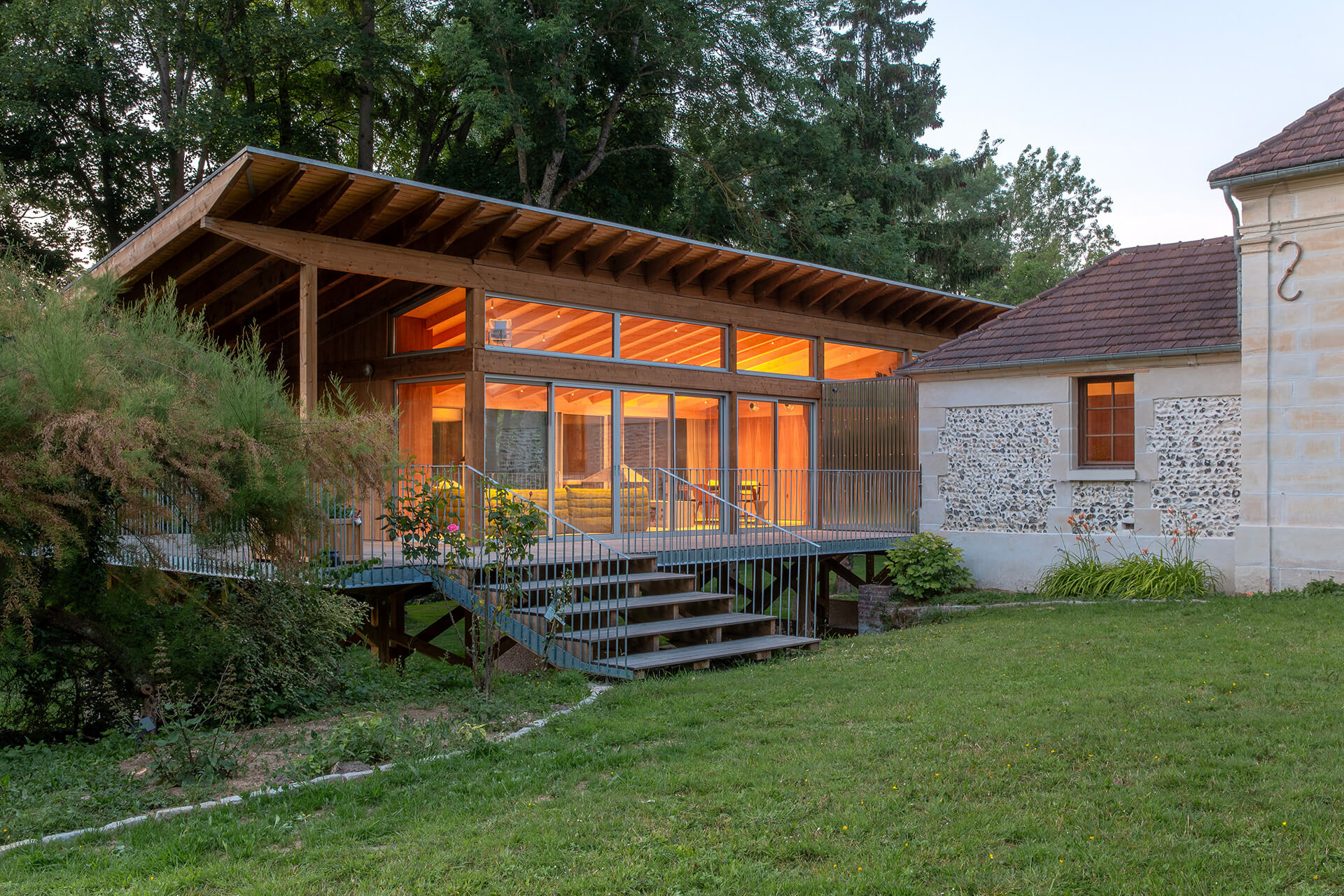
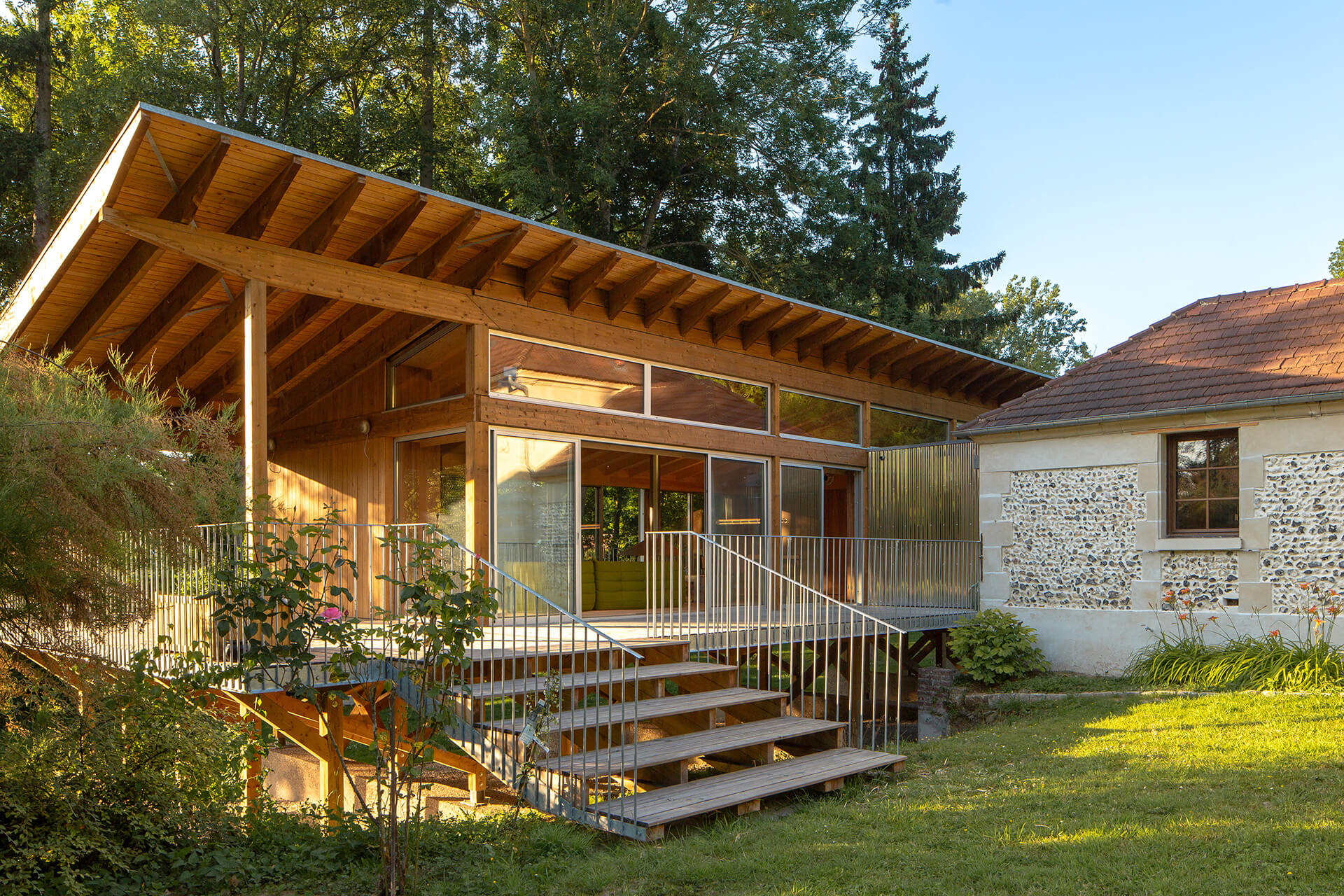
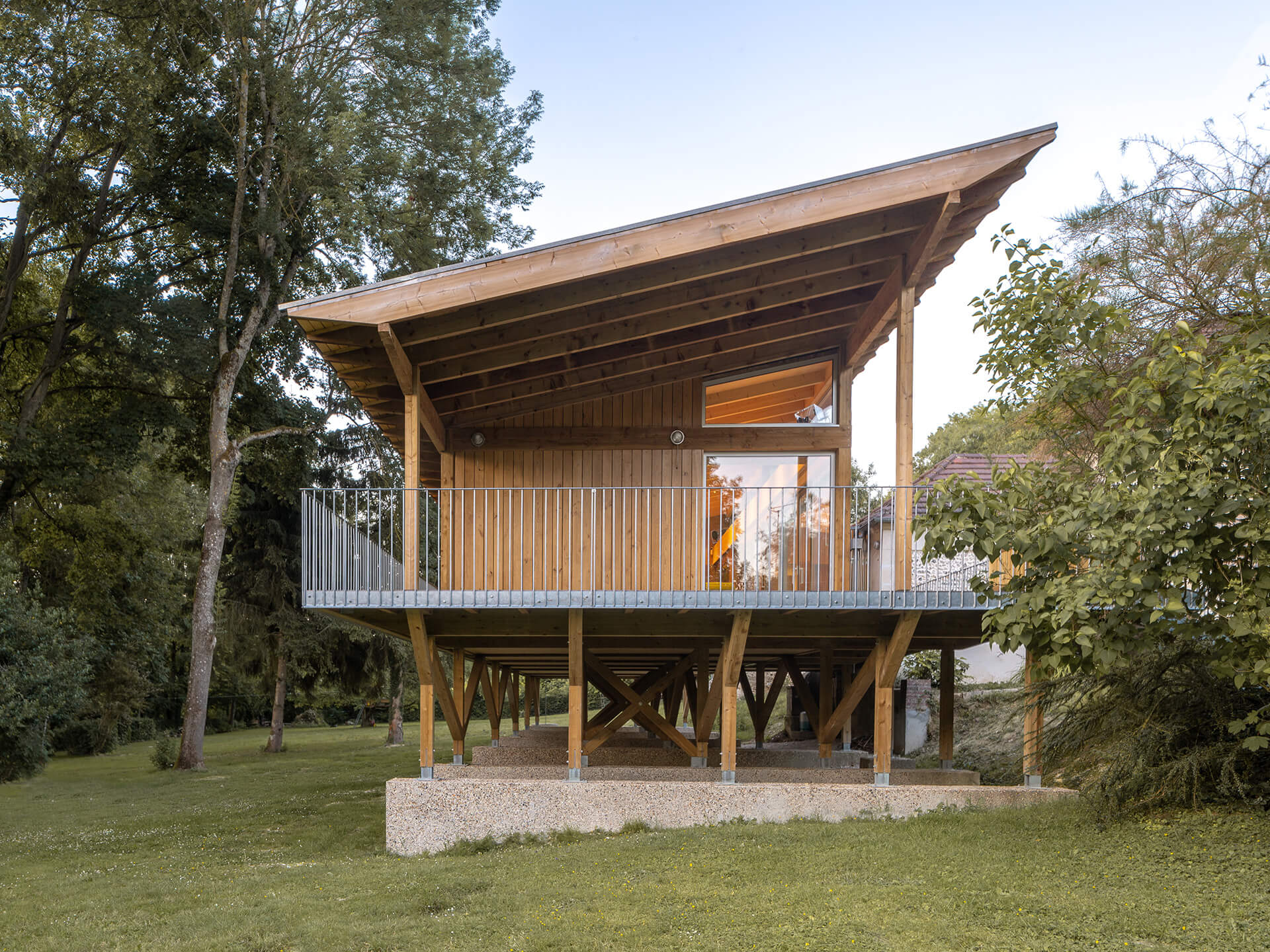
Set within a valley at the foot of a wooded hillside, the house is embedded in a landscape often veiled in shadow, protected by both slope and vegetation. The project emerges from this chiaroscuro condition, proposing the restoration of the original structure alongside the addition of a suspended extension – an intervention defined by lightness, openness and a renewed relationship with the surrounding environment.
Restoration Strategy
The existing building, a construction of notable character, has been carefully restored through a process of subtraction rather than transformation. Interior partitions and superfluous finishes were removed, allowing the spatial continuity to re-emerge while revealing the integrity of the original timber framework. Plaster coatings were stripped away, exposing the tactile qualities of stone and embedded flint, while existing shutters were cleaned and reinstated.
This approach reestablishes the house’s primary material expression and reinforces its anchoring within the Vexin landscape. The architecture does not impose a new identity but instead clarifies and amplifies what was already present, allowing the structure to reconnect with its historical and material context.
Design Philosophy
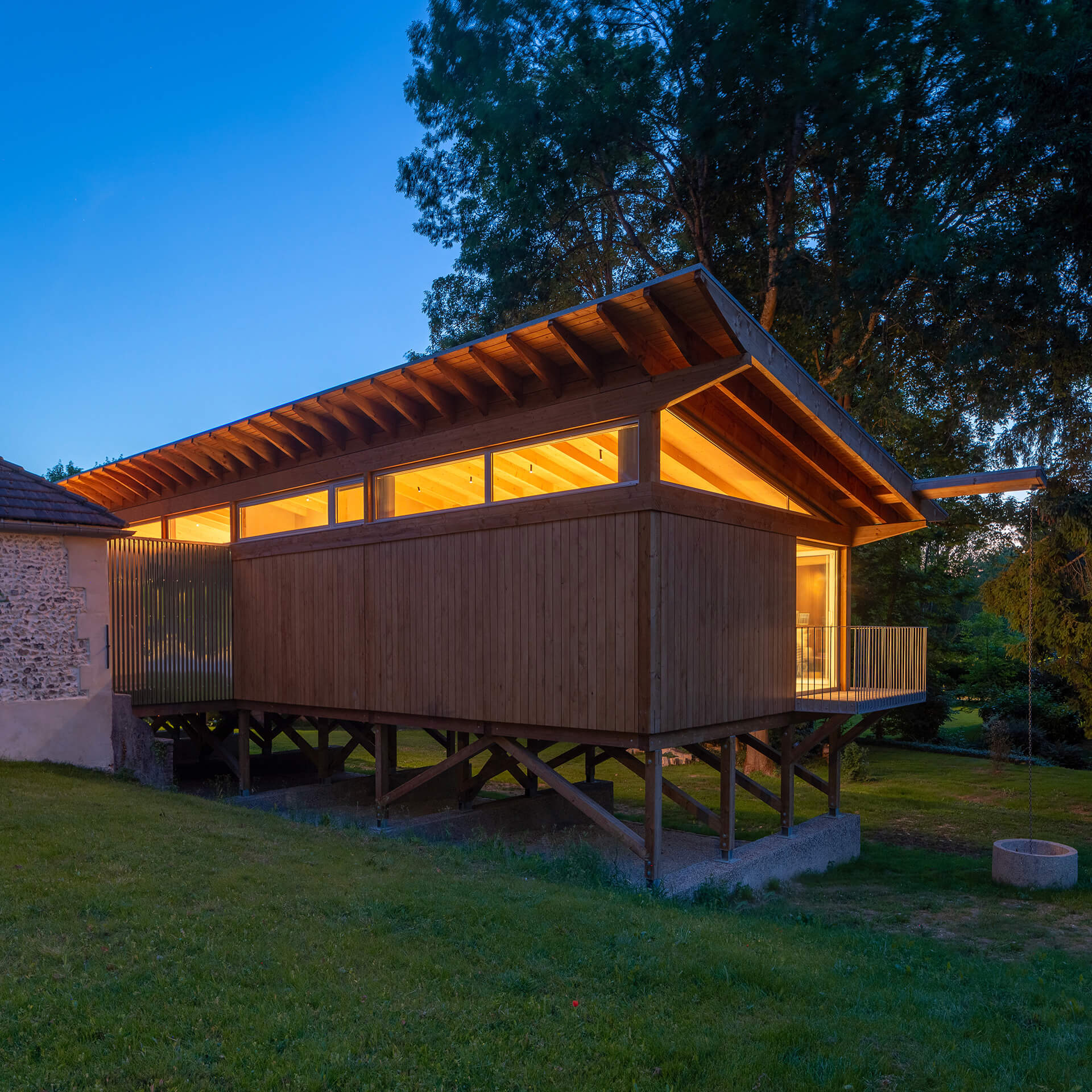
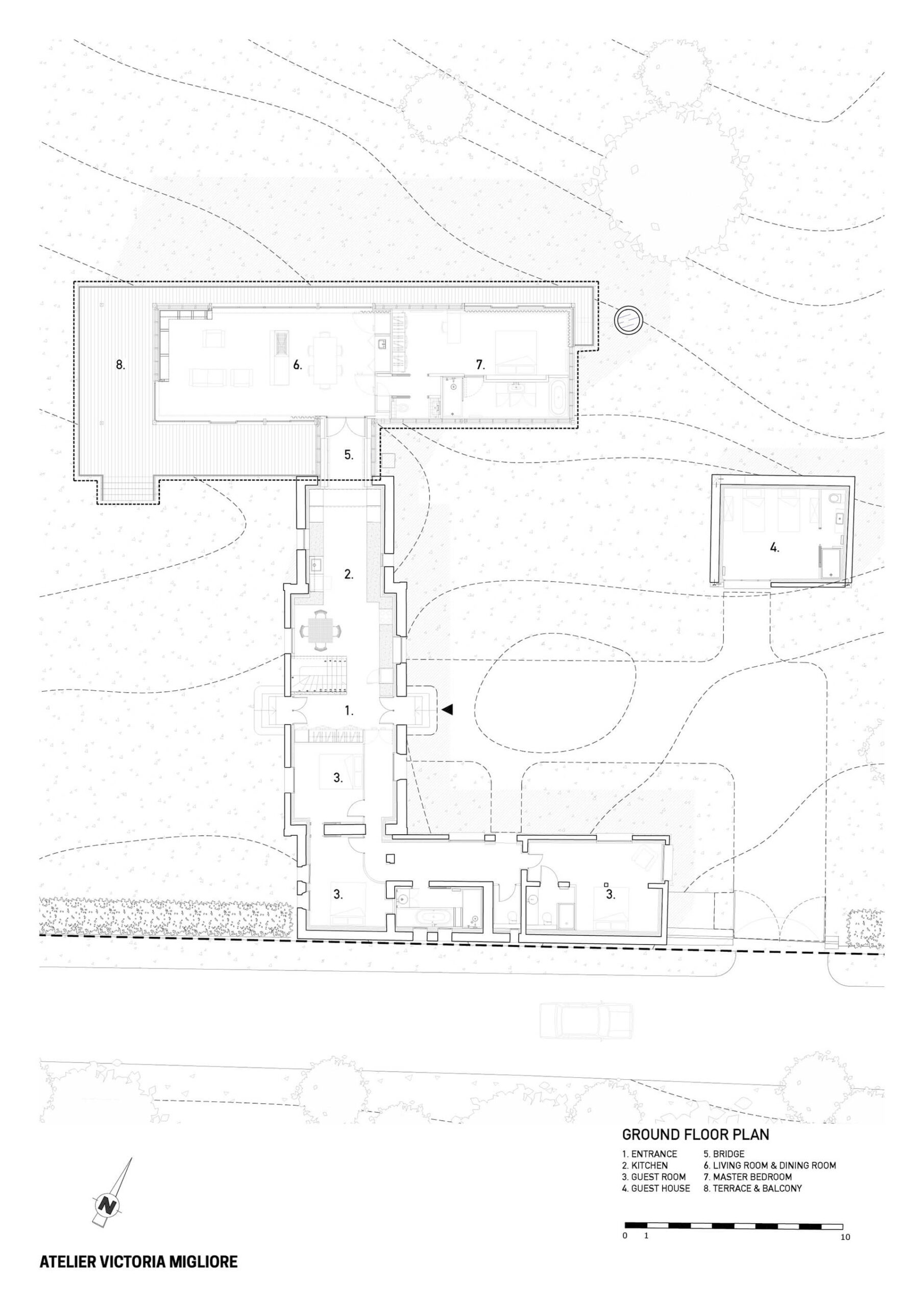
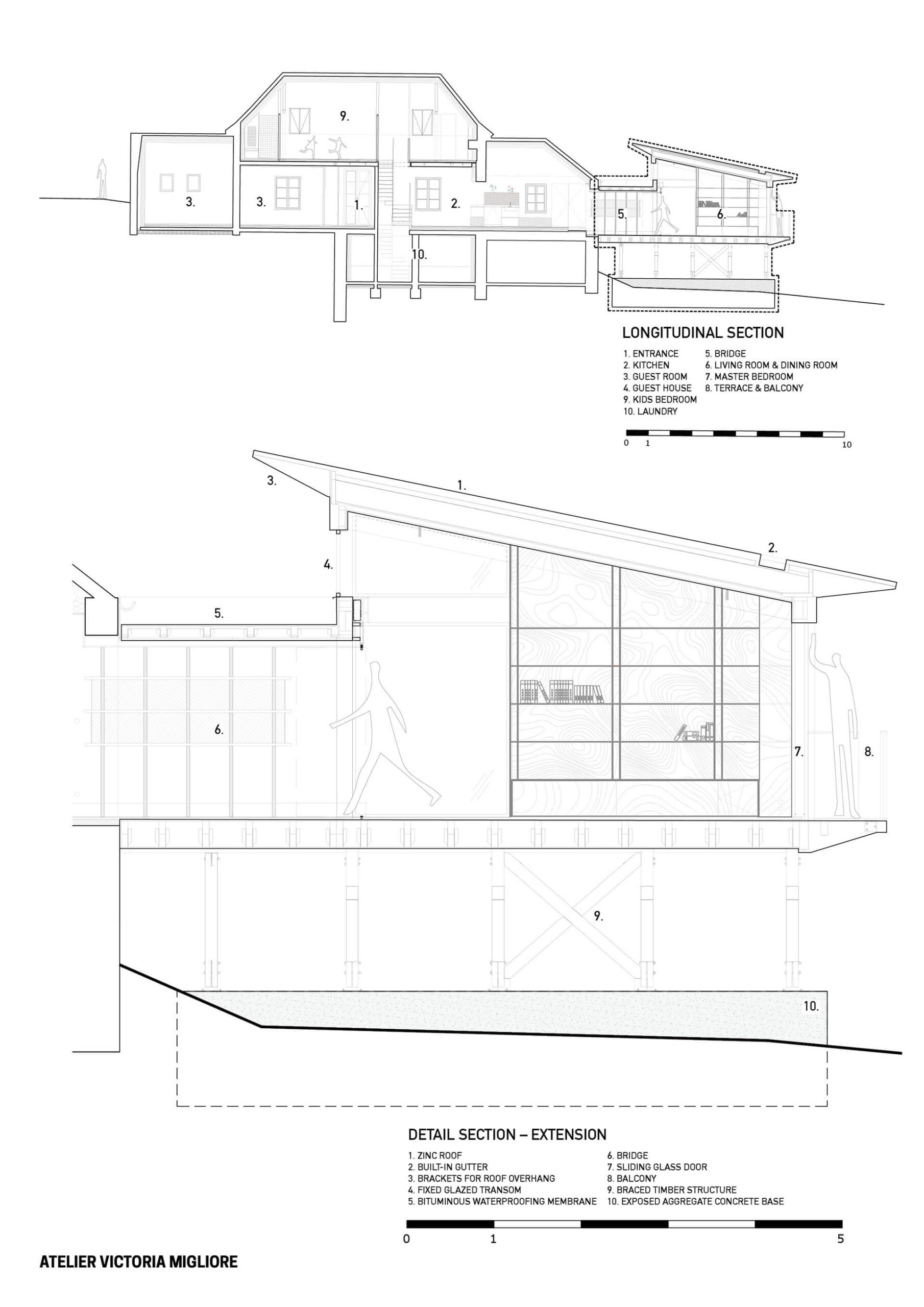
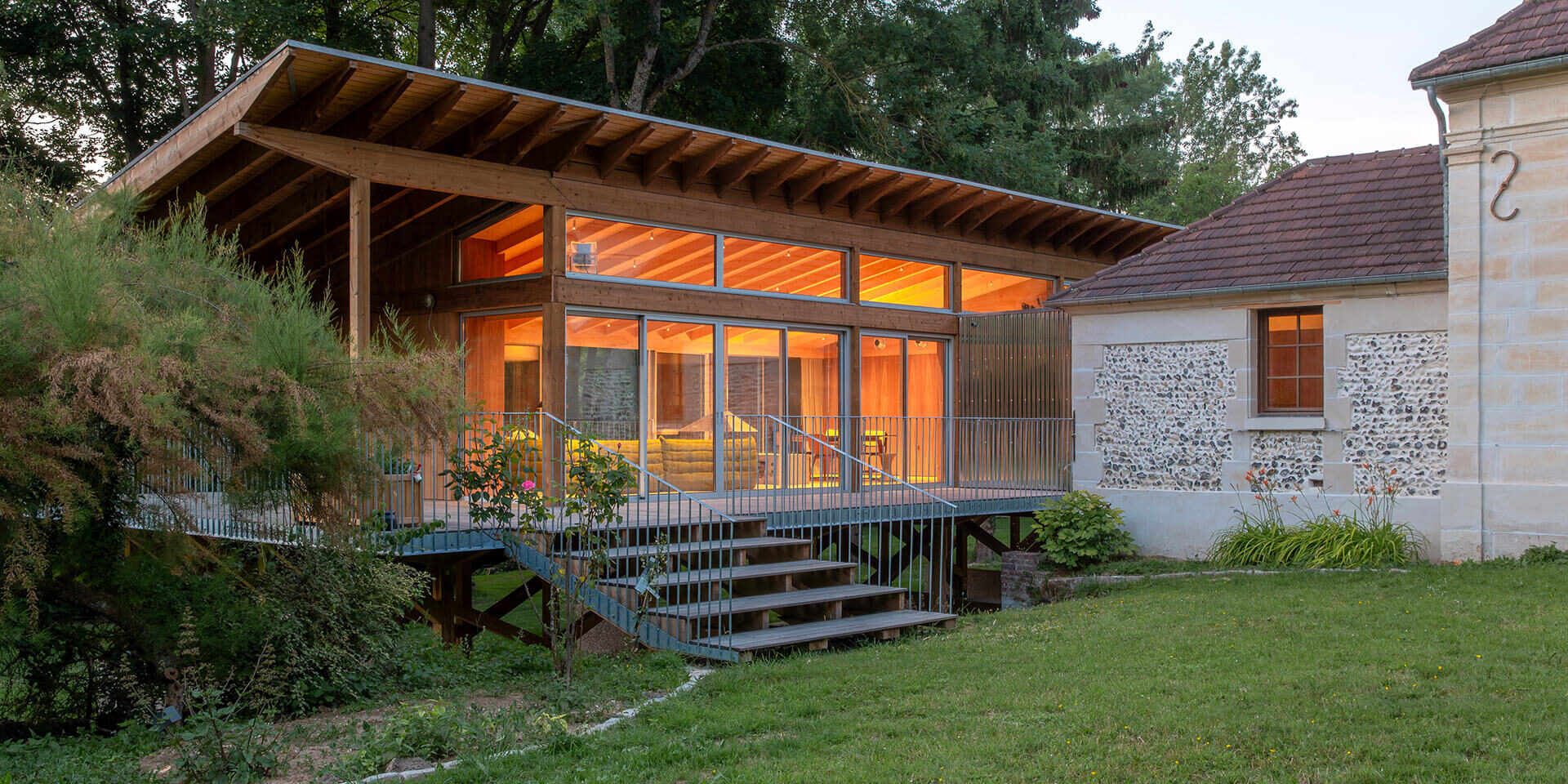
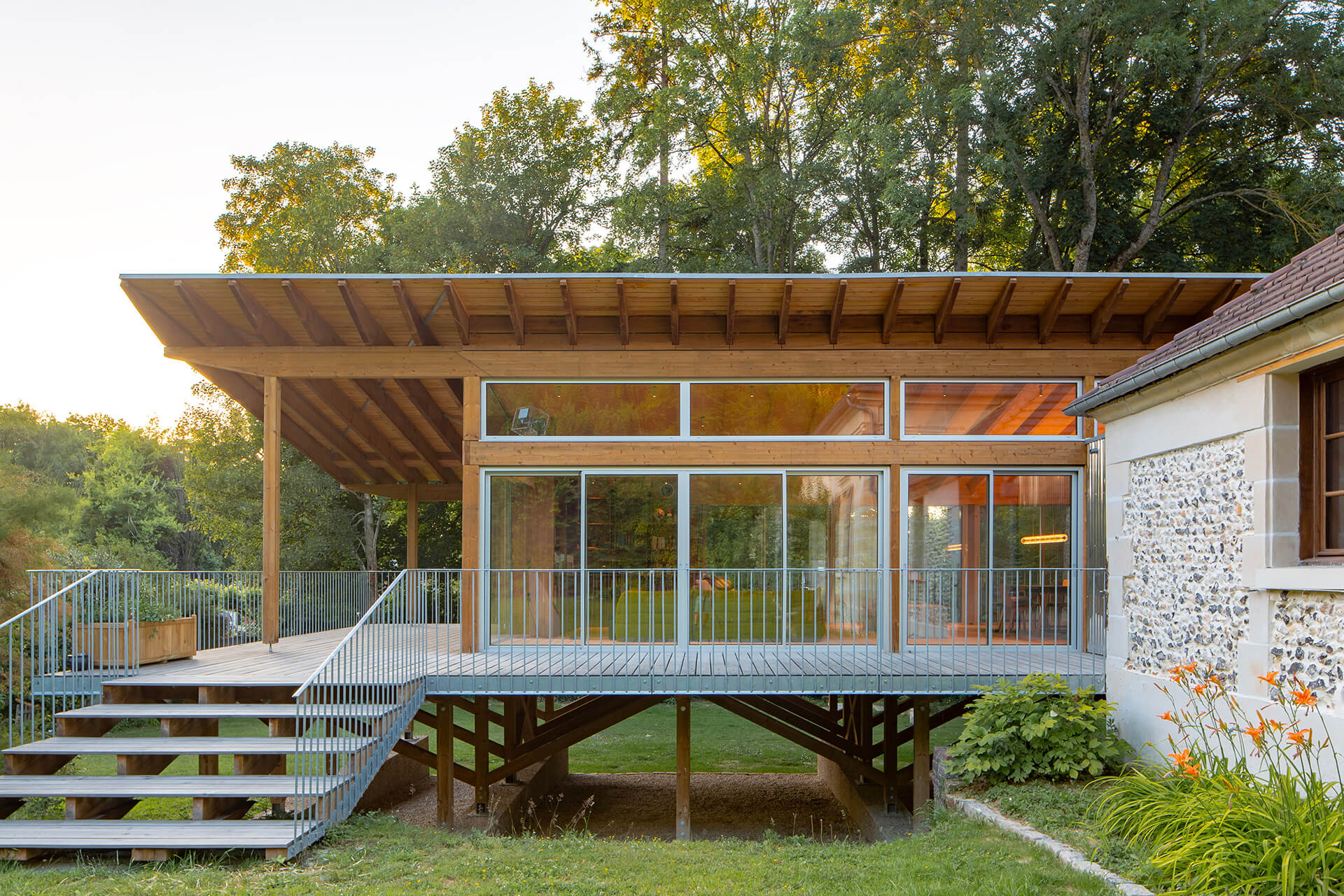
In contrast to the grounded, mineral presence of the original volume, the extension adopts a distinctly lighter architectural language. Positioned perpendicular to the existing structure, it extends beyond the shaded footprint to capture optimal sunlight. Elevated three meters above the natural terrain, the new volume engages directly with the slope and surrounding vegetation, establishing a dynamic spatial dialogue between ground and canopy.
A slender footbridge, constructed in wood and clad in polished stainless steel, connects the two volumes, framing views toward the forest while reflecting the sky. This transitional element reinforces the experiential sequence between old and new, shadow and light, enclosure and openness.
Material Palette & Structure
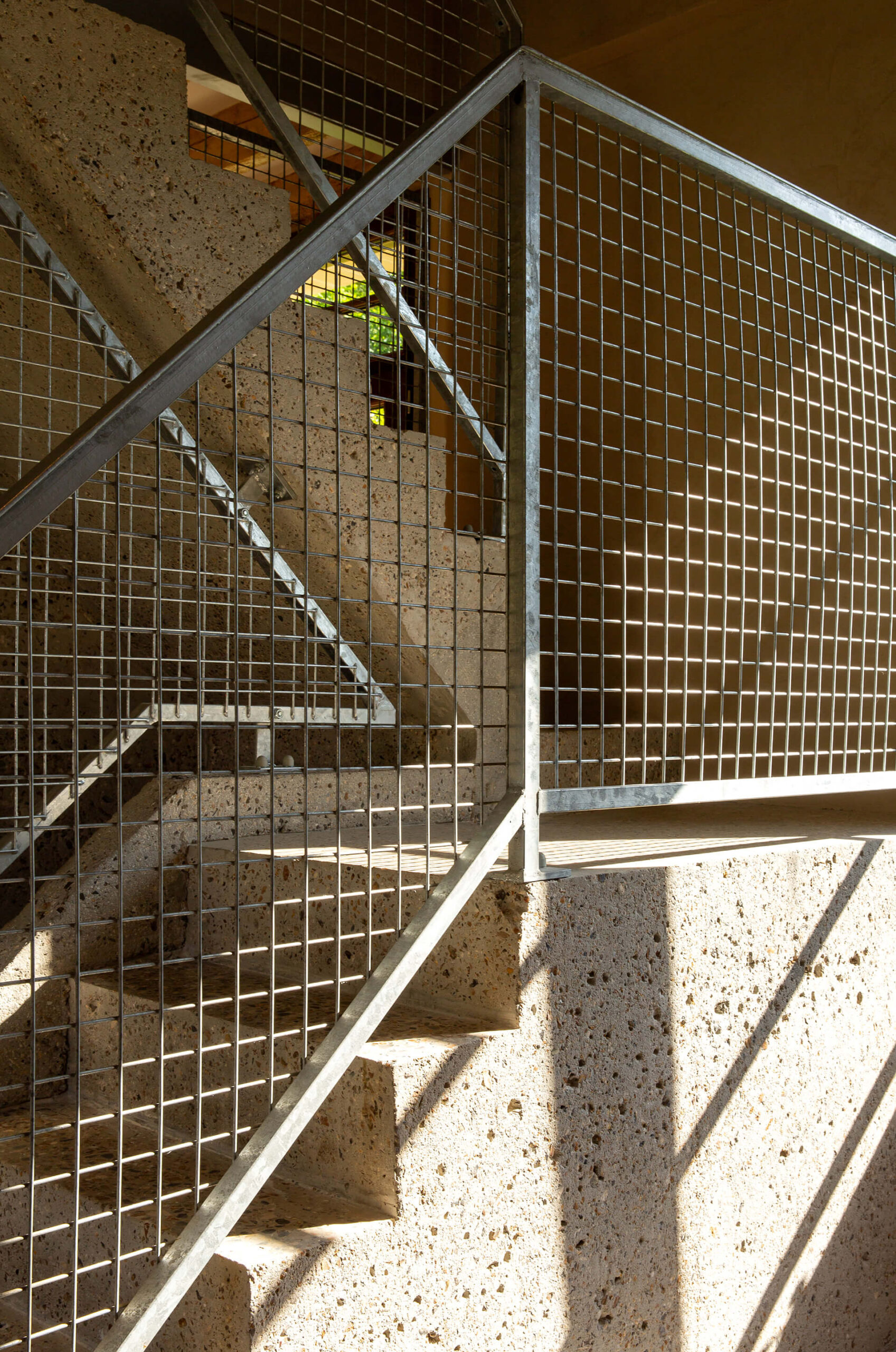
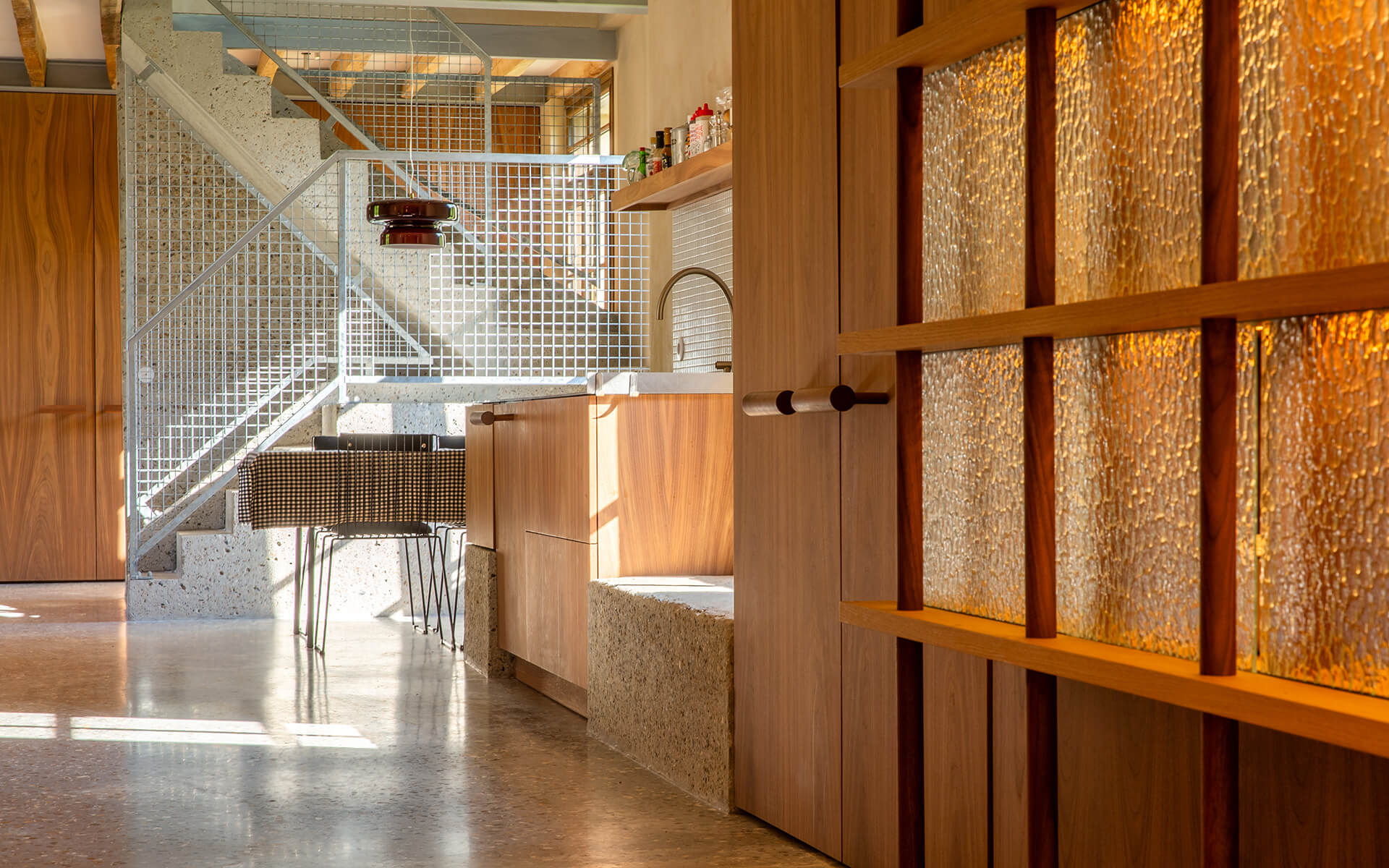
The extension is anchored by foundations of exposed aggregate concrete incorporating flint, establishing continuity with local construction methods and materials. Above this base rises a triangulated pine structure, articulated through a fine and rhythmic framework that defines the project’s light and elevated silhouette.
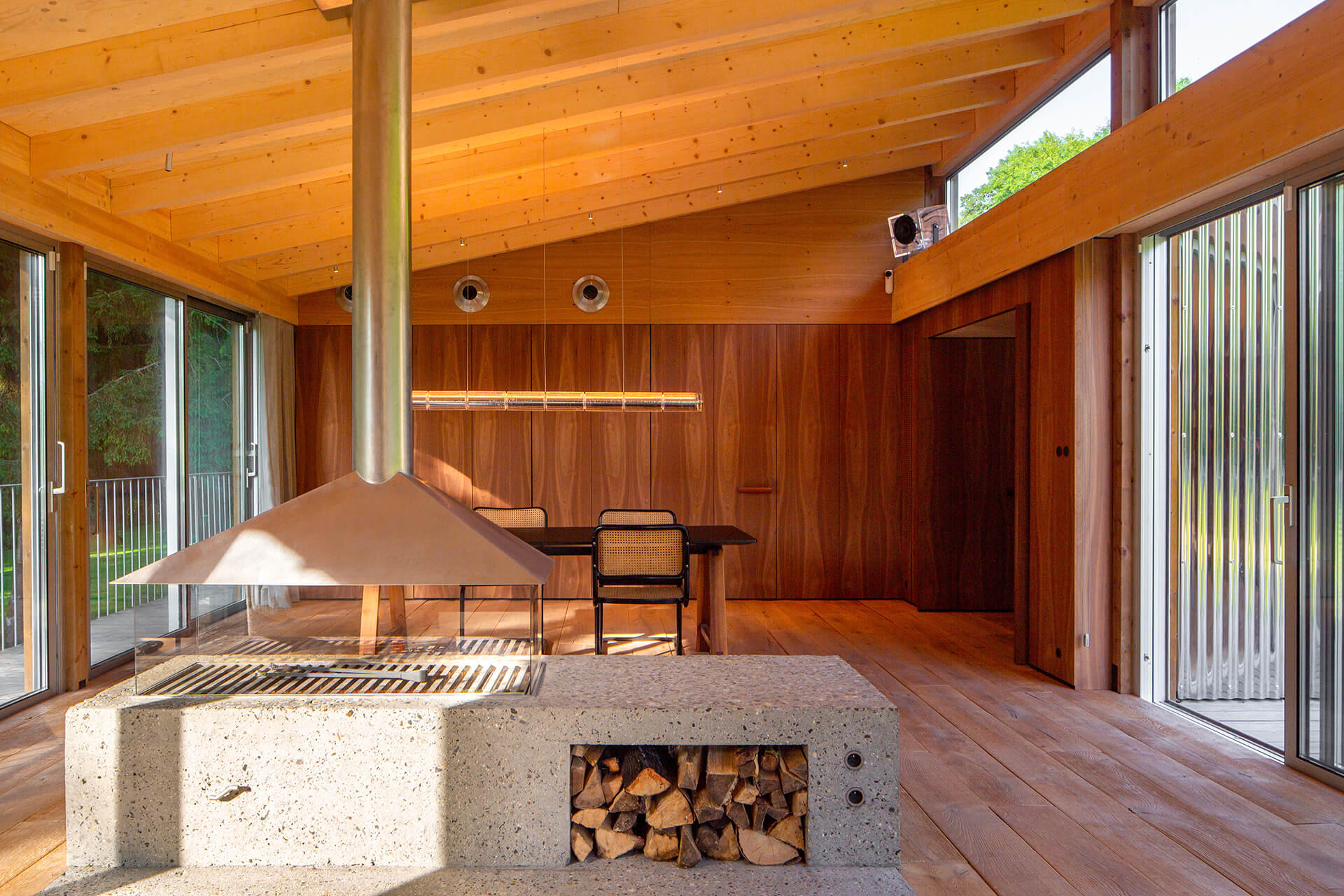
This structural system, both precise and expressive, supports an architecture that balances stability and suspension. The interplay between the restored mass and the lightweight addition generates a cohesive composition that explores contrasts – between heaviness and lightness, opacity and transparency, shadow and illumination.
Between anchoring and elevation, the project articulates a nuanced architectural response to its environment, proposing a dwelling that is both embedded in its context and open to transformation over time.