House SM | Ílhavo Portugal
Architecture:
Photography:

Located in Ílhavo, Portugal, the project unfolds as a single-storey residence that seeks to reconcile the programmatic requirements with the specific characteristics of the site. The plot is situated within an area that currently remains undeveloped along its periphery, though it is expected to undergo significant residential growth in the near future. Within this transitional context, the residence attempts to establish from the outset a clear relationship between private living and the surrounding landscape.
Functional Organization
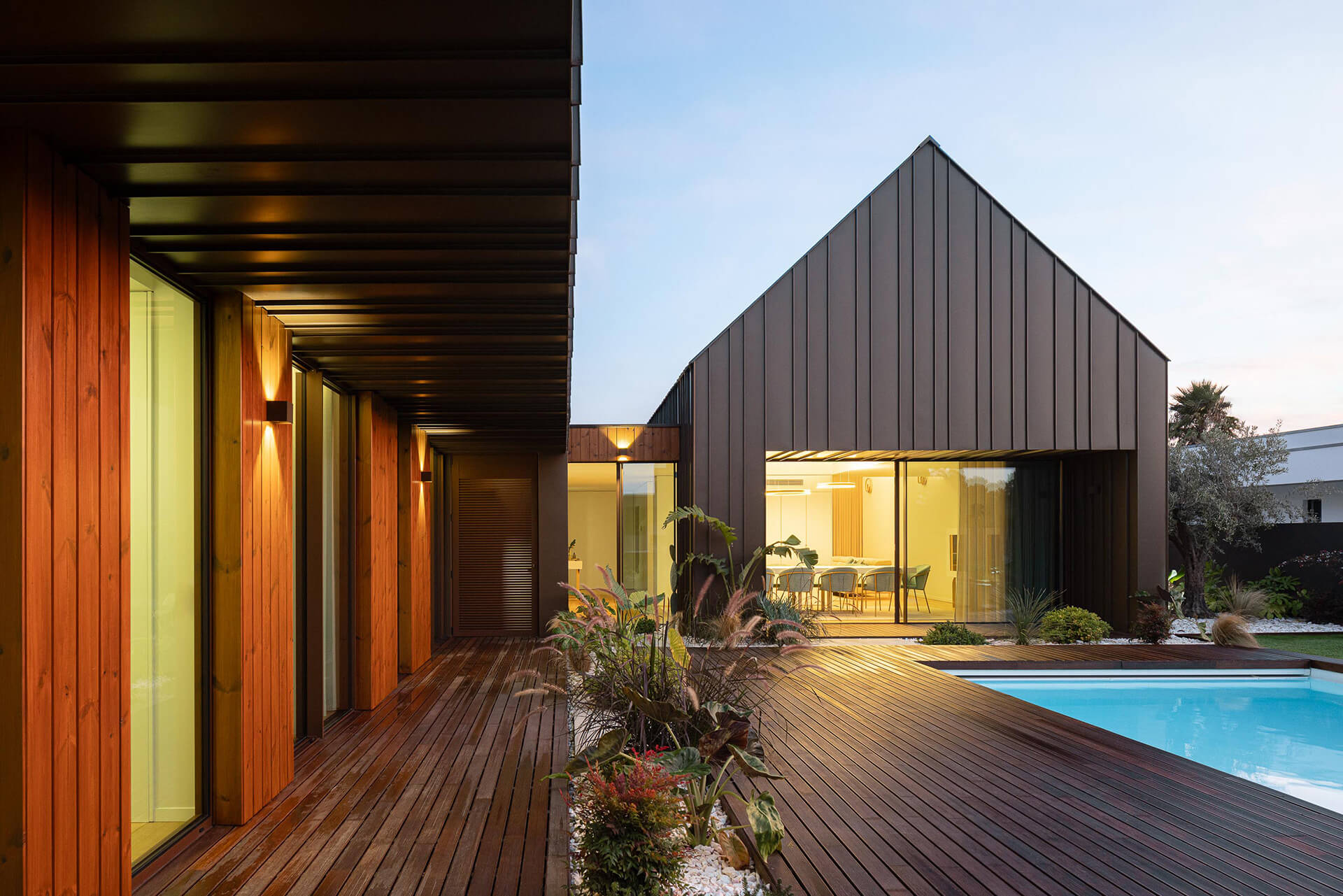
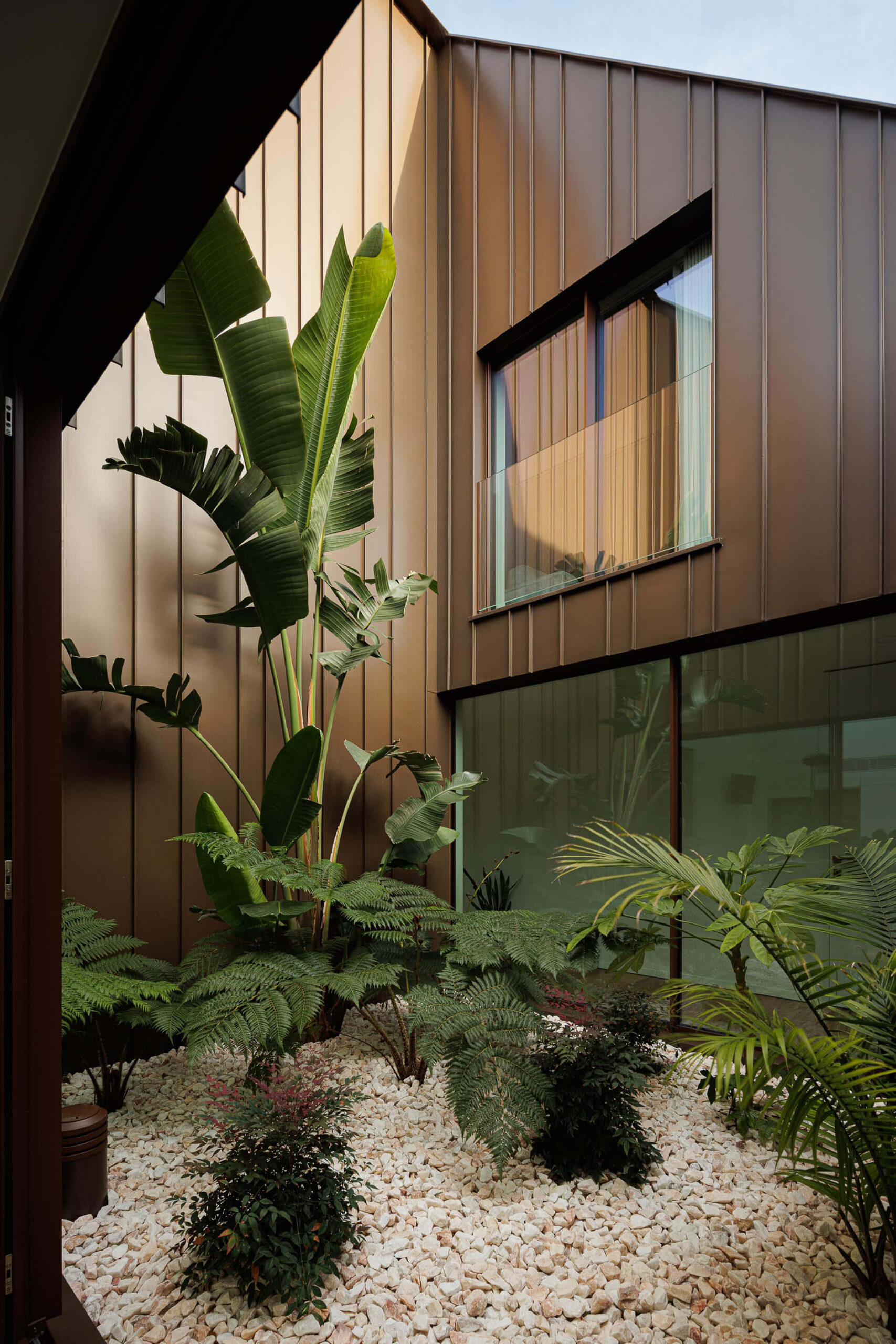
The decision to resolve the entire program on a single level transforms the outdoor space into an integral component of the architectural composition. The remaining green areas are not treated as residual space, but rather as active elements of everyday habitation and the overall spatial organization of the house.
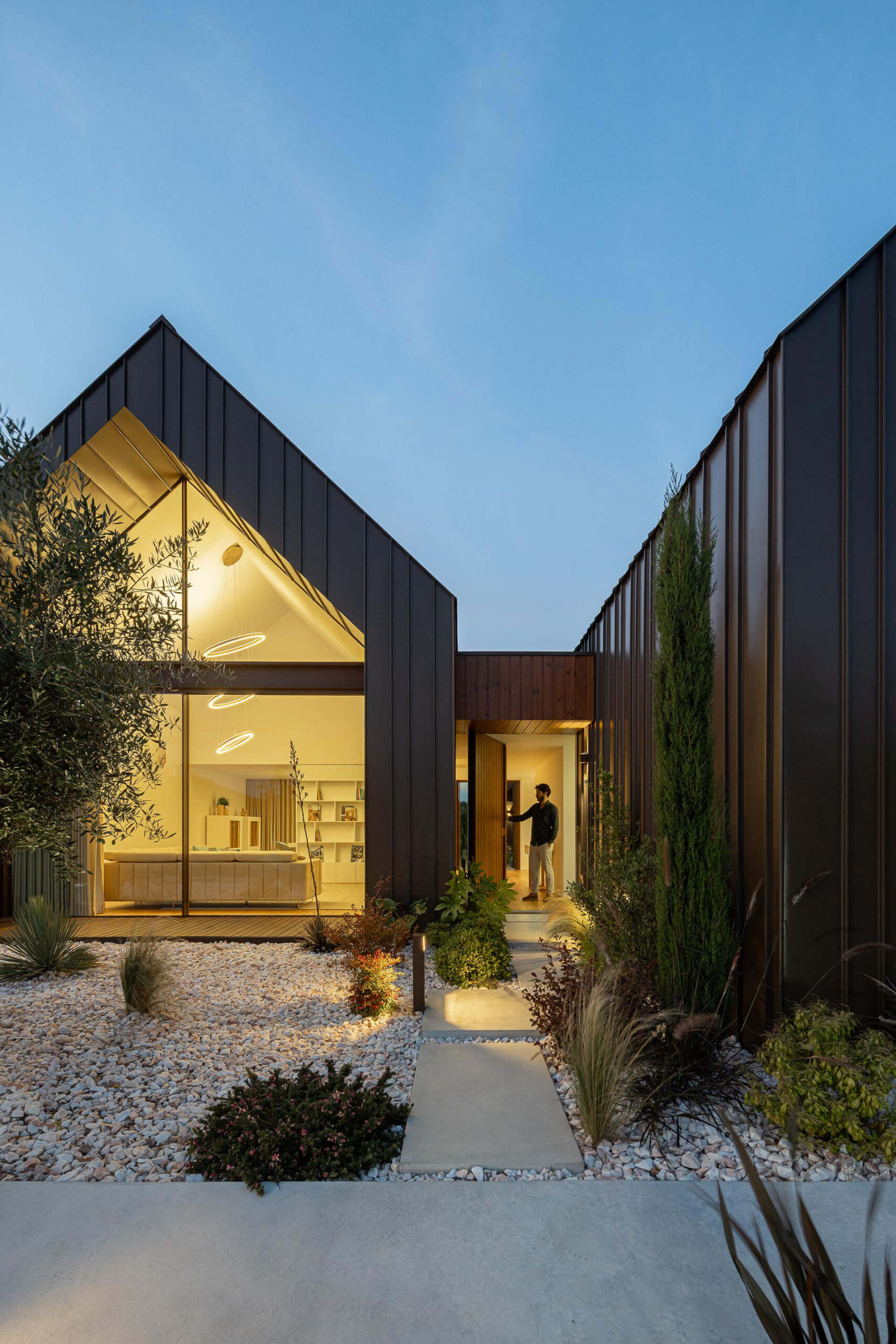
The arrangement of the volumes gradually defines the spatial hierarchy of the residence. As movement progresses deeper into the site, the spaces acquire an increasing sense of privacy and seclusion. Architecture employs the positioning and geometry of the volumes as tools for organizing daily life, creating a clear transition from the more public to the more protected functions.
Design Philosophy
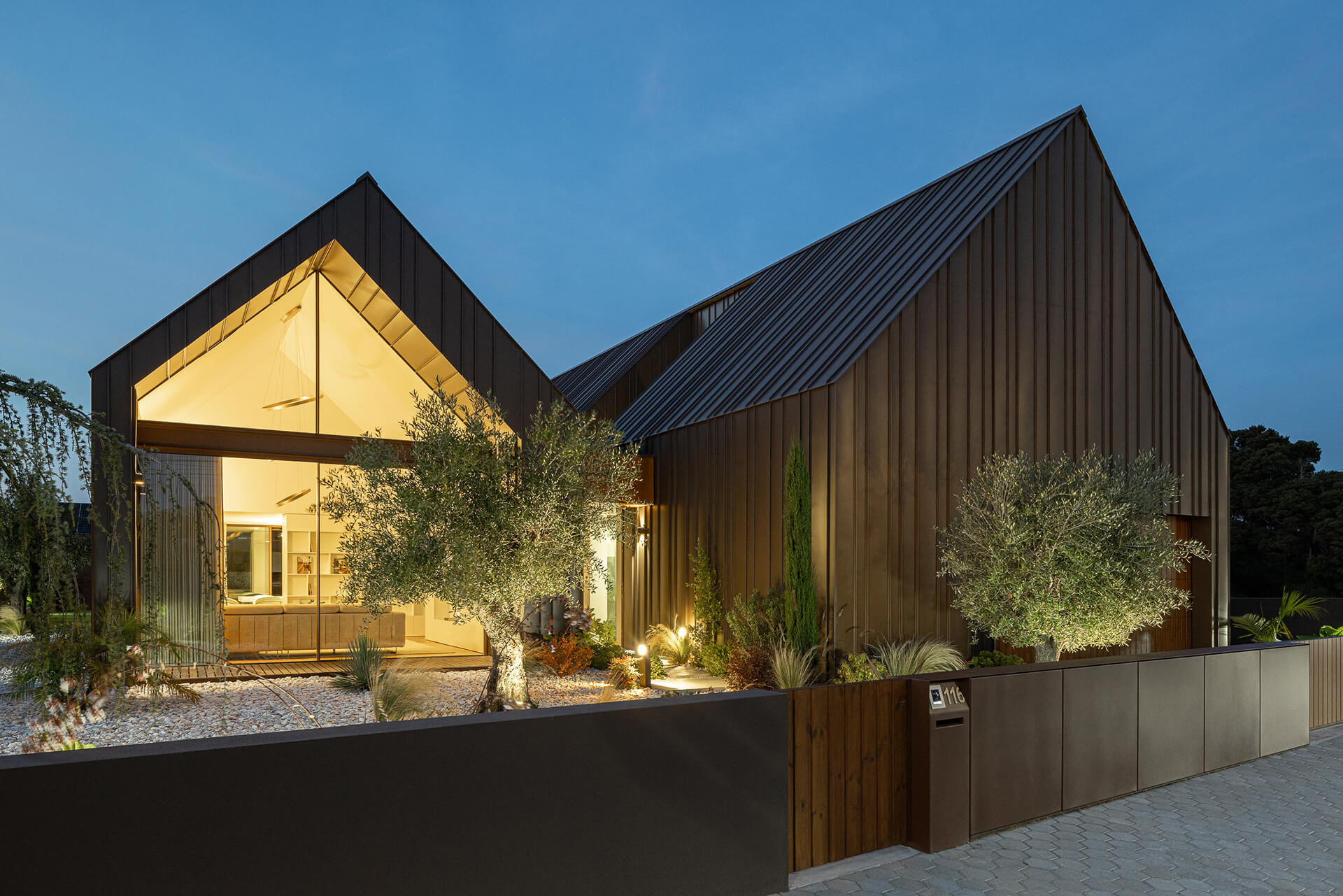
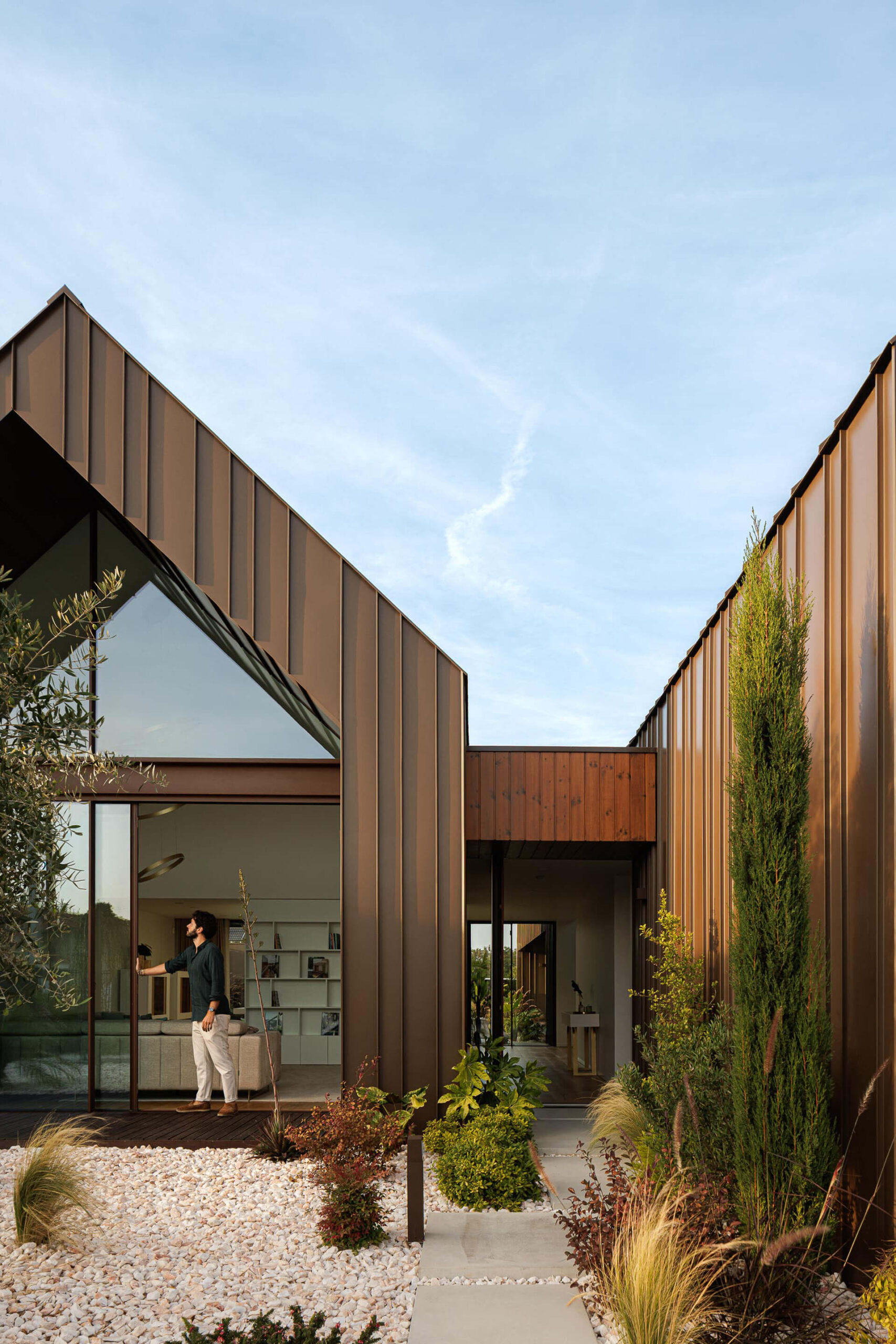
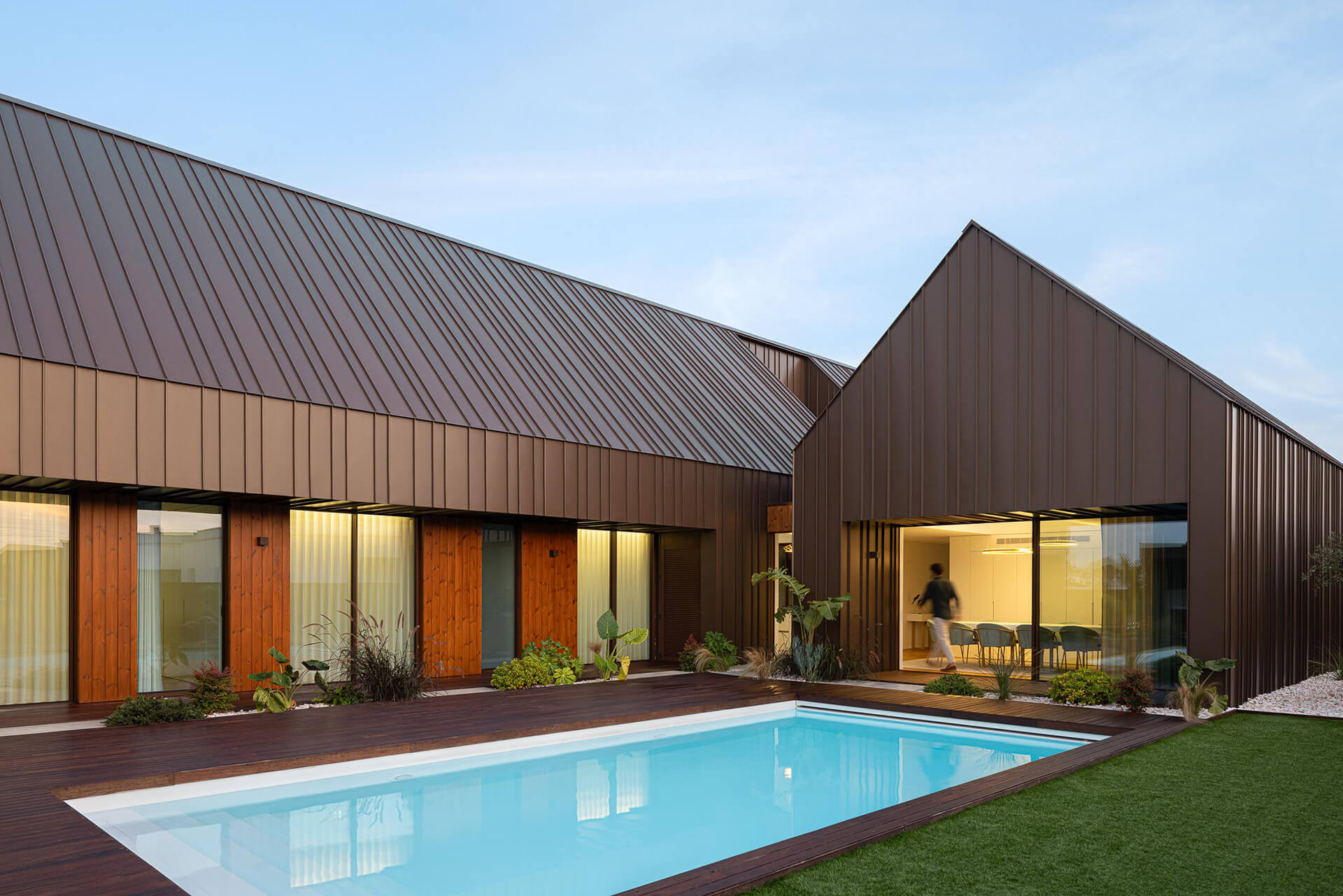
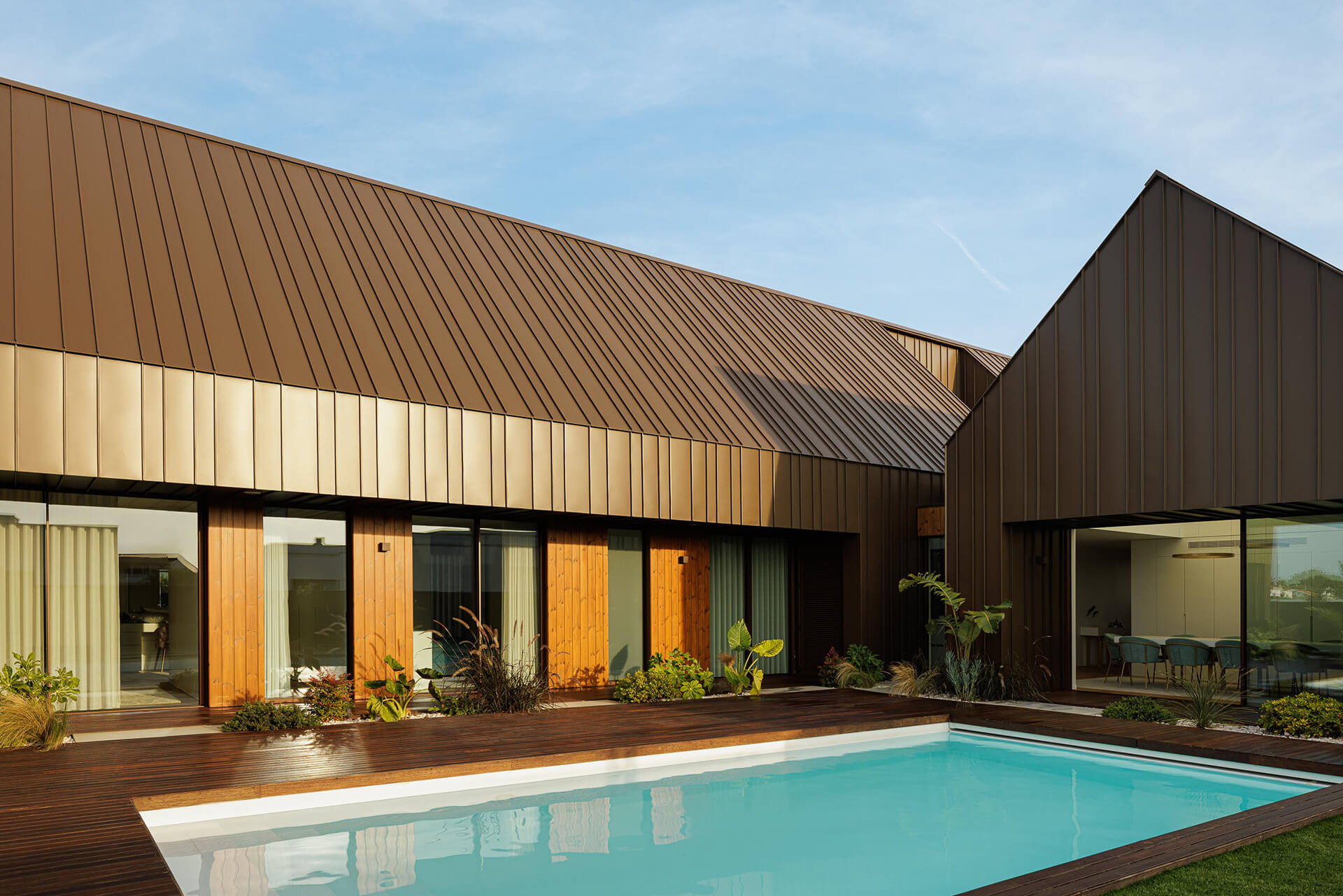
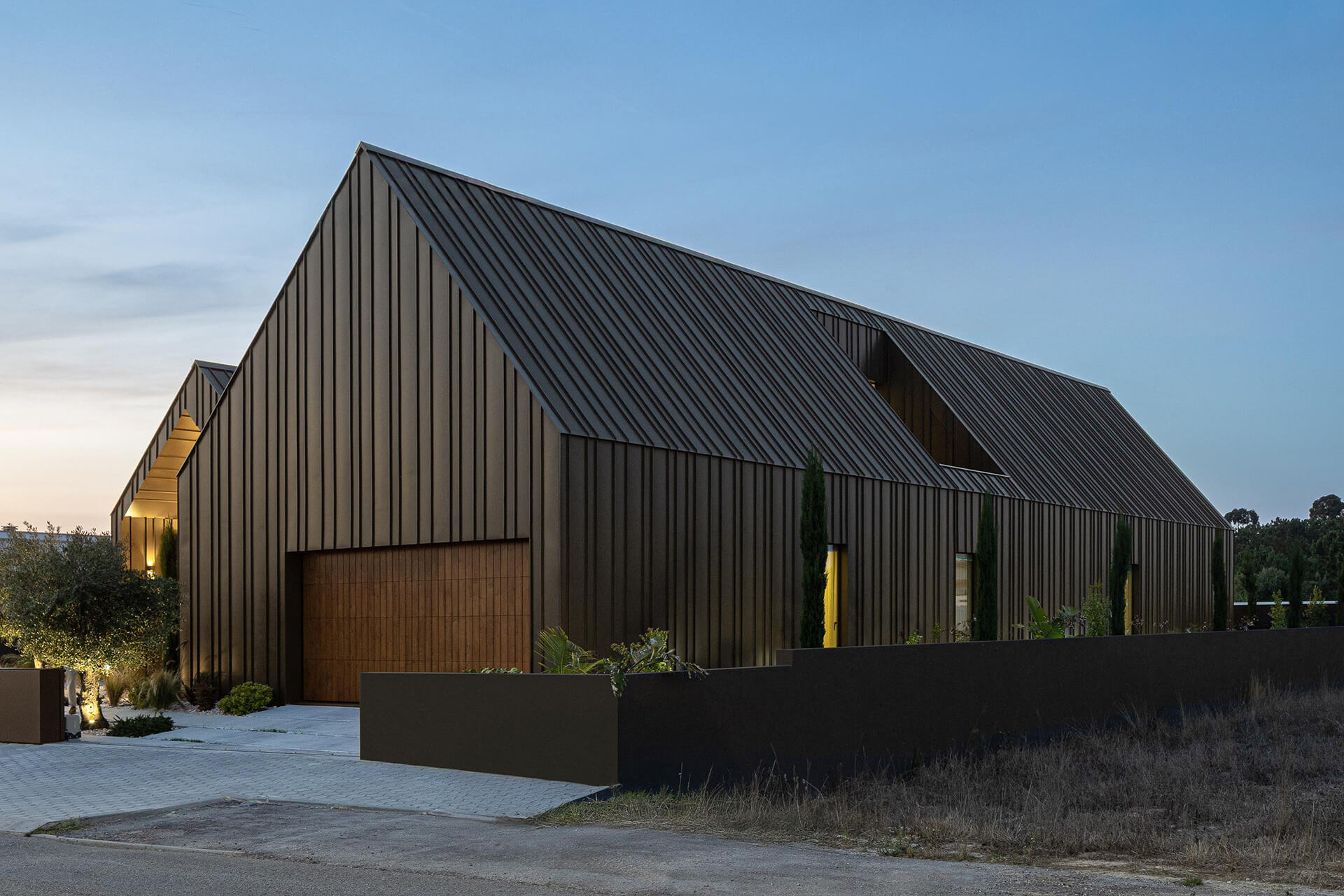
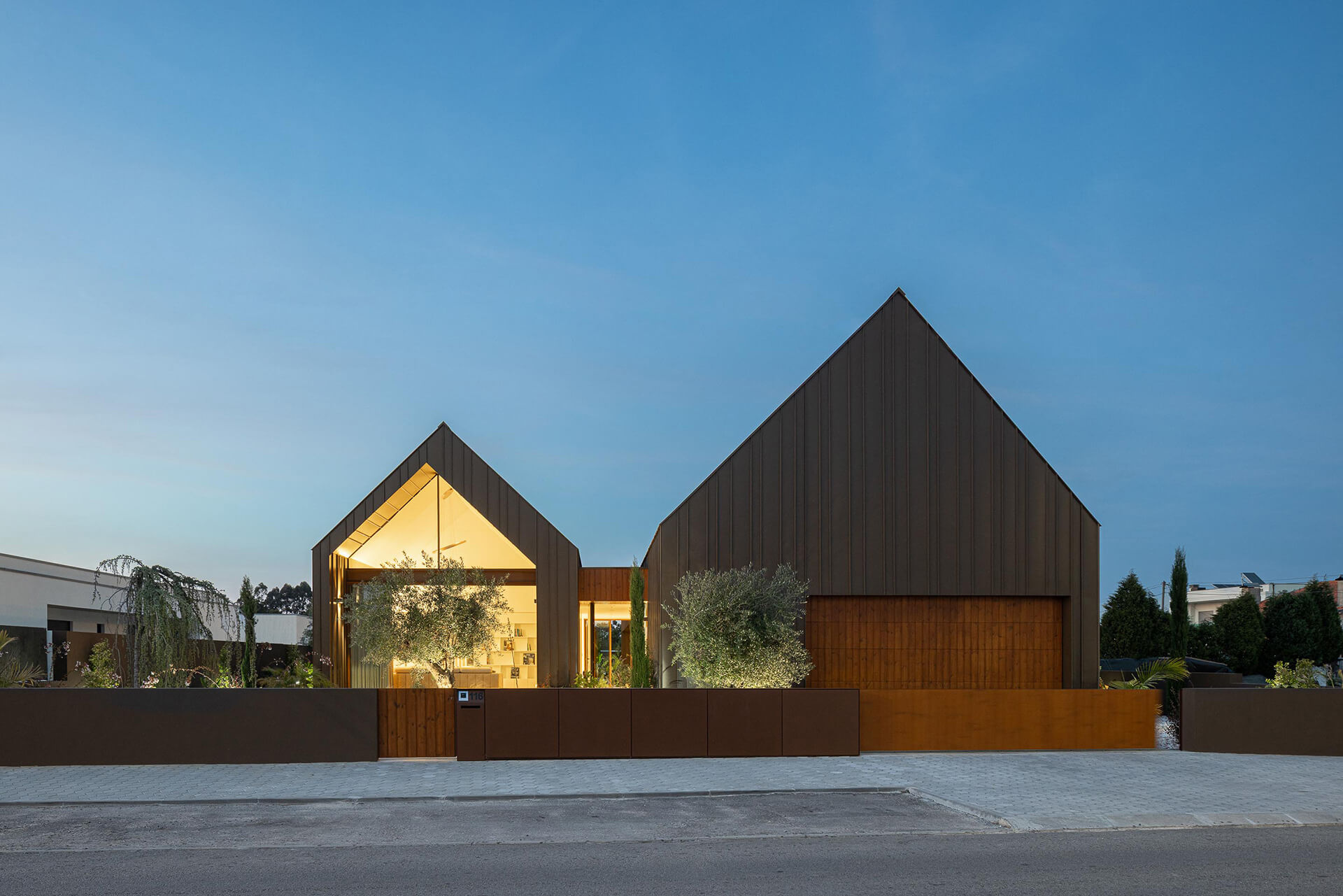
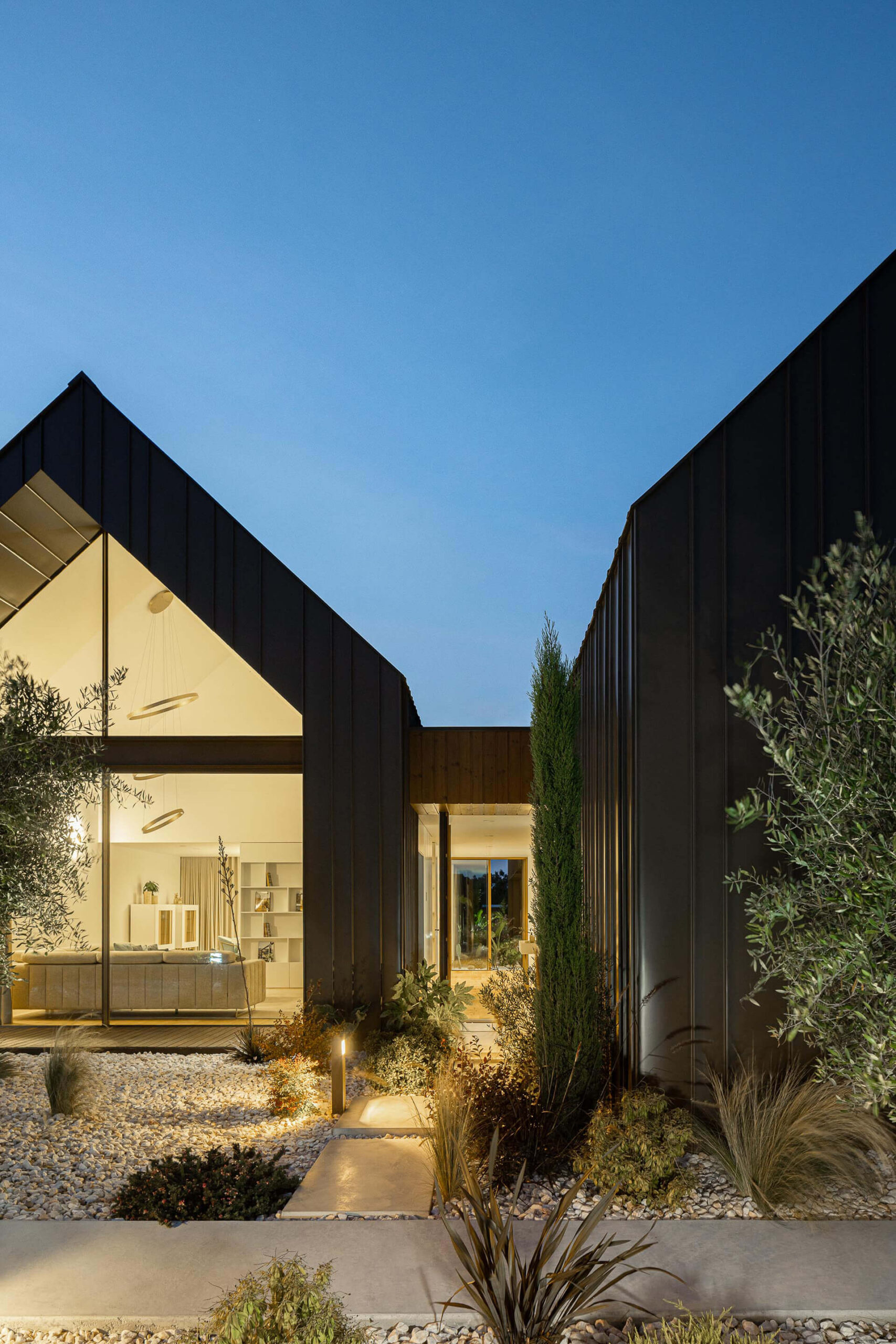
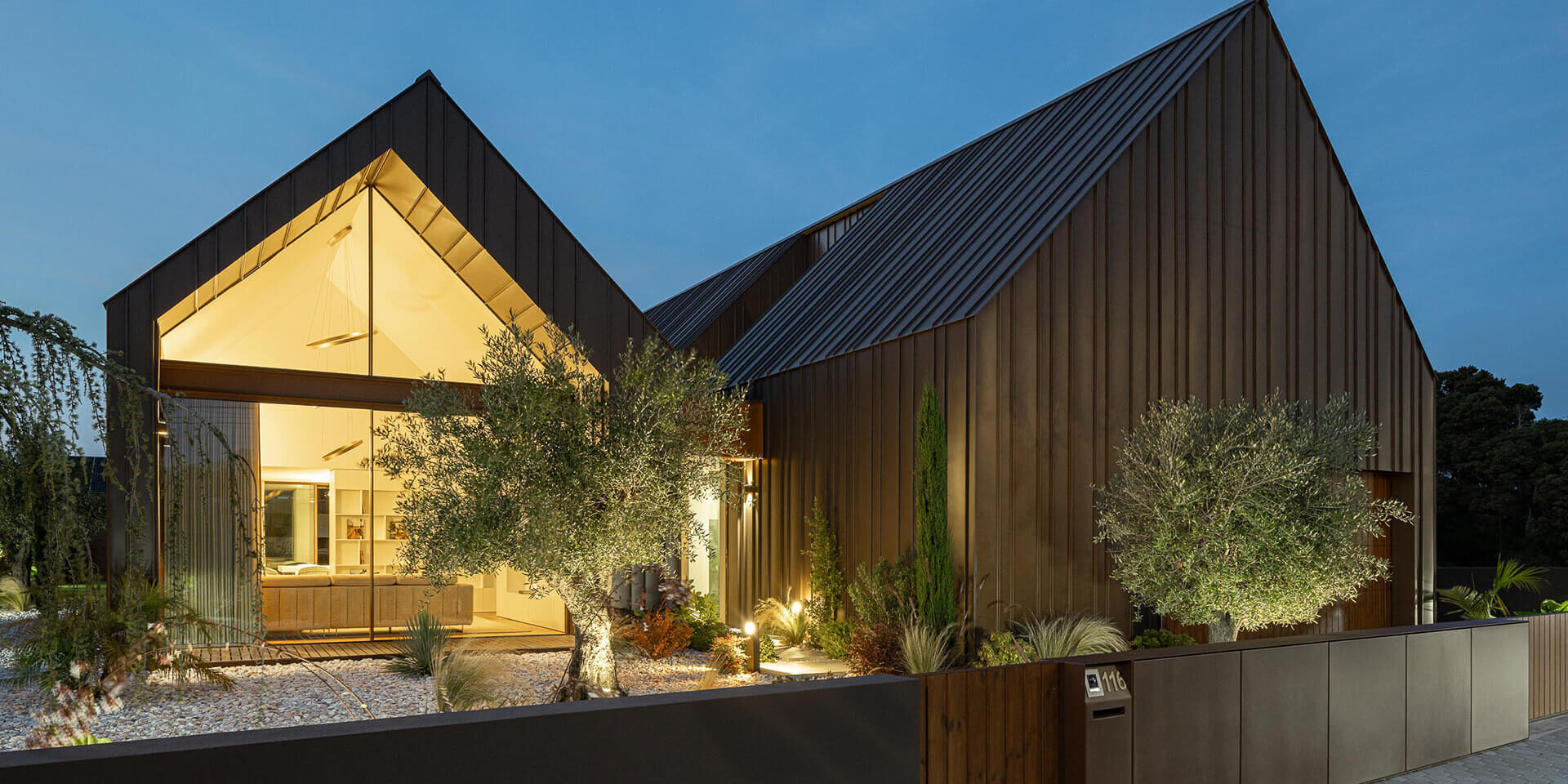
The architectural proposal is structured around two distinct volumes, differentiated both formally and functionally in response to the specific content of the program. These volumes are strategically positioned on the site in order to maximize solar exposure, establish controlled relationships with the surroundings and frame the outdoor spaces.
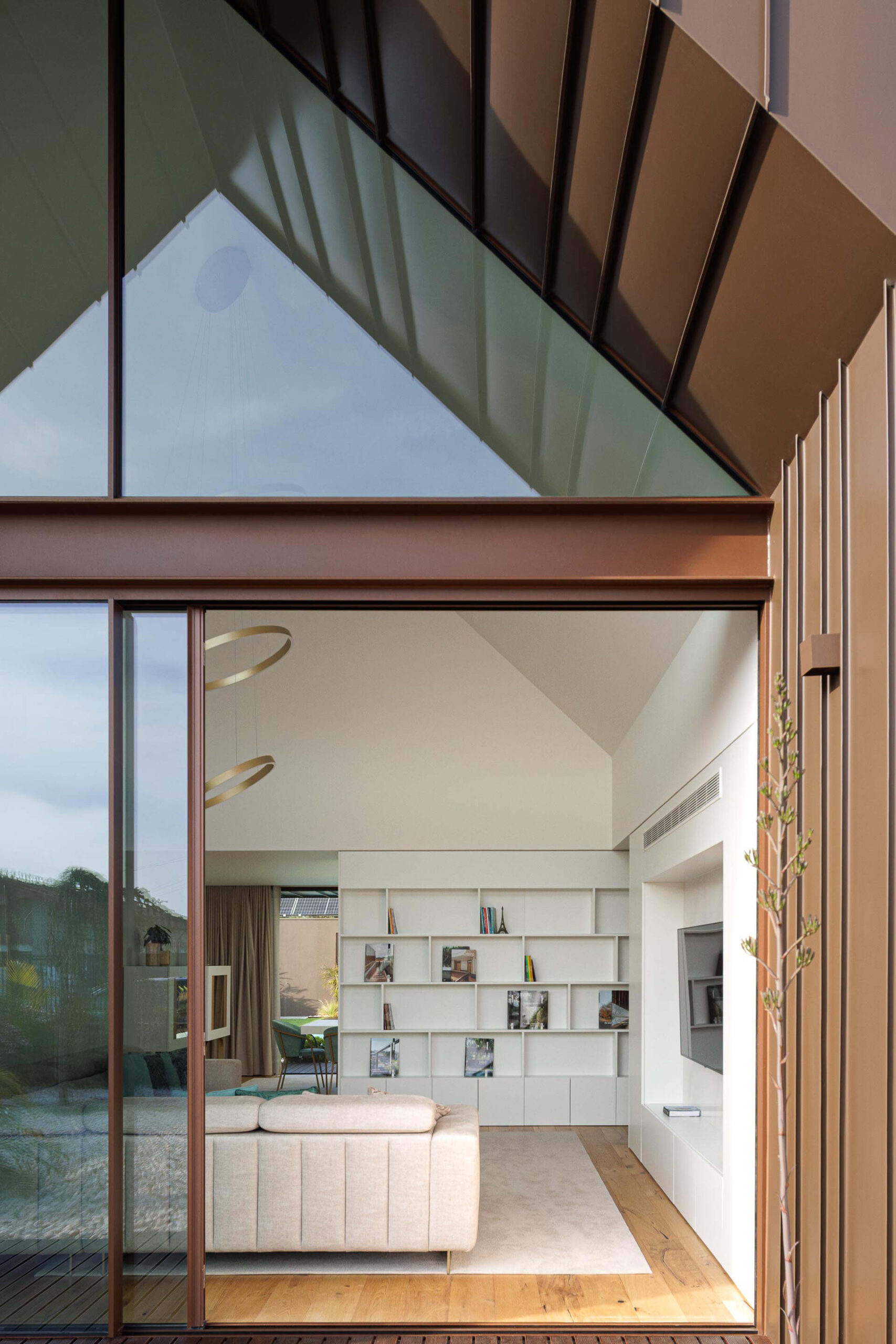
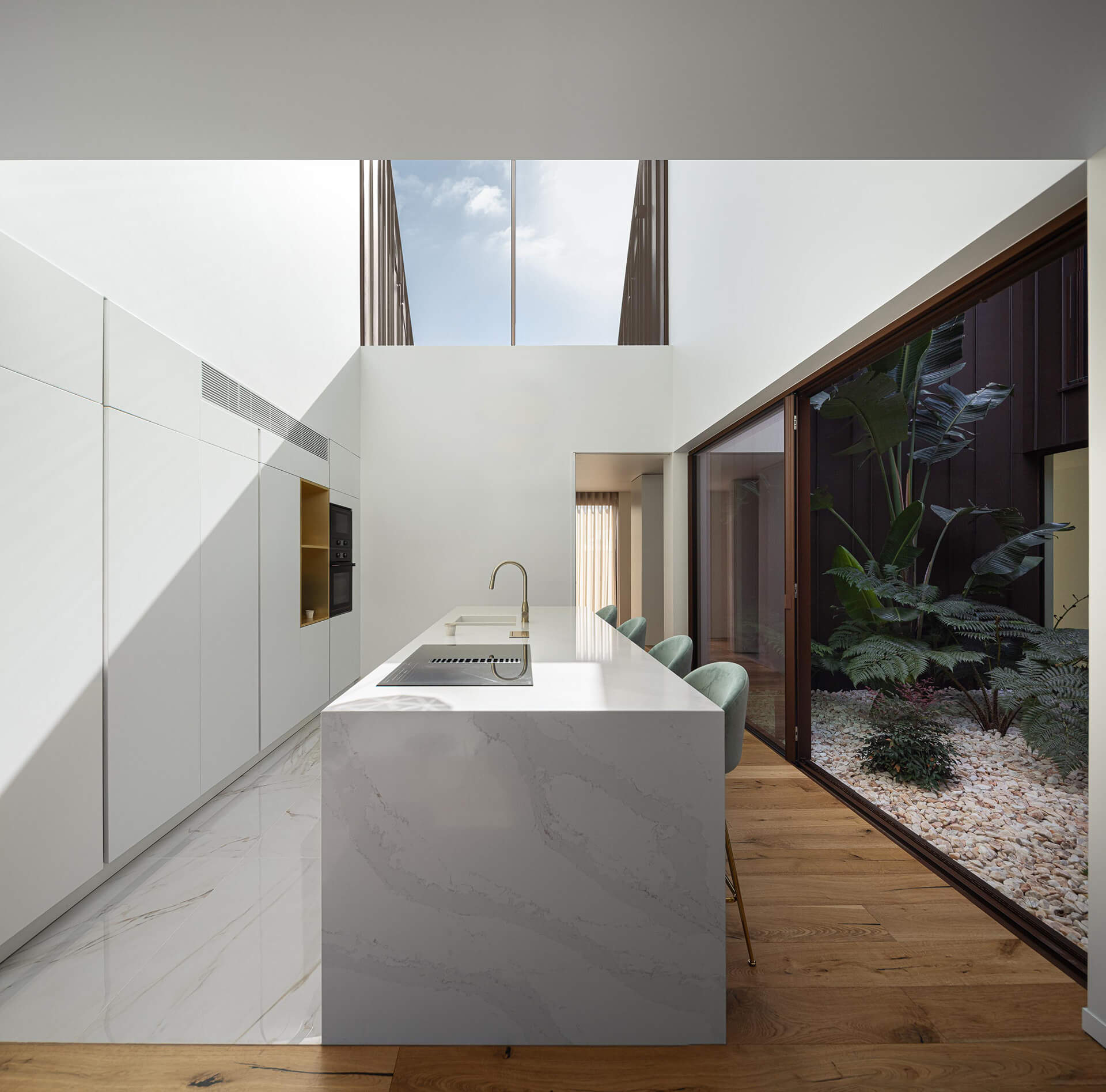
At the same time, the openings and incisions of the façades allow for controlled natural light while reinforcing the continuity between interior and exterior space. In this way, the residence develops a constant visual and functional extension toward the landscape, integrating greenery into the spatial experience of the interior.
Material Palette
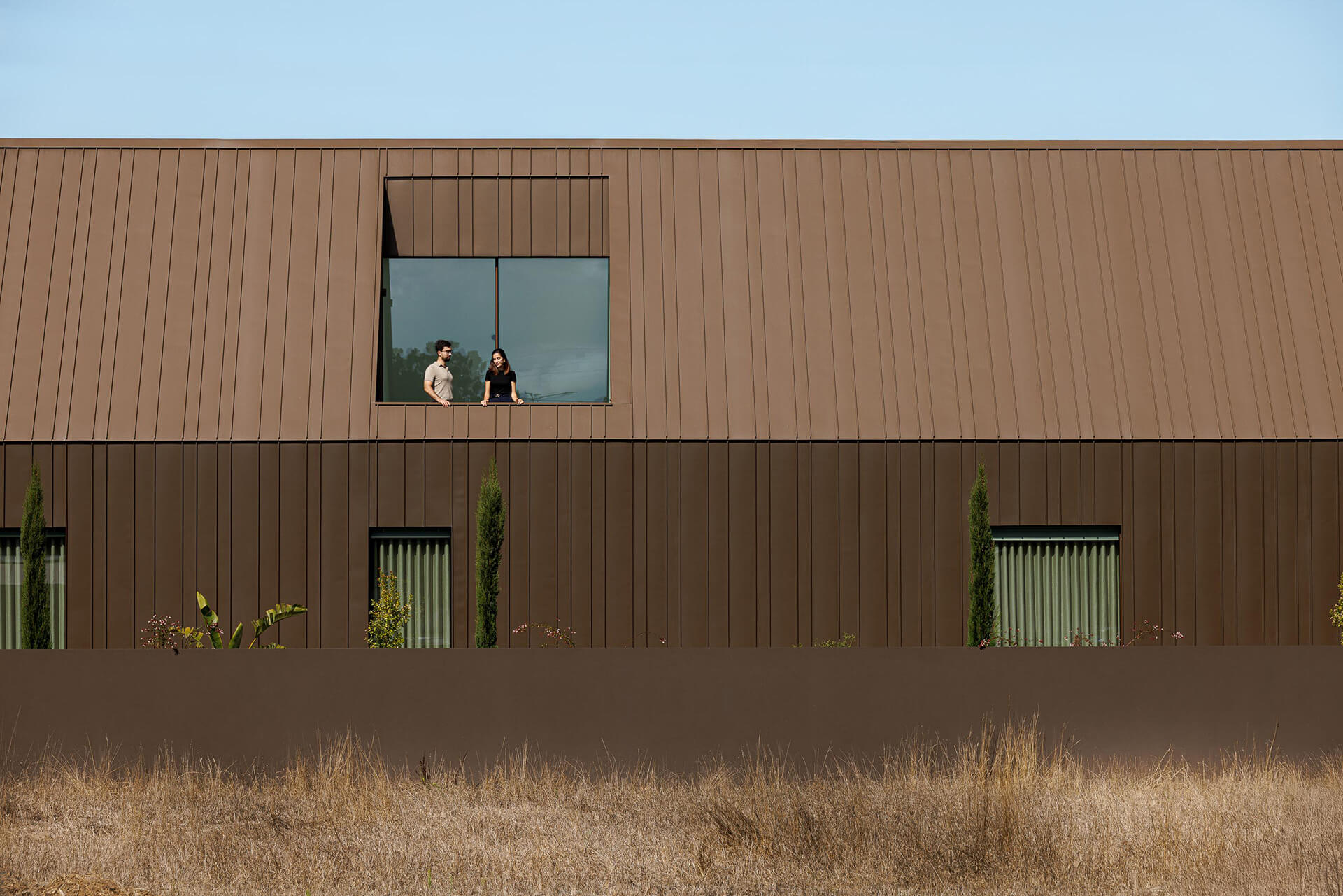
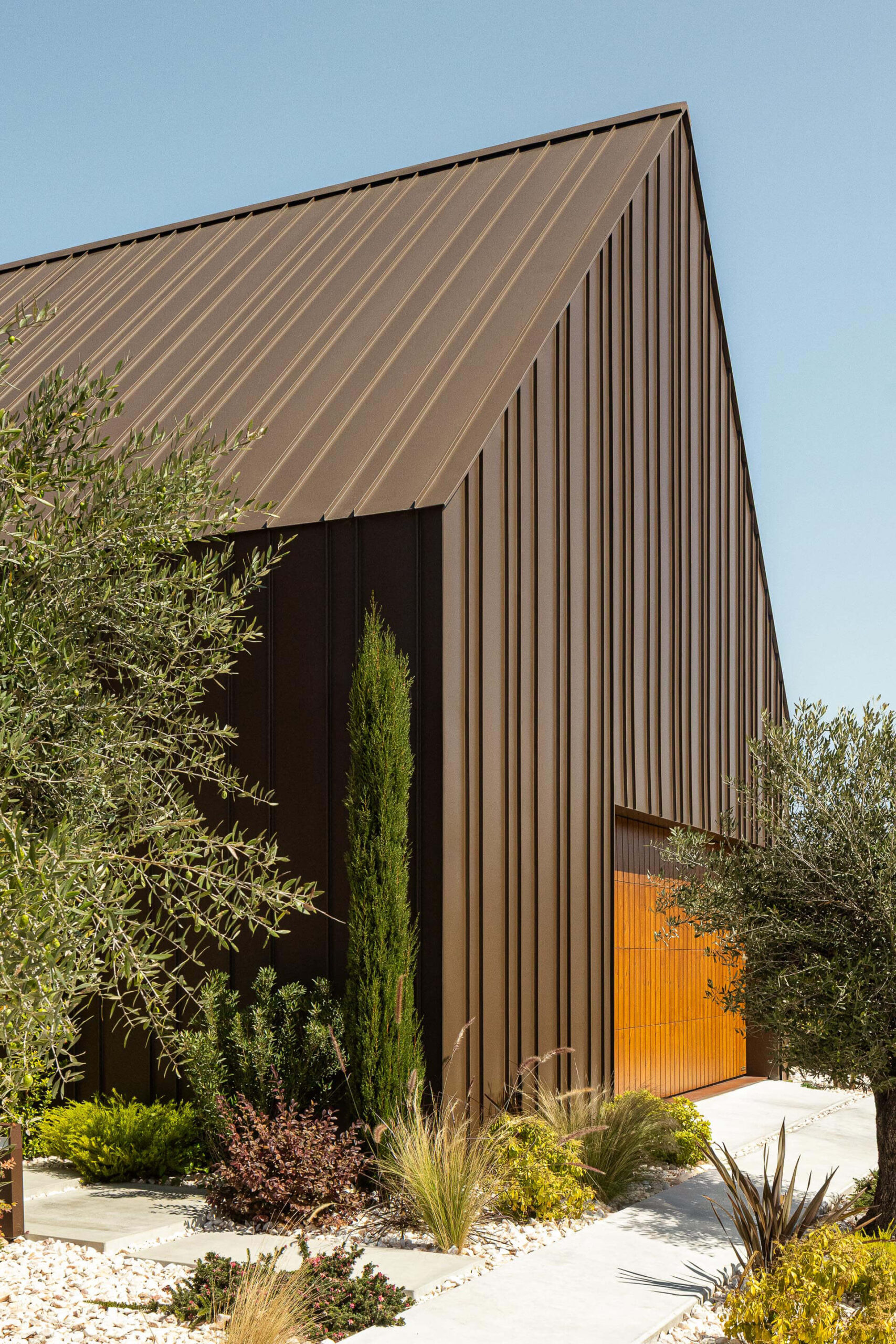
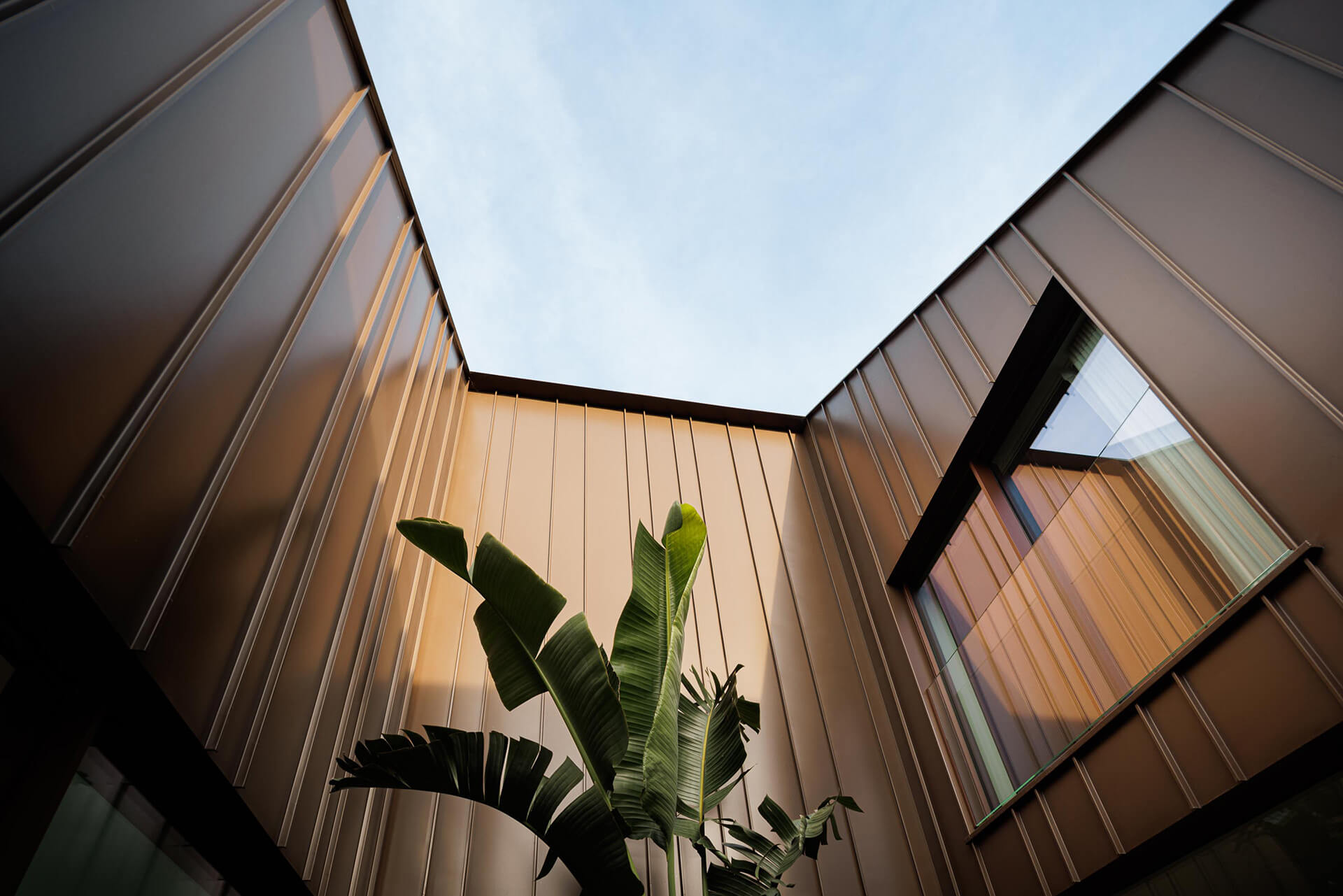
The form and materiality of the project draw reference from the region’s traditional constructions, reinterpreting familiar architectural elements through a contemporary compositional language. Clean volumes, inclined surfaces and a restrained material palette compose an architecture that engages with the local building tradition without resorting to mimicry.
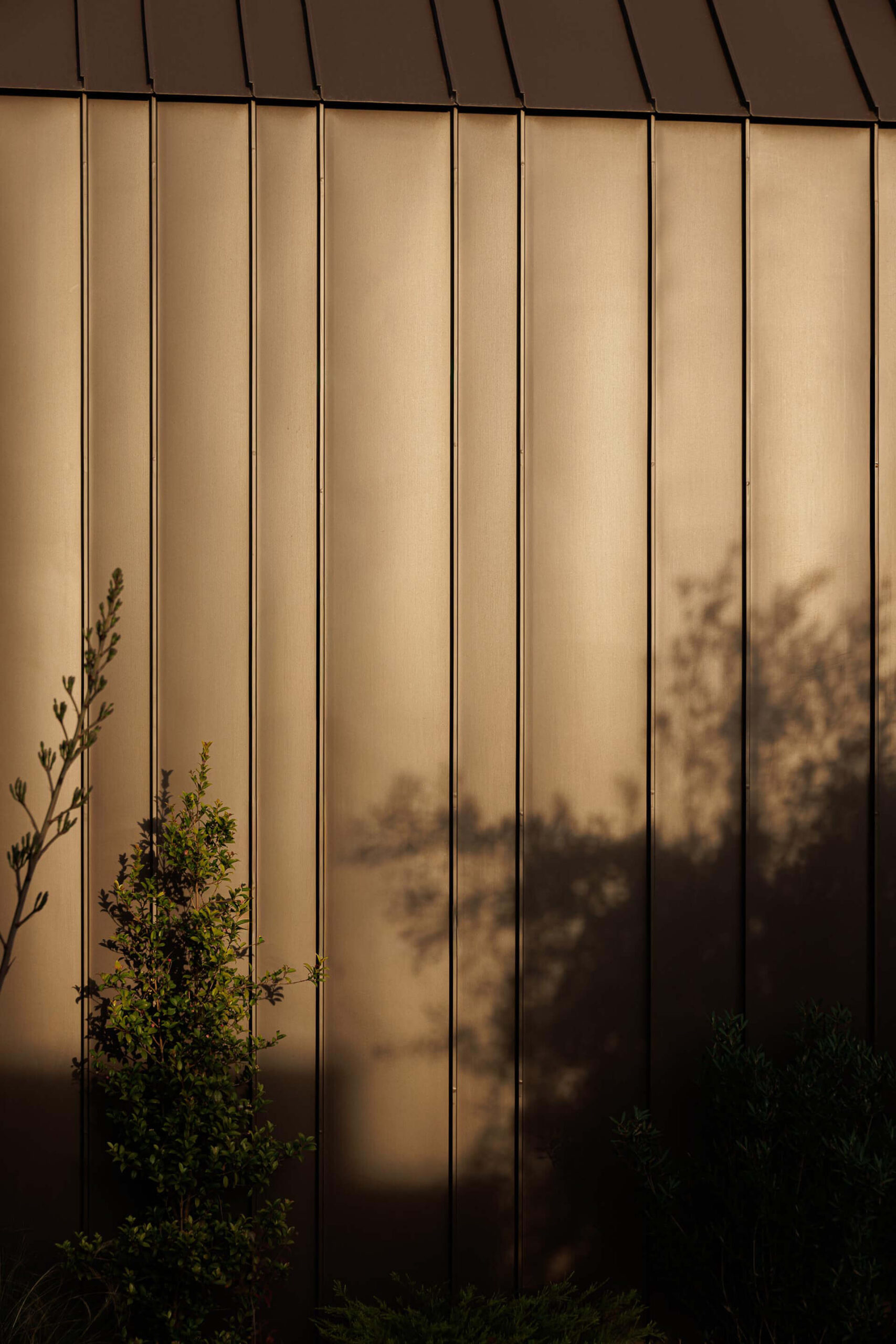
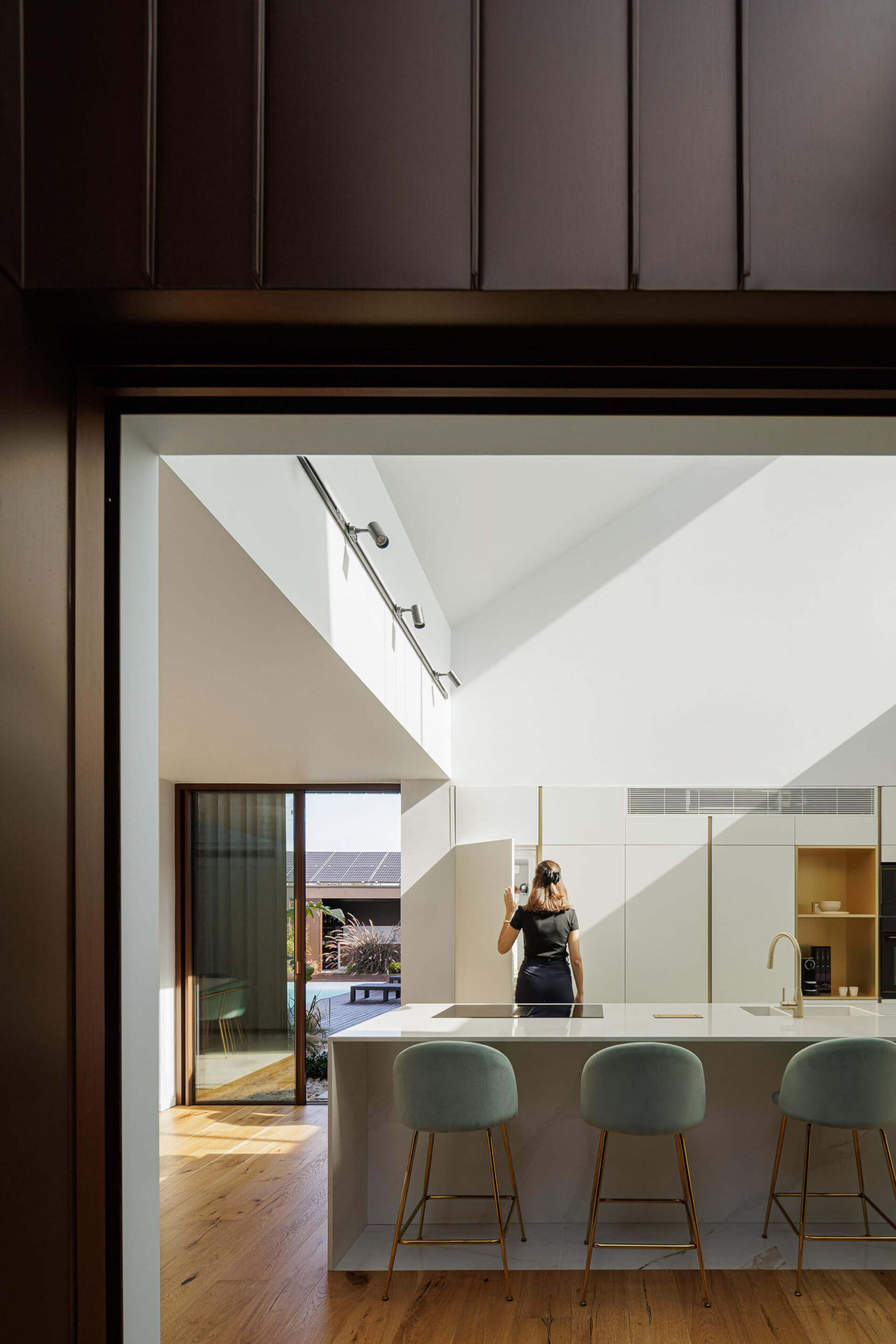
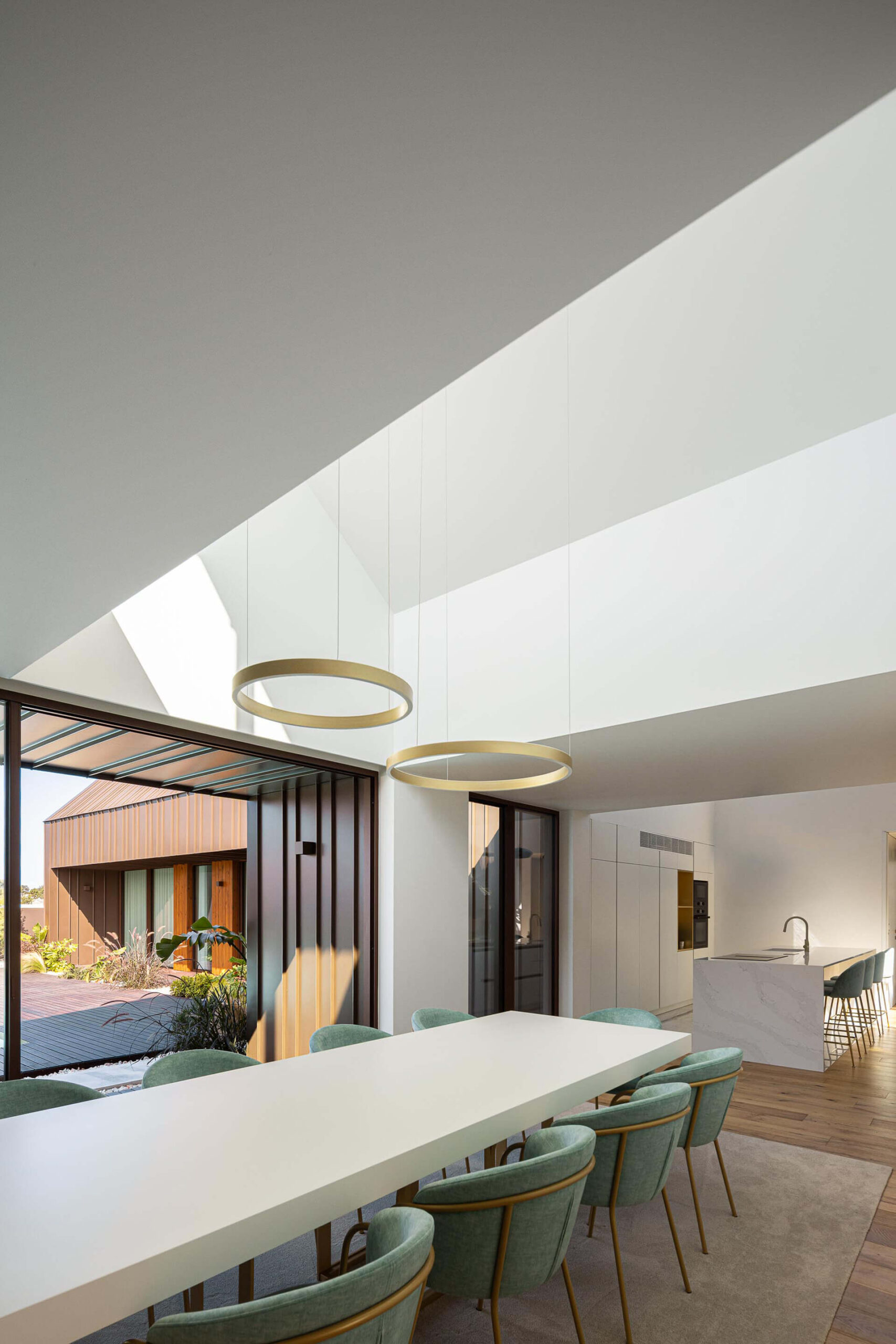
The use of zinc surfaces, natural timber and bright neutral materials throughout the interior reinforces the understated character of the residence, while simultaneously introducing durability and timelessness to the composition. Light is treated as a primary architectural tool, shaping interiors defined by calm atmospheres and subtle variations of illumination throughout the day.
The result is a residence articulated with clarity and economy of means, transforming the relationship between built and unbuilt space into the central core of the architectural experience.