Ceramics Studio by GO’C in Seattle
Architecture:
Photography:
A Detached Workshop for Ceramics in West Seattle
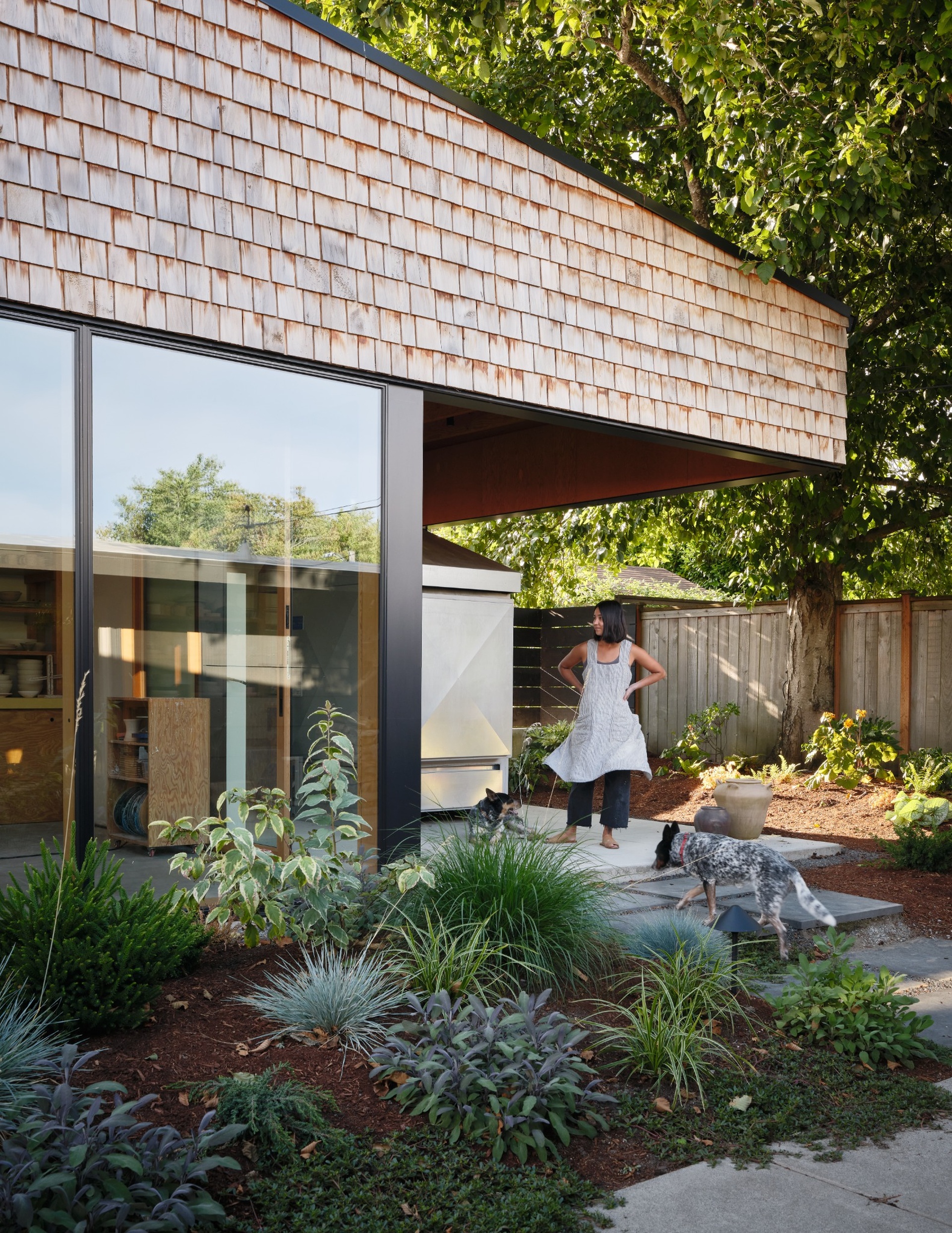
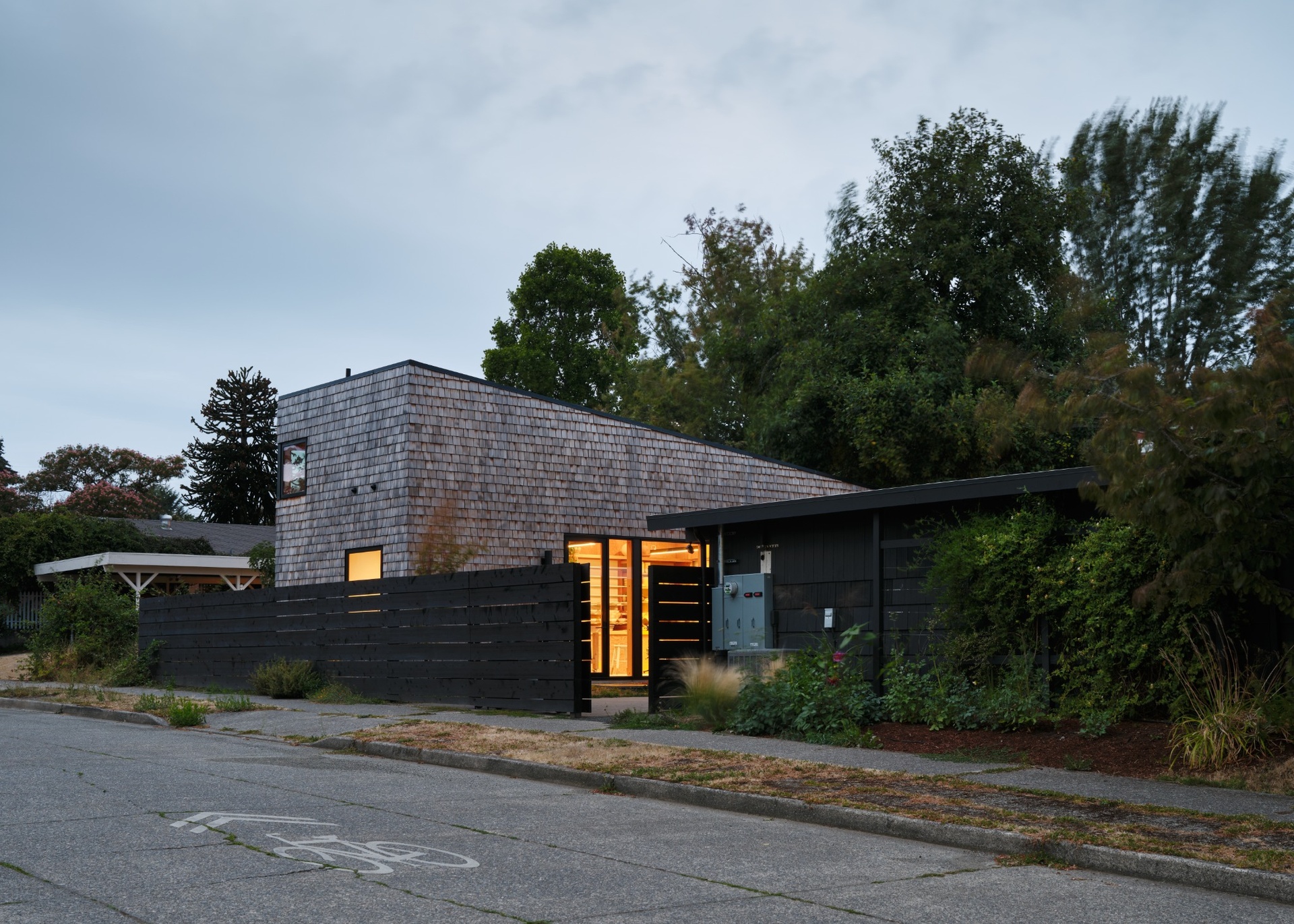
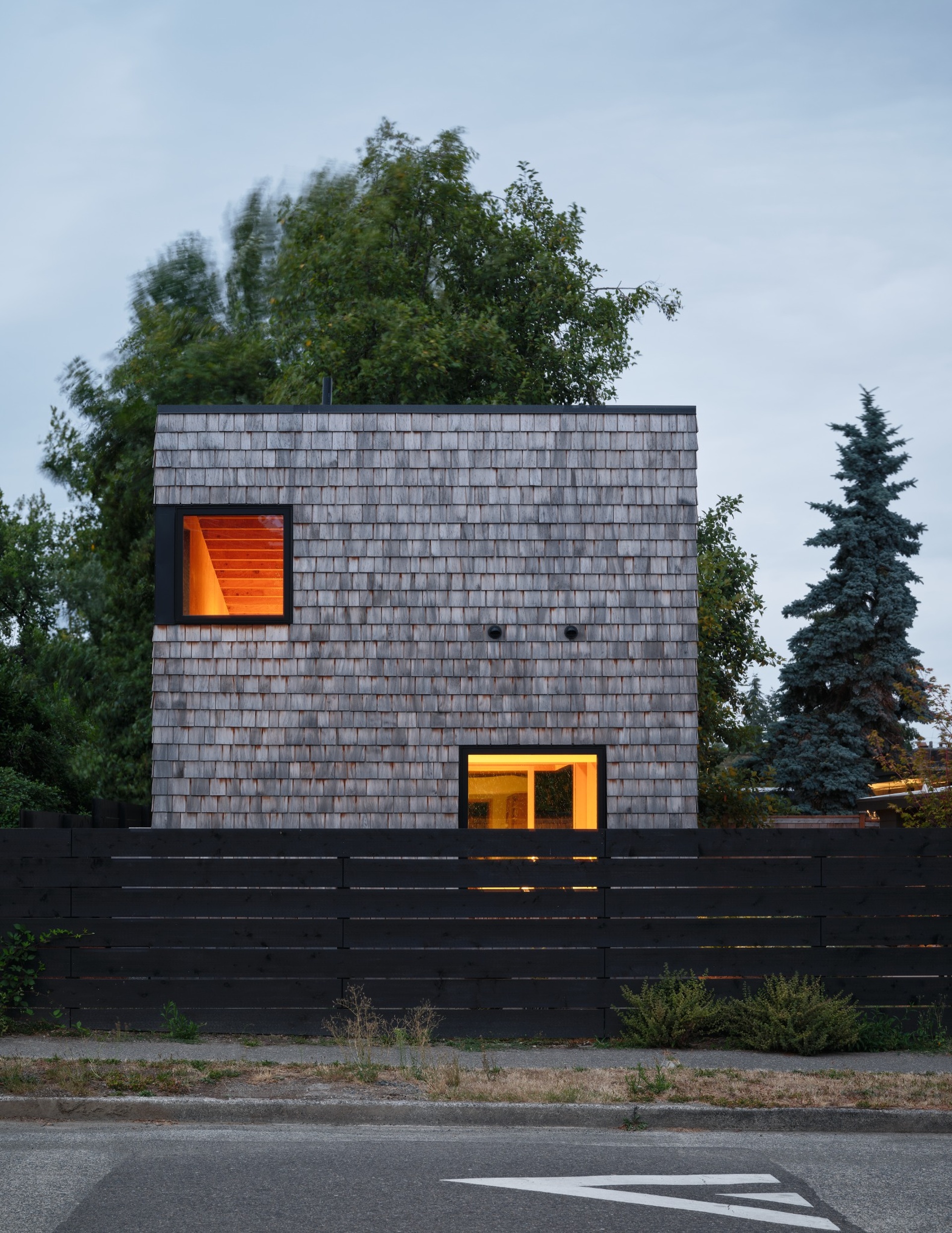
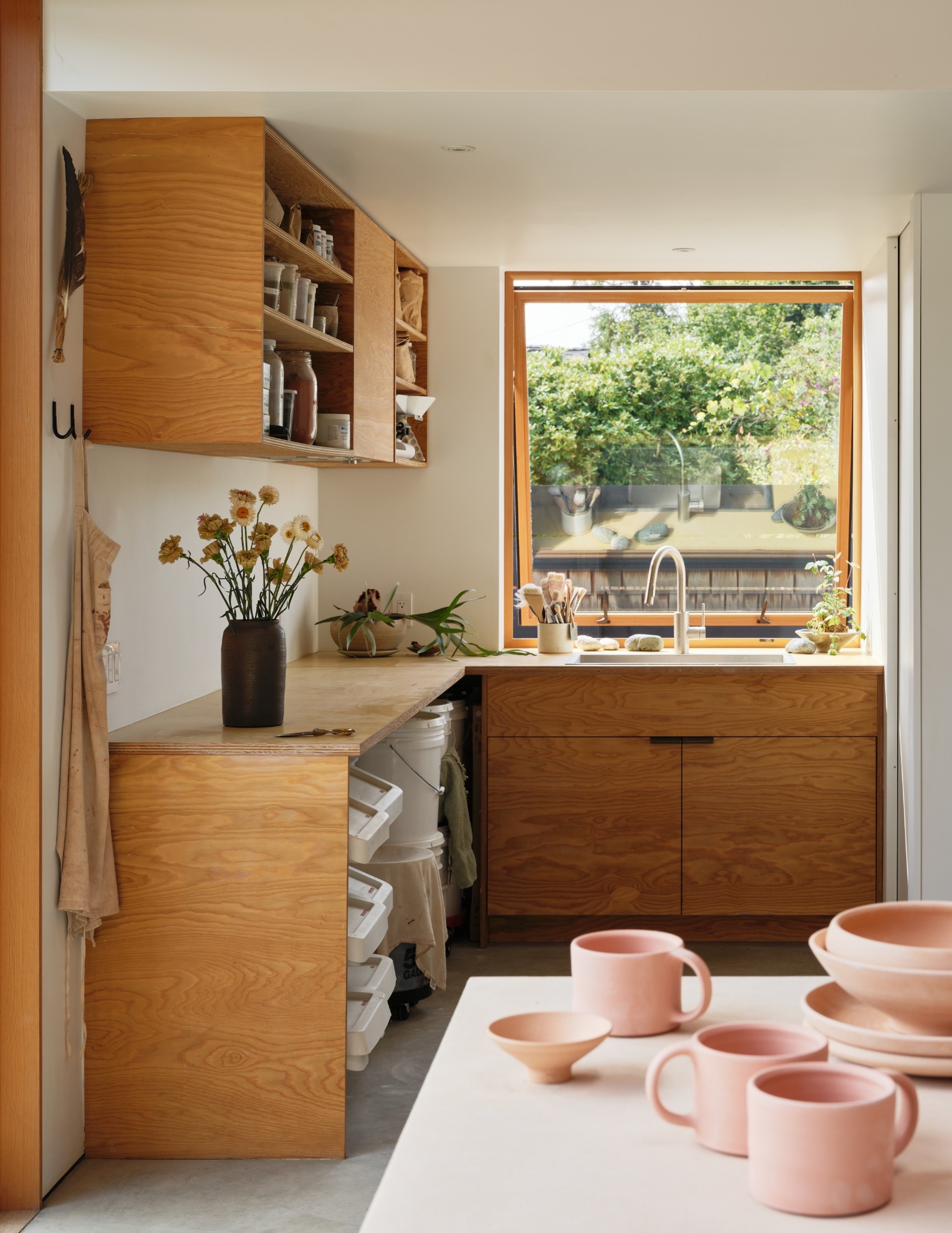
In West Seattle, Ceramics Studio by GO’C is a new detached workshop and classroom, permitted as a detached accessory dwelling unit, or DADU. Designed for a compact urban residential lot, the building provides generous interior and exterior spaces for forming and firing ceramics, while allowing for future residential use.
The project was commissioned by a maker of functional ceramics whose work is deeply informed by the landscape and memory of Northern Saskatchewan. The design challenge was to create a space that could support her practice, reflect the quiet strength of her work and offer an inspiring environment for teaching others.
A Space for Making, Teaching and Gathering
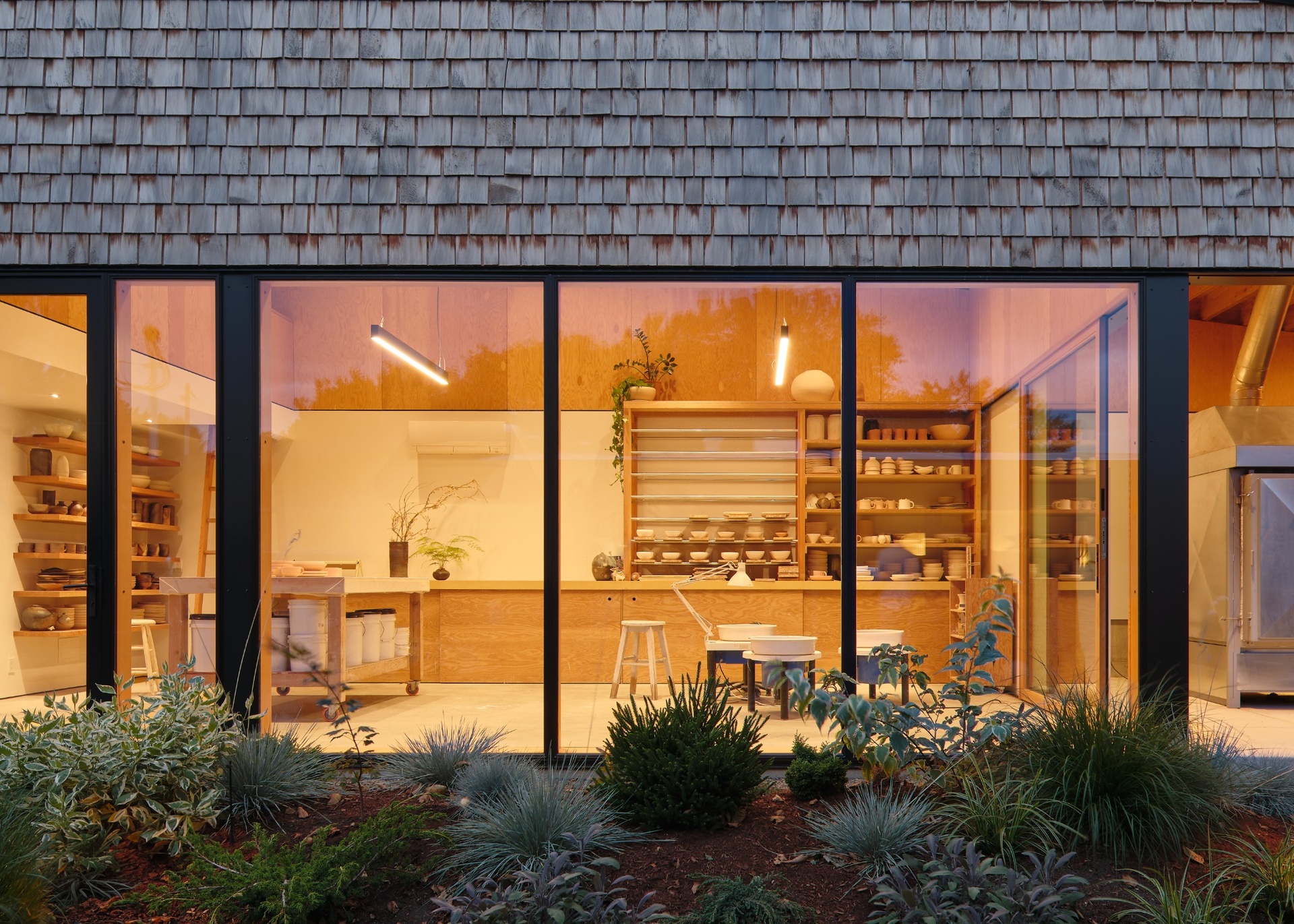
Finding adequate studio space for ceramics in Seattle is difficult and costly, especially for a growing practice that requires room for sculpting, firing, storage, classes and pop-up shops. Having lived in the existing residence for several years, the client decided to build a dedicated studio closely aligned with her functional needs and design sensibility.
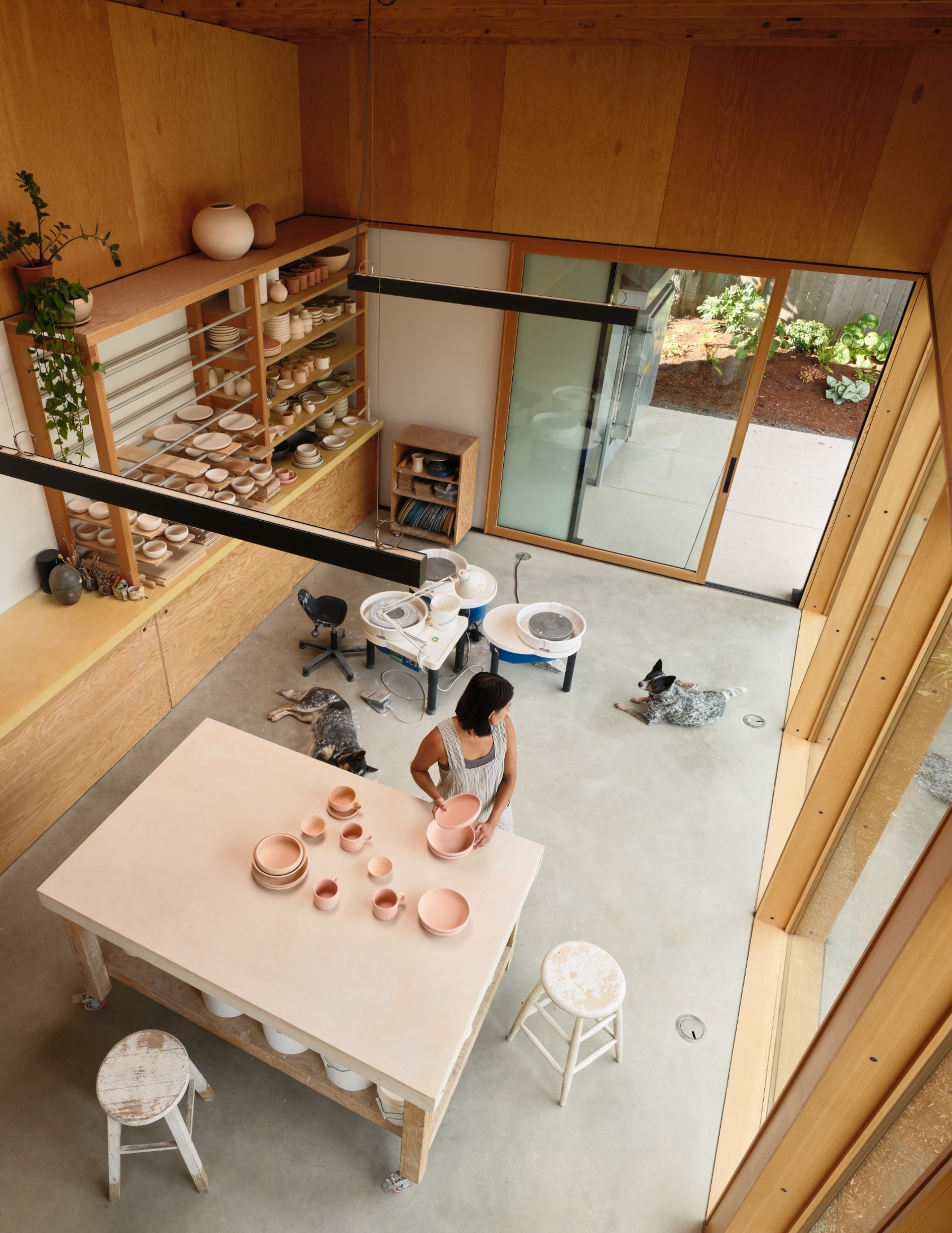
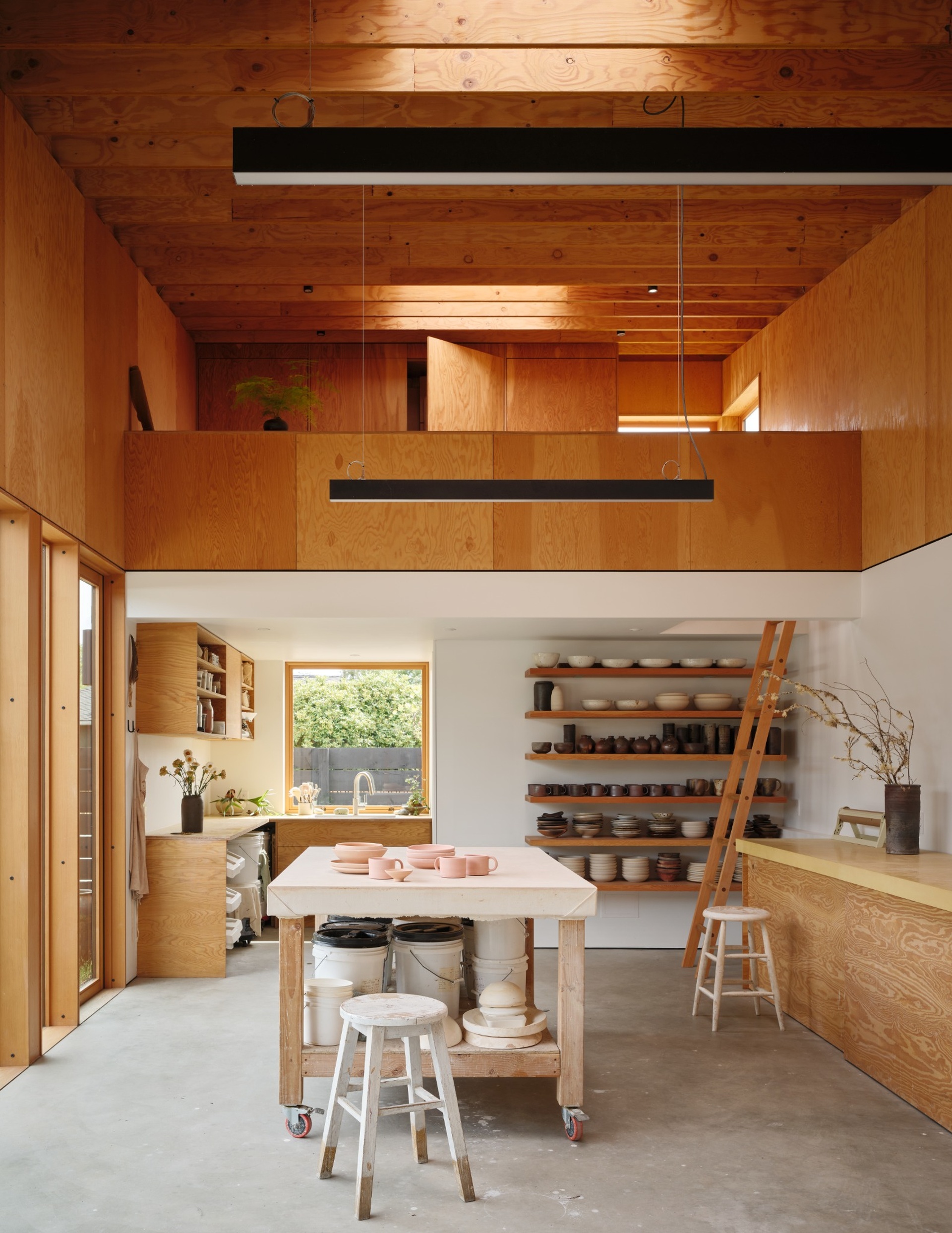
The new structure was conceived not only as a workspace, but also as a flexible neighborhood hub. Since its completion, it has been used as a ceramics studio, classroom, holiday pop-up shop, kitchen prep space, setting for communal dinners and, in the loft, as an office and guest bedroom.
Light as a Working Tool
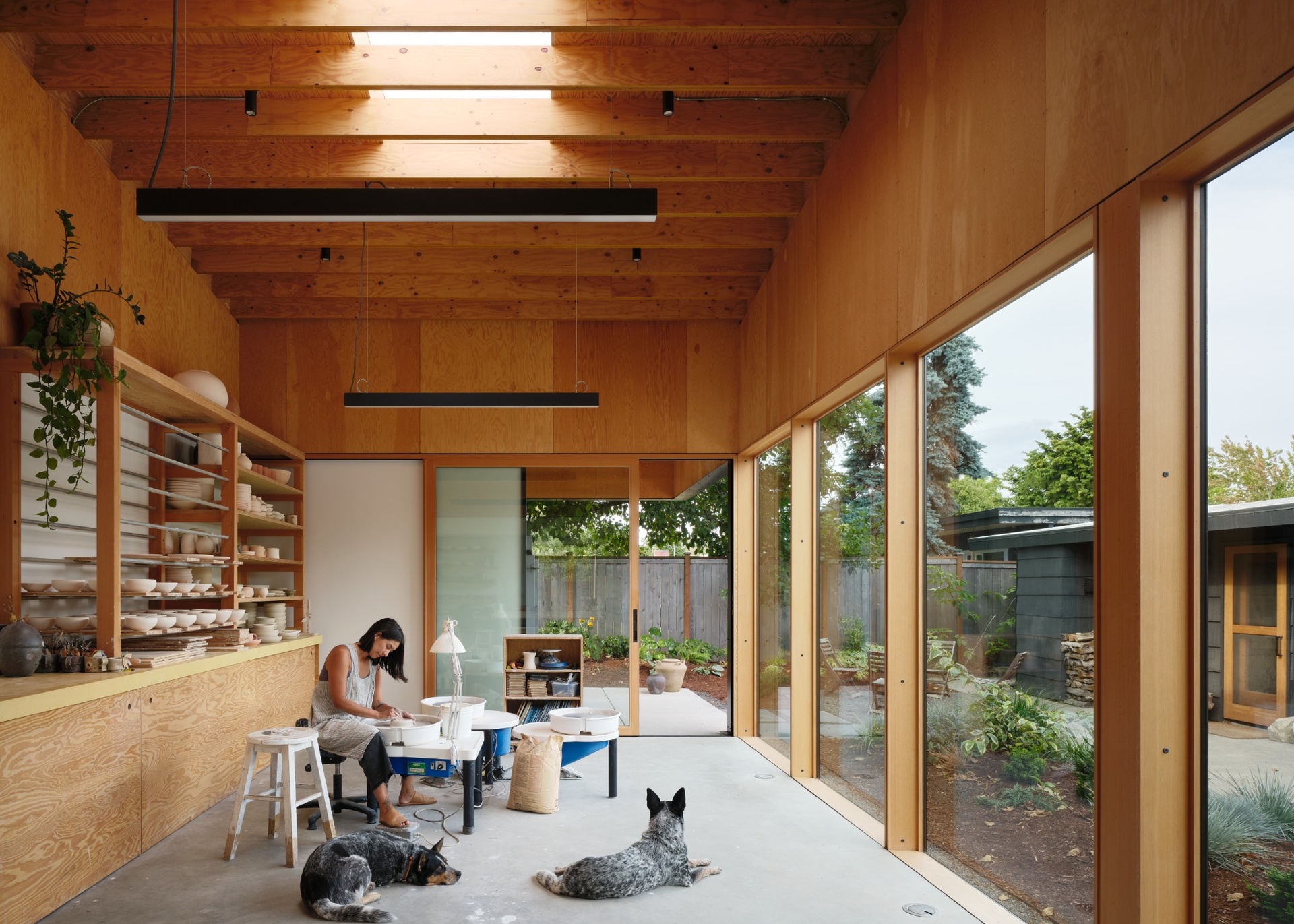
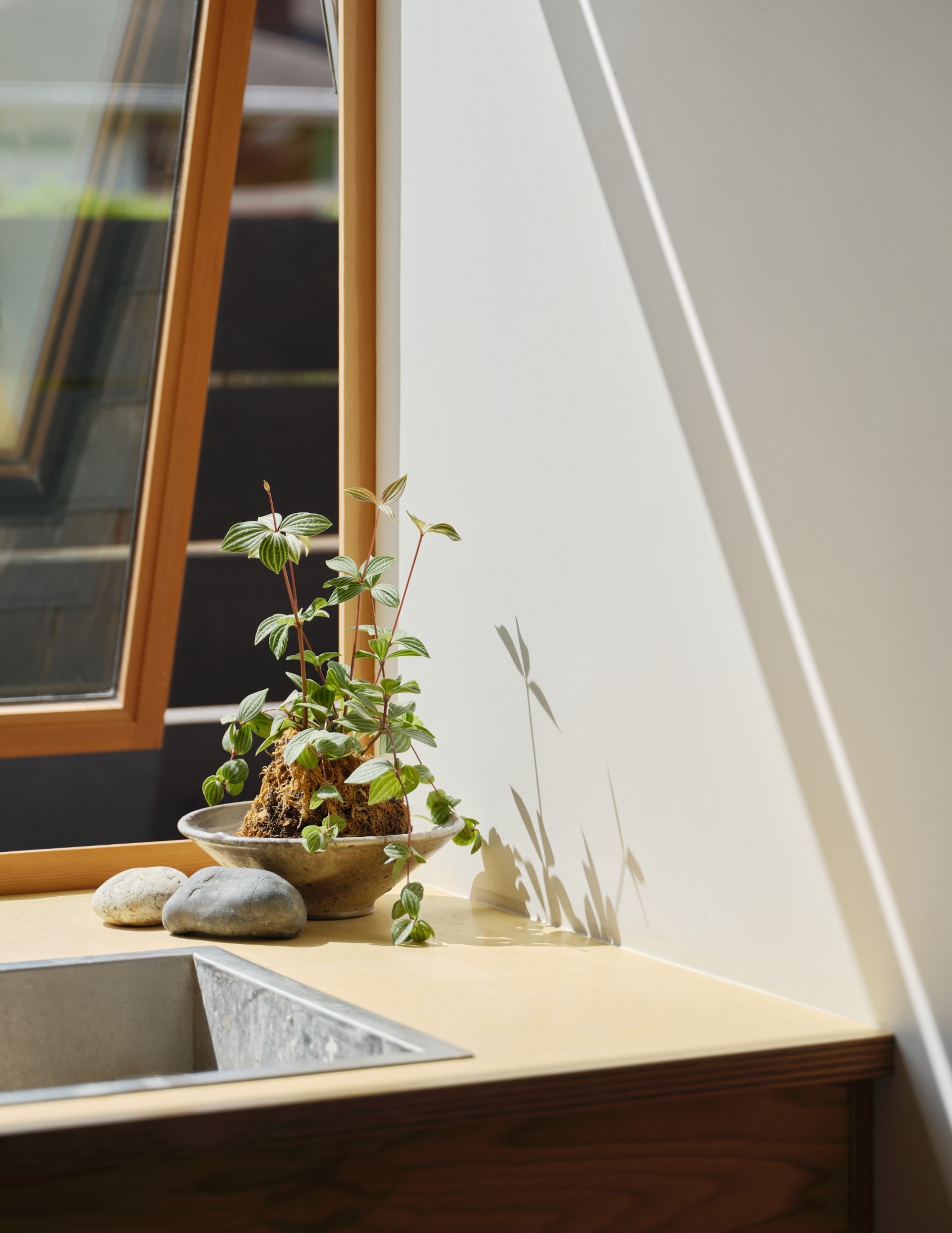
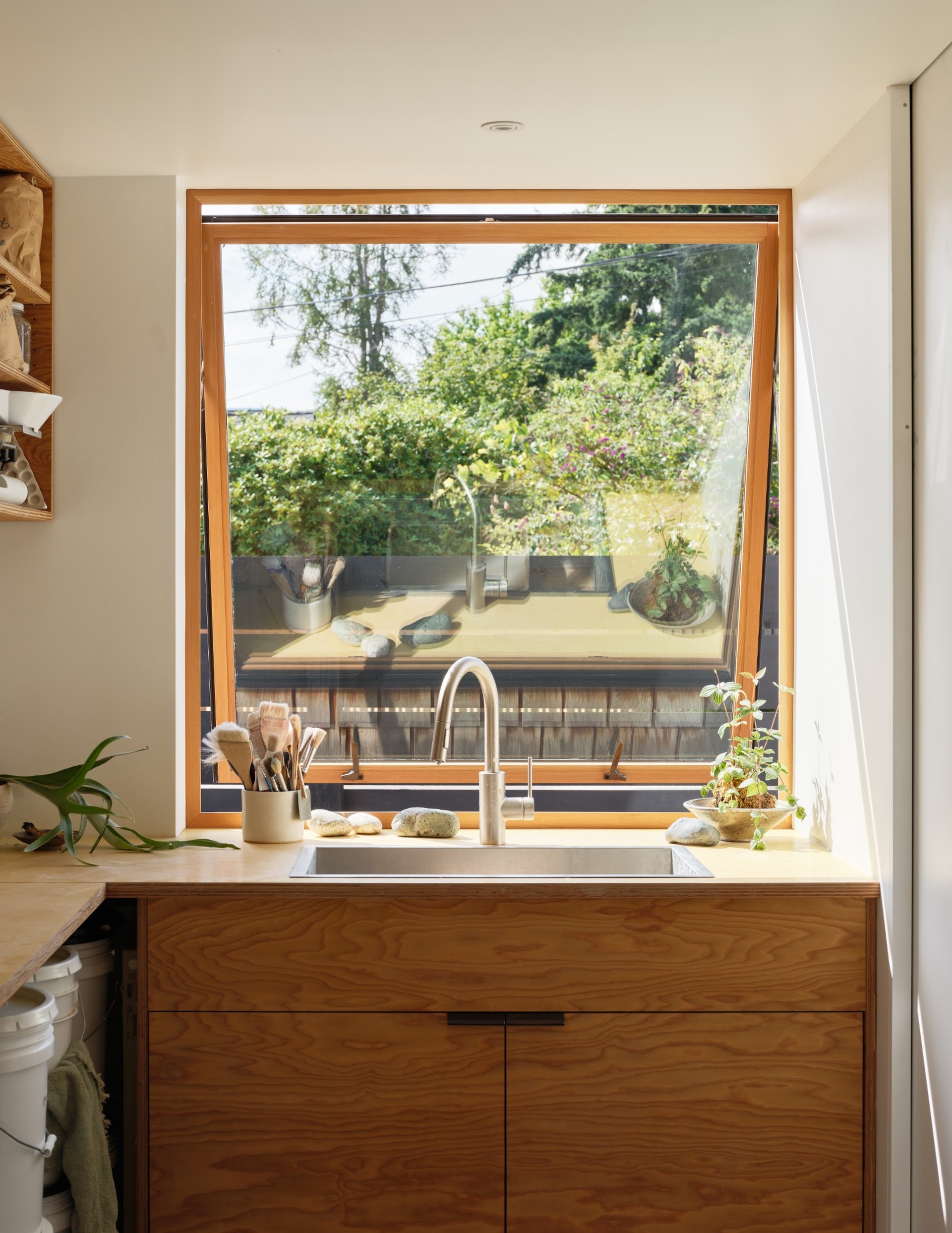
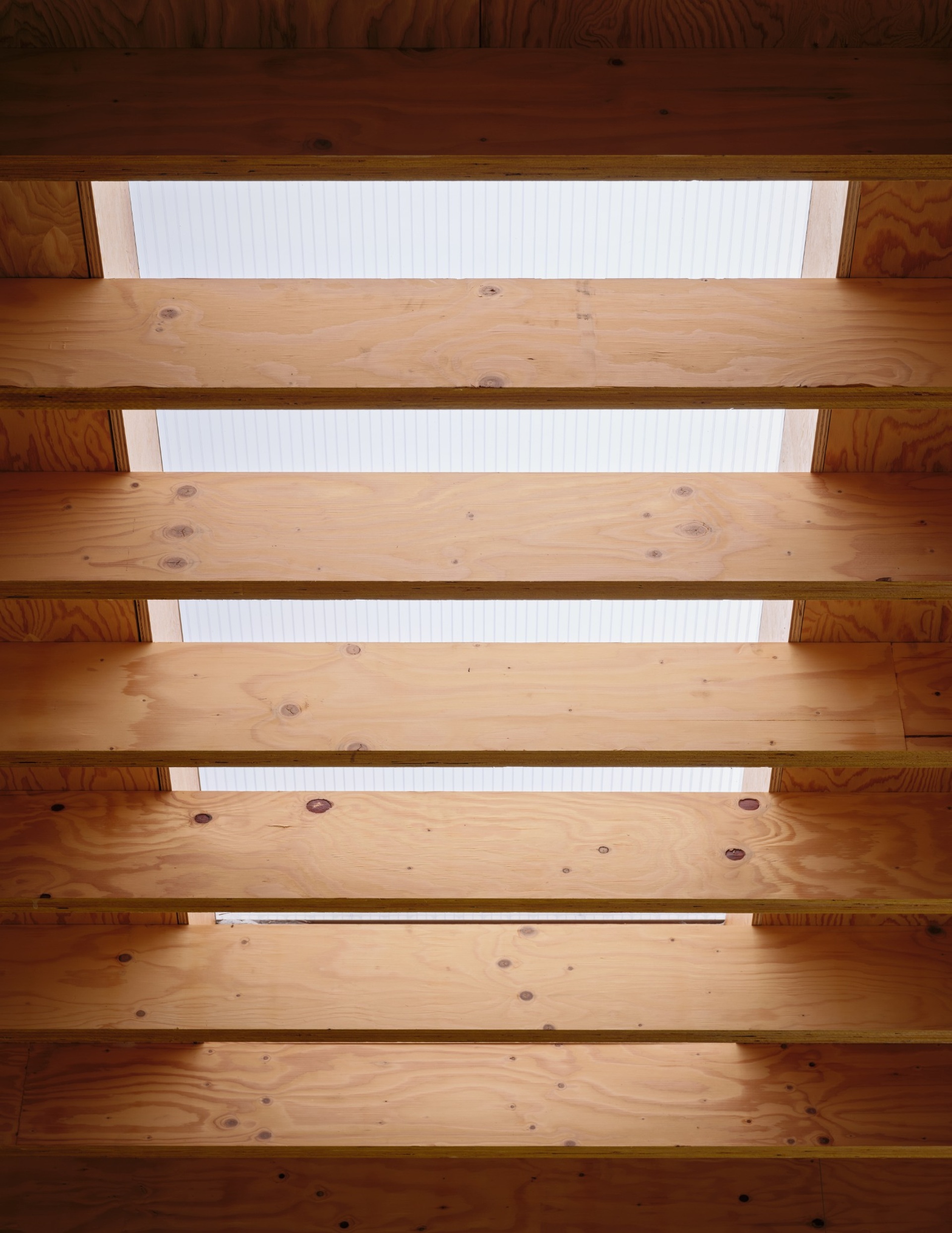
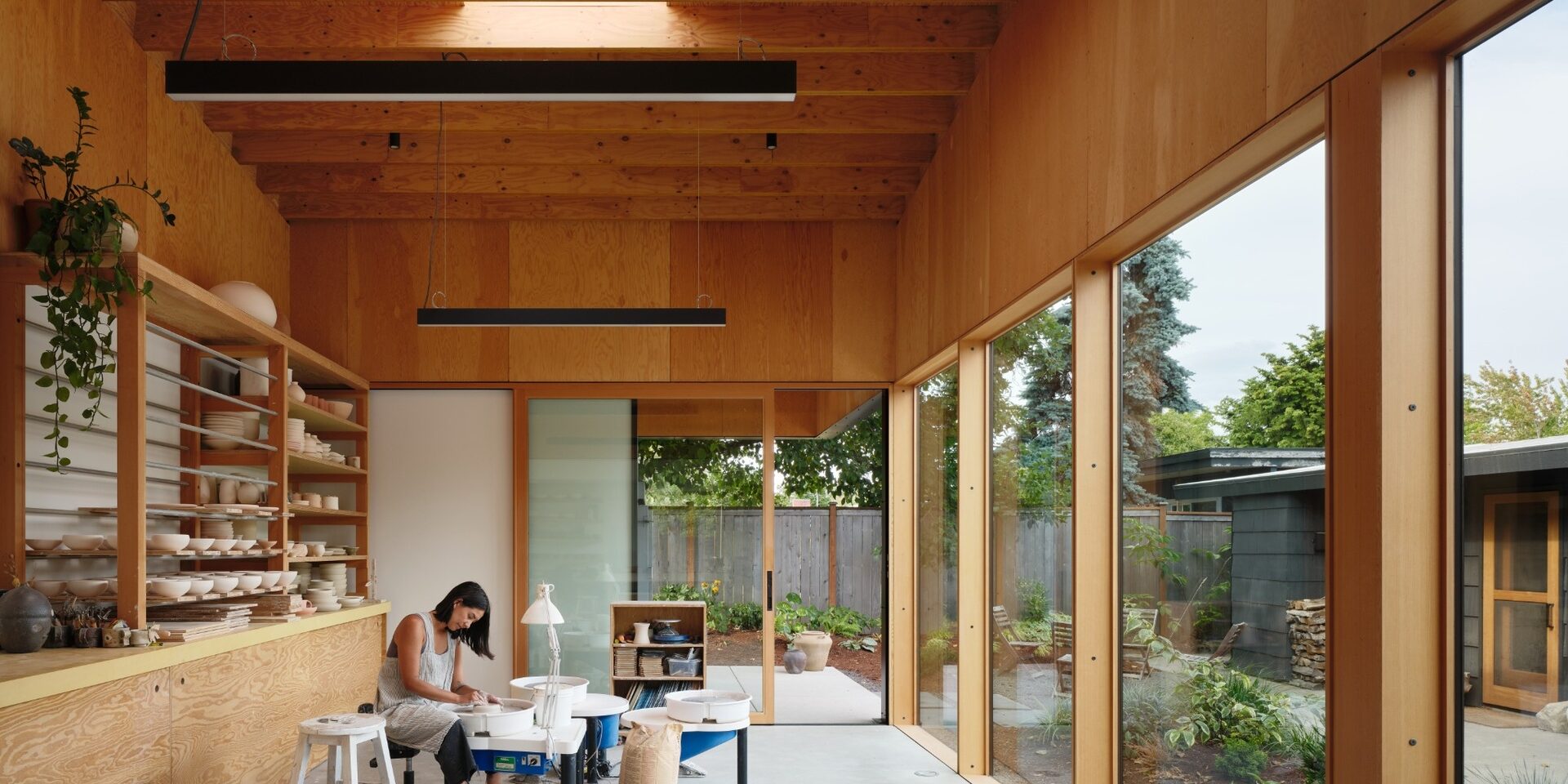
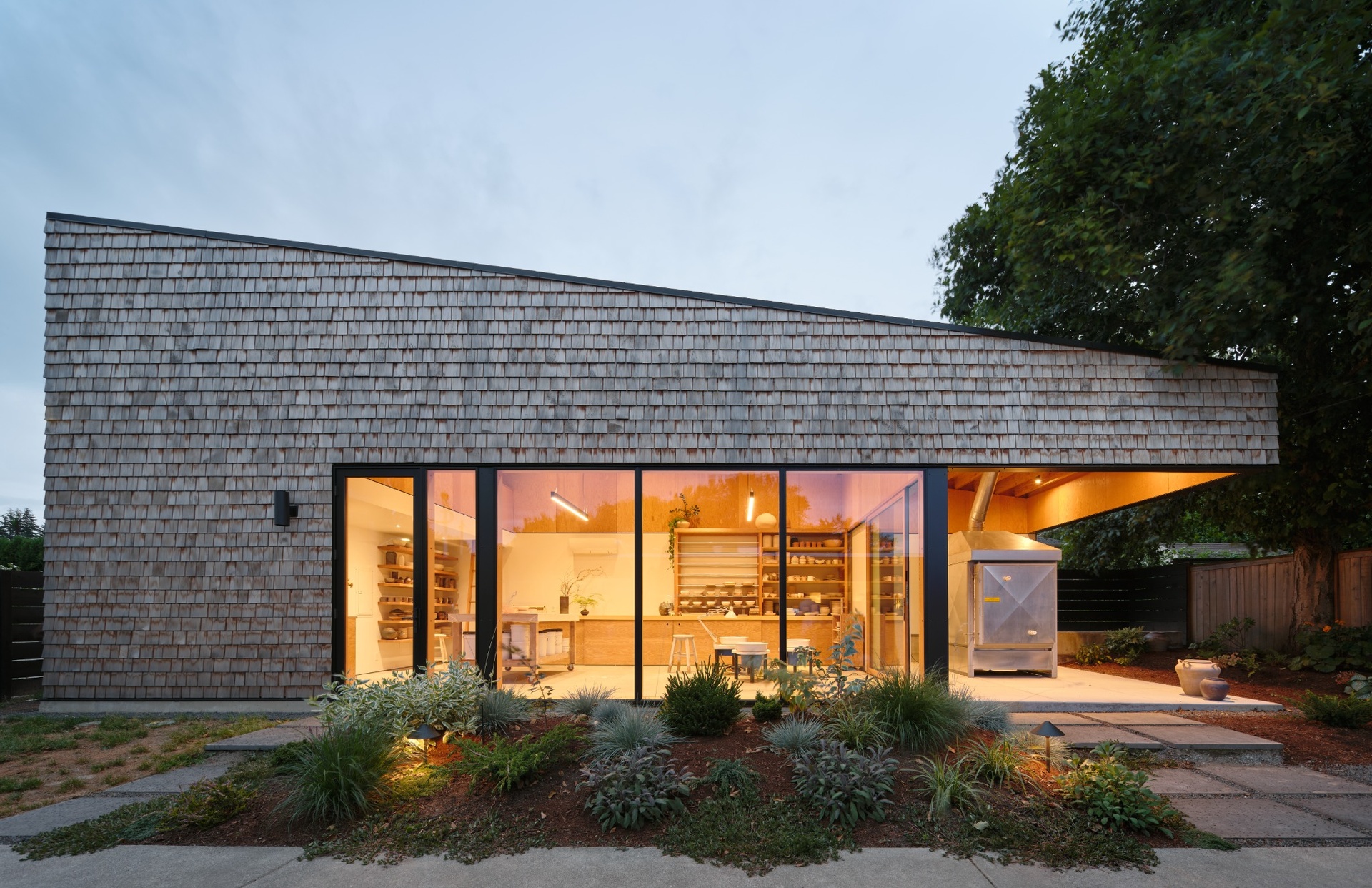
Natural light is central to the project. Large skylights pierce the roof in three key locations: the loft, the main interior studio and the covered exterior kiln terrace. Each opening brings daylight where it is most needed, supporting both the precision of ceramic work and the atmosphere of the space.
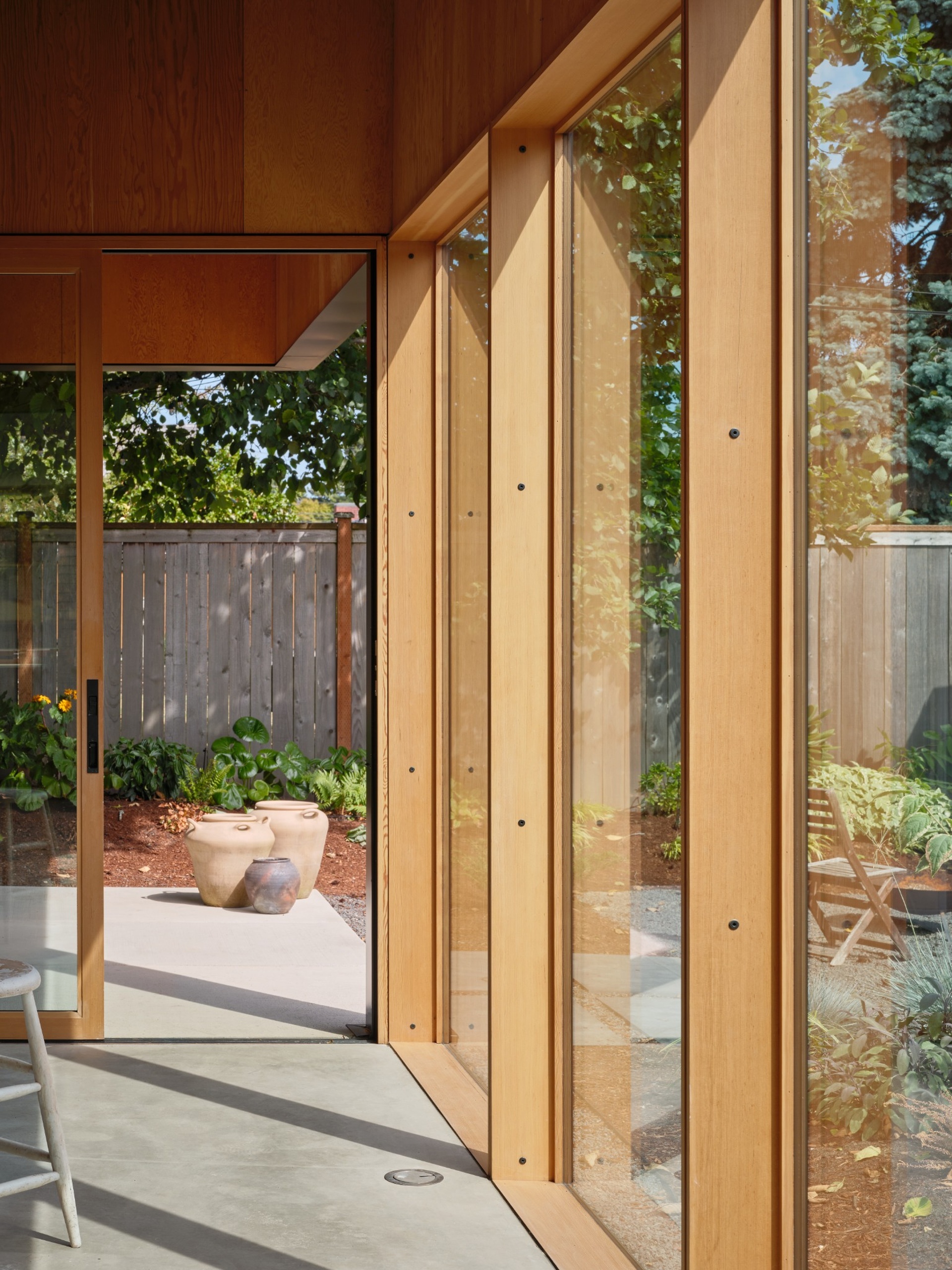
A large cantilevered roof extends from the interior toward the exterior, creating a covered terrace for two kilns and expanding the usable area of the studio. This gesture connects making, firing and gathering within one continuous architectural sequence.
Structure, Wood and Material Continuity
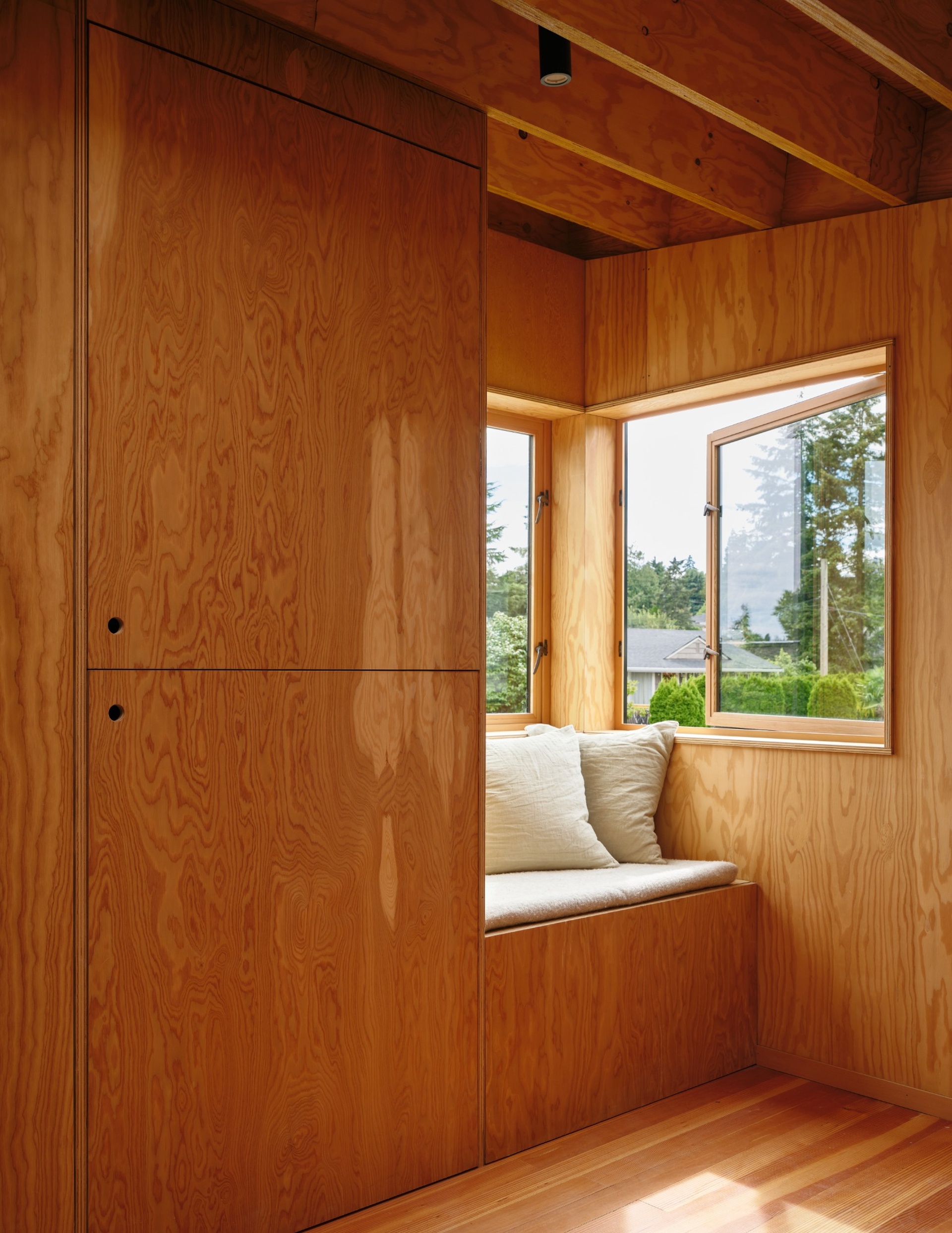
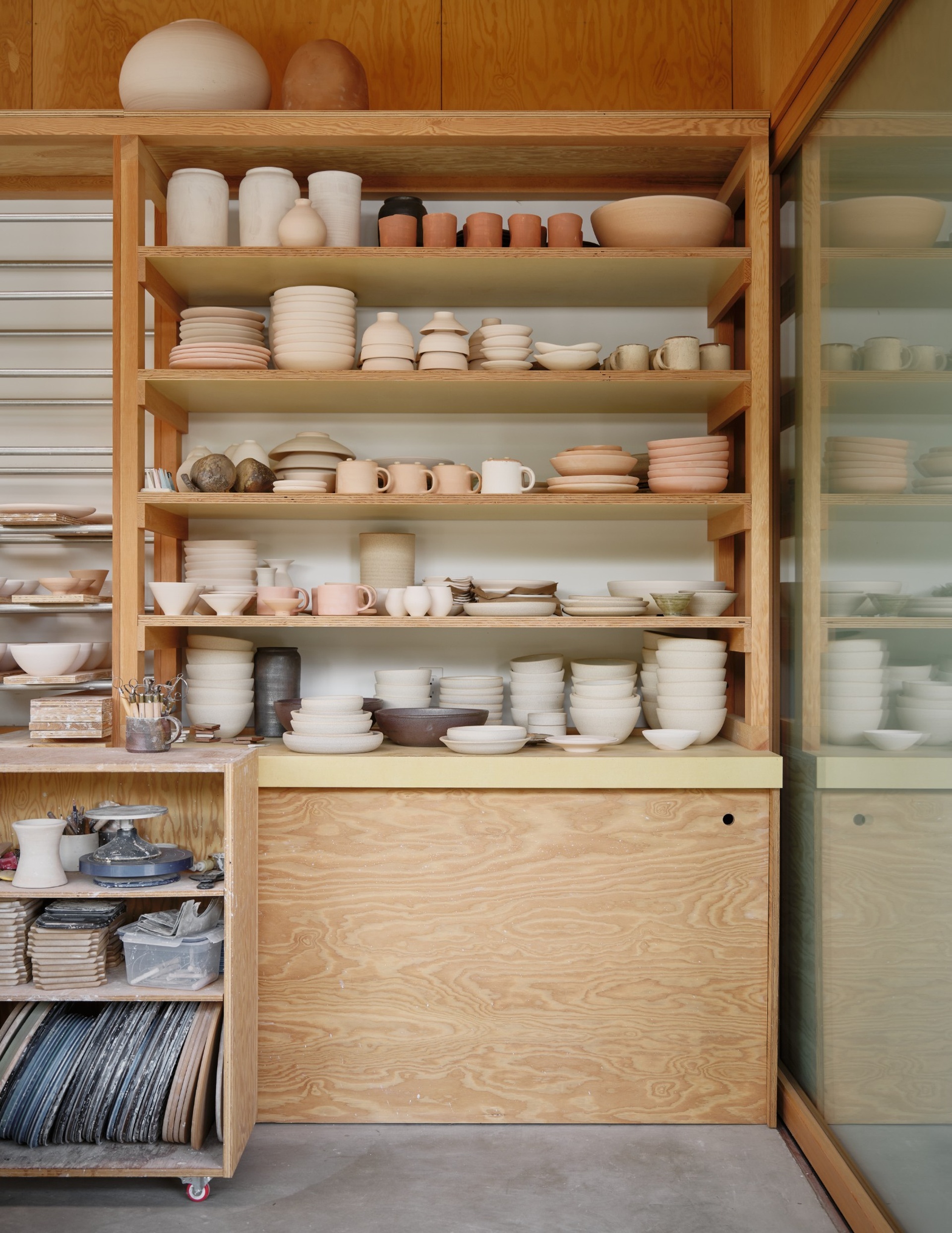
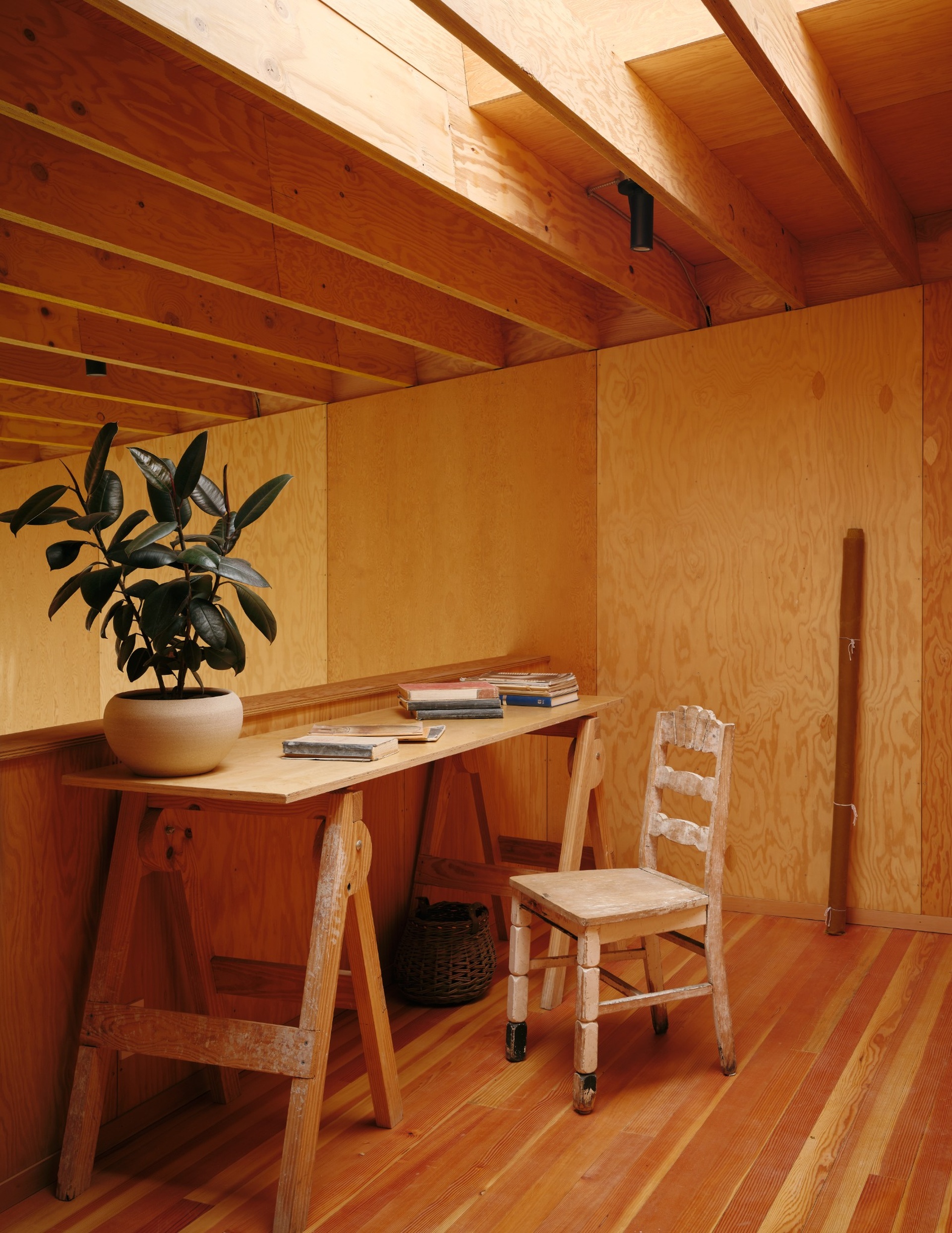
Exposed rafters inside and outside create a clear structural rhythm, bringing warm wood tones through the entire building. The roof structure becomes a unifying element, visually connecting the interior studio, the loft and the outdoor working terrace.
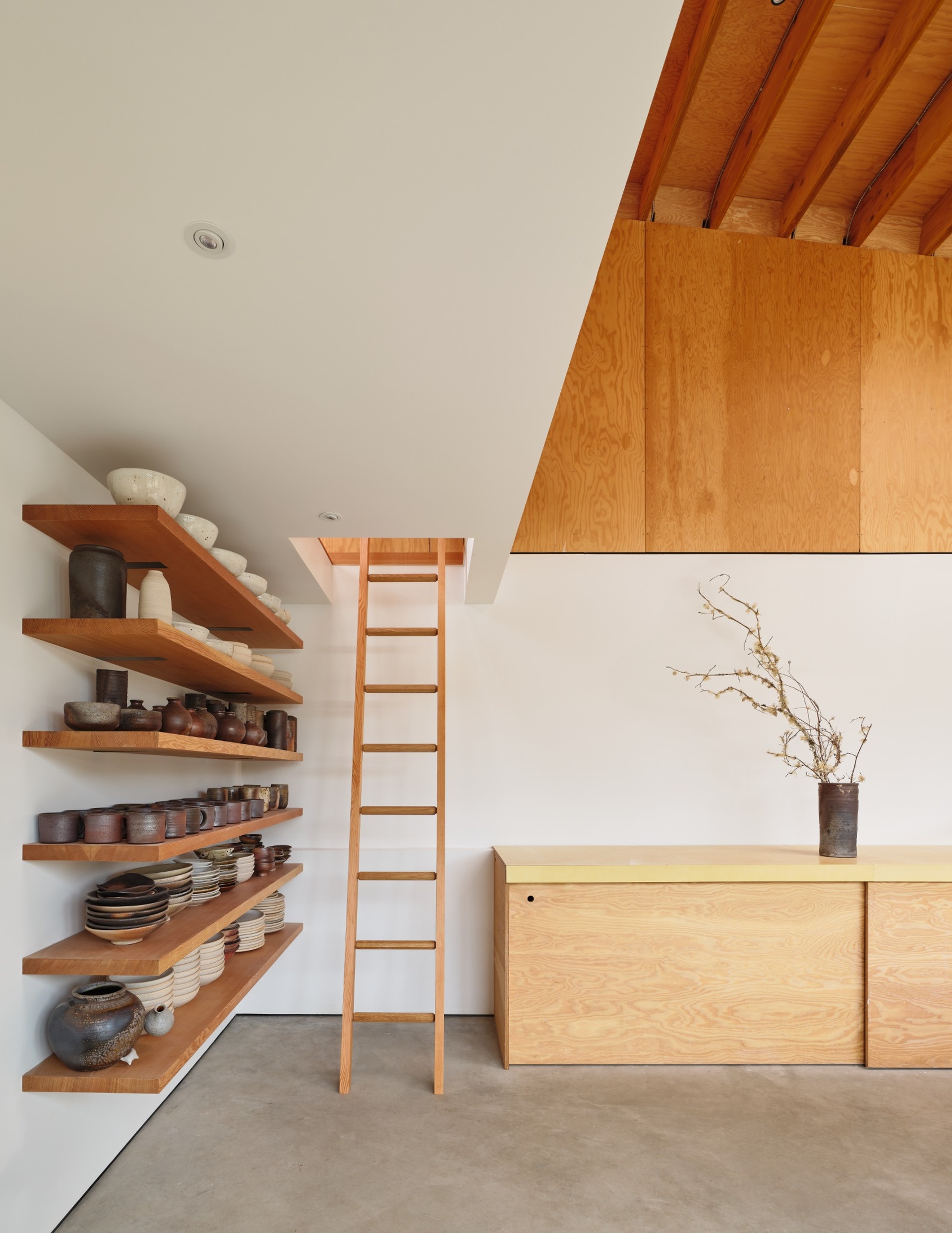
A strong material transition defines the interior: white display walls below and warm wood above. This contrast supports the display of ceramic work while echoing the lines of the structure and the cantilevered roof. Linear up/down lighting illuminates the wood underside of the roof, adding warmth during Seattle’s long winters.
A Simple, Powerful Architectural Expression
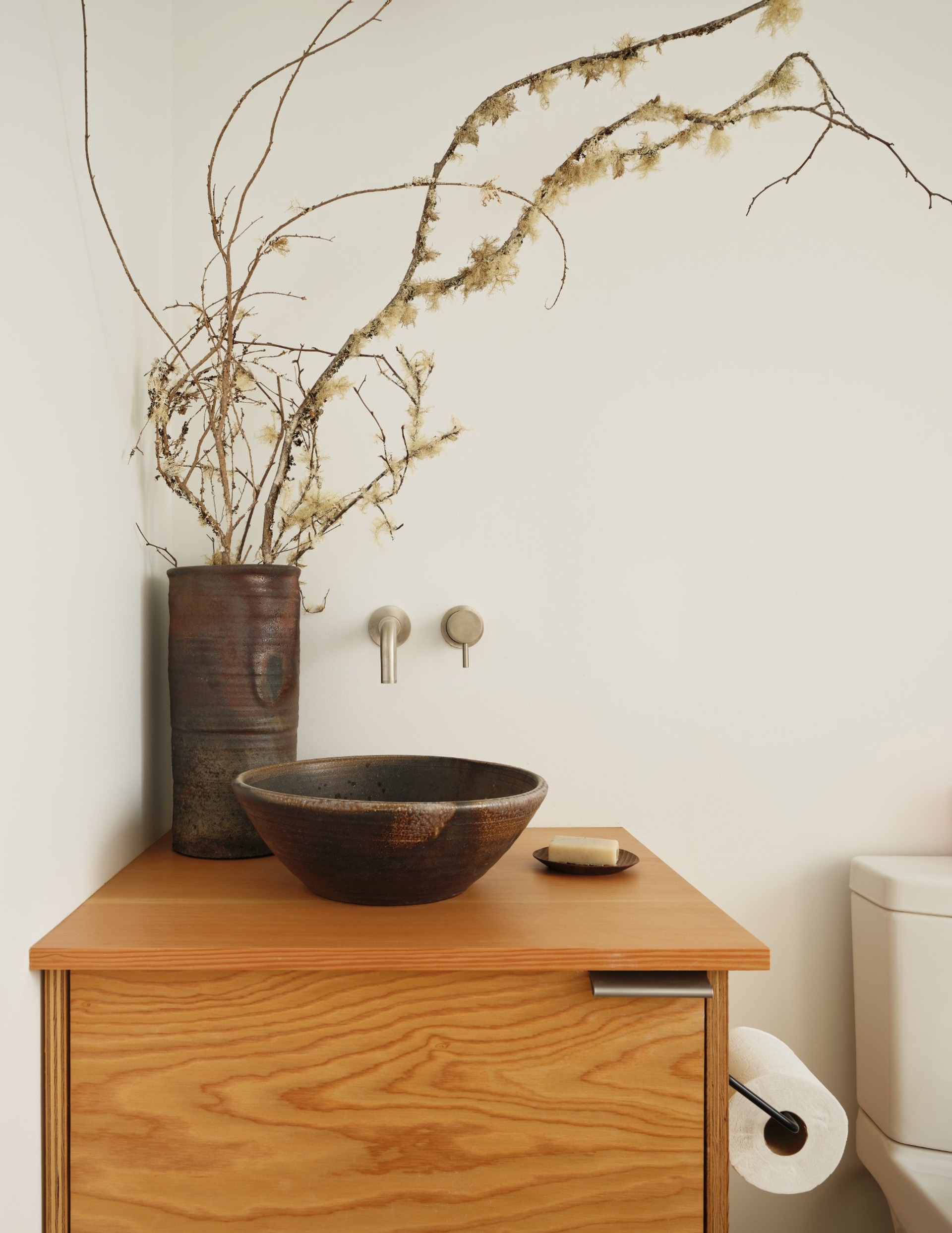
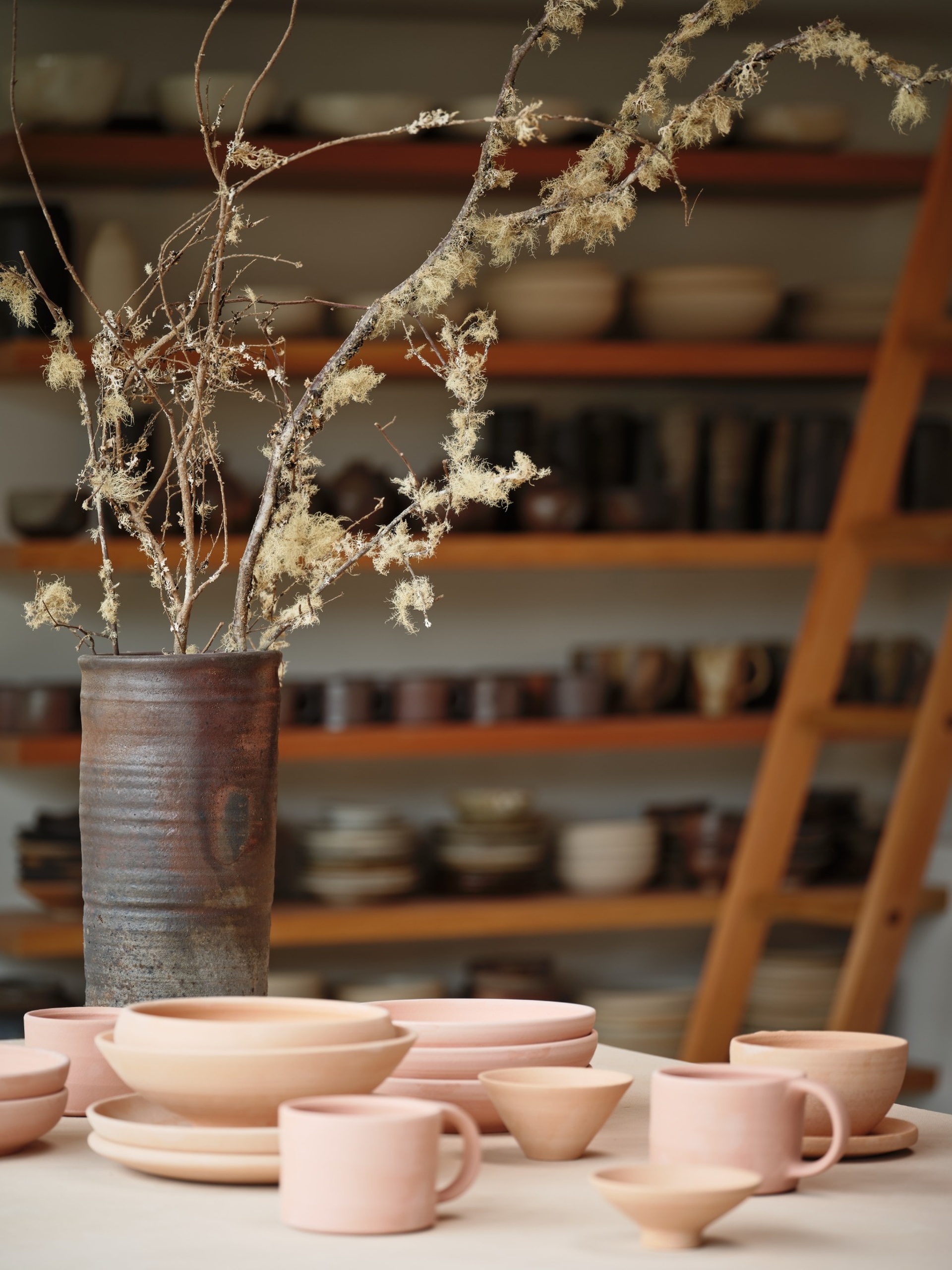
The client’s ceramic practice is described through quiet forms, simplified designs and natural earthy tones. The architecture responds with a similarly restrained language: direct, warm and carefully detailed, without unnecessary visual noise.
Rather than producing a neutral utility shed, the project gives the act of making an architectural presence. It is compact but generous, modest but precise, and designed to support both solitary work and collective activity.
Built Through Collaboration
The project was built on a tight budget. The client worked full-time alongside the contractor during construction, while her partner and friends also contributed to the making of the space. This collaborative process gives the studio a particular character: it is not only a designed object, but a place shaped through shared effort.
Ceramics Studio brings together making, teaching, hospitality and future adaptability in a single small building. It demonstrates how a detached workshop can become both an intimate space of production and a generous social infrastructure for a creative practice.