Apartment in Psychiko
Interior Design:
Photography:

The project focuses on the redesign of the living area, guided by the principle of preserving the existing floor plan to the greatest possible extent. The original layout comprised a clearly defined entrance hall and a closed kitchen, connected to the private quarters via a corridor. The main challenge lay in reorganizing the shared spaces to create a more open, functional, and contemporary environment, without compromising the apartment’s inherent character.
Functional Layout
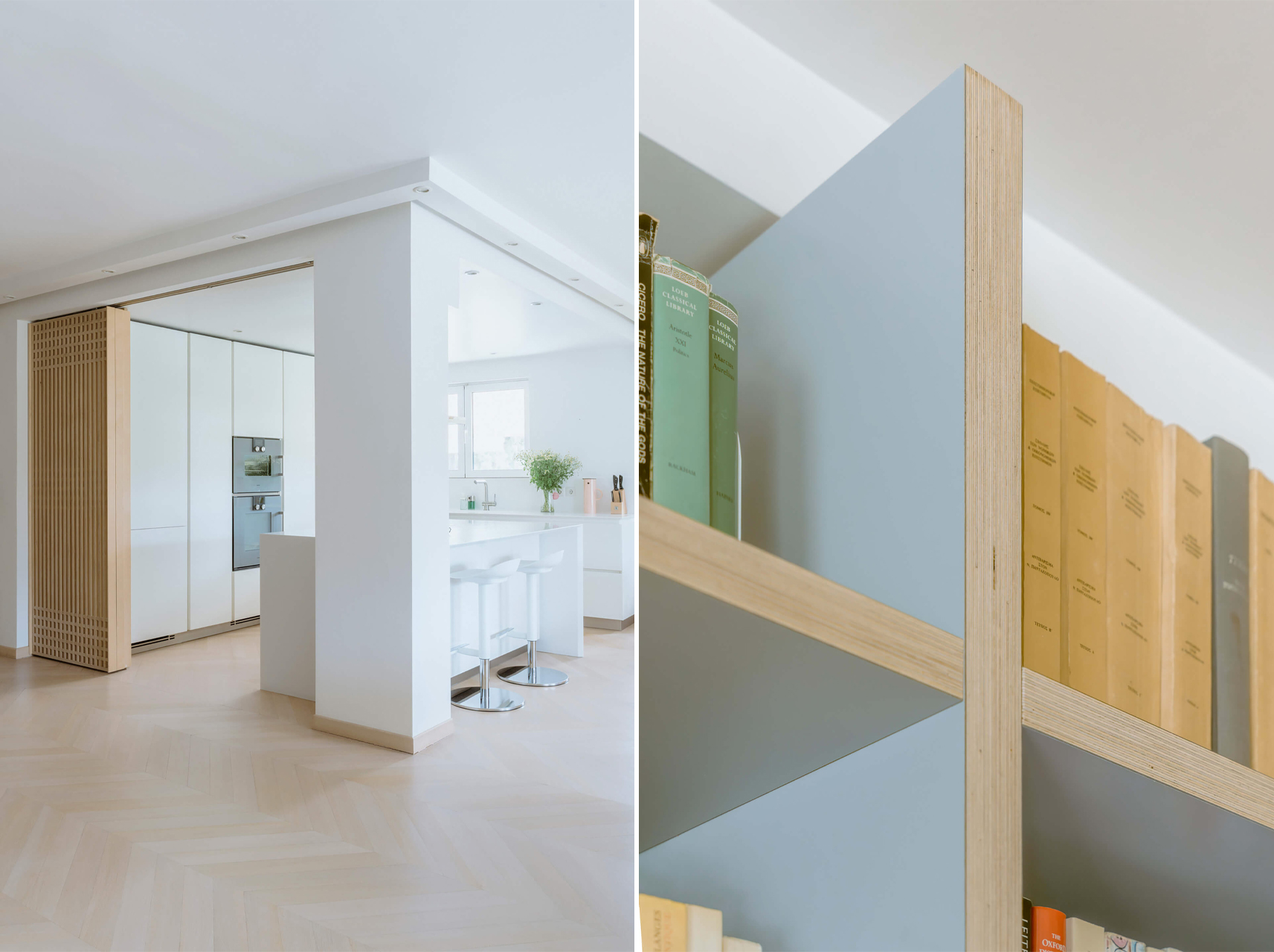
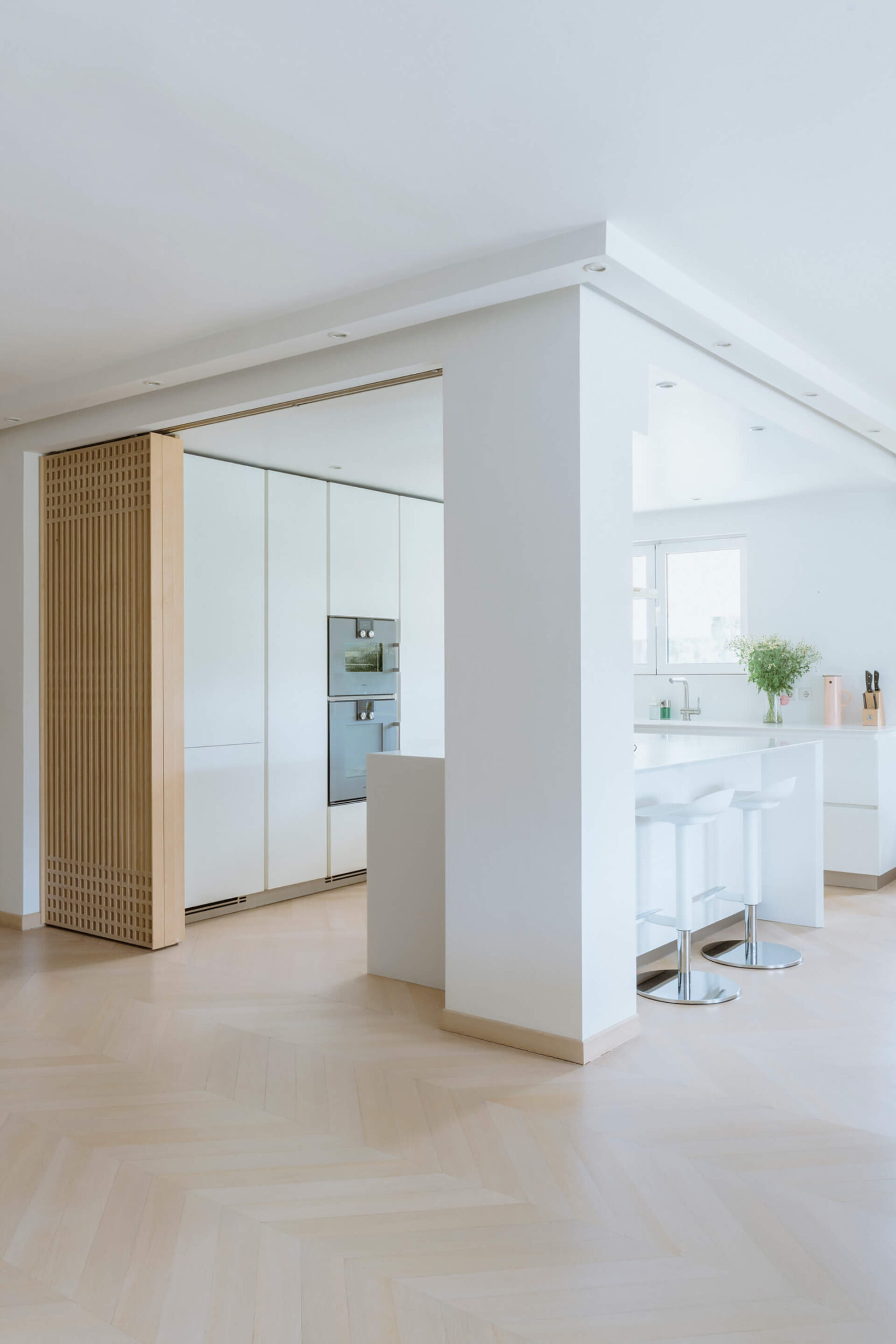
The first phase of the intervention is defined by targeted, small-scale operations with a substantial spatial impact. The removal of the door leading to the private areas allows for the reconfiguration and functional enhancement of the kitchen. The demolition of the entrance hall partitions unifies the space and strengthens the spatial sequence from the entrance toward the living area. Simultaneously, the kitchen is directly linked to the dining and living zones, forming a continuous, open-plan environment for everyday life.
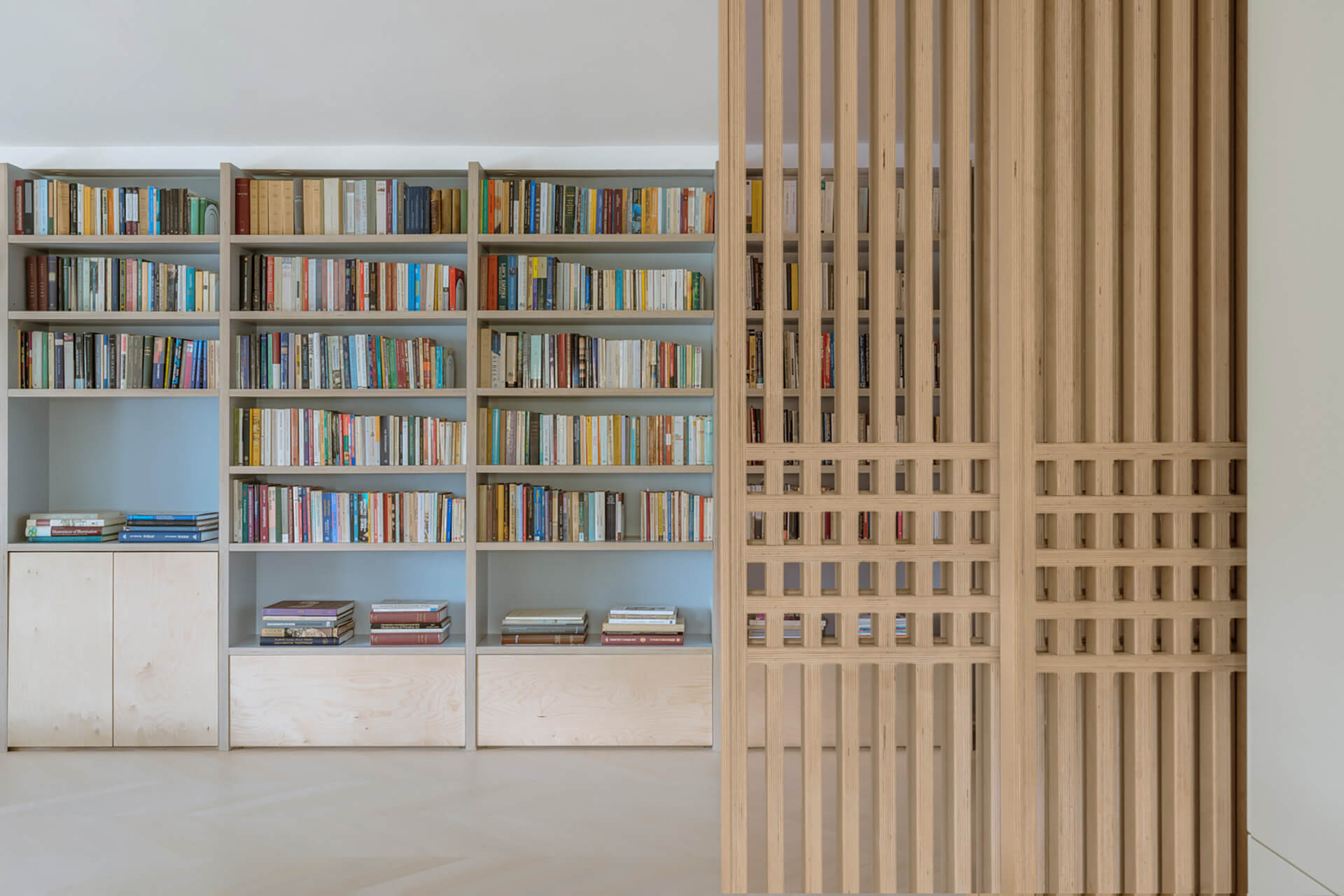
A defining feature of this phase is the introduction of sliding plywood partitions. Operating as a flexible spatial filter, they allow the kitchen to be visually and functionally concealed, when necessary, while adding material depth and warmth to the otherwise restrained, predominantly white interior.
Custom Elements
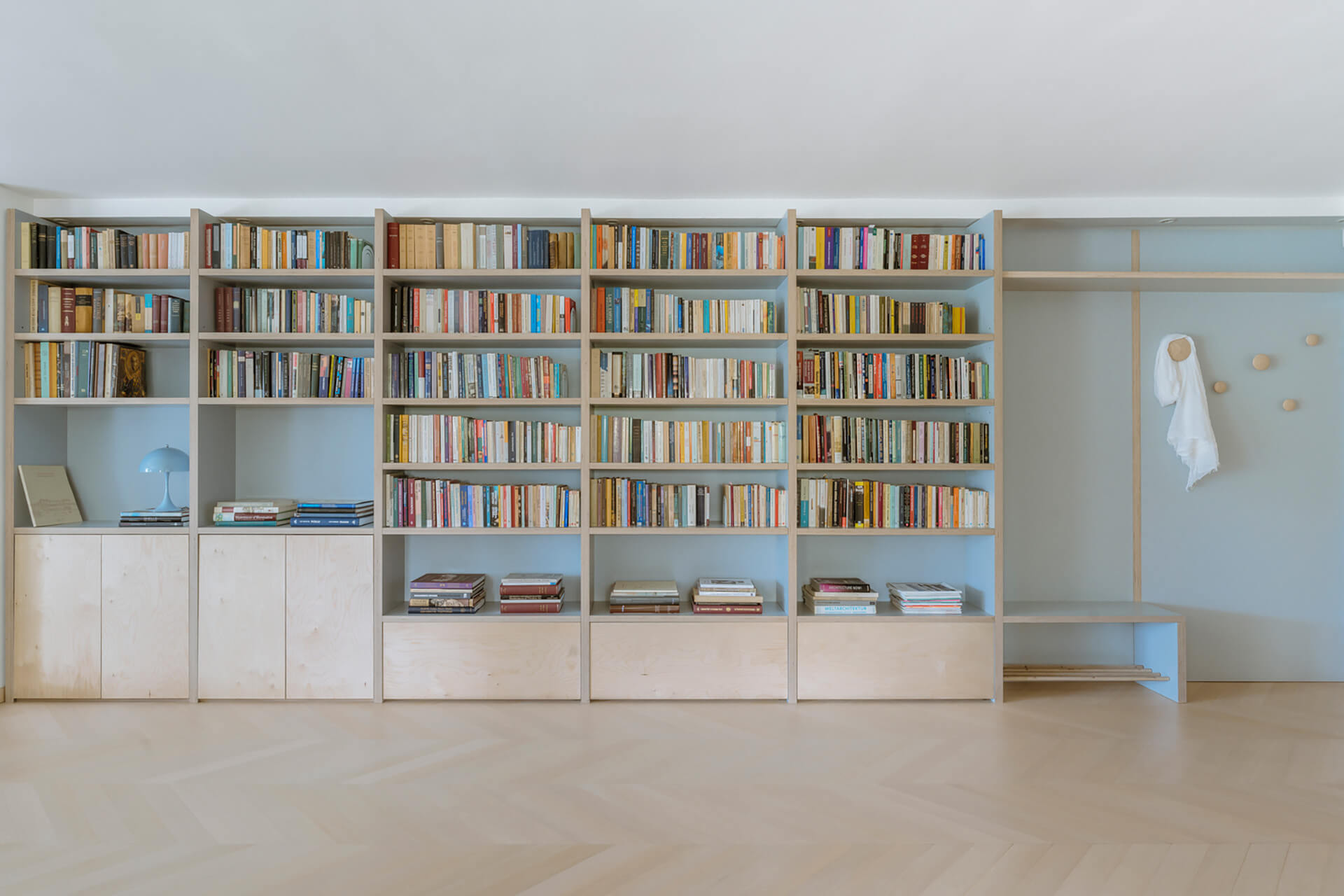
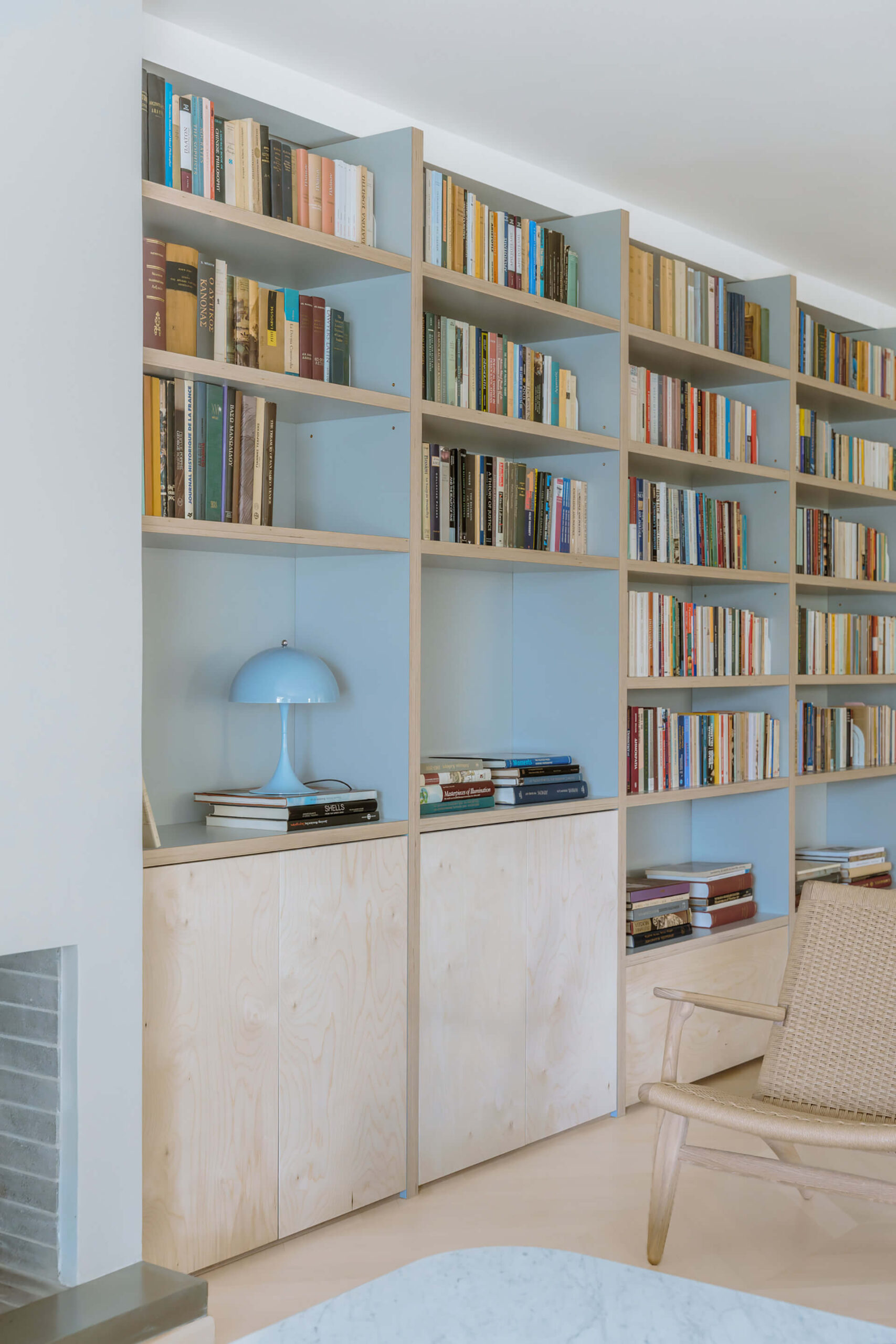
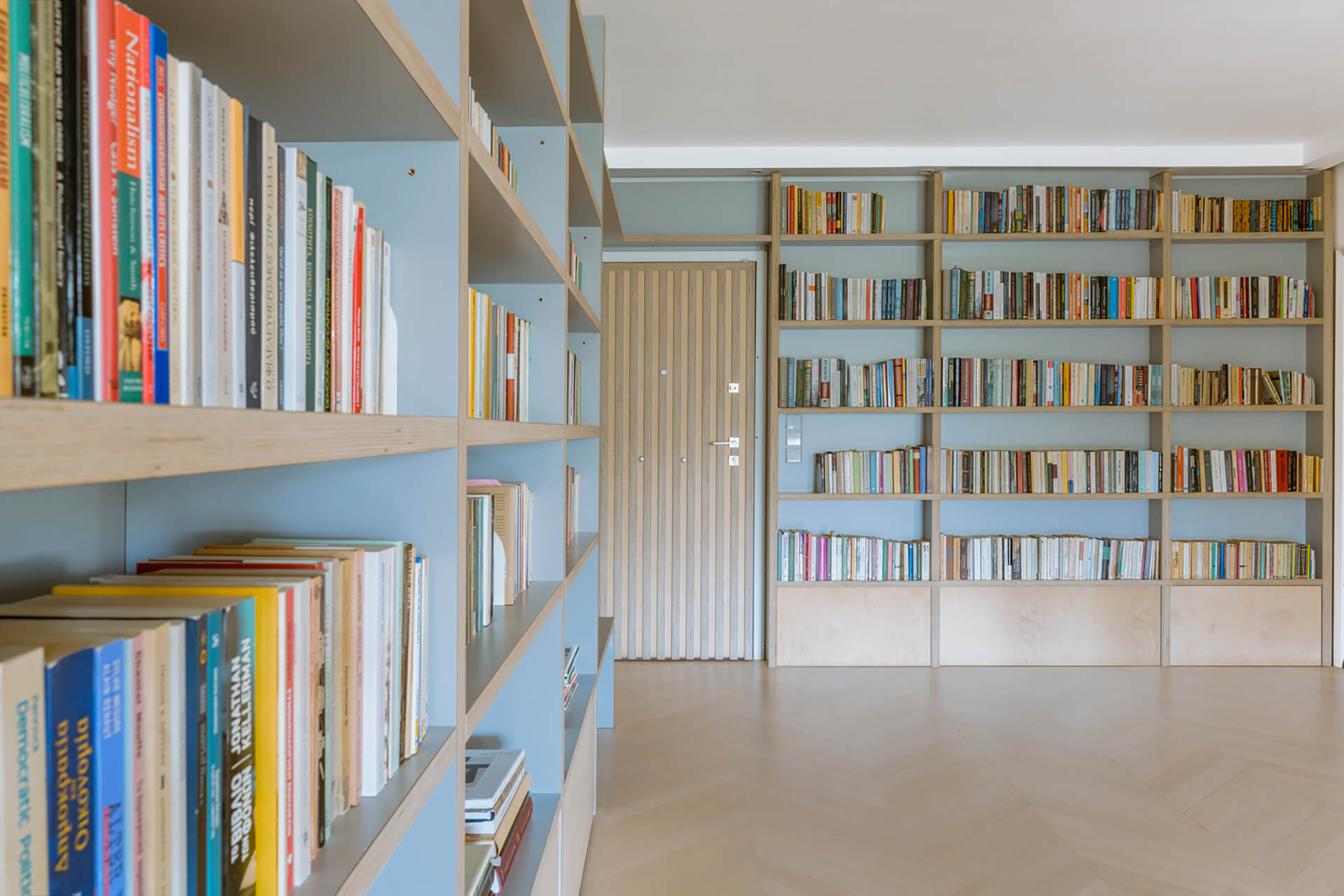
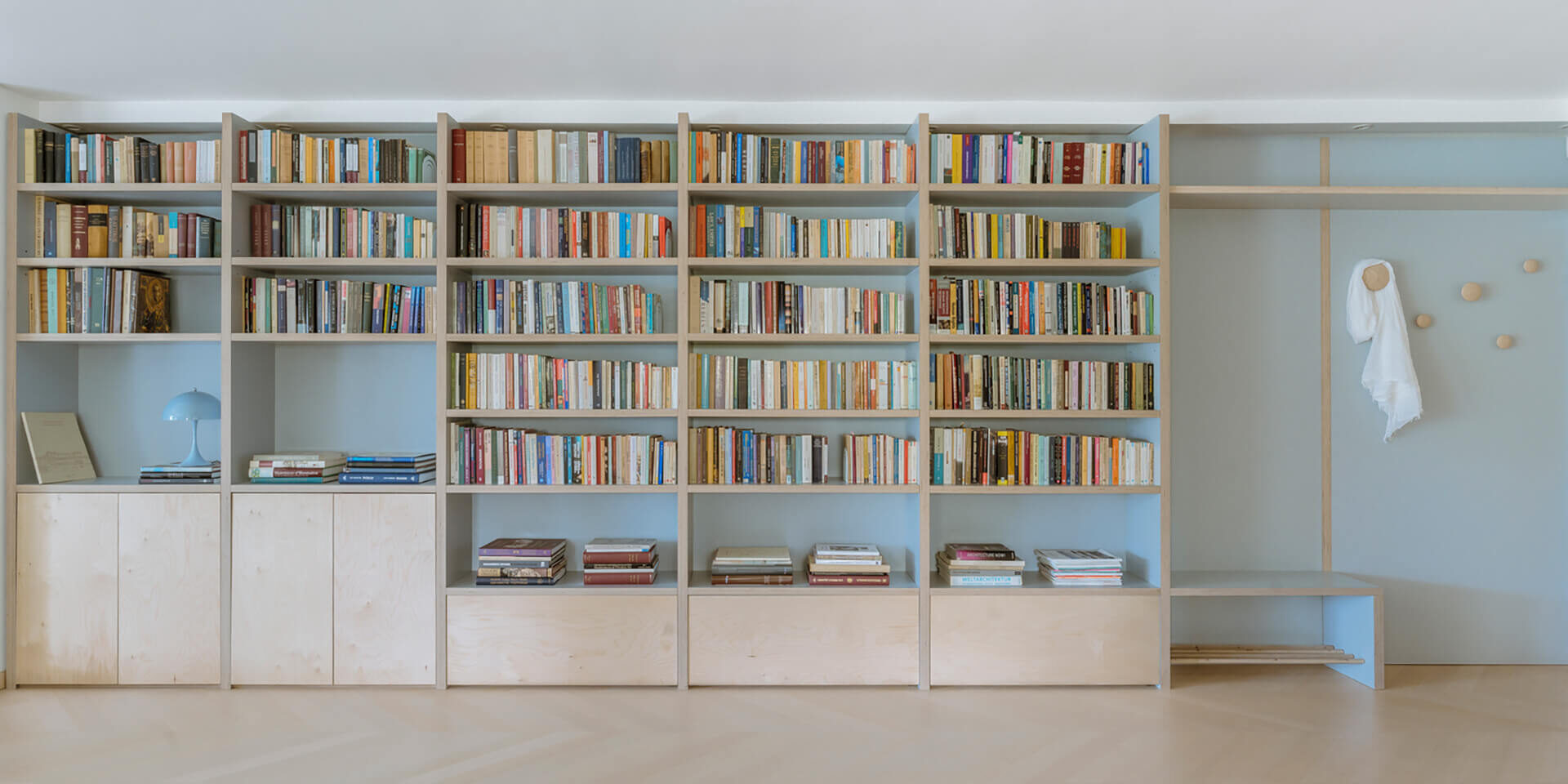
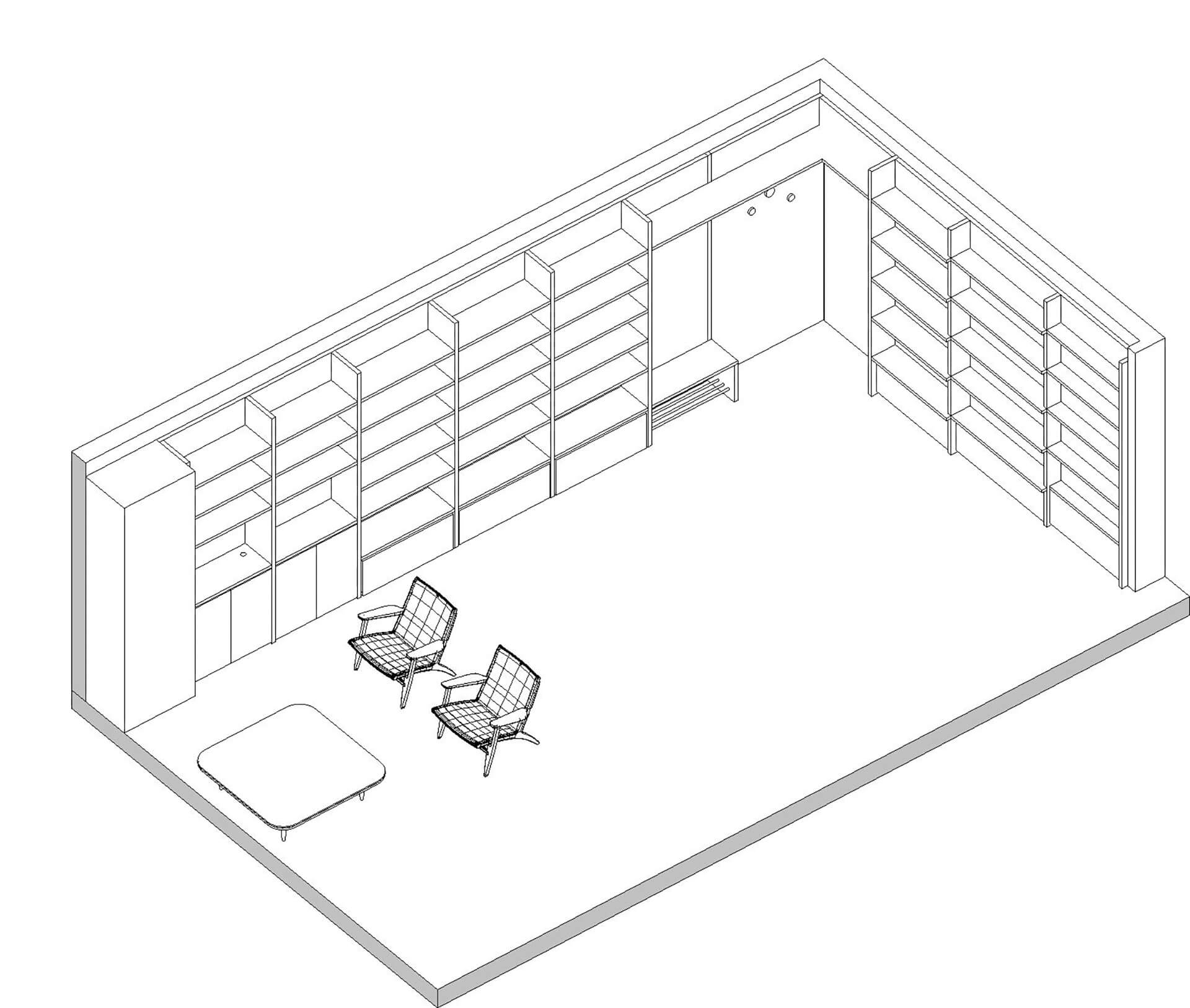
Following several years of inhabitation, the need for additional storage emerged in the form of a bookcase along the wall adjacent to the entrance. The proximity of the door to the private areas presented both a limitation and a design opportunity. In response, the second phase introduces a modular shelving system composed of three interconnected units of increasing scale. This gradual progression accommodates books of varying sizes, with the largest module positioned closest to the door.
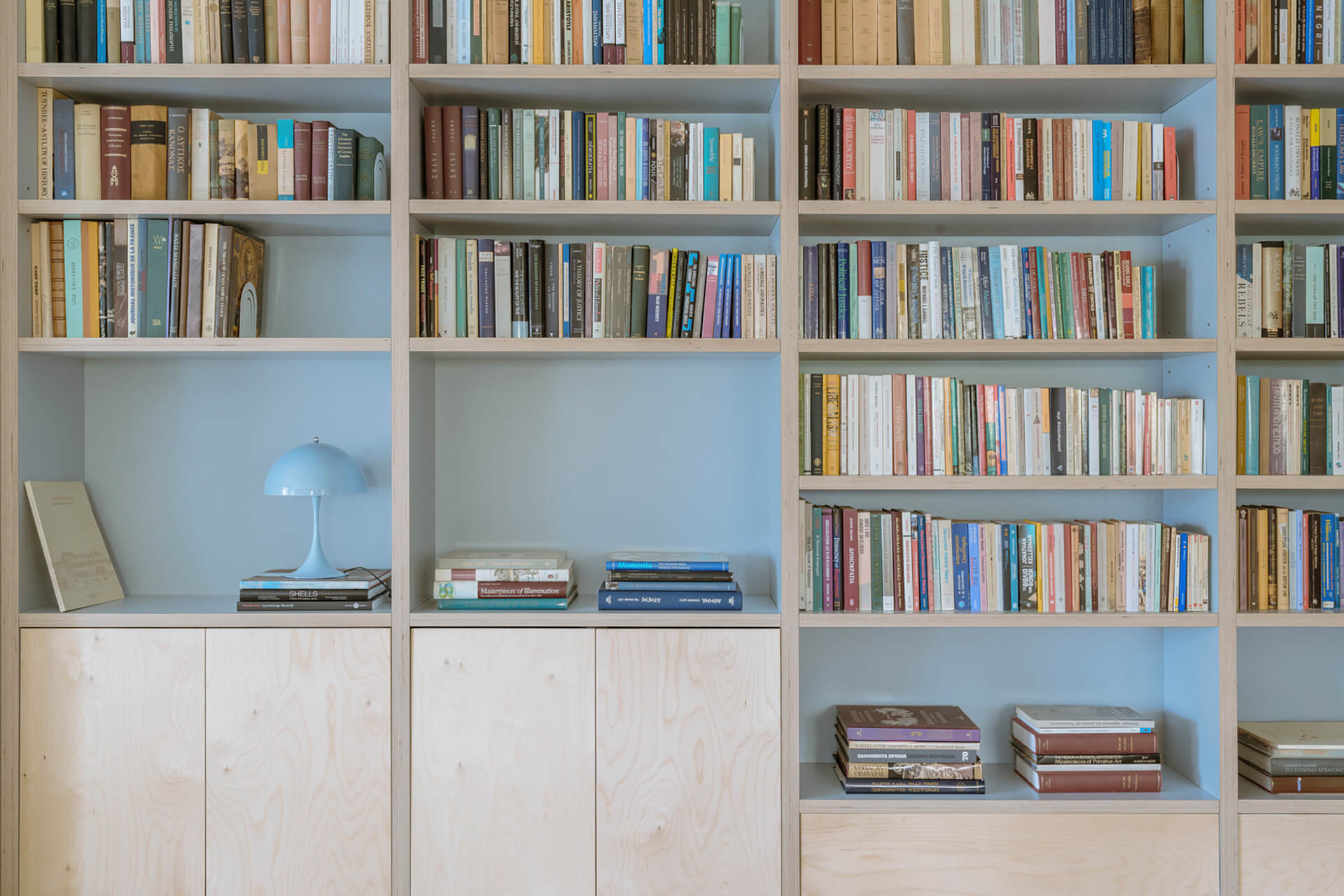
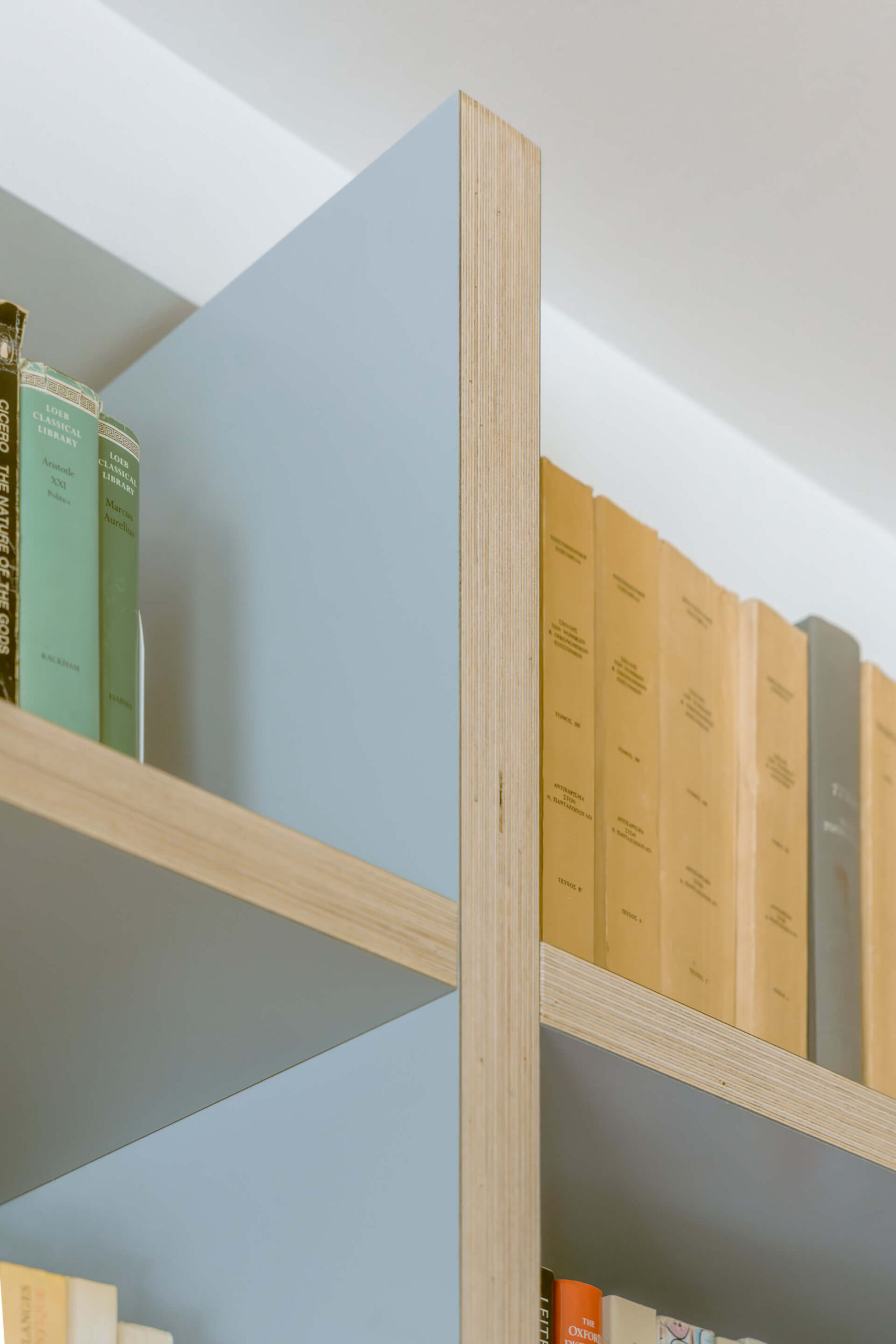
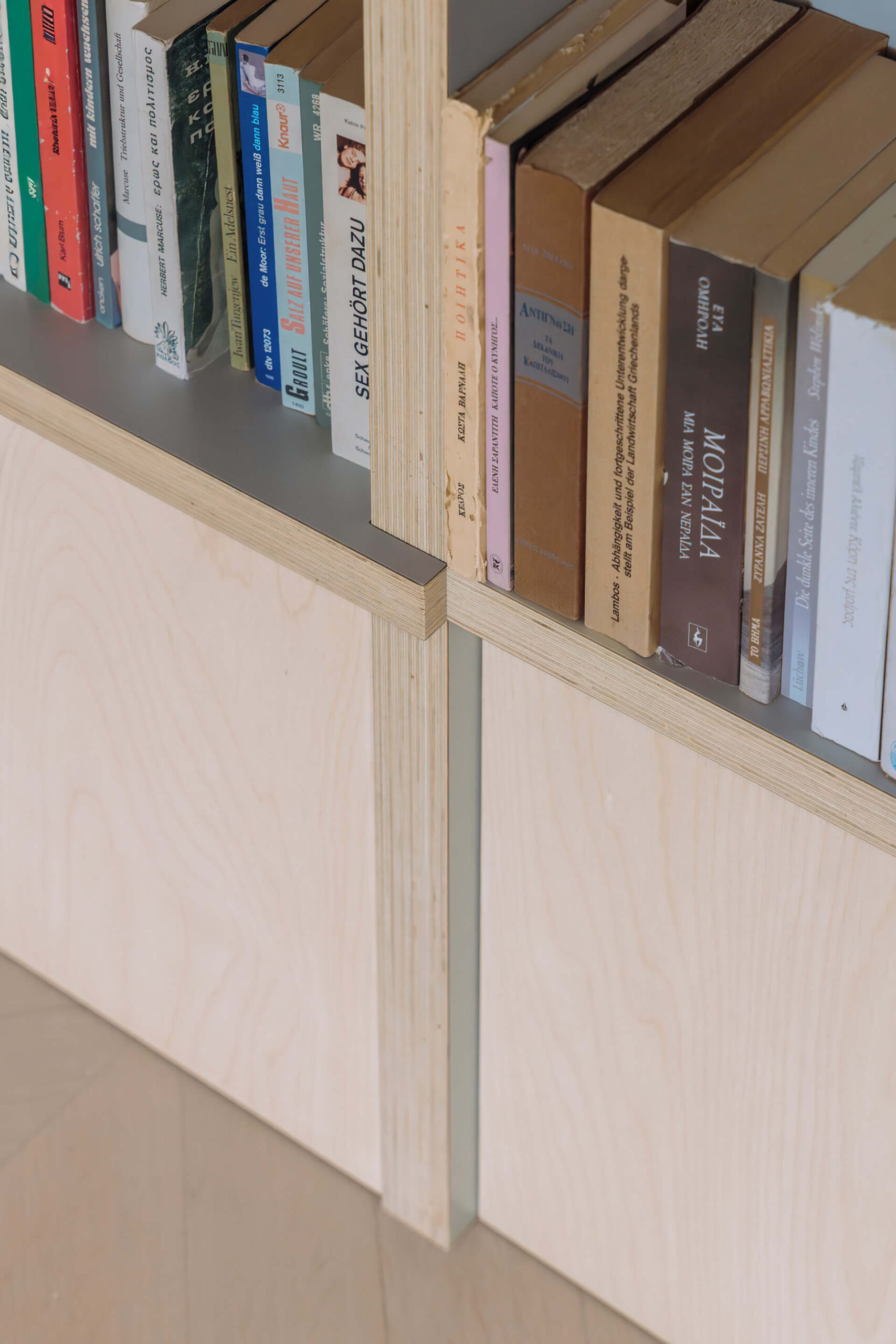
Constructed from plywood and grey-blue Formica, the bookcase introduces a subtle chromatic accent while remaining consistent with the material language established in the first phase. The door, initially white and visually disruptive, is clad with vertical plywood strips, allowing it to dissolve into the overall composition.
Ancillary Spaces & Materials
A third phase of design and construction addresses the growing need for additional storage through an extension of the existing shelving system. The new intervention adheres to the proportions and formal logic of the original structure, while responding to the evolving functional requirements of the residents.
The extension integrates multiple functions: generous book shelving, enclosed storage, a dedicated area for removing and storing shoes upon entry, and a discreet arrangement of coat hooks. Rather than introducing a conventional wardrobe element, the design proposes a solution that maintains its spatial clarity and visual balance whether in use or left empty.
The seamless integration of the extension into the existing system is critical to the project’s success. Particular attention is given to the calibration of width and depth, ensuring continuity and coherence. The three central shelves of the new structure echo the proportions of the three sliding plywood partitions introduced in the first phase, establishing a subtle dialogue between different temporal layers of the project. A corner shelf acts as a connective element between old and new, while mobile plywood boxes on castors beneath the main shelves provide flexible and adaptable storage solutions.