Athena Residence in Kolonaki
Interior Design:
Photography:

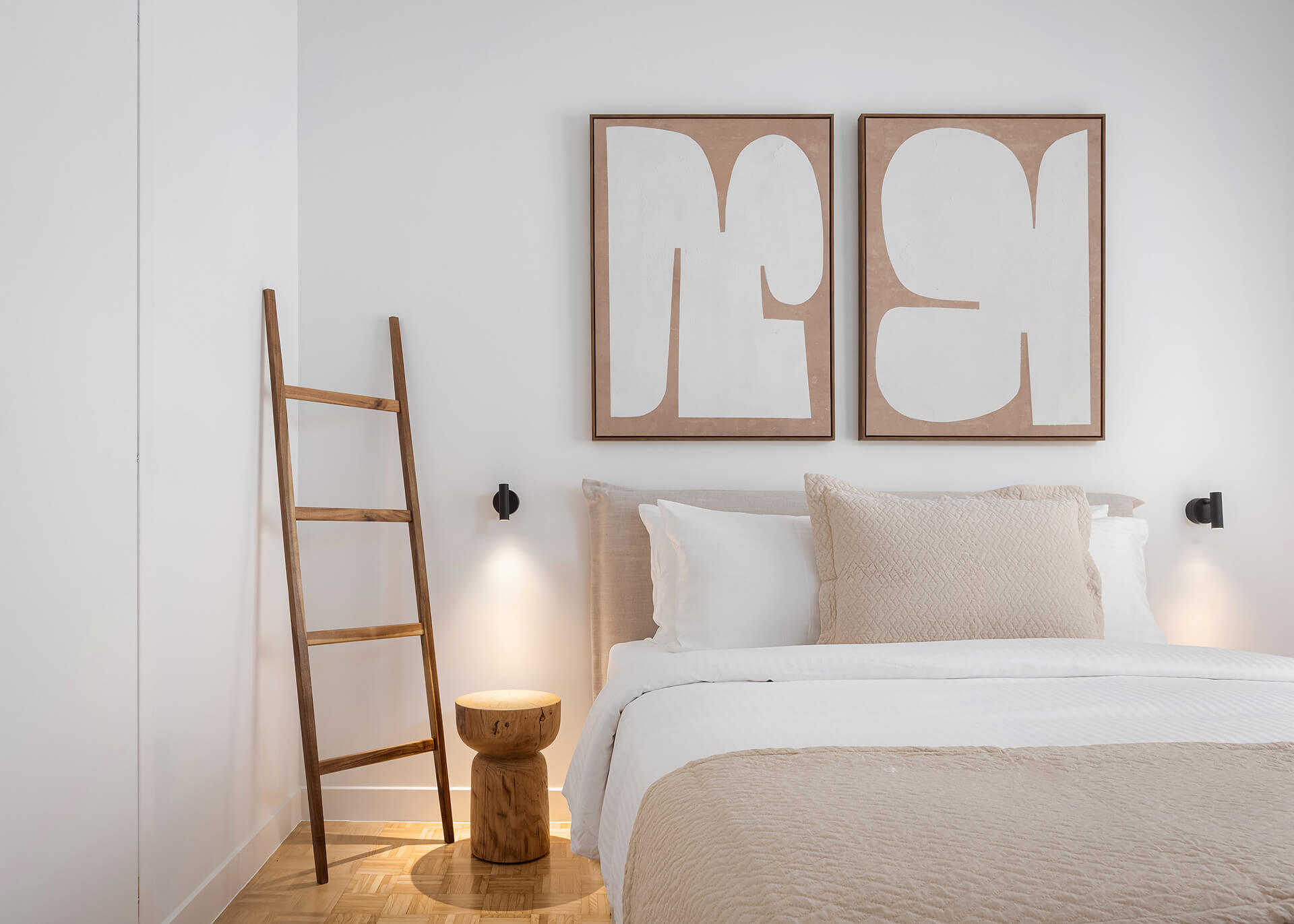
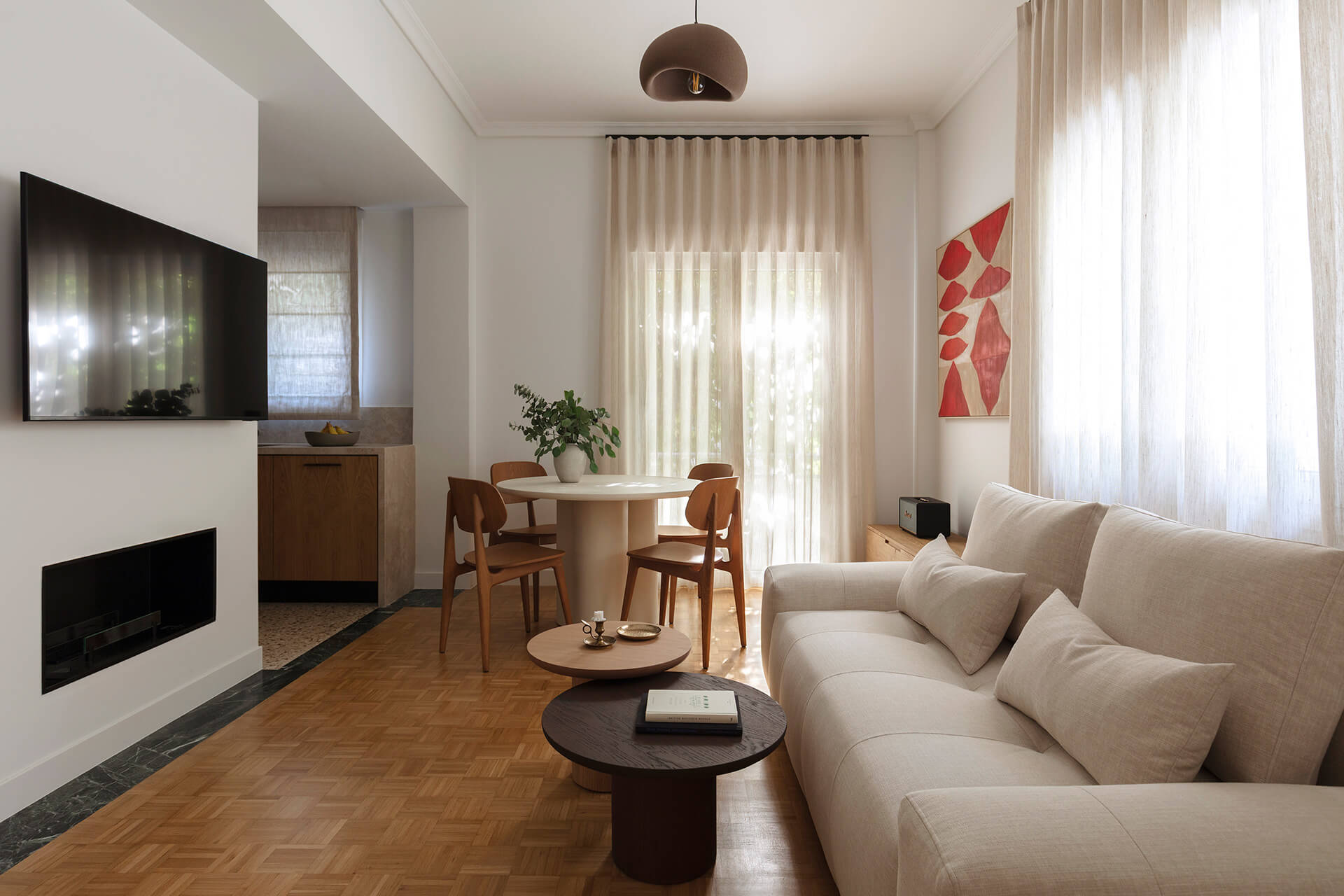
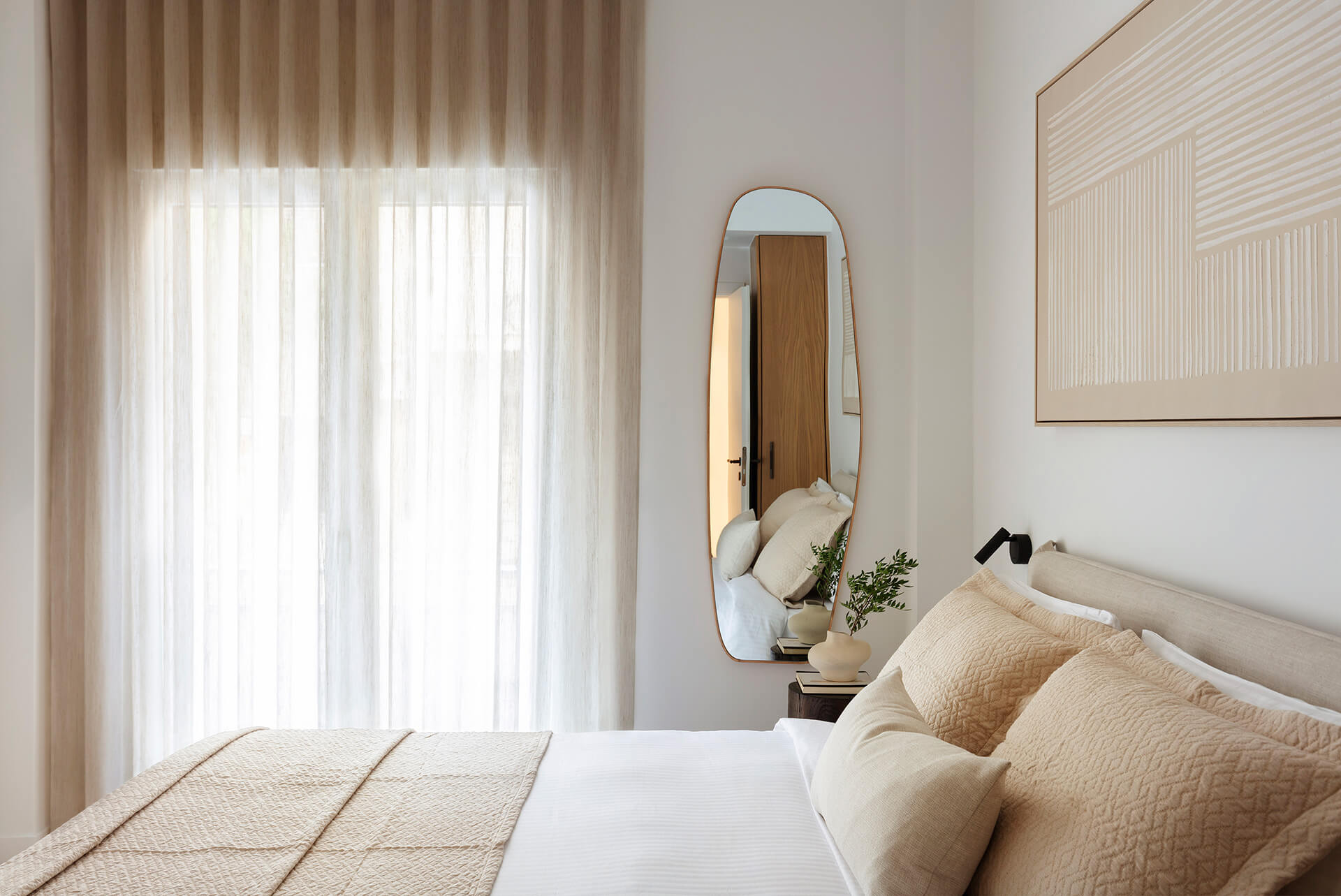
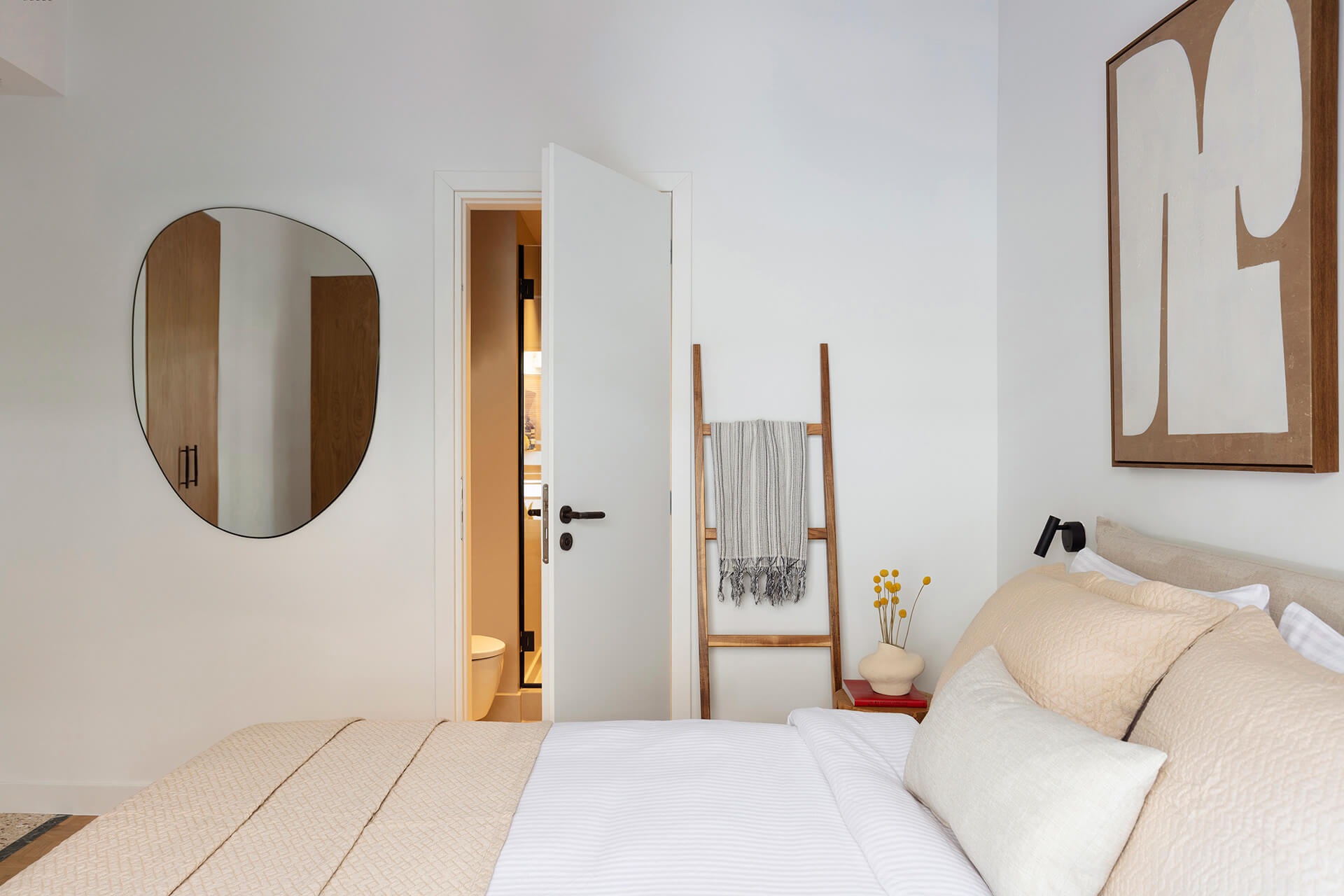
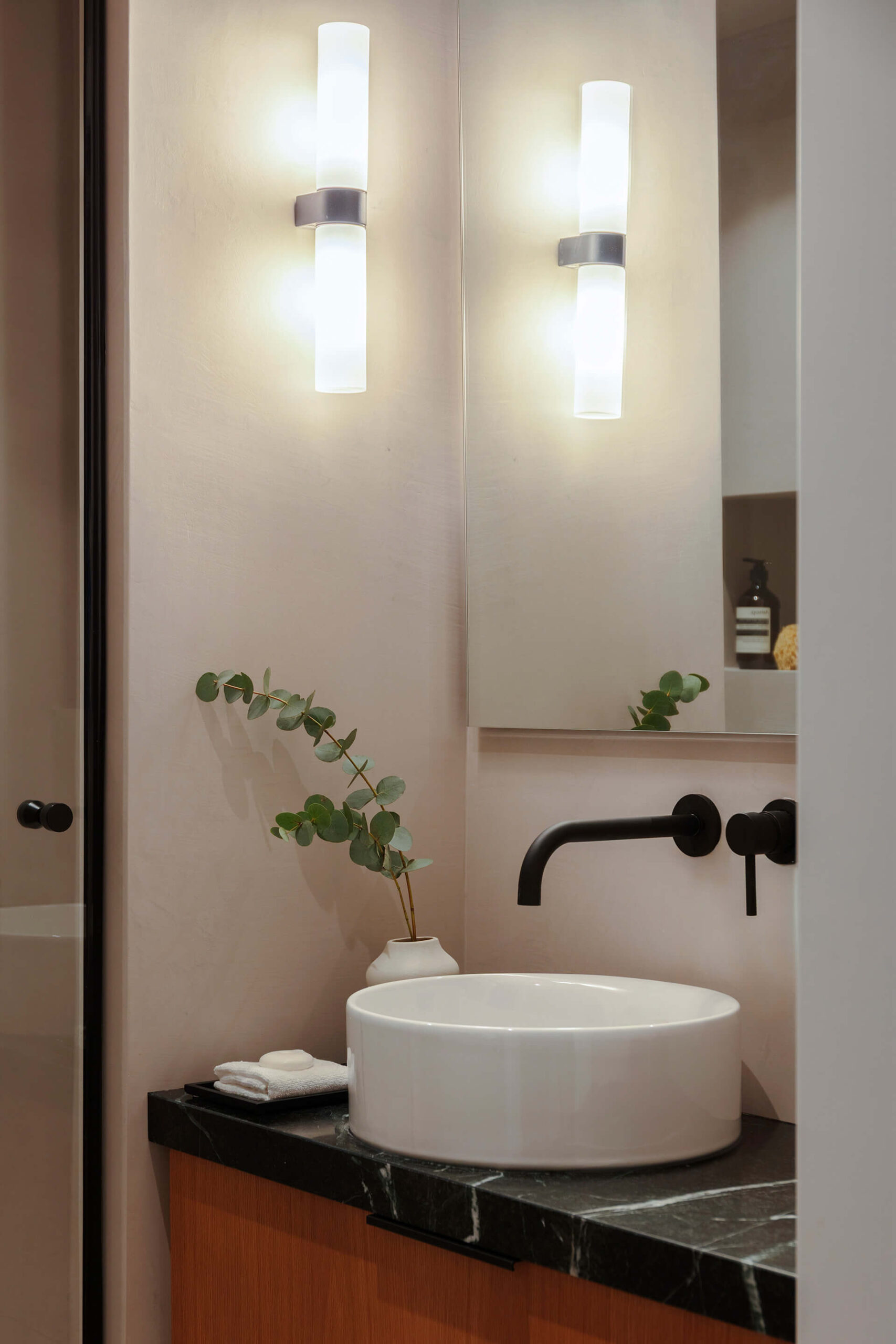
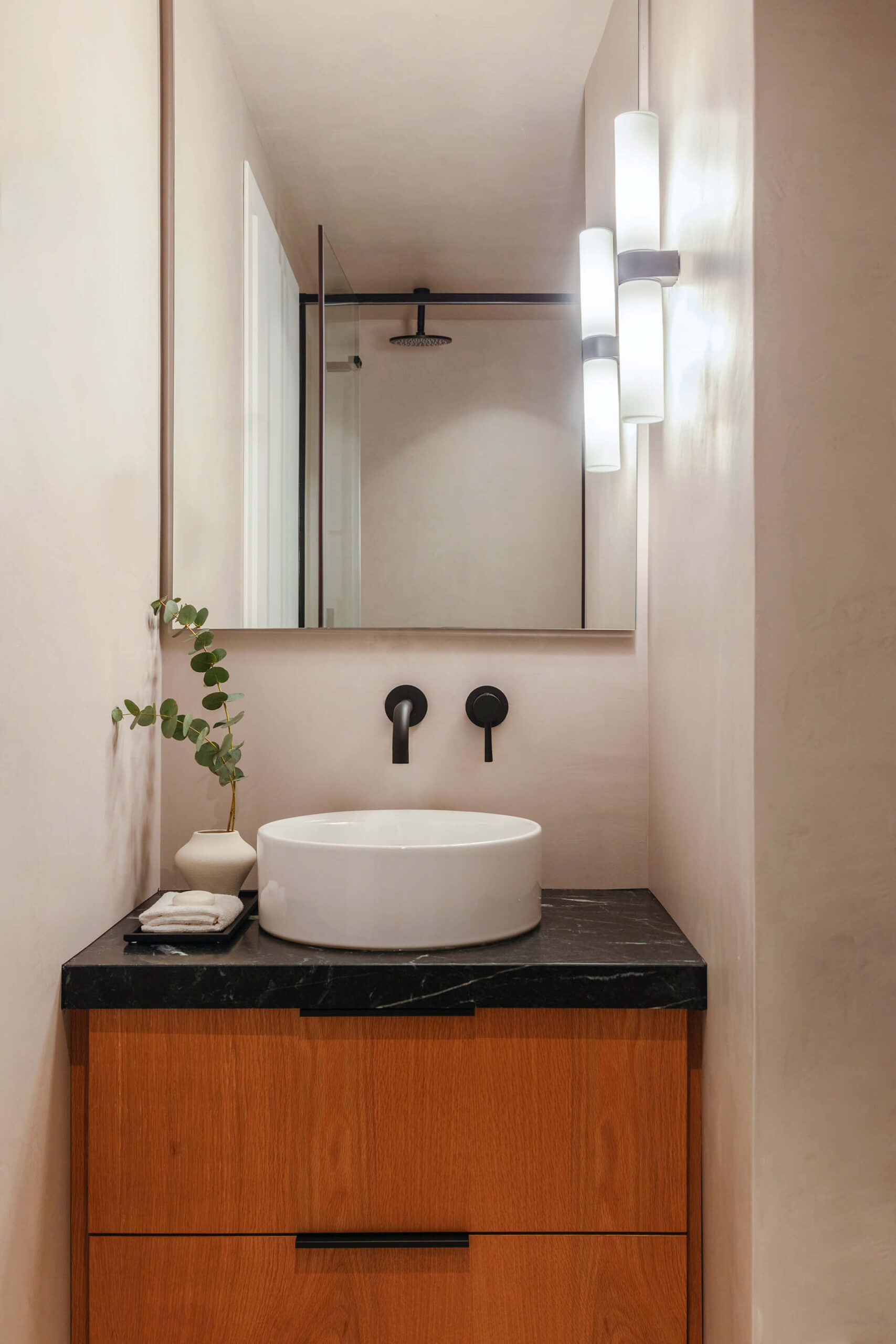
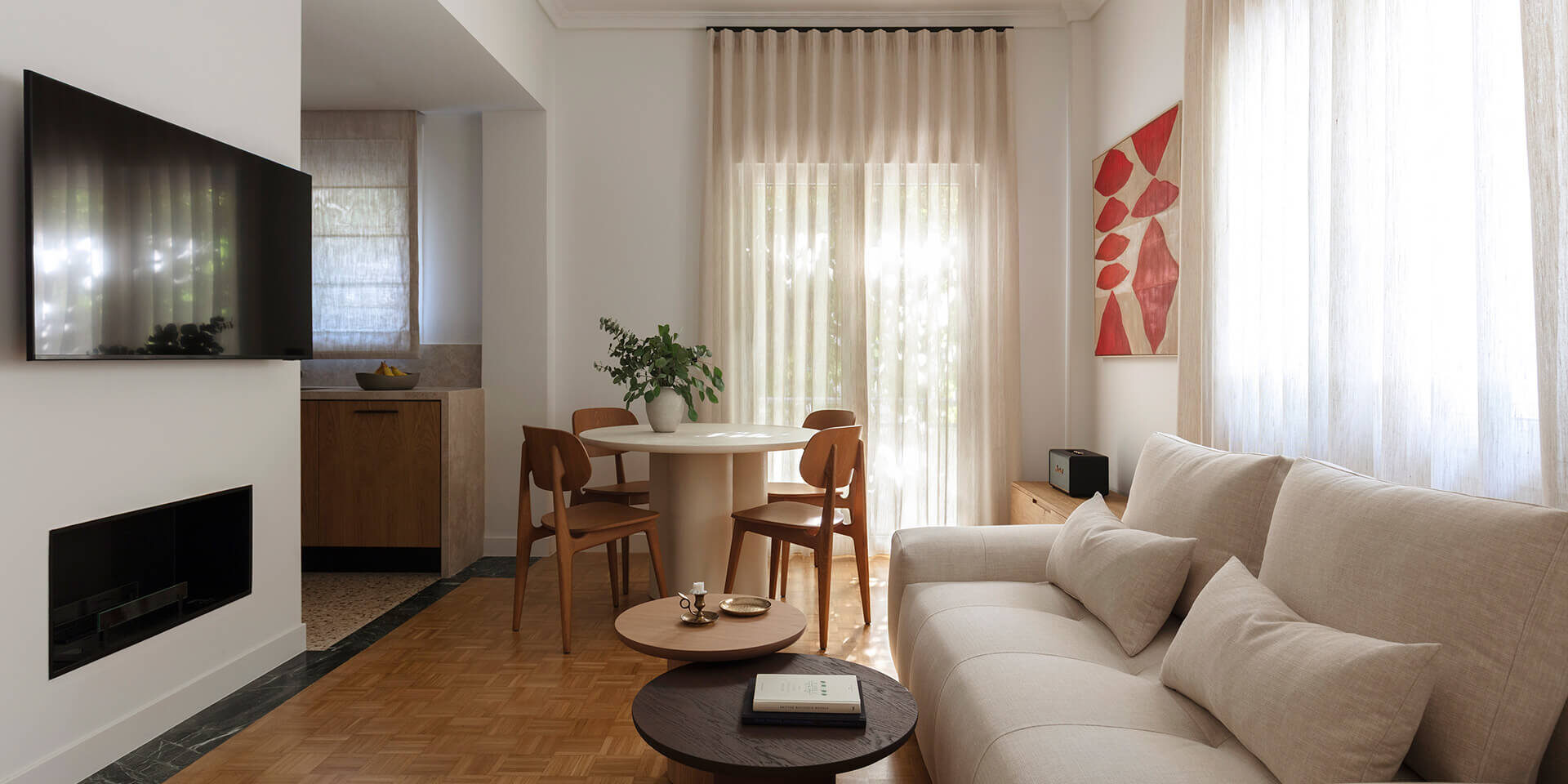
Athena Residence is the renovation of a 1960s apartment in central Athens, conceived as a small-scale hospitality project within the dense urban fabric of Kolonaki.
Adaptive Reuse
Located in Kolonaki and completed in 2024, the project responds to the evolving reality of contemporary Athens, where domestic interiors are increasingly required to accommodate hybrid modes of inhabitation – daily life alongside short-term stays. Working within the constraints of an existing building and a tightly defined budget, the project adopts a strategy of light yet decisive intervention. Rather than pursuing formal transformation, the design prioritizes reuse, spatial clarity and long-term performance.
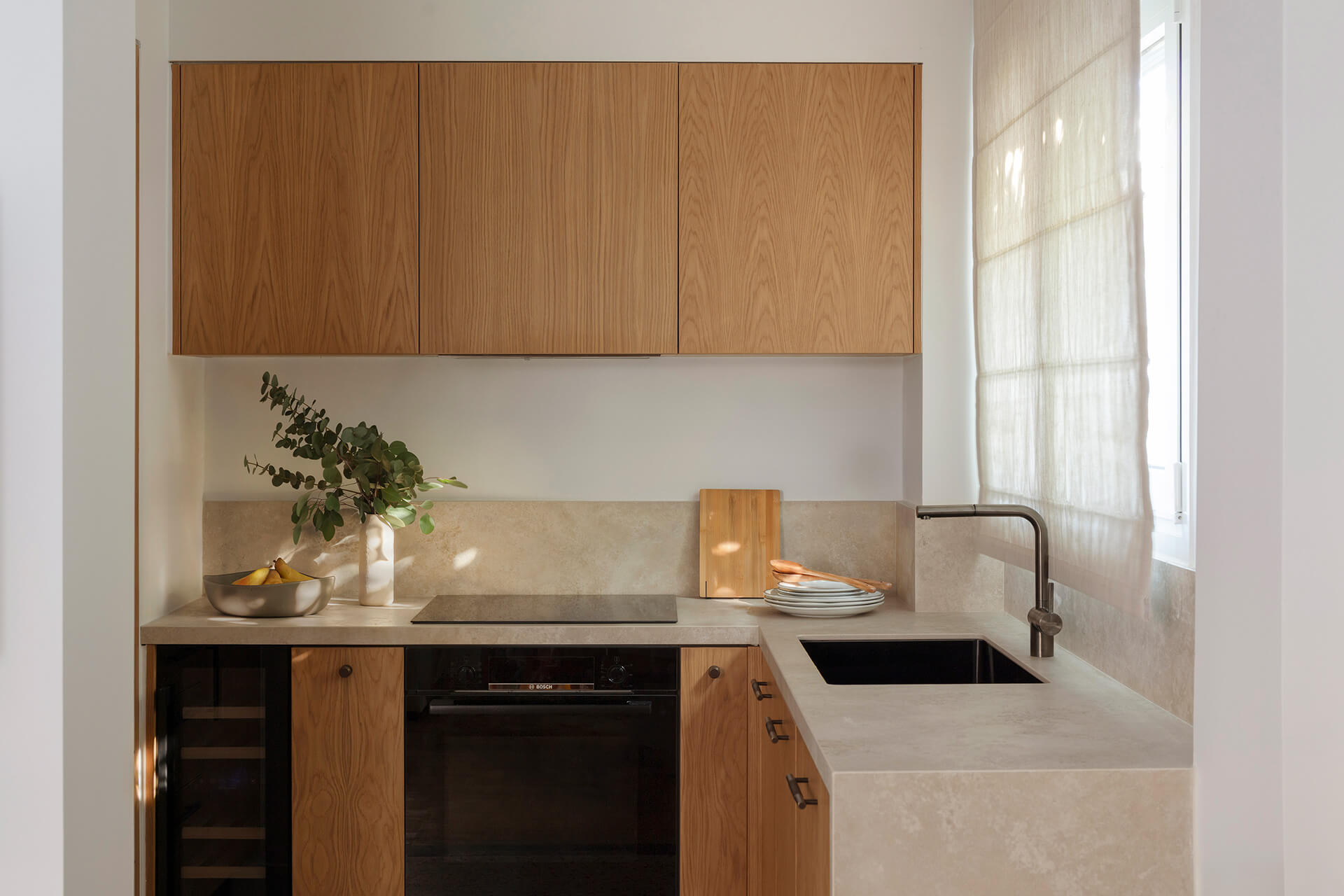
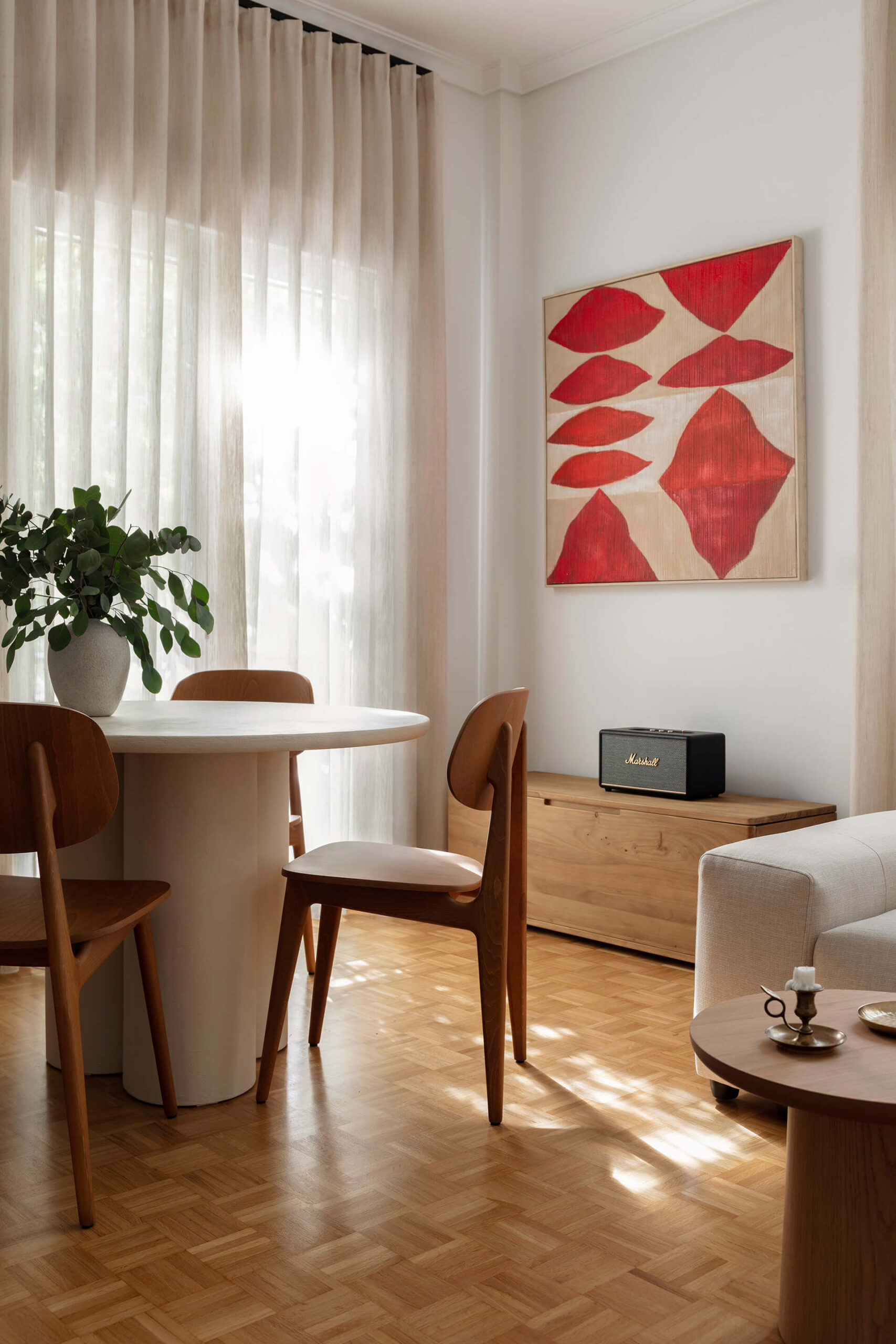
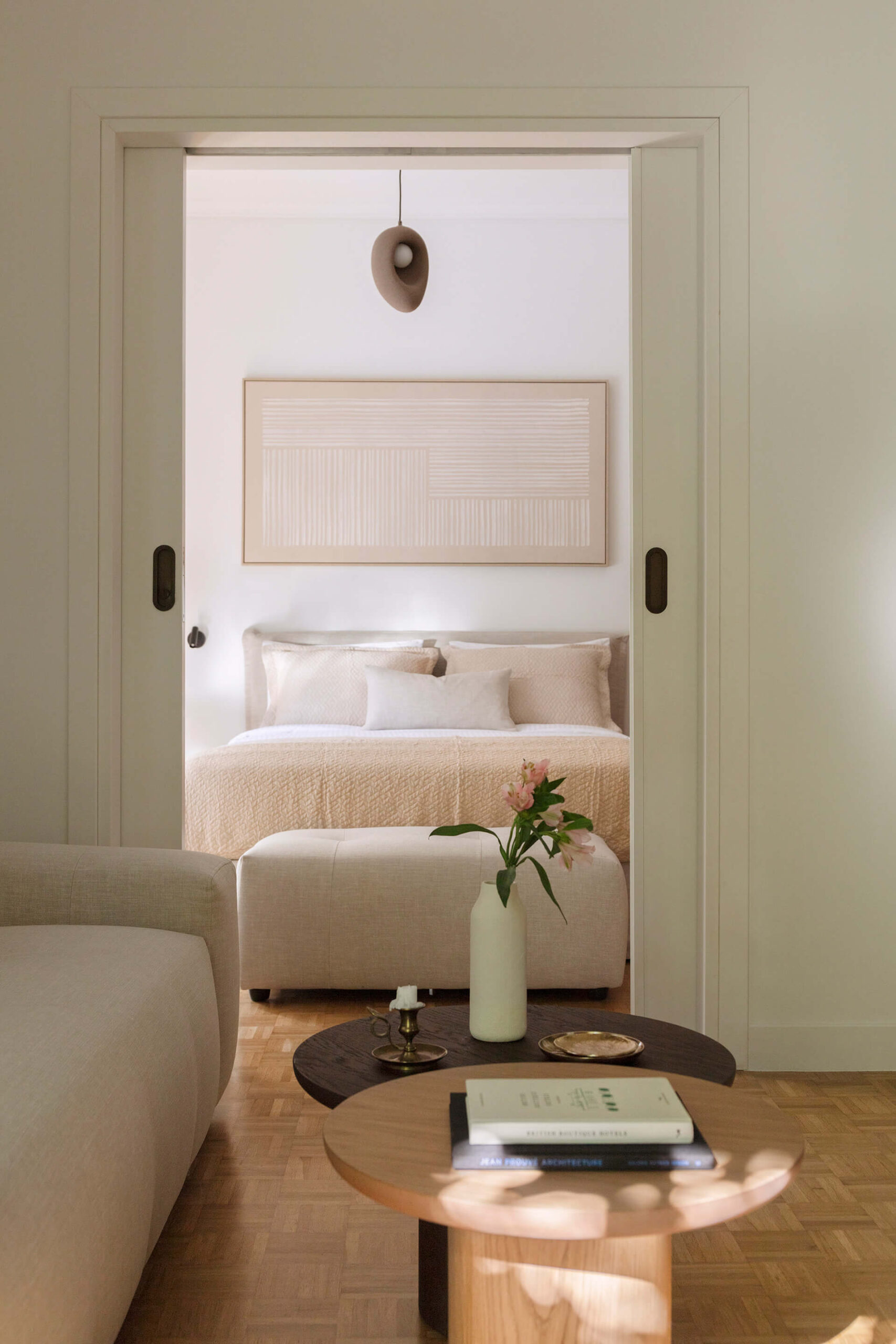
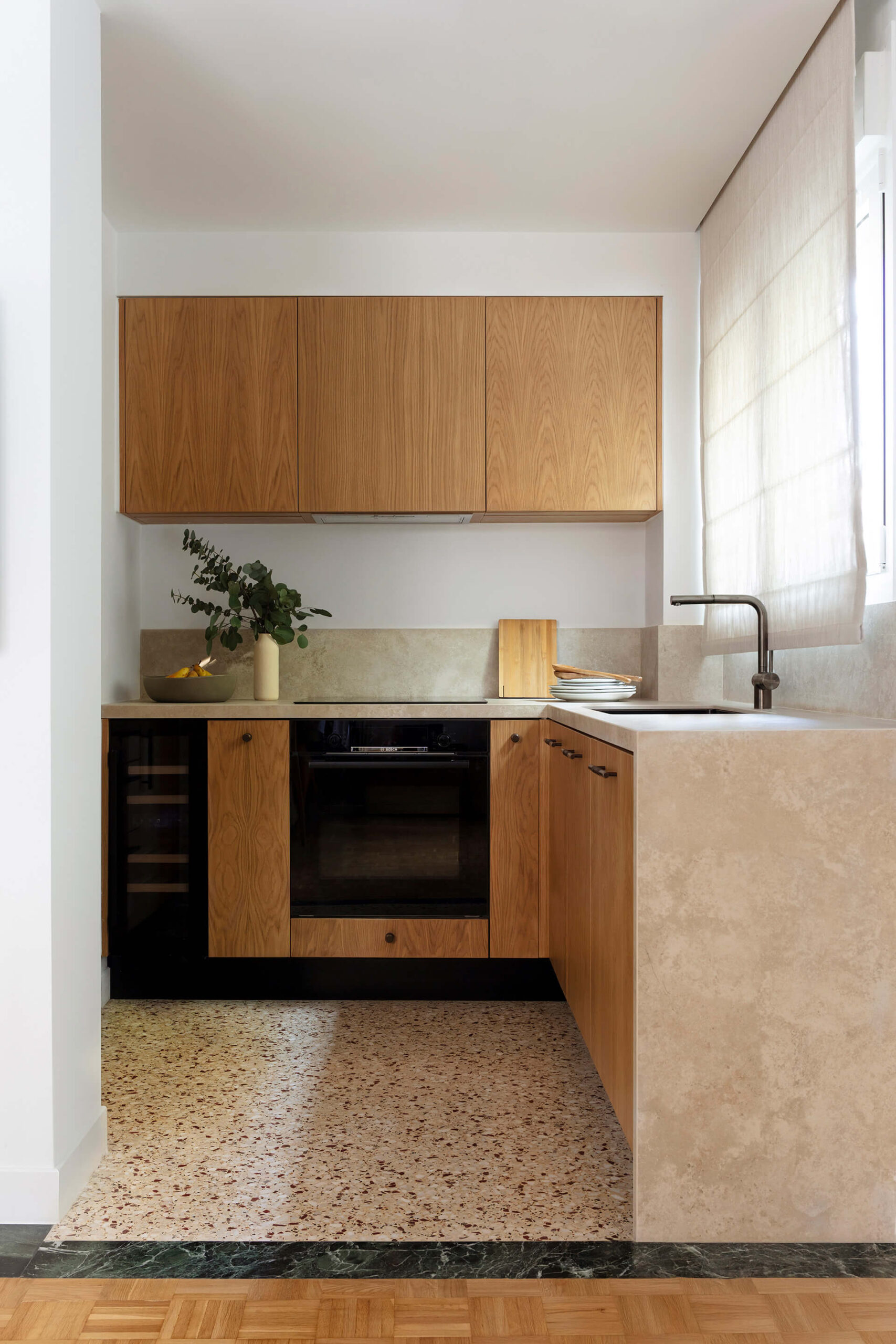
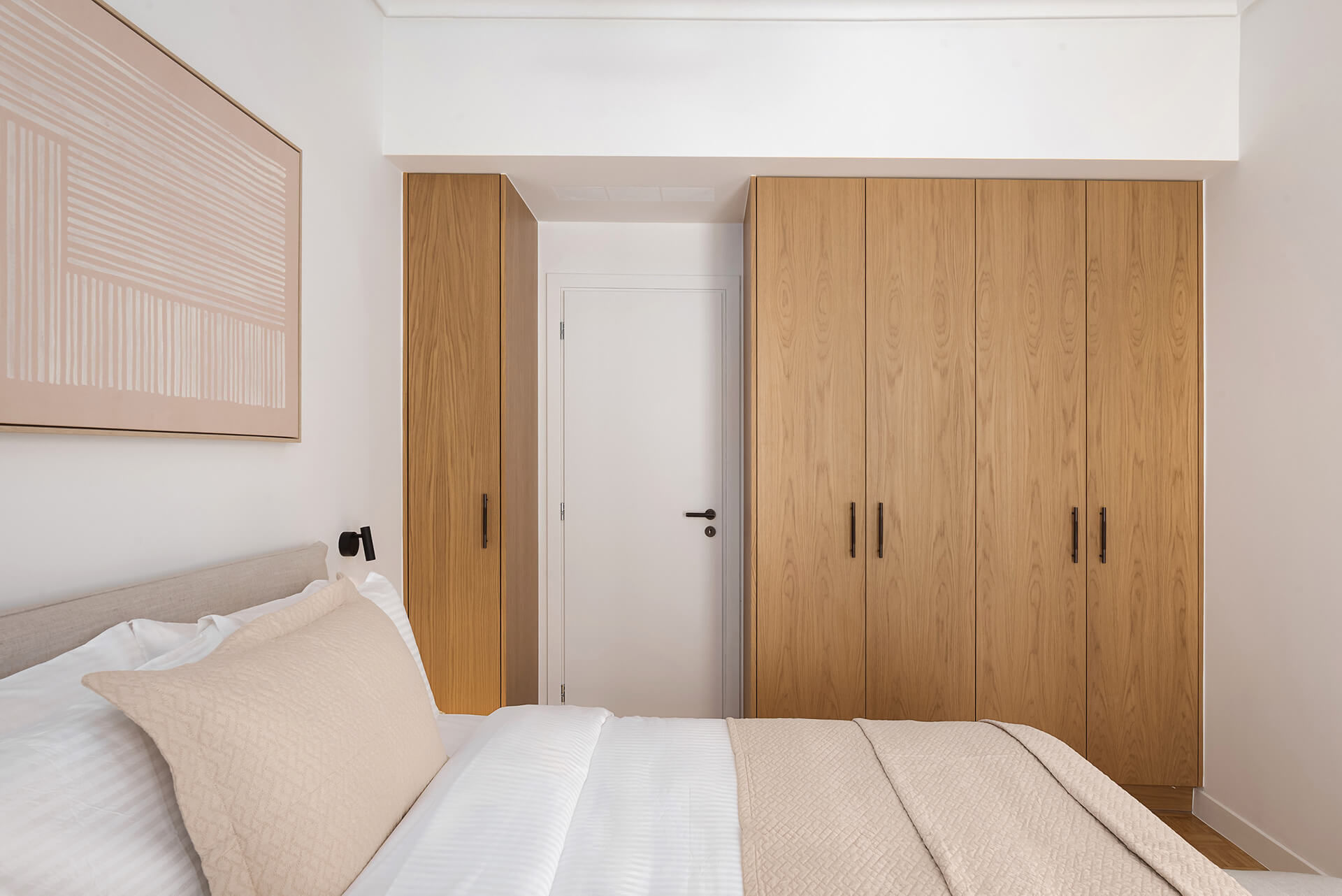
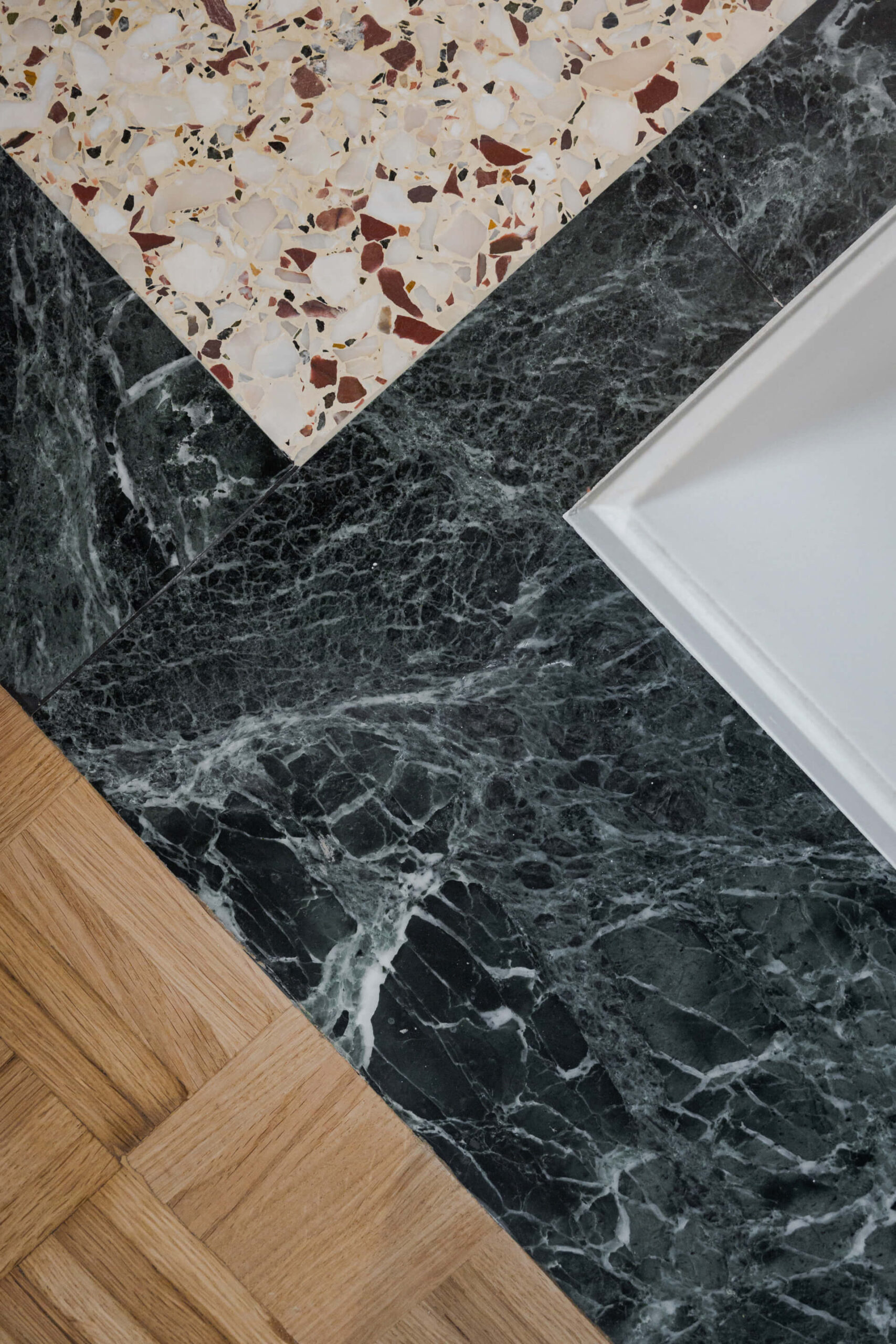
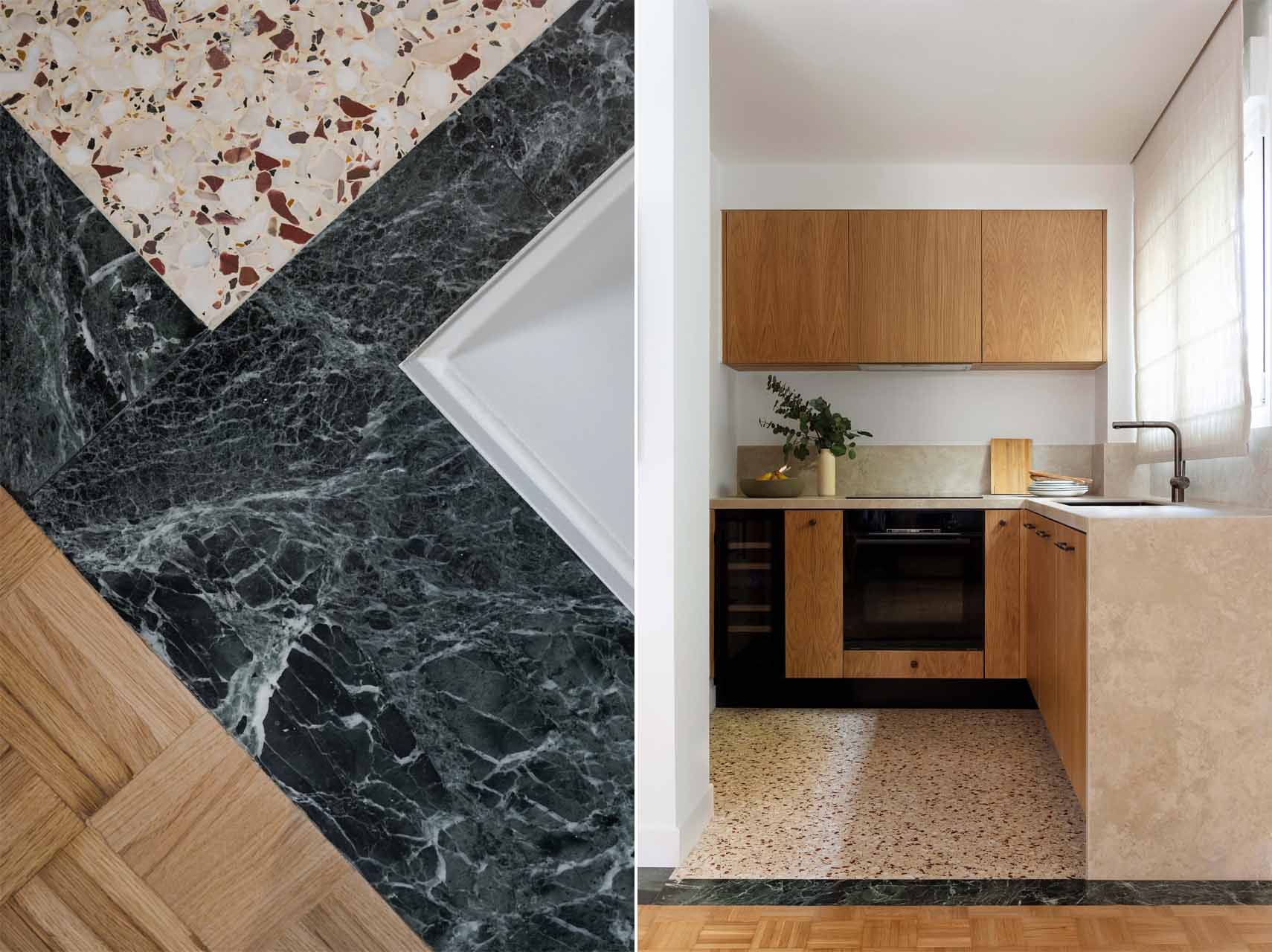
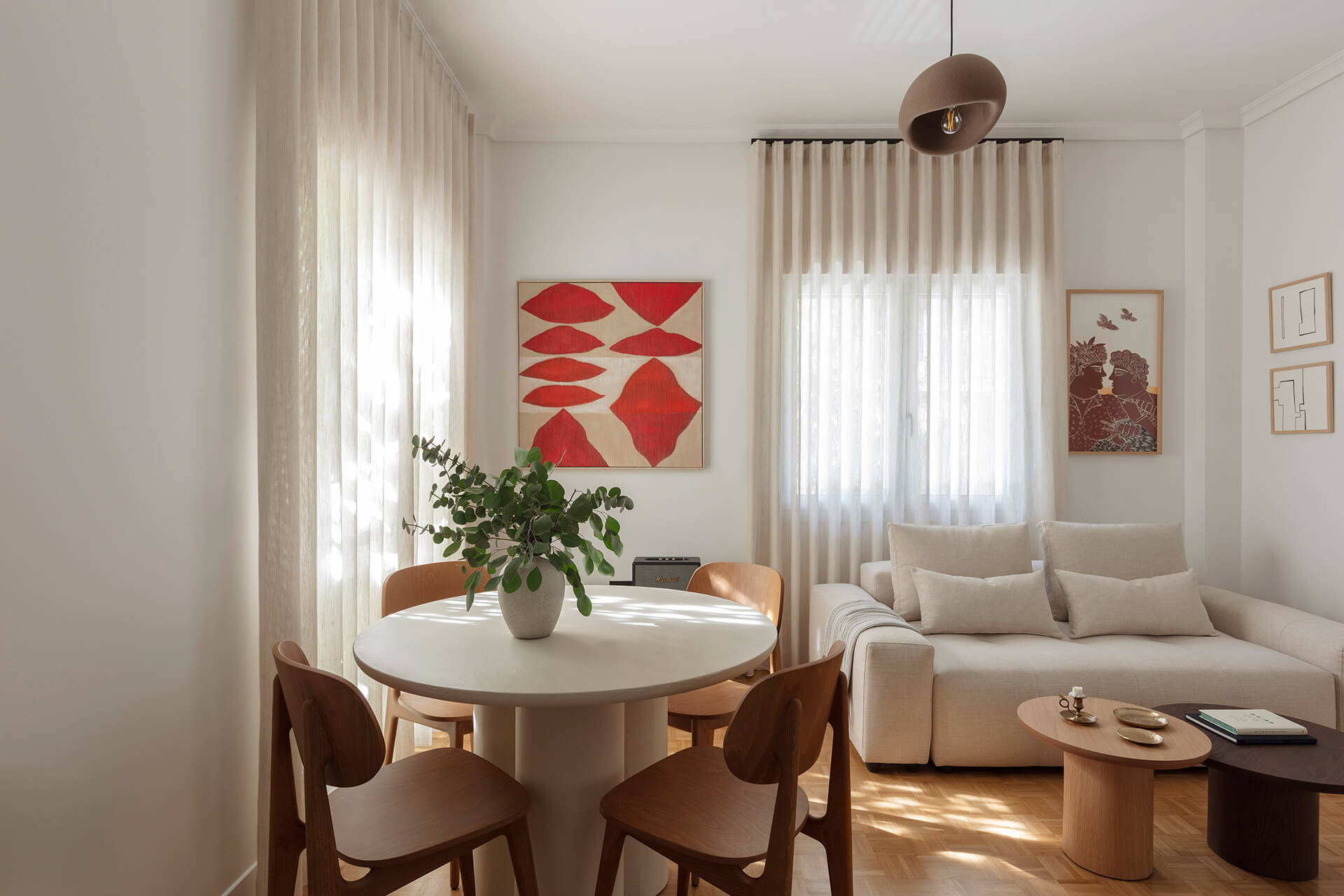
The original timber flooring was carefully retained and restored, grounding the apartment in its material past. New bespoke joinery elements in timber and brass organize the kitchen, storage and wardrobes as fixed architectural components rather than loose furnishings, reinforcing a sense of permanence and cohesion. Subtle reconfigurations of the layout enhance circulation, daylight penetration and spatial flexibility, allowing the apartment to adapt to shifting patterns of occupation without altering its structural logic.
Sustainability Approach
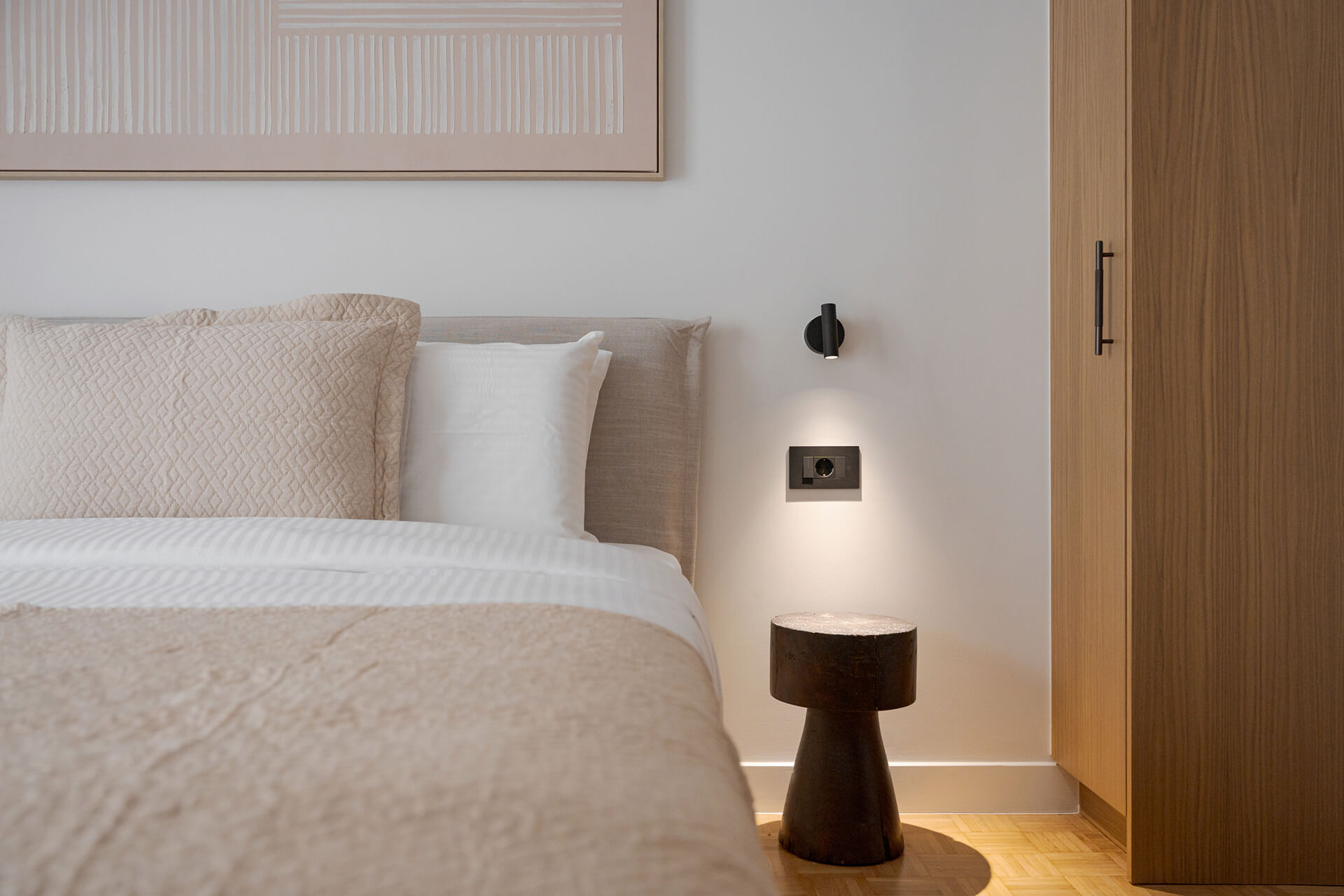
Operational energy formed a central pillar of the project’s sustainable agenda. In a city where much of the residential stock remains energetically inefficient, the renovation focused on substantially reducing operational demand instead of relying on superficial upgrades. High-performance glazing, low-energy lighting, photovoltaic provision and the replacement of the existing gas heating system with an air-source heat pump collectively led to a reduction of more than 65% in operational energy consumption. The apartment’s energy classification was upgraded from Z to B+, marking a significant environmental improvement within the existing shell.
Design Philosophy
Athena Residence reflects a broader architectural attitude emerging in Athens, one that values continuity, responsibility and careful engagement with the existing built fabric. Rather than extracting value through spectacle, the project demonstrates how targeted, precise interventions can enhance comfort, environmental performance and longevity. In doing so, it proposes an alternative model of small-scale hospitality: one embedded in the city’s everyday life, respectful of its material history and oriented toward durable, long-term use.