Casa ET | Albinea, Italy
Architecture:
Photography:

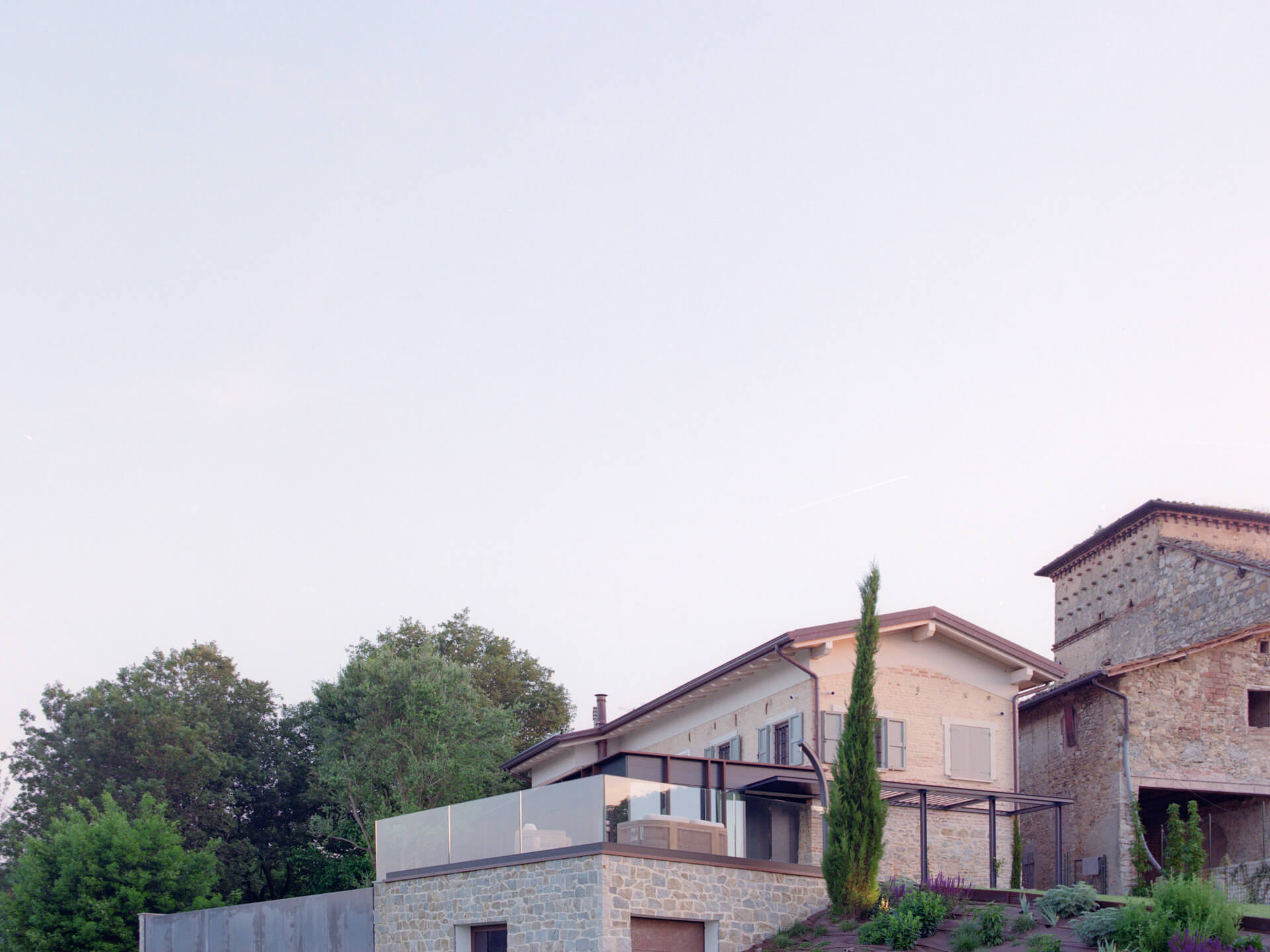
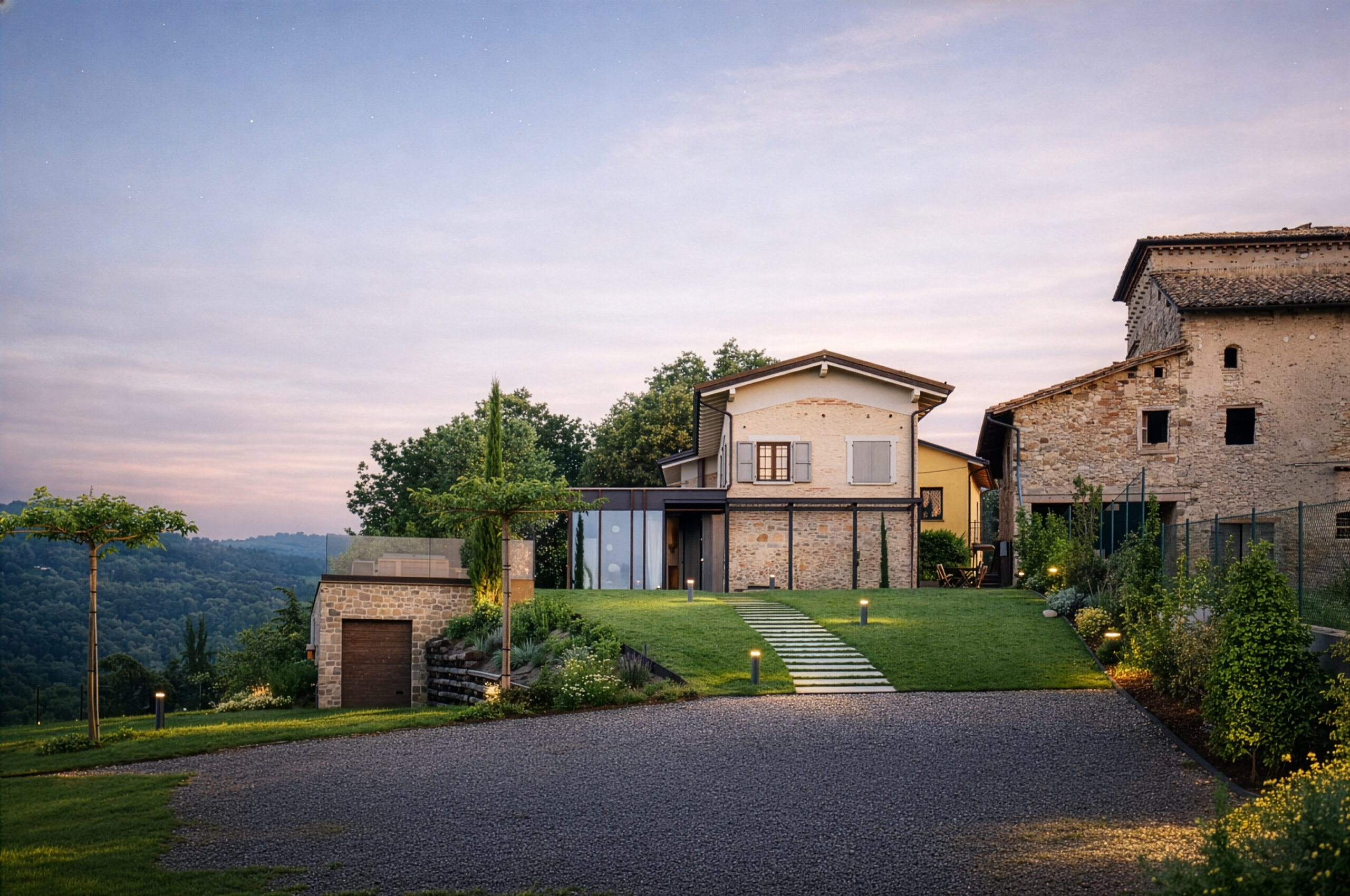
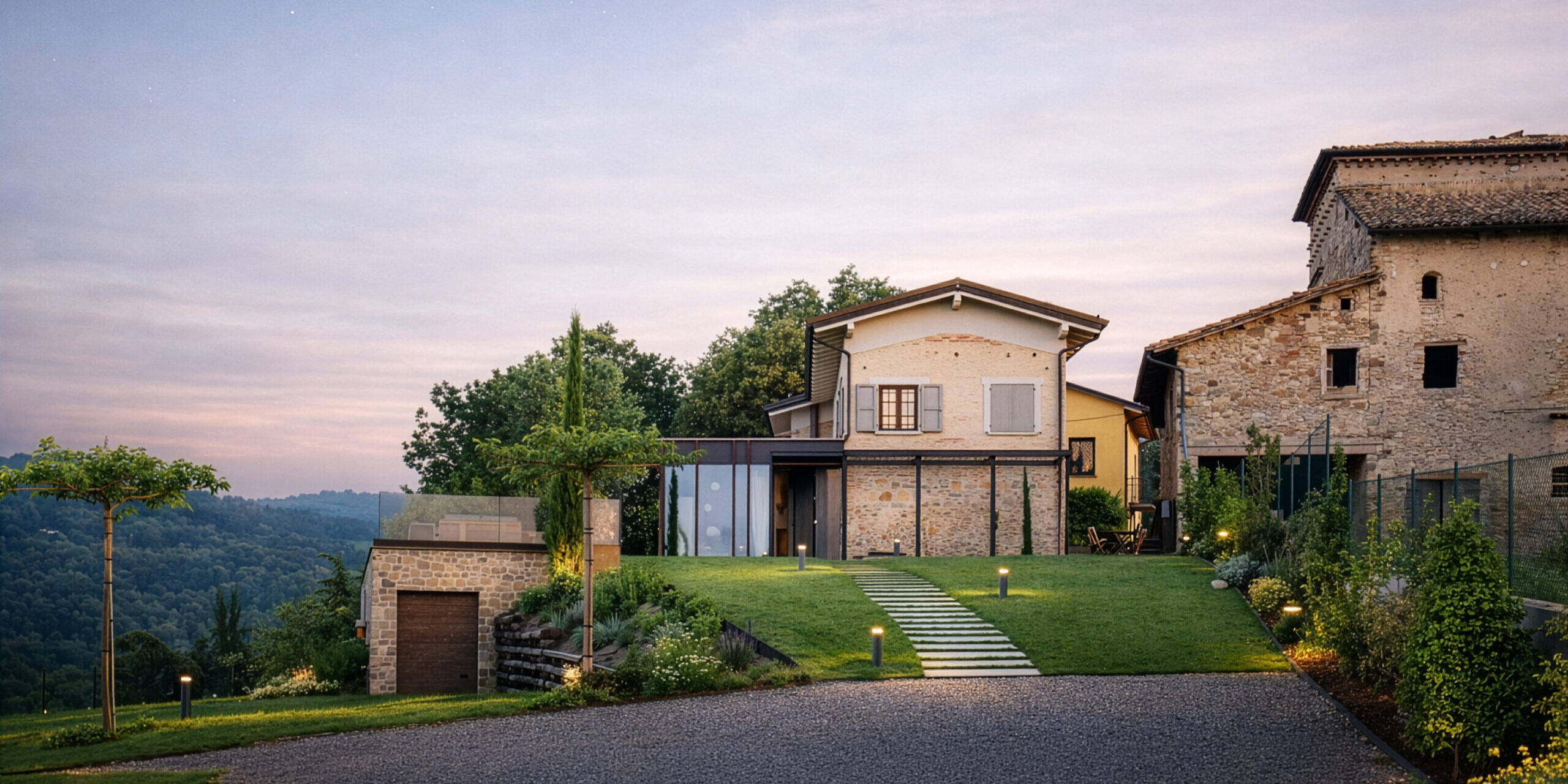
The project involves the renovation and extension of a farmhouse set within a courtyard on the crest of the hills in the Piedmont area of the Reggio Emilia Apennines. The original stone building, dating back to the early 1900s, had undergone several interventions over time, including structural consolidation works that introduced reinforced concrete terraces on the valley-facing sides, as well as more recent upgrades such as the refurbishment of the roof and the addition of a concrete-and-wood portico on the eastern elevation.
Renovation Strategy
The intervention was driven by two main objectives: to expand the ground floor – where the existing living and bedroom spaces were insufficient – and to redesign the extensive outdoor areas of the property. The first-floor sleeping quarters were left untouched, as they were already adequate in terms of size and functionality.
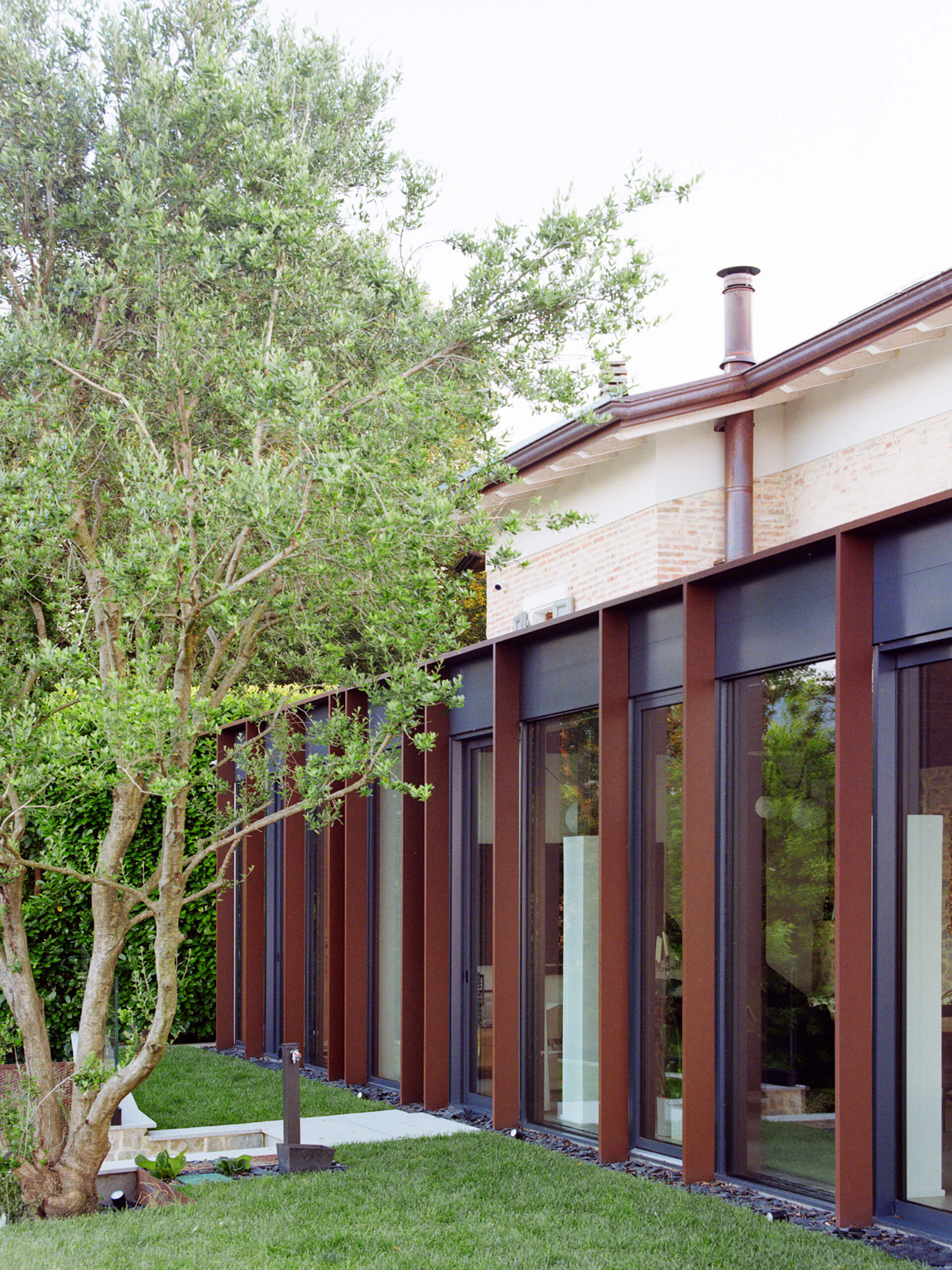
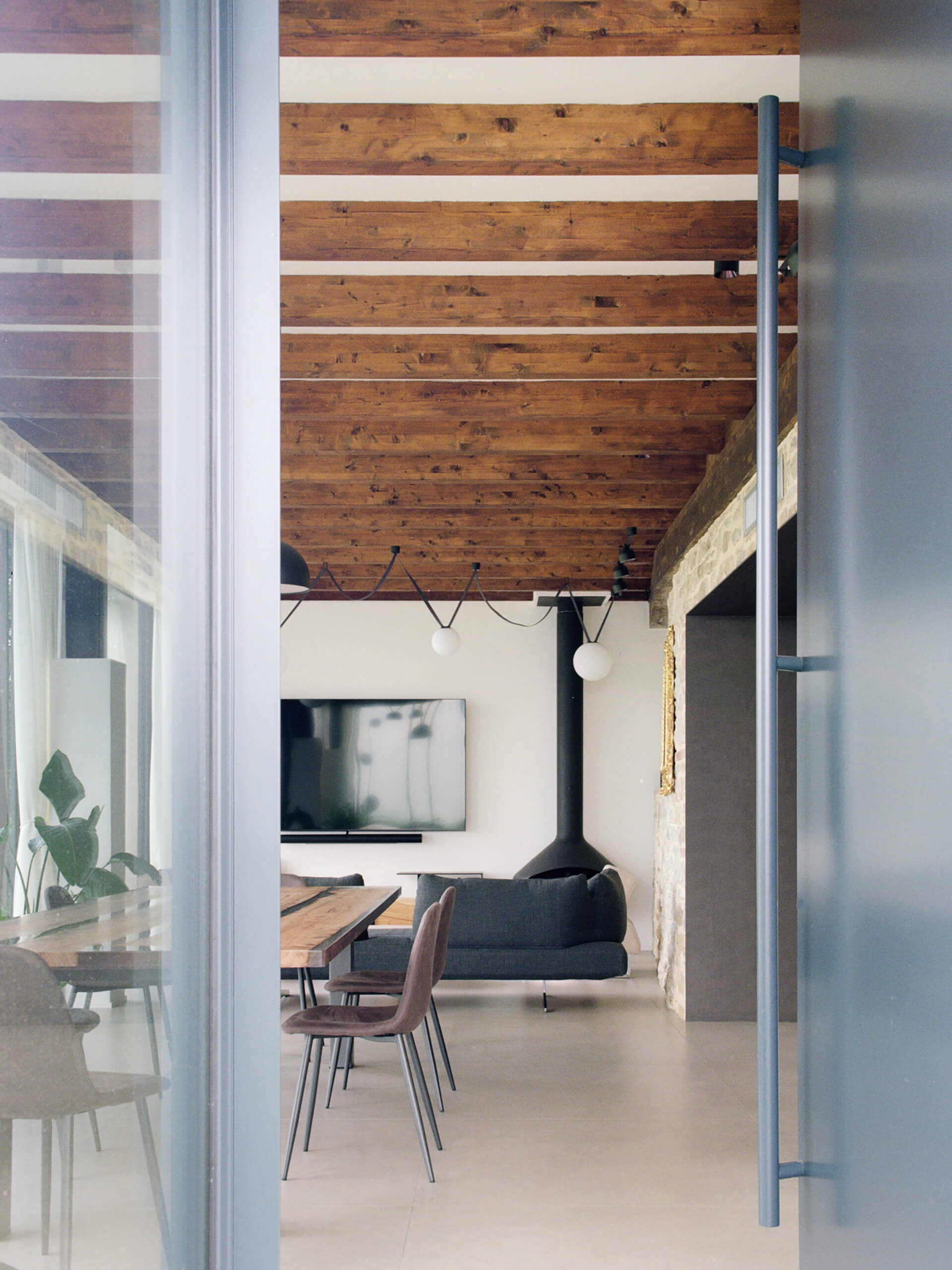
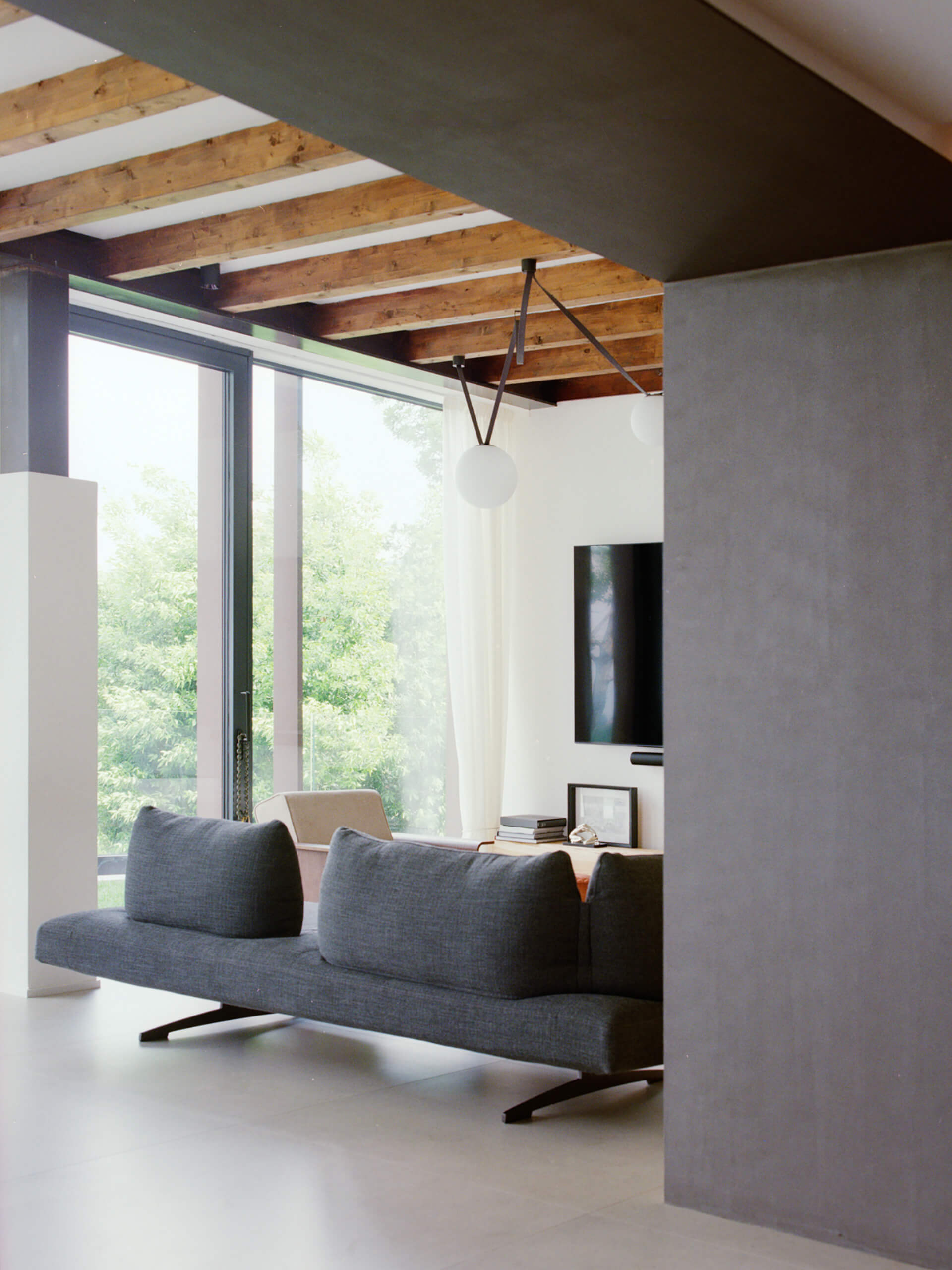
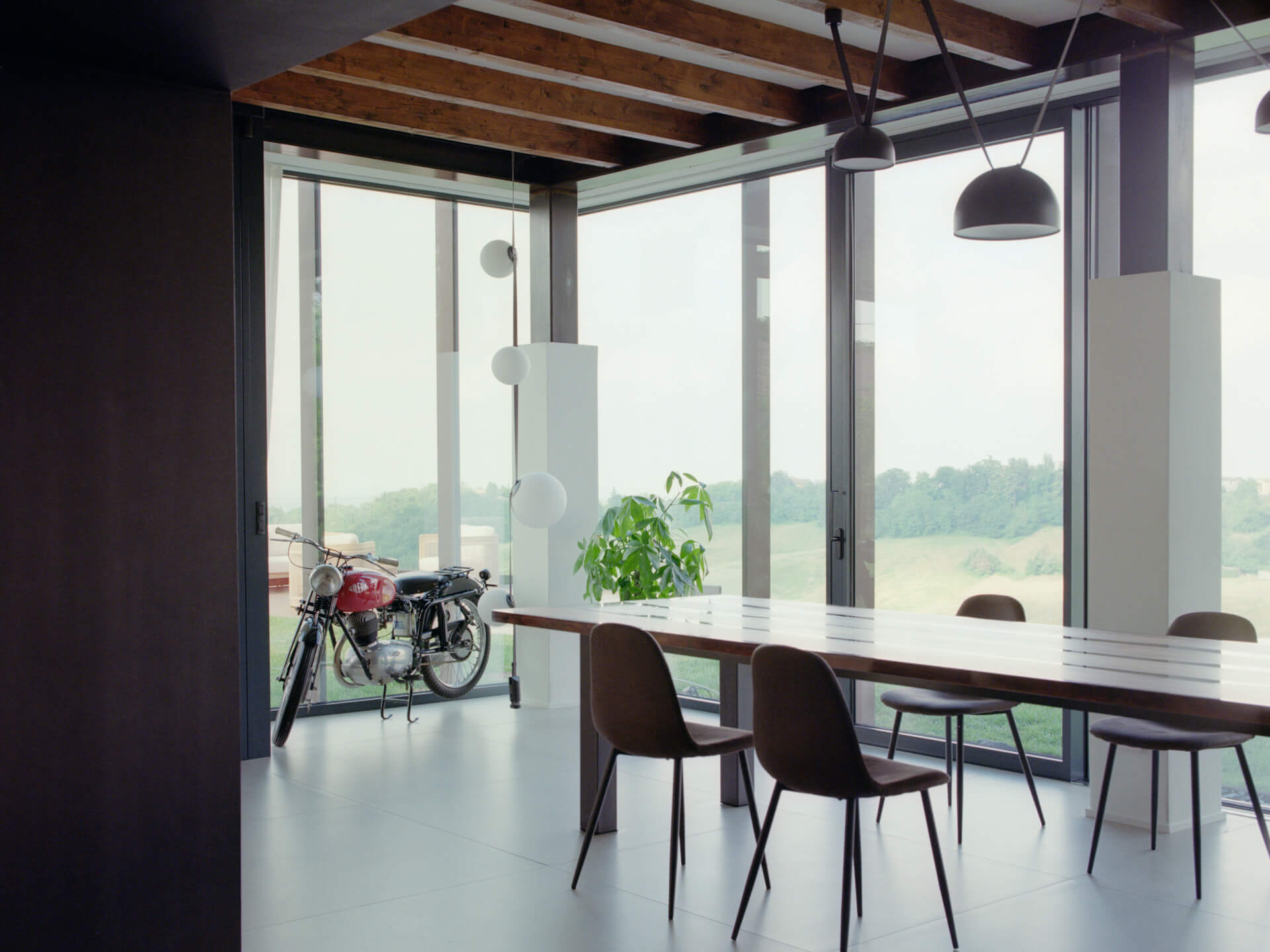
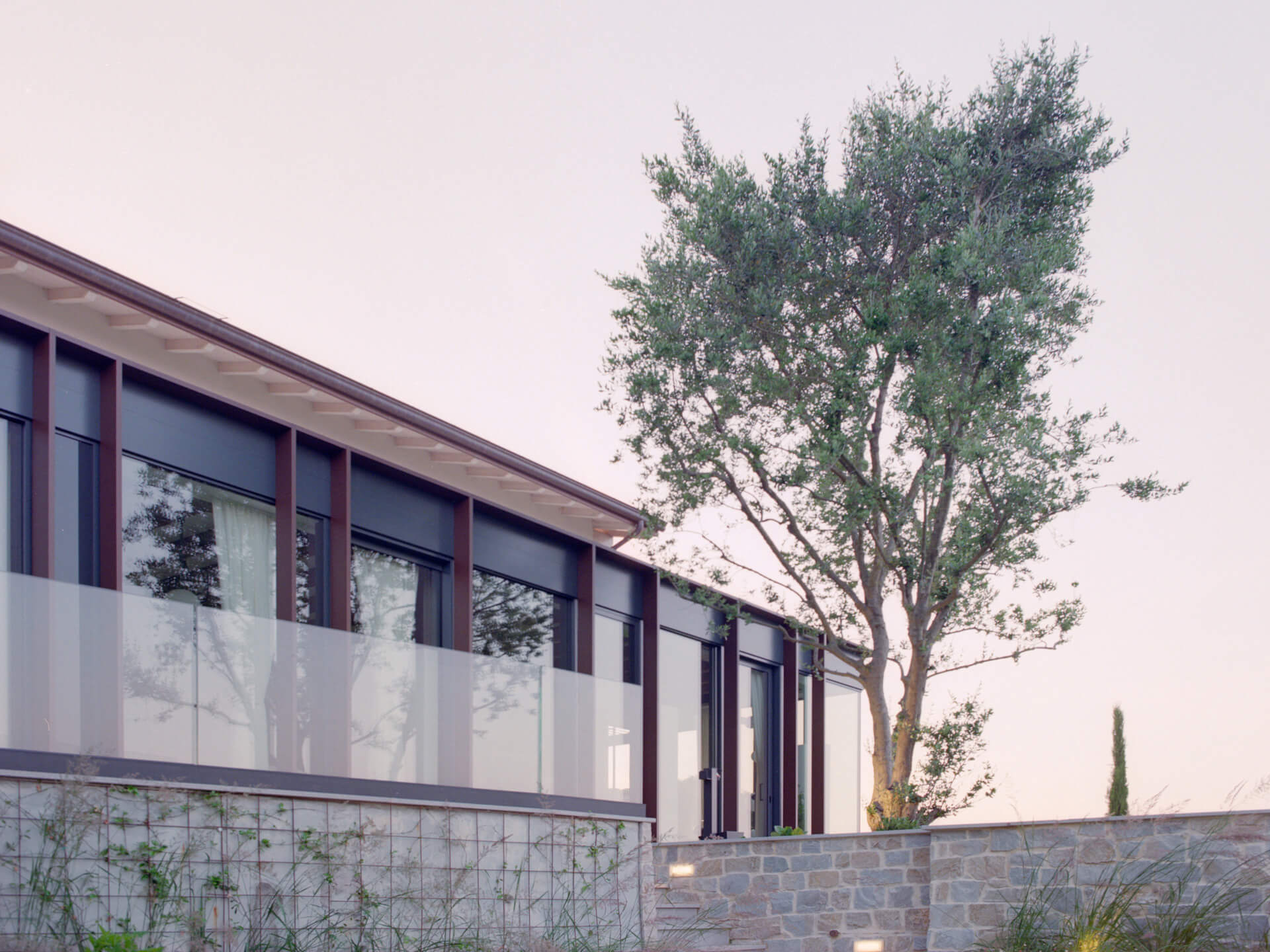
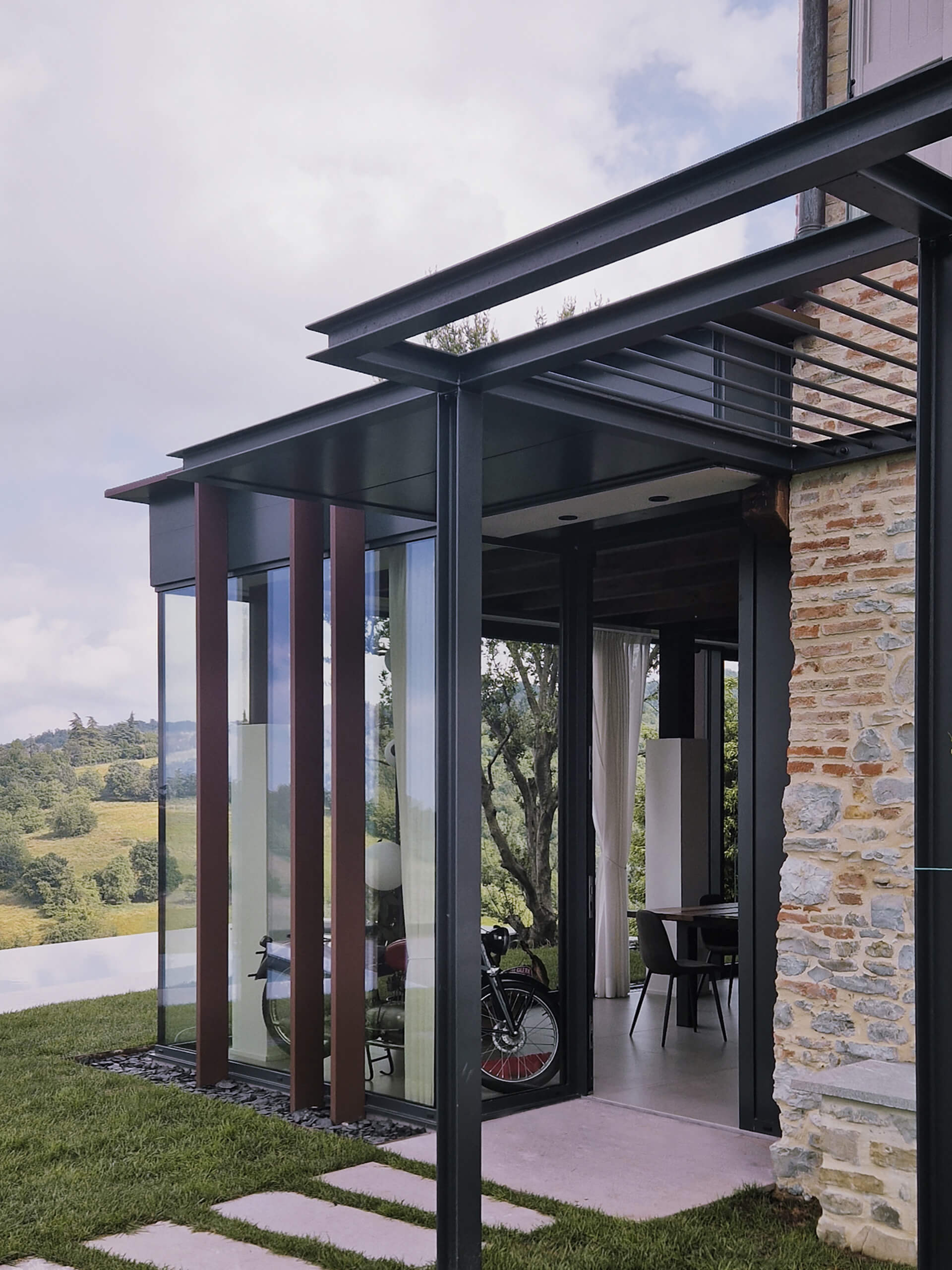
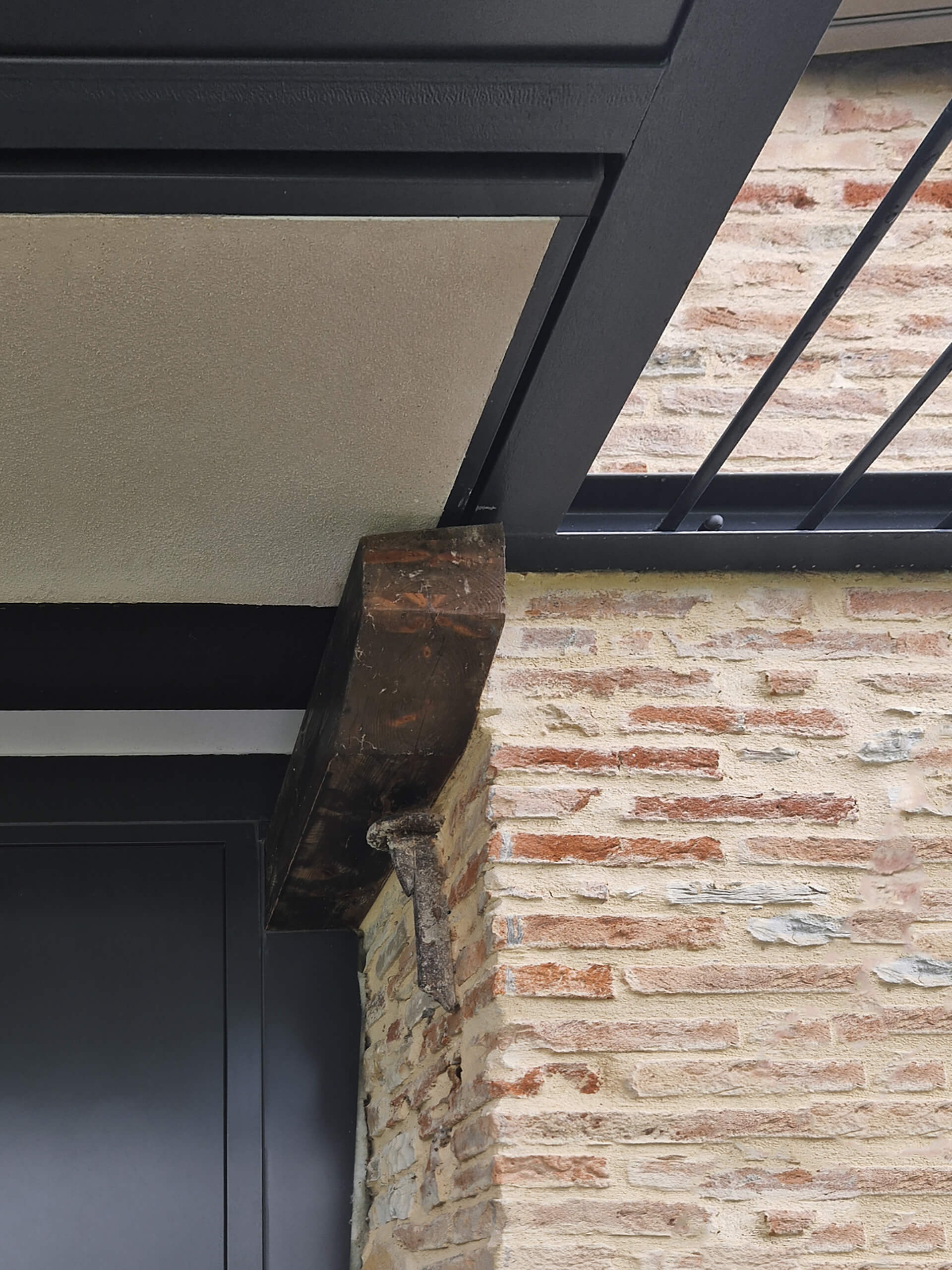
The reconfiguration of the living spaces began with the transformation of the existing sloped portico, which was converted into a new volume accommodating a living and dining area, along with a wellness extension connected to the ground-floor bedroom. The original wooden and tiled roof was removed, while the concrete pillars were retained. A new metal structure was introduced to support a flat roof slab, reusing the original wooden beams of the portico.
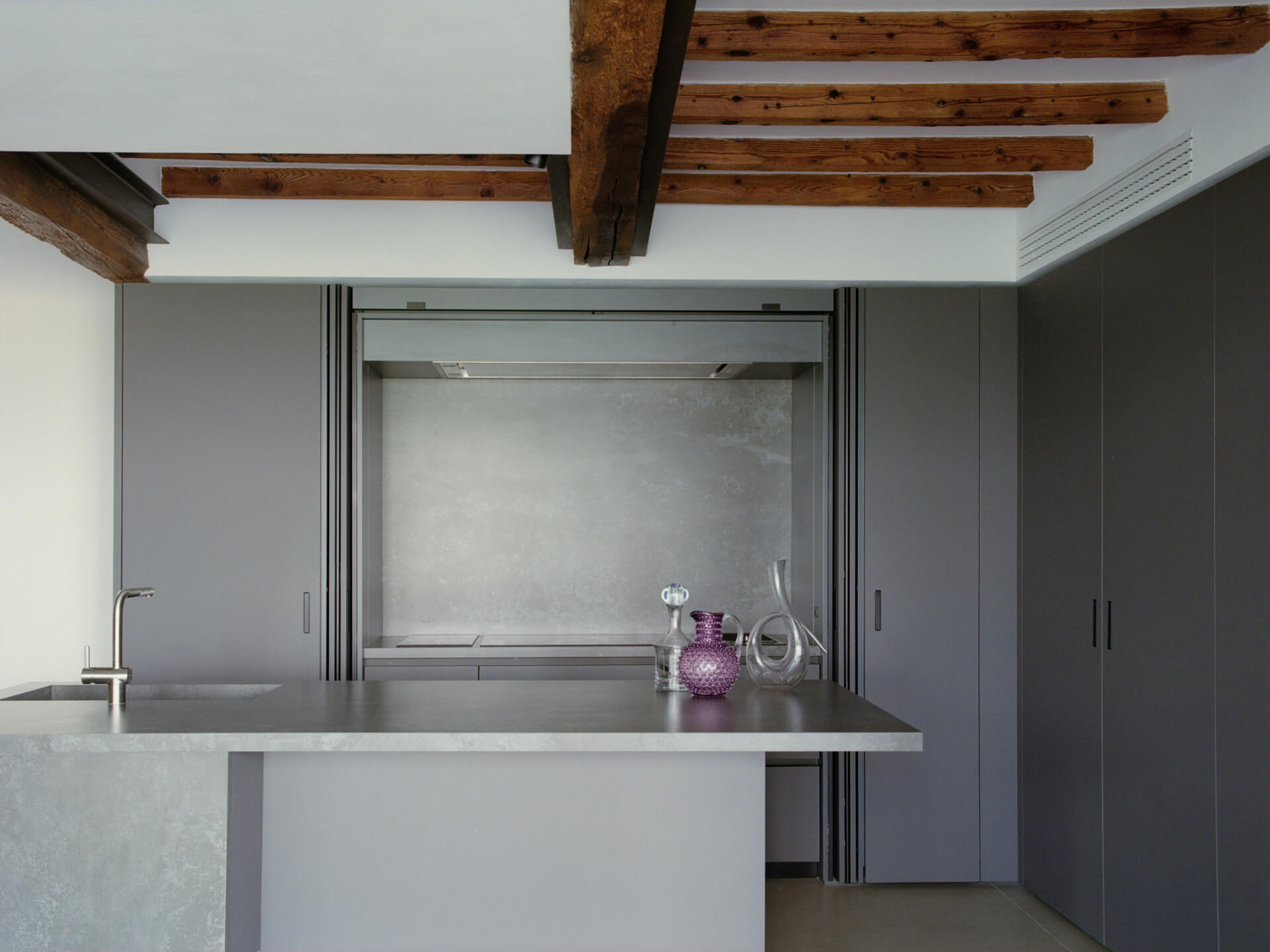
Layout & Materials
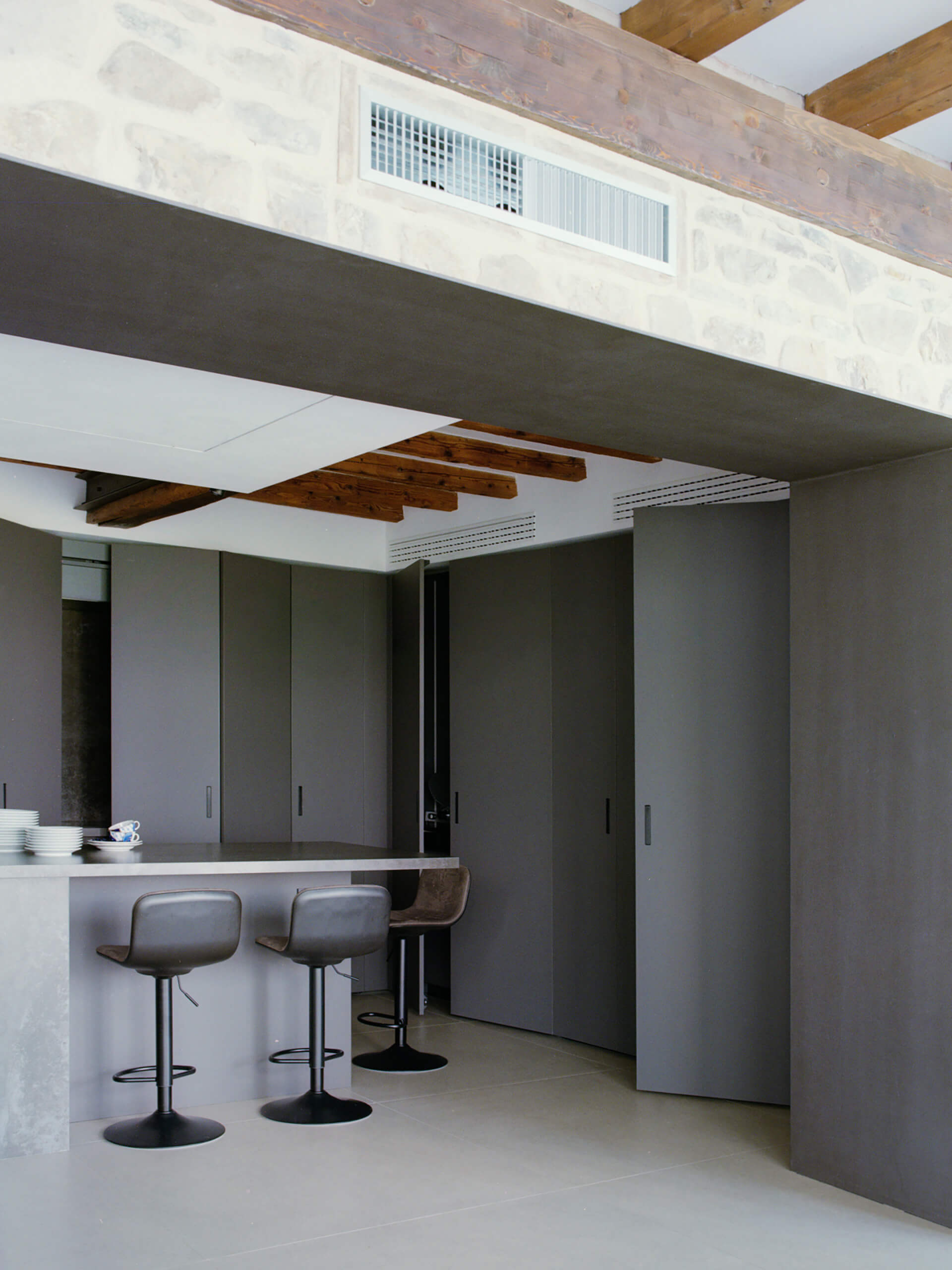
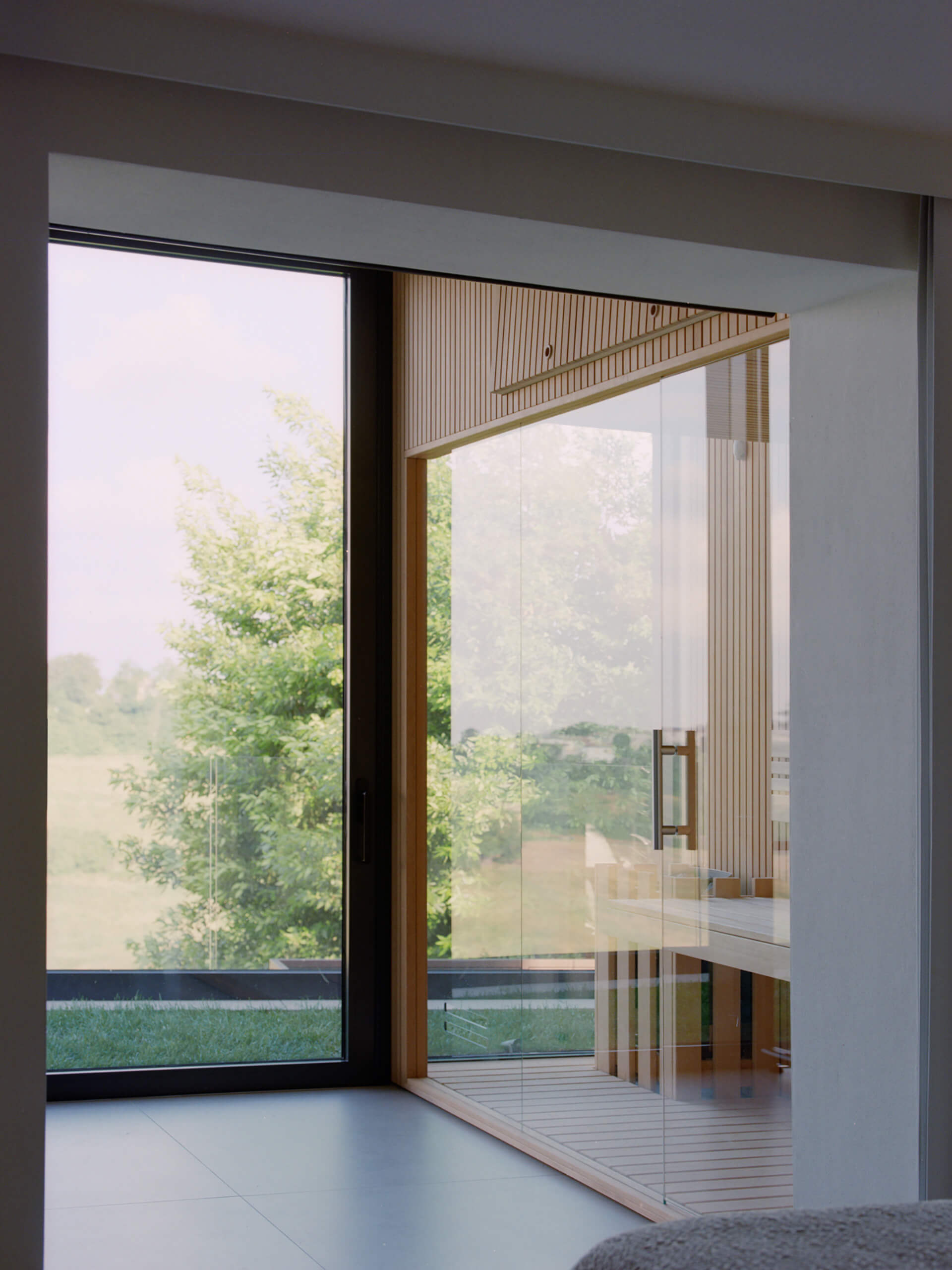
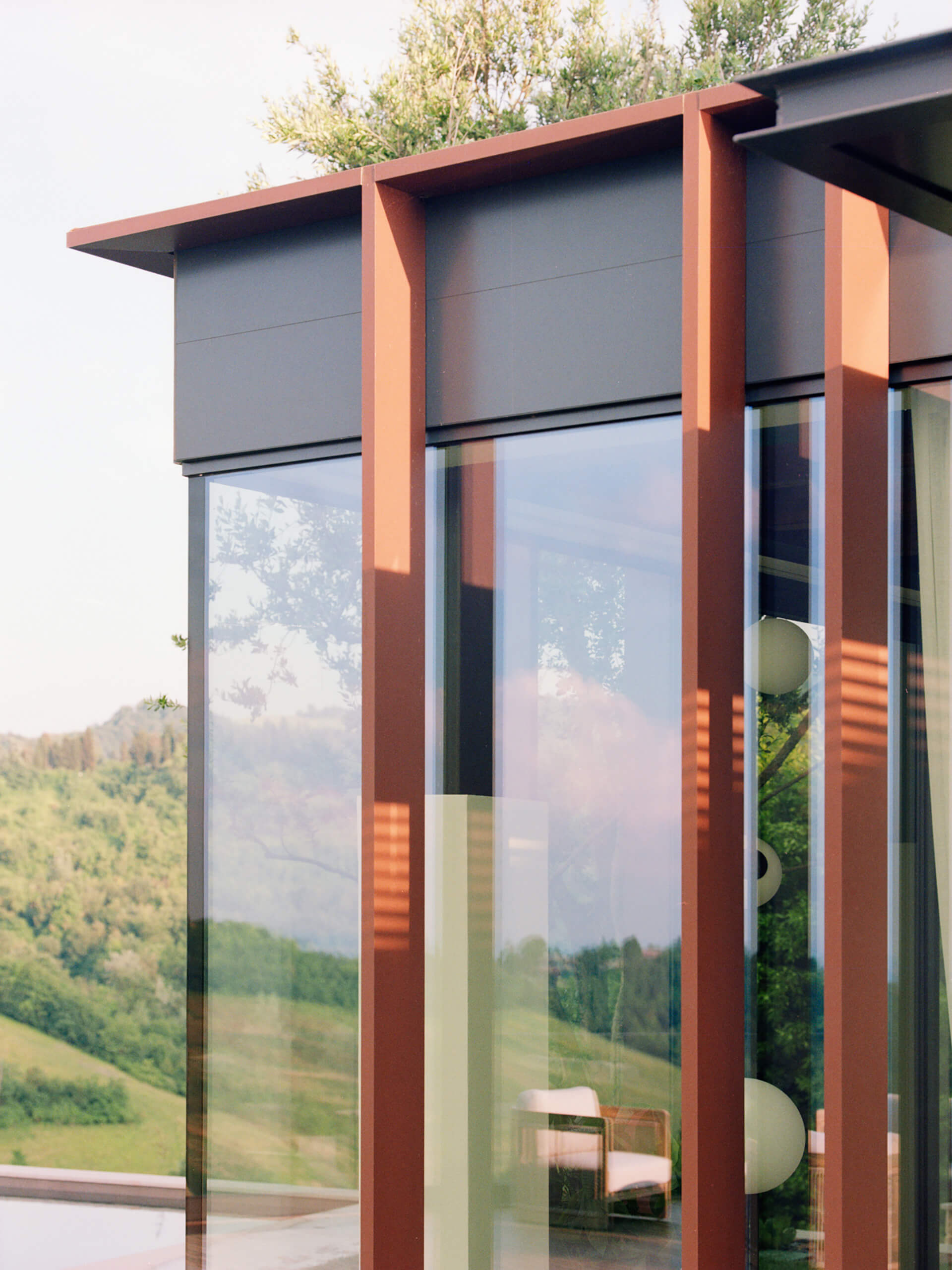
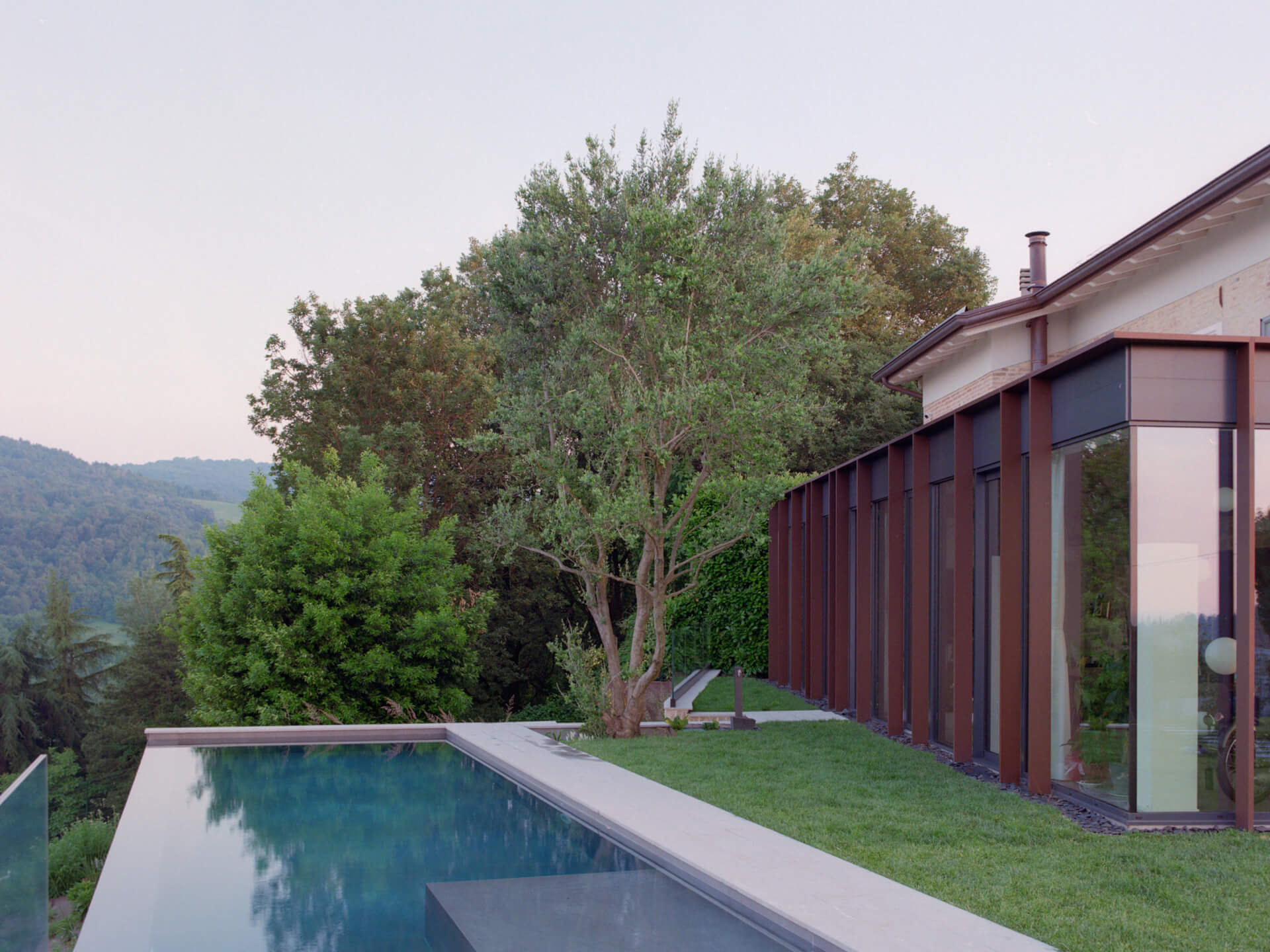
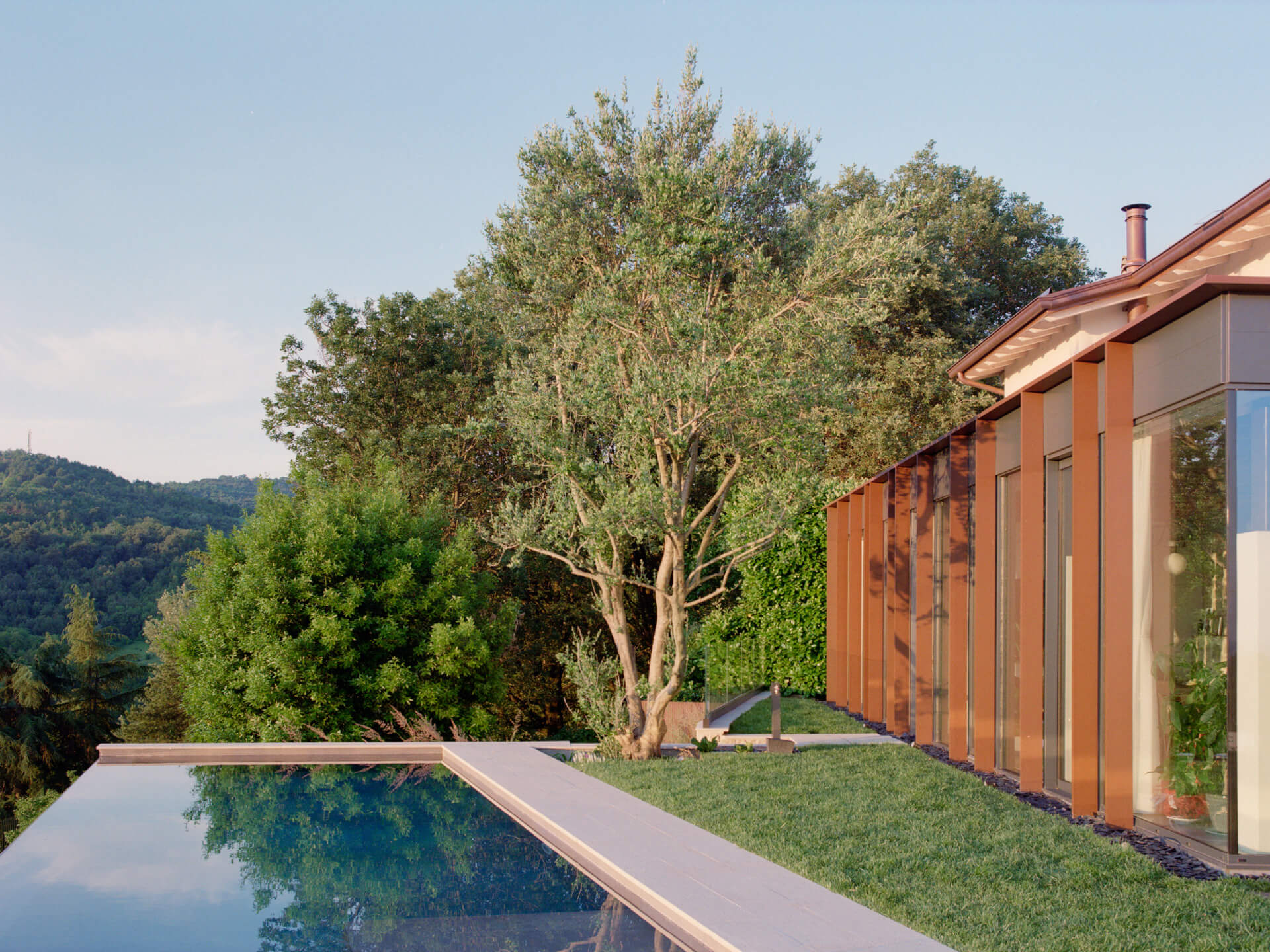
This new volume was enclosed with continuous glazing, articulated by staggered aluminum pilasters with a Corten finish, while the original stone wall was deliberately left exposed within the interior. The former living area was repurposed as a kitchen and connected to the new living space through a large sheet-metal-clad portal, created by reworking the existing wall openings. A similar intervention was carried out in the bedroom, where a new opening in the stone wall leads directly to the wellness area, which includes a sauna.
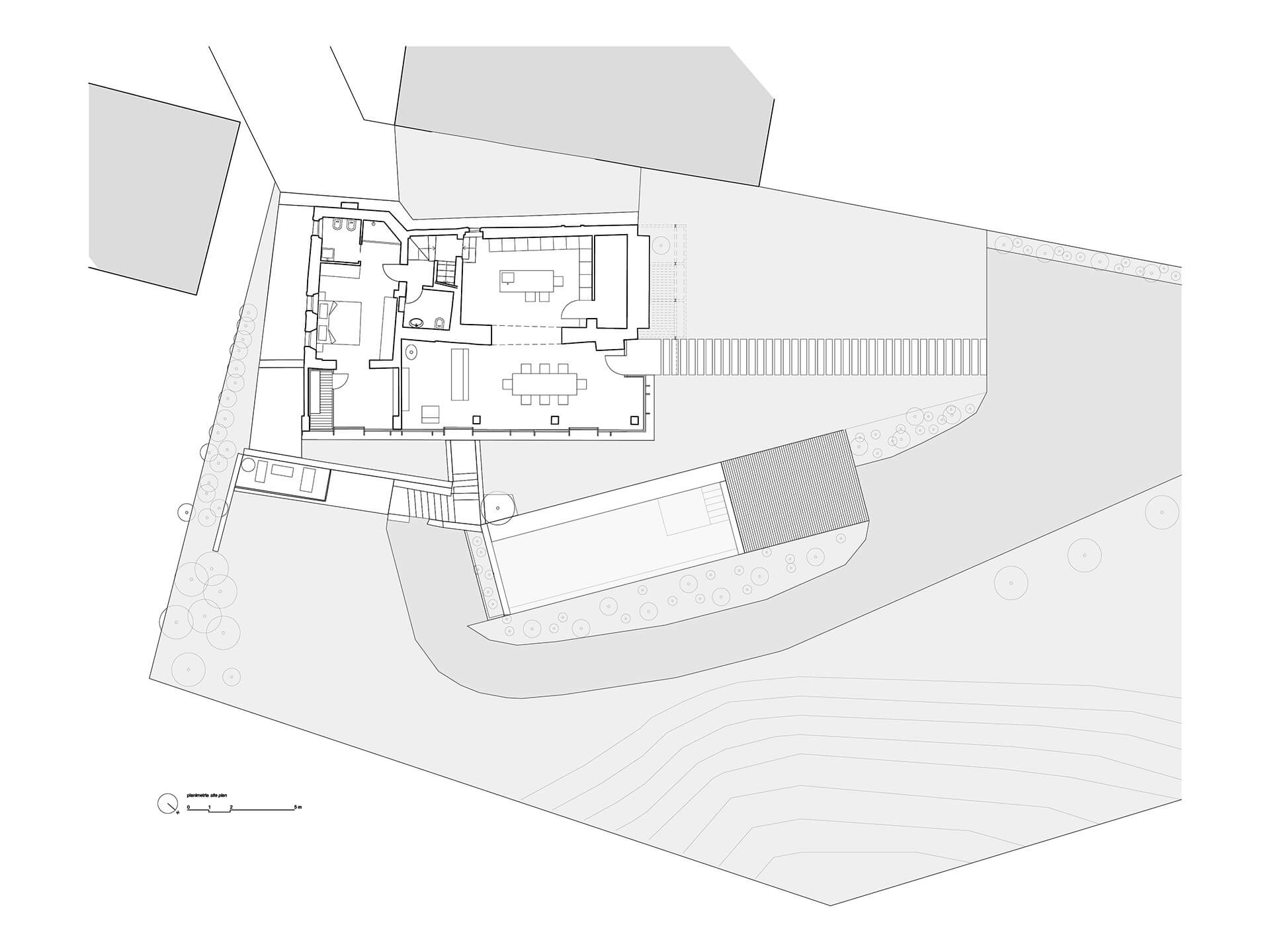
Landscape & Façade Design
Externally, the existing terraces were redefined through the introduction of an infinity pool projecting toward the ridge, with a basement level beneath it housing technical systems and storage spaces. The terracing system was further expanded through the use of reinforced and gabion-retained earthworks, creating new landscaped areas designed for outdoor use.
The areas in front of the building were cleared of walls and fences to enable the creation of a new main entrance to the house. Access is no longer aligned with the center of the portico but instead positioned along the short side of the extension, allowing for a reorganization of vehicular access from the main road, now separated from the rest of the courtyard.
The new main façade is marked by an entrance structure consisting of a metal pergola, partially covering the main doorway and designed to support climbing vegetation, reinforcing the dialogue between architecture and landscape.