Dove’s Nest | Boutique Hotel in Tinos
Architecture:
Visuals:

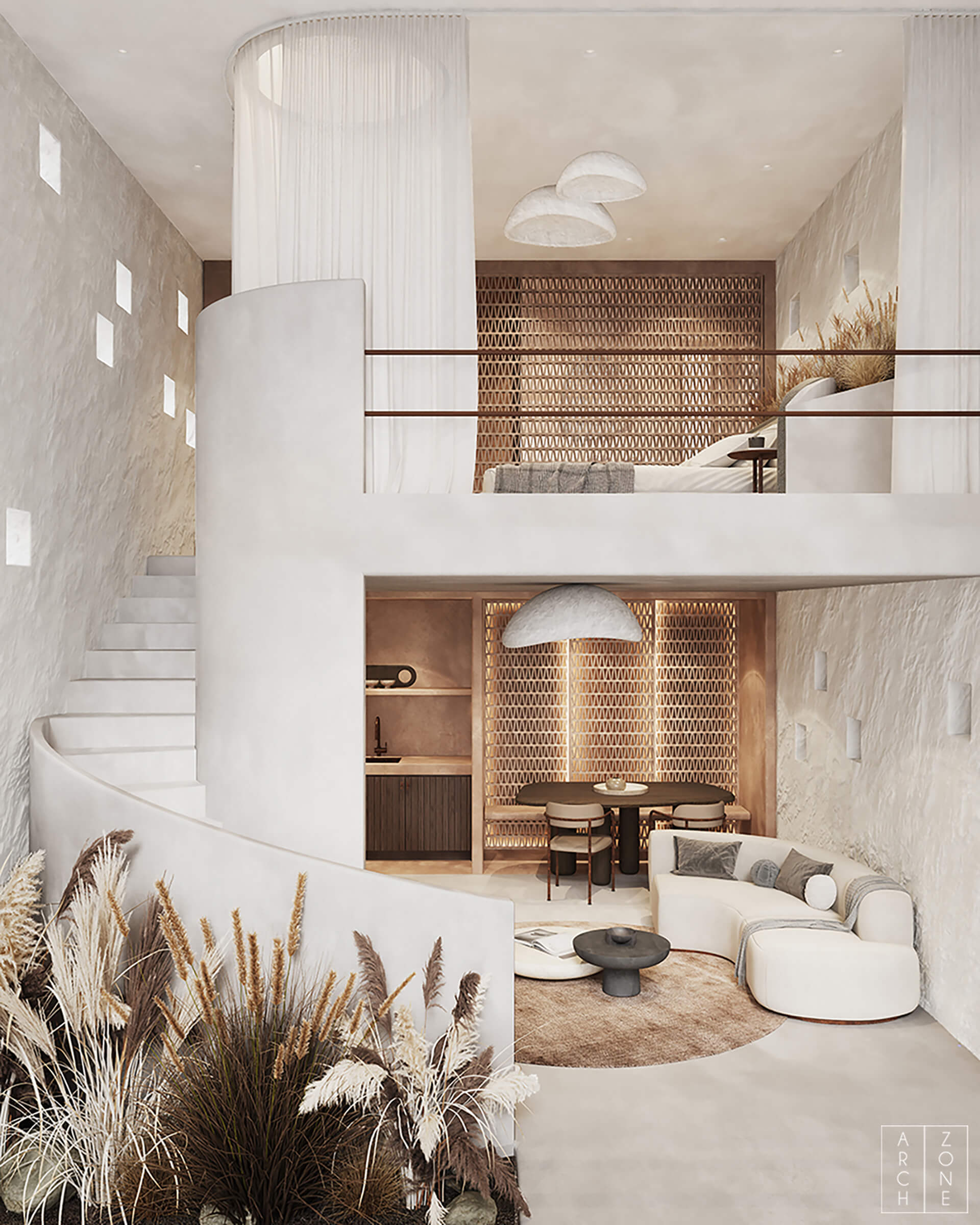
The project concerns the architectural planning and interior design of a boutique hotel unit located on the island of Tinos. The individual unit consists of a 50m² ground floor, incorporating a vestibule, and a 27m² attic level. In parallel, a general masterplan was developed as a proposal for the arrangement of 13 accommodation units across a 15-acre plot.
Design Philosophy
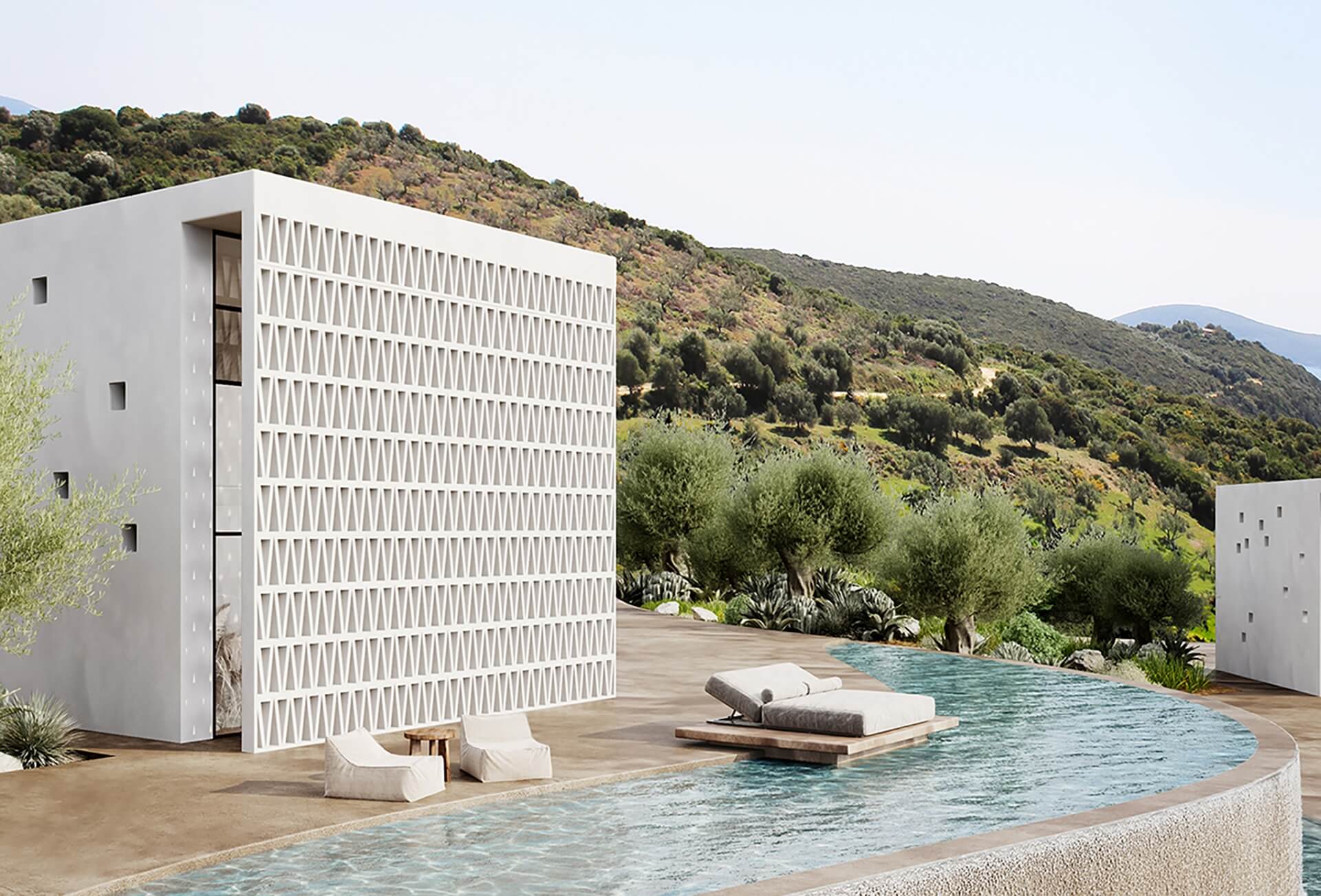
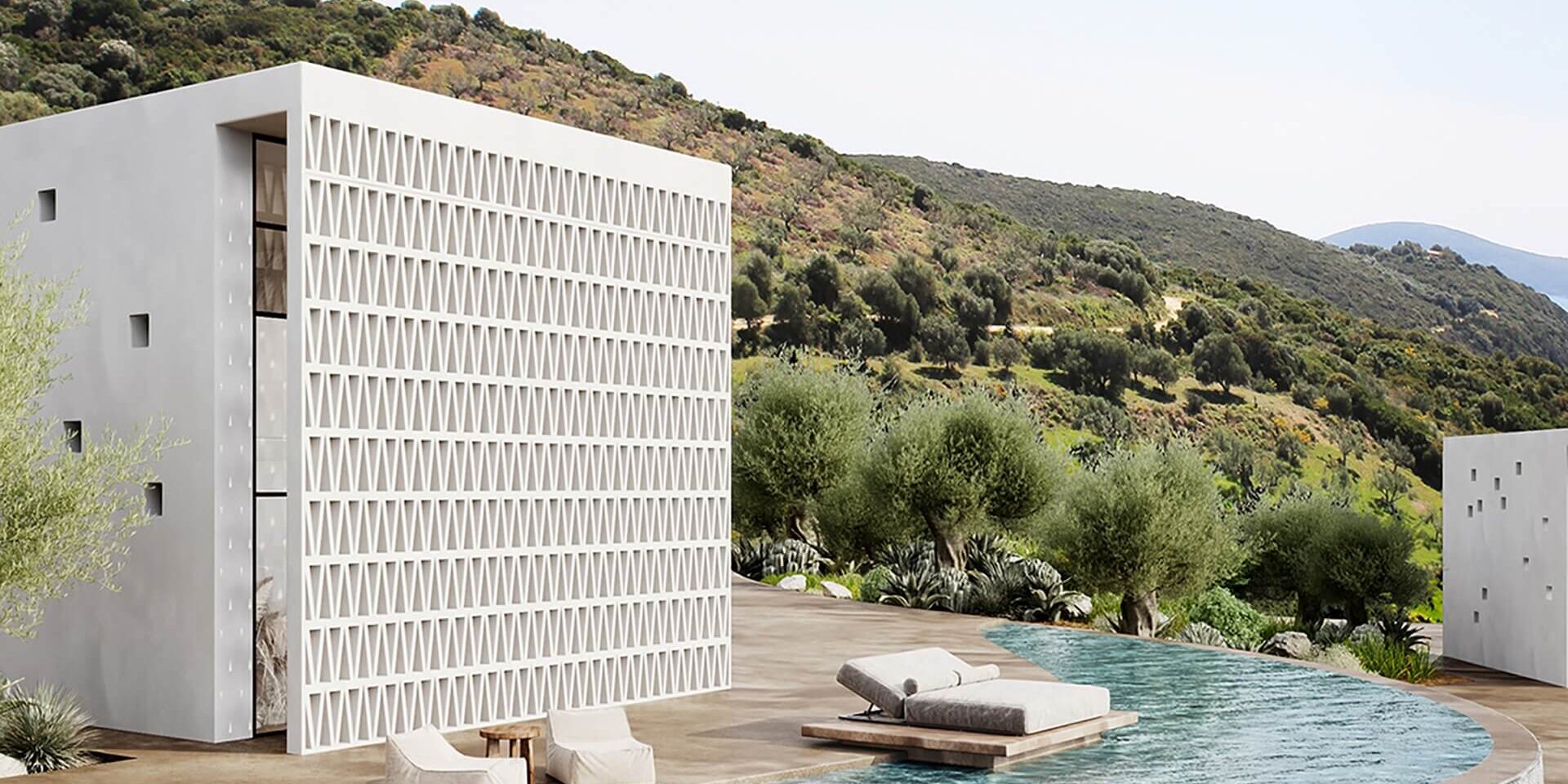
The design concept draws direct inspiration from the traditional dovecotes of Tinos, emphasizing their architectural, historical, and cultural significance. The project is grounded in an in-depth study of the dovecotes’ structural logic, morphology, and original function. The proportions, volume, and overall massing of the hotel unit reinterpret those of a typical dovecote, translating vernacular principles into a contemporary hospitality context.
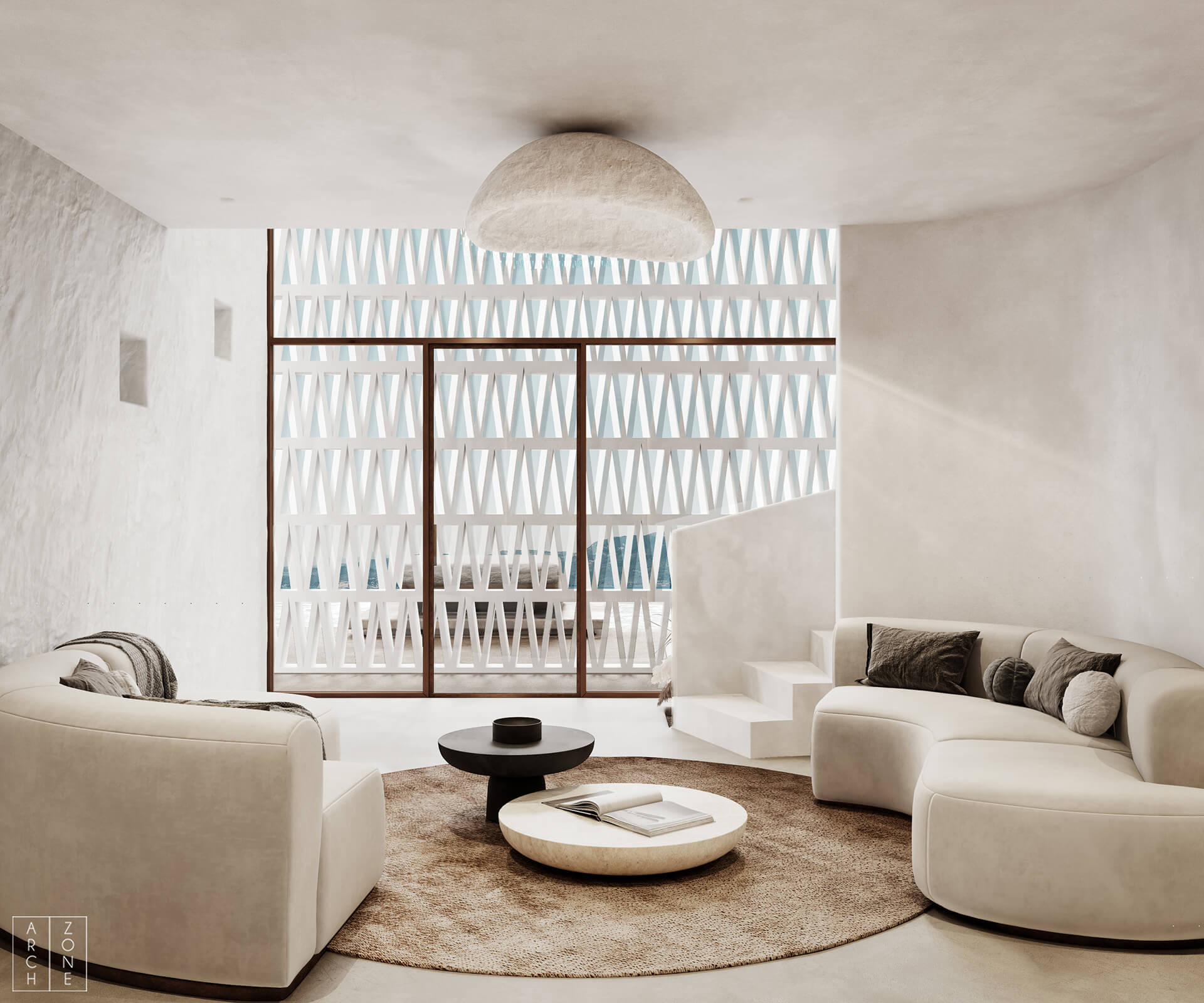
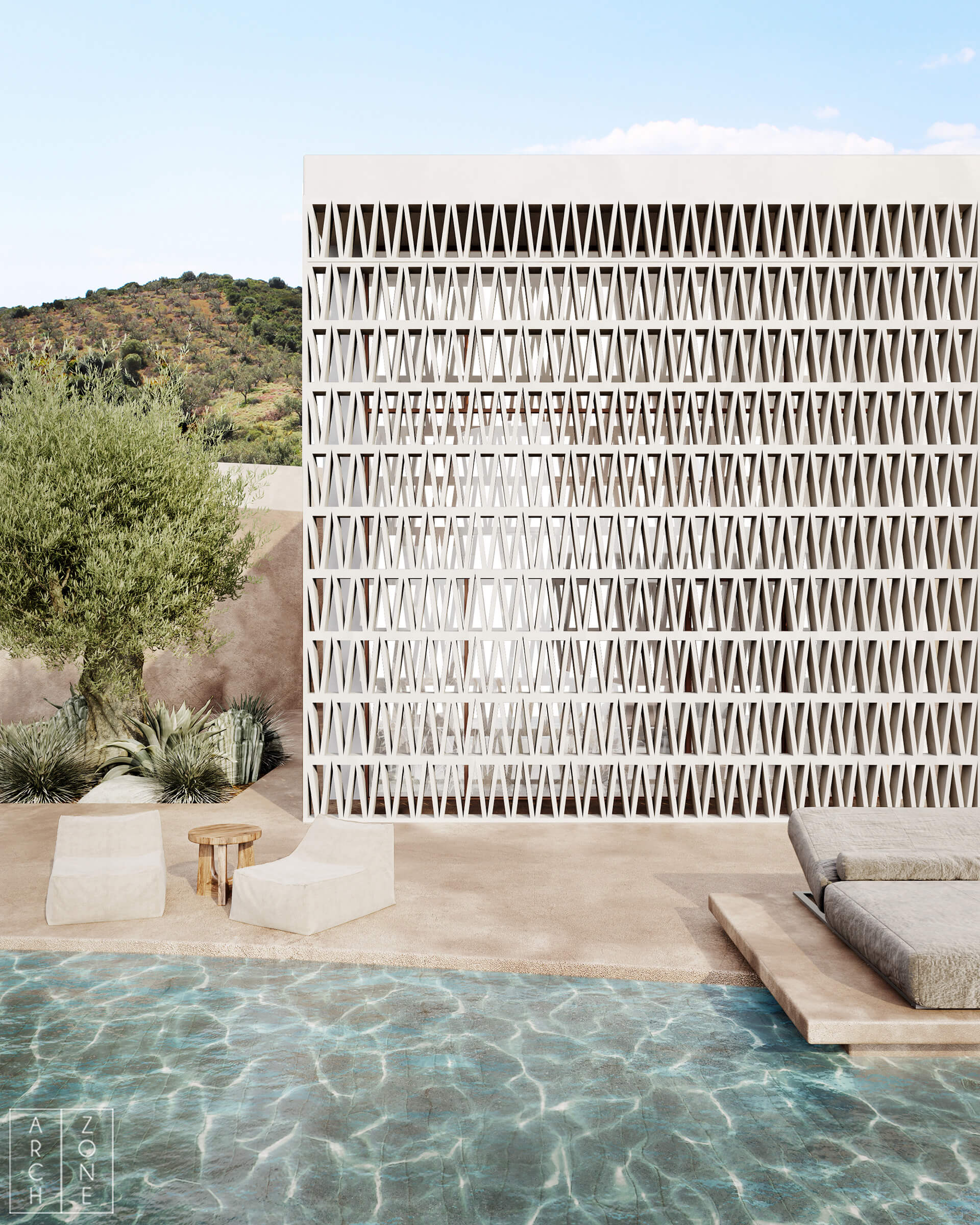
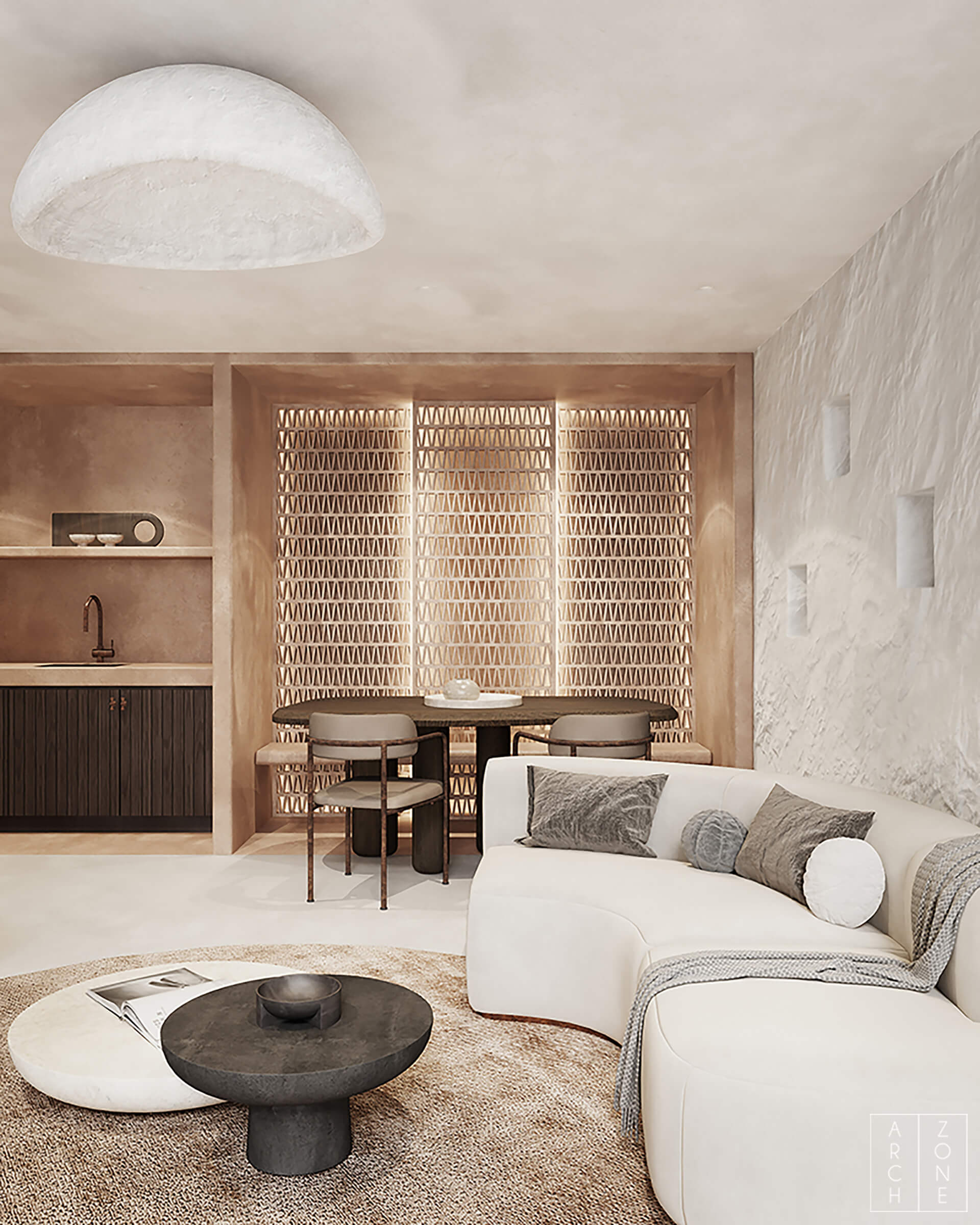
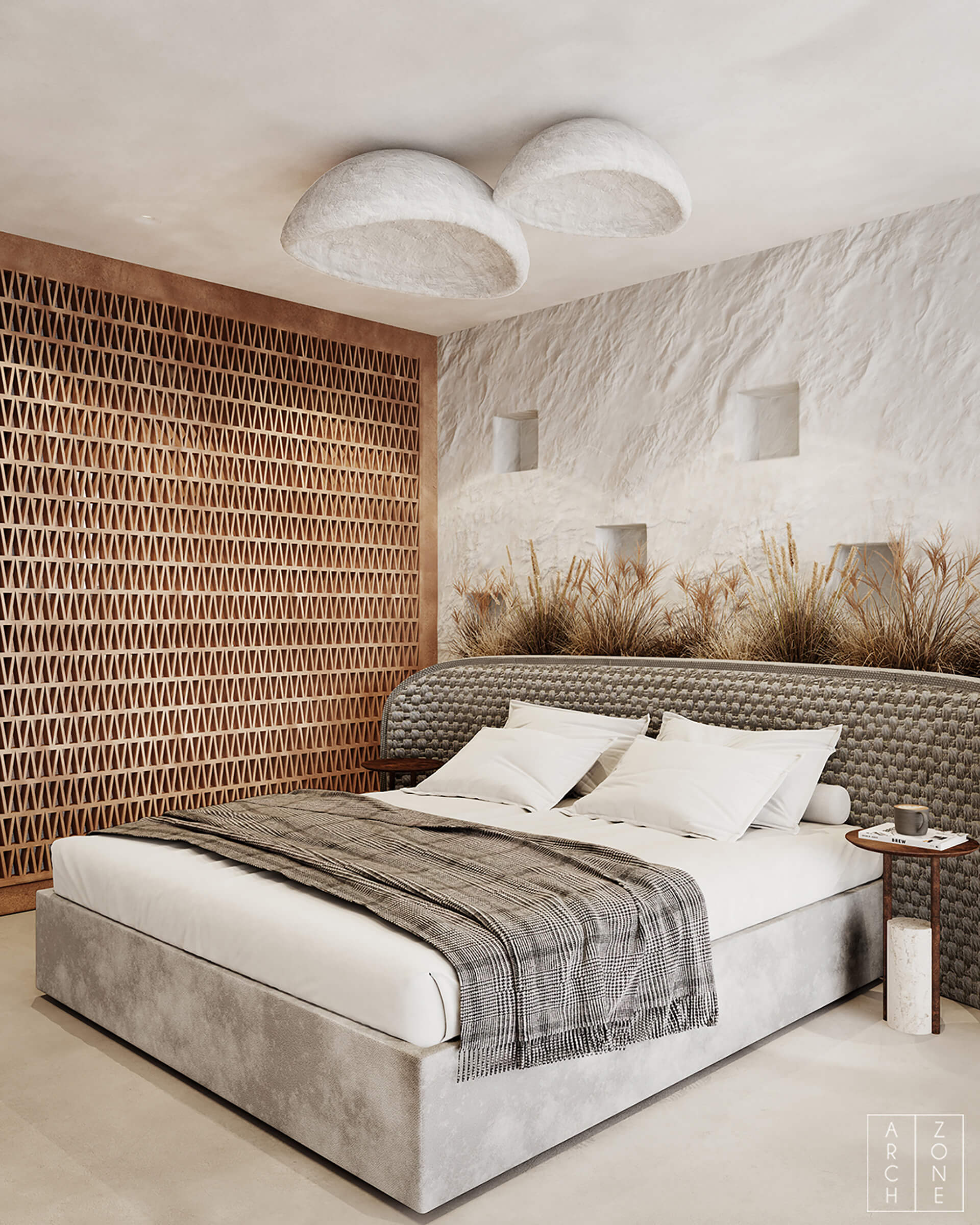
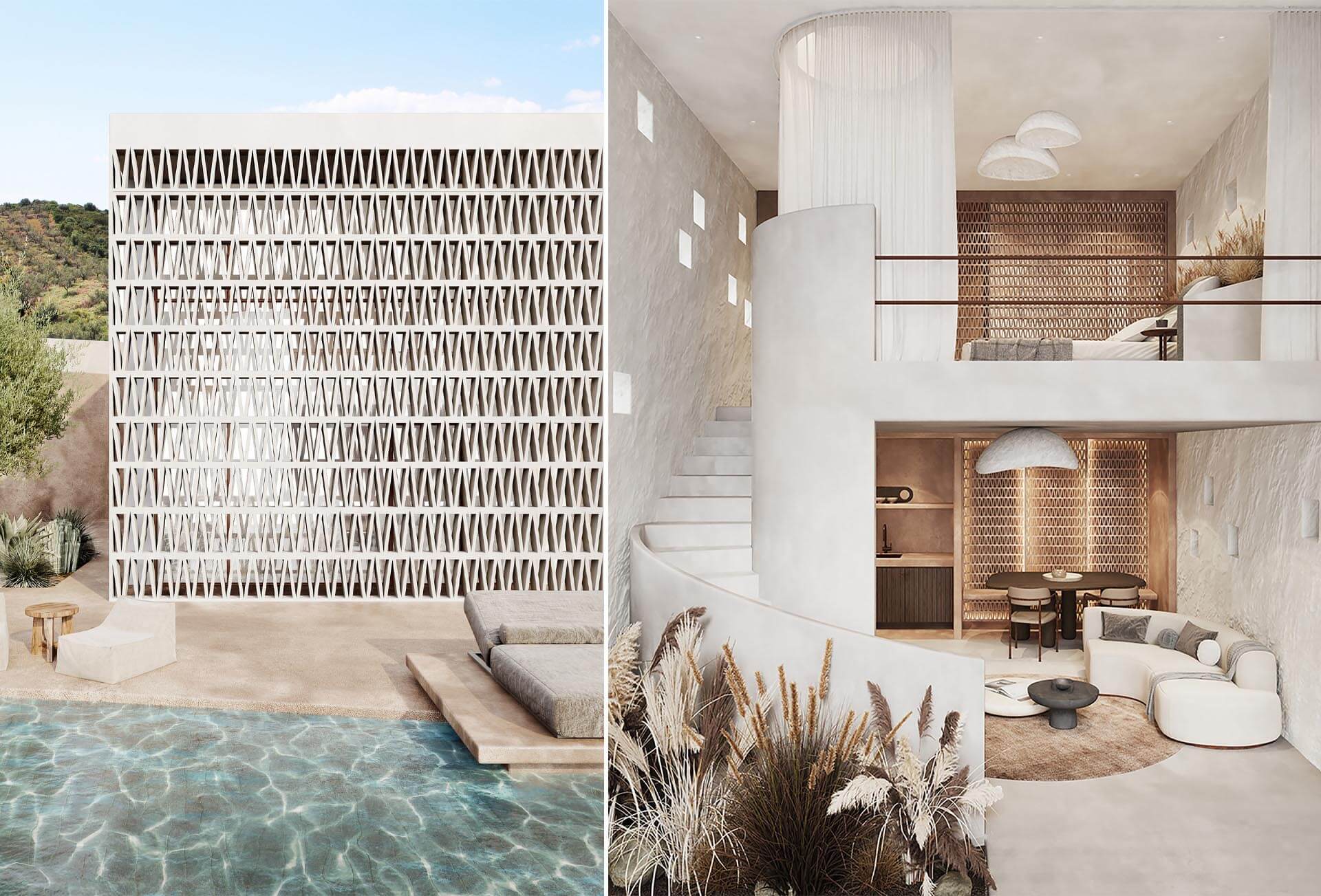
The morphology of the building shell itself evokes the image of a dovecote. The entrance is defined by a “clostra element” – a perforated architectural screen that introduces a strong geometric expression. This feature references the traditional dovecote façade, originally designed as the birds’ point of entry. In contrast, the remaining surfaces are predominantly solid, creating a deliberate tension between openness and enclosure.
Context Integration
The units are carefully positioned in dialogue with the natural environment, responding to both orientation and topography. The complex is embedded within the landscape, facing the sea approximately 200m away, on the southern part of the island. A key guiding principle was the morphology of the island terrain, particularly its characteristic dry-stone walls, which informed both the spatial layout and the landscape design.
Beyond referencing dovecote architecture, the project aims to reconnect visitors with the land through an agritourism-oriented approach. Cultivation and engagement with the landscape are integral to the experience. Water also plays a central role in the design, reflecting the historical placement of dovecotes near springs or running water. Private pools are integrated into the site, following the logic of the dry-stone walls and unfolding organically across the terrain.
Spatial Organization
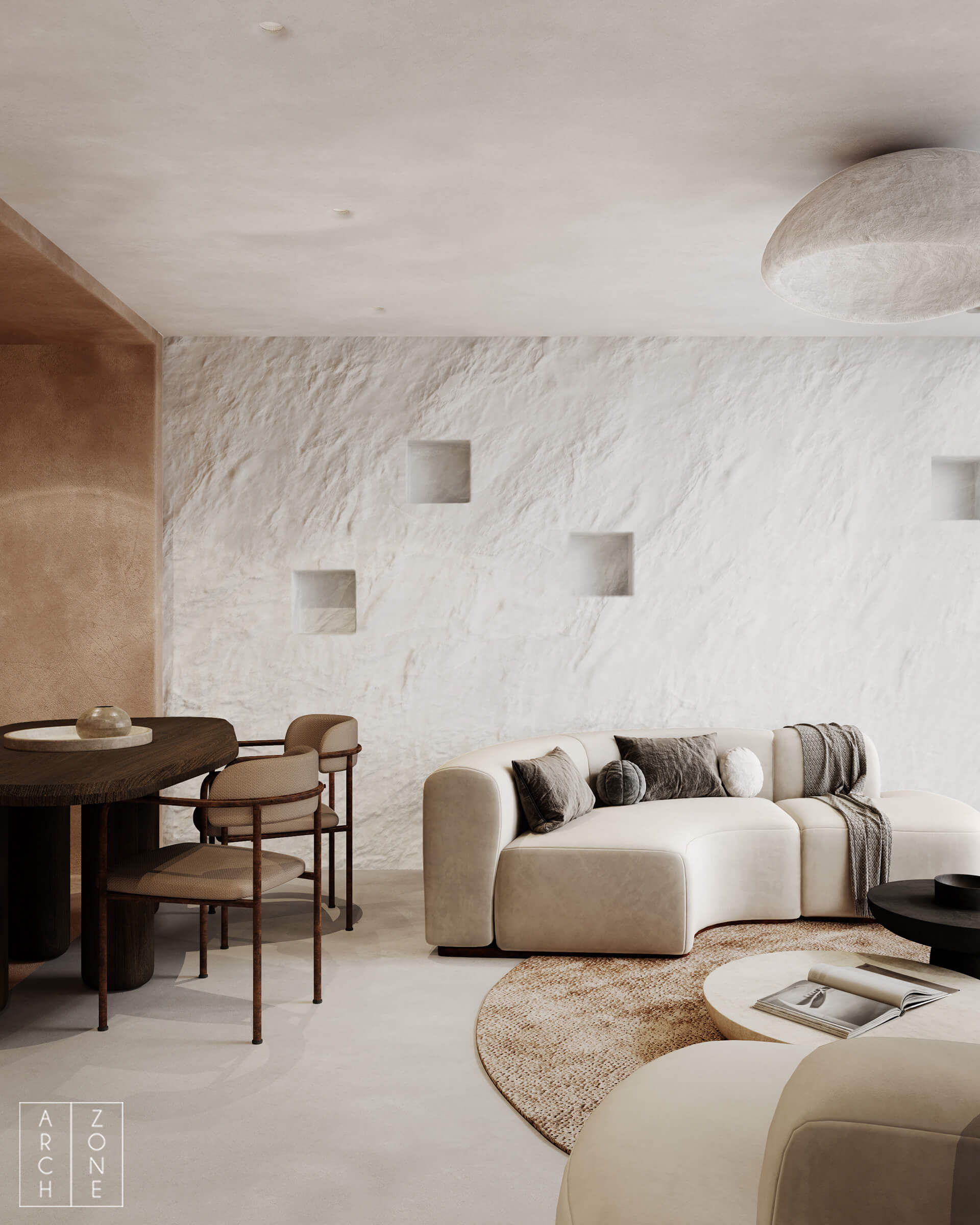
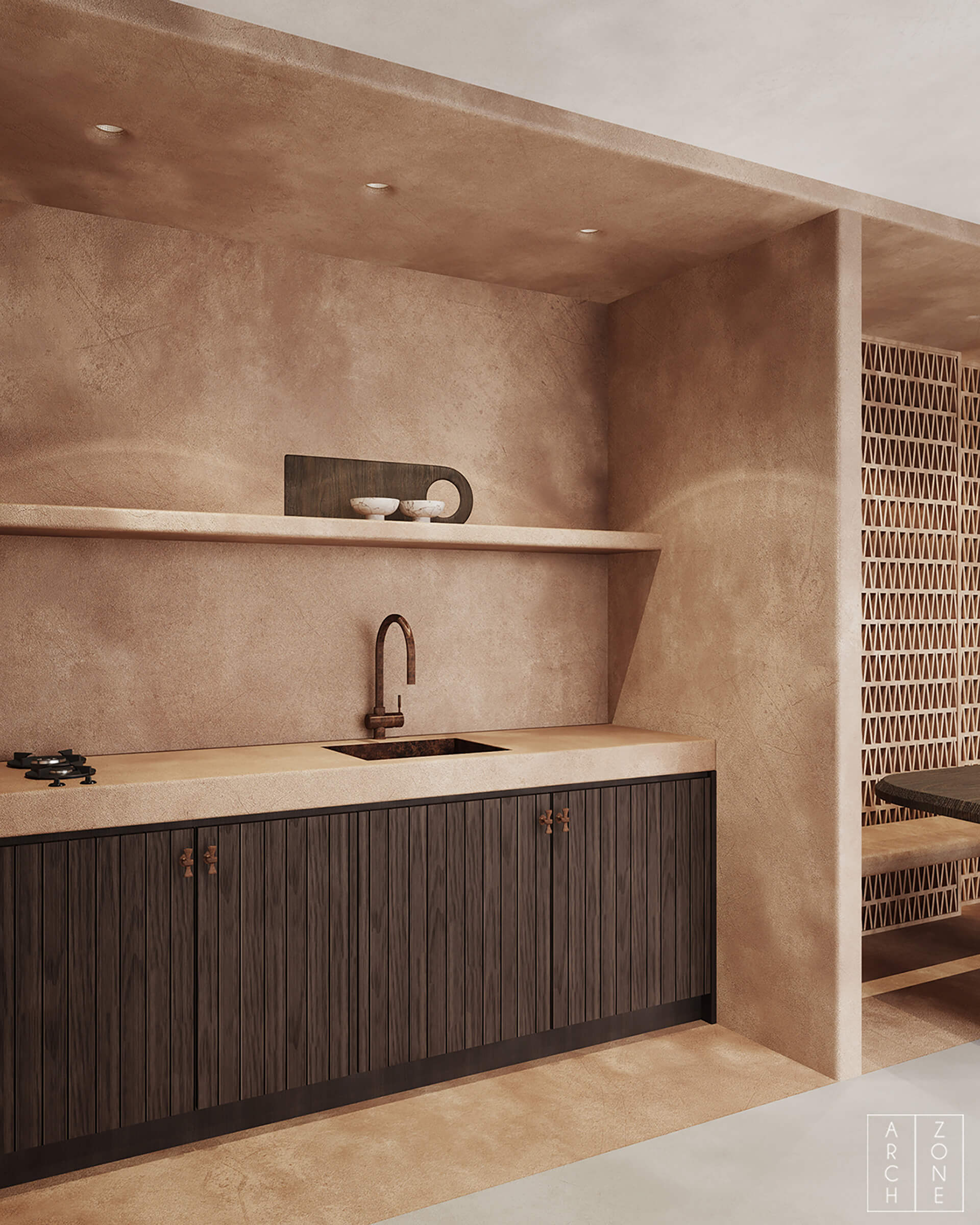
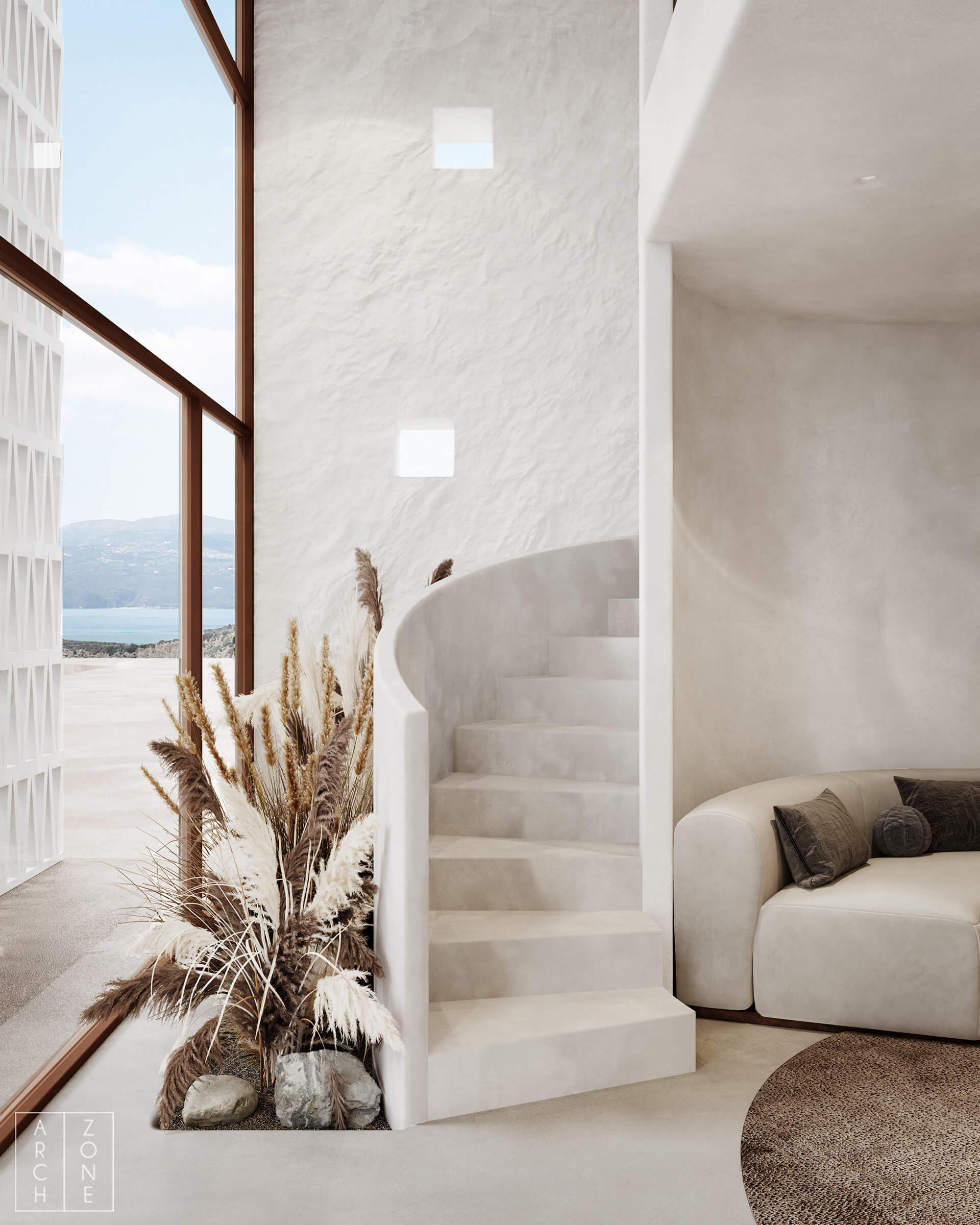
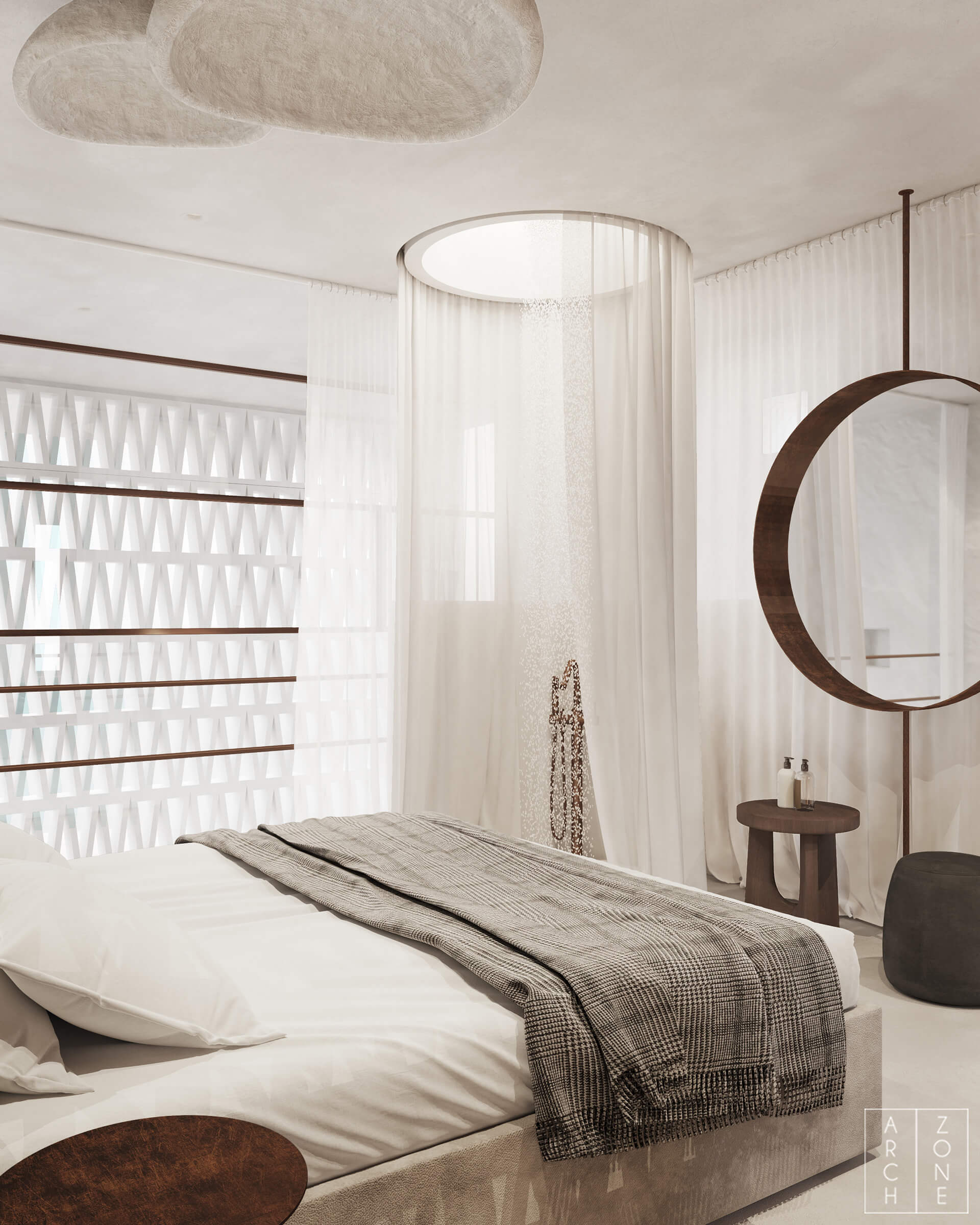
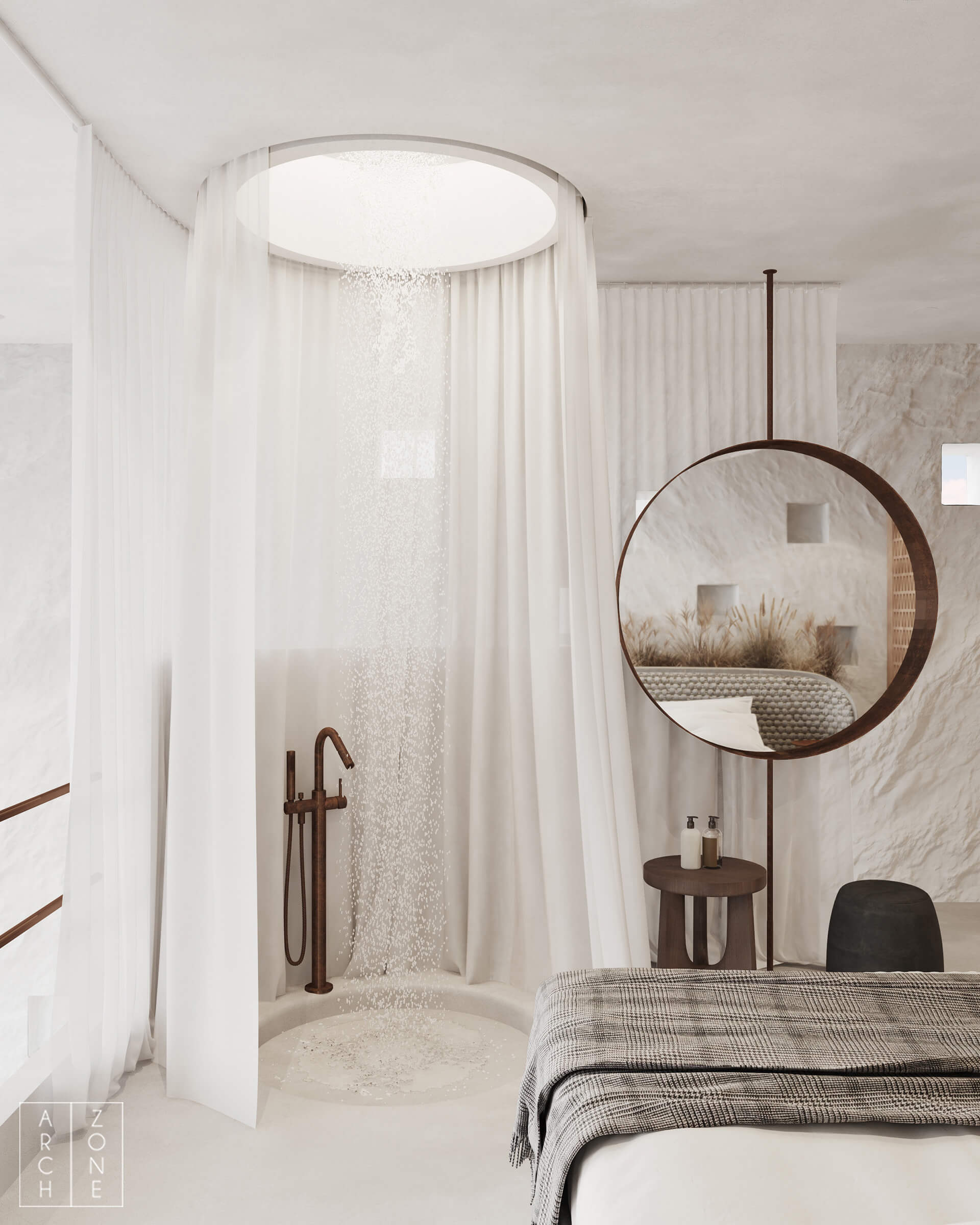
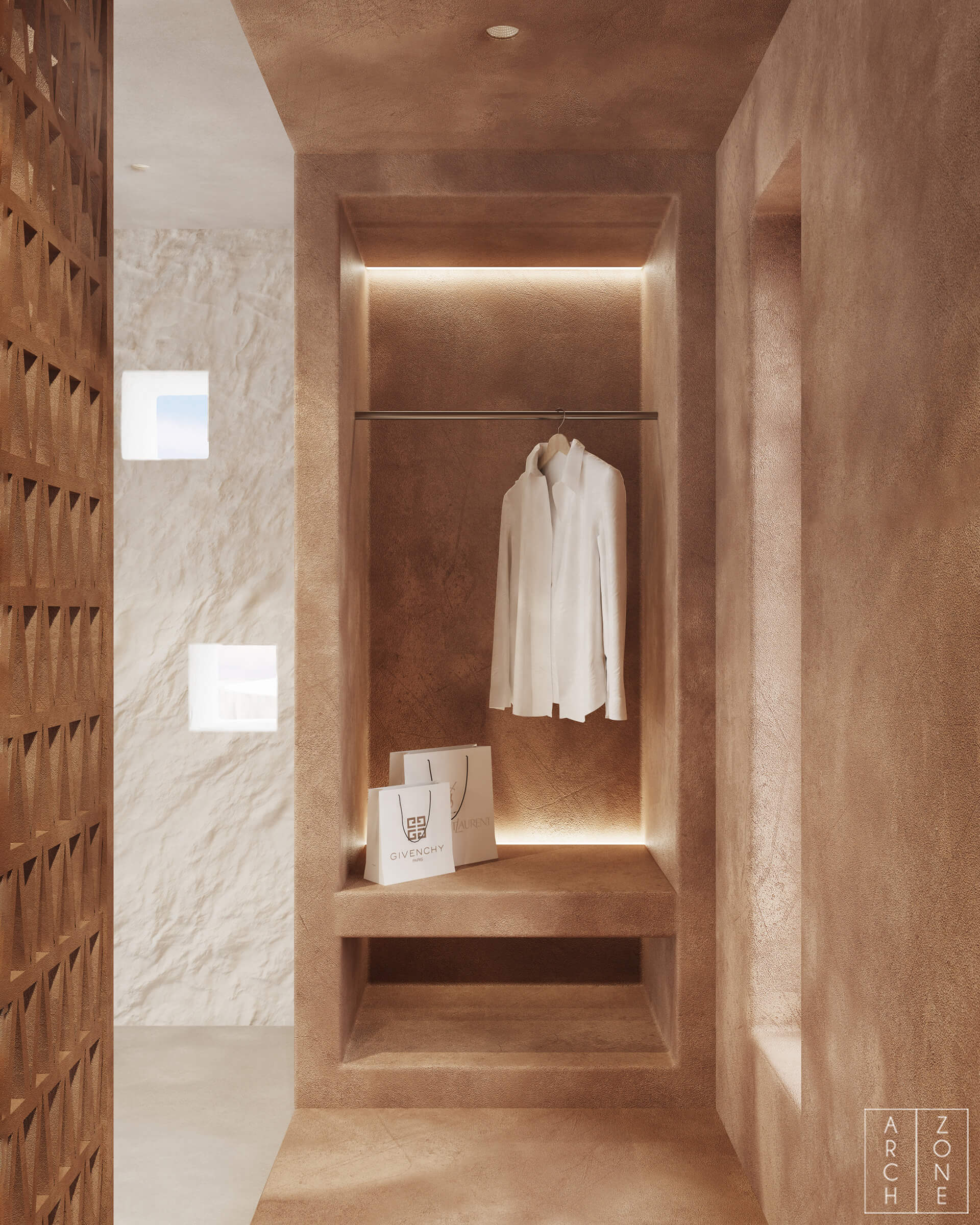
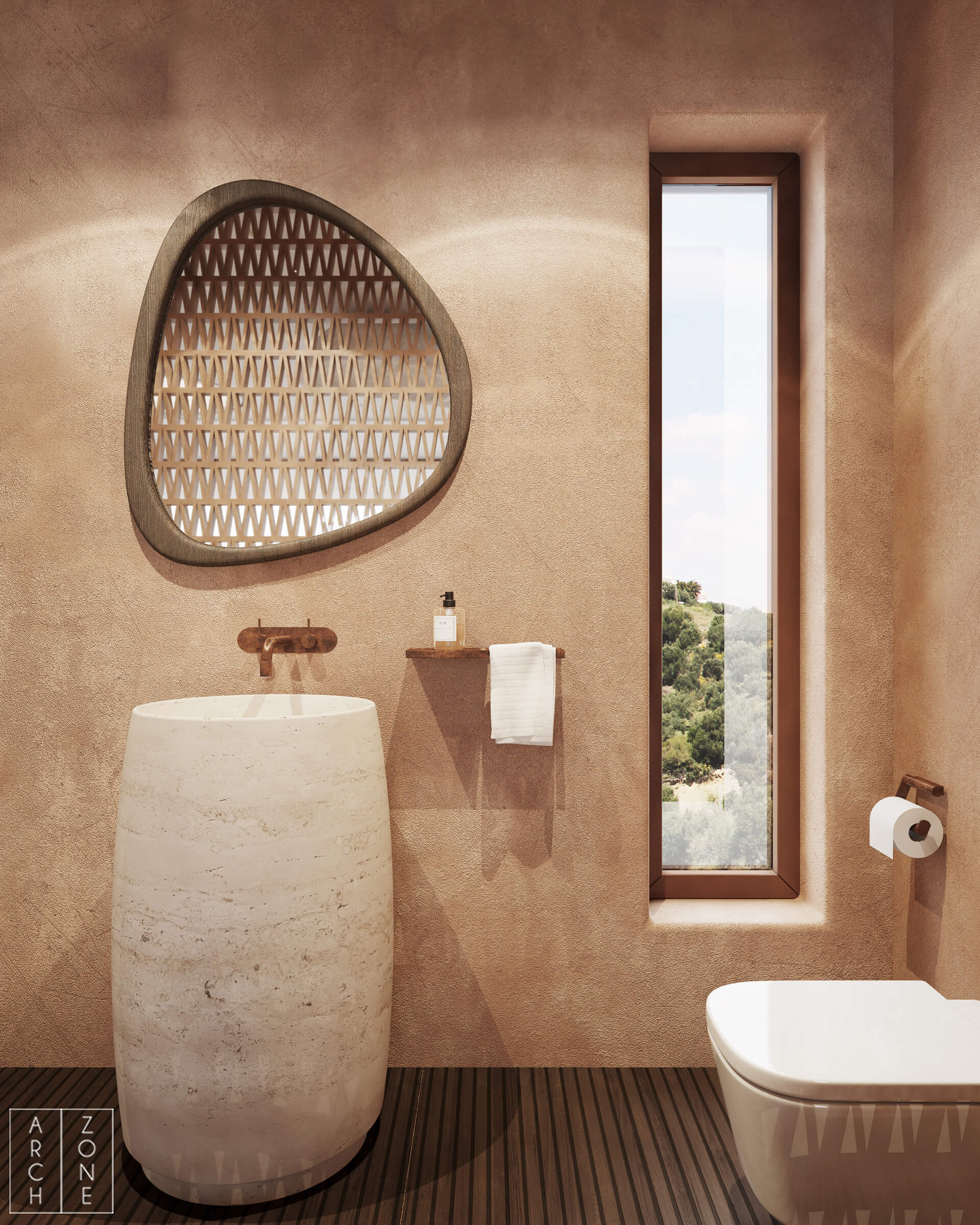
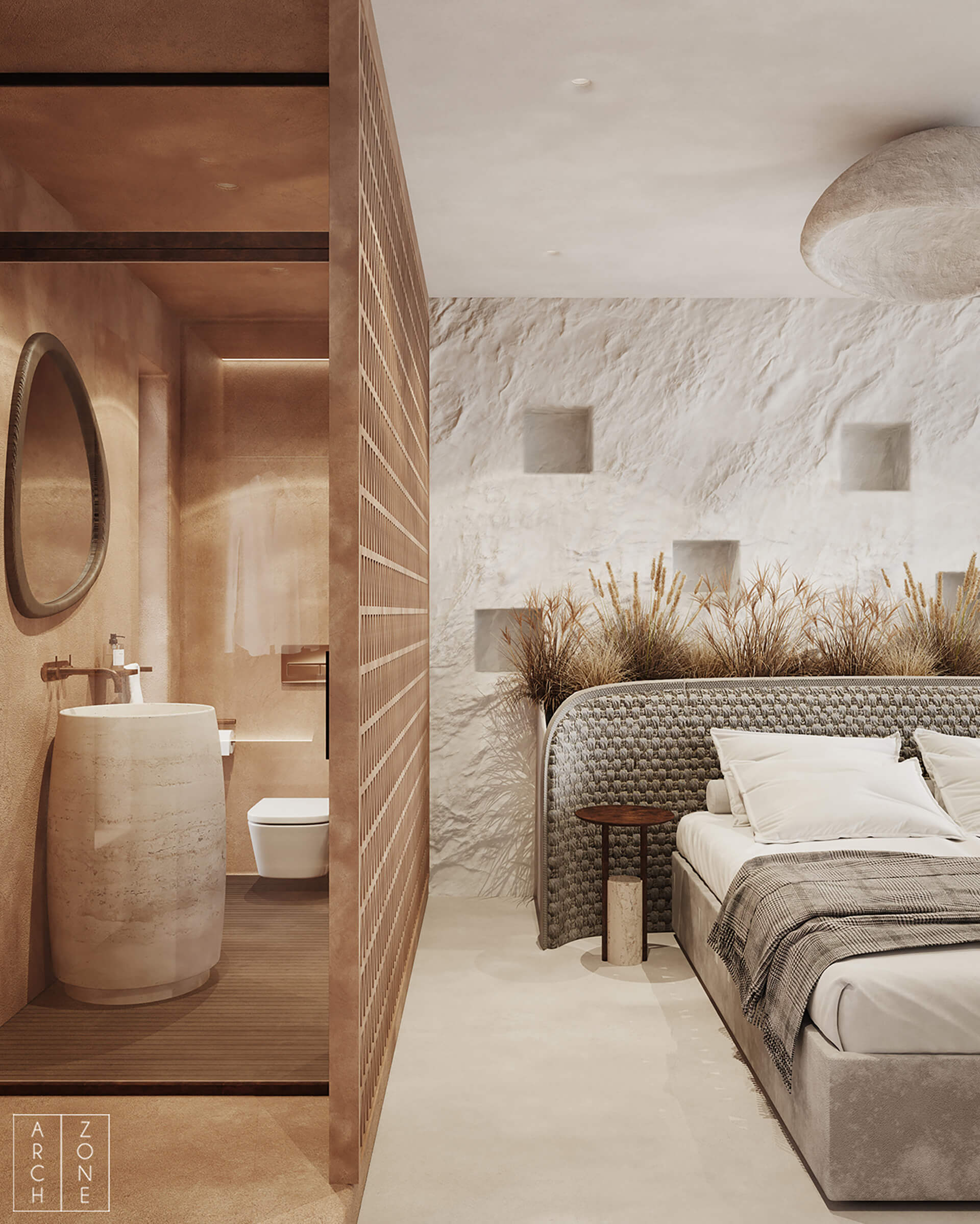
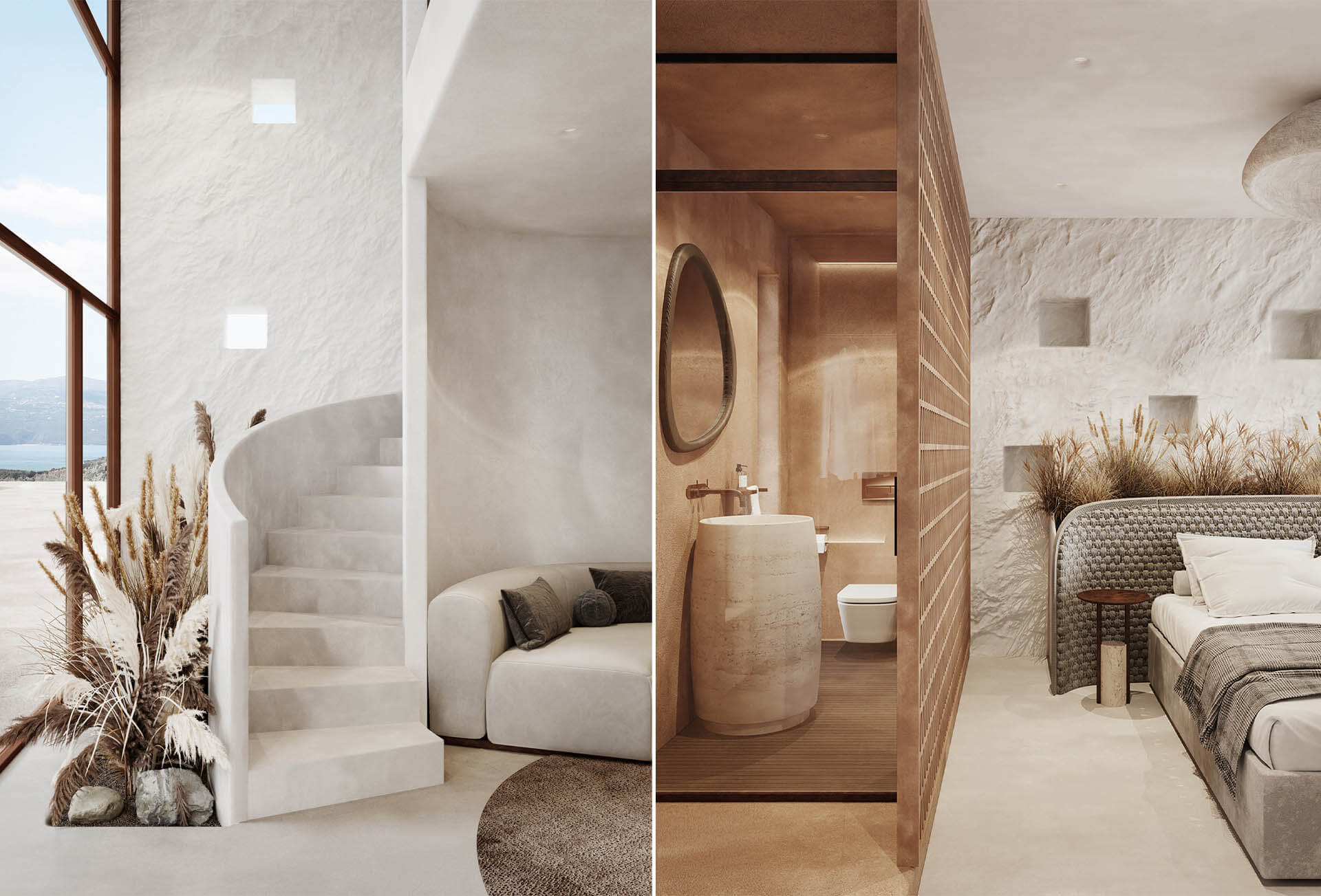
The total interior area of each unit is 77m². Entry is mediated by a vestibule positioned between the “clostra screen” and the glazed façade, ensuring a gradual transition and enhanced privacy. Shading is user-controlled, allowing flexibility in light and openness. The interior is organized as an open-plan space, where curved lines and natural materials foster a nest-like atmosphere that blends seamlessly with the surrounding landscape. On the ground floor, the living area forms the spatial core, flowing into the dining space and kitchen. A circular staircase leads to the attic level, which accommodates the bedroom, an open shower, and a WC.
The side walls feature rough-textured finishes, recesses, and openings that reinterpret the original functional cavities of dovecotes – spaces once intended to host birds. Integrated planting within the interior further reinforces the connection to the earth and natural cycles.
Finally, the accommodation units are conceived as sanctuaries, acting as spaces of retreat and introspection. They encourage seclusion, serenity, and a sense of isolation from everyday life, offering guests a distinctive spatial experience that promotes relaxation and reconnection with both nature and self.