Patio House in Nicosia
Architecture:
Photography:

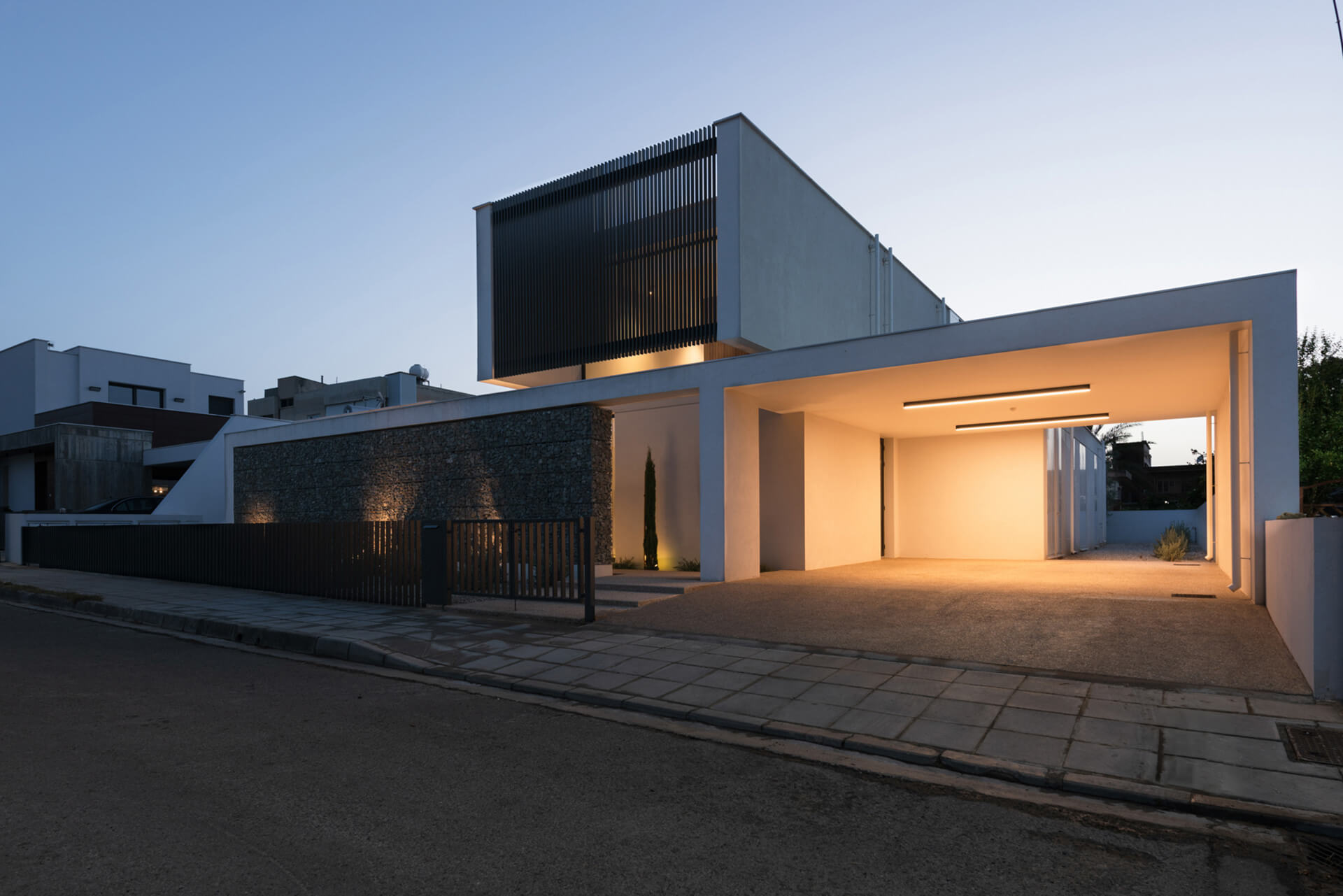
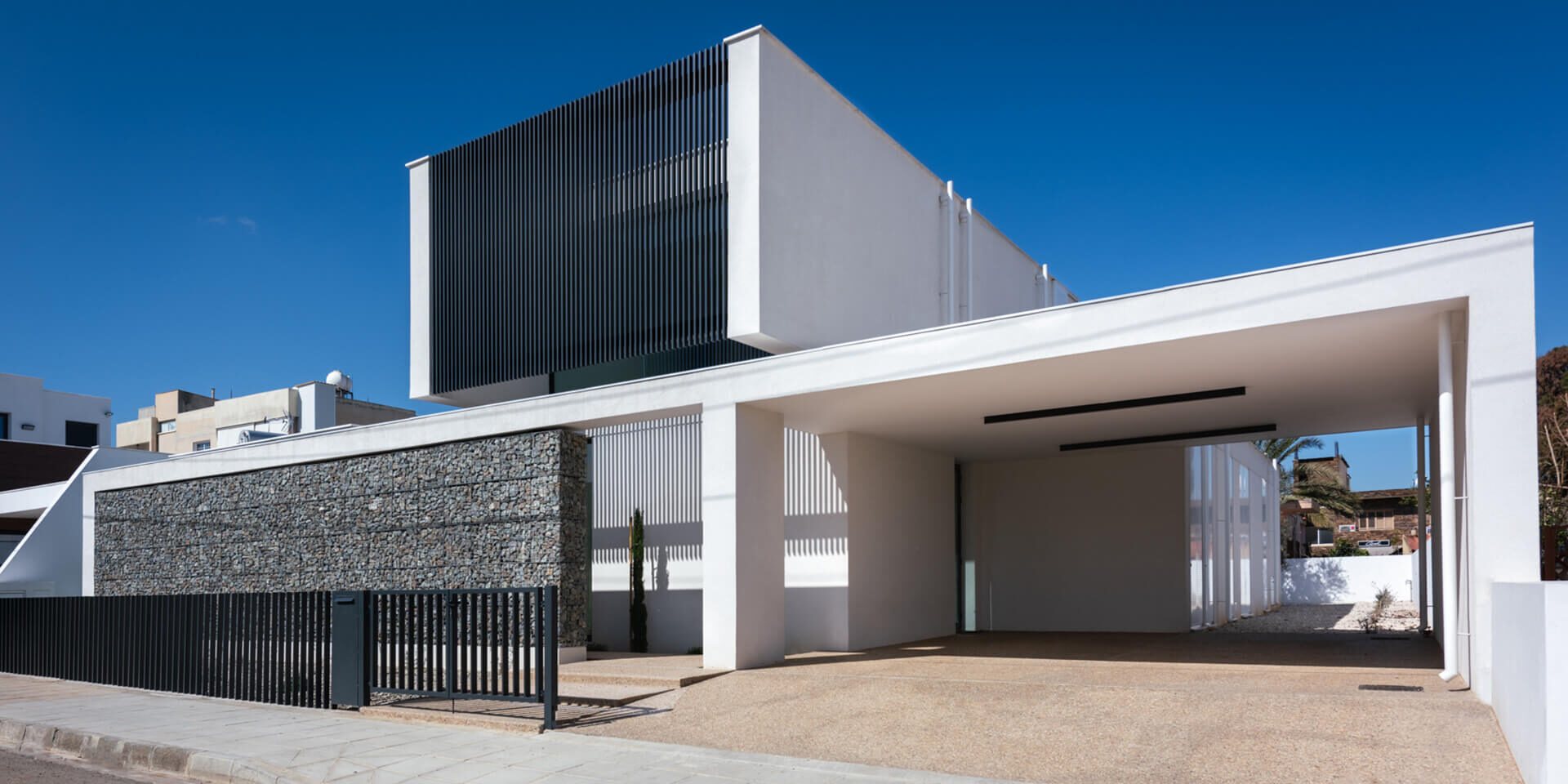
The residence is positioned within the local scale of the Lakatamia area in Nicosia, in a neighborhood characterized by empty plots, limited vegetation, and an abandoned old shoe factory directly across the street.
Design Philosophy
The initial design objective, shaped by the conditions of the area, was to create a single-storey home that centres on inwardness and privacy, while maintaining a direct connection between the interior and surrounding greenery. At the same time, the aim is to provide a safe and comfortable Mediterranean interior environment defined by lived experience, through a contemporary local architectural approach supported by modern systems and materials.
From the early stages, the design principles, developed in relation to the inhabitants’ needs, focused primarily on forming transitional open-air spaces and placing a main protective filter at the façade, referencing the character of a traditional boundary wall.
Spatial Organization
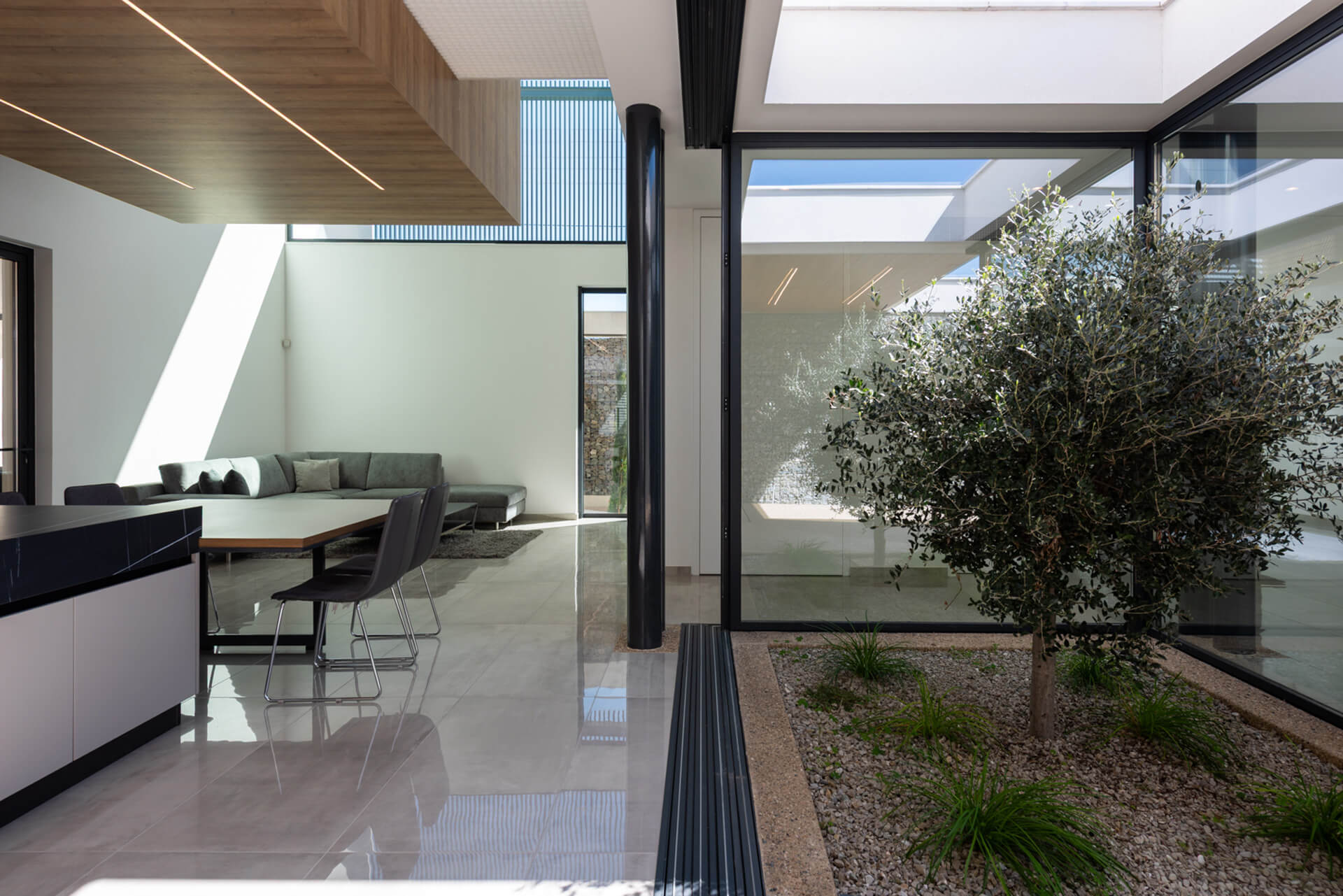
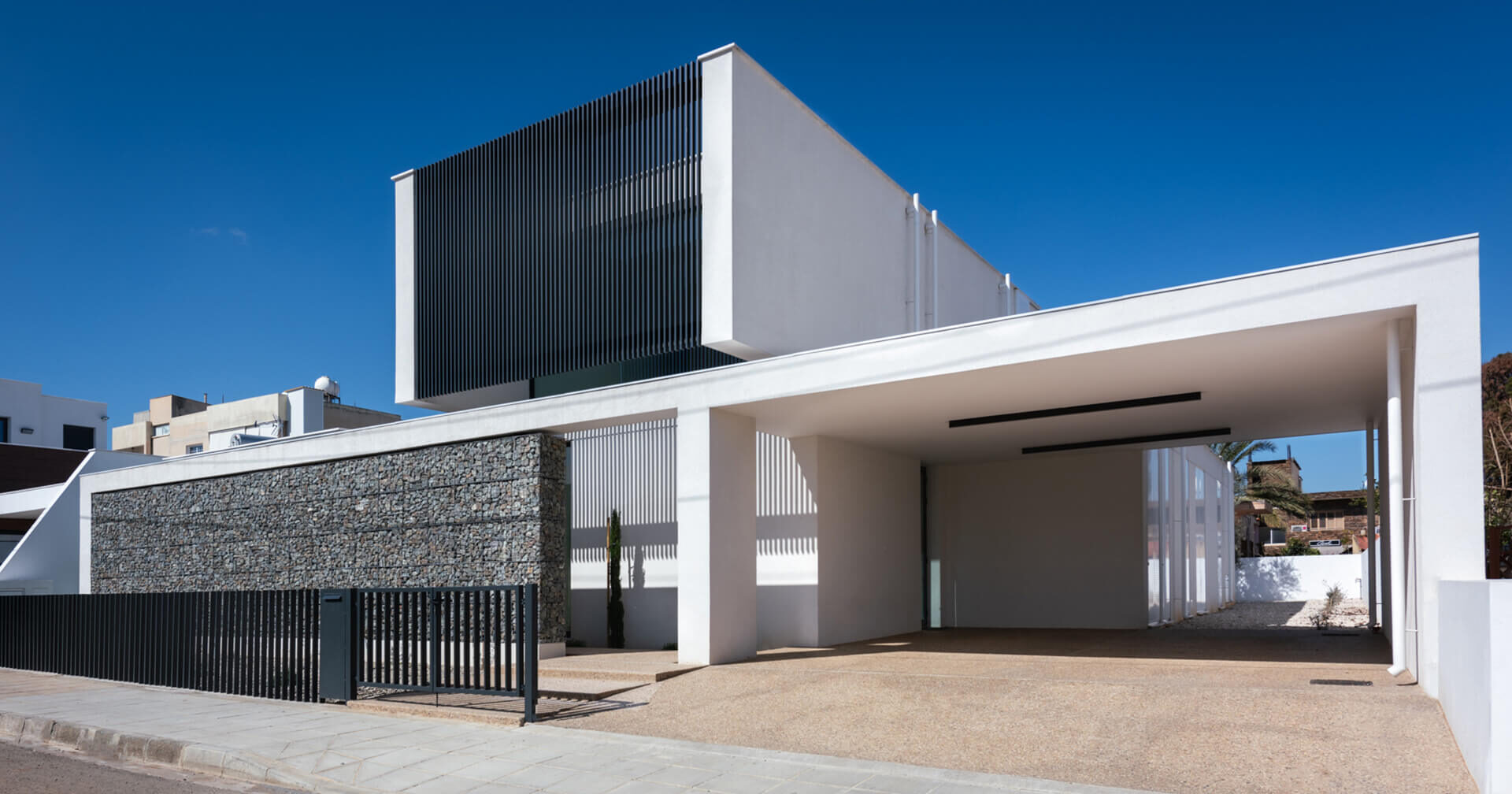
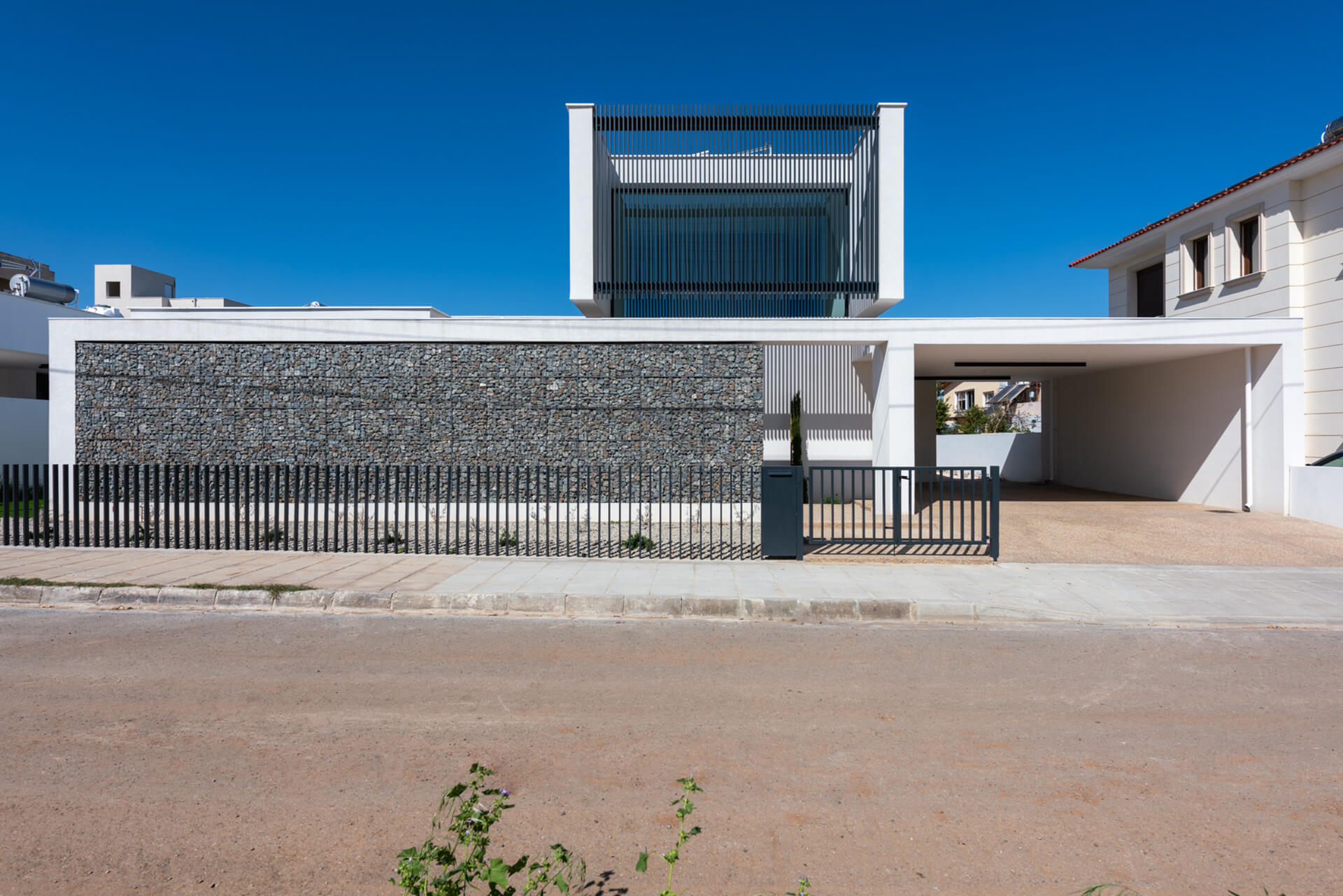
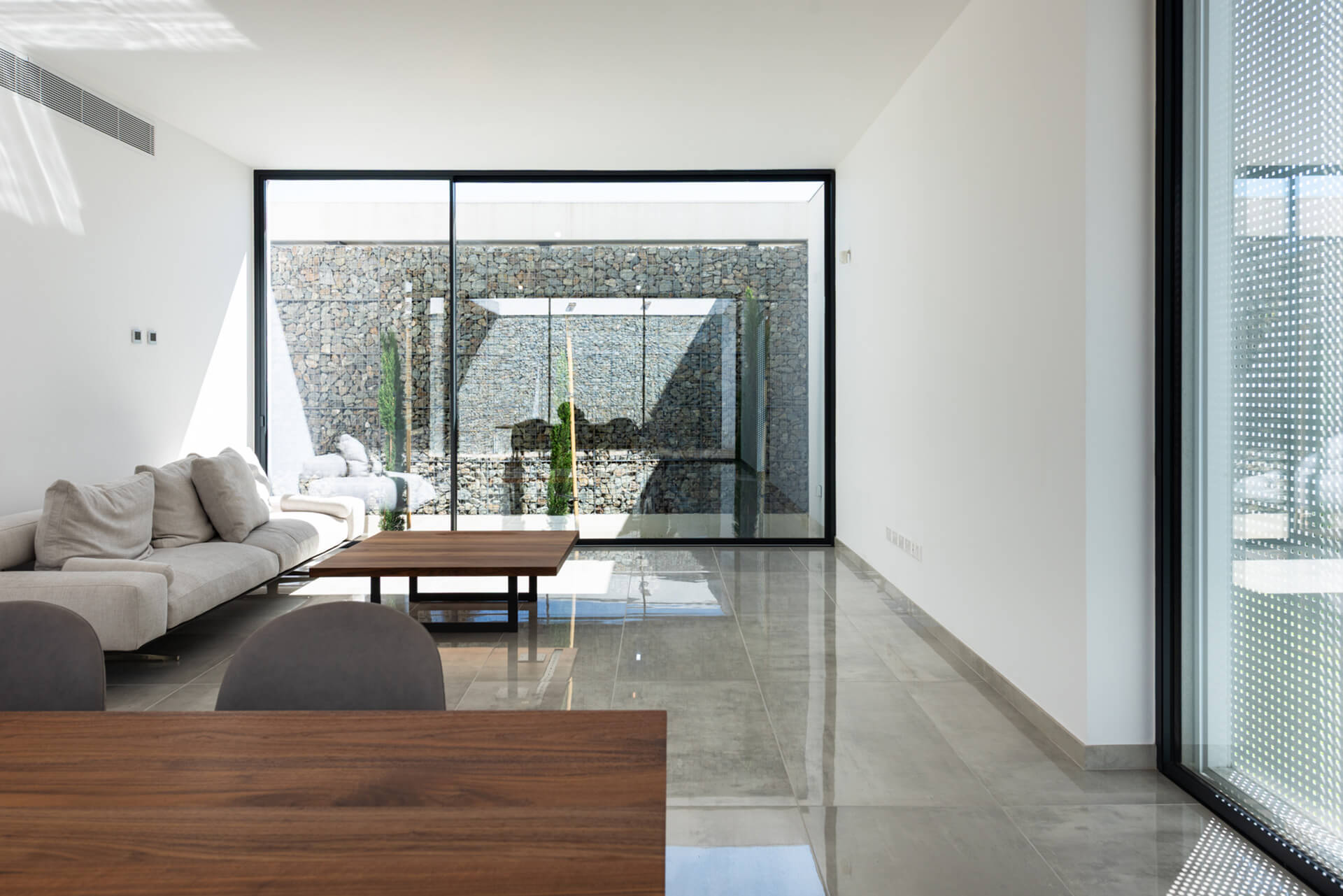
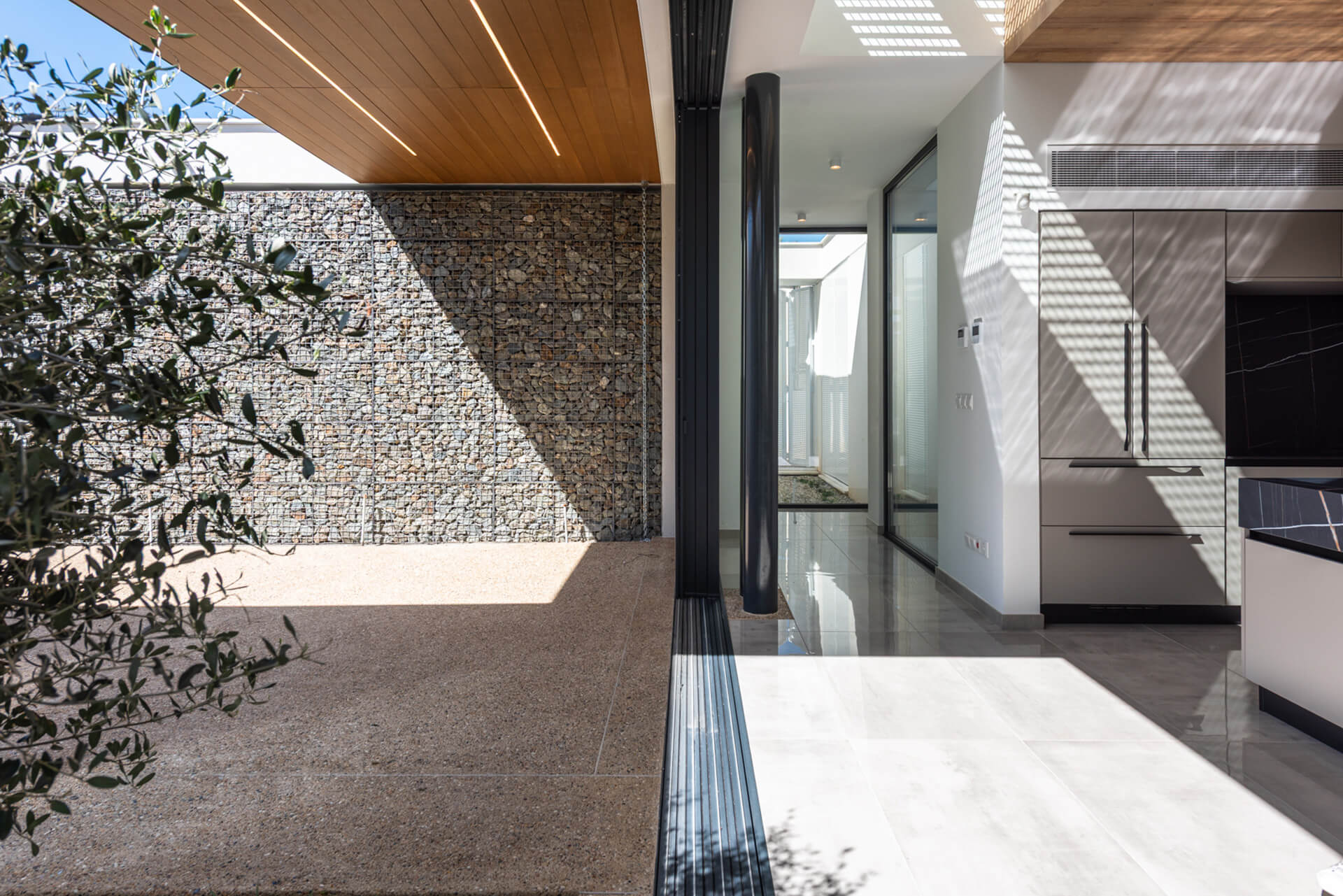
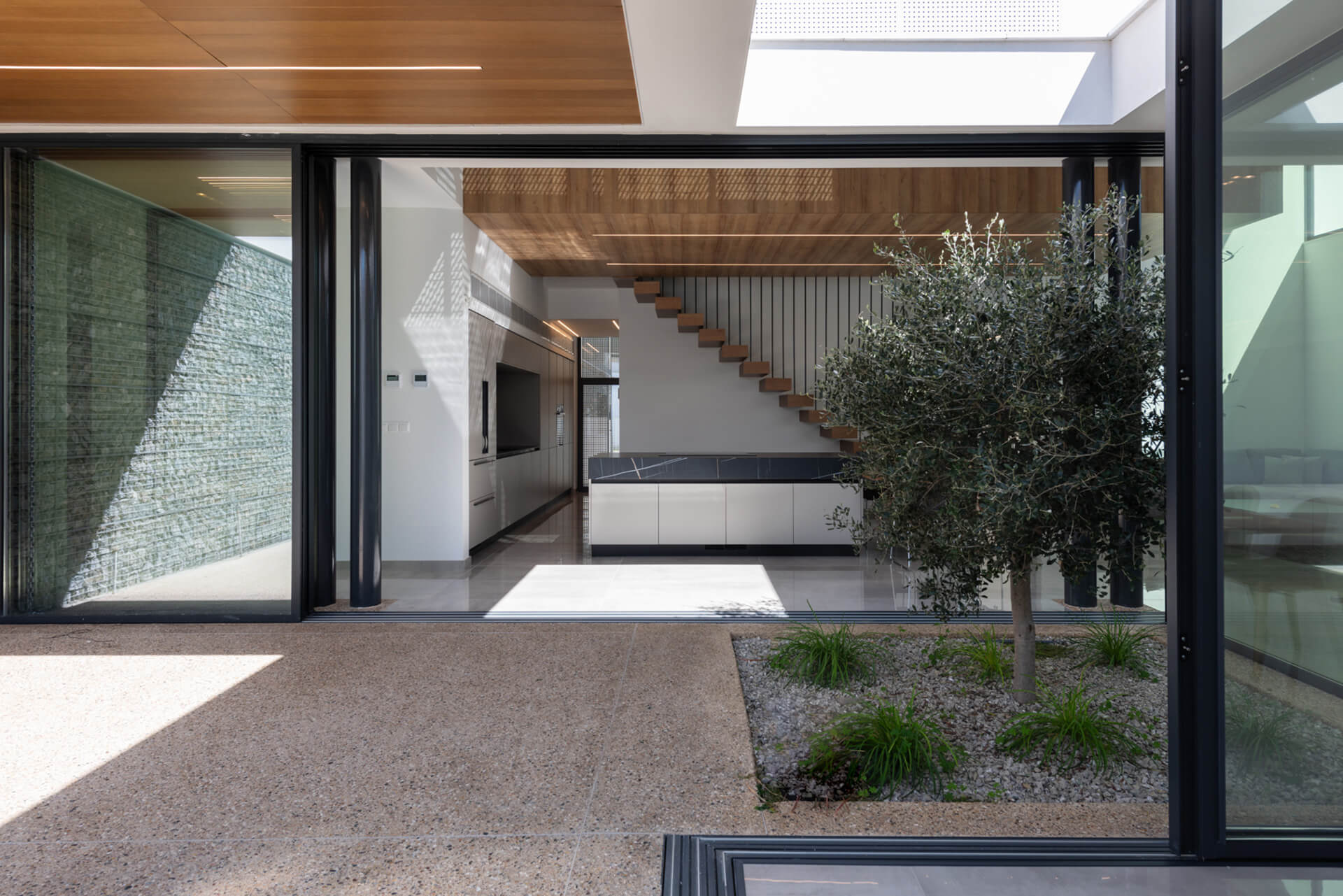
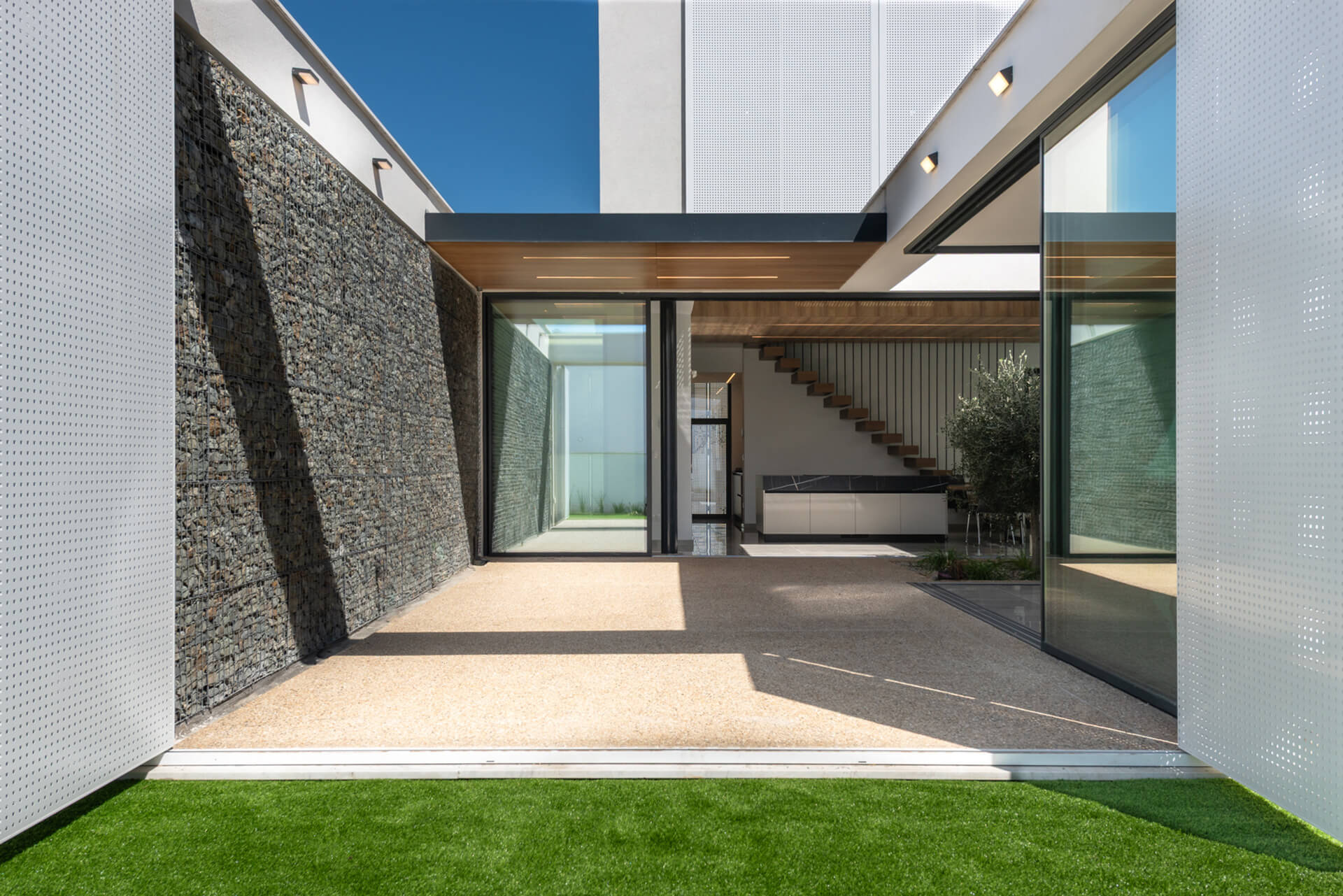
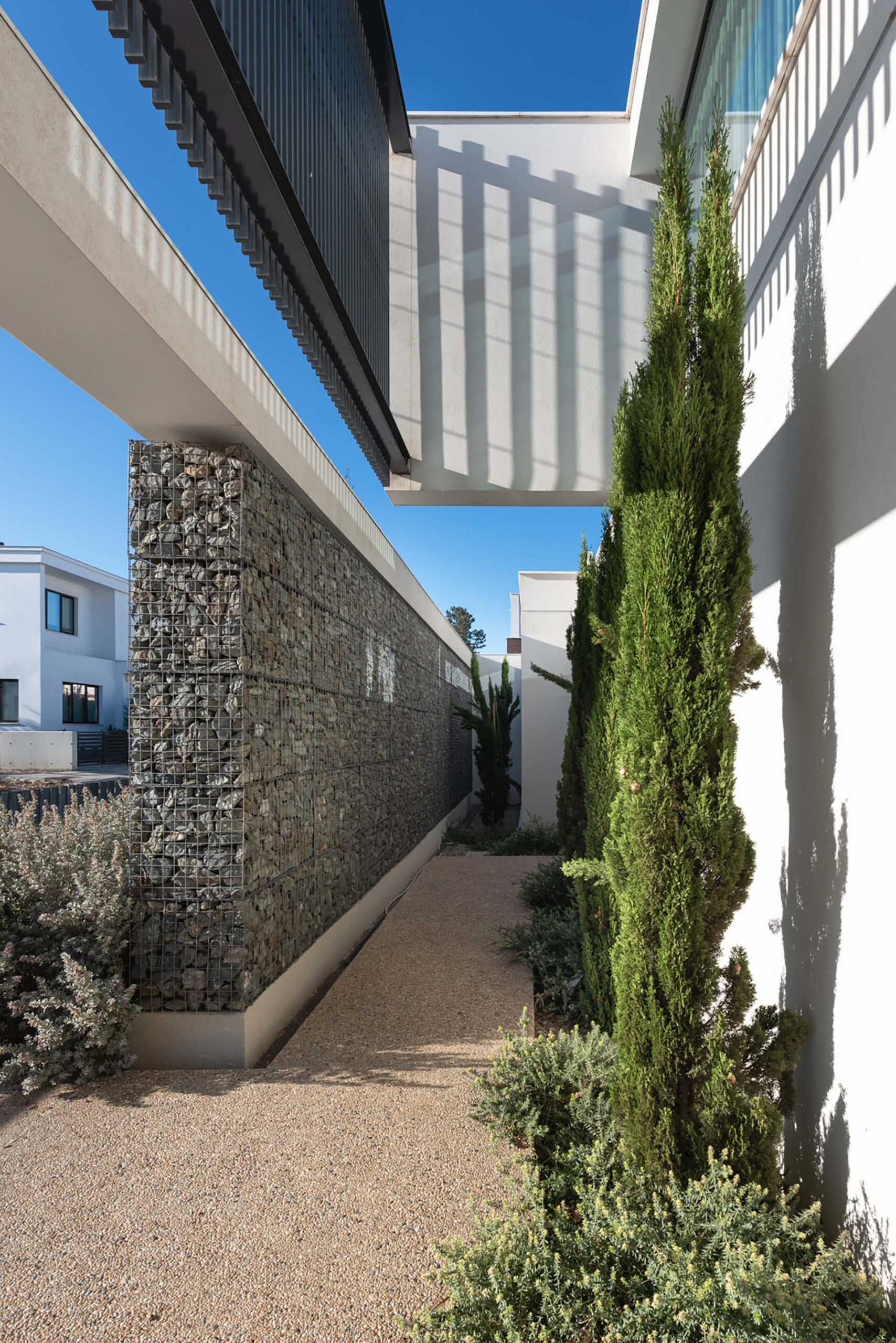
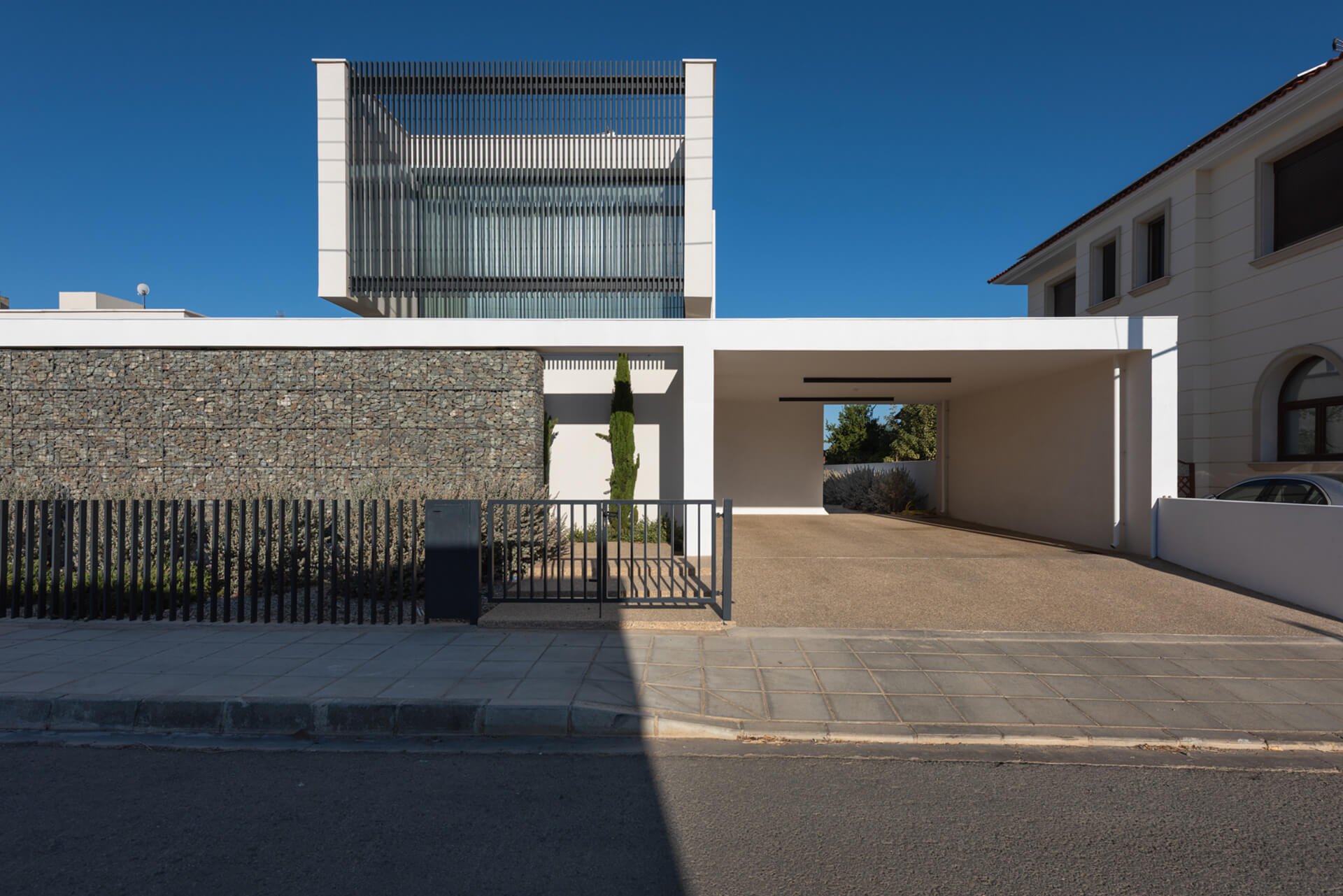
The spatial configuration offers organic flexibility, with public and private areas arranged in relation to a workspace volume that “suspends” itself as a focal point within the residence, allowing multiple movement paths. The inward-looking, through-ventilated layout and its relationship with the outdoor space create a core of privacy and security for the residents. The external walls, together with the eastern gabion wall filled with local stone, form a protective diaphragm separating public from private space, while the interior spaces extend toward the courtyards, ensuring cross-ventilation and natural light.
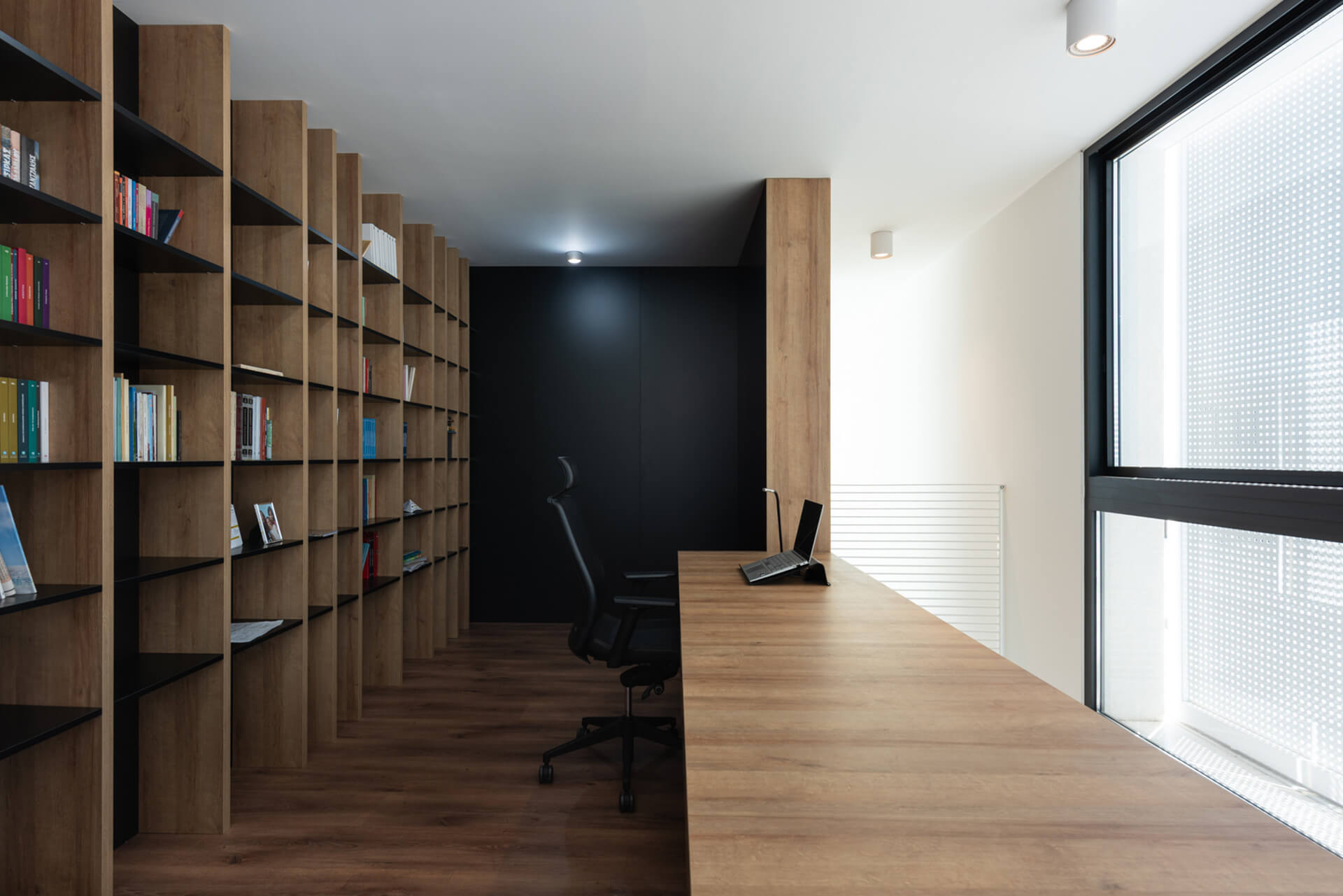
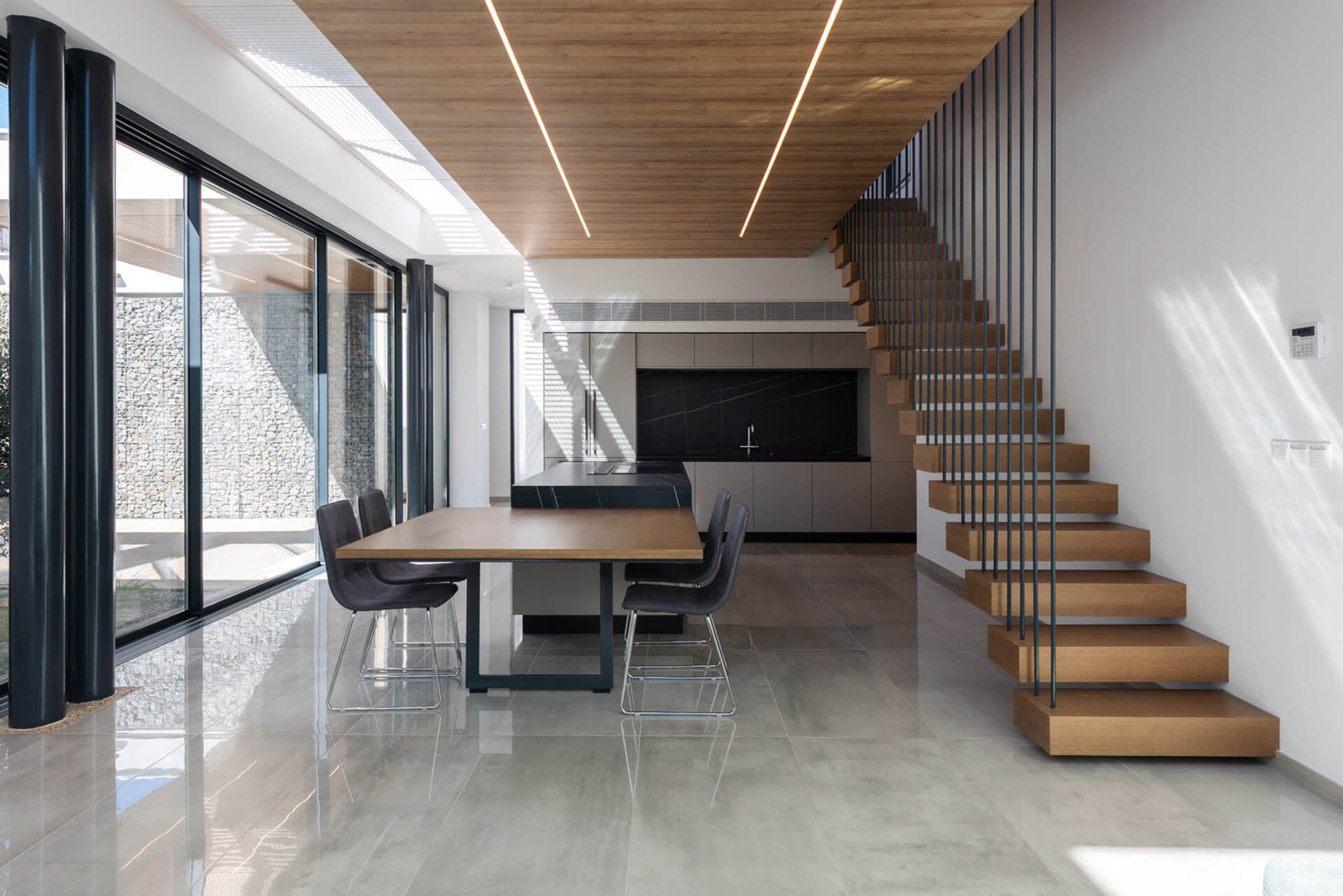
A central architectural feature of the interior is the workspace, which hovers as a wooden volume above the kitchen and the everyday living area. It functions as the secondary main use of the home, meeting the need for book storage and providing a dedicated study area for the residents.
Its placement above the kitchen and living space creates an interesting dynamic in the spatial experience. On one hand, the workspace remains visually connected to the broader living area; on the other, it retains a degree of privacy for its users. This dual condition encourages a balance between shared and personal space.
Exterior Design & Vegetation
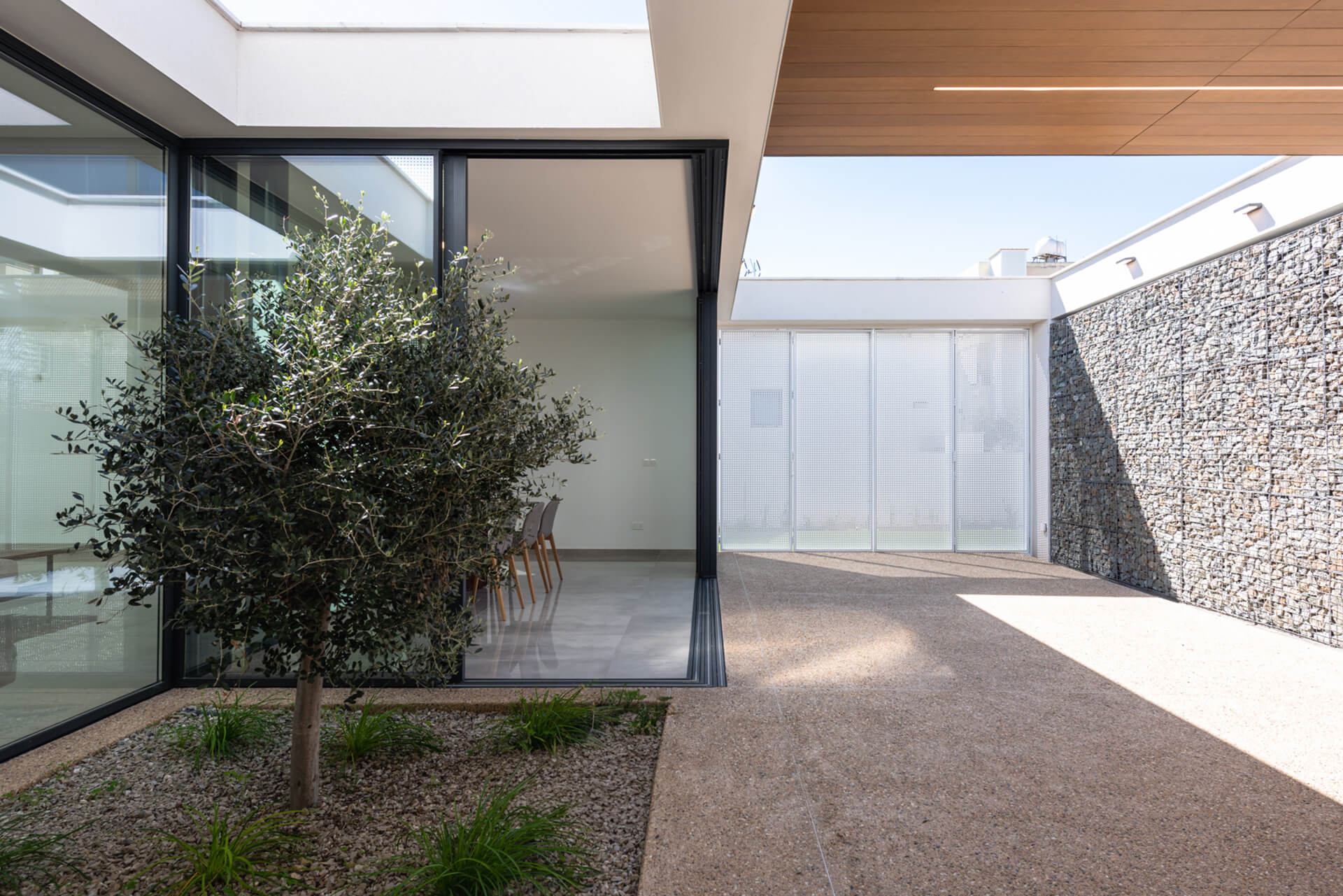
One of the main architectural elements expressing the adaptability of the interior as it opens to the exterior is the set of foldable perforated shading panels. These allow residents to adjust privacy levels and control sunlight according to their needs.
The courtyards, functioning as the key bioclimatic components of the residence, form the heart of the design. Positioned next to the communal areas and the bedrooms, they provide private outdoor zones for each room while allowing the flow of natural light and ventilation with privacy in mind. Planted with low-growing Cypriot vegetation, the courtyards create microclimates that bring natural greenery into the home. In this way, the residence “embraces” the natural environment, achieving an organic continuity with the landscape.