White & Case Offices in São Paulo, Brazil
Interior Design:
Photography:

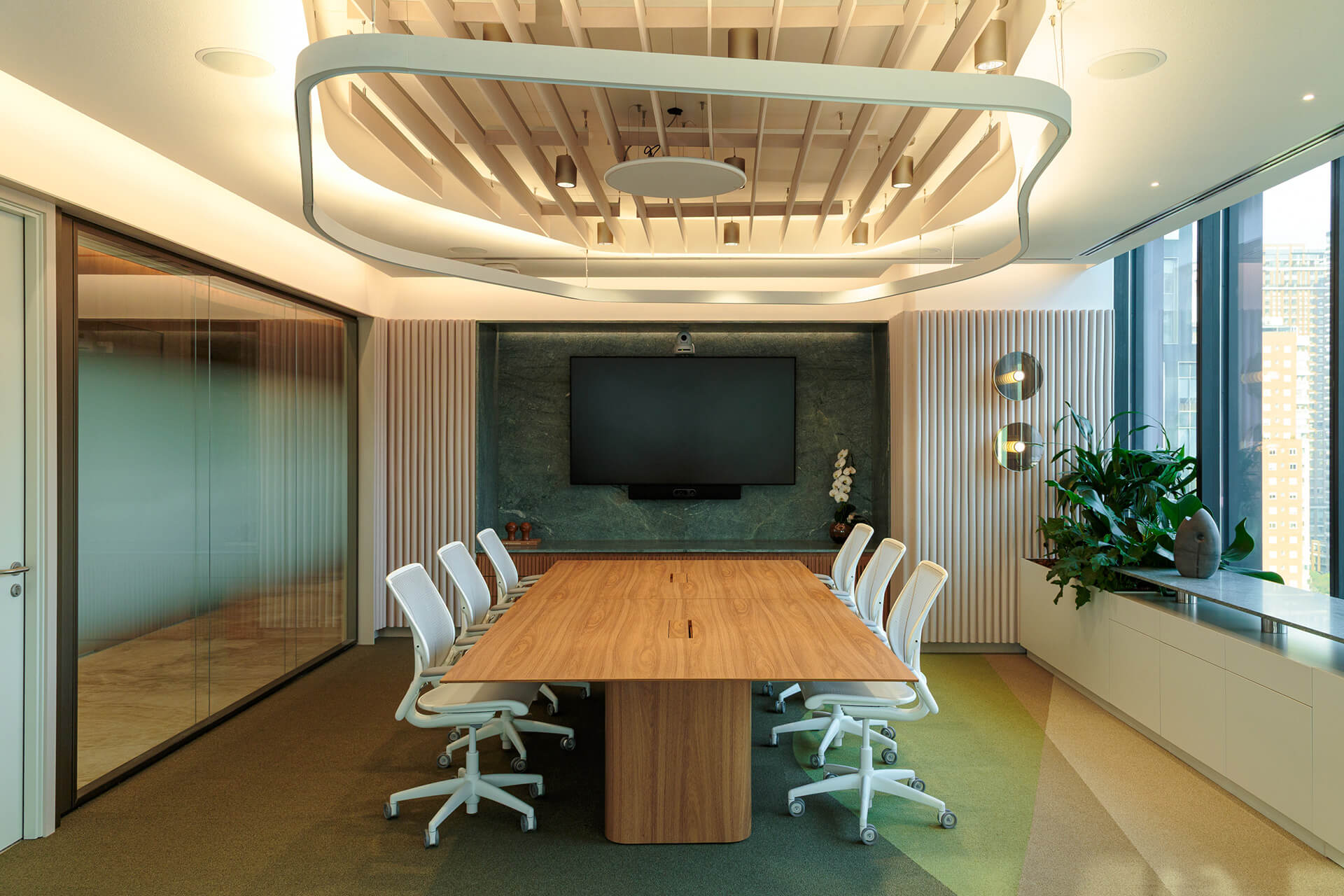
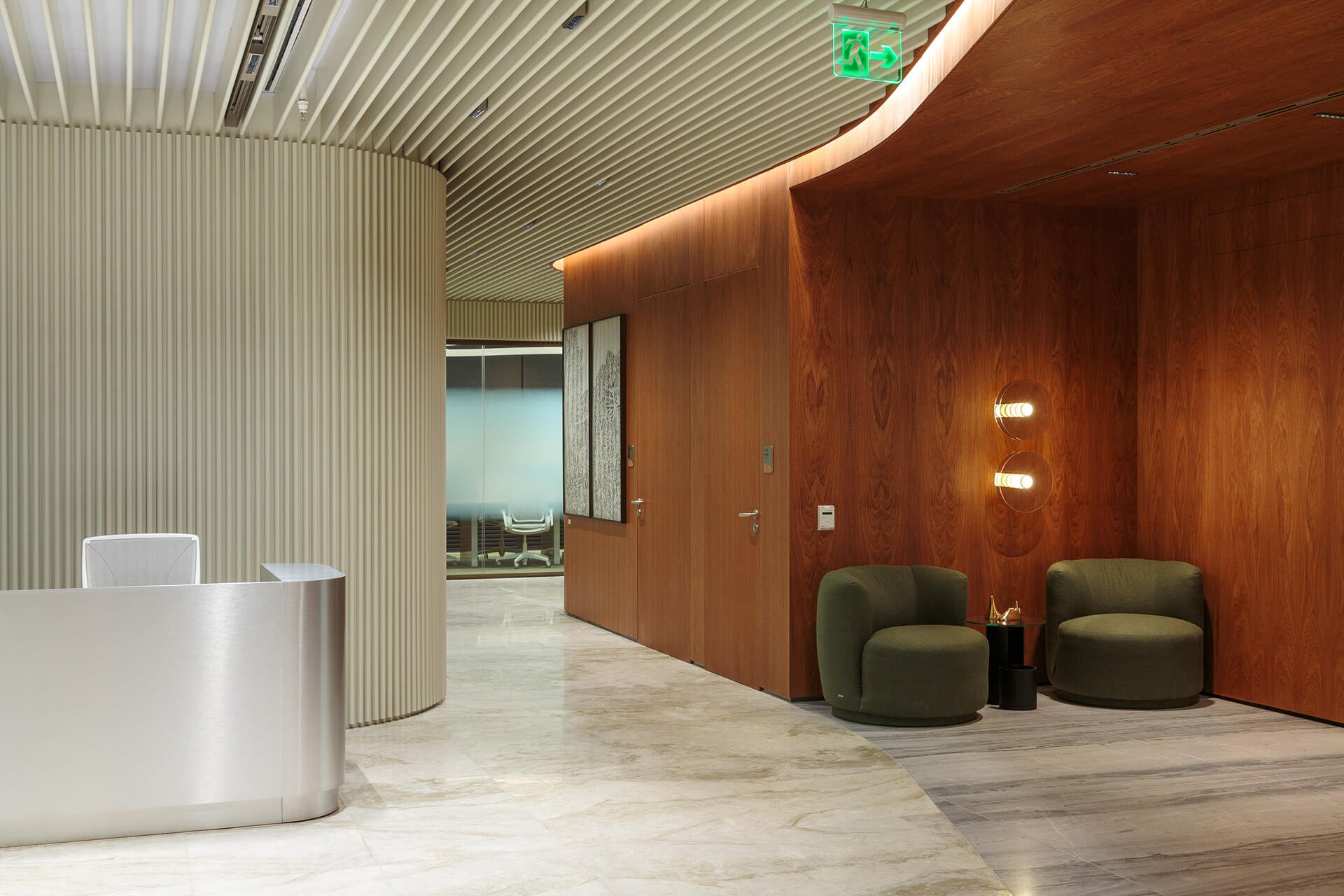
The interior architecture of the Brazilian headquarters of the global law firm White & Case, emerges from a refined exploration of how local identity can coexist with an international corporate framework. Rooted in a synthesis of tradition and contemporaneity, the project foregrounds the human experience while articulating a spatial narrative shaped by cultural, behavioral, and functional parameters.
Design Philosophy
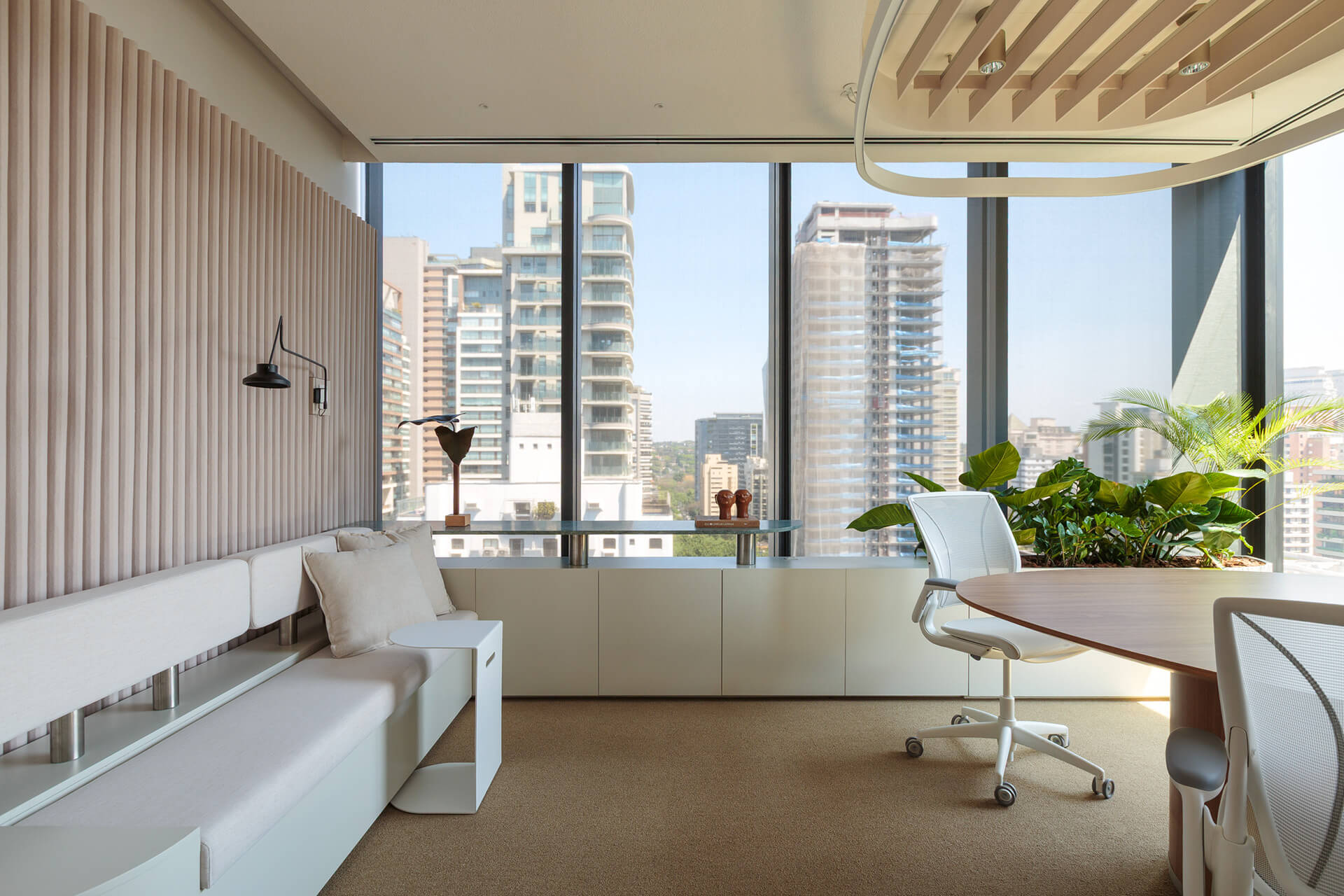
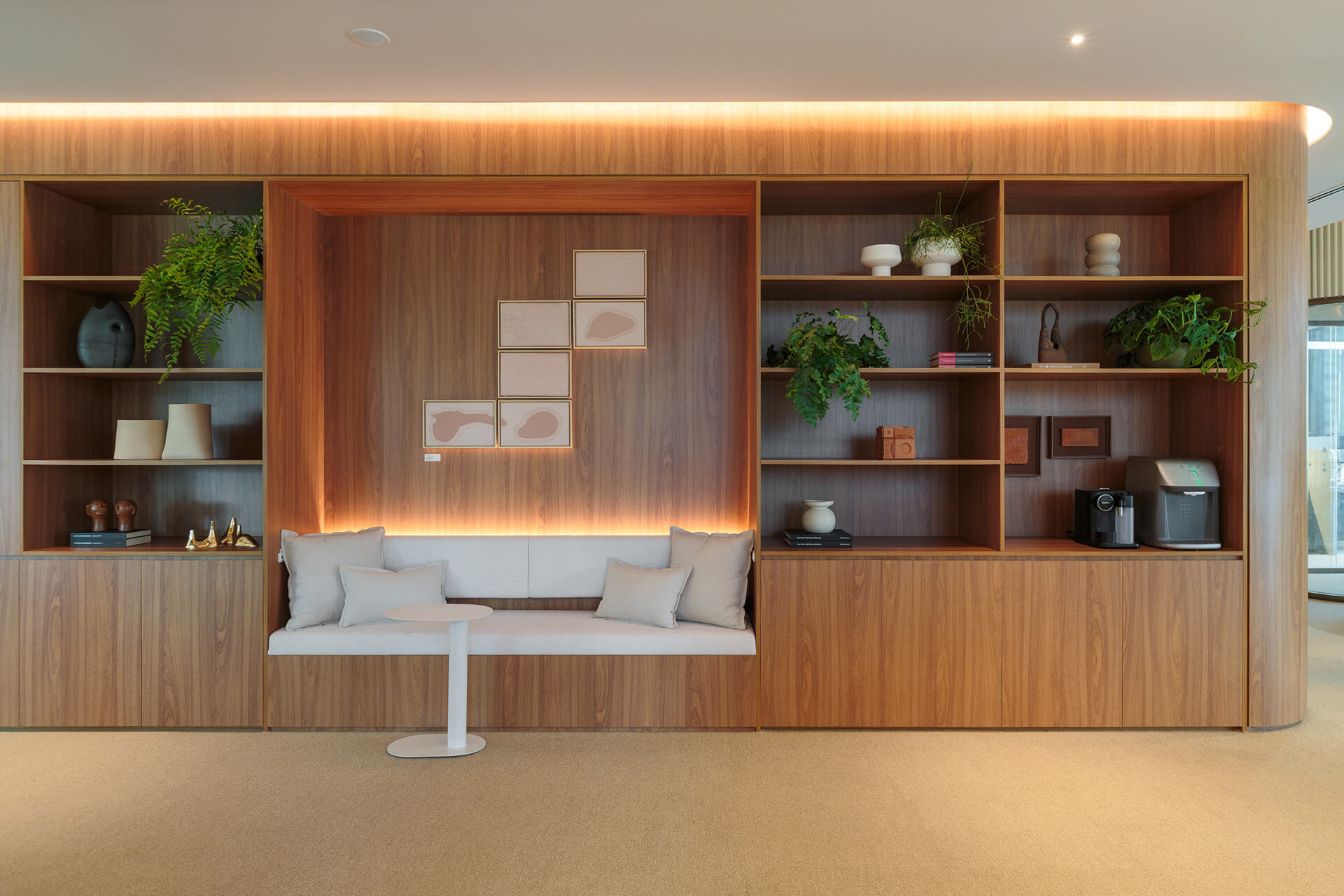
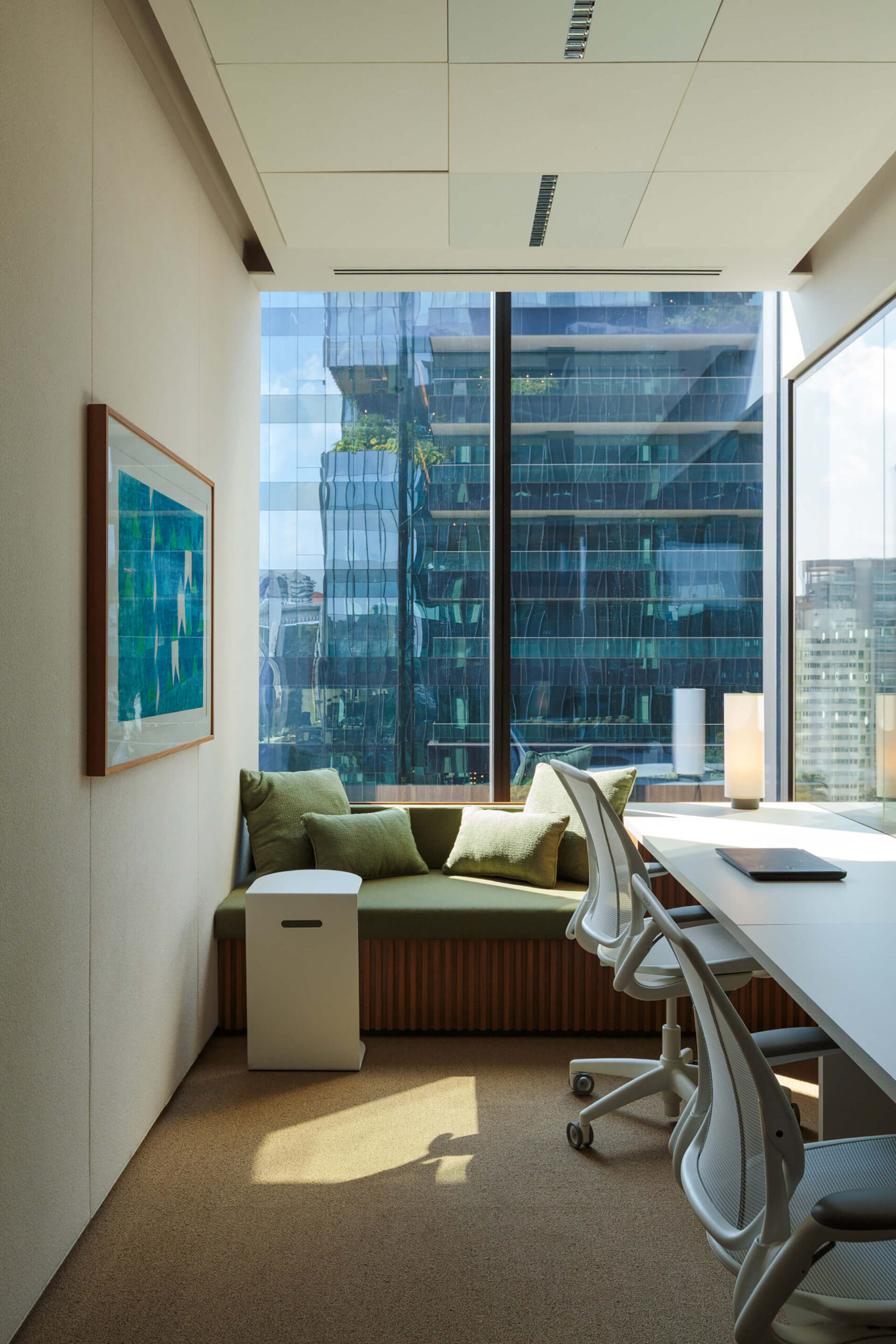
The conceptual approach is grounded in a deep reading of place, where intangible cultural attributes and patterns of use inform the spatial composition. Every design decision, from the incorporation of Brazilian materials and artworks to the selection of furniture by local designers, operates as a deliberate gesture toward expressing identity without resorting to clichés. The result is an environment that is both welcoming and stimulating, fostering engagement through subtle yet meaningful references to locality.
Spatial Organization
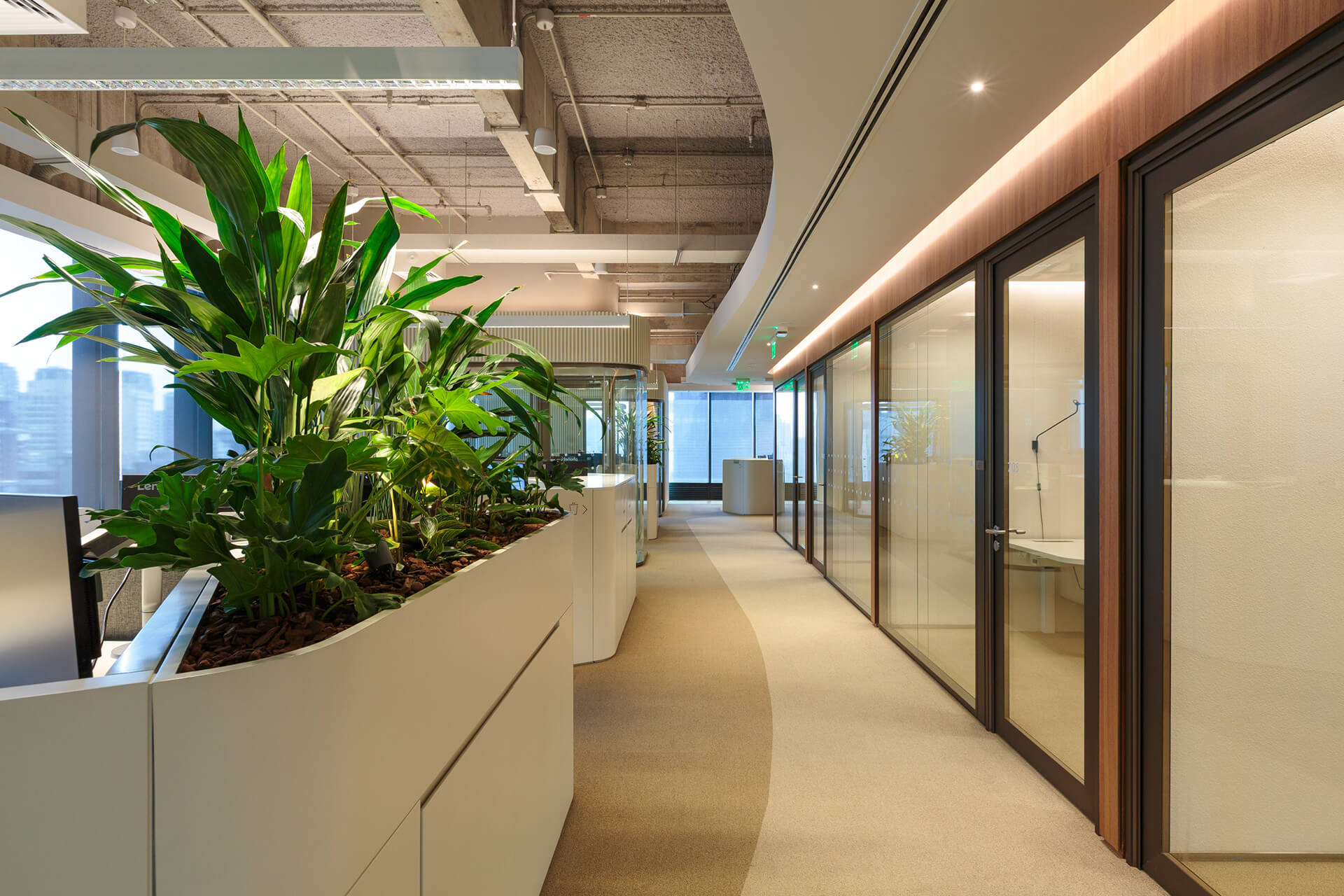
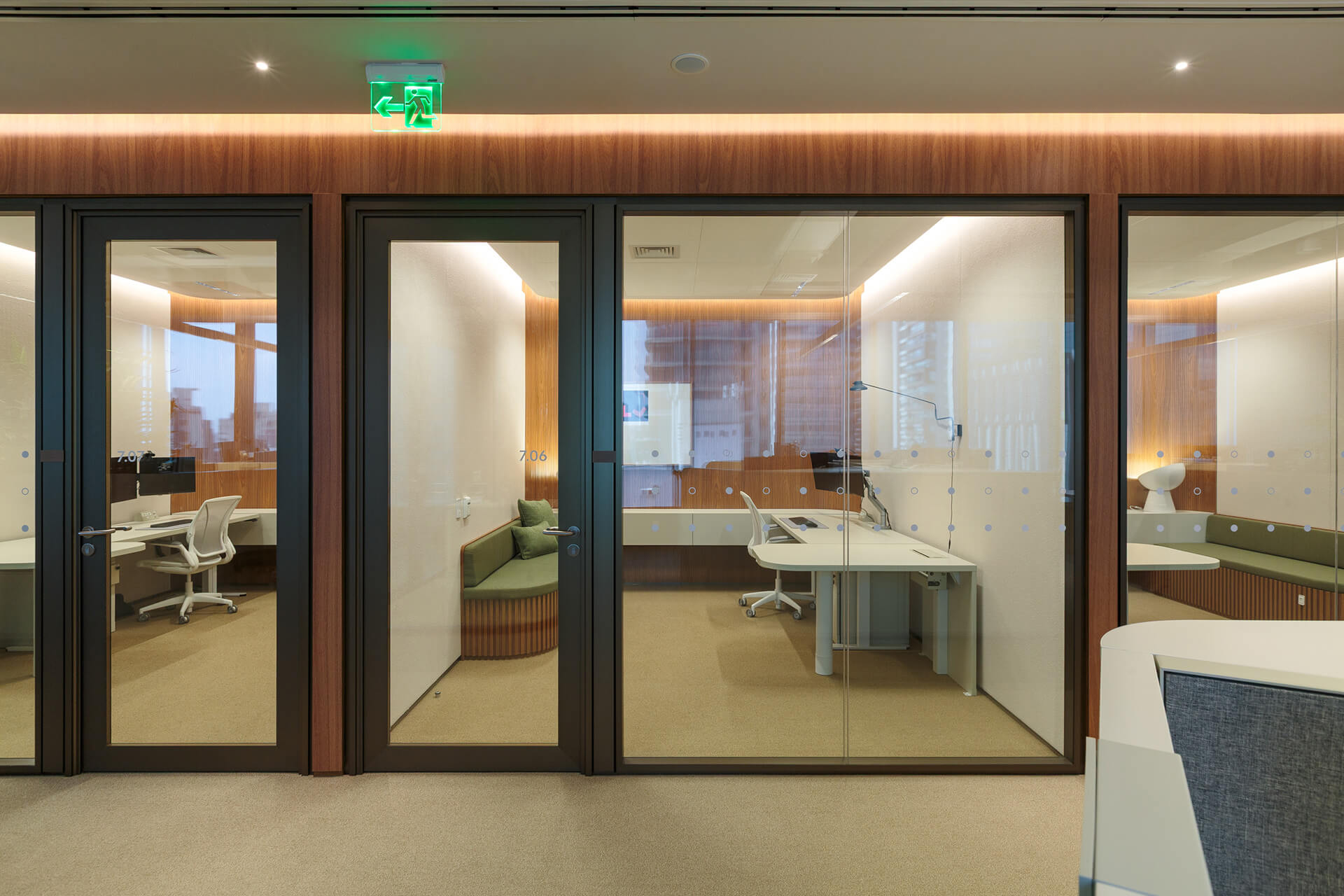
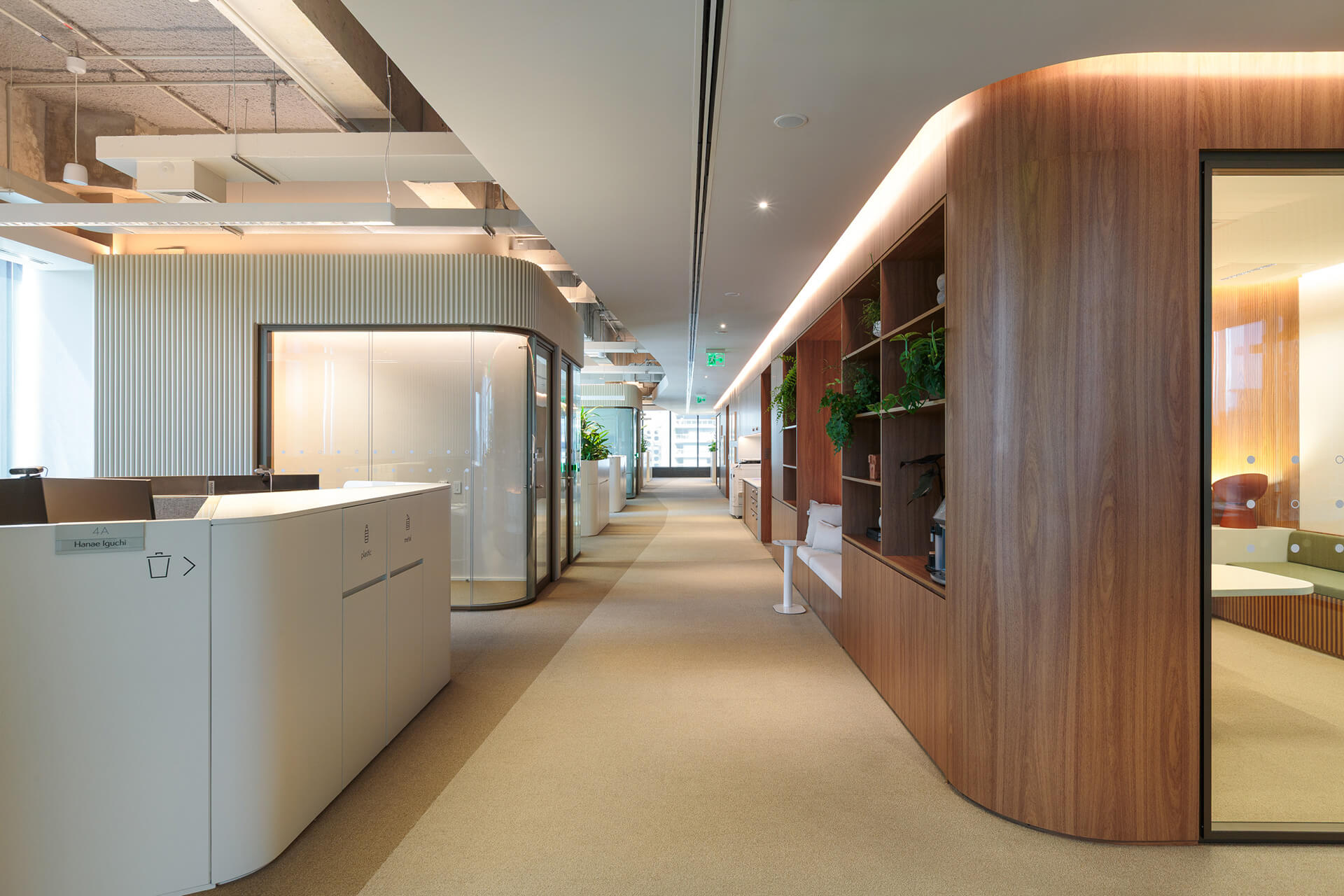
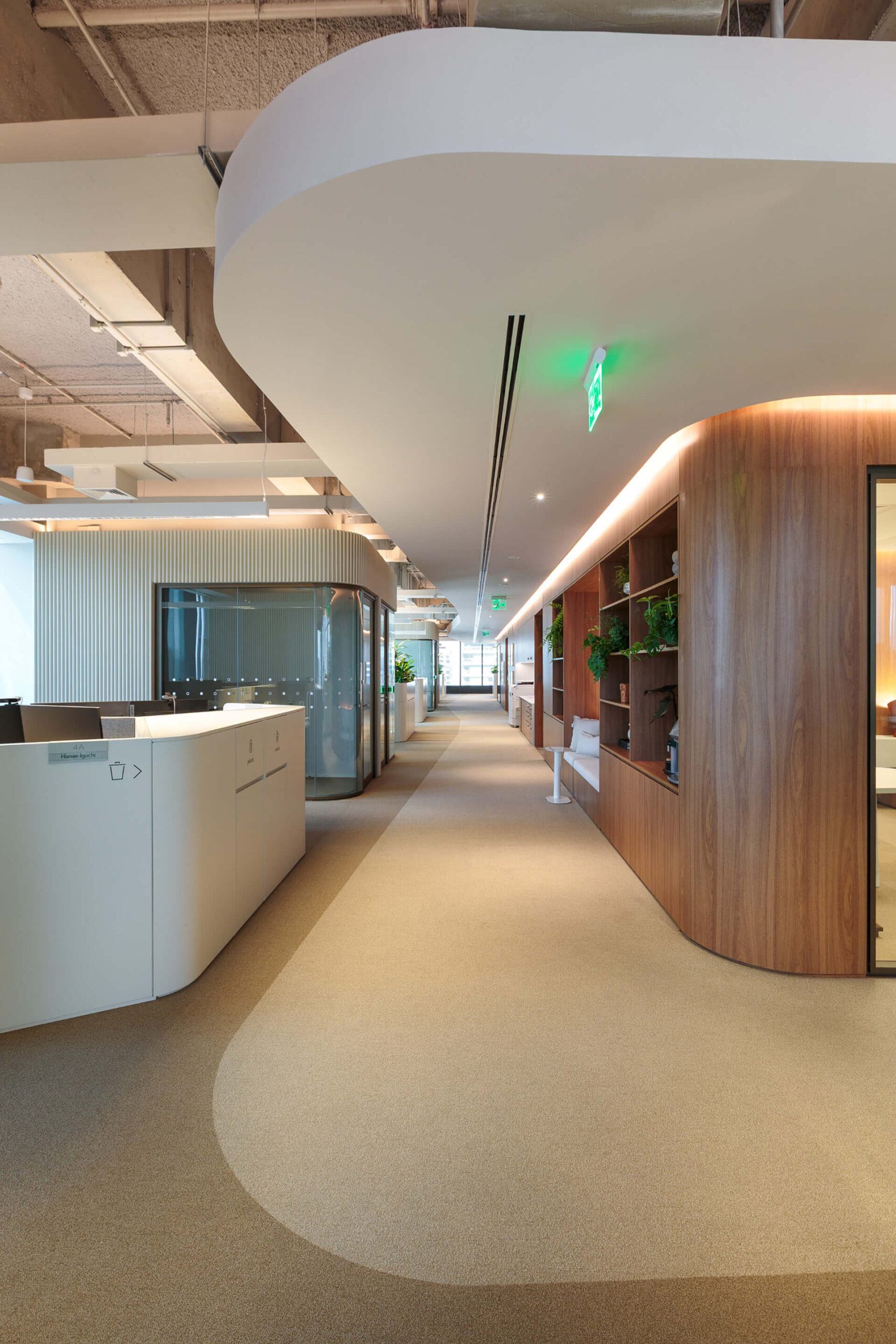
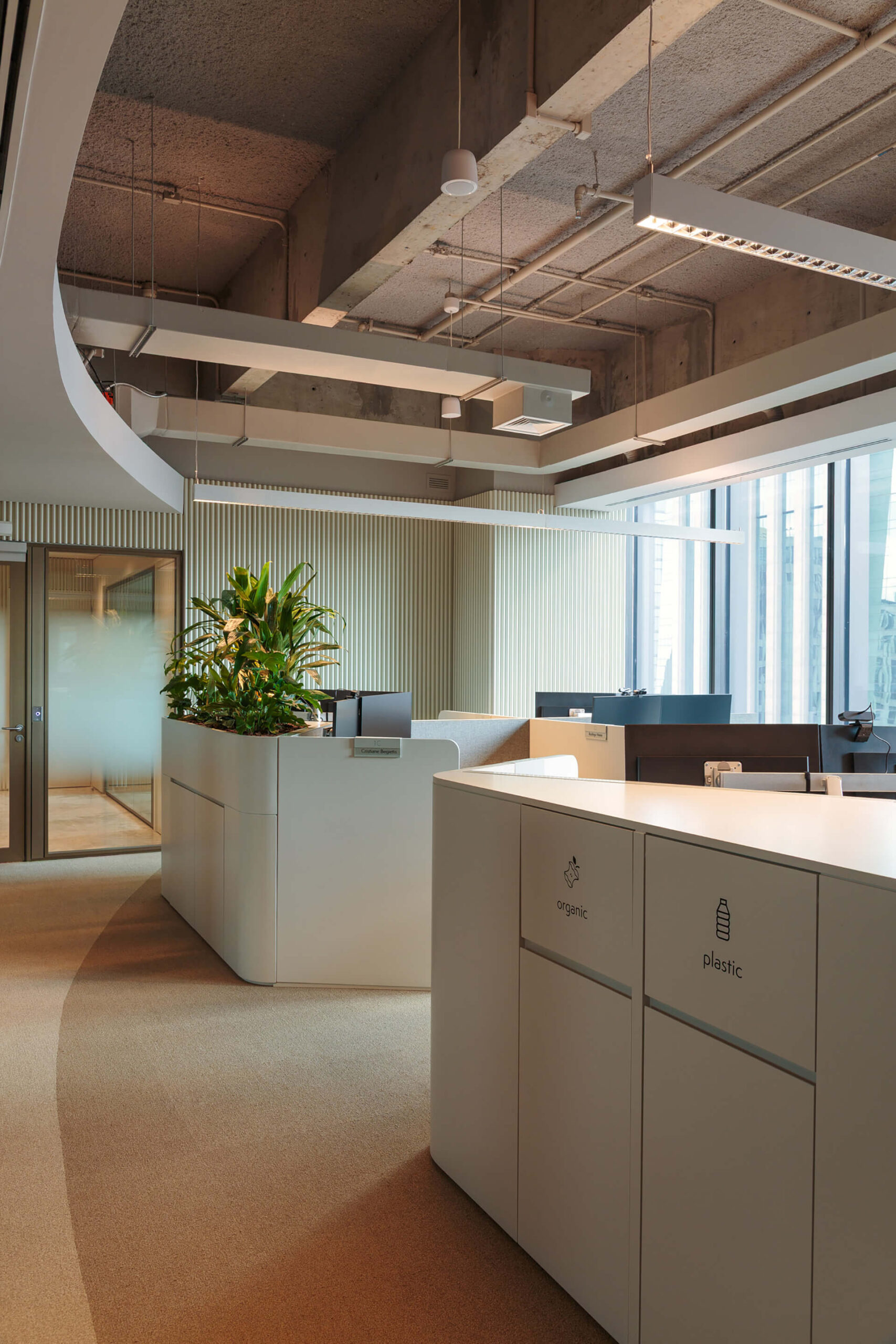
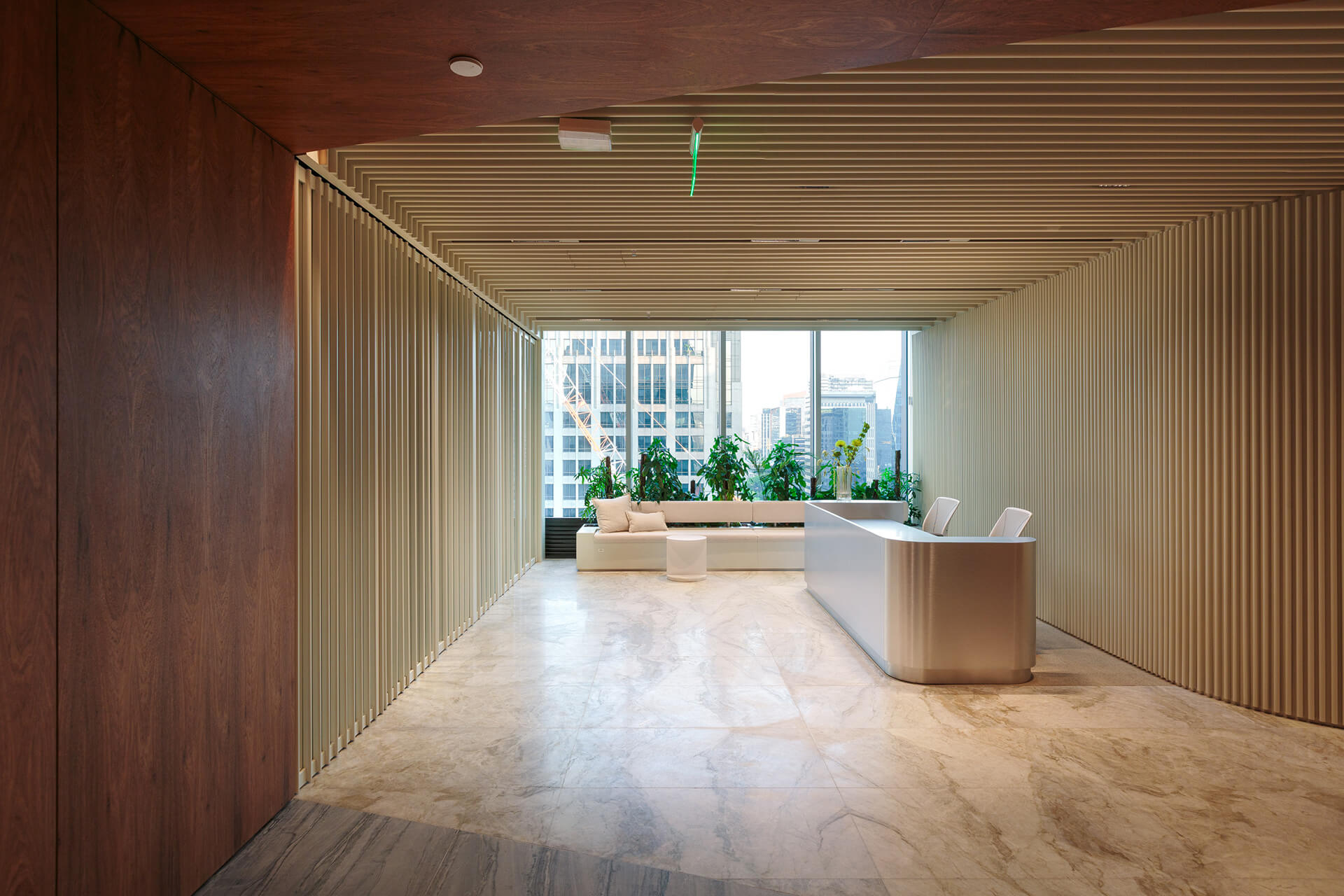
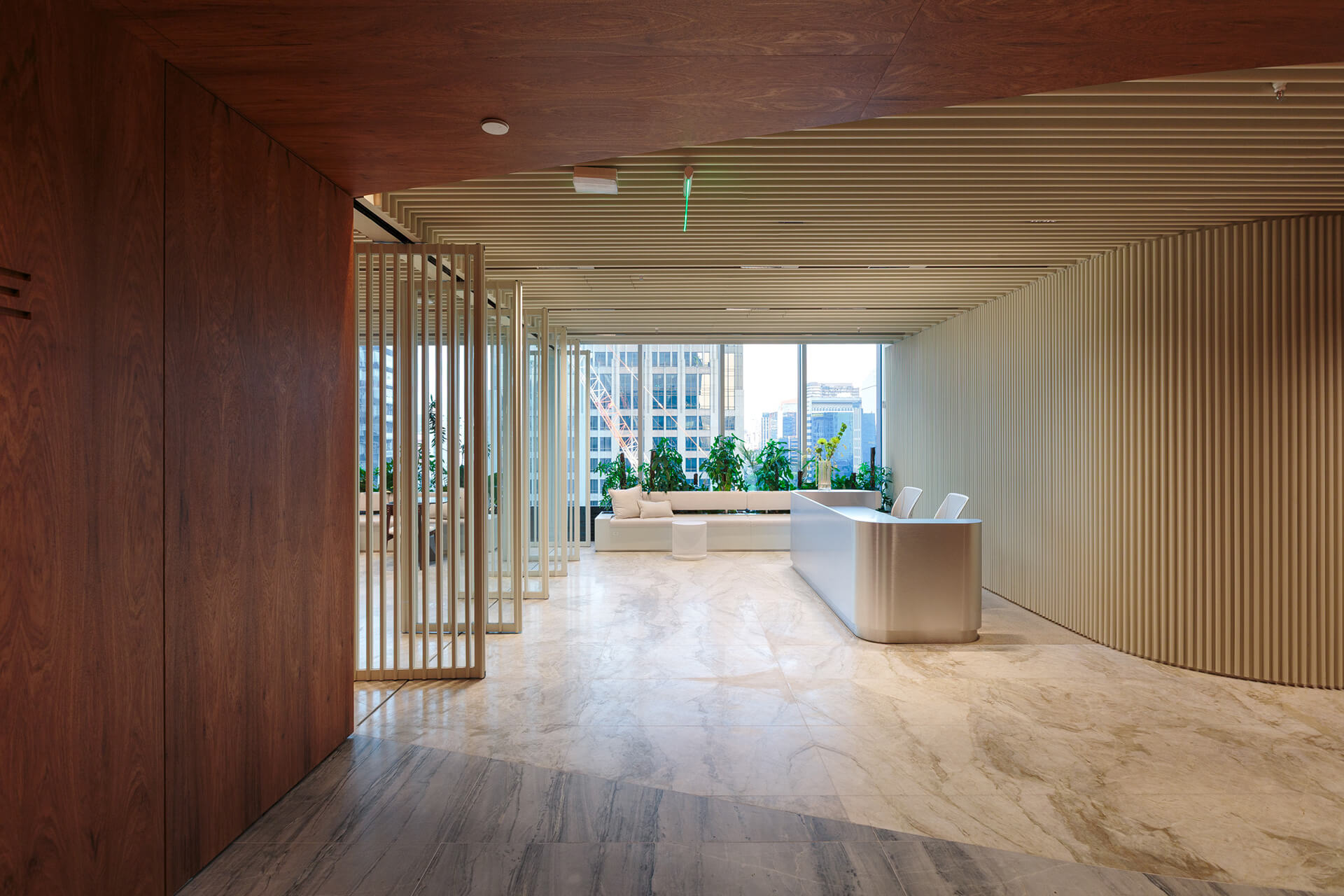
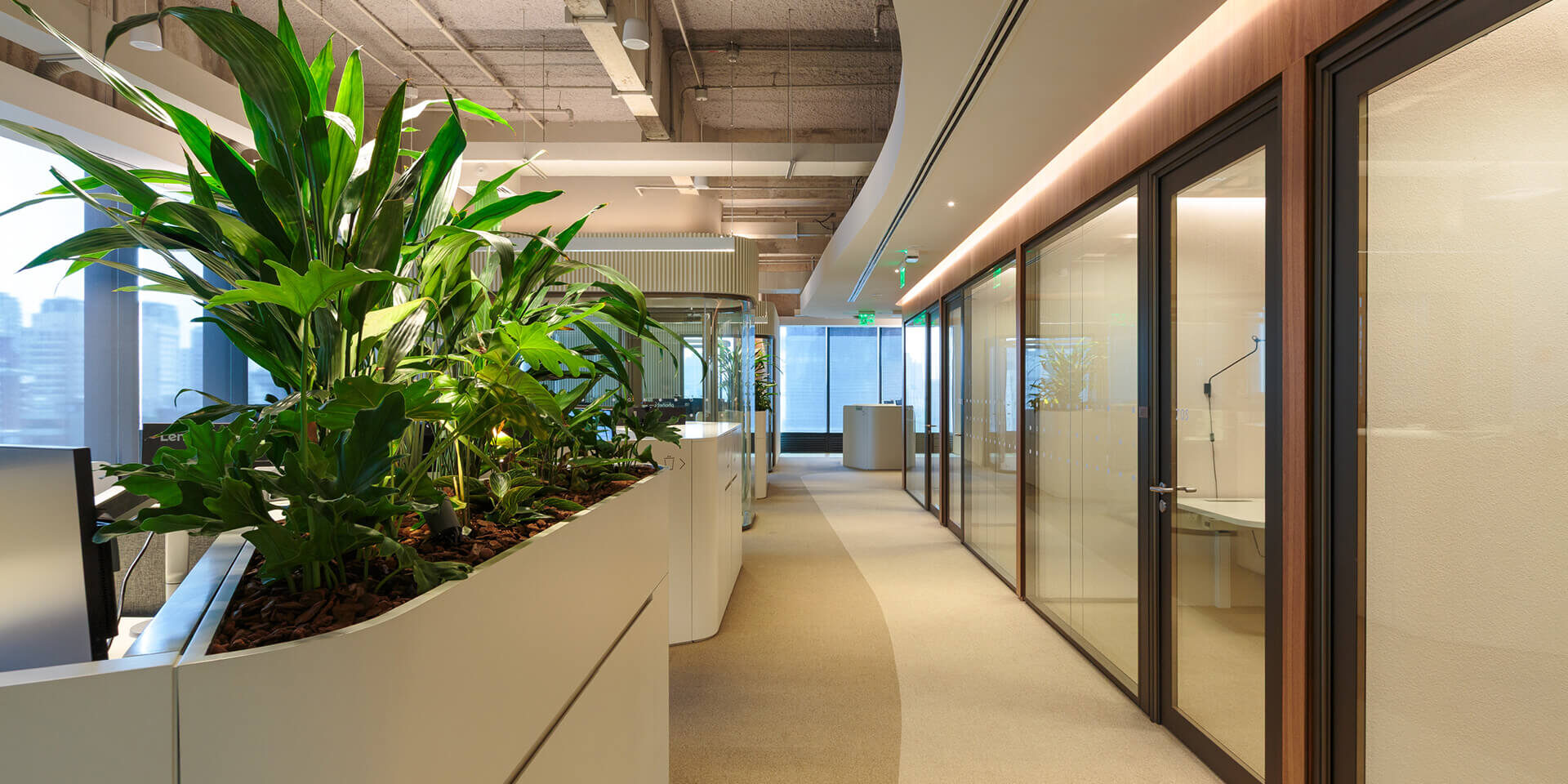
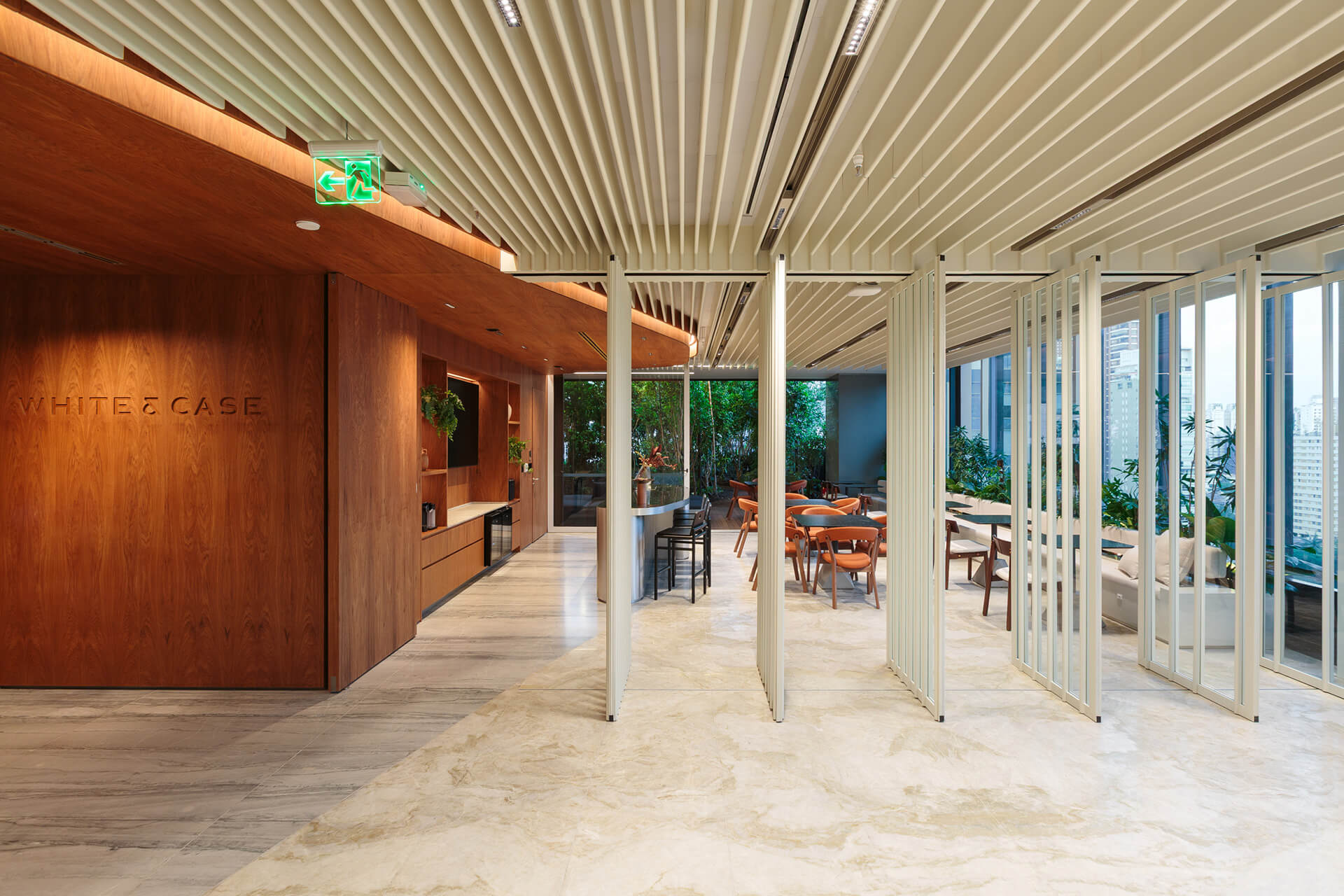
The layout is structured around a continuous and fluid spatial sequence that connects communal areas, such as the reception, café, and landscaped terrace, with private workspaces and meeting rooms. Open-plan workstations are complemented by acoustic solutions, phone booths, and adaptable meeting spaces, supporting a range of working modes. Retractable partitions enable meeting rooms to shift between openness and enclosure, reinforcing a flexible and dynamic office environment. This adaptability extends to the reception area, conceived as a transformable space capable of hosting events or accommodating more formal, everyday functions.
Material Palette
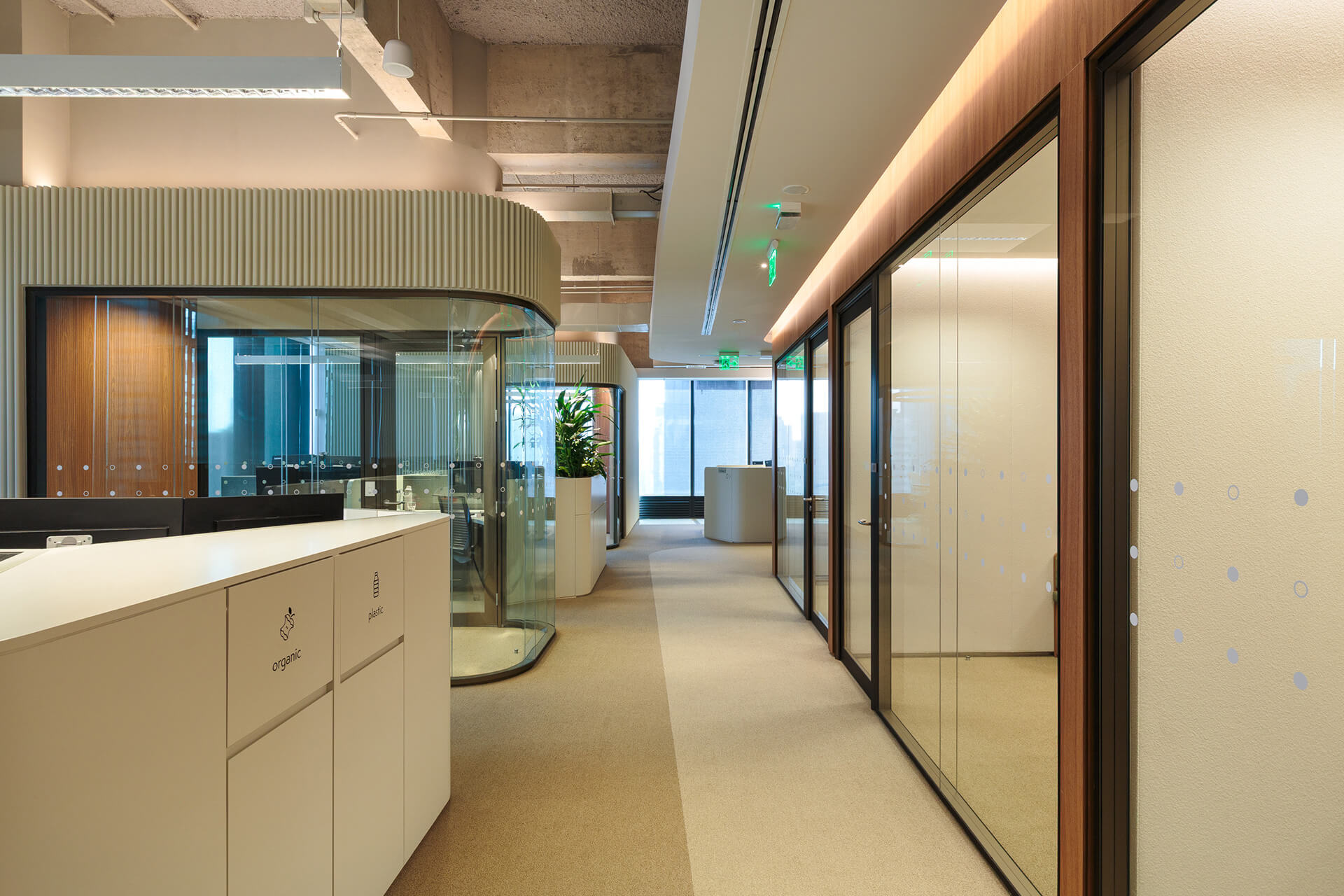
The material palette draws from natural references, with wood and stone employed to evoke the textures and tones of the Brazilian landscape. A gradual chromatic transition from darker tones at the core to lighter hues toward the perimeter, enhances the perception of depth and spatial progression. Curvilinear elements in floors and partitions, inspired by the work of Roberto Burle Marx, introduce a sense of continuity and movement, reinforcing the project’s fluid spatial identity.
Finally, the project integrates structural and programmatic strategies that anticipate future change. By embedding adaptability into its core, the design responds to evolving workplace demands while addressing the broader issue of spatial obsolescence. The office thus becomes not only a place of work but an evolving environment, capable of renewal, responsive to context, and expressive of both corporate and cultural identity.