“Polikatikia” in Karpathos
Architecture:
Photography:
Giorgos Kanakis, Marina Skoutela

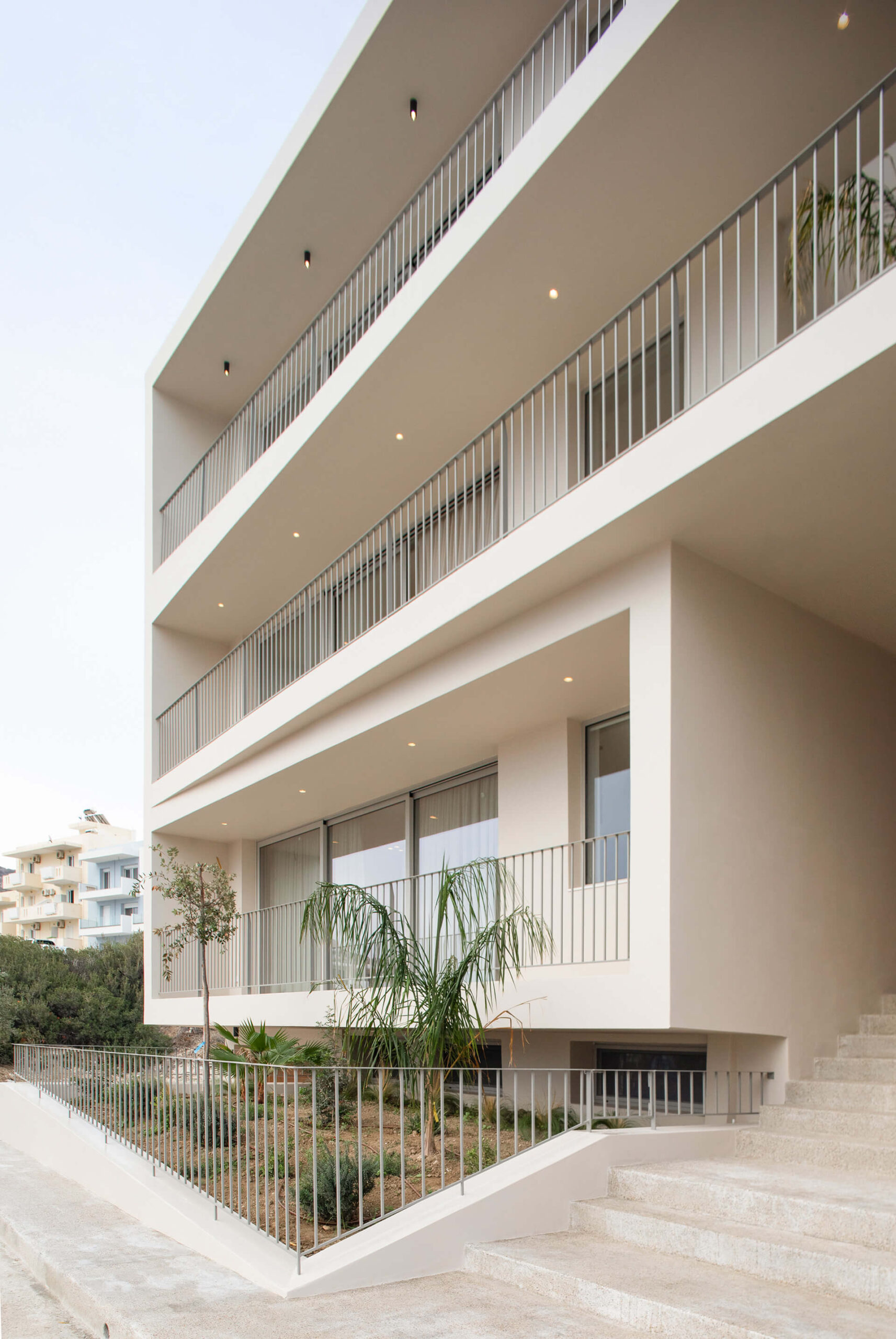
The “Polikatikia” is located on the island of Karpathos and consists of six family residences. The project approaches dwelling within the island landscape not as a strictly typological exercise, but as a complex field where morphology, topography and the everyday experience of the Mediterranean climate collectively shape a unified architectural system.
Landscape Integration
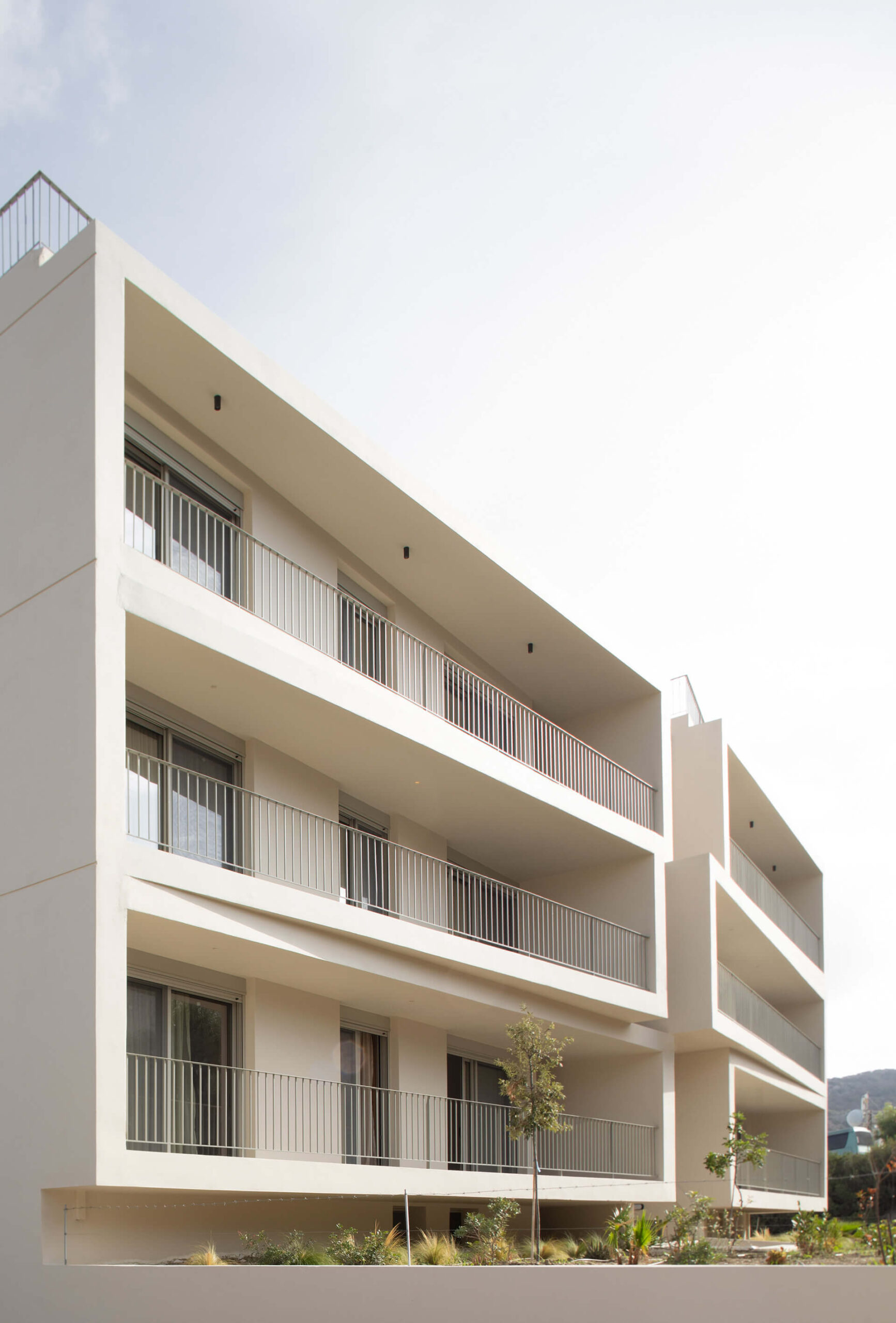
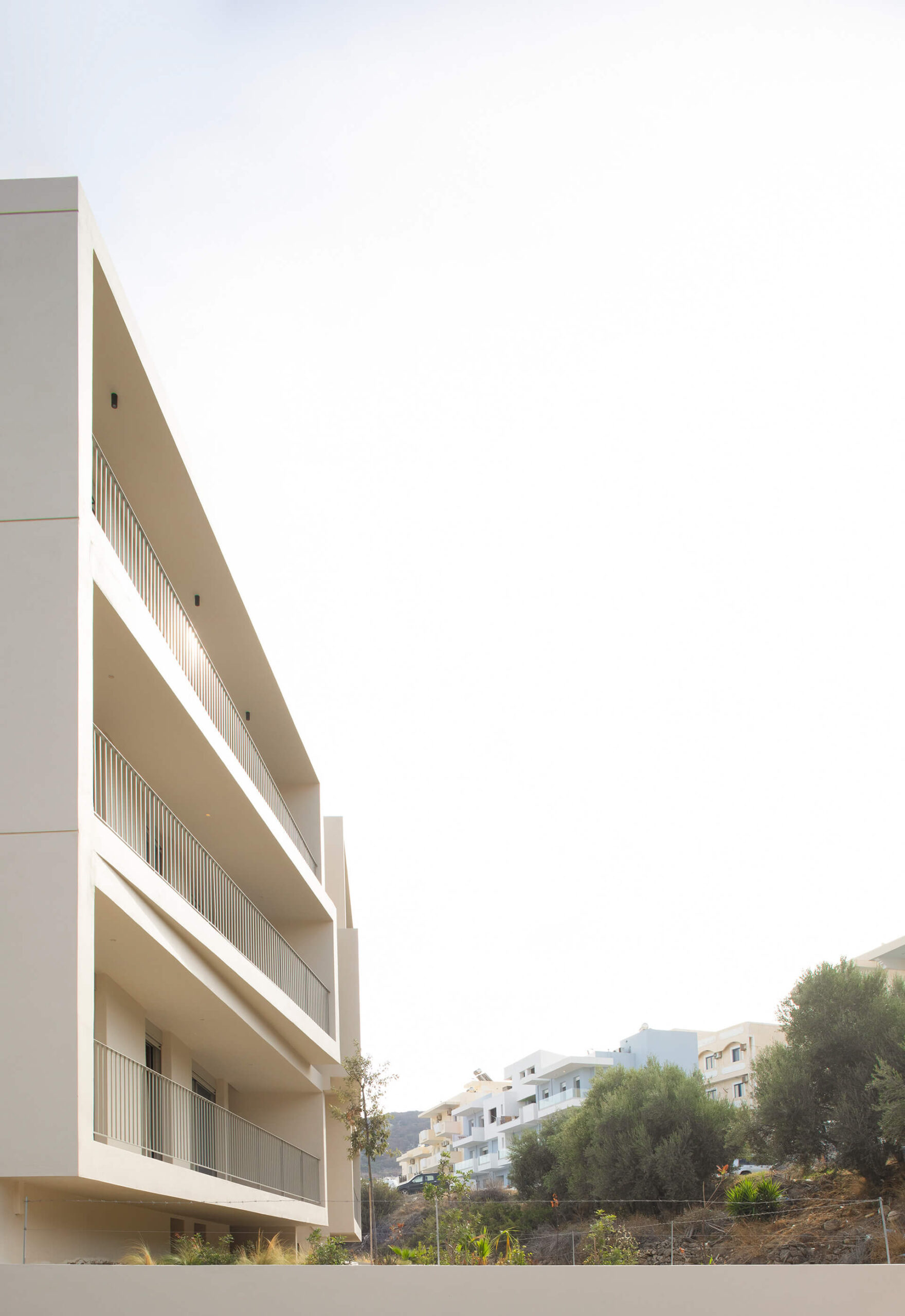
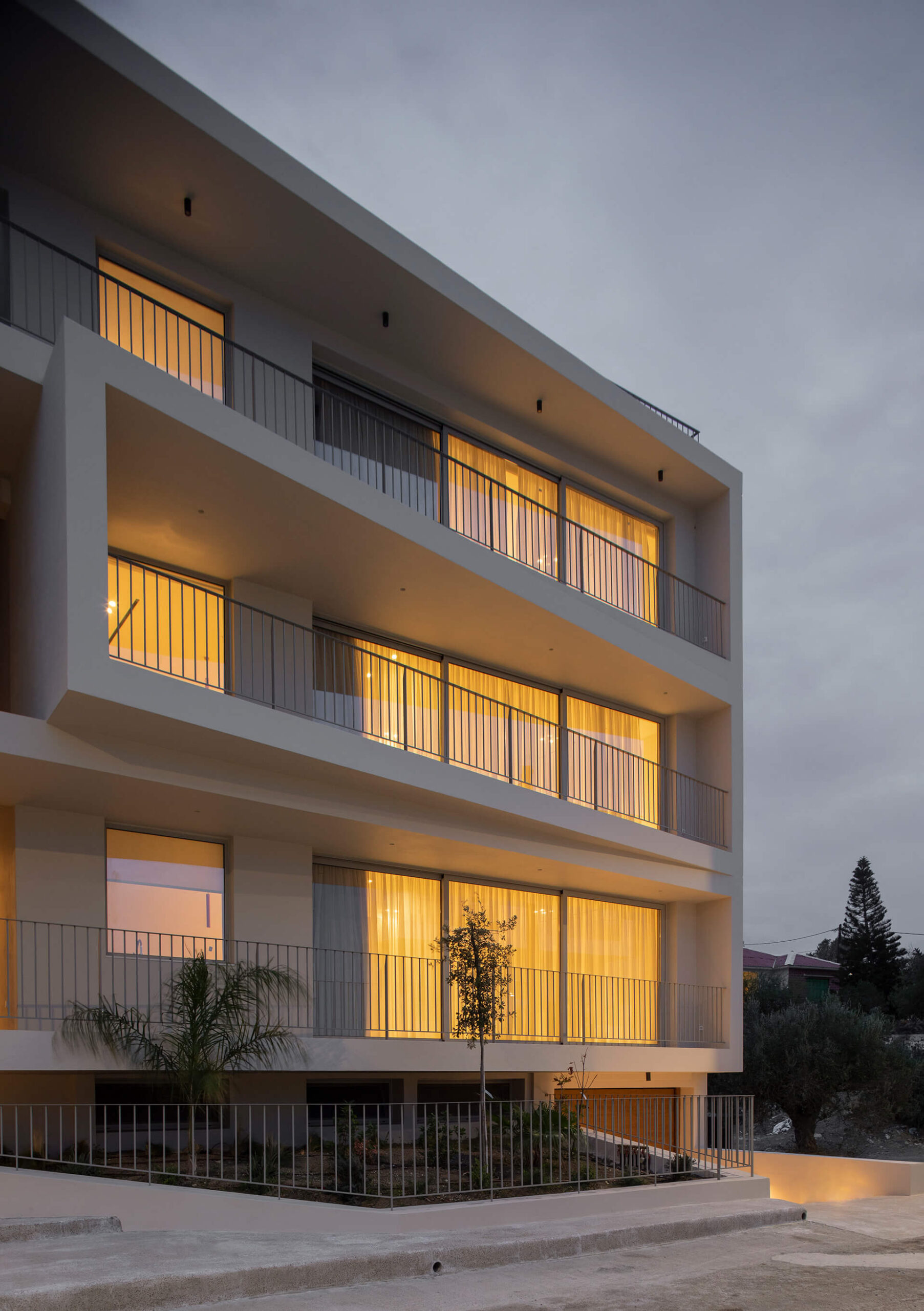
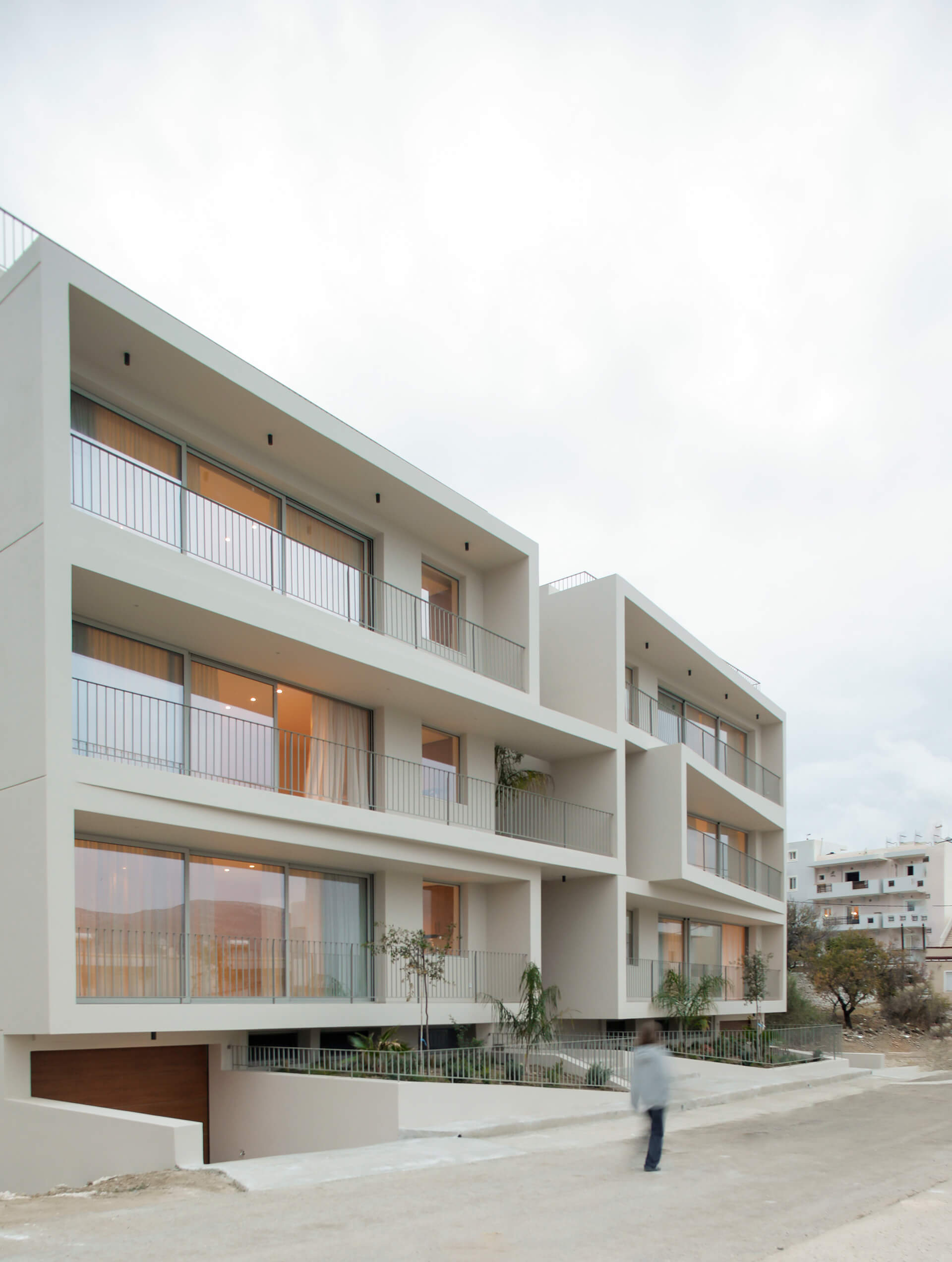
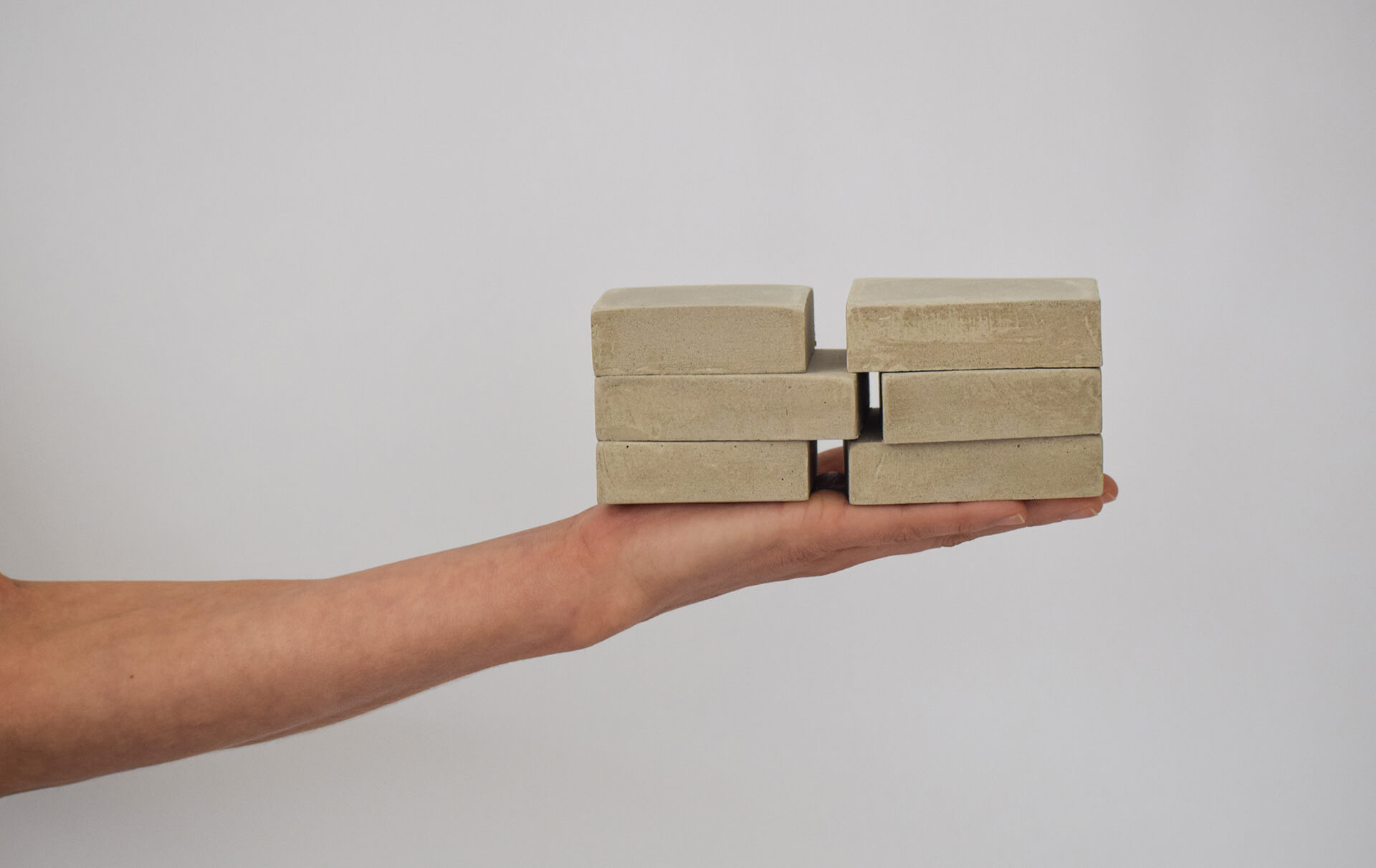
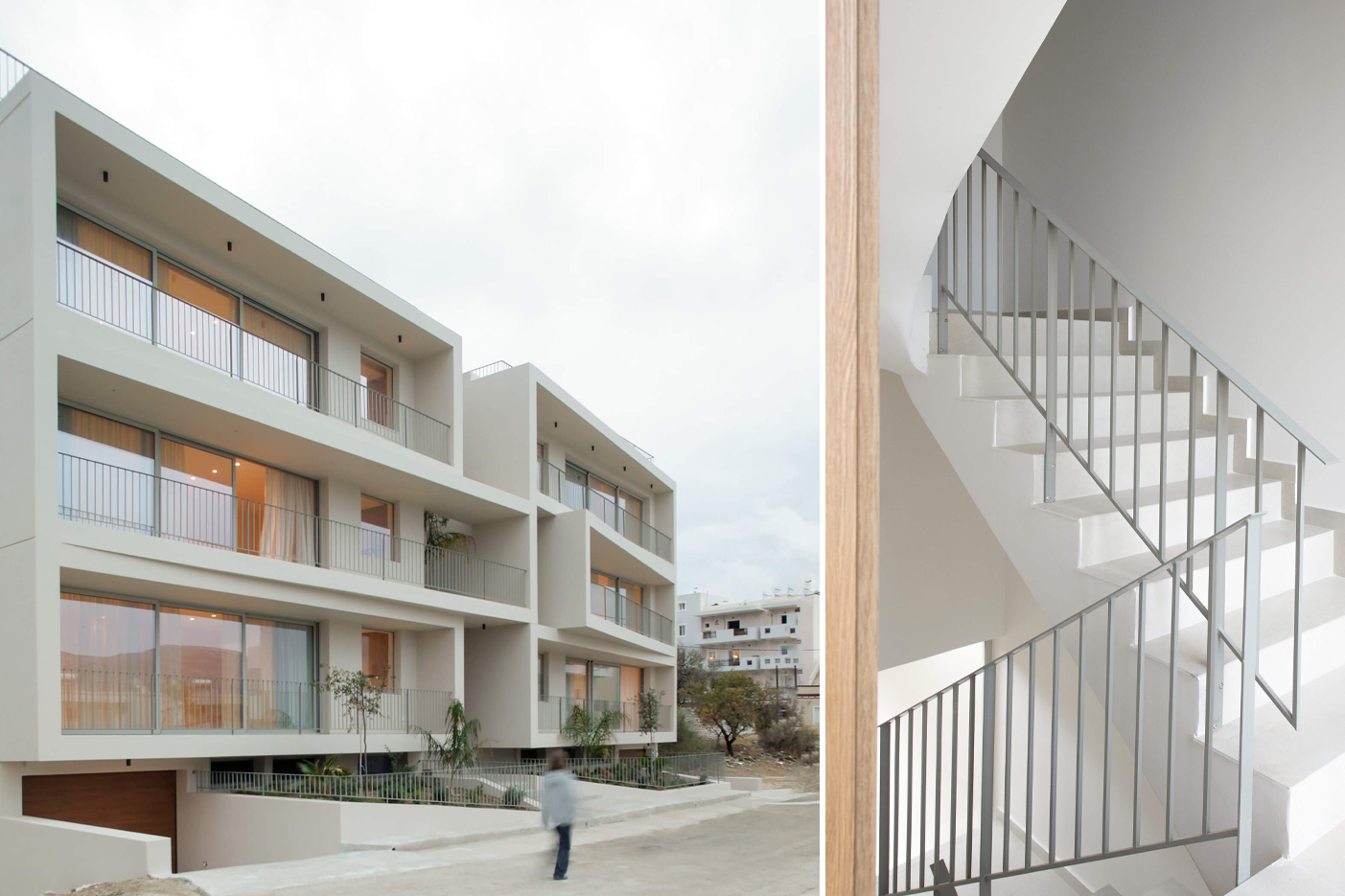
The arrangement of the six residences is organized through a series of overlapping volumes that shift and subtly rotate, disrupting the strict orthogonality of the conventional apartment building. The composition evokes an initially solid mass that gradually appears to fragment, separate and split into distinct spatial elements.
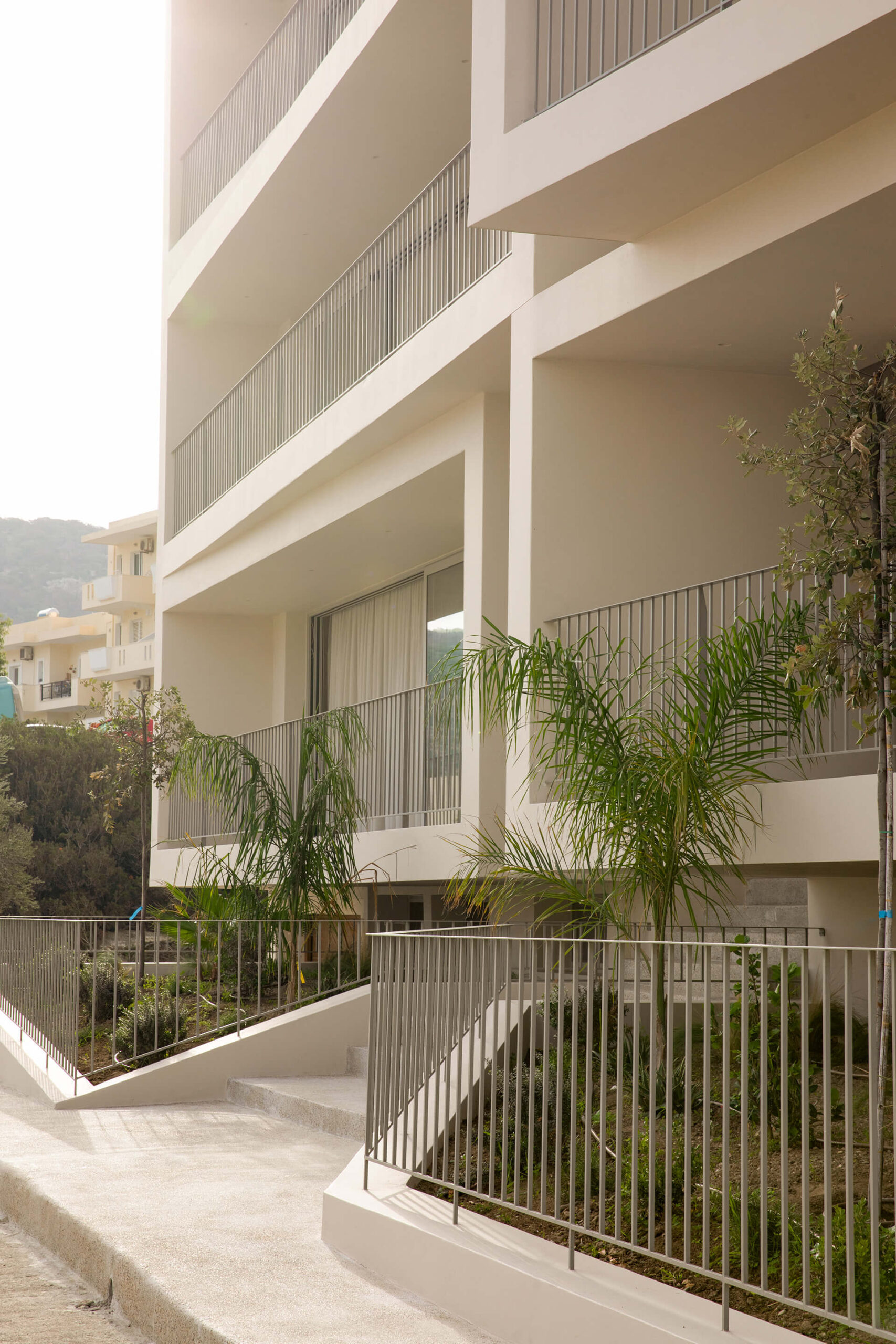
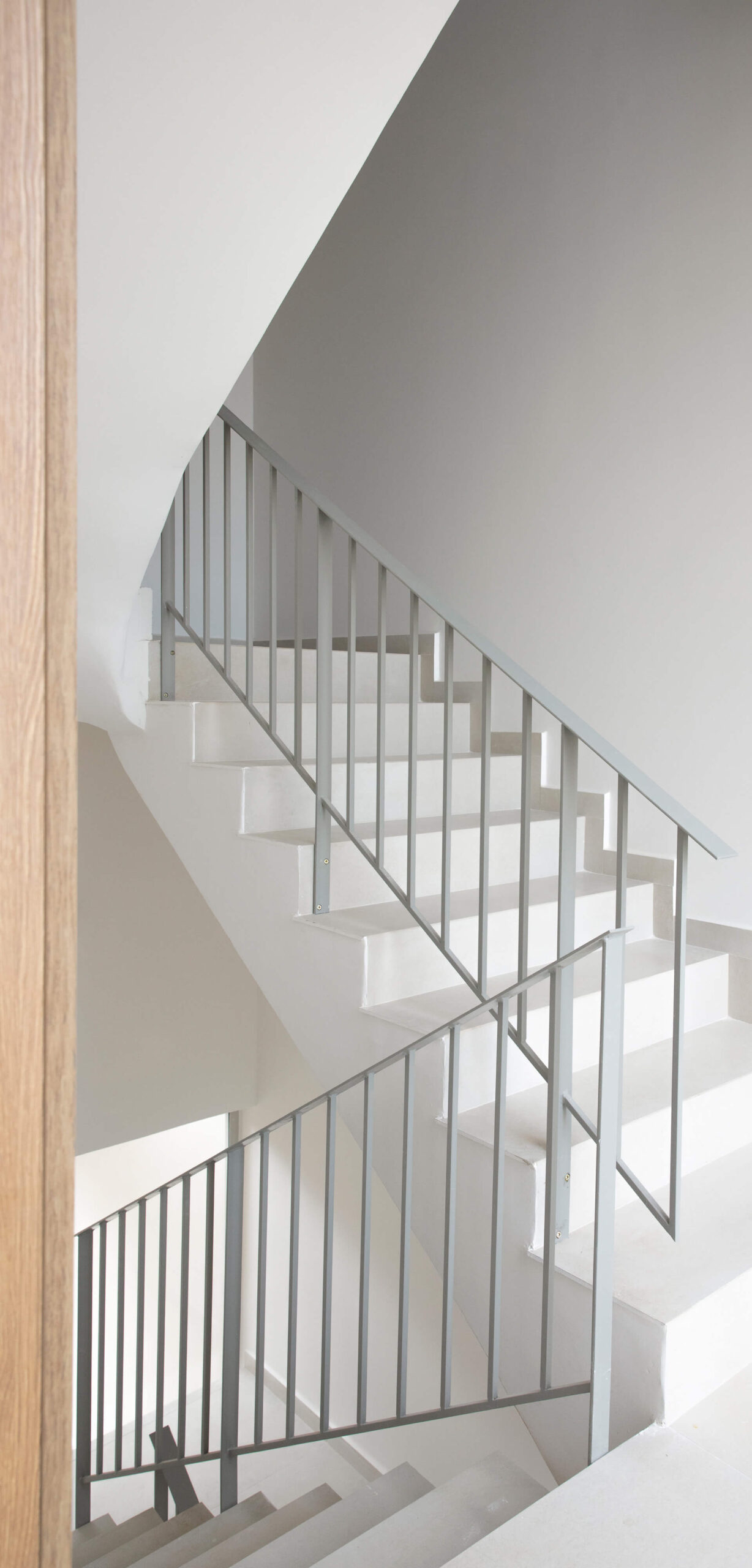
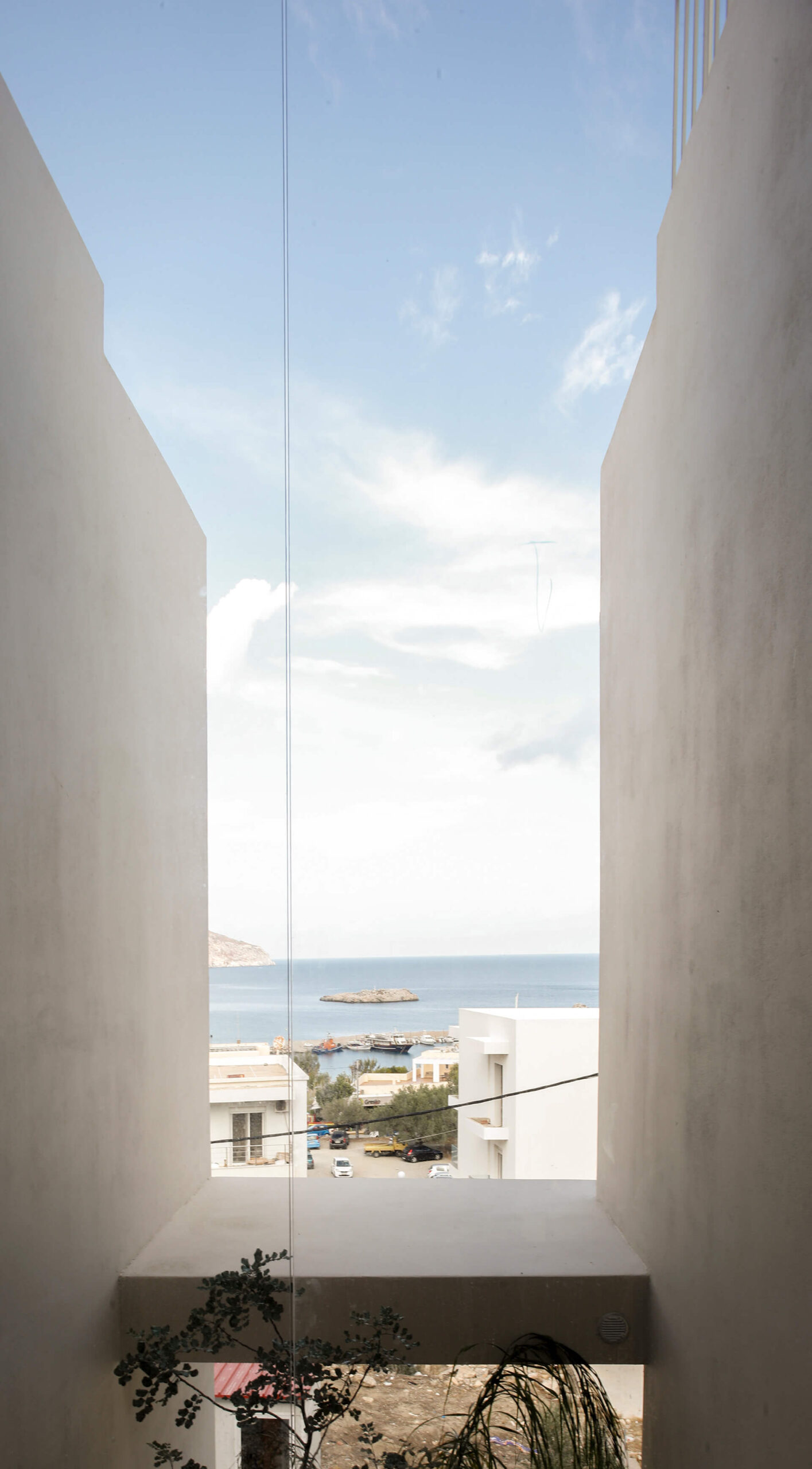
These geometric displacements operate not only as formal gestures but also as environmental mechanisms, generating intermediate voids, shaded areas, natural light penetration, outdoor extensions and visual openings toward the landscape. The staircase is positioned precisely within the “in-between” void created by the displacement of the volumes, transforming this transitional space into the primary vertical connective tissue of the complex.
Design Philosophy
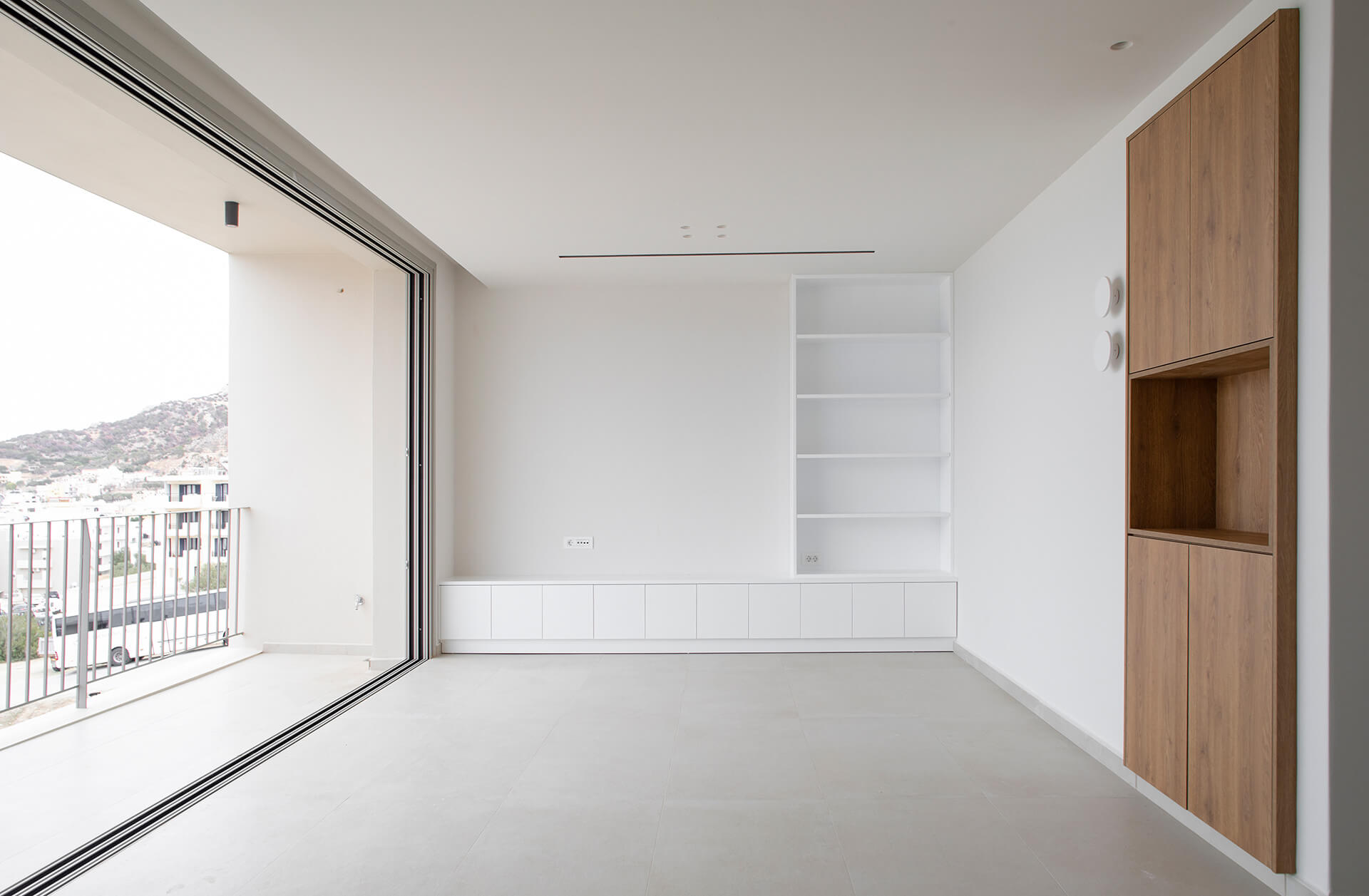
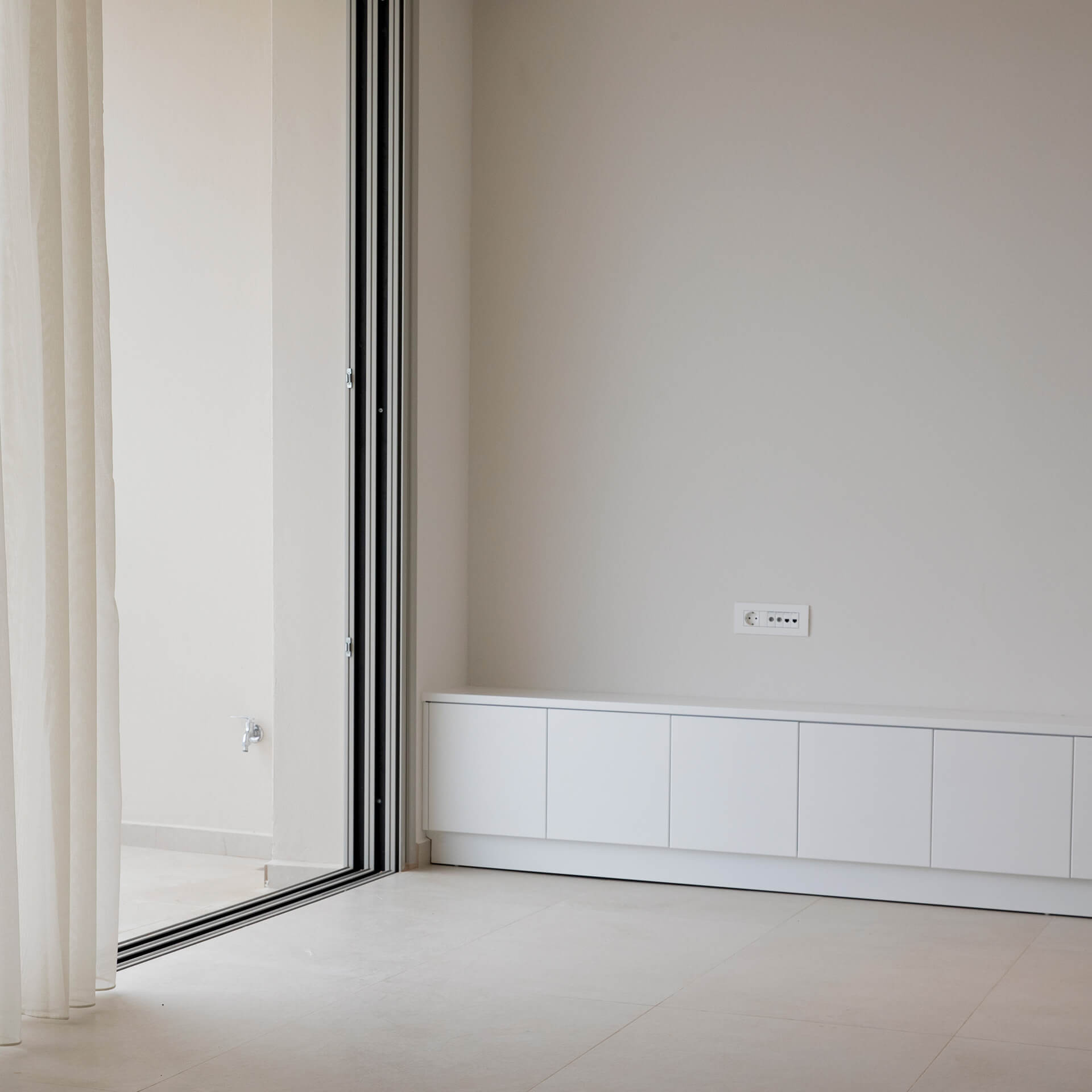
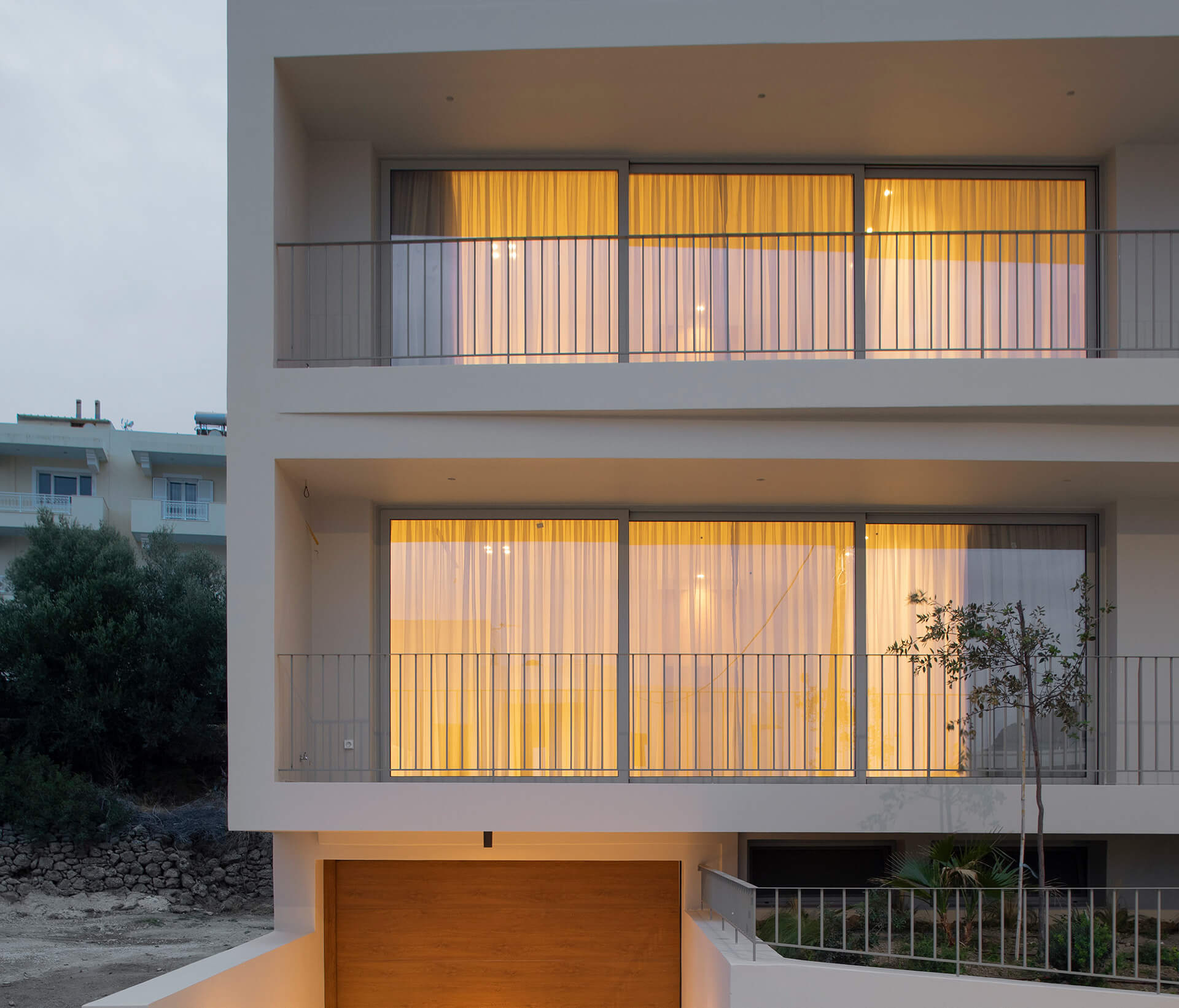
The architecture seeks to reinforce the relationship between interior and exterior space, following the principles of Mediterranean living. Large openings and the horizontal development of the primary volumes allow the living spaces to extend outward toward the landscape, creating a sense of spatial continuity with light, air and views toward the sea.
The transitional outdoor areas function as intermediate climatic zones, providing shade, protection from strong winds and different spatial qualities throughout the day. Through this compositional approach, the residence is not perceived as an isolated object, but rather as part of a continuous experience of place and climate.
Spatial Organization
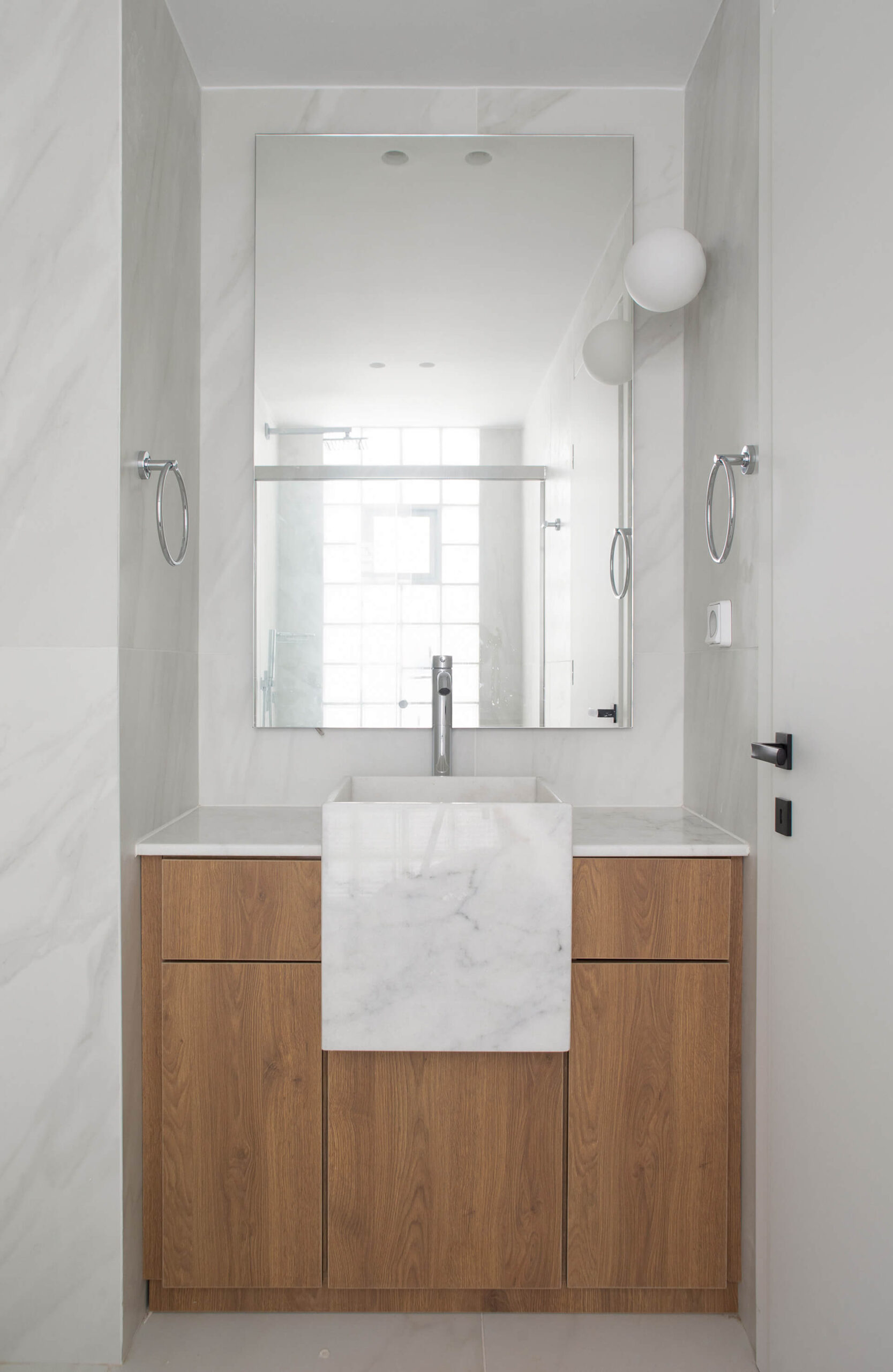
The internal organization of each apartment is structured around three distinct functional zones. At the center lies the “service core” containing the auxiliary and wet areas, naturally illuminated and ventilated through light wells, enhancing both comfort and environmental performance.
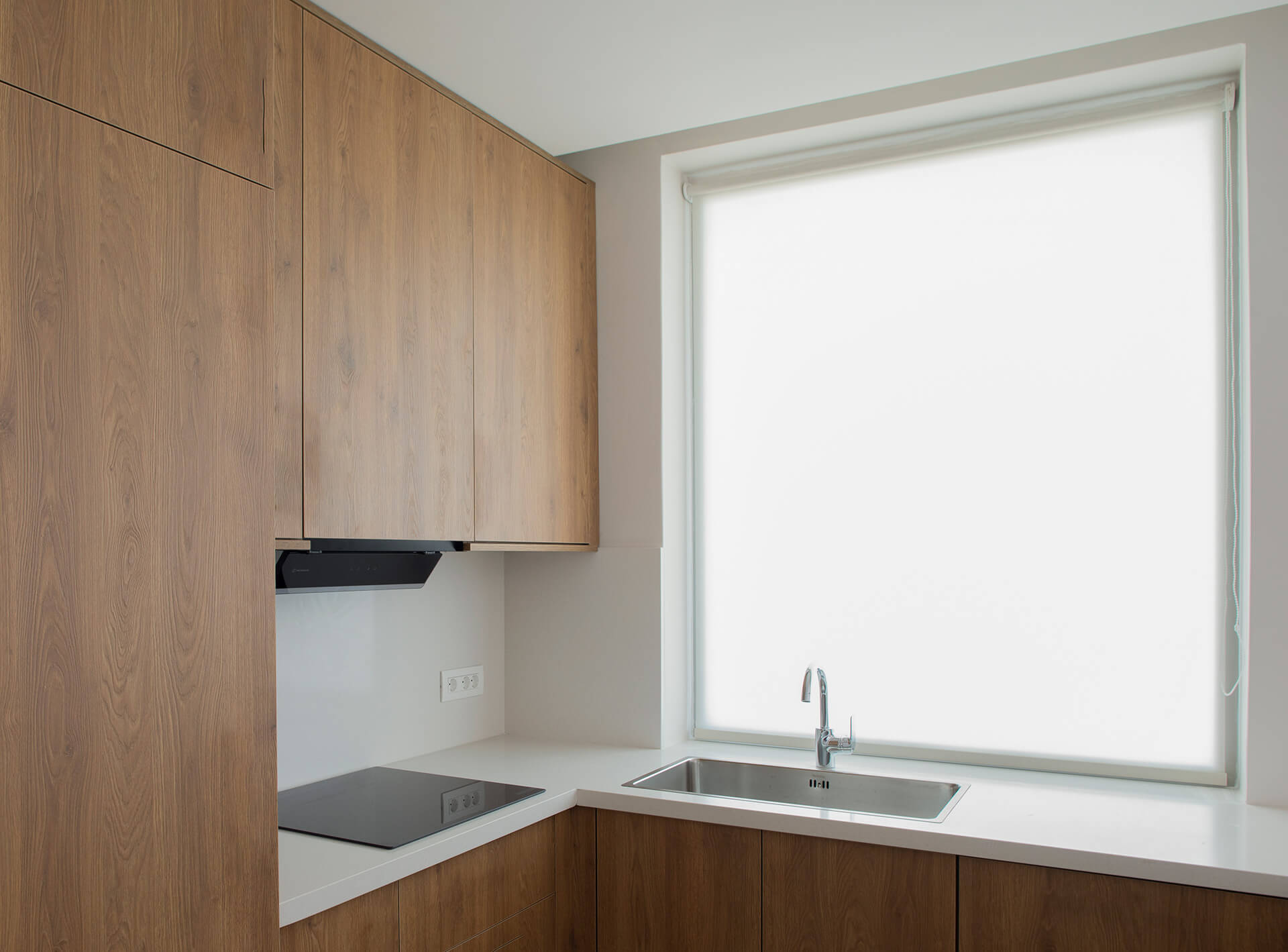
The living spaces, including the living room, dining area and kitchen, are arranged toward the north, directly oriented toward the sea views and surrounding landscape. In contrast, the bedrooms are positioned on the southern side, protected from strong winds while benefiting from natural light.
The overall composition seeks to translate the particularities of island dwelling into a contemporary architectural language, where building, climate and landscape operate as interconnected components of a unified spatial experience.