Heromylos Resort & Spa in Evia by Stylianidis Vaggelis Architects
Architecture:
Stylianidis Vaggelis Architects
Photography:
Spyros Chountas, George Fakaros , Vaggelis Stylianidis
Ek Issue:

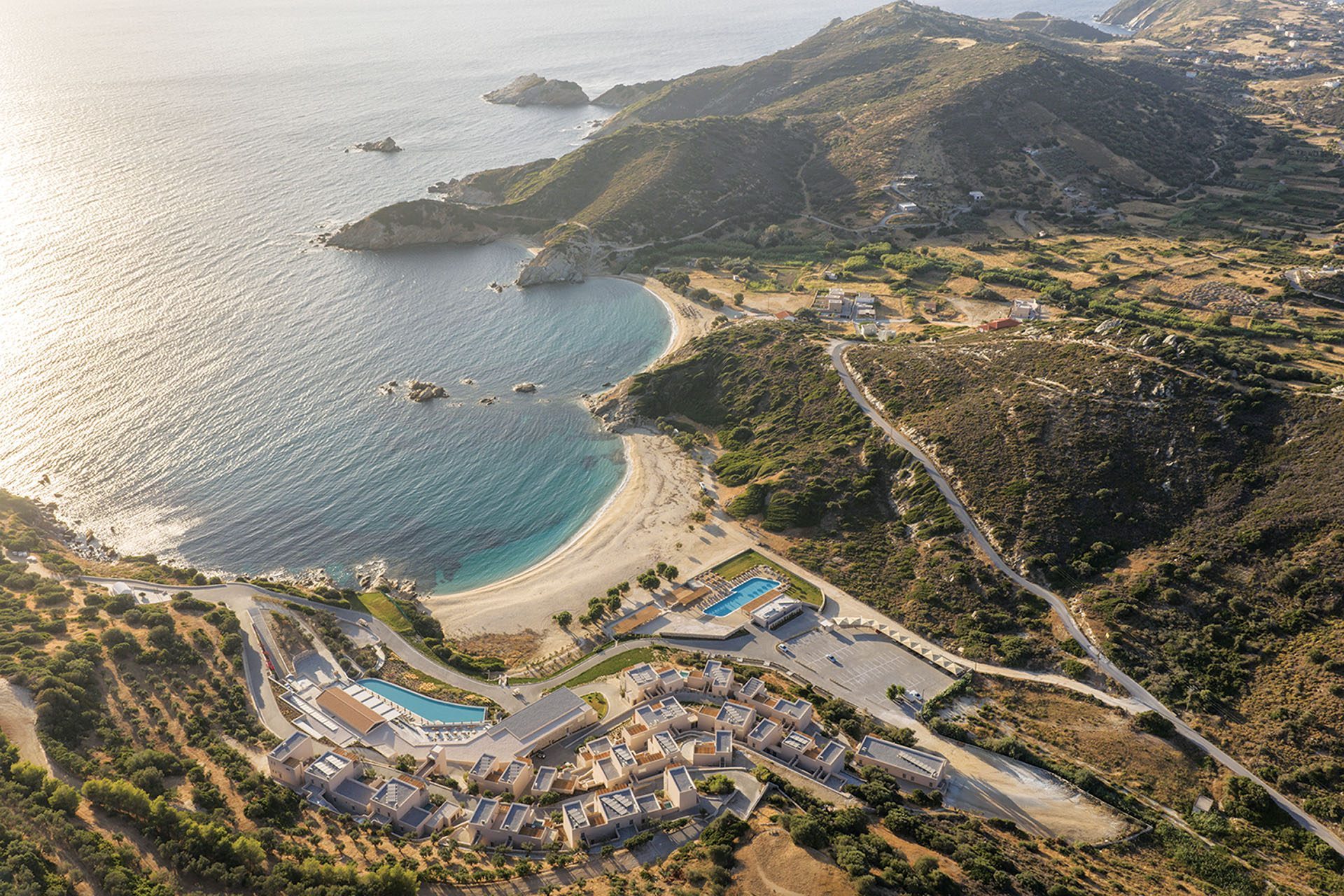
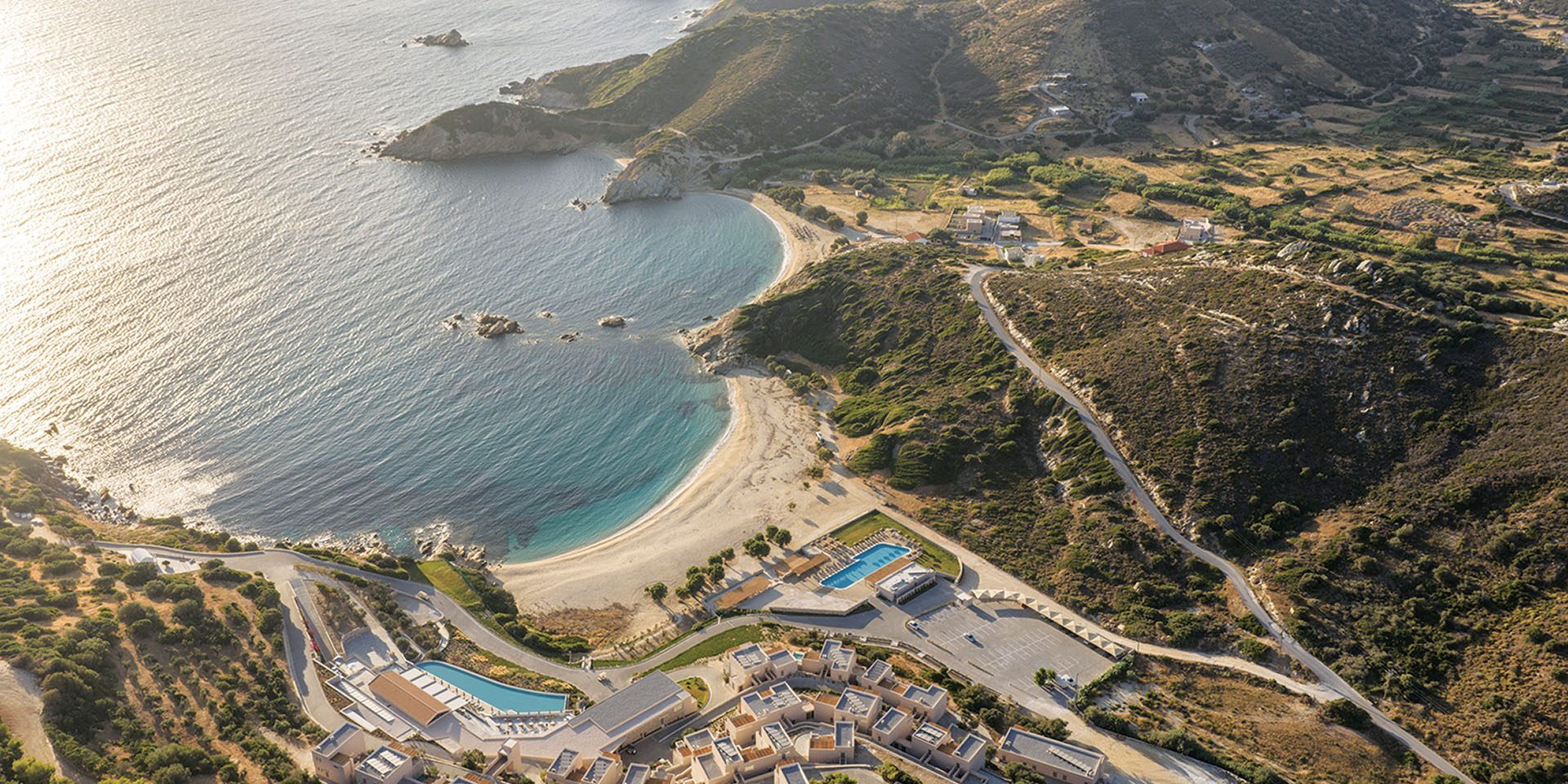
Heromylos Resort & Spa by Stylianidis Vaggelis Architects occupies a 50-stremma (5-hectare) site on the eastern side of Evia, a short distance from Kymi. The complex extends along a sandy beach that opens east towards the Aegean, while two rocky outcrops running down to the sea frame the horizon and naturally define the landscape.
The office, led by architect Vaggelis Stylianidis, was responsible for the architecture, interior design, lighting design and landscape architecture of the project.
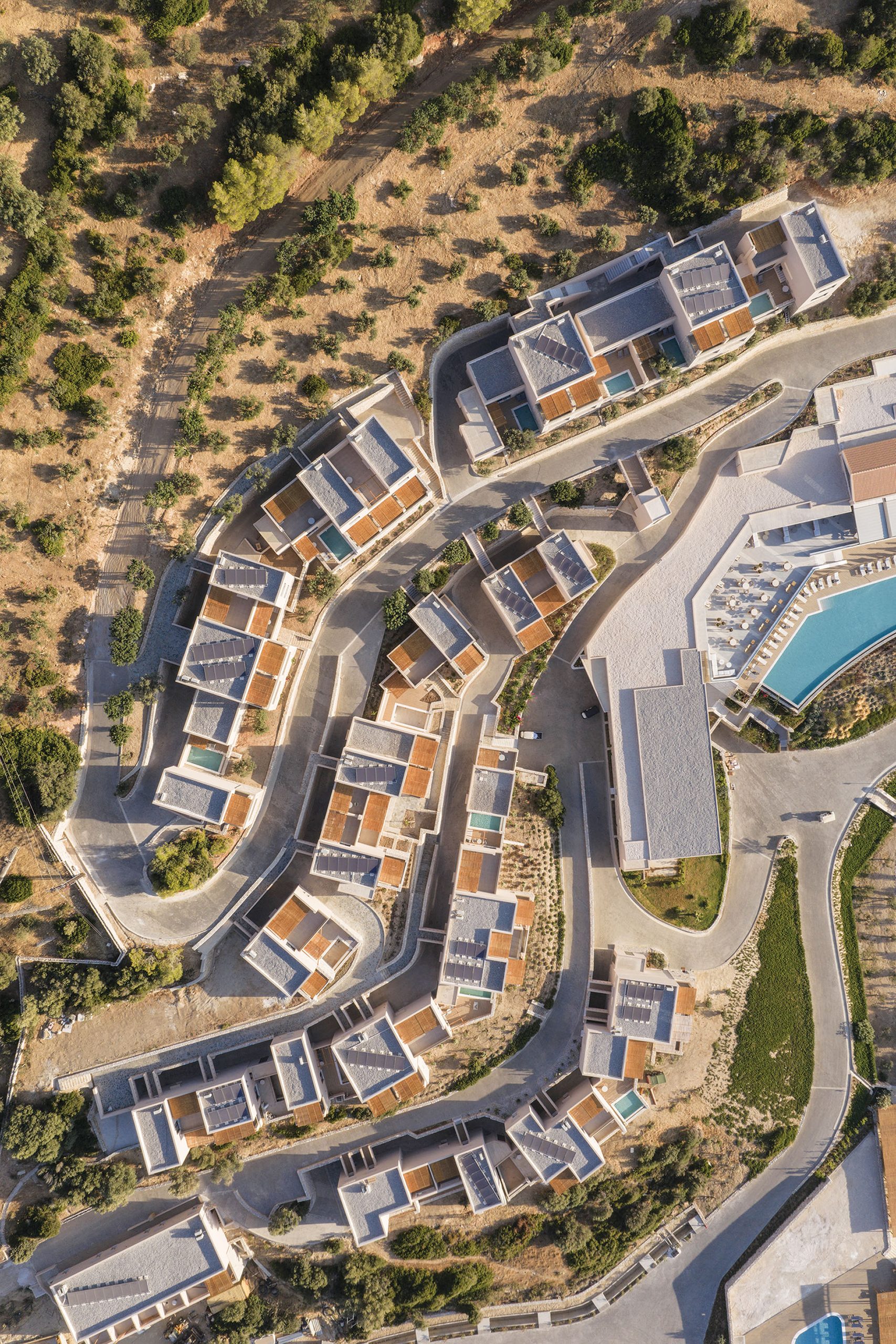
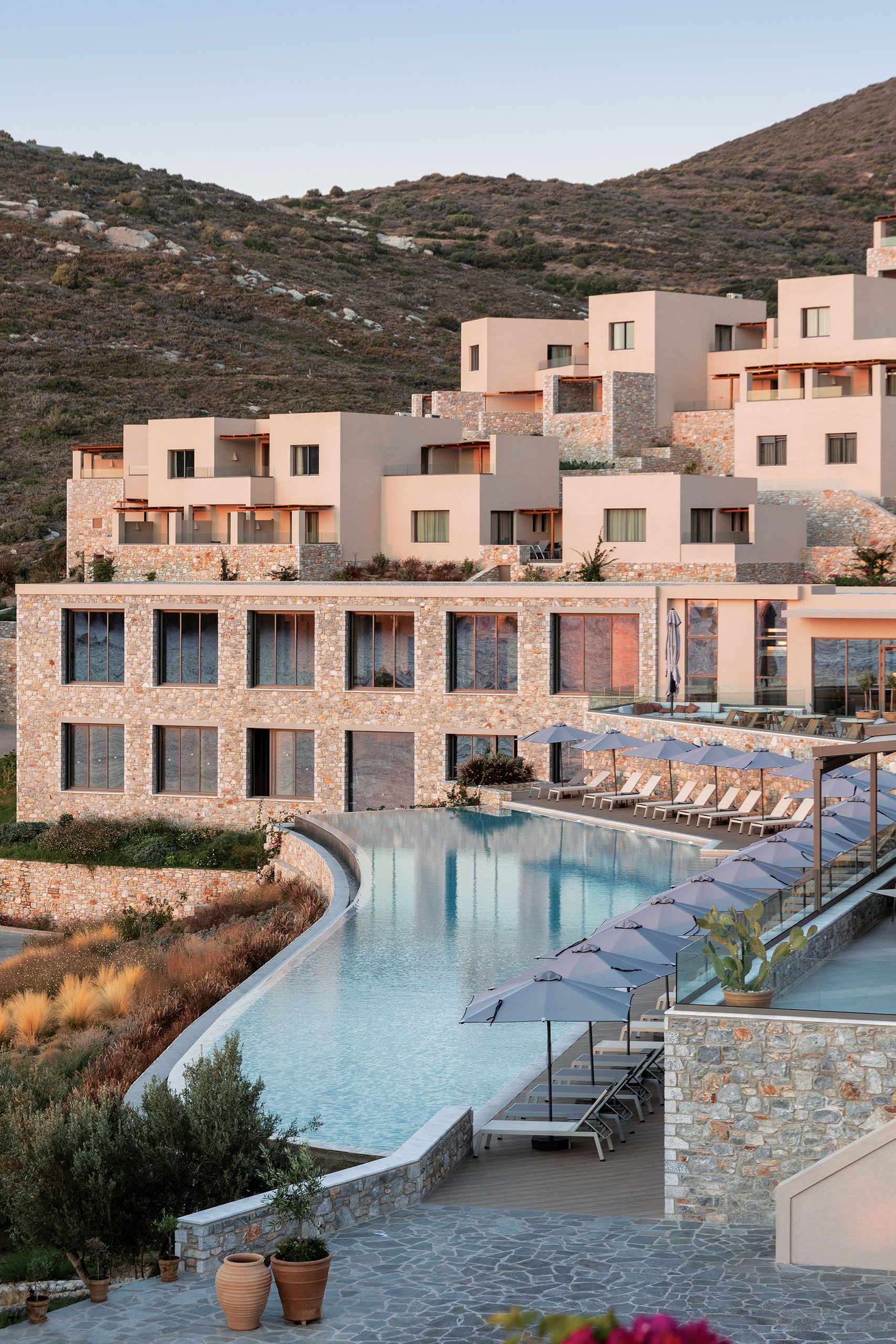
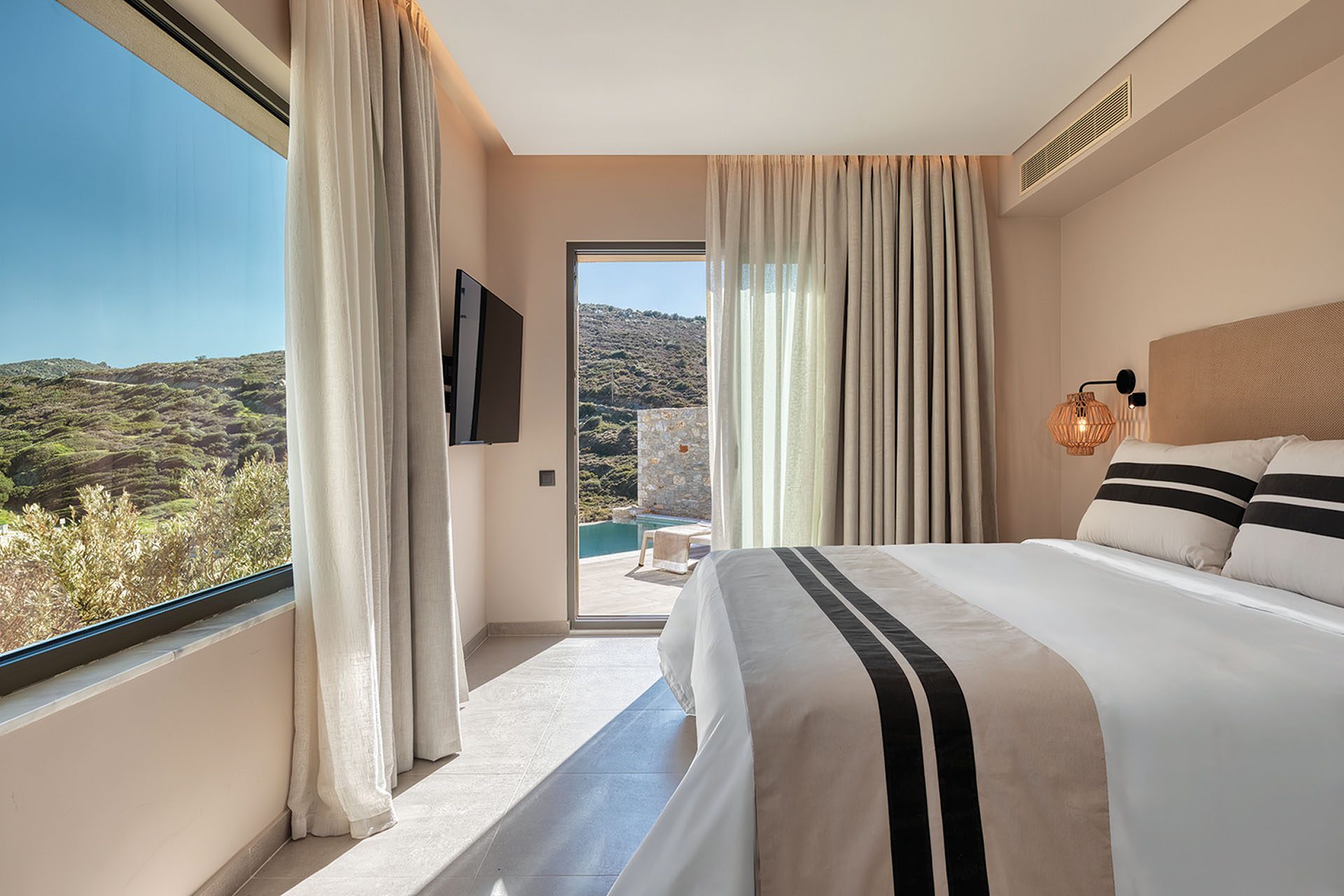
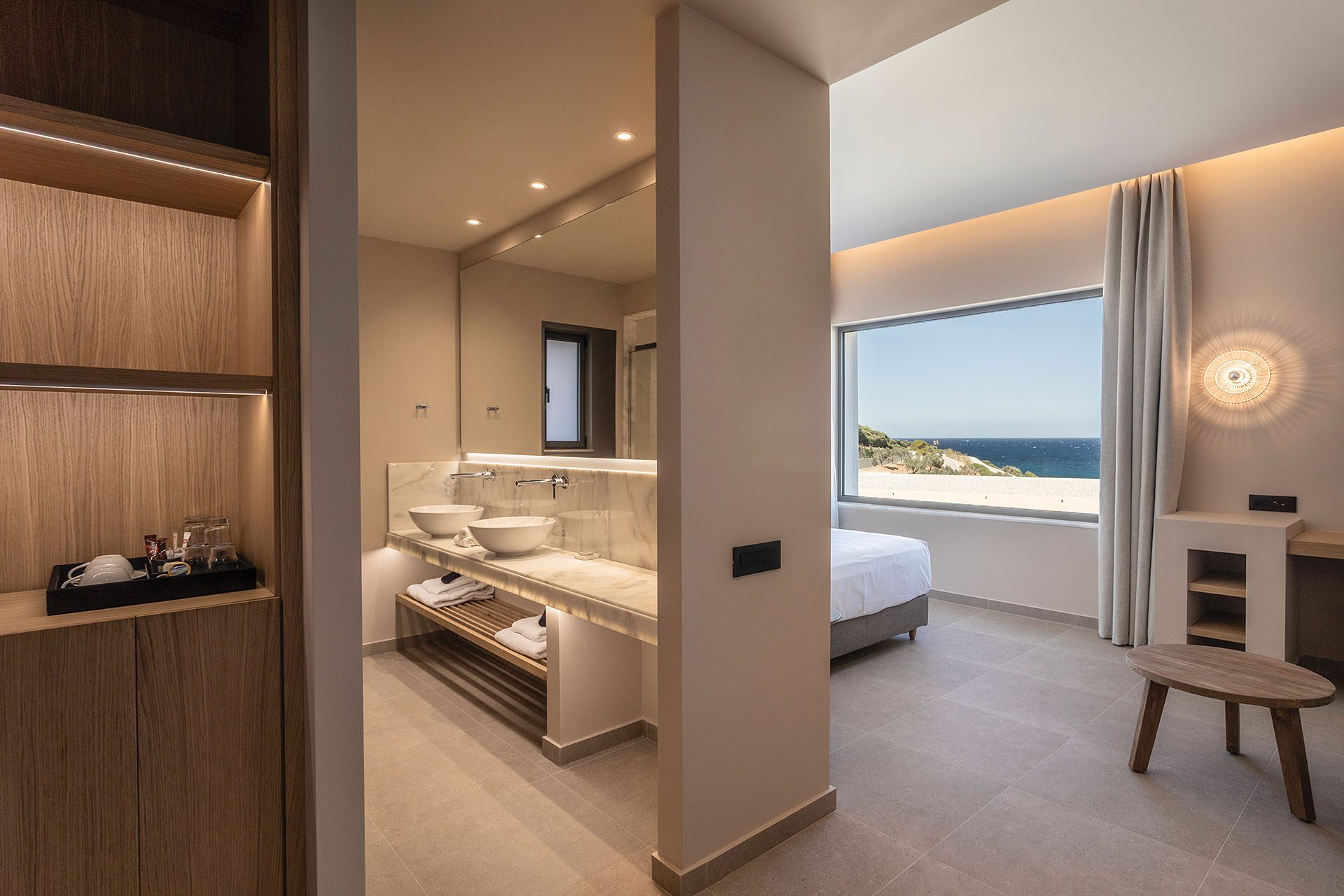
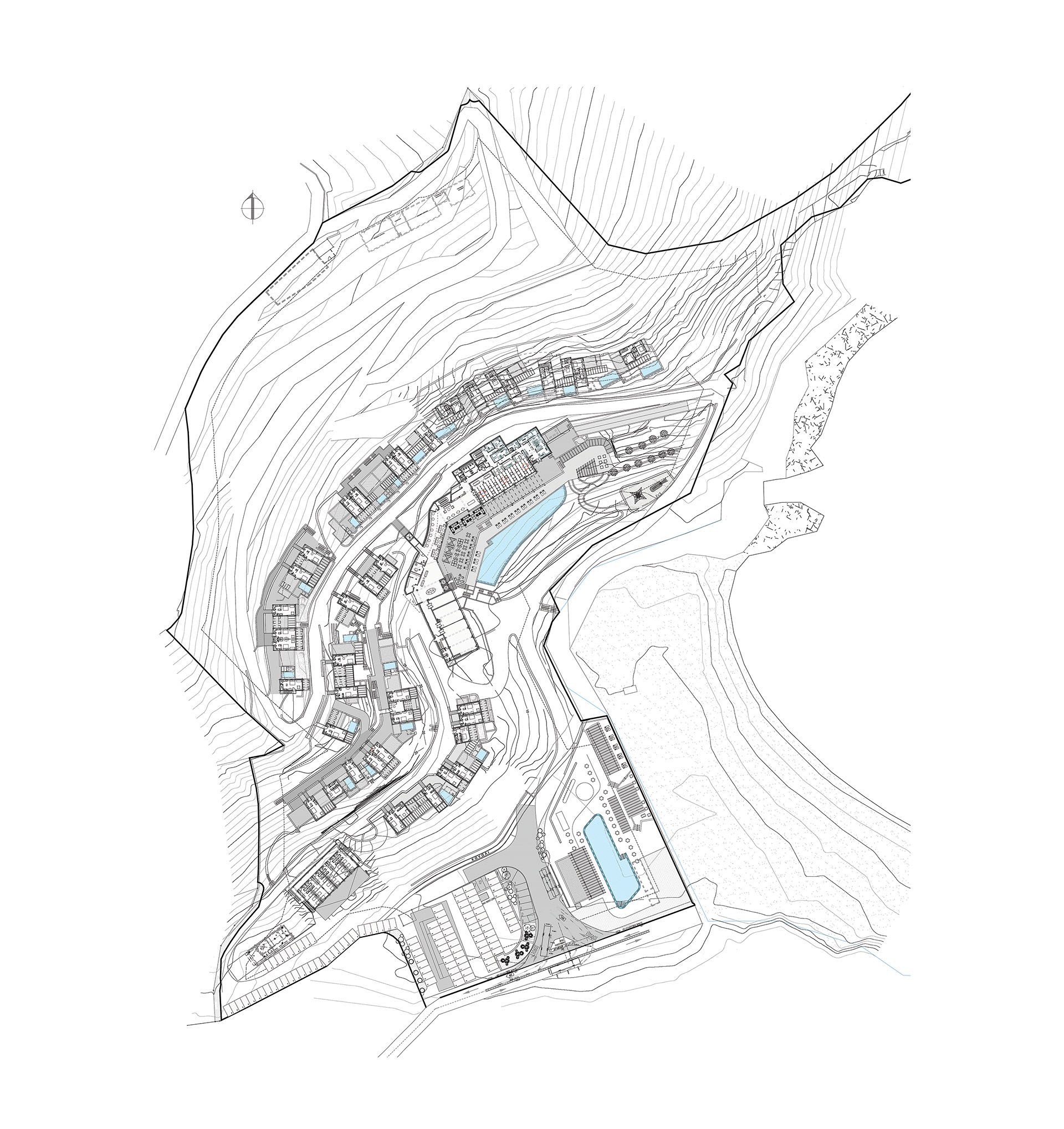
The steep terrain and the existing Mediterranean vegetation, with olive trees, mastic shrubs, kermes oaks and aromatic plants, determined how the complex was placed and organised. The buildings are arranged in steps that closely follow the topography, giving almost all rooms an unobstructed view of the sea.
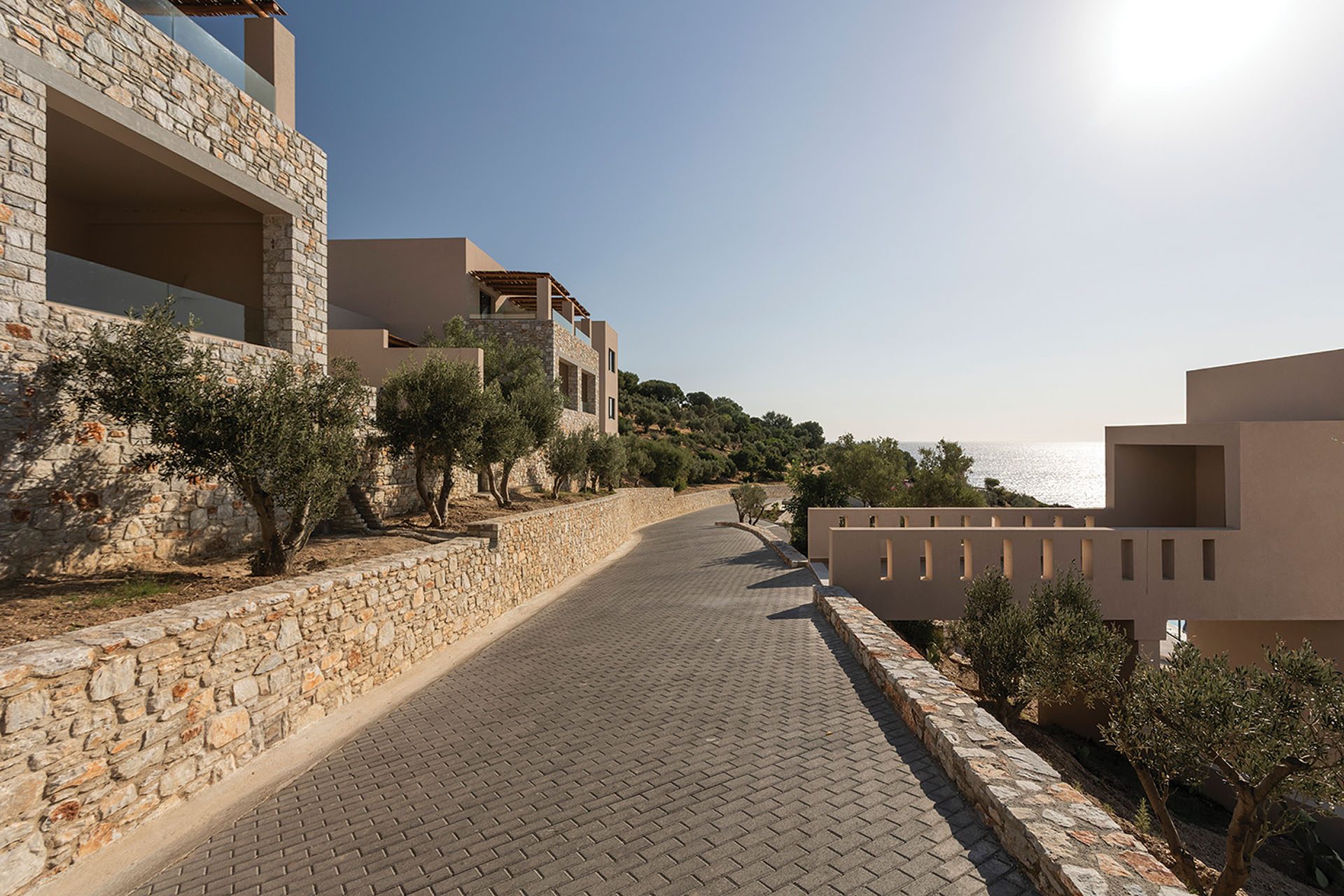
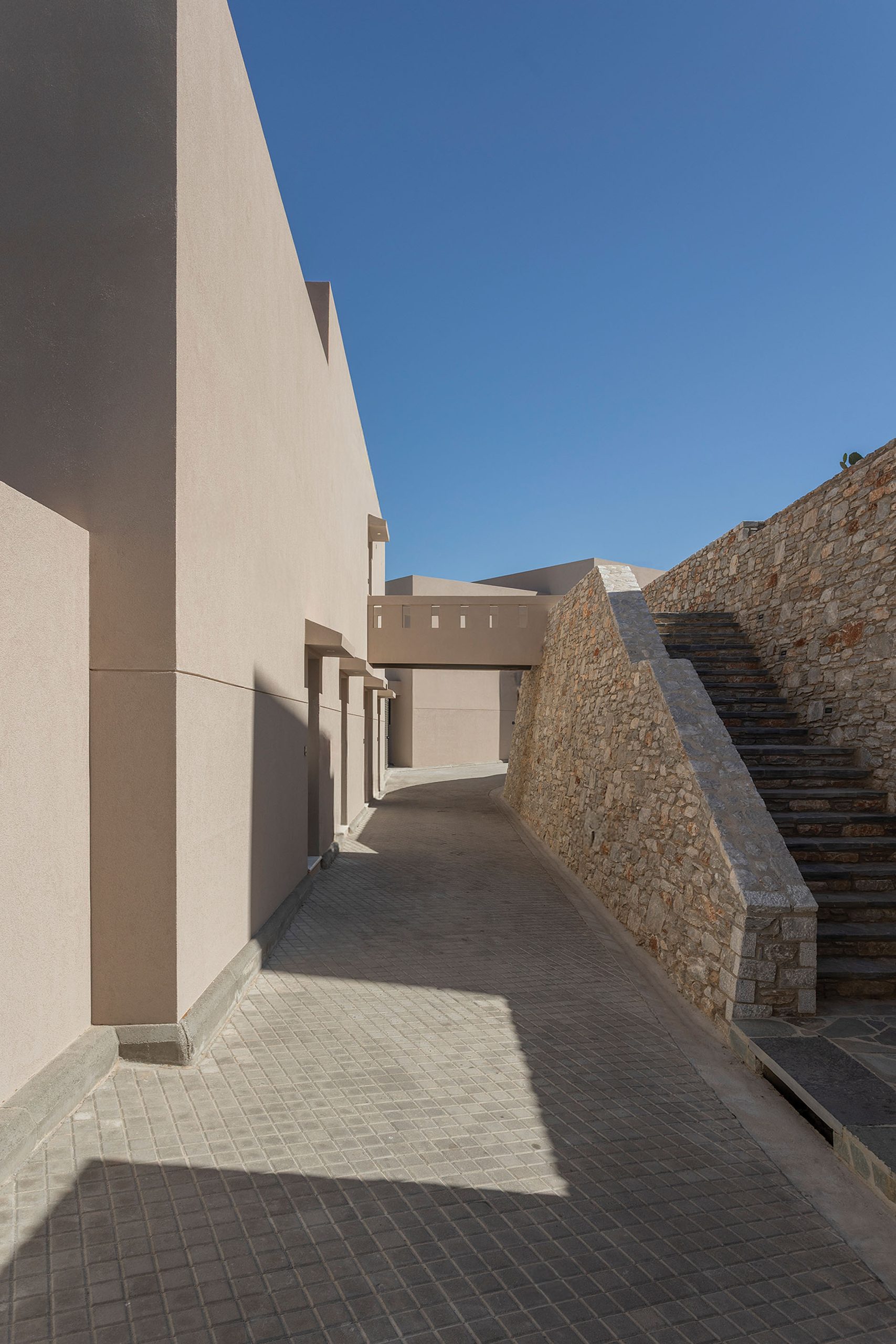
In several cases, rooms are reached by bridges that link the upper floor with the pedestrian street above, reinforcing the sense of continuous movement through the landscape. Vertical circulation is handled by lifts placed at central points of the complex.
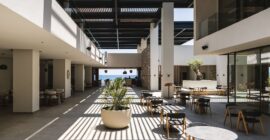
The main building is organised around two distinct poles. One houses the wellness and multipurpose spaces, the other the restaurant with its outdoor terraces. A long communal zone connects the two and includes an extensive pool facing the view.
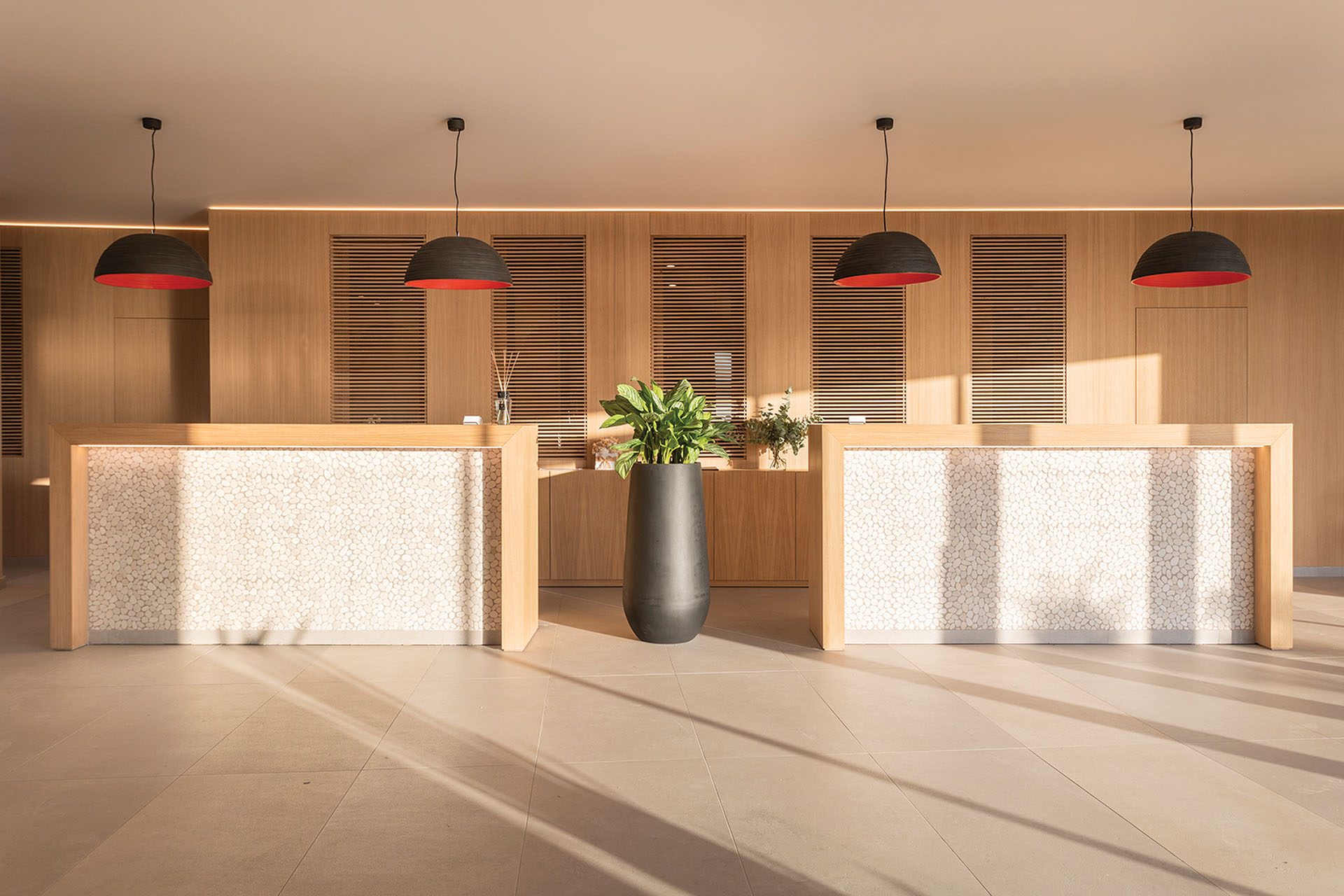
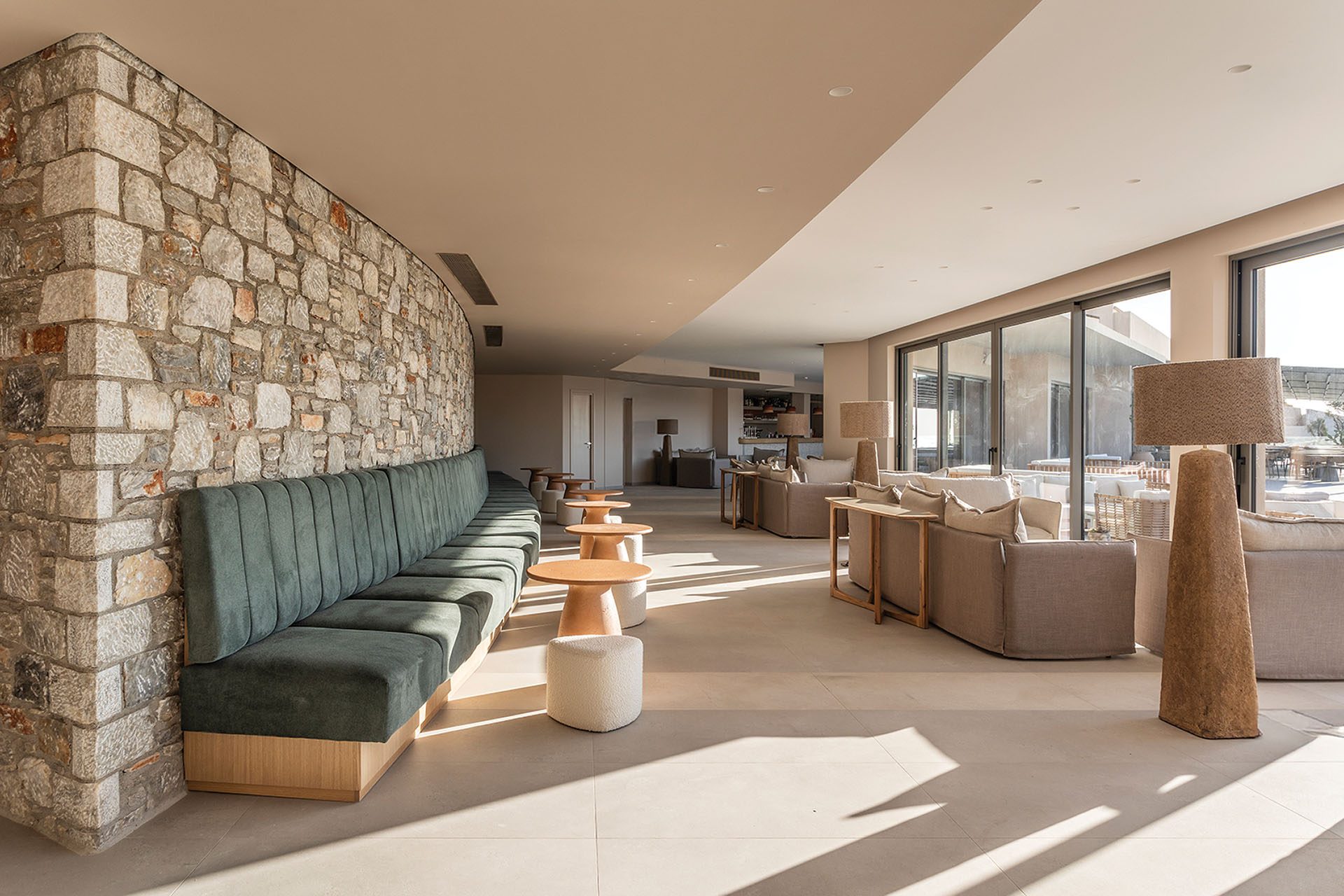
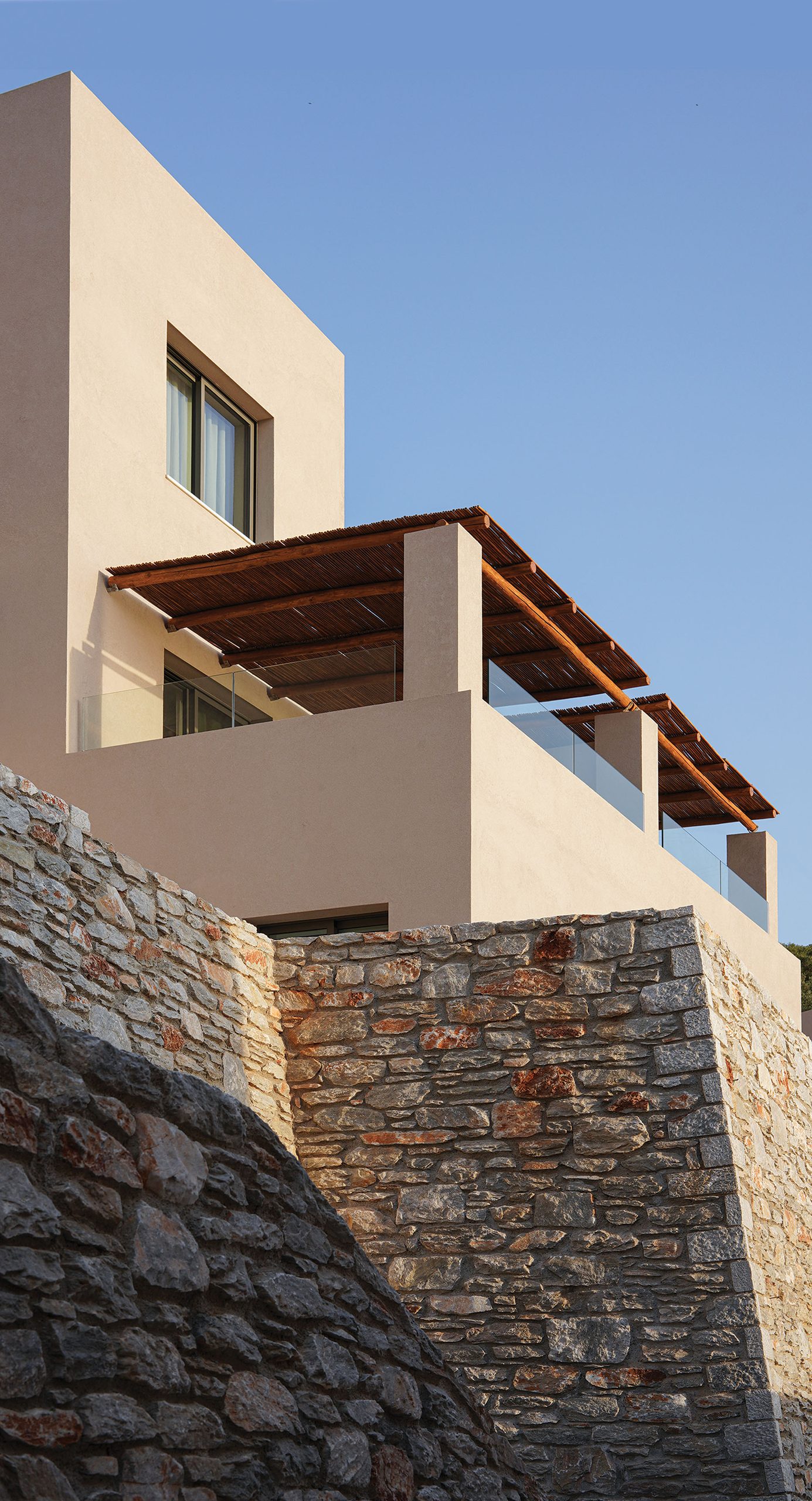
The architectural expression relies on simple, robust construction. The rendered volumes of the 85 rooms have ground-floor terraces built from local stone with concealed joints, and the retaining walls are built in stone masonry, without reinforced concrete.
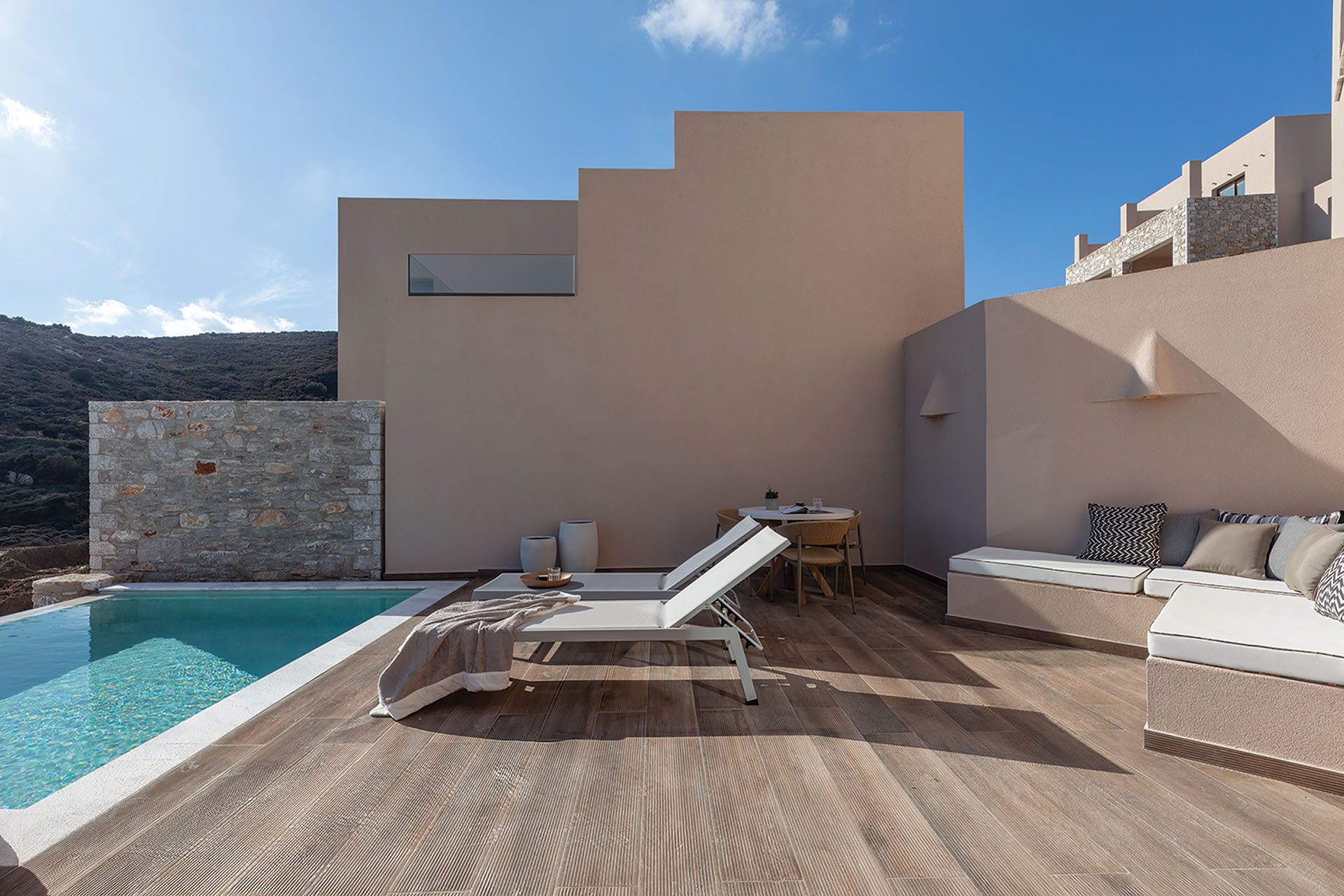
Wild vegetation is kept wherever possible, bordered by low stone structures, and the excavated material was reused for the embankments. An organised section of the beach, with a pool and dining areas, serves the needs of bathers.
The project was first published in print in ek305 | March 2026.