Exeter Road Pavilion
Architecture:
Photography:

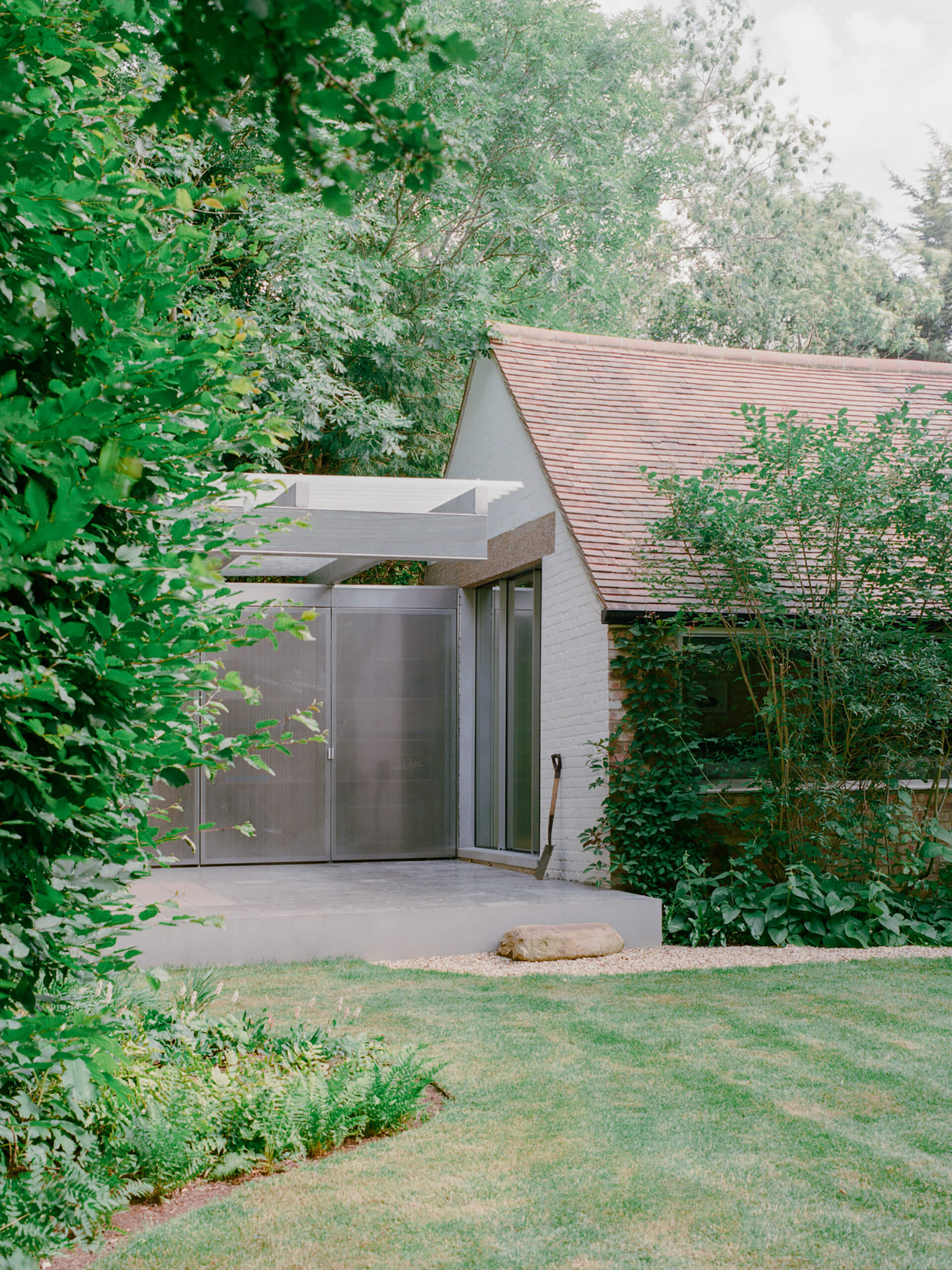
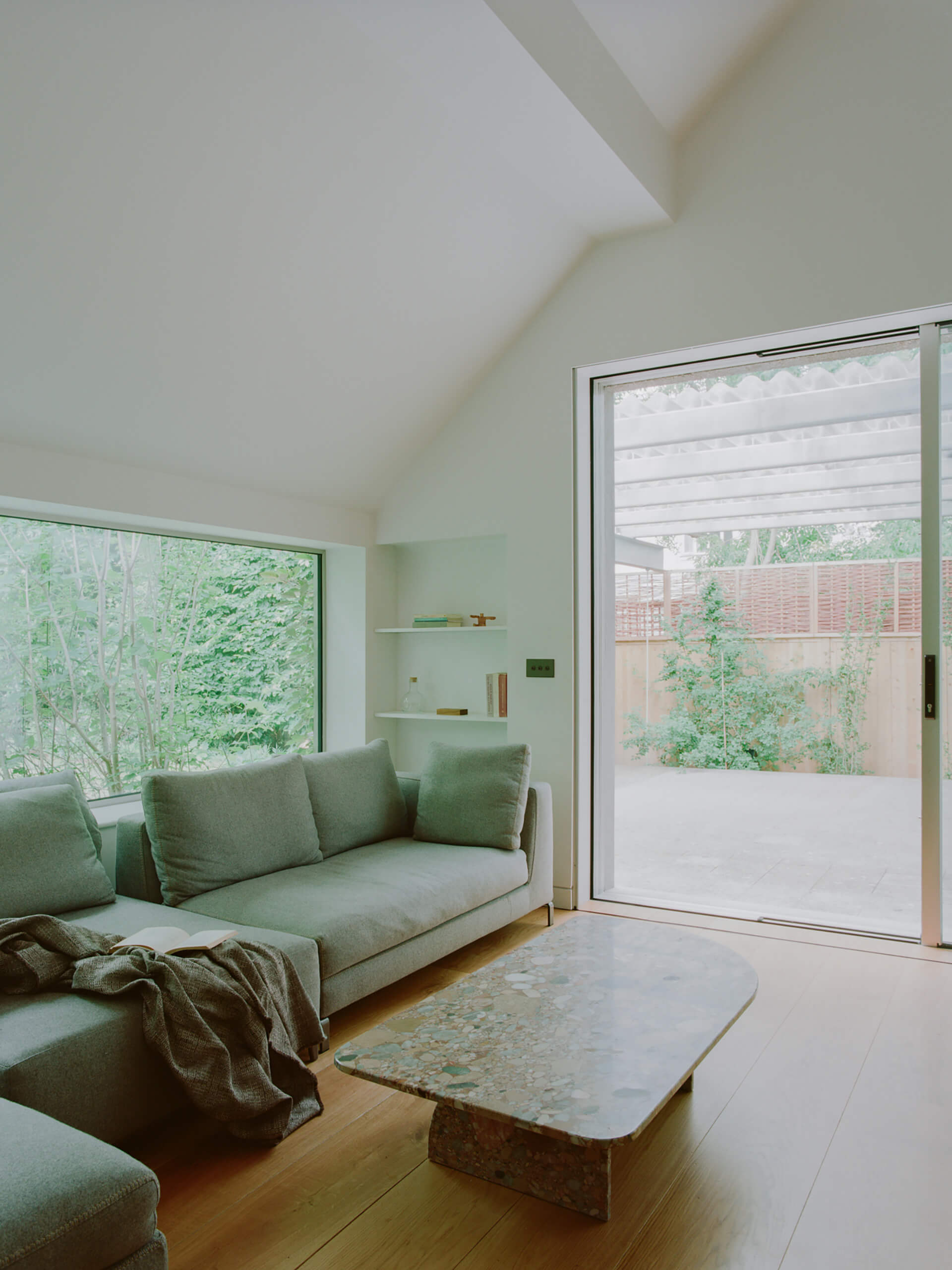
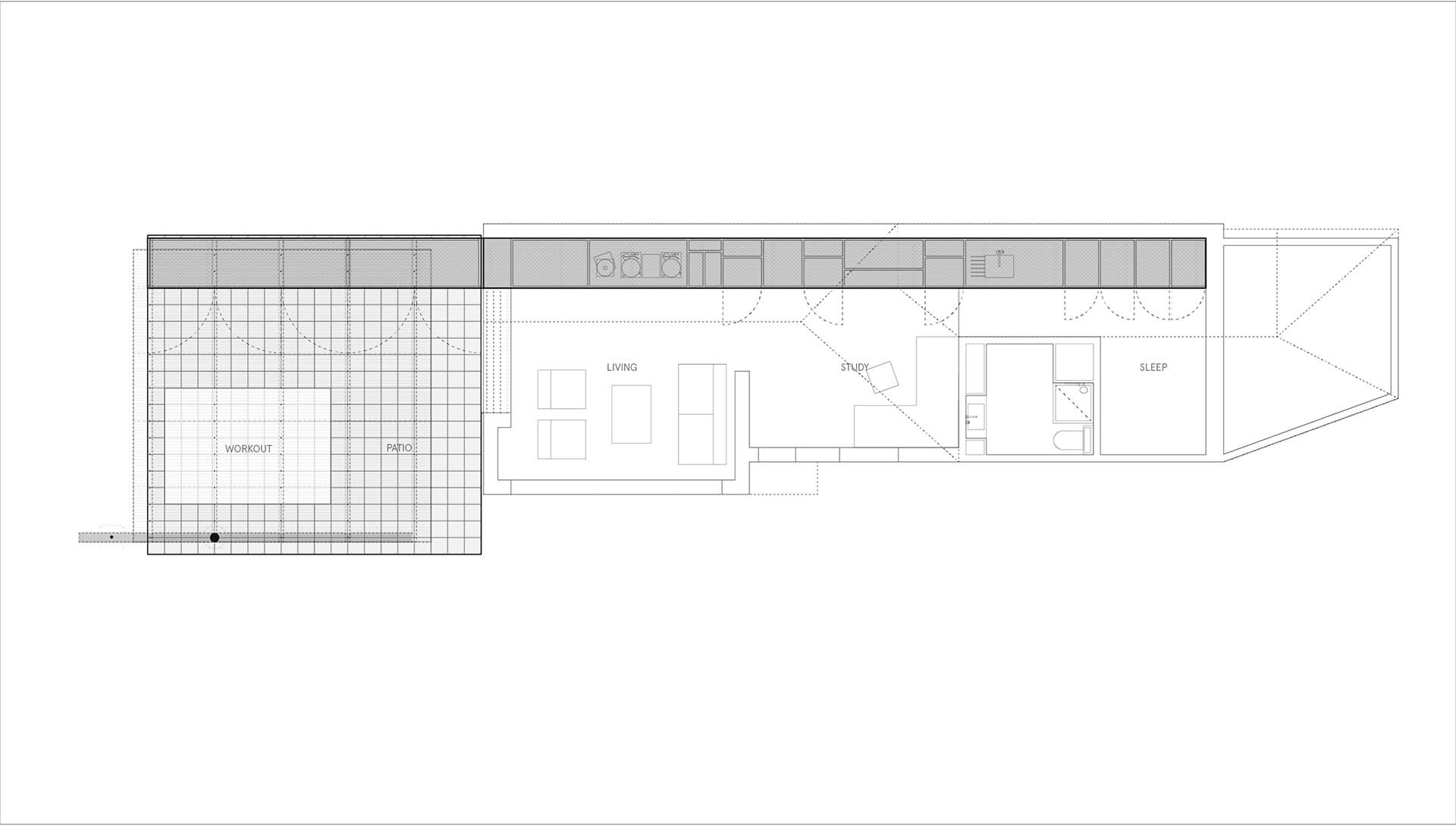
The Exeter Road Pavilion is an adaptive reuse of a modest Victorian garden outbuilding in northwest London, reimagined as a hybrid domestic and social space for an art collector and amateur DJ. Conceived as both a storage environment and a setting for leisure, the project consolidates diverse functions – archiving, display, gathering, and recreation – within a unified architectural gesture that extends from interior to landscape.
Design Philosophy
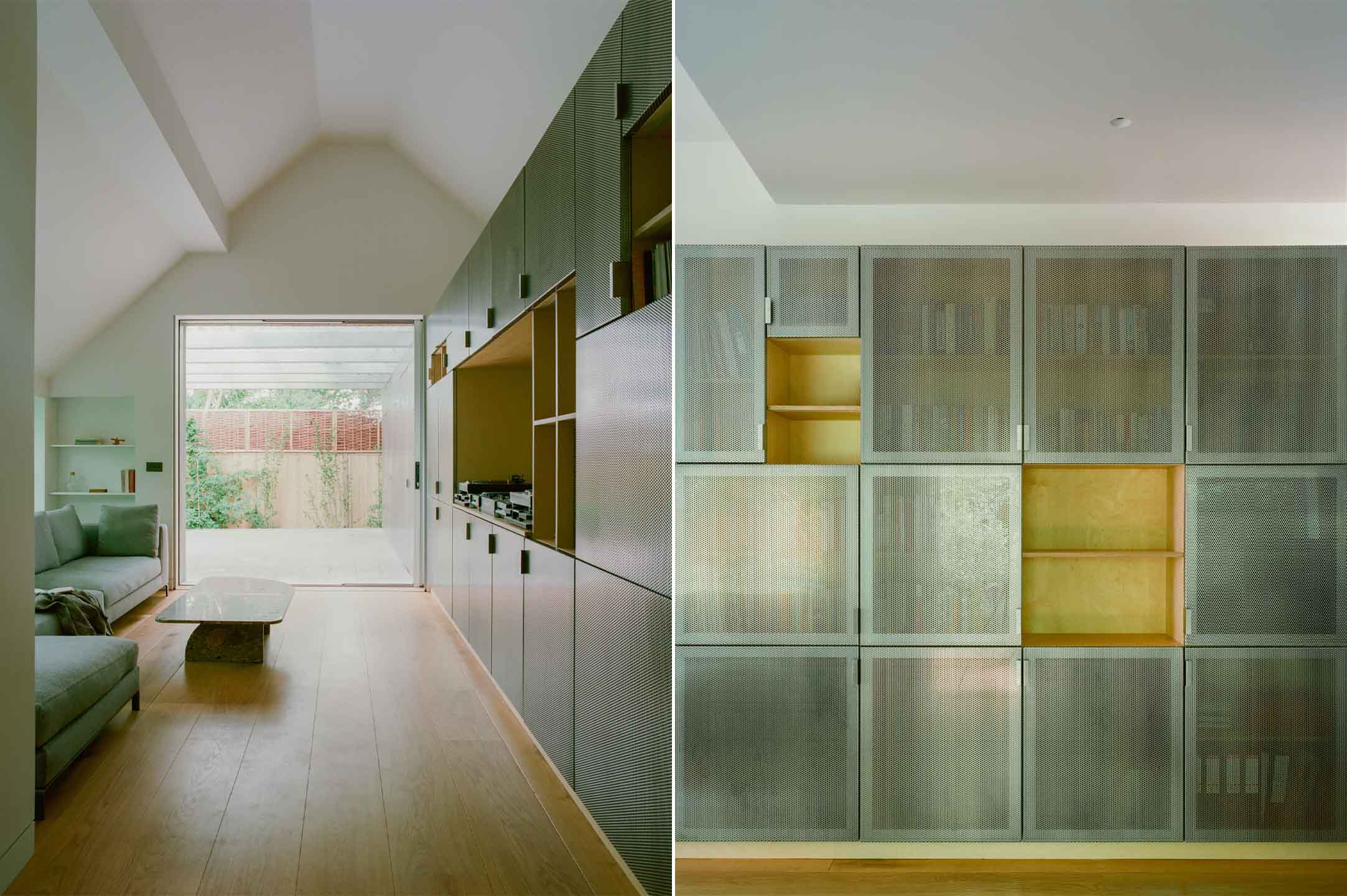
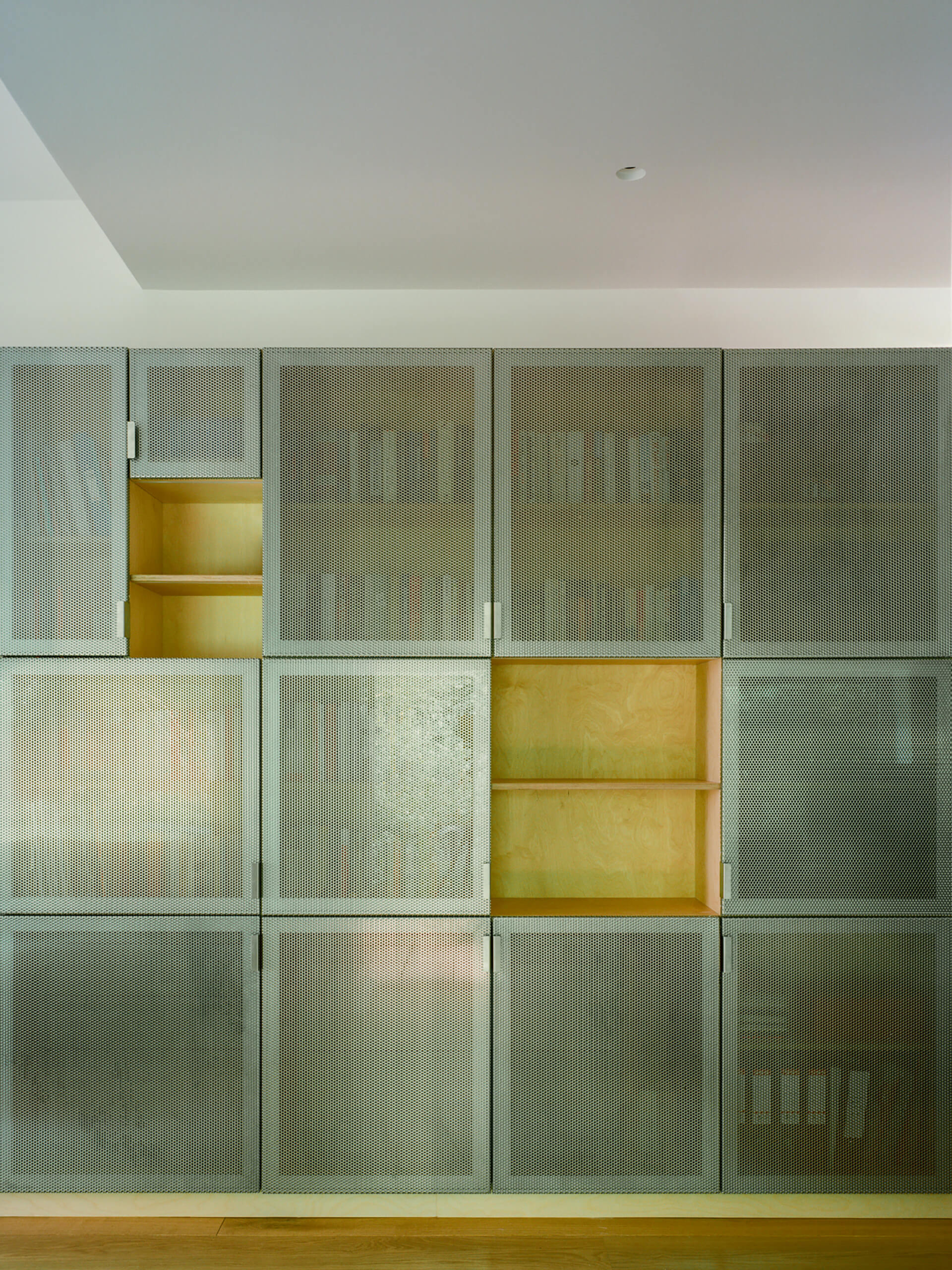
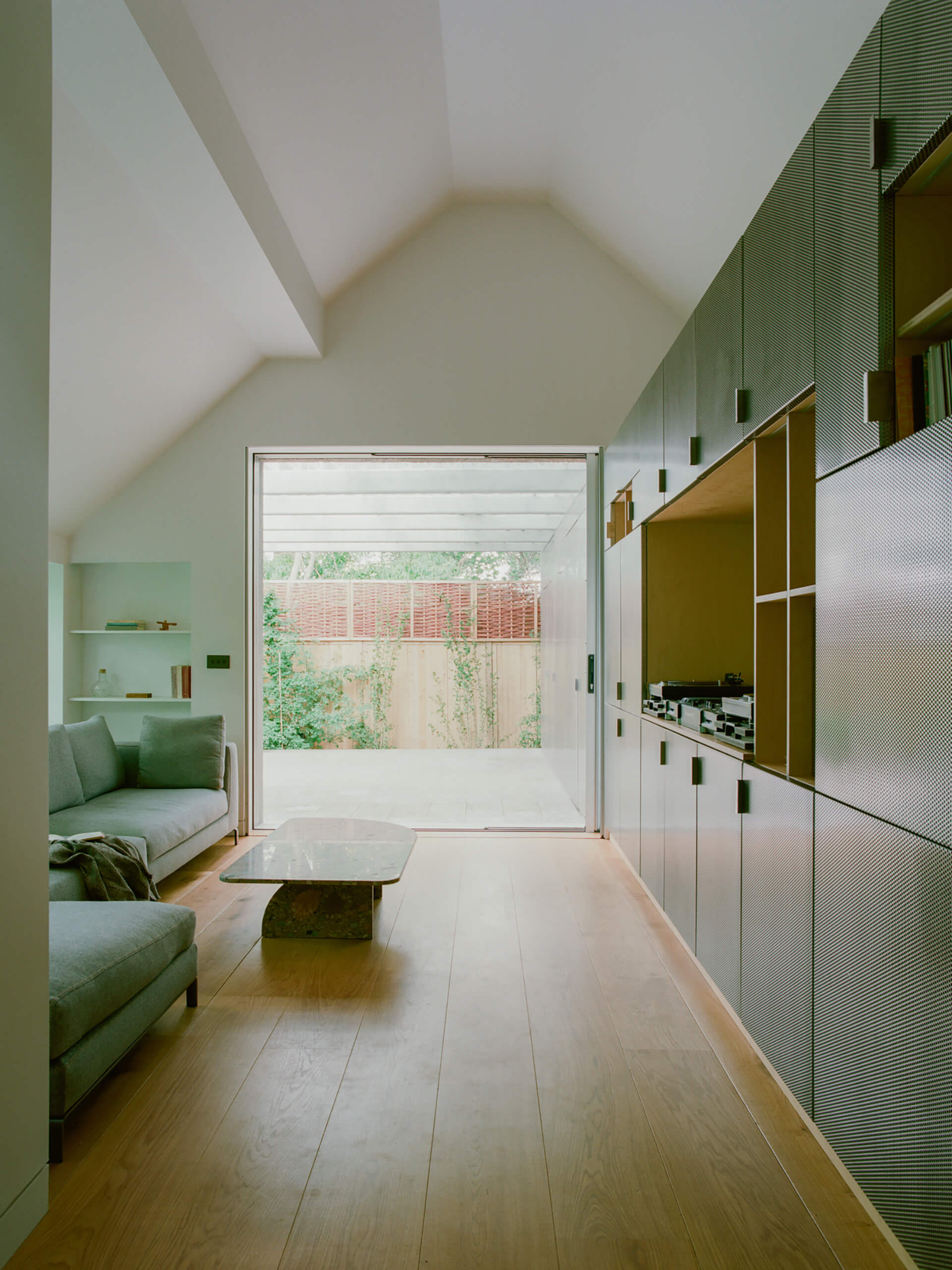
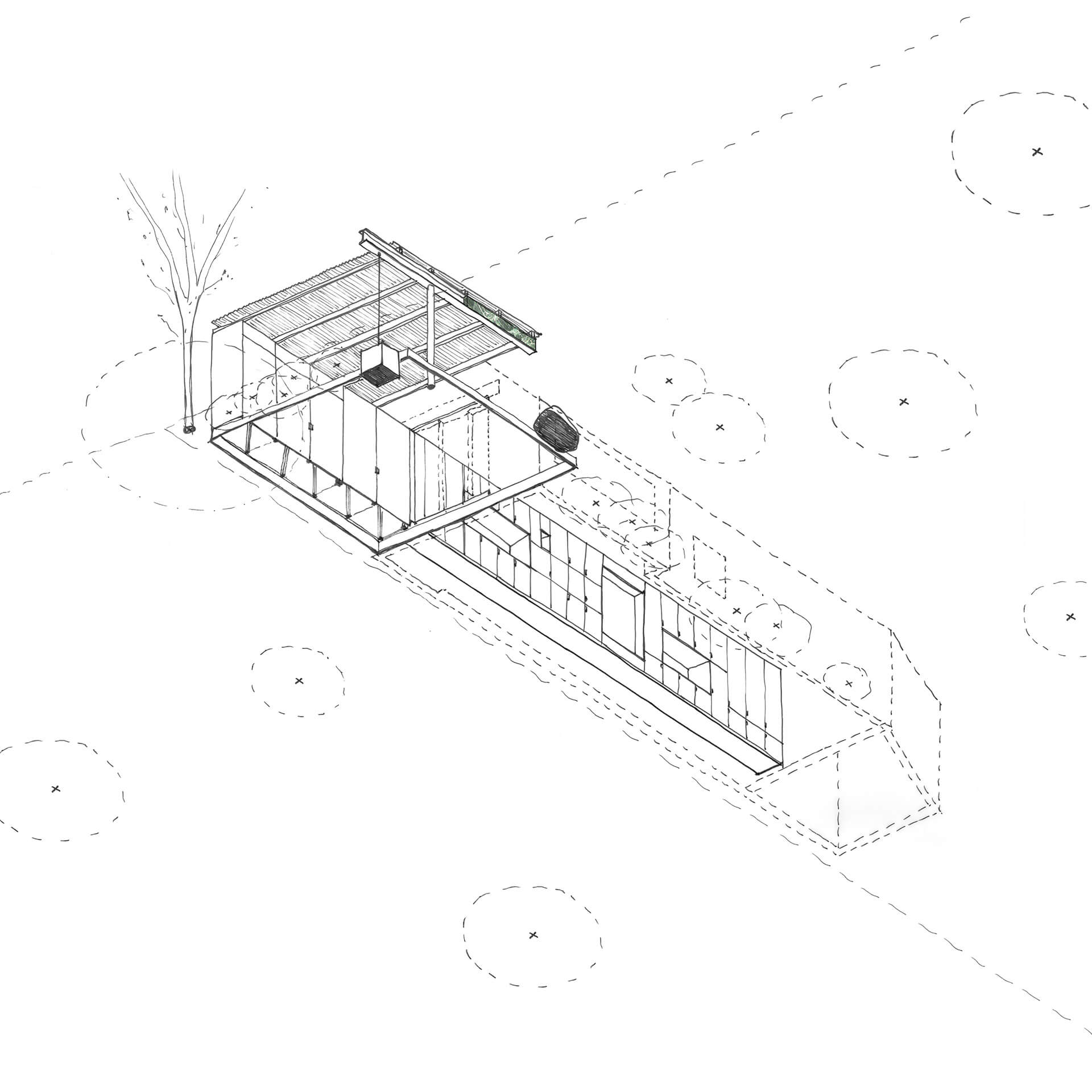
At the core of the proposal lies a continuous cabinet, operating as a contemporary cabinet of curiosities. Beginning within the refurbished structure and extending outward into the garden, this linear element accommodates an array of uses: art storage and display, shelving for books and vinyl records, a DJ station, a television, and personal artifacts. As it moves outdoors, it integrates recreational functions, including a ping-pong table, weights, and garden games, maintaining spatial continuity across interior and exterior domains.
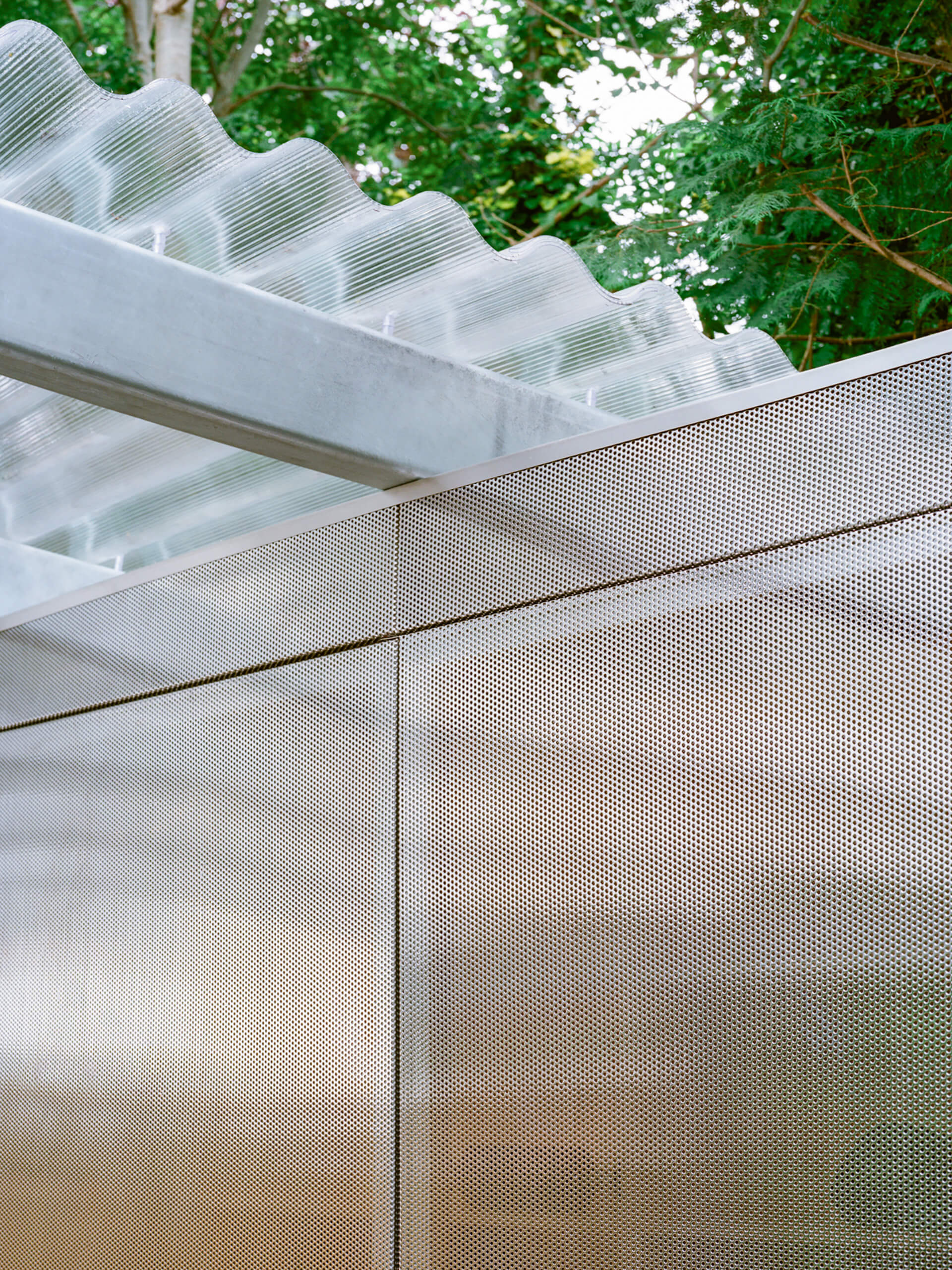
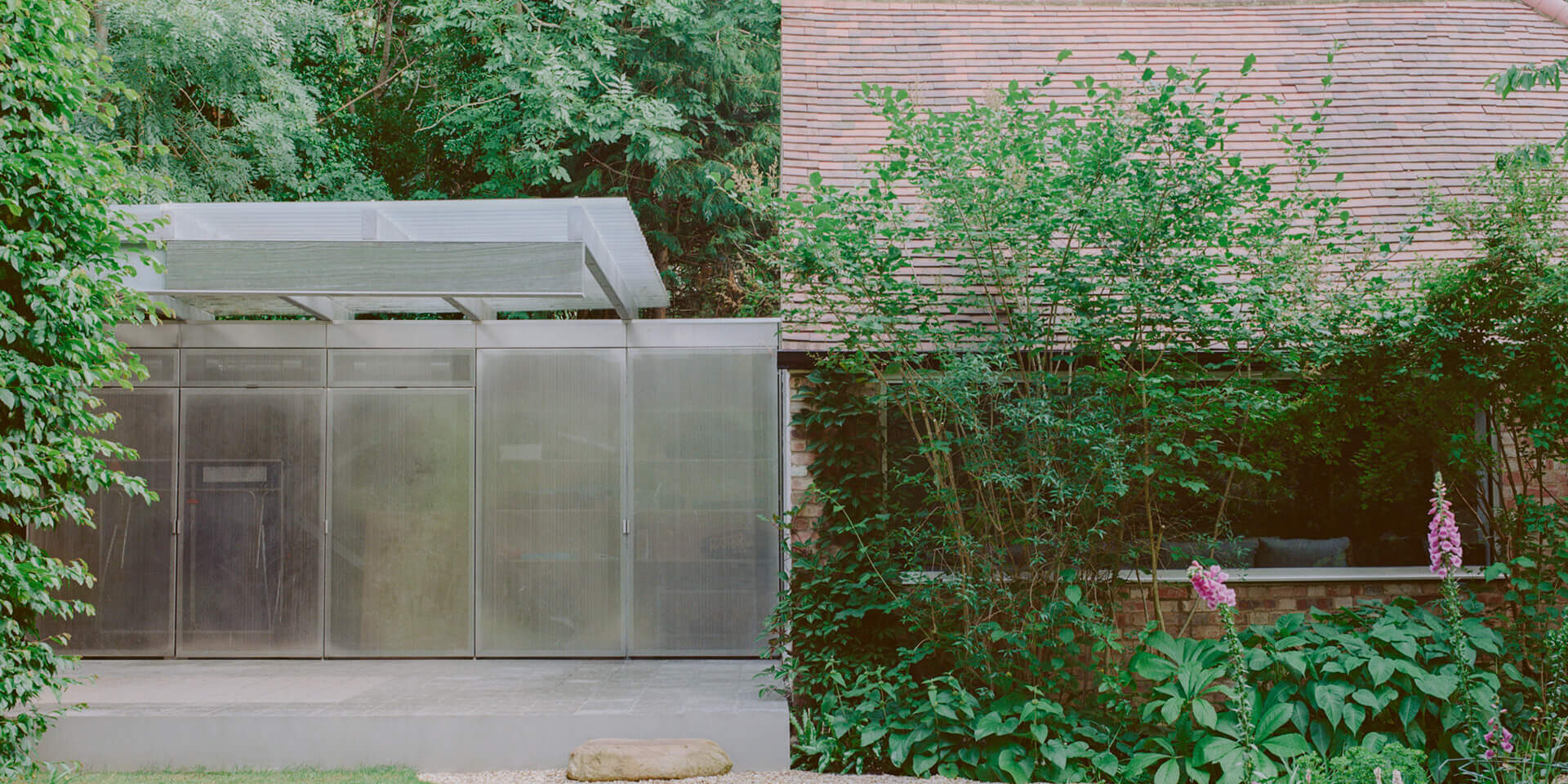
Encased in a perforated stainless-steel screen, the cabinet oscillates between transparency and opacity. Its surface reflects and filters light, producing shifting visual conditions throughout the day. This duality allows the cabinet to simultaneously reveal and conceal its contents, reinforcing its role as both container and spatial mediator.
Structural Logic
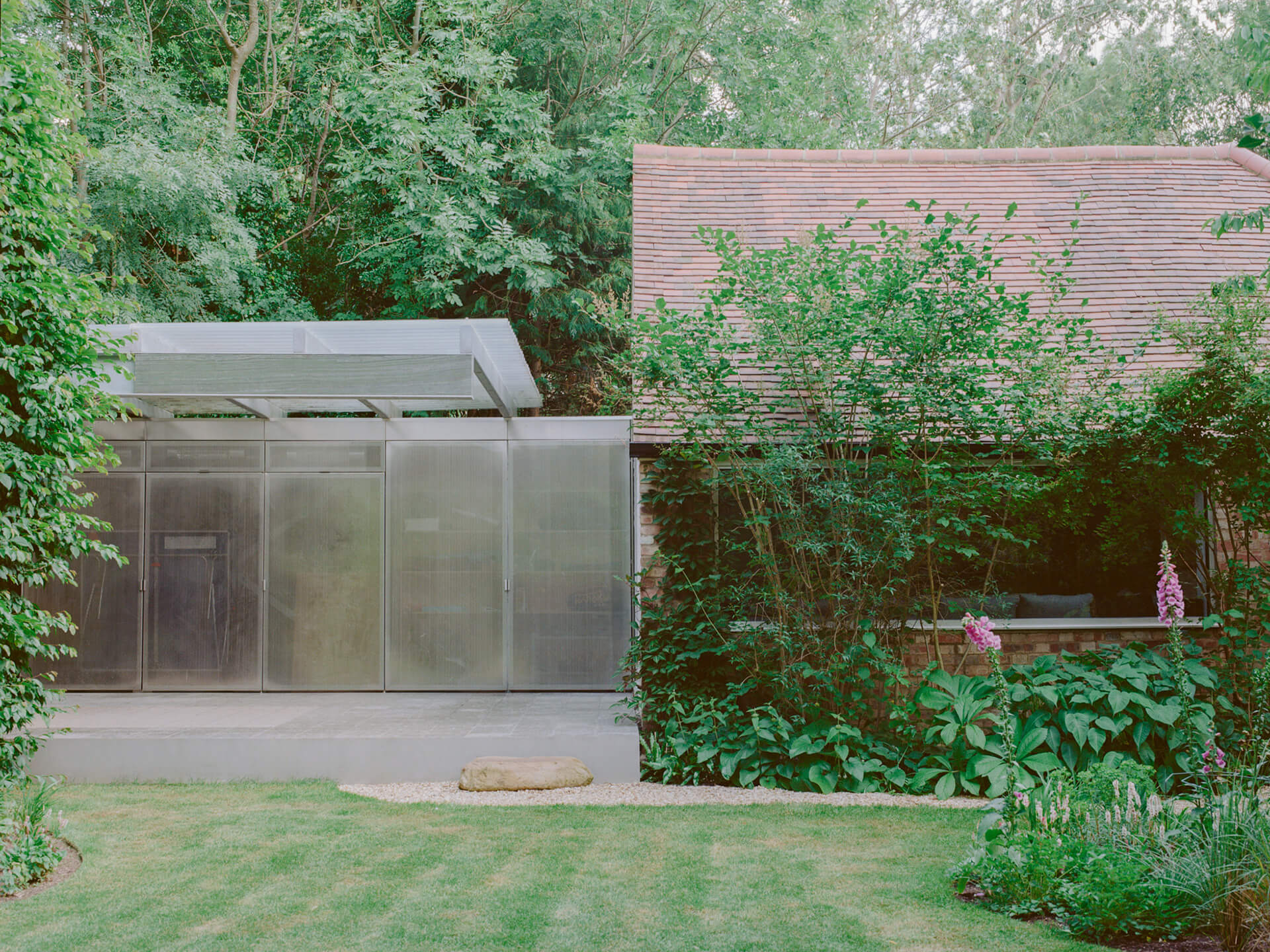
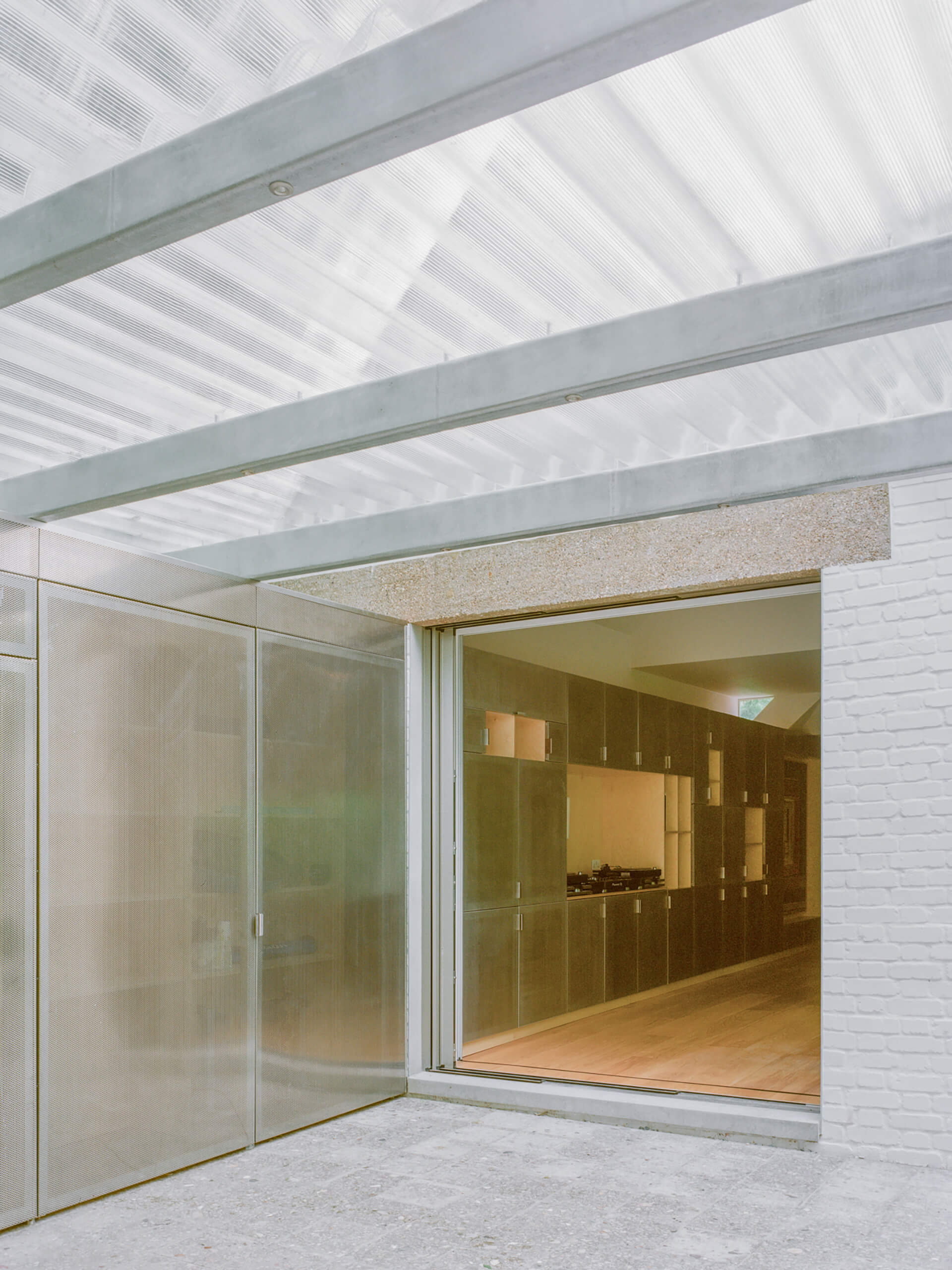
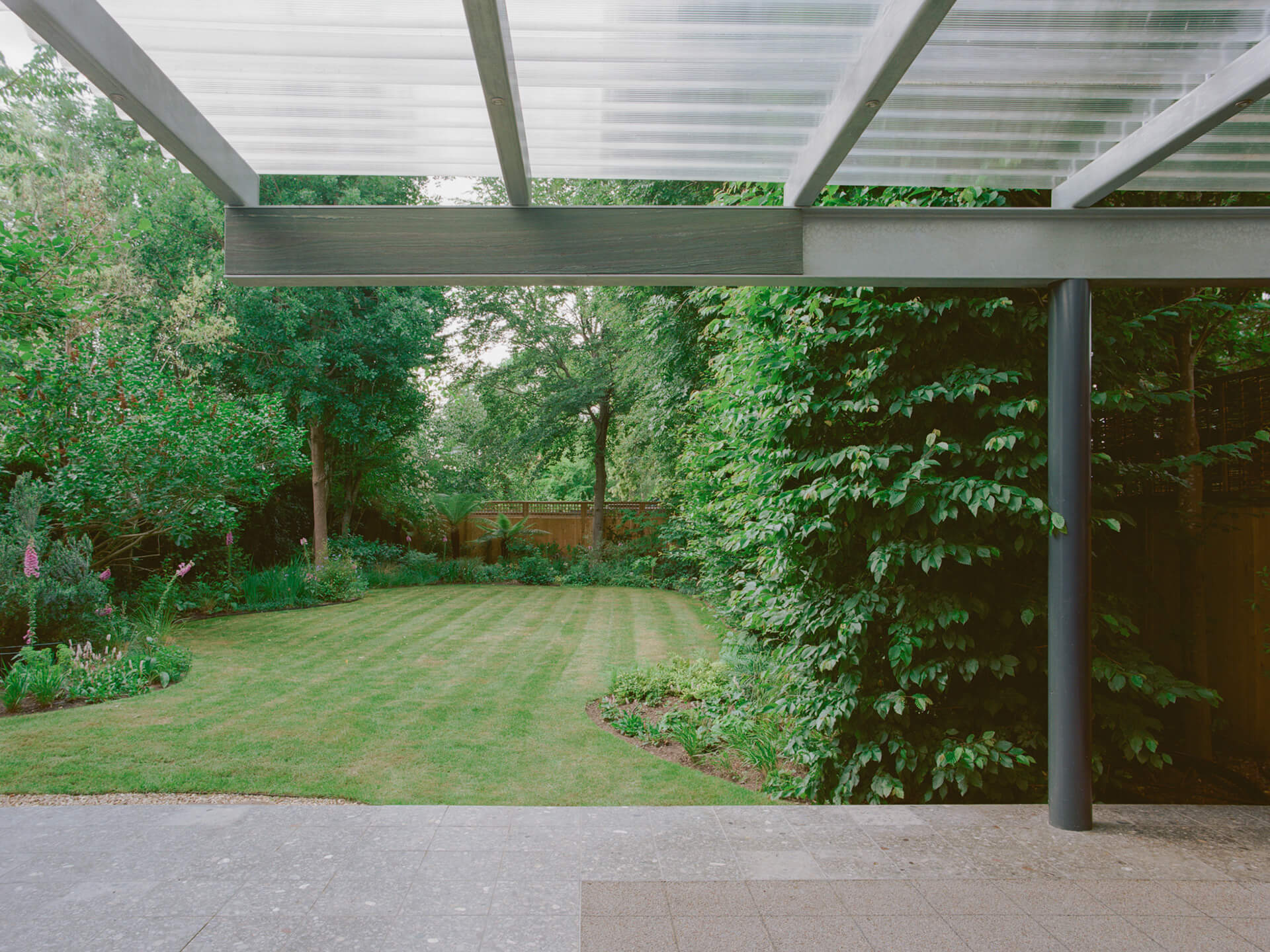
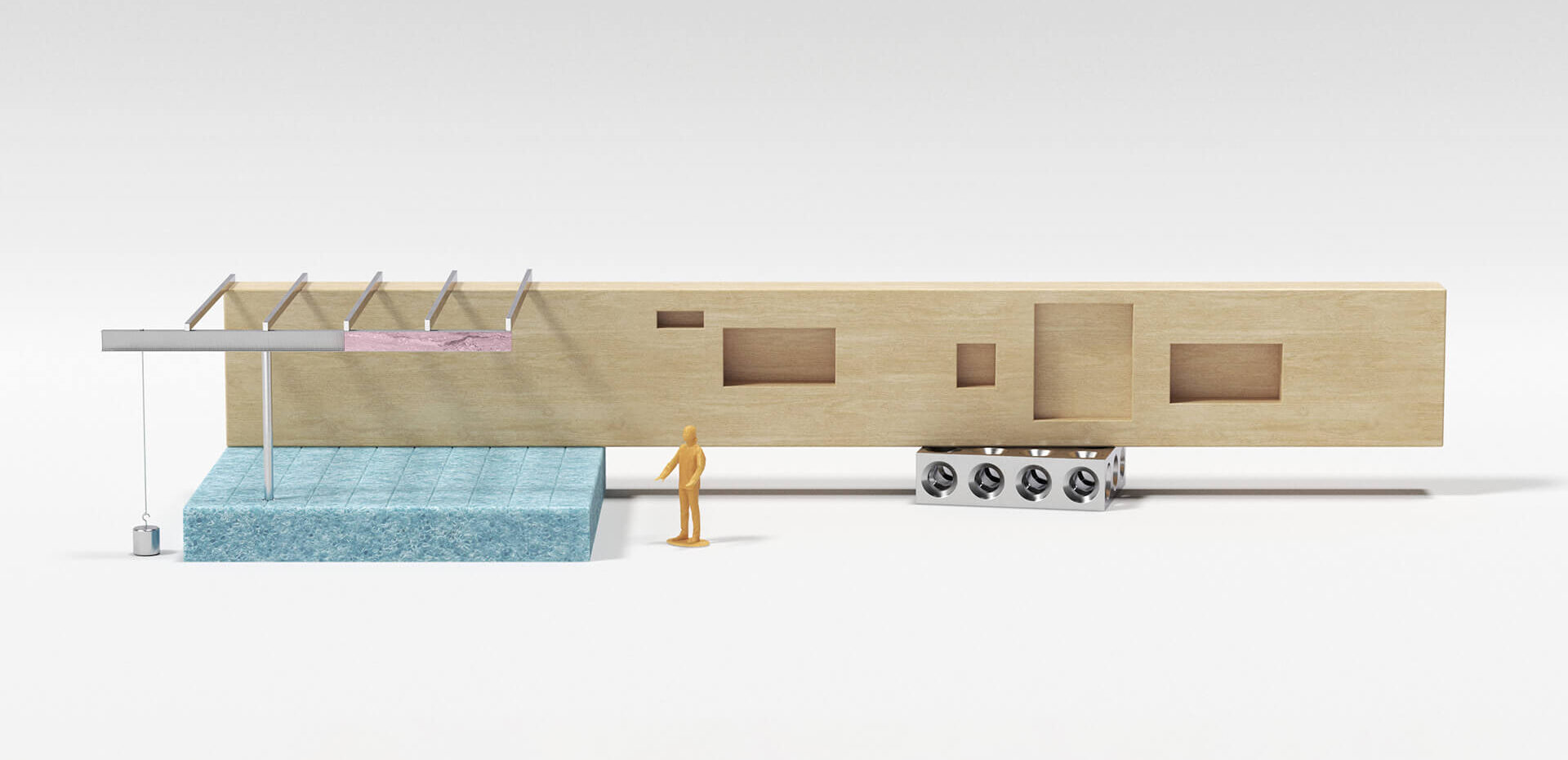
The cabinet operates not only as storage but also as a structural system, supporting the canopy that extends over the outdoor space. The relationship between these elements introduces a deliberate tension, inspired by the precarious compositions of Fischli & Weiss. Rather than adhering to conventional structural logic, the design removes an expected column, redistributing forces through a counterbalancing system.
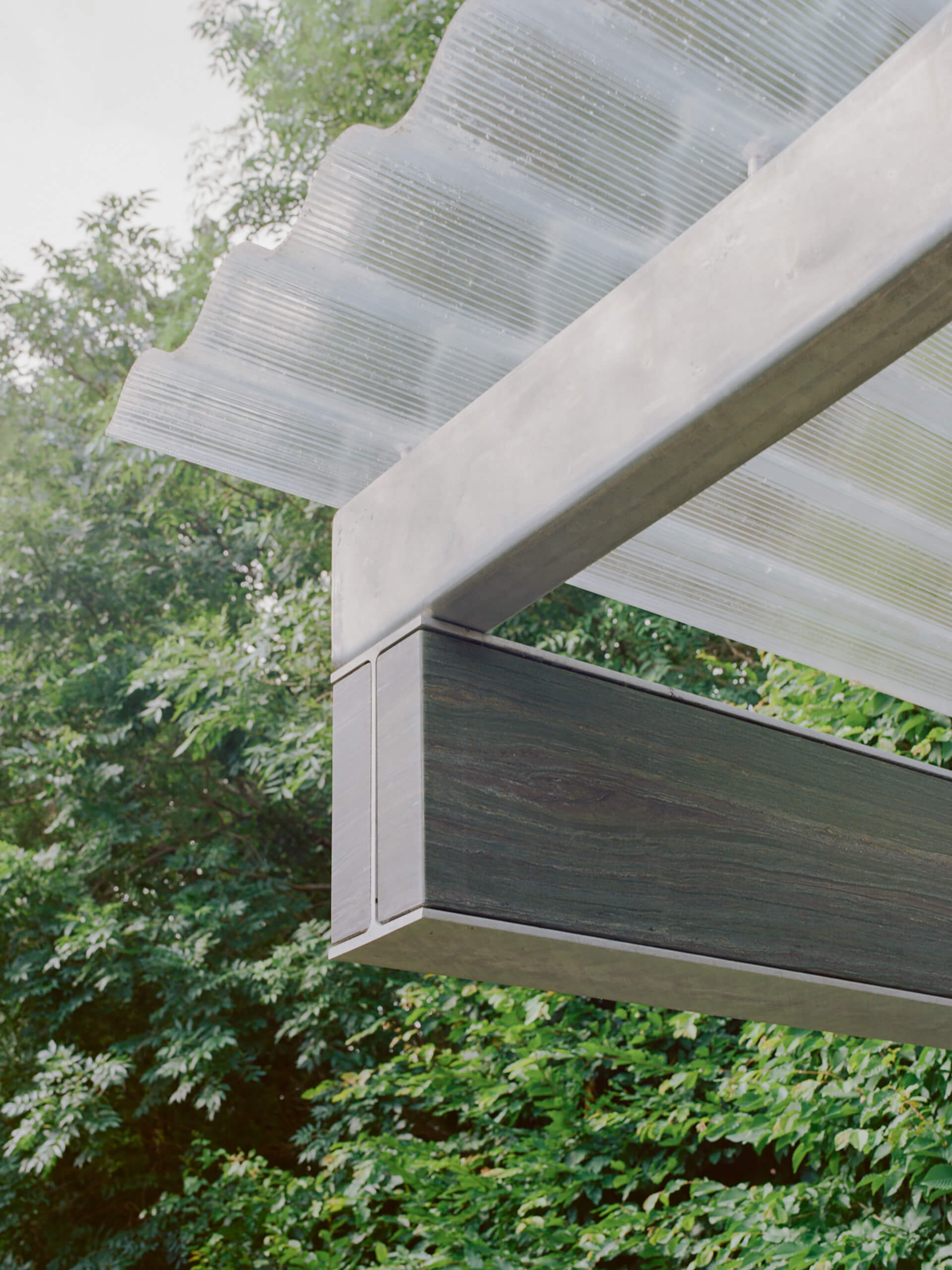
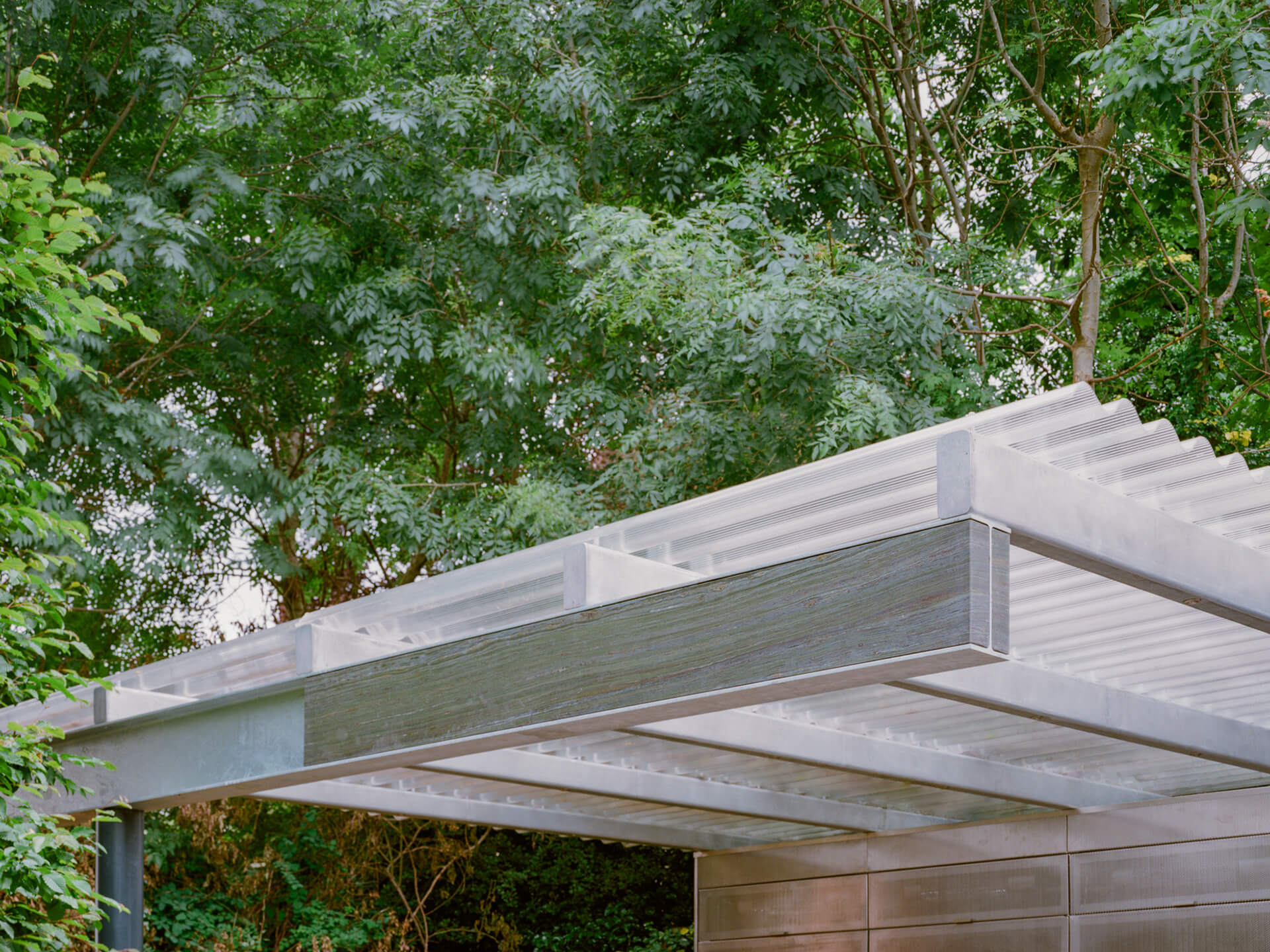
This equilibrium is achieved through a precisely milled marble mass embedded within a galvanized steel I-beam, paired with a tension rod anchored to a concealed concrete block below ground. The resulting configuration establishes a legible yet unconventional structural narrative, where balance is perceived as dynamic and contingent rather than fixed.
Materials & Sustainability
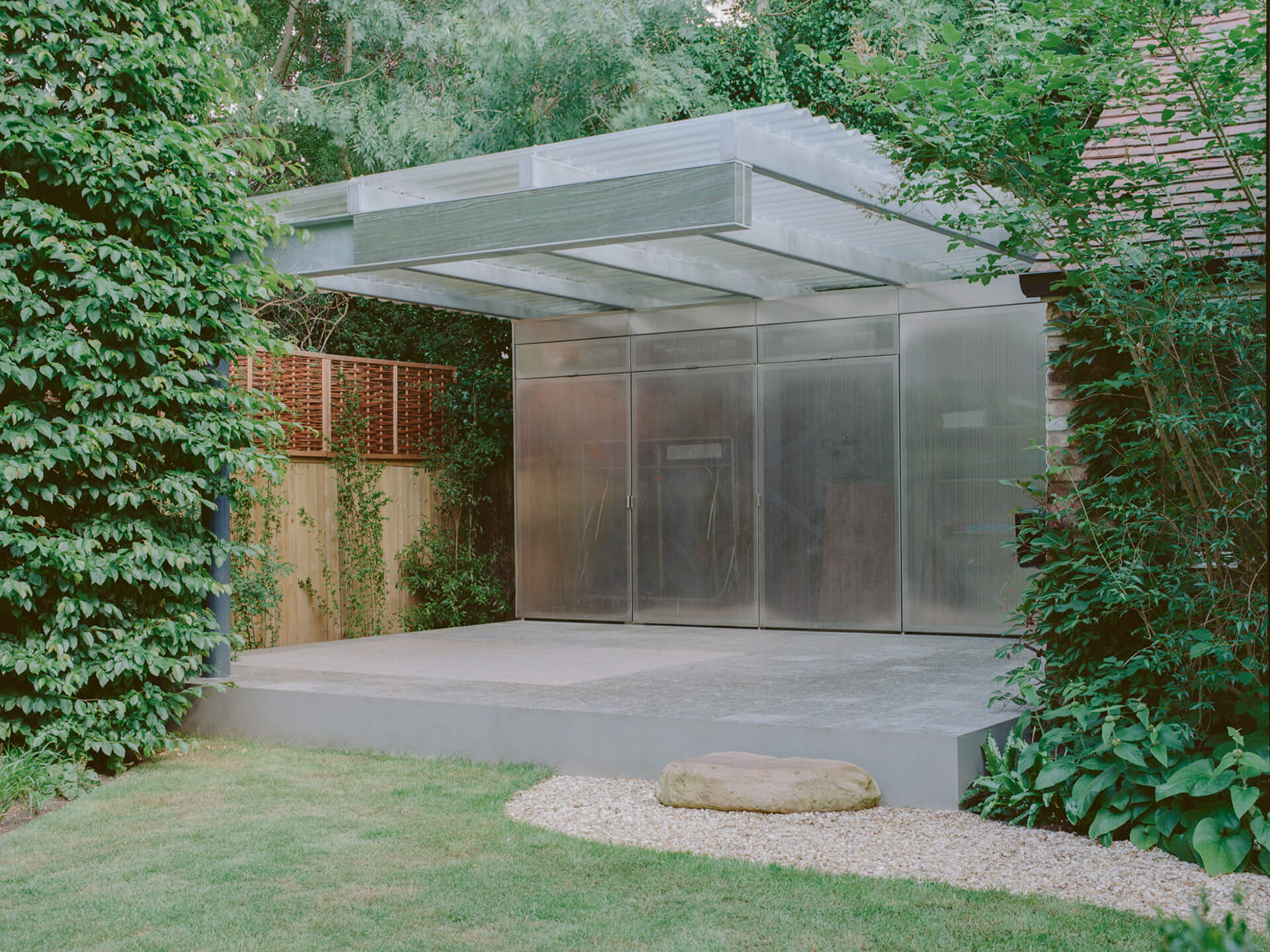
The canopy itself is composed of layered materials – marble, steel, and polycarbonate – articulated in a clear tectonic hierarchy. Stainless steel cladding on the cabinet mirrors the surrounding vegetation, while translucent roofing elements diffuse light into the space below. This material palette oscillates between raw and refined, grounding the project in both industrial precision and environmental responsiveness.
Through reflection, translucency, and spatial extension, the pavilion dissolves the boundary between interior and exterior. It becomes an instrument for observing seasonal and daily changes, where light, vegetation, and built form interact continuously. The project ultimately establishes a condition in which structure, storage, and landscape remain in constant and perceptible dialogue.