Internal connection
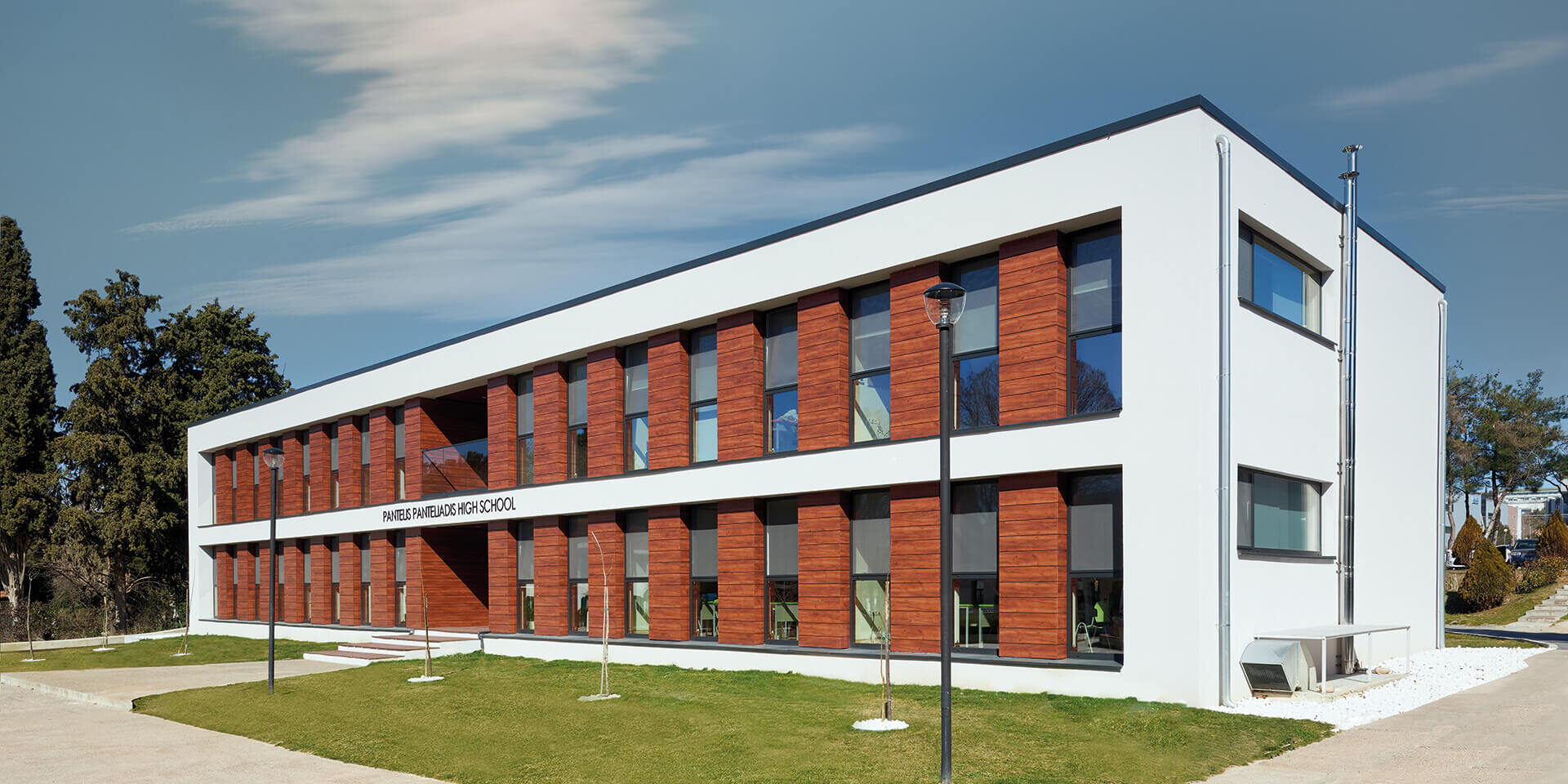
The project concerns the reconfiguration and addition of a new building at the American Farm School, aiming to achieve environmental sustainability and the construction of infrastructure compatible with the existing school buildings, with a strong emphasis on accessibility.
Design Philosophy
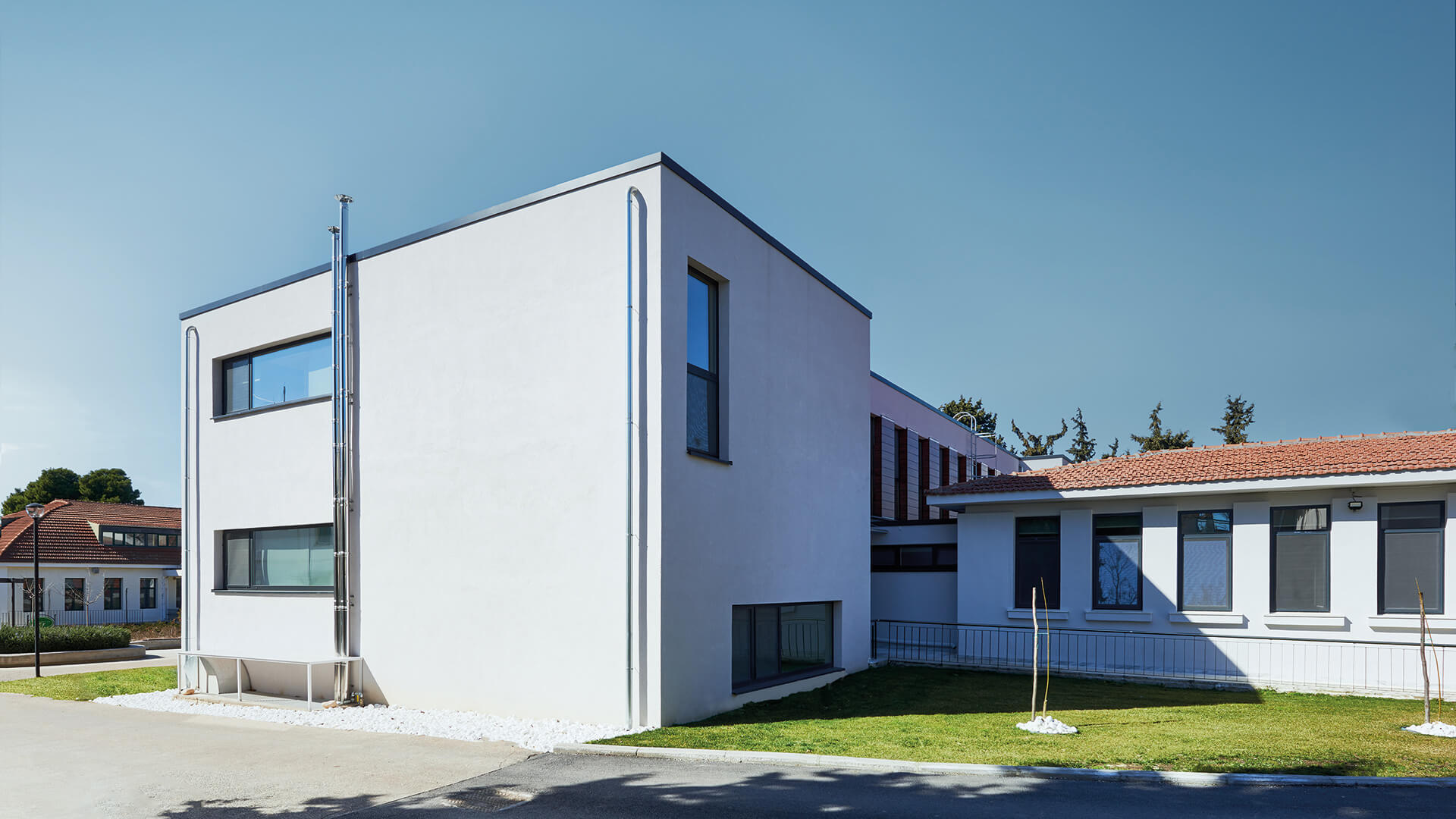
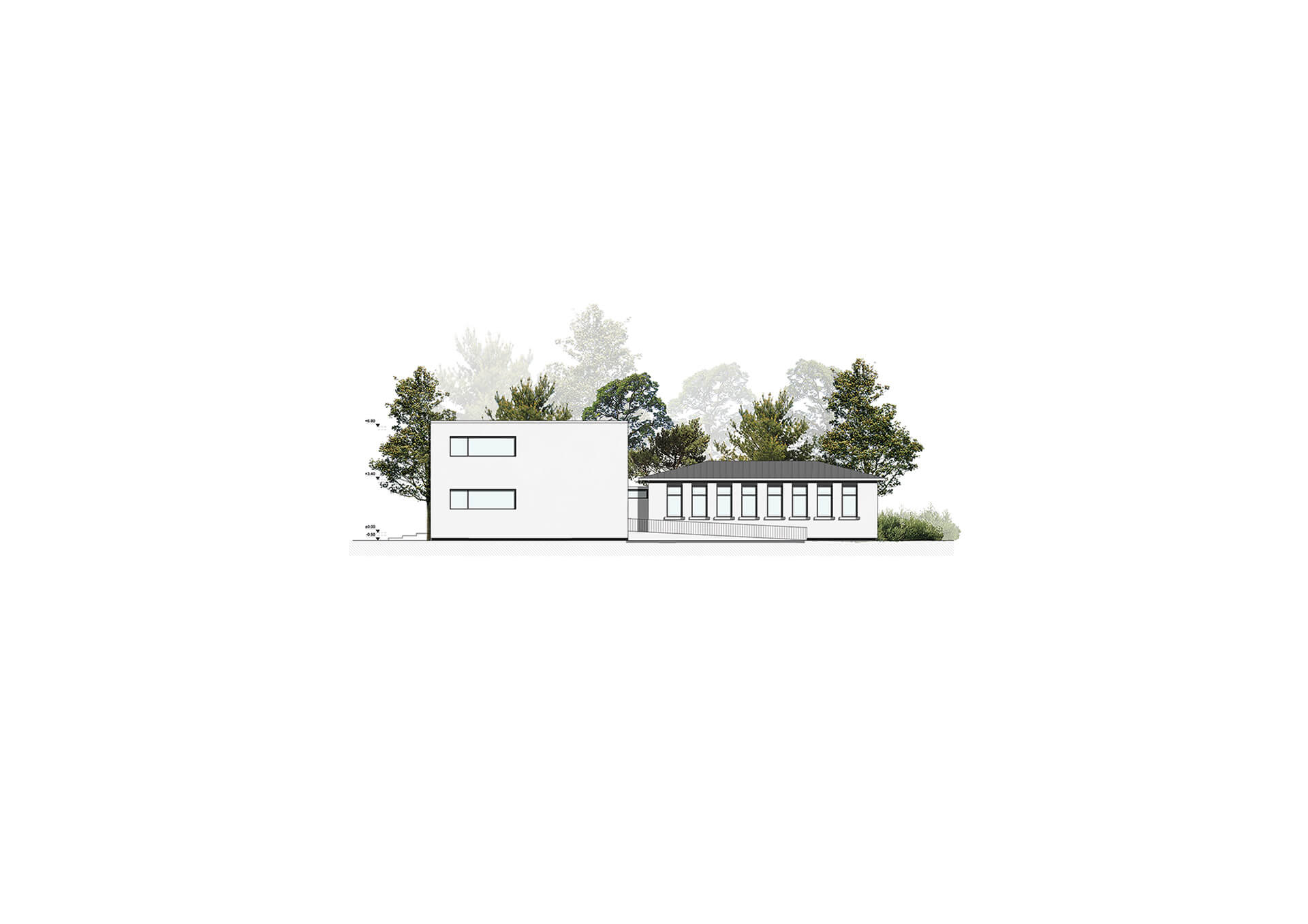
Originally, the school complex consisted of two single-storey buildings constructed in two different phases. The first was set at an elevation of +0.60 m above ground level with a rectangular floor plan, while the second was located at +0.00 m. Communication between the two was provided via staircases, which hindered access for people with disabilities.
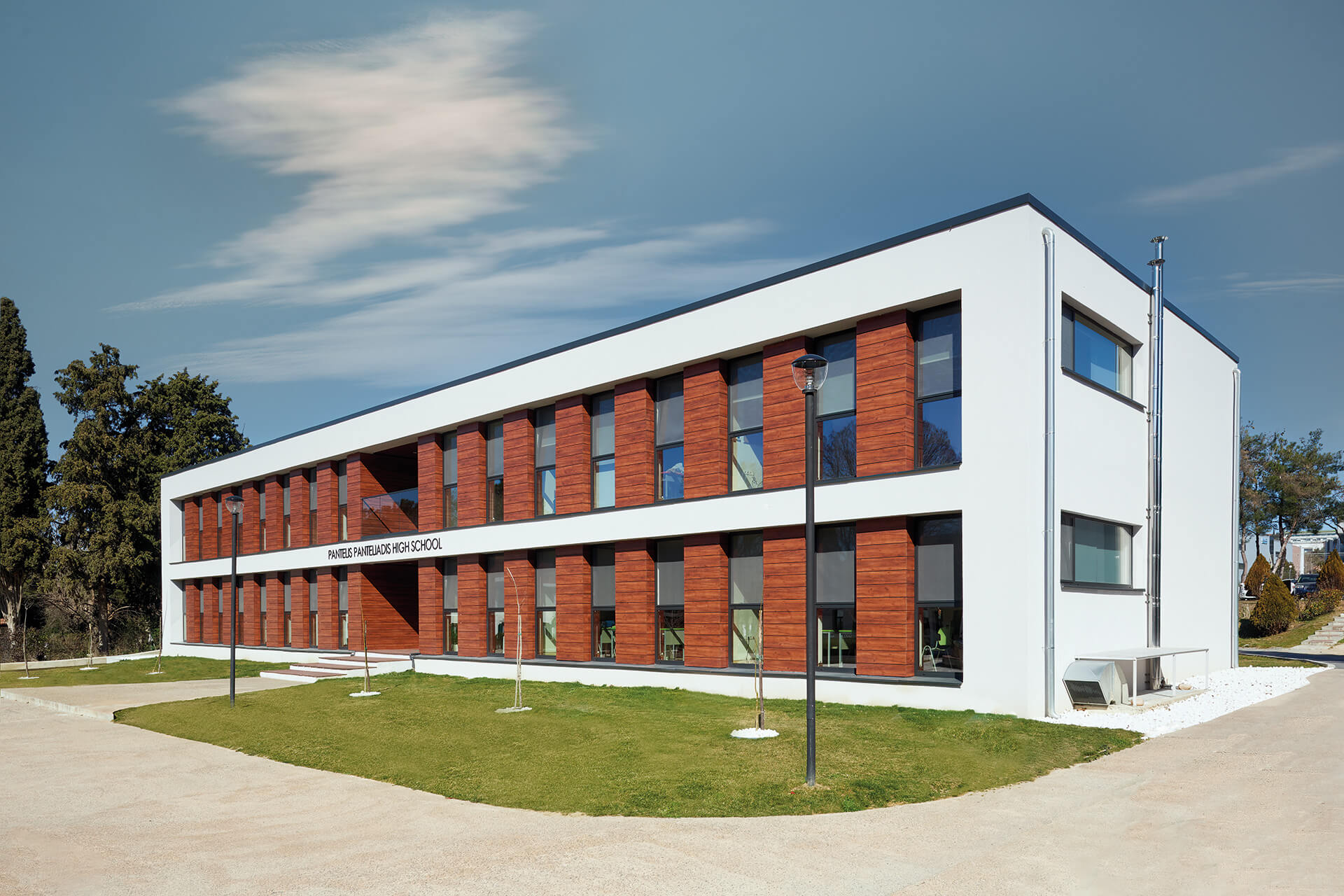
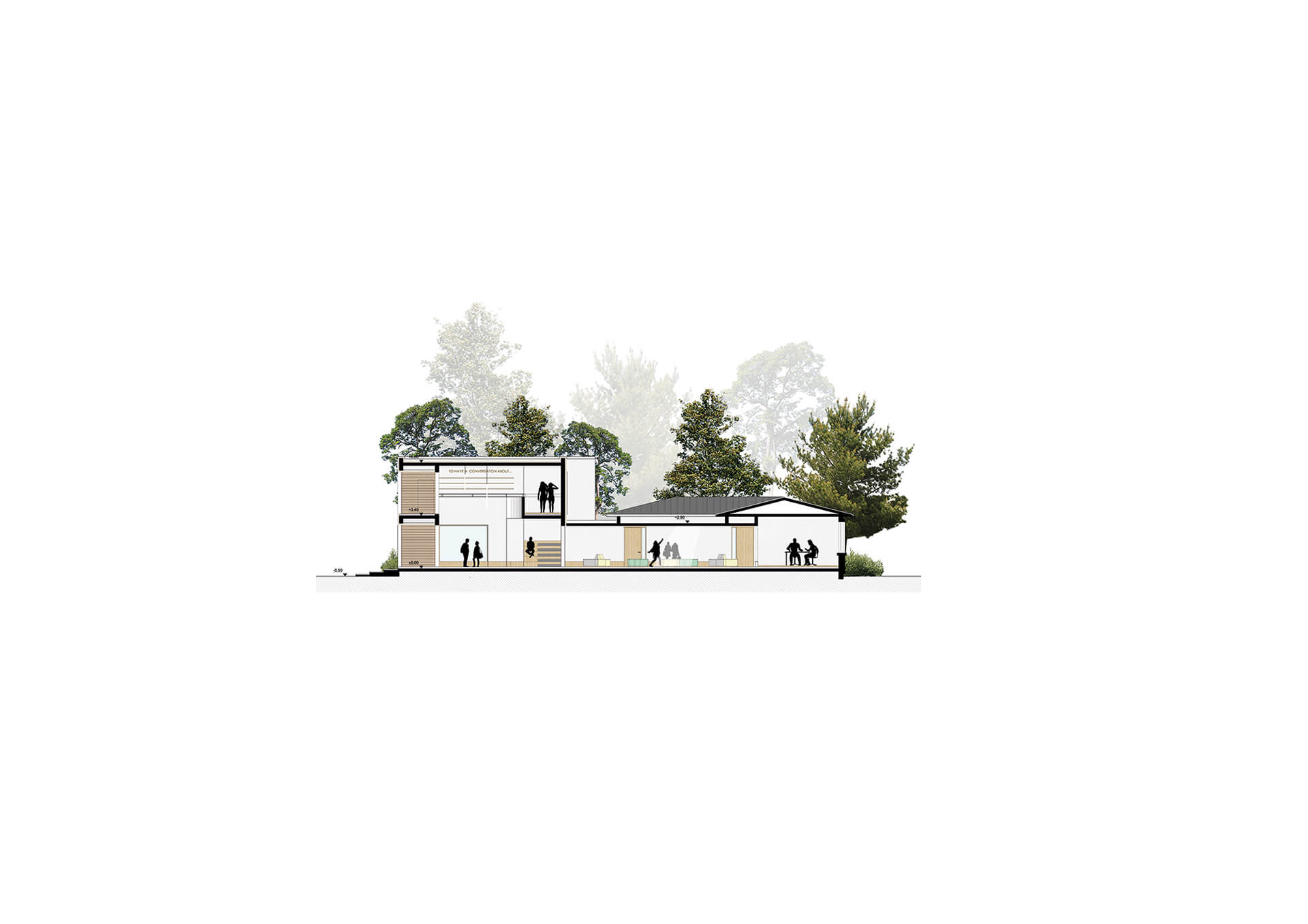
The project proposed the construction of an additional building, funded through a donation by the Panteliadis family, in order to create five additional classrooms, spaces for teaching staff, and an internal shared zone for breaks. The optimal solution involved replacing the building located at +0.60 m with a new two-storey linear building at ground level, allowing for an internal connection between the two units.
Functional Organization
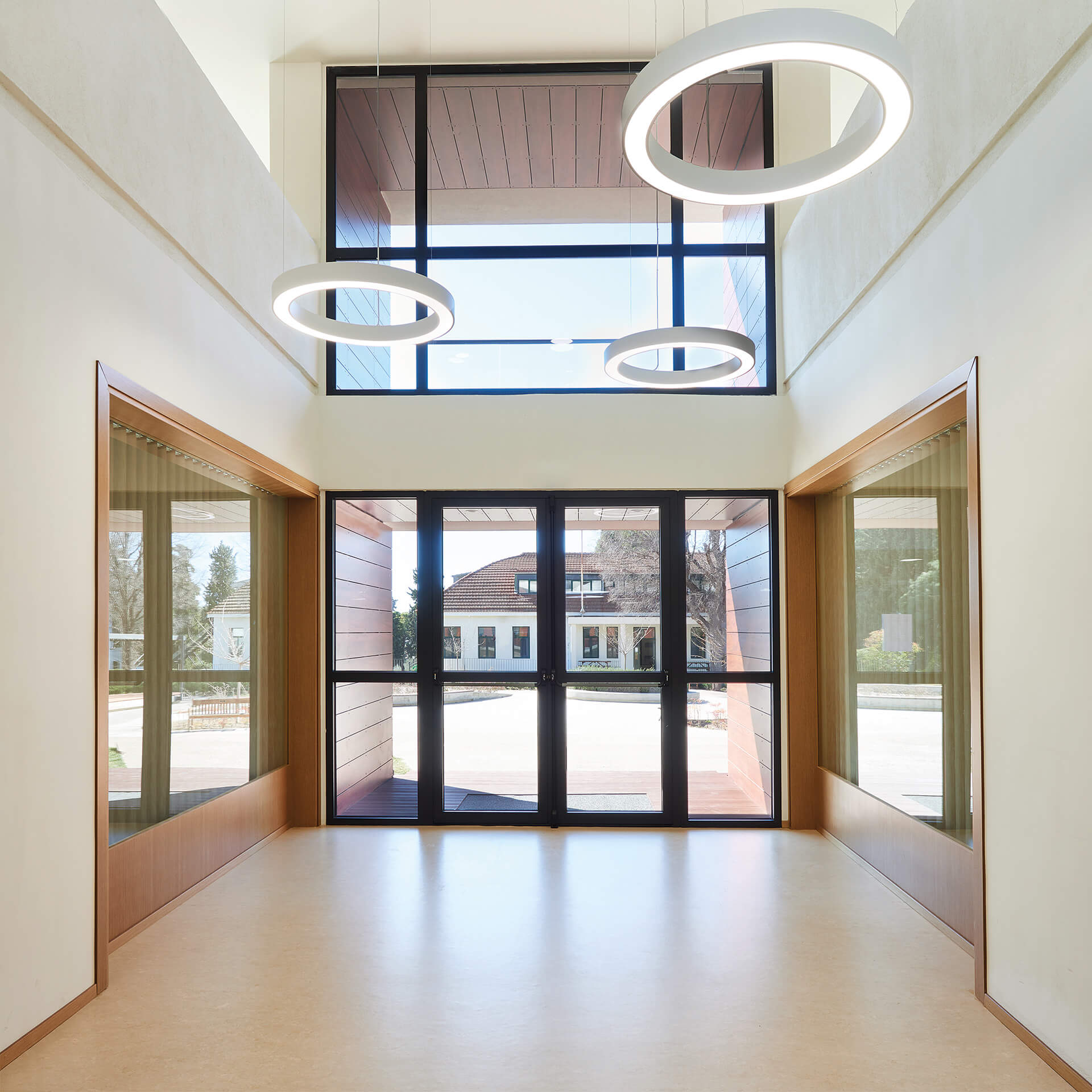
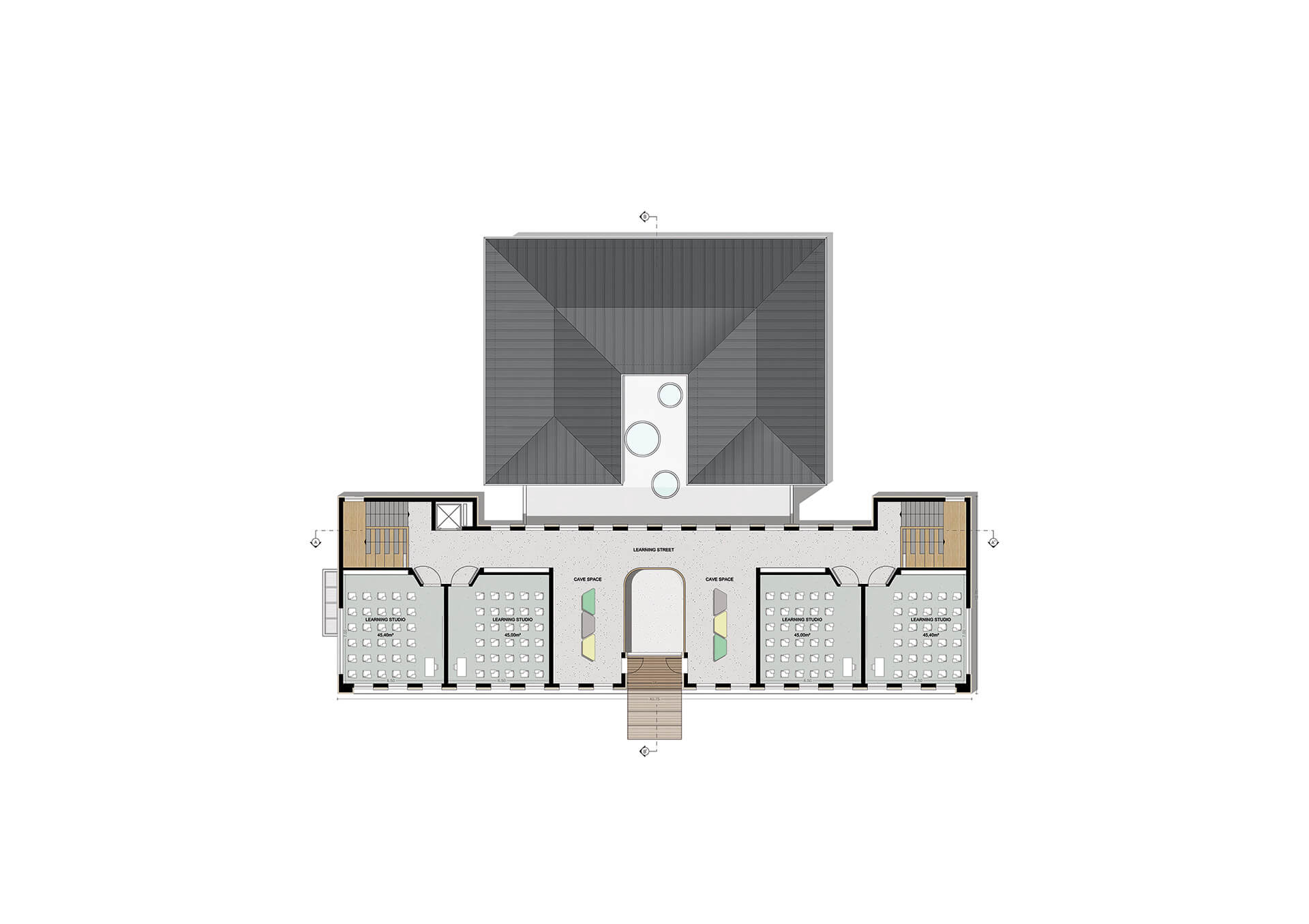
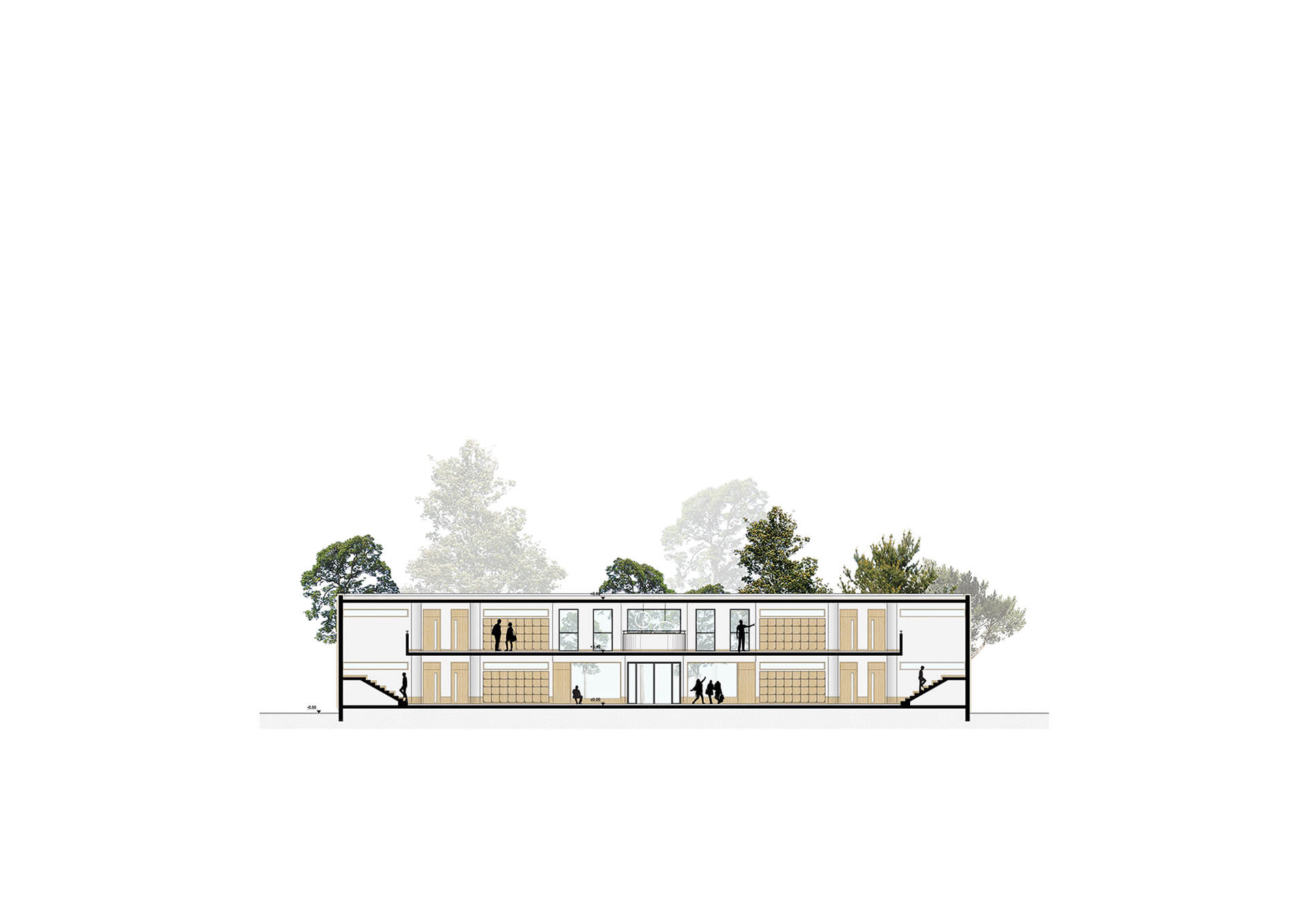
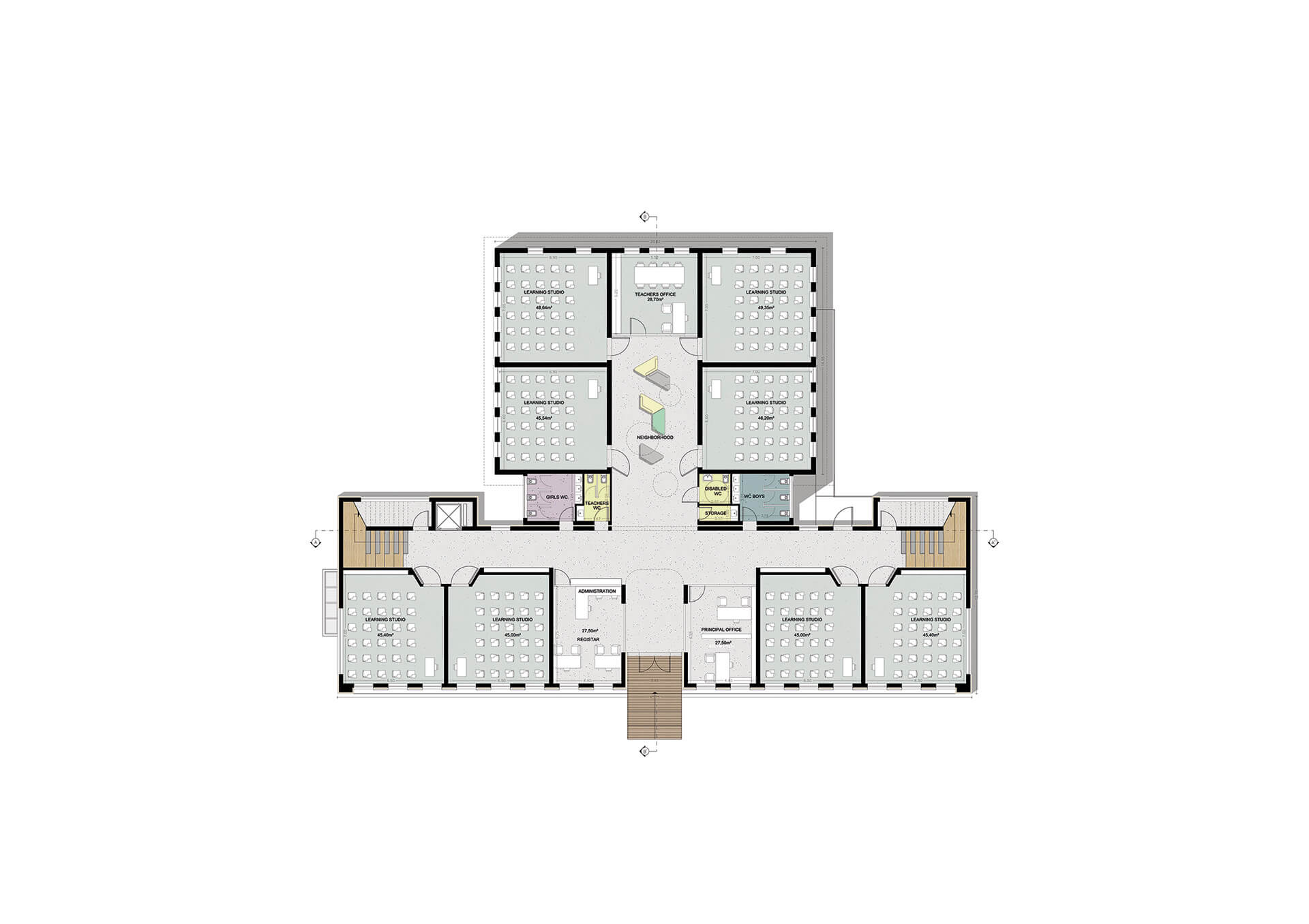
Access to the new building is provided through its central section, marked by a large double-height opening. On either side of the entrance are two administrative offices, while along the rear elevation runs the main circulation axis, which distributes access to the classrooms and terminates at two staircases – one on each side – leading to the upper floor.
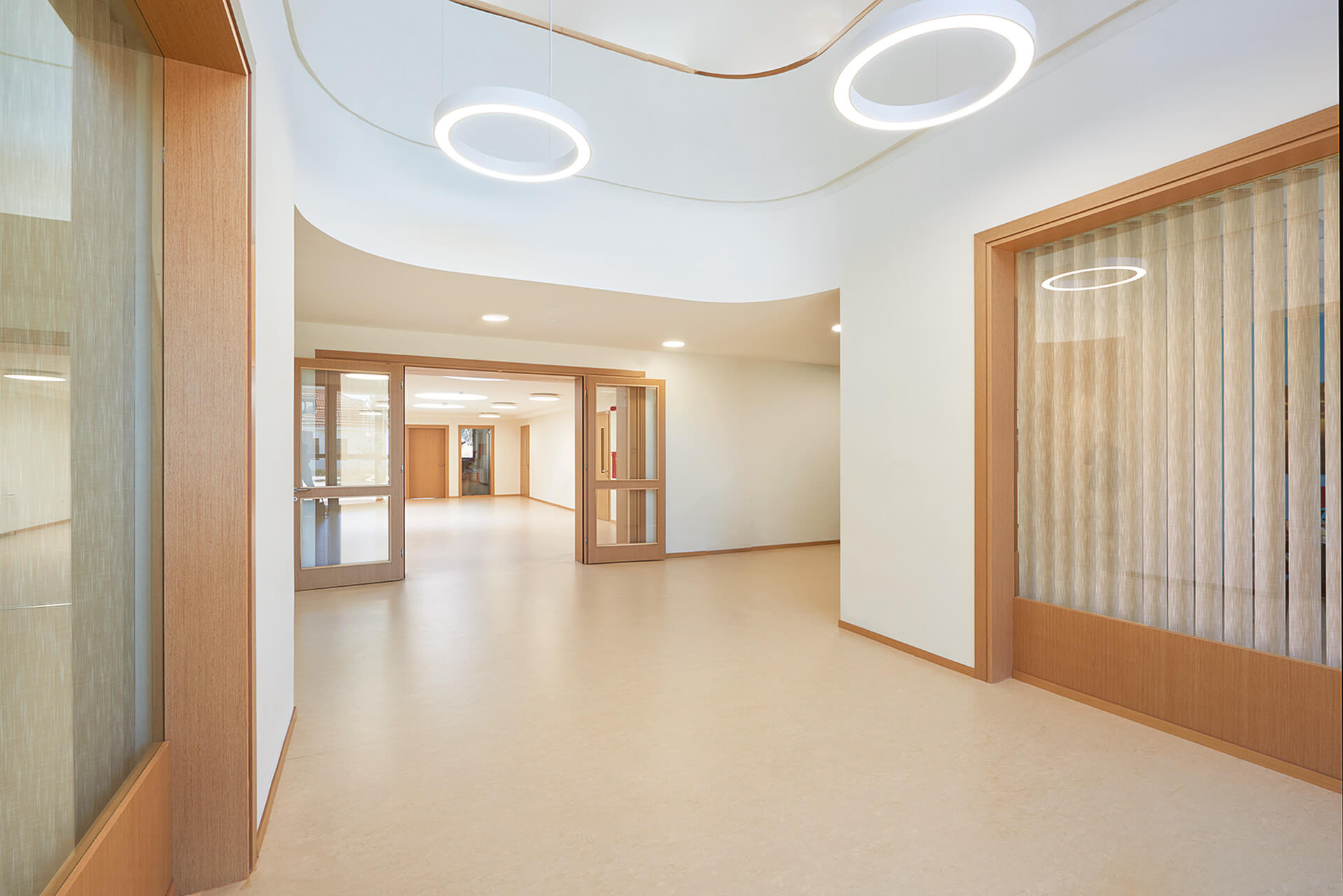
Along the extension of the entrance axis, the connection between the two buildings is established, forming an internal shared space for recreation. Classrooms and teachers’ rooms are arranged around this area, while auxiliary functions and restrooms are located at the junction of the two units.
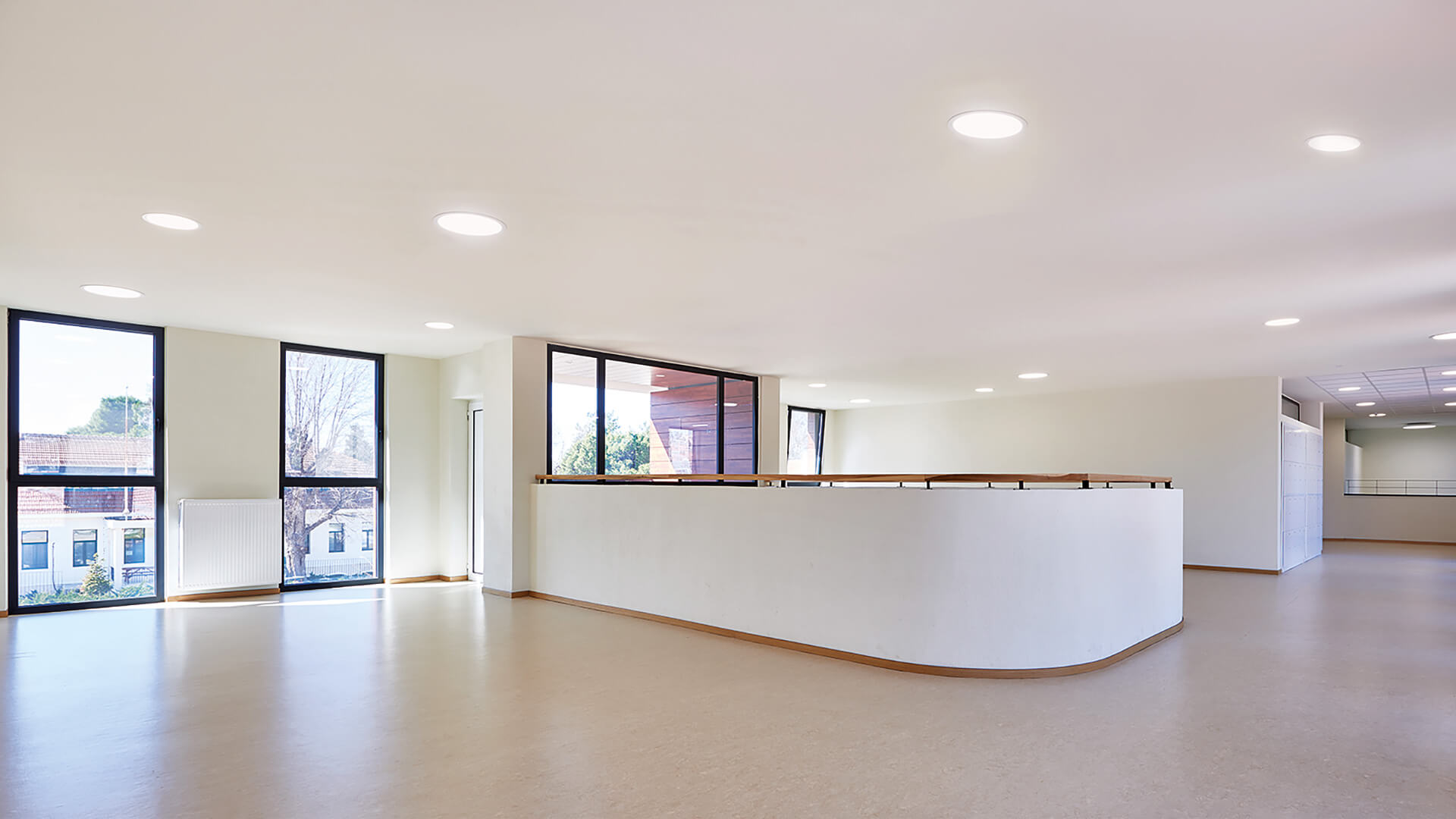
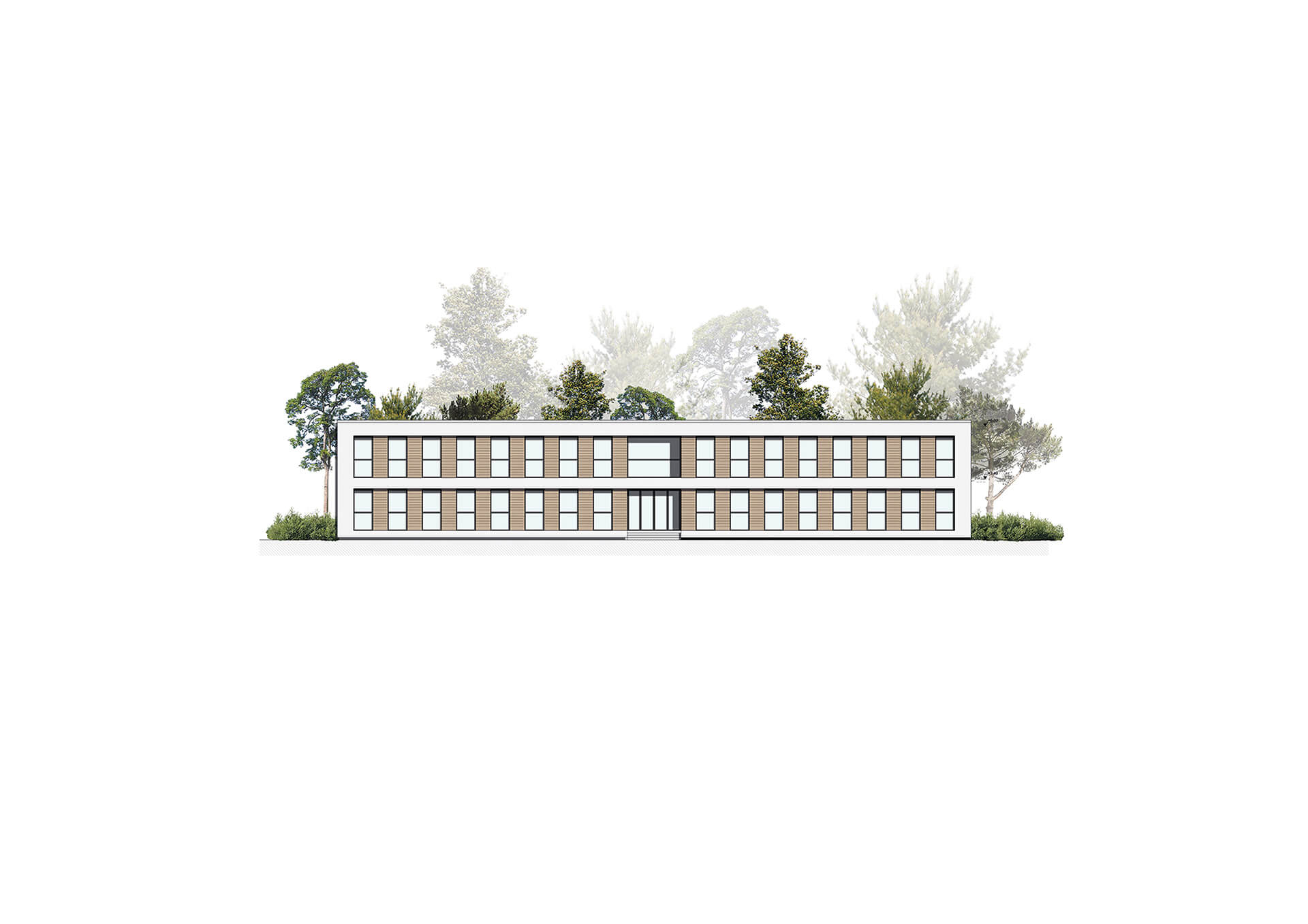
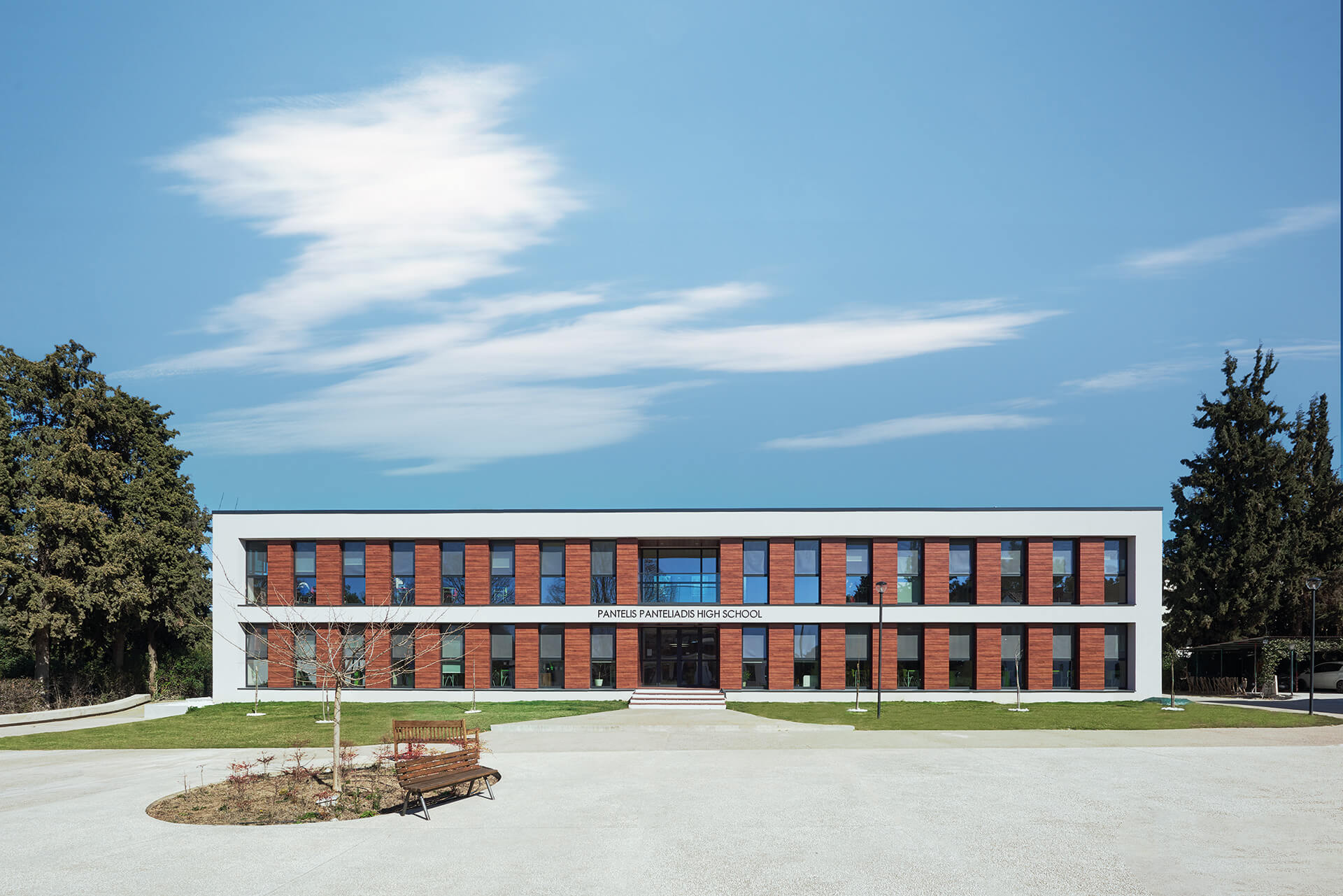
The new two-storey building accommodates a total of eight classrooms—four on each level—arranged in sequence along the front façade so that all enjoy natural daylight and views towards the square in front of the building complex. On the upper floor, smaller-scale shared zones were created, along with a double-height void positioned directly above the entrance area.
Façade Design & Sustainability
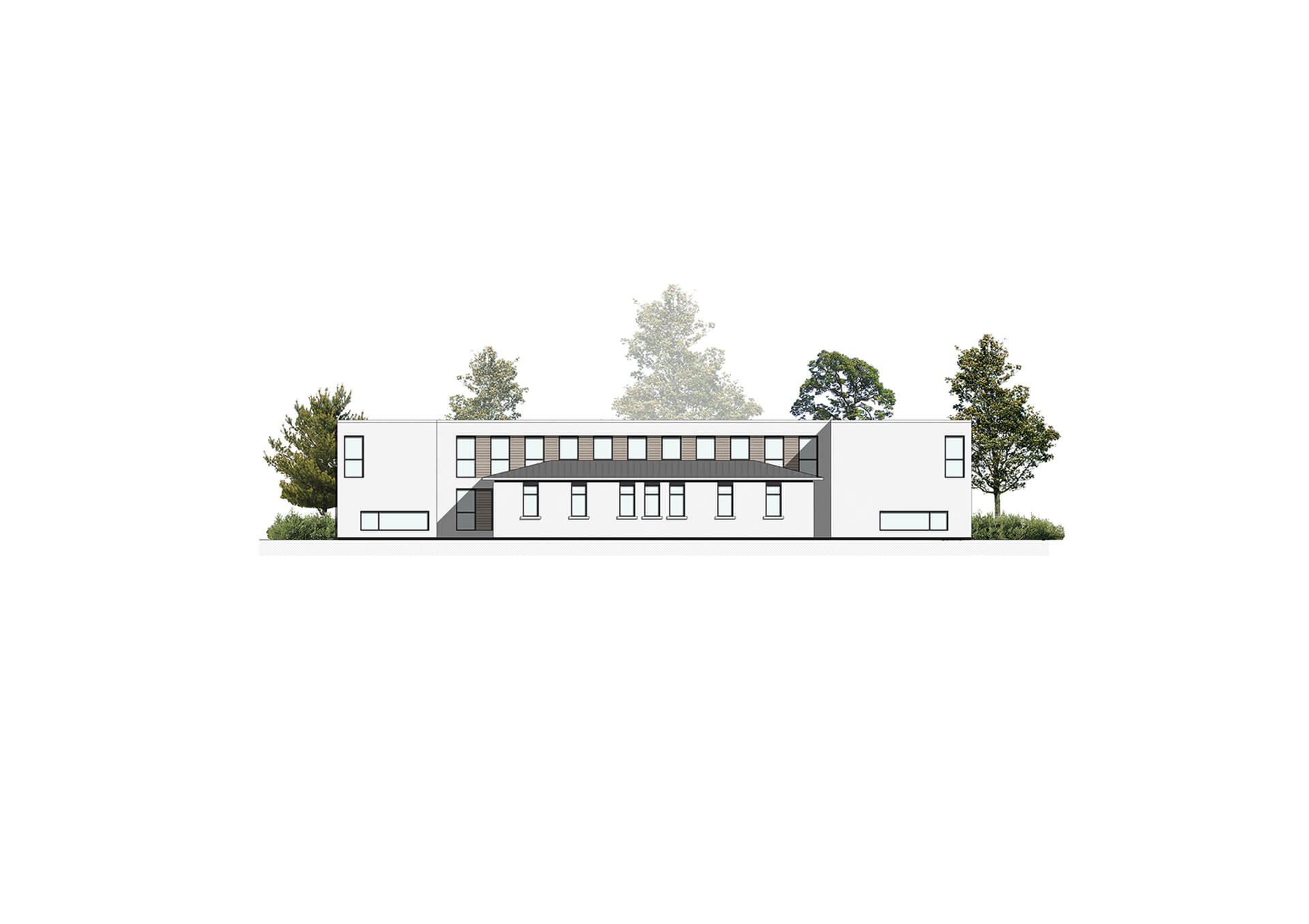
The façade of the new building was designed to be compatible with the morphology of the adjacent volume. Openings are of limited width and positioned at regular intervals, in accordance with national building regulations.
Overall, the design aims to reduce the building’s energy footprint during both construction and operation. At the same time, the new addition ensures the preservation of the existing outdoor layout, maintaining extensive green areas.
The architectural study was awarded first prize in the architectural competition organized by the American Farm School.
https://ek-mag.com/wp-content/uploads/2026/02/00-cover-1.jpg
https://ek-mag.com/wp-content/uploads/2026/02/01-1.jpg
https://ek-mag.com/wp-content/uploads/2026/02/02-1.jpg
https://ek-mag.com/wp-content/uploads/2026/02/03-1.jpg
https://ek-mag.com/wp-content/uploads/2026/02/04-1.jpg
https://ek-mag.com/wp-content/uploads/2026/02/05-1.jpg
https://ek-mag.com/wp-content/uploads/2026/02/06-1.jpg
https://ek-mag.com/wp-content/uploads/2026/02/07-1.jpg
https://ek-mag.com/wp-content/uploads/2026/02/08-1.jpg
https://ek-mag.com/wp-content/uploads/2026/02/09-1.jpg
https://ek-mag.com/wp-content/uploads/2026/02/10-1.jpg
https://ek-mag.com/wp-content/uploads/2026/02/11-1.jpg
https://ek-mag.com/wp-content/uploads/2026/02/12-1.jpg
https://ek-mag.com/wp-content/uploads/2026/02/13-1.jpg
Related Posts