Porcelain Factory Plugin Revival in China
Architecture:
People’s Architecture Office, Liu Kecheng Design Studio
Photography:
Located in the heart of Jingdezhen’s Imperial Kiln Historic District, the regeneration of a former porcelain factory complex proposes a contemporary strategy for historic preservation through what the architects describe as a “Plugin Architecture” approach. Rather than replacing the existing structures, the intervention introduces new architectural insertions within and around the historic fabric, revitalizing the site while maintaining its cultural and spatial continuity. Jingdezhen – renowned as China’s “Porcelain Capital” – has been associated with porcelain production for more than a millennium, making the careful integration of new architectural elements within this context particularly significant.
Design Philosophy
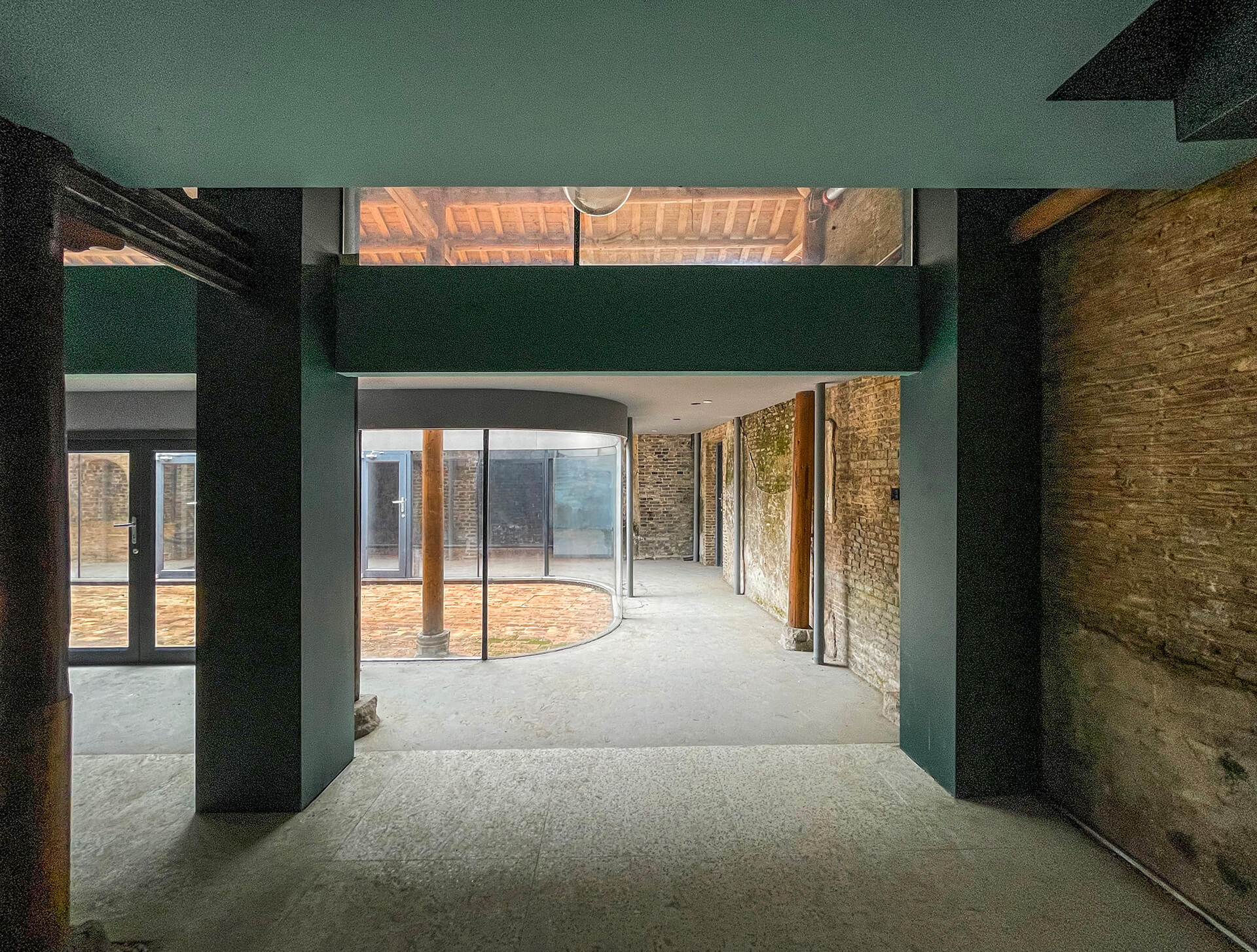
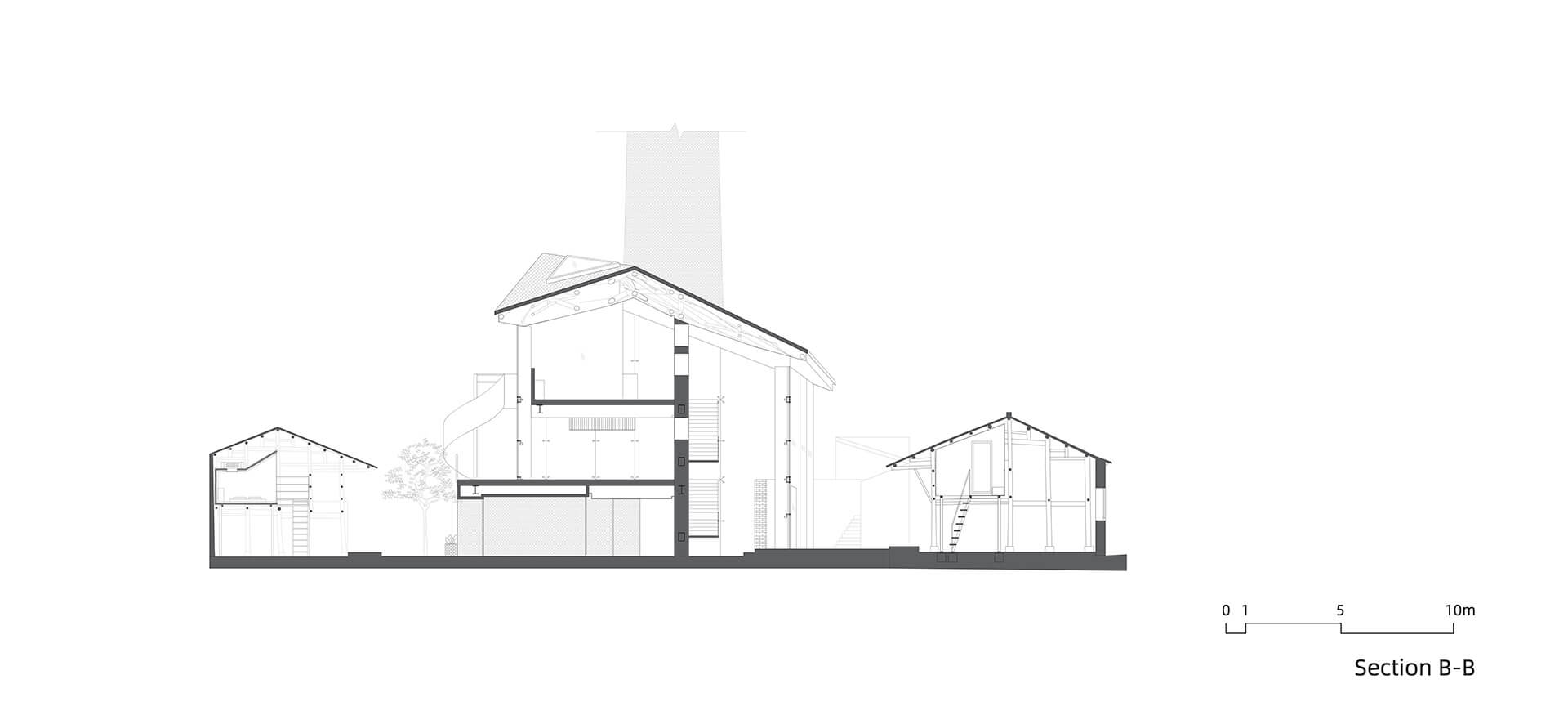
The core concept of the project is based on a system of architectural “plugins”— new spatial modules inserted into existing buildings to enhance functionality while preserving their historic character. These contemporary interventions upgrade the aging workshops and support structures to accommodate new programs such as offices, meeting rooms and guest accommodations.
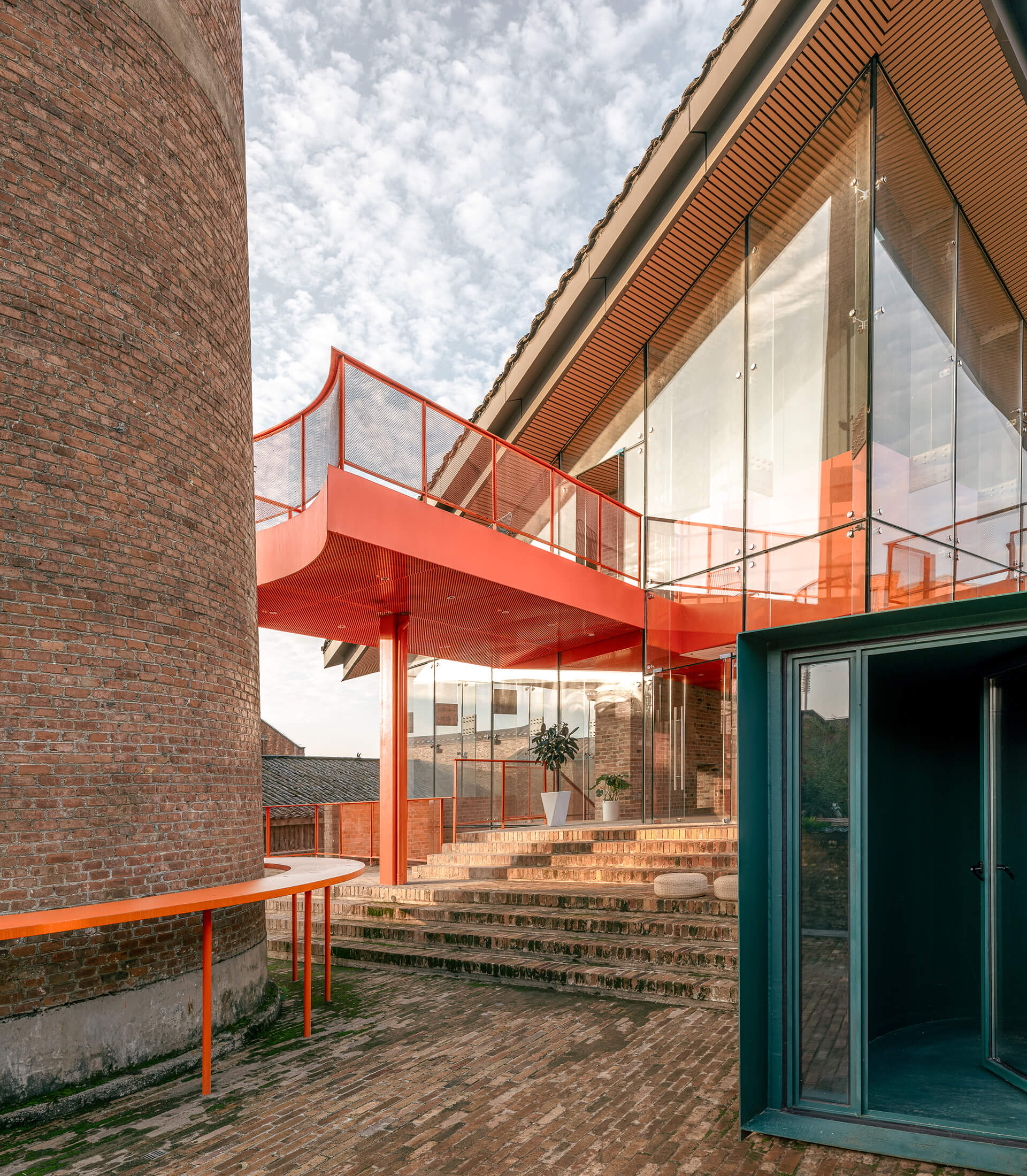
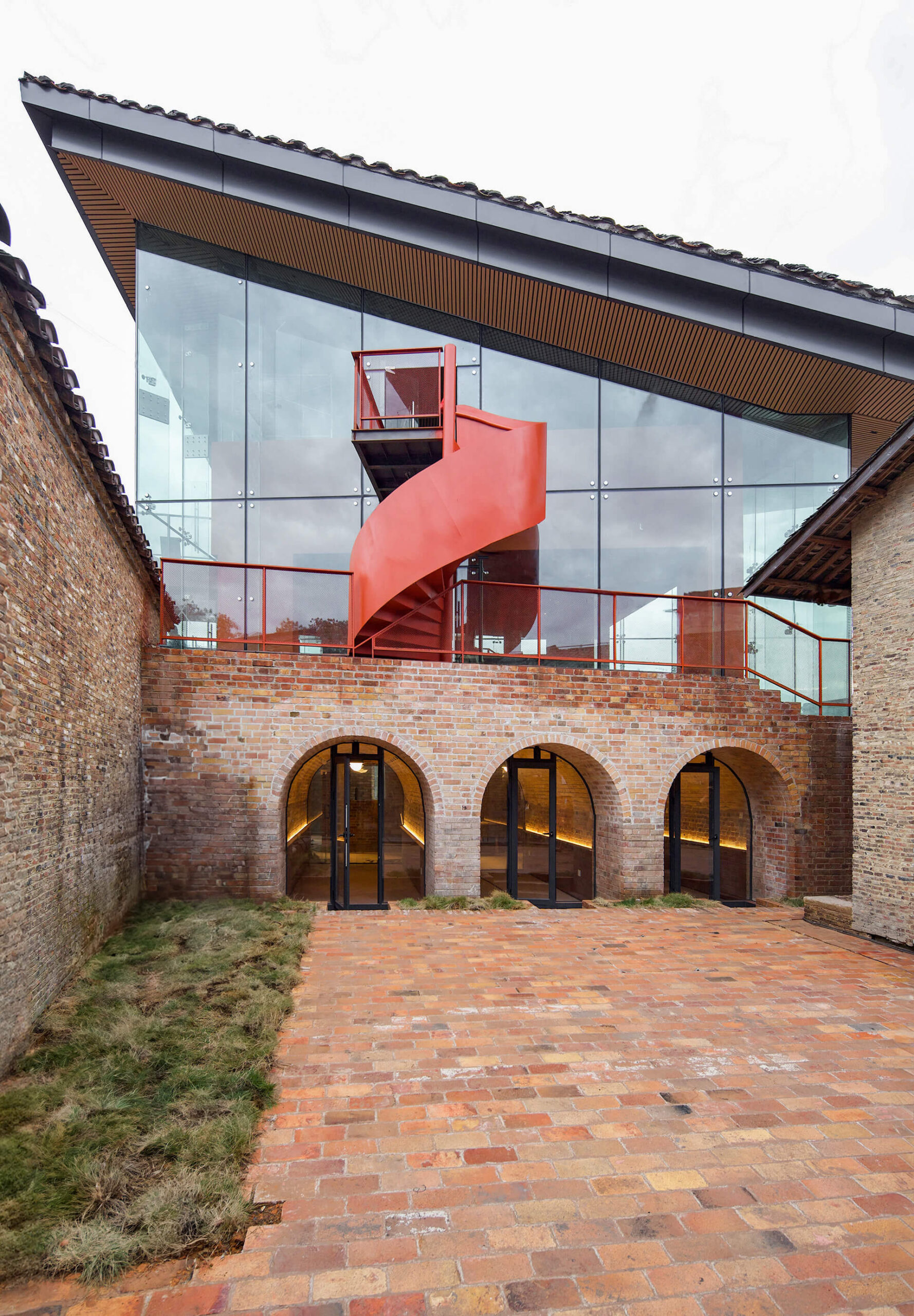
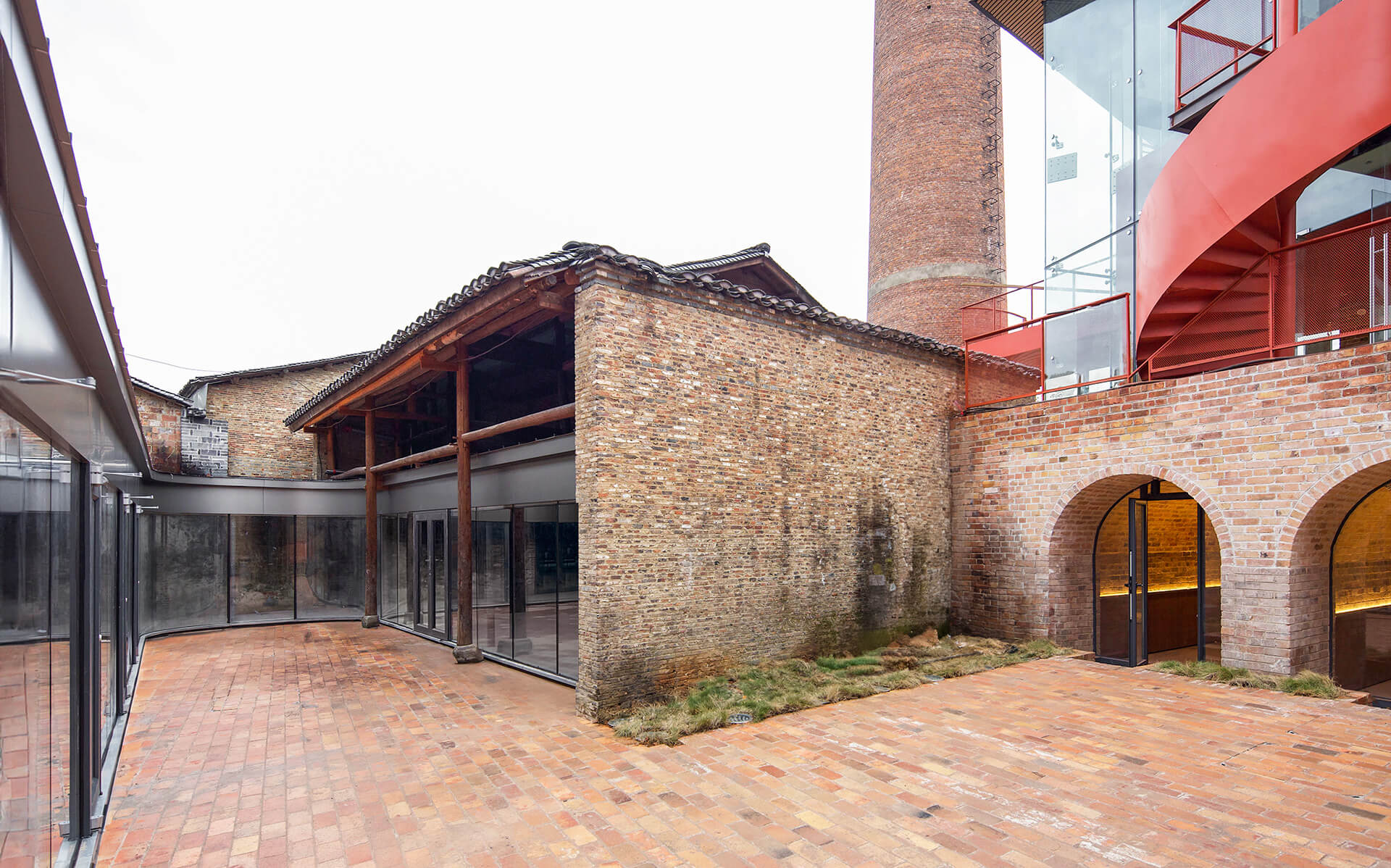
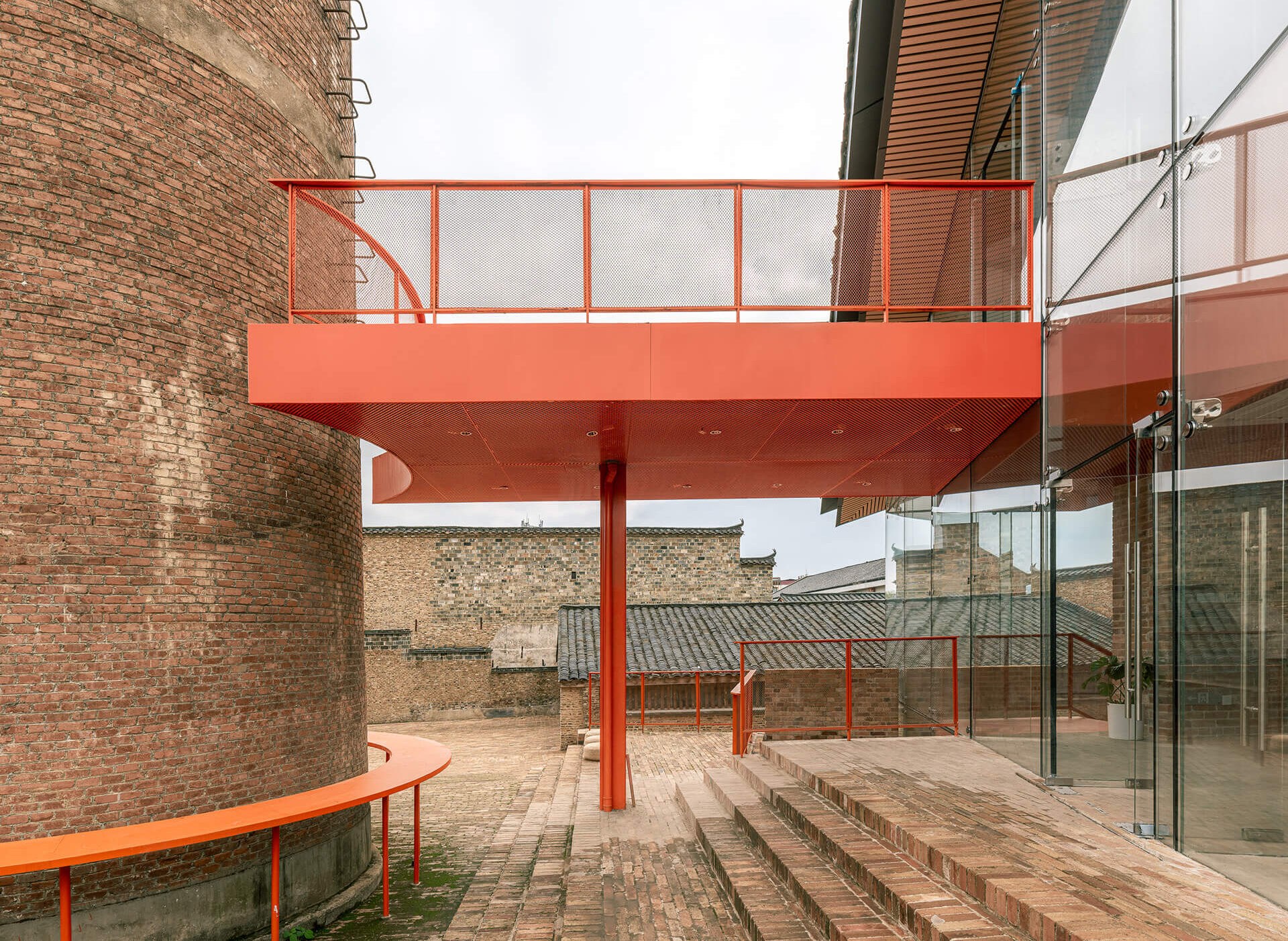
Rather than imitating historical forms, the inserted modules are intentionally expressed as modern architectural elements. Their clear visual distinction establishes a dialogue between old and new, reinforcing the layered history of the site while enabling the complex to function as a contemporary cultural destination. Circulation elements such as staircases and walkways are introduced both inside and outside the structures, improving connectivity and enabling the adaptive reuse of previously fragmented spaces.
Glass Pavilion & Lighting
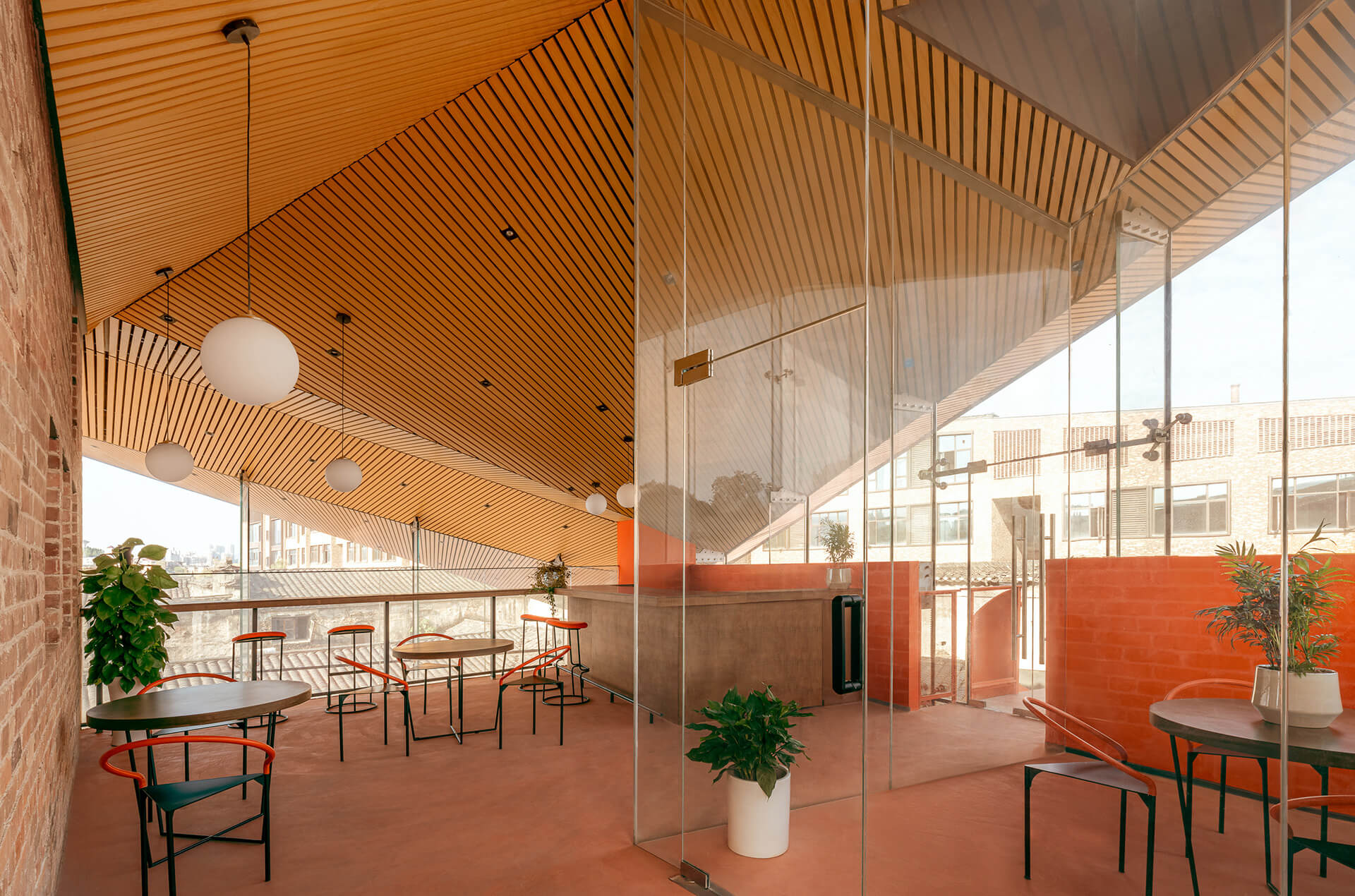
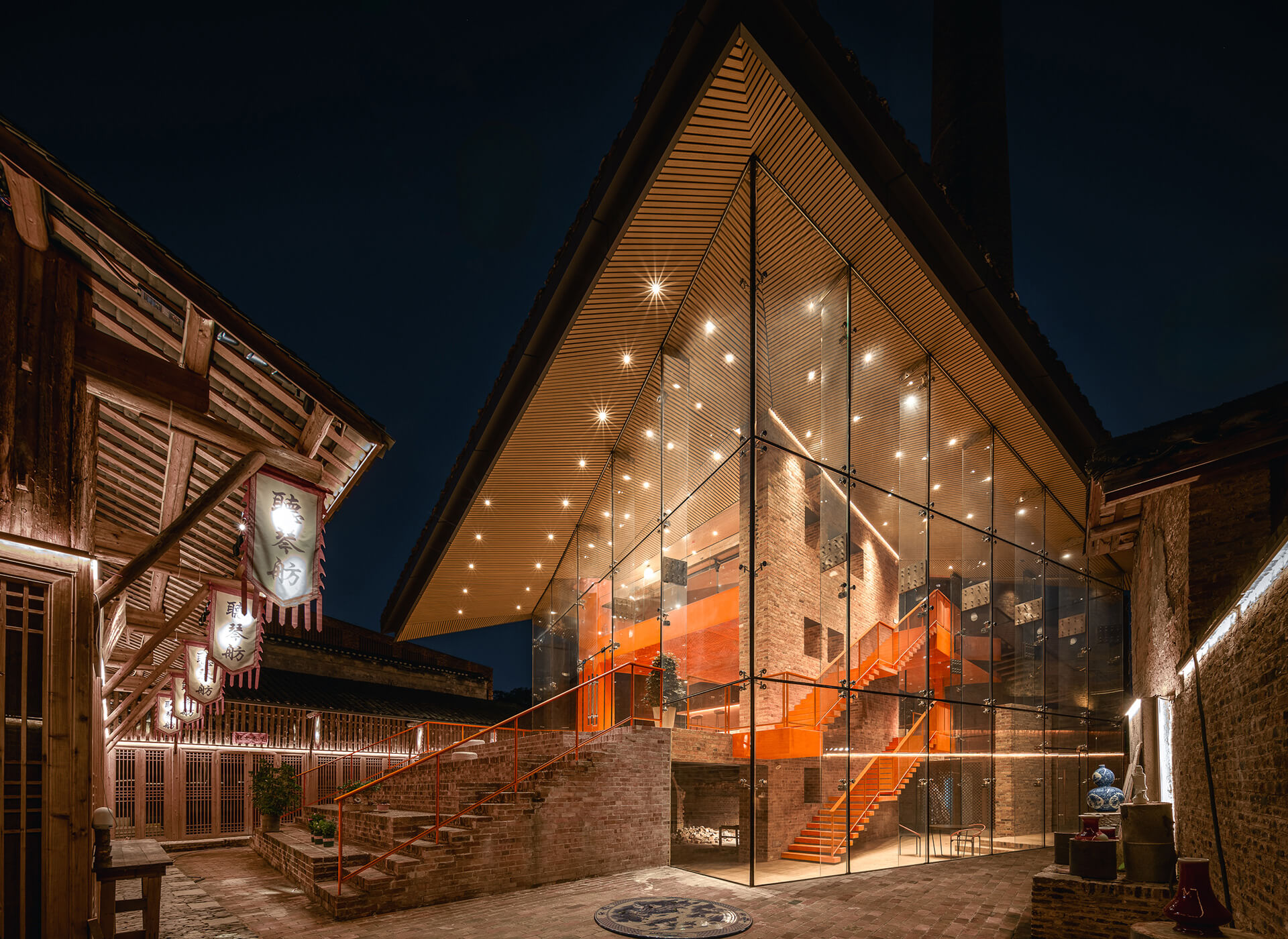
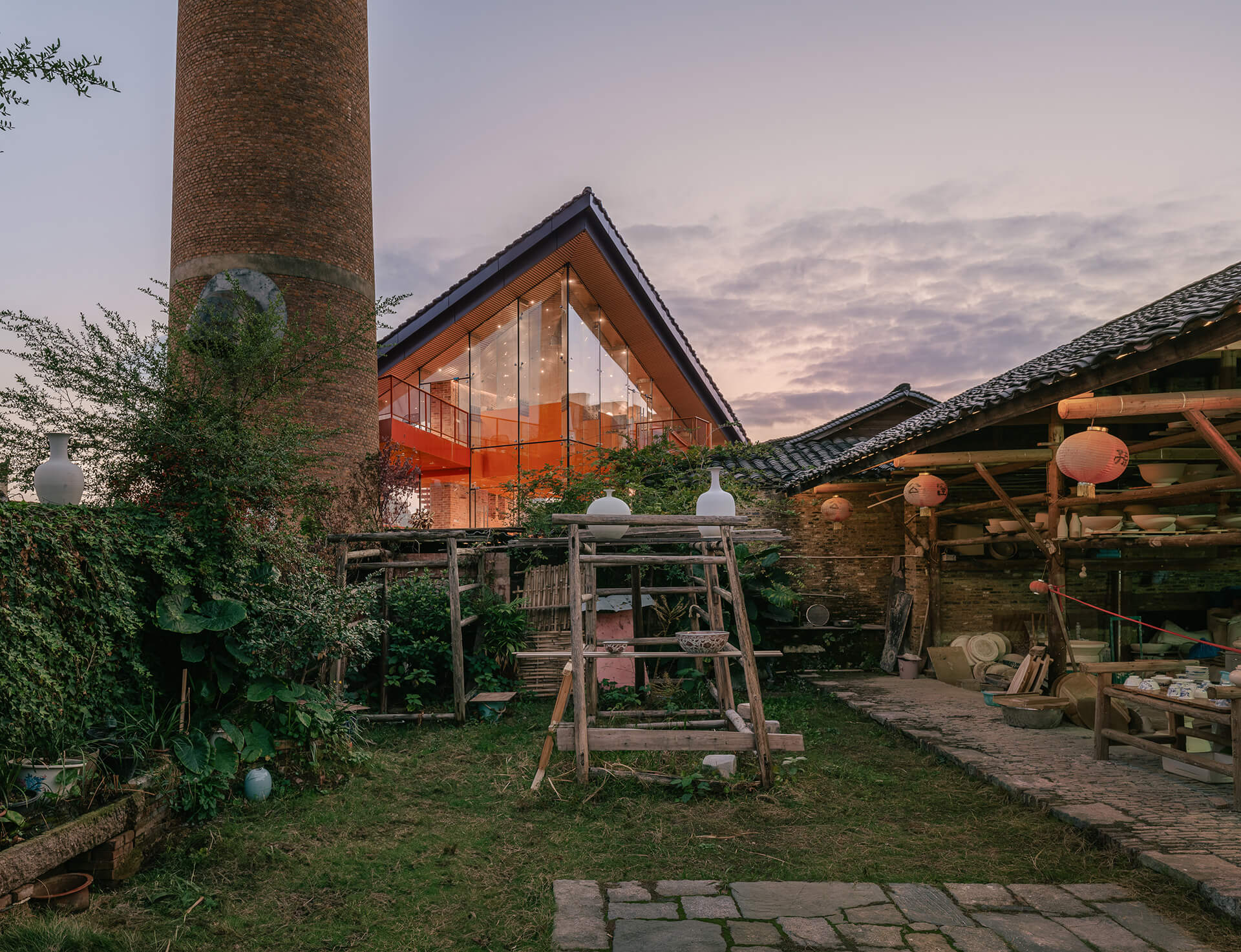
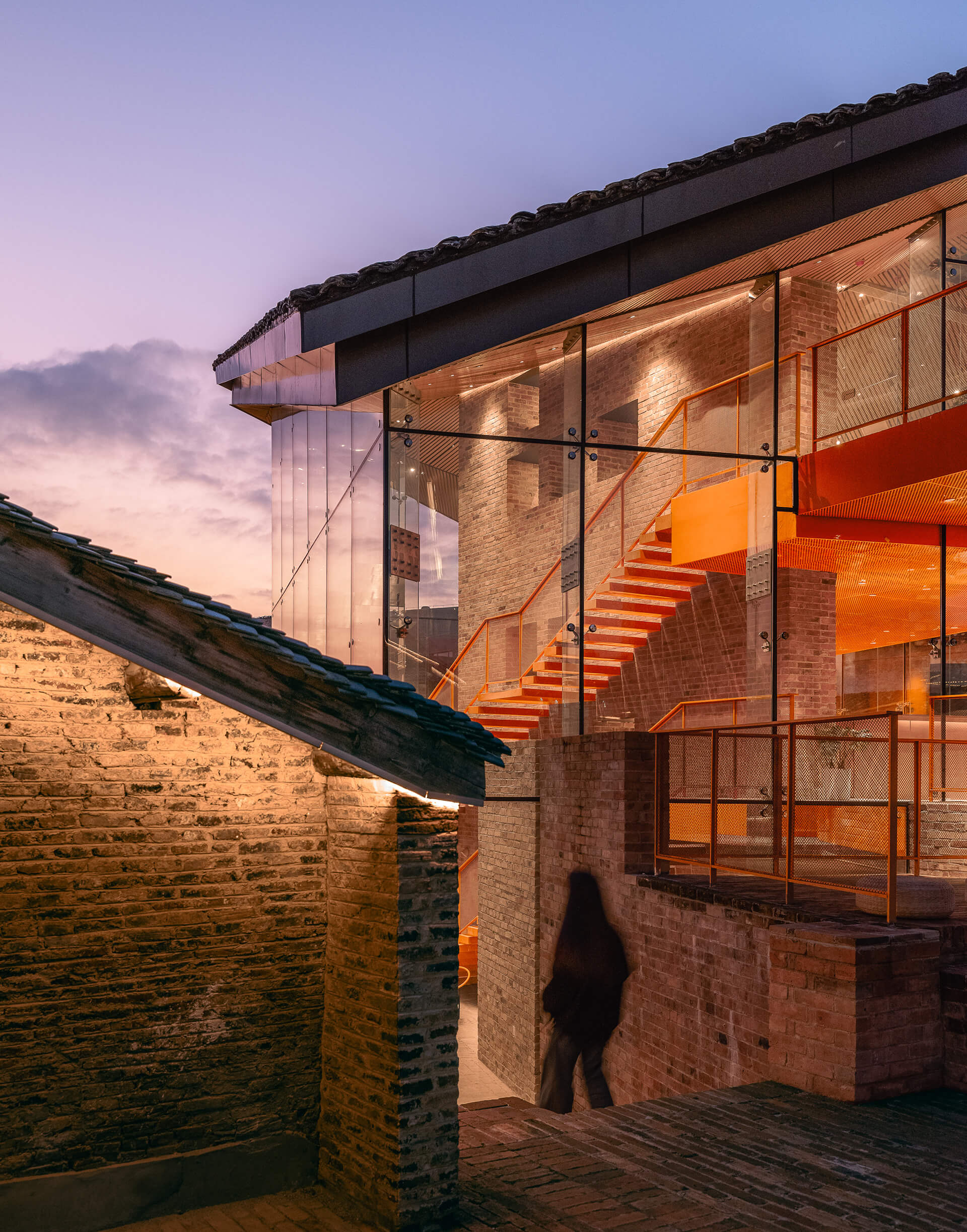
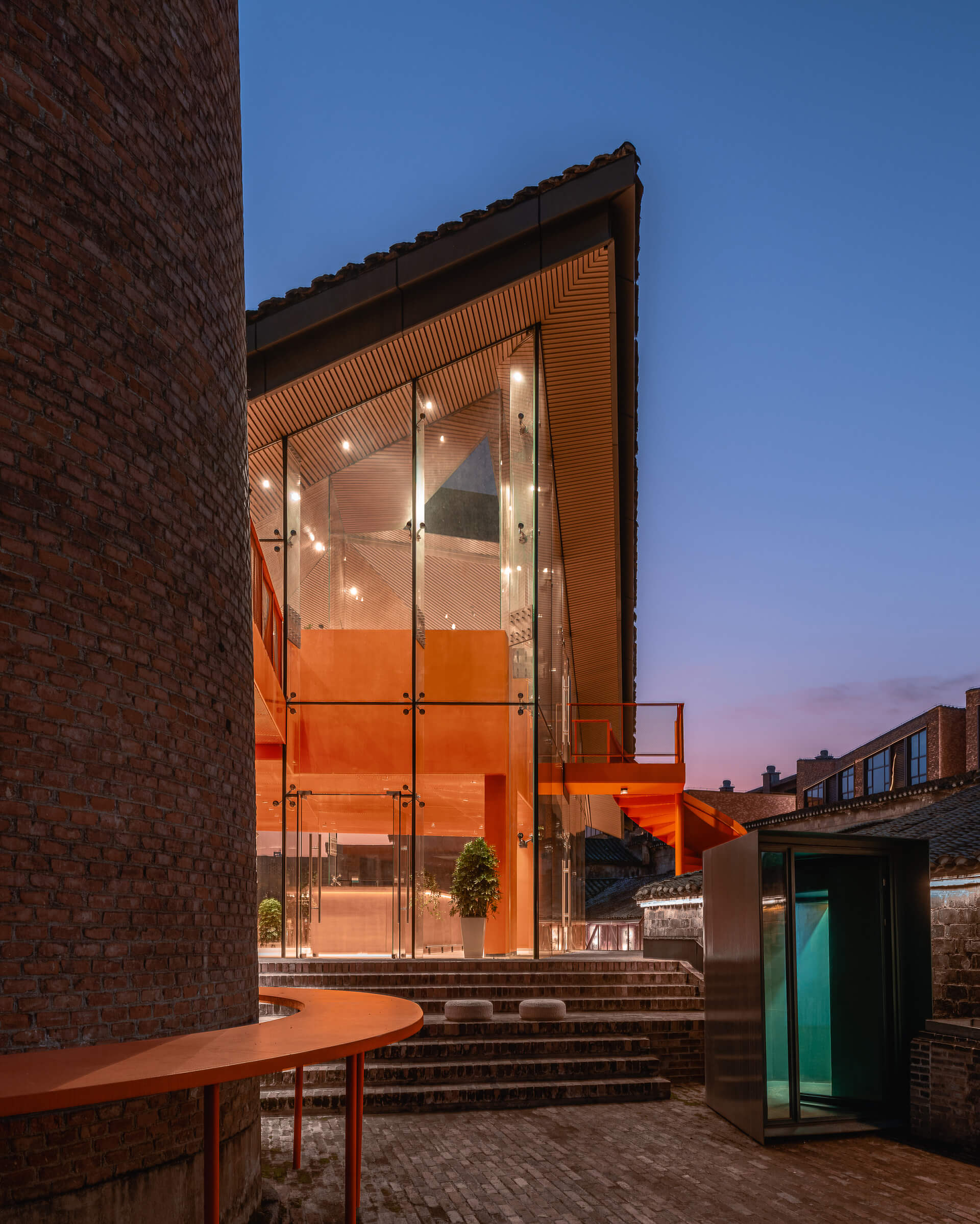
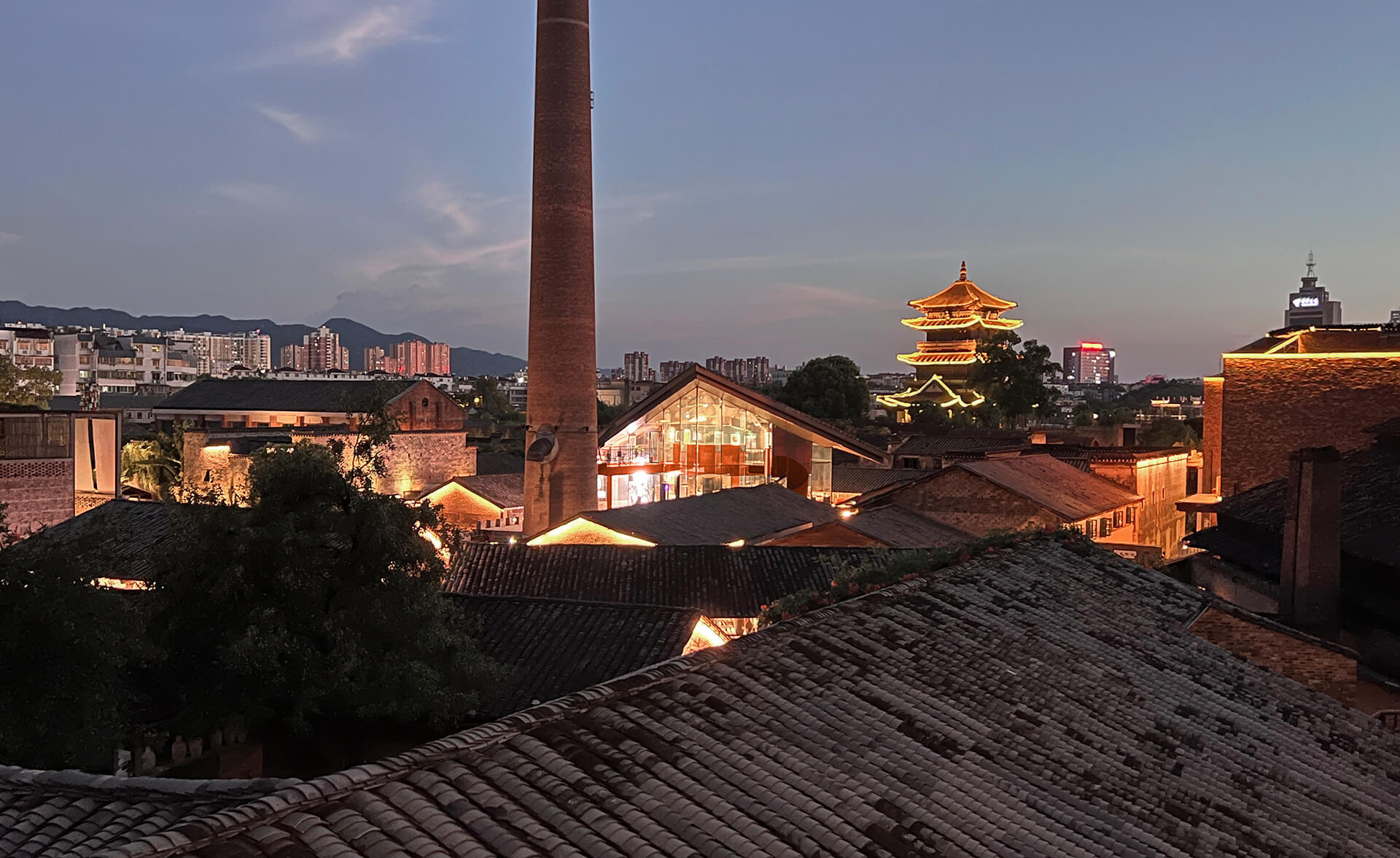
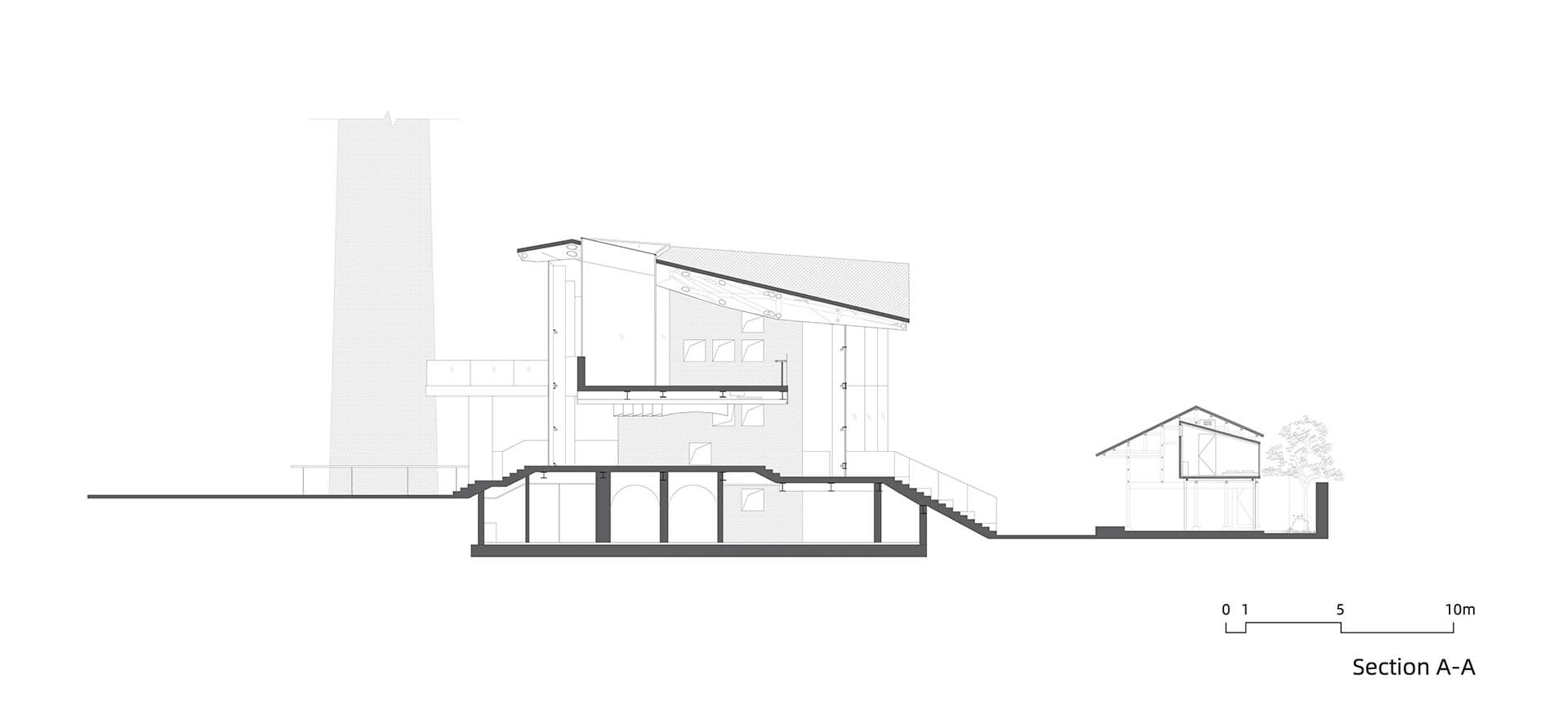
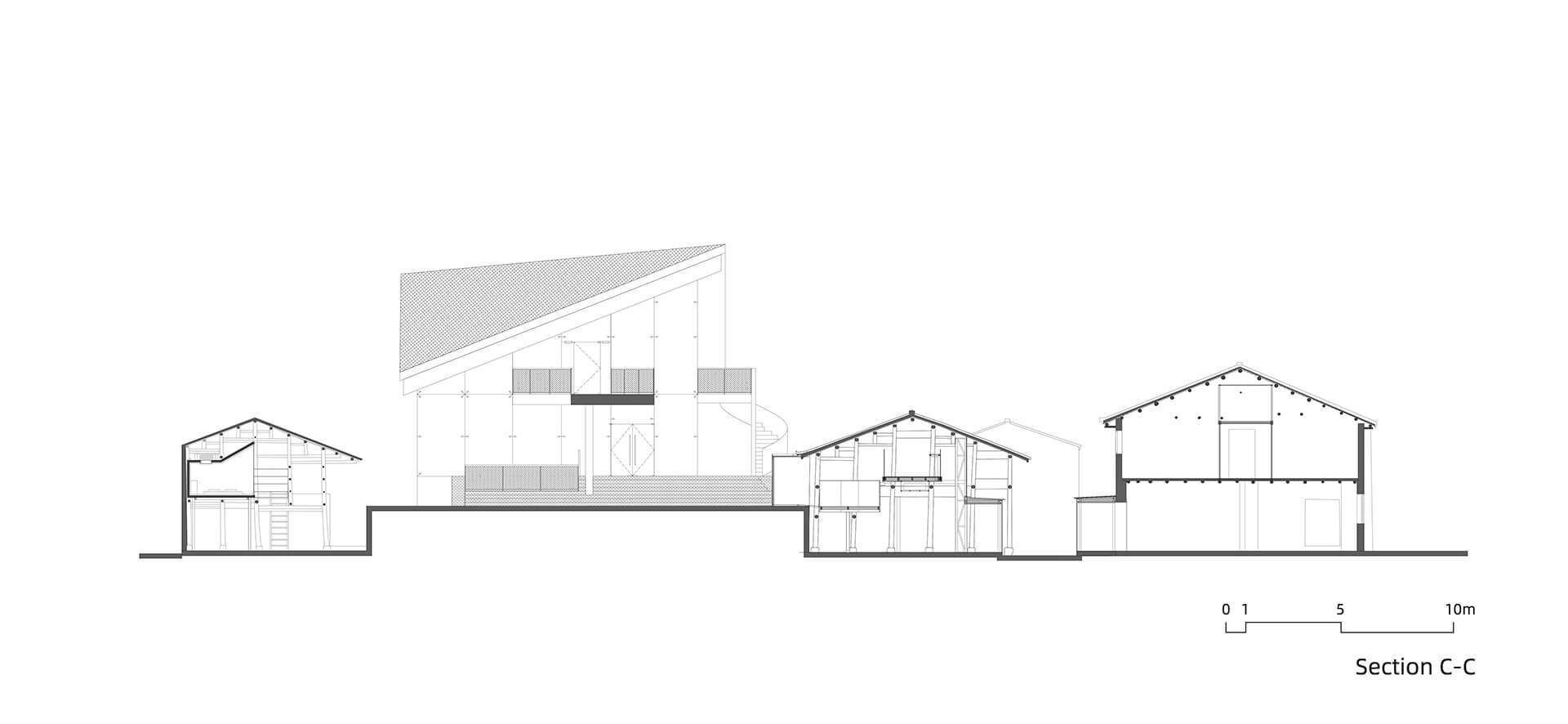
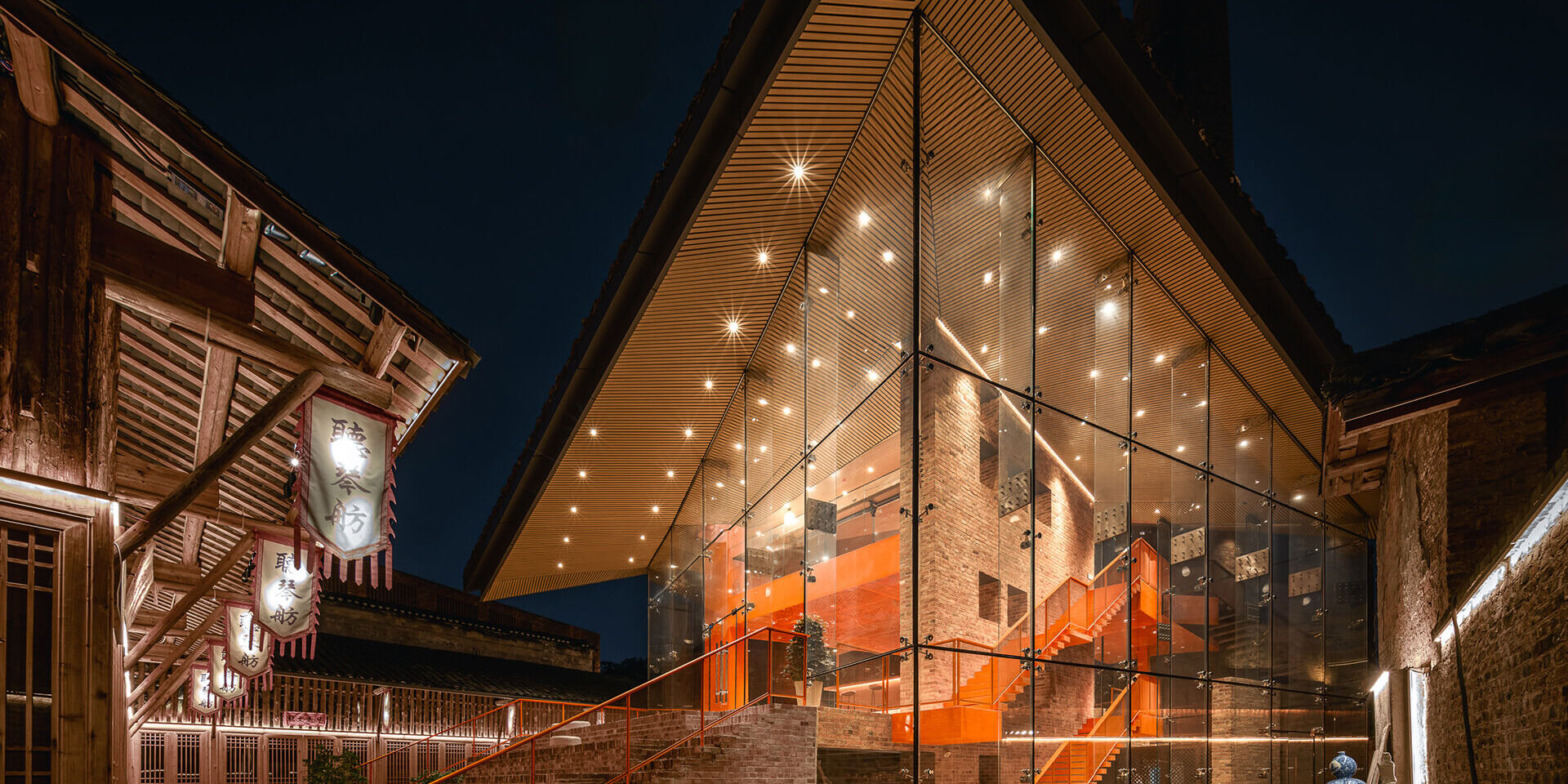
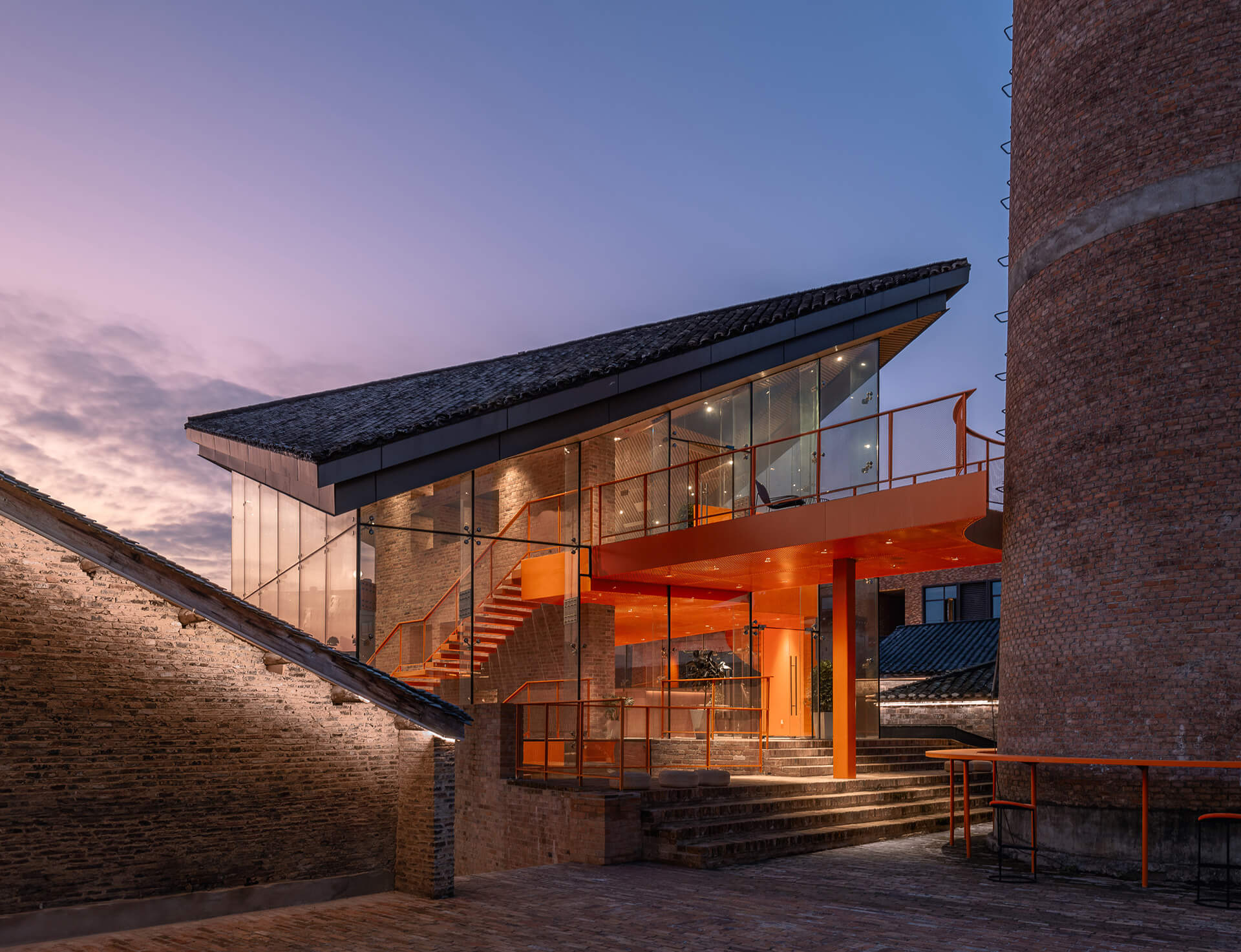
At the center of the site stands a three-story glass pavilion that functions as a new architectural landmark within the historic district. Designed as a transparent volume topped with a traditional double-pitched roof clad in clay tiles, the structure houses exhibition spaces and a café while acting as a focal point for the main public square.
The contrast between the transparent glass enclosure and the surrounding masonry buildings establishes a clear architectural dialogue between contemporary design and historic context. The roof appears to float above the glazed structure, reinforcing the sense of openness and creating a spatial extension of the public square into the building interior. From a distance, the pitched roof emerges among the surrounding tiled rooftops, subtly referencing the traditional architectural language of Jingdezhen.
Carefully integrated lighting design plays a crucial role in reinforcing the pavilion’s architectural presence, particularly after sunset. Warm recessed luminaires embedded within the timber soffit of the roof evenly illuminate the glass envelope, transforming the pavilion into a softly glowing lantern within the historic courtyard. Inside, discreet linear and point lighting accentuate the brick core and the vivid orange circulation elements, highlighting the layered spatial composition while maintaining a restrained and atmospheric ambiance. The transparency of the façade allows interior light to spill into the surrounding public square, strengthening the visual connection between interior activity and the historic urban fabric.
Materials & Urban Circulation
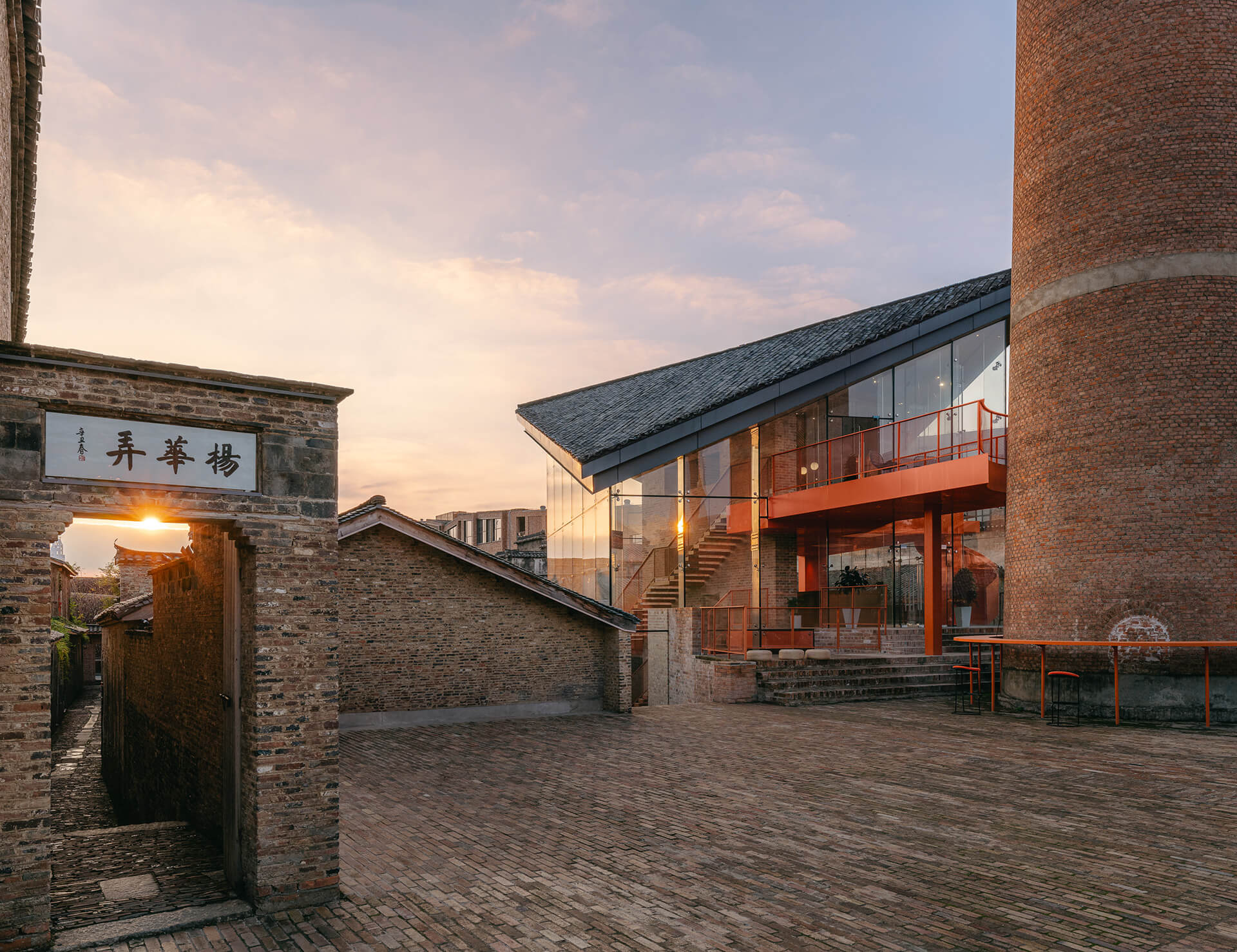
The project reinforces the relationship between interior and exterior space through the careful treatment of the courtyard landscape. Brick paving extends from the public square directly into the interior of the glass building, dissolving the boundary between inside and outside.
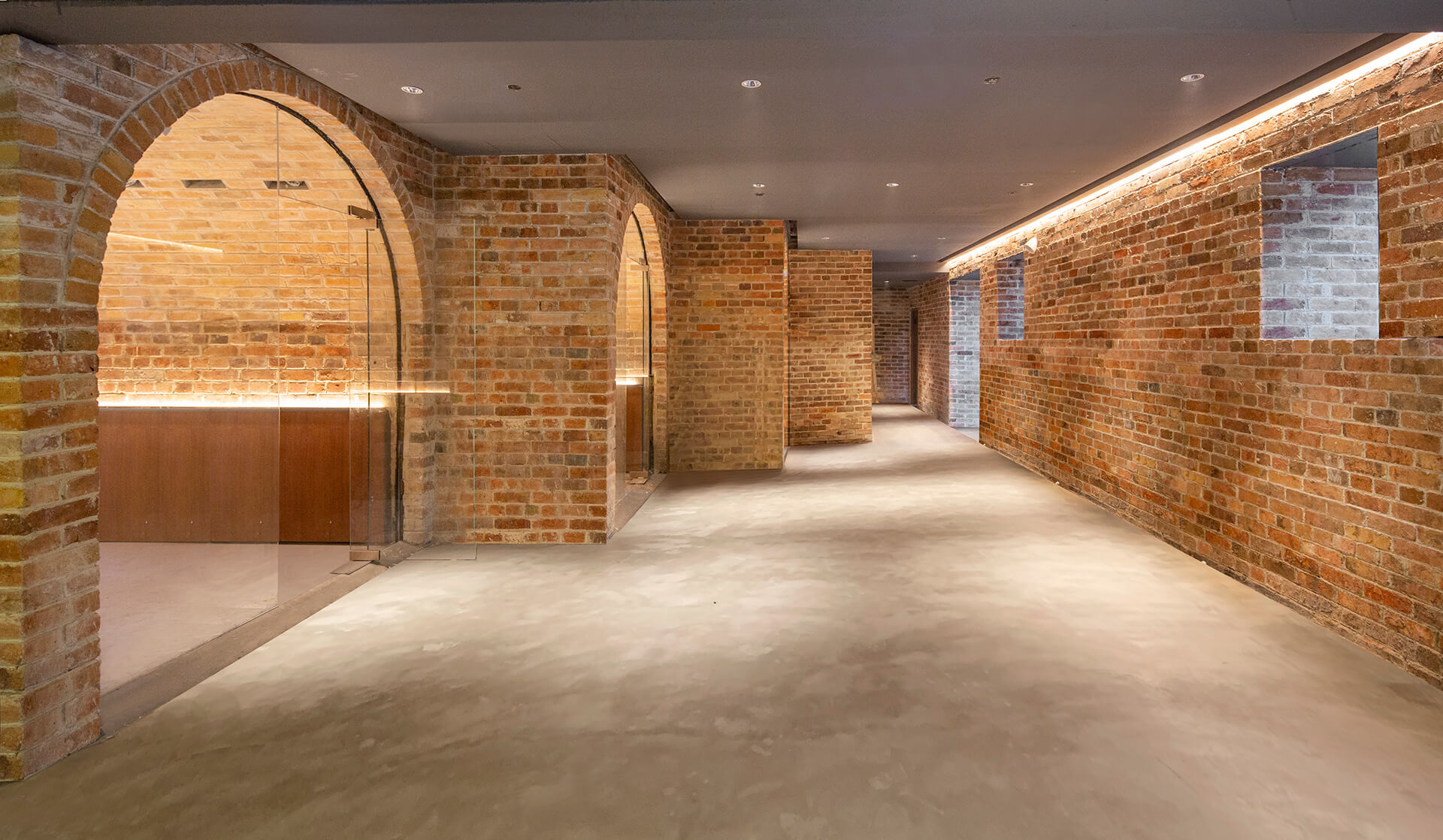
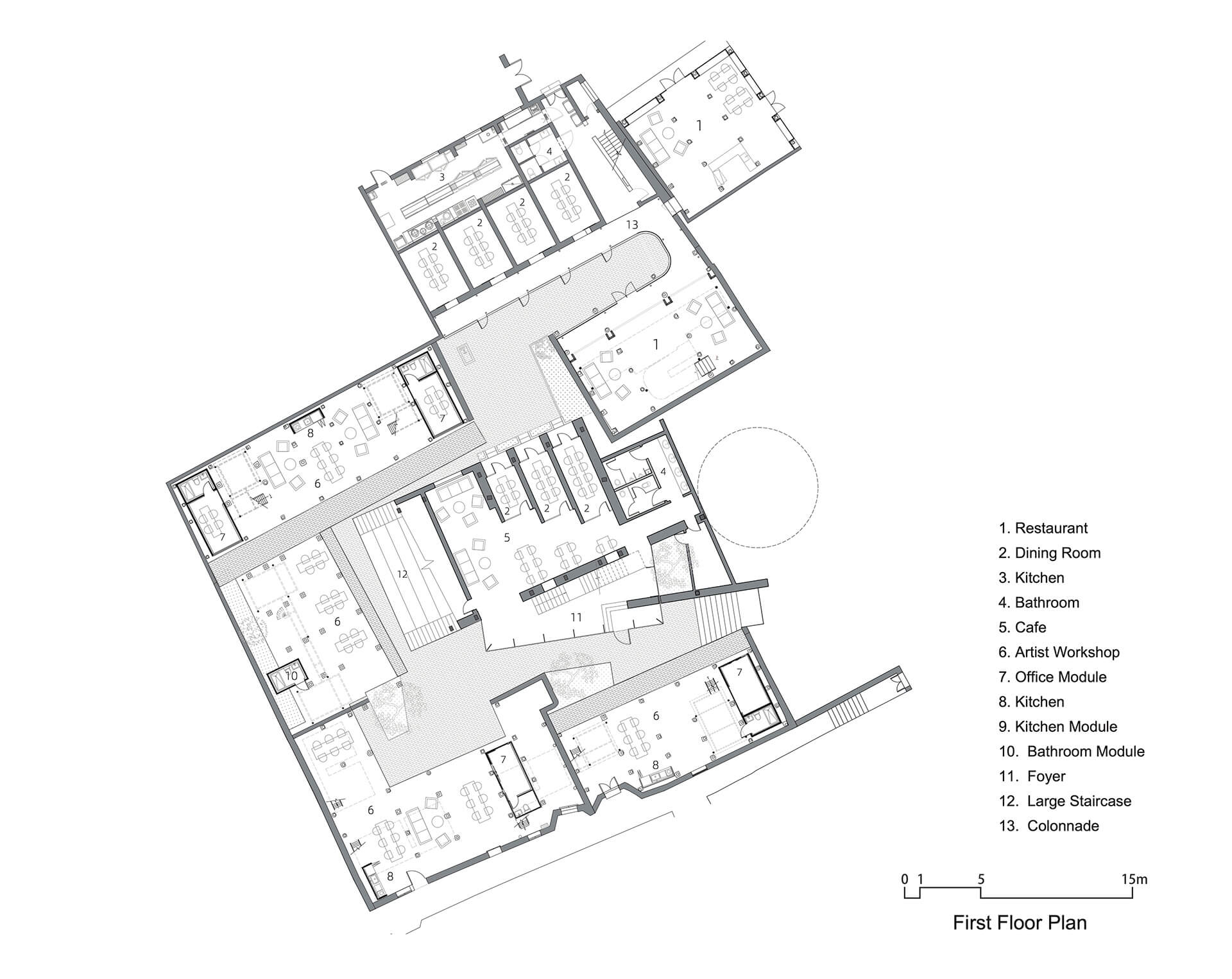
Within the courtyard, the paving transforms into stepped surfaces that accommodate changes in elevation while simultaneously functioning as informal seating areas. On the opposite side of the square, a series of barrel-vaulted brick rooms form the building’s base, anchoring the new structure within the historical material language of the site.
To improve accessibility and spatial continuity across the complex, one of the existing buildings was rotated, merging two separate courtyards into a single shared public space. This reconfiguration allows visitors to move fluidly between the public square, the glass pavilion and the surrounding workshops, effectively transforming the former industrial compound into a cohesive cultural environment.
Located adjacent to Chimney Square, the project sits within a dense historical landscape that includes the Imperial Kiln Museum and the archaeological remains of the Imperial Porcelain Factory to the west, while the historic Xu Family Kiln – the oldest and most complete preserved wood-fired kiln site in Jingdezhen – lies to the north. Within this historically layered setting, the project establishes a careful balance between preservation and contemporary intervention, transforming the former industrial site into a vibrant public destination that celebrates both the legacy and the future of porcelain culture.