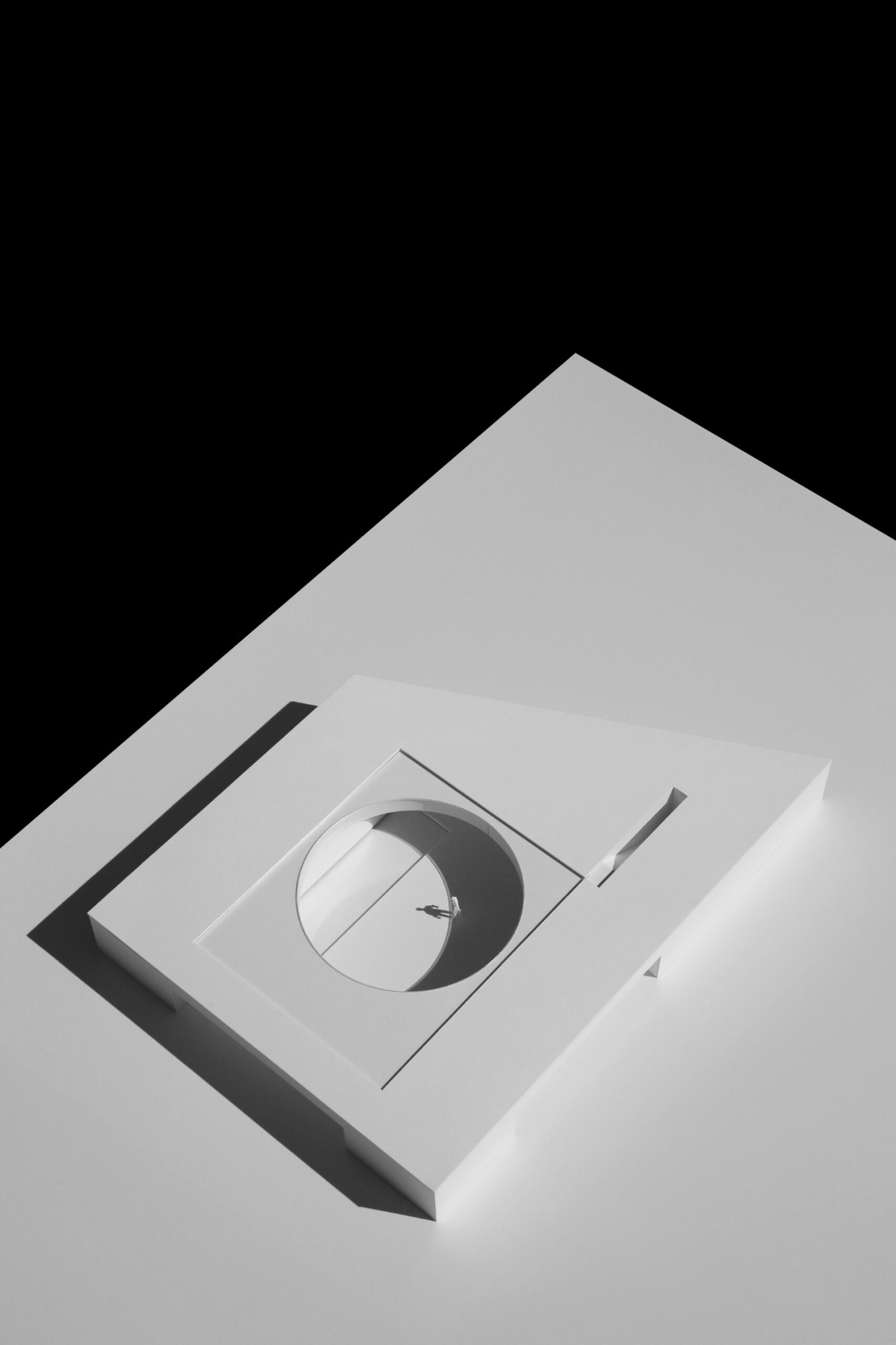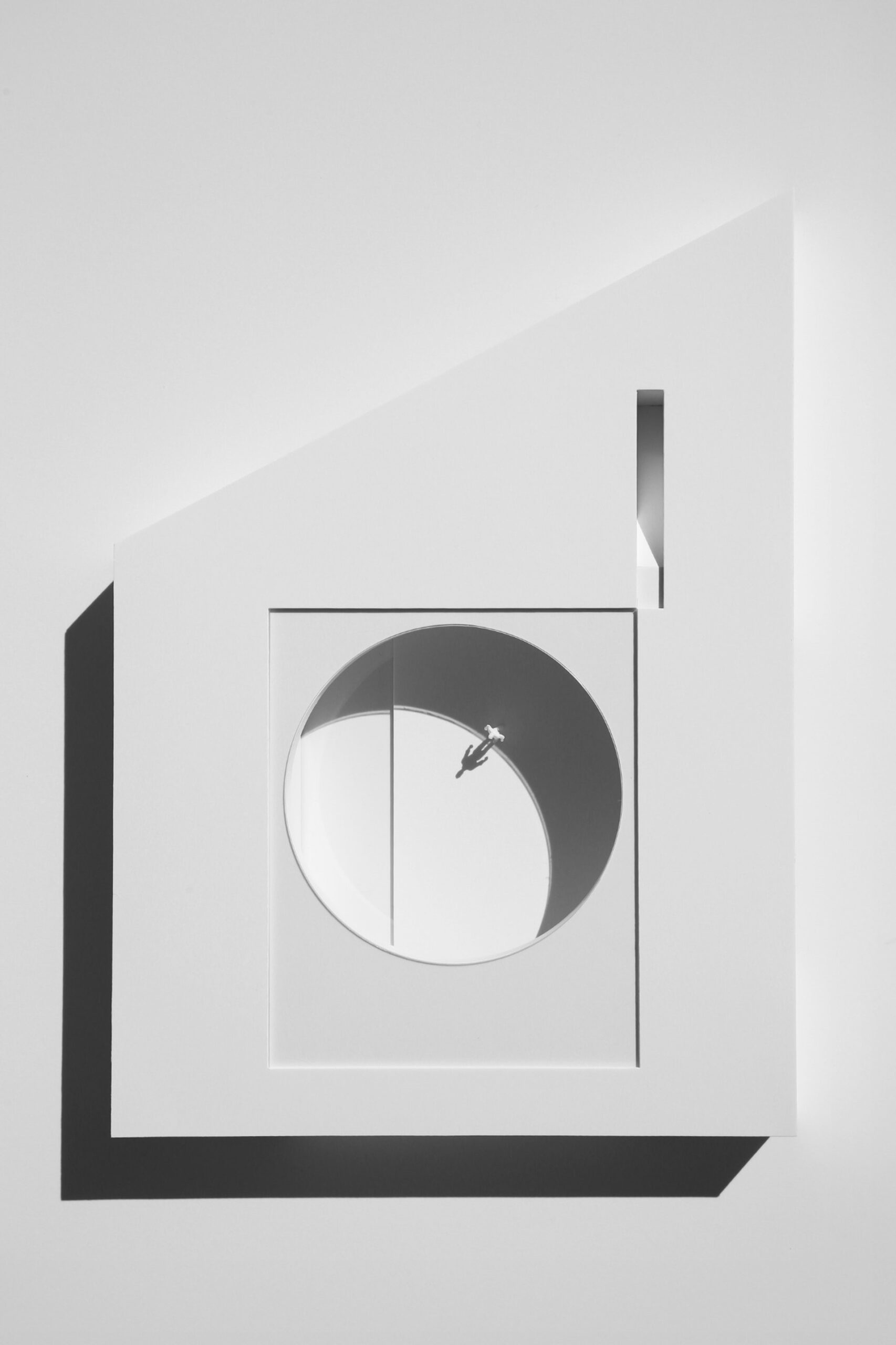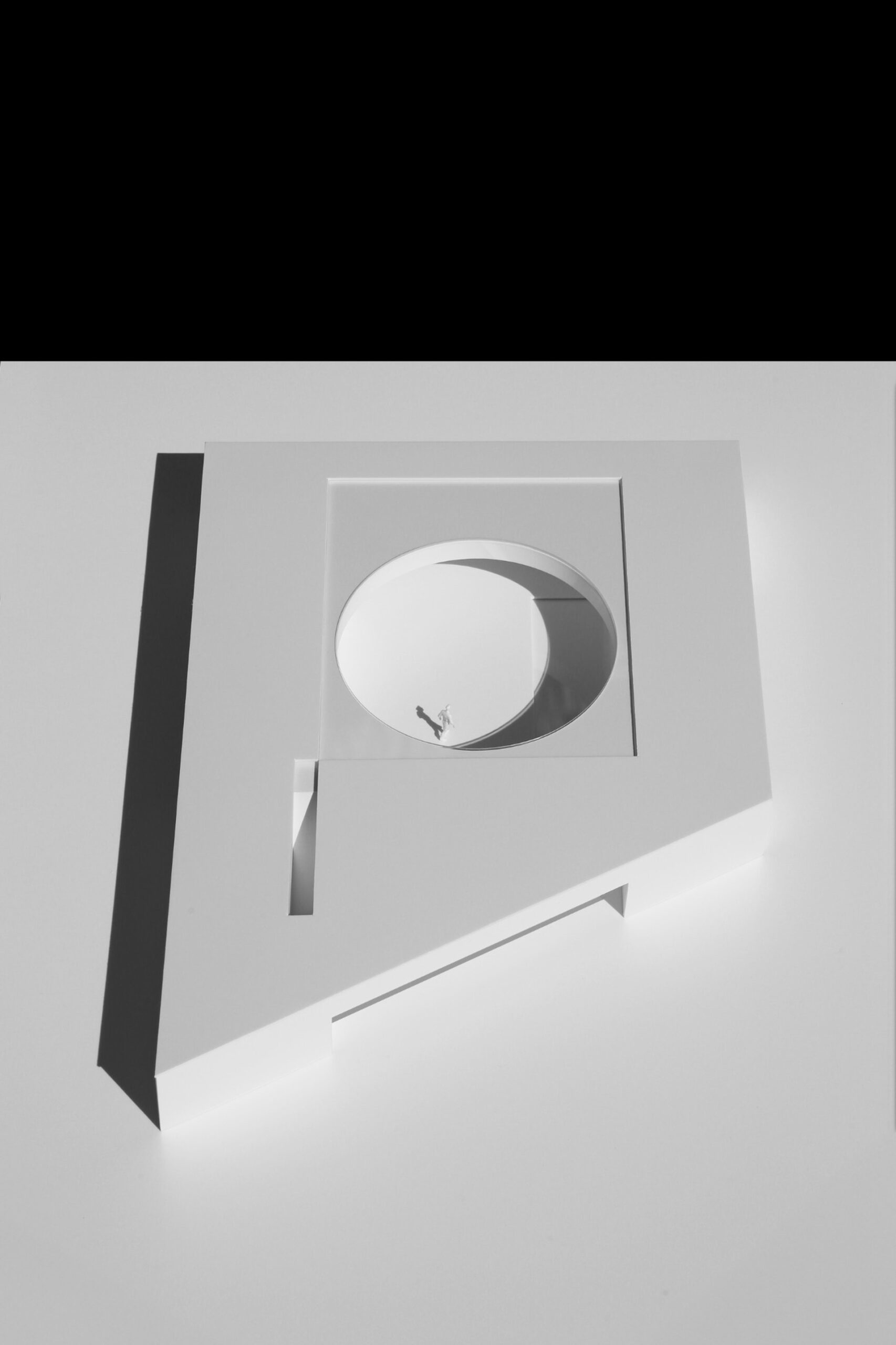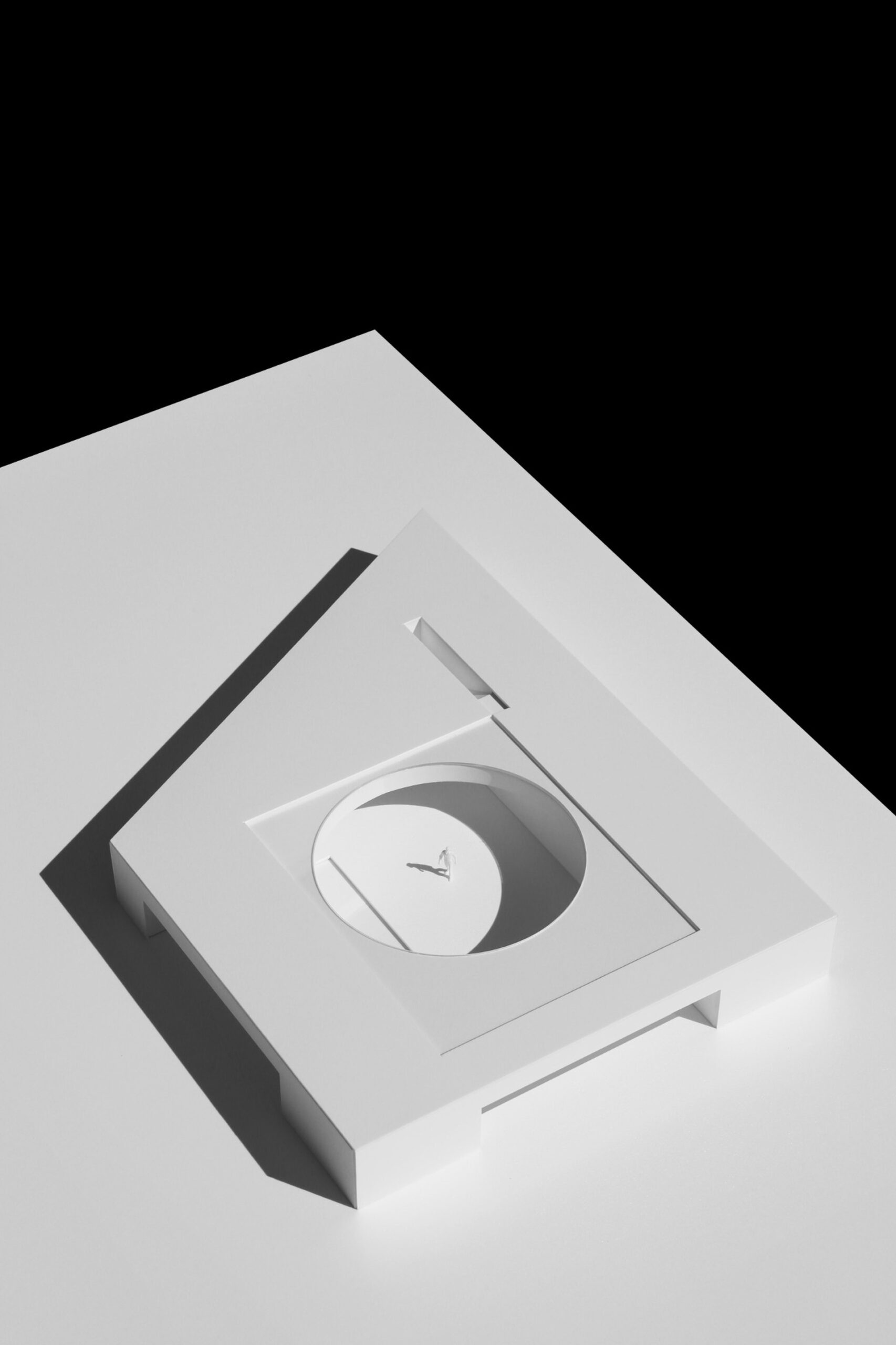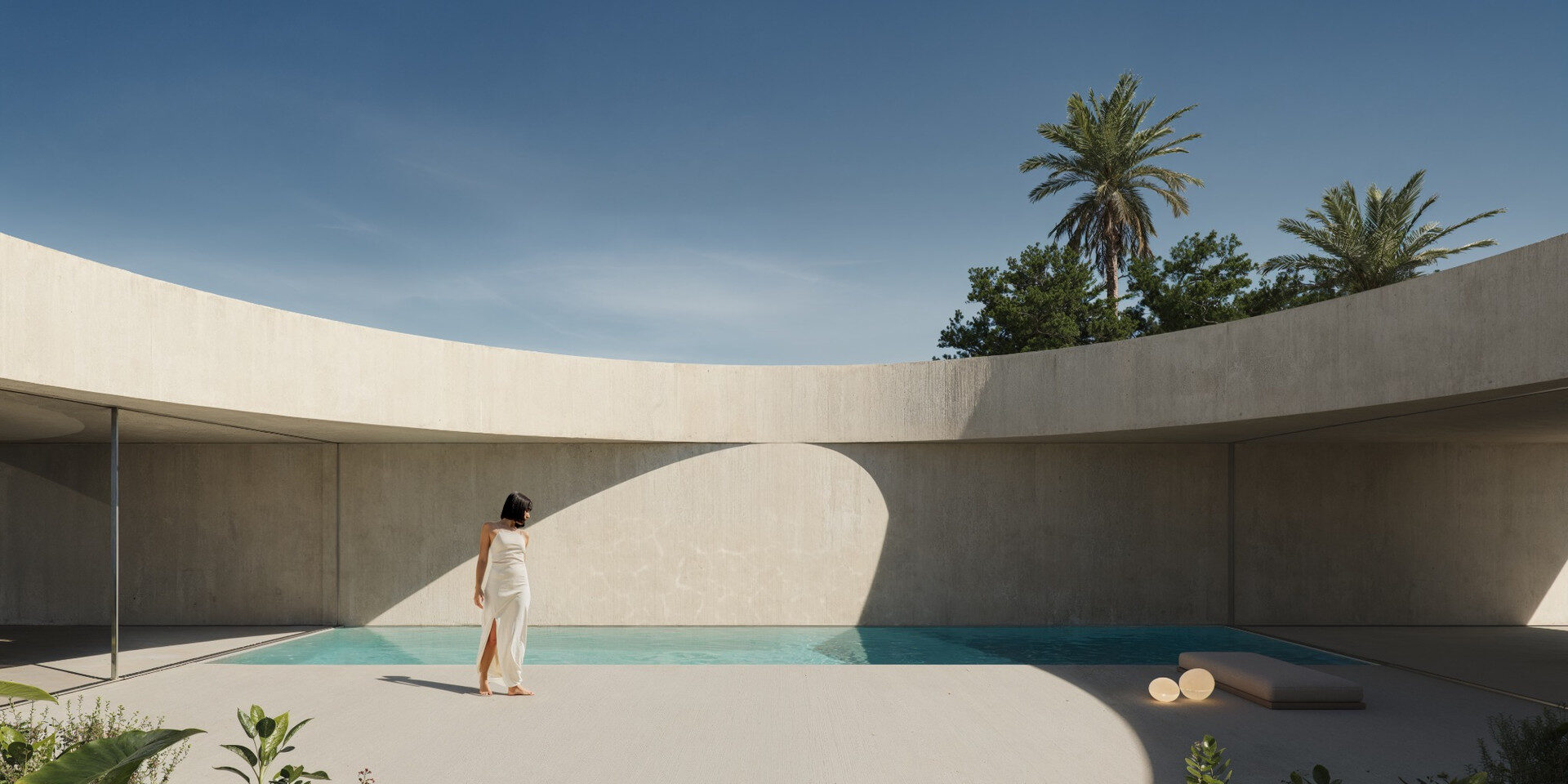
Shatt Al-Arab House by Fran Silvestre Arquitectos in Baghdad
Architecture:
Photography:

A Courtyard House Shaped by Urban Constraints
In Baghdad, Shatt Al-Arab House by Fran Silvestre Arquitectos is conceived from the limitations of its site. Located at street level on one of the city’s busiest avenues, the plot is defined by the geometry of the surrounding urban fabric and by the need to create privacy, openness and domestic calm within a dense metropolitan condition.
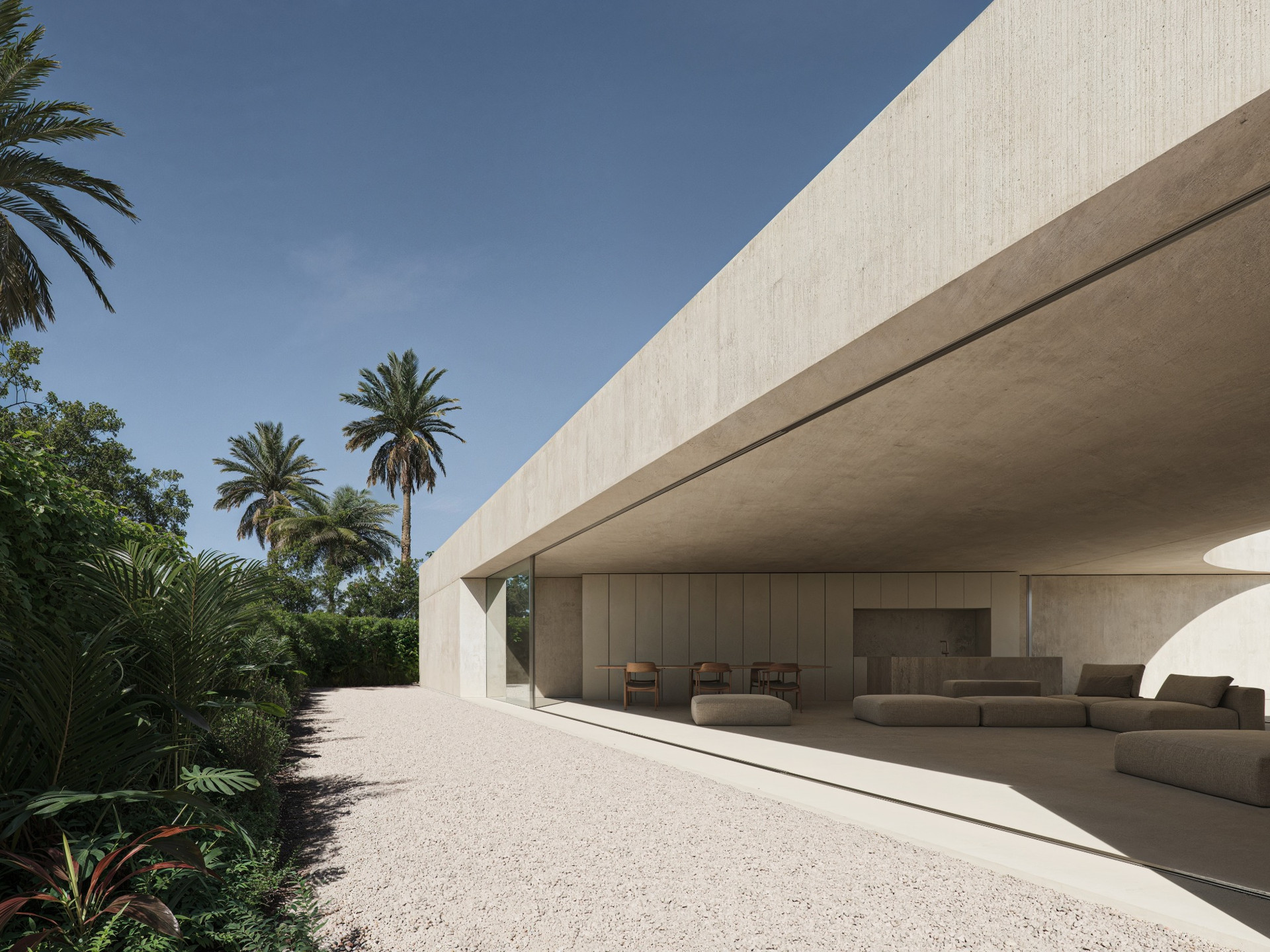
The brief called for a residence that would bring together a daytime living area, two nighttime rooms and a space for physical exercise. Given the limited size of the plot, the most immediate strategy would have been to build vertically, freeing part of the site for a garden. Instead, the architects chose to occupy the entire plot with an extensive single-storey volume.
A Horizontal Strategy for a Compact Plot
The decision to work horizontally allows the house to establish a different relationship with the exterior. Rather than concentrating the program in a compact vertical form, the project expands across the site and connects with outdoor space in two distinct ways.
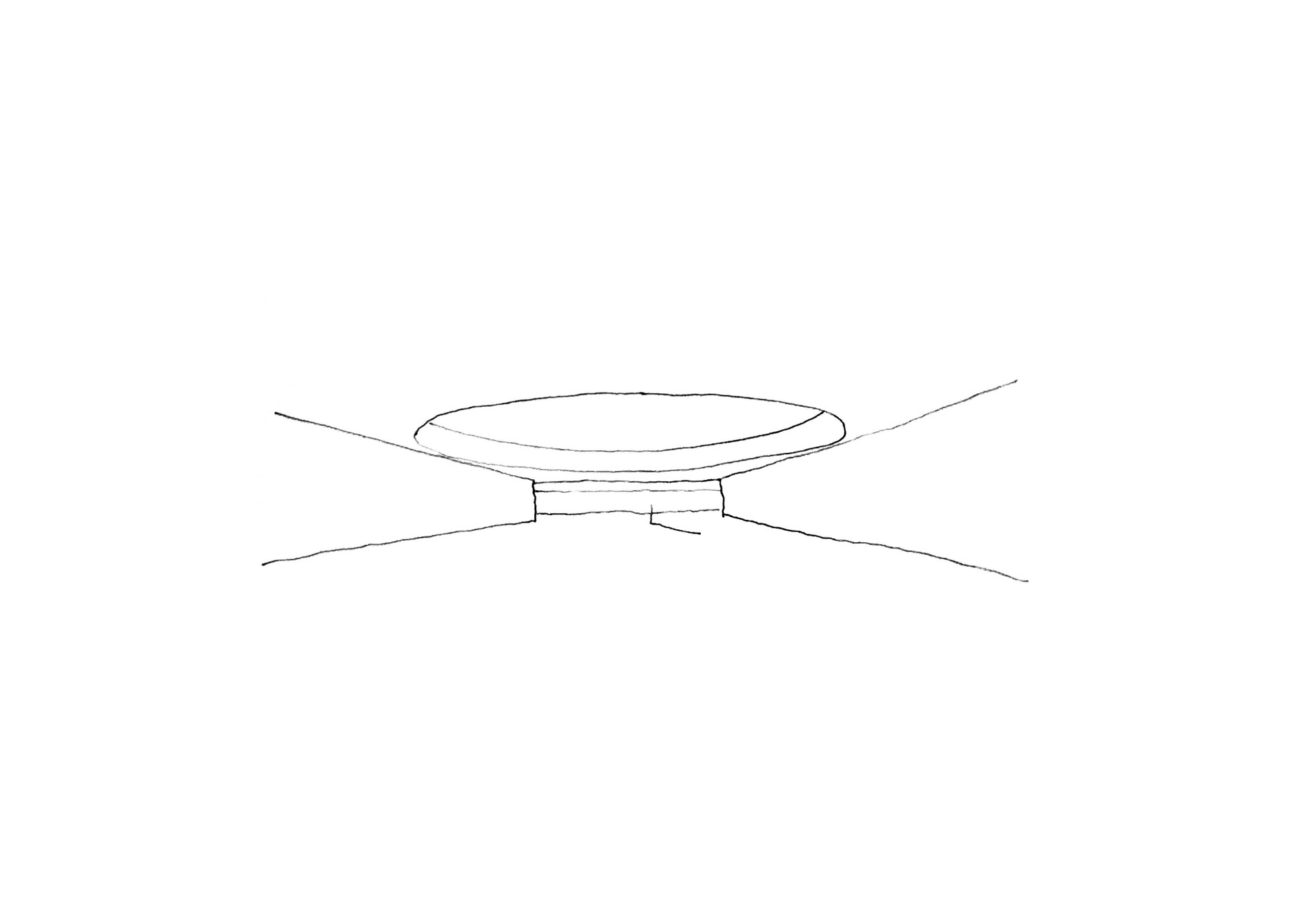
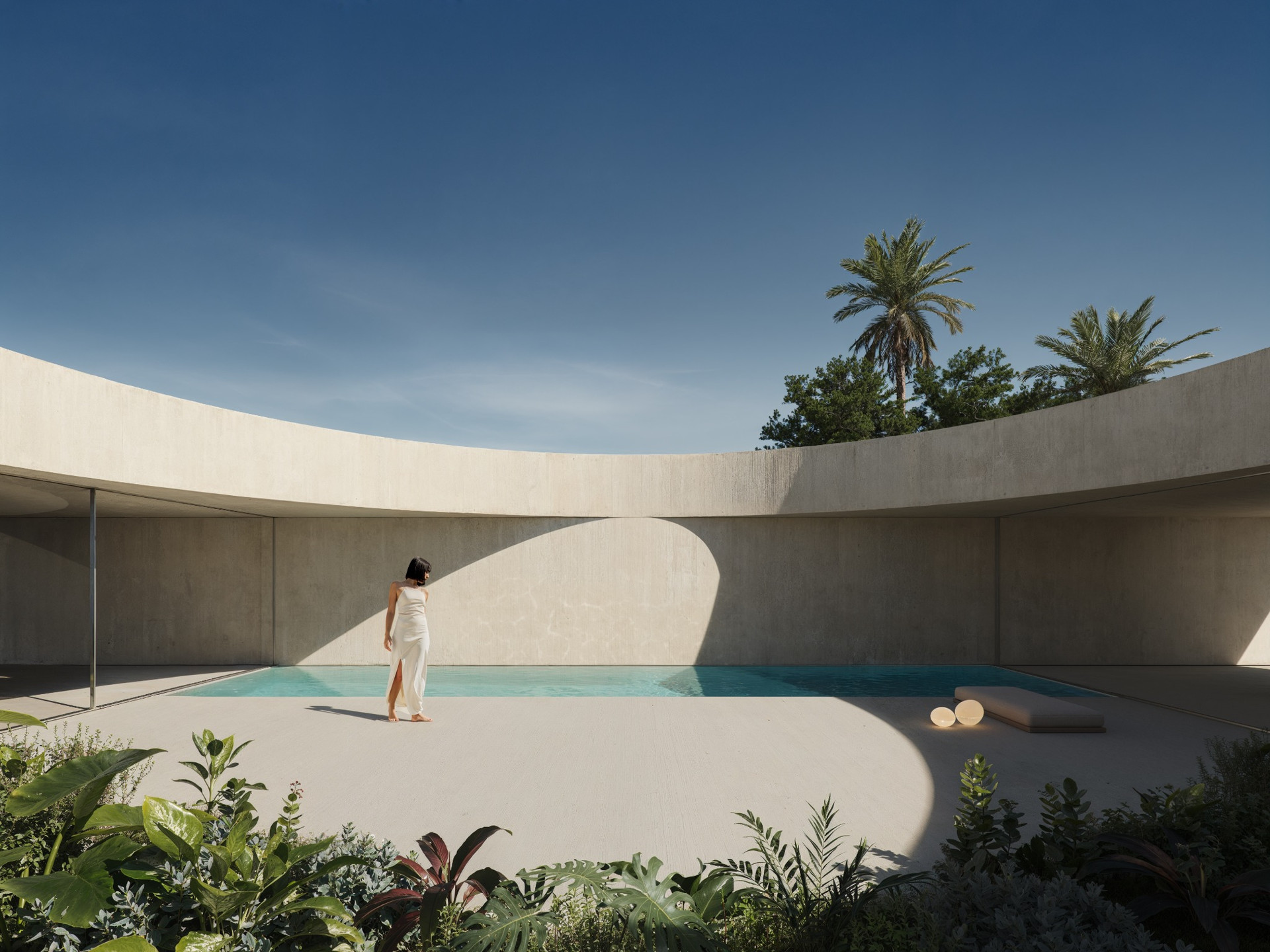
The first is a perimeter garden, which acts as a filter between the house, the avenue and the surrounding streets. The second is a central circular courtyard, which becomes the main open space of the residence and the organizing element of the entire plan.
The Circular Courtyard as the Center of the House
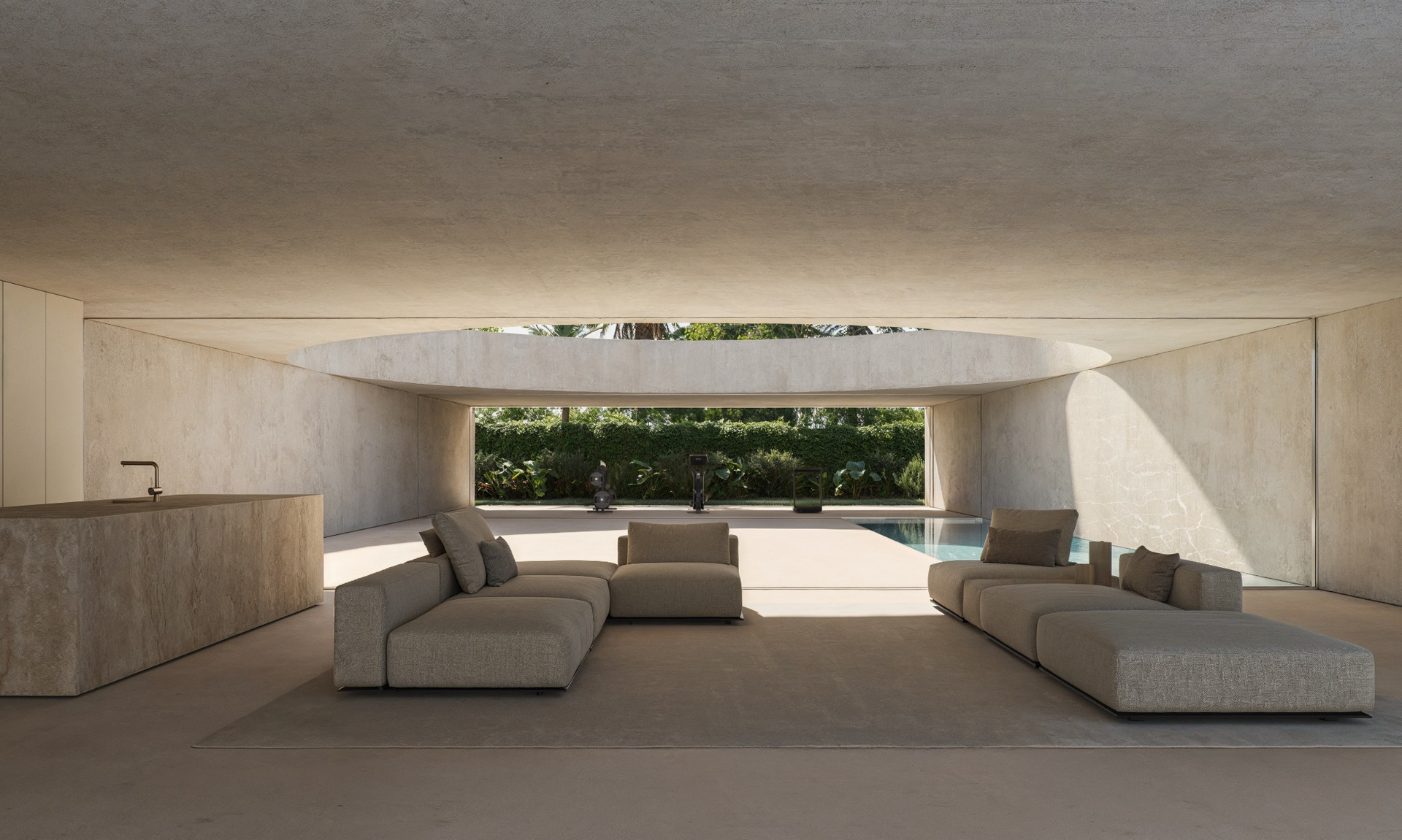
The central courtyard gathers the more public and open areas of the house around it. In one direction, it creates a sequence of indoor and outdoor spaces that begins and ends in the perimeter garden, allowing the interior to extend visually and physically across the full depth of the plot.
This spatial sequence is defined by four glass boundaries that can be fully retracted along the side walls. When opened, they create a hybrid condition between interior and exterior, transforming the house into a continuous open space that stretches from one end of the plot to the other.
Perimeter Garden, Privacy and Retractable Boundaries
The perimeter garden plays a dual role. It protects the house from the intensity of the surrounding urban context, while also allowing each space to remain connected to greenery and natural light. As a boundary, it is not a hard separation, but a planted threshold that mediates between domestic life and the city.
The retractable glass enclosures reinforce this sense of permeability. They allow the living areas to change character according to use, climate and time of day, expanding the domestic interior into the garden and courtyard whenever needed.
Night Rooms, Service Cores and Spatial Clarity
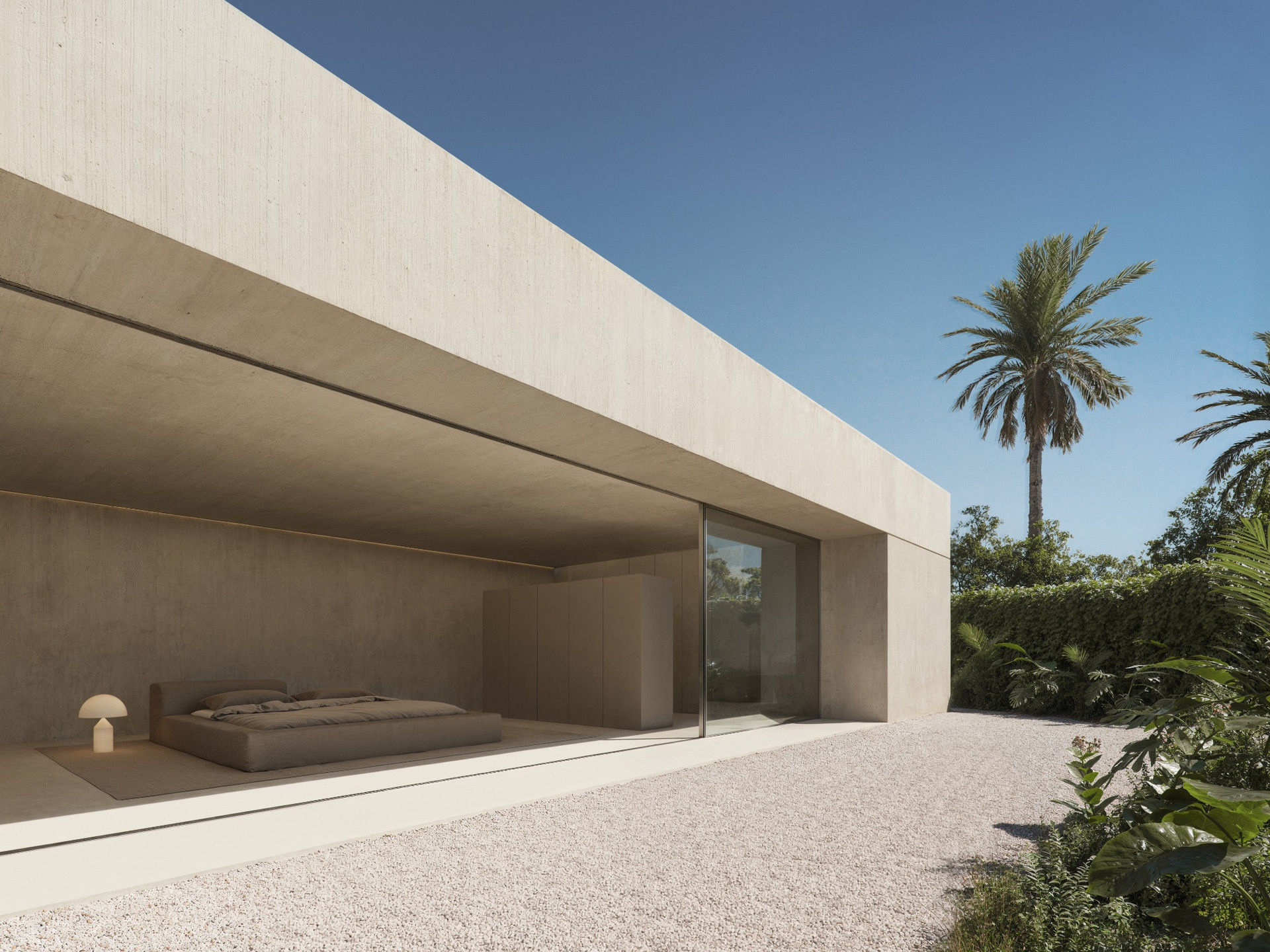
In the opposite direction from the main open sequence, the two primary nighttime rooms are positioned with a more controlled relationship to the exterior. These rooms open only toward the perimeter, ensuring privacy while maintaining contact with the garden.
At the four corners of the house, enclosed cores concentrate the service areas. This clear distribution frees the central and perimeter spaces, giving the plan a precise organization in which open, private and service zones are carefully balanced.
A Rooftop Oasis Above the City
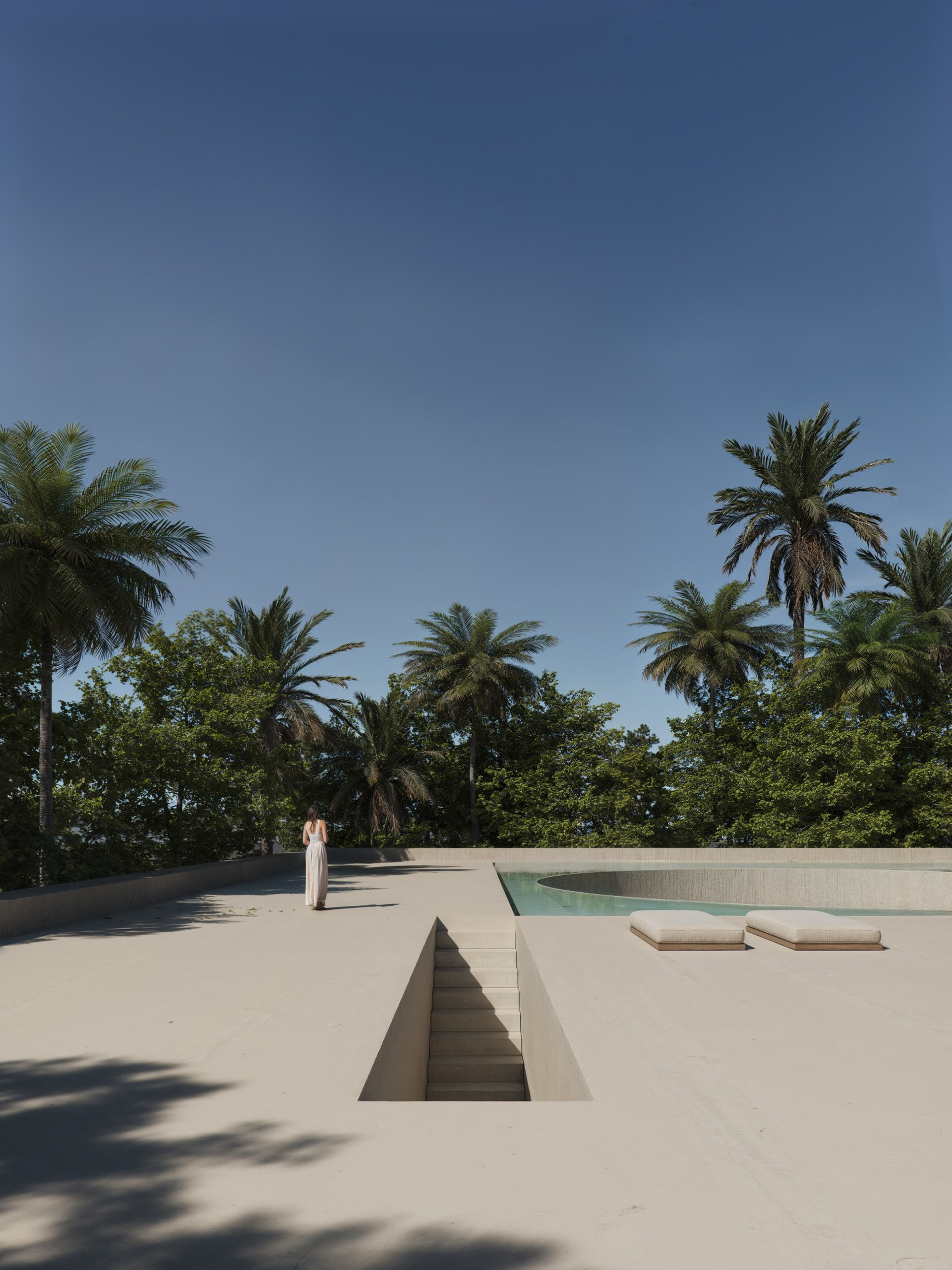
The roof completes the spatial composition of the house. Accessed by an internal staircase, it is conceived as an elevated oasis defined by a series of boundaries. On the outer edge, the vegetation of the garden provides privacy from the city.
On the inner edge, a sheet of water crowns the circular courtyard below. One side of this water element becomes deeper, allowing it to be used for bathing. The roof therefore extends the logic of the house vertically, creating a final outdoor space where vegetation, water and enclosure form a protected domestic landscape above the street.