U-Co House
Architecture:
Photography:

Located in a quiet neighborhood of Palaio Faliro, this small-scale 1950s house is reapproached through a series of restrained and precise architectural gestures. The project seeks to preserve the domestic identity and spatial memory of the existing shell while adapting it to the demands of contemporary everyday living.
Spatial Organization
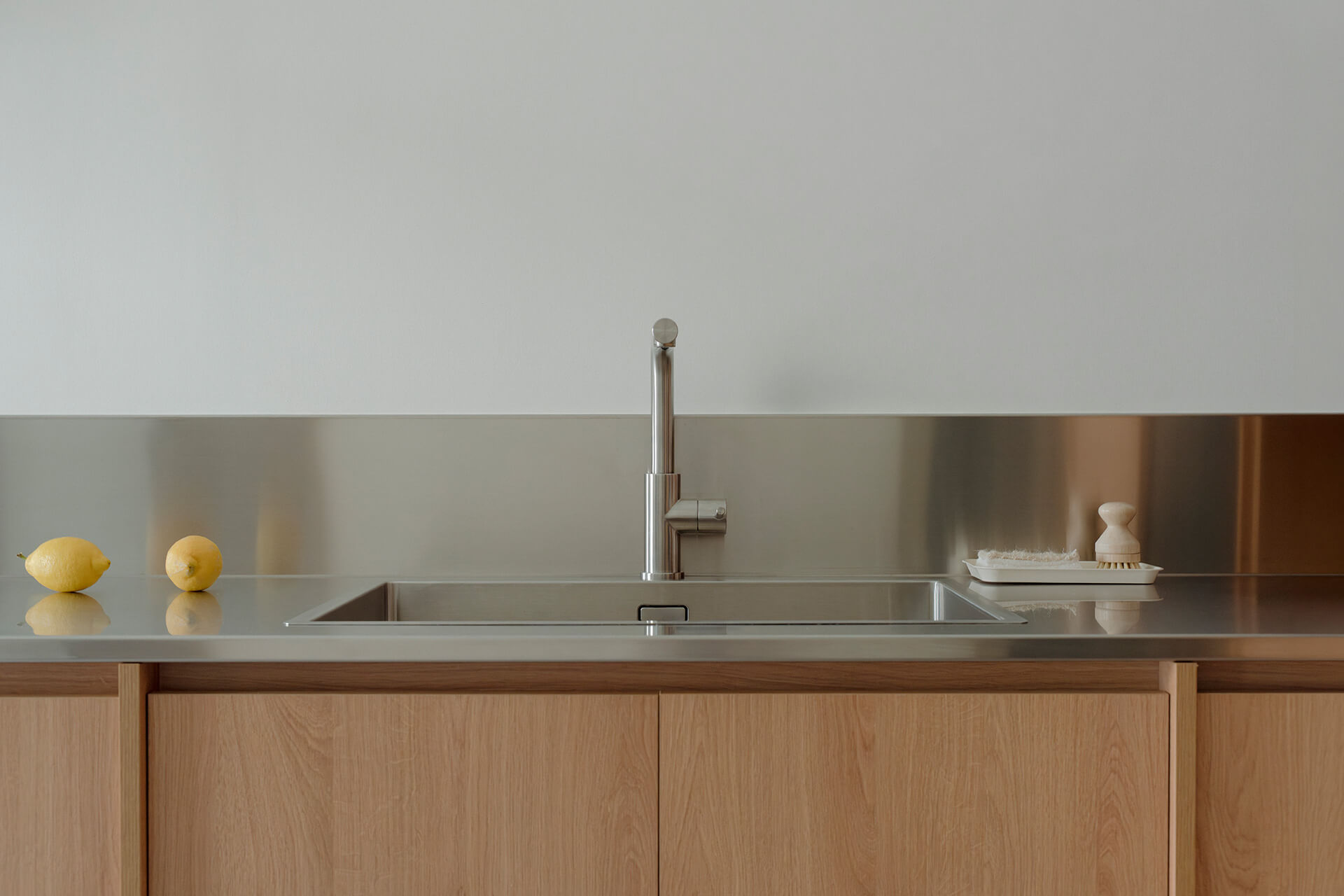
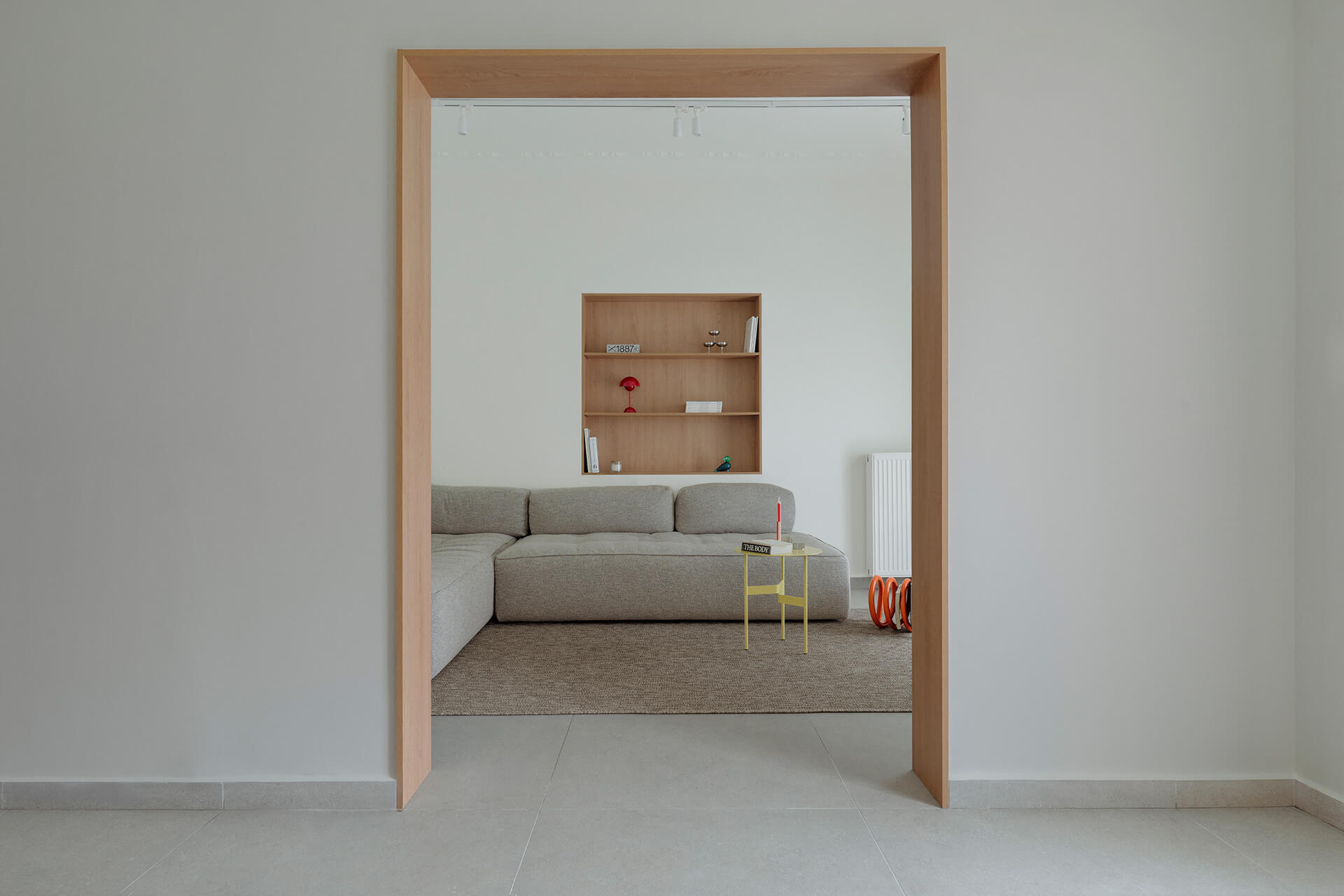
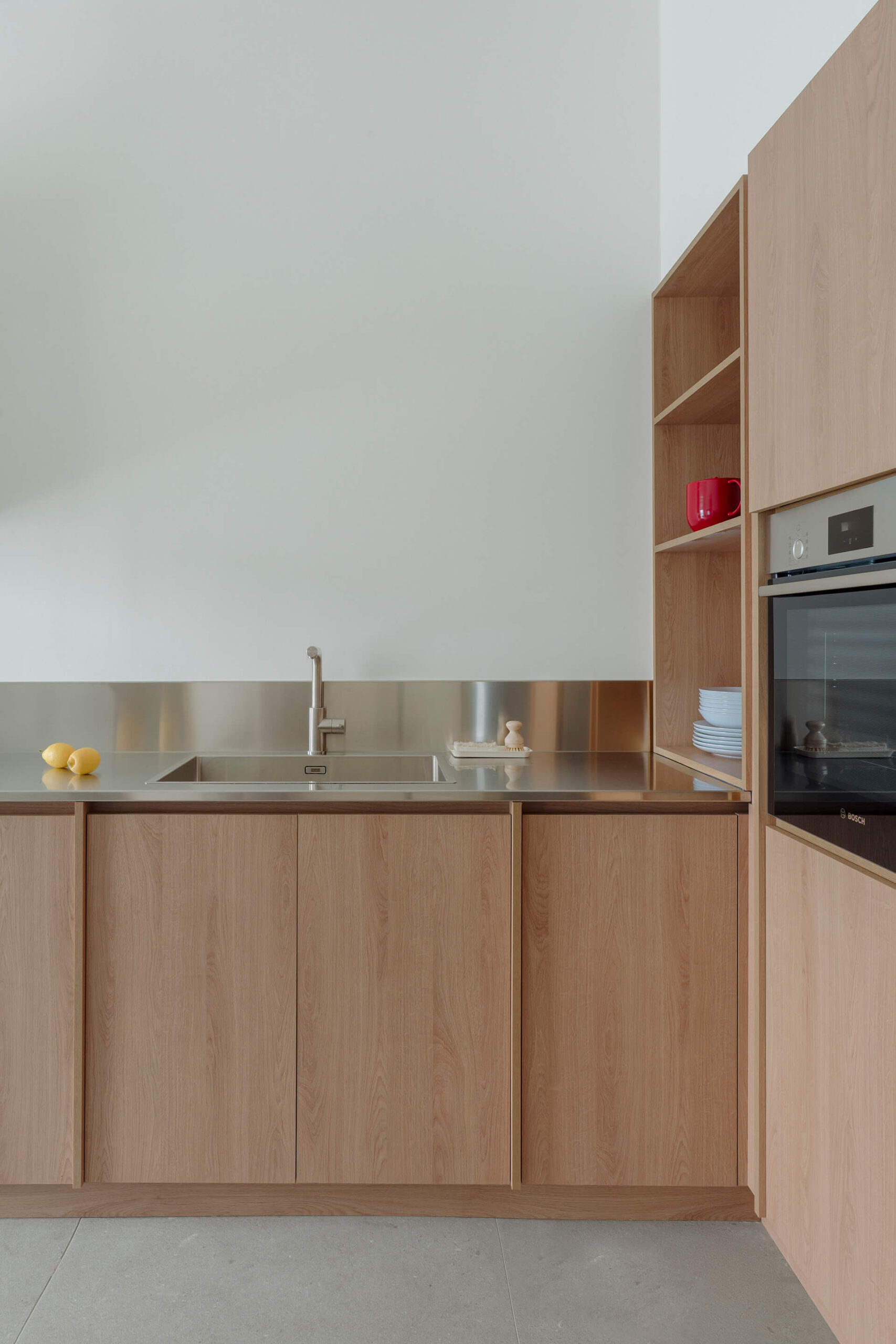
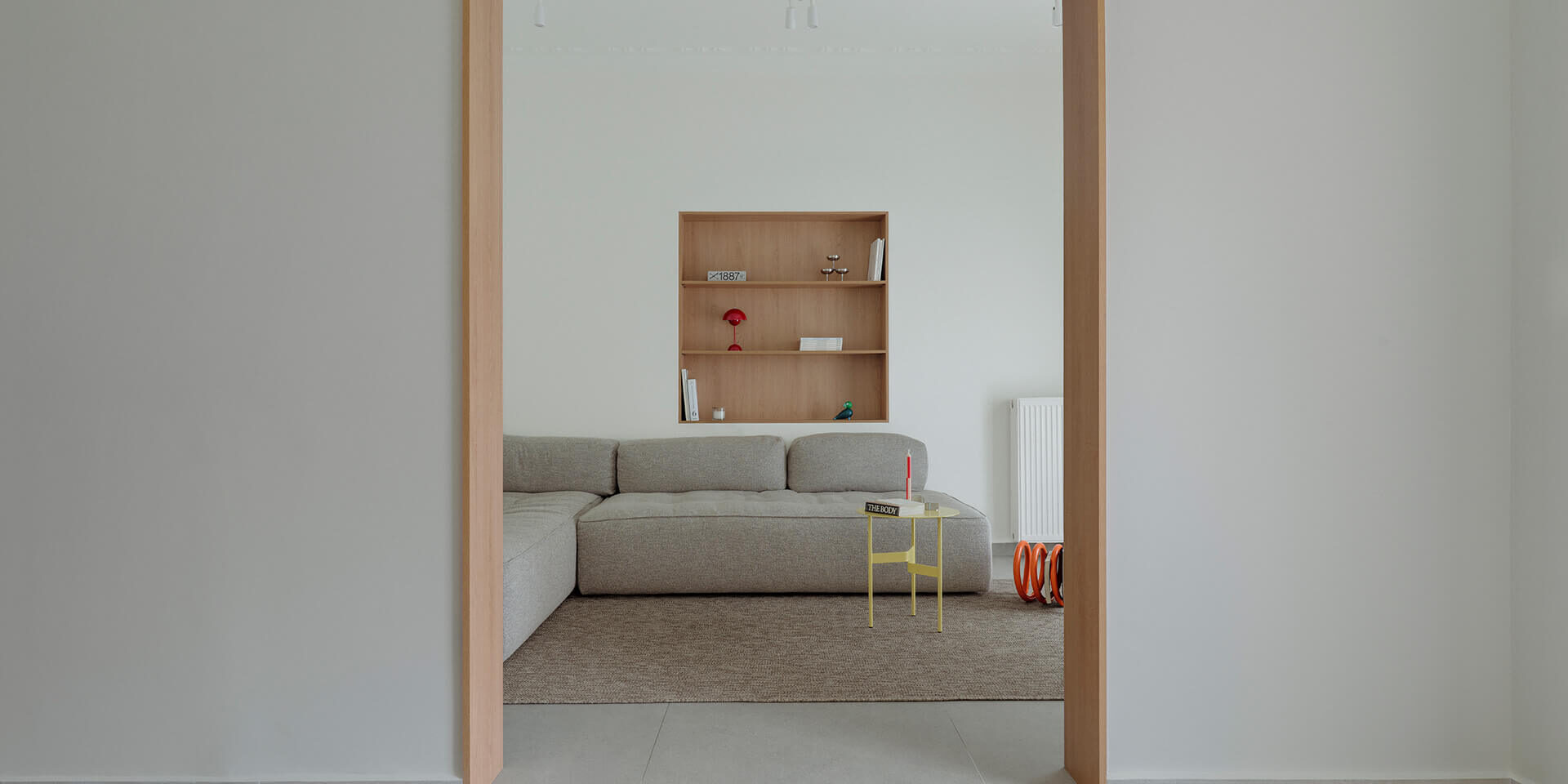
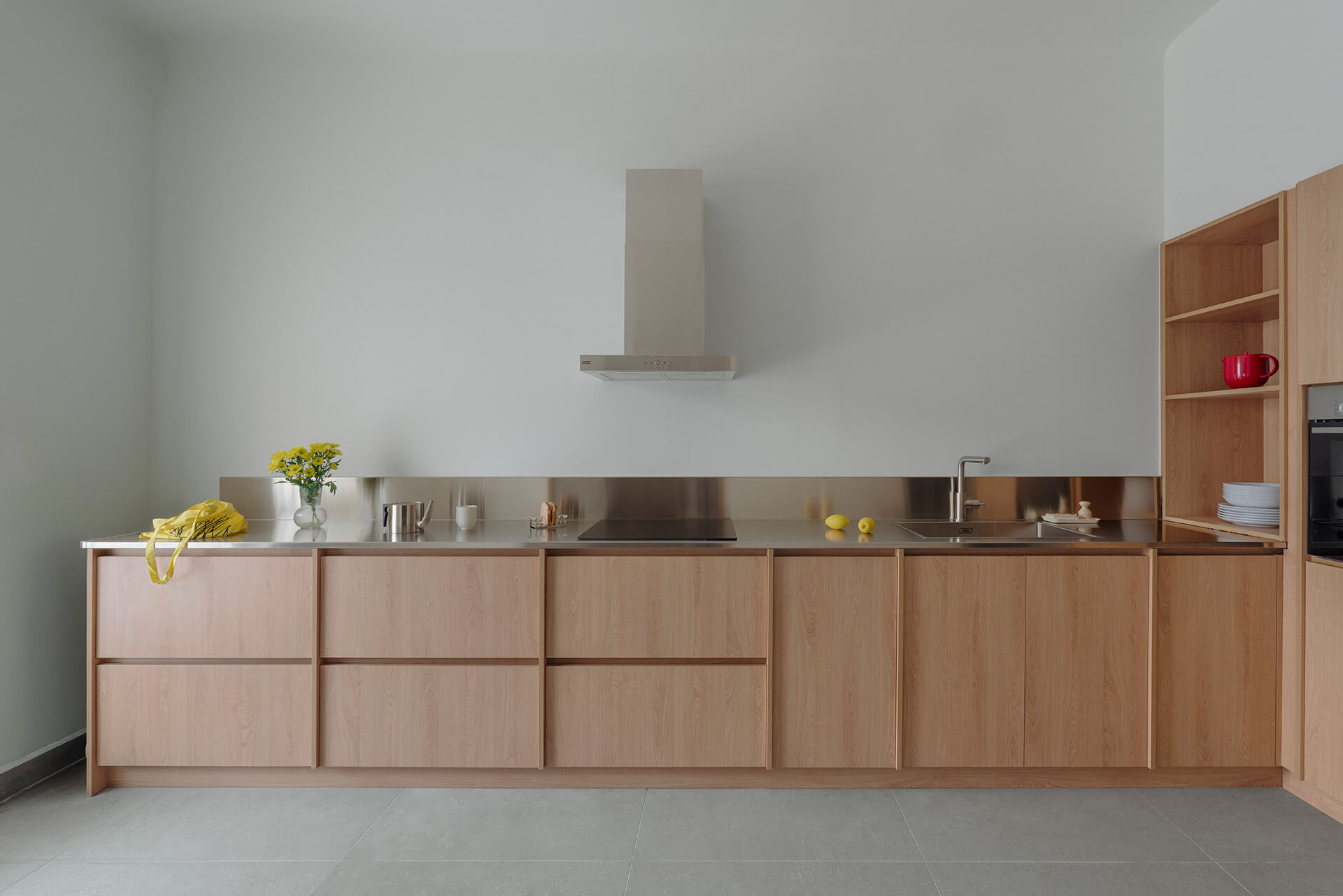
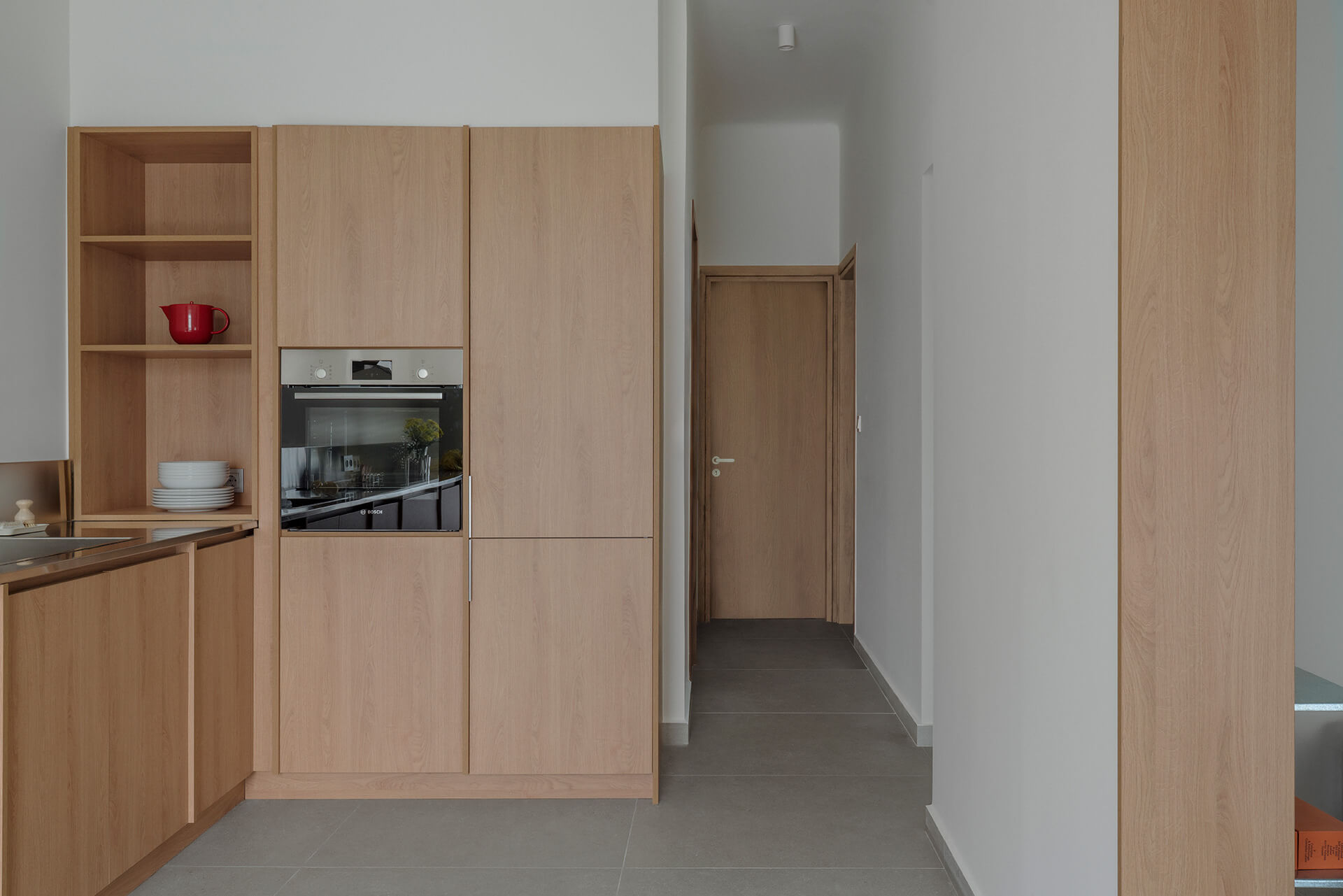
The original layout of the residence is largely maintained, with selective interventions enhancing functionality and spatial flow. The central design gesture is the reconfiguration of the kitchen, which transforms from an isolated, enclosed room into an open core of daily life. Its extension toward the entrance reinforces the continuity of the interior, while its relationship with the living area is organized through the framing of the existing opening, allowing visual connection without fully dissolving the separation between functions.
Reintegration of Existing Elements
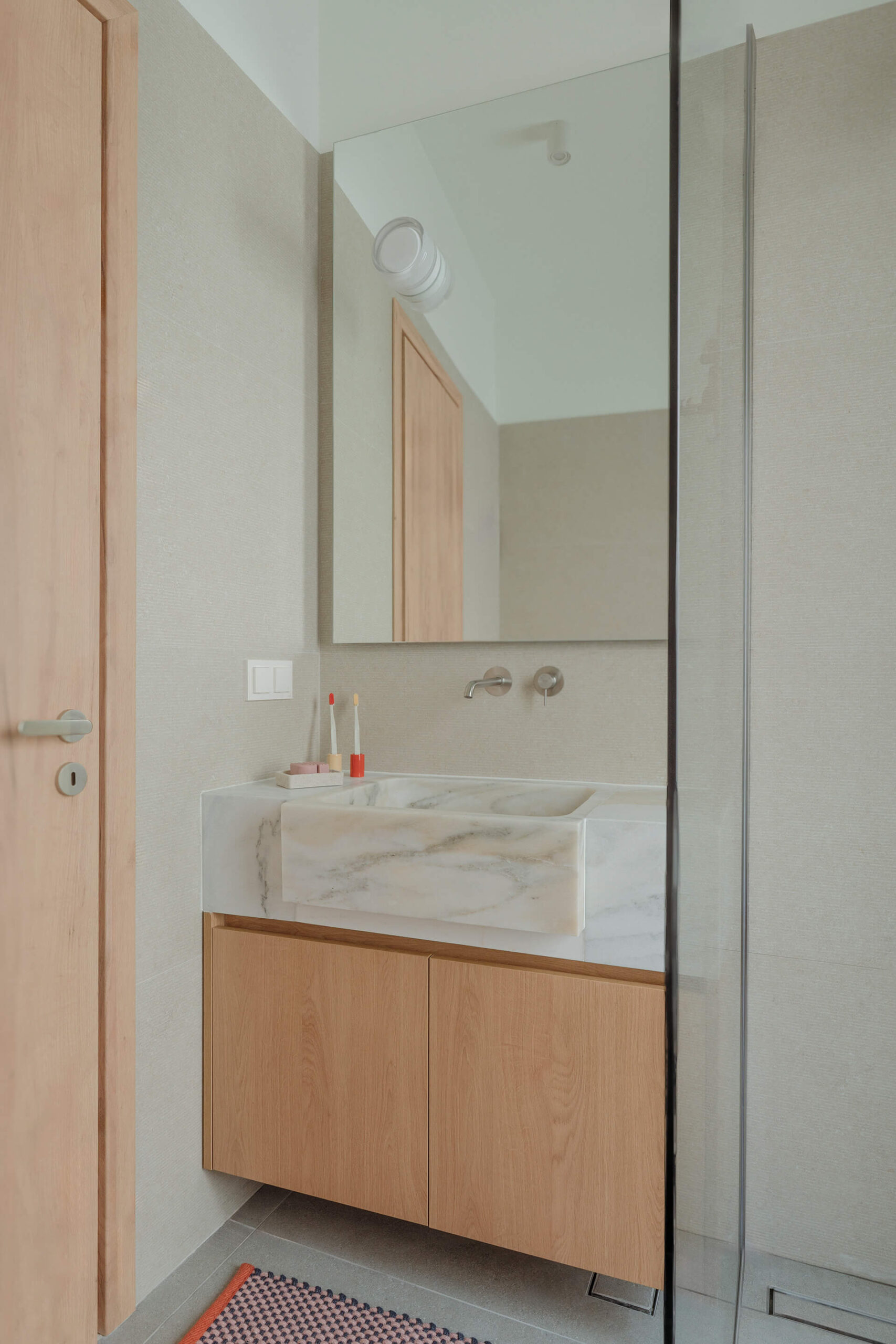
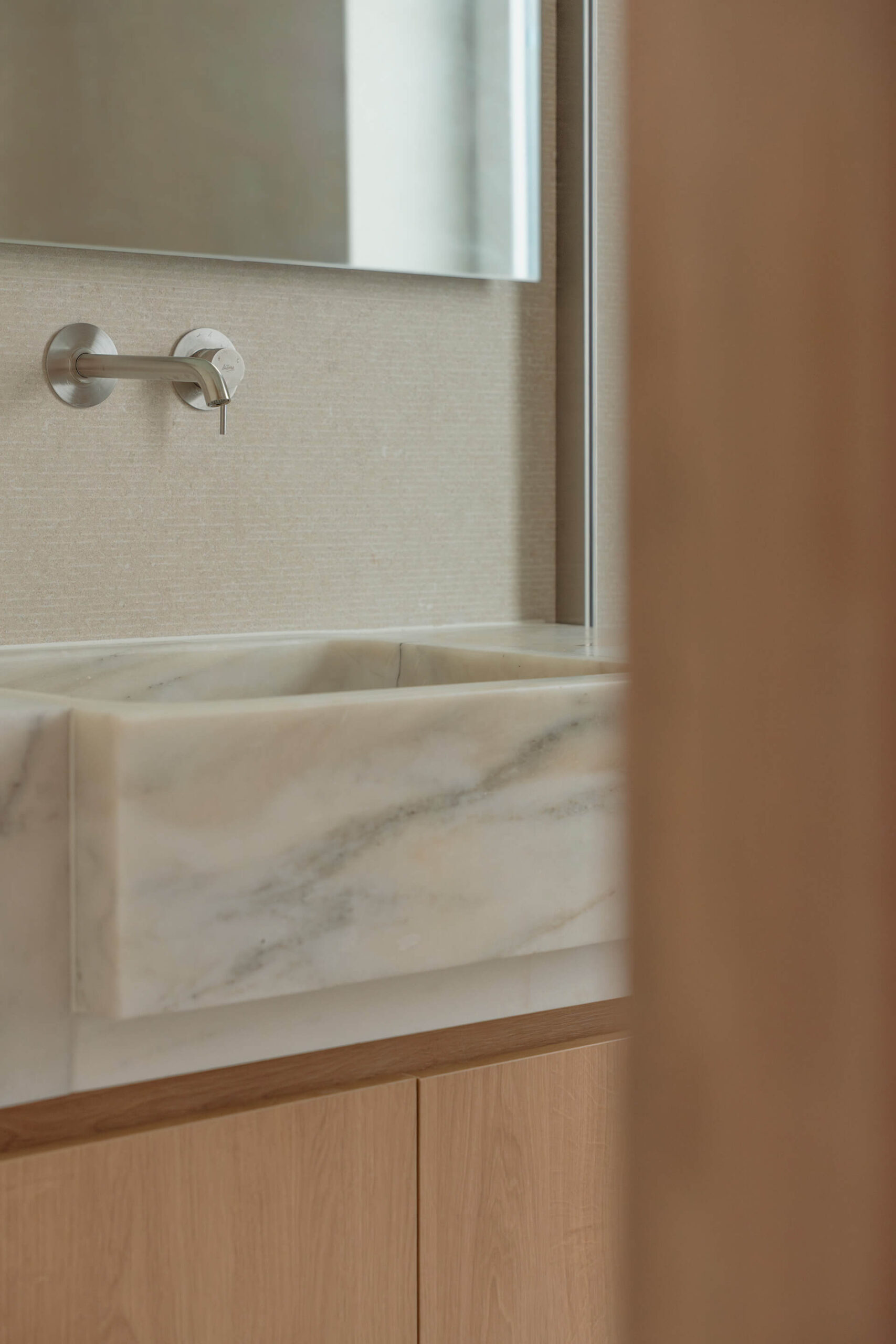
Rather than disconnecting the house from its past, the intervention seeks to creatively incorporate traces and elements of its previous life. The decorative plaster ceiling moldings are preserved as carriers of memory, while the original kitchen sink is restored and repurposed within the bathroom, acquiring a new function in a different spatial context. The residence thus becomes a field of continuity, where old and new coexist without resorting to nostalgic imitation.
Material Palette
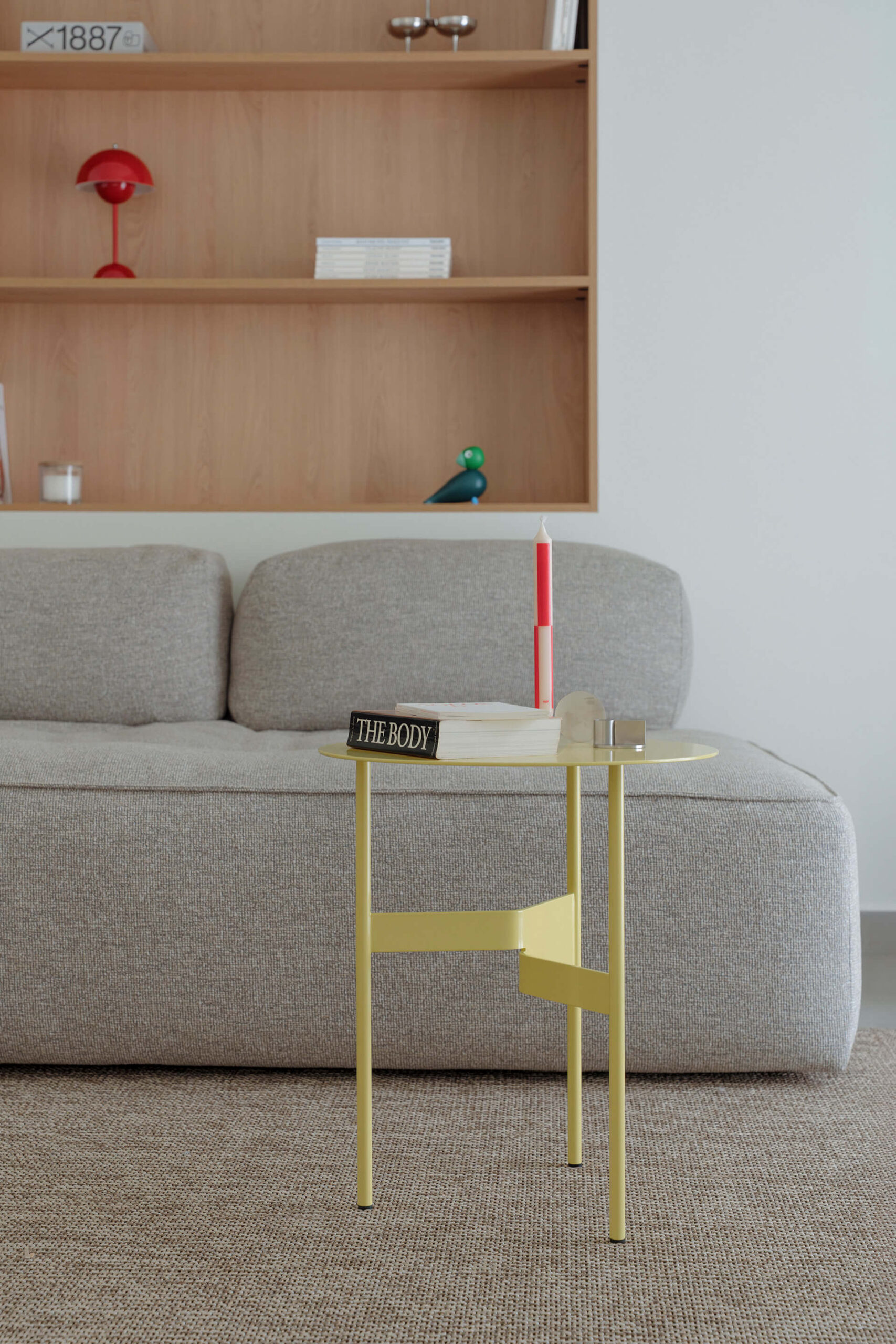
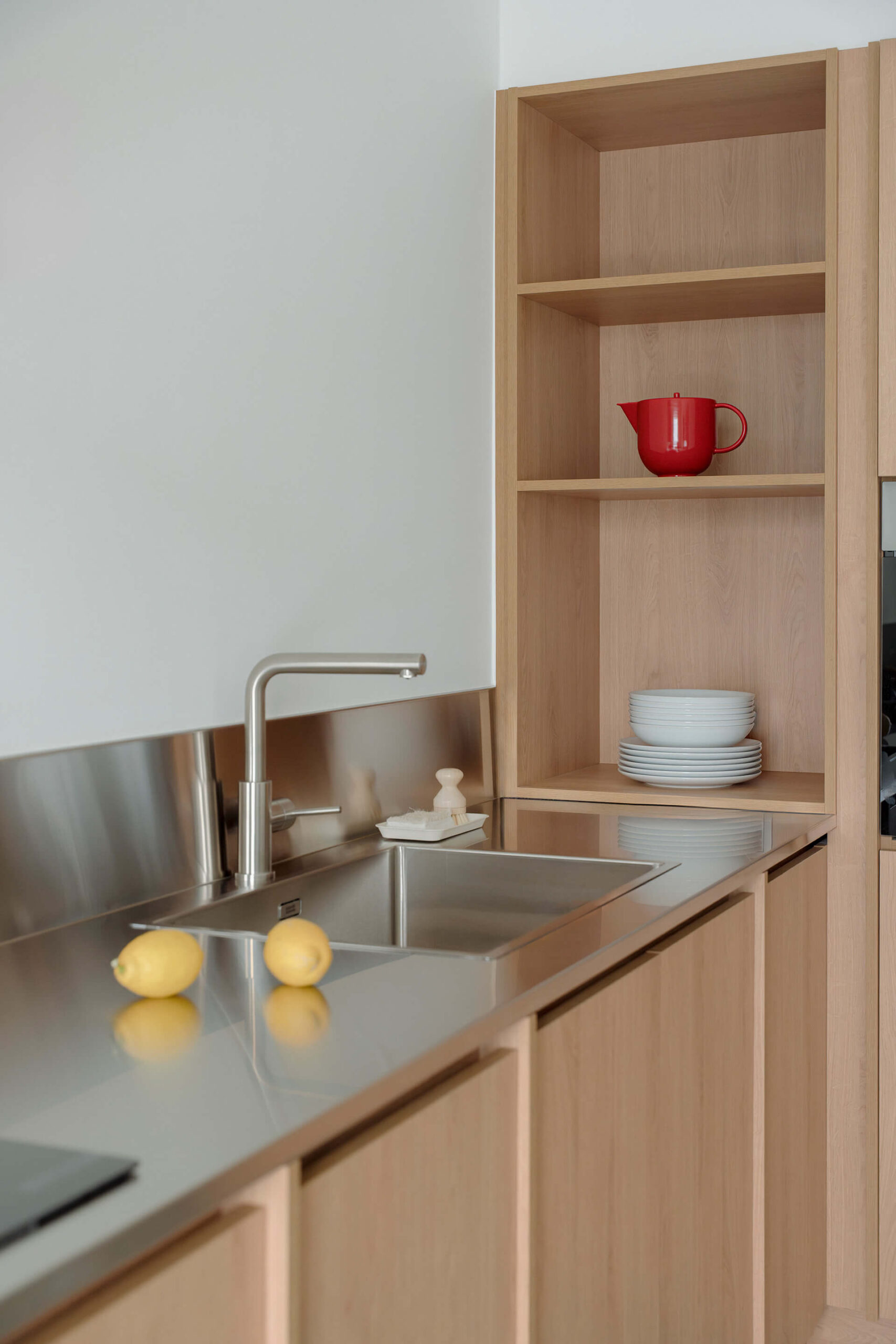
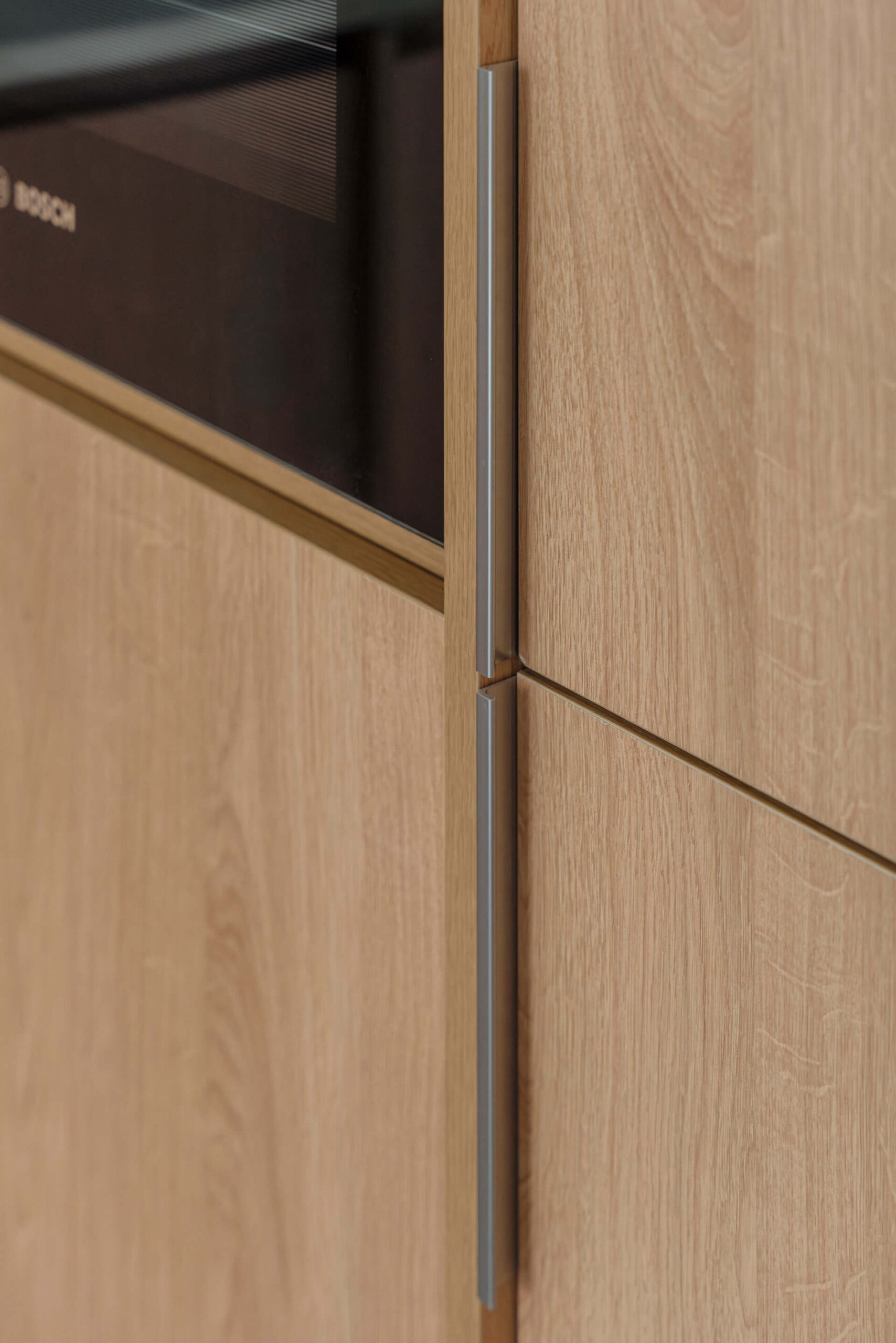
The material palette follows a calm and tactile logic, shaped by natural textures, earthy tones and clear geometries. Wood acts as the primary element of warmth and continuity throughout the interior, while the stainless-steel kitchen countertop introduces a subtle contemporary tension within the otherwise restrained composition. In the bathroom, the relationship between refinement and rawness is reinforced through materials that reference exposed concrete and rougher flooring surfaces, intensifying the tactile experience of the space.
The project approaches the idea of an “urban holiday house”: an intimate domestic environment where simplicity, material honesty and spatial clarity coexist with a subtle sense of nostalgia. Without attempting to replicate the past, the design seeks to carry its traces into the present, allowing the house to evolve while preserving its distinct character.