University of Cyprus Library
Architecture:
Photography:
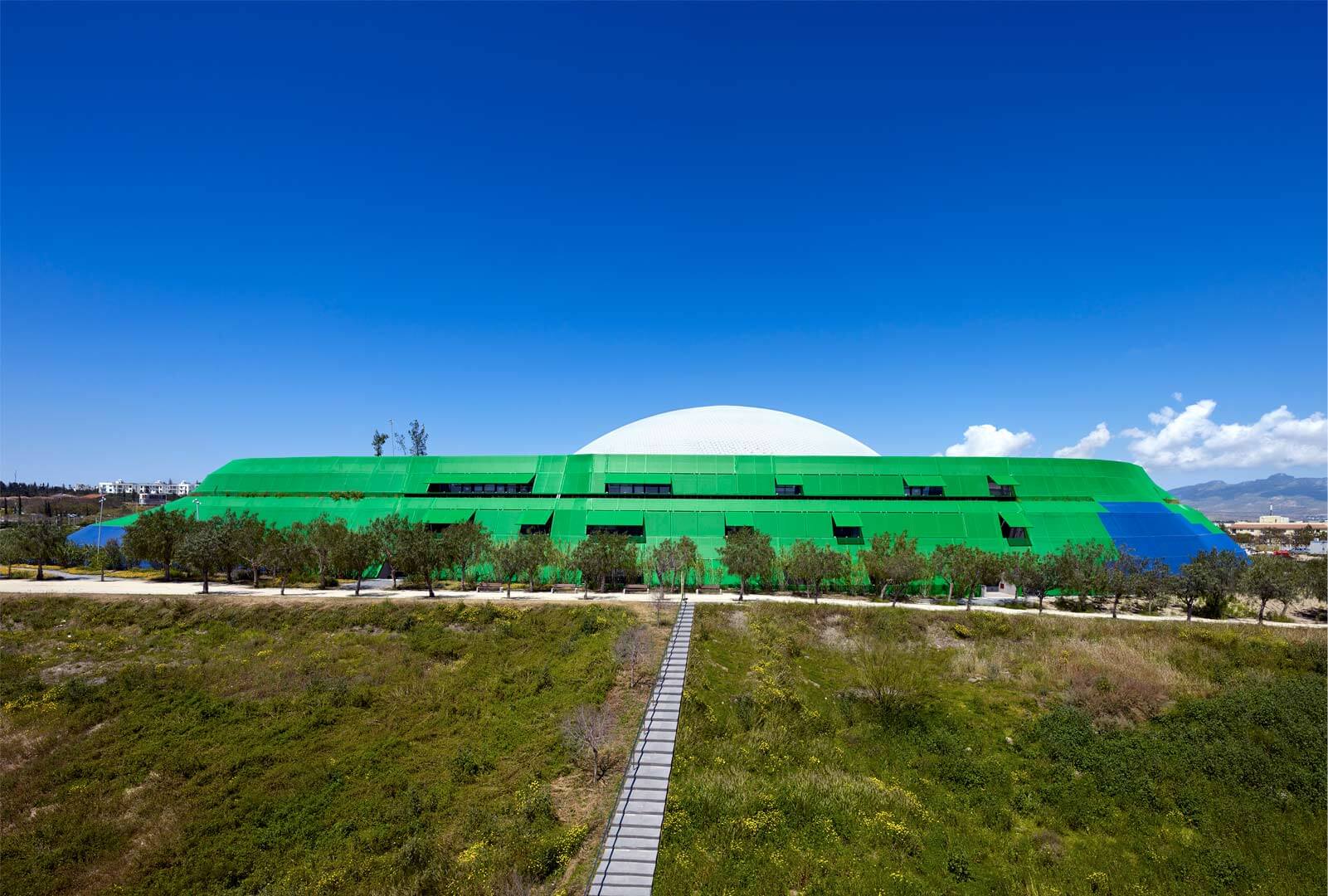
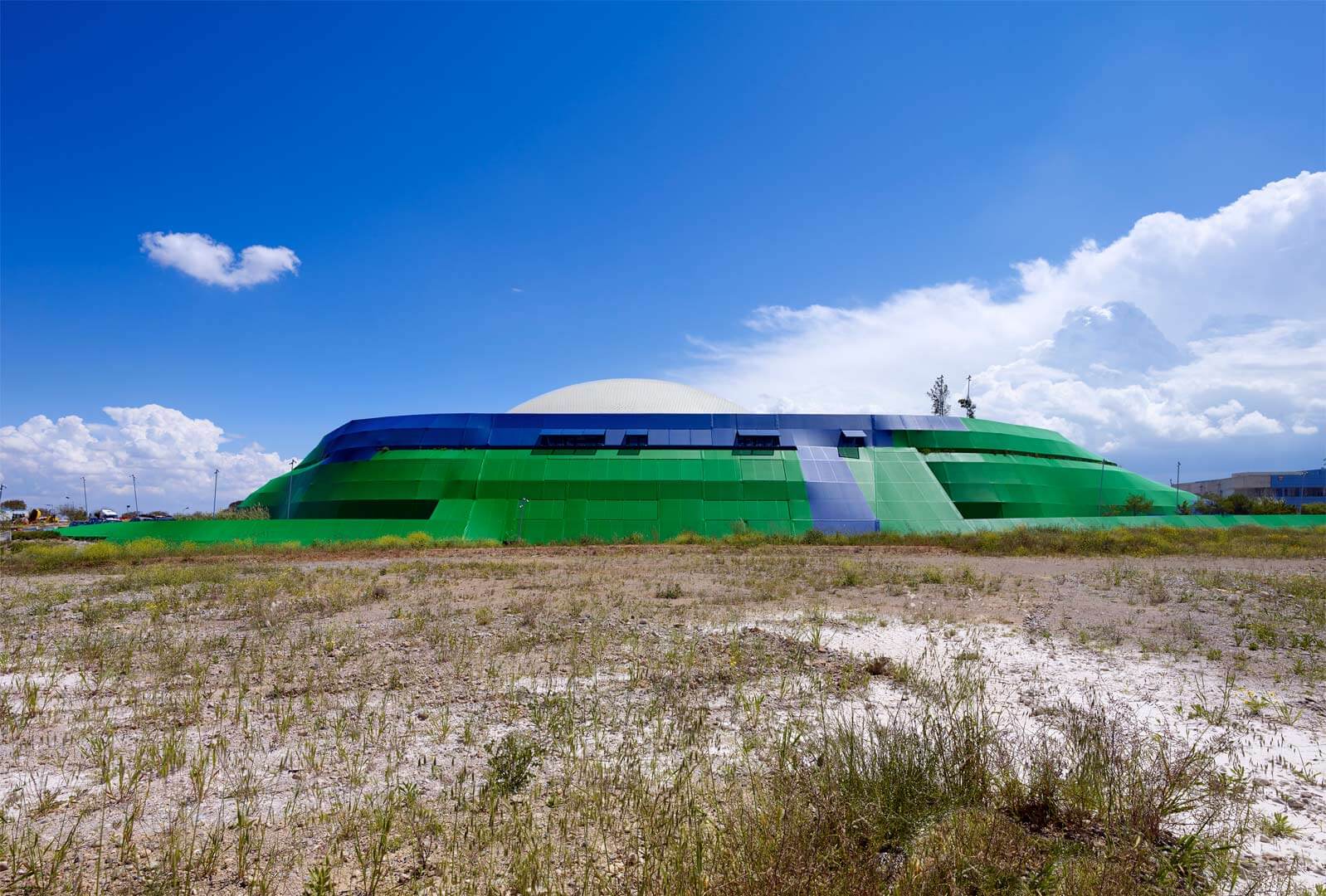
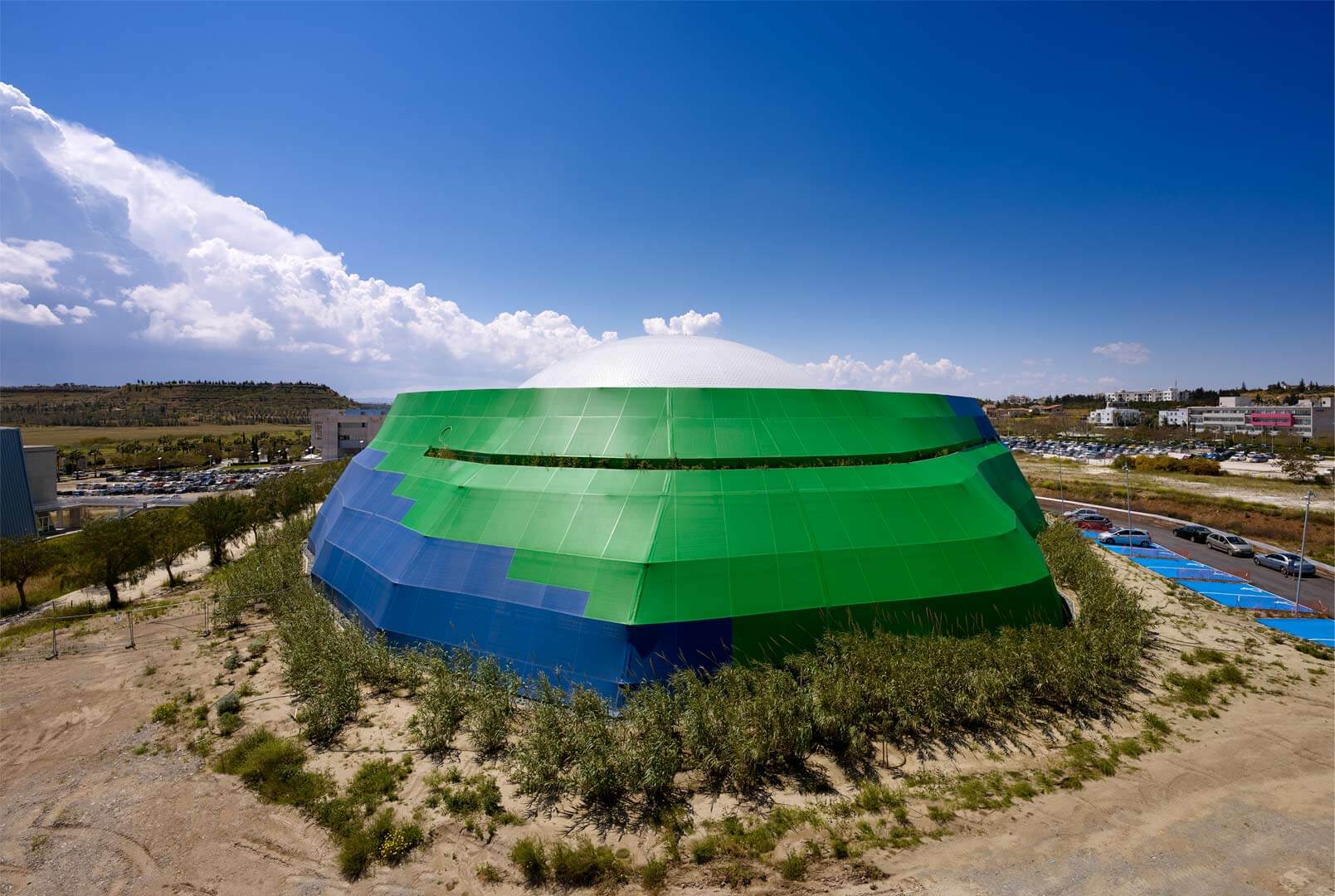
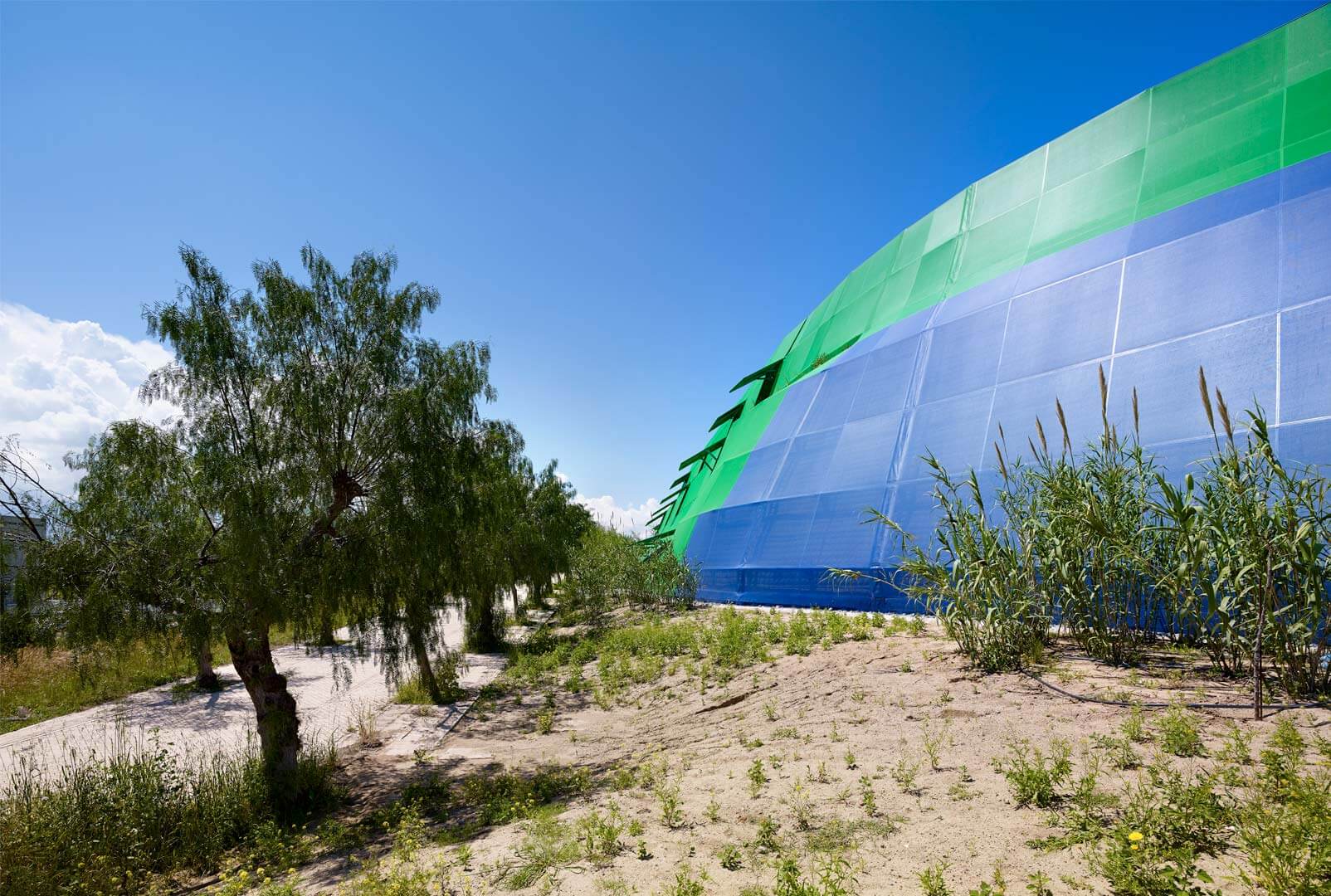
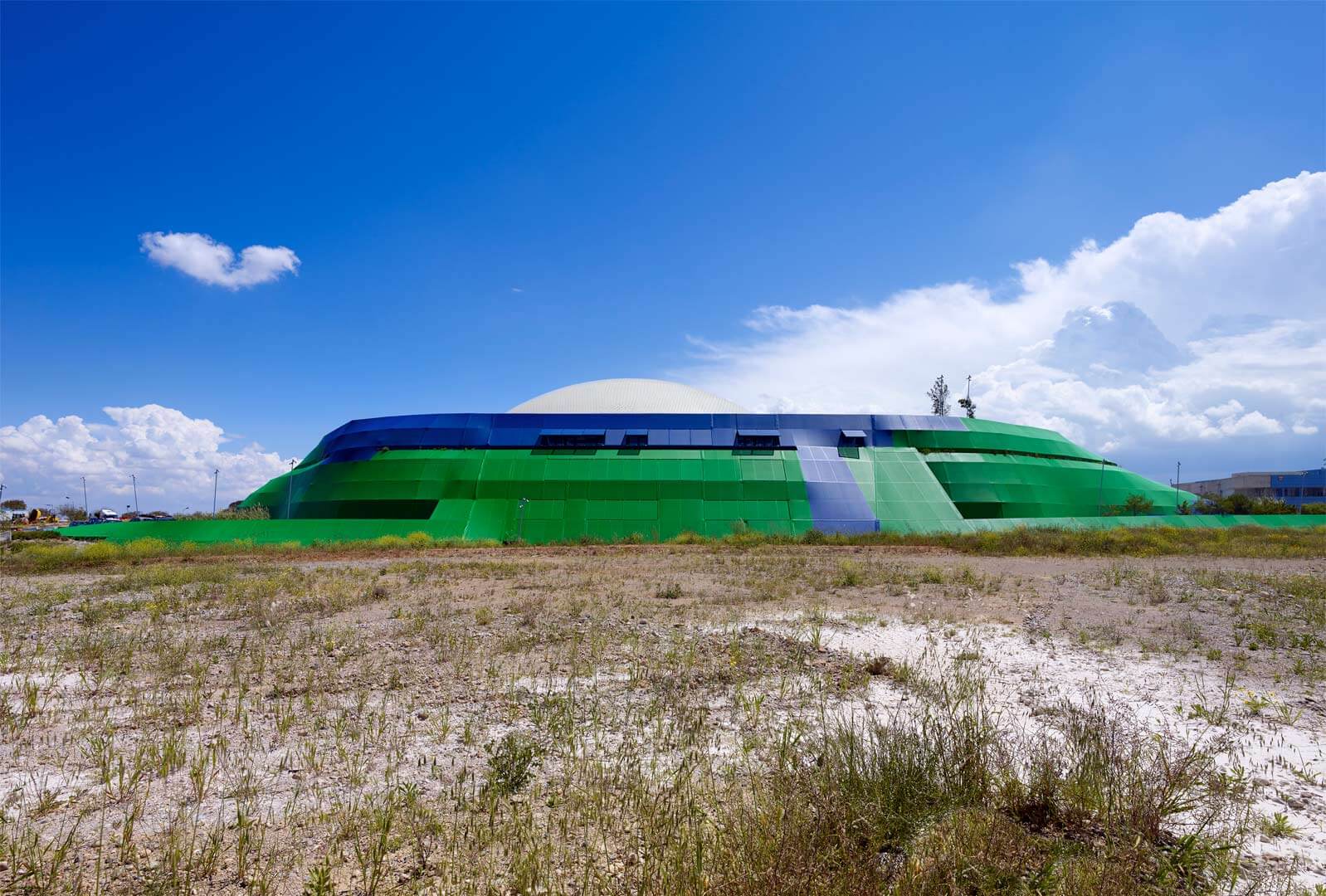
On the northeastern edge of the University of Cyprus campus in Nicosia, an artificial hill rises from the terrain, completing the natural landscape shaped by Aronas Hill and the Kalogeros river. Seamlessly integrated into its surroundings, it appears less as an intervention and more as a quiet geological inevitability – an architectural gesture that feels as though it has always belonged there.
Design Philosophy
Beneath this constructed topography lie the Information Center and the Library of the University of Cyprus, named after Stelios Ioannou in recognition of the decisive donation by his widow, Ellie Ioannou, which set the long-envisioned project into motion. What emerges is not merely a repository of knowledge, but a landmark that redefines the relationship between architecture and landscape.
Designed by Pritzker Prize laureate Jean Nouvel, the complex embodies the French architect’s enduring preoccupation with light, materiality and contextual integration. Rather than imposing a monumental object onto the campus, Nouvel conceived a 15,700 m² structure that dissolves into the earth. The building unfolds across five levels, two of which are embedded underground, while the remaining three are contained within the 40-metre-wide artificial hill.
Custom Structure
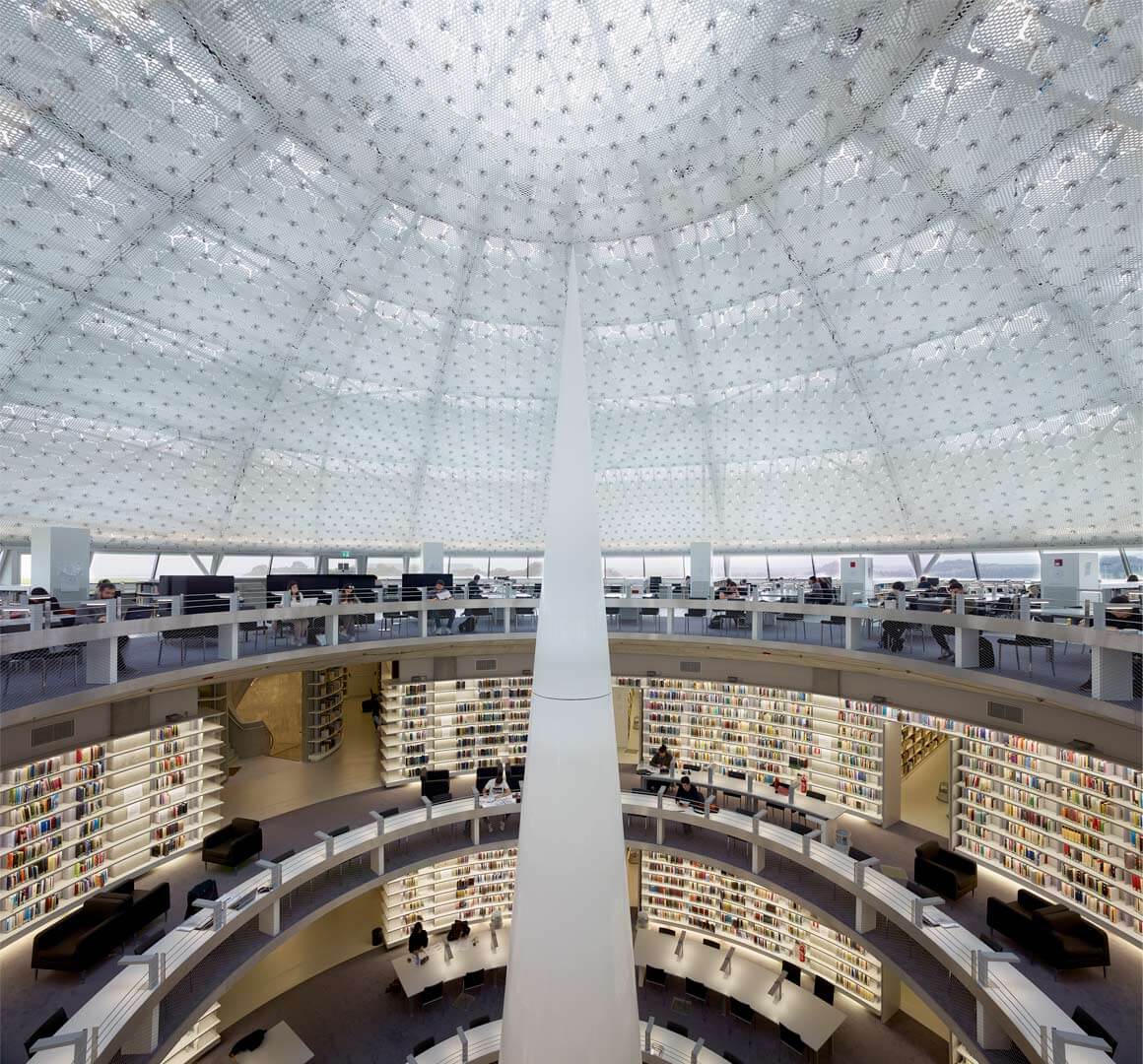
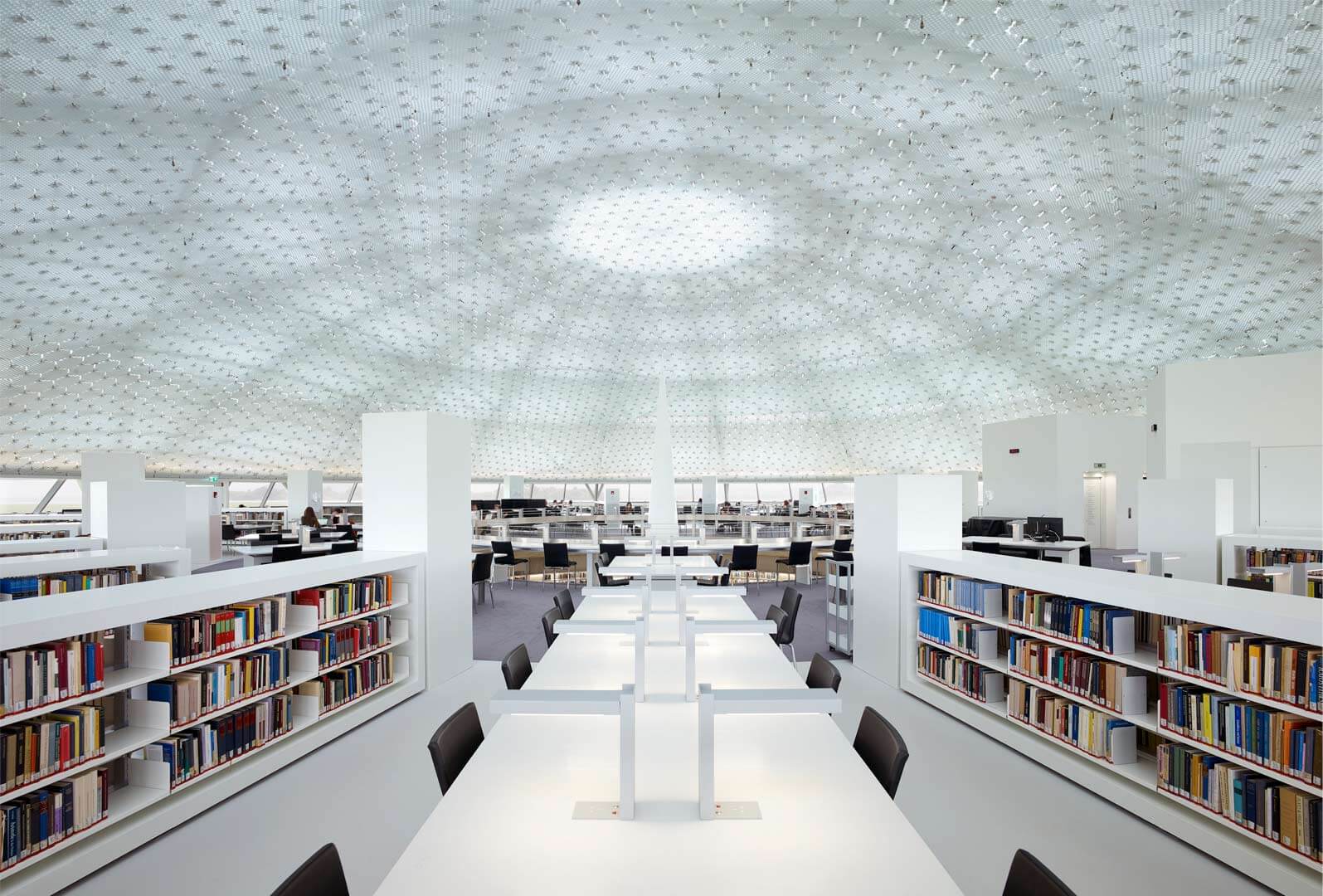
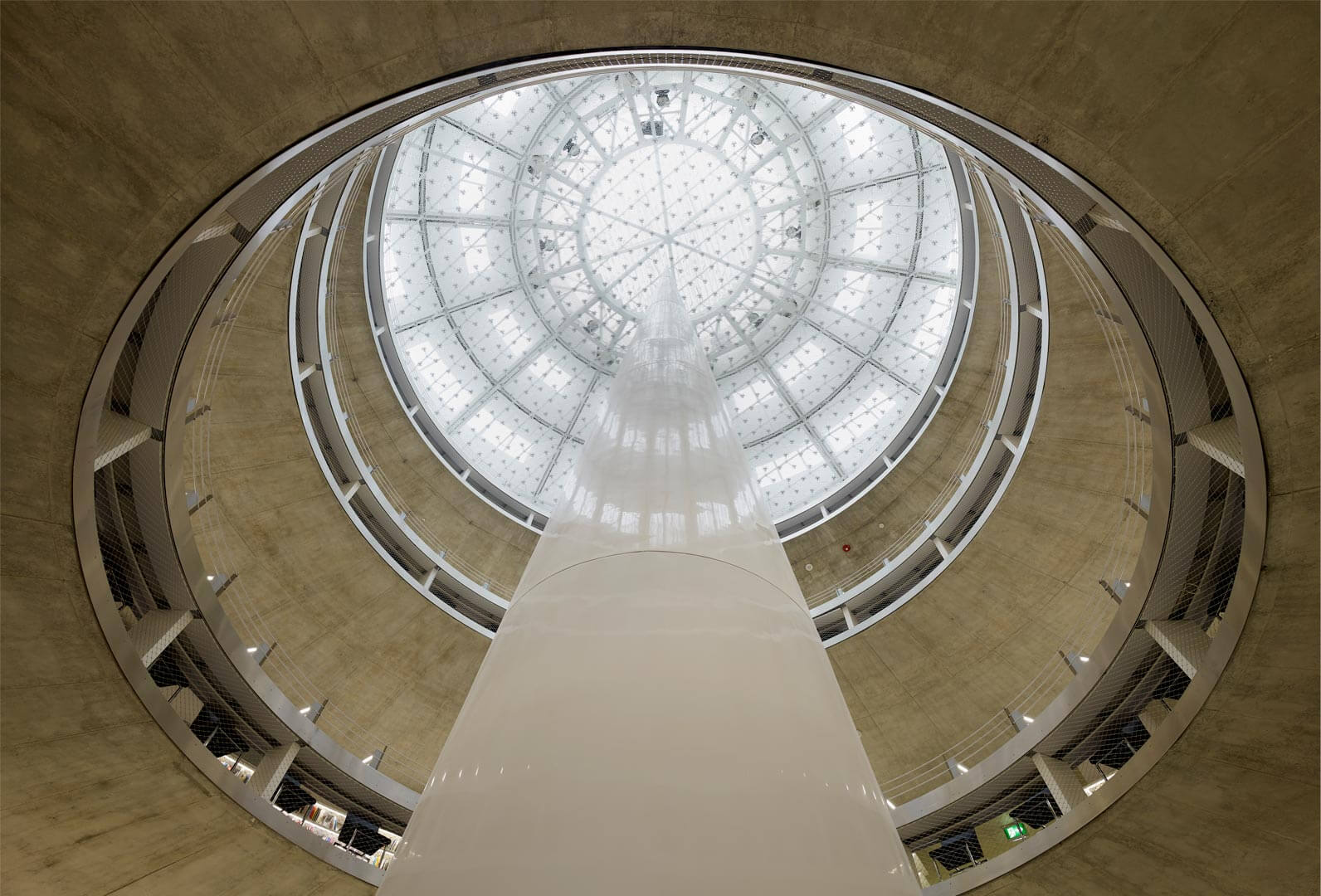
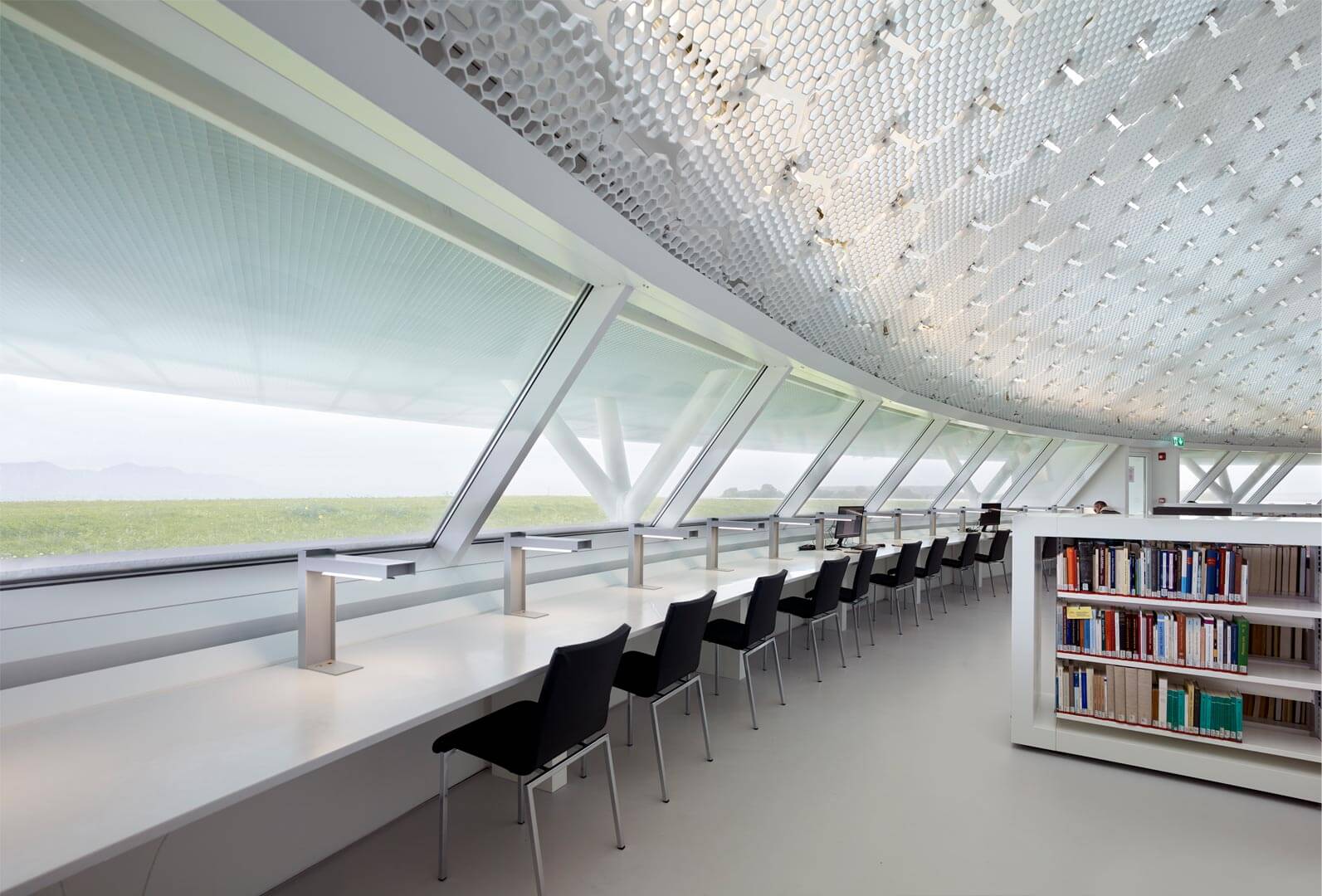
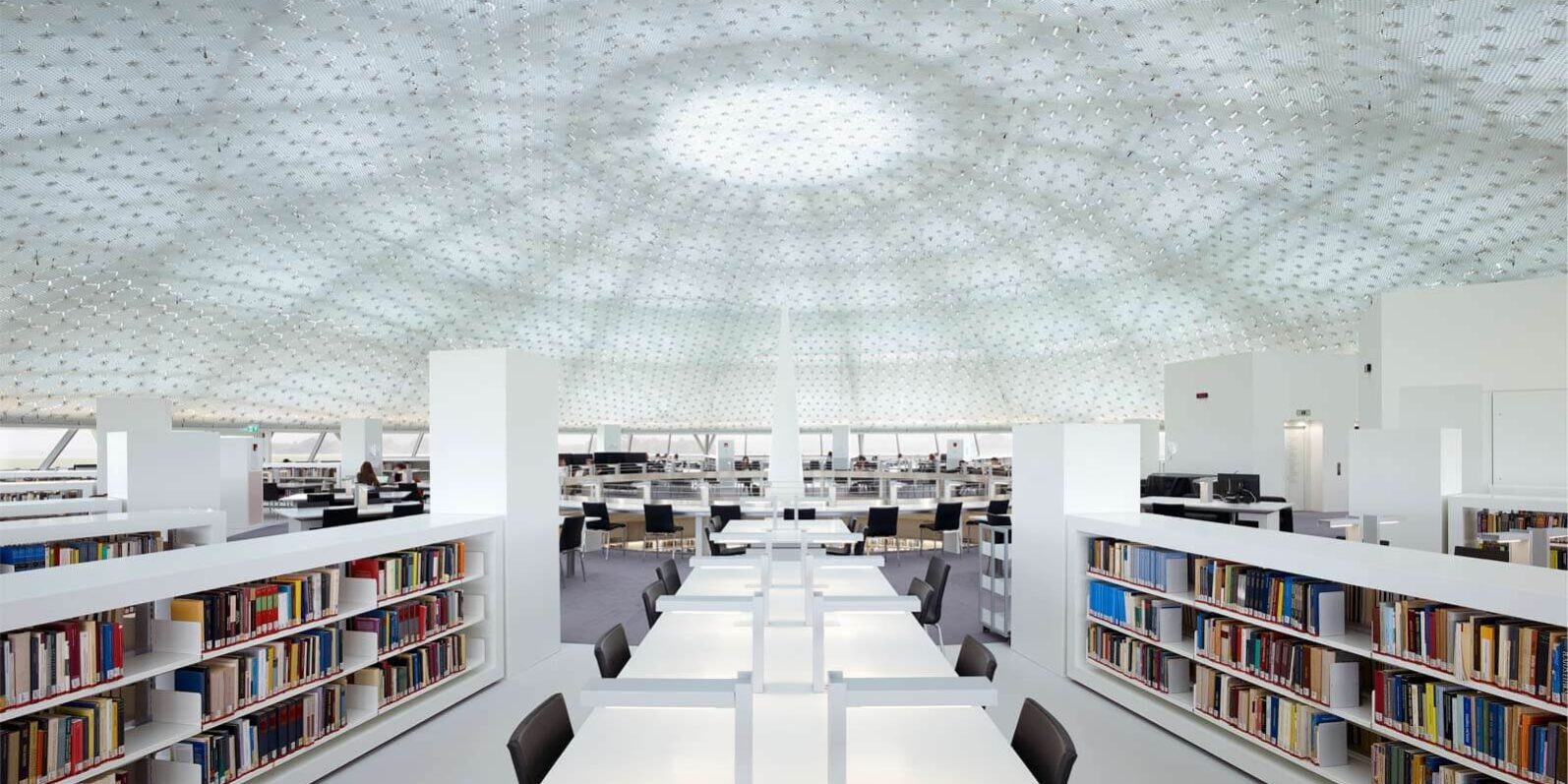
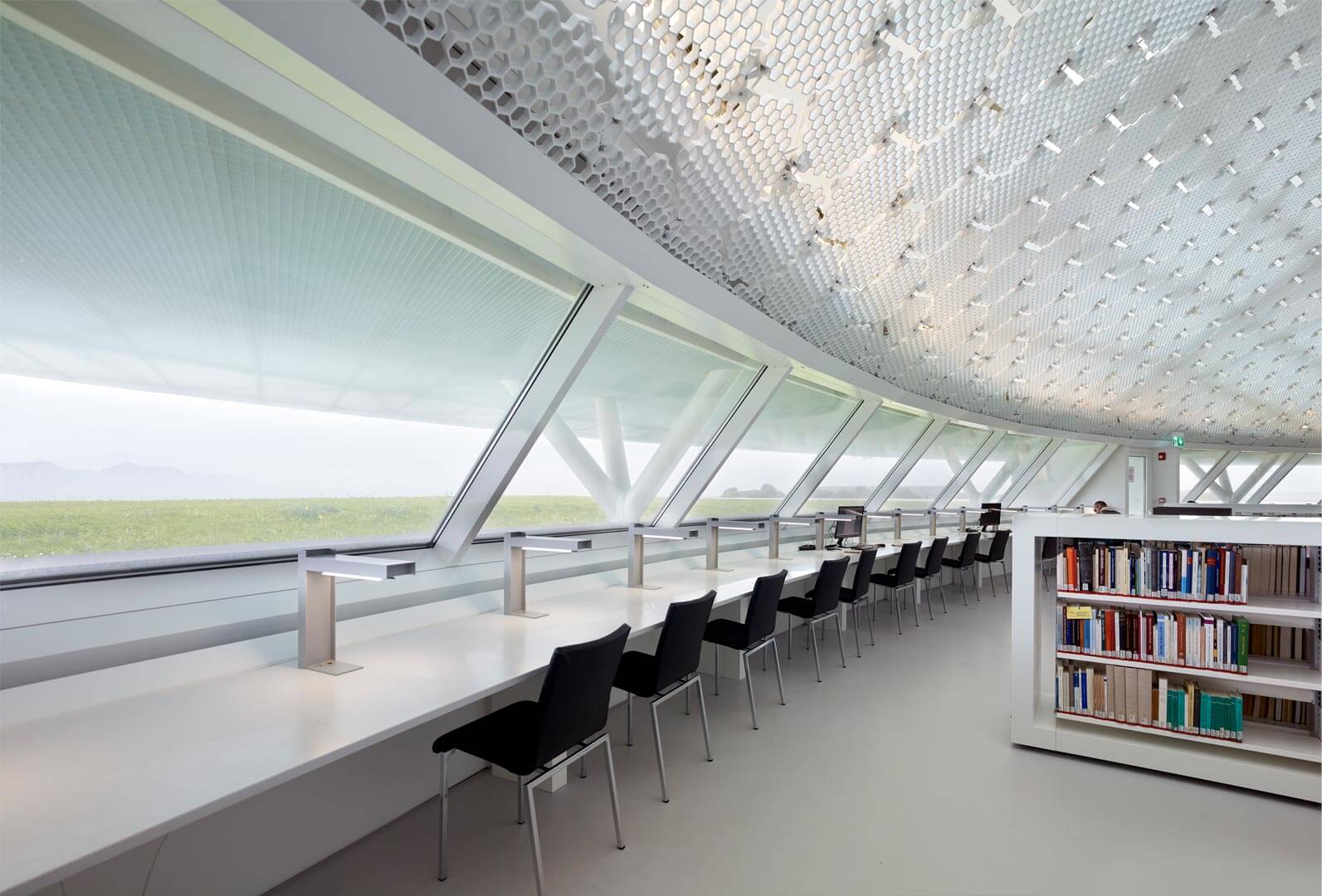
The dome-like membrane that envelops the structure is rendered in an abstract composition of natural hues, reinforcing its dialogue with the Cypriot terrain. Transparent yet technologically advanced, the envelope allows daylight to penetrate deep into the interior while incorporating sophisticated solar protection systems that enhance the building’s bioclimatic performance. The result is an architecture that is both visually restrained and environmentally responsive.
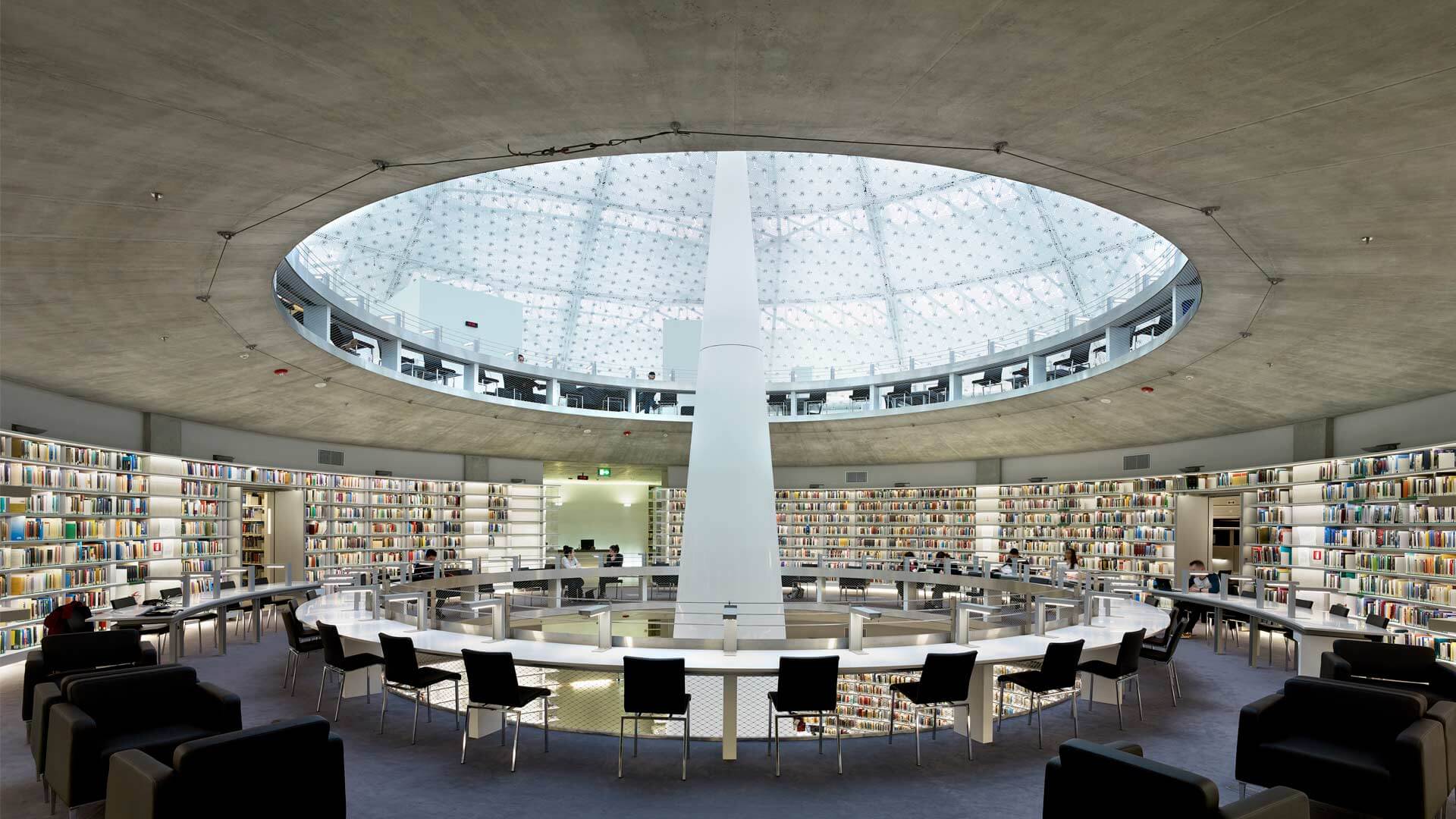
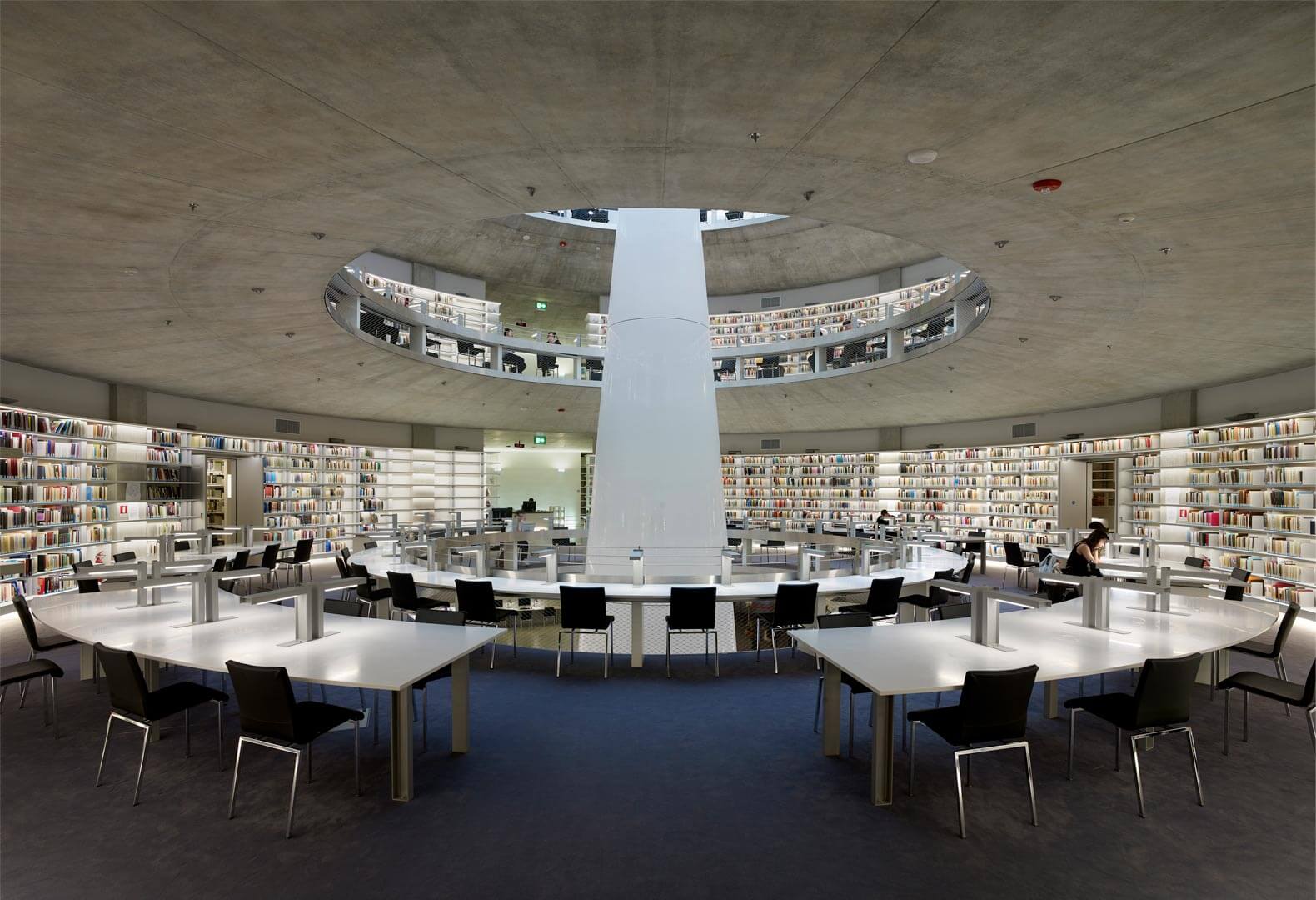
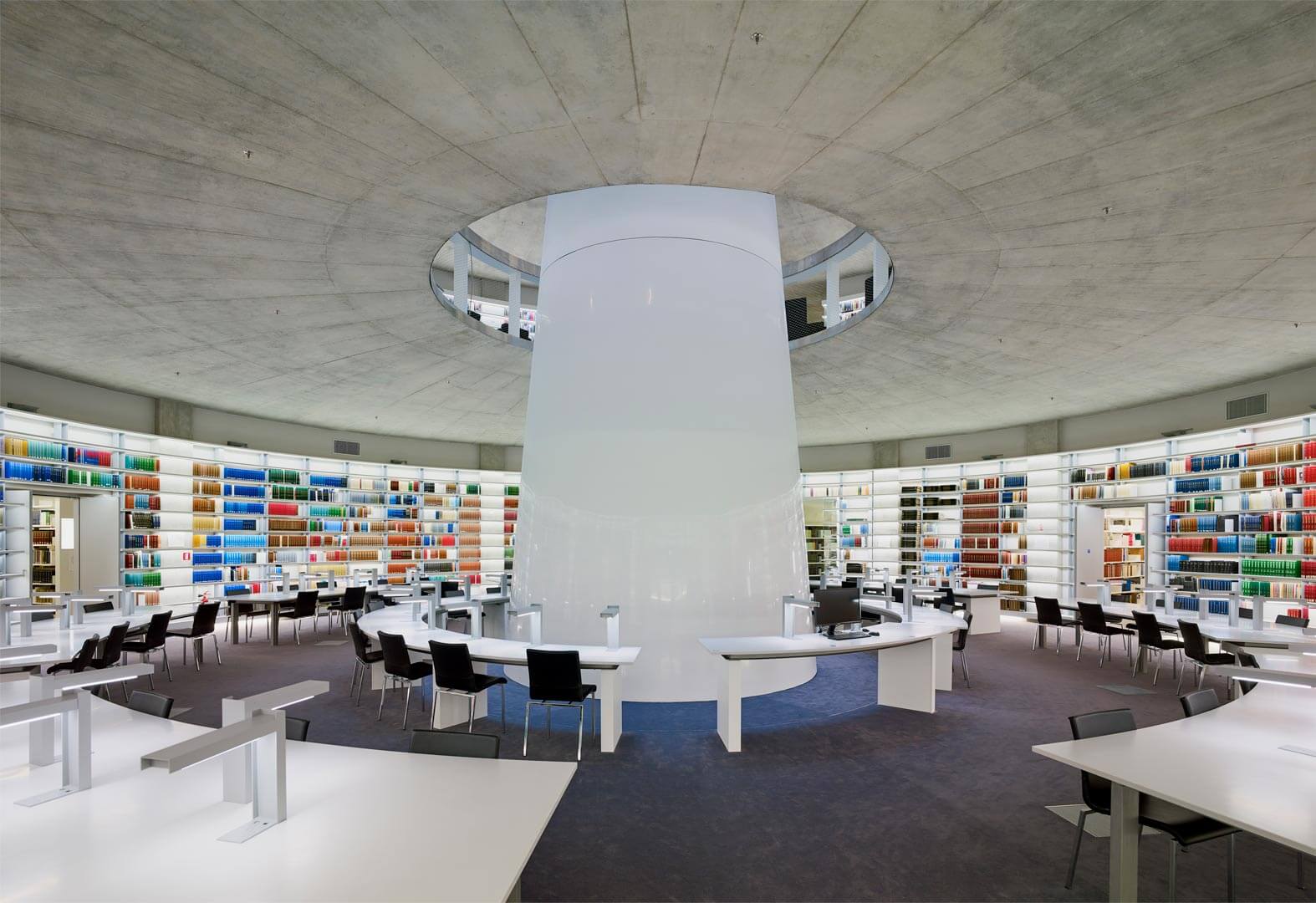
A pivotal element of this strategy is the heliostat: a 24-metre-high, five-metre-thick conical structure clad in louvers. Acting as a light-harvesting device, it captures and redirects sunlight into the heart of the building, channeling it even to the lowest levels. This sculptural mechanism not only reinforces the project’s environmental agenda but also dramatizes the interior spatial experience.
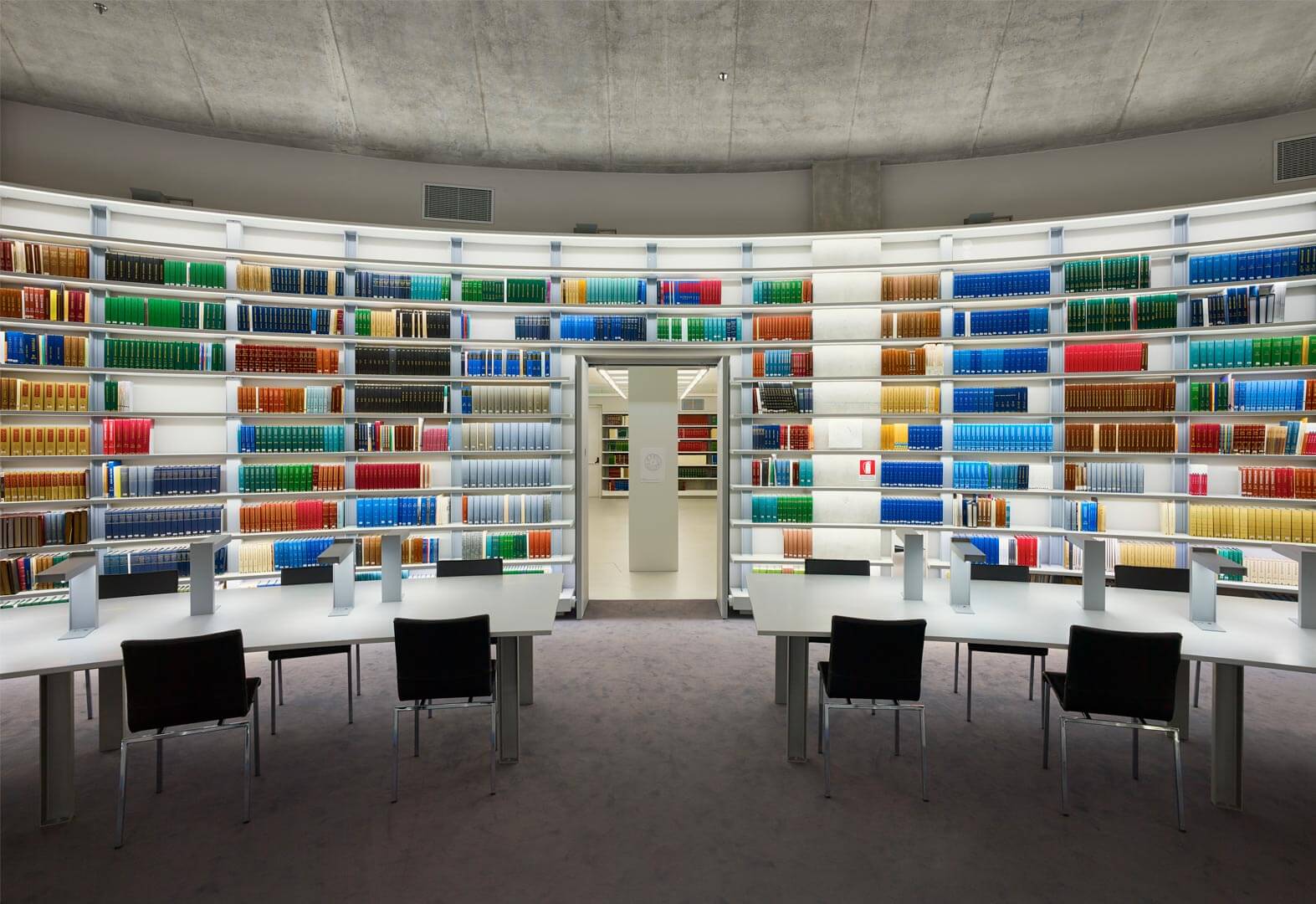
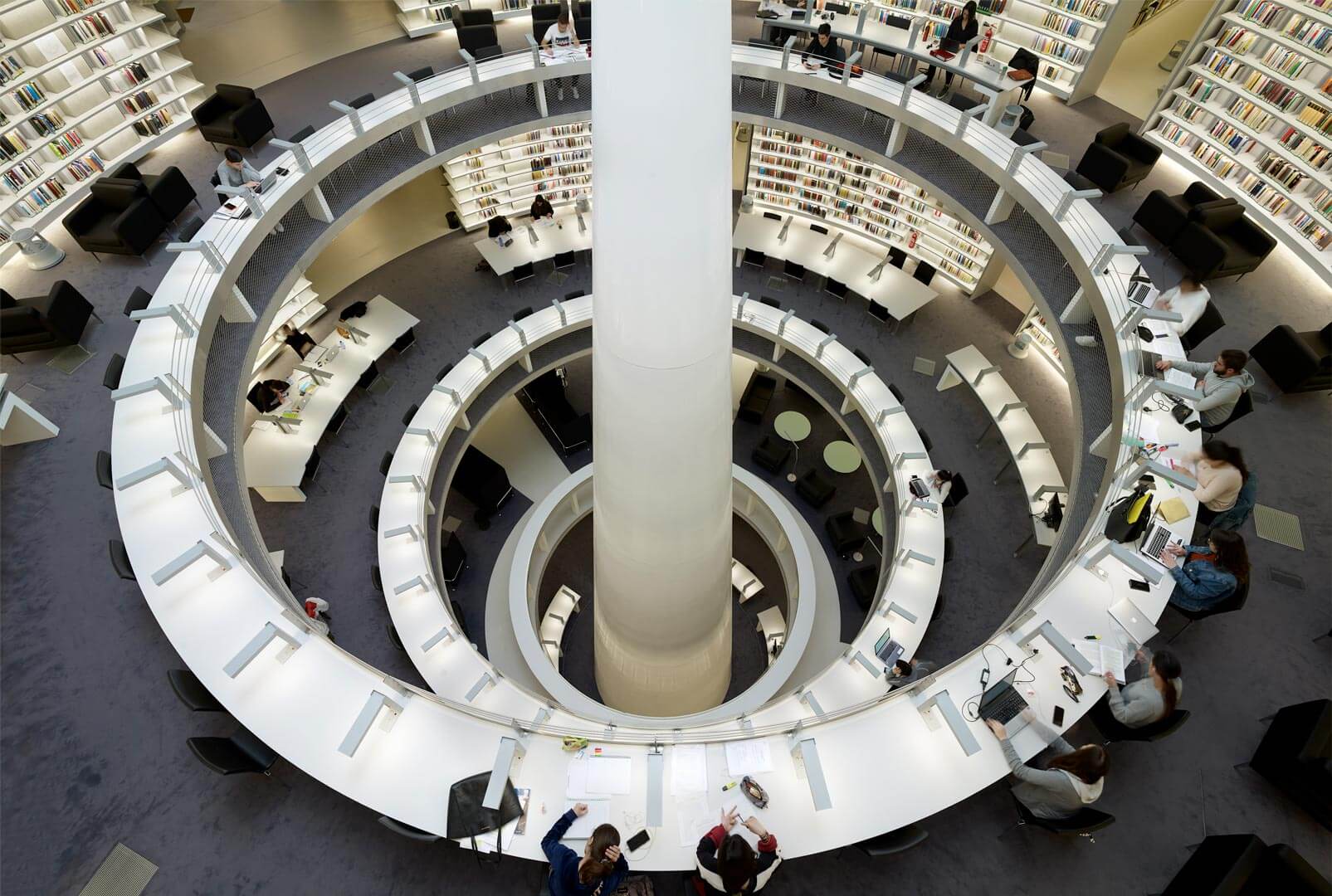
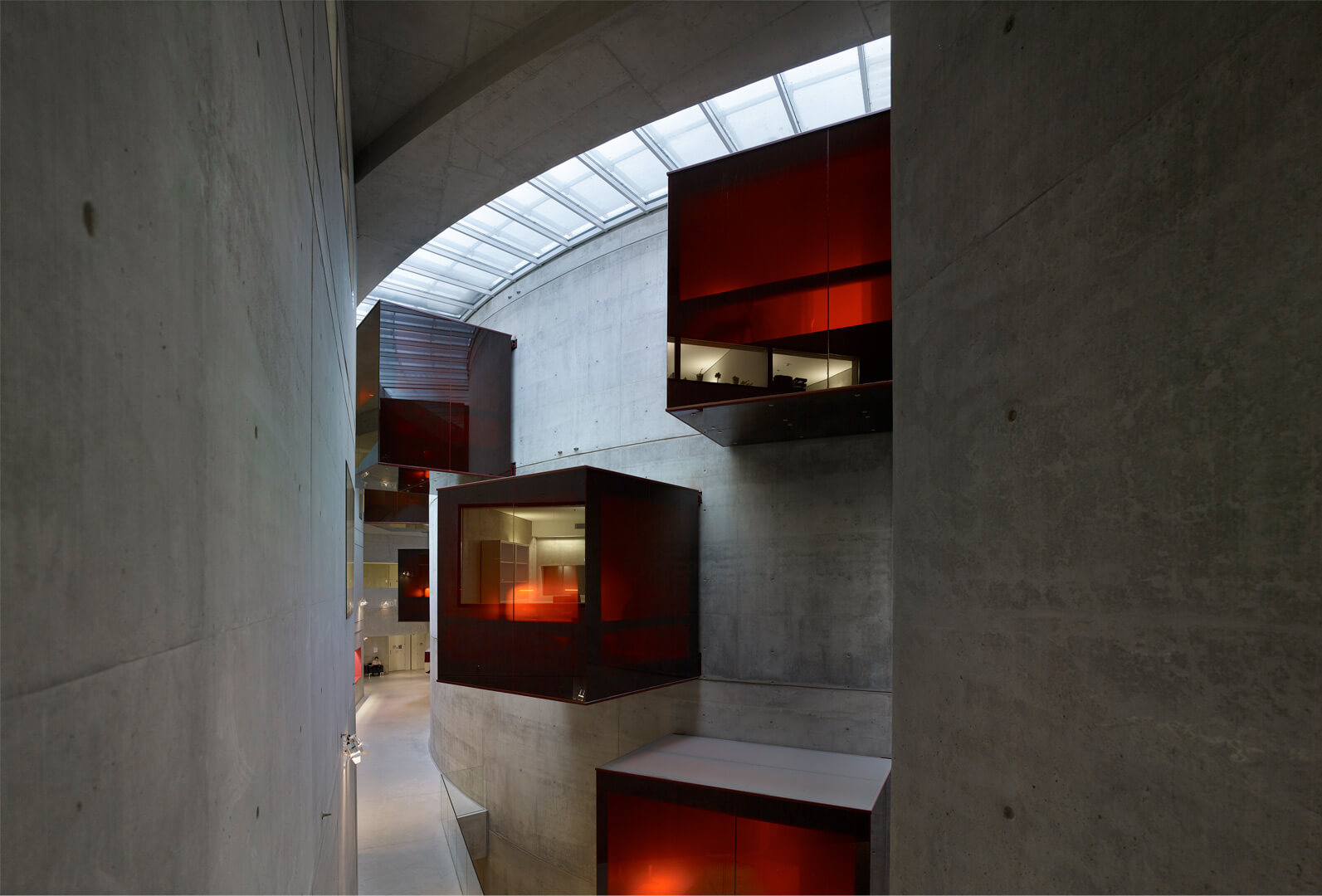
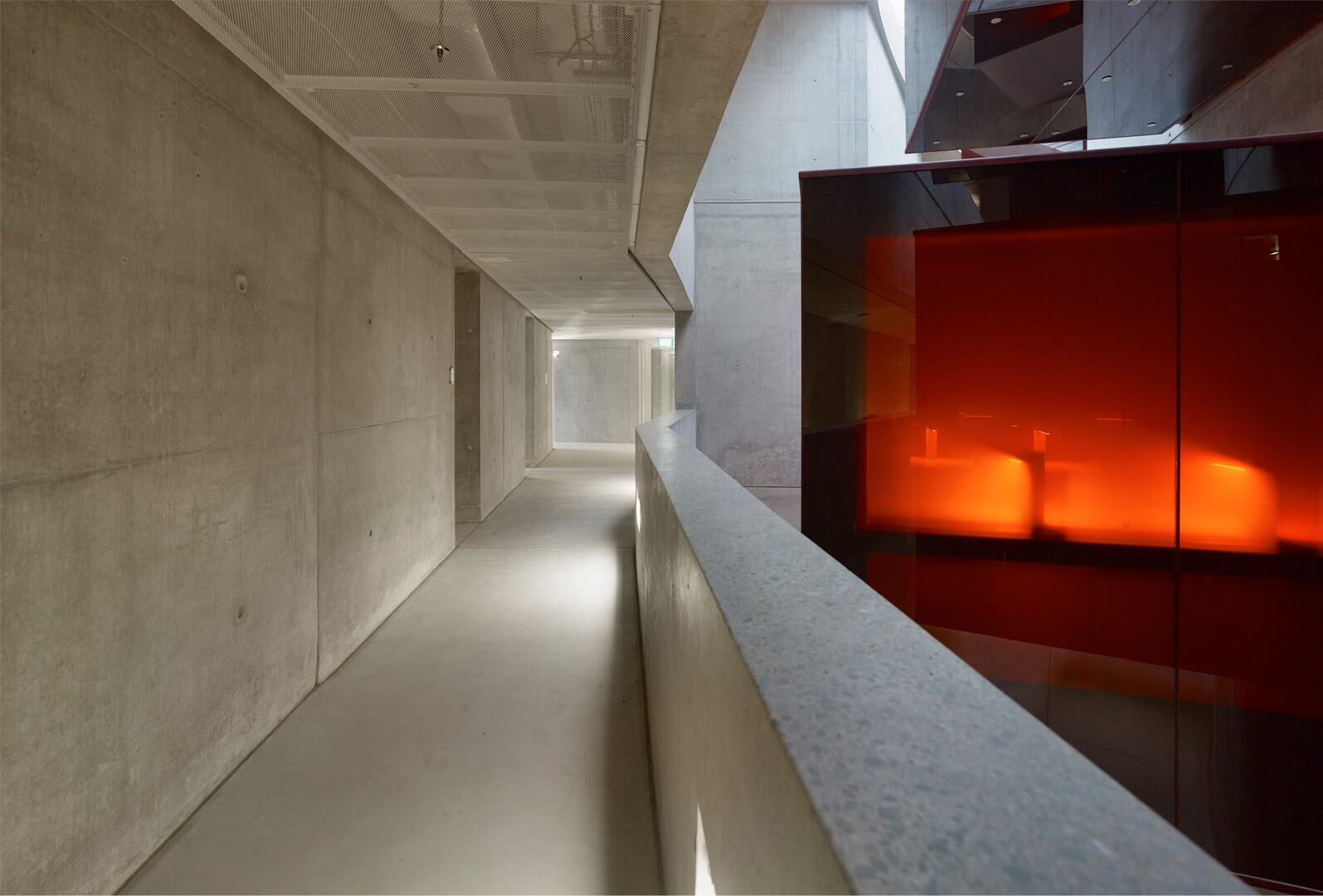
Nowhere is this more evident than in the reading room at ground level. Arranged around the perimeter of a central atrium, 31 glazed study cubes function as intimate enclaves within the larger collective space. Bathed in filtered daylight, they form a rhythmic constellation of transparent volumes – quiet sanctuaries for concentration within an open, communal setting.
Context Integration
The building has quickly assumed the status of an architectural reference point in Cyprus, particularly for younger generations. Its planted landscape alternative – the constructed hill rather than a conventional green roof – demonstrates a deliberate departure from predictable sustainable tropes. Instead, the project proposes a more immersive integration of architecture and site, where enclosure, terrain and climate operate as a unified system.
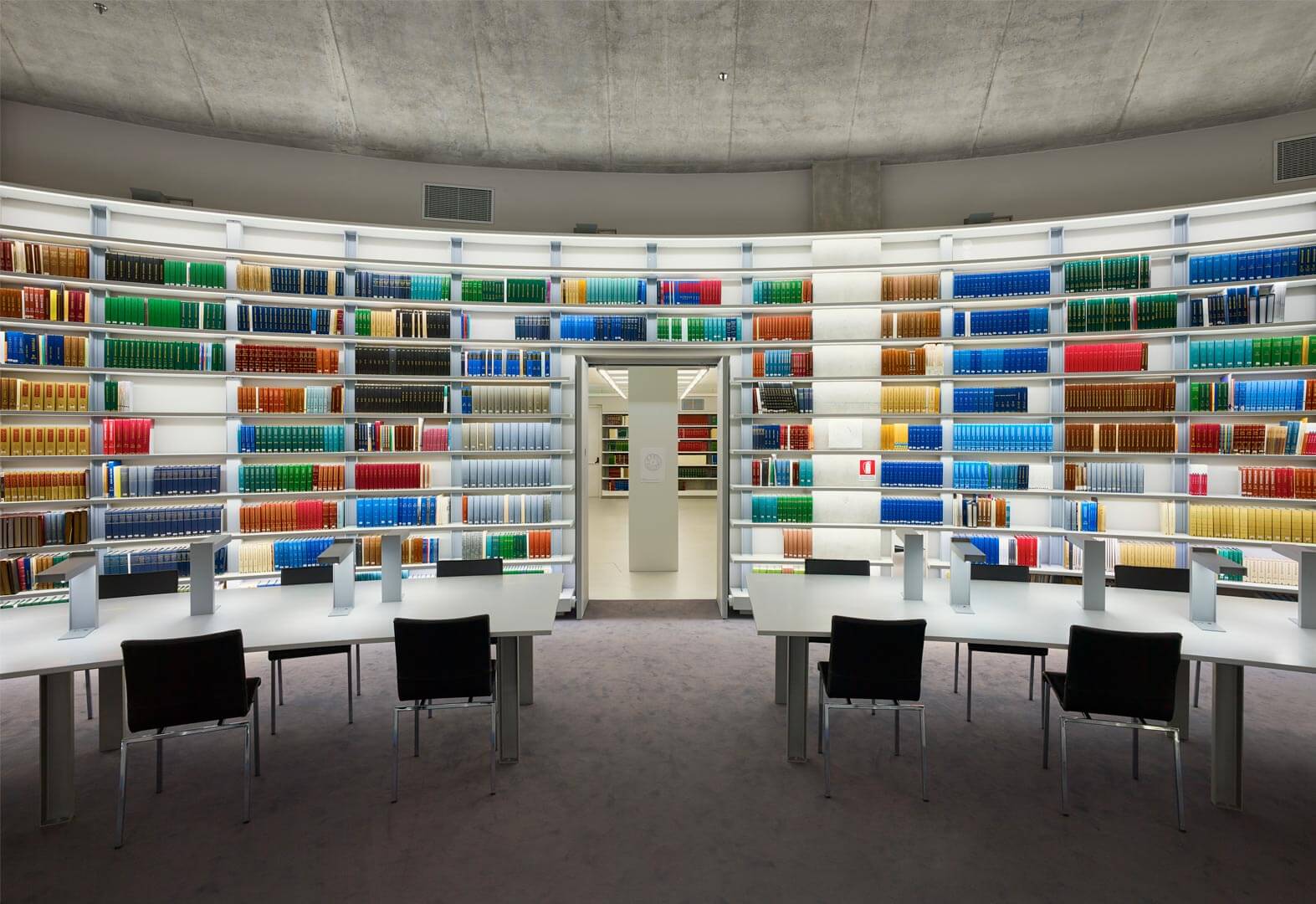
As an institution, the library houses an extensive collection spanning the full spectrum of scientific knowledge, including approximately 600,000 volumes, 40,000 digital titles and 10,000 audiovisual items. It stands as a contemporary ark of knowledge – both protective and open – where physical and digital media coexist within a spatial framework defined by light and earth.
The interior further reflects the Ioannou family’s longstanding engagement with art. Significant works tracing the historical continuum of Cyprus are displayed alongside pieces by contemporary Cypriot artists, embedding cultural memory within the architectural narrative. In this synthesis of landscape, technology, knowledge and art, the Stelios Ioannou Library transcends its institutional function, positioning itself as a spatial manifesto for learning in the Mediterranean context.