Zoland Emei Resort in Emeishan by Studio J. Bridgland
Architecture:
Photography:

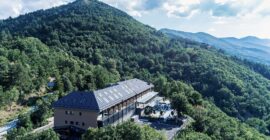
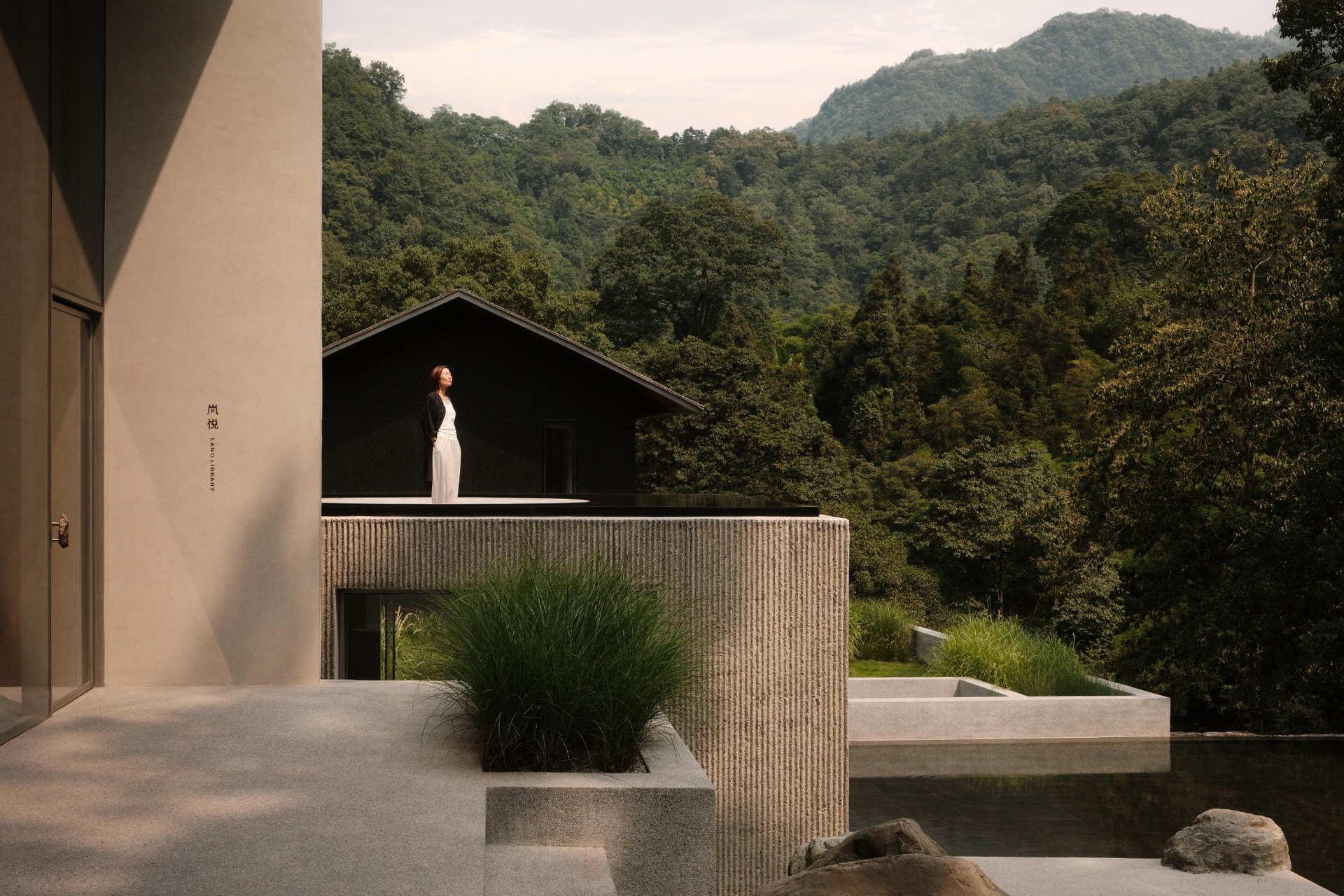
In the mountains of Emeishan, China, Zoland·Emei Resort by Studio J. Bridgland transforms a collection of deteriorated structures into a 2,900 m² retreat organized around the landscape. Buildings are arranged as a staggered group of smaller volumes, recalling a settlement embedded in the hillside rather than a single hotel complex.
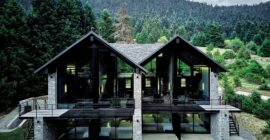
The design draws on the terrain and local building traditions through pitched roofs, deep eaves and a restrained material palette. These elements are reinterpreted through contemporary construction, establishing a gradual relationship between existing structures, new interventions and the surrounding forest.
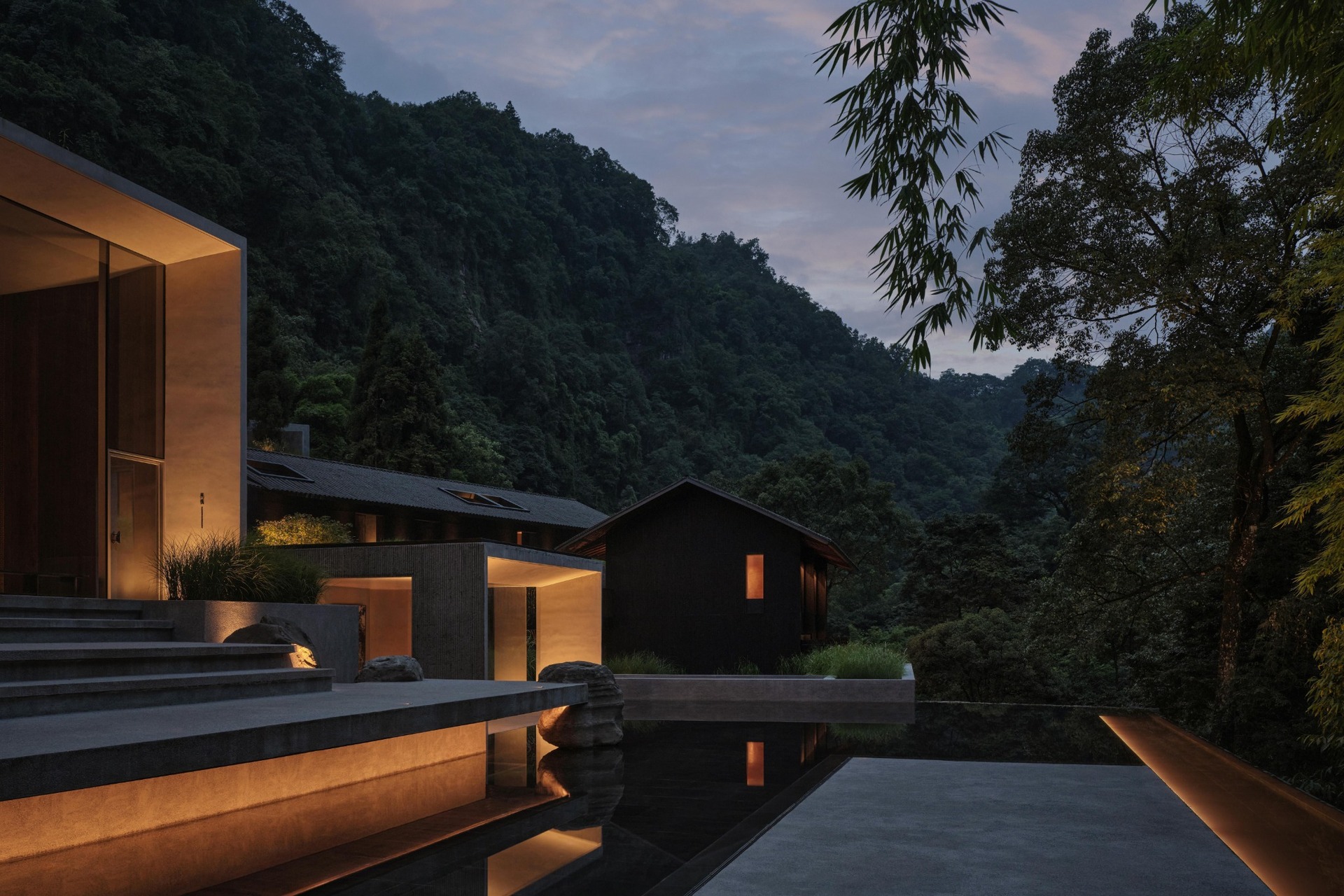
A village-like composition in the landscape
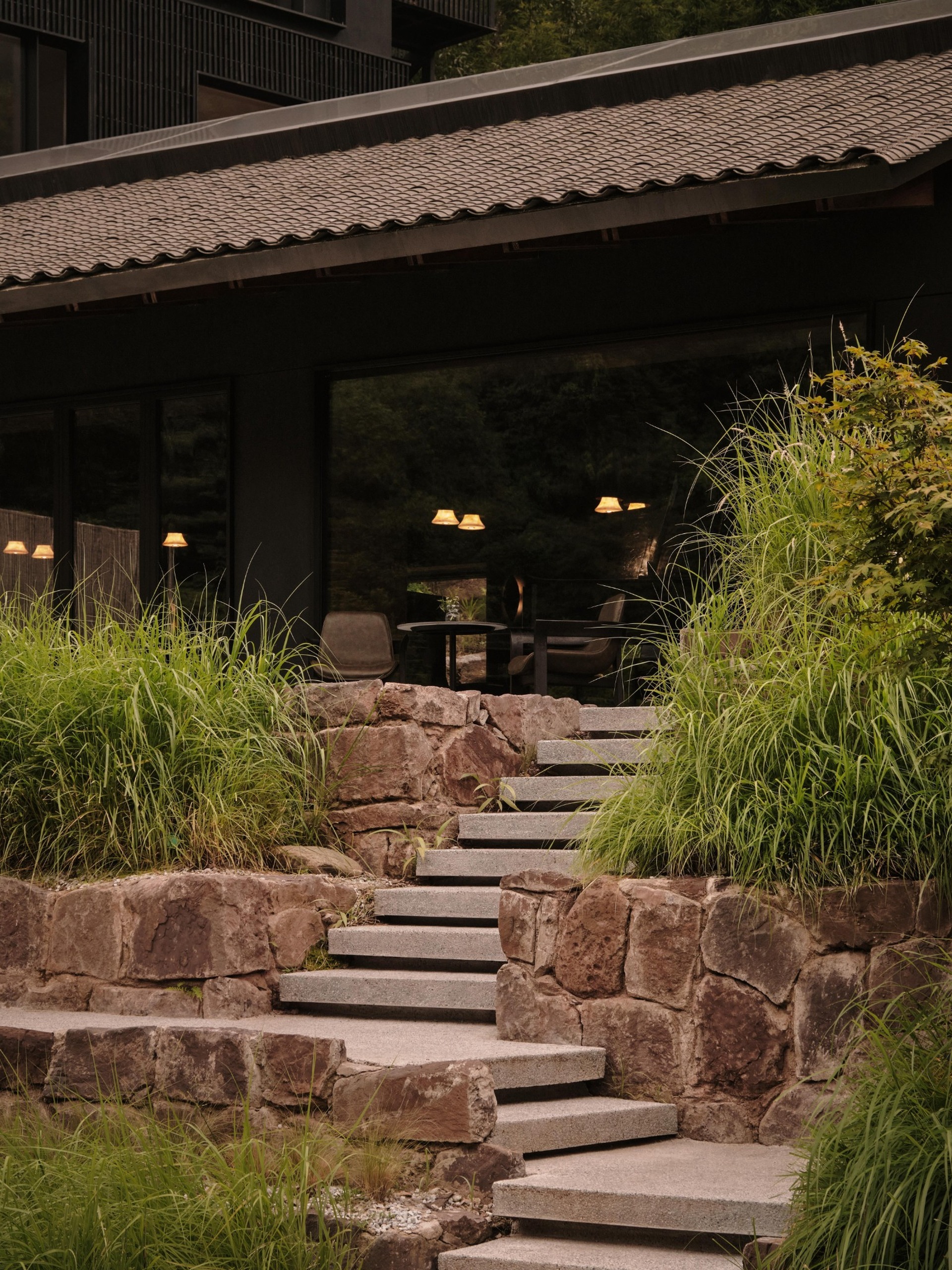
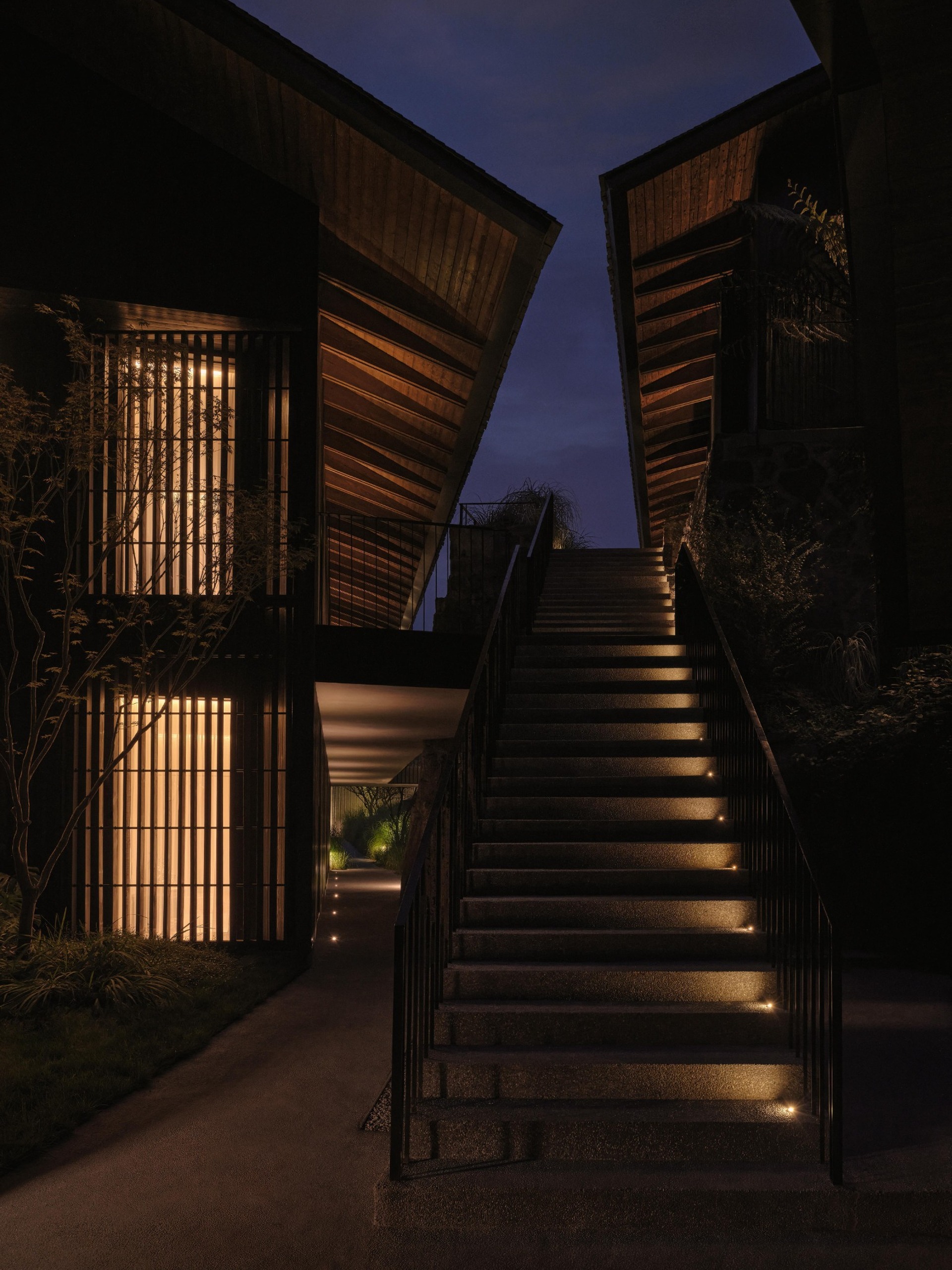
The buildings follow the natural changes in level across the site. Their fragmented arrangement creates a sequence of courtyards, paths and framed views, allowing the complex to be experienced gradually.
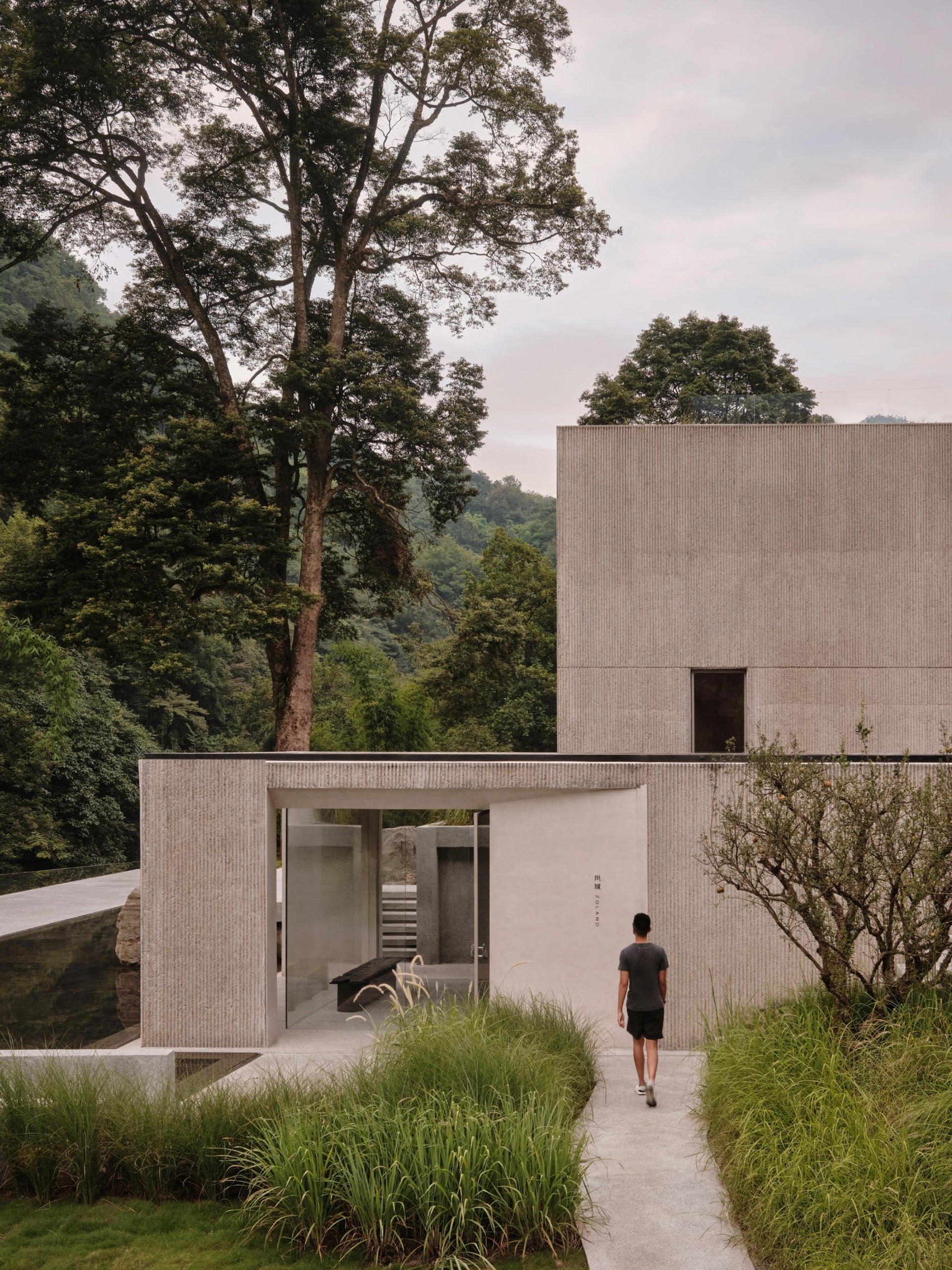
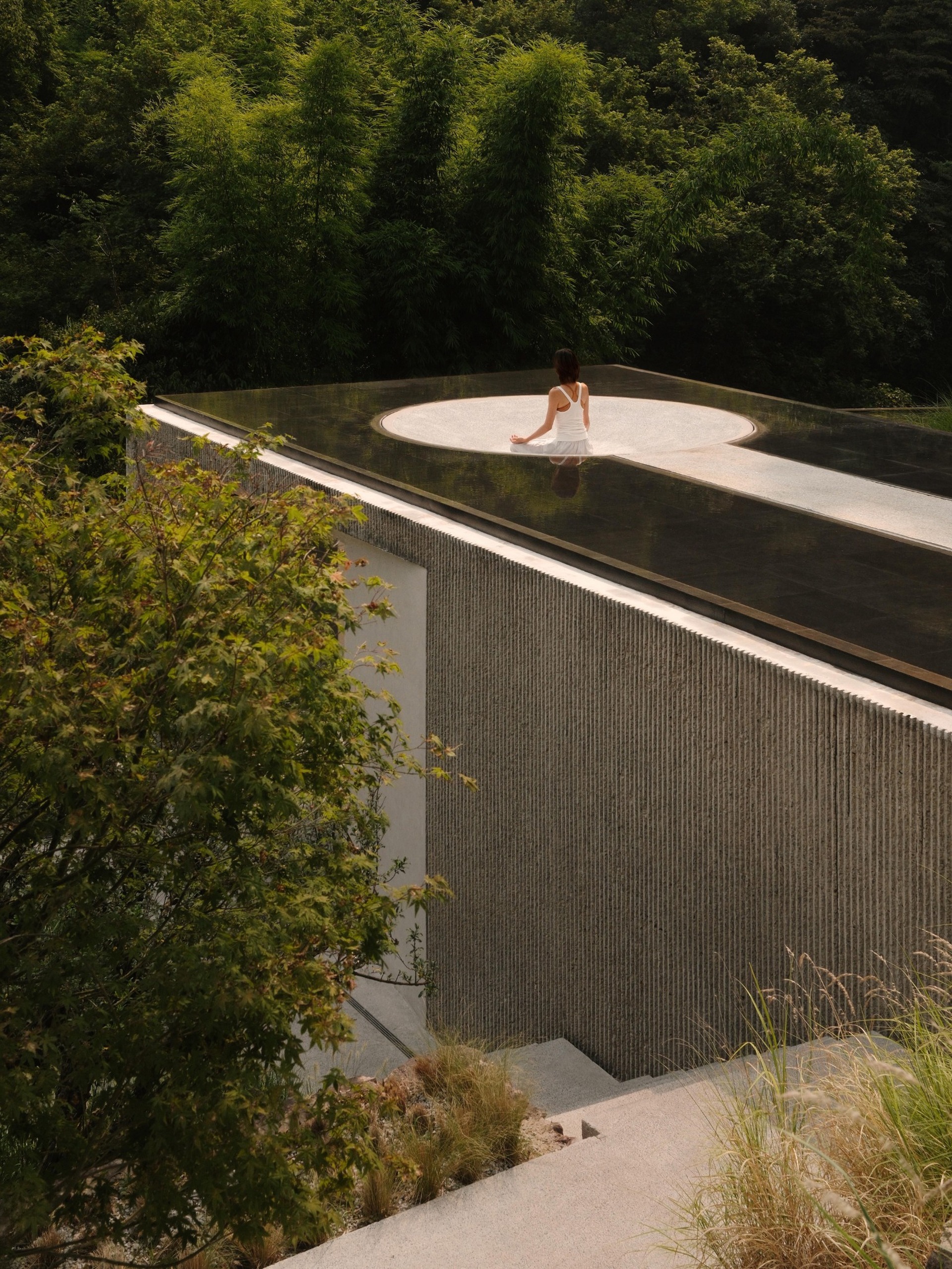
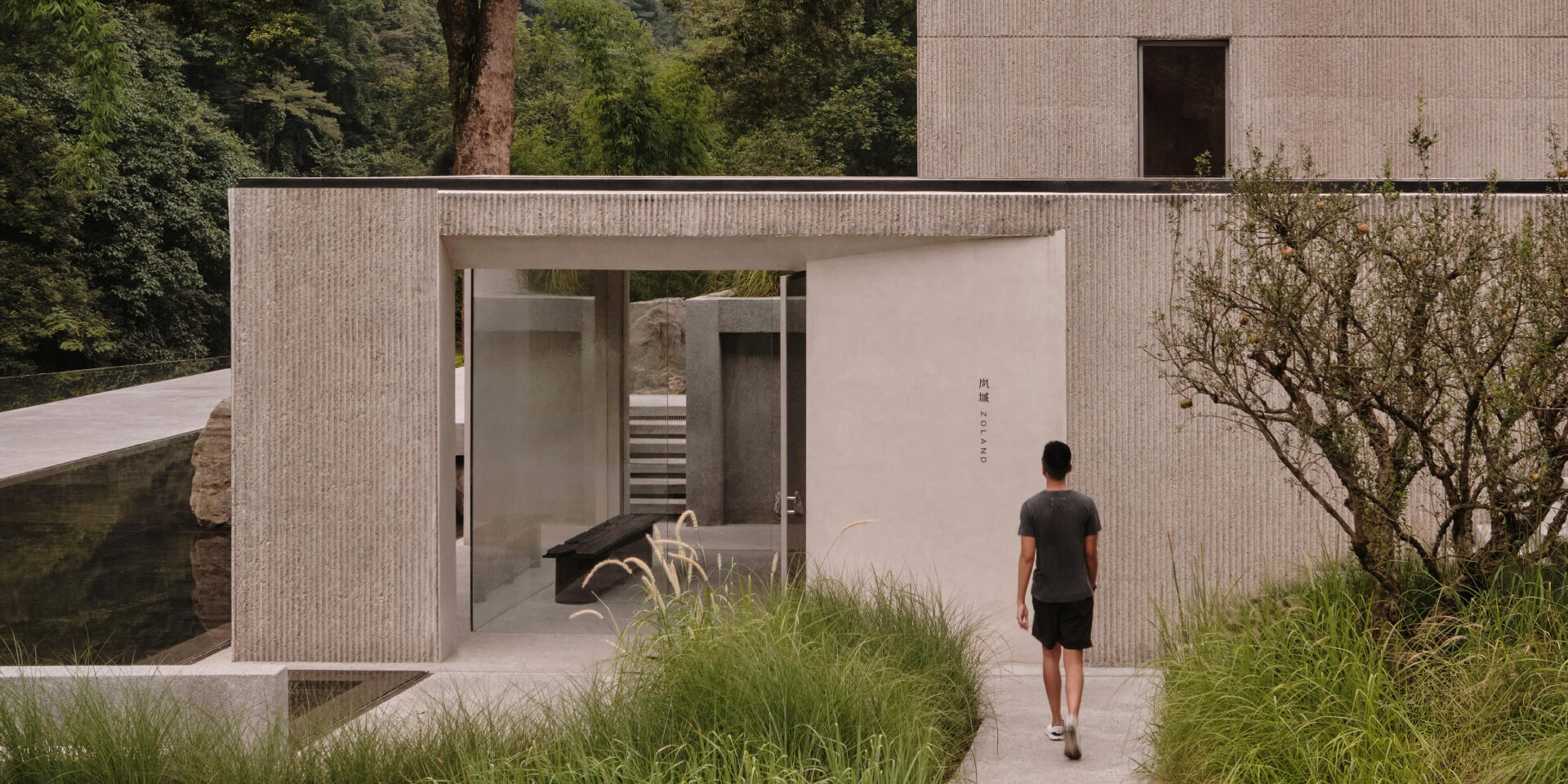
At the entrance, a façade of textured concrete worked by hand establishes a strong material presence. Its rough surface contrasts with the surrounding vegetation and introduces the tactile character that continues throughout the project.
Rather than seeking visual prominence, the architecture uses differences in scale, level and material to become part of the hillside. Traditional pitched roofs and deep overhangs provide protection while connecting the new intervention with familiar regional forms.
A courtyard organized around an ancient tree
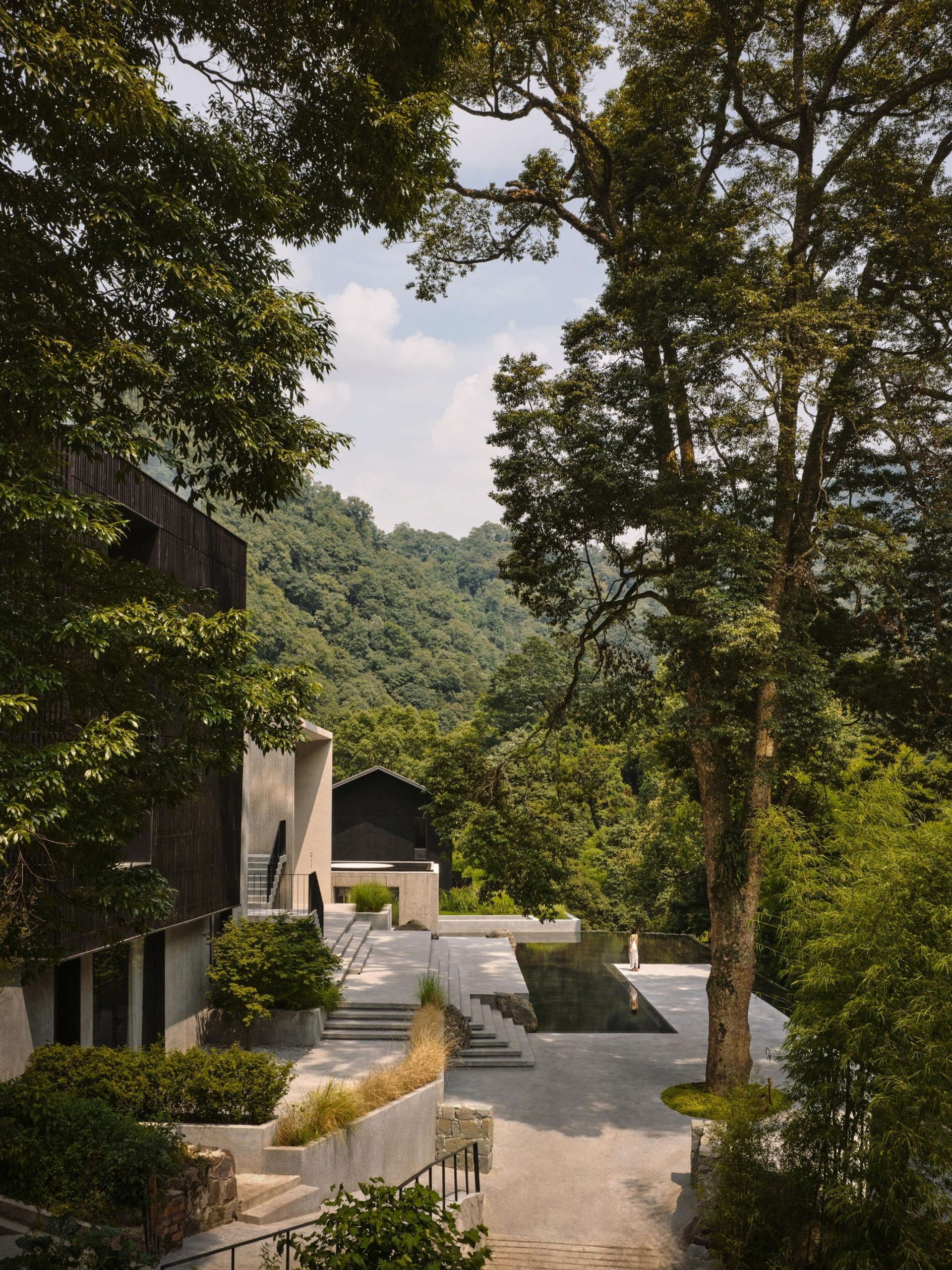
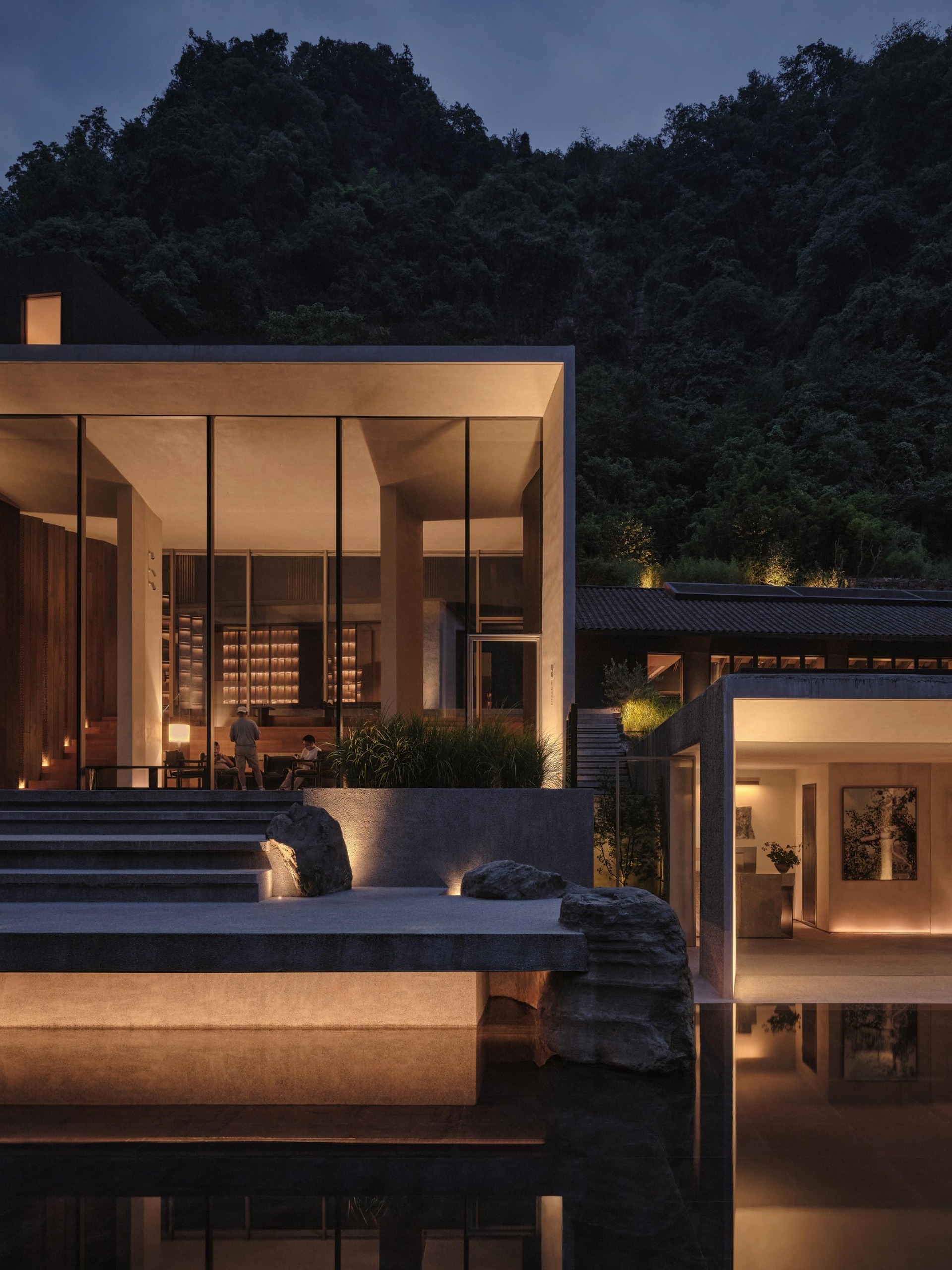
The central courtyard forms the social heart of the resort. At its centre, an ancient Zhennan tree is surrounded by a reflecting pool, turning the existing vegetation into the main point of reference.
The courtyard opens towards the surrounding mountains and brings together architecture, water and planting. The tree gives the space a sense of continuity with the site’s earlier history, while the pool extends its presence through reflection.
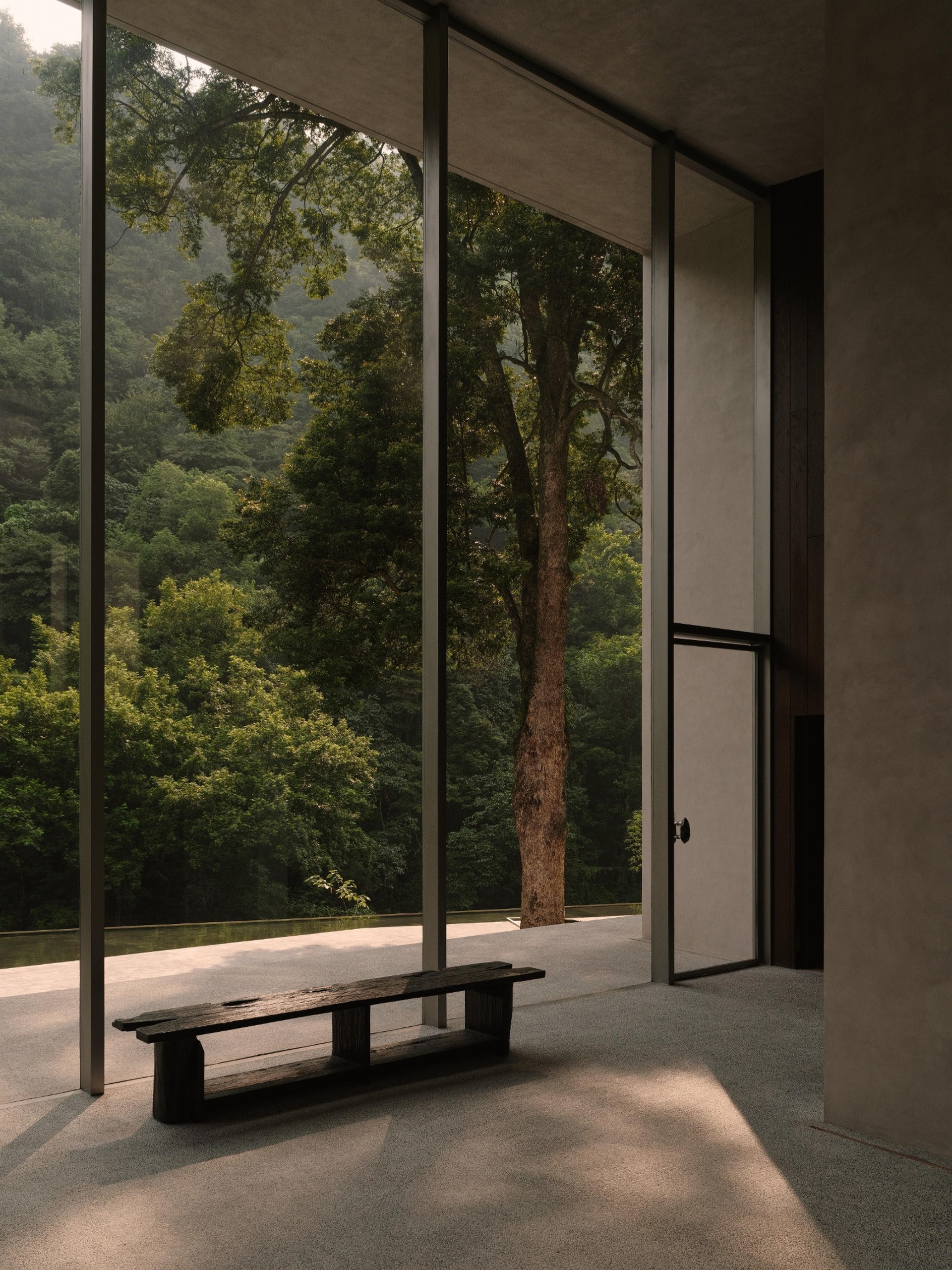
Nearby, a contemplative space is enclosed by full-height glazing. The transparent envelope maintains an uninterrupted relationship with the forest, allowing changing light and vegetation to define the atmosphere of the interior.
Local materials and shared spaces
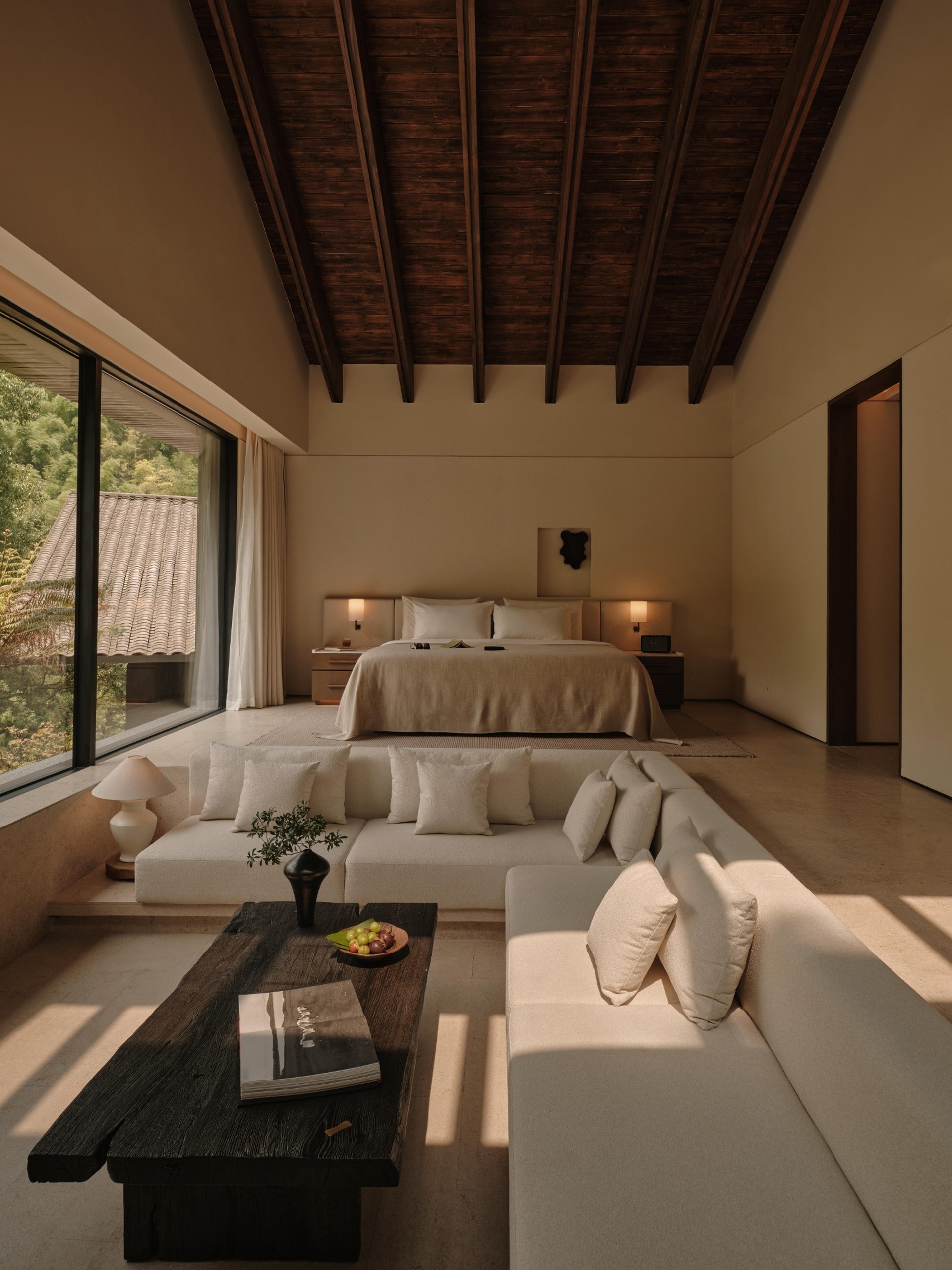
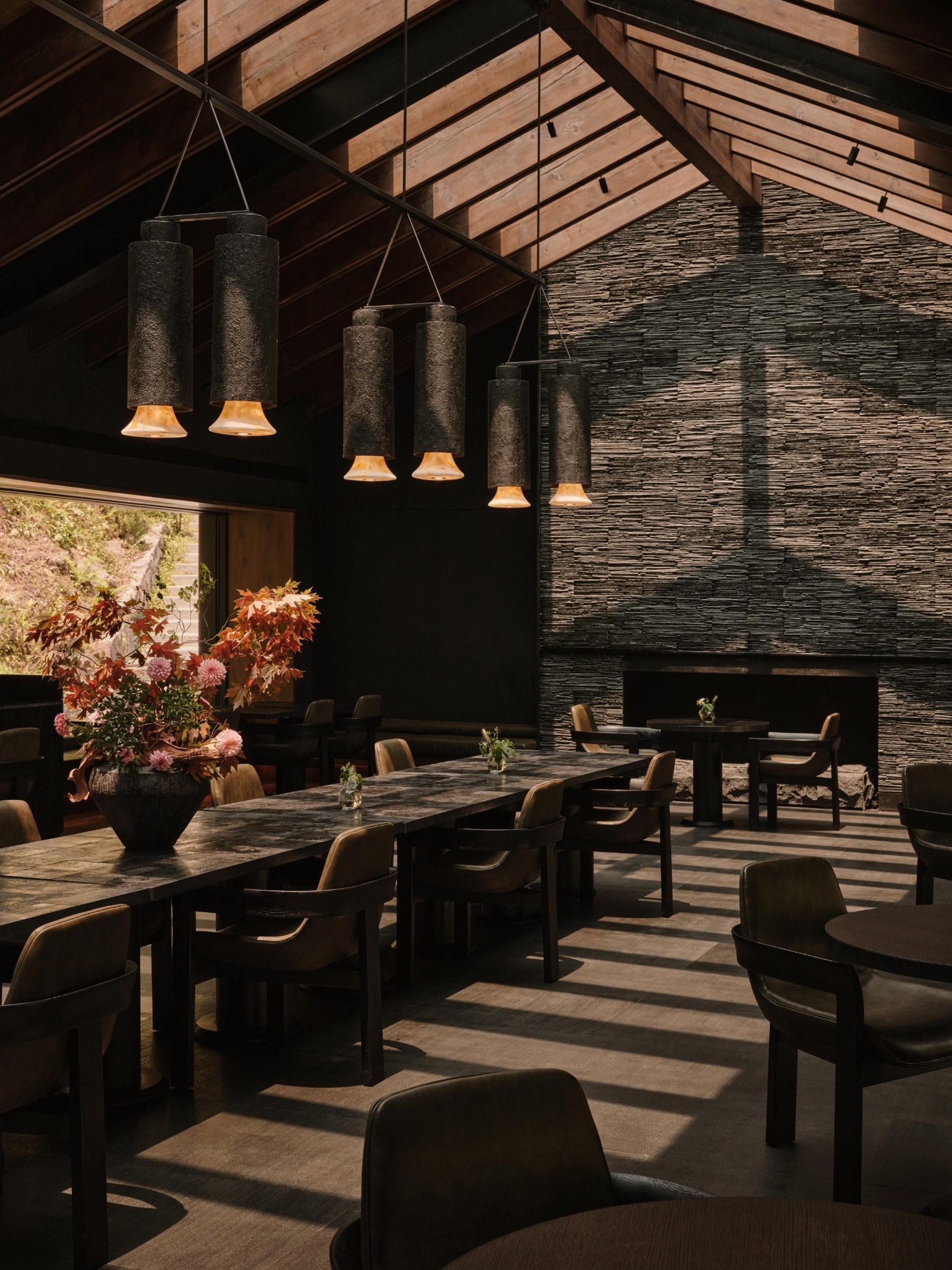
The dining hall brings together local materials and a clearly expressed structure. Traditional grey tiles from Leshan cover the roof, while a cedar framework spans the interior, introducing warmth and rhythm overhead.
Walls built from schist sourced from Emei Mountain connect the building with the geology of its setting. The combination of stone, timber and tile avoids a uniform material treatment, allowing the different surfaces to retain their texture and individual character.
Throughout the shared spaces, the architecture relies on a limited palette and direct construction. Material differences establish atmosphere without competing with the surrounding landscape.
Guest suites beneath a planted landscape
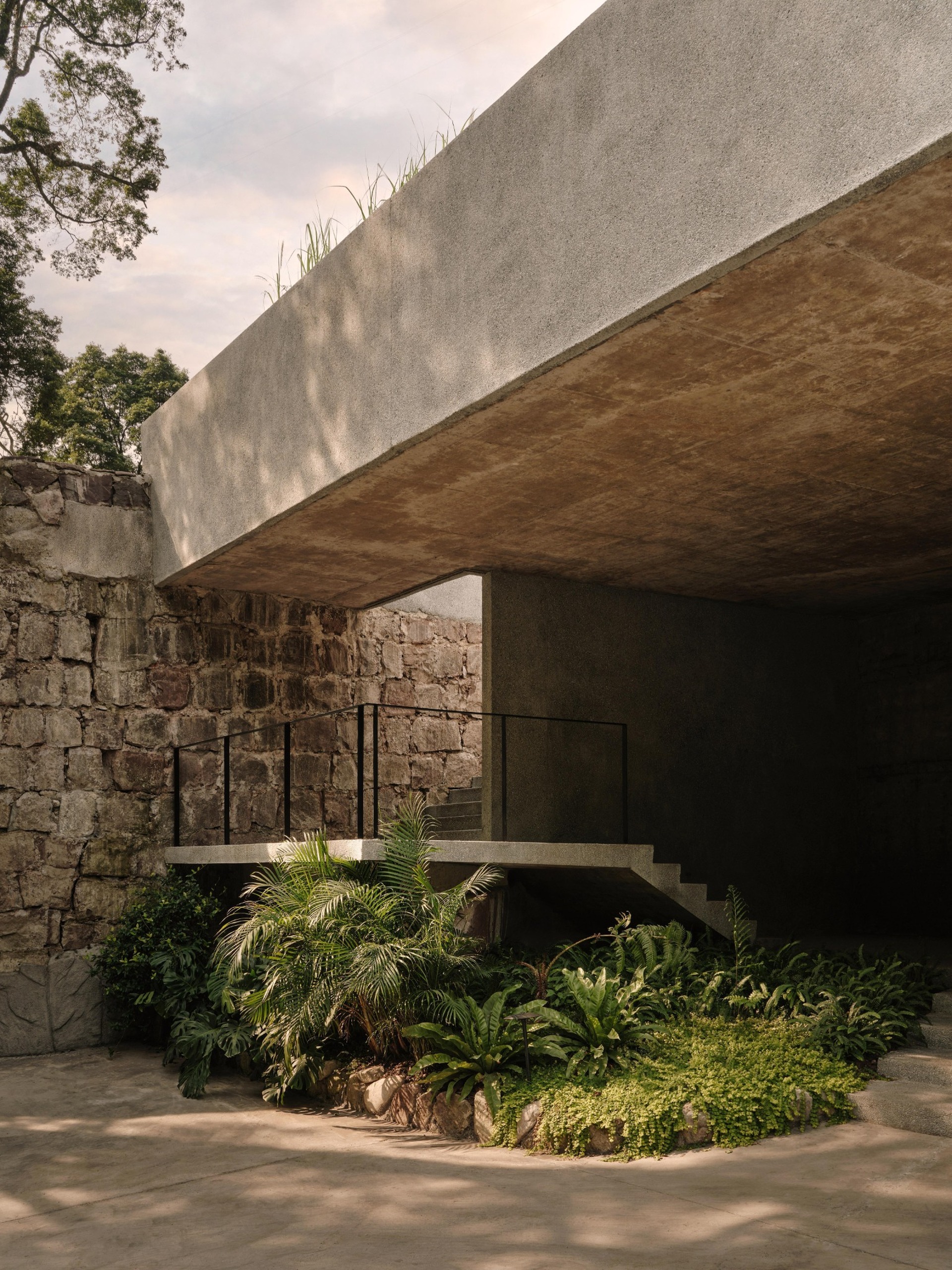
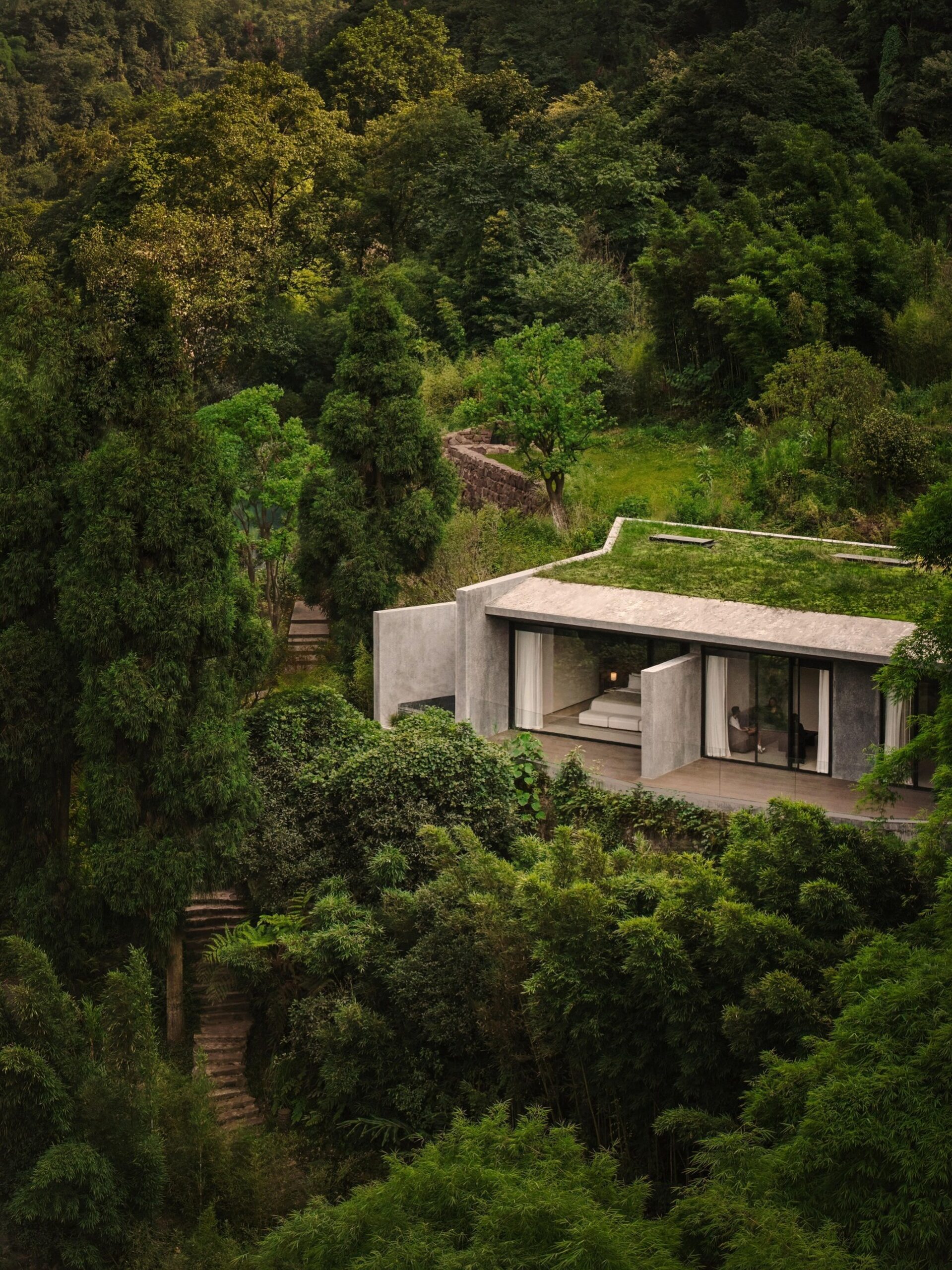
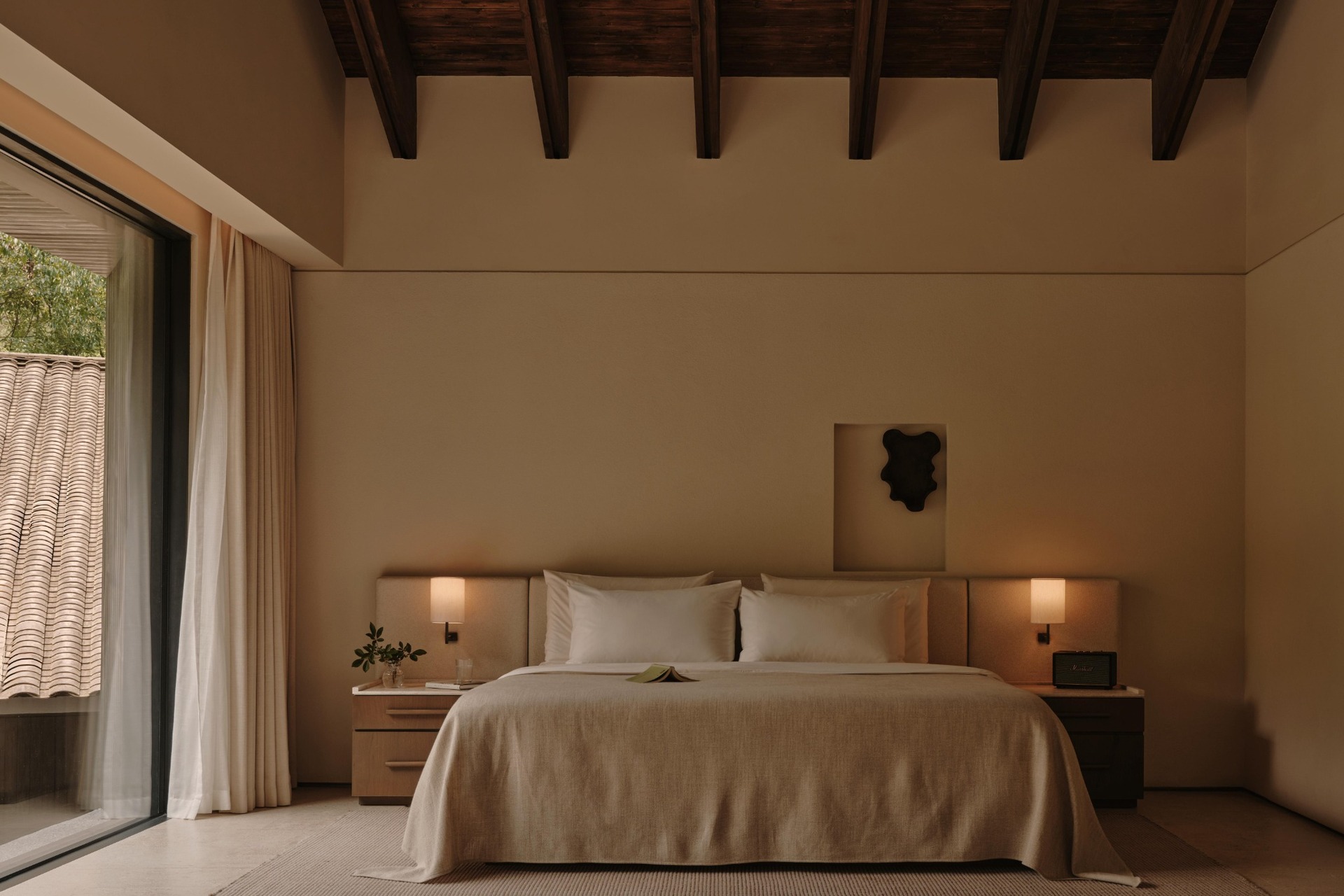
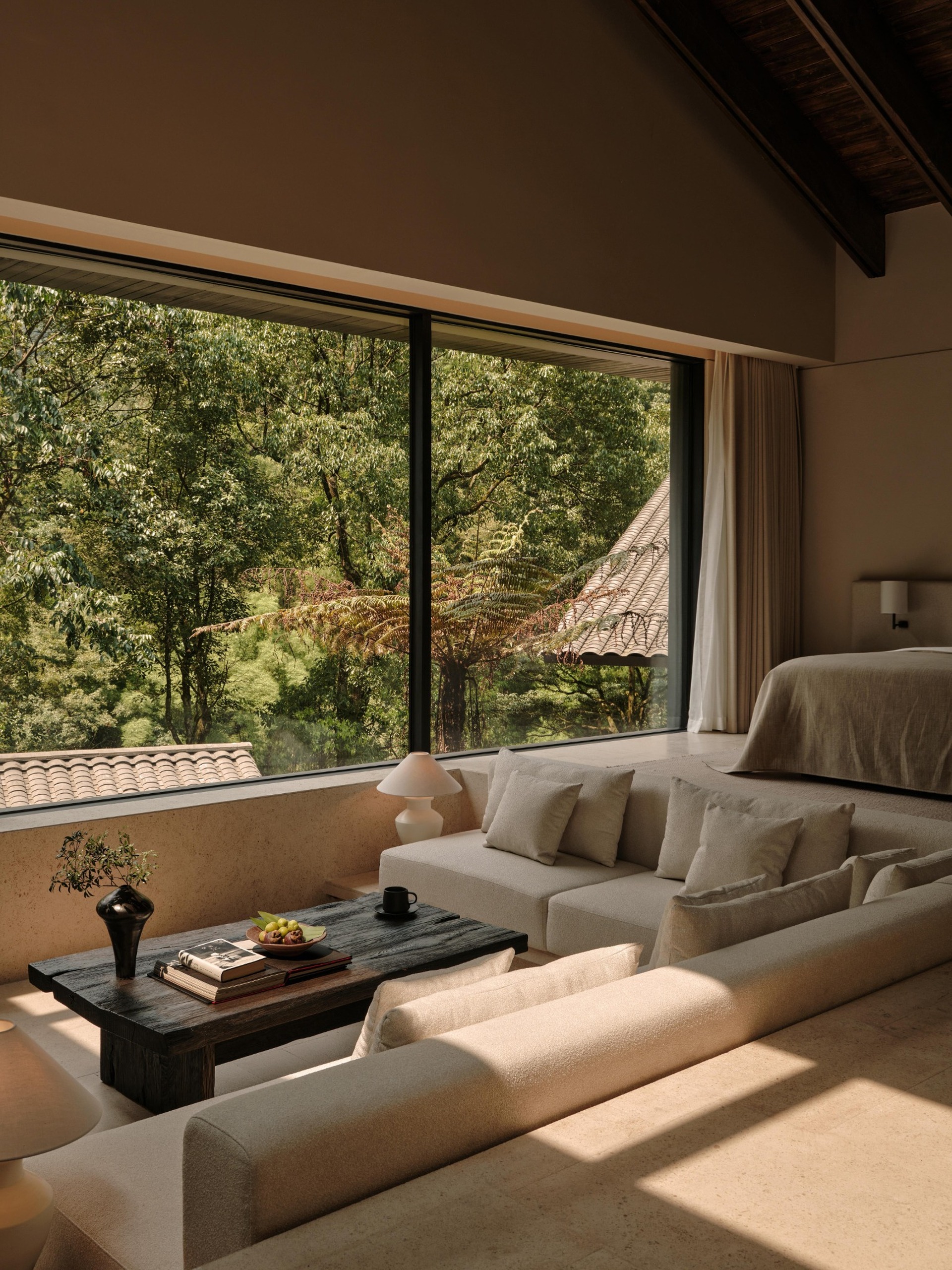
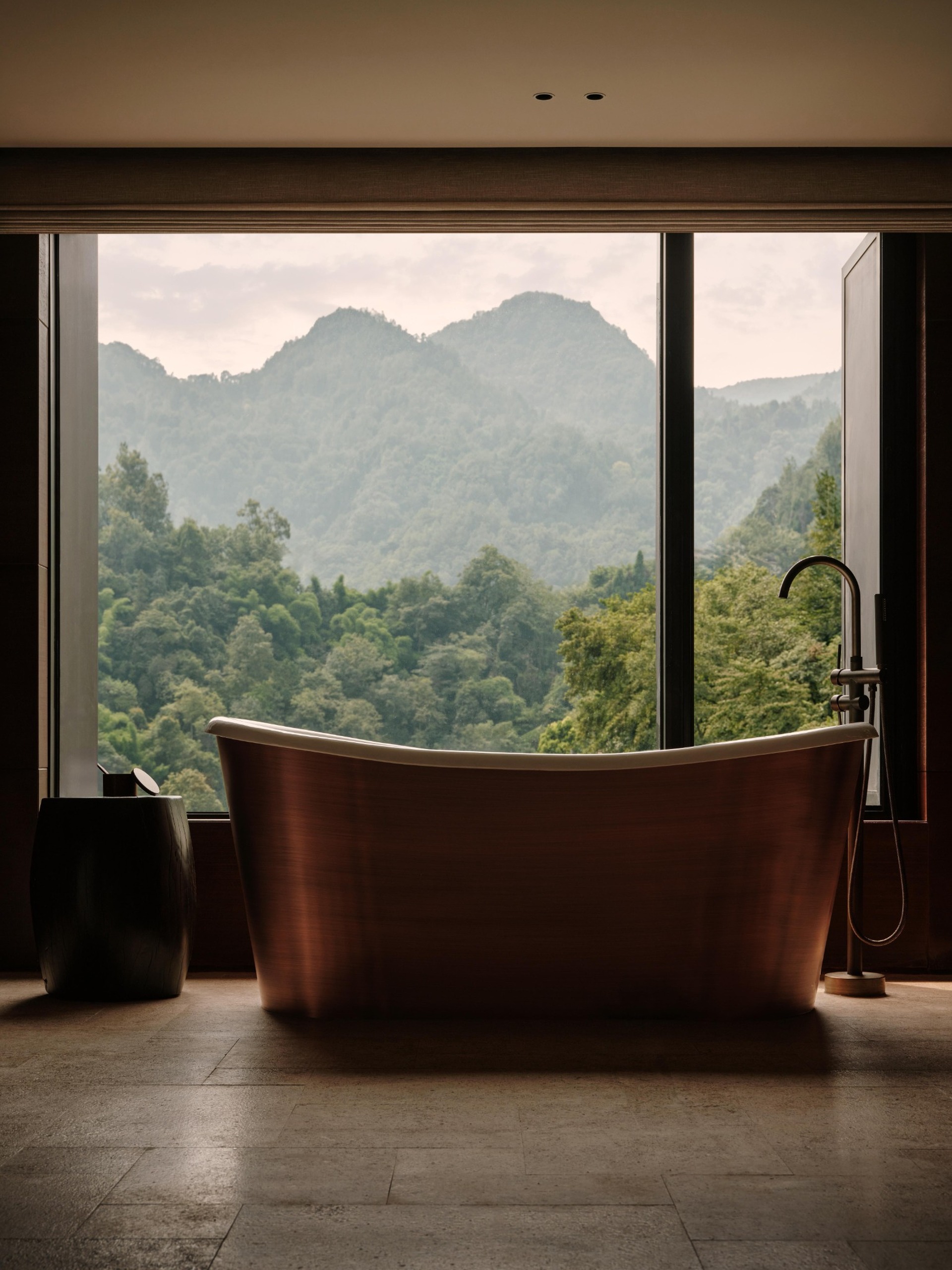
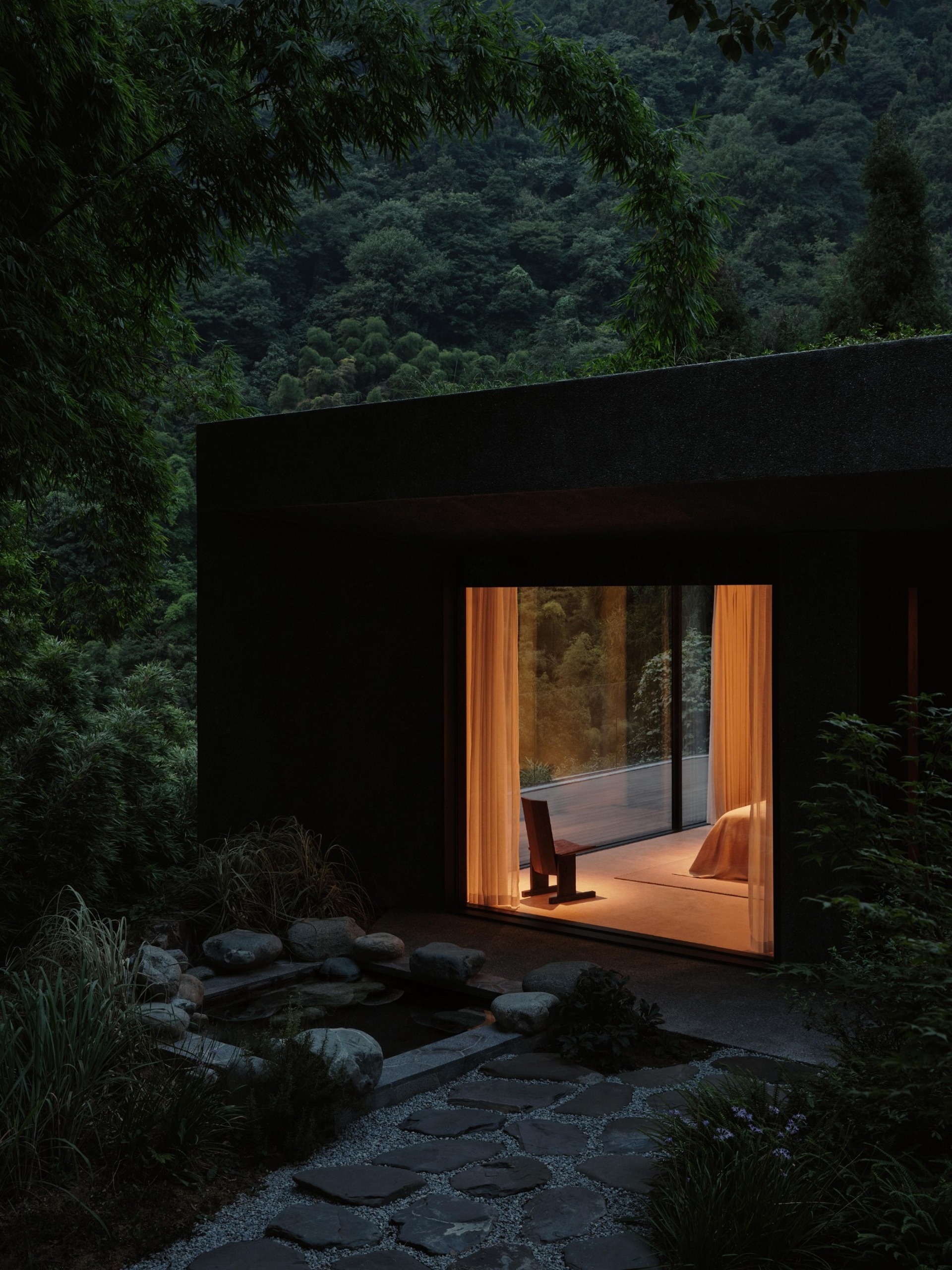
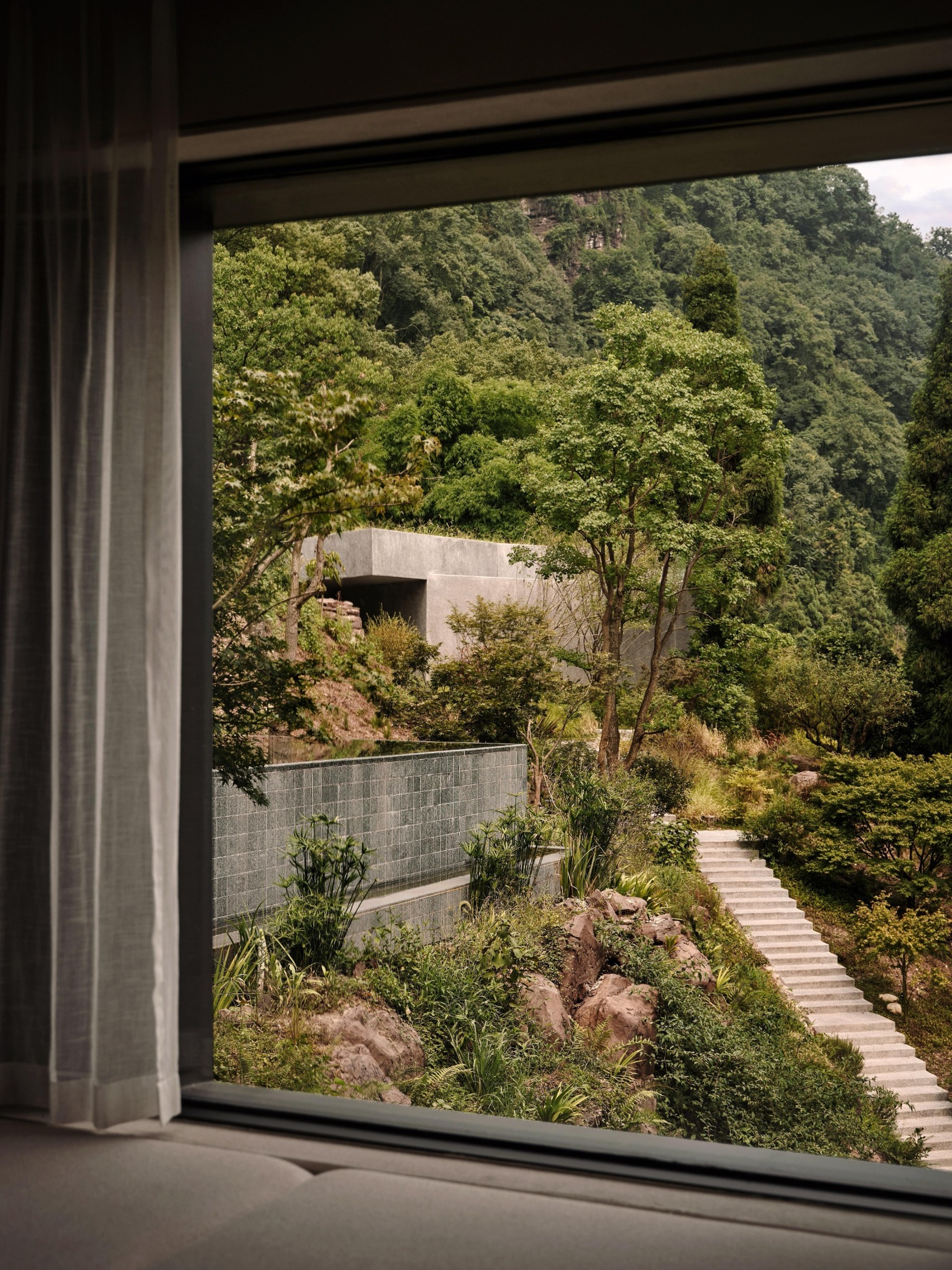
At the highest point of the site, the guest suites are incorporated beneath a raised planted surface. From the outside, the building remains largely concealed by the landscape, while full-height windows open the rooms towards the mountains.
The design creates a clear contrast between the building’s subdued external presence and the expansive views from within. The guest rooms become protected spaces from which the landscape is observed rather than architectural objects imposed on it.
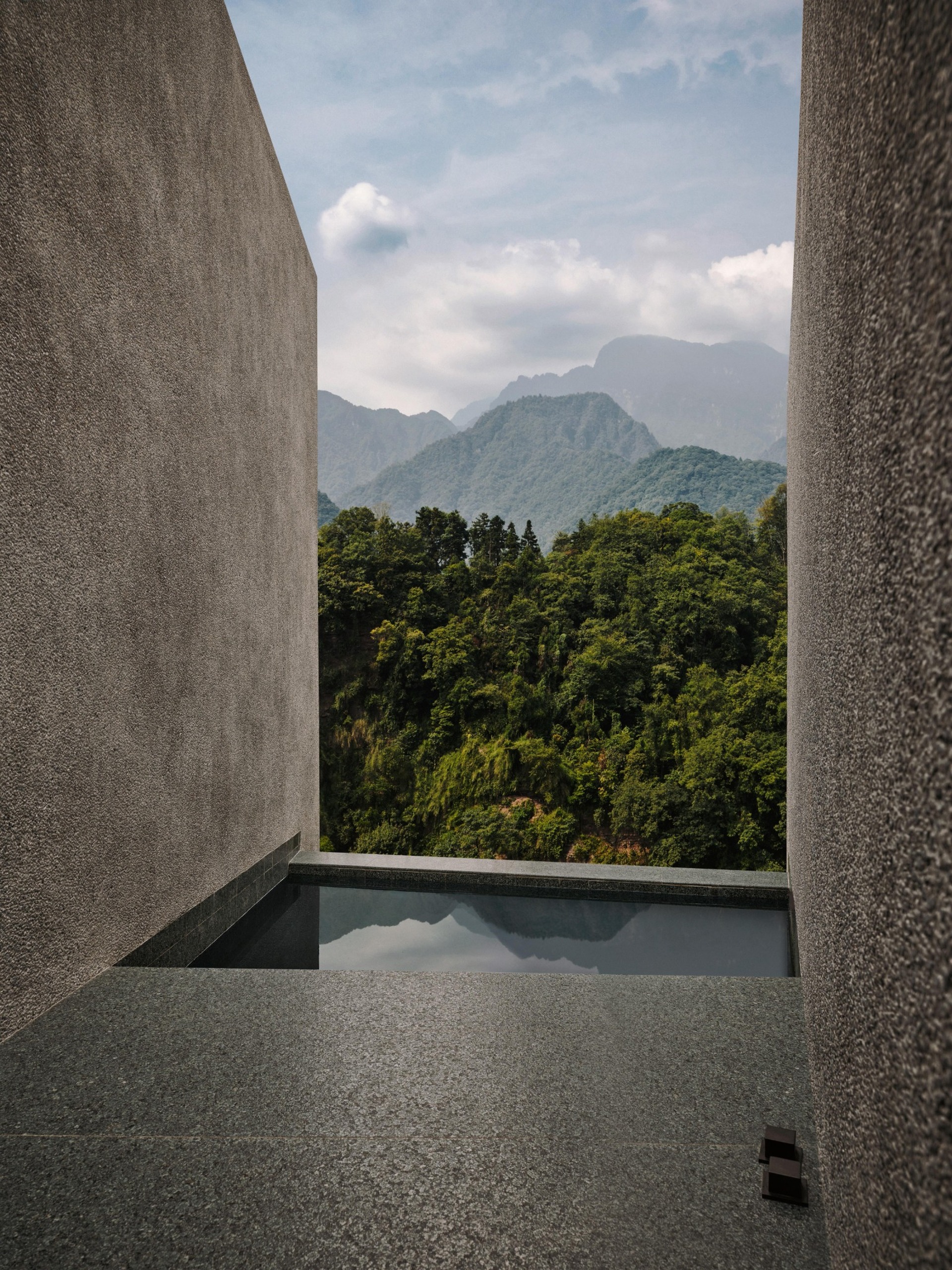
Bathrooms use deep red local stone, introducing a stronger colour and a tactile connection with the region’s geological character. The bathing experience continues outdoors, where a stone pool finished with green granite extends into the mountain setting.
The relationship between built form and landscape becomes progressively less distinct across the project. Courtyards are organized around existing vegetation, roofs become planted ground and outdoor bathing areas merge with the terrain.
Through this landscape-led approach, Zoland·Emei Resort proposes an architecture of reduced pace and heightened attention. The regeneration of the existing site is shaped through modest interventions, local materials and a sequence of spaces that invite visitors to experience the mountain environment gradually.