10M | Residence in Tokyo, Japan
Architecture:
Photography:

The architecture is conceived as a quiet framework that intensifies the relationship between interior space and the natural environment. Rather than competing with the landscape, the building acts as a device that frames views, regulates light, and heightens awareness of external conditions, positioning the house as a precise and deliberate insertion between forest, sky, and terrain.
Context Integration
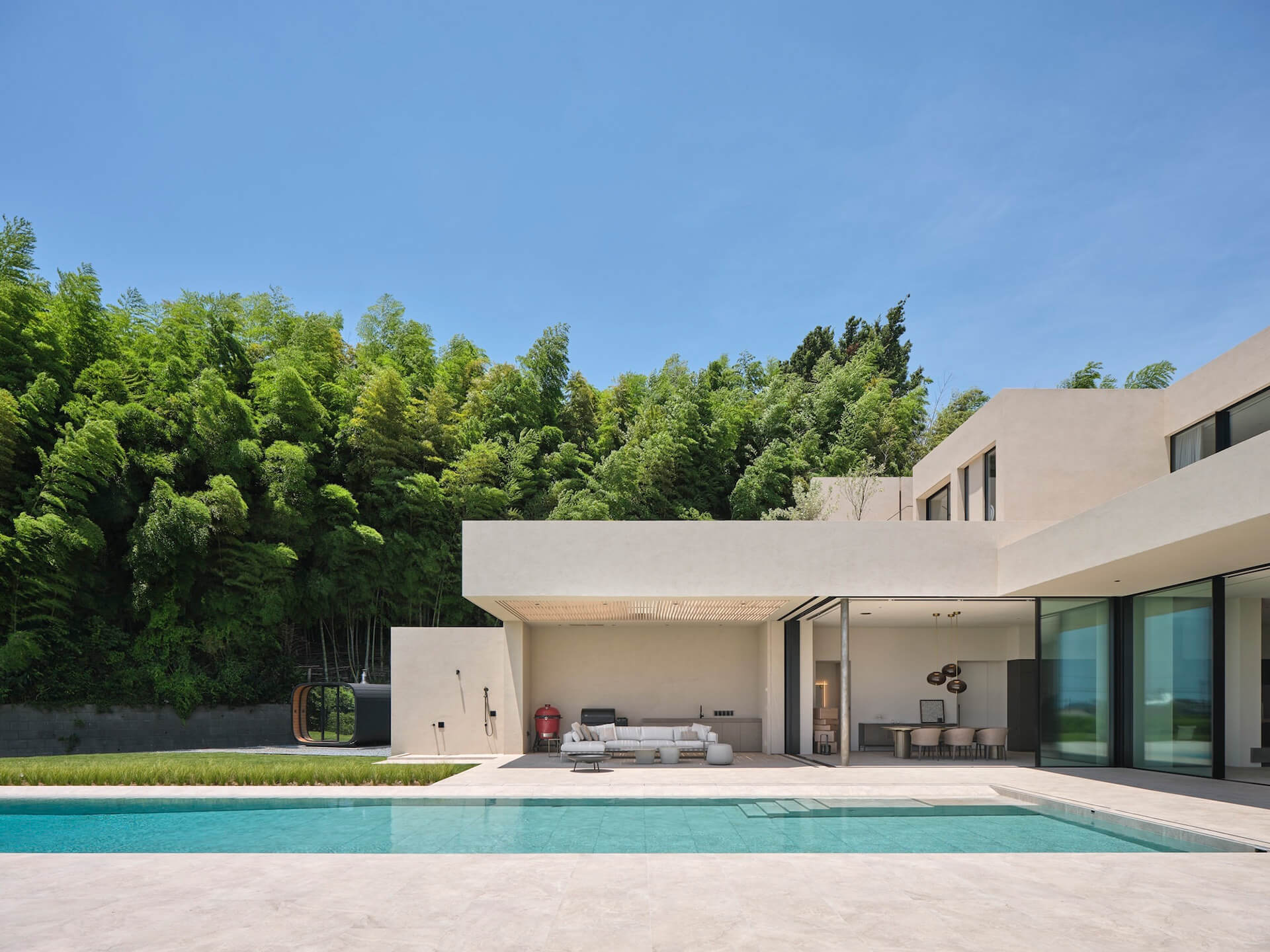
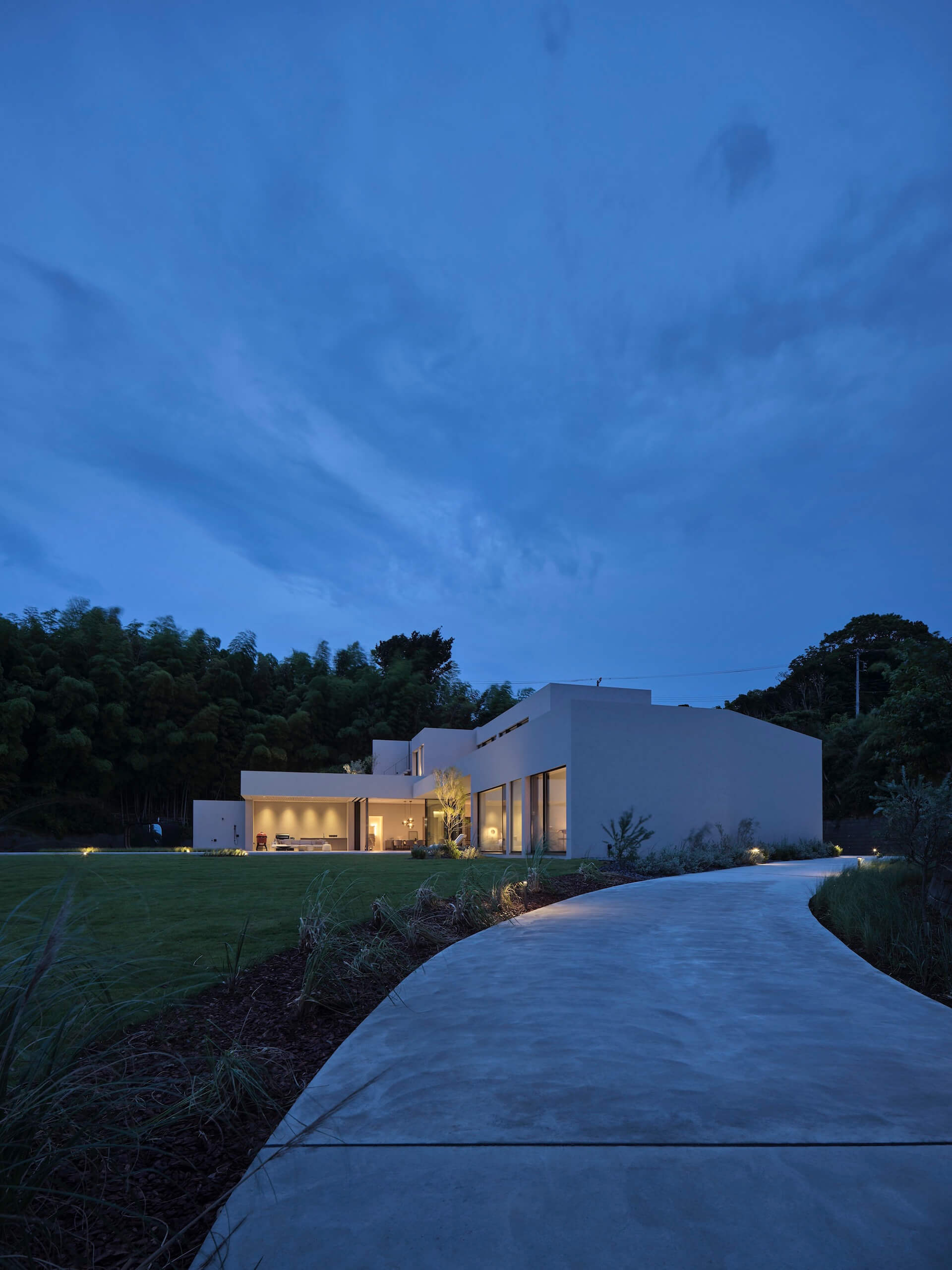
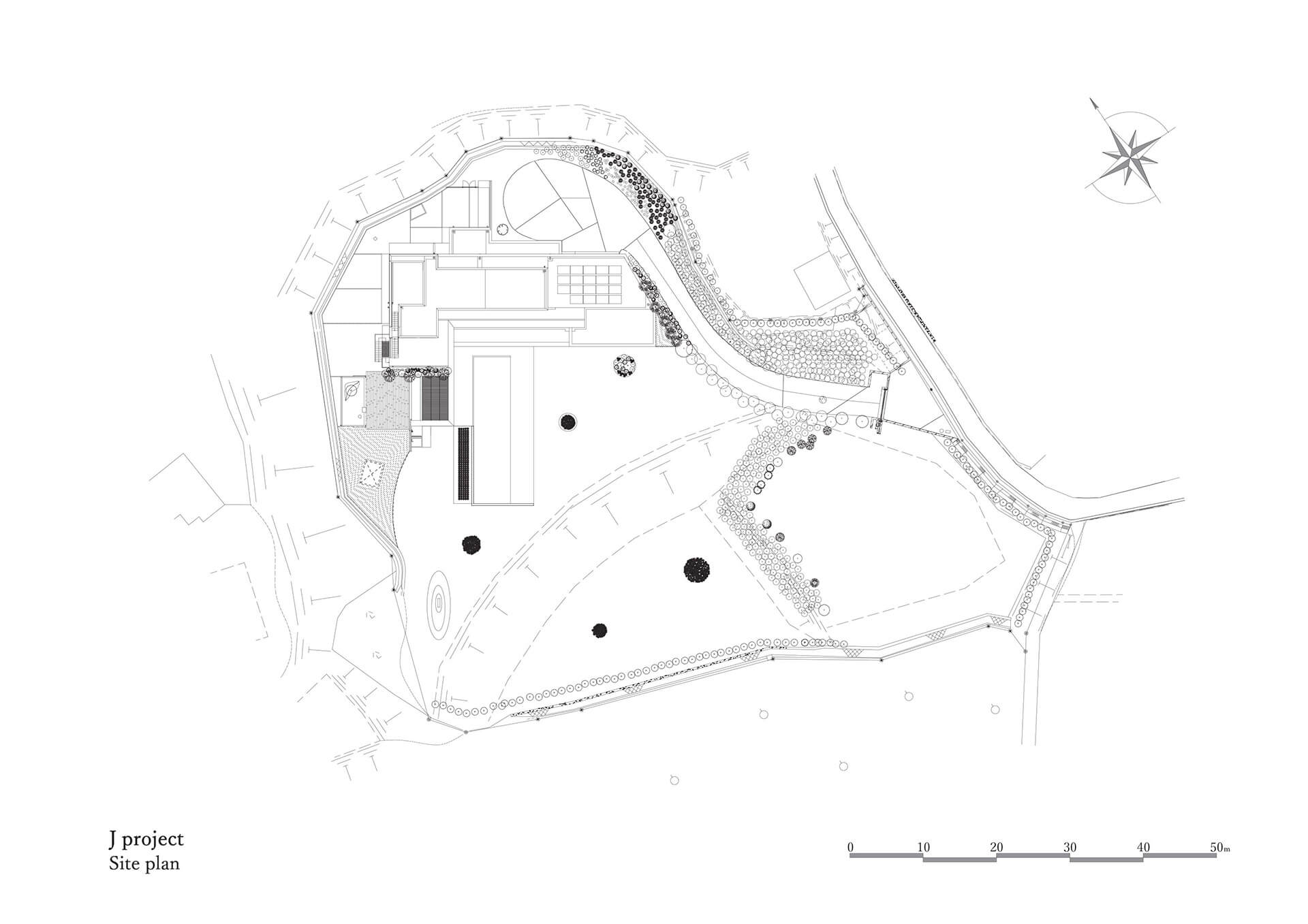
The project is located in a low-density residential area near the Pacific Ocean. The clients requested a residence defined by spatial clarity, privacy, and a close relationship to the surrounding landscape. The site occupies the edge of a residential zone and is characterized by dense vegetation and long-distance views toward the sea. A mandarin orchard extends along the southern slope, while a mature bamboo forest defines the western boundary. The gently sloping plot measures approximately 5,200 m², and the primary design challenge was the precise positioning of the house within this expansive and largely undeveloped landscape.
Functional Organization
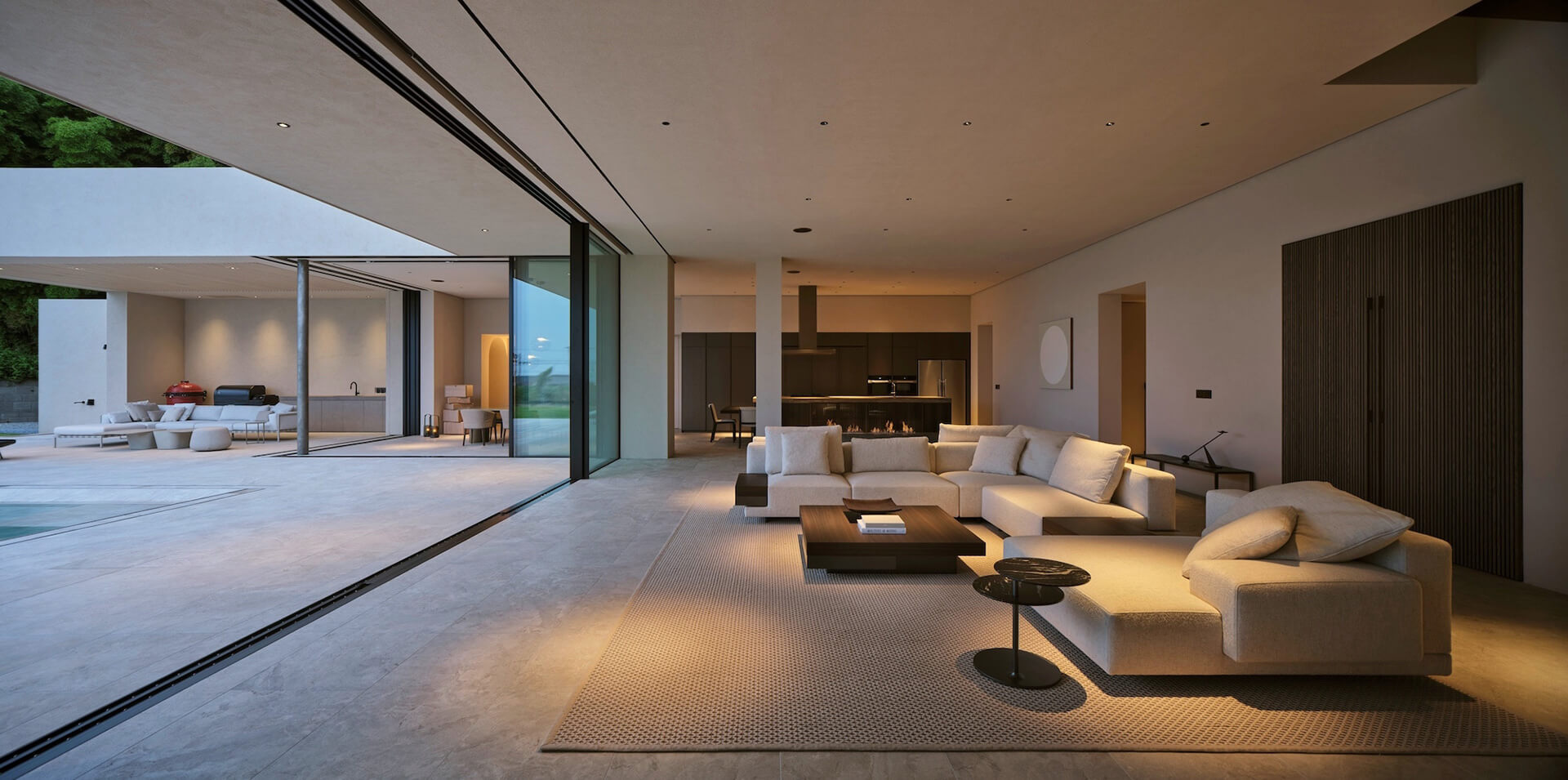
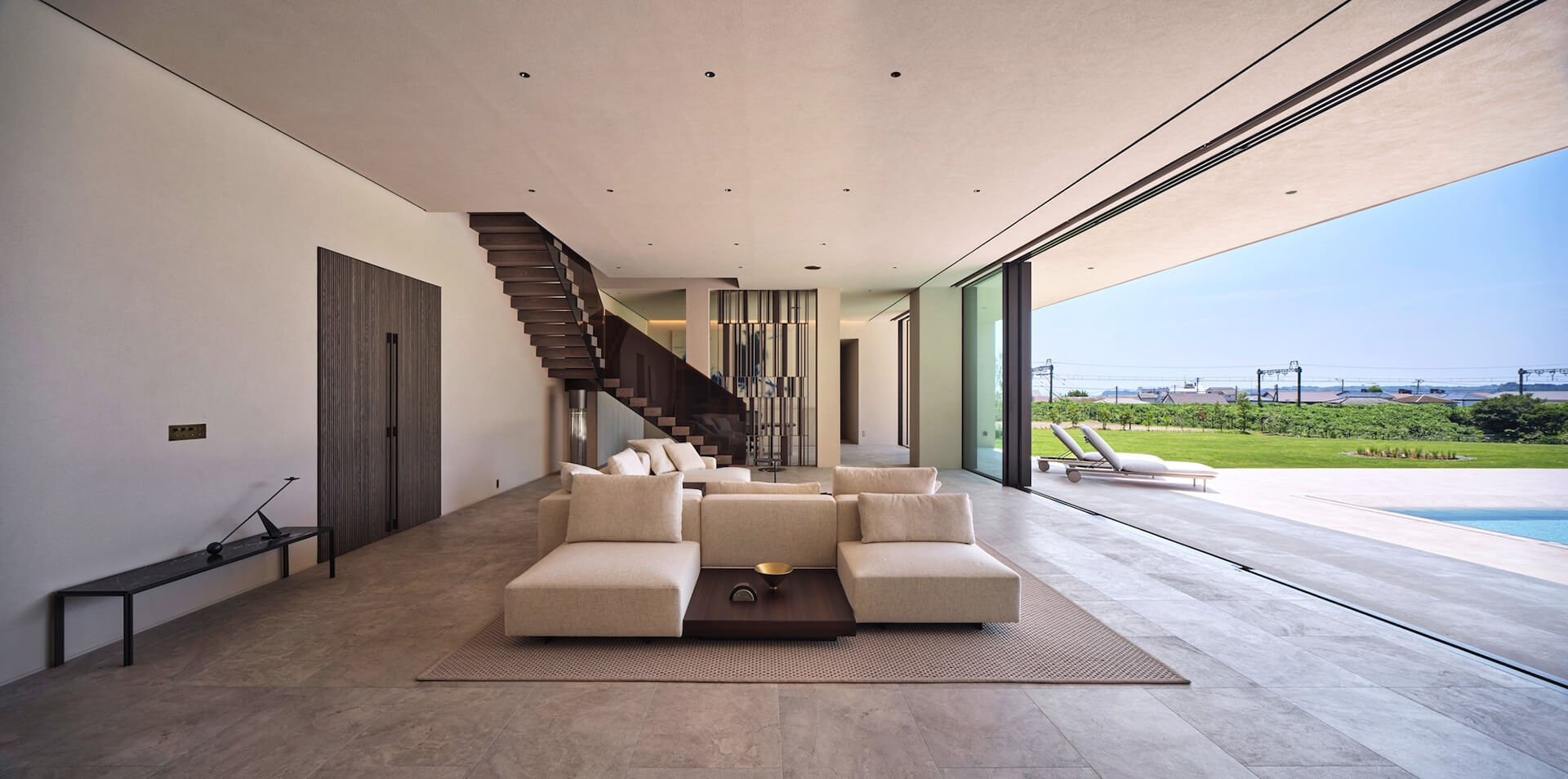
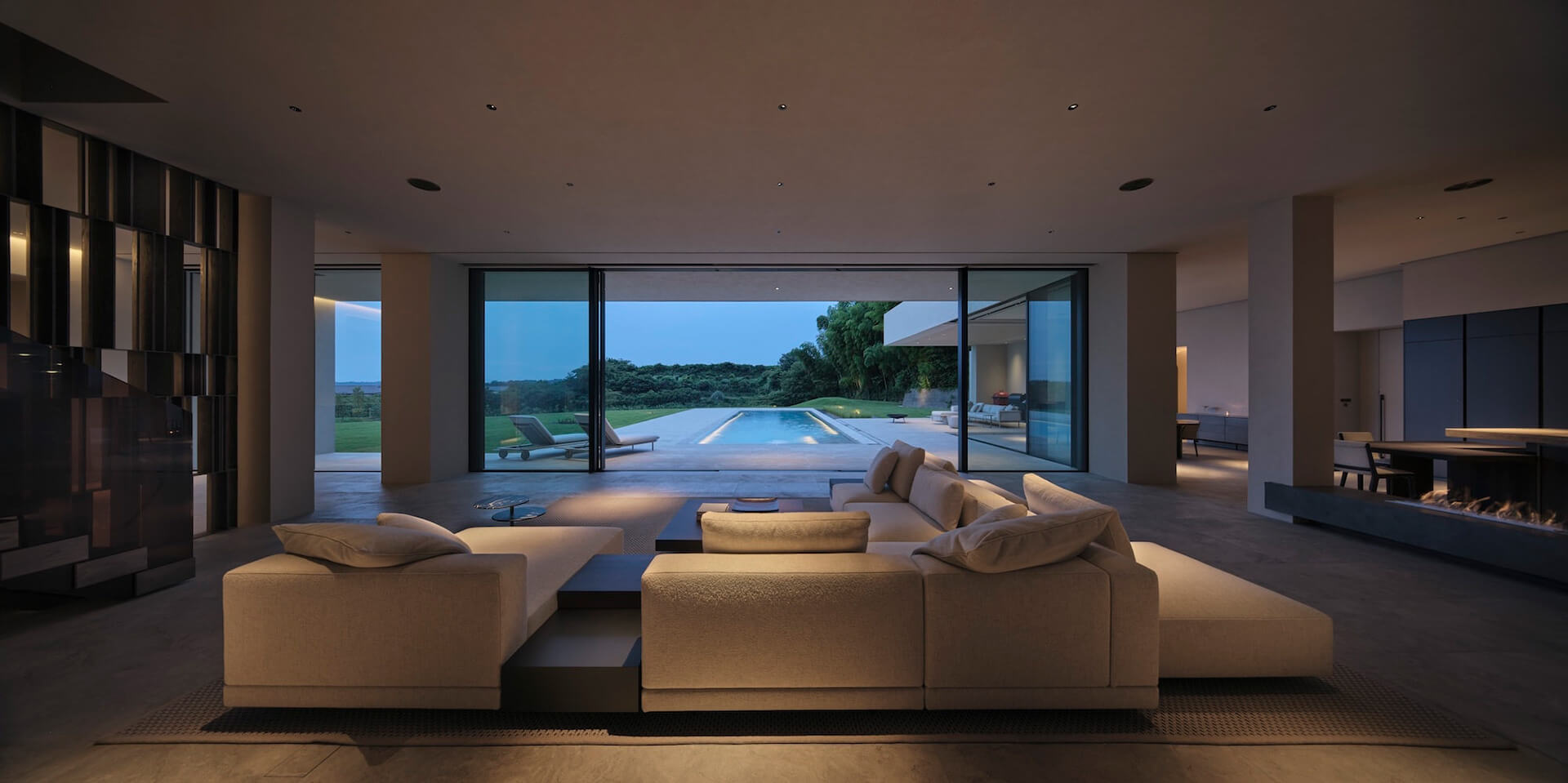
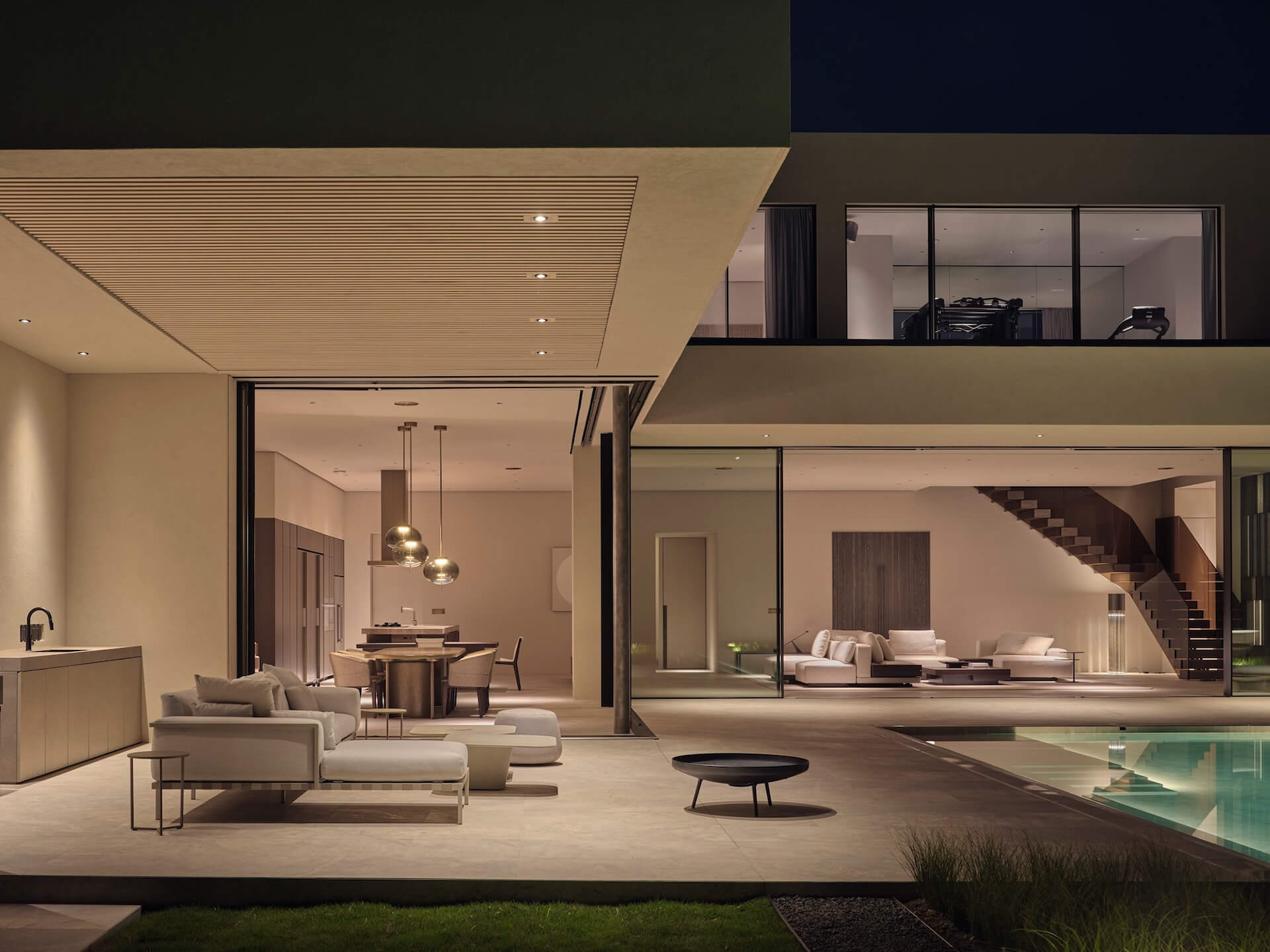
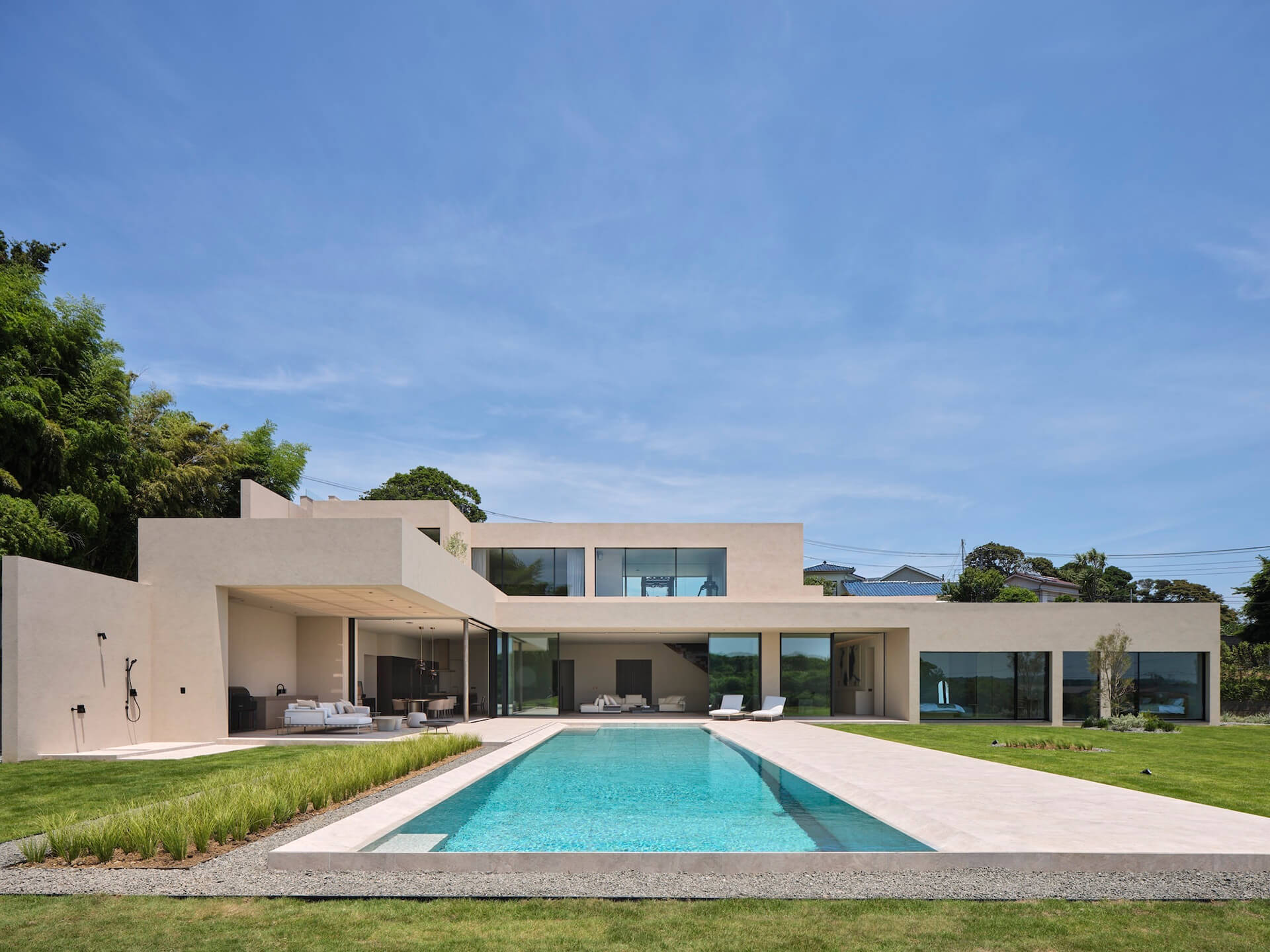
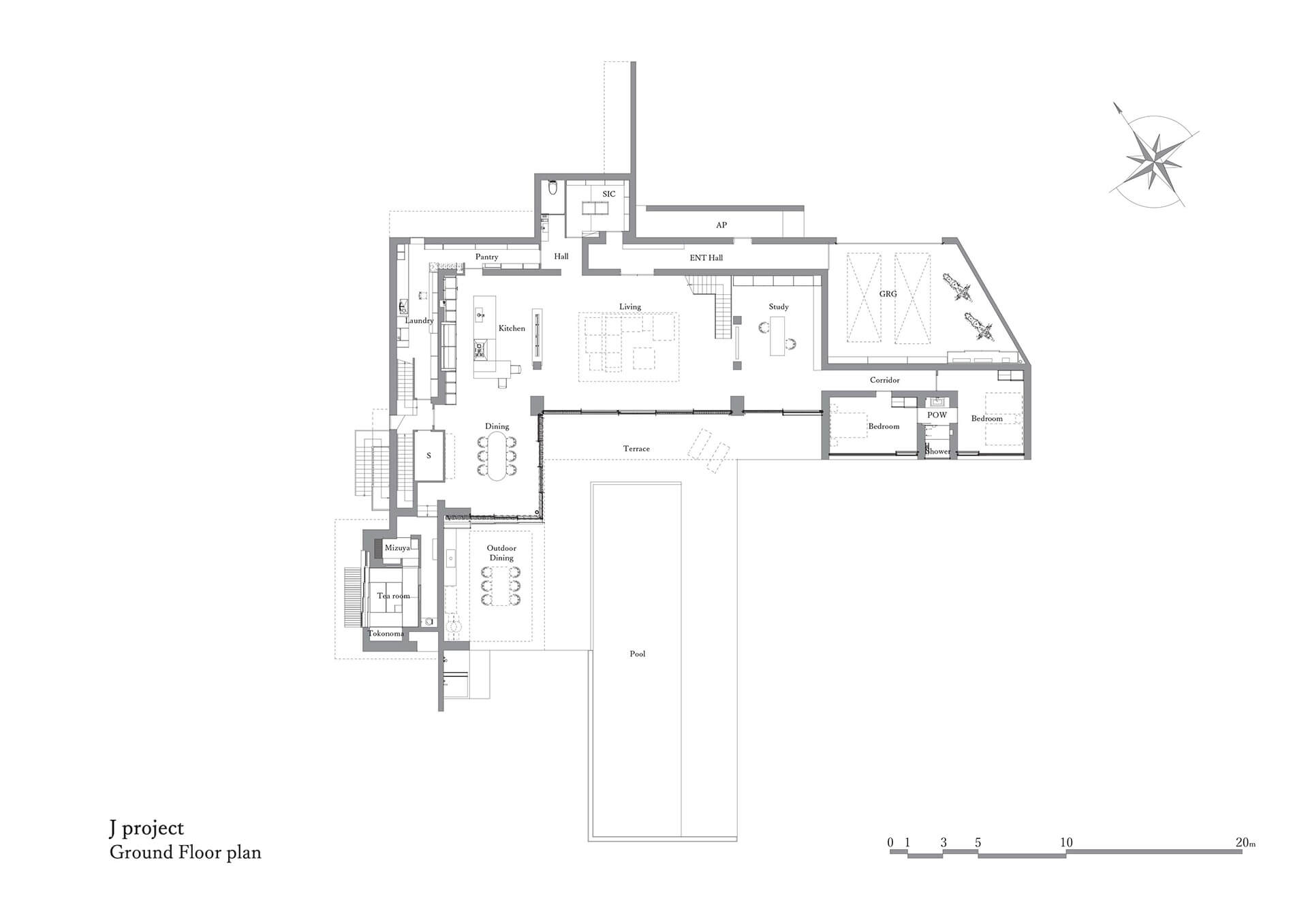
The organizing element of the project is a 20-meter-long swimming pool, 5 meters wide and reaching a depth of 2.5 meters. The pool establishes the main axis of the composition and is aligned directly with the mandarin orchard. All primary spaces are arranged in relation to this linear element, allowing visual continuity across the site and positioning the pool as both a spatial and orientational device. The reflective surface of the water mediates between architecture and landscape and remains perceptible from all major interior spaces.
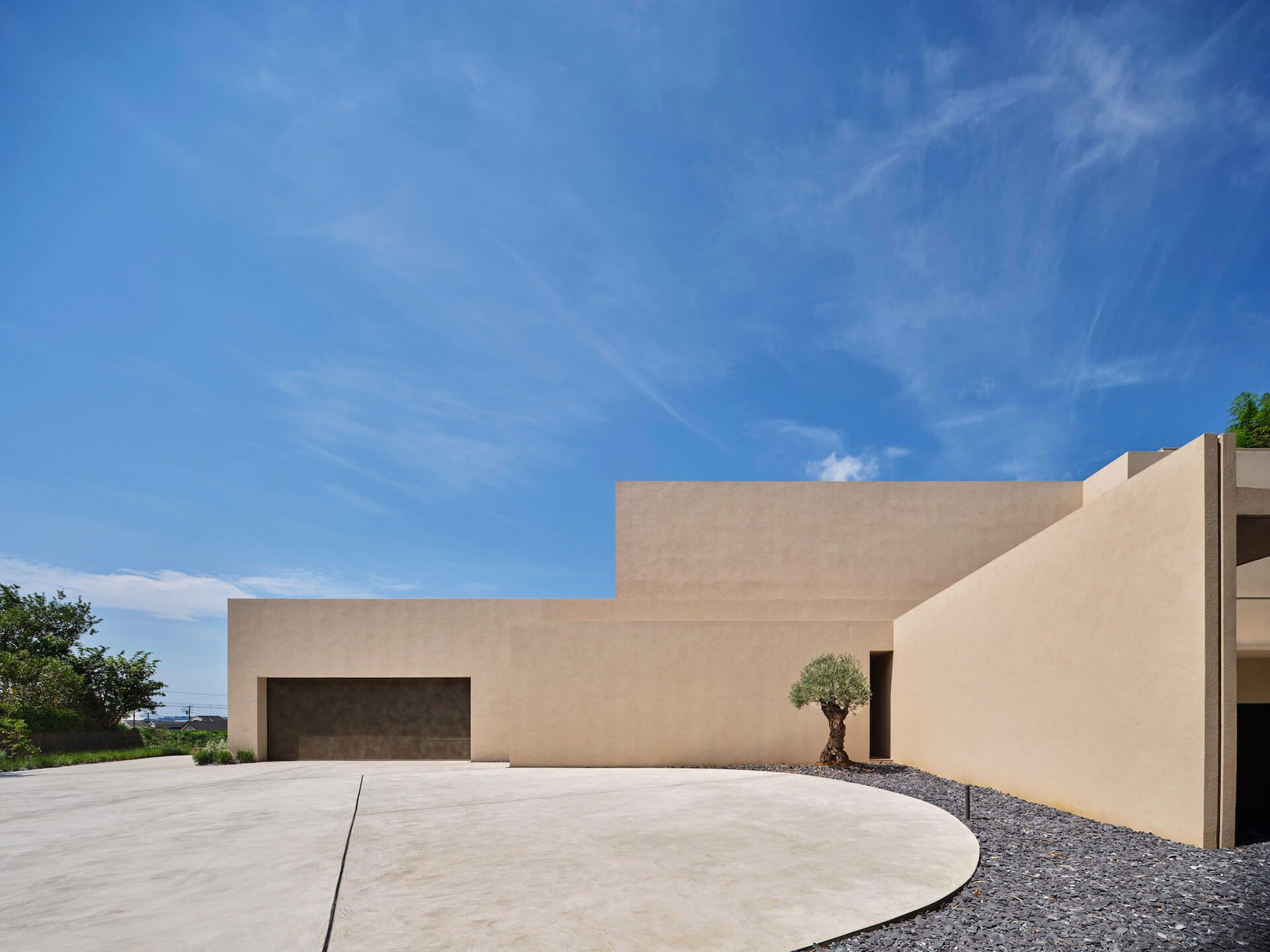
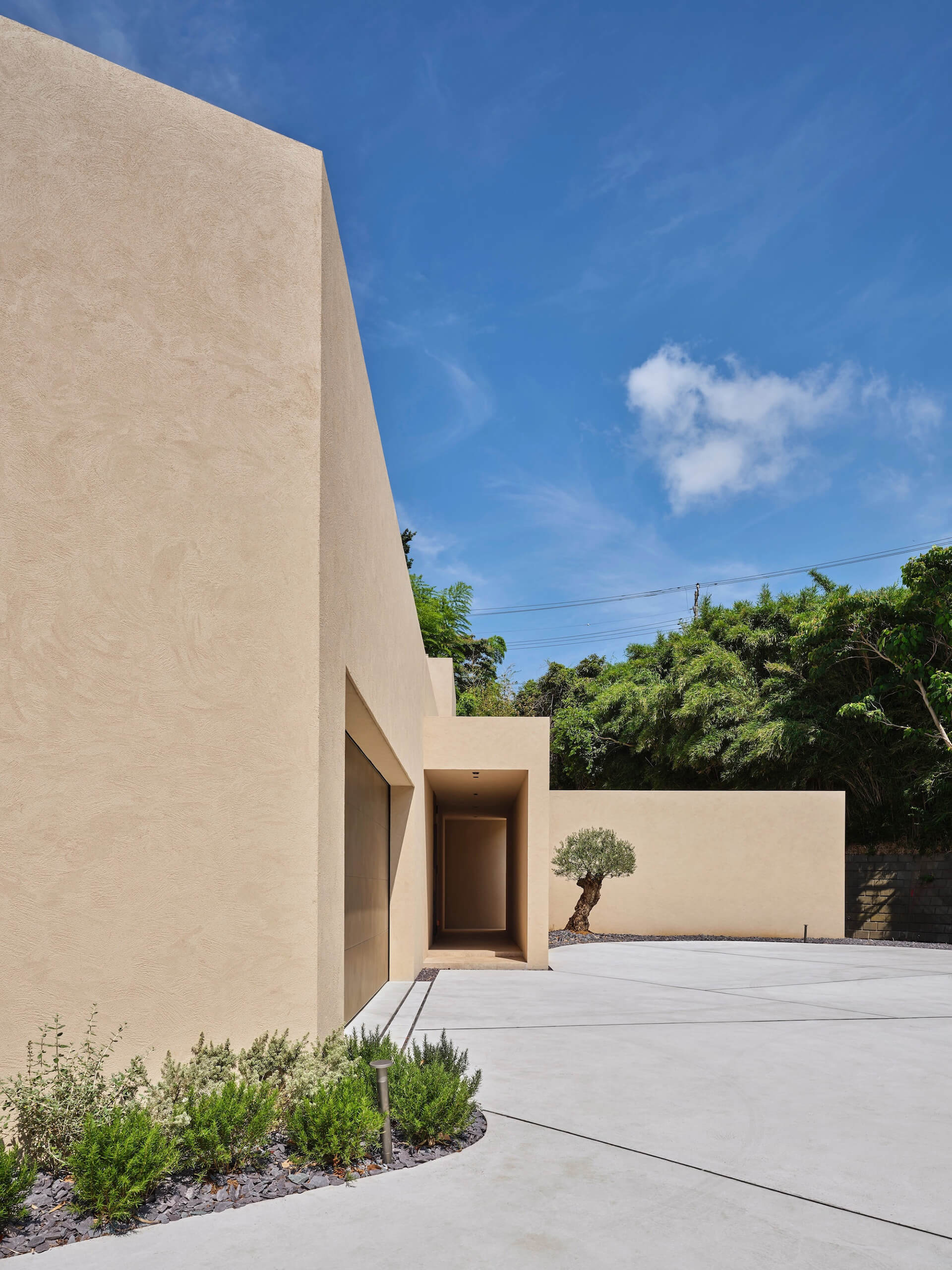
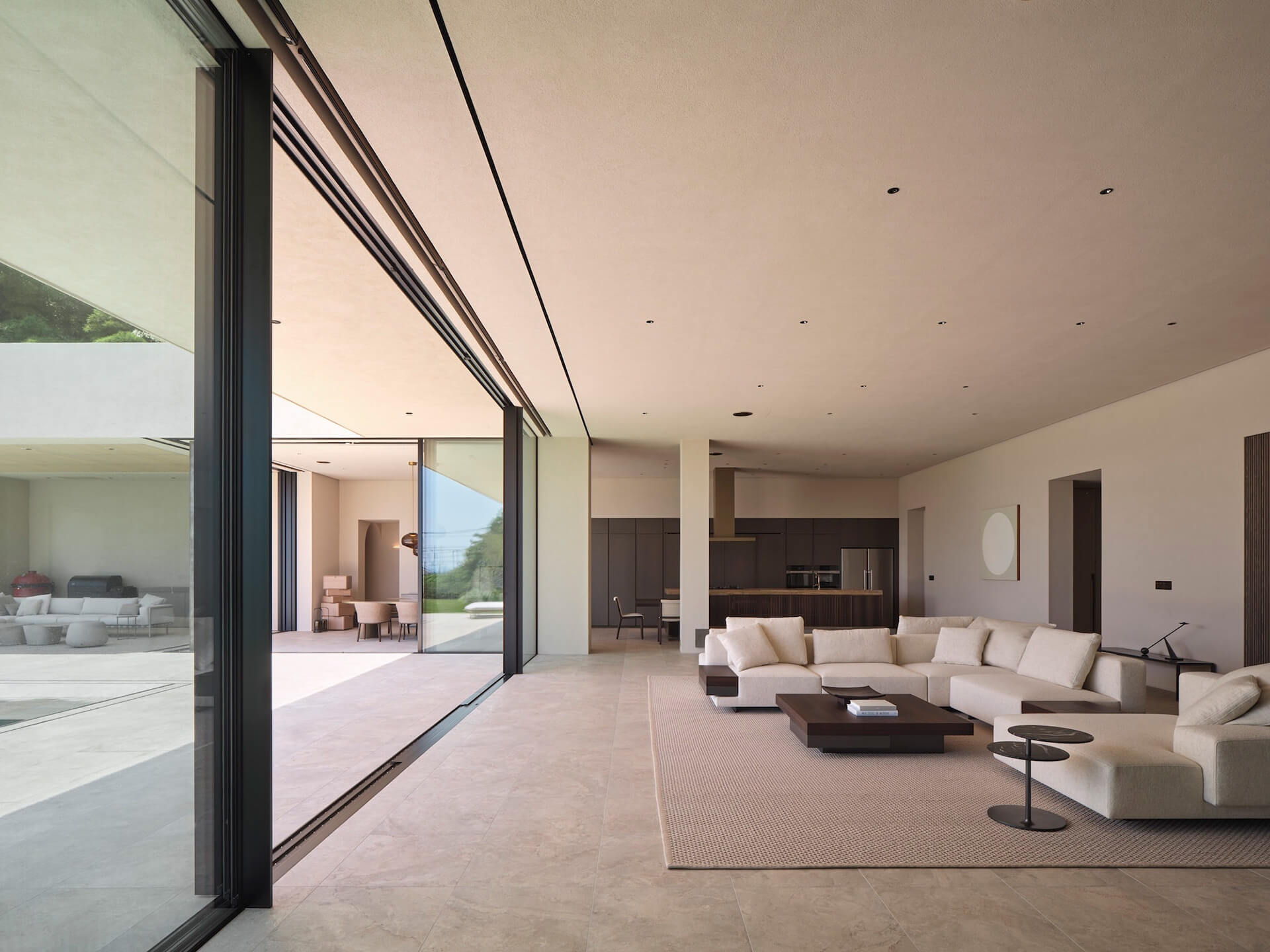
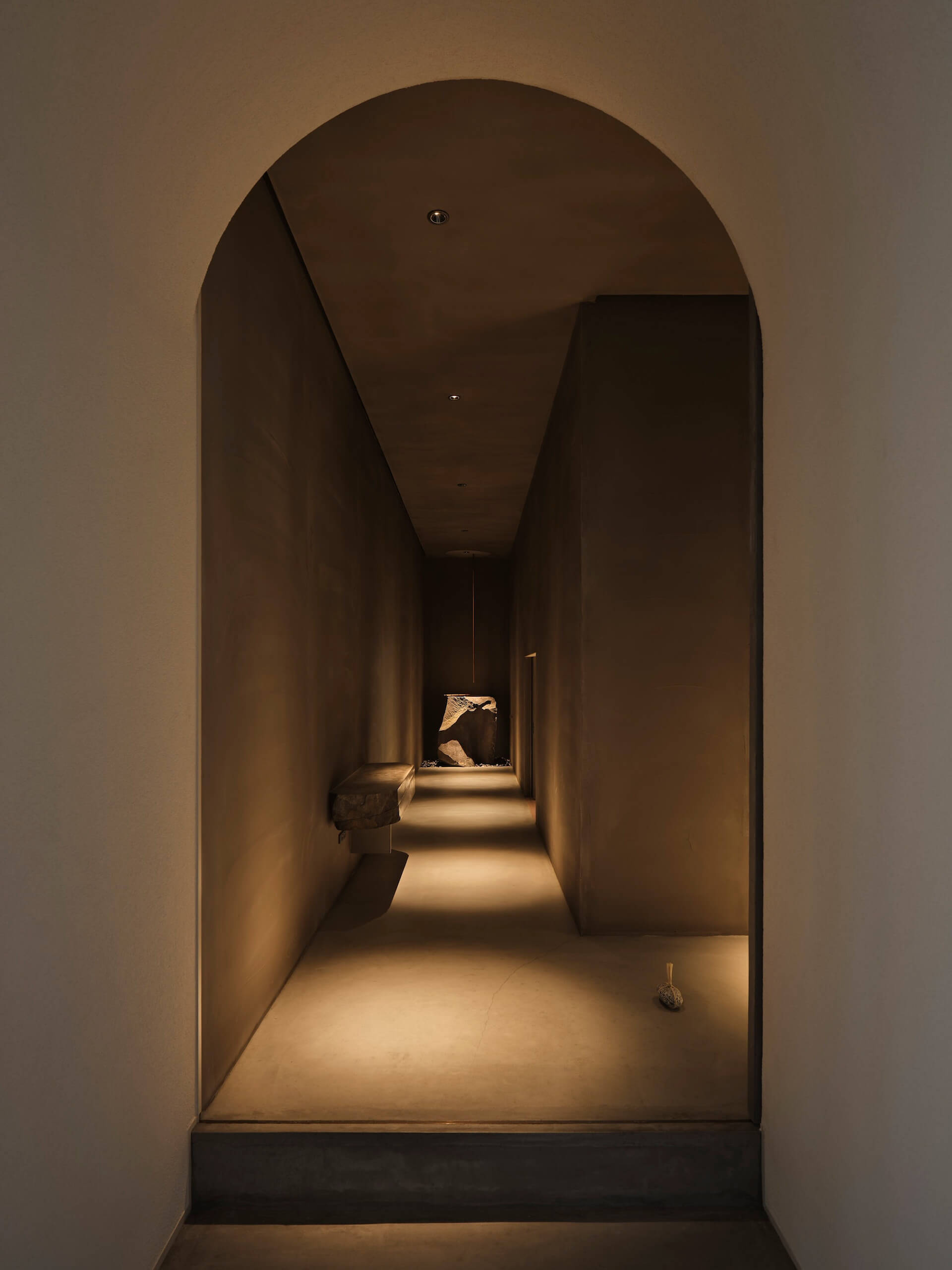
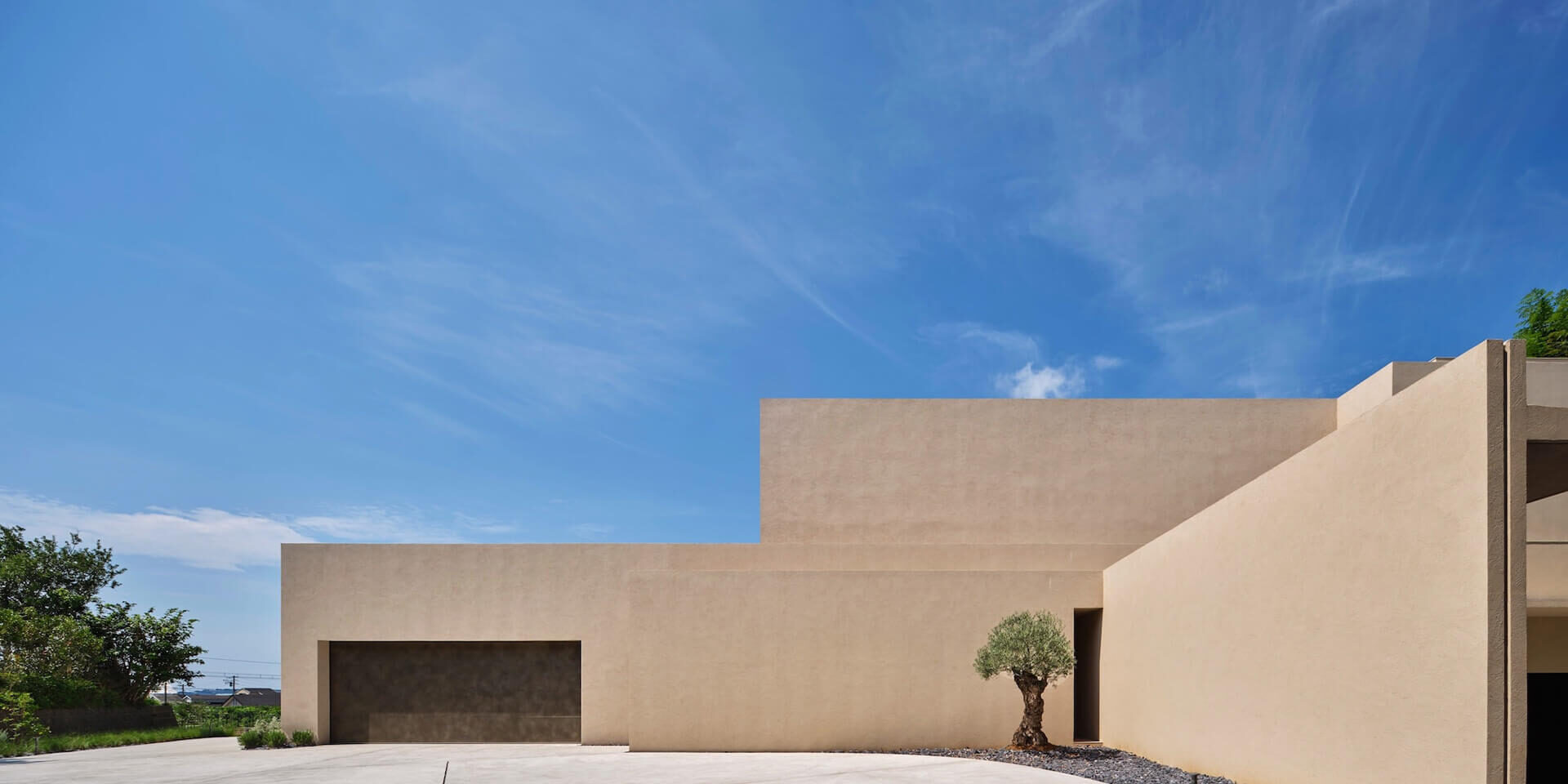
Access to the house is conceived as a compressed sequence. Entry occurs through a partially enclosed approach that leads to a low-lit gallery. From this transitional space, a set of wide, heavy doors opens into the main living area, where the full length of the pool and the orchard beyond are revealed. This sequence of compression and release, articulated through contrasts in ceiling height, scale, and light, draws from principles found in traditional Japanese architecture. These contrasts are subsequently resolved into a consistent structural grid with a uniform height of 3.5 meters, establishing a clear spatial rhythm across the interior.
Material Palette
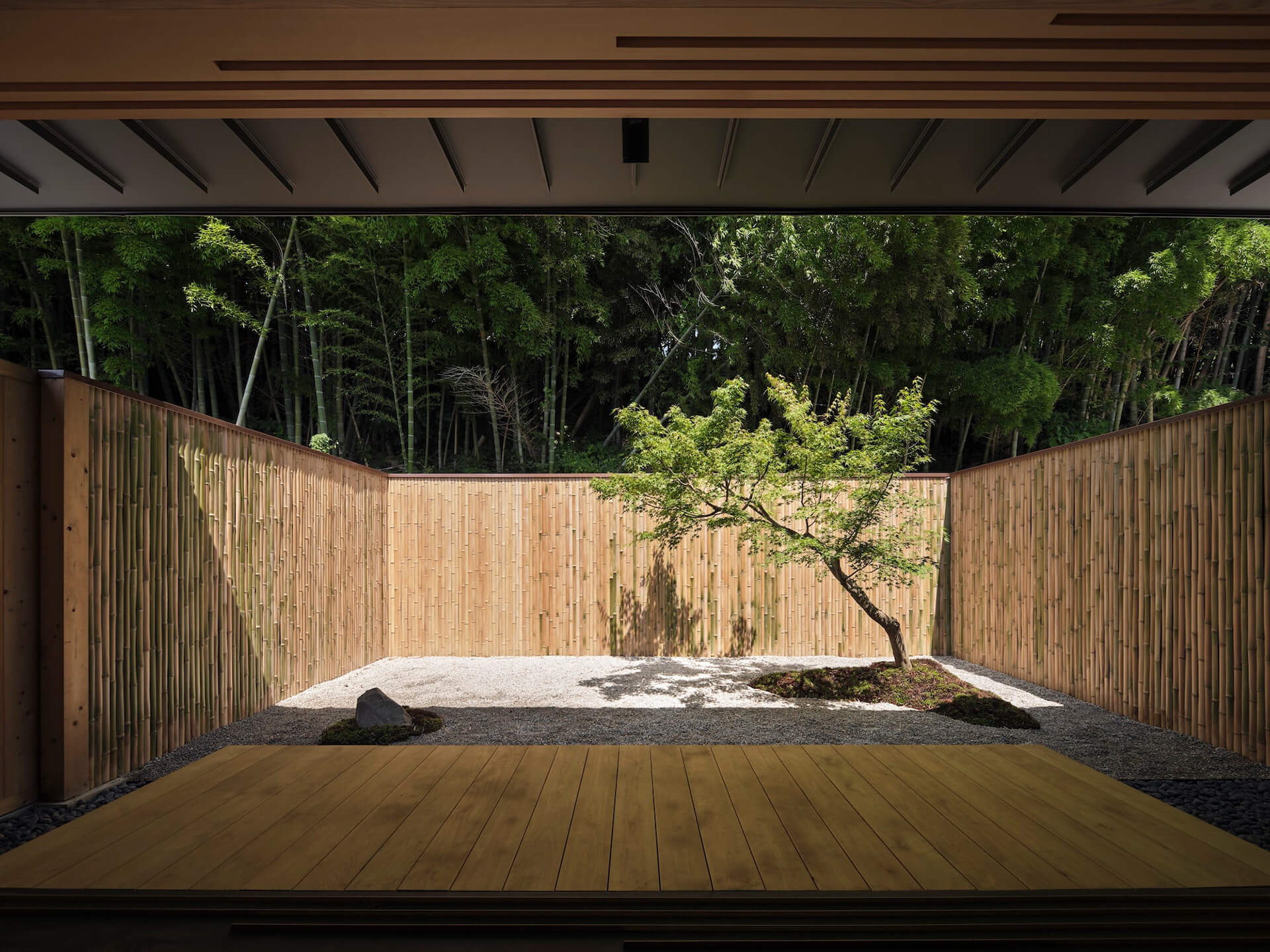
The tearoom is located at the most secluded point of the plan. It is intentionally darker and more enclosed than the surrounding spaces and is oriented toward the adjacent bamboo forest. The room reinterprets elements of the traditional tea house – natural plaster finishes, bark-covered timber, and references to the work of Sen no Rikyū – a through a contemporary lens, emphasizing restraint, proportion, and material presence.
The program also includes a wine cellar, two guest bedrooms, and a fitness room, all integrated within the same structural and material logic. A restrained palette of materials and a high degree of detail control reinforce the minimalist character of the project.