Saint Hotel in Santorini
Architecture:
Photography:
ek Issue:

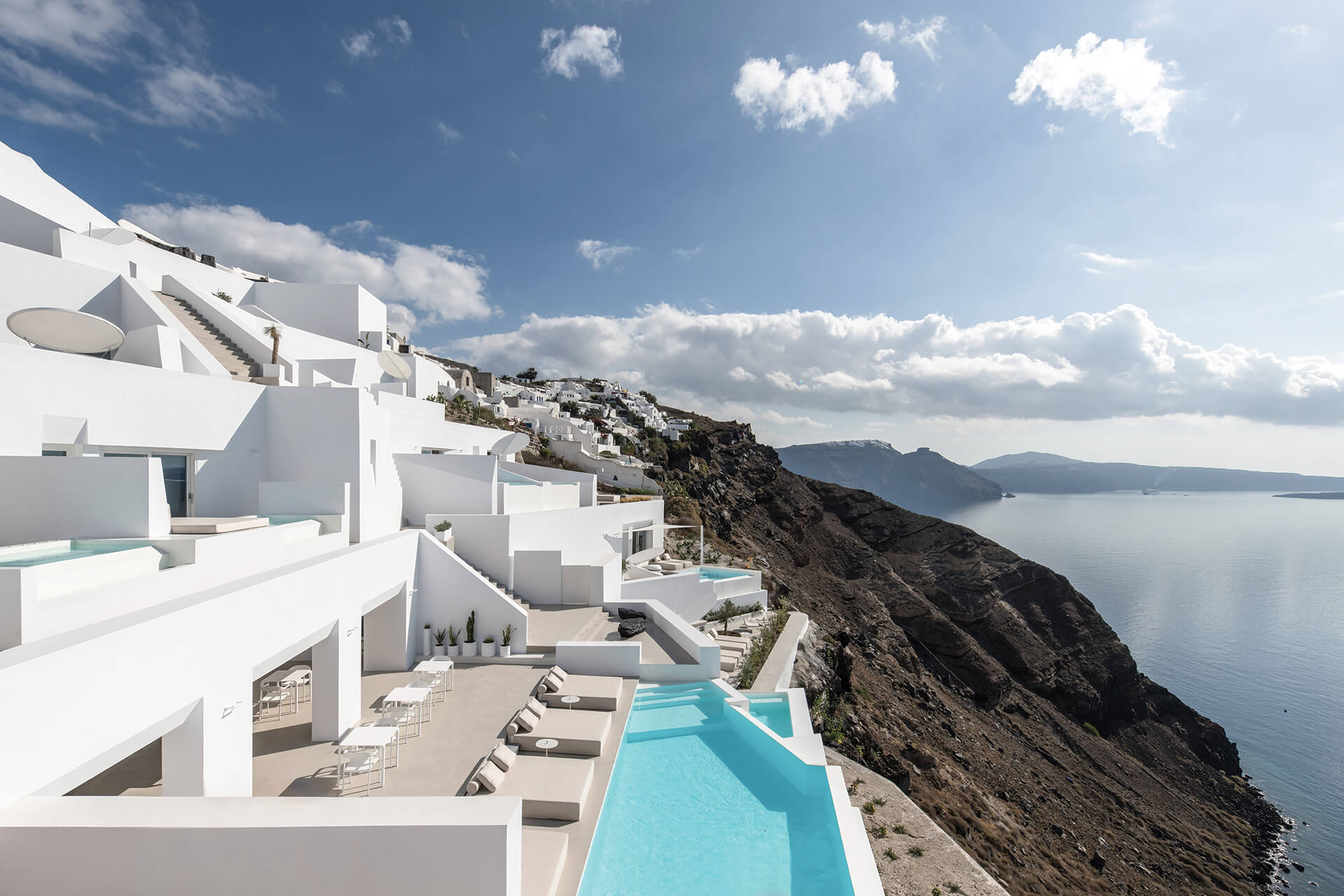
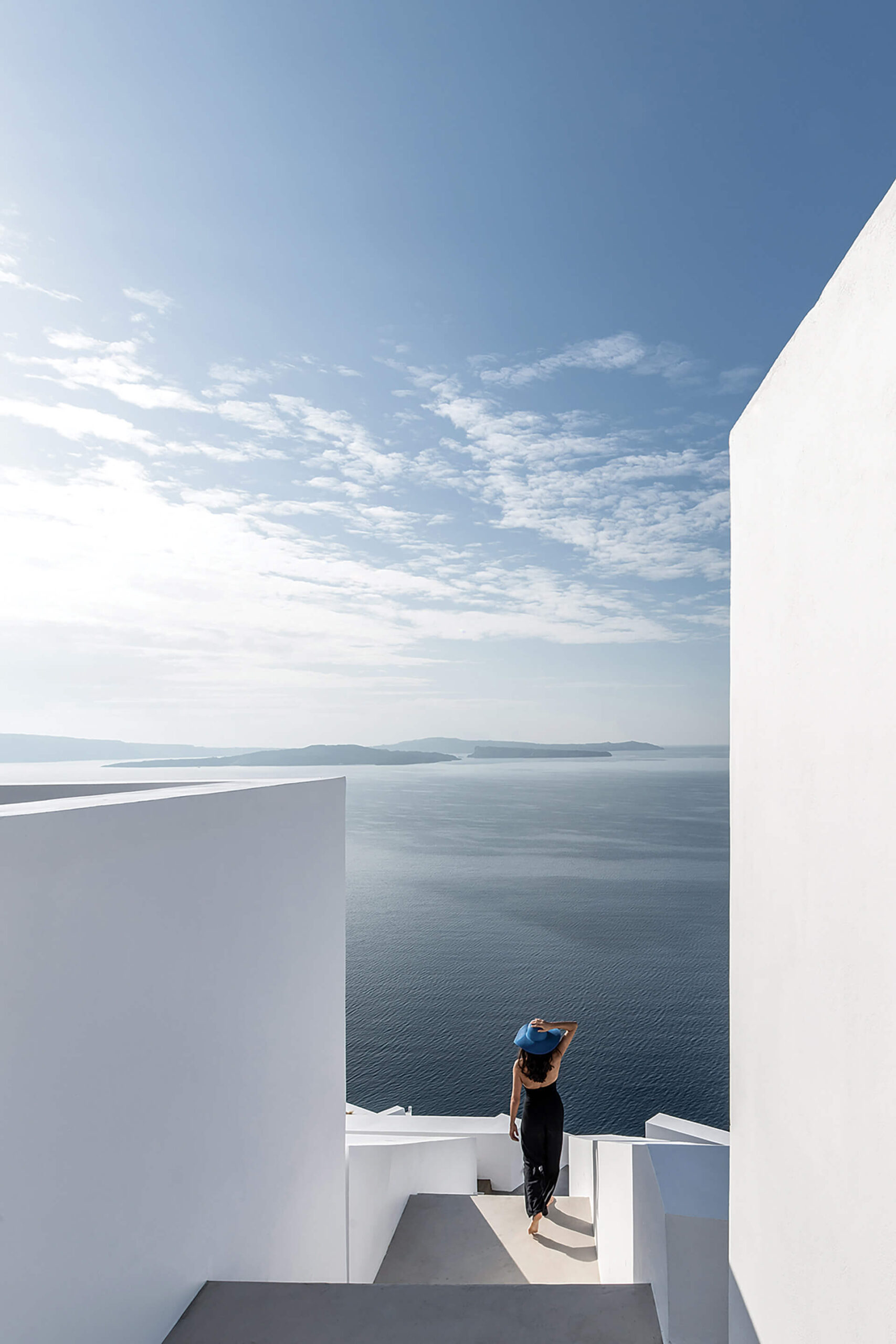
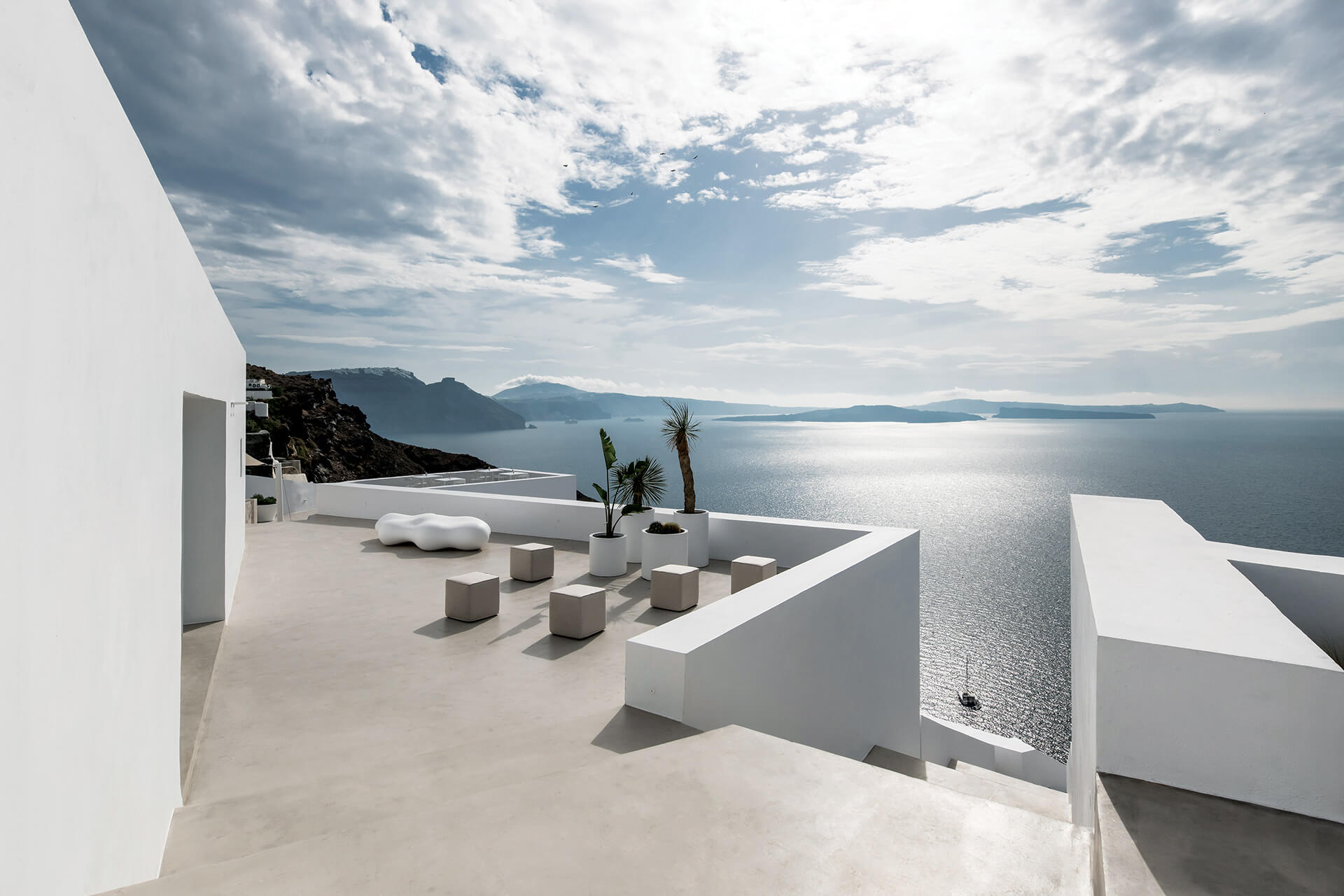
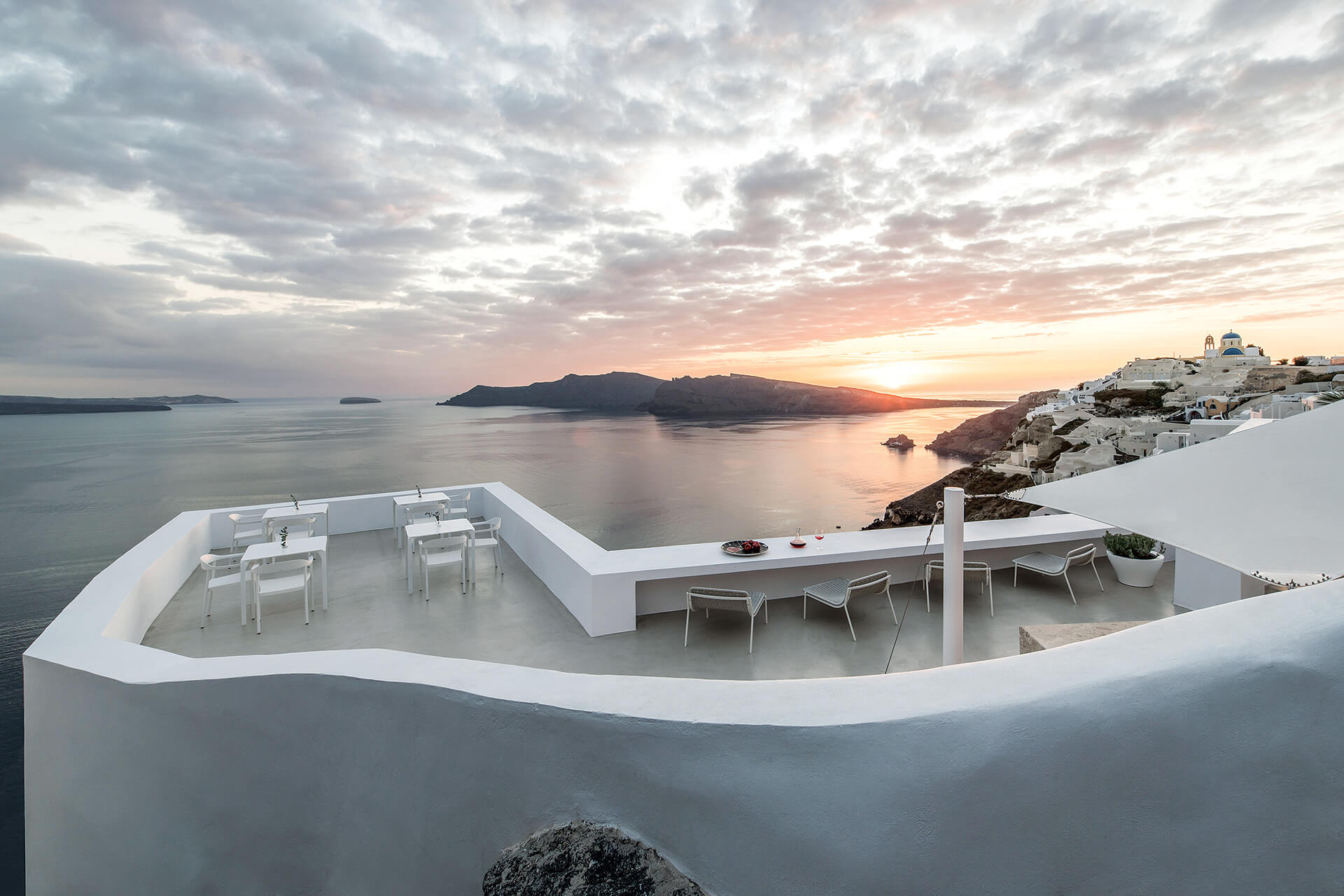
The hotel is located at the edge of the traditional settlement of Oia, at the top of the volcanic cliffs of the Caldera. The site has a steep slope, a south-western orientation and unobstructed views toward the sea and the volcano.
Restoration Strategy
Within the plot there were ruined cave structures previously used as storage spaces, stables and cellars, as well as an old cubic house located at the northeastern corner. The objective of the project was the reconstruction of the pre-existing buildings and the addition of new cave rooms and communal areas, forming a hotel complex.
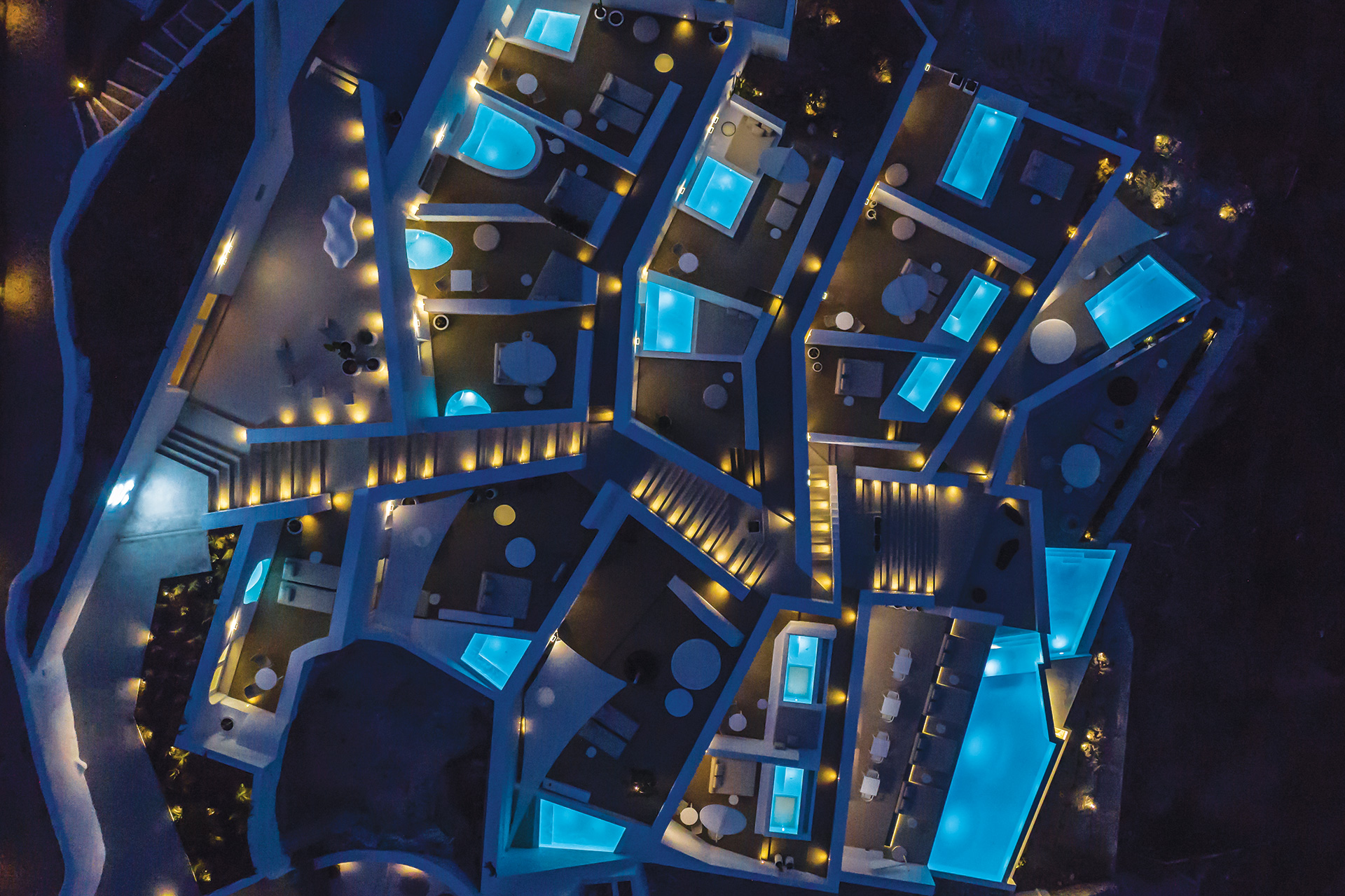
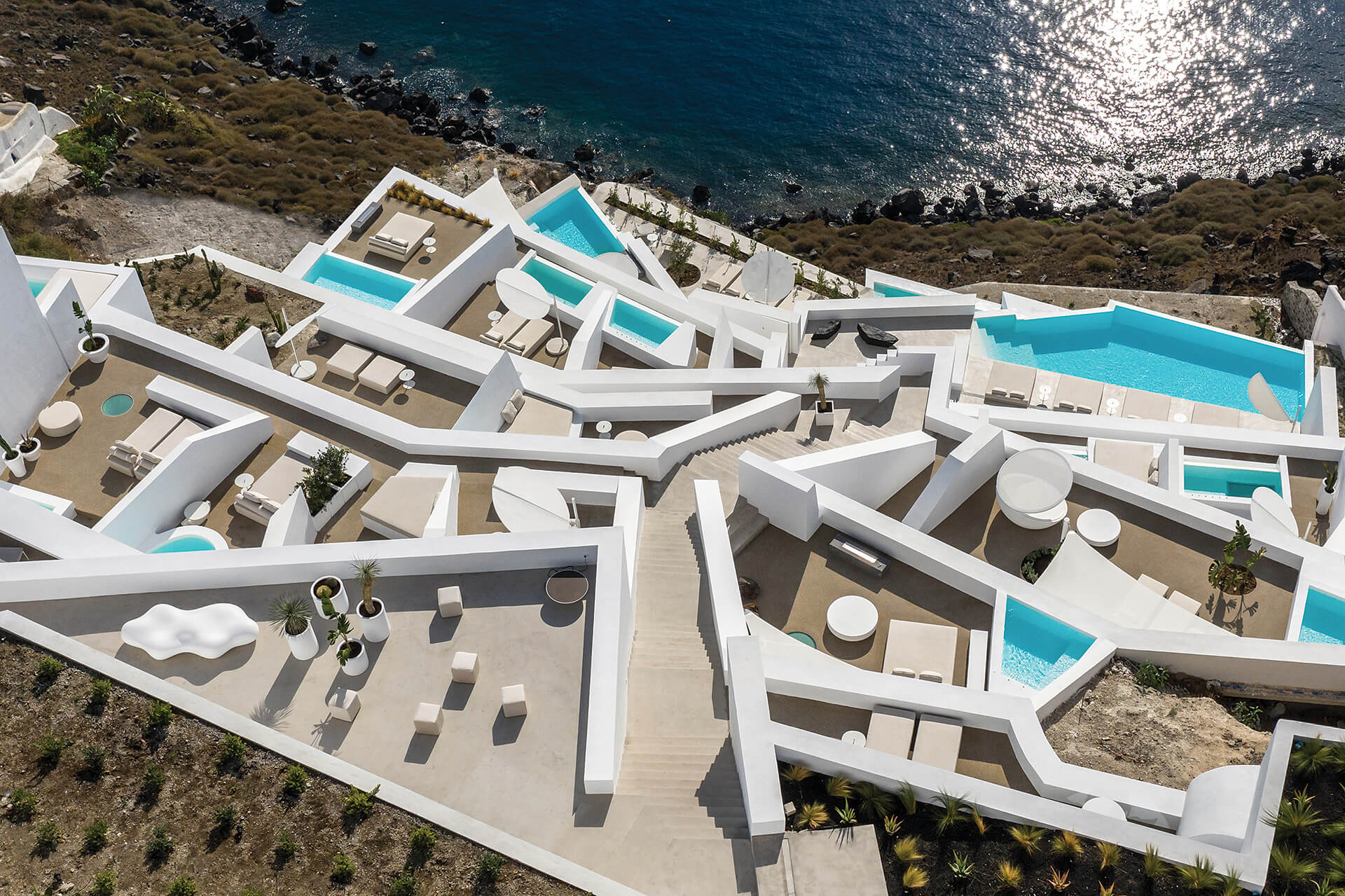
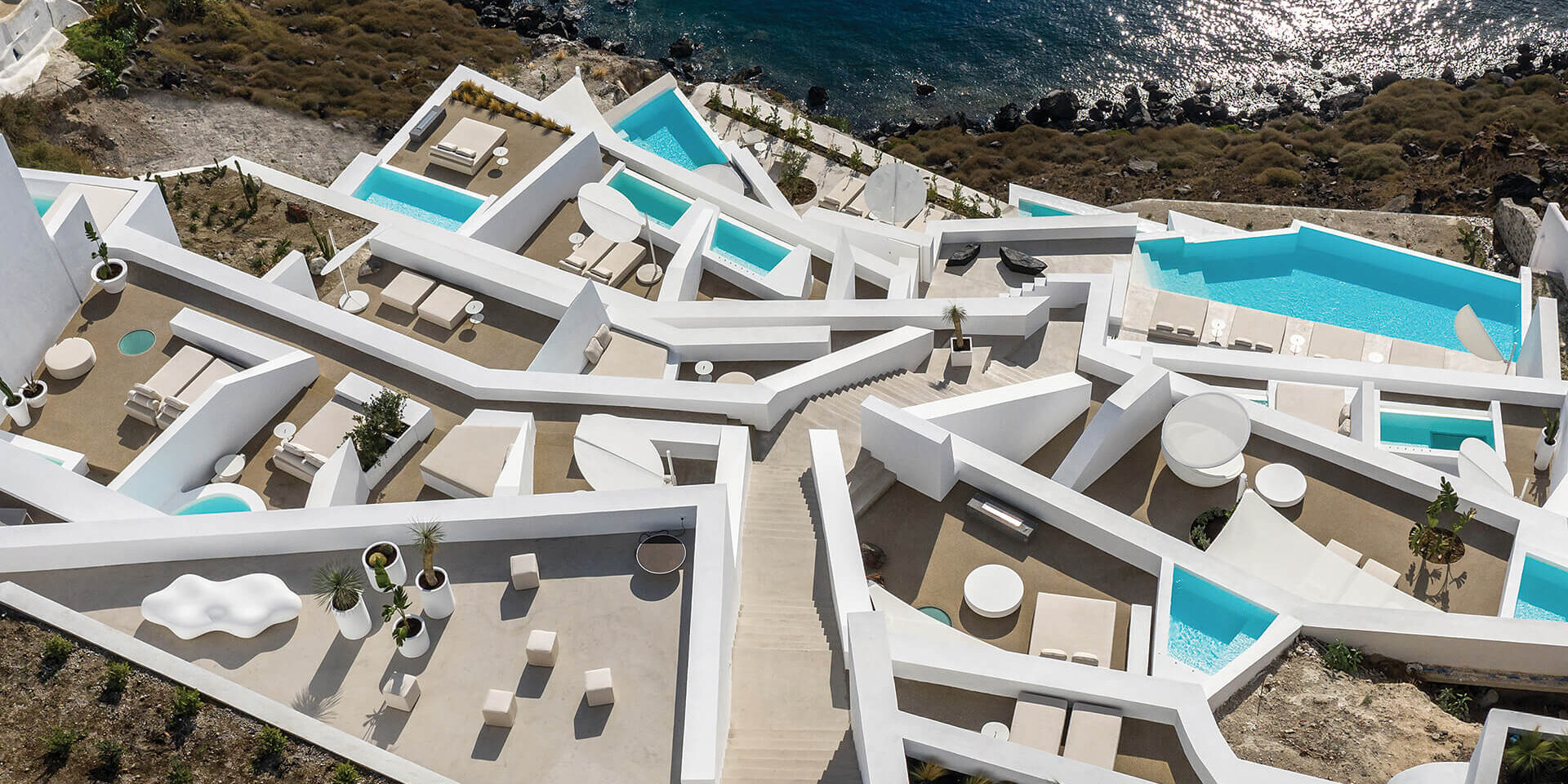
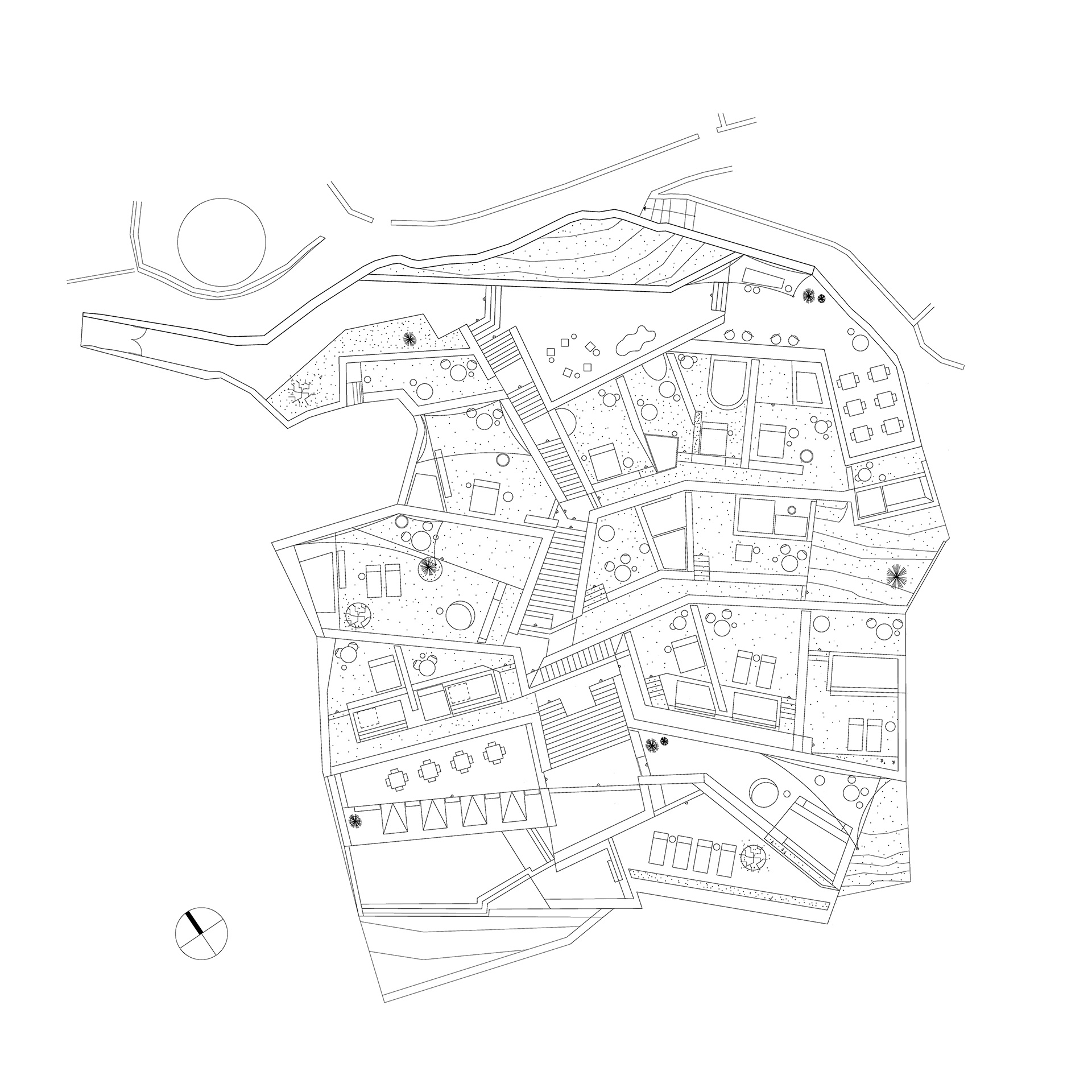
As a result, the hotel includes a small reception area, sixteen rooms, a restaurant, a shared swimming pool and a gym-spa. These functions are arranged gradually across the six levels of the complex. The entrance, accessed from the main pedestrian path of the settlement, is located at the upper level together with the reception and an outdoor seating area.
Spatial Organization
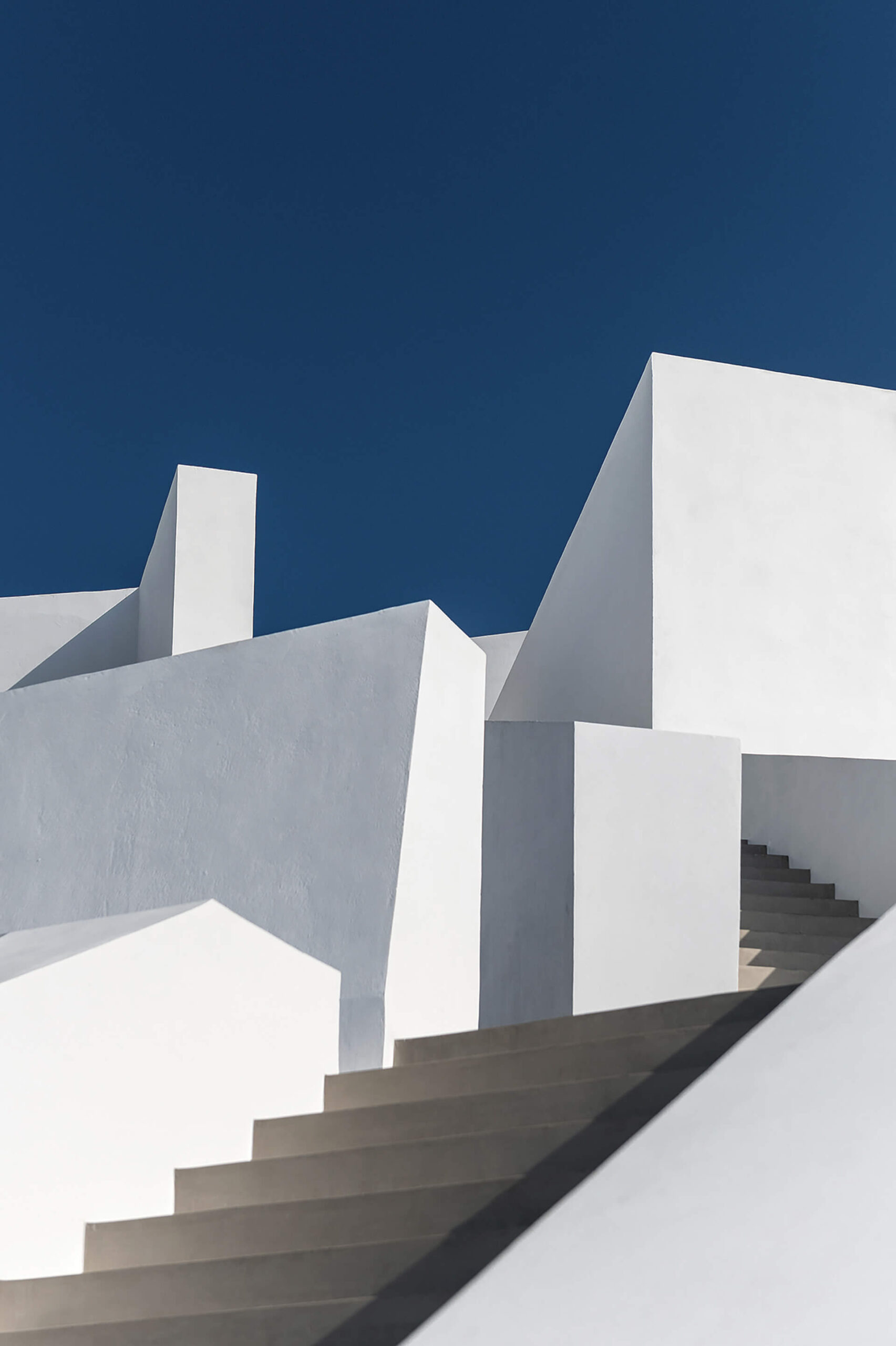
A central outdoor staircase leads from the upper level to the restaurant and the pool, connecting the three intermediate levels that accommodate the guest rooms with their private courtyards and pools. The lowest level includes the spa reception, a small gym, massage rooms, hammam, sauna, sanitary facilities and storage areas, as well as a sheltered relaxation courtyard at the edge of the cliff.
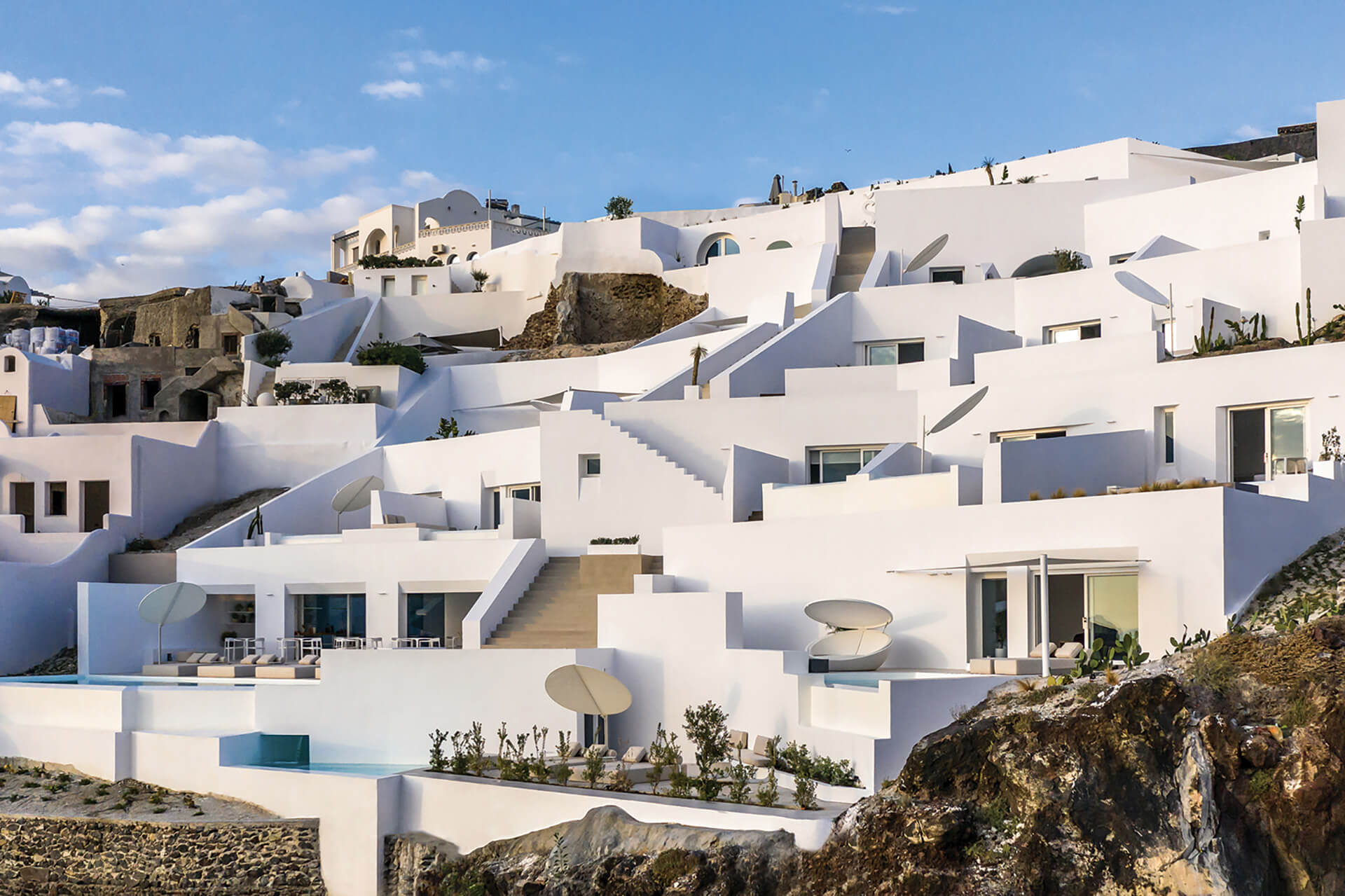
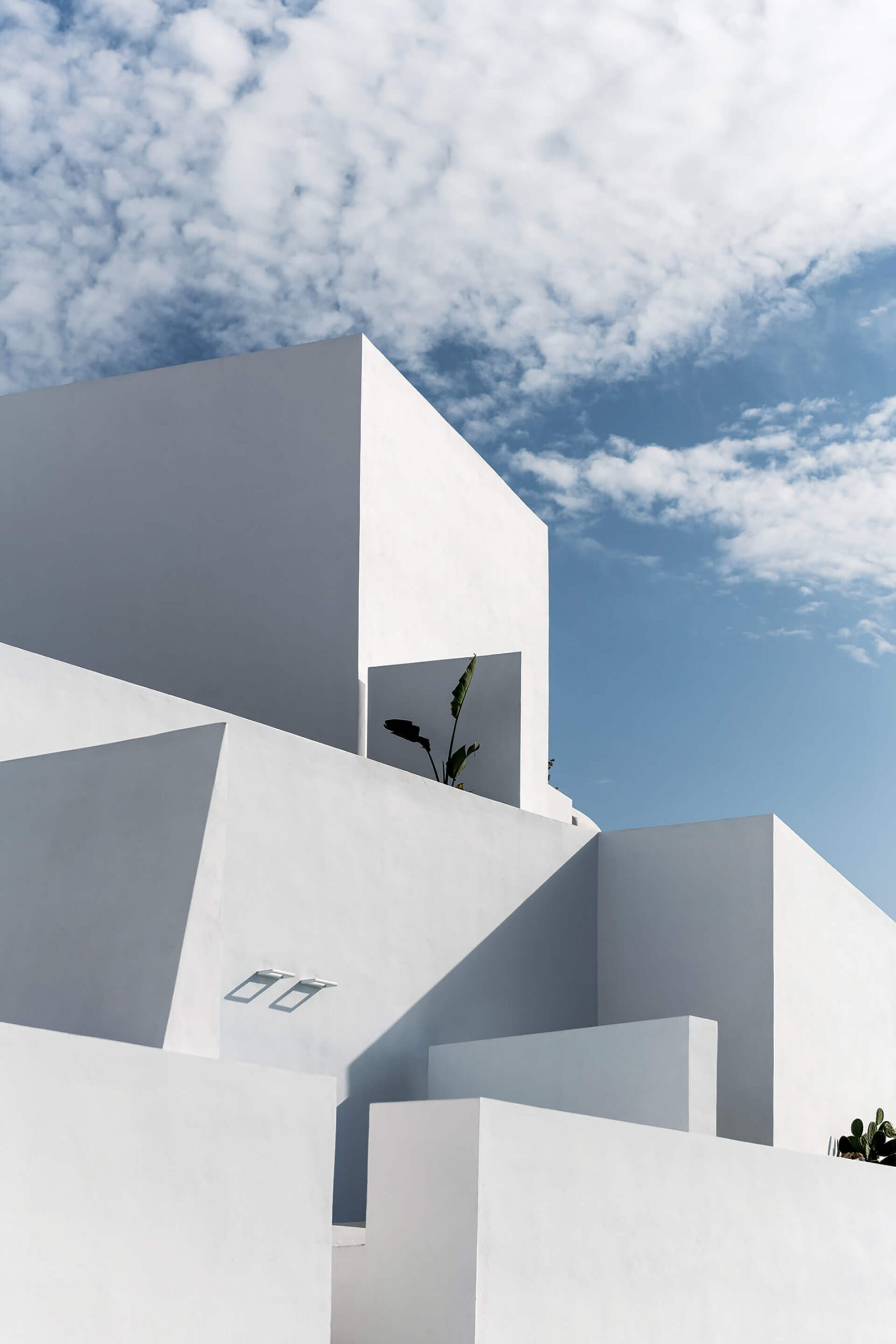
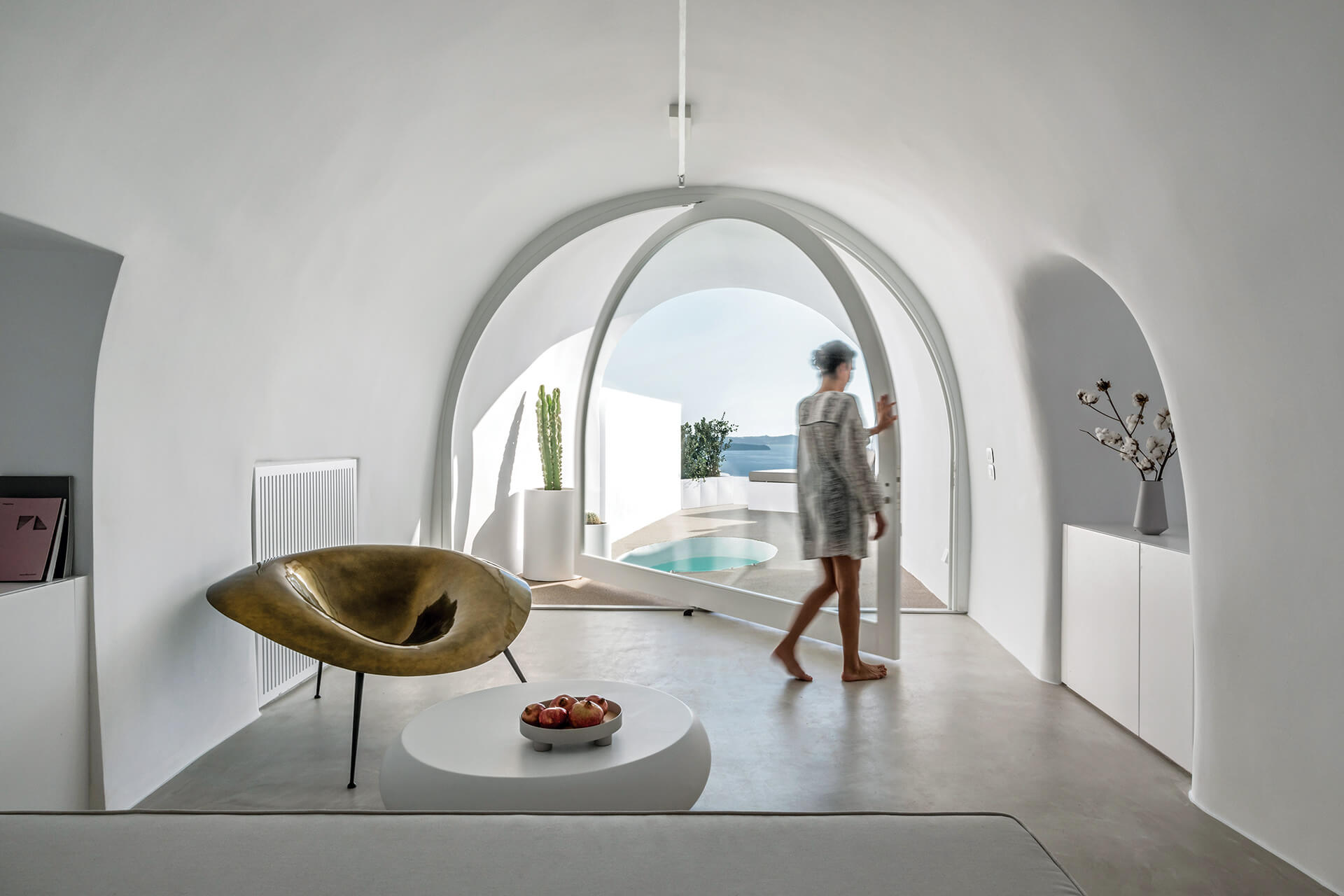
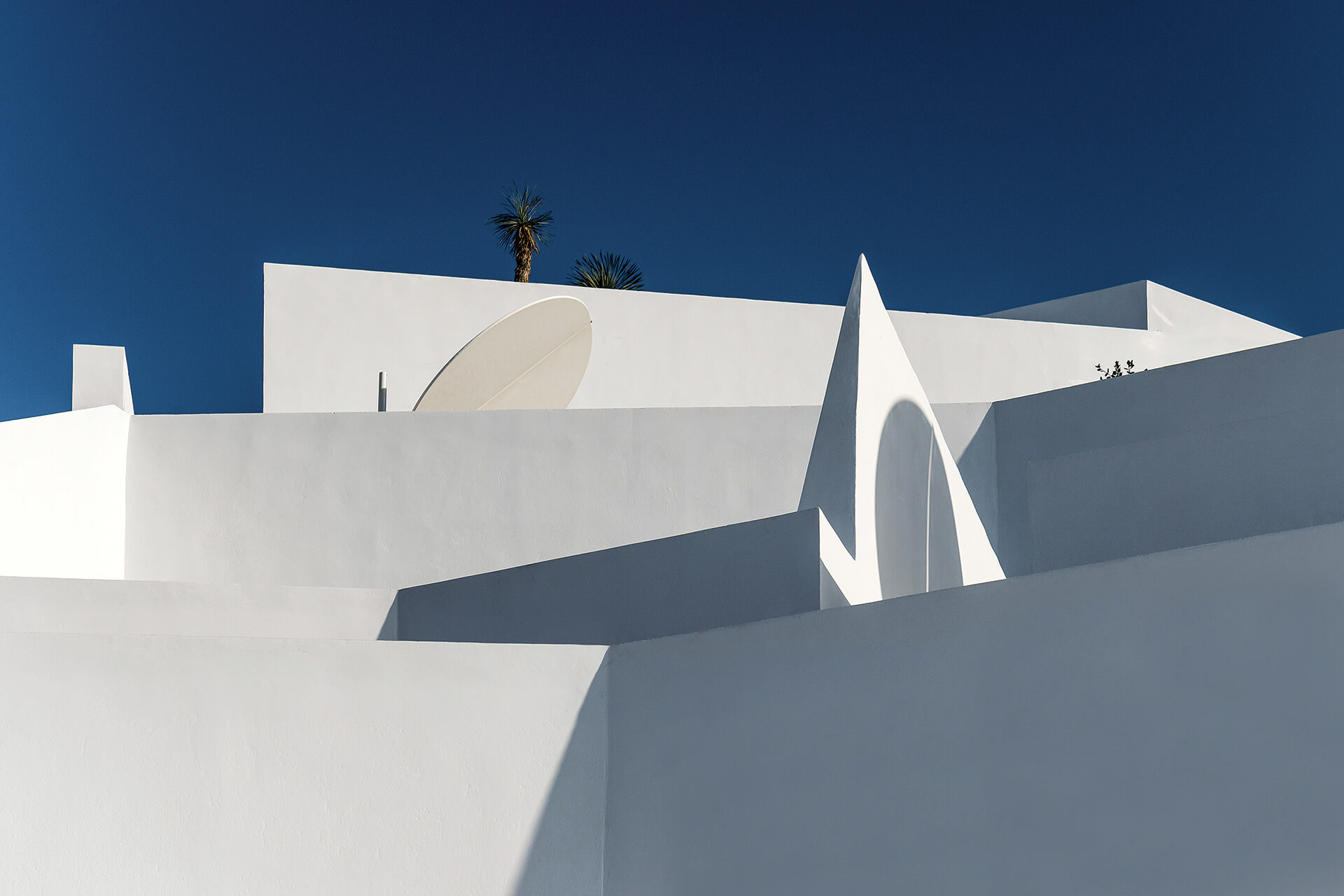
The proposal aimed both at the faithful restoration of the pre-existing buildings and the construction of new cave structures in the spirit of a contemporary and subtle reinterpretation of the cubic morphology of the old settlement, while maintaining a continuous relationship with the natural topography of the Caldera. The form of the new cave spaces preserves the structure of the traditional ones, along with their geometric shapes, materiality and white color.
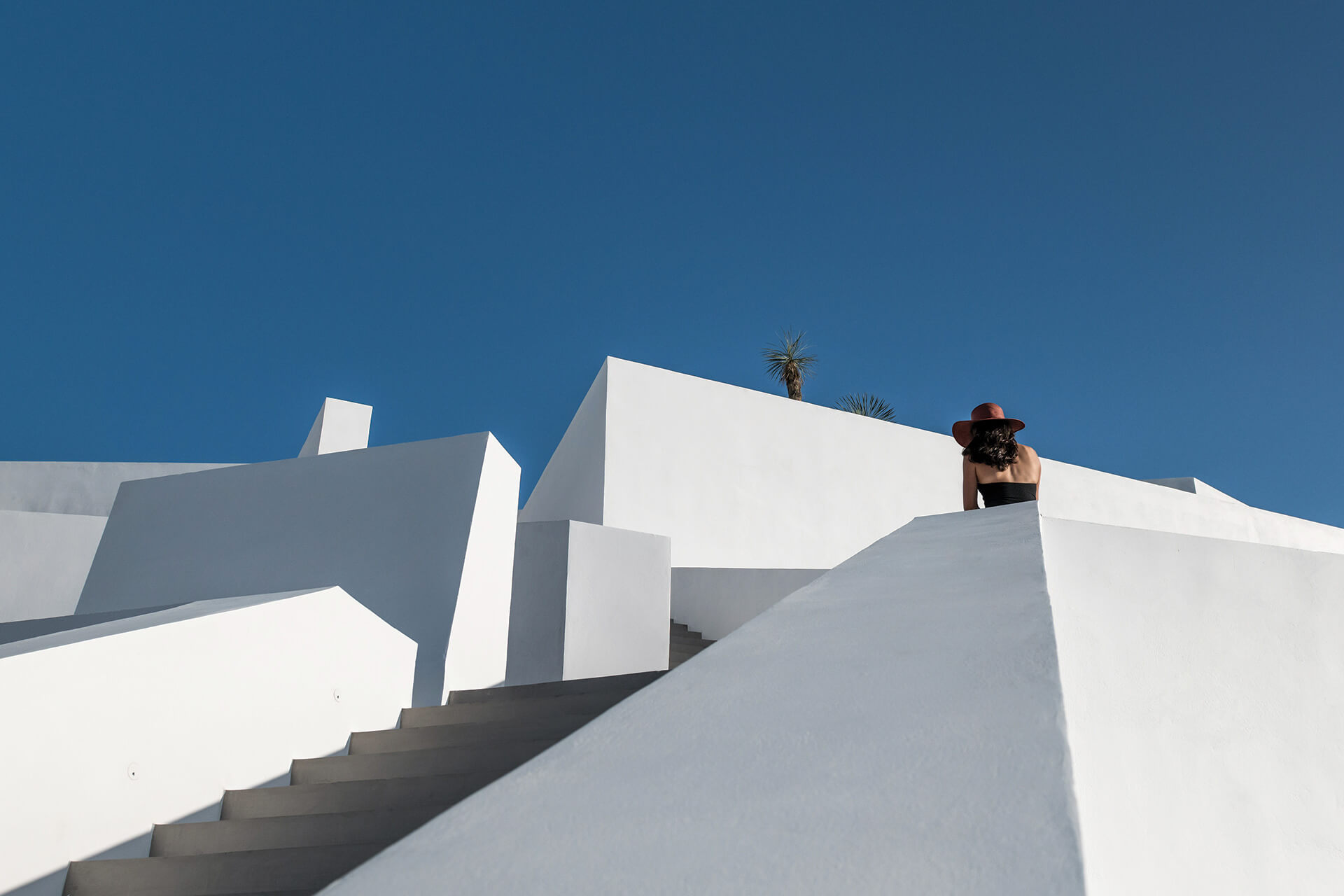
The typologies of the floor plans, as well as the openings, are oriented so as to frame the view toward the sea. As a result, the façades follow the natural contour lines as broken geometries, resembling folded retaining walls that integrate gently into the landscape. The layering of these compositional strategies ultimately defines the final form of the building and its strong spatial dynamism. The descending movement of the central outdoor staircase, from the hotel entrance to the lowest level, resembles a “crack” in the “body” of the building, guiding movement and directing visitors toward the various private and communal areas.
 Materials & Lighting
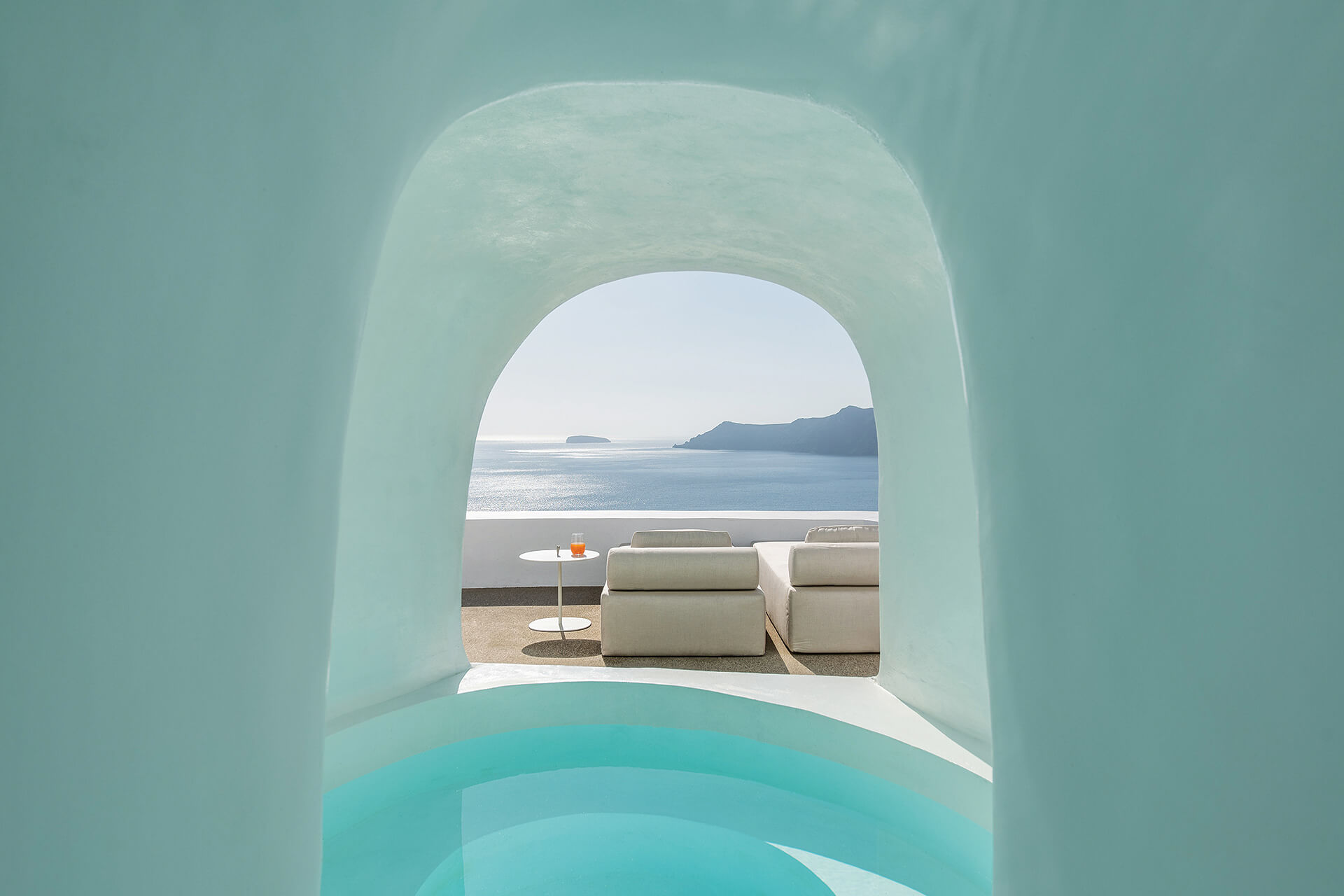
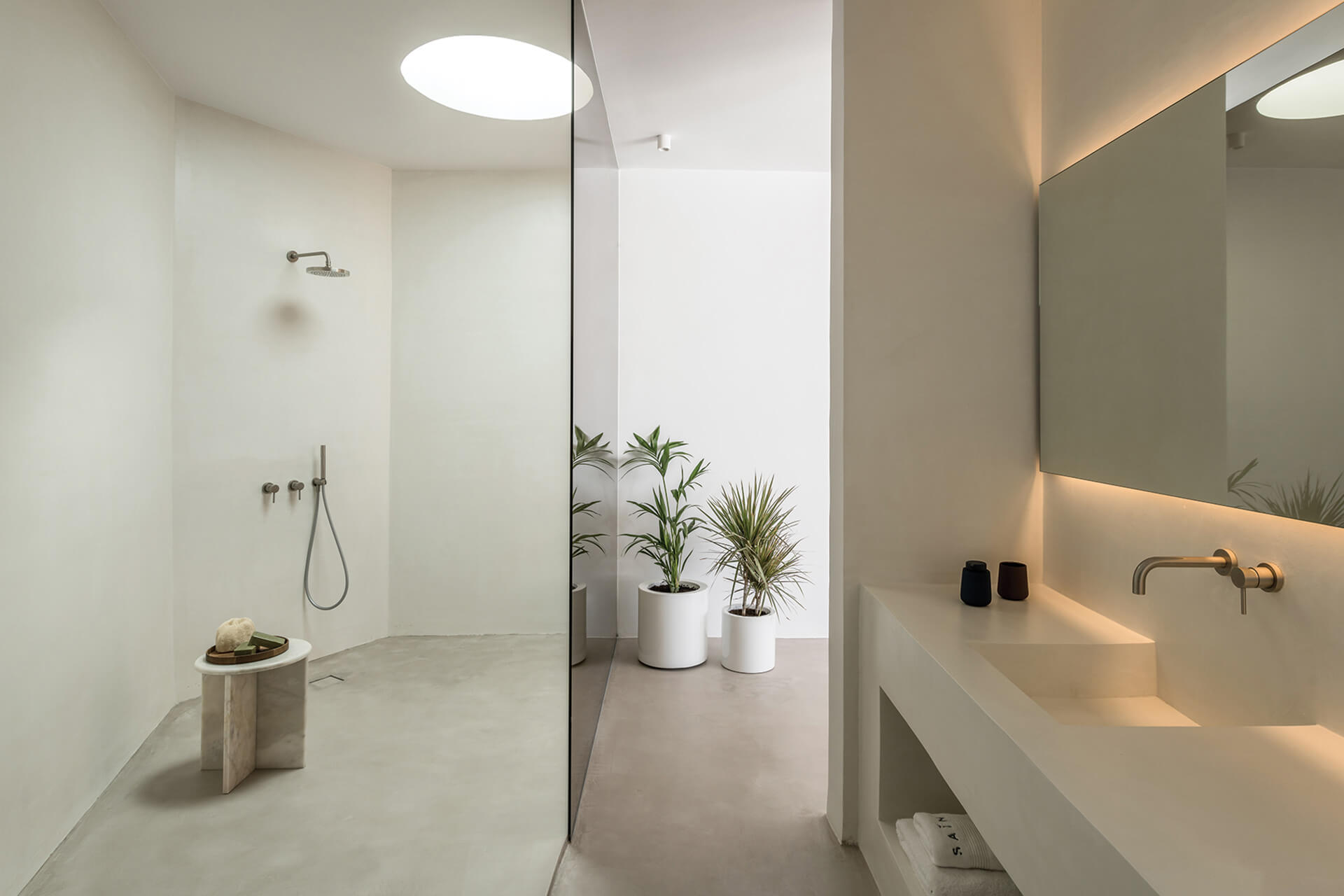
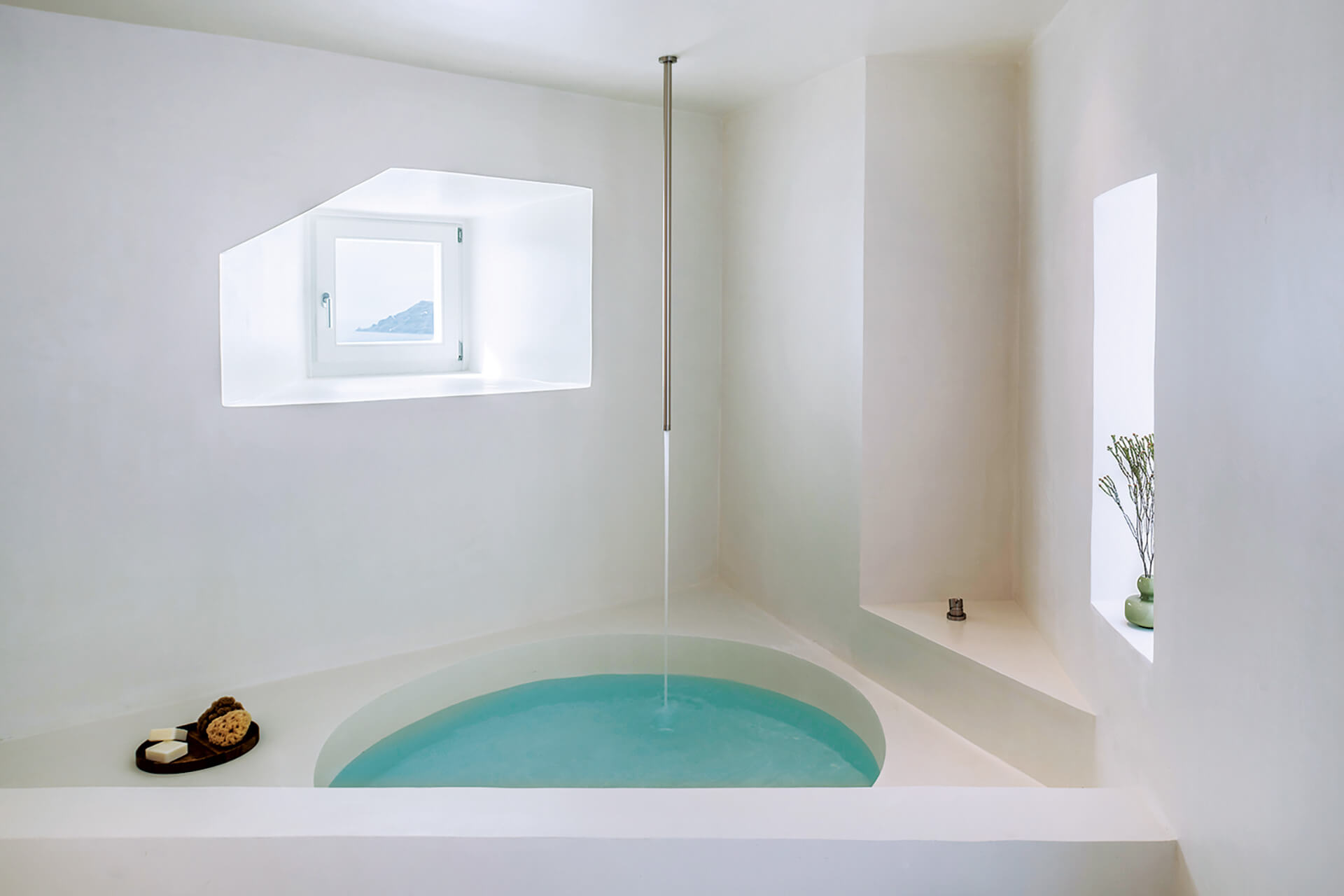
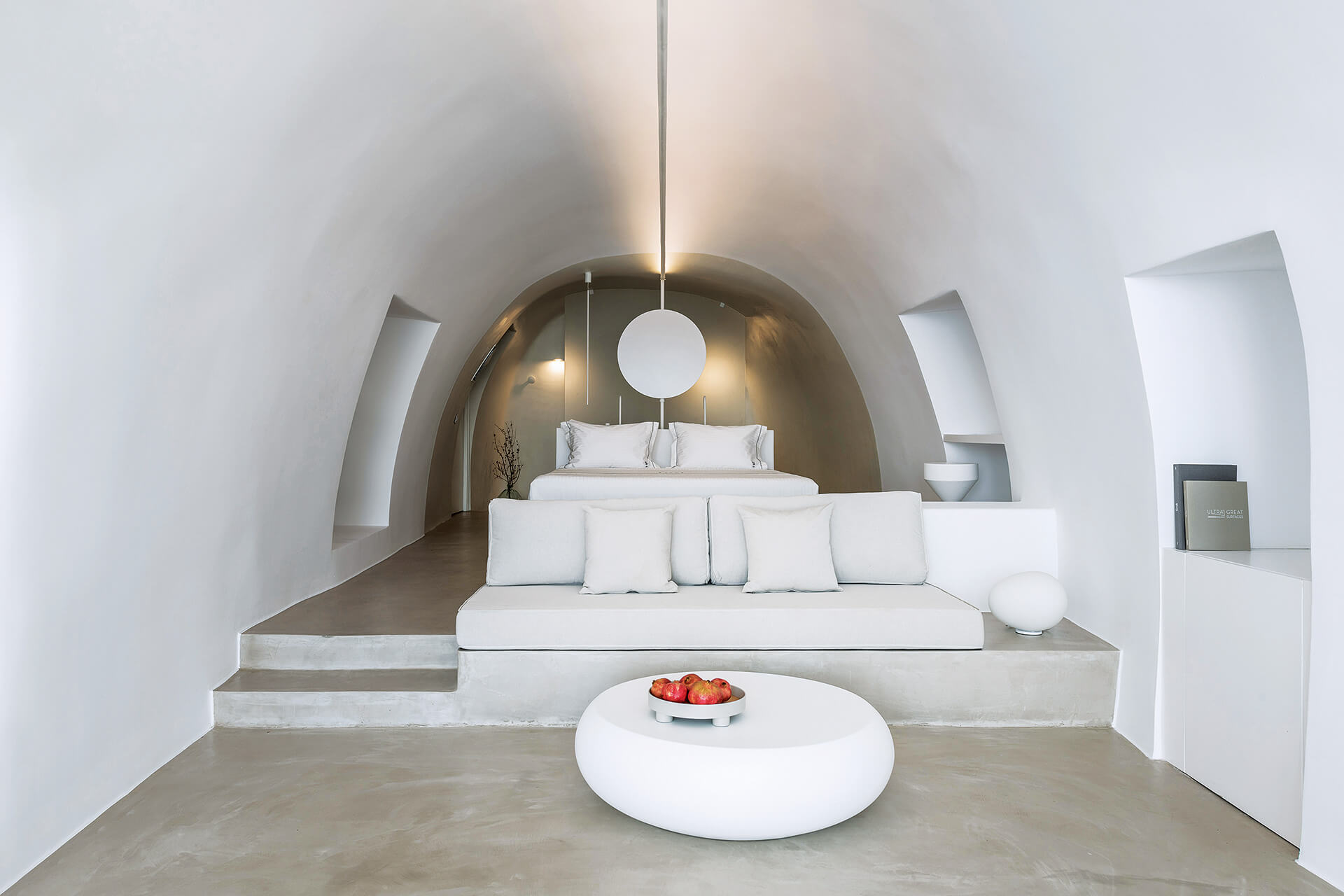
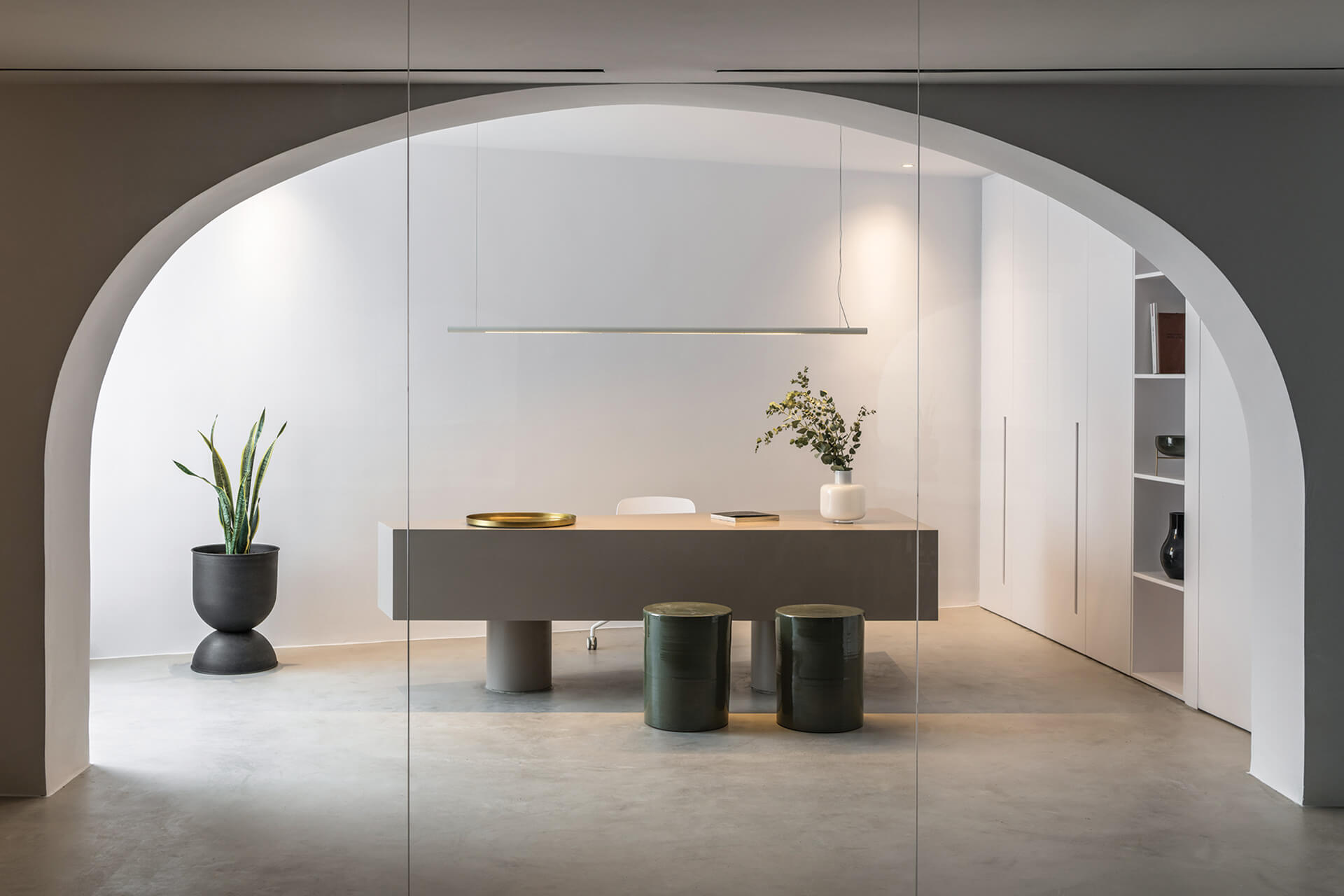
The interior design follows a strict minimalist approach based on the principles of Cycladic architecture. In the pre-existing cave spaces, a “total white” atmosphere prevails, with subtle touches of iridescent gold and green, while soft curves and freestanding furniture with organic forms highlight and enrich their natural plasticity.
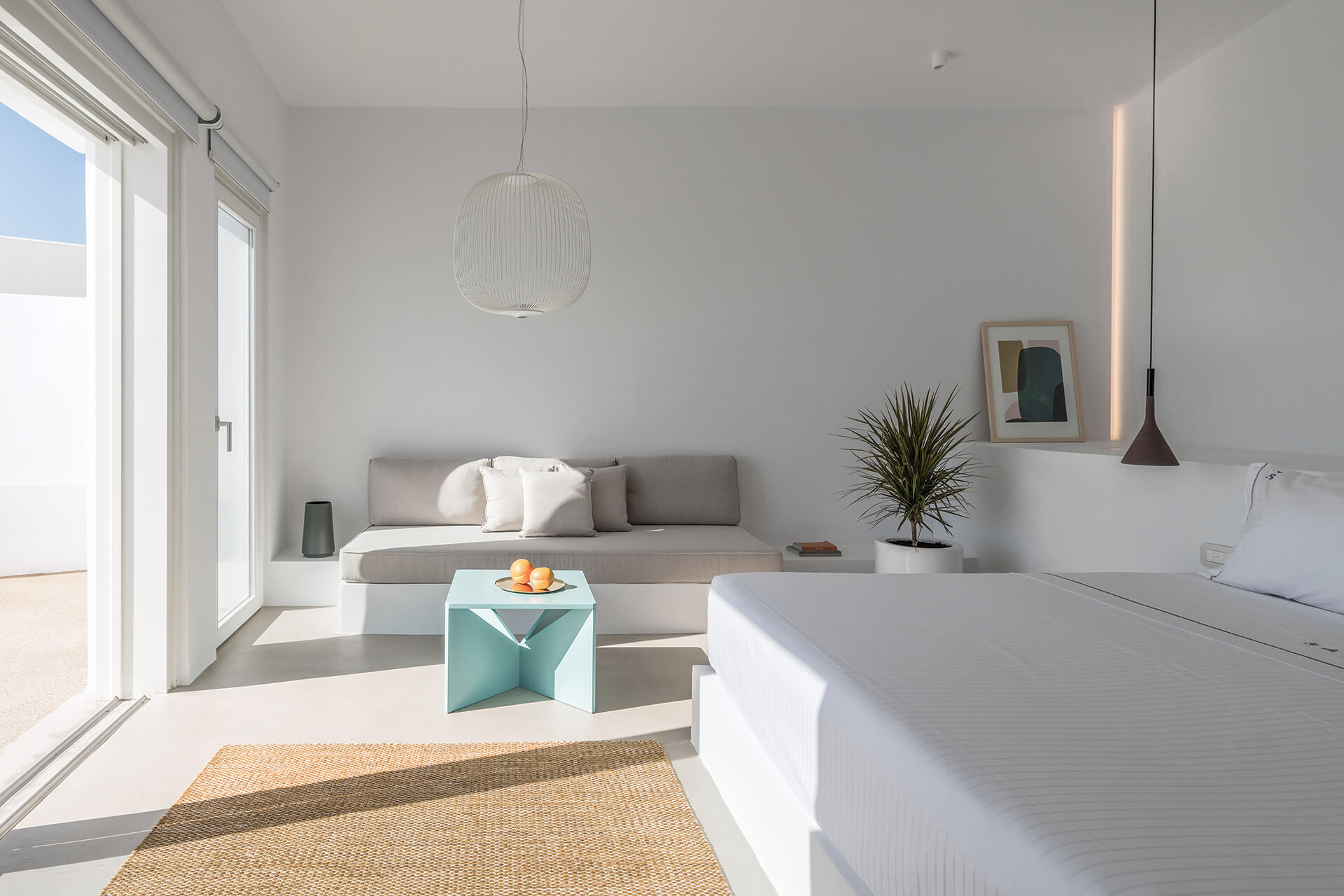
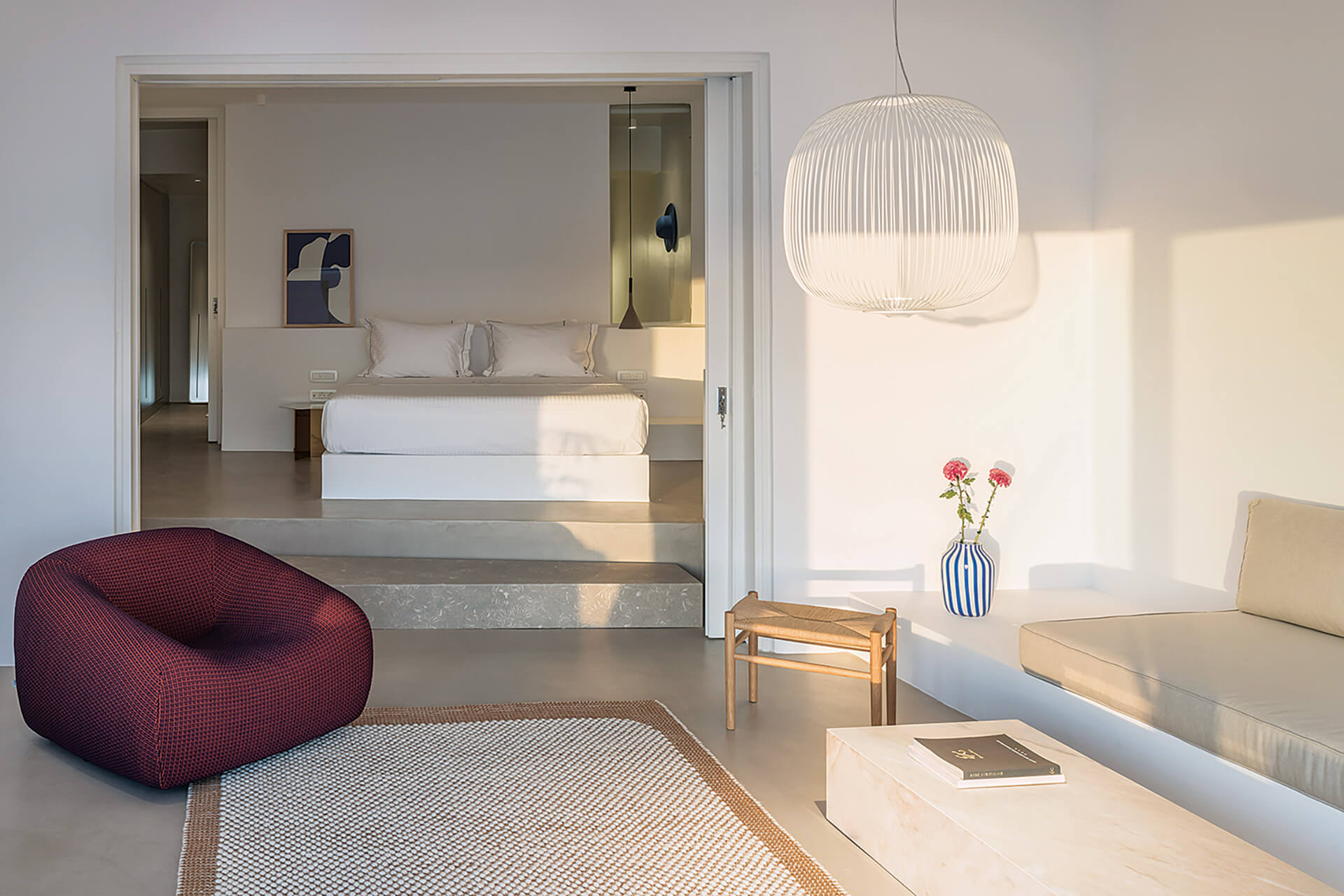
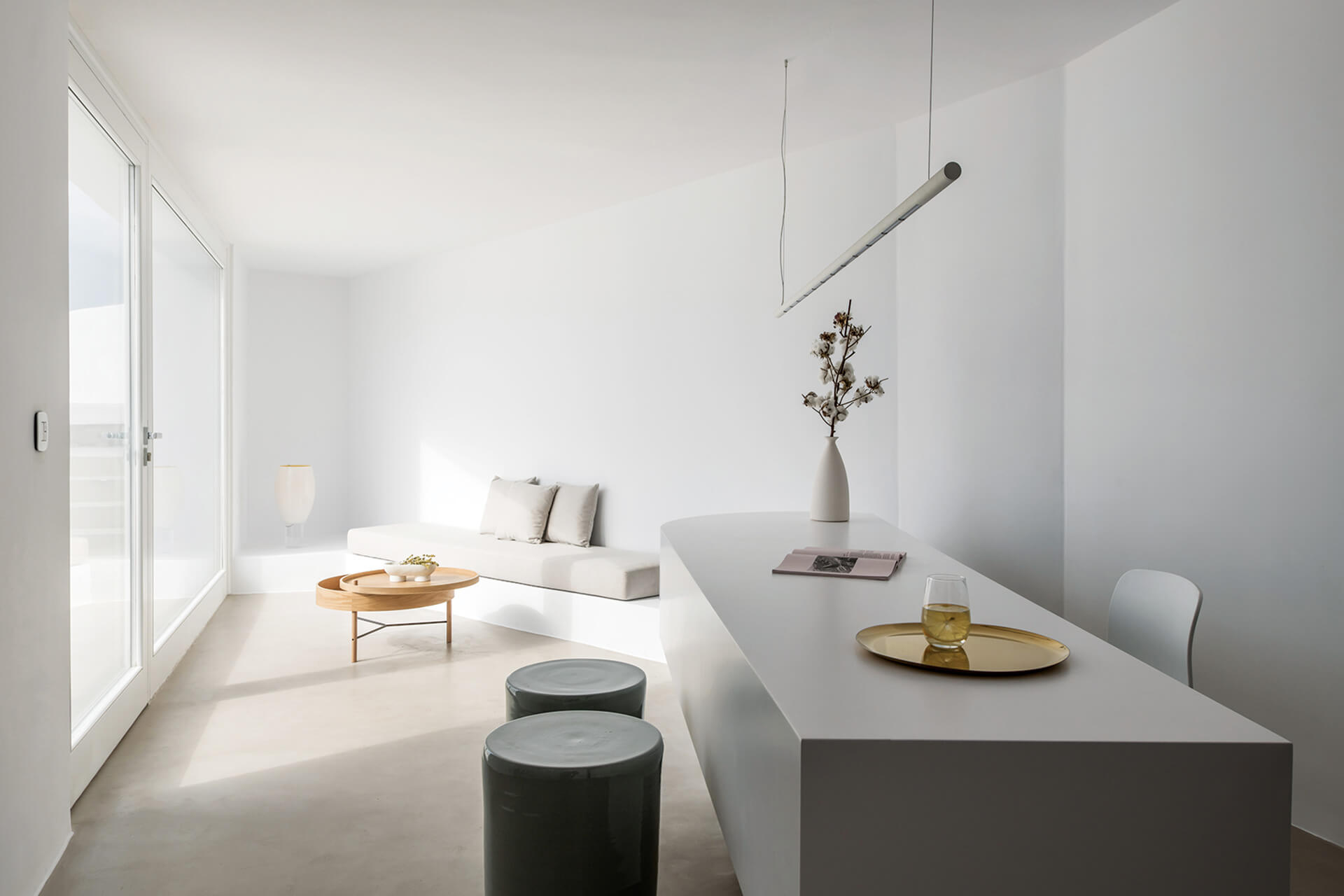
The aesthetic of the new cave rooms is characterized by more intense colors, in the spirit of a “vie en bleu”, with abstract references to the cosmopolitan resorts of the Mediterranean south. These references become more geometric, linking the shapes and volumes of the interior with the forms of the exterior composition.
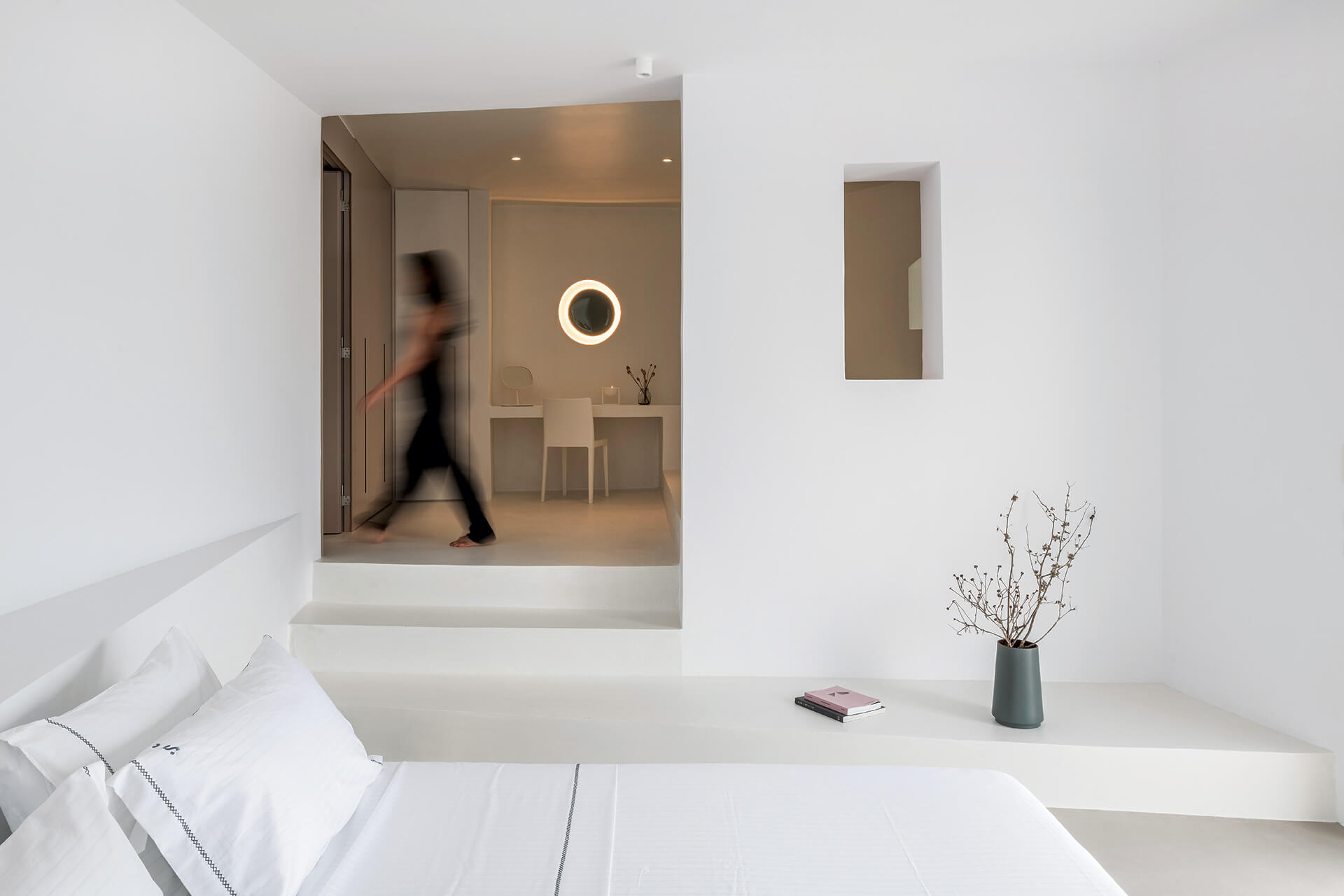
The lighting of the complex operates in a discreet manner, enhancing the sculptural quality of the white volumes and the experience of movement through the landscape. Along the outdoor pathways and staircases, low-intensity linear luminaires are integrated into the architecture, emphasizing the geometry of the walls and guiding visitors during nighttime circulation. The illuminated pools act as diffused luminous surfaces within the composition, creating soft reflections across the cave volumes. Inside the rooms, lighting remains subtle and integrated into the curved surfaces, highlighting the minimalist aesthetic and the sculptural qualities of Cycladic architecture.