Kehai House by HW Studio in Morelia
Architecture:
Photography:

A House Built Around Emptiness
In Morelia, Michoacán, Mexico, Kehai House by HW Studio is a small residence of 95 sq.m., designed by architect Rogelio Vallejo Bores as his own home. The project is described as “the architect’s house”: a house in which someone used to giving form to the dreams of others turns inward, asking how architecture can become coherent with a way of living.
The house was shaped by a limited budget, but also by a long personal path toward Zen, the Dharma and Japan. Its deepest idea is not the production of an object, but the creation of a void: a central emptiness capable of containing life, movement, silence and thought.
A Closed Box That Holds a Garden
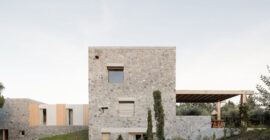
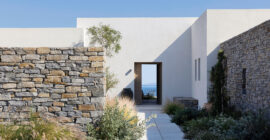
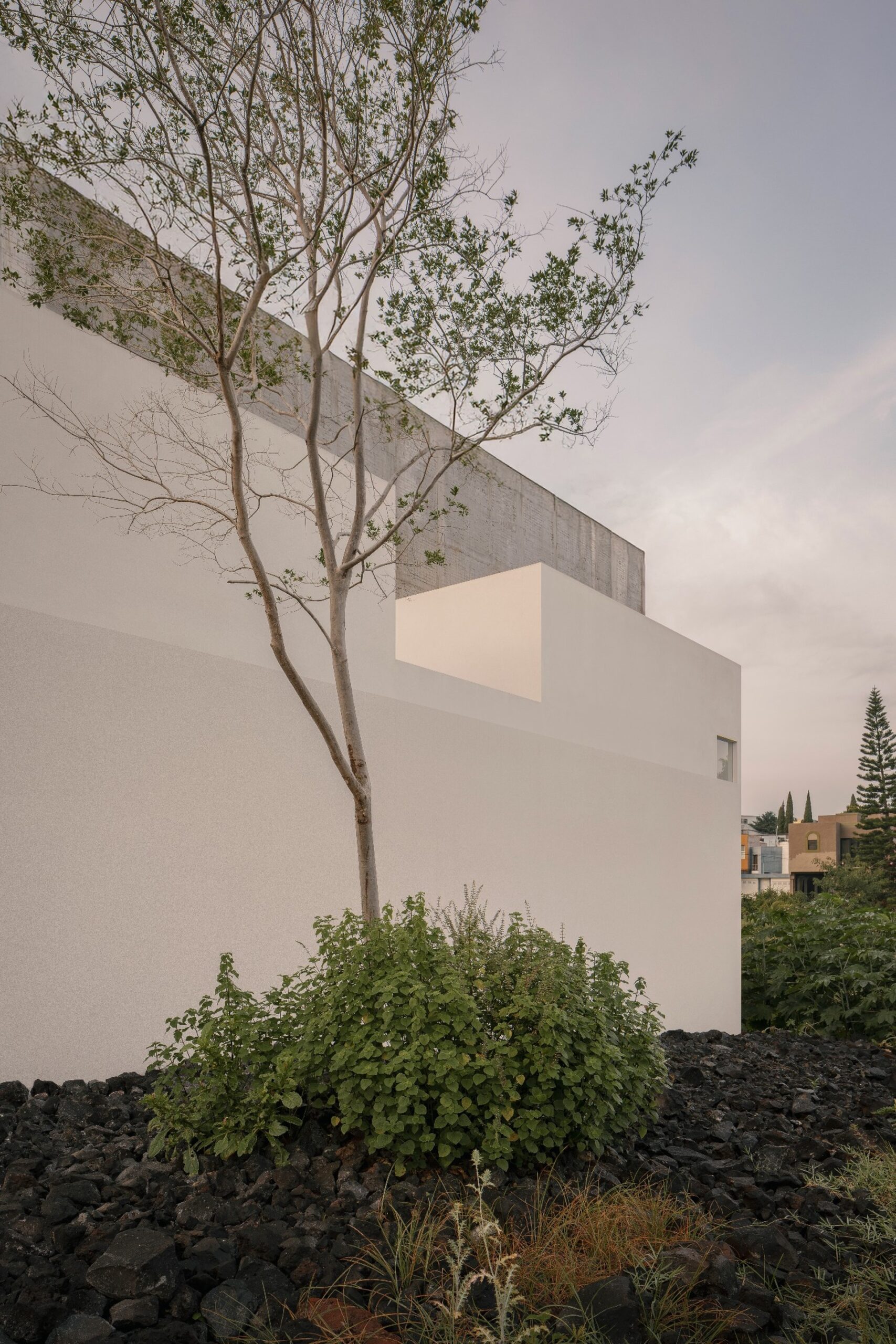
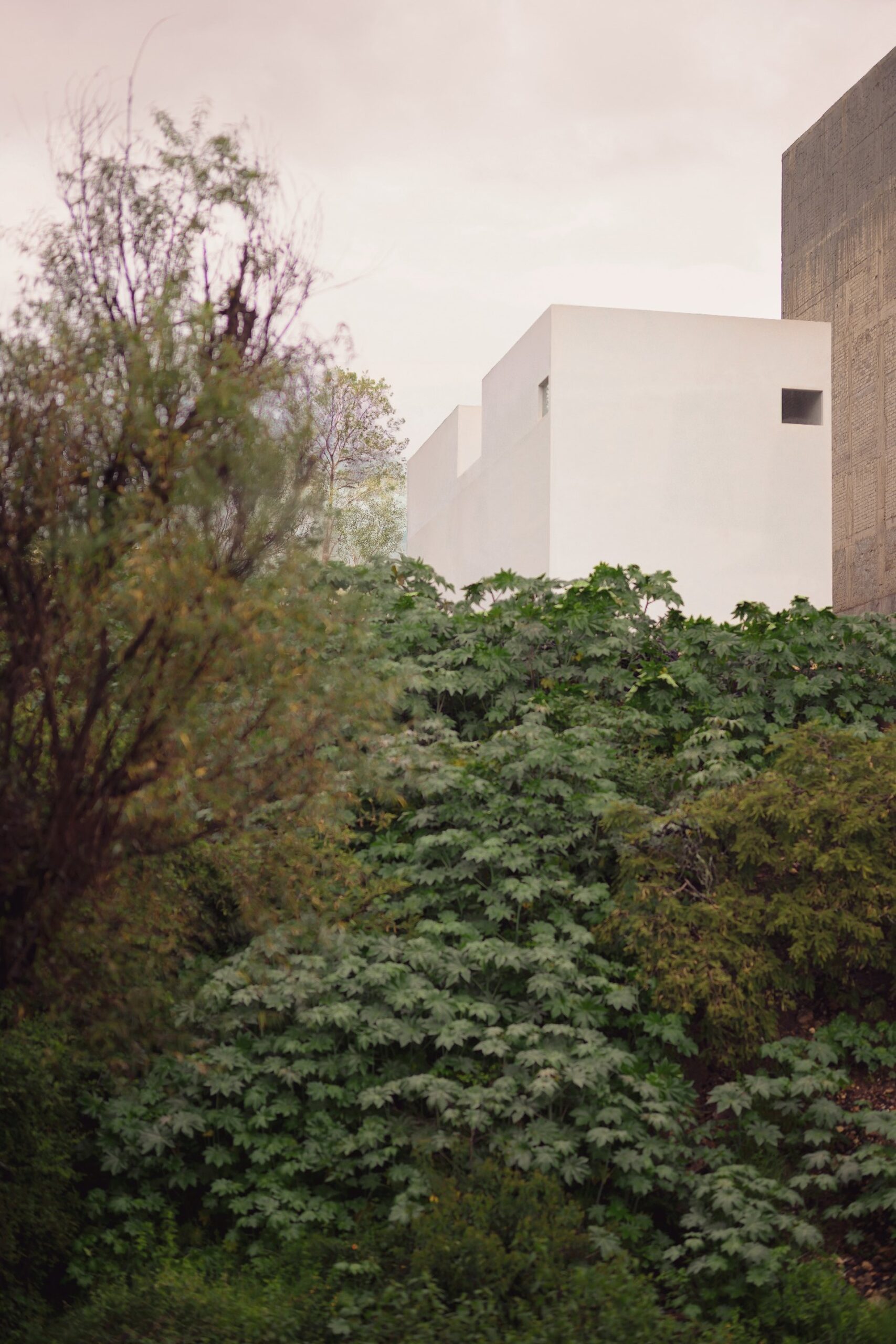
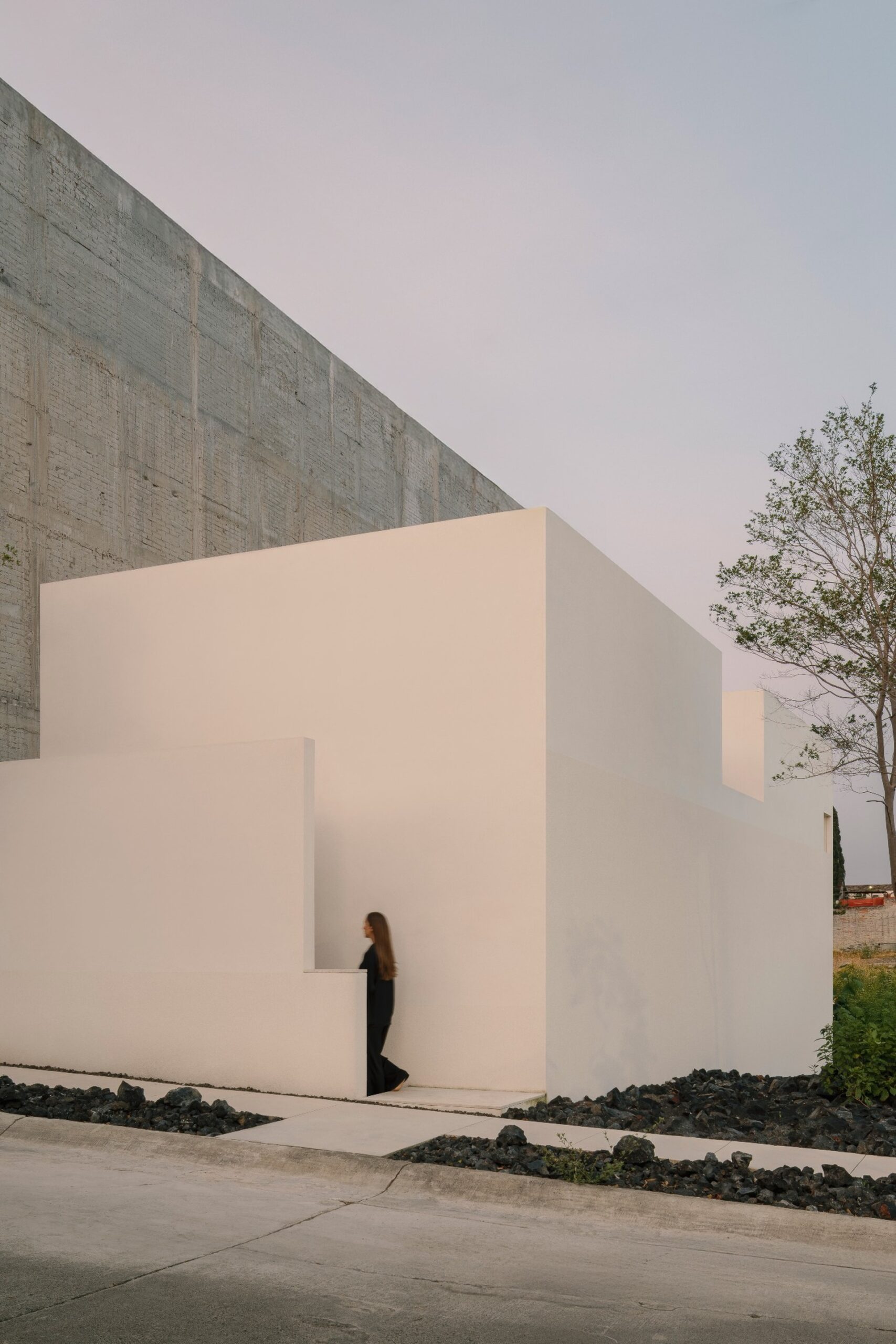
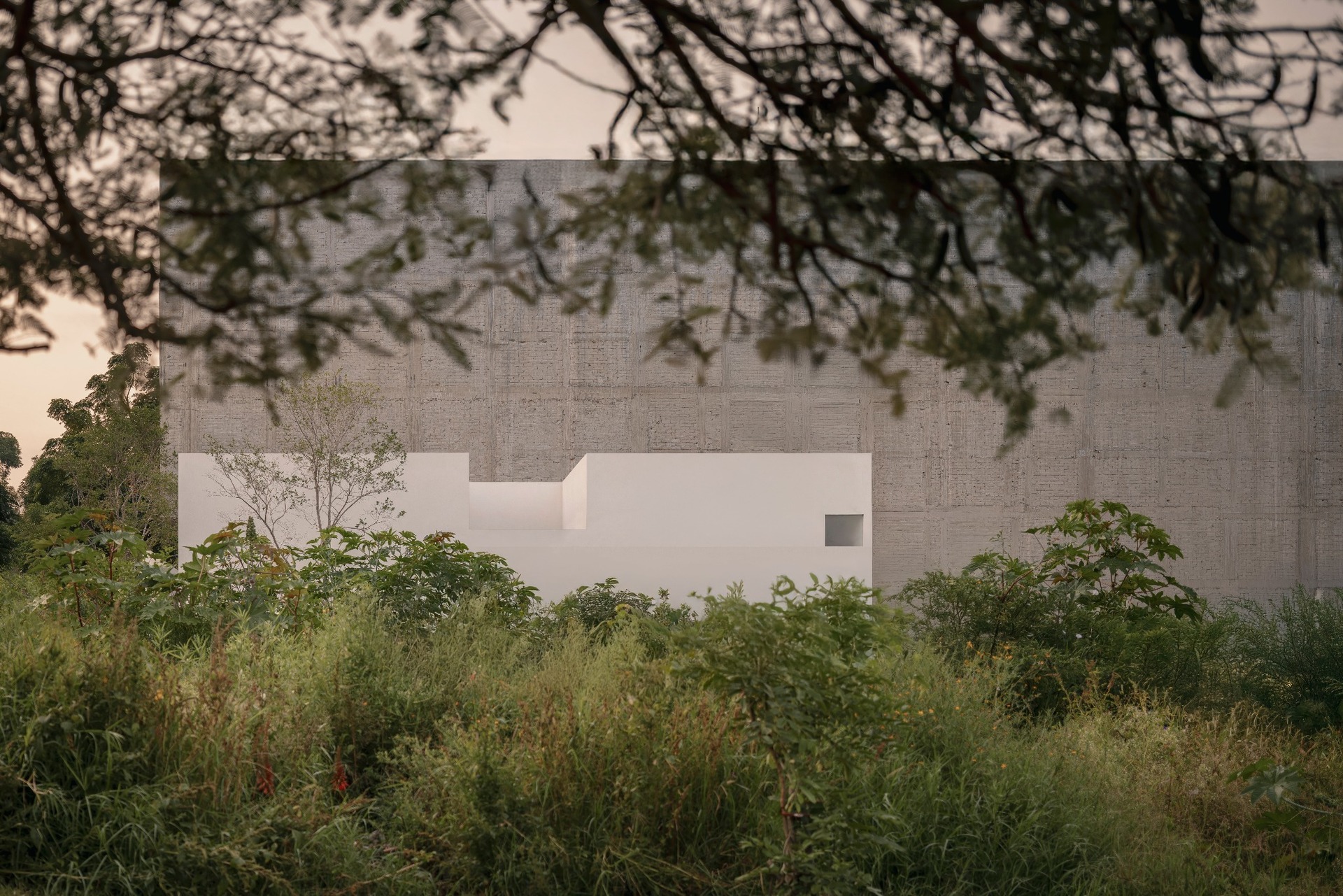
From the outside, the house appears as a quiet, closed box in the urban landscape. Its almost hermetic presence does not reveal much of what takes place inside. Once the threshold is crossed, however, the apparent closure is understood differently: the box does not isolate, but protects.
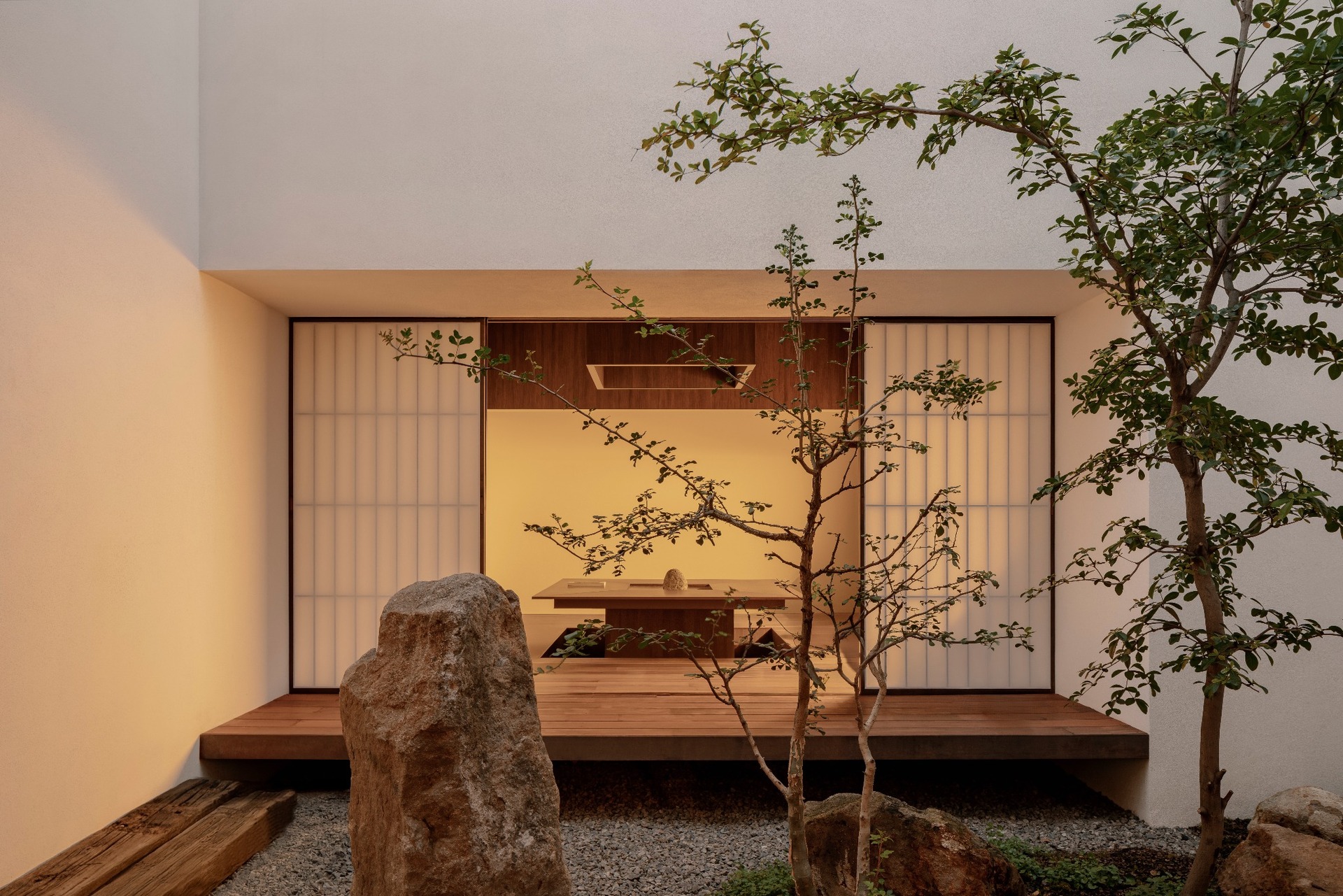
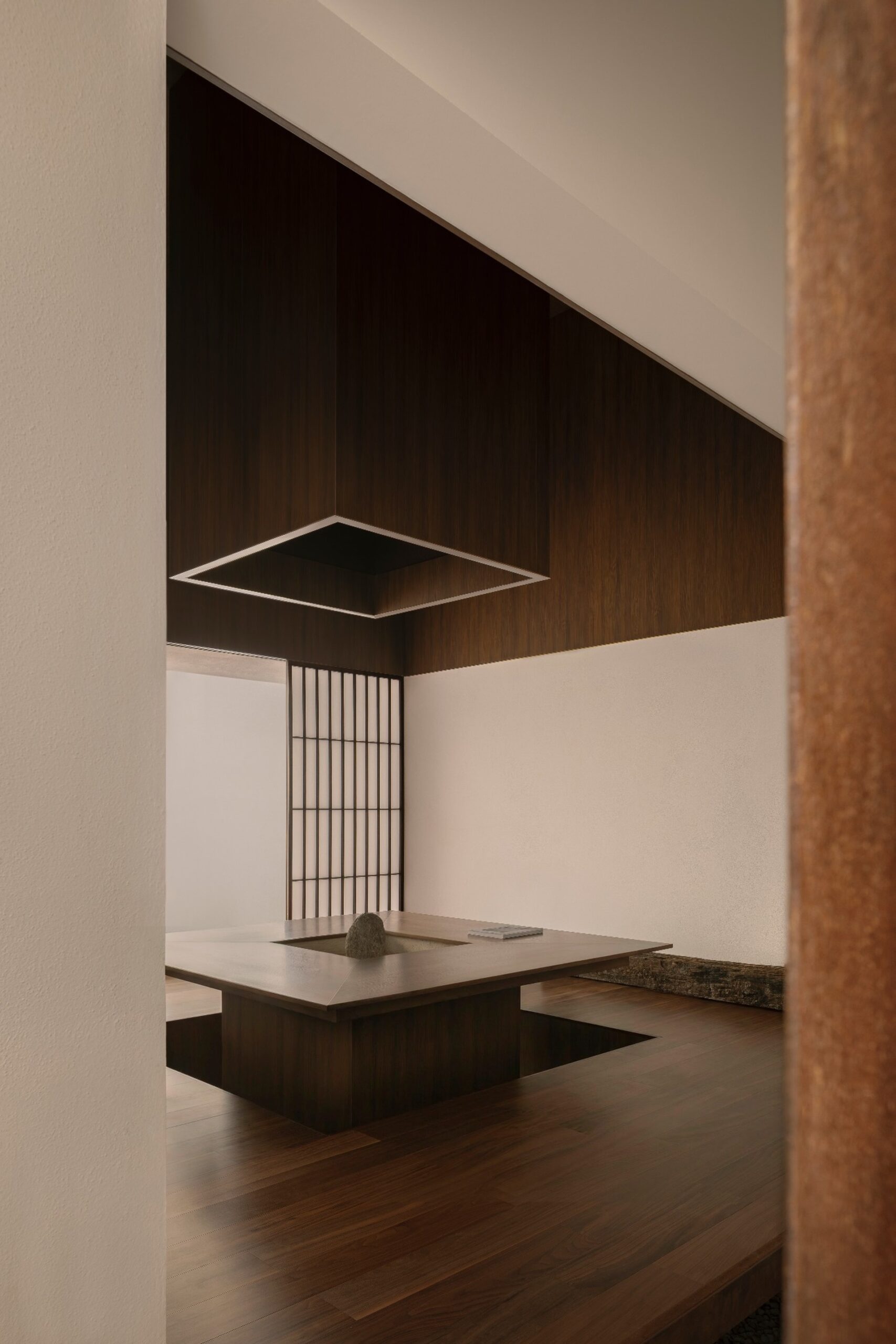
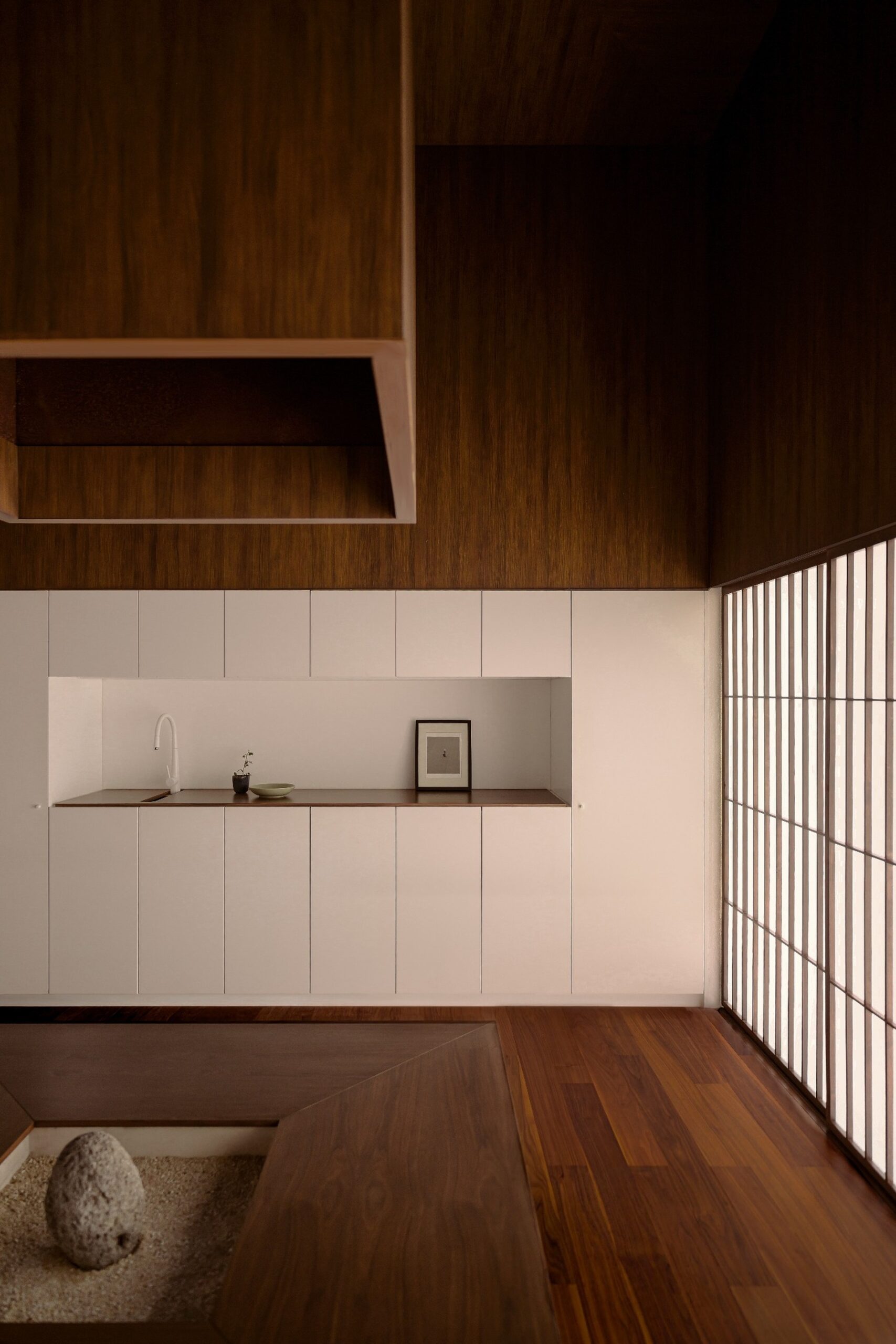
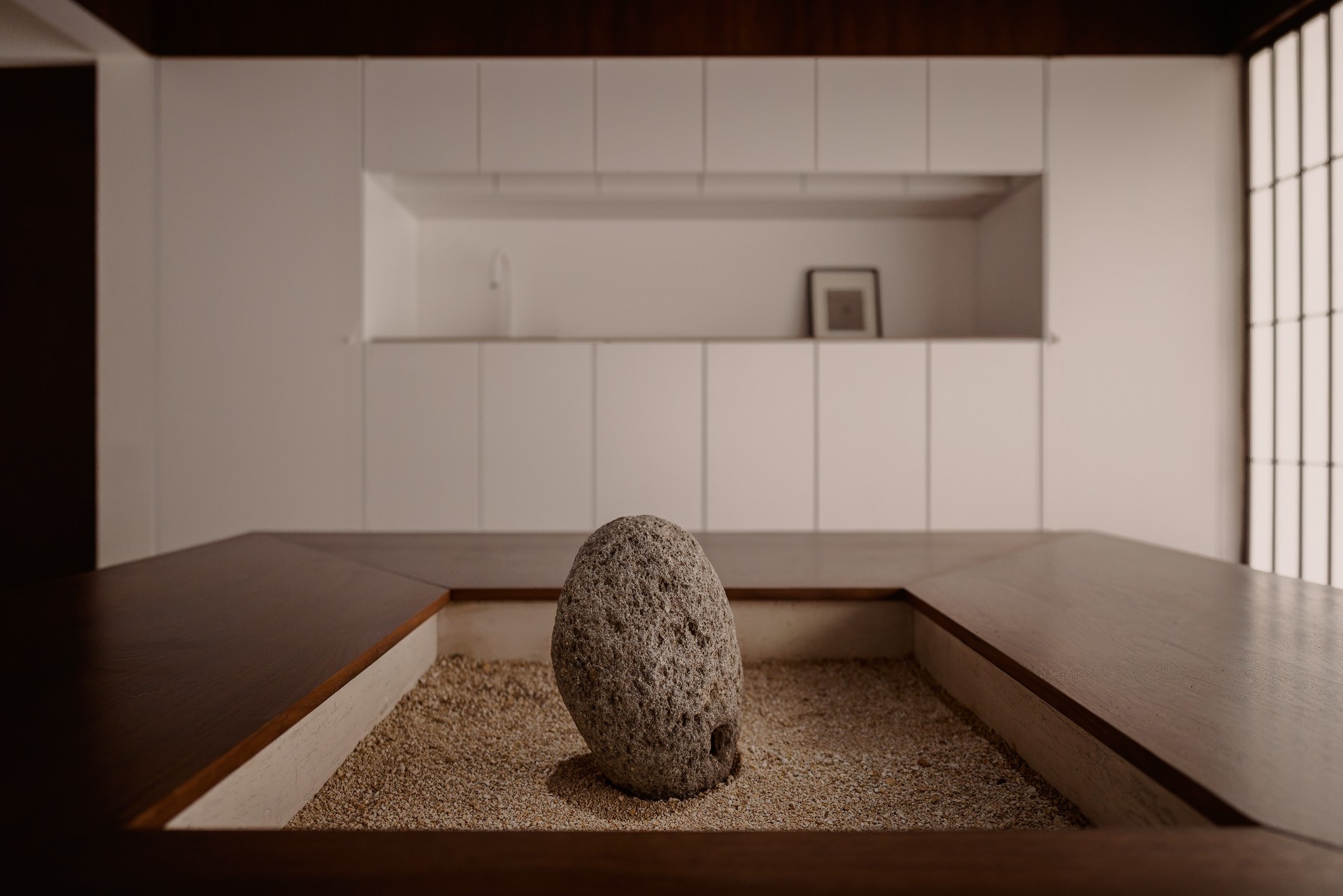
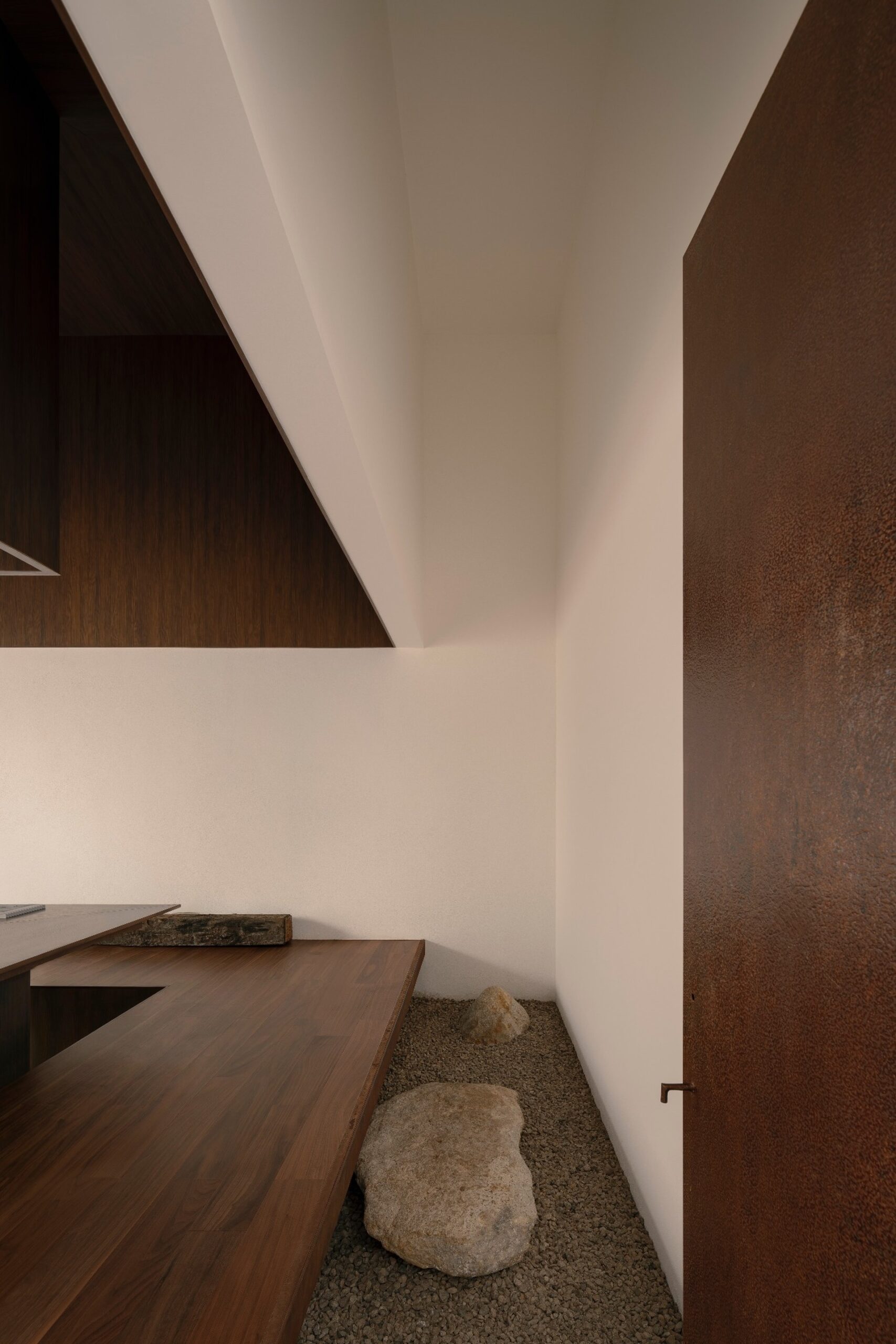
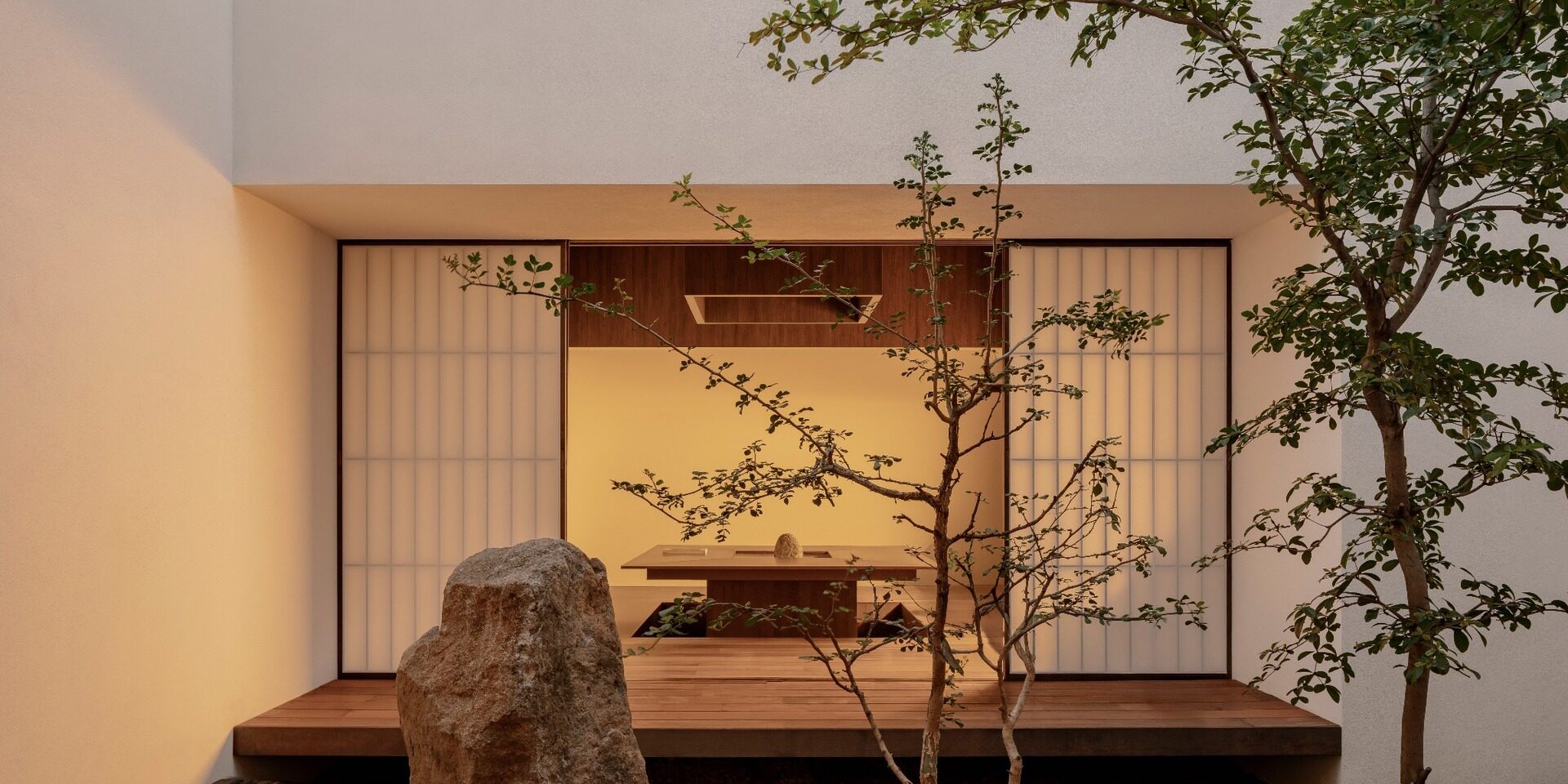
At its center lies a stone garden. It is not touched directly, yet it defines the entire house. Like the stone gardens of Kyoto, its stones are not arranged to represent something, but to evoke a state of attention. On the bed of grey gravel, two wooden platforms float as places of pause: not simply floors, but surfaces for stopping, looking and being.
The Garden as Spatial Order
The garden is not decorative. It organizes the house. Around it, the domestic spaces are arranged like satellites orbiting stillness, each one maintaining a distinct role while remaining connected to the central void.
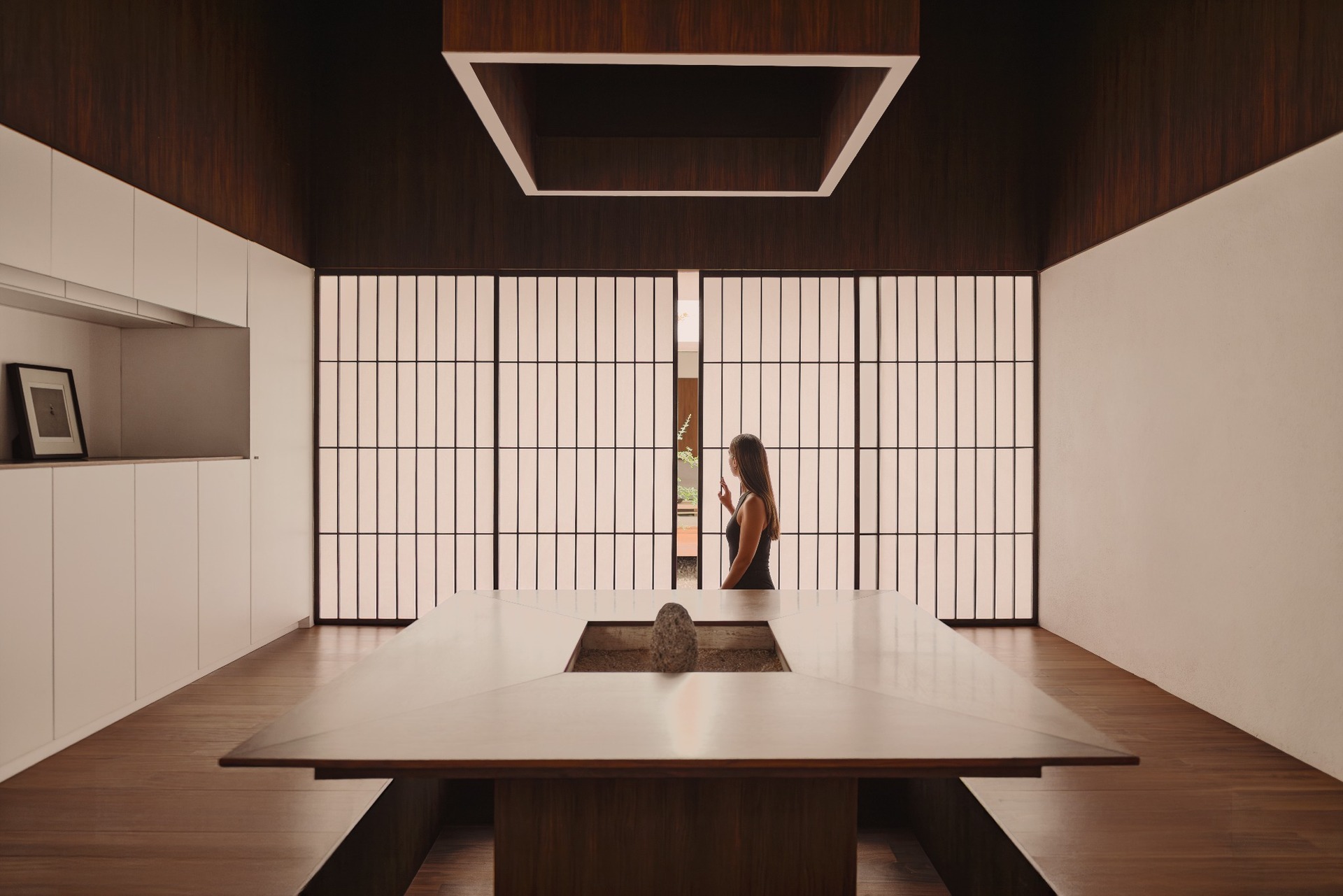
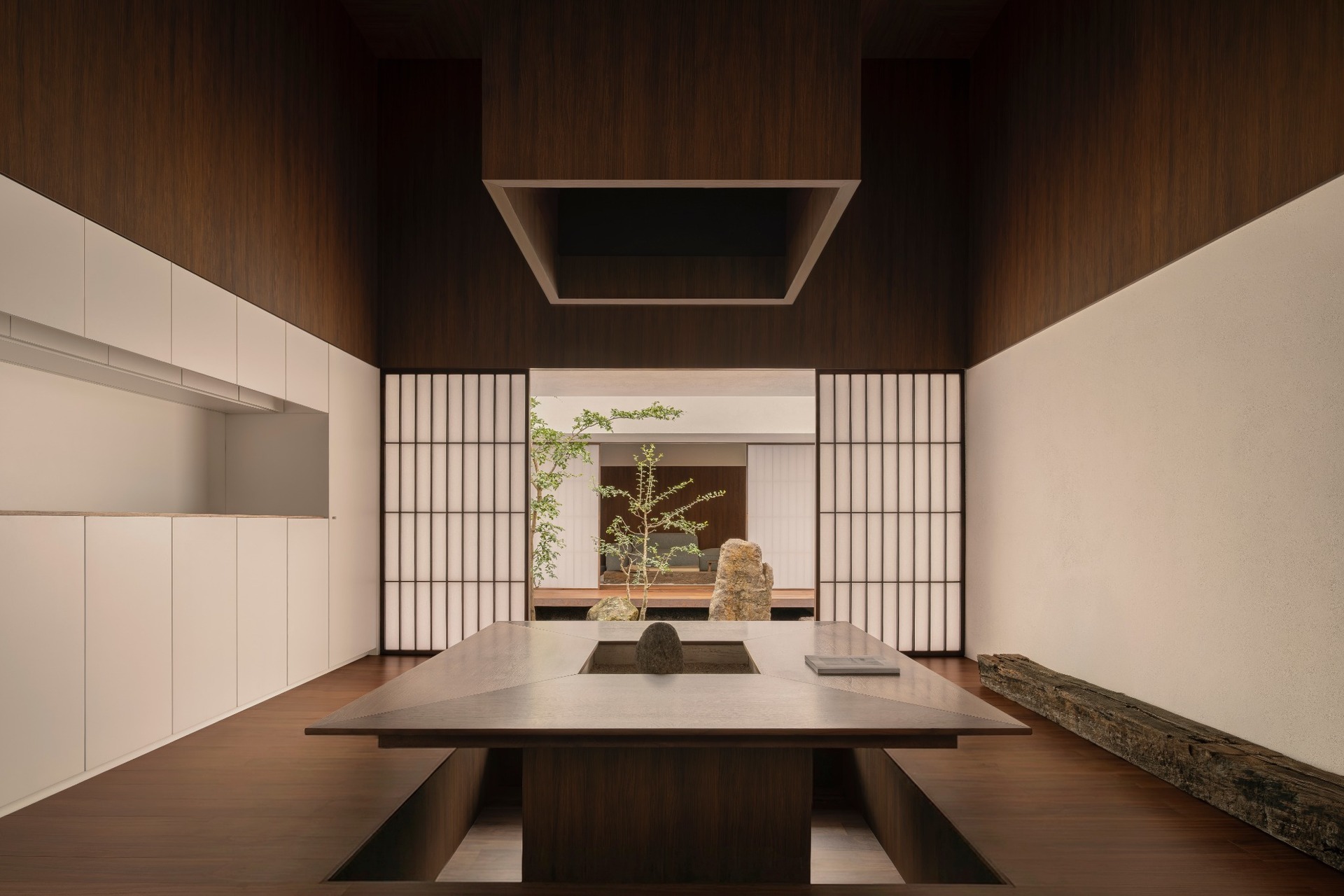
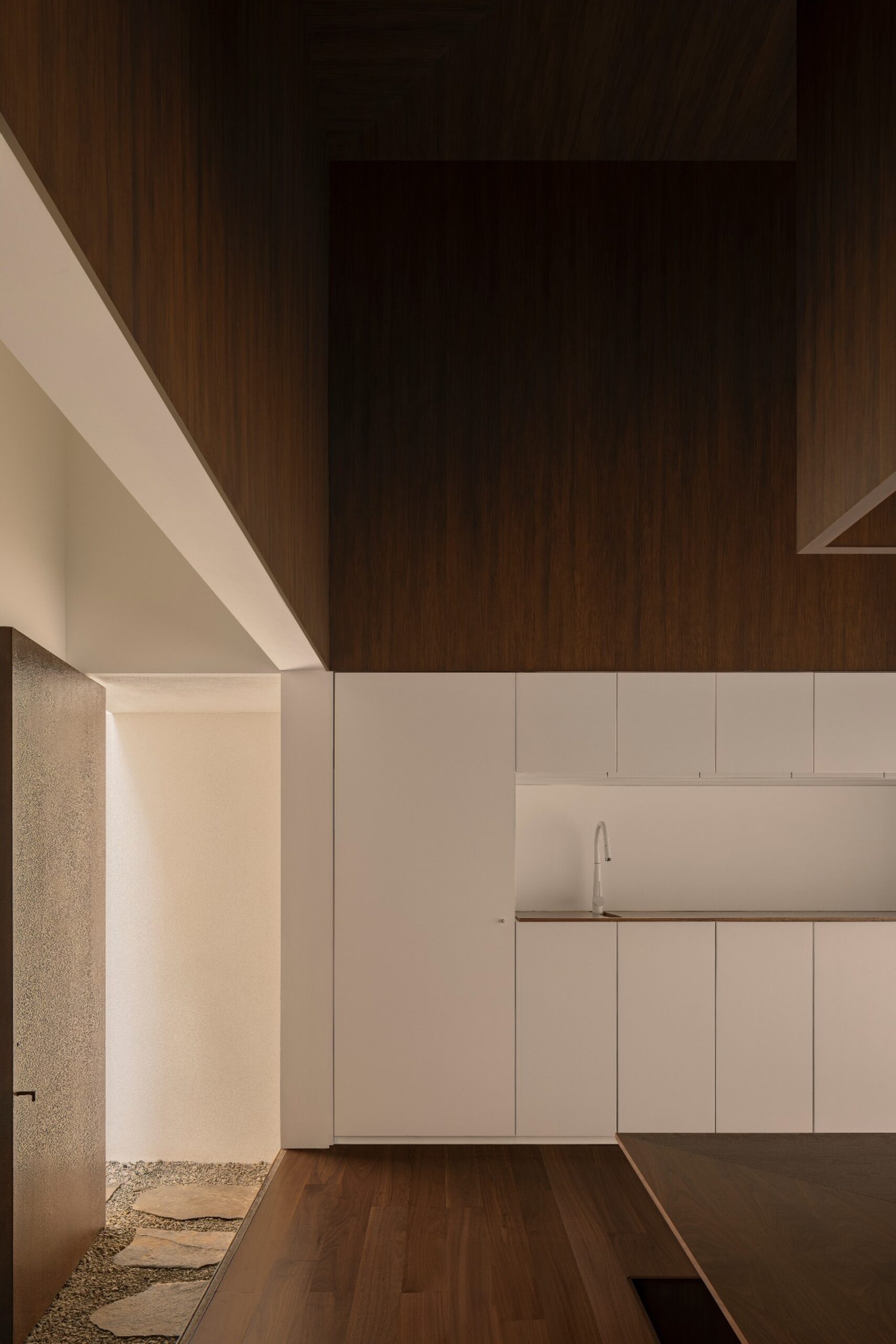
On one side, the kitchen and dining area unfold in a double-height space. Above them, a volume gathers the smoke from the fire, introducing both memory and practical resilience: the possibility that one day the city may not provide everything needed. On the other side, the living room becomes a space of contemplation, where large stones rest like islands in a quiet sea.
A House That Reconciles with Rain
There is no covered corridor between the living room and the dining area. To move from one to the other when it rains, one either gets wet or waits for the rain to pass. This decision gives the house its most radical everyday lesson: architecture here does not protect from the world, but reconciles the inhabitant with it.
The home does not attempt to neutralize weather, time or discomfort. Instead, it allows them to enter life gently, turning movement through the house into a conscious act.
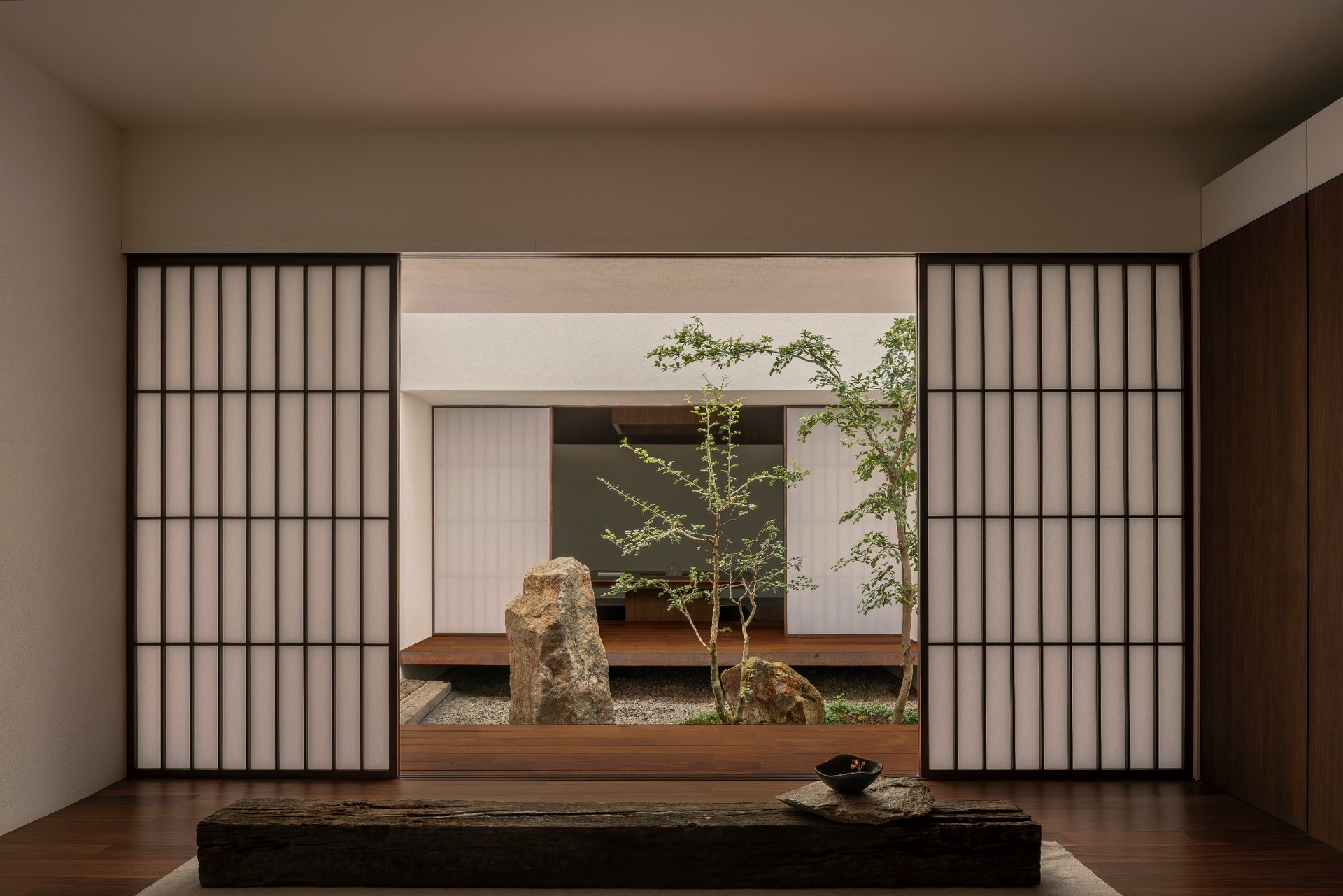
Shōji, Light and Shadow
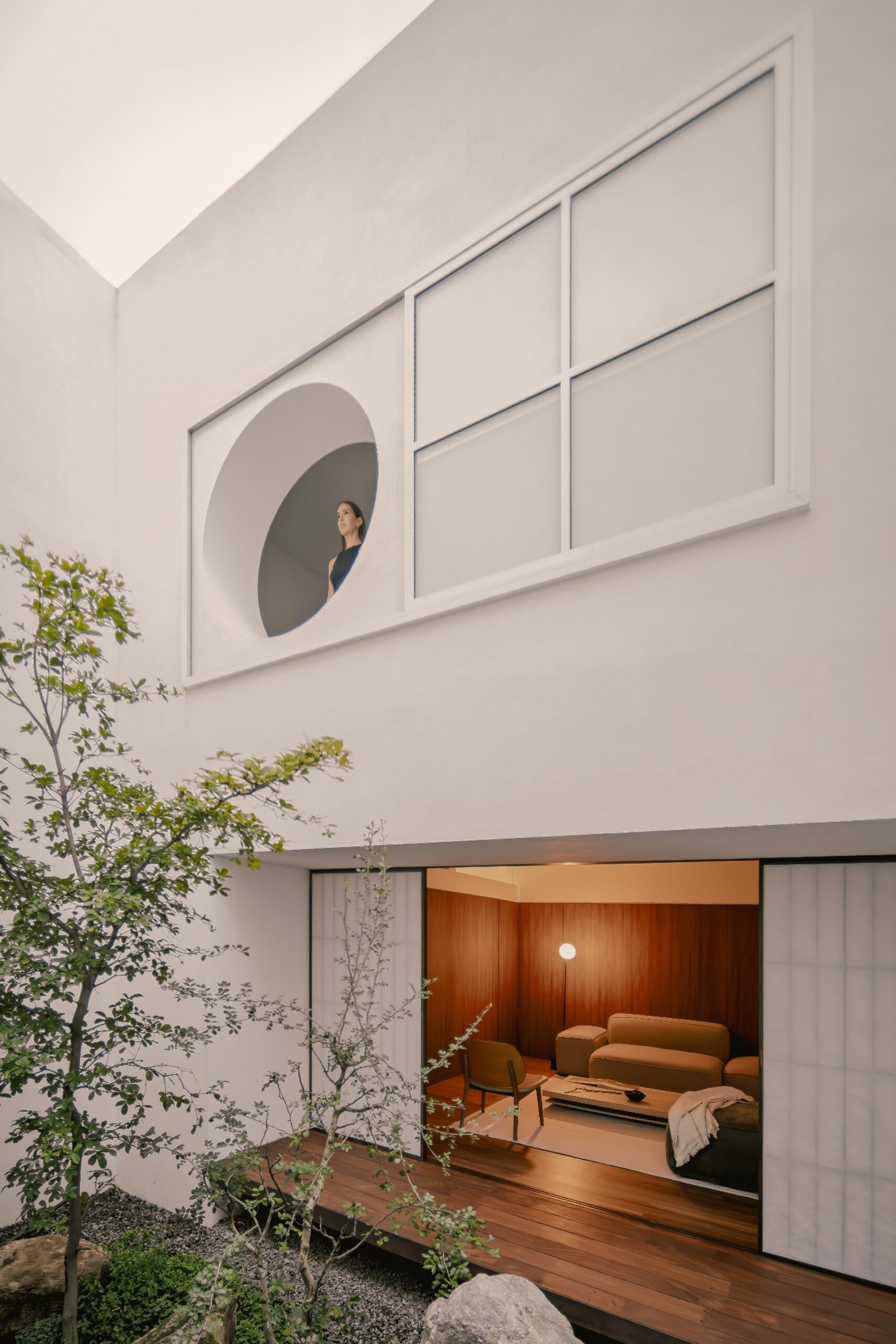
The shōji doors, made with rice paper, are not treated as an aesthetic reference alone. They operate as the real filter between interior and exterior. Light, passing through them, loses its hardness and becomes softer, slower and more atmospheric.
In this house, shadow is not simply the absence of light. It becomes light’s most delicate expression. Daylight does not enter abruptly; it settles, creating an interior defined by quiet transitions rather than visual excess.
Three Windows and an Interior Life
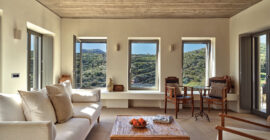
The program is austere. There are no unnecessary corridors and no grand gestures. The house is almost entirely without glass, opening only through three small windows toward what is considered truly worth seeing: a mountain, a neighboring pine and the tree planted at the center of the garden.
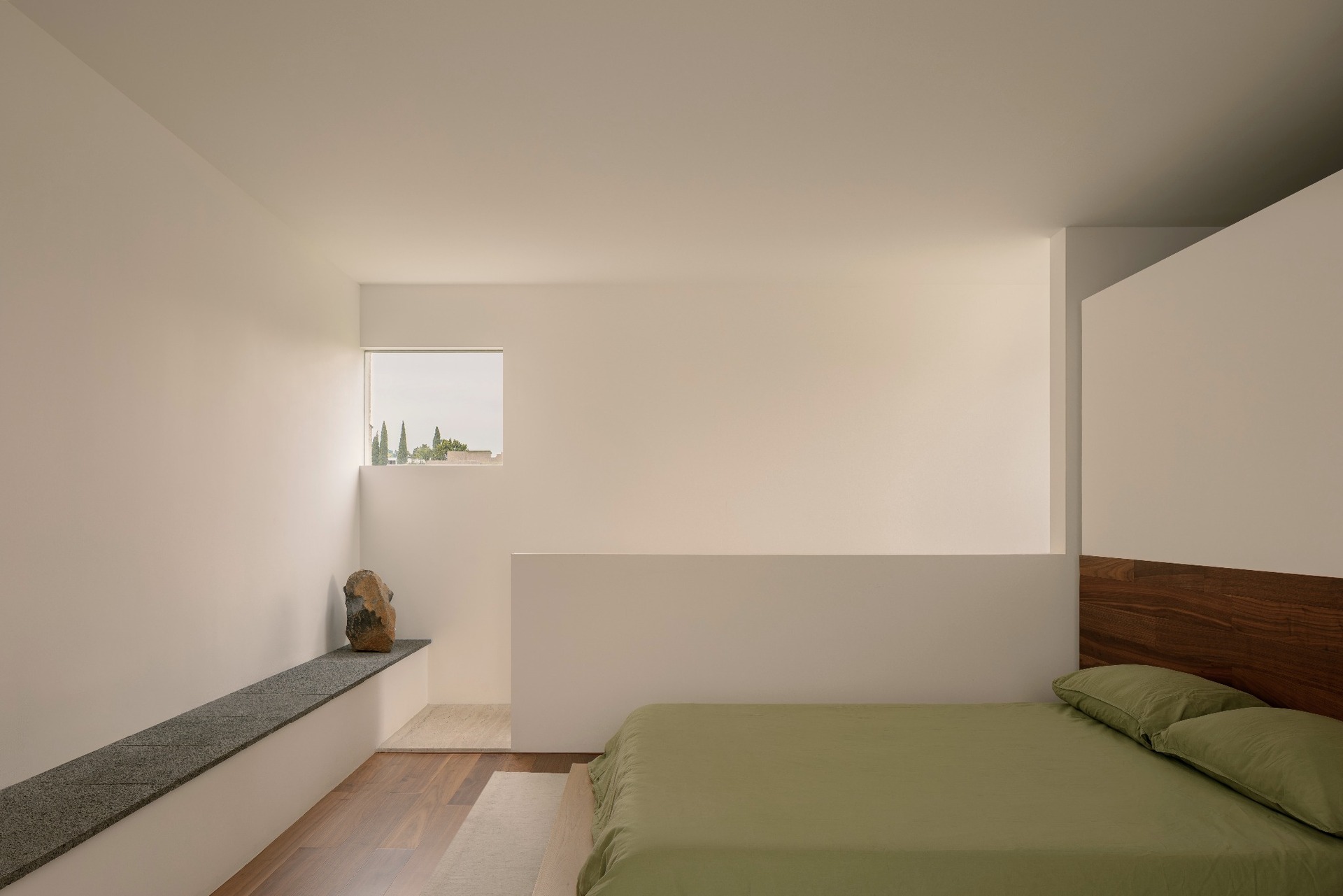
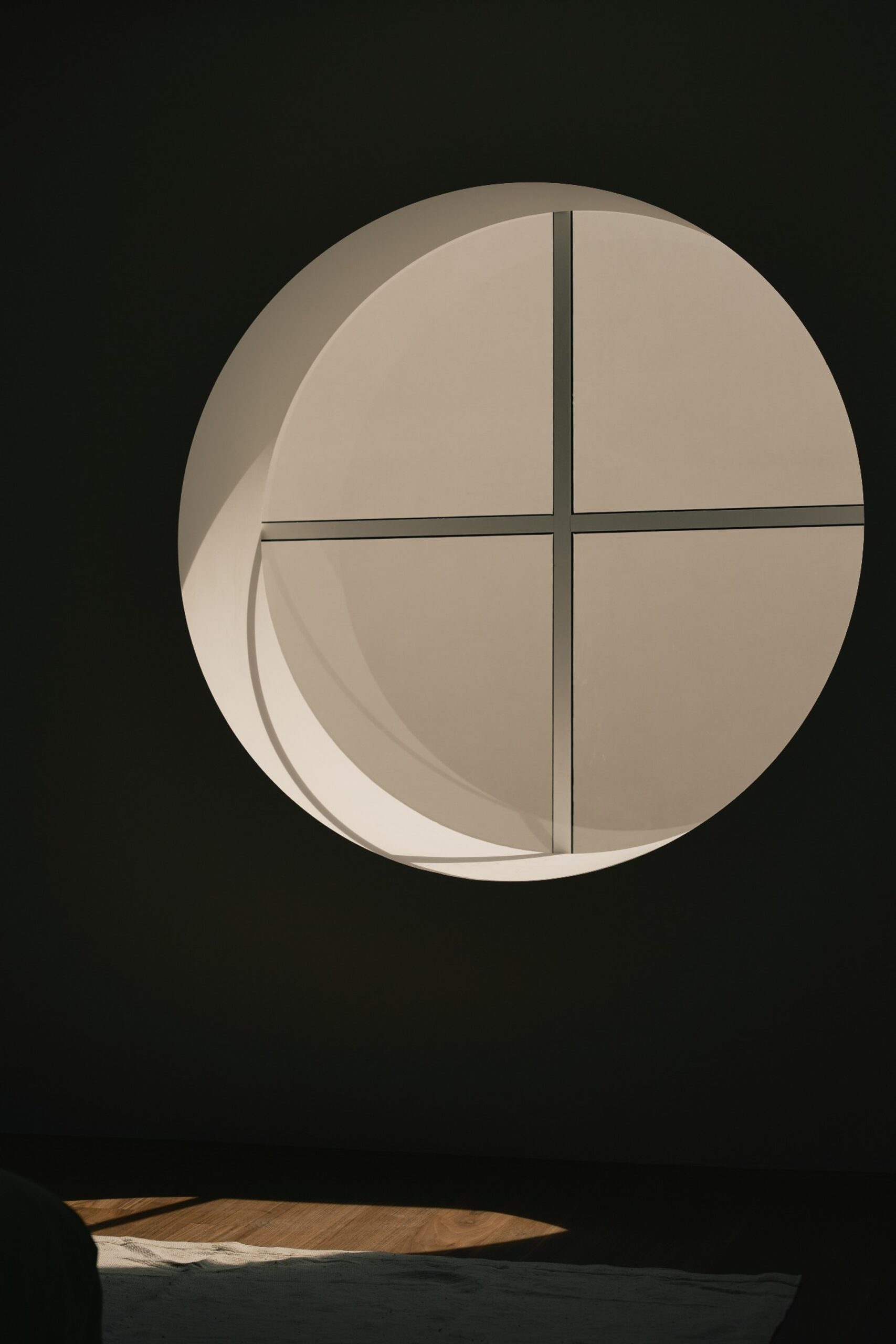
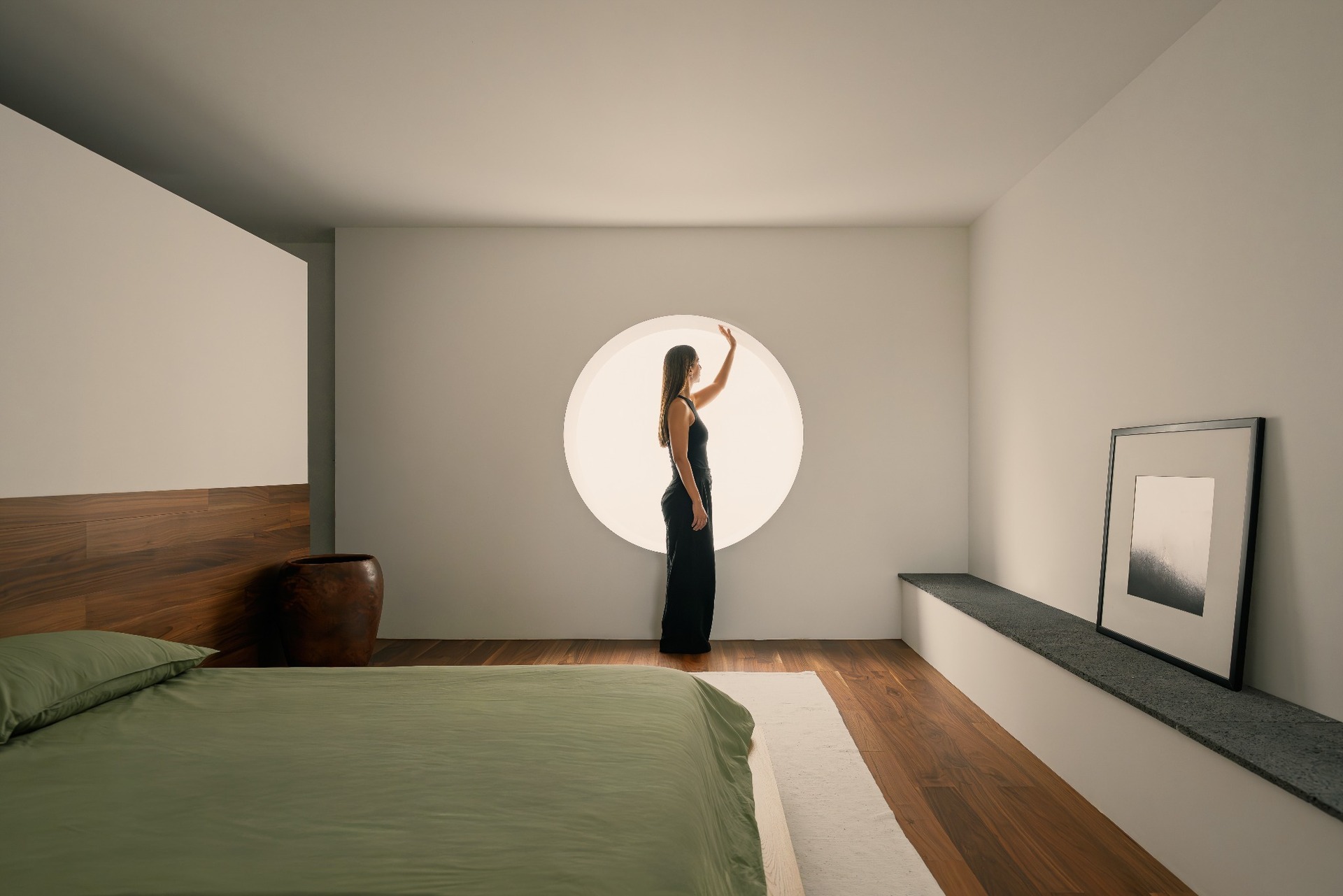
The bedroom is placed above, as a minimal and intimate space. A single circular window opens to the foliage of the central tree. It becomes an eye of the house, a point of contemplation rather than display.
Entering by Descending
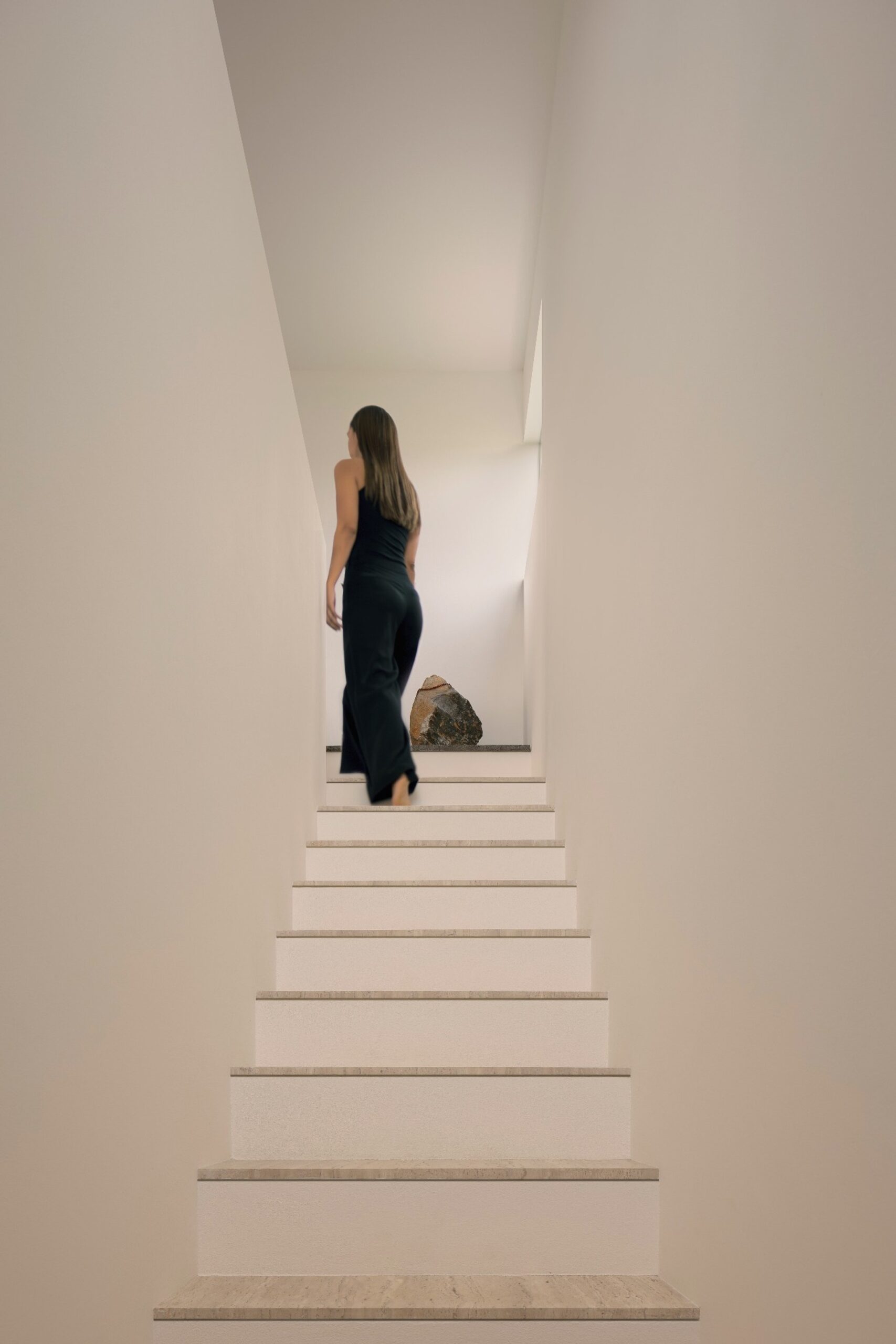
The entrance does not rise; it descends. One enters by going down, as if bowing before something sacred. The staircase reaches the point where the stone offered structural stability, reducing unnecessary foundation costs, but the gesture is also spiritual.
To inhabit this house, one must leave a certain pride outside and enter with humility. Like passing through the torii of an invisible shrine, the act of entry becomes a quiet ritual.
Silence as Architecture
In Japanese thought, value is often found in the imperfect, the incomplete and the ephemeral. Kehai House follows this sensibility. It was not designed to impress, but to endure in silence.
Through limited means, careful spatial decisions and a central void that orders domestic life, the house becomes a meditation on how little architecture needs in order to become meaningful. It holds the light weight of an honest life.