New connections
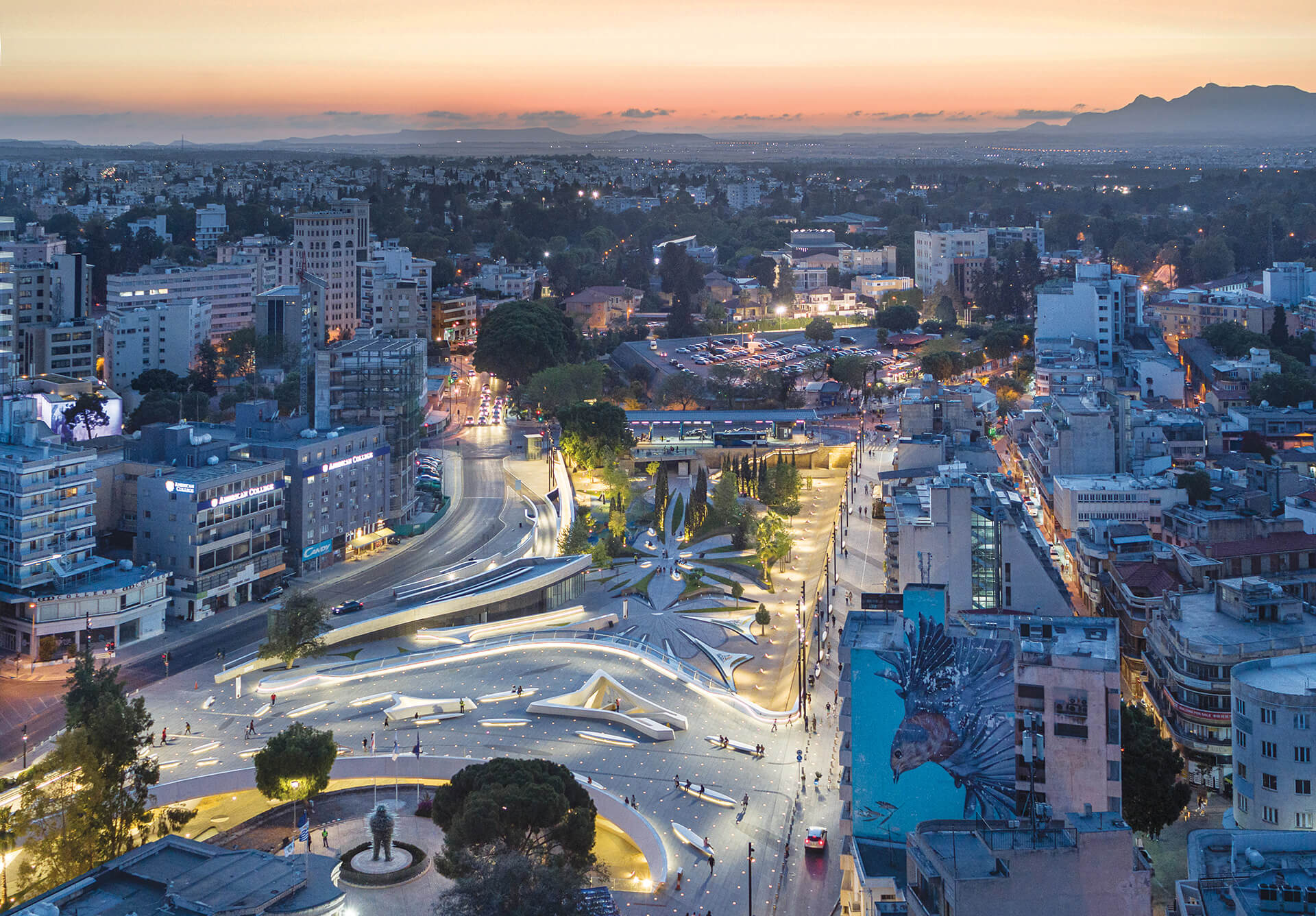
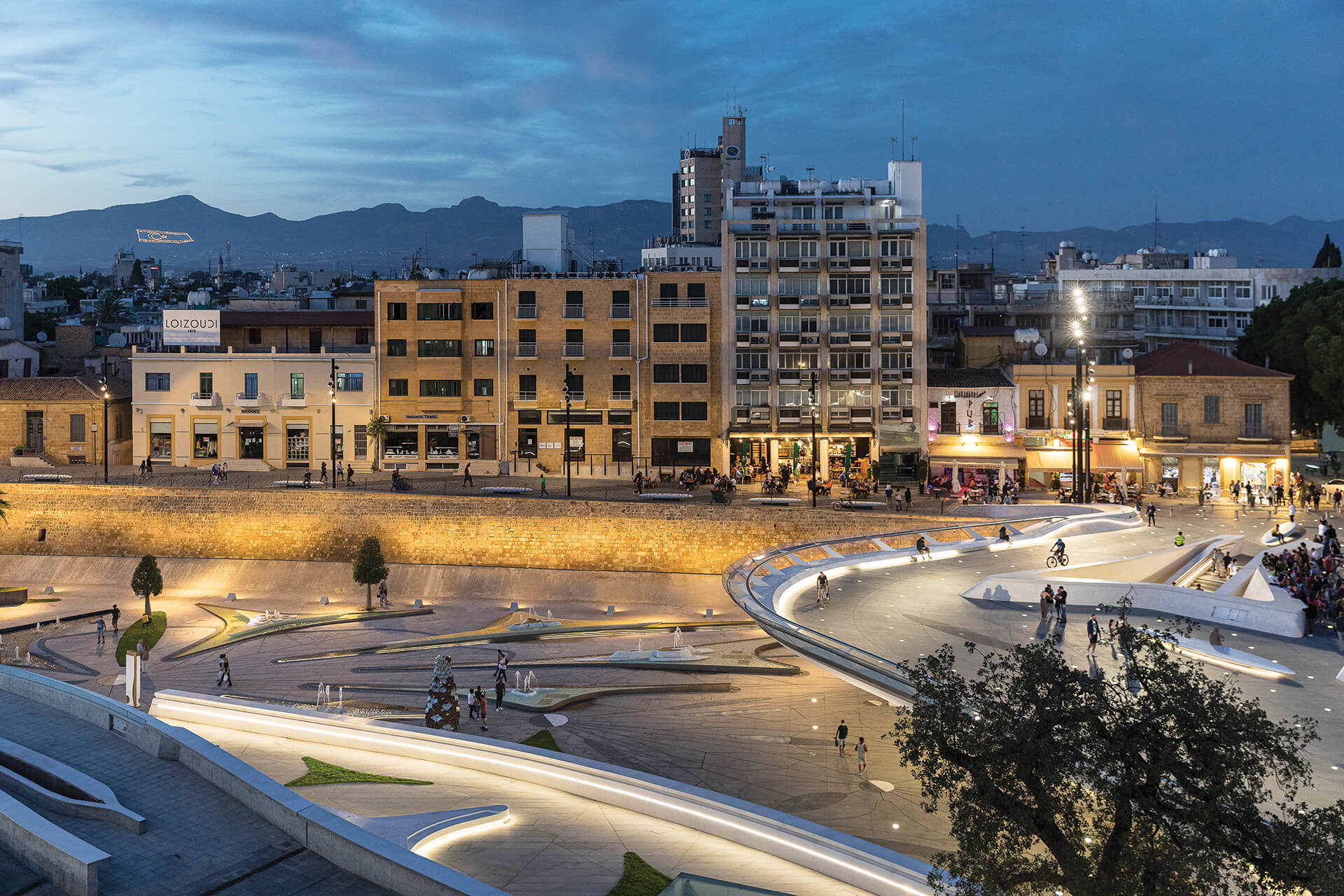
Eleftheria Square lies adjacent to the Venetian walls and the dry moat that surrounds Nicosia. These distinctive defensive fortifications, originally built during the Middle Ages and extensively restored by the Venetians in the 16th century, define the historic core of the capital, separating the old city from the newer districts that developed beyond the walls.
Urban Design Strategy
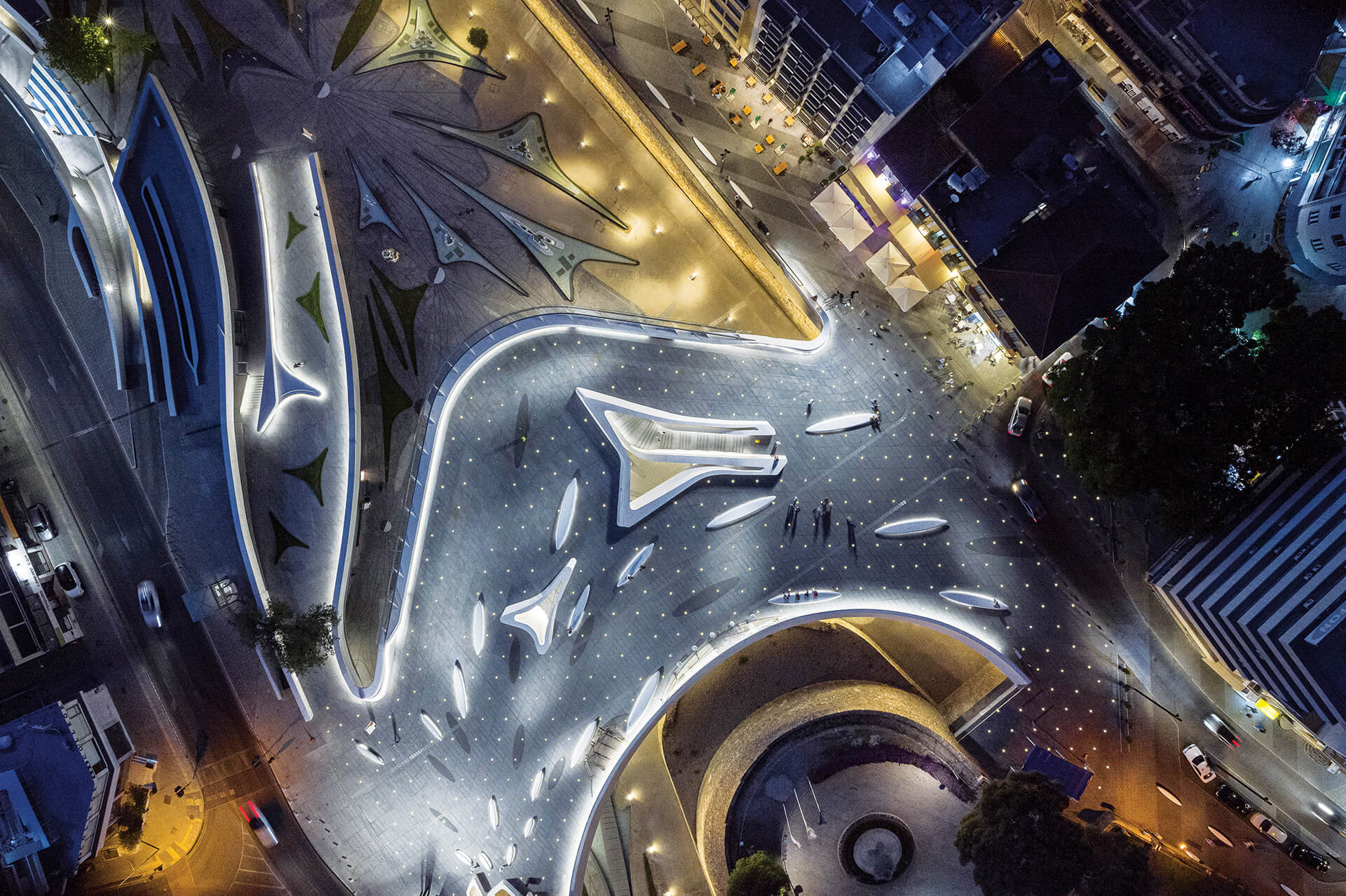
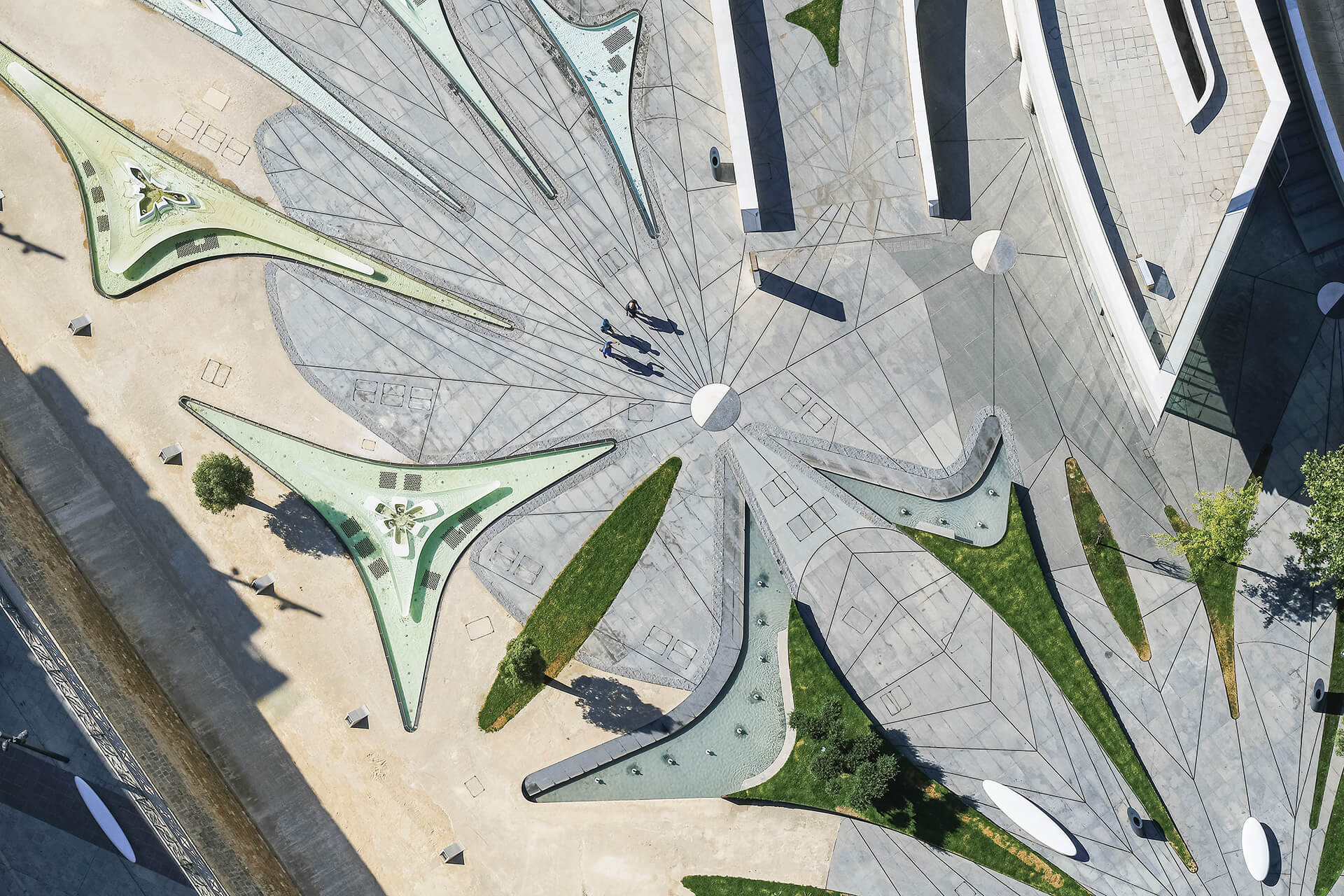
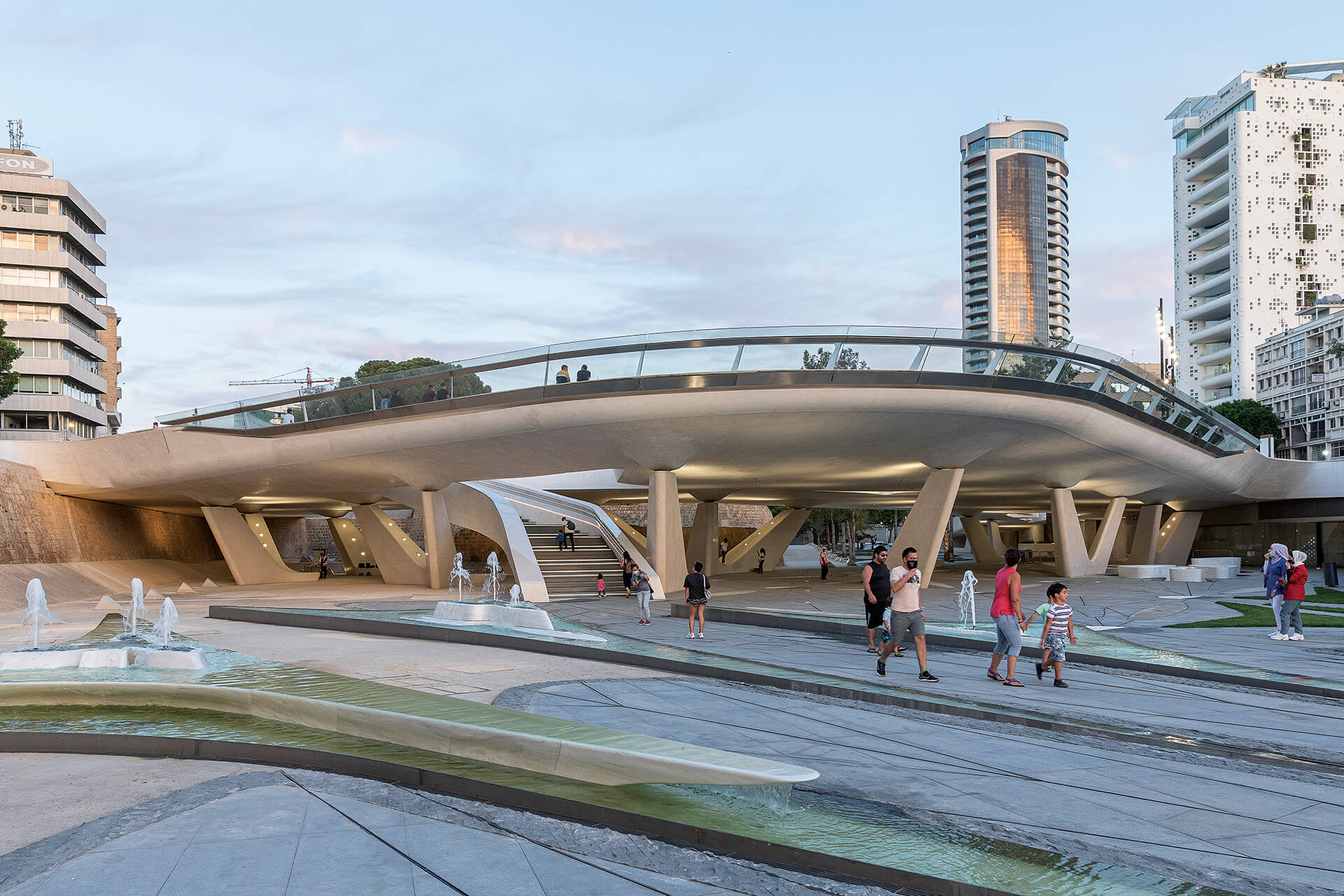
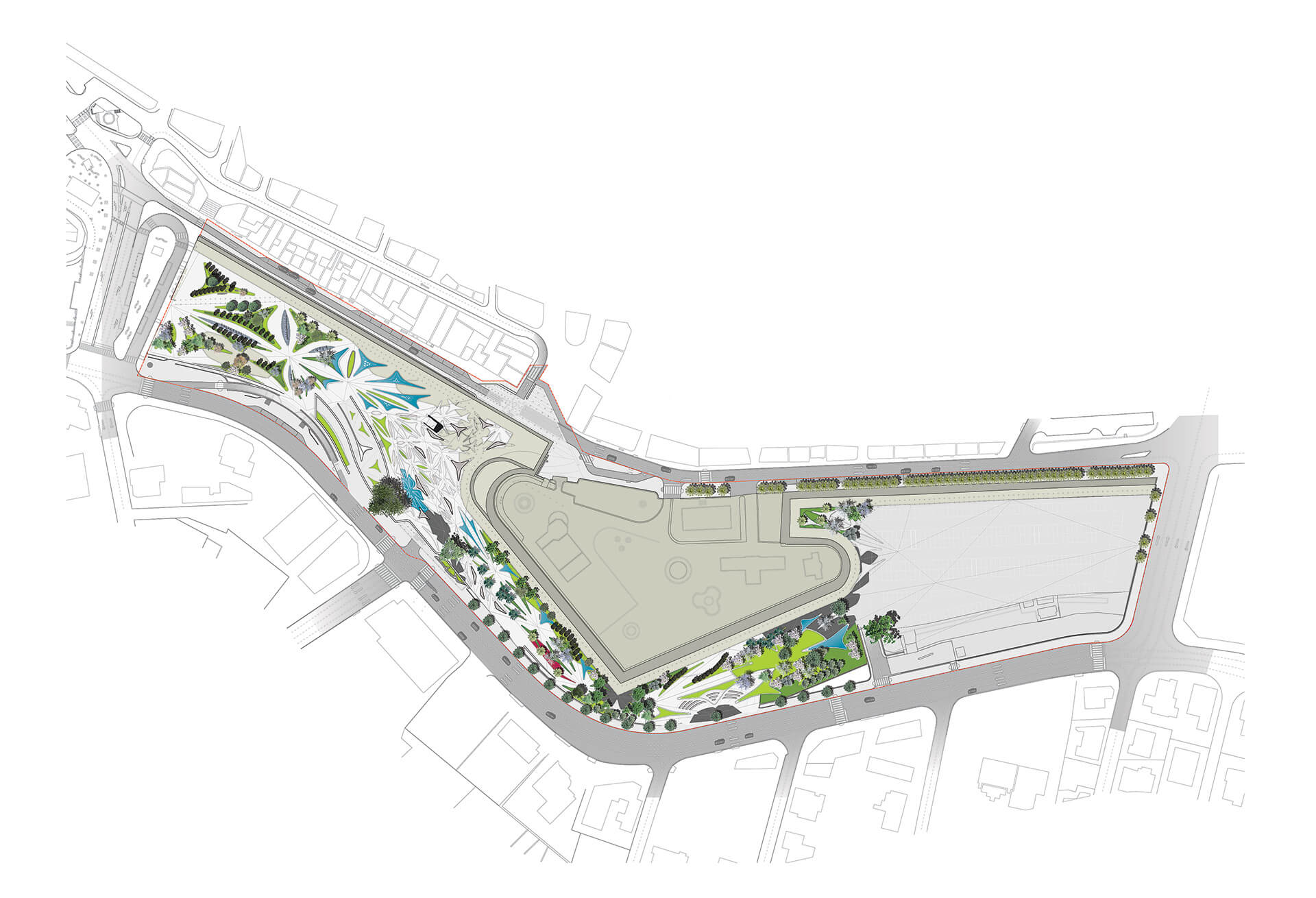
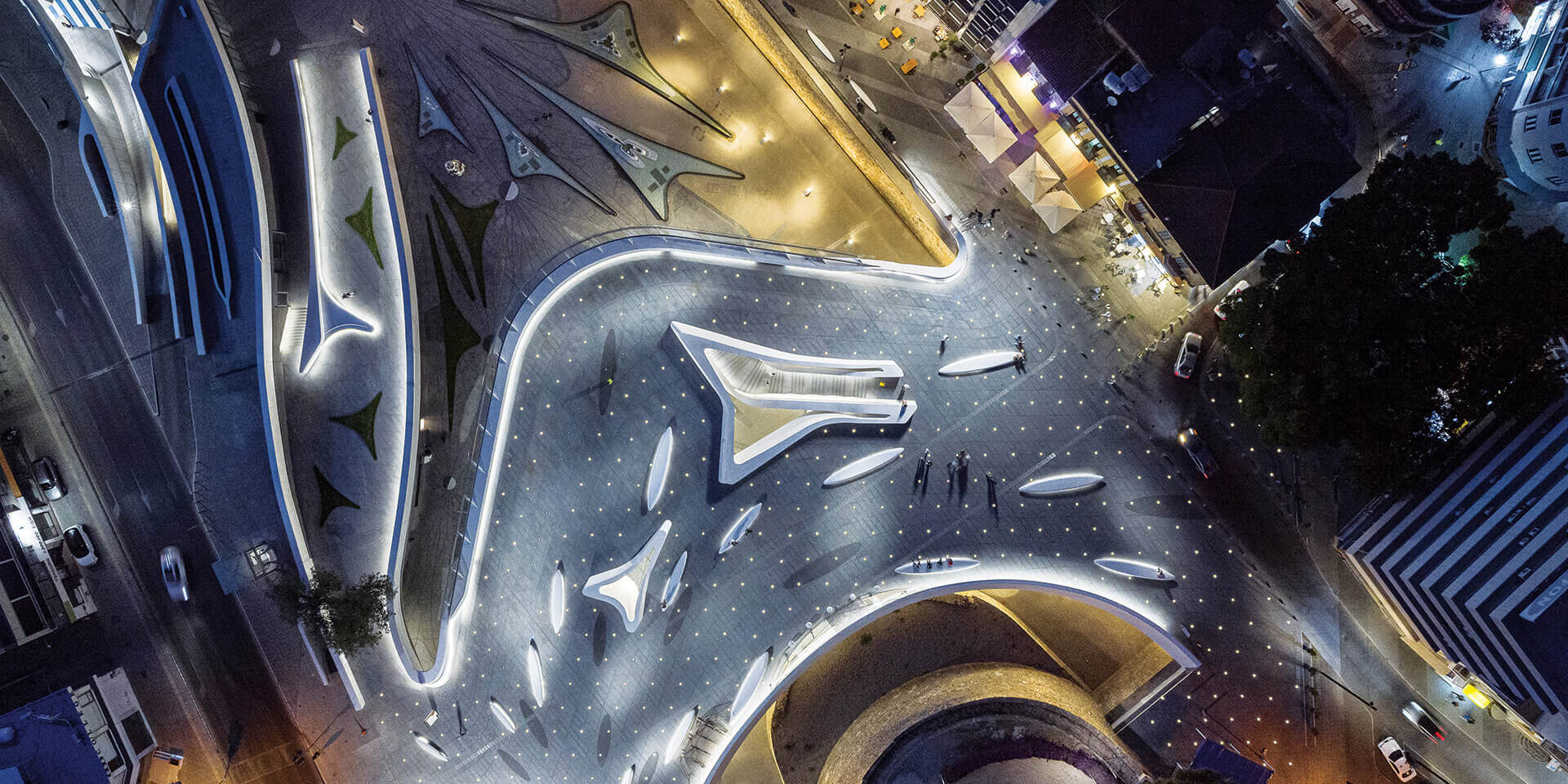
The transformation of the square into the city’s primary gathering space is based on the creation of new connections intended to contribute to the reunification of the divided capital. The design secures unobstructed views toward the historic walls, establishing them as an integral component of Nicosia’s identity, while simultaneously opening the moat to public uses, allowing it to host festivals and outdoor events.
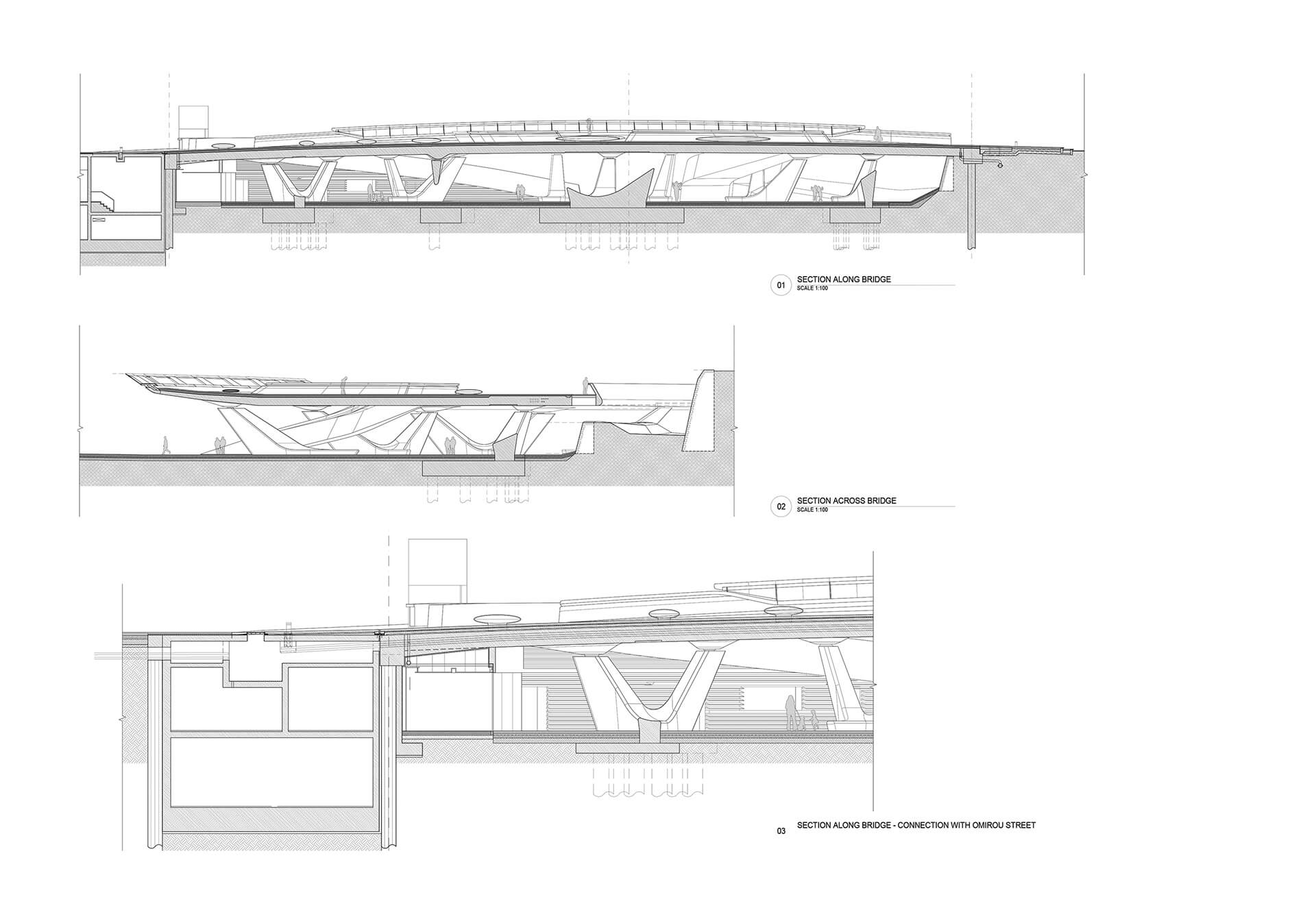
The project elevates the level of the moat to form a bridge that connects organically with the surrounding urban fabric, creating a new civic square at the heart of the city. Within this framework, extensive archaeological excavations were carried out, alongside conservation and protection works for the historic Venetian fortifications. The project also includes the creation of two cafés within the square and the construction of a new underground parking facility, accessed from Omirou Avenue.
Elements of Circulation
Staircases and elevators directly link the square with the Solomos Square bus terminal, reinforcing the functionality and permeability of the area. The transformation of previously inaccessible areas within the moat into plazas, gardens, and palm-lined pedestrian paths establishes a new “green belt” around the city.
This belt has the potential to extend along the historic fortifications, forming a continuous network of public spaces that encircle Nicosia and reconnect the communities of the divided capital. In this way, the square acts as a catalyst for the activation of public space, offering new opportunities for social interaction and urban life.
Materiality & Lighting Design
Within the broader vision of transforming the moat into an urban park, the project’s fluid geometries emerge from the triangulation of the irregular forms of the fortification perimeter. Points of spatial intensity are transformed into seating areas, planting beds, or water elements, shaping a dynamic urban landscape. Granite paving introduces a sense of timeless solidity, while the open joints between the slabs function as a passive system for stormwater drainage. Newly planted trees contribute to the natural regulation of water levels, reducing erosion around the foundations of the medieval walls.
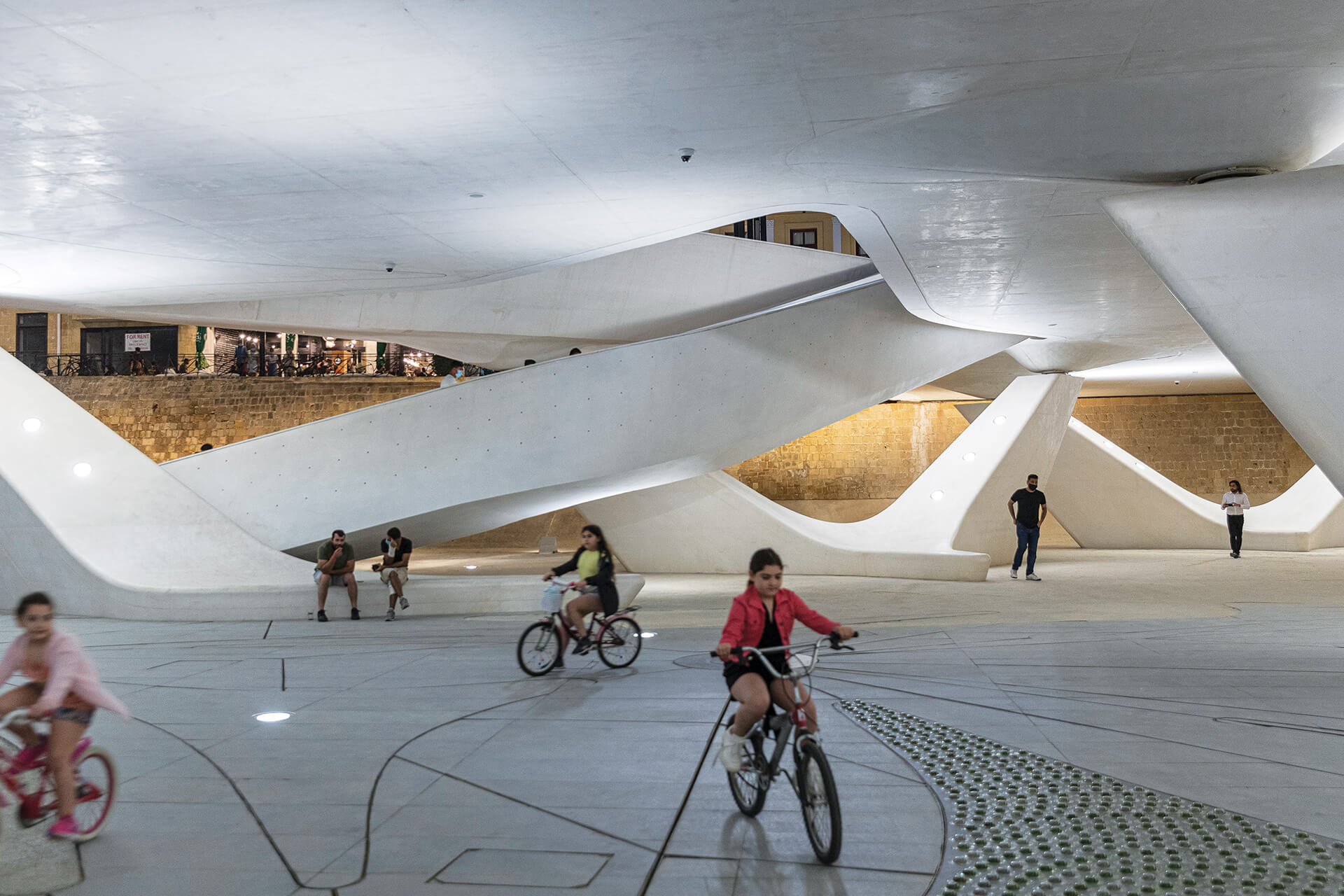
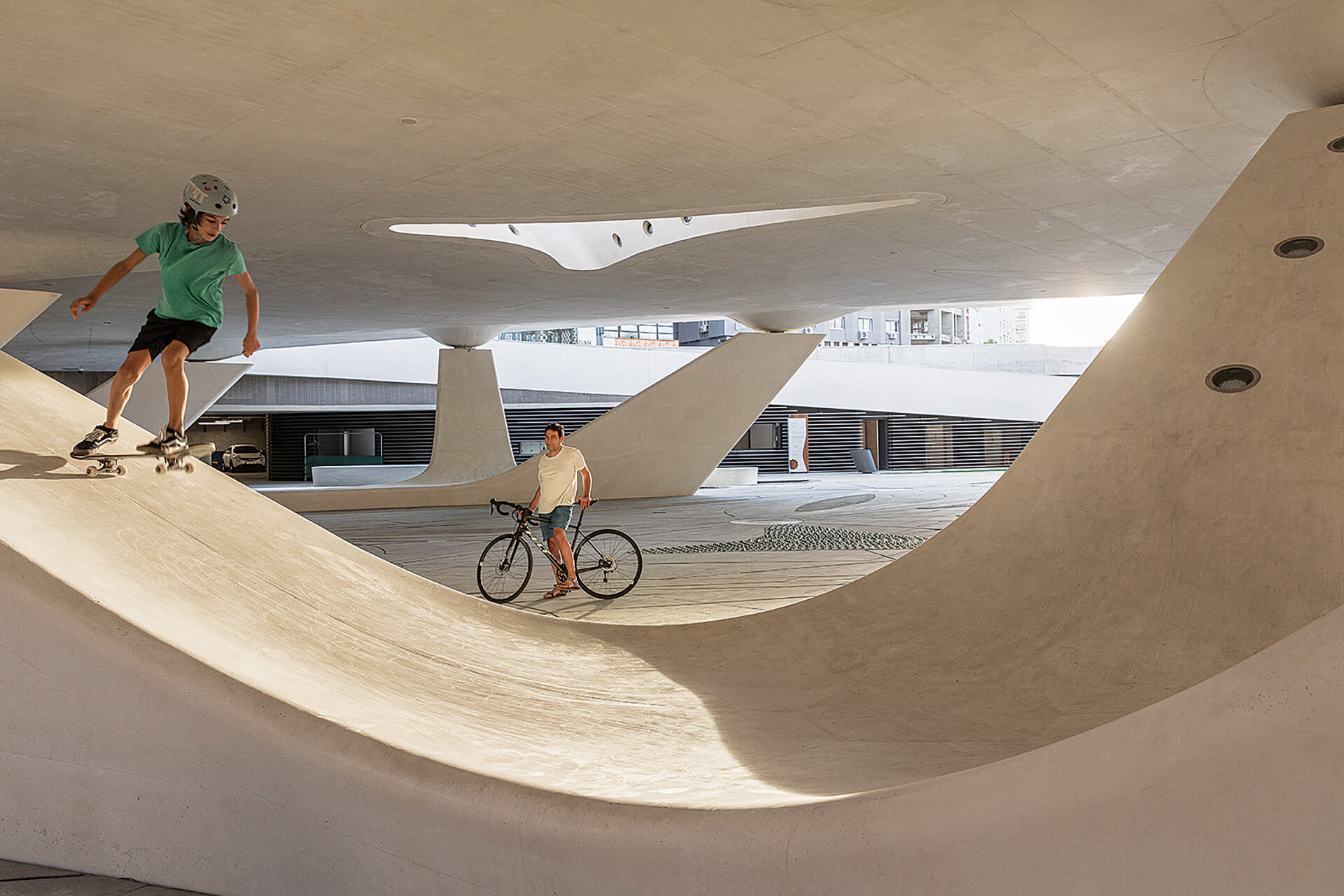
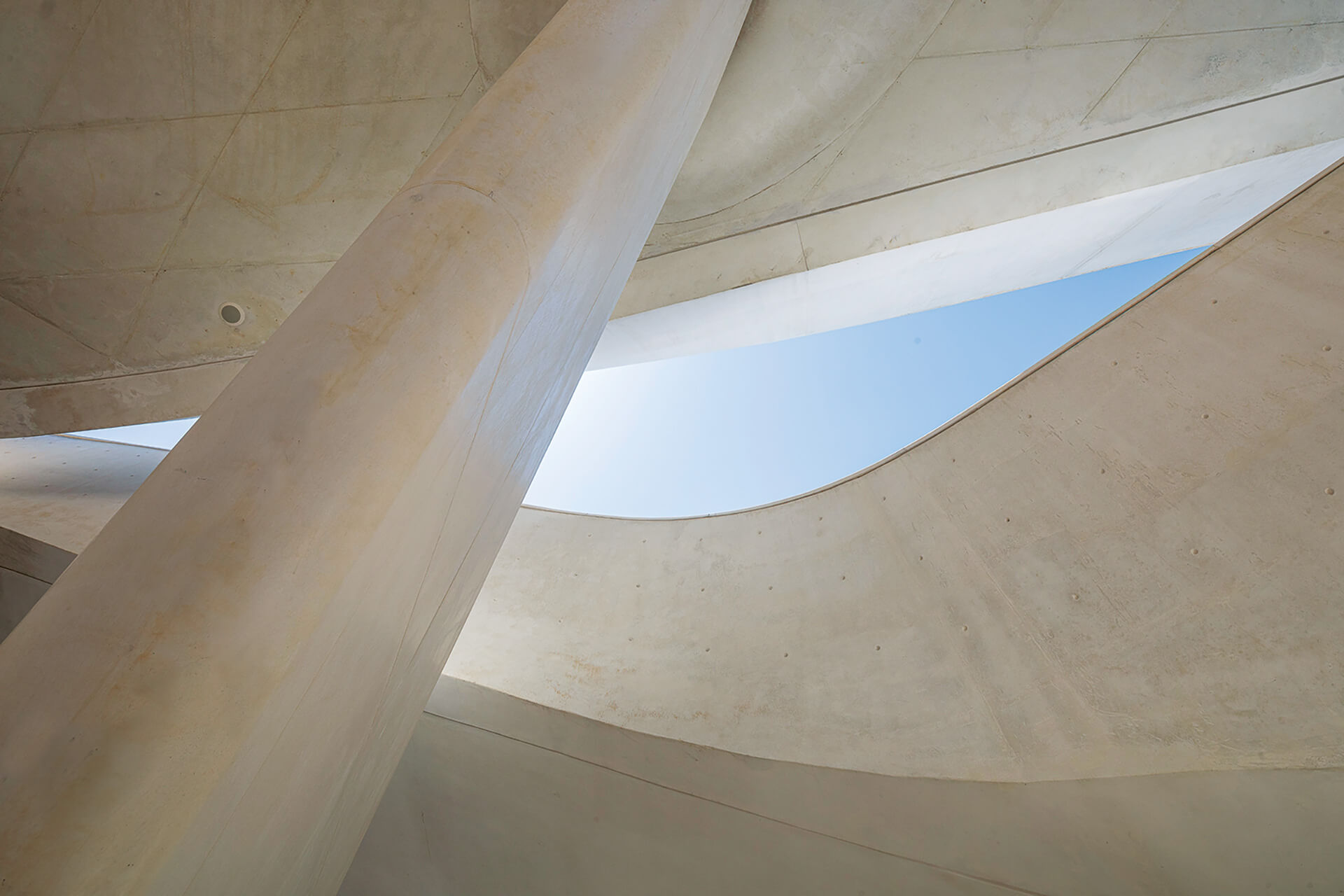
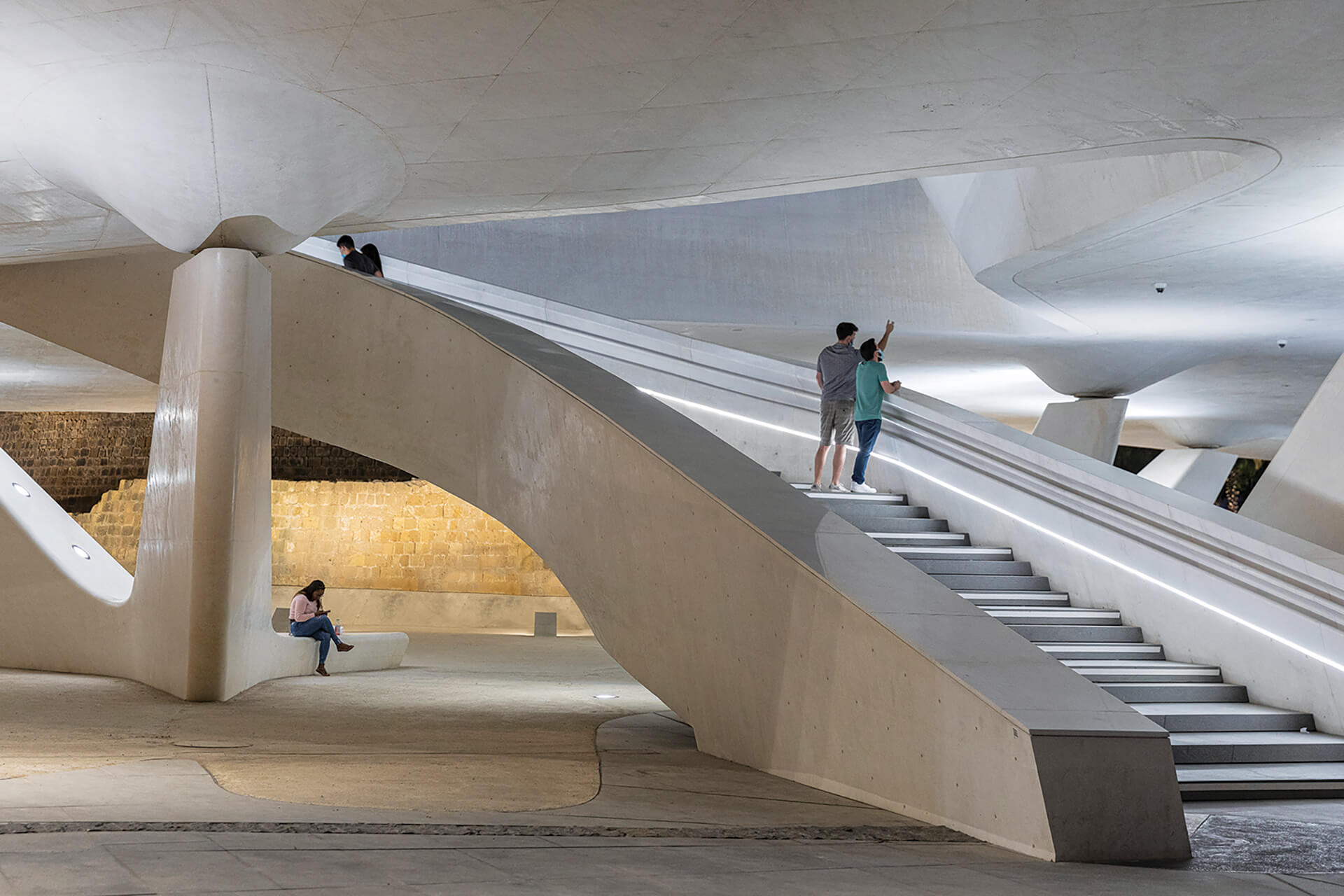
The upper-level bridge and its supports are constructed from sculptural concrete forms that ensure seismic stability, while the bases of the columns are shaped to function as integrated seating elements. Through this transformation, Eleftheria Square emerges as the largest urban public space in Nicosia. By bridging the Venetian walls and the moat, the square becomes a significant gateway to the old city, while the underground parking facility removes vehicular traffic from the historic center, facilitating its future pedestrianization. In this way, the project enriches the urban landscape of this historic district while simultaneously creating new public gardens and gathering spaces for residents and visitors alike.
Finally, the lighting design reinforces the square’s fluid geometry and acts as a spatial guidance system during the evening hours. Linear lighting elements are discreetly integrated along the contours of the curved surfaces and bridges, emphasizing the dynamic morphology of the composition and enhancing the legibility of the structure within the urban landscape. At the same time, low-intensity lighting fixtures embedded within the paving create a subtle “field of light” that follows the geometry of the circulation paths and areas of pause. This approach highlights the plasticity of the concrete surfaces, enhances the sense of safety, and transforms the public space into a nocturnal landscape where light operates both functionally and atmospherically.
https://ek-mag.com/wp-content/uploads/2026/03/00-cover-3.jpg
https://ek-mag.com/wp-content/uploads/2026/03/01-3.jpg
https://ek-mag.com/wp-content/uploads/2026/03/02-3.jpg
https://ek-mag.com/wp-content/uploads/2026/03/03-3.jpg
https://ek-mag.com/wp-content/uploads/2026/03/04-3.jpg
https://ek-mag.com/wp-content/uploads/2026/03/05-3.jpg
https://ek-mag.com/wp-content/uploads/2026/03/06-3.jpg
https://ek-mag.com/wp-content/uploads/2026/03/07-3.jpg
https://ek-mag.com/wp-content/uploads/2026/03/08-2.jpg
https://ek-mag.com/wp-content/uploads/2026/03/09-2.jpg
https://ek-mag.com/wp-content/uploads/2026/03/10-2.jpg
Related Posts