European University Cyprus Medical School Building
Architecture:
Photography:
ek Issue:

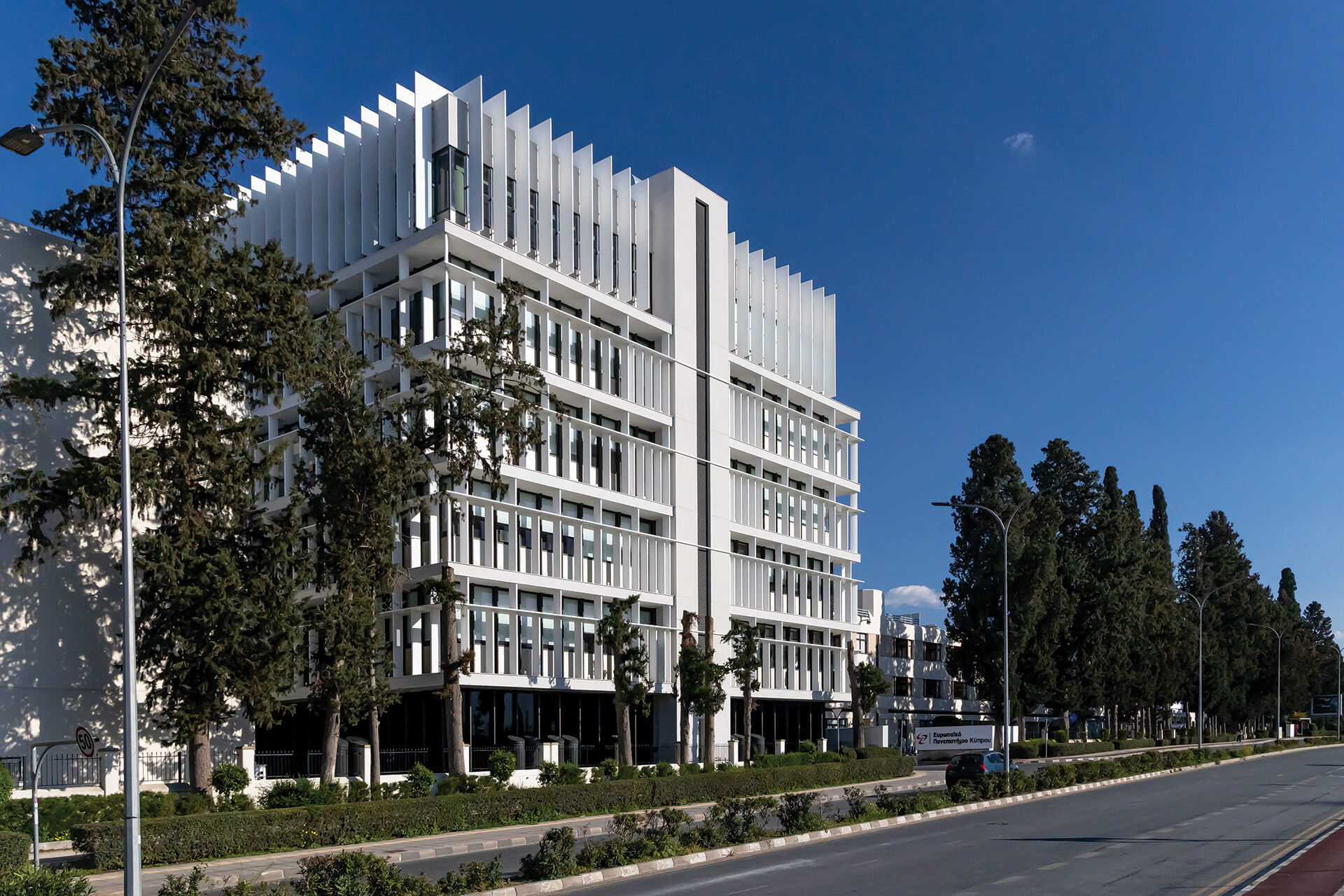
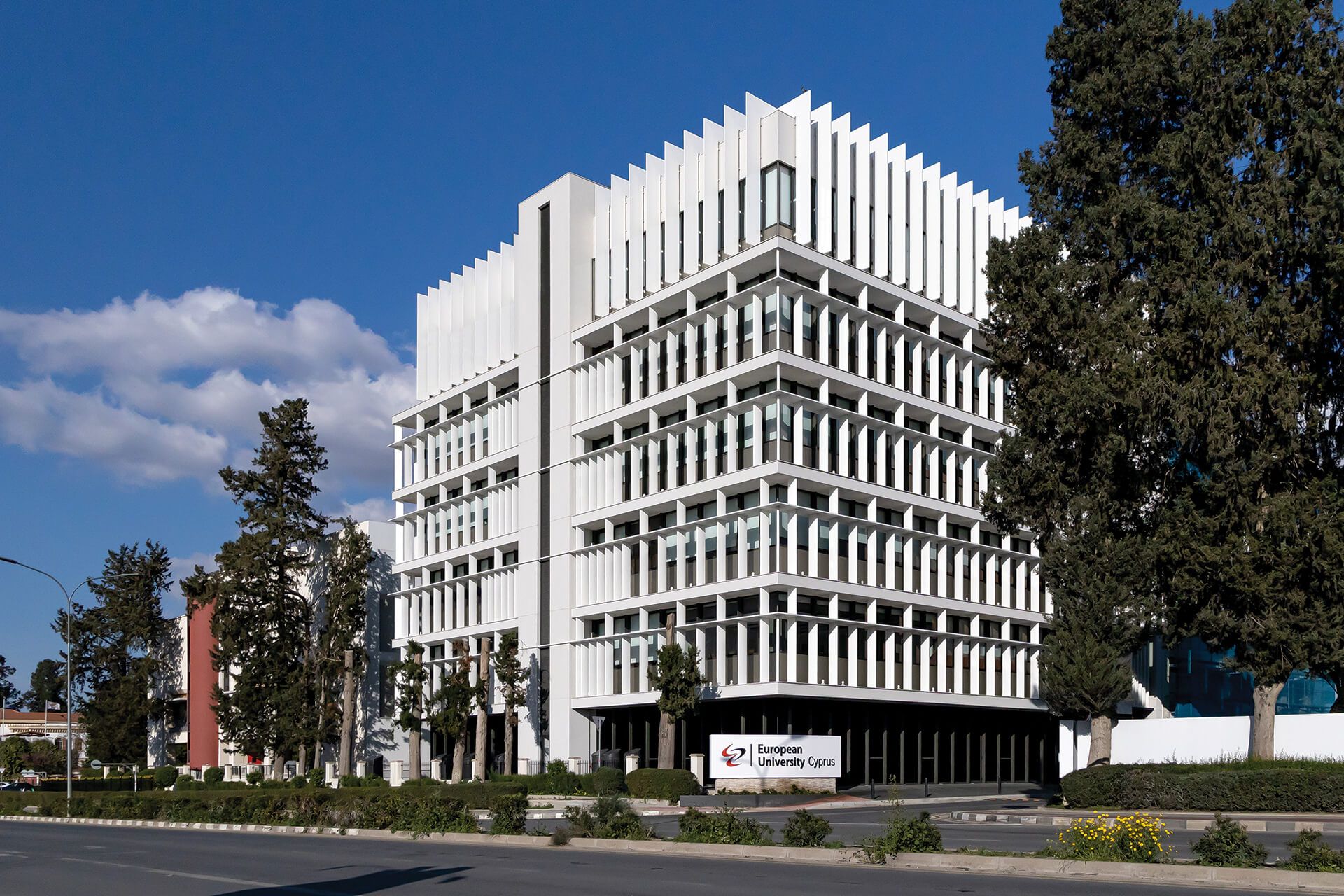
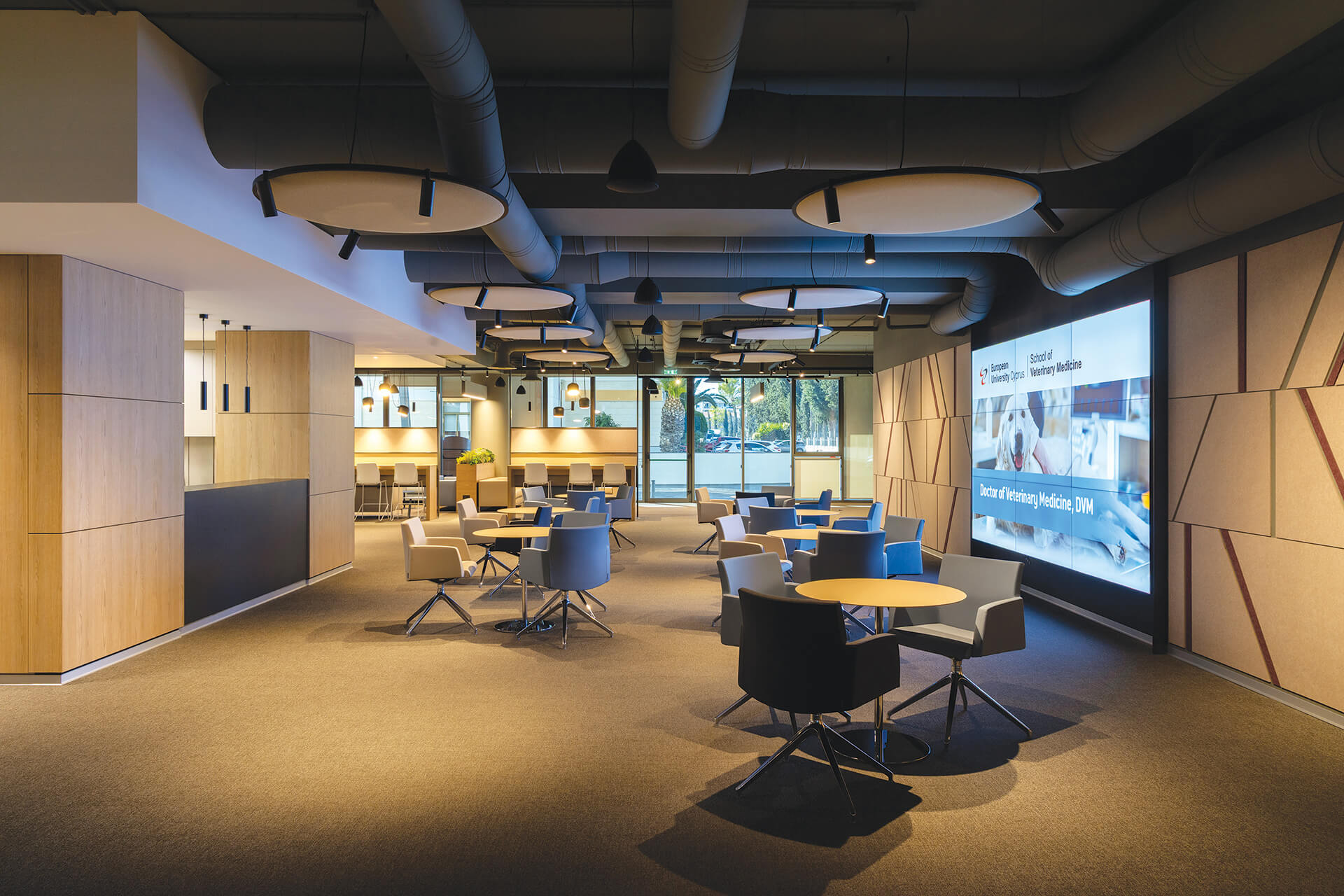
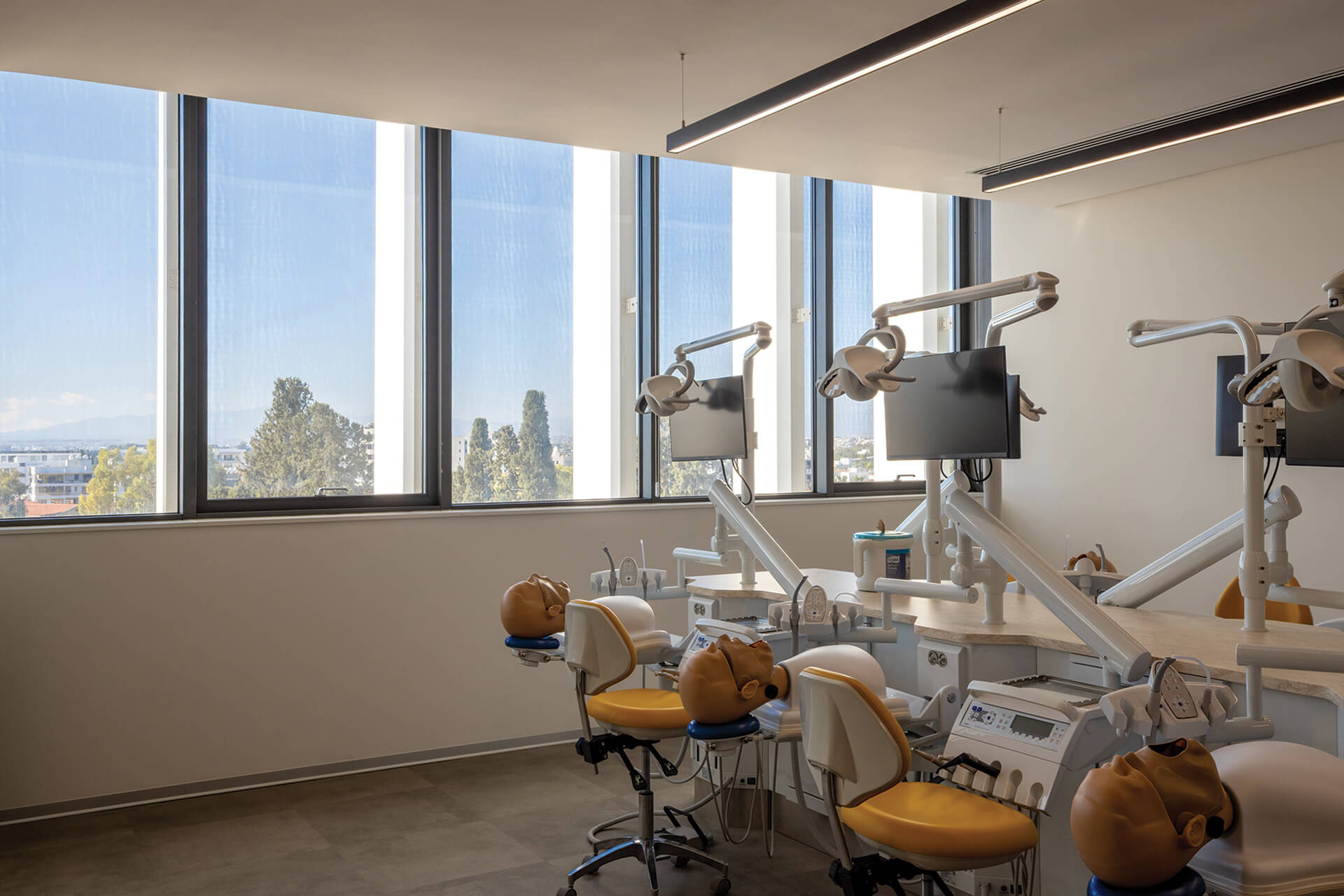
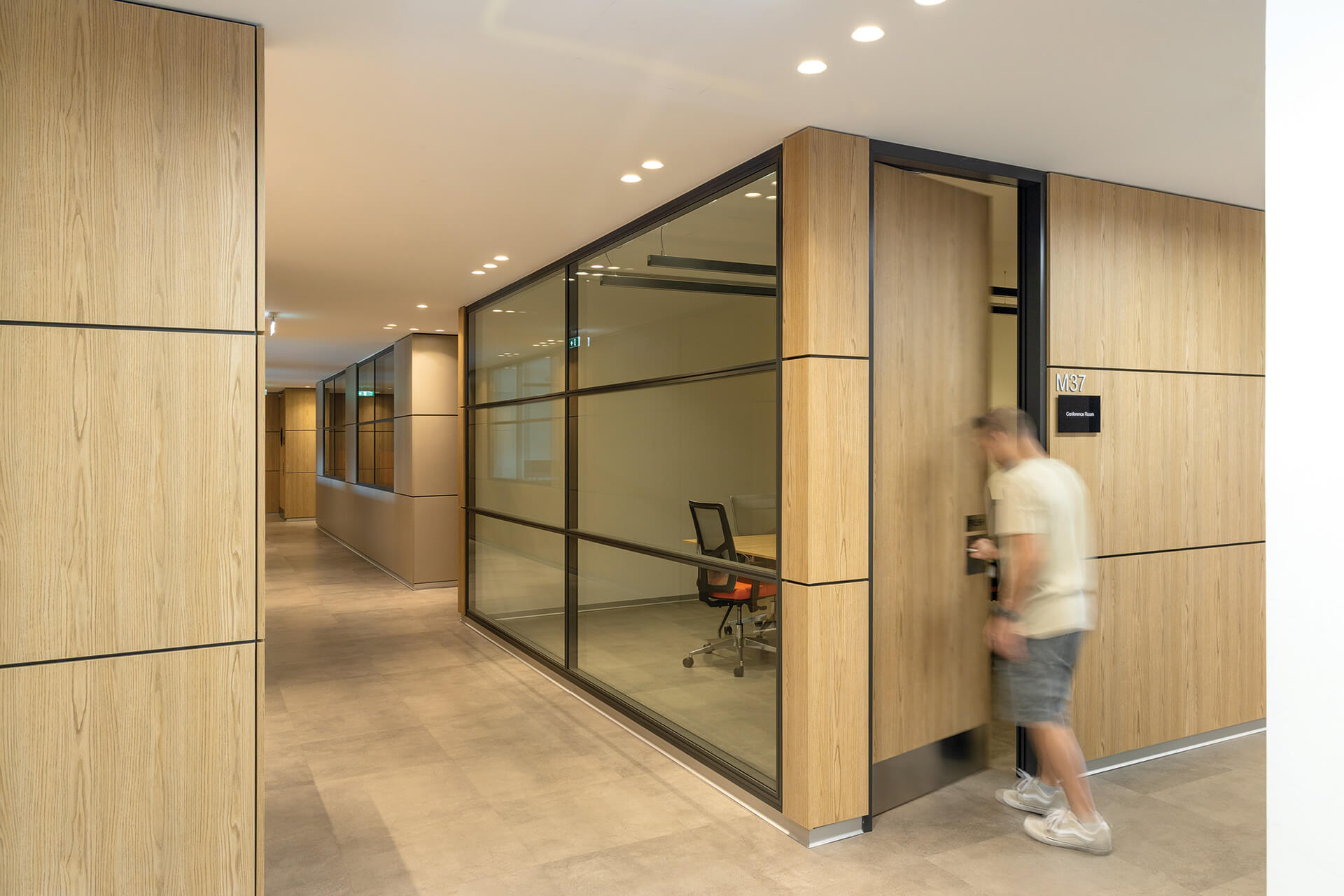
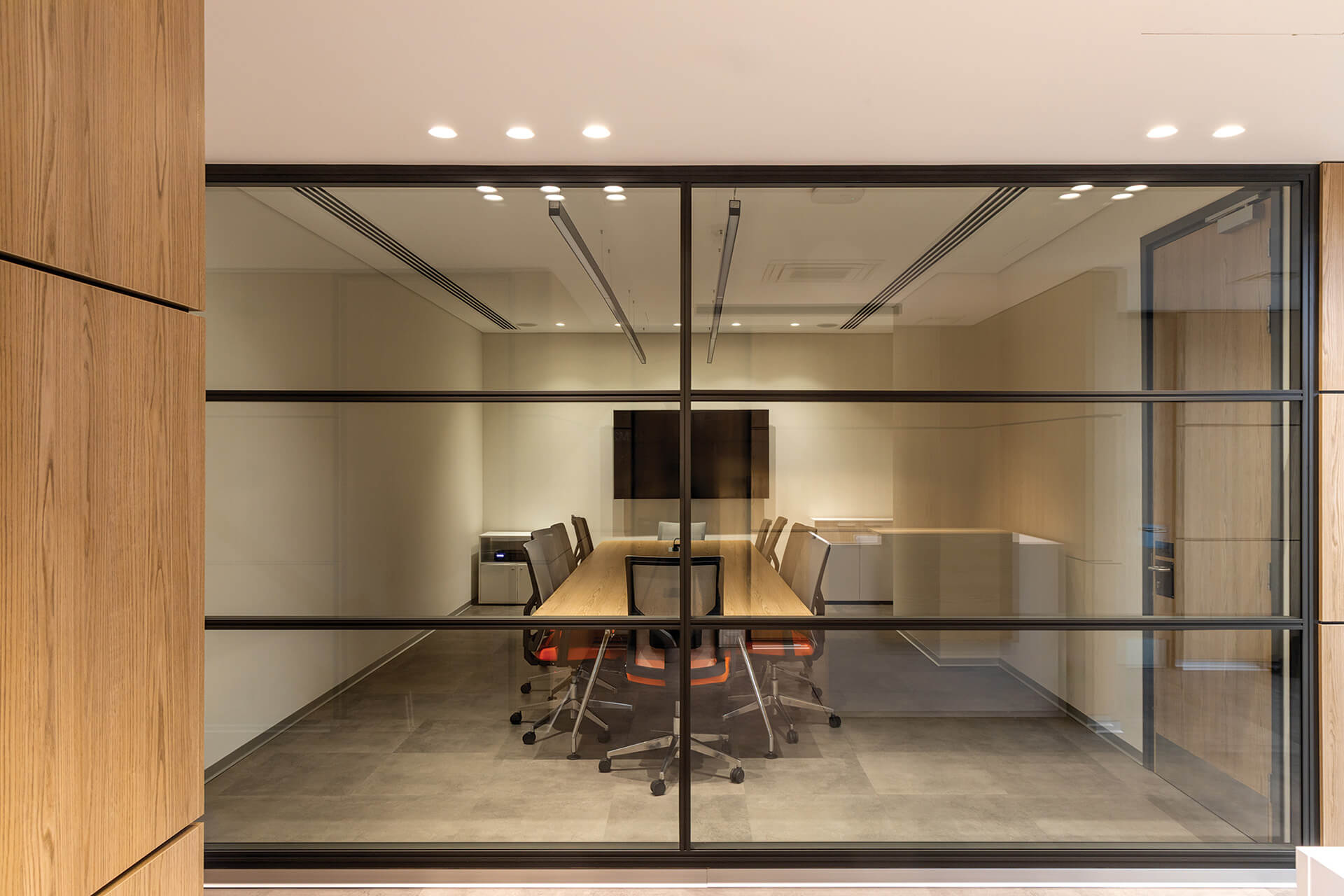
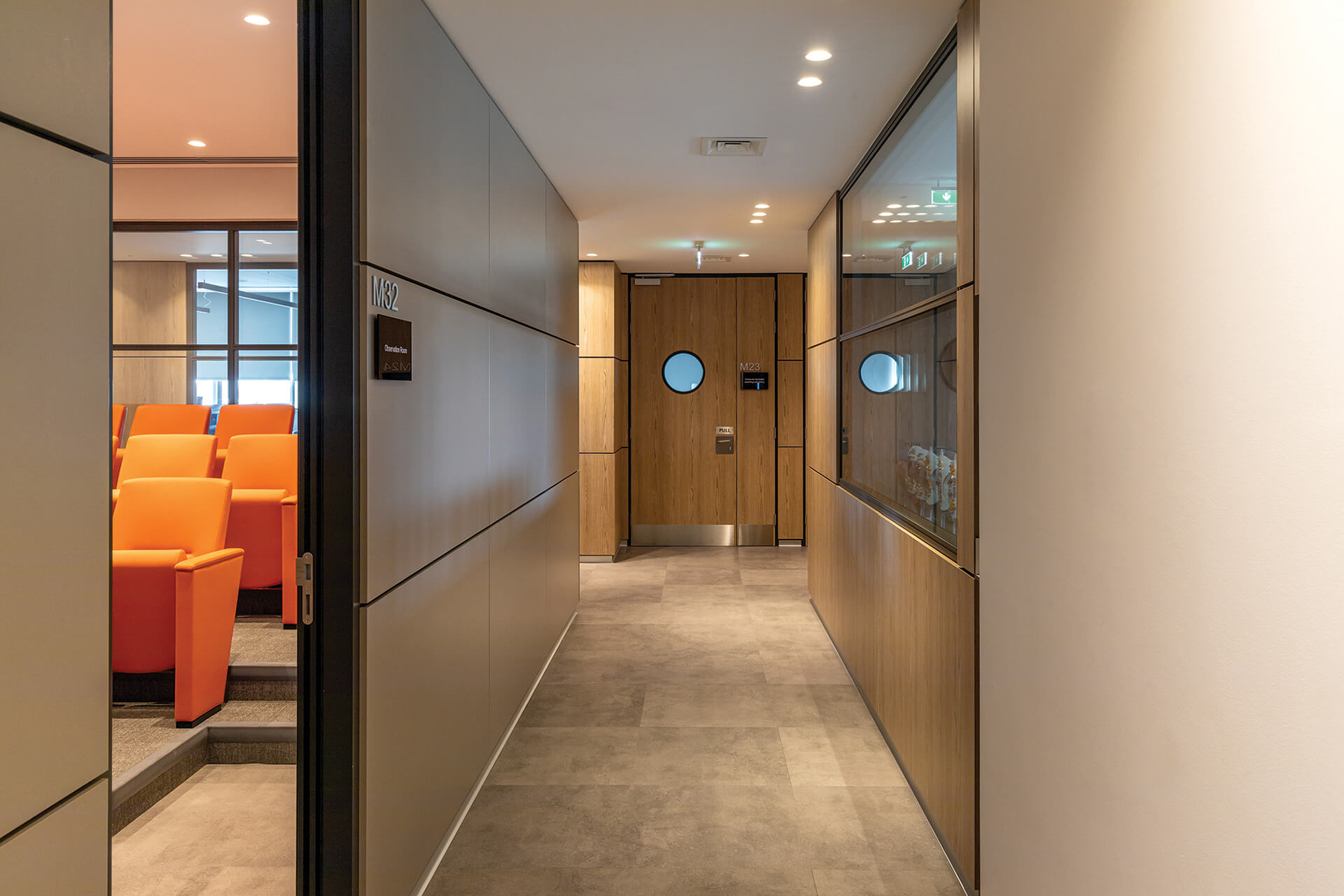
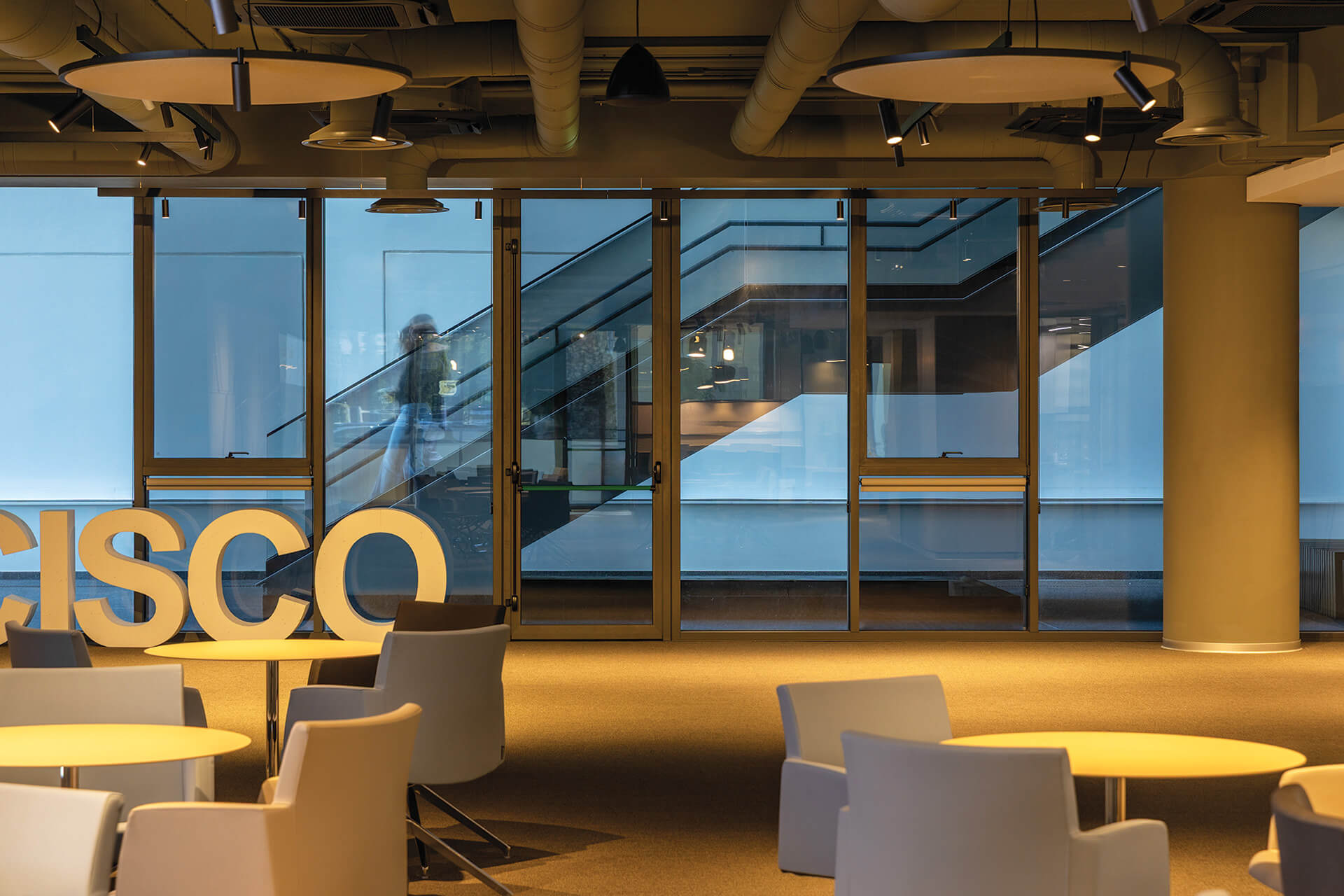
The recently completed addition to the campus of the European University Cyprus houses the Schools of Medicine, Dentistry and Veterinary Medicine. More specifically, the building comprises standard tertiary education classrooms along with their supporting facilities, as well as laboratories of various kinds in conjunction with a series of complementary communal spaces.
Urban Context and Institutional Role
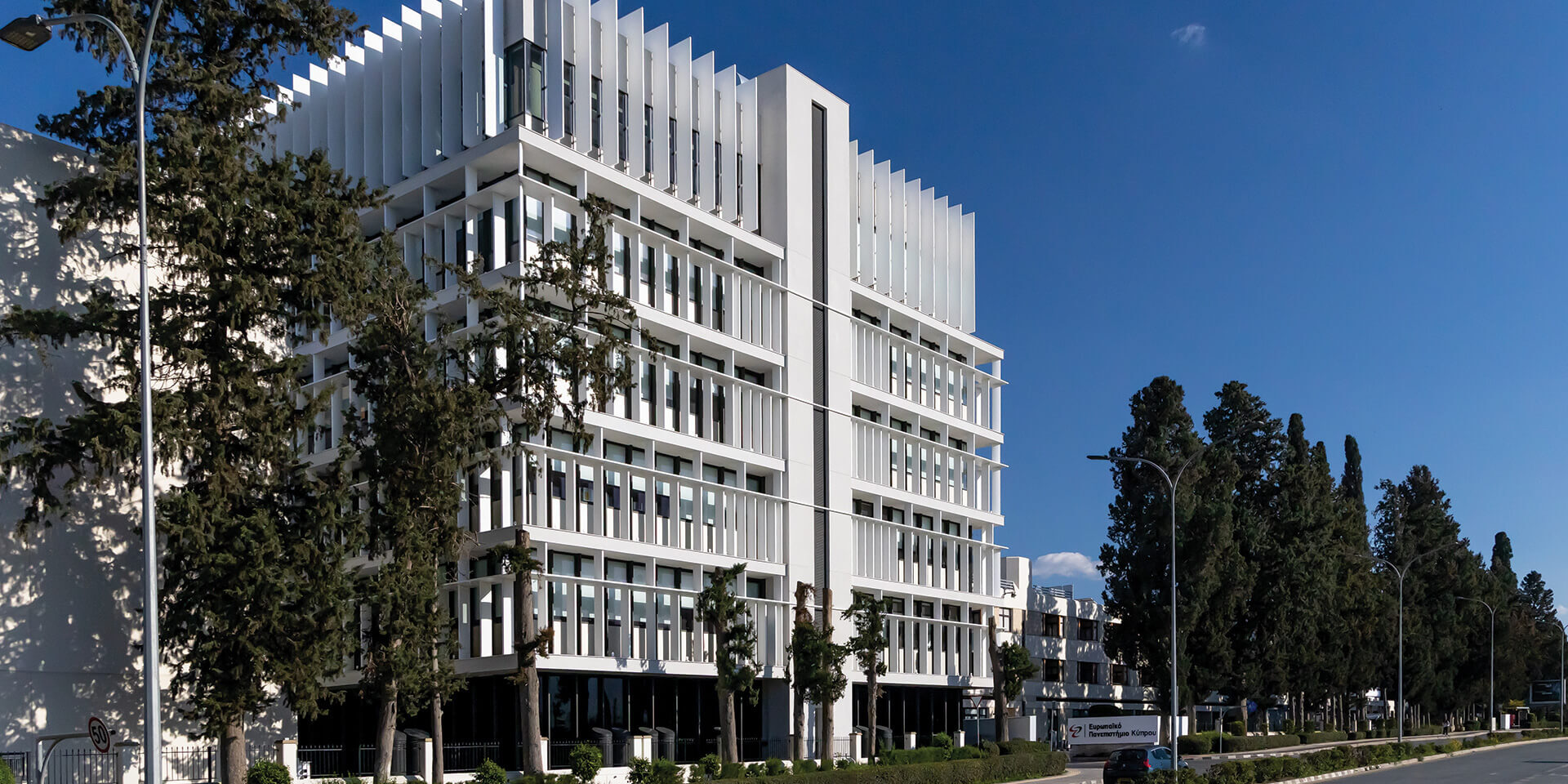
Given the building’s significant institutional role within the university campus, the architecture was required to establish a connection with the existing facilities while preserving the distinctiveness of its character. The project site lies along one of Nicosia’s main traffic arteries (Agiou Prokopiou Avenue), an urban environment that remains largely under development. As such, the building seeks to respond with a restrained yet substantial presence within this context of extended distances and high-speed movement. The architecture of the area presents certain characteristics, which the project was called upon to respect.
Design Philosophy
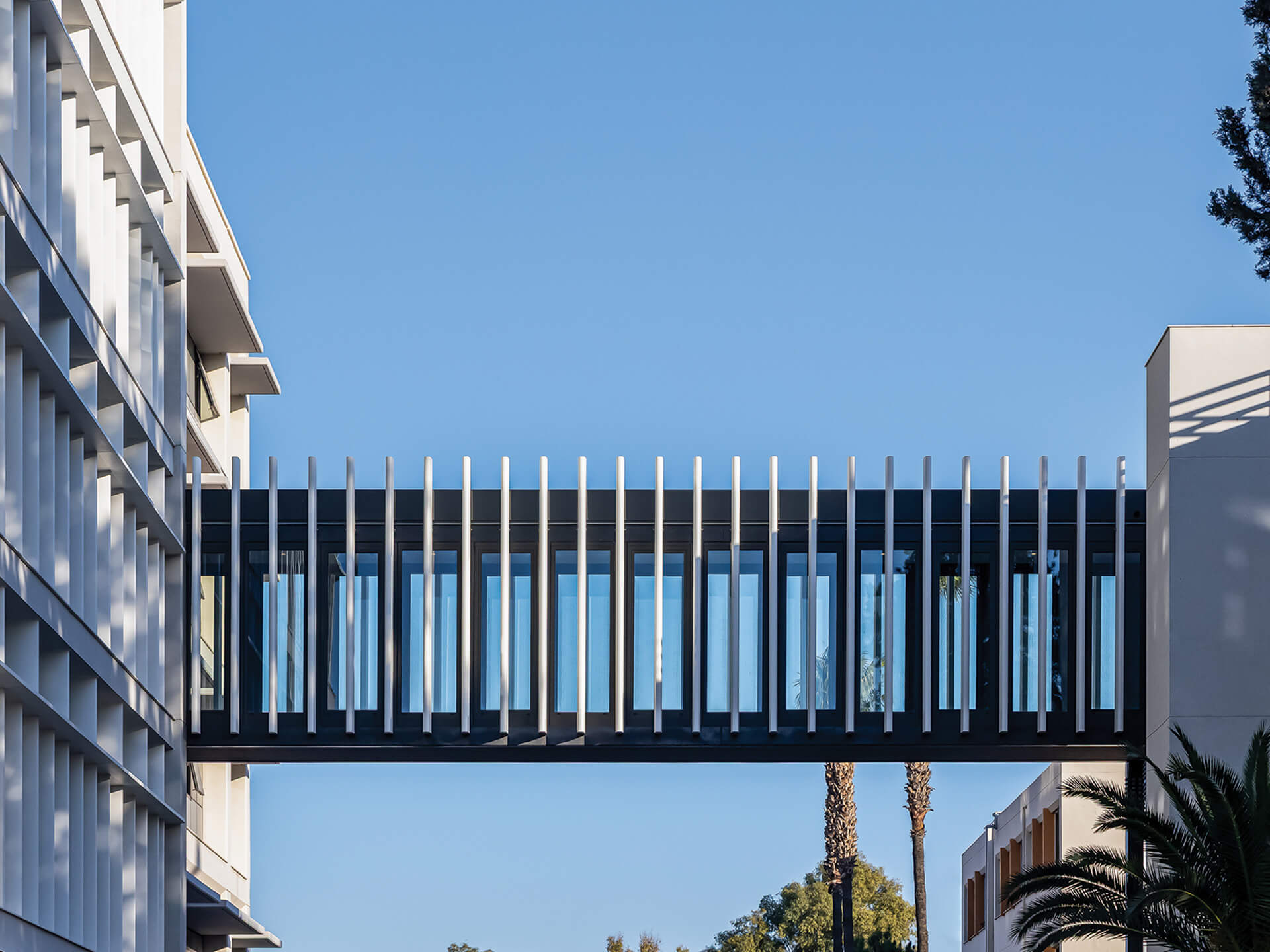
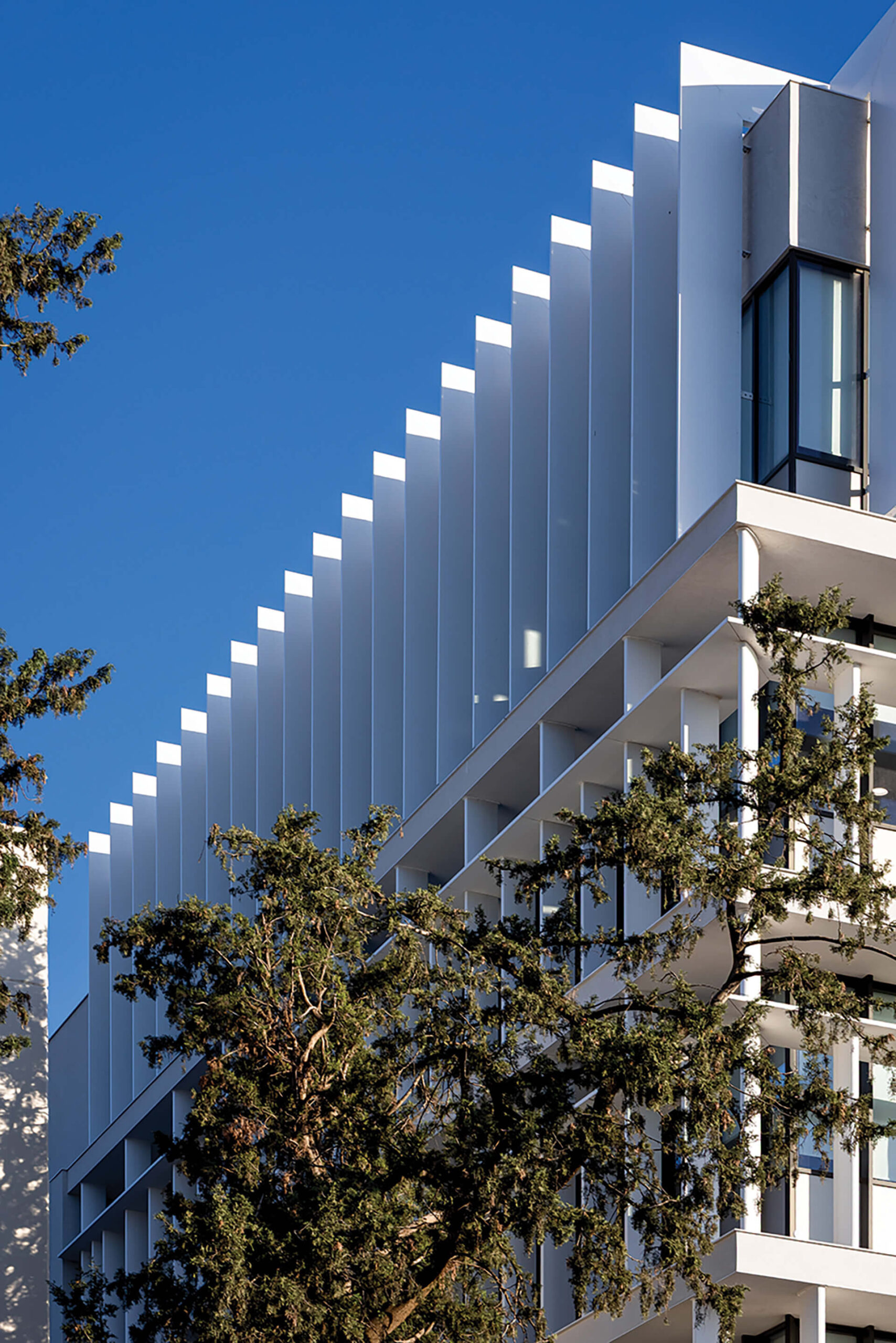
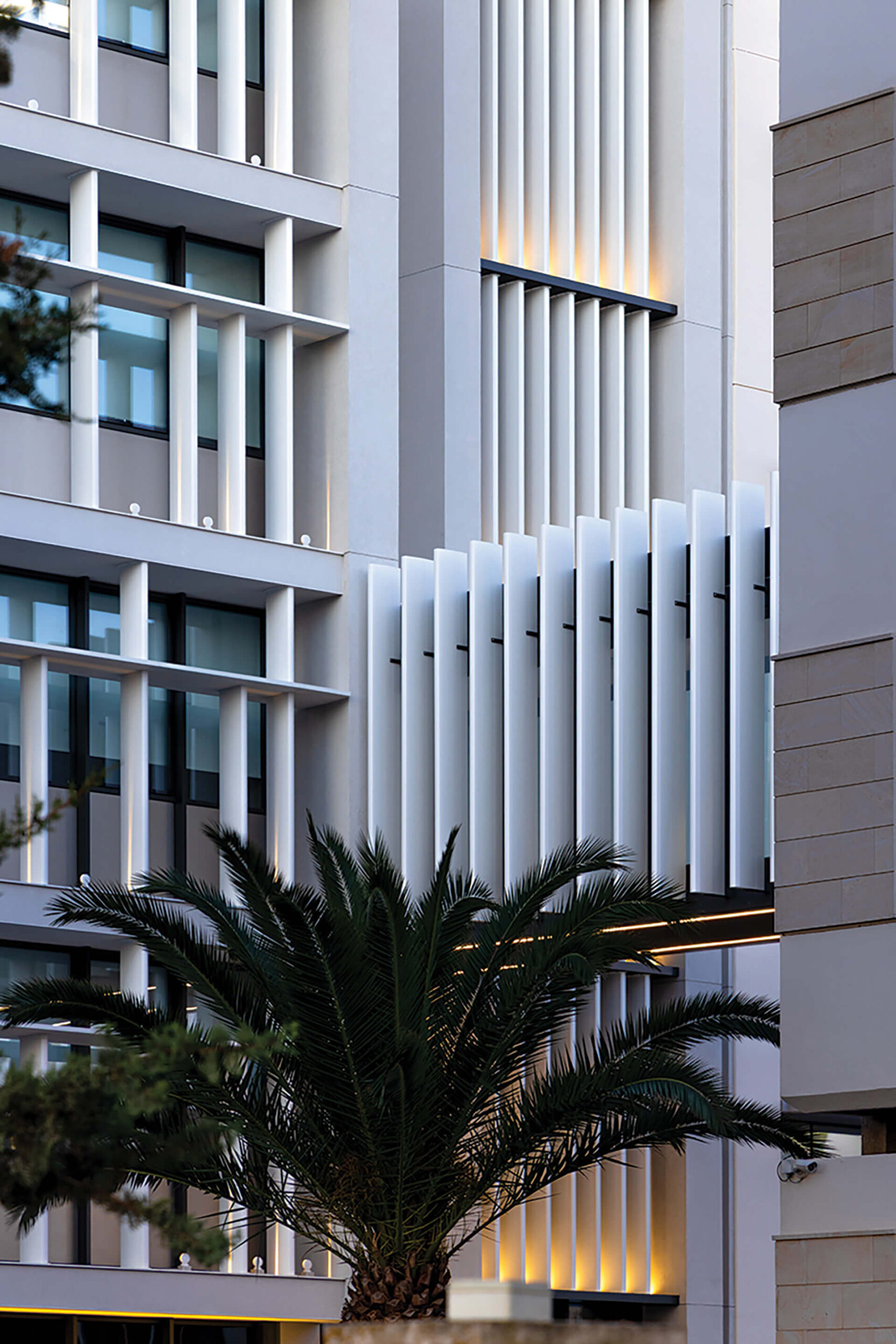
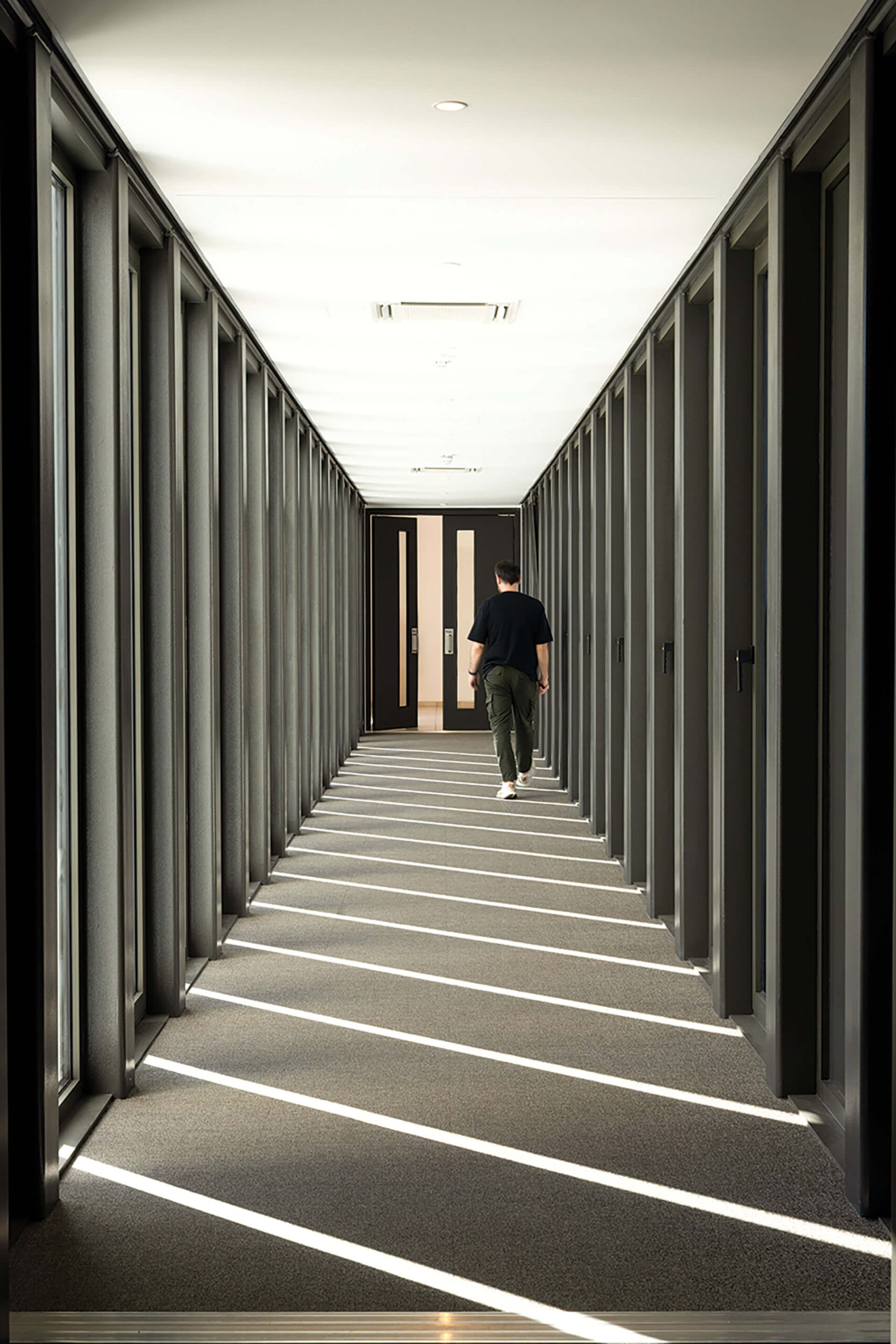
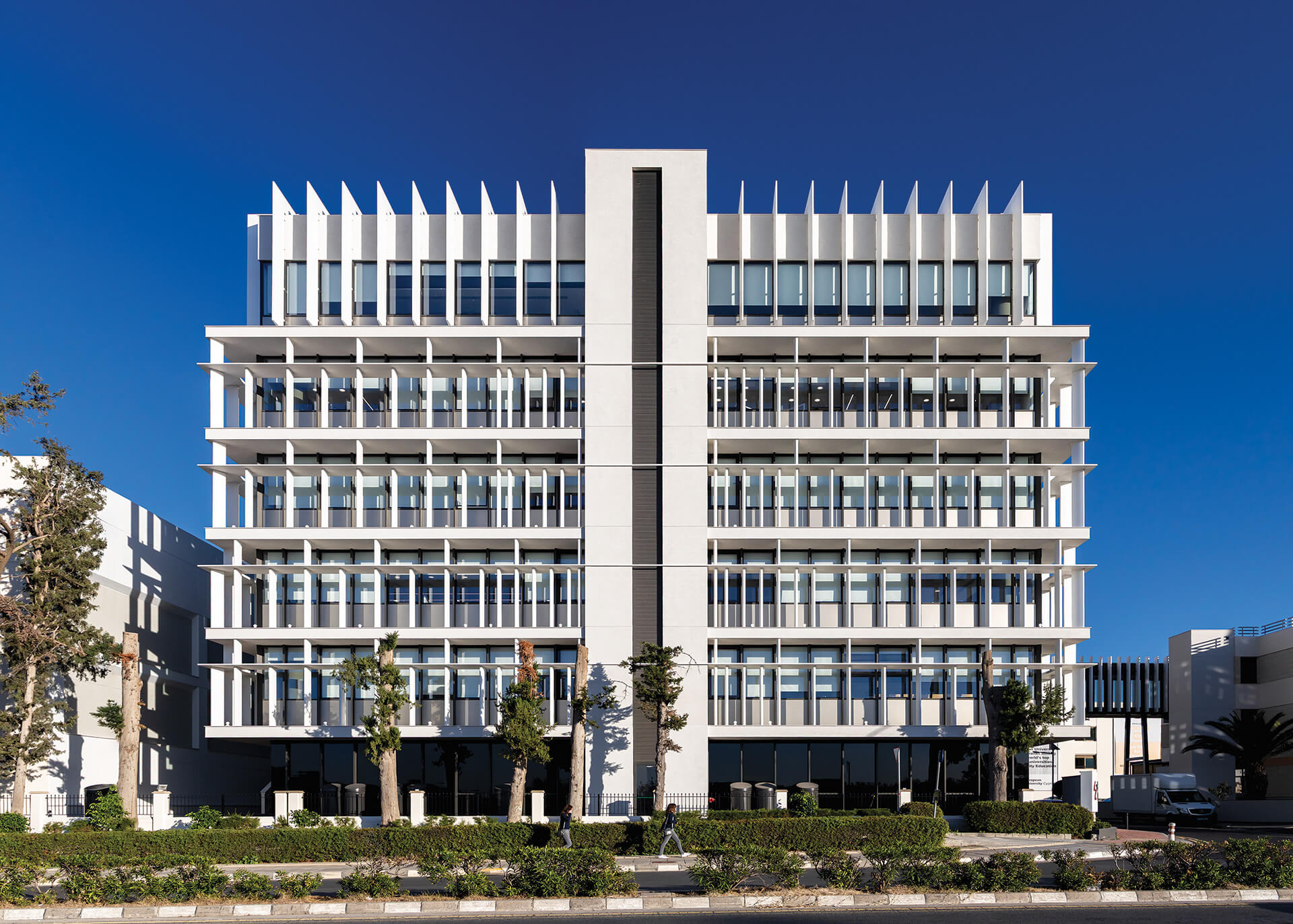
The objective, therefore, was for the extension to become the new architectural expression of the university and to shape its modernised identity, while retaining the fundamental lines of the existing buildings’ morphology. This connection was achieved through the design of the facades using customised aluminium frames that reference the earlier morphology of the openings, while simultaneously providing the necessary protection against constantly shifting climatic conditions. The specially designed profiles shade the interior without restricting views, creating an engaging interplay between closed and open, solid and transparent. Within the broader modernisation of the university facilities, both the facades and the existing buildings were renovated and upgraded. In parallel, a smart building management system was installed to optimise energy performance and operational efficiency.
Functional Integration & Lighting
Beyond the aesthetic unification with the existing built complex, a key objective was the functional interconnection of the university buildings, which are developed on either side of a road axis. To ensure safe and comfortable movement between them, an elevated bridge was designed, organically integrated into the university’s internal circulation network. The architectural design was completed with a lighting study that discreetly highlights the lines and individual features of the facades. The exterior lighting lends depth and continuity to the complex’s presence, maintaining its identity and visibility even beyond operating hours.