Simple aesthetic
For more than 120 years, Aigli has been a focal point of Athenian social life. Since its beginnings in 1904 as a small café beside the neoclassical Zappeion building, it has evolved into a shared point of reference for the city. The new Aigli draws on this legacy, while aiming to broaden its reach and become more inclusive, open, and dynamic.
Existing Building
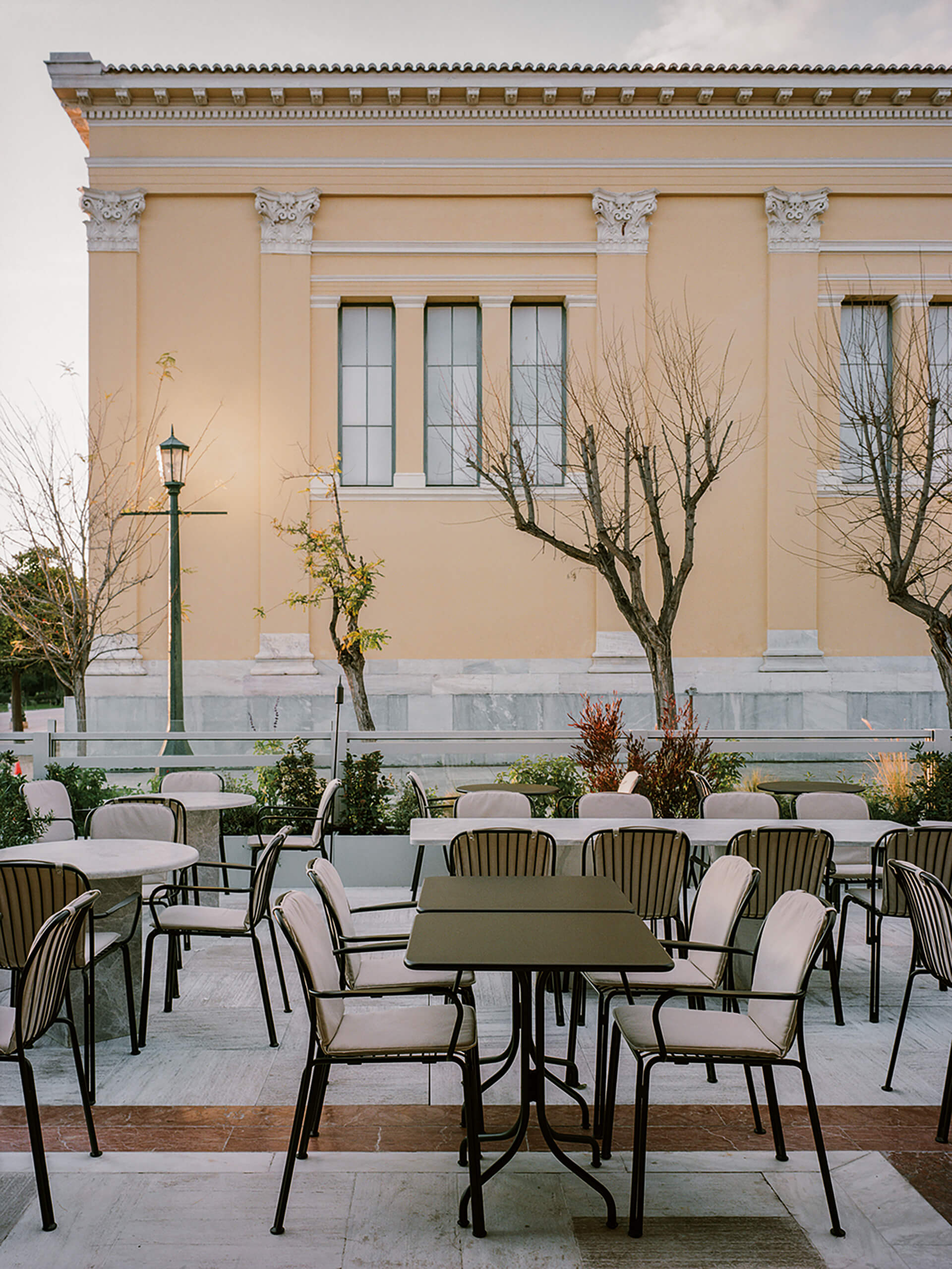
The first step in shaping the design proposal was a careful analysis of the existing building and the public space of which it forms an integral part. This process led to the development of a design language that is both classical and contemporary, acknowledging and utilizing the existing decorative elements -columns, marble patterns, and intricate woodwork- without allowing them to take on a dominant role that would compromise everyday use.
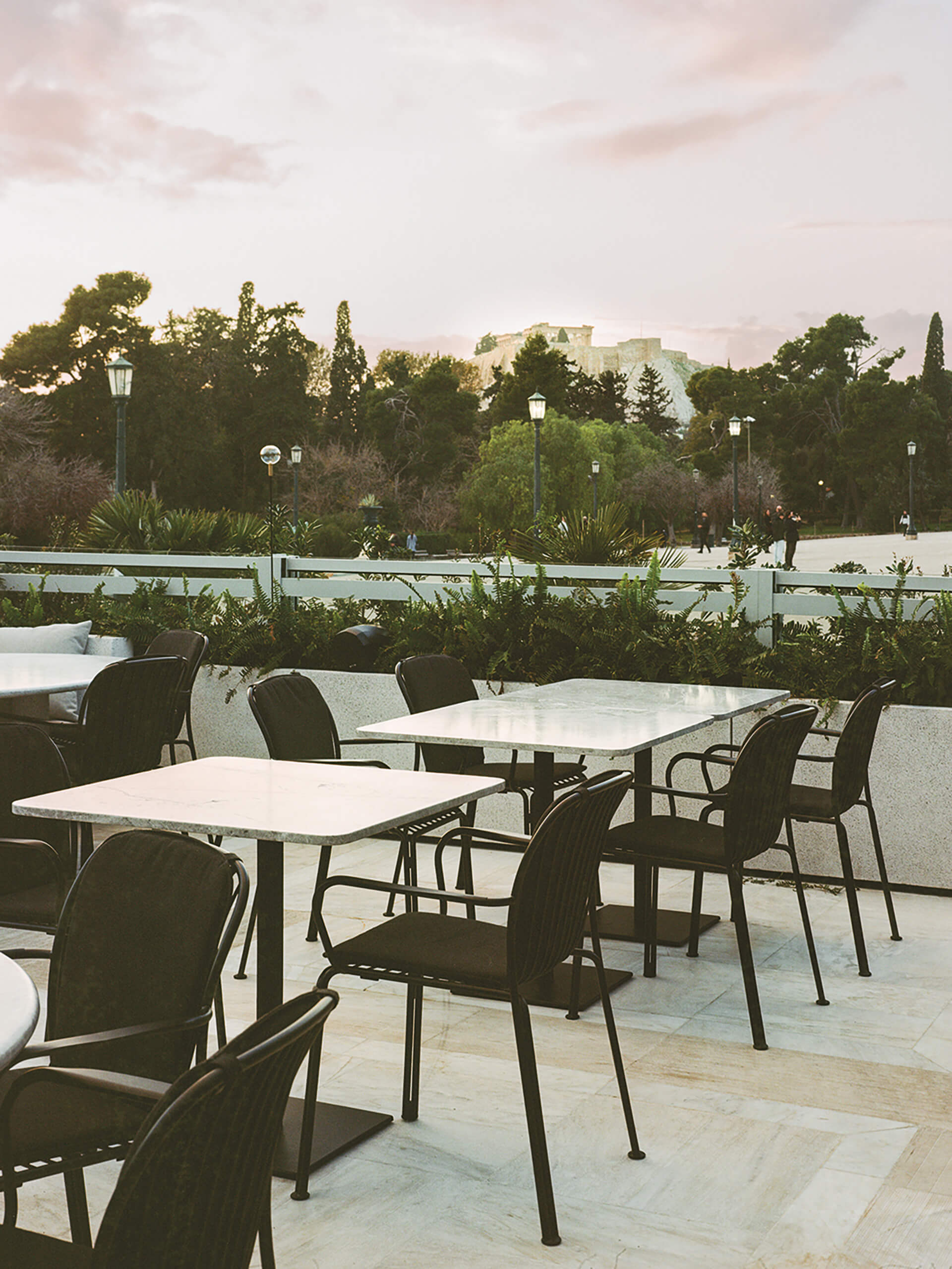
While historically the building was inward-looking, the new design highlights the natural beauty of the surrounding gardens by opening up views and access wherever possible. A primary objective was for the architecture of the new Aigli to be unique and heterogeneous, with each of its diverse spaces -the All-Day Café, the restaurant, the cinema, the event, music, and art halls, among others- possessing a distinct identity, all connected through a shared “DNA” of design elements and materials.
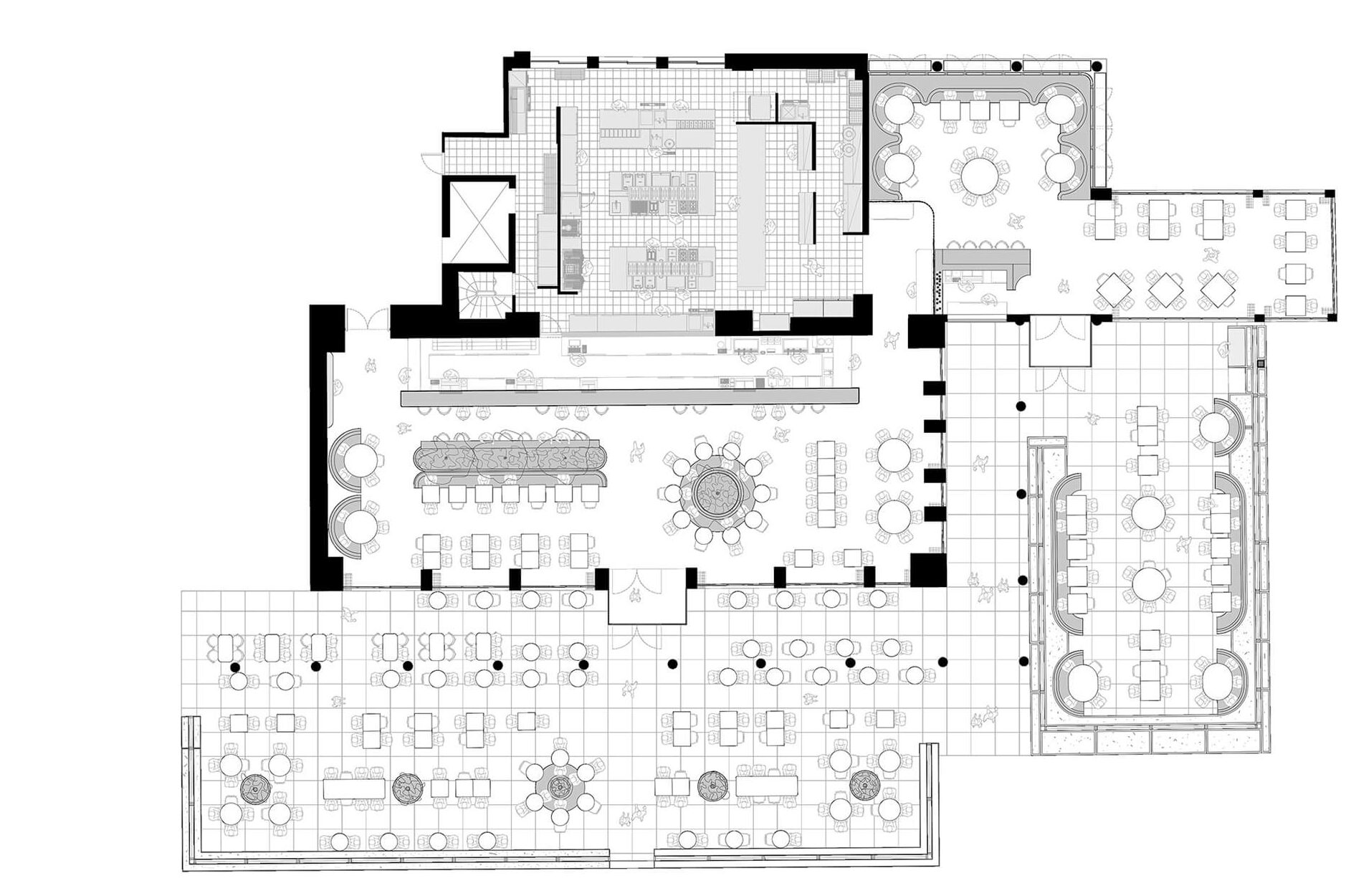
Spatial Organization
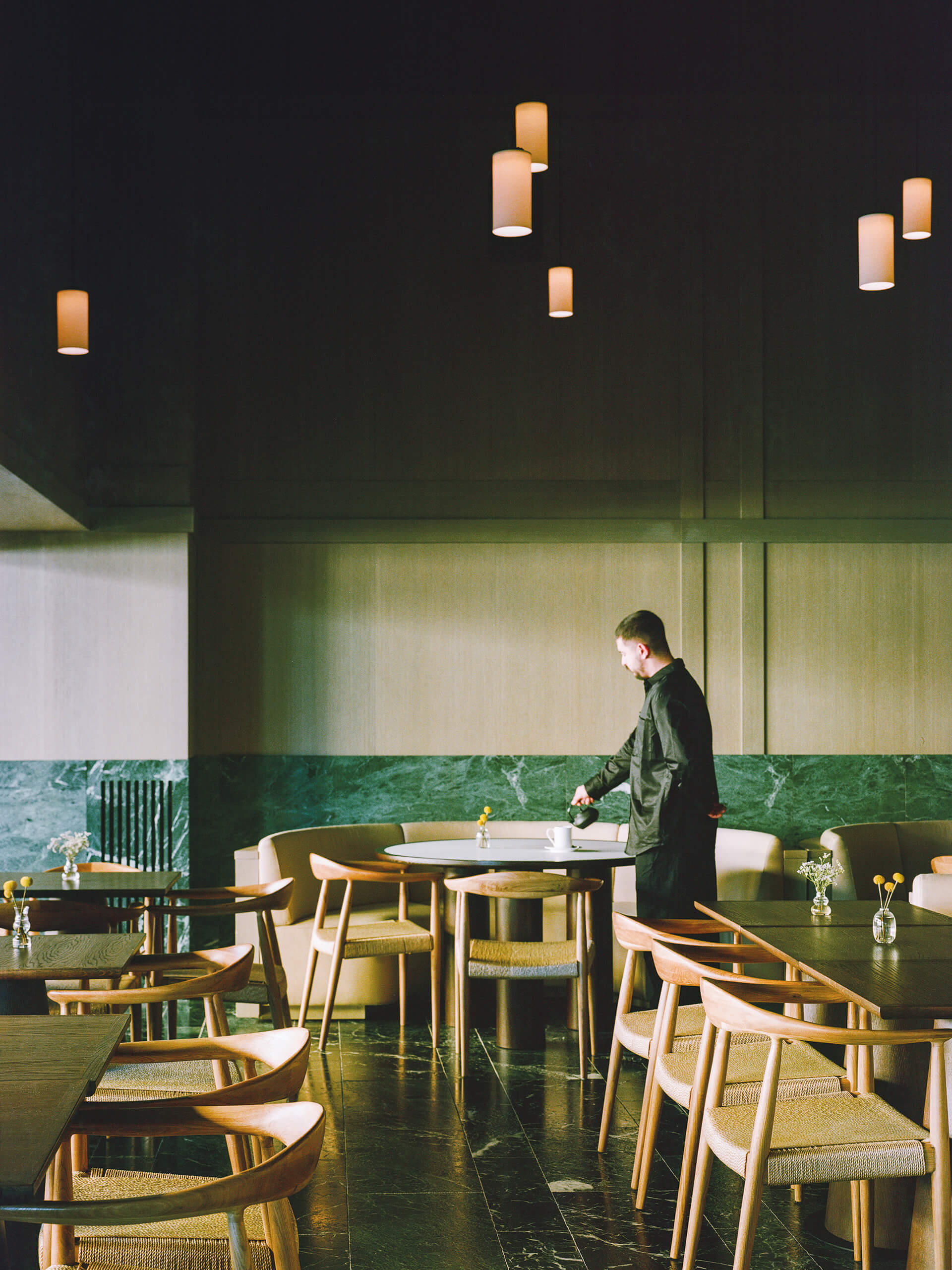
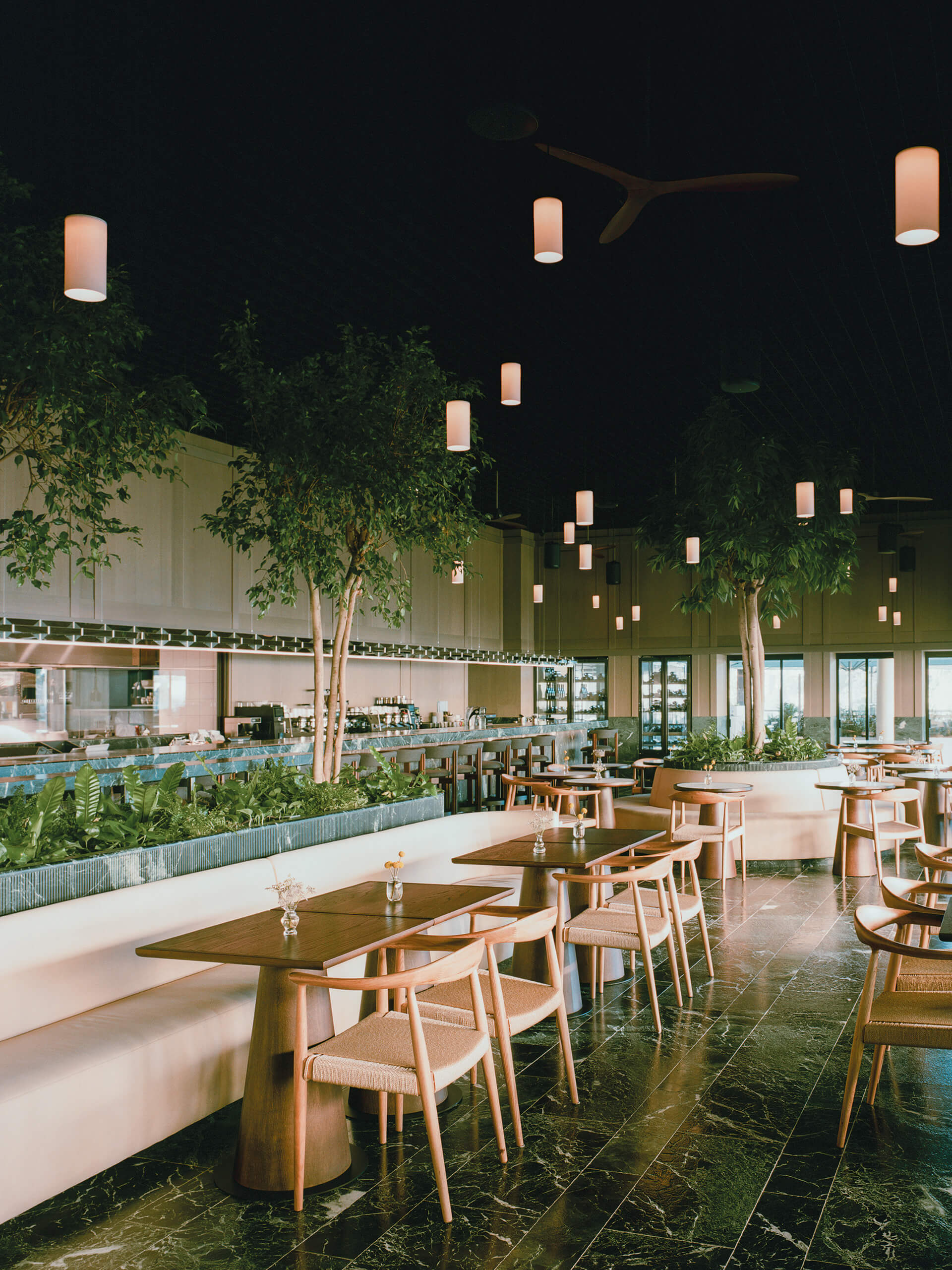
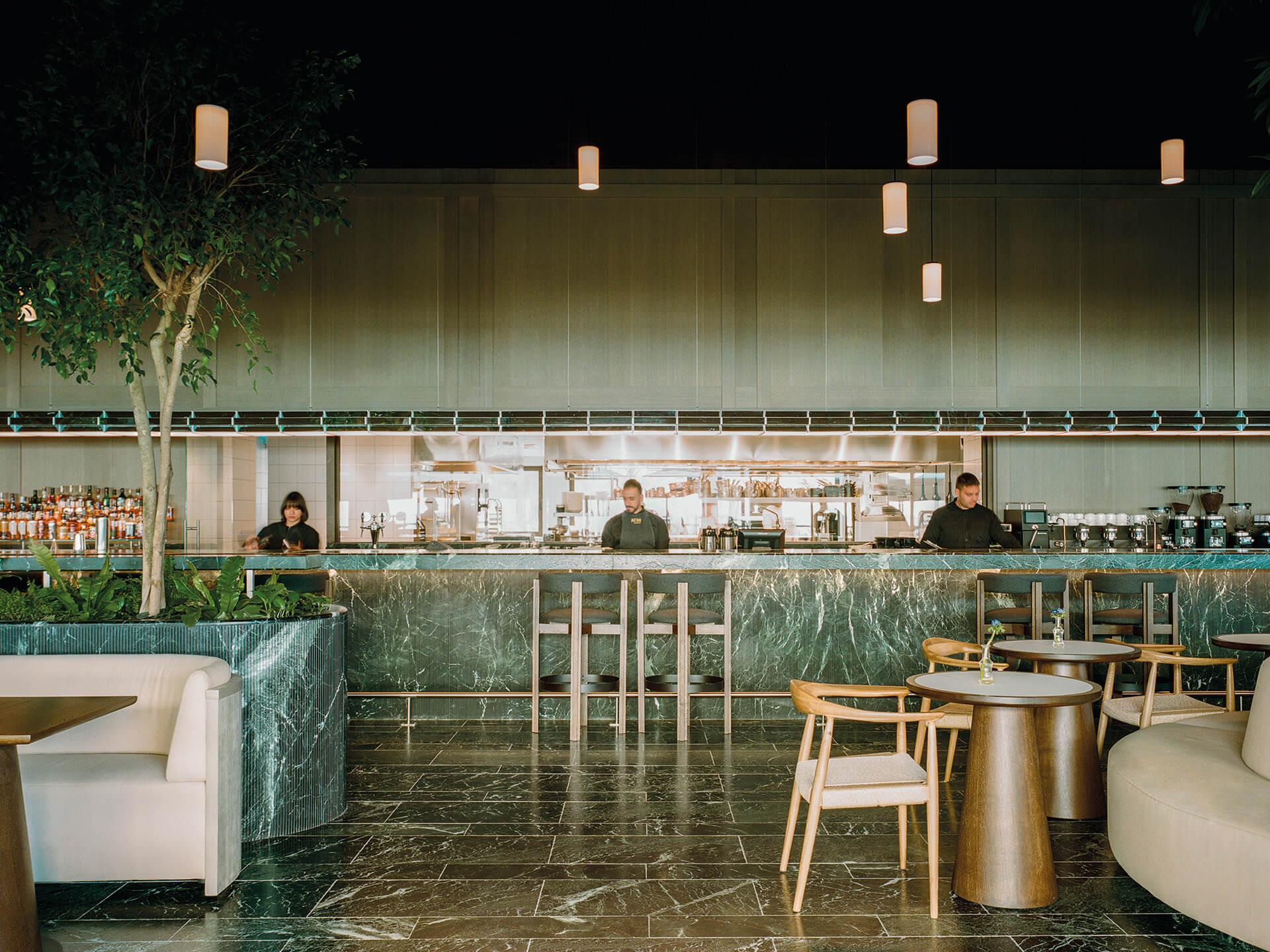
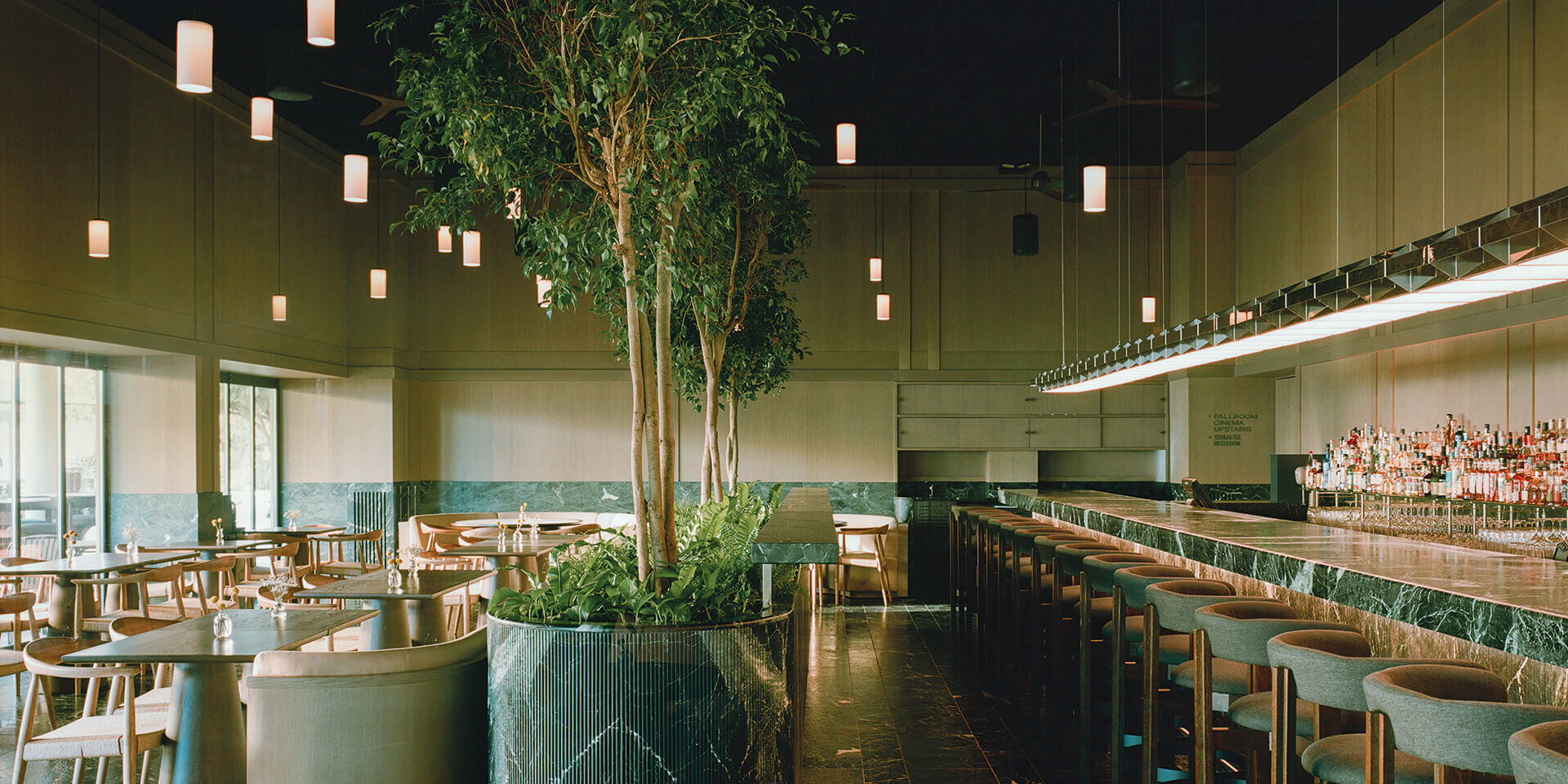
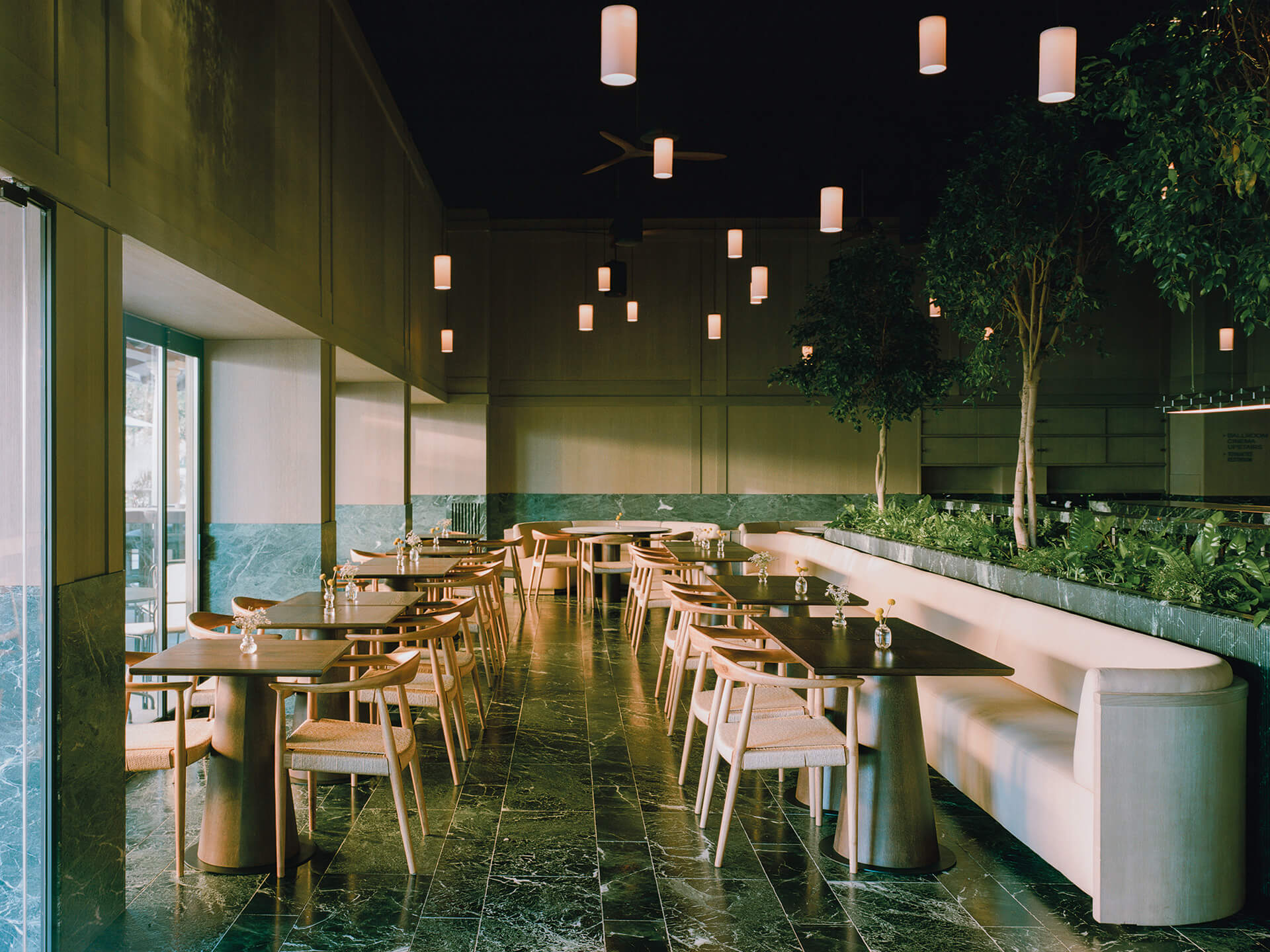
The All-Day Café consists of both indoor and outdoor areas with a total capacity of 320 seats, drawing inspiration from the tradition of large cafés of the 19th century in Greece and Europe. Four key gestures organize and define the character of the project.
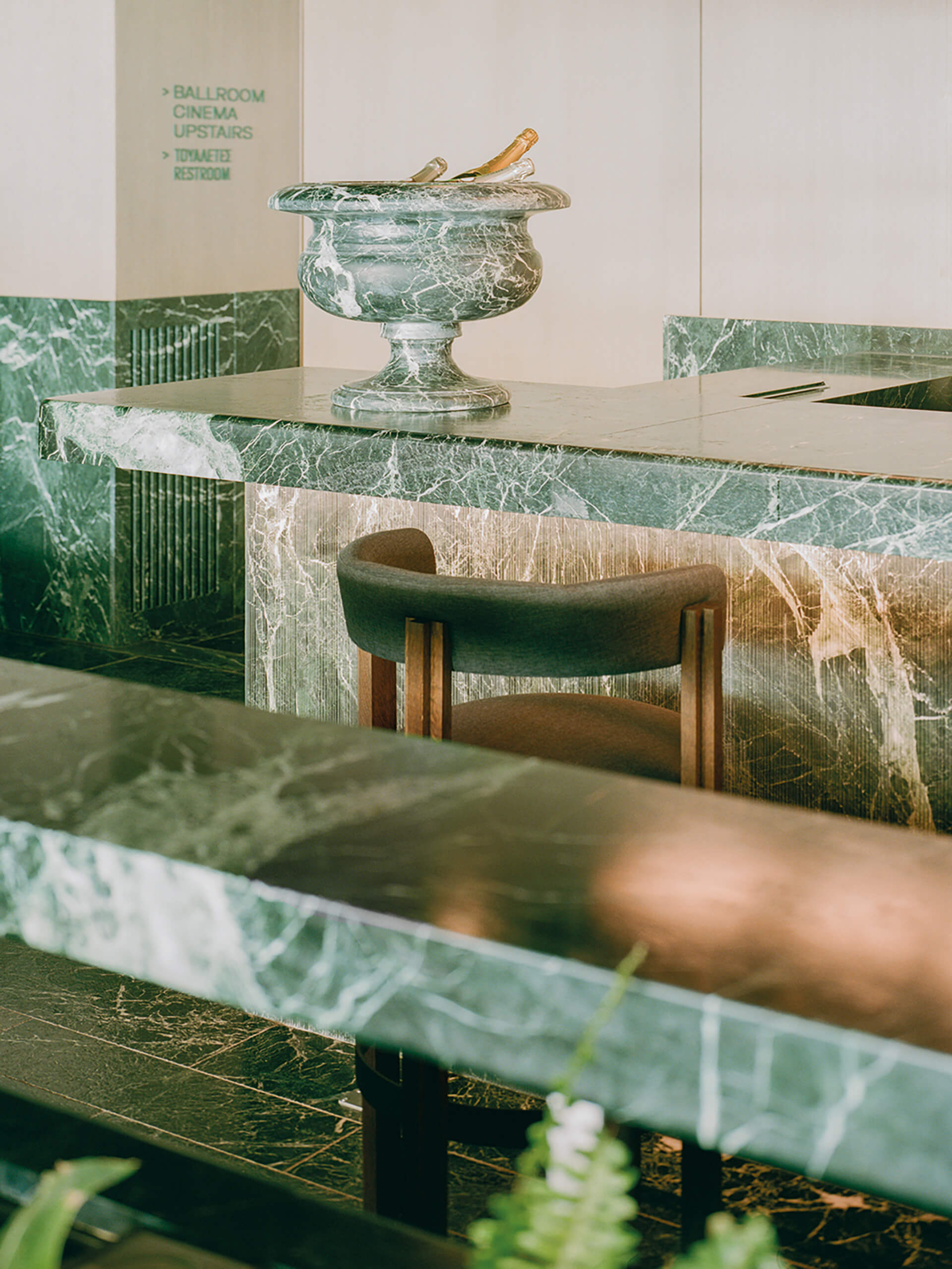
First, the interior floors and the walls up to bar height are clad in locally quarried green Tinos marble, with the marble edges left rough, as if in an outdoor garden. Second, a 20-meter-long marble bar dominates the historic space, incorporating stations for coffee, juices, cocktails, food, and a DJ booth. Third, a large interior window opens onto the central kitchen, creating a lively, theatrical backdrop within the dining area. Similar openings at the rear of the kitchen connect both the café and the kitchen to the garden. Finally, to further strengthen this connection, two large planters with ficus trees are positioned at the center of the hall.
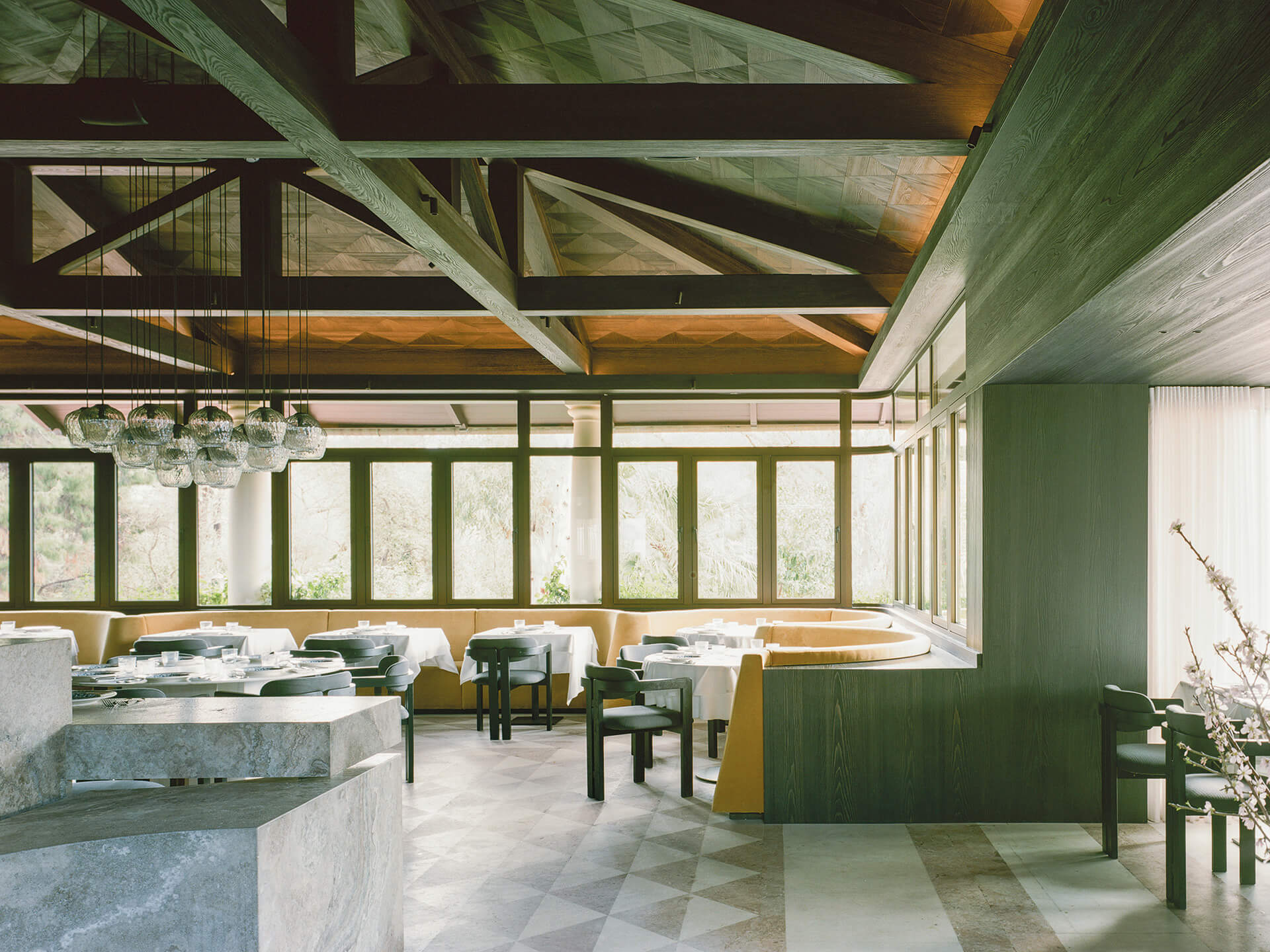
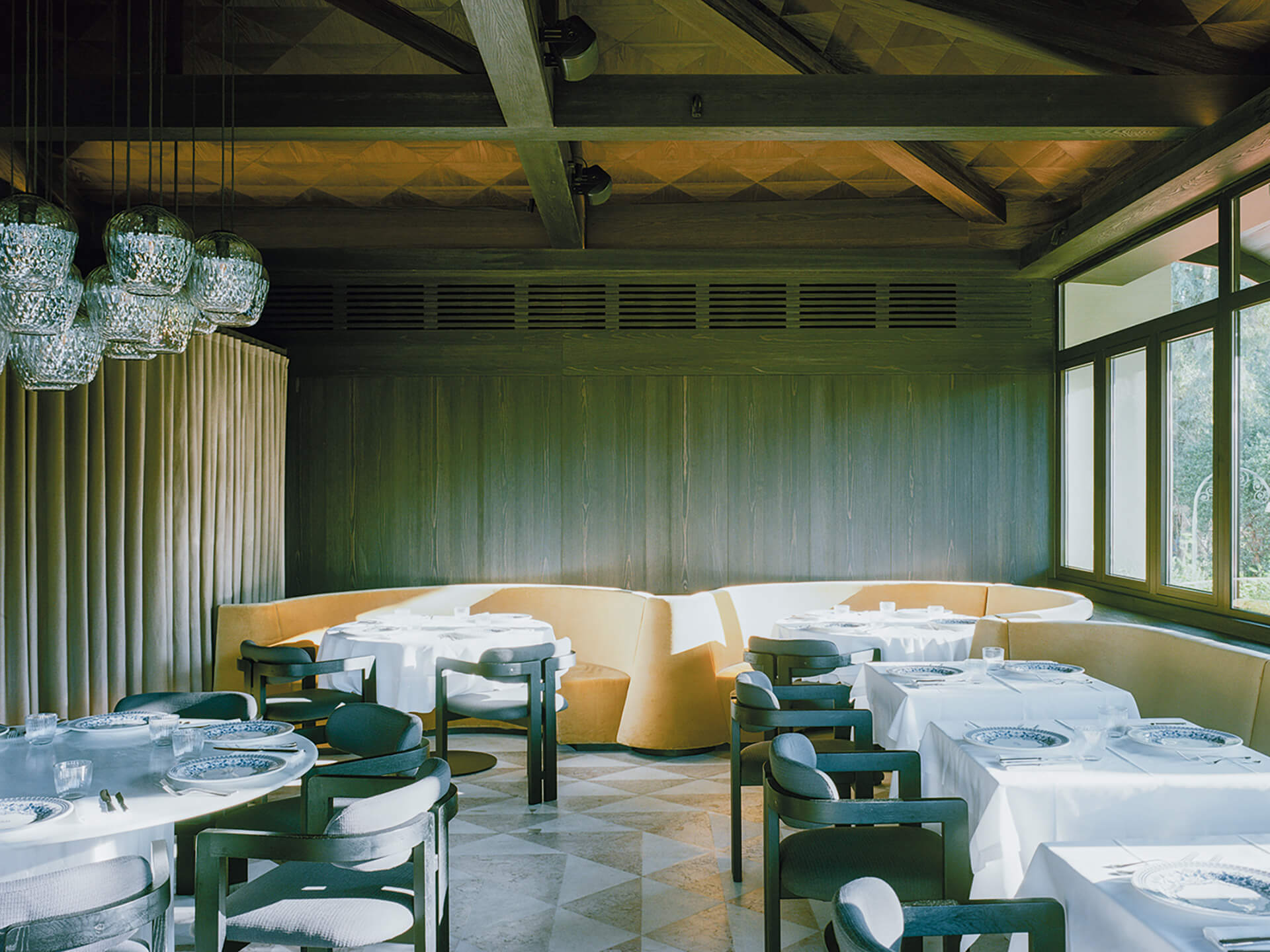
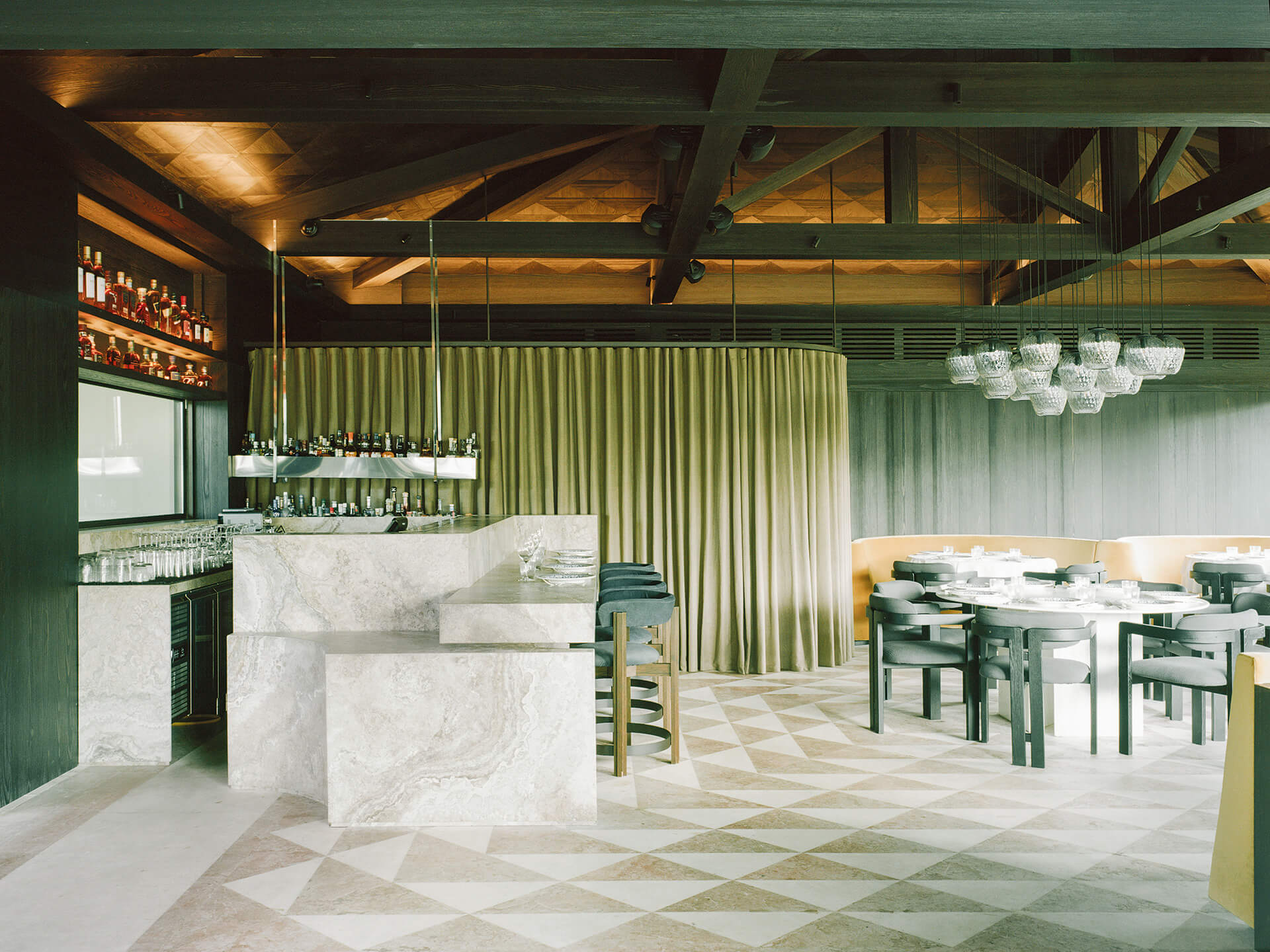
In contrast to the vibrant atmosphere of the All-Day Café, the restaurant is conceived as a sequence of smaller spaces that foster intimacy and understated luxury. Nestled among the foliage of the garden trees, its interior and exterior areas are designed to fully embrace views of the surrounding landscape and the Acropolis. A key intention of the design was to ensure that visitors can fully experience and enjoy the natural beauty around them.
Materials & Furnishings
The existing red-and-white triangular marble floor pattern was revealed and restored, a geometry that is echoed in the contemporary wooden pattern of the ceiling. Along the perimeter, generous booth-style seating was designed, while a sculptural bar establishes a central axis around which the restaurant’s activity revolves. Layers of color and texture, expressed through custom-designed furniture and fabrics, contribute to a rich and welcoming dining atmosphere.
https://ek-mag.com/wp-content/uploads/2025/12/00-cover-18.jpg
https://ek-mag.com/wp-content/uploads/2025/12/01-19.jpg
https://ek-mag.com/wp-content/uploads/2025/12/02-18.jpg
https://ek-mag.com/wp-content/uploads/2025/12/03-19.jpg
https://ek-mag.com/wp-content/uploads/2025/12/04-18.jpg
https://ek-mag.com/wp-content/uploads/2025/12/05-18.jpg
https://ek-mag.com/wp-content/uploads/2025/12/06-16.jpg
https://ek-mag.com/wp-content/uploads/2025/12/07-14.jpg
https://ek-mag.com/wp-content/uploads/2025/12/08-15.jpg
https://ek-mag.com/wp-content/uploads/2025/12/09-15.jpg
https://ek-mag.com/wp-content/uploads/2025/12/10-13.jpg
https://ek-mag.com/wp-content/uploads/2025/12/11-9.jpg
https://ek-mag.com/wp-content/uploads/2025/12/12-7-e1765986941240.jpg
Related Posts