New National Gallery Building in Athens
Architecture:
g-p architects, DV Architects, Parmenidis-Longuépée-Mari Architects
Photography:
ek Issue:

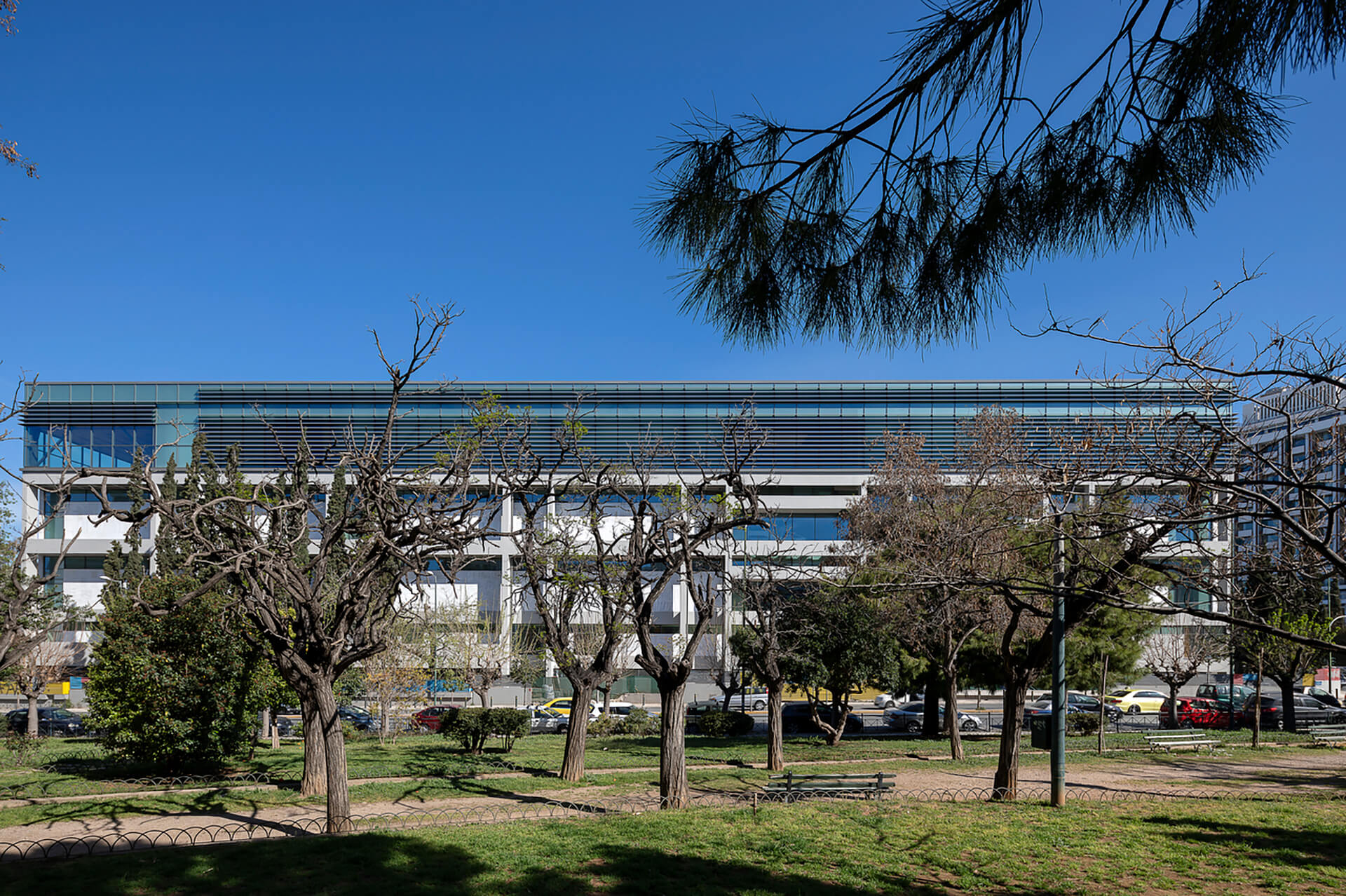
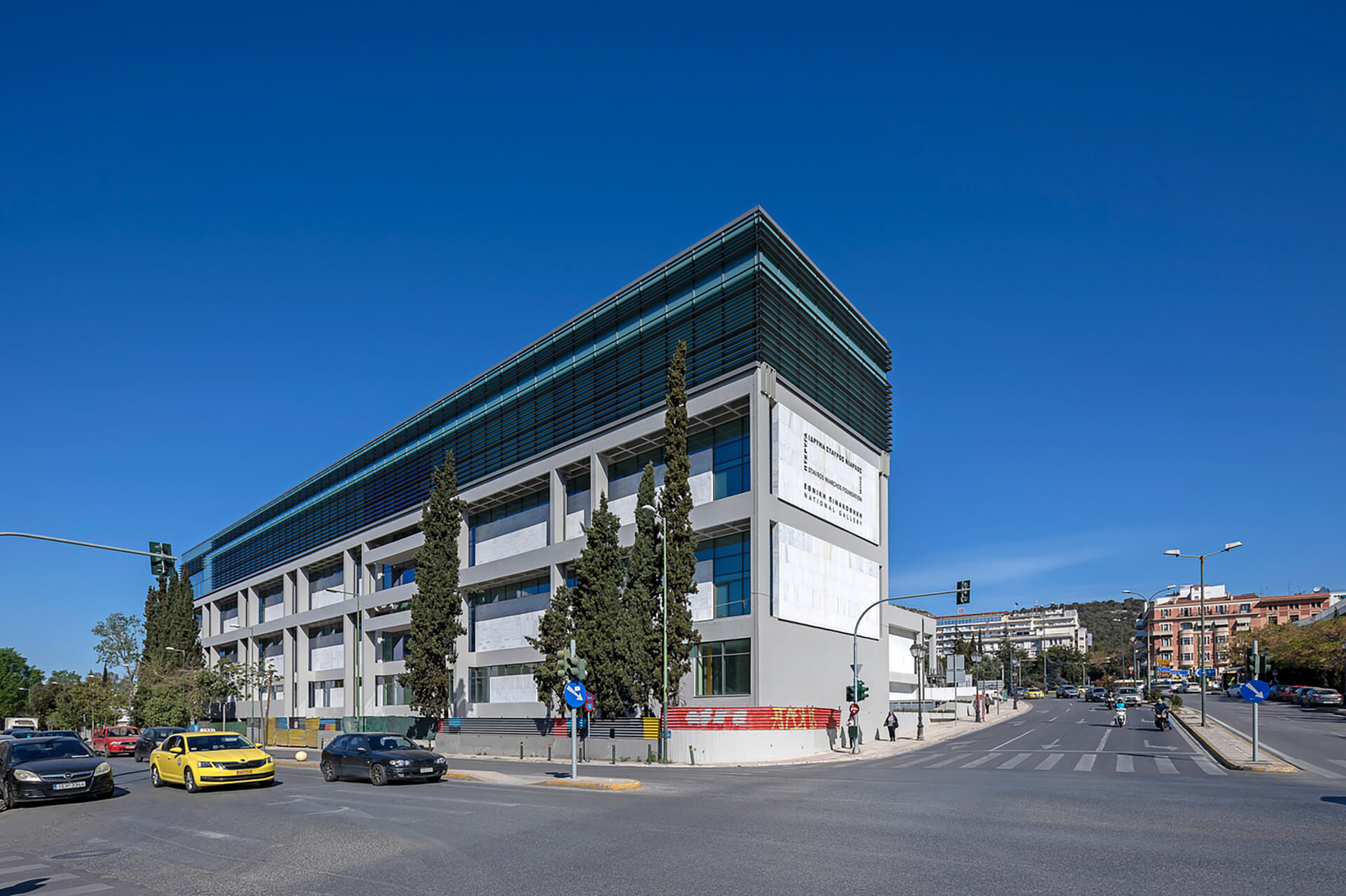
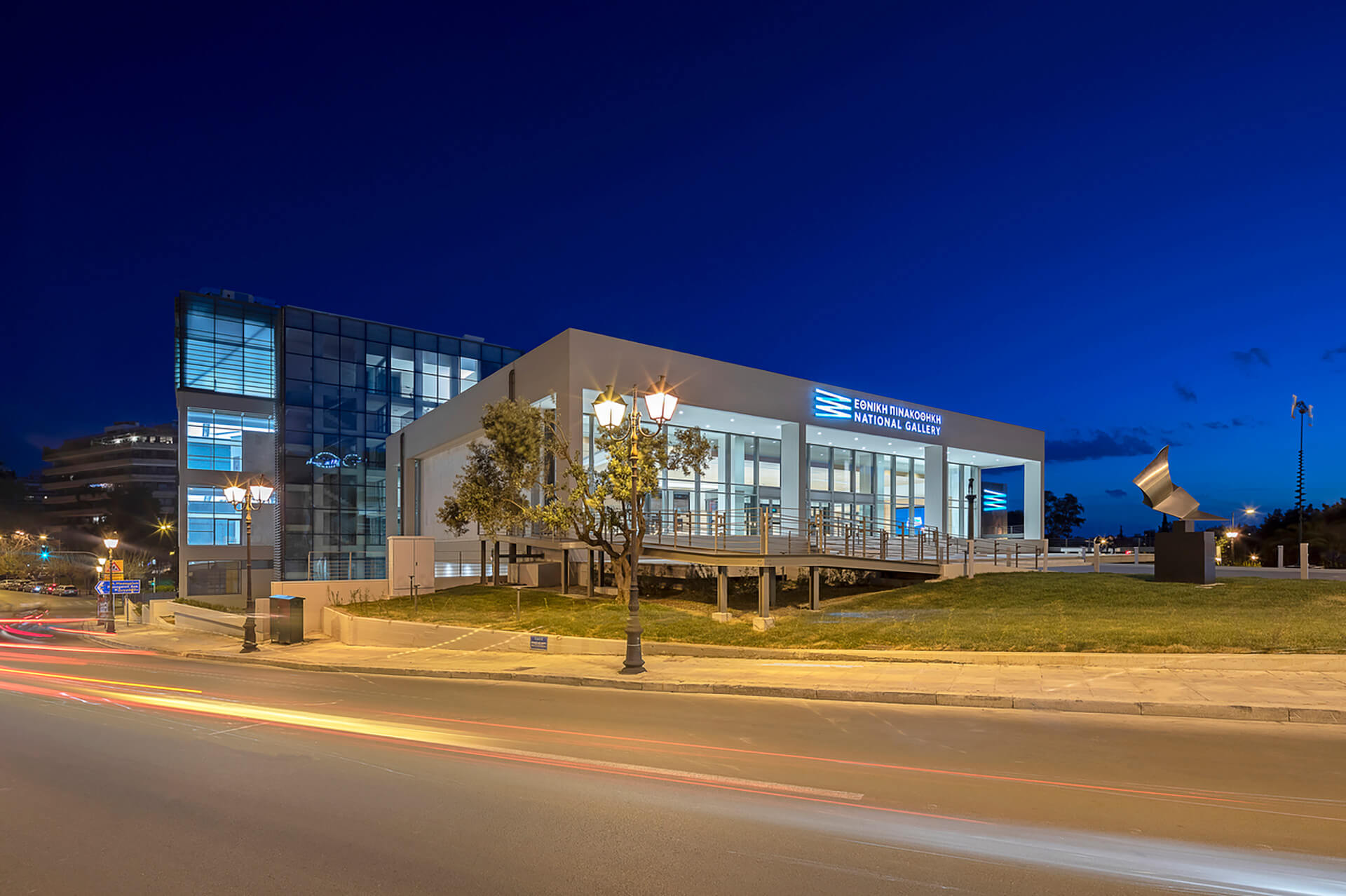
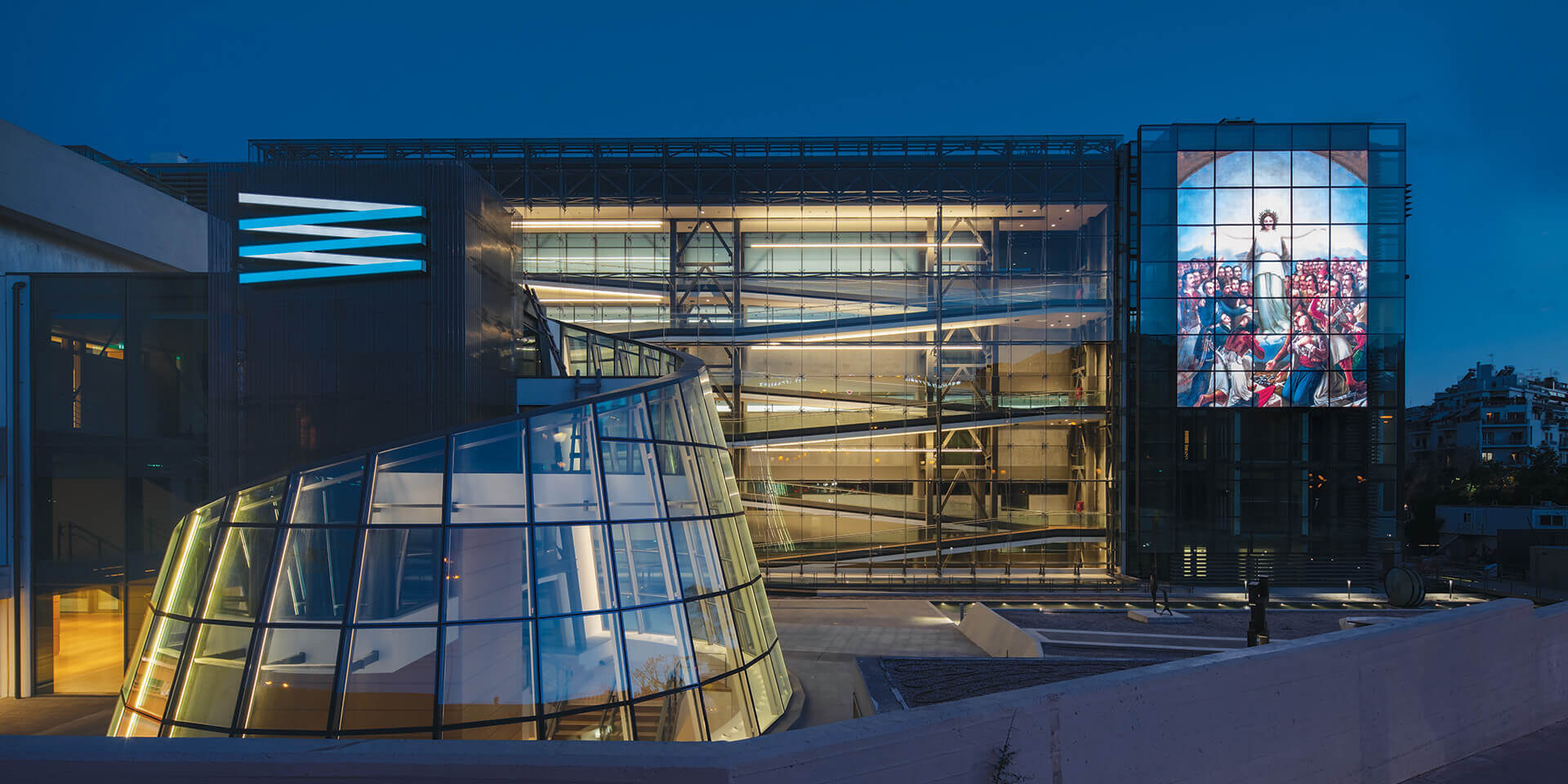
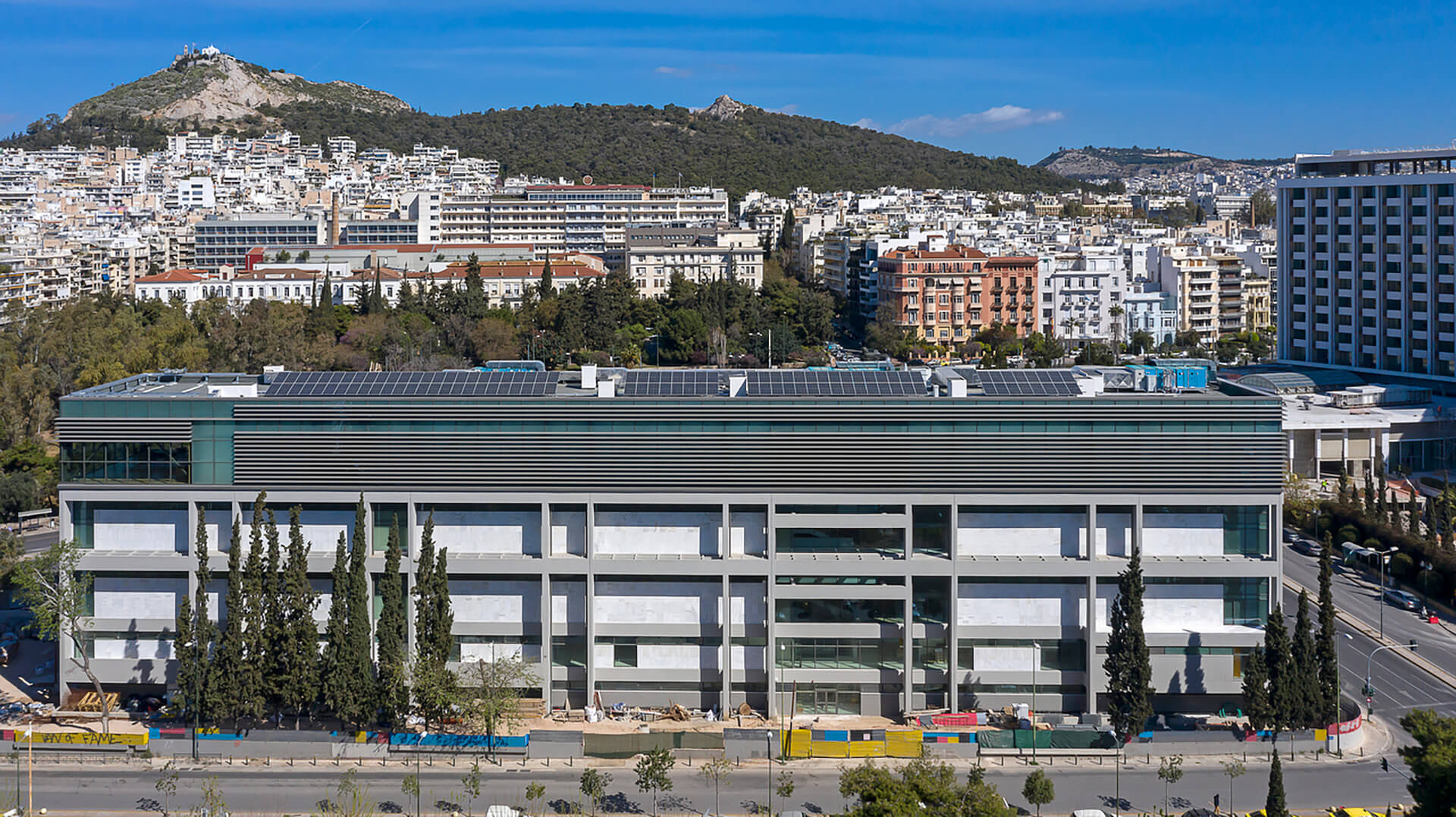
The new National Gallery building, now incorporating a major expansion and museological upgrade of its exhibition spaces, constitutes an important landmark in the contemporary urban landscape of Athens: to the pre-existing building of 9,720 m², which is listed as a modern monument, an additional 11,040 m² was added, more than doubling the functional spaces to a total of 20,760 m².
Design Philosophy
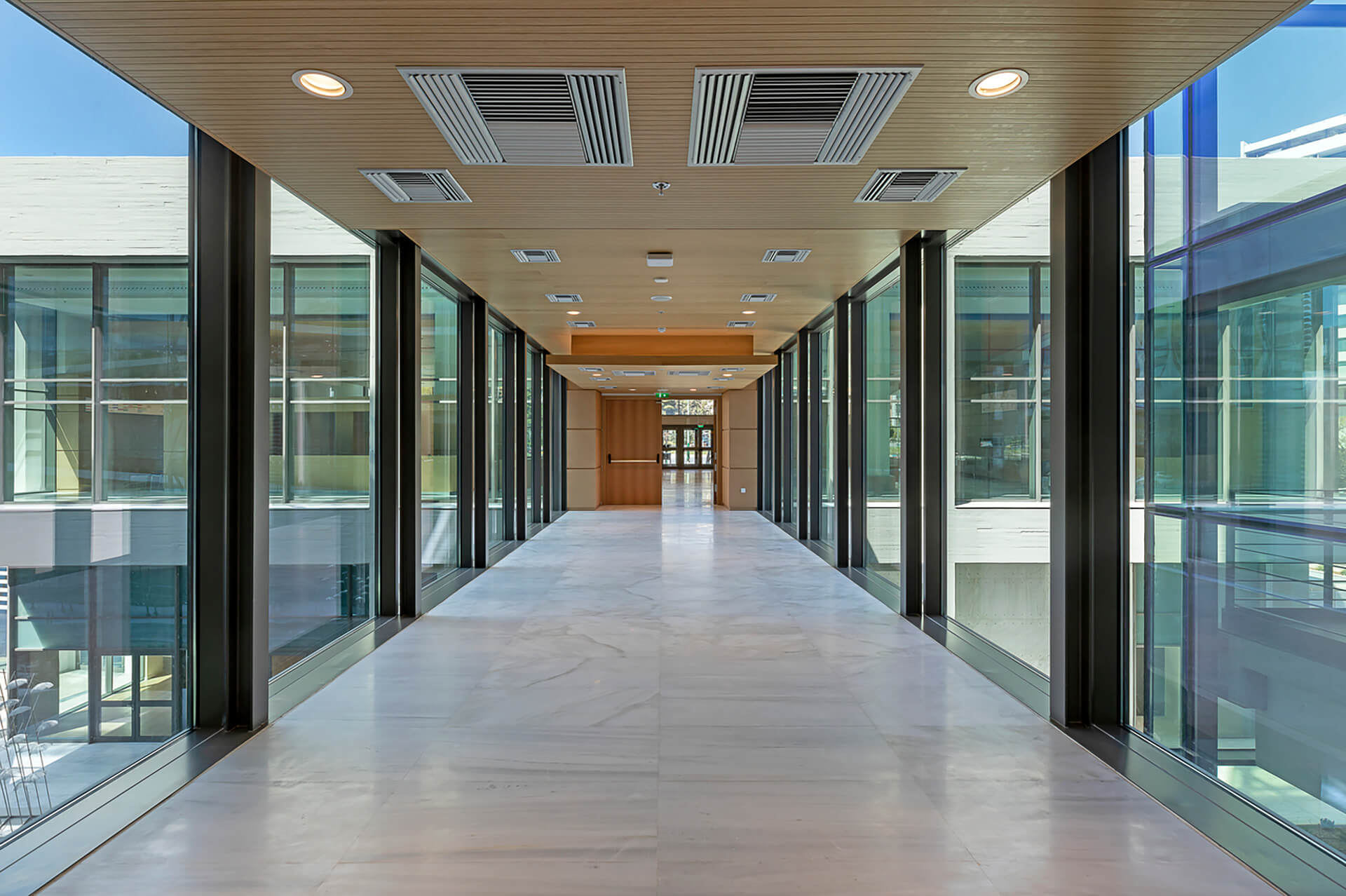
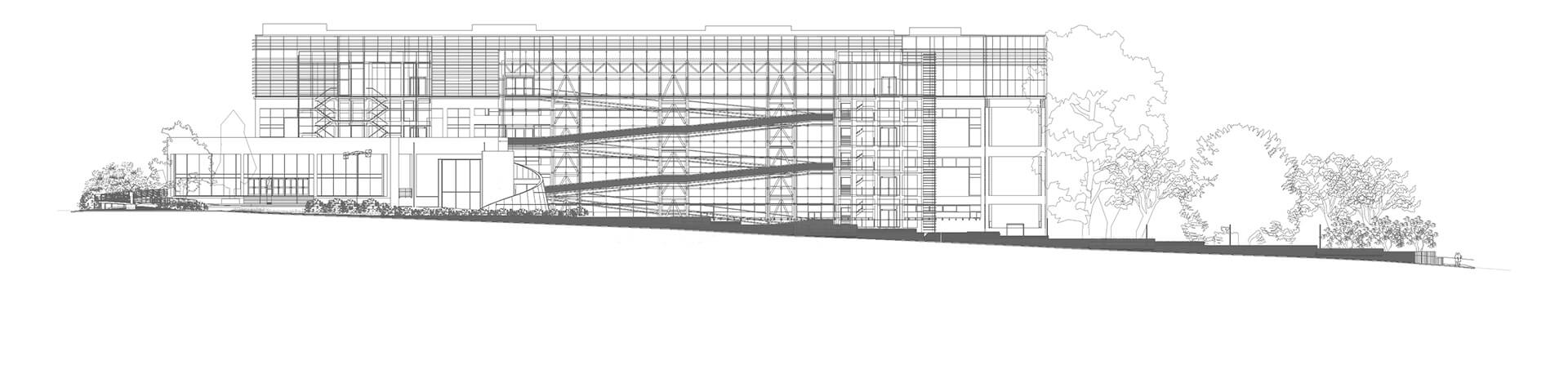
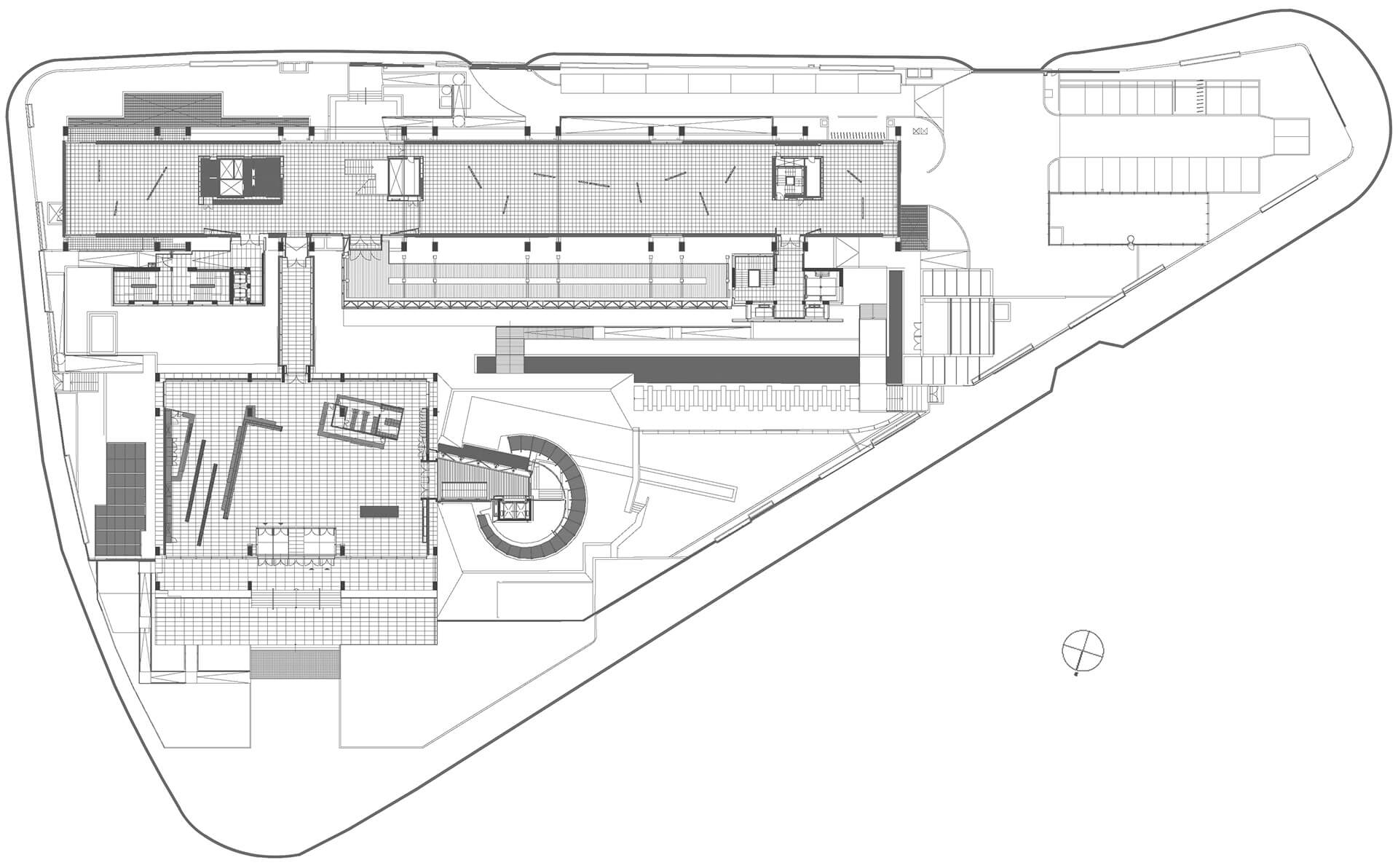
Through the new proposal, additions were implemented between the two units of the historic building (“Building A” facing Vasilissis Sofias Avenue and “Building B” facing Michalakopoulou Street), at the point where they are connected by a bridge above the location of the Ilissos riverbed, while underground spaces (“Building C”) were also opened where the groundwater level permits. The interior of the complex was completely redesigned.
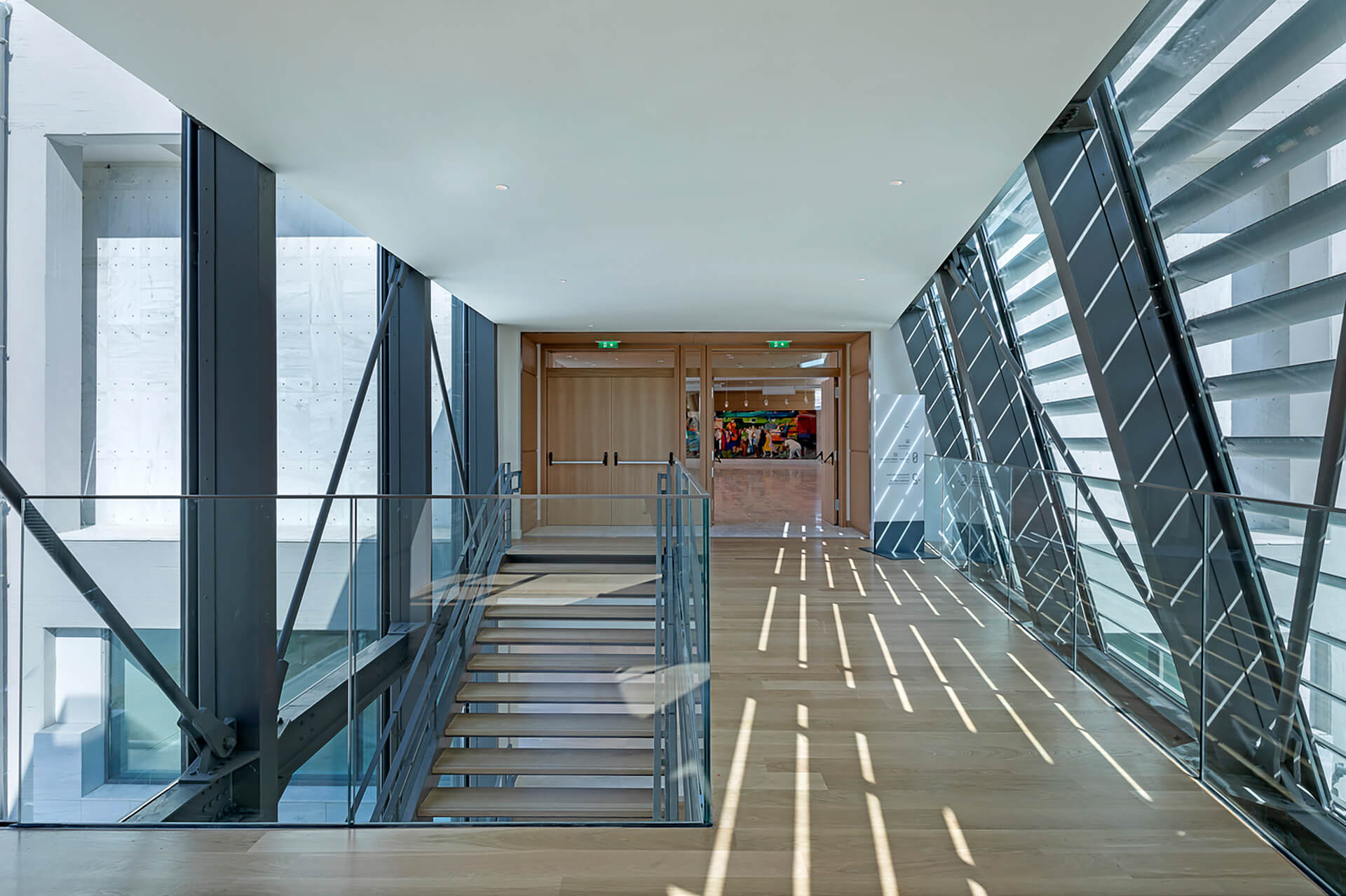
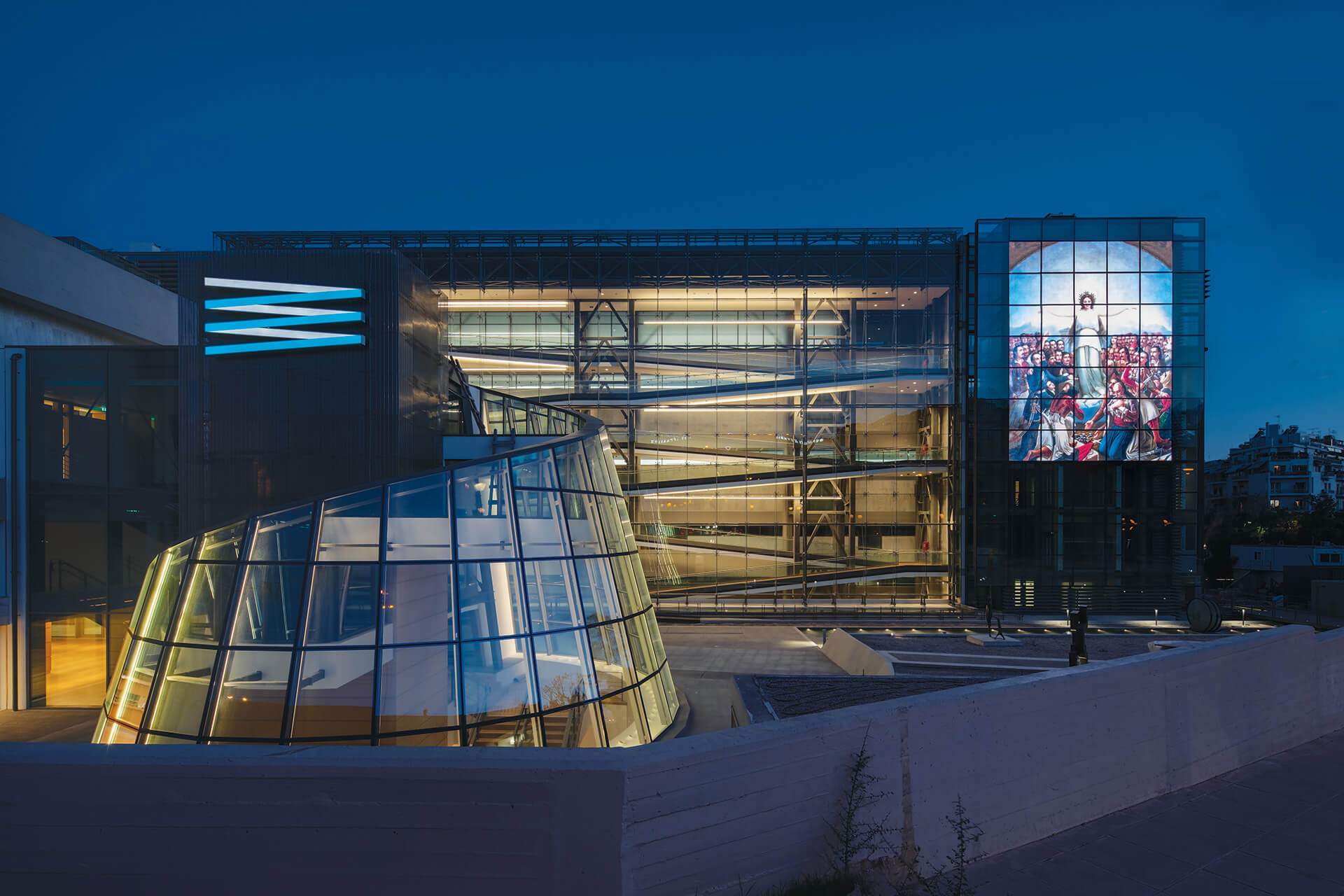
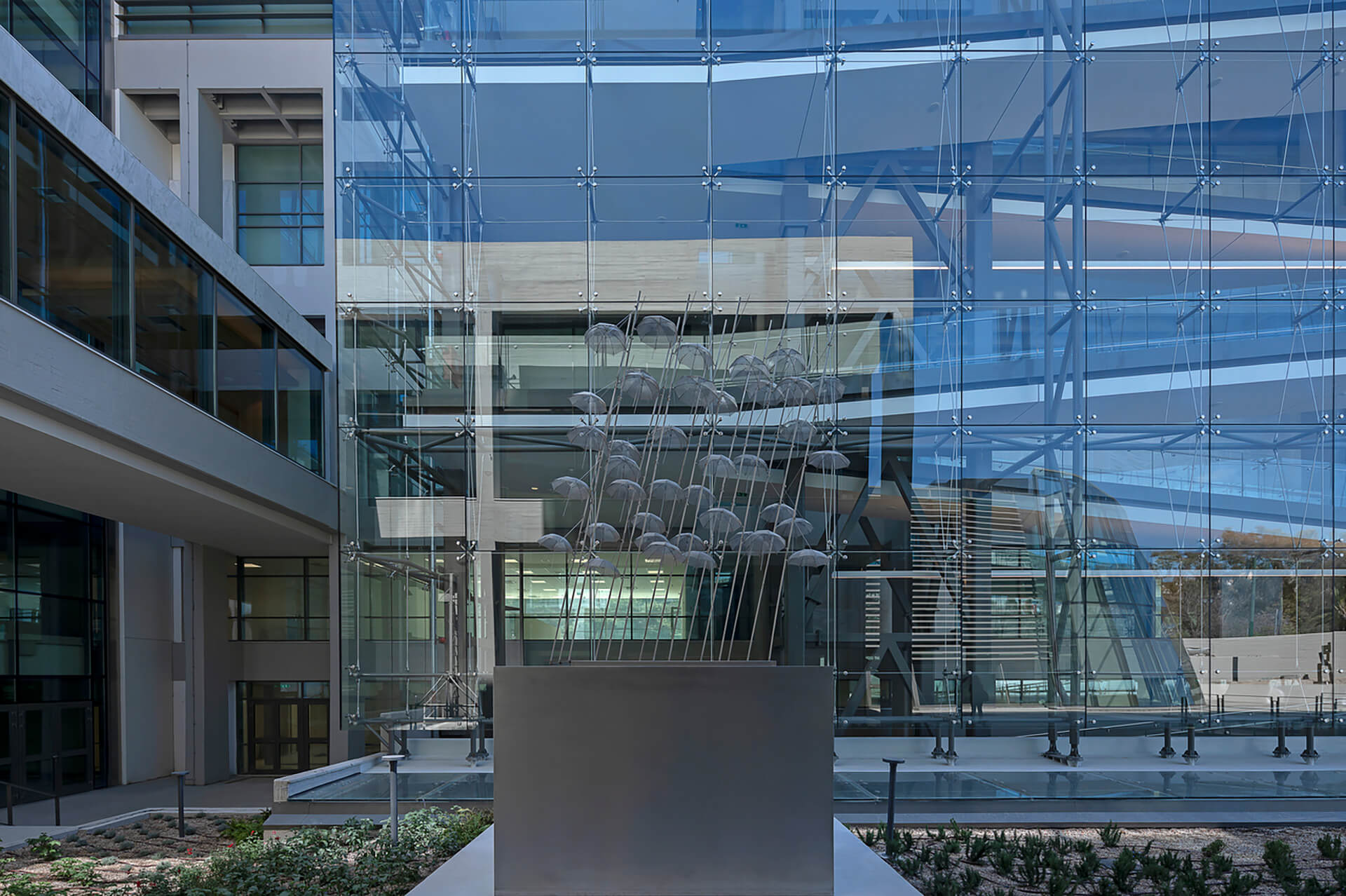
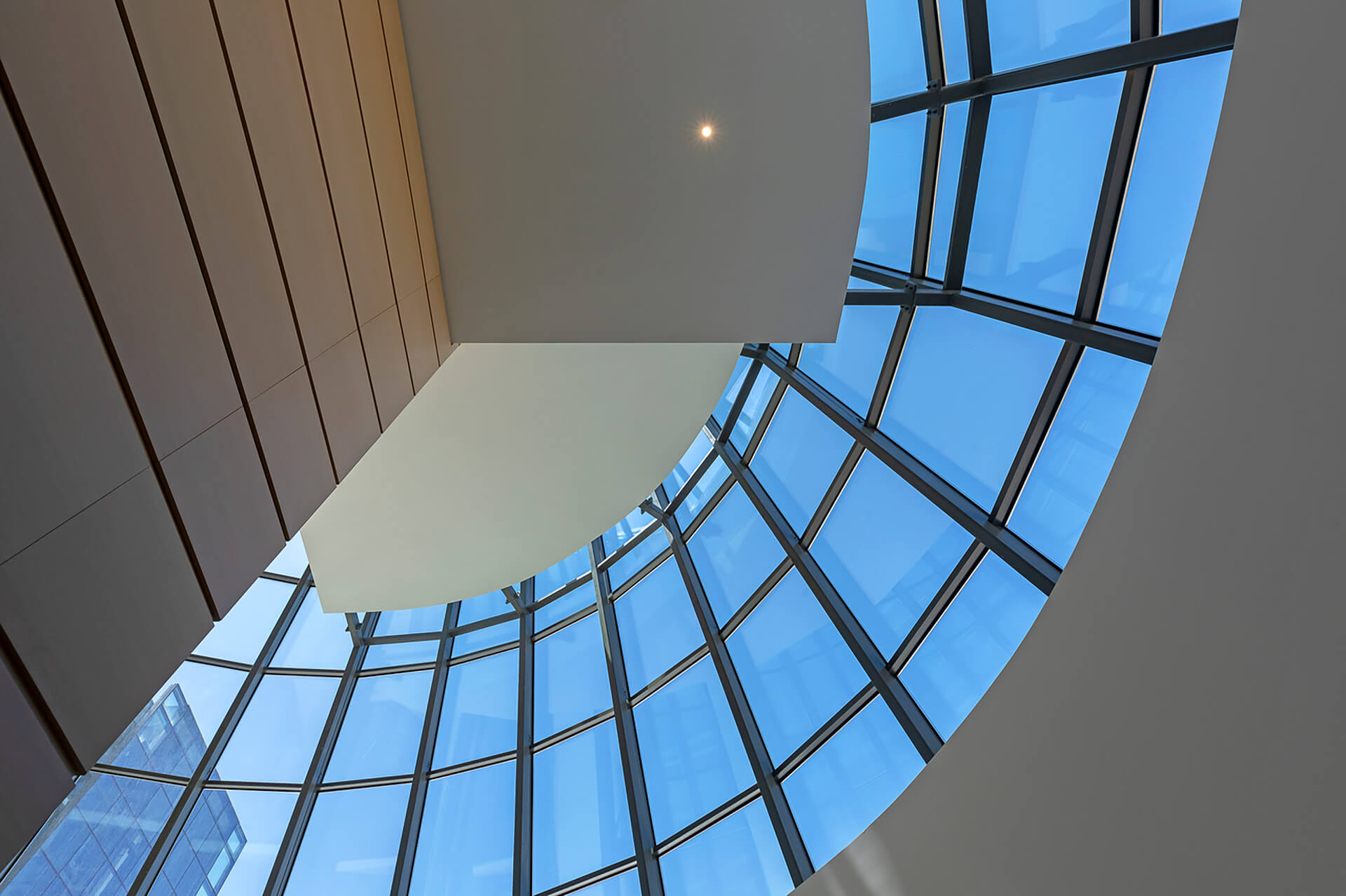
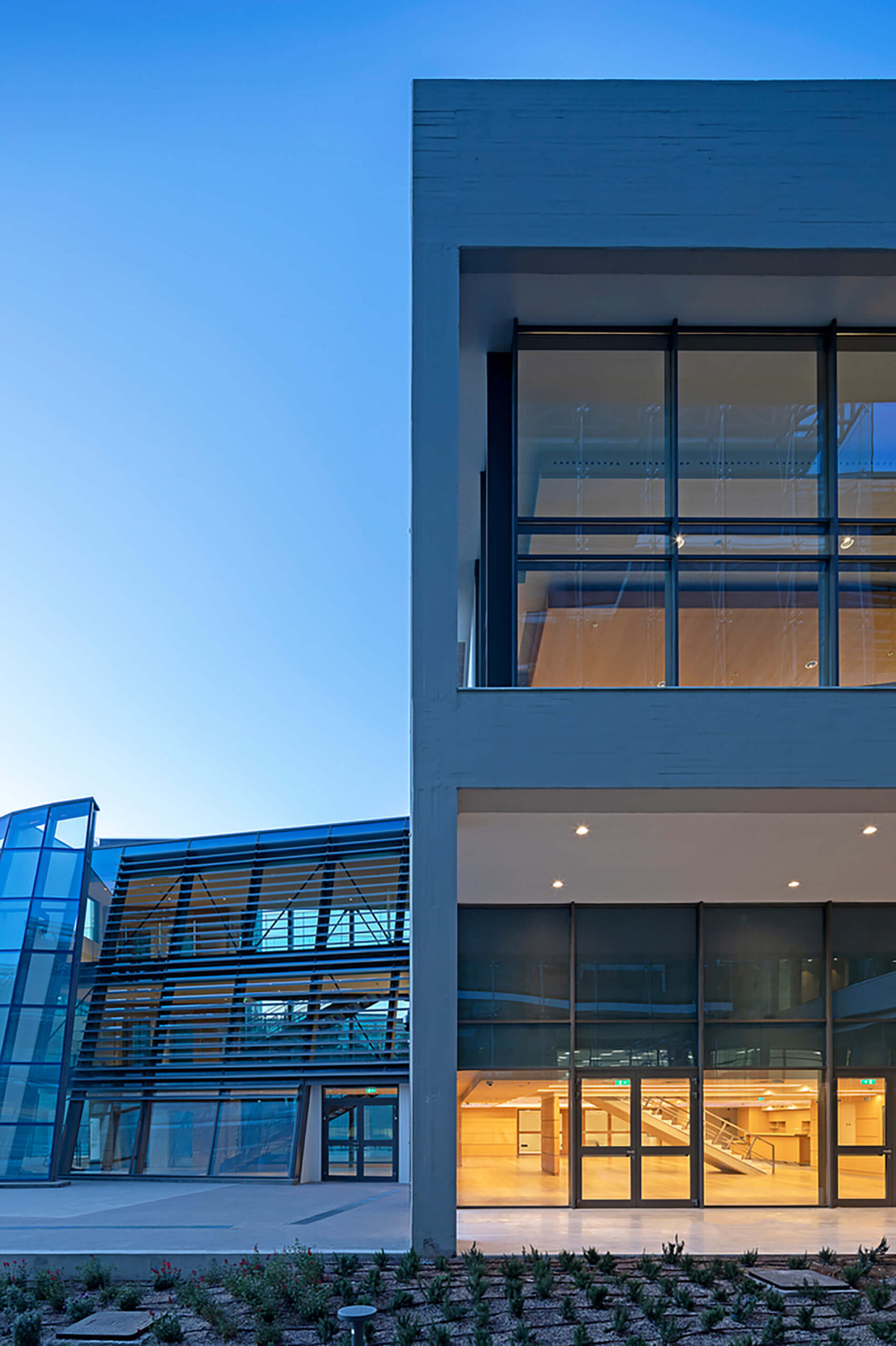
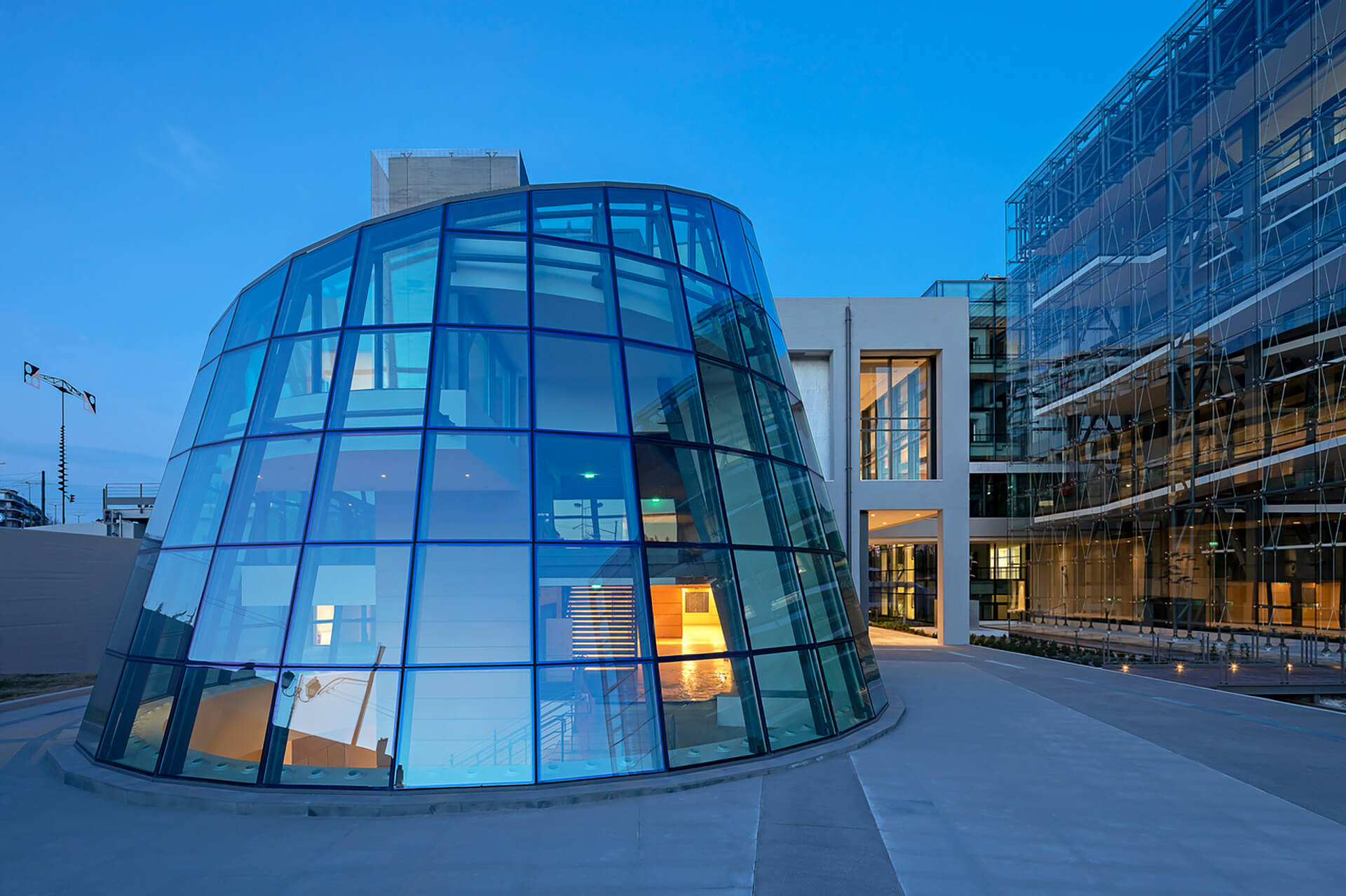
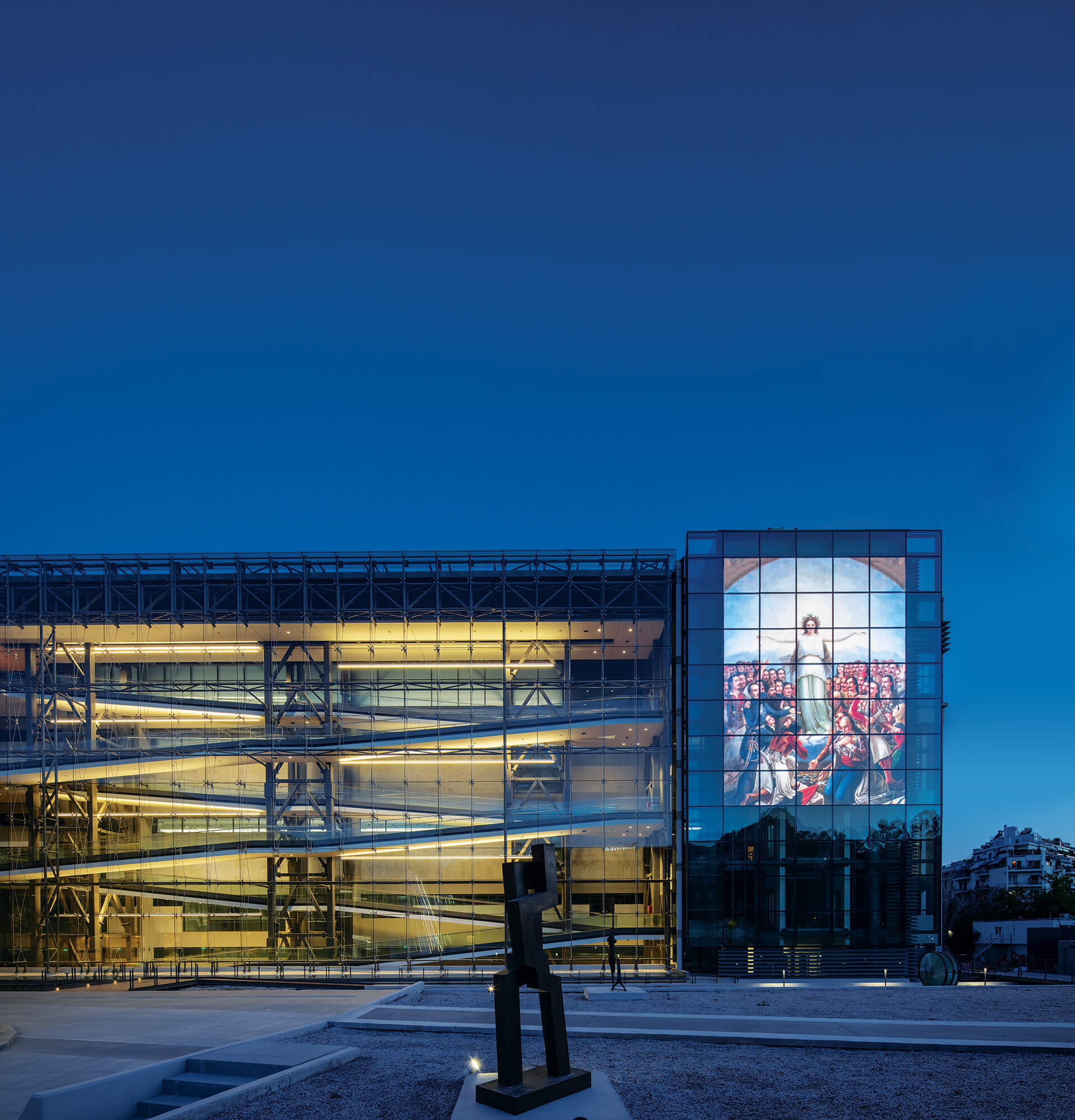
The new building volumes, characterized by large glass surfaces, clearly stand apart from the architecture of the preserved building, with its exposed reinforced concrete structure and white marble infill elements. On the Michalakopoulou Street side, the new National Gallery gained an additional floor, while in the void between the two old wings an additional depth of three levels was added.
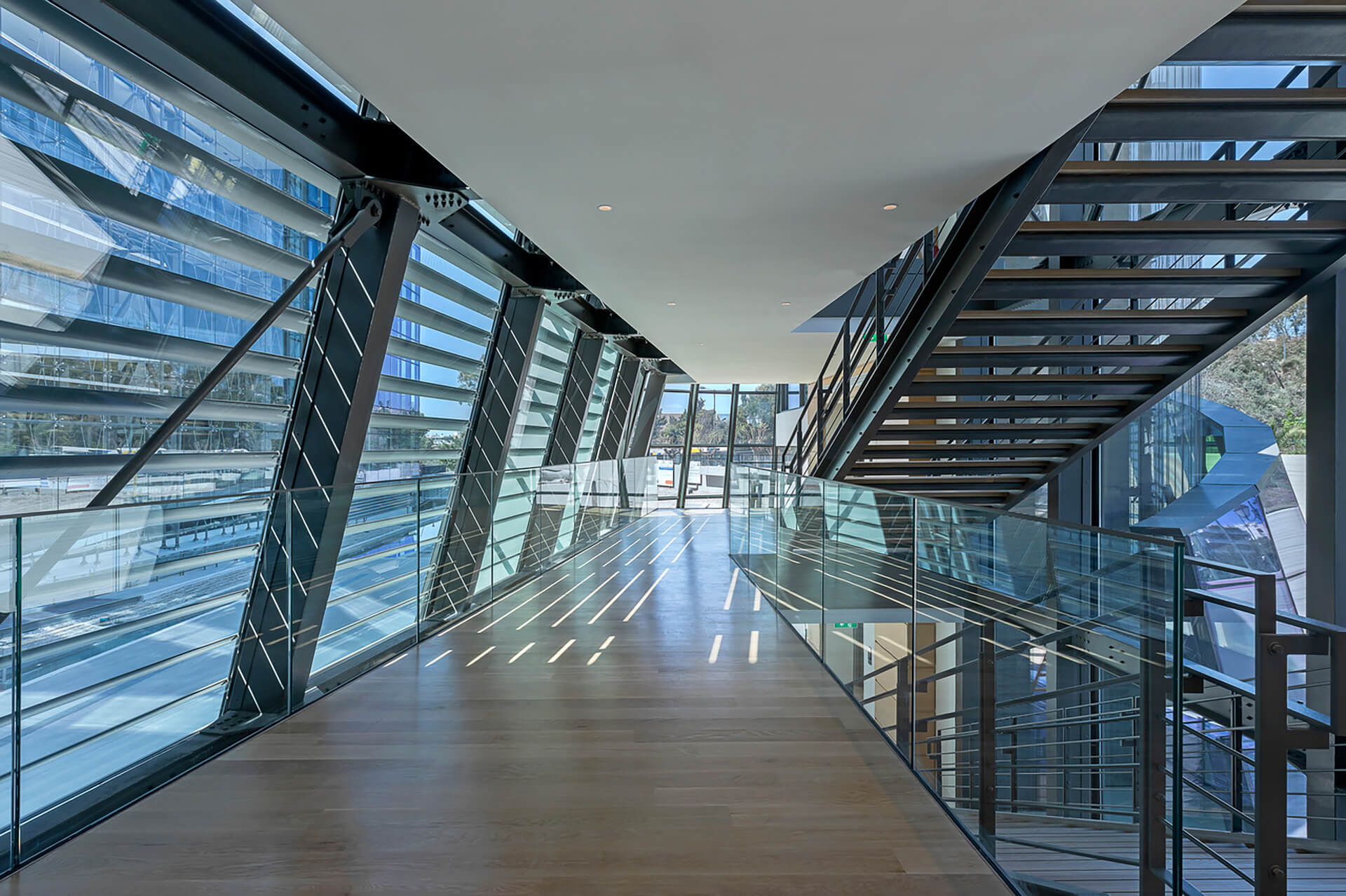
In the garden created south of the historic main entrance, the Gallery acquires an independent entrance, while the configuration of the surrounding landscape recalls the presence of the Ilissos river, through the creation of a water channel and the extension of greenery. The museum also features visitor circulation ramps with views toward the city skyline, elevators and staircases, full accessibility for people with disabilities, and modern security systems.
Spatial Organization
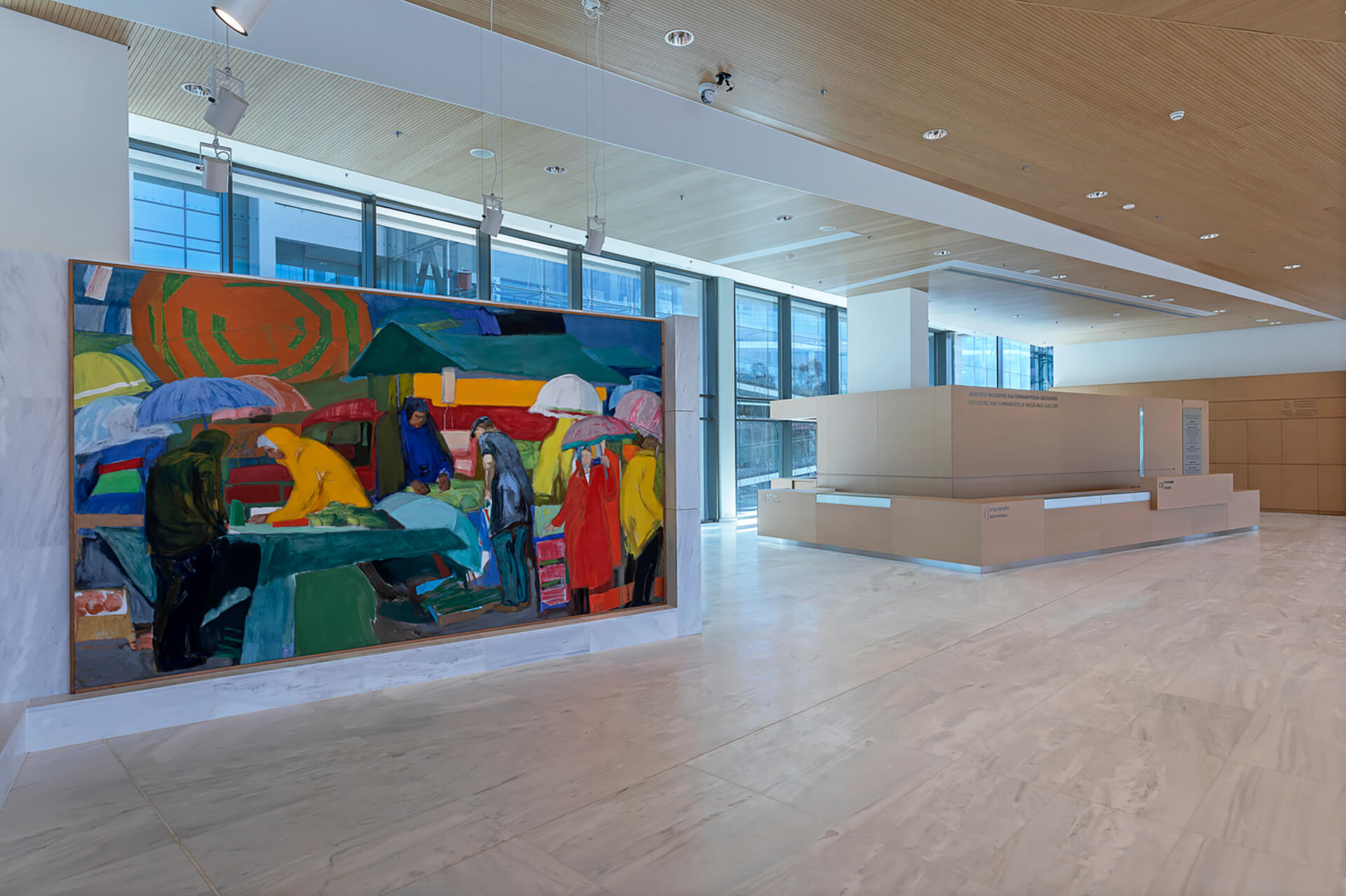
The entrance to the building complex takes place through a multifunctional space of 910 m², where in addition to control, information and visitor services, multiple digital information systems provide access to content about the building, the collections and the activities of the Gallery.
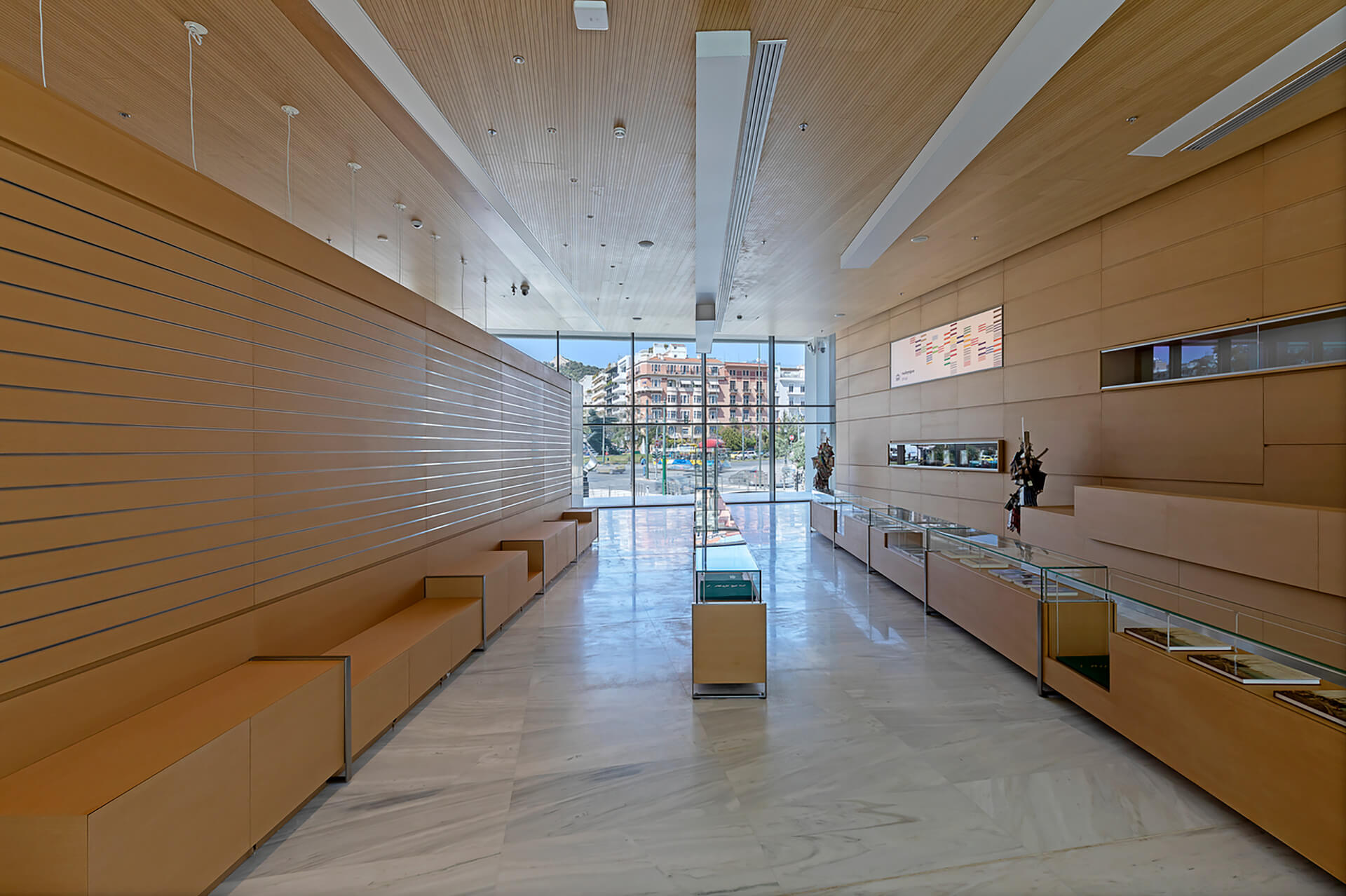
The main Gallery shop is also located there, equipped with versatile display cases. From the reception area visitors can move either towards the exhibition spaces of the permanent collections or towards the temporary exhibition areas, as well as to the 350-seat amphitheater or the café.
The interior architecture and the museographic study shaped the spaces accessible along the visitor routes. The museological core of the National Gallery consists of the permanent exhibition halls on the first and second floors of Building B, where the permanent collection of Greek painting and printmaking of the 19th and 20th centuries is presented, the permanent exhibition hall on the second basement level of Building C, where the permanent collection of Western European painting and printmaking is displayed, as well as the halls for rotating exhibitions on the third floor of Building B, where the continuously expanding collections of Contemporary Art (20th and 21st centuries) are presented through a rotating program.
In the permanent exhibition halls, spatial organization is mainly achieved through the placement of fixed exhibition panels that extend across the full height of the space, contributing to the narrative continuity of the exhibits. Through the use of these panels, the path of the gaze is designed through the revelation and concealment of spatial depth, while directions and visual perspectives are created, encouraging multiple associations and readings of the exhibits and forming central configurations as thematic focal points.
Museography and Exhibition Strategy
In these halls, suspended ceilings with general and accent lighting have been installed, incorporating a translucent elastic sound-absorbing membrane, while the exhibition walls and panels with a final fiber gypsum board surface allow for the hanging of artworks.
The exhibition panels are supported by the floor and the structure of the translucent ceiling, allowing cable routing inside them from the ceiling wiring system. Similarly, cable routes along the perimeter walls are placed at their upper termination. The exhibition space, beyond the exhibition surfaces, is equipped with display cases that enrich the exhibited material with drawings, watercolors and prints, while the artwork security systems allow the identification of each work individually and the immediate monitoring of any change in its condition.
In the halls for rotating exhibitions, in order to address special requirements, a suspended ceiling system was implemented that ensures uniform general lighting, isotropic distribution of accent lighting for the exhibits, as well as the possibility of supporting exhibition panels and hanging exhibits or projection systems. In addition to the permanent collection exhibition halls, the second basement of Building C hosts the temporary exhibition hall, where the suspended ceiling–lighting–display system used in the rotating exhibitions of the permanent collection has been extended in order to provide a suitable supporting background.
At the junctions between exhibition halls and the horizontal and vertical circulation areas of the building, circulation, signage and information nodes are defined and marked by wood cladding on the walls and ceilings. The visitor route is structured as a sequence of exhibition halls and circulation nodes where visitors can orient themselves and redesign their route, obtain digital information about the content of each exhibition hall and view additional exhibition material related to the content of the halls in specially designed display cases.
Overall, the extensions and reconstructions include new exhibition spaces of 2,230 m², modern art storage facilities of 1,645 m² and a space dedicated to educational programs. The new museum is equipped with state-of-the-art conservation laboratories, administrative offices, as well as a library that develops across two floors. It also includes two café-restaurants, with the second, located on the top level of the building, offering panoramic views toward the Acropolis, Mount Lycabettus and the Saronic Gulf.
In the new building, 1,000 works can be displayed as part of the permanent collection, whereas previously the old building could accommodate no more than 400 works. The new temporary exhibition hall approaches 2,000 m², while the storage spaces can house up to 10,000 artworks.