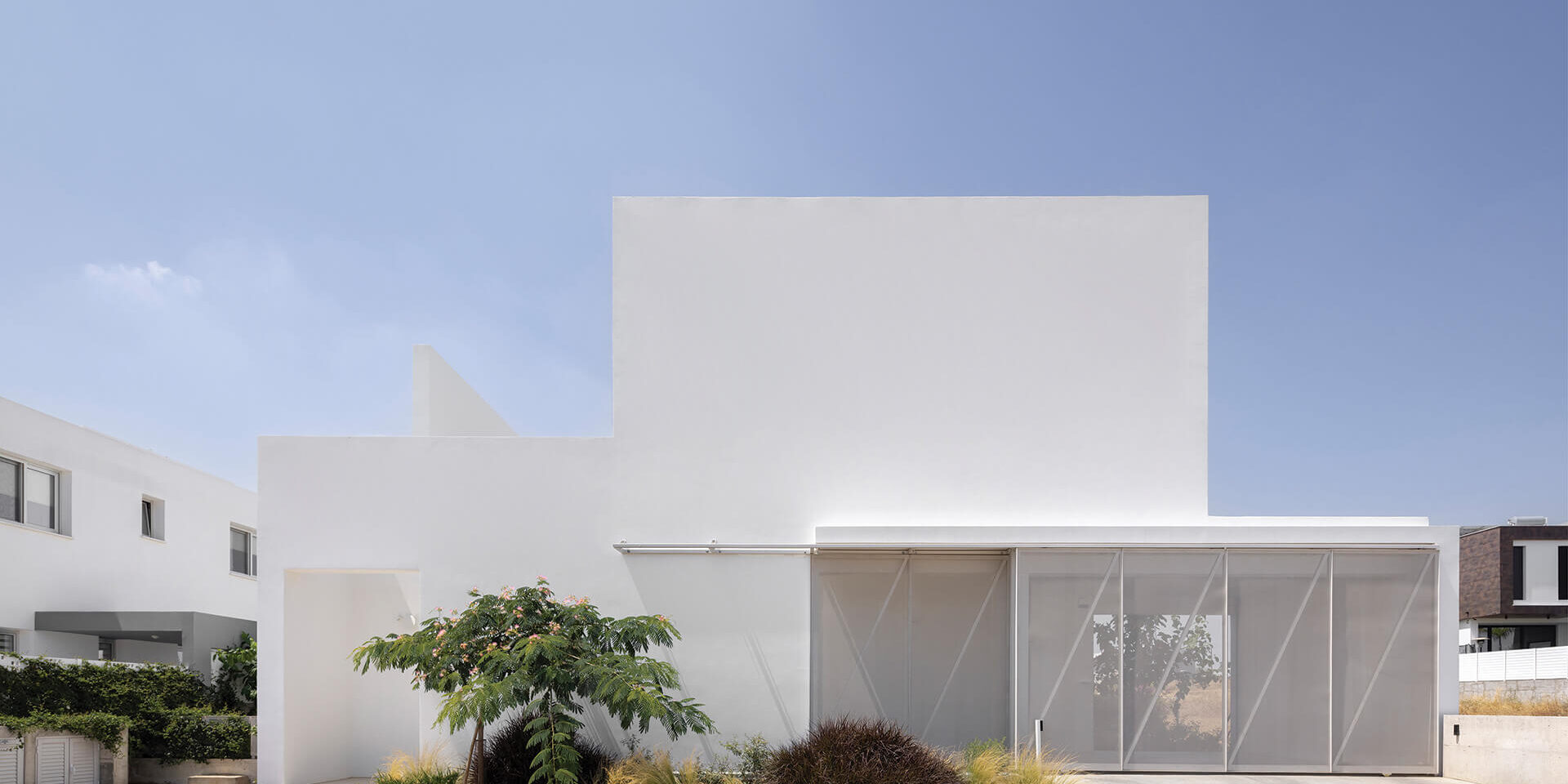
White enclosure
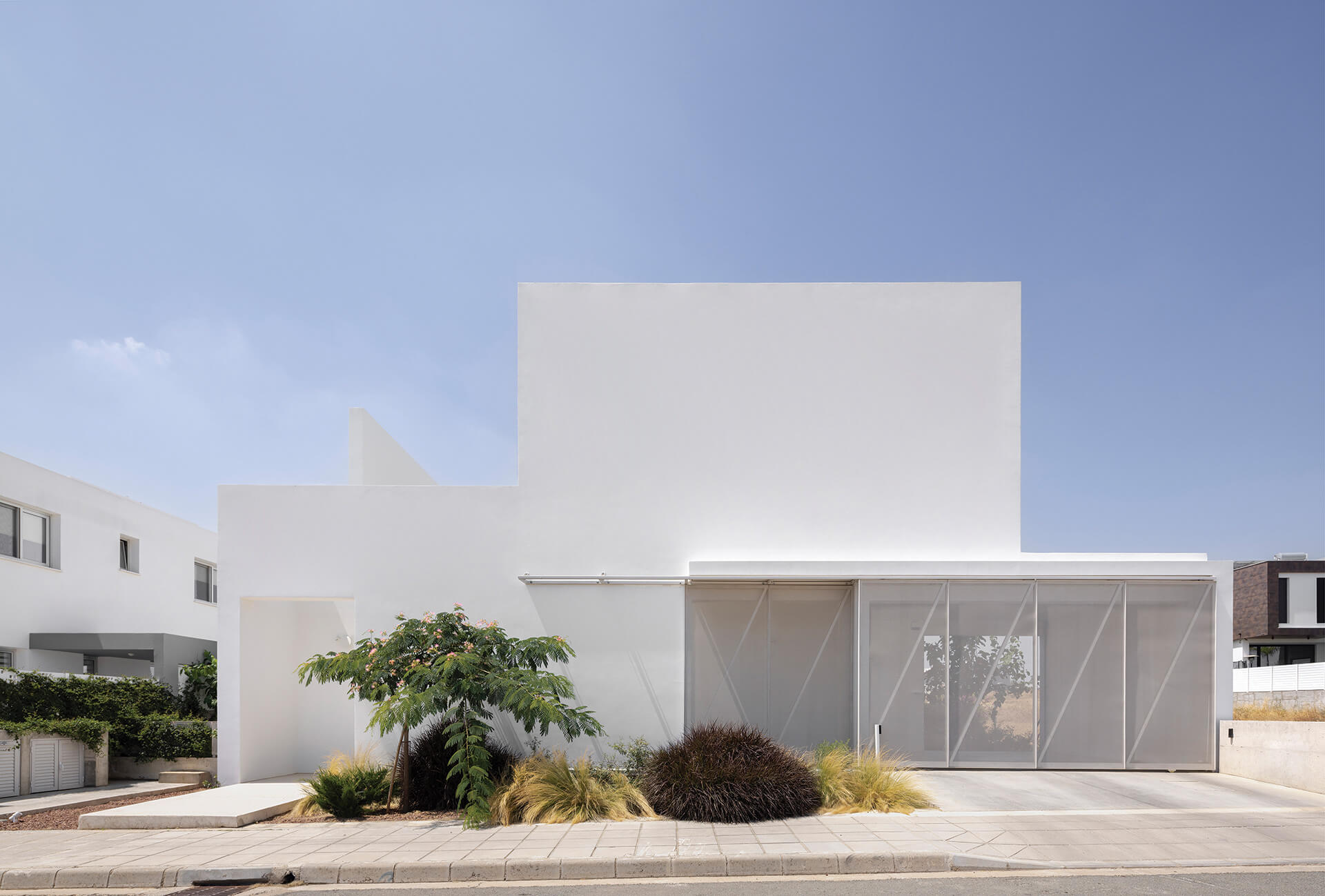
The residence is located in Lakatamia, a suburb on the outskirts of Nicosia. From the earliest stages of the design process, several key considerations were established, forming the foundation of the architectural proposal.
Design Philosophy
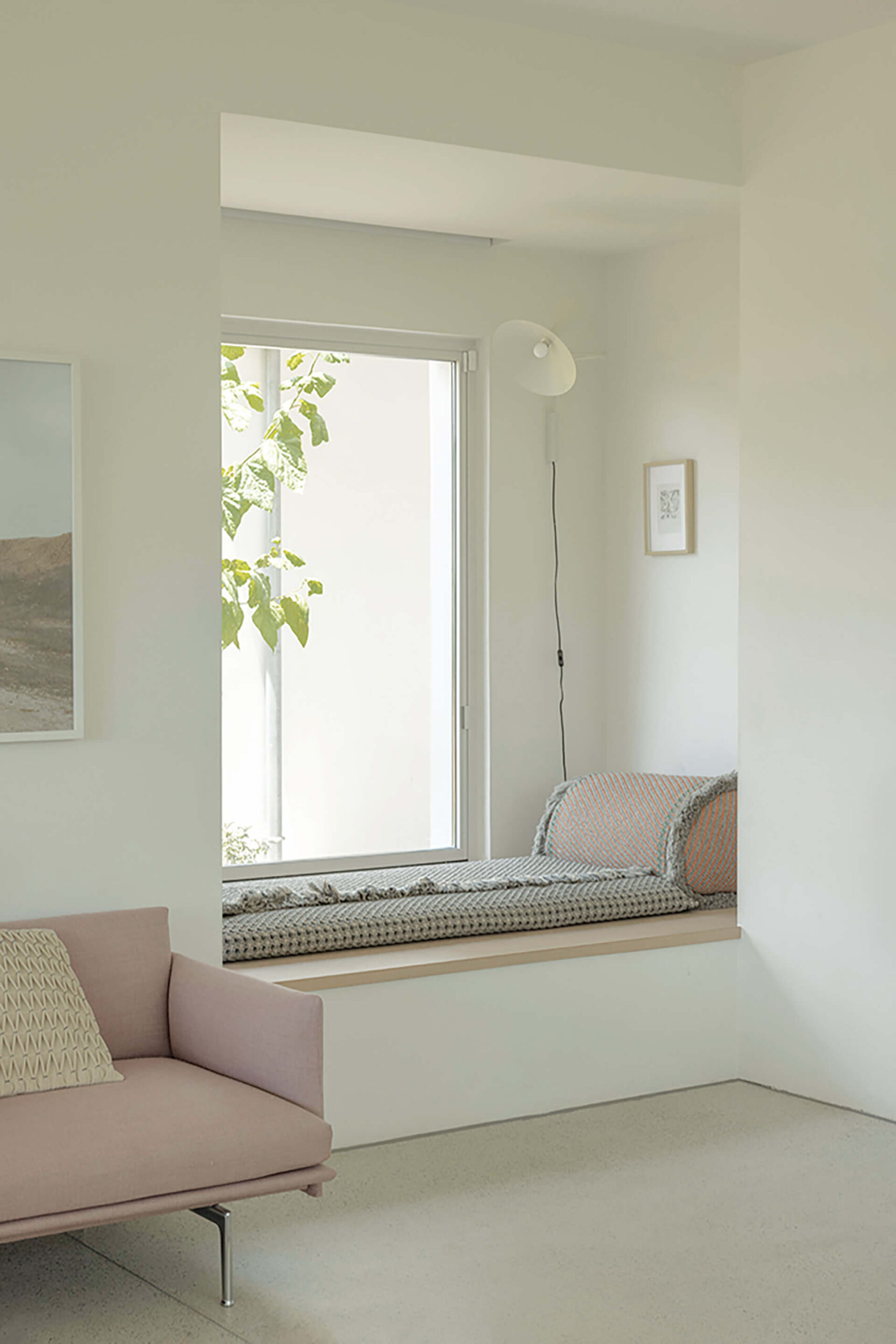
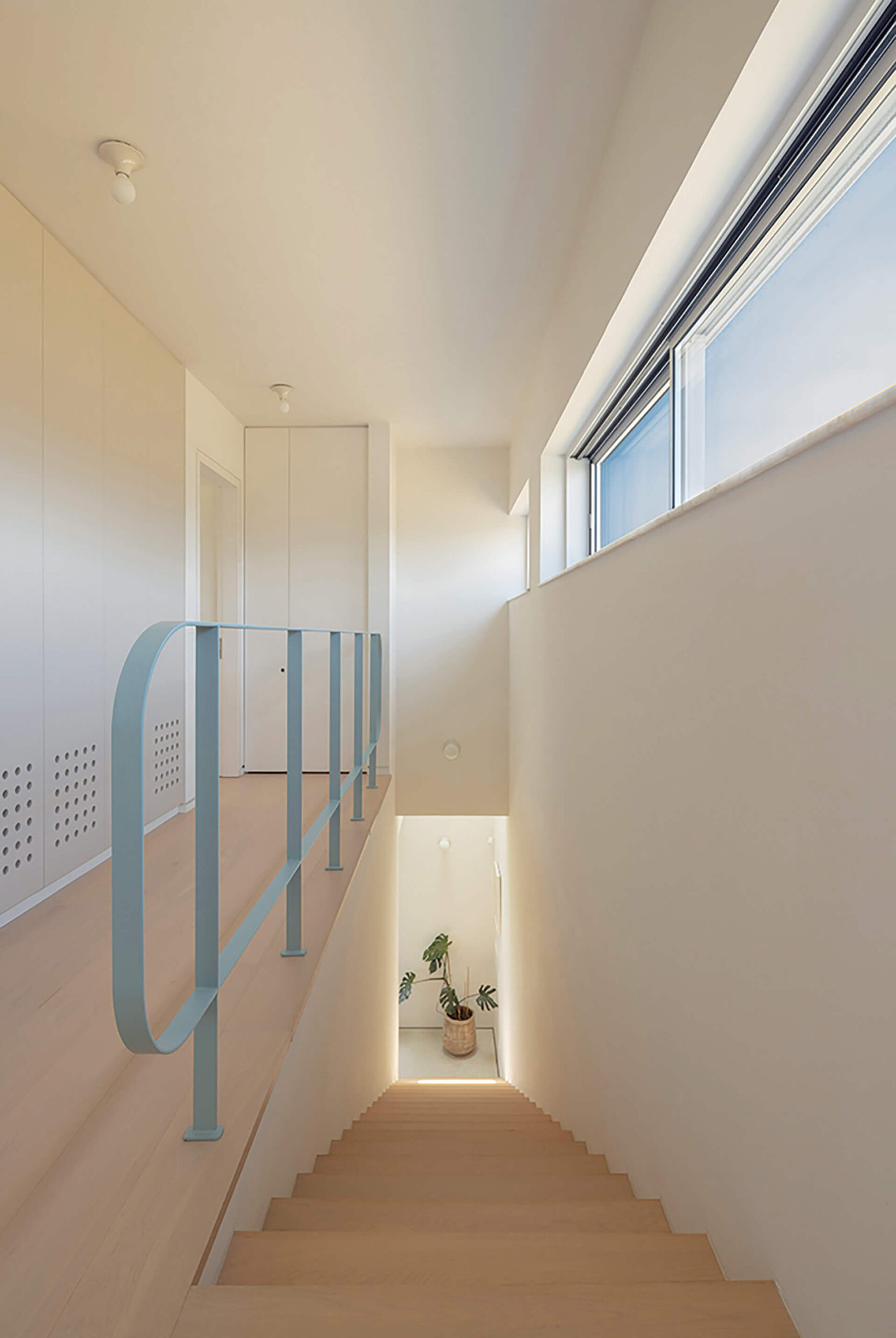
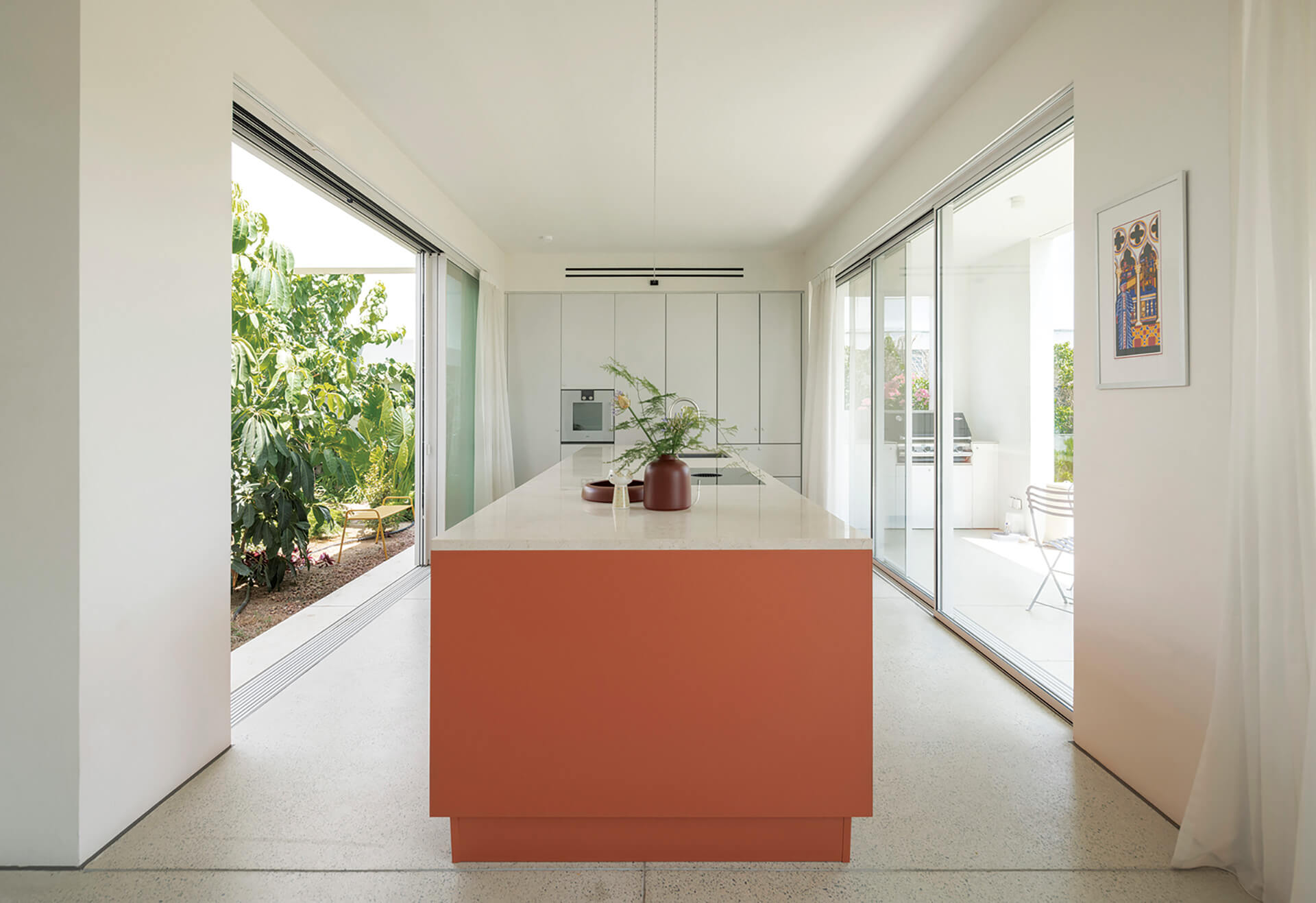
Foremost among these was the need for discreet privacy -one that does not reject the surrounding urban fabric but instead maintains a thoughtful sensitivity toward it. Equally important was the intention to cultivate a direct, almost tactile relationship with the “private” natural environment of the site. The desire for generous natural light throughout all interior spaces was also a guiding principle, as was the requirement to accommodate the owners’ art collection under suitable and revealing conditions.
Architectural Gestures
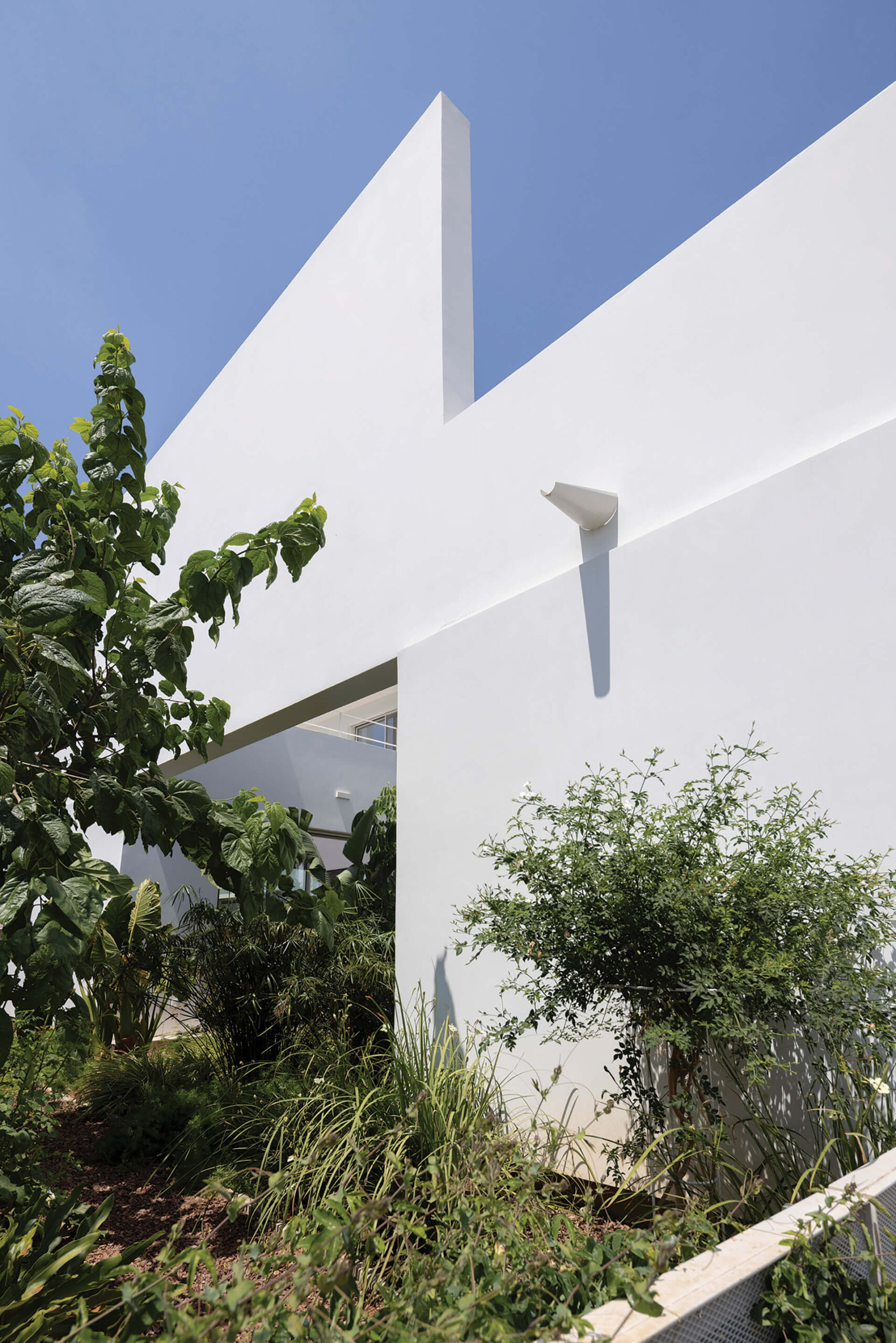
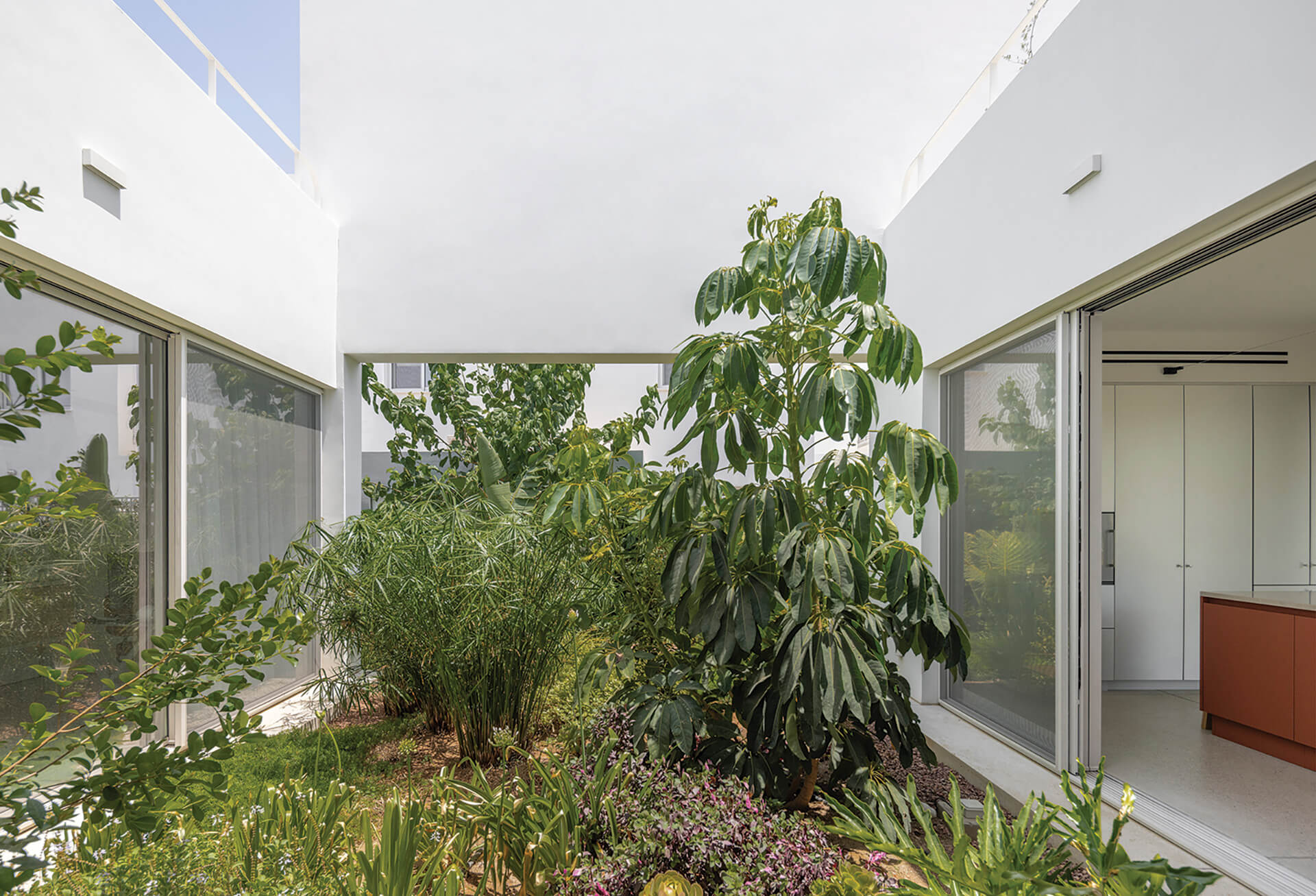
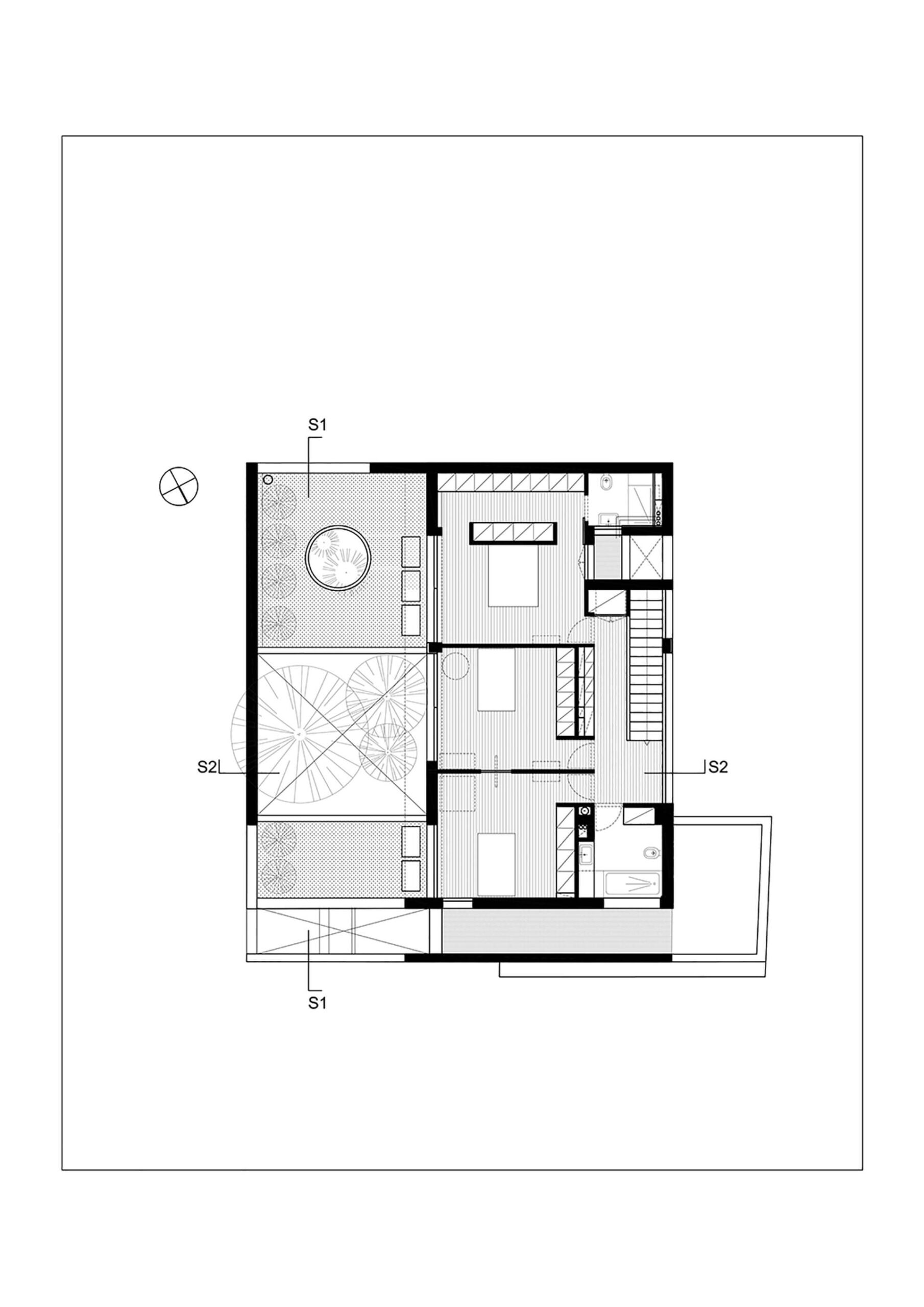
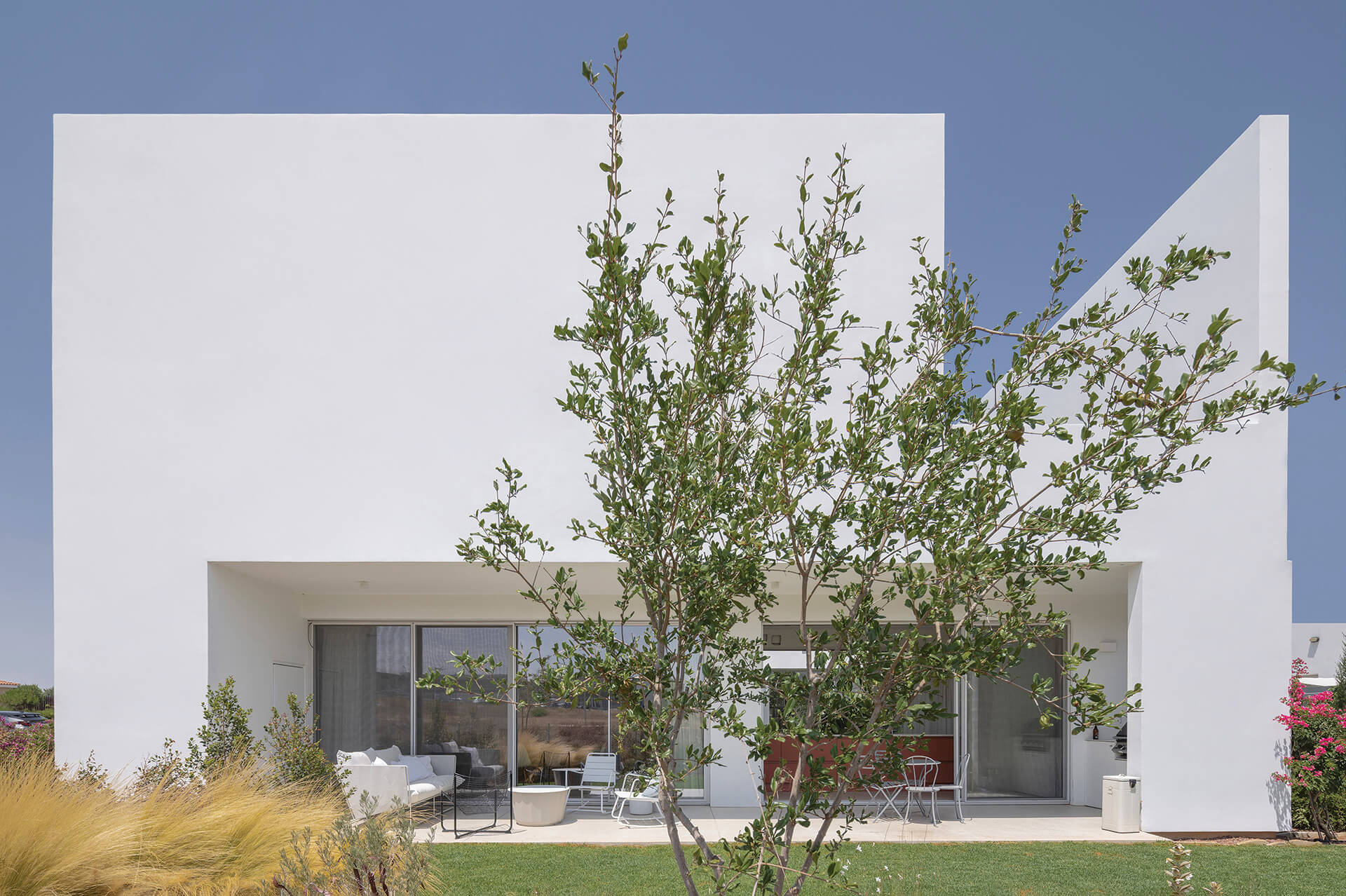
To address these aims, the design integrates two seemingly opposing architectural references, bringing them into a carefully considered synthesis. On one hand, it draws on the concept of the “perivolos”, i.e., the protective enclosure characteristic of traditional Cypriot dwellings, which ensures privacy while creating an internal outdoor space. This space often takes the form of an enclosed garden, functioning as a “lung” within the residence.
On the other hand, the design references Loosian modernity, particularly its iconic whiteness and the “purity” of its volumes, which act both as a neutral backdrop and as instruments for enhancing the diffusion of natural light throughout the interior. The resulting composition is that of a white cube articulated through a sequence of concentric walls. These walls extend the experience of arrival, gradually leading the visitor toward the inner core of the home.
Natural Elements & Light
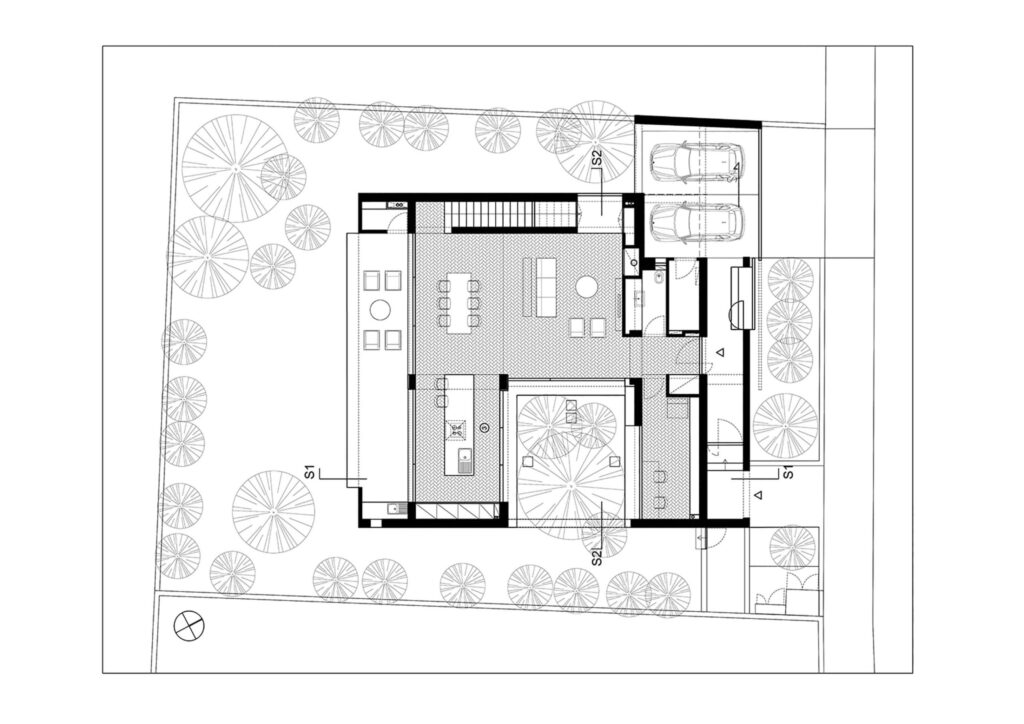
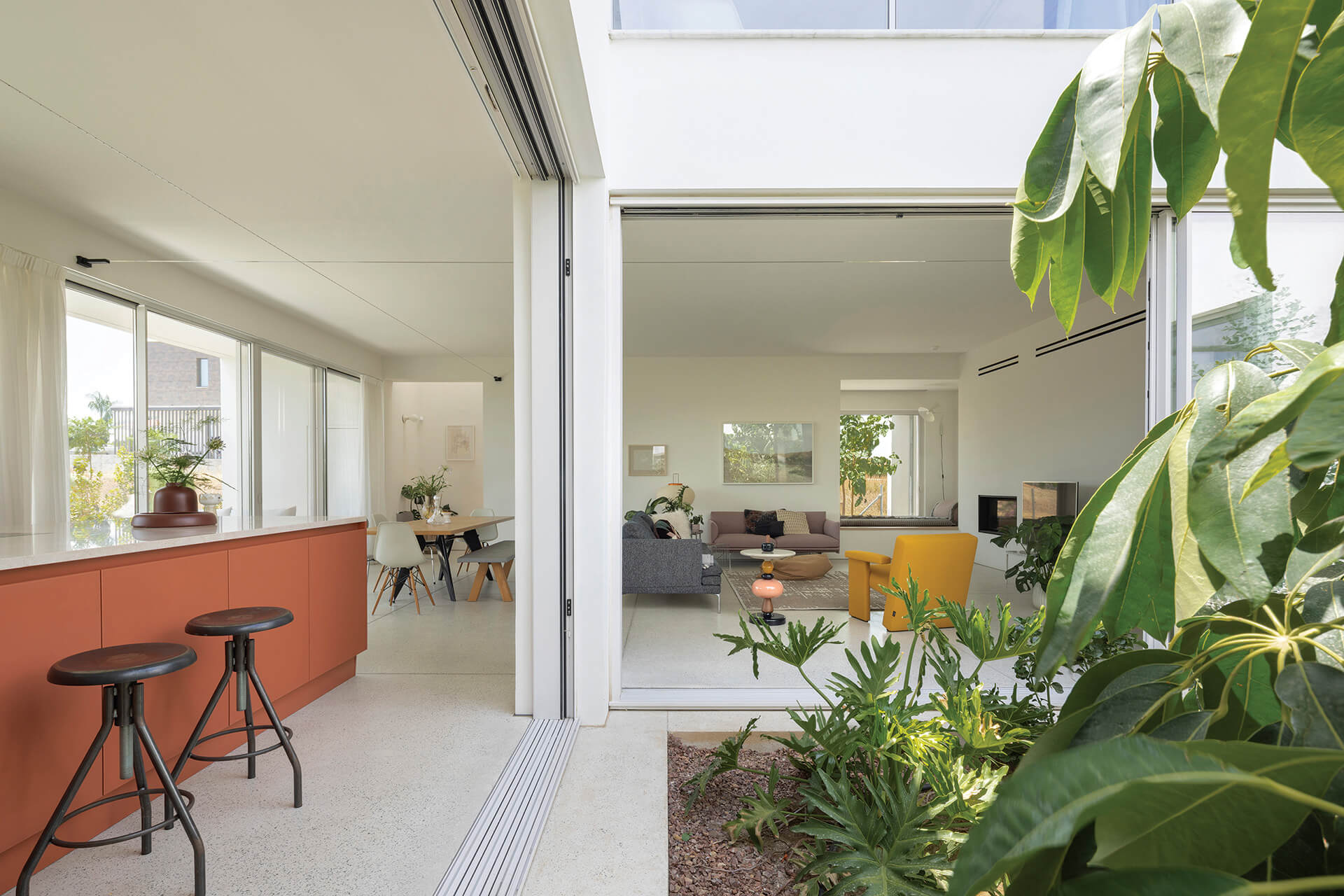
At the same time, this configuration makes possible the inclusion of a central void: a luminous opening filled with dense vegetation. This “core garden,” a clear nod to local architectural tradition, serves as a vital point of gathering and orientation for the family’s daily life. The surrounding rooms open toward it, allowing the void to function as the heart of the residence, both a natural and architectural element that shapes views, light, and the spatial relationships within the residence.
https://ek-mag.com/wp-content/uploads/2025/12/00-cover-2.jpg
https://ek-mag.com/wp-content/uploads/2025/12/01-2-scaled.jpg
https://ek-mag.com/wp-content/uploads/2025/12/02-2.jpg
https://ek-mag.com/wp-content/uploads/2025/12/03-2-scaled.jpg
https://ek-mag.com/wp-content/uploads/2025/12/04-2-scaled.jpg
https://ek-mag.com/wp-content/uploads/2025/12/05-1.jpg
https://ek-mag.com/wp-content/uploads/2025/12/06.jpg
https://ek-mag.com/wp-content/uploads/2025/12/07.jpg
https://ek-mag.com/wp-content/uploads/2025/12/08-scaled-e1764599639151.jpg
https://ek-mag.com/wp-content/uploads/2025/12/09-scaled.jpg
Related Posts